Plan an autumn foliage trip to Karuizawa at Kumoba Pond and Kyu-Karuizawa. Compare peak foliage windows, seasonal shuttles, Shiraito Falls buses, Tokyo Shinkansen fares, day trips, overnight stays, and rainy-day backups.
- Region & Focus
- Karuizawa
- Reading Scope
- 18 min read · 12 chapters · 7 Q&As
- Official Verification
- 39 official sources checkedUpdated November 22, 2026
- Key Topics
- SeasonsItinerariesRail travel
Chapter Route Map (tap any stop)
- When to See Karuizawa Fall Foliage: Check Kumoba Pond Before Heading Into the Mountains
- How to Walk the Kumoba Pond Loop
- Karuizawa Station North Exit to Kumoba Pond: Walking, Autumn Shuttles, and Parking
- Taking the Kusakaru Bus to Shiraito Falls: Planning Your Outbound and Return Rides
- Driving the Shiraito Highland Way and Hiking the Shinanoji Nature Trail
- Lunch on Kyu-Karuizawa Ginza Street and Two Historic Chapels
- Lake Shiozawa vs. Hoshino Area: Choosing One for the Afternoon
- Shinkansen Tickets from Tokyo and Navigating Both Station Exits
- Karuizawa Day Trip Order: Which Stop to Hit First
- Where to Stay One Night: Karuizawa Station, Kyu-Karuizawa, or Naka-Karuizawa
- Renting Bicycles for a Half-Day in Town
- Half-Day Backup Plans for Rain, Cold Snap, or Late-Autumn Leaf Drop
- Quick Q&A
On a first autumn trip to Karuizawa from Tokyo, spend the morning at Kumoba Pond and walk into Kyu-Karuizawa Ginza Street for lunch. Kumoba Pond typically peaks between mid-October and early November. That loop works easily on foot; if you want to add Shiraito Falls, lock in one outbound bus and two viable return options first. If you are chasing mirror-like reflections, traveling at a slower pace with older relatives, or hoping for an evening soak before dinner, staying one night takes the pressure off. Foliage turns at different speeds between town and the mountains, so check the town's live camera at Kumoba Pond and the Tourist Association's recent updates for Shiraito Falls before deciding which side to hit first.
When to See Karuizawa Fall Foliage: Check Kumoba Pond Before Heading Into the Mountains
If your schedule is flexible, price out weekday train tickets and hotels for late October first. Nagano Prefecture's official tourism site puts Kumoba Pond's typical peak from mid-October through early November, putting late October right in the sweet spot. In mid-October, trees around the water may still hold plenty of green; to judge whether color is deepening, check whether both the downstream entrance and the far bank have started turning together. Later in the season, stick to whichever shore still holds leaves and give the rest of your day to lunch on Kyu-Karuizawa Ginza or the mountain waterfall.
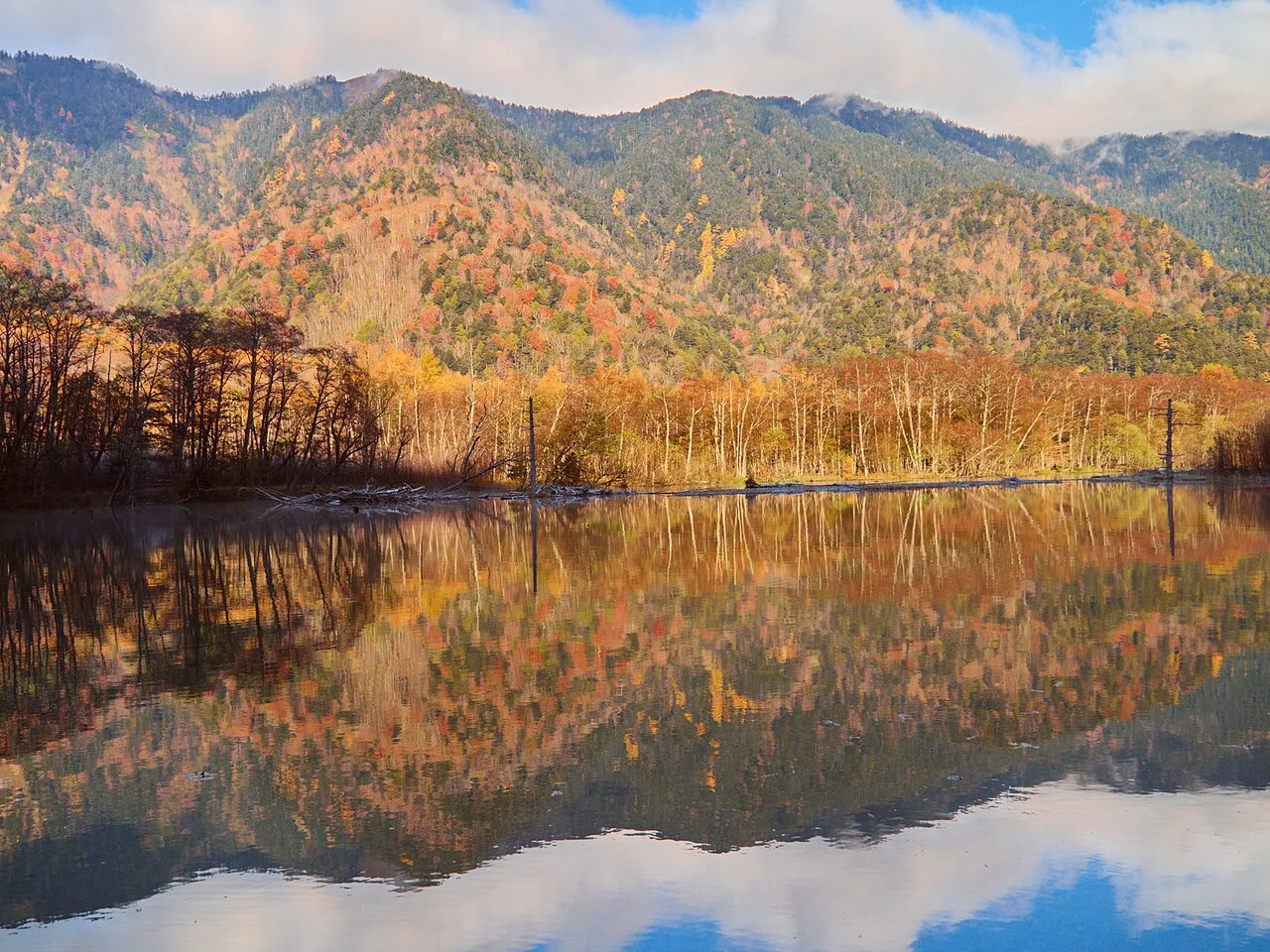
Photos from 2026 show just how different foliage can look on the exact same day. On October 29, the Karuizawa Tourist Association photographed the downstream entrance of Kumoba Pond just entering peak color, while up at Shiraito Falls—around 1,260 m in elevation—larches had turned golden, other deciduous trees had flushed red, and the area around the falls was already at its best. By November 13, Association photos of Kumoba Pond showed bright red along the west shore while most leaves on the east shore had already dropped. If you want full water reflections framed by both tree canopies, those full-shore updates tell you far more than a close-up of a single branch. If your vacation falls in mid-November and one side of the pond still looks good, prioritize the pond first and keep the mountain segment flexible.
On the town's live-camera page, select Camera 9 (Kumoba Pond). Check it during daytime hours in Japan: look at the far canopy first, then check the water surface for wind ripples. If you are based in Tokyo and choosing among several weekdays, compare the same camera at roughly the same time of day rather than pitting an overcast morning against a sunny afternoon. Photographers chasing clean reflections should watch the wind; casual walkers just need a dry half-day. Heavy cloud cover will not spoil waterside foliage or fallen leaves underfoot, though it does mean rethinking mountain visibility, bus buffers, and how long you linger.
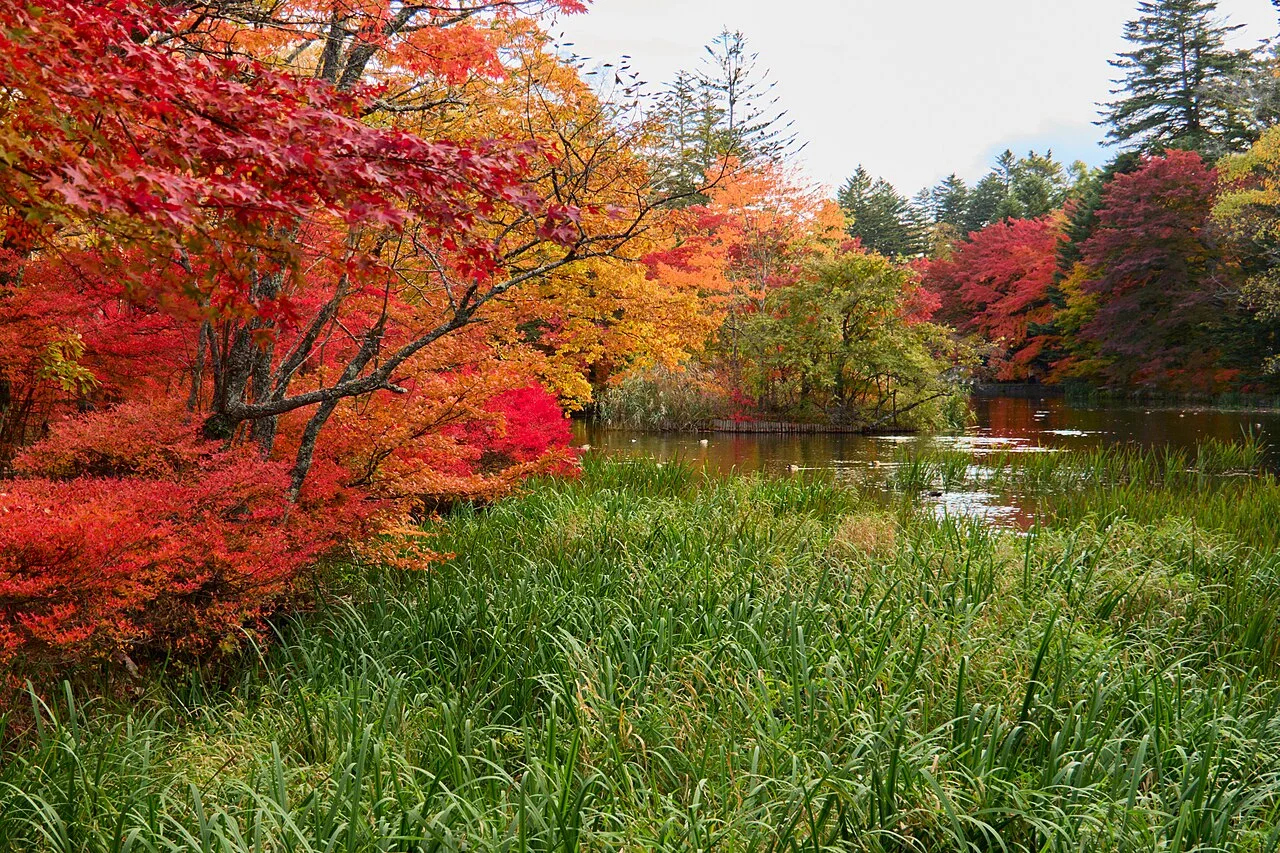
Plan an autumn foliage trip to Karuizawa at Kumoba Pond and Kyu-Karuizawa. Compare peak foliage windows, seasonal shuttles, Shiraito Falls buses, Tokyo Shinkansen fares, day trips, overnight stays, and rainy-day backups.
How to Walk the Kumoba Pond Loop
The main entrance sits at the downstream end of the pond, where autumn visitors often stop to shoot right at the gate. Keep walking inside: the water widens past the bend, letting you frame overhanging branches, the far bank, and reflections together before stepping aside where the path can stay clear for others. The loop trail measures roughly 1 km, which Nagano's tourism site estimates at about a 20-minute walk. That works for a steady stroll, but budget 40 minutes or more if you are taking photos, walking with older relatives, or bringing young kids. If you want to cut the walk short once you are inside, simply double back the way you came so you stay on schedule for lunch and your bus.
Even on a short walk, footing matters. After rain, wet fallen leaves hide uneven ground, and umbrella rims easily snag low branches extending over the path. If you are using a stroller or wheelchair, assess the surface and clearance right from the entrance—a short stretch along a wider section is enough to take in the water. For taxi pickups or drop-offs, set the meeting point at the station or your hotel so nobody is stranded waiting by the curb. Roadside parking is banned along the pond; relatives who want photos can walk in together after parking elsewhere.
For light on the leaves, the Tourist Association's late-autumn 2026 notes on the west shore suggest morning through early afternoon still offers the best direct sun. Once you arrive, walk a short stretch along an open section, see which way the breeze is blowing and which bank catches the sun, then decide how long to stay. When the full pond will not fit in one frame, focus on a single cluster of red leaves dipping over the water. On busy peak days, leave tripods at your hotel so people have room to pass on the narrow path.
Karuizawa Station North Exit to Kumoba Pond: Walking, Autumn Shuttles, and Parking
When your Shinkansen pulls in, head out the North Exit—the easiest walking loop goes to Kumoba Pond first and then across to Kyu-Karuizawa Ginza Street for lunch. If you are walking straight to the water, set your map destination to the Kumoba Pond entrance. If taking a bus, look for the stop named Roppontsuji / Kumoba Pond (Roppontsuji-Kumobaike). Roppontsuji is the junction nearest the pond, and the town estimates a roughly 3-minute walk from the bus stop to the water. Kyu-Karuizawa, at the mouth of Ginza Street, is another stop along the corridor. If someone in your group needs to cut down on walking, ride out to Roppontsuji and then decide whether you have the energy to walk to Ginza or take a bus back from the same stop.
In 2026, Seibu Kanko Bus ran daily autumn foliage shuttle buses from October 10 through November 23 at ¥220 one way between Karuizawa Station and Roppontsuji / Kumoba Pond. The town's timetable listed 8 round-trips a day, departing the station from 10:10 AM to 3:10 PM, with the last return leaving Roppontsuji / Kumoba Pond at 3:16 PM. These shuttles fill gaps in regular service. To reach the water before 10:00 AM, walk from the station or check regular route schedules for that day. If you plan to visit in the afternoon, figure out your return transport before deciding how much time to spend by the pond.
Kusakaru Kotsu also runs its Kyu-Karuizawa Shuttle from the North Exit. Listed as Route 20 on the November 2026 timetable, it costs ¥150 for adults and ¥100 for elementary school students, and is tailored to visitors heading only to the Kyu-Karuizawa shopping area. Whenever a bus stop sign says "Shuttle," check both the operator and the destination. For Kumoba Pond, look for Seibu's Roppontsuji / Kumoba Pond service. For Shiraito Falls, look for Kusakaru Kotsu buses bound for Shiraito Falls (Shiraito-no-Taki), or Kusatsu Onsen and Kita-Karuizawa buses that stop there. Different operators share some identically named stops, so reading the destination sign is far more reliable than going by bus color.
If you miss the autumn shuttle, check the Town Loop Bus East/South Route (Higashi/Minami-mawari Line). It also serves Roppontsuji / Kumoba Pond for a flat ¥100 fare (¥50 for elementary school age and under); transfer tickets were discontinued in April 2026, so changing routes requires paying separately. Because this loop continues through Naka-Karuizawa, Kazakoshi Park, and Minami-Karuizawa, the ride time from the station to the pond depends on whether you board the inner or outer loop. Check the route map at the stop to see the next stop and loop direction so you pick the bus heading past the old town side first. If you are coming from Naka-Karuizawa, you can also ride this loop straight to the pond without backtracking to the Shinkansen station.
Kumoba Pond has no dedicated parking. Drivers arriving via the Joshin'etsu Expressway should save the Karuizawa Station North Exit West Municipal Parking Lot and Yazaki Park Parking Lot in their maps beforehand. Official town figures list 220 standard spaces at the North Exit West lot, open 24 hours with a 2.5 m height limit; Yazaki Park sits about 350 m from the station. In autumn 2026, the town enforced one-way traffic from 8:15 AM to 5:00 PM on October 10–12, October 17–November 15, and November 20–23 along a designated stretch south of Kumoba Pond, allowing entry only from the roundabout side for motor vehicles and motorcycles (excluding bicycles and light vehicles). Parking near the station and walking saves you from navigating narrow villa-district right-of-way rules and tight turnarounds.
Taking the Kusakaru Bus to Shiraito Falls: Planning Your Outbound and Return Rides
Shiraito Falls fans out along a curved rock face, officially listed at roughly 3 m high and 70 m wide. Groundwater seeps through countless fissures in the rock, creating fine white threads visible up close from the viewing path. The falls sit in Ose, Nagakura, Karuizawa. Because several waterfalls across Japan share the name Shiraito Falls, search specifically for Shiraito Falls, Karuizawa, Nagano when checking bus routes or booking a taxi. Board Kusakaru Kotsu at Karuizawa Station North Exit Stop 2; the bus passes Kyu-Karuizawa and Mikasa before climbing the Shiraito Highland Way. From the Shiraito-no-Taki stop, it is a short walk to the falls—roughly 25 minutes by bus from the station.
Under Kusakaru Kotsu's winter timetable effective November 1, 2026, the adult one-way fare to Shiraito Falls is ¥720 from Karuizawa Station or ¥650 from Kyu-Karuizawa. After lunch on Ginza Street, you can board directly at the Kyu-Karuizawa stop. On busy weekends and holidays, however, walking back to the North Exit terminal to line up gives a group a better shot at sitting together than waiting down the line for a bus that may already be full. Boarding is first-come, first-served, and the operator explicitly notes that buses do not hold for Shinkansen connections when traffic backs up. Using that same winter timetable as a benchmark, a 10:20 AM departure from the North Exit reaches the falls at 10:45 AM; return buses leave at 11:43 AM or 12:30 PM, arriving back at Kyu-Karuizawa at 12:02 PM or 12:49 PM—useful anchors when deciding whether to book a lunch table.
For the return trip, board the bus bound for Karuizawa Station North Exit at the waterfall stop, or hop off early at Kyu-Karuizawa for lunch and a stroll. When reading the timetable, check which rows list a stop time at Shiraito-no-Taki, then match that column's final destination—Kusatsu Onsen or Kita-Karuizawa on the header simply indicates where the bus is headed overall. Build your mountain plan around two viable return departures. If the very next bus gives you enough time at the falls and gets you back to the station smoothly, treat that as your primary target and save the longer surrounding trails for another visit.
Driving the Shiraito Highland Way and Hiking the Shinanoji Nature Trail
Driving from Kyu-Karuizawa, take Mikasa-dori to the Mikasa Toll Gate; from Naka-Karuizawa, take Prefectural Route 146 to the Mine-no-Chaya Toll Gate. The road operator charges ¥500 for standard and kei cars. That toll covers one entry—you can exit at the opposite gate or turn back through the same gate, though leaving and re-entering requires paying again. Even if your map app draws the town road and nearby footpaths right next to each other, keep in mind that walking, cycling, and motorcycles under 125cc are prohibited on the Shiraito Highland Way.
From mid-November onward, check the road operator's current road conditions page before heading up in case of snow or ice. On November 20, 2026, for example, snow closed the stretch between Mine-no-Chaya and Nagahinata Bridge, while roadwork in the same week affected the Mikasa side and Kusakaru Kotsu buses. Snow closures and construction can hit the north and south approaches separately. Reading both road notices and bus detour alerts from town tells you whether cars can get through and whether buses are still stopping at the falls. If your rental car is on standard summer tires and ice appears in the mountains, drop the falls and keep your plans in town.
For a forest walk, pick a section of the Shinanoji Nature Trail on the official map. The full trail runs roughly 11 km between Mikasa and Mine-no-Chaya with about 410 m of elevation gain, passing Shiraito Falls and Ryugaeshi Falls. Ryugaeshi Falls lies roughly 1 km from Ose along a valley path and works well as a standalone out-and-back from Ose. Before stepping beyond the busy viewing area around Shiraito Falls, decide whether you are hiking back to the same stop or catching a bus from another trailhead. The town estimates about 4 hours for the full traverse, and neither end has car or bicycle parking. Hike with a companion, carry a bear bell or radio to make noise, and avoid dawn and dusk. If there is frost on the ground or daylight is running short, stick to the short walk between the bus stop and Shiraito Falls.
Lunch on Kyu-Karuizawa Ginza Street and Two Historic Chapels
Enter Kyu-Karuizawa Ginza Street from the roundabout end near the Kyu-Karuizawa bus stop, where bakeries, cafes, and jam shops line the street. As soon as you step off the bus, note which side serves buses back to the station and which side picks up for Shiraito Falls. On peak days, a reserved lunch works best as the single fixed-time anchor in town, leaving the falls for the afternoon. If you do not have a reservation and want to catch an earlier bus into the mountains, grab bakery items to go and save a sit-down cafe for when you come back down—much easier than juggling a restaurant waitlist and a bus line at the same time.
If your group needs a meeting spot on Ginza Street, the wooden Karuizawa Tourist Hall (Karuizawa Kanko Kaikan) is easier to find than picking a random storefront. In autumn it is generally open 9:00 AM to 5:00 PM, housing tourist information on the ground floor and the Karuizawa Railway Mini Museum upstairs, plus baby-changing facilities. Public restrooms typically cost ¥100 per use. Anyone interested in trains can browse the hall while faster walkers head north up Ginza Street, then regroup at the roundabout before catching the bus.
If you want more walking time in the old town, continue to Shaw Memorial Chapel, an Anglican church tucked into the woods at the far end of Ginza Street. St. Paul's Catholic Church sits in a separate pocket of town and stands out immediately for its steep triangular timber roof. Type each church's exact Japanese or official name into your map app so you are not routed out to Karuizawa Kogen Church in Naka-Karuizawa. Respect any posted signs for services, weddings, or closed entrances; if you just want to admire the architecture, stay on open public paths.
If rain moves in during the afternoon, hop on a Mikasa-bound bus from Kyu-Karuizawa to visit the Former Mikasa Hotel. The historic wooden hotel operates as a cultural museum with exhibits, a cafe, and a museum shop. Its official site lists hours from 9:00 AM to 5:00 PM (last entry 4:30 PM), with admission at ¥1,000 for high school students and adults and ¥500 for elementary and junior high students. It normally closes Wednesdays (shifting to the next weekday if Wednesday is a national holiday), though Wednesday closures are waived from July 15 through October 31. On a rainy Wednesday in November, pivot to open shops along Ginza Street or head back to the South Exit at Karuizawa Station.
Lake Shiozawa vs. Hoshino Area: Choosing One for the Afternoon
If you are traveling with kids and want extra time by the water, spend the afternoon at Lake Shiozawa (Shiozawako) in Minami-Karuizawa. Karuizawa Taliesin wraps the lake with walking paths, art museums, historic buildings, and pay-per-use activities like rowboats. Stroll down to the boat dock in clear weather, or Duck into the museums and cafes if the wind picks up. Because individual buildings inside the park keep separate hours and ticketing, start with whichever exhibition matters most to you and adjust lakeside wandering to match everyone's energy. If you only want a quick look at a lake before rushing onward, stick with Kumoba Pond and skip the extra south-side transit.
From Karuizawa Station North Exit Stop 4, take the Seibu Kanko Bus Express Shiozawako Line toward Kazakoshi Park and get off at Shiozawako, or ride the Town Loop Bus East/South Route. When checking return buses from the Shiozawako stop, remember that the loop bus runs in different sequences depending on whether it is the inner or outer loop. To visit the Karuizawa Picture Book Museum and Erzgebirge Toy Museum, ride one stop farther on the same line to that museum stop. You can tour the museums right after lunch and catch your return bus from Lake Shiozawa since both sit in the same neighborhood. If taking a taxi, give the driver "Karuizawa Taliesin" and ask for drop-off and pickup at the park entrance.
If you would rather dine beside a mountain stream and end the day in a hot spring, give the afternoon to the Hoshino area. Board the Seibu route bus bound for Hoshino Onsen Tombo-no-Yu from Karuizawa Station North Exit Stop 1—roughly a 20-minute ride according to the operator. Alternatively, ride the Shinano Railway 5 minutes to Naka-Karuizawa Station and follow Hoshino's official walking route for about 17 minutes. Harunire Terrace handles dining and cafes, while Tombo-no-Yu is a separate bathhouse facility. Eat at the terrace first, take a walk along the stream while there is still daylight, soak last, and catch either the bus back or the walk to Naka-Karuizawa for the train.
There are no coin lockers inside the Hoshino area; official guidance directs visitors to use lockers at Karuizawa or Naka-Karuizawa stations. If you plan to take the train back from Naka-Karuizawa, factor both the walk and locker pickup into your evening buffer. Guests staying in Hoshino who want to visit Shiraito Falls the next morning will generally find it smoother to take the train back to Karuizawa Station and transfer to North Exit Stop 2 for Kusakaru Kotsu. If your hotel is in Naka-Karuizawa, leave your bags at the hotel or a station locker on your Shiraito Falls and Kyu-Karuizawa day, then save the next day purely for Hoshino.
Shinkansen Tickets from Tokyo and Navigating Both Station Exits
To travel from Tokyo to Karuizawa on the Hokuriku Shinkansen, enter Karuizawa as your destination and choose either an Asama train or a Hakutaka train scheduled to stop there. The Karuizawa Tourist Association estimates the Tokyo–Karuizawa ride at about 1 hour and 10 minutes. Because stopping patterns vary by departure, base your local bus transfers on the exact arrival time of your chosen train. If you need to rent bikes, stash bags in a locker, or pick up paper tickets, build in extra minutes at the station before heading to the bus platforms. When booking round-trip seats, avoid tight connections just to catch an early bus—waiting for the next bus beats watching the clock anxiously on the train.
Between Tokyo Station and Karuizawa Station, regular-season adult one-way paper fares in an ordinary car are ¥6,130 for a reserved seat and ¥5,600 for a non-reserved seat. Buying JR East's basic Shinkansen e-Ticket trims ¥200 off the adult reserved ordinary-car fare, while non-reserved seats match paper prices. Reserved seats typically go on sale at 10:00 AM JST one month before travel. When traveling in a pair or group—especially if you are aiming for a specific morning bus and returning to Tokyo for dinner or hotel check-in—reserving both legs upfront saves hassle. If you want flexibility on the way home, weigh a non-reserved seat against booking a later reserved train once the day unfolds. Before tapping through the Shinkansen gates with an IC card, make sure every traveler's e-Ticket is linked to their own physical IC card or Mobile Suica.
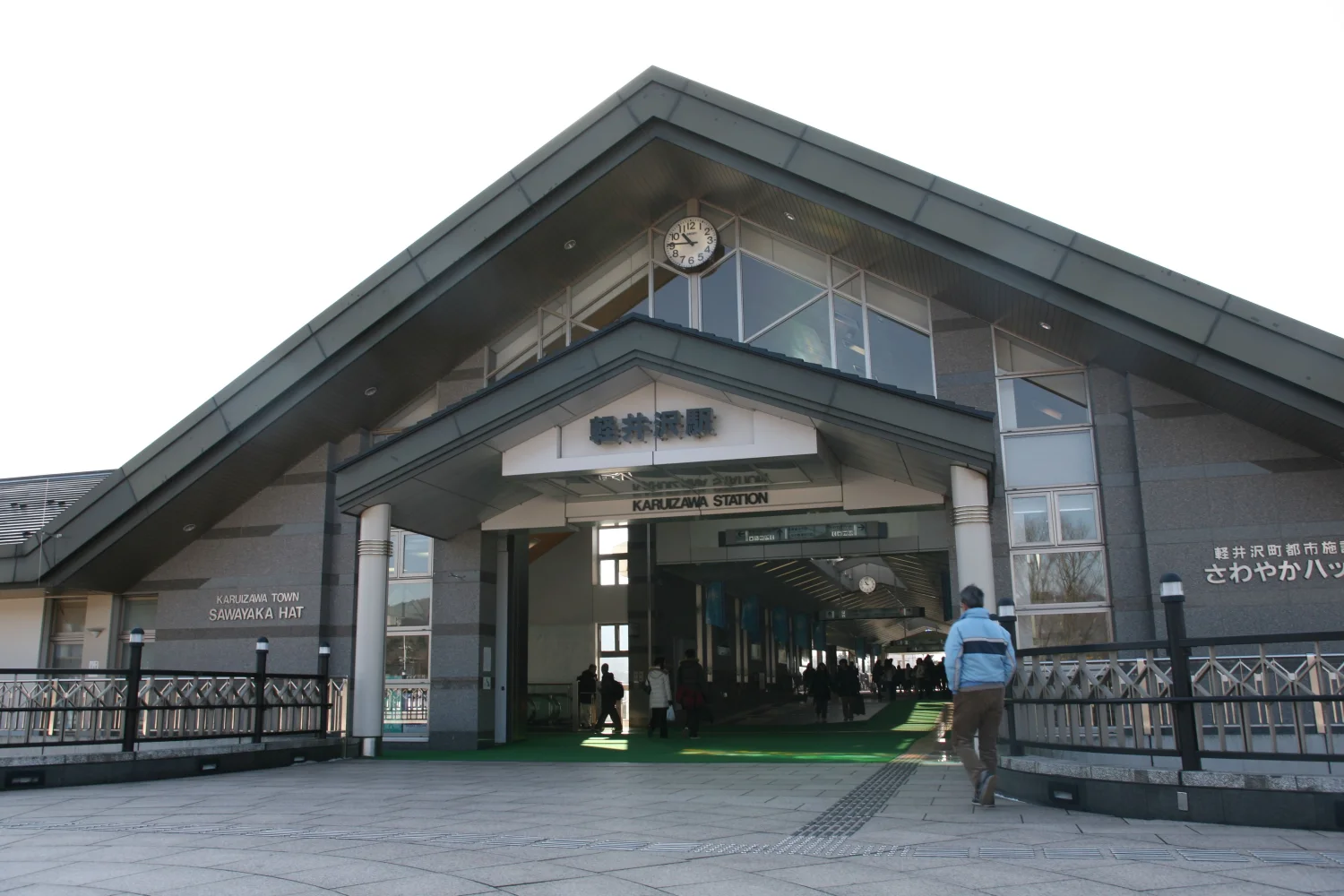
Everything clicks once you split the station by exit: North Exit for Shiraito Falls and Kyu-Karuizawa, South Exit for Karuizawa Prince Shopping Plaza. Since Shinkansen platforms, station lockers, and Shinano Railway trains toward Naka-Karuizawa all converge in this building, keeping the two sides straight prevents backtracking. Save shopping for last so you are not hauling bags around Kumoba Pond. If you return from Kyu-Karuizawa with an hour to spare, the South Exit mall works well for dinner and souvenirs—just subtract exit navigation, locker retrieval, and ticket-gate buffer from that hour before deciding how many stores to browse.
Karuizawa Day Trip Order: Which Stop to Hit First
On a first visit, Kumoba Pond in the morning followed by Kyu-Karuizawa Ginza Street at midday minimizes transfers. Arrive early, walk from the North Exit to the pond, continue straight to Ginza Street, and decide after lunch whether to catch an afternoon bus from the Kyu-Karuizawa stop. Save both uphill and downhill bus times on your phone so you know right away whether waiting 20 minutes for a restaurant table will cost you a bus. If the next mountain departure is too late by afternoon, pivot to old-town alleys, the chapels, or shopping at the South Exit—all within an easy walk back to the station.
If Shiraito Falls is your main reason for coming, flip the order. Head straight up the mountain from the North Exit first, stop in Kyu-Karuizawa for lunch on the way down, and finish at Kumoba Pond. That puts the bus-dependent leg in the morning when schedules are easier to hit, leaving the afternoon flexible. During stretches like late October 2026 when the Tourist Association reported peak foliage at the falls, morning sun lights up the cascades and golden forest canopy first, leaving you free to seek out whichever shoreline at Kumoba Pond still holds color later in the day.
With only an hour or two left in the afternoon, split your day cleanly between the North and South sides of the station. Start from the North Exit for Kumoba Pond, swing back to grab your luggage, and walk out the South Exit into Karuizawa Prince Shopping Plaza—the lawn-facing zones still give you open air if you want one last walk. It is also an easy fallback on weekends if the mountain bus fills up or roadwork detours slow traffic. Even if you linger close to your Shinkansen departure, getting back to the gates from the South Exit takes minutes.
If you plan to stay at the outlet mall for dinner, check retail hours and restaurant hours separately. In November 2026, for instance, shops opened at 10:00 AM and closed at 8:00 PM from November 1–9, shifting to 7:00 PM from November 10 onward, while individual restaurants posted their own hours and last-order times. If your shopping bags start piling up, lockers sit next to the Center Mall information desk—check locker width and depth if you have large suitcases. Wheelchairs are loaned from the same desk, giving tired travelers and dedicated shoppers an easy hub to split up and reunite indoors.
When traveling with young children or older relatives, agree upfront on a regrouping point so the group can split without stress. Put Kumoba Pond in the morning while everyone's legs are fresh; after sitting down together for lunch on Ginza Street, photo-minded travelers can walk out to the chapels while others rest in town or near the station. Everyone gets to see the autumn leaves without anyone rushing family members down to a bus stop. Separating outbound and return transport rather than forcing one big loop saves energy for the pondside walk that actually matters.
Where to Stay One Night: Karuizawa Station, Kyu-Karuizawa, or Naka-Karuizawa
If you are arriving from Tokyo after work on day one or catching an early Shinkansen the next morning, staying right by Karuizawa Station cuts out an extra luggage transfer. For resort comfort next to the outlets, look at Karuizawa Prince Hotel West on the south side: the hotel lists a roughly 13-minute walk from the South Exit plus a free guest shuttle running on a set timetable from the South Exit. If part of your group wants to keep shopping while others head back to rest, everyone stays on the south side of the tracks. The next morning, simply cut through the station concourse to the North Exit to start for Kumoba Pond.
If morning walks around the pond and quiet alleys off Ginza Street are the point of the trip, Kyu-Karuizawa beats staying by the South Exit. Properties on the old-town side like Mampei Hotel offer a free reservation-based shuttle from Karuizawa Station South Exit for staying guests; confirm pickup details as you arrive so you are not dragging bags through wooded lanes. You can walk out to Kumoba Pond early the next morning, return for breakfast or checkout, and browse Ginza Street as shops open. If heavy rain hits at dawn, linger over breakfast until the shower eases instead of standing outside waiting for storefronts to unlock.
If your priority is soaking in hot springs and eating dinner by the river, base yourself around Naka-Karuizawa and Hoshino for the second half of your stay. Before booking, pin both Naka-Karuizawa Station and Hoshino Onsen Tombo-no-Yu on a map to check the walk or ride home after dinner, not just daytime sightseeing distances. HOSHINOYA Karuizawa and Hotel Bleston Court next to Karuizawa Kogen Church publish official guest shuttle details, while smaller inns set their own pickup points and rules. Drop large suitcases at your hotel early rather than hauling them into a restaurant or day-use bathhouse.
Even a single overnight stay gives you two shots at good weather. If the first afternoon is sunny, go straight up to Shiraito Falls and save Kumoba Pond and Kyu-Karuizawa for the next morning. If skies only clear on day two, eat in old town or duck into open museums on day one, ride up to the falls the next morning, and stop by the outlets before your train. When comparing hotels, weigh early-morning transit access, how easily you can get back after dinner, and where your bags can wait after checkout. For a broader year-round look at neighborhoods and hotels, see our Karuizawa neighborhood and transport guide.
Renting Bicycles for a Half-Day in Town
When the weather is dry and pavement is clear, renting bikes near the station lets you link Kumoba Pond and Kyu-Karuizawa without waiting for buses. Directly connected to Shinano Railway's Karuizawa Station, BIGCLOUD CYCLE BASE rents standard and electric-assist bicycles via advance booking or walk-in, with its 2026 season opening announced for April 18. If you plan to catch a bus into the mountains afterward, time your bike return before that Kusakaru Kotsu departure so you stay right by the North Exit. Before entering the Kumoba Pond walking path or crowded shopping streets, park at a designated rack and explore on foot.
To bike out toward Naka-Karuizawa and Hoshino, make sure everyone in your group is comfortable riding uphill and sharing road shoulders with cars. Electric-assist bikes take the sting out of the climb, though you still need warm layers for the chilly downhill ride back. If anyone wants to stay in Hoshino past dusk, take the bus or train back instead of racing a shop's return deadline. Before renting, jot down rental hours, bus times, and the shop location side by side—sometimes walking makes more sense. If you need child seats, confirm both passenger count and bike availability when booking so you are not scrambling to re-plan transport on arrival.
Half-Day Backup Plans for Rain, Cold Snap, or Late-Autumn Leaf Drop
Based on Japan Meteorological Agency 1991–2020 climate normals for Karuizawa, average daily highs and lows are 16.2°C and 6.3°C in October, dropping to 11.2°C and -0.2°C in November. Coming straight from Tokyo, standing still in the breeze by the pond and then stepping into warm cafes means dressing in layers you can strip off easily. A windproof outer jacket and shoes that handle damp pavement cover short town walks; add gloves if you plan to cycle or stand by the water at dawn. Heading up to the falls in November, pack a thin insulating layer that folds into a daypack once you are back indoors.
When heavy rain sends you back to the North Exit early, Karuizawa T-SITE sits roughly one minute from the station doors with cafes and lunch spots under one roof. Inside, AQUAIGNIS GARDEN SPA offers day-use hot spring bathing—listed by the operator from 9:00 AM to 10:00 PM—making it an easy pre-Shinkansen soak without an extra bus ride. If you have just 30 minutes before your train, grab coffee or snacks right at the North Exit instead of crossing the concourse to the South Exit and doubling back.
In light drizzle, start indoors along Ginza Street and slip over to Kumoba Pond for a quick look whenever the rain eases. With older relatives or young kids, shift the Former Mikasa Hotel up in your schedule on days it is open, then head back to Ginza Street for lunch. Even after most leaves have dropped at Kumoba Pond, tree-lined lanes around town still hold pockets of late color—just build that half-day around architecture and warm cafe stops so nobody freezes outdoors. Keep shopping at the South Exit for last, returning via the station from old town rather than lugging paper bags through the rain.
A few useful answers
When is the best time to see autumn foliage in Karuizawa?
Peak foliage at Kumoba Pond typically runs from mid-October to early November. In 2026, the Karuizawa Tourist Association photographed downstream foliage entering peak on October 29 and still recorded red leaves along the west shore on November 13.
Is there parking at Kumoba Pond?
No. Kumoba Pond has no dedicated parking lot, and roadside parking around the pond is prohibited. Park at the municipal lots on the west side of Karuizawa Station North Exit or at Yazaki Park, then walk or take a bus.
Are the Kumoba Pond autumn shuttle and the Kyu-Karuizawa shuttle the same bus?
They are separate services. The 2026 Seibu autumn shuttle from Karuizawa Station to Roppontsuji / Kumoba Pond costs ¥220. Kusakaru Kotsu's Kyu-Karuizawa Shuttle goes to Kyu-Karuizawa (¥150 for adults) and is better suited for visiting Kyu-Karuizawa Ginza Street.
Where do I catch the bus to Shiraito Falls?
Board a Kusakaru Kotsu bus at Karuizawa Station North Exit Stop 2 and get off at Shiraito-no-Taki. On the winter timetable effective November 1, 2026, adult one-way fares are ¥720 from Karuizawa Station or ¥650 from Kyu-Karuizawa.
Which Shinkansen runs from Tokyo to Karuizawa?
Take the Hokuriku Shinkansen Asama, or book a Hakutaka service listed as stopping at Karuizawa. Regular-season adult one-way paper fares from Tokyo to Karuizawa are ¥6,130 for a reserved seat and ¥5,600 for a non-reserved seat in an ordinary car.
Can you visit Karuizawa for autumn foliage as a day trip from Tokyo?
Yes. On a first visit, pair Kumoba Pond with Kyu-Karuizawa Ginza Street, and add Shiraito Falls only if the mountain bus schedule lines up cleanly. Stay overnight if you want hot springs, morning pond views, or an unhurried pace with family.
Which lake in Karuizawa has rowboats?
Head to Karuizawa Taliesin in Minami-Karuizawa. The park sits around Lake Shiozawa (Shiozawako), offering boat rentals, lakeside paths, and museums. Take the Seibu Kanko Express Shiozawako Line and get off at Shiozawako.
Official information and references
Sources used in this guide.
- Nagano Official Tourism Website | Kumoba Pond Peak Foliage & Walking Trail
- Town of Karuizawa | Nearest Bus Stop & Walking Route to Kumoba Pond
- Town of Karuizawa | Town Loop Bus Fares & Transfer Rules
- Town of Karuizawa | 2026 Kumoba Pond Autumn Shuttle & Timetable
- Town of Karuizawa | 2026 One-Way Traffic Rules Around Kumoba Pond
- Town of Karuizawa | Live Cameras for Kumoba Pond and Surrounding Areas
- Karuizawa Tourist Association | Oct 29, 2026 Kumoba Pond Downstream Foliage Report
- Karuizawa Tourist Association | Nov 13, 2026 Kumoba Pond West Shore Foliage Report
- Karuizawa Tourist Association | Oct 29, 2026 Shiraito Falls Foliage Report
- Karuizawa Tourist Association | Shiraito Falls
- Karuizawa Tourist Association | Shinkansen Travel Times & First-Timer Routes
- Kusakaru Kotsu | Route Bus Timetables, Fares & Boarding Rules
- Shiraito Highland Way | Tolls, Access & Winter Rules
- Shiraito Highland Way | Current Road Conditions
- Town of Karuizawa | Shinanoji Nature Trail, Trailheads & Wildlife Safety
- Town of Karuizawa | Autumn Forest Trail Bear Safety Guidelines
- Shiraito Highland Way | Shinanoji Nature Trail & Falls Map
- Town of Karuizawa | Station North Exit West Parking Lot & Nearby Spaces
- Town of Karuizawa | Churches & Sightseeing Spots in Kyu-Karuizawa
- Town of Karuizawa | Karuizawa Tourist Hall & Opening Hours
- Karuizawa Tourist Association | Karuizawa Tourist Hall Railway Exhibit & Facilities
- Former Mikasa Hotel | Visitor Information & Admission
- Karuizawa Tourist Association | Karuizawa Taliesin Park
- Seibu Bus | Express Shiozawako Line Timetable & North Exit Stop 4 Info
- Town of Karuizawa | Town Loop Bus East & South Routes
- Karuizawa Hoshino Area | Access, Shuttles & Luggage
- JR East | Shinkansen Trains Stopping at Karuizawa & Ticketing
- JR East | Regular-Season Shinkansen Fares Following the 2026 Revision
- Kusatsu Onsen Tourist Association | Tokyo–Karuizawa–Kusatsu Transfers & Fare Table
- JR East | Shinkansen e-Tickets & Reserved Seat Sales
- JR East | Karuizawa Station Information
- Karuizawa T-SITE | Station Access
- AQUAIGNIS GARDEN SPA | Day-Use Hot Spring & Opening Hours
- Karuizawa Prince Shopping Plaza | 2026 Opening Hours
- Karuizawa Prince Shopping Plaza | Lockers & Information Desk
- Karuizawa Prince Hotel West | Station South Exit Access & Shuttle
- Mampei Hotel | Station Shuttle for Staying Guests
- BIGCLOUD CYCLE BASE | Bicycle Rentals at Karuizawa Station
- Japan Meteorological Agency | Karuizawa 1991–2020 Monthly Climate Normals