Gotemba opens on New Year's Day, while Shinjuku Takashimaya and Hankyu Umeda launch on 3 January. Plan Japan's winter sales, lucky bag collection vs delivery, mid-January outlet bargains, and same-day tax-free registration.
- Region & Focus
- Tokyo
- Reading Scope
- 20 min read · 11 chapters · 5 Q&As
- Official Verification
- 18 official sources checkedUpdated 22 November 2026
- Key Topics
- SeasonsWinterTravel budget
Chapter Route Map (tap any stop)
- Which days over New Year actually work for shopping?
- How to spend half a day in Tokyo: try on in Shinjuku, collect in Nihombashi, browse Ginza
- Booking lucky bags for in-store collection in Yokohama and Urawa
- Osaka: should you shop in Umeda or Namba?
- Mitsukoshi Isetan online lucky bags: check the delivery window on your phone first
- Lotteries, first-come-first-served, and advance payment
- Gotemba on New Year's Day, or wait for mid-January outlets
- On a two-night stay, put walkable alternatives first
- Looking at a lucky bag poster: how to judge if it is worth buying
- Compare tax-inclusive prices, and finish tax-free registration before leaving
- Do not wait until the last night to unbox and repack
- Quick Q&A
If you want to shop for winter coats on New Year's Day 2027, Gotemba Premium Outlets opens at 09:00 on 1 January. In Tokyo, Isetan Shinjuku opens on 2 January, while Shinjuku Takashimaya and Osaka's Hankyu Umeda Main Store hold their first sales on 3 January. Lucky bags (fukubukuro) require looking further ahead: some counters take reservations in November or December, and others ship by courier only. Pin down your booking and collection dates first, then use them to decide which days to stay in the city and which are worth a trip out of town.
Which days over New Year actually work for shopping?
If you have half a day free in Tokyo on 31 December, head to Shinjuku Takashimaya. On New Year's Eve 2026, the B1 food floor opens at 09:30 and floors 1 to 11 open at 10:00, with both closing at 18:00. Hankyu Umeda Main Store in Osaka also closes at 18:00, opening its two basement floors at 09:30 and floors 1 to 11 at 10:00. If you plan to try on clothes or register for tax-free shopping, arriving around midday is far calmer than leaving it until just before dinner. If you only want prepared food for that evening, buy it early, drop it back at your hotel, and then head out for your night plans.
On 1 and 2 January 2027, Shinjuku Takashimaya, Hankyu Umeda Main Store, and Osaka Takashimaya are completely closed. Department stores, speciality shops, and restaurants along the same street each publish their own holiday hours. When checking online, search the store's Japanese name alongside "nenmatsu nenshi eigyo jikan" (year-end and New Year opening hours). Searching "Shinjuku Takashimaya" versus "Takashimaya Times Square" brings up separate notices for the department store and the wider complex, while restaurant hours are best checked floor by floor.
If 2 January is your only day in Shinjuku, choose Isetan Shinjuku. For its 2027 opening sale on 2 January, the store runs from 10:00 to 18:00, with separate schedules listed for restaurants and floor cafés. If you go on 31 December instead, the main floors open from 10:00 to 17:00, while the B1 food hall and the Main Building 6F event space open early at 09:00. Arriving in Shinjuku on New Year's Eve afternoon? Visit Isetan first before it shuts at 17:00, then walk over to Shinjuku Takashimaya, which stays open until 18:00.
On 3 January, Shinjuku Takashimaya opens from 09:30 to 18:30. Hankyu Umeda Main Store staggers its opening: B1 and B2 food floors open at 09:30, floors 1 to 11 open at 10:00, and both close at 19:00. Shoppers after childrenswear get an extra half-hour for breakfast before doors open. If you are chasing food lucky bags, look up the dedicated basement entrance in advance—the queue start and the standard store entrance are sometimes in two different places.
If your main goal is winter coats or shoes, you can easily push your shopping dates later into the month. The Premium Outlets annual calendar schedules its New Year Sale for 1–3 January, followed by Premium Outlets Bargain from 15–24 January. The first window suits travellers able to leave the city on New Year's Day; the second gives mid-January visitors fixed sale dates to plan around. Circle a few target shops on the outlet directory first before committing a full day.
| Date | Confirmed store schedule | Best used for |
|---|---|---|
| 31 December | Shinjuku Takashimaya and Hankyu Umeda Main Store close early; main floors close at 18:00 | Buying New Year's food around midday or completing same-day tax-free registration |
| 1–3 January | Premium Outlets New Year Sale (Sendai-Izumi runs 2–3 January) | Day trips out of the city on New Year's Day; check first shuttle or train times by outlet |
| 2 January | Isetan Shinjuku opens 10:00–18:00 | Browsing a central Tokyo department store on 2 January |
| 3 January | Shinjuku Takashimaya opens at 09:30; Hankyu Umeda food halls open at 09:30 and floors 1–11 at 10:00 | Department store hatsu-uri opening sales and timed lucky bag collection |
| 15–24 January | Premium Outlets Bargain | Later January arrivals focusing on winter coats and footwear |
Gotemba opens on New Year's Day, while Shinjuku Takashimaya and Hankyu Umeda launch on 3 January. Plan Japan's winter sales, lucky bag collection vs delivery, mid-January outlet bargains, and same-day tax-free registration.
How to spend half a day in Tokyo: try on in Shinjuku, collect in Nihombashi, browse Ginza
Travellers staying in Shinjuku over New Year with shopping pushed to 3 January only need half a day at a department store. Start at your target brands in Shinjuku Takashimaya to try on coats; if your size is out of stock, ask the staff to check neighbouring branches before you leave the floor. If you already hold a lucky bag reservation, anchor your half-day around that collection slot. Companions can meet you inside later rather than queuing with the whole group.
Near Tokyo Station, Nihombashi Takashimaya Main Building lists both year-end reservations and advance sales on the same notice. Take Shiseido Parlour as an example: its ¥3,000 lucky bag opens for in-year reservation from 1 December at the Main Building B1 floor, capped at 100 bags until sold out, and you must book in person at that counter. Once reserved, jot down your collection date, counter, and payment method together, then plan your Tokyo Station souvenir run or a Marunouchi meal around it. Before making a special trip for limited items, double-check whether the notice you saw is an actual booking confirmation or just a promotional poster.
In the same Main Building, 7F offers Le Creuset cookware lucky bags priced at ¥27,500 from 4 December, with allocations listed separately by set. If you plan to carry cookware onto the Shinkansen or a flight, ask staff for the box dimensions and total weight first. Lids, steamer inserts, and internal packaging add bulk, so make your final decision before your last night in Tokyo and leave time to test-pack at your hotel. Comparing other cookware brands in the same price bracket on 7F also saves crossing town just to save a few hundred yen.
Visitors in Tokyo only around Christmas can check the advance sales (nennai senko hanbai) section on that same Nihombashi Takashimaya notice. From 1 to 27 December 2026, the Main Building 6F jewellery salon lists advance-sale lucky bags featuring diamonds, coloured gemstones, and pearls. This year-end window works best if you were already planning to look at jewellery—ask directly about the exact pieces included, ring-sizing lead times, and after-sales care. If it is a gift, verify gift bags, certificates, and warranty paperwork before paying, and agree on a collection date for any alterations. It is worth an early detour only if you already have a particular piece in mind.
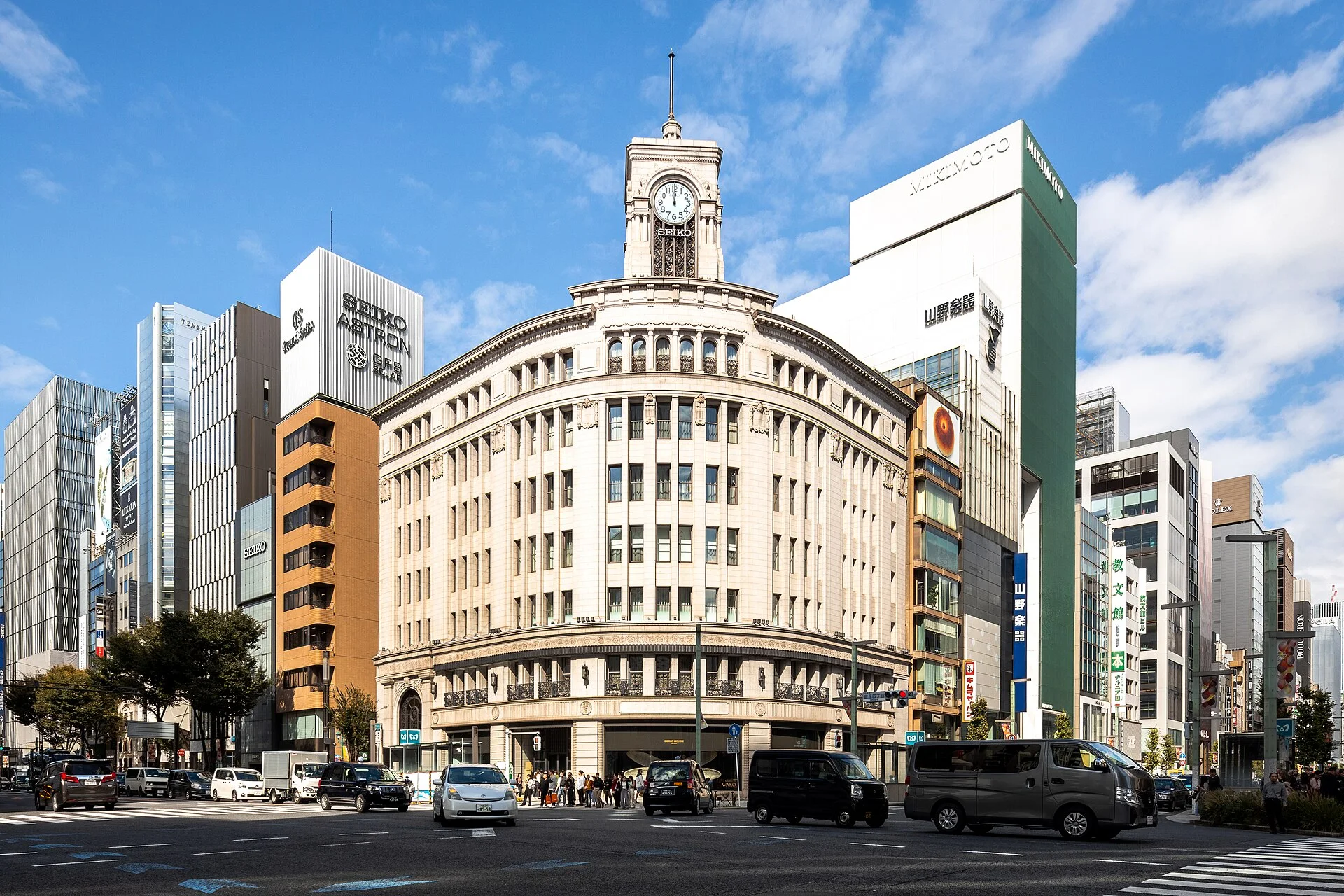
Save Ginza for days when you want to compare several boutiques along the street or split up with travel companions. Use the Wako Clock Tower at Ginza 4-chome as your meeting point, with Ginza Mitsukoshi right across the junction. Note that on 15 January 2027, Ginza Mitsukoshi opens late at 15:30 and closes at 20:00 due to an event, though the New Building 11F and 12F restaurants operate as normal. If you want to buy gifts there that day, spend the morning elsewhere and stroll down Chuo-dori after lunch. That schedule also illustrates how dining floors and retail floors in the same building can run on two separate clocks. For street routes and underground station exits, see our Ginza shopping guide.
If you are staying near Tokyo Station and have target items in both Shinjuku and Ginza, leave the shop that leaves you with bulky bags until last. Browsing boutiques first and making one final drop back at your hotel is far easier than squeezing through a basement food hall carrying two shoe boxes. Put anything requiring fitting in the first half of the day so you still have time to reroute if your size is unavailable.
Booking lucky bags for in-store collection in Yokohama and Urawa
Yokohama Takashimaya opens online reservations for selected lucky bags at 12:00 JST on 1 December. For instance, the Yokohama-exclusive PRESS BUTTER SAND bag (¥3,240 tax-included, limited to 104 sets) lists three collection slots on 3 January 2027: 10:00, 12:00, and 14:00. Visitors staying in the Yokohama area who want the morning free can pick the afternoon slot. If you have a train ticket booked that day, subtract walking time and platform buffer before choosing your collection window. Yokohama Takashimaya's main doors open at 09:00 on 3 January, though lucky bag collection still follows each item's reservation slip.
At the same Yokohama Takashimaya branch, Mary's Chocolate lucky bags also open for booking from midday on 1 December. Online bookings collect on 3 January at 13:00 or 14:00, whereas in-store bookings collect from 09:00 on 3 January or from 10:00 on 4 January. If two companions each booked the same brand, compare your booking channel and collection date before heading to the counter. If someone else needs to collect on your behalf, ask the counter directly whether proxy pickup is allowed and what ID or proof is needed before splitting up your itineraries.
If your itinerary already takes you into Saitama, selected food lucky bags at Isetan Urawa offer two in-store collection windows: 27–29 December, or 2 January (from midday) to 4 January 2027. General bookings run from 28 November to 15 December with upfront payment at the counter, and certain items are marked as post-New Year collection only. Needing two visits to the same shop suits longer New Year stays or trips passing through Urawa twice. If you are only staying nearby on 2 January, stick to off-the-shelf items or bags available for same-day pickup.
Take a screenshot of your collection confirmation and save it to an offline album on your phone so the building, floor, booking name, and order number are visible at a glance. Check storage requirements before choosing a food collection date: ambient biscuits pack neatly into luggage, whereas chilled desserts require a fridge at your destination. When collecting several boxes at once, have one person wait nearby while the other picks up, then verify item names and quantities before walking away.
Osaka: should you shop in Umeda or Namba?
The first opening wave at Hankyu Umeda Main Store on 3 January suits the basement food halls. Clothing floors do not open until 10:00, so coat shoppers can browse downstairs for half an hour first. If your companions have no shopping list, the store schedule lists two 45-minute Ise Daikagura traditional performances on the 9F Shukusai Hiroba at 12:30 and 15:30. Using the showtimes as a regrouping point gives non-shoppers something to watch and photograph while freeing you from checking messages in the fitting rooms.
Childrenswear lucky bags follow different rules from food. A group of childrenswear brands on 11F of Hankyu Umeda Main Store began taking counter bookings from 4 November 2026 for scheduled courier delivery between 3 and 7 January 2027. The notice specifies delivery only, with extra shipping fees and no cancellations or changes once ordered. If you leave Japan on 2 January, you cannot receive these. If you are staying in Osaka for several nights after New Year and your hotel accepts parcels, check sizing alongside the delivery window before going to the counter to pay.
If you are staying in Namba and focusing on Osaka Takashimaya, plan for 3 January or later—the main store is closed on 1 and 2 January. Note that the tax-free counter and restaurants keep separate hours; if you have dinner booked, leave enough time after shopping for same-day tax-free registration. Heading straight to Kansai Airport on the Nankai Railway afterwards? Confirm your tax-free record is complete right after paying before walking to the station, so you do not have to haul suitcases back.
Namba's stations sit close together, yet nipping back to your hotel mid-shop still eats up time. Staying near Midosuji Line Namba Station lets you put the department store last and walk straight back with your bags. Arriving from Kyoto for the day? Stow your luggage before entering the store and note which station holds your locker—and whether it is inside or outside the ticket gates. Hunting for the wrong locker exit while carrying lucky bags is much harder than walking empty-handed.
If you plan to visit both Umeda and Namba in one day, designate one district for queuing, fittings, and collections, and keep only one optional stop in the other. Use a restaurant booking as the bridge between areas so you stay on one side until lunch or dinner. With young children or heavy bags, walking two huge department stores usually tires everyone out faster than adding one more shop—only cross to the second district if you have a concrete reason.
Mitsukoshi Isetan online lucky bags: check the delivery window on your phone first
Mitsukoshi Isetan's 2027 New Year lucky bags started online waves back in October 2026, with December-release brands rolling out progressively from 25 November. You need an online member account before ordering. Once you spot a brand you like, tap into the individual product page and check both the sales period (hanbai kikan) and delivery window (otodoke jiki). Campaign pages mix live items with upcoming previews, so two collections open side by side can have completely different start and cut-off dates.
Official main delivery windows are 18–31 December 2026, 5–9 January 2027, and 14–20 January 2027. Food and made-to-order lucky bags carry separate dates, and some parcels may arrive earlier than stated. Travellers arriving on 1 January and checking out on 6 January only overlap the very start of a 5–9 January window. If the checkout allows a fixed delivery date, pick one between check-in and check-out; if it only offers a broad range, stick to in-store collection events so you are not waiting on a courier on departure morning.
To have a hotel receive parcels for you, message them first with the recipient name, delivery window, and payment status, and ask if they accept pre-arrival or chilled packages. Once approved, enter the address using your booking name and add your check-in date as requested. Changing hotels mid-trip? Use a single delivery hub and check the deadline for address changes beforehand. Parcels timed for the middle of your stay are much simpler to manage than ones arriving the night before you leave.
Takashimaya Online Store, individual branch booking pages, and storewide lottery pages may all carry the "2027 Fukubukuro" label. Takashimaya's main online campaign runs from 10:00 JST on 1 October 2026 to 10:00 JST on 31 January 2027, though every bag sets its own sales dates, shipping dates, and eligible delivery areas. Overseas shoppers should check first whether a Japanese delivery address is required, then verify the delivery zone. Bookmark each item using both the product name and branch name so you can jump straight back to the exact page days later.
Ordering food lucky bags from two brands for delivery in Japan means checking shipping fees, temperature zones, and dispatch dates item by item. Ambient gift boxes can wait at reception during the day, whereas chilled or frozen boxes require prior confirmation that the hotel has fridge or freezer space. Even items placed in the same basket may ship separately if listed under different dispatch batches. If two travellers order separately, keep each tracking number handy so you can see which box is delayed without both of you sacrificing a full day of sightseeing.
Lotteries, first-come-first-served, and advance payment
Takashimaya's storewide lucky bag programme includes special editions handled across 11 designated branches, including Nihombashi, Shinjuku, Osaka, and Kyoto. Some storewide lotteries take in-person entries on 3 and 4 January. Notification dates and collection or fulfilment details sit under each item's own section—queuing up may only secure a lottery entry rather than a bag in hand. If your 3 January morning is already booked elsewhere, shift lottery applications to 4 January, provided that item's notice lists the 4th as an entry day.
One storewide Takashimaya highlight this year is a ¥2,027 Hokkaido Genghis Khan lamb BBQ lucky bag containing a grill pan, lamb cuts, and restaurant vouchers. Winners are scheduled to be notified by late January, with the meat delivered by courier and the vouchers carrying set validity dates. With offers like this, work out which parts you can actually use during your trip: if you leave Japan in early January or have nowhere to receive frozen delivery, the bundle loses most of its practical appeal.
The same campaign page features a stay experience at Ninna-ji Temple in Kyoto, scheduled for fulfilment between May and July 2027. Experience bags like this suit repeat visitors planning their next trip, and you still need to budget for transport to the temple and available dates. If you want to bring home physical goods on this trip, filter for listings marked same-day sale (tojitsu hanbai) or in-store collection (tento uketori). Knowing the difference between lottery sale (chusen hanbai) and first-come, first-served (senchakujun) also pays off: the first needs an entry within the window, while the second requires being at the counter or webpage right at opening.
When paying upfront, read the collection date (uketori-bi), location (basho), and cancellation (kyanseru) fields carefully before checkout. Customer service desks do not always keep the same holiday hours as retail floors. Booking the wrong branch, picking the wrong size, or missing pickup before an afternoon train is far more disruptive than skipping a discount. When screenshotting your order, capture both the item name and the branch name together—brands running promotions across multiple branches make it easy to flash the wrong confirmation.
Gotemba on New Year's Day, or wait for mid-January outlets
Premium Outlets' 2027 New Year Sale runs from 1 to 3 January, with Sendai-Izumi starting on 2 January. Gotemba Premium Outlets has announced special New Year's Day gate entry from 07:00 at designated entrances, with shops open from 09:00 and centre hours running until 20:00 across 1–3 January. The free shuttle from Gotemba Station starts at 07:00 on 1 January and 08:30 on 2–3 January. If you are queuing for doorbuster lucky bags outside specific stores, check whether numbered tickets are issued and where each queue forms. If you only want general sale stock, arriving closer to 09:00 spares you standing outside in the cold.
If you are taking a direct coach from Tokyo or transferring from the train to the shuttle bus, lock in your return seat first and pick a handful of morning priority shops. Early New Year's Day arrivals can buy one key item, regroup in a common area to sort receipts and bags, and only cross to another zone if there is plenty of buffer before the bus back. Carrying shoe boxes, cookware, and coats across the connecting bridge takes longer than walking unencumbered. For shuttle stops and zone layouts, check our Gotemba Outlet day-trip guide.
In Osaka, Rinku Premium Outlets also joins the 1–3 January sale lineup. Via Nankai Airport Express from Namba, the official guide puts the ride to Rinku-Town Station at roughly 40 minutes plus a 6-minute walk, excluding wait times. If you plan to buy bulky items, leave yourself an evening back at the hotel to repack. Stopping by before an evening flight? Work backwards from your terminal check-in deadline to set hard cut-offs for fitting, paying, and leaving—and leave tax-free customs verification until before you check your bags.
The 15–24 January Premium Outlets Bargain suits travellers hunting specific sizes across two or three shops. Those dates mark the centre-wide campaign only; if you want a particular colour or model code, check individual shop listings first. A second outlet trip costs extra rail fares and at least half a day. If you already found your size at a fair price on day one, save the extra day for sightseeing instead.
On a two-night stay, put walkable alternatives first
Checking into Tokyo on 31 December and flying out on the evening of 2 January? Buy everyday essentials on New Year's Eve, keep New Year's Day free for outdoor sightseeing, and put size-sensitive shopping at Isetan Shinjuku on the morning of 2 January. If you are travelling with children and taking turns, send the clothes shopper into the store first on 2 January while the other parent follows later; if nothing fits, it is easy to head straight back to pick up luggage. As for pre-booked lucky bags, skip anything whose collection starts on 3 January.
Taking a morning Shinkansen from Tokyo to Osaka on 3 January and reaching Umeda around noon? Instead of guessing which basement food bags remain, start with clothes in the afternoon and catch the 15:30 Ise Daikagura performance. Do not trap a morning-only Tokyo lucky bag pickup in the half-hour right before your train. If you plan to collect first, store the bag, and take a later reserved train, factor in the shorter afternoon left in Osaka—plus one extra carry-on item.
Heading from Tokyo to Shizuoka on 15 January? Ginza Mitsukoshi does not open until 15:30 that day, while Gotemba is into its mid-January bargain window. Travellers determined to try on outdoor gear should give the time to Gotemba; anyone just picking up room-temperature souvenirs will save hassle at a centre with regular morning hours. If you want both, split them across different days—squeezing both into one day often ends with realising at the return station that you missed a tax-free counter.
Looking at a lucky bag poster: how to judge if it is worth buying
Base the value only on pieces you will actually wear. Say an ¥11,000 clothing lucky bag holds one jacket and two tops, and you would only have bought the jacket on its own for ¥8,000—the other two tops genuinely need to be worth ¥3,000 to you to break even. Buying for family? Ask what cuts they prefer beforehand, and mentally deduct the cost of any colour they never wear, even if you could pass it on. Bags that disclose their contents and sizes let you apply the exact same budget discipline as buying single items.
Childrenswear lucky bags bundle height-based sizes into one set, so compare top length, trouser length, and sleeve length individually. Without clothes on hand to measure while travelling, measure a well-fitting outfit at home before leaving and save a size chart on your phone—the same trick helps for heavy adult coats and winter boots. Relying solely on S, M, or L labels means starting fittings from scratch at every new brand.
For food lucky bags, check flavours, best-before dates, and whether refrigeration is needed. Bags bought for hotel snacks should be easy to portion out; if you plan to take snacks home as gifts, check how many individually wrapped portions are inside, and check your destination country's customs and quarantine rules for meat or other restricted items. Keep food you intend to eat in Japan separate at the till from goods you are taking out of the country for tax-free claims.
In-store signs often advertise extra percentage discounts or reductions applied at the till (reji nite nebiki). Compare the final tax-inclusive total against prices back home, then factor in your estimated tax-free refund and whether you need to buy extra checked baggage. If you plan to wear new shoes straight away on the trip, test both feet first and inspect the uppers and soles. For cameras or headphones, verify model suffixes and regional warranty coverage, and allow suitcase space for any original boxes you need to keep intact as gifts.
Compare tax-inclusive prices, and finish tax-free registration before leaving
Since 1 November 2026, Japan's tax-free shopping has moved to an airport refund model. You pay the full tax-inclusive price in-store and have your items logged in the tax-free system at a participating shop. At Takashimaya, for example, take your original passport, purchased goods, and receipts to the tax-free counter on the same day to register your refund method. If you have another stop to make afterwards, treat walking to the tax-free counter as part of the shopping slot and finish it before leaving the building.
The tax-free threshold remains ¥5,000 before tax per store per day. Only complexes operating a shared tax-free counter allow combining eligible concessions from the same day. Two receipts from separate shops add up in your trip budget, not automatically at the counter—check the counter's coverage first. If you use a discount voucher, ask staff to calculate the threshold on the final discounted price: a hat marked at ¥5,500 before tax drops to ¥4,900 after a ¥600 voucher, falling below the ¥5,000 minimum on its own.
Plug Takashimaya's published handling fee into your rough maths to keep estimates realistic. On a garment priced at ¥10,000 before tax (subject to 10% consumption tax), you pay ¥11,000 at the till. Under Takashimaya's standard published rate, the handling fee is 23% of the tax amount—¥230 on ¥1,000 of tax—leaving roughly ¥770 refunded before any payment-method charges. That gives a far more accurate card-spend comparison than simply knocking 10% off every "Tax Free" tag. For lucky bags or online orders, verify tax-free eligibility before paying.
To compare prices between two shops, a quick note on your phone with the tax-inclusive price, estimated refund, and detour cost is enough. When a spend-threshold coupon tempts you to add extra items, compare the total spend against buying only what you wanted. Buying an unwanted extra just to push a ¥4,900 hat over the threshold often leaves you spending more overall than paying full tax on the hat alone.
When shopping in a group, register purchases using each person's own passport and matching refund details. Mixing one person's payment card, another's receipt, and a third person's passport causes mismatches that are painful to untangle later. Keep hotel-delivered online parcels separate from your tax-free receipt pouch as well. The night before flying, gathering items by tax-free transaction against the line items on your original receipts makes packing much faster.
Do not wait until the last night to unbox and repack
Customs checks every item listed on a single tax-free transaction; missing even one piece voids the refund for the entire receipt. When packing for the flight home, lay out shopping bags, boxes, and receipts together to tick everything off before sizing up your suitcases. If companions are staying in different hotels or taking different flights, whoever holds the tax-free record for an item must carry it through departure—agree on this before handing out gifts right after shopping.
Present your purchases for customs verification within 90 days of purchase when departing Japan, before checking your bags. A red result requires showing the physical goods for inspection; a green result clears the check. Eligible visa holders who have completed registration can connect to dedicated Wi-Fi in designated zones at Narita, Haneda, Kansai, Chubu, Fukuoka, New Chitose, and Naha airports to process via Visit Japan Web, or use airport kiosks. Locate the verification point in your departure terminal before heading to check-in. If connecting via a domestic Japanese flight to an international departure, customs verification happens at your final exit airport—check whether you can access checked luggage there before deciding which bag holds your tax-free goods.
The closer your store collection slot sits to your flight, the less margin remains for repacking, queues, and customs checks. The night before departure, shift heavier goods into the right bags, pack liquids and oversized items within airline rules, and keep inspectable tax-free purchases accessible before bag drop. For refund timelines and airport procedures, see our Japan tax-free refund rules and winter shopping guide.
A few useful answers
Where can I find winter sales on New Year's Day 2027 in Japan?
Premium Outlets launches its New Year Sale on 1 January (2 January at Sendai-Izumi), with Gotemba shops opening at 09:00 on 1 January. Isetan Shinjuku starts its opening sale on 2 January, while Shinjuku Takashimaya and Hankyu Umeda Main Store open on 3 January.
What are the 2027 New Year opening hours for Shinjuku Takashimaya and Hankyu Umeda Main Store?
On 3 January, Shinjuku Takashimaya opens from 09:30 to 18:30. On the same day, Hankyu Umeda Main Store opens its basement food halls at 09:30 and floors 1 to 11 at 10:00, with all those floors closing at 19:00.
Can I receive Mitsukoshi Isetan online lucky bags over New Year?
The official site lists three main delivery windows: 18–31 December, 5–9 January, and 14–20 January, with food and made-to-order items listed individually on their product pages. For short stays, consider Yokohama Takashimaya's lucky bags that offer specified in-store collection slots instead.
Will I still catch outlet sales if I arrive in Japan in mid-January?
Yes. Premium Outlets runs its Bargain event from 15 to 24 January 2027. Check the store directory for your chosen outlet in advance and plan around individual brand notices.
Do discounted items still qualify for tax-free shopping in Japan?
Eligible goods qualify based on their final discounted price, which must reach at least ¥5,000 before tax per store per day. You pay the full tax-inclusive price in-store, register for tax-free shopping, and complete customs verification at the airport before checking luggage within 90 days.
Official information and references
Sources used in this guide.
- Isetan Shinjuku | Year-End 2026 to New Year 2027 Opening Hours
- Shinjuku Takashimaya | Year-End 2026 to New Year 2027 Opening Hours
- Hankyu Umeda Main Store | Floor-by-Floor Year-End and New Year Opening Hours
- Osaka Takashimaya | Opening Hours and 1–2 January 2027 Closure Notice
- Premium Outlets | 2026–27 Sale Dates and Participating Outlets
- Gotemba Premium Outlets | Year-End & New Year Opening Hours, Entry and Shuttle Buses
- Rinku Premium Outlets | Train and Bus Access
- Nihombashi Takashimaya | 2027 Lucky Bag Year-End Reservations and Advance Sales List
- Yokohama Takashimaya | 2027 Lucky Bag Booking and Collection Dates
- Isetan Urawa | 2027 Lucky Bag Reservations and In-Store Collection
- Ginza Mitsukoshi | 15 January 2027 Revised Opening Hours
- Hankyu Umeda Main Store | 2027 New Year Events and Ise Daikagura Schedule
- Hankyu Umeda Main Store | 2027 Childrenswear Lucky Bag Counter Reservations and Delivery
- Mitsukoshi Isetan Online Store | 2027 New Year Lucky Bags and Delivery Windows
- Takashimaya Online Store | 2027 Lucky Bag Booking and Delivery Terms
- Takashimaya | 2027 Storewide Lucky Bags and Application Methods
- Japan Tourism Agency | Tax-Free Refund Procedure Guide for Visitors
- Takashimaya | Tax-Free Procedures and Refund Handling Fees from November 2026