Plan Yokohama meals by station and time of day: dim sum, Peking duck, and pan-fried buns in Chinatown; bread in Motomachi; Iekei or sanmamen ramen at Yokohama Station; then gyunabe in Bashamichi or dinner in Minatomirai from Red Brick Warehouse.
- Region & Focus
- Yokohama
- Reading Scope
- 17 min read · 10 chapters · 5 Q&As
- Official Verification
- 41 official sources checkedUpdated November 22, 2026
- Key Topics
- FoodNeighborhoodsTokyo & Kanto
Chapter Route Map (tap any stop)
- Book a Table for Chinatown Lunch, or Leave Time to Browse
- Enter via Choyomon Gate and Pause Once You Buy Street Food
- Pick Up Bread in Motomachi, Then Eat Spaghetti Napolitan by Yamashita Park
- Where to Eat Yokohama's Two Signature Bowls of Ramen
- Which Building to Eat In at Red Brick Warehouse and Which Sea Bass Pier to Use
- Sit Down for Yokohama Gyunabe in Bashamichi
- Choose a Comfortable Dinner Spot in Minatomirai First
- Pick Your Dinner Spot Before Buying Event-Night Tickets
- How to Structure Half-Day, Full-Day, and Hotel Breakfast Plans
- Break Daily Food Costs Into One Anchor Meal and Shared Sides
- Quick Q&A
With half a day in Yokohama, pick either dim sum in Chinatown or Iekei ramen near Yokohama Station. With a full day, sit down for lunch in Chinatown, pick up bread in Motomachi, and walk through Yamashita Park toward Yokohama Red Brick Warehouse. Head to Bashamichi for a pot of gyunabe at dinner, or stay in Minatomirai for harbor night views. In the rain, the Minatomirai Line links lunch and dinner completely indoors.
Book a Table for Chinatown Lunch, or Leave Time to Browse
On a first visit to Yokohama Chinatown, two people can start with one sit-down dim sum restaurant and one takeout snack. Dim sum is built for sharing and easy to pace by appetite. Groups of four or more with a must-order dish should book a table ahead and let the reservation time dictate which gate you enter through. After Yokohama opened its port in 1859, Chinese merchants settled this district, putting Cantonese yum cha, Peking duck, and Sichuan dining on the same streets. Picking a spot works best when you start with the dish you want most.
Saikoh Shinkan is a reliable benchmark for Cantonese dishes and Hong Kong-style dim sum. Order the crispy wafer-paper shrimp rolls (ebimaki) along with steamed dumplings and a plate of greens. Lunch starts at 11:00 on weekends and national holidays, and at 11:30 on Mondays and Wednesdays through Fridays; the restaurant closes Tuesdays unless a national holiday falls on a Tuesday, in which case it stays open and closes Wednesday instead. On weekends and holidays, last order is 14:00 for lunch sets and 15:00 for regular menu items, with last entry at 14:30. On weekdays, lunch sets end at 13:30, a la carte orders run until 14:30, and last entry is 14:00. Because the dining room closes between lunch and dinner, afternoon arrivals can browse the first-floor shop before deciding whether to wait for evening service.
For another sit-down option, Manchinro Tenshinpo works well when you want steamed dim sum and small plates as a full meal, and it serves morning congee starting at 8:00 on weekends. Santo No. 2 offers a heartier pace with thick-skinned dumplings stuffed with pork and garlic chives, served alongside a dipping sauce with a coconut note. Two people planning coffee later in Motomachi can split one plate of dumplings and a single hot dish. If you crave numbing spice, head to a Sichuan dining room like Jukei Hanten Main Building for mapo tofu over white rice, adding one milder plate if anyone at the table avoids heat.
When ordering Peking duck, check the serving unit first. Yokohama Daifanten Main Store offers made-to-order all-you-can-eat dining that includes Peking duck alongside dim sum and desserts, ideal for families whose appetites vary. If you want a whole duck carved tableside, confirm the available bird count, minimum party size, and carving style when booking. Chukagai Daihanten is a separate restaurant altogether: its 130-dish weekday made-to-order buffet costs ¥2,780 per adult for two hours with a two-person minimum, shifting to weekend/holiday rates during Golden Week, Obon, and year-end holidays. Enter the full restaurant name with "Yokohama" or "Chukagai" in your map app, as both locations and prices differ.
If you are running late, check two separate Japanese cutoffs: "saishu nyuten" (last entry) and "last order" (L.O.). Set menus often close earlier than the a la carte list. When a first-choice spot is full, two diners will have an easier time shifting to a comparable a la carte dining room than cramming a two-hour all-you-can-eat seating into a tight afternoon schedule. When dining with older relatives or young children, note elevator, high chair, and stroller space needs on your reservation. Saikoh Shinkan's website floor guide lists accessible restrooms and nursing rooms by floor, worth checking before booking a private room.
For food allergies at the table, ask separately about ingredients, broths, sauces, and cooking oils when booking. Saikoh Shinkan discusses ingredient substitutions for course menus if notified at least three days before your visit with the exact ingredients and severity. Because kitchens and equipment are shared, guests with severe allergies such as shellfish should call the restaurant directly to confirm whether they can be accommodated safely. If anyone in your group eats strictly vegan or vegetarian, check Chojo Hanten via the official Yokohama visitors guide, then verify dish by dish whether meat stock or oyster sauce is used.
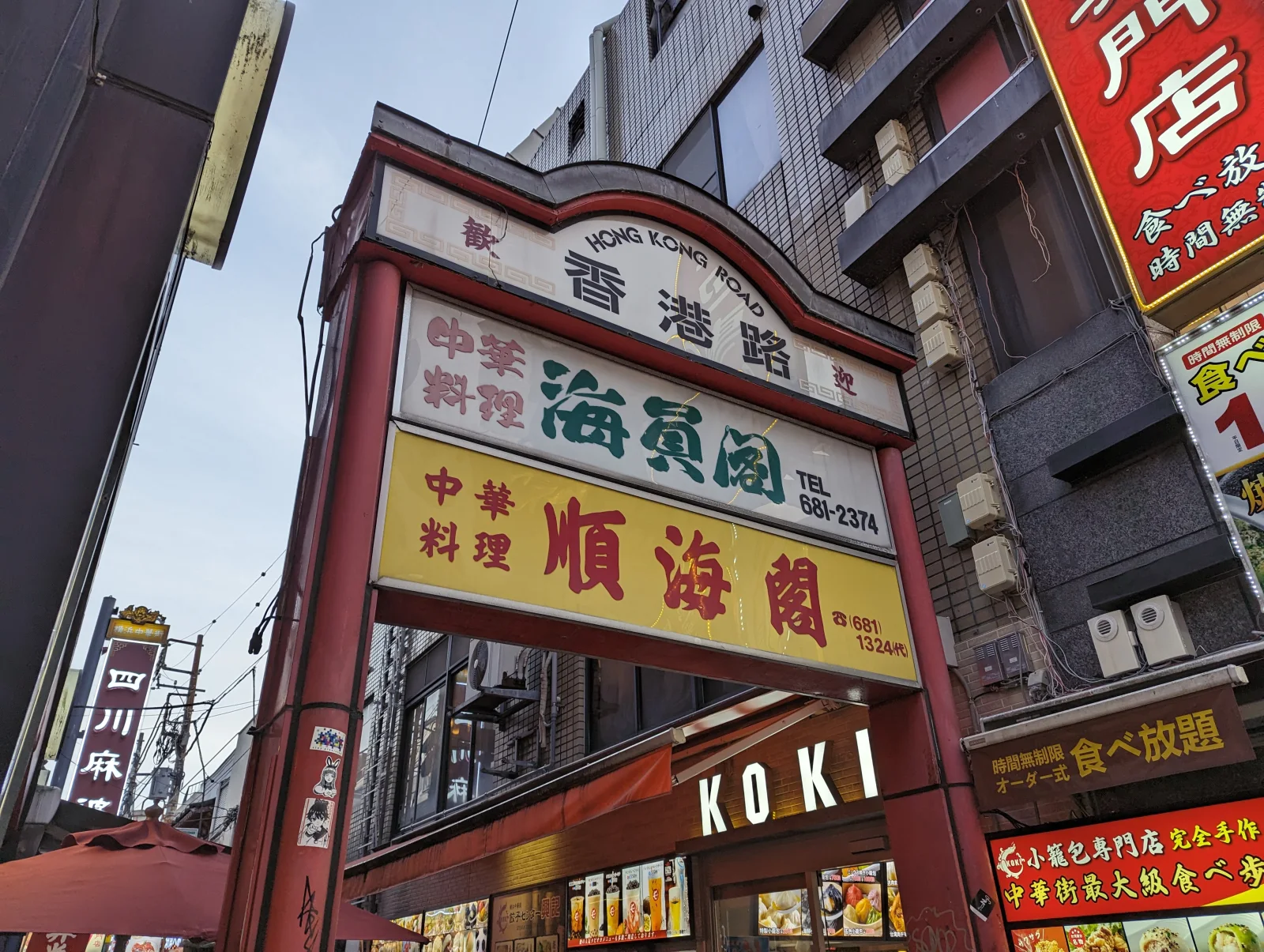
Plan Yokohama meals by station and time of day: dim sum, Peking duck, and pan-fried buns in Chinatown; bread in Motomachi; Iekei or sanmamen ramen at Yokohama Station; then gyunabe in Bashamichi or dinner in Minatomirai from Red Brick Warehouse.
Enter via Choyomon Gate and Pause Once You Buy Street Food
Take the Minatomirai Line to Motomachi-Chukagai Station: Chinatown and Yamashita Park share one ticket-gate side, while Motomachi Shopping Street sits on the other. Exit 2 on the Chinatown side puts you about a 2-minute walk from Wangfujing Main Store along Chinatown Main Street. Arriving on JR via Ishikawacho Station brings you out the Chukagai Exit into the district's southwest corner. Choose your approach based on your first stop: if lunch is booked on the east side of Main Street, save Zenrinmon Gate for a post-meal walk.
Wangfujing Main Store fries its signature pan-fried soup buns (shengjianbao) until the bottoms turn crisp over scalding broth inside. Hold the bun steady with chopsticks, nibble a small opening to release steam, and split and cool portions before handing them to kids. Nearby on Main Street, Edosei Main Store steams oversized pork buns out front. Two people saving room for a sit-down lunch can split one order of pan-fried buns or share a single steamed bun. For something sweet without waiting for another restaurant table, pick up almond soft-serve ice cream at Yokohama Daifanten's first-floor shop.
The Chinatown Development Association asks visitors to stop in a safe spot to eat skewered items like candied strawberries and to keep neighboring shopfronts clear. Check whether a stall has a dedicated standing area before ordering. For seating, walk along Ichiba-dori past the Mazu Temple to Yamashitacho Park, which also connects straight over the Hori River toward Motomachi. Note that waterfront Yamashita Park—reached by heading out Choyomon Gate toward the bay—is a completely different park from Yamashitacho Park inside Chinatown.
You do not need to pass under every gate. Use Zenrinmon Gate as a western meeting point on Main Street and Choyomon Gate as the cleanest route toward the harbor. When Main Street gets crowded, duck into Honkon-ro or Ichiba-dori to look for seating. If you are shopping for tea leaves or sauces on Ichiba-dori, wait until after your sit-down meal so your hands stay free for hot takeout earlier on; see our Yokohama Shopping Guide to pair Chinatown shopping with Motomachi and Minatomirai stops.
Pick Up Bread in Motomachi, Then Eat Spaghetti Napolitan by Yamashita Park
Motomachi fits naturally right after Chinatown lunch or as the first stop the morning after an overnight stay. Exit 5 (Motomachi Exit) at Motomachi-Chukagai Station opens directly onto the east end of Motomachi Shopping Street, while JR Ishikawacho Station's Motomachi Exit starts you from the opposite end. Yokohama Minatomirai Railway has announced construction narrowing Exit 5 from November 24 to December 17, 2026; travelers with large suitcases should follow the elevator signs from the same ticket-gate concourse.
Founded in 1888, Motomachi's Uchiki Pan is famous for its signature "England" loaf—easier to carry along the waterfront for next-morning breakfast than a box of chilled cake in the afternoon. If you want a sit-down break right away, pick a cafe with tables first. Kikuya Confectionery's signature Rum Ball packs real rum aroma, so children or non-drinkers in your group should choose another pastry. Picking one bakery and one dessert shop is plenty, leaving time to browse independent boutiques along the street.
To add a walk past the historic Western-style houses on the Yamate bluff, ride up through Exit 6 at Motomirai Station to America-yama Park, then stroll toward Motomachi Park and the Yokohama Foreign General Cemetery. Because Yamate sits on hilly slopes, anyone returning to Chinatown for dinner should tackle the uphill stretch first and descend back toward the Hori River. Families pushing strollers or companions watching their step will move far more comfortably by sticking to level Motomachi Shopping Street and the bayfront. If Spaghetti Napolitan is on your must-eat list, loop back from Motomachi to Yamashita Park rather than climbing Yamate before lunch.
On the first floor of Hotel New Grand's Main Building, The Cafe serves three classic Yokohama originals: Spaghetti Napolitan, Seafood Doria, and Pudding a la Mode. Per the official menu as of November 22, 2026, they cost ¥2,340, ¥3,289, and ¥2,024 respectively, including tax and service charge. Spaghetti Napolitan was created here by the second head chef during the postwar occupation, inspired by U.S. military rations, while Seafood Doria dates back to the hotel's first head chef. Treat the cafe as a Yamashita Park lunch if you arrive hungry from Motomachi, or drop in for Pudding a la Mode as afternoon tea after eating in Chinatown. Most tables at The Cafe are walk-in, though a small number of meal-only seats can be booked for 1 to 6 guests in two-hour slots starting at 12:30, 15:00, or 17:30 JST. Guests ordering drinks only should avoid the 11:00–14:00 window, when seating is reserved exclusively for diners.
Yokohama Red Brick Warehouse also has cafes and snacks, so if you already lingered over coffee in Motomachi, you can simply walk the outdoor plaza and save your energy for the waterfront. Alternatively, grab bread to go in Motomachi and save your afternoon sit-down coffee for the harbor. Whenever you plan two seated stops, count backward from any evening reservation—especially with children, ordering and walking back to the train takes longer to recover than skipping one extra dessert.
Where to Eat Yokohama's Two Signature Bowls of Ramen
To try the birthplace of Yokohama's thick-broth Iekei ramen, save lunch or a pre-departure dinner for Yoshimuraya. Originally opened in Shin-Sugita, Yoshimuraya now stands on the west side of Yokohama Station at 1-6-4 Okano. Day-trippers arriving from Tokyo can step out for a bowl upon arrival before transferring to the Minatomirai Line, or eat at Okano after Chinatown and head straight back to Tokyo. Because Yokohama Station's east side feeds directly into underground arcades and transfer corridors, follow signs for the West Exit carefully before heading up to street level so you do not cross the station twice.
The Shin-Yokohama Ramen Museum defines Iekei as Yokohama ramen built on pork-bone soy broth and thick noodles, typically topped with spinach, nori seaweed, and chashu pork. When staff ask for your three customizations—"men no katasa" (noodle firmness), "aji no kosa" (broth richness), and "abura no ryo" (oil level)—ordering "futsu" (regular) across the board gives you the kitchen's baseline balance on a first visit. Add a small side of white rice to wrap with broth-soaked nori. If you plan to try two ramen shops in one trip, stick to standard portions and save extra toppings for the bowl you want most.
Sanmamen appears on menus in Japanese katakana or mixed script as "sanmamen." Japan's Ministry of Agriculture, Forestry and Fisheries describes it as ramen topped with a thick, glossy sauce of stir-fried bean sprouts, napa cabbage, wood ear mushrooms, or pork poured over noodle soup. Keep the menu name in mind rather than the sound: "sanma" means Pacific saury in Japanese, yet this bowl contains no fish—its signature is the thickened vegetable topping. Because that starch-thickened sauce traps heat, scoop from the edge of the bowl first to let noodles and vegetables cool slightly.
Passing through Yokohama Station's East Exit underground arcade puts you steps from Gyokusentei in Yokohama Porta for sanmamen. This branch opens 11:00–22:00 with last order at 21:30. Gyokusentei's original shop, founded in 1918, operates in Isezakicho—a good detour if you are walking around Kannai. With Iekei at the West Exit and sanmamen at the East Exit, the easiest way to cover both in a single day is to eat one for lunch upon arrival and the other for dinner before boarding the train home, spending midday walking Chinatown or grabbing a light shared snack.
If your group only wants one bowl, pick sanmamen for a lighter finish or Yoshimuraya for rich pork-bone soy broth and thick noodles. After eating at Gyokusentei, allow a few extra minutes to walk from the East Exit underground mall back to JR ticket gates. Agree on a specific Minatomirai Line or JR gate as your evening meetup point so nobody gets separated in the station. If you already hold a timed dinner reservation in Minatomirai, save both ramen stops for your arrival or departure window rather than letting a ramen line squeeze your booking.
Which Building to Eat In at Red Brick Warehouse and Which Sea Bass Pier to Use
On clear days, follow the waterfront promenade from Yamashita Park past Zou-no-hana Park to reach Yokohama Red Brick Warehouse. If anyone in your group is tired of walking, enter via Nihon-odori or Bashamichi stations on the Minatomirai Line—the official site lists both at roughly a 6-minute walk, compared with about 12 minutes from Minatomirai Station. Walking all the way from Motomachi via Yamate, Yamashita Park, Red Brick Warehouse, and Minatomirai stretches considerably longer once browsing and hills add up. If you are only heading over for evening dinner, use Bashamichi or Nihon-odori as your meetup station.
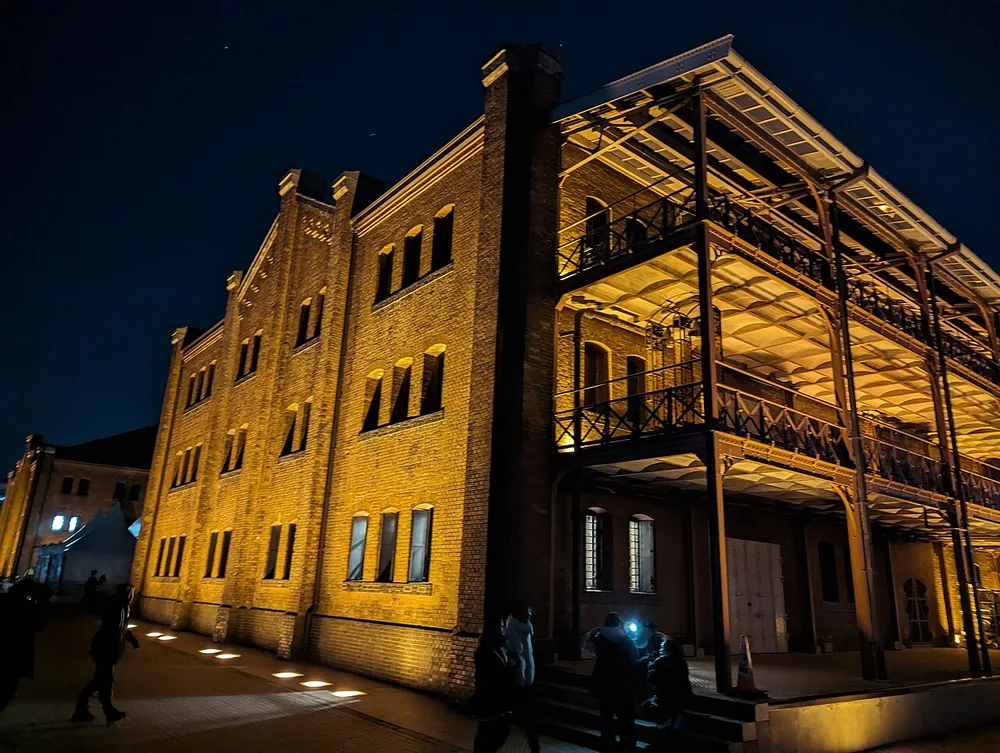
The warehouse splits clearly between two buildings: Building 1 houses exhibitions, events, select shops, and a cafe, while Building 2—typically open 11:00–20:00—holds the main concentration of dining. Building 2's first floor offers a food court, cafes, and fruit tarts, while the third floor has sit-down spots for burgers or Brazilian churrasco. Down in the food court, you will find omurice from Yokohama Tachibanatei, shumai and bento boxes from Kiyoken, and Spanish paella from MARIO, an offshoot of a Noge dining spot. Sharing one floor makes it effortless for everyone to pick a different meal, or for two travelers to split a plate of shumai and save room for gyunabe or ramen at dinner. If you have a harbor-view dinner booked later, grab a small snack on the first floor and spend your spare time outdoors watching boats and the brick facades. In wind and rain, walking in from Bashamichi Station and dining inside Building 2 is far more predictable than timing a ferry.
If you want to ride the SEA BASS water bus on a tight schedule, put the crossing in a wide open slot well before any dinner booking. From Yokohama Station, boats board at Bay Quarter outside the East Exit; check whether the timetable is weekday or weekend, then verify both departure and arrival piers. Schedules marked "aka-nashi" skip the Red Brick Warehouse pier, while "HH-nashi" skip Yokohama Hammerhead. Traveling from Yamashita Park to Red Brick Warehouse, skip any "aka-nashi" or Yokohama East Exit express boat and wait for the next regular sailing. When rough weather suspends service, walk the seaside path from Yamashita Park or catch the Minatomirai Line from Motomachi-Chukagai Station.
To see two waterfront complexes in one stretch, walk from Red Brick Warehouse toward Yokohama Hammerhead and decide at the pier whether to stop for dessert or continue into Minatomirai. Once legs tire, make Hammerhead your harbor turnaround point: sail back to Yamashita Park or walk up to Bashamichi or Motomachi-Chukagai for trains toward a Minatomirai dinner. If your group takes a taxi, show the driver "Yokohama Akarenga Soko" (Yokohama Red Brick Warehouse) along with the building number so you get dropped right beside Building 2's floor directory.
Sit Down for Yokohama Gyunabe in Bashamichi
As Western food culture arrived with the port opening, gyunabe adapted beef and aromatic vegetables into seasonings Japanese diners already loved—Yokohama municipal heritage records note miso, soy sauce, and warishita styles. For a hot meal before or after Red Brick Warehouse, step off at Bashamichi Station for Araiya Bankokubashi. Founded in the Isezaki area in 1895, Araiya runs its Bankokubashi branch roughly a 1-minute walk from Bashamichi Station's Exit 6 (Akarenga Soko Exit). Double-check that your online booking specifies the Bankokubashi branch rather than the Akebonocho main store or the Yokohama Station East Exit department-store counter.
Solo diners wanting a quick taste can order the "Otegaru Gyunabe" (casual beef hot pot), served pre-simmered as a set meal for ¥2,750 including tax plus a 10% service charge at Bankokubashi; note that reservations are not accepted for set meals alone. For a full unhurried dinner cooked at the table with rice and soup, look at "Gyunabe to Oshokuji" courses, starting at ¥5,500 plus service charge for the Aori beef tier. Two diners planning a specific dinner course should check the booking cutoff for that menu in advance. Bankokubashi typically closes lunch at 14:30 (14:00 last order), opens dinner at 17:00, and closes on Mondays.
Between January 5 and February 3, 2027, Araiya offers a New Year lunch kaiseki limited to 30 portions per day, requiring at least two guests and reservation by 15:00 JST the previous business day. The standard set is ¥6,600 including tax plus a 10% service charge, pairing ozoni rice-cake soup and savory chawanmushi custard with an individual gyunabe pot. Because this reserved lunch runs longer than a weekday set, leave only coffee on the afternoon schedule afterward. If your Yokohama day lands on a Monday, save gyunabe for another day and stay along the waterfront instead of backtracking to Yokohama Station.
Choose a Comfortable Dinner Spot in Minatomirai First
When dining in Minatomirai with children, MARK IS connects directly to Minatomirai Station and puts both restaurants and a food court on the fourth floor—handy when adults and kids want completely different meals—with nursing and diaper-changing rooms one level down on the third floor. Hours differ by zone: the food court generally closes at 20:00 Monday through Thursday and stays open until 21:00 Fridays through Sundays, national holidays, and holiday eves, while the restaurant floor lists closing at 23:00 with individual last-order cutoffs. If you take kids to see the Ferris wheel first, leave buffer time to find a table and order before the food court wraps up.
To secure a window table at dinner, look for reservation plans explicitly labeled "madosokuseki kakuyaku" (guaranteed window seat). At Karyu on the 31st floor of InterContinental Yokohama Grand, seating includes both window-side and interior tables. For its 2026 Christmas dinners on December 19, 20, 23, 24, and 25, the main course starts at ¥22,000 for standard seating, while a guaranteed window seat with welcome champagne is ¥26,000—the price difference buys the confirmed view and drink. On ordinary evenings, ordering a la carte or standard dinner sets—or visiting at lunch for daytime harbor views—lets you put your budget directly toward the food.
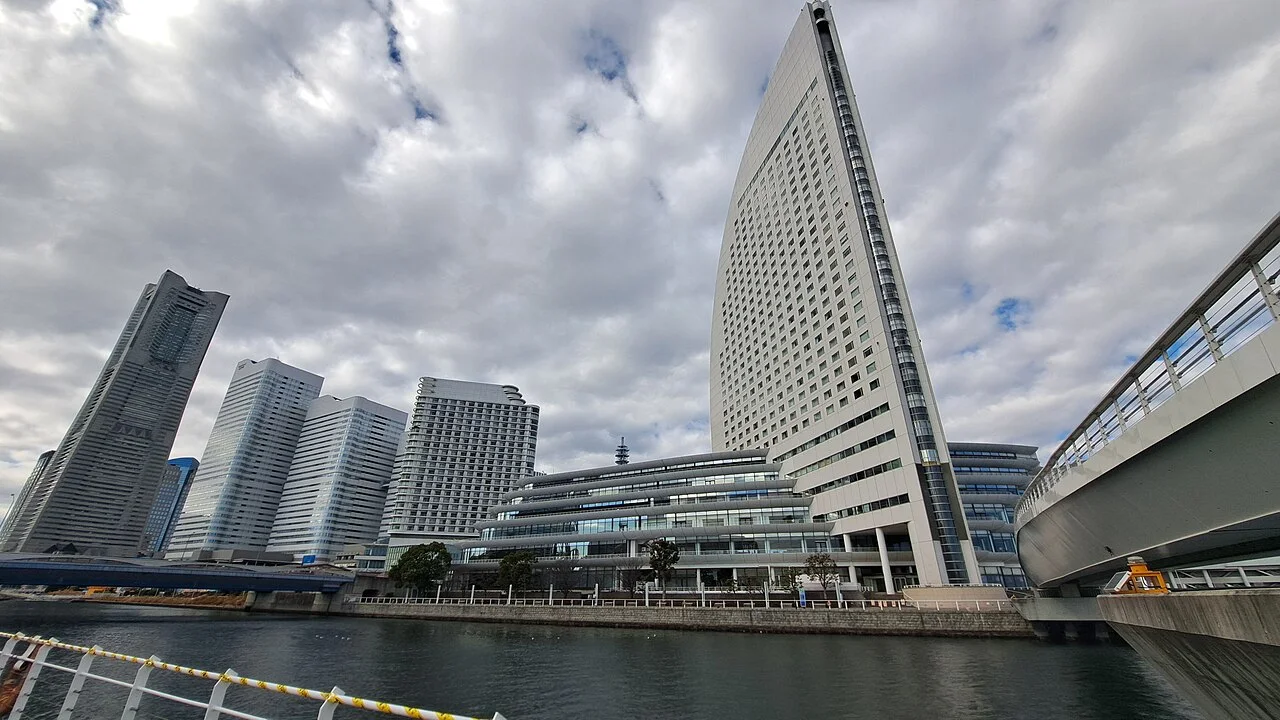
If the Ferris wheel or harbor panorama matters most, read whether the restaurant describes facing the bay, the amusement park, or the city skyline, and settle standard versus guaranteed window seating before you arrive. Check the walking path too: Minatomirai Station, the Yokohama Museum of Art, Pacifico Yokohama, and Red Brick Warehouse all sit in the same waterfront district, yet meeting at one landmark and walking to a specific dining floor are two separate steps. After dinner, JR passengers can follow elevated shopping walkways straight to Sakuragicho Station, while anyone heading back to Shibuya can board direct through-trains on the Tokyu Toyoko Line from Minatomirai Station.
If you prefer spending your budget on dishes rather than views, eat inside MARK IS and walk down to the harbor edge afterward for night photos. For skewers and drinks instead, cross from JR Sakuragicho Station to the inland side for Noge's compact izakaya and eateries. Small groups should check seating capacity before stepping inside and ask about "otoshi" (table appetizer charge) or "sekiryo" (seating fee) if posted at the door. Guests returning to Tokyo should factor the walk between Noge, Sakuragicho, and Yokohama Station into their last-train math, as Noge leads directly back to JR Sakuragicho Station.
Pick Your Dinner Spot Before Buying Event-Night Tickets
In 2026, the Yokohama Red Brick Warehouse Christmas Market runs from November 20 through December 25, with general admission starting at ¥500 (food and drinks separate, and certain zones free). Hours run 11:00–21:00 (20:30 last order) from November 21 to December 4, extending to 22:00 (21:30 last order) from December 5 onward. Because the outdoor plaza market, indoor warehouse tenants, and nearby malls each keep separate schedules, budget tickets separately from mulled wine and sausages. If you want a relaxed sit-down dinner with children, eat inside the warehouse buildings or in Minatomirai first before deciding whether to enter the ticketed plaza.
Chinatown anchors the other major winter evening option. The Yokohama Chinatown Development Association lists the 2027 Spring Festival Lanterns from November 1, 2026 through February 20, 2027, lit daily from 16:00 to 23:00. After dinner, exit through Choyomon Gate toward Yamashita Park's Central Entrance along an illuminated stretch of roughly 200 meters, or cut down Ichiba-dori toward Ichiba-dori Bridge if heading back to Motomachi. While the lanterns switch on nightly at the same hour, check the association's event calendar for exact performance dates. Keep dinner and evening strolling on the same side of the waterfront so you do not bounce between two crowded event gates.
Special events pack diners into peak dinner hours. With an 18:00 restaurant booking near Red Brick Warehouse, visit the Christmas market after eating or browse the free outdoor areas early before moving on. If you plan to eat and attend the event inside Red Brick Warehouse itself, check the official 2026–2027 year-end and New Year tenant schedule by date, floor, and restaurant rather than relying on general building hours. Our Yokohama Red Brick Warehouse Christmas Market Guide details ticketing, grounds layout, and return routes.
How to Structure Half-Day, Full-Day, and Hotel Breakfast Plans
From Tokyo Station, ride the JR Tokaido Line to Yokohama Station and transfer to the Minatomirai Line toward Motomachi-Chukagai. From Shibuya, direct through-trains on the Tokyu Toyoko Line marked "Motomachi-Chukagai" take you straight down without changing trains. When transferring at Yokohama Station, where JR, Keikyu, Sotetsu, and Minatomirai lines intersect, specify the "Minatomirai Line ticket gate" or platform rather than just saying "Yokohama Station" if meeting companions. For late-night returns, look up train times to your final Tokyo station and pad in transfer walks between rail companies and underground exits.
With just half a day, commit to either Chinatown or ramen and save the other meal for back in Tokyo. For Chinatown, ride to Motomachi-Chukagai Station, walk out Choyomon Gate after lunch, and stroll along the water at Yamashita Park; if anyone wants dessert, stop at a Motomachi cafe or The Cafe before boarding at the same station. For a ramen-focused half day, anchor at Yokohama Station with Yoshimuraya at the West Exit and Gyokusentei in the East Exit underground mall bracketing your afternoon sightseeing.
With a full day and clear weather, eat lunch in Chinatown, browse Motomachi or part of Yamate in the afternoon, and walk through Red Brick Warehouse before choosing dinner. When wind or rain hits, skip Yamate's hills, ride straight from Motomachi-Chukagai Station to Minatomirai Station's direct MARK IS connection, or take the train to Bashamichi for Red Brick Warehouse—both complexes keep dining indoors. Staying near Minatomirai Station keeps direct returns to Shibuya effortless, while hotels near JR tracks connect easily from Sakuragicho, Kannai, or Ishikawacho.
Staying near Chinatown or Yamashita Park lets you split congee breakfast and Motomachi bakery bread across separate mornings. For morning congee, head to Shatenki No. 2 on Shanghai-ro (189-9 Yamashitacho), which is separate from Shatenki Main Store on Chinatown Main Street. Shatenki No. 2 opens at 8:00 on weekends and 8:30 on Mondays, Tuesdays, Thursdays, and Fridays, closes Wednesdays, and breaks from 15:00 to 17:00. Note that its congee base is simmered with dried scallops, dried oysters, and chicken even when a menu item simply reads "scallop" or "plain" congee—always ask about the stock if avoiding shellfish or meat broths. Afterward, follow Shanghai-ro out to Choyomon Gate and Yamashita Park. Guests staying in Minatomirai can place reserved dinners on check-in night and keep breakfast at the hotel or nearby before catching trains. Families juggling luggage, strollers, and hungry kids should pick the closest sit-down meal to their hotel first and drop bags before walking the waterfront; see our Yokohama Travel Guide for sightseeing loops and evening walks.
If you want one Yokohama specialty between lunch and dinner without another sit-down stop, grab a Kiyoken Shumai Bento for the train home or back to your hotel room. Priced at ¥1,180 per the official site, it pairs shumai with simmered bamboo shoot cubes and compartmentalized white rice. Check the expiration date and storage note on the wrapper and finish fresh bentos, pork buns, and meat-filled mooncakes while still in Japan. If you want edible souvenirs to carry home abroad, stick to tea leaves or meat-free pastries with clear ingredient labels, and verify your destination country's customs and agricultural quarantine rules before packing any animal or plant products. Buy glass-jarred sauces near the end of the day so you are not hauling weight, and wrap jars separately from fragile boxed sweets before flying.
Break Daily Food Costs Into One Anchor Meal and Shared Sides
For two people focusing on dim sum, Santo No. 2's pork-and-chive dumplings list at ¥990 per official Chinatown pricing, while Saikoh Shinkan's crispy shrimp rolls are ¥760. Check the piece count per plate when ordering and round out the table with tea, rice, or a plate of greens. Larger families wanting to linger should compare a la carte totals against weekday all-you-can-eat rates—and watch what age triggers the adult price. At Chukagai Daihanten's weekday buffet, adult rates begin at age 10, while ages 4–6 pay ¥1,280, ages 7–9 pay ¥1,780, and children under 4 eat free; for a family of four, two kids' ages can swing the bill noticeably.
To sample two classic port-era Western dishes, The Cafe's Spaghetti Napolitan and Seafood Doria come to ¥5,629 combined—about ¥2,815 per person when two diners each order one and share. Adding one Pudding a la Mode brings a two-person tab to ¥7,653. Making that your anchor meal pairs cleanly with a budget ramen bowl at Yokohama Station or casual food-court picks along the harbor at night. For an anniversary or special-occasion dinner, reserve most of your budget for a guaranteed-seat restaurant and keep daytime spending to one dim sum table and a coffee stop.
With limited time left before your train, securing a seat matters more than squeezing in one extra shop. Large groups in Chinatown should agree on a post-meal exit gate before dispersing, and travelers staying nearby can carry snacks back to their room. When minutes are tight at Yokohama Station, pick up a bento right inside the concourse instead of queuing on the West Side and sprinting back to the East Exit—save the rush for another trip when you have time for a proper sit-down table.
A few useful answers
Which station and exit should I use for Yokohama Chinatown?
From Motomachi-Chukagai Station on the Minatomirai Line, take Exit 2 (Yamashitacho Exit) to reach the east end of Chinatown Main Street. From JR Ishikawacho Station, take the Chukagai Exit to enter from the southwest side. For Motomachi Shopping Street, use Exit 5 at Motomachi-Chukagai Station.
Can I walk and eat in Yokohama Chinatown?
The Yokohama Chinatown Development Association asks visitors to stop in a safe spot while eating skewered snacks and to keep doorways and walkways clear for neighboring shops. Eat pan-fried buns or steamed pork buns in the shop's designated space or at Yamashitacho Park inside Chinatown.
Where can I find Iekei ramen and sanmamen in Yokohama?
Visit Yoshimuraya, the founding shop of Iekei ramen, in Okano on the west side of Yokohama Station, or head to Gyokusentei in the Yokohama Porta underground arcade on the east side for sanmamen. Iekei pairs rich pork-bone soy broth with thick noodles, while sanmamen tops noodle soup with a thick gravy of stir-fried bean sprouts and vegetables.
Where should I eat in Yokohama on a rainy day?
Book an indoor lunch in Chinatown, then ride the Minatomirai Line directly to Minatomirai Station, which connects straight into MARK IS and its fourth-floor restaurants and food court. To reach Yokohama Red Brick Warehouse, walk about 6 minutes from Bashamichi or Nihon-odori Station; dining is concentrated in Building 2.
How do I book a window seat for a night-view dinner in Minatomirai?
Select a reservation plan explicitly labeled "madosokuseki kakuyaku" (guaranteed window seat) and check the restaurant's photos or seating notes for the view direction. For a flexible family meal without strict bookings, eat inside station-linked MARK IS and walk out to the waterfront afterward for the night skyline.
Official information and references
Sources used in this guide.
- Yokohama Chinatown Development Association | Recommended Signature Dishes and Prices
- Yokohama Chinatown Development Association | Takeout Dining Etiquette
- Yokohama Chinatown Development Association | 2026 Official Shop and District Map
- Saikoh Shinkan | Hours, Floor Guide, and Reservations
- Saikoh Shinkan | Ingredient Substitutions, Allergies, and Booking FAQ
- Yokohama Official Visitors' Guide | Chojo Hanten Vegetarian Options
- Manchinro Tenshinpo | Yokohama Chinatown Shop Directory
- Yokohama Daifanten Main Store | Yokohama Chinatown Shop Directory
- Chukagai Daihanten | Weekday Made-to-Order All-You-Can-Eat Plan
- Wangfujing | Main Store and Branch Locations
- Edosei | Main Store and Branch Guide
- Shatenki No. 2 | Address and Business Hours
- Yokohama Minatomirai Railway | Motomachi-Chukagai Station Map
- Yokohama Minatomirai Railway | Motomachi-Chukagai Station Exit 5 Construction Notice
- Tokyu Railways | Shibuya Station and Motomachi-Chukagai Timetable
- Motomachi Shopping Street | Access and Walking Entrances
- Yokohama Greenery Foundation | Motomachi Park Access
- Yokohama Official Visitors' Guide | Chinatown and Port-Opening Cuisine
- Uchiki Pan | History and Signature Breads
- Yokohama Transportation Bureau | Kikuya Confectionery and Motomachi Guide
- Hotel New Grand | The Cafe Signature Dishes and Prices
- Hotel New Grand | The Cafe Dining and Reservation Slots
- Shin-Yokohama Ramen Museum | Yokohama Iekei Ramen Overview
- Kanagawa Prefectural Tourism | Yoshimuraya Location Details
- Ministry of Agriculture, Forestry and Fisheries | Kanagawa Regional Dish Sanmamen
- Yokohama Porta | Gyokusentei Location and Hours
- City of Yokohama | Gyunabe and Local Food Heritage
- Araiya | History of Gyunabe
- Araiya | Bankokubashi Menu, Service Charge, and Reservations
- Yokohama Red Brick Warehouse | Waterfront Access Guide
- Yokohama Red Brick Warehouse | Cafes, Restaurants, and Food Court
- SEA BASS | Water Bus Routes, Piers, and Timetables
- MARK IS Minatomirai | Mall and Food Court Hours
- MARK IS Minatomirai | Direct Station Access and Family Facilities
- InterContinental Yokohama Grand | Karyu Christmas Dinner and Seating Plans
- Yokohama Official Visitors' Guide | Noge Shopping Street
- Yokohama Red Brick Warehouse | 2026 Christmas Market Hours and Tickets
- Yokohama Red Brick Warehouse | 2026-2027 Year-End and New Year Store Hours
- Yokohama Chinatown Development Association | 2027 Spring Festival Lanterns
- Kiyoken | Shumai Bento Price and Contents
- Taiwan Animal and Plant Health Inspection Agency | Passenger Entry Quarantine Rules