Plan your Yokohama meals by station and time of day. Pair Chinatown dim sum, Peking duck, and pan-fried buns with Motomachi bakery loaves, Yokohama Station Iekei ramen or sanmamen, and dinner in Bashamichi or Minato Mirai.
- Region & Focus
- Yokohama
- Reading Scope
- 17 min read · 10 chapters · 5 Q&As
- Official Verification
- 41 official sources checkedUpdated 22 November 2026
- Key Topics
- FoodNeighbourhoodsTokyo & Kanto
Chapter Route Map (tap any stop)
- Book a Chinatown lunch table, or leave time to graze
- Enter via Choyomon Gate and pause once you buy snacks
- Bakery loaves in Motomachi, spaghetti Napolitan by Yamashita Park
- Where to eat Yokohama's two signature bowls of ramen
- Which building to eat in at Red Brick Warehouse, and where the Sea Bass stops
- A pot of Yokohama gyunabe in Bashamichi
- Choosing a comfortable dinner spot in Minato Mirai
- On event nights, lock in dinner before buying plaza tickets
- Half-day, full-day, and overnight breakfast itineraries
- Splitting a day's food budget between one main meal and small plates
- Quick Q&A
If you only have half a day in Yokohama, focus on either Chinatown dim sum or Iekei ramen near Yokohama Station. With a full day, sit down for lunch in Chinatown, pick up bread in Motomachi during the afternoon, and stroll along Yamashita Park towards the Red Brick Warehouse. For dinner, head to Bashamichi for traditional beef hotpot (gyunabe) or stay in Minato Mirai for harbour views. If it rains, the Minatomirai Line links your lunch and dinner stops underground.
Book a Chinatown lunch table, or leave time to graze
On a first visit to Yokohama Chinatown, a pair of travellers can start with one dim sum restaurant and a single takeaway snack. Dim sum is built for sharing and easy to top up according to appetite. Groups of four or more with a must-try dish should book ahead and let their reservation time dictate which gate they enter through. After Yokohama's port opened in 1859, Chinese merchants settled around this quarter, so a single street today offers Hong Kong yum cha, Peking duck, and Sichuan dishes side by side. Choosing where to go is quickest when you start with the dish you crave.
Saikoh Shinkan is a reliable benchmark for Cantonese dishes and Hong Kong-style dim sum. For its signature item, order the crisp wafer-wrapped prawn rolls alongside steamed dumplings and a plate of greens. Lunch starts at 11:00 on Saturdays, Sundays, and public holidays, and at 11:30 on Mondays and Wednesdays to Fridays; the restaurant closes on Tuesdays, though when Tuesday is a public holiday it opens as usual and closes on the following Wednesday. On weekends and holidays, last orders are 14:00 for lunch courses and 15:00 for regular items, with final entry at 14:30. Weekday lunch sets run until 13:30 and à la carte until 14:30, with final entry at 14:00. Because the kitchen closes between lunch and dinner, afternoon arrivals can browse the ground-floor shop before deciding whether to wait for evening service.
For another sit-down meal, Manchinro Tenshinpo works well when you want steamed dim sum and small plates as a full lunch, and it also serves morning congee from 08:00 at weekends. Santo Nigo-ten offers a heartier format: thick-skinned boiled dumplings stuffed with pork and garlic chives, paired with a coconut-tinged dipping sauce. A couple heading onwards to Motomachi for coffee can share one plate of dumplings and one hot dish. If you prefer numbing spice, look to a Sichuan stalwart such as Jukei Hanten Honkan for mapo tofu with steamed rice, balancing the heat with a mild dish if anyone in your party avoids chilli.
When ordering Peking duck, check the serving unit first. Yokohama Daihanten's main branch runs an all-you-can-eat à la carte menu covering Peking duck, dim sum, and desserts, ideal for families who want different dishes. Those set on a whole freshly carved duck should confirm the number of birds, minimum party size, and serving style in a single booking. Chukagai Daihanten is a separate restaurant offering a weekday 130-dish order-style buffet at ¥2,780 per person for a minimum of two guests and two hours, switching to weekend and holiday pricing during Golden Week, Obon, and the New Year period. Type the full name — distinguishing Yokohama Daihanten from Chukagai Daihanten — into your map app, as their entrances and prices differ.
If you are running late, check both saishu nyuten (final entry) and last order (rasuto oda). The former is the latest time you can step inside, while set courses often stop earlier than à la carte dishes. Should your first-choice spot be full, two people can pivot easily to a similar à la carte restaurant rather than cramming a two-hour buffet into the afternoon schedule. When dining with elderly relatives or toddlers, note lift access, high chairs, and pushchair parking in your booking request. Saikoh Shinkan's website includes a floor guide marking accessible toilets and nursing rooms, which helps when choosing a private room.
If anyone at the table has food allergies, ask separately about ingredients, stocks, sauces, and cooking oils when booking. Saikoh Shinkan discusses ingredient substitutions for set courses provided you notify them at least three days in advance about the allergen and required level of exclusion. Because restaurants share kitchens and equipment, guests with severe allergies to shellfish or other triggers should telephone the venue directly to verify whether they can be accommodated safely. For vegan diners, check Chojo Hanten via the official Yokohama tourism guide, then confirm dish by dish whether meat stock or oyster sauce is used.
Plan your Yokohama meals by station and time of day. Pair Chinatown dim sum, Peking duck, and pan-fried buns with Motomachi bakery loaves, Yokohama Station Iekei ramen or sanmamen, and dinner in Bashamichi or Minato Mirai.
Enter via Choyomon Gate and pause once you buy snacks
Ride the Minatomirai Line to Motomachi-Chukagai Station: Chinatown and Yamashita Park share one set of ticket barriers, while Motomachi Shopping Street sits on the opposite side. Leaving via Exit 2 on the Chinatown side puts you roughly a two-minute walk from Wanfujing Honten along Chinatown Main Street, according to the shop's directions. Arriving via JR Ishikawacho Station, take the Chinatown Exit to enter from the south-western edge instead. Choose your entry point based on your first meal; if lunch is booked on the east side of the main avenue, save Zenrinmon Gate for a post-lunch stroll.
Wanfujing Honten's signature pan-fried buns (shengjianbao) pair a crisp, golden base with scalding broth inside. Hold the bun steady with chopsticks, nibble a small hole to let the steam escape, and set one aside to cool before handing it to children. Edosei Honten also stands on Chinatown Main Street, steaming oversized pork buns out front. Two visitors saving room for a sit-down lunch can split one box of pan-fried buns or share a single pork bun. For something sweet without joining another restaurant queue, pick up an almond soft-serve ice cream from the ground-floor shop at Yokohama Daihanten.
The Chinatown Development Association asks visitors to pause in a safe spot to finish skewered treats such as candied strawberries and to keep neighbouring shopfronts unobstructed. Before paying, check whether the stall has a designated standing area. For somewhere to sit down, head to Yamashitacho Park near Masobyo (Mazu Temple), a natural detour via Ichiba-dori that also lets you cross the Horikawa River towards Motomachi afterwards. Keep in mind that waterfront Yamashita Park, out beyond Choyomon Gate towards the harbour, is a completely separate park from Yamashitacho Park inside Chinatown.
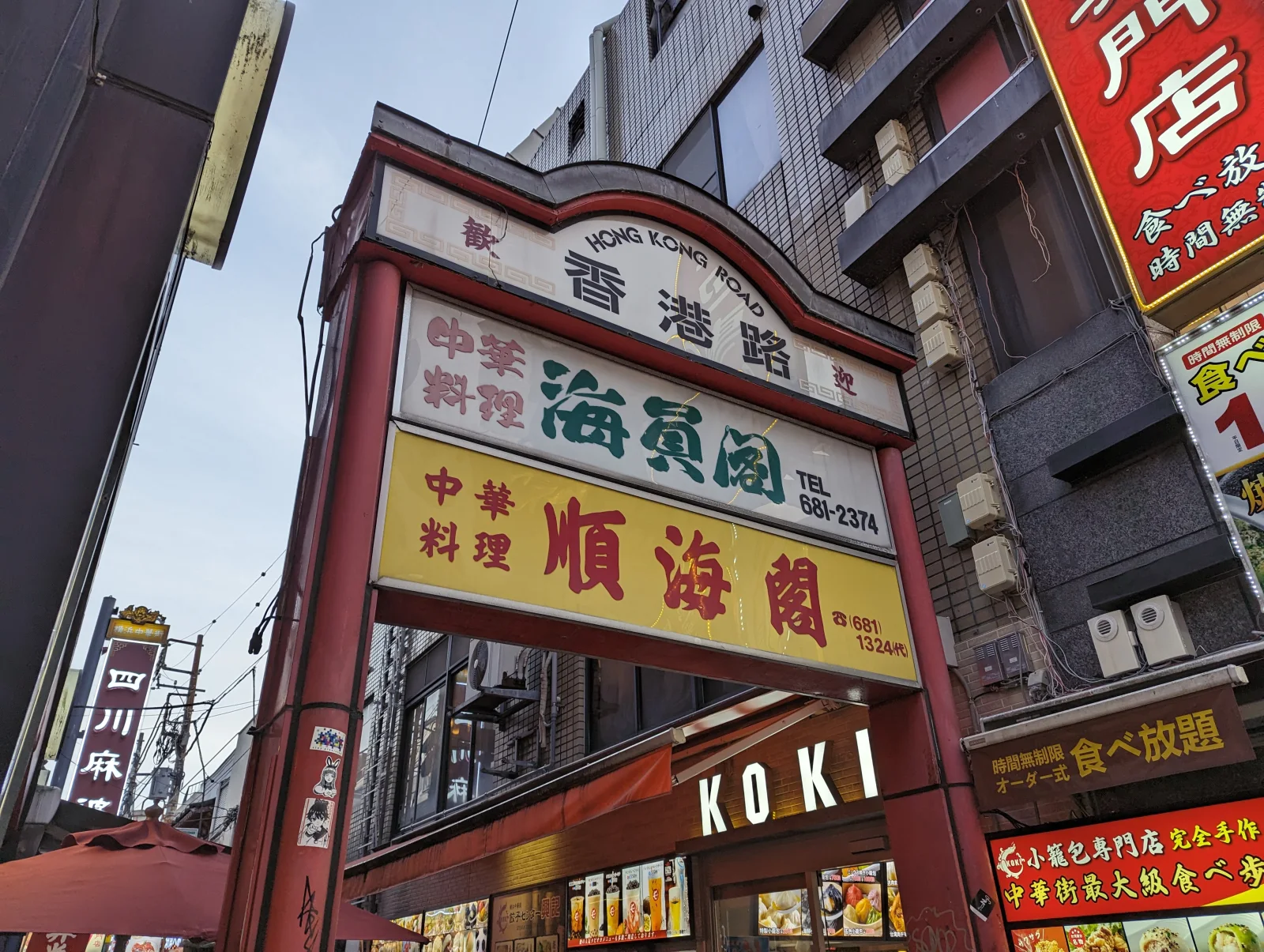
There is no need to walk under every archway. Zenrinmon Gate makes a clear meeting point at the western end of Chinatown Main Street, while Choyomon Gate connects directly to the waterfront. When the main avenue gets crowded, duck into Hong Kong Road or Ichiba-dori for breathing room. Save pantry shopping — loose-leaf tea and bottled sauces — along Ichiba-dori until after lunch so your hands stay free for hot street food. For neighbouring Motomachi and Minato Mirai boutiques, follow our Yokohama shopping guide.
Bakery loaves in Motomachi, spaghetti Napolitan by Yamashita Park
Motomachi pairs naturally with a post-lunch wander or works well as your first stop the next morning. Exit 5 (Motomachi Exit) from Motomachi-Chukagai Station opens straight onto the eastern end of Motomachi Shopping Street, while JR Ishikawacho Station's Motomachi Exit brings you in from the opposite side. Note that Yokohama Minatomirai Railway has announced works narrowing Exit 5 from 24 November to 17 December 2026; travellers with large suitcases should follow the lift signs from the same barrier concourse up to street level.
Founded in 1888, Uchiki Pan is famous for its square white loaf, the England. Carrying a loaf for tomorrow's breakfast is far more practical along the harbour than lugging chilled cake boxes around all afternoon. If you want to sit down properly, pick a café with proper table service first. Kikuya Confectionery's signature Rum Ball carries a distinct hit of rum, so order a non-alcoholic pastry alongside it for children or anyone avoiding alcohol. One bakery and one sweet stop are plenty here, leaving time to browse the independent shops along the street.
To add a walk among Yamate's historic Western-style houses, take Exit 6 from the Minatomirai Line up to America-yama Park and continue towards Motomachi Park and the Yokohama Foreign General Cemetery. Because Yamate sits on a ridge, anyone returning to Chinatown for dinner will have an easier walk climbing up first and descending towards the Horikawa River. Families with pushchairs or companions who prefer level ground will find Motomachi Shopping Street and the waterfront promenade much gentler. If spaghetti Napolitan is your main goal, loop back from Motomachi to Yamashita Park without squeezing the hillside mansions in before lunch.
On the ground floor of Hotel New Grand's main building, The Café serves three Yokohama classics: spaghetti Napolitan, seafood doria, and pudding à la mode. On the 22 November 2026 official menu, they cost ¥2,340, ¥3,289, and ¥2,024 respectively, inclusive of tax and service charge. Spaghetti Napolitan was created here by the second head chef in the post-war occupation era, inspired by American military rations, while seafood doria dates back to the hotel's first chef. If those dishes slip your mind until you reach Motomachi, slot the hotel in as a late lunch beside Yamashita Park; if you are already full from Chinatown, share pudding à la mode for afternoon tea instead. Most tables at The Café are allocated on arrival, with a small number of meal-only bookings for one to six guests at 12:30, 15:00, or 17:30 JST (two-hour slots). Those ordering drinks only should avoid 11:00–14:00, when seating is reserved for diners.
Red Brick Warehouse also has plenty of cafés and sweet stalls. Travellers who already stopped for coffee in Motomachi can simply stroll through the open-air plaza and keep their harbour time for walking. Conversely, you can take your Motomachi bread away and save a sit-down break for the waterfront. If you plan sit-down stops in both districts, count backwards from any evening dinner reservation — particularly with children, ordering and walking back to the station always eat up more minutes than grabbing one extra pastry.
Where to eat Yokohama's two signature bowls of ramen
For the founding shop of Iekei ramen, plan lunch or a pre-departure dinner at Yoshimuraya. Originally opened in Shin-Sugita, it now operates at 1-6-4 Okano on the west side of Yokohama Station. Arriving from Tokyo, you can step out at Yokohama Station for a bowl before transferring to the Minatomirai Line. If lunch is already spoken for in Chinatown, walk over to Okano on your way back to Yokohama Station and hop straight onto your return train afterwards. Because Yokohama Station's east side houses underground shopping arcades and sprawling transfer corridors, check signs for the West Exit carefully before heading up to street level so you do not cross the station twice.
The Shin-Yokohama Ramen Museum defines Iekei as a Yokohama style built on pork-bone and soy-sauce broth with thick noodles, typically topped with spinach, nori seaweed, and chashu pork. When staff ask for your preferences, men no katasa covers noodle firmness, aji no kosa sets broth richness, and abura no ryo adjusts chicken-oil levels — ask for futsu (regular) on your first visit to taste the house balance. Add a small bowl of white rice if you want to soak the nori in the broth and wrap it around the rice. If you plan to try both styles of Yokohama ramen in one day, keep portions standard and save extra toppings for your top pick.
Look for sanmamen on menus, introduced by Japan's Ministry of Agriculture, Forestry and Fisheries as ramen soup crowned with a glossy, thickened stir-fry of bean sprouts, Chinese cabbage, wood-ear mushrooms, and pork. Order by the name sanmamen; although sanma sounds identical to the Japanese word for Pacific saury, this bowl is all about the thickened vegetable topping rather than fish. The starch glaze locks heat beneath the surface, so lift your first few bites from the edge of the bowl where the broth and vegetables cool faster.
If your route passes through Yokohama Station's east-side underground mall, stop at Gyokusentei inside Yokohama Porta for sanmamen. This branch opens from 11:00 to 22:00, with last orders at 21:30. Gyokusentei's original 1918 shop sits in Isezakicho, a handy alternative if you are exploring the Kannai area. With Iekei on the west side and sanmamen on the east, the neatest way to fit both in is one on arrival for lunch and the other before your evening train home, leaving the daylight hours free for Chinatown's gates and shareable snacks.
For a group sharing just one bowl style, diners wary of heavy, rich broth should start with sanmamen, while fans of thick noodles and pork-bone soy soup should head straight to Yoshimuraya. Remember that walking from Gyokusentei in the East Exit underground mall to the JR ticket gates still takes several minutes. Agree on a specific Minatomirai Line or JR ticket barrier as your meeting point so no one gets separated during evening transfers. Anyone holding a firm dinner booking in Minato Mirai should keep both ramen stops for arrival or departure day rather than letting a ramen queue squeeze a timed reservation.
Which building to eat in at Red Brick Warehouse, and where the Sea Bass stops
In fine weather, walk along the waterfront from Yamashita Park past Zou-no-hana Park to Yokohama Red Brick Warehouse. If anyone in your group is flagging, catch the Minatomirai Line to Nihon-odori or Bashamichi Station instead; the warehouse lists both as roughly a 6-minute walk, compared with 12 minutes from Minatomirai Station. Walking the full curve from Motomachi through Yamate, Yamashita Park, and the Red Brick Warehouse to Minato Mirai adds plenty of distance once you factor in shops and hills. For an evening meal only, meet straight at Bashamichi or Nihon-odori Station.
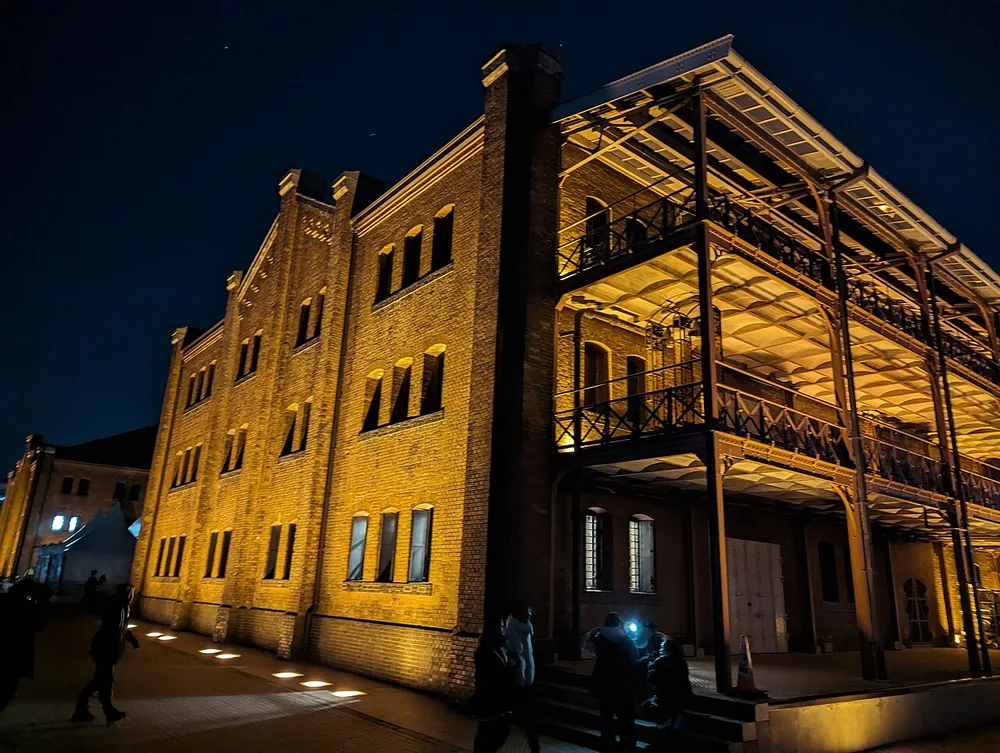
The warehouse's two brick buildings have distinct line-ups. Building 1 focuses on exhibitions, events, and lifestyle shops alongside café corners, whereas dining is concentrated in Building 2, which generally trades from 11:00 to 20:00. Its ground floor (1F) houses a food court, cafés, and fruit tart counters, while 3F offers sit-down spots for burgers or Brazilian churrasco. Inside the food court you will find Tachibana-tei's omurice, Kiyoken's shumai and bento boxes, and Spanish paella specialist MARIO, an offshoot of a Noge restaurant. Sharing a table on one floor makes it easy for everyone to order something different. Two people wanting just one local bite can split a portion of shumai to save room for gyunabe or Iekei ramen later, or grab a light snack on 1F before a harbour-view dinner. In wind or rain, head indoors to Building 2 first and use Bashamichi Station rather than detouring to the pier.
If you have a fixed dinner booking, only take the SEA BASS water bus when your timetable leaves comfortable slack. Departures from Yokohama Station leave from the East Exit at Yokohama Bay Quarter; check the weekday or weekend schedule carefully for both your boarding pier and destination. Watch for codes on the timetable: Aka-nashi means the boat skips the Red Brick Warehouse pier, while HH-nashi means it skips Yokohama Hammerhead. Travelling from Yamashita Park to Red Brick Warehouse, pass on any Aka-nashi or East Exit direct service and wait for the next boat. If services are suspended, walk the waterfront promenade from Yamashita Park or ride the Minatomirai Line from Motomachi-Chukagai Station.
To combine two waterfront complexes, stroll from the Red Brick Warehouse towards Yokohama Hammerhead, then decide by the water whether to stop for dessert or continue to Minato Mirai. If legs are tired, let Hammerhead serve as your final harbour stop; boats also return to Yamashita Park, or you can walk back via Bashamichi or Motomachi-Chukagai Station for rail connections. When hailing a taxi, show both "Yokohama Akarenga Soko" and your restaurant's building number so the driver drops you right beside Building 2's floor directory.
A pot of Yokohama gyunabe in Bashamichi
When Western foodways arrived with Yokohama's port opening, gyunabe adapted beef and aromatic greens to familiar Japanese seasonings. Yokohama municipal heritage records note preparations seasoned with miso, soy sauce, or sweet soy-mirin warishita broth. For a hot sit-down meal before or after visiting the Red Brick Warehouse, step off at Bashamichi Station for Araiya's Bankokubashi branch. Founded near Isezakicho in 1895, Araiya runs its Bankokubashi outpost just a one-minute walk from Bashamichi Station Exit 6 (Red Brick Warehouse Exit). Make sure you select the Bankokubashi branch when booking online so you do not end up at the Akebonocho main house or the Yokohama Station department-store counter.
Solo diners wanting a straightforward taste can walk in for the Otegaru Gyunabe set — pre-simmered beef hotpot with accompaniments — listed by the Bankokubashi branch at ¥2,750 (tax included, plus a 10% service charge); note that the restaurant does not take reservations for this set menu alone. For a full meal cooked slowly at the table with rice and soup, look to the Gyunabe to Oshokuji courses, starting from ¥5,500 plus service charge for the Aori cut. Couples planning a specific dinner course should check that menu's booking cut-off first. The Bankokubashi branch typically serves lunch until 14:30 (last orders 14:00), reopens for dinner at 17:00, and closes on Mondays.
Between 5 January and 3 February 2027, the restaurant also serves a New Year lunch kaiseki limited to 30 portions a day for parties of two or more, requiring reservation by 15:00 JST on the preceding business day. Priced at ¥6,600 (tax included, plus a 10% service charge) for the standard plan, it brings together mochi soup, chawanmushi savoury egg custard, and an individual gyunabe pot — a substantial midday feast that leaves room for only a light coffee afterwards. If your Yokohama day falls on a Monday, save gyunabe for another date and stay by the waterfront rather than crossing back to Yokohama Station solely for another branch.
Choosing a comfortable dinner spot in Minato Mirai
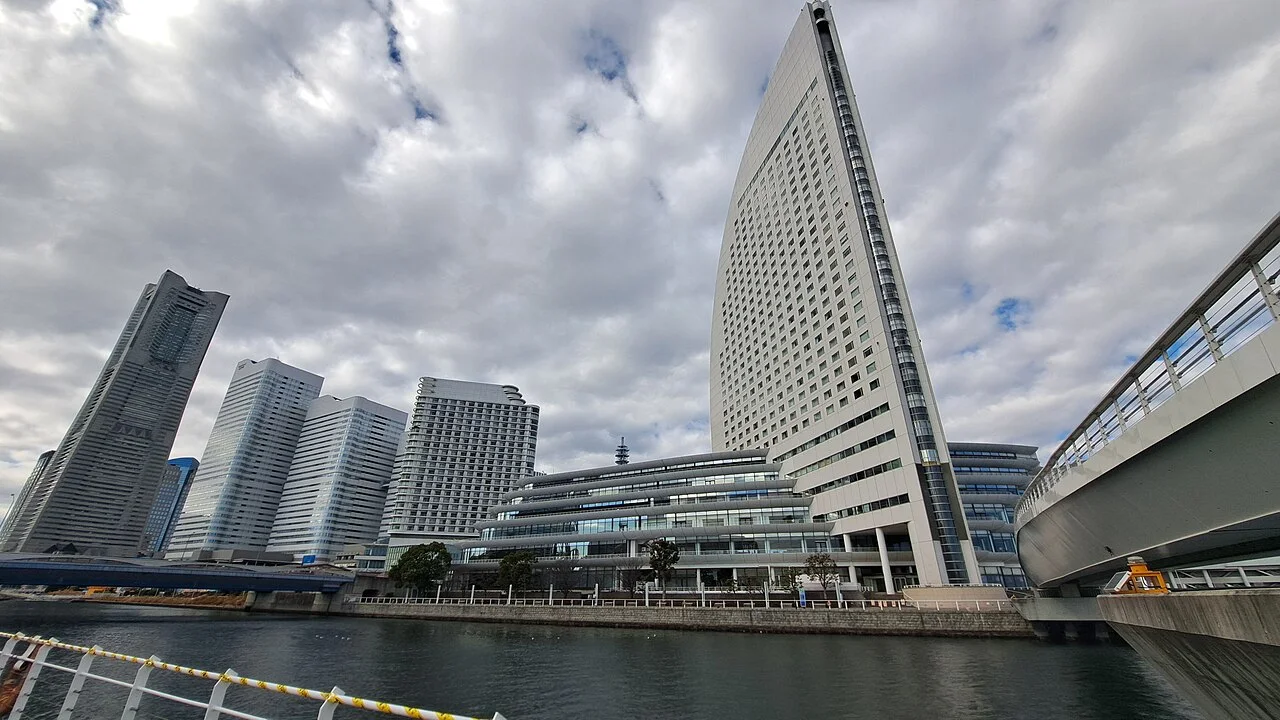
For an easy family dinner in Minato Mirai, MARK IS Minatomirai connects straight to Minatomirai Station and packs both full-service restaurants and a food court onto 4F, ideal when adults and children want different meals. Nursing and baby-changing facilities sit one level down on 3F. Opening hours differ between the two areas: the food court normally closes at 20:00 Monday to Thursday and at 21:00 on Fridays, weekends, public holidays, and the eve of holidays, while the restaurant zone stays open until 23:00 with individual last-order times. If you ride the Cosmo Clock 21 Ferris wheel first, leave yourself enough time to find a table and order before the food court shutters come down.
To guarantee harbour views when booking upscale restaurants, scan the reservation page specifically for the phrase madogawa-seki kakuyaku (guaranteed window seat). Karyu, on the 31st floor of InterContinental Yokohama Grand, has both window and interior tables. For its 2026 Christmas dinner on 19, 20, 23, 24, and 25 December, the main official course starts at ¥22,000 for regular seating and ¥26,000 for guaranteed window seats with welcome champagne — the surcharge secures both the table position and the drink. On ordinary weekdays, however, you can order à la carte or standard courses at dinner, or dine at lunch for harbour views at lower cost, putting more of your budget towards the food itself.
If a view of the Ferris wheel or water matters most, read whether the booking description specifies the harbour, amusement park, or city skyline, and lock in the seat tier before arriving. Check the walking route to your building as well: Minatomirai Station, the Yokohama Museum of Art, Pacifico Yokohama, and the Red Brick Warehouse all sit within the waterfront zone, yet meeting at one landmark and reaching a specific hotel lobby are different walks. After dinner, covered mall walkways lead cleanly to JR Sakuragicho Station, while friends heading back to Shibuya can board through-trains on the Tokyu Toyoko Line directly from Minatomirai Station.
To stretch your dinner budget further, eat inside MARK IS, walk down to the water for night photos, and head back to the station. Alternatively, if you fancy grilled skewers and a drink, cross from JR Sakuragicho Station to the inland side for Noge's compact izakaya and dining bars. Groups should check seating capacity before stepping inside, and venues displaying otoshi or sekiryo notices can confirm cover or seating charges at the door. Travellers returning to Tokyo should factor the short walk back from Noge to JR Sakuragicho Station into their final train connections.
On event nights, lock in dinner before buying plaza tickets
The 2026 Yokohama Red Brick Warehouse Christmas Market runs from 20 November to 25 December, with general admission from ¥500 (food and drink extra, and some zones free). From 21 November to 4 December it opens 11:00–21:00 with last orders at 20:30, extending from 5 December to 22:00 with last orders at 21:30. Keep in mind that the outdoor market stalls, shops inside the brick buildings, and neighbouring malls keep separate schedules. Budget separately for tickets and mulled wine or sausages; if you want children seated indoors for a proper meal, finish dinner inside Building 2 or Minato Mirai first before deciding whether to queue for the market.
Another winter evening option centres on Chinatown. The Yokohama Chinatown Development Association runs its 2027 Spring Festival Lantern Illumination daily from 16:00 to 23:00 between 1 November 2026 and 20 February 2027. After dinner, walk out through Choyomon Gate towards the central entrance of Yamashita Park along roughly 200 metres of illuminated streets, or return towards Motomachi via Ichiba-dori and Ichibadori Bridge. While the lights switch on every evening, special stage performances are listed separately on the association's events calendar. Pair your dinner with whichever waterfront or Chinatown display you want to see most so you are not shuttling back and forth between crowded entrances.
Event evenings funnel diners into the same early-evening rush. If you already hold an 18:00 JST restaurant booking, visit the Christmas market afterwards or drop by the free outer plaza earlier in the day. When combining the festivities and dinner at the Red Brick Warehouse itself, check the venue's 2026–2027 year-end trading timetable by date, floor, and restaurant name rather than relying solely on the main complex hours. Tickets, zone layout, and return transport tips are covered in our Yokohama Red Brick Warehouse Christmas market guide.
Half-day, full-day, and overnight breakfast itineraries
From Tokyo Station, take the JR Tokaido Line to Yokohama Station and change to the Minatomirai Line towards Motomachi-Chukagai. From Shibuya, through-trains on the Tokyu Toyoko Line marked for Motomachi-Chukagai carry you straight down without changing. Because Yokohama Station brings together JR, Keikyu, Sotetsu, and Minatomirai lines, agree to meet at the Minatomirai Line ticket barriers or on a specific platform rather than just saying "Yokohama Station". For late dinners, search your return timetable to your exact Tokyo destination and build in extra minutes for underground walkways and inter-company transfers.
With only half a day, pick either Chinatown or ramen and save the other for back in Tokyo. For Chinatown, ride straight to Motomachi-Chukagai Station, eat lunch, exit via Choyomon Gate to look out over the sea at Yamashita Park, and pause at a Motomachi café or The Café for dessert before returning from the same station. For a ramen-focused half day, base yourself at Yokohama Station, splitting Yoshimuraya on the west side and Gyokusentei in the east underground mall before and after a daytime stroll.
With a full day and clear skies, have lunch in Chinatown, spend the afternoon in Motomachi or Yamate, walk down to the Red Brick Warehouse, and choose dinner on the waterfront. In heavy rain or strong winds, skip the Yamate hills and take the Minatomirai Line straight from Motomachi-Chukagai to Minatomirai Station's direct MARK IS entrance — or to Bashamichi Station for the Red Brick Warehouse — since both complexes offer indoor dining. Stay near Minatomirai Station if you want direct trains back to Shibuya, or stay near Sakuragicho, Kannai, or Ishikawacho for easy JR access.
Staying overnight near Chinatown or Yamashita Park lets you enjoy morning congee and Motomachi bakery loaves on separate days. For breakfast congee, head to Shatenki Nigo-ten at 189-9 Yamashitacho on Shanghai-dori (separate from Shatenki Honten on Chinatown Main Street). Official hours start at 08:00 at weekends and 08:30 on Mondays, Tuesdays, Thursdays, and Fridays, closed Wednesdays, with a break from 15:00 to 17:00. Because the porridge base simmers dried scallops, dried oysters, and chicken even in plain-sounding bowls, anyone avoiding shellfish or meat stock should check the broth ingredients before ordering. Afterwards, follow Shanghai-dori towards Choyomon Gate and straight into Yamashita Park. Guests staying in Minato Mirai can keep a booked dinner for their overnight evening and eat breakfast around the hotel before catching the train. Families juggling suitcases, pushchairs, and hungry children should choose a first meal right next to their hotel and drop bags before walking out to the bay; find further evening walks and sights in our Yokohama travel guide.
If you only want one local speciality between meals, save Kiyoken's Shiumai Bento for the train home or your hotel room. Priced at ¥1,180 officially, it pairs pork shumai with simmered bamboo shoots and partitioned steamed rice. Treat it as a same-day chilled or ambient bento: check the use-by time and storage note on the wrapper and finish it before leaving Japan. For boxed gifts to pack in your luggage, choose loose tea or meat-free pastries with clear ingredient lists, and finish pork buns, meat-filled mooncakes, and shumai in Japan, as meat and animal products are subject to strict border quarantine restrictions. Leave glass-bottled sauces until the end of your trip so you are not carrying the weight all day, then wrap them securely away from delicate biscuits before flying.
Splitting a day's food budget between one main meal and small plates
For two people grazing on dim sum, Santo Nigo-ten's boiled dumplings are listed at ¥990 on the official Chinatown guide and Saikoh Shinkan's wafer prawn rolls at ¥760. Check how many pieces come per order, then round out the table with tea, rice, or seasonal greens. Families planning a leisurely sit-down feast should weigh à la carte totals against weekday buffet rates, paying close attention to the age cut-off for adult pricing. At Chukagai Daihanten, weekday adult rates kick in from age 10, while ages 7 to 9 pay ¥1,780, ages 4 to 6 pay ¥1,280, and under-4s eat free — meaning children's ages can swing the bill for a family of four noticeably.
To sample two port-era Western classics, The Café's spaghetti Napolitan and seafood doria come to ¥5,629 combined, or roughly ¥2,815 per person if you order one of each and share; adding a pudding à la mode brings the pair's total to ¥7,653. Treating that as your main sit-down meal of the day pairs neatly with a single bowl of ramen near Yokohama Station or casual individual picks in a waterfront food court for dinner. If you are planning a celebratory evening meal, reserve your main budget for a booked table with guaranteed seating and keep daytime eating to one dim sum stop and a takeaway coffee.
When only a short window remains before your train, a guaranteed seat beats squeezing in one extra stop. In bustling Chinatown, agree on which exit your group will regroup at before splitting up, or bring street snacks back to a nearby hotel room if you are staying locally. If time before departure is tight, pick up a bento right inside Yokohama Station rather than queueing at the West Exit and rushing back to the east concourse — save the unhurried sit-down table for your next dedicated trip.
A few useful answers
Which station and exit should I use for Yokohama Chinatown?
Take Exit 2 (Yamashitacho Exit) from Motomachi-Chukagai Station on the Minatomirai Line to reach the eastern side of Chinatown Main Street. From JR Ishikawacho Station, use the Chinatown Exit to enter from the south-western side. For Motomachi Shopping Street, use Exit 5 from Motomachi-Chukagai Station.
Can you eat while walking through Yokohama Chinatown?
The Yokohama Chinatown Development Association asks visitors to stop in a safe spot before eating skewered snacks and to keep doorways to neighbouring shops clear. Eat pan-fried or steamed buns in the shop's designated space, or take them to Yamashitacho Park inside the district.
Where can I eat Iekei ramen and sanmamen in Yokohama?
For the founding Iekei ramen shop, head to Yoshimuraya in Okano on the west side of Yokohama Station. For sanmamen, try Gyokusentei in the Yokohama Porta underground arcade on the east side. Iekei pairs rich pork-bone and soy-sauce broth with thick noodles, whereas sanmamen tops noodle soup with thickened stir-fried bean sprouts and vegetables.
Where are the best places to eat in Yokohama on a rainy day?
Book an indoor Chinatown lunch, then ride the Minatomirai Line to Minatomirai Station, which connects directly to MARK IS and its 4F food court and restaurants. Alternatively, walk about 6 minutes from Bashamichi or Nihon-odori Station to Yokohama Red Brick Warehouse, where dining is concentrated in Building 2.
How do I book a window table for a harbour-view dinner in Minato Mirai?
Look for booking plans labelled madogawa-seki kakuyaku (guaranteed window seat) and check restaurant photos or descriptions to see which direction the view faces. If you want flexible dining with children, eat at station-linked MARK IS first and stroll out to the waterfront afterwards.
Official information and references
Sources used in this guide.
- Yokohama Chinatown Development Association | Recommended Dishes & Prices
- Yokohama Chinatown Development Association | Takeaway Dining Etiquette
- Yokohama Chinatown Development Association | 2026 Official Shops & District Map
- Saikoh Shinkan | Opening Hours, Floor Guide & Reservations
- Saikoh Shinkan | Dietary Substitutions, Allergies & Booking FAQ
- Yokohama Official Visitors' Guide | Vegetarian Options at Chojo Hanten
- Manchinro Tenshinpo | Yokohama Chinatown Development Association Listing
- Yokohama Daihanten Main Branch | Yokohama Chinatown Development Association Listing
- Chukagai Daihanten | Weekday Order-Style Buffet Course
- Wanfujing | Main Shop & Branch Information
- Edosei | Main Shop & Store Guide
- Shatenki Nigo-ten | Address & Opening Hours
- Yokohama Minatomirai Railway | Motomachi-Chukagai Station Map
- Yokohama Minatomirai Railway | Motomachi-Chukagai Station Exit 5 Construction Notice
- Tokyu Railways | Shibuya Station Timetable Towards Motomachi-Chukagai
- Motomachi Shopping Street | Access & Pedestrian Entrances
- Yokohama Greenery Foundation | Motomachi Park Access
- Yokohama Official Visitors' Guide | Chinatown & Port-Opening Cuisine
- Uchiki Pan | History & Signature Loaf
- Yokohama Municipal Transportation Bureau | Kikuya Confectionery & Motomachi
- Hotel New Grand | The Café Signature Dishes & Prices
- Hotel New Grand | The Café Dining & Reservation Slots
- Shin-Yokohama Ramen Museum | Yokohama Iekei Ramen
- Kanagawa Prefecture Tourism | Yoshimuraya Address
- Ministry of Agriculture, Forestry and Fisheries | Kanagawa Local Cuisine: Sanmamen
- Yokohama Porta | Gyokusentei Location & Opening Hours
- City of Yokohama | Gyunabe & Local Food Culture
- Araiya | History of Gyunabe
- Araiya | Bankokubashi Branch Menu, Service Charge & Reservations
- Yokohama Red Brick Warehouse | Waterfront Access
- Yokohama Red Brick Warehouse | Cafés, Restaurants & Food Court
- SEA BASS | Water Bus Routes, Piers & Timetables
- MARK IS Minatomirai | Mall & Food Court Opening Hours
- MARK IS Minatomirai | Direct Station Access & Family Facilities
- InterContinental Yokohama Grand | Karyu Christmas Dinner & Seating Plans
- Yokohama Official Visitors' Guide | Noge Shopping Street
- Yokohama Red Brick Warehouse | 2026 Christmas Market Hours & Admission
- Yokohama Red Brick Warehouse | 2026–2027 Year-End Tenant Trading Hours
- Yokohama Chinatown Development Association | 2027 Spring Festival Lantern Illumination
- Kiyoken | Shiumai Bento Price & Contents
- Taiwan Animal and Plant Health Inspection Agency | Inbound Passenger Quarantine