How to plan a shopping trip in Yokohama: comparing Minato Mirai malls, the Red Brick Warehouse, Motomachi, Chinatown and Yokohama Station, with half-day and full-day routes, rainy-day options and Japan's 2026 tax-free refund rules.
- Region & Focus
- Yokohama
- Reading Scope
- 21 min read · 11 chapters · 8 Q&As
- Official Verification
- 32 official sources checkedUpdated 22 November 2026
- Key Topics
- NeighbourhoodsFoodTravel budget
Chapter Route Map (tap any stop)
- Pick what you want to buy before choosing a station
- Travelling from Tokyo: pick your first and last stations
- Which floors to hit at MARK IS, Queen's Square and World Porters
- Souvenirs at the Red Brick Warehouse: check Building 1 closing times first
- 2026 Red Brick Warehouse Christmas Market: buy tickets by zone
- Pastries, tea and dried goods in Chinatown: separate snacks from gifts
- Start Motomachi from Exit 5 and go straight to named shops
- Souvenir shopping at Yokohama Station: start at the East Exit
- From November 2026: pay tax-inclusive prices and claim refunds on departure
- Adjusting your route for children, heavy rain or luggage
- Full-day route: work backwards from your hardest-to-move stop
- Quick Q&A
If you only have half a day in Yokohama and want clothing, family essentials or character merchandise, start at Minato Mirai Station. If you are after Chinese pastries, loose-leaf tea or gifts from heritage Motomachi shops, take the train straight to Motomachi-Chukagai Station. With a full day, you can start at Minato Mirai, walk south via the Red Brick Warehouse, and finish in Chinatown and Motomachi before catching the train back. If you are heading to Haneda Airport on the same day, save your final shopping for Yokohama Station, stick to a single exit side, and transfer straight onto the Keikyu Line once you are done.
Pick what you want to buy before choosing a station
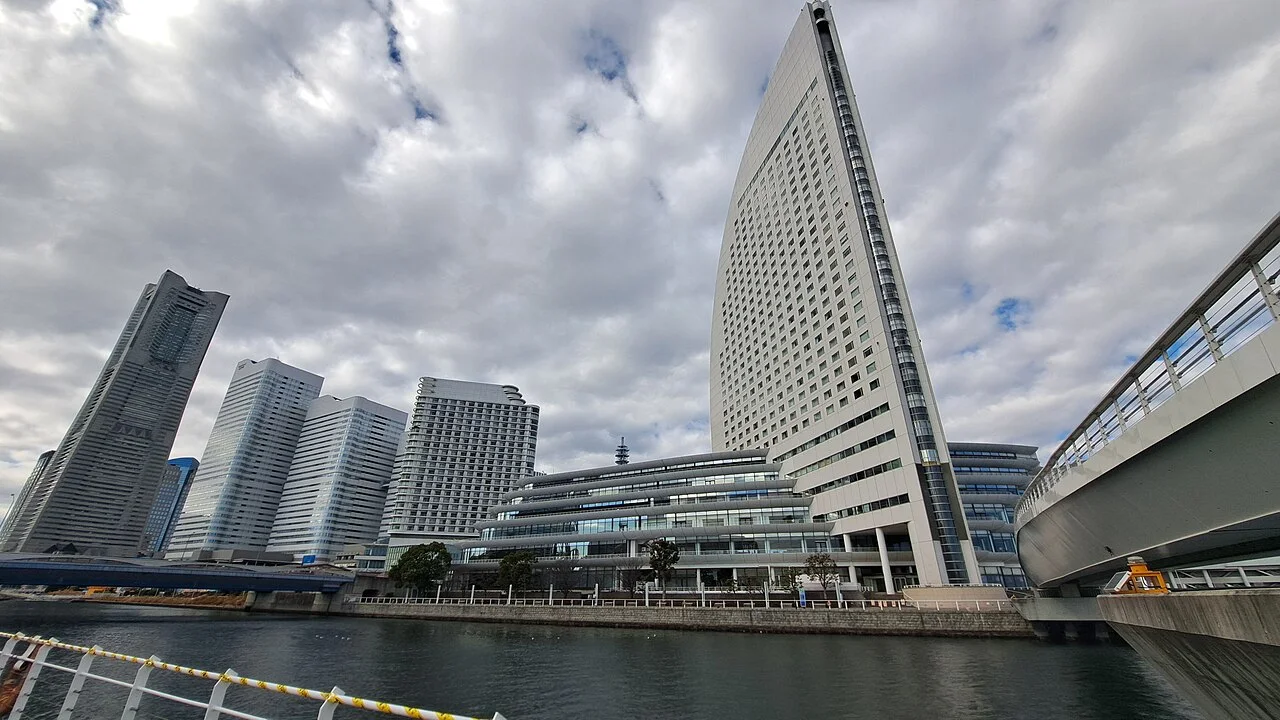
Minato Mirai 21 splits into two distinct zones. Directly above Minato Mirai Station sit MARK IS and Queen's Square, both connected straight to the concourse, making them the easiest first stop for clothing, children's wear, everyday goods or lunch. Once you step outside the station towers and walk towards the Shinko waterfront, you reach Yokohama World Porters and the Red Brick Warehouse. Both areas sit within the same harbour district, and browsing large shopping centres eats up time quickly, so pairing one station-side mall with one Shinko stop makes for the most relaxed half-day pace.
Chinatown and Motomachi share a single station, yet their shopping rhythms could not be more different. Chinatown works best by category—hunting down tea, cooking ingredients and Chinese pastries before sitting down for a meal in the district. Motomachi is a street for specific storefronts, known for leather goods, lace handkerchiefs and Western-style patisserie. To combine the two, visit the shops with earlier closing hours first and leave your meal until after shopping, which works especially well if you are arriving from Tokyo around midday.
Leave Yokohama Station for department store food halls and last-minute restocking before your journey back. From the East Exit, the PORTA underground shopping arcade leads straight into SOGO, keeping you close to the Keikyu and JR platforms. If you want the West Exit department stores or underground passages, head straight out the West Exit upon arrival and stay on that side. When you only have a brief window between trains, picking your exact shop and floor beforehand beats trying to split time between both exits.
If you are hunting for local Yokohama flavours, divide your gifts into ambient boxed sweets to take home and chilled desserts to eat the same day. That makes it much easier to decide whether to buy bulky gift boxes at your first stop, or which treats in a Motomachi shop window are worth a detour. For advice on where to stay and how to pair your shopping with Yamashita Park and Yamate, see our Yokohama travel guide.
| What you want to buy | Best area | Where to start |
|---|---|---|
| Clothing, children's wear, daily goods, family dining | Minato Mirai station area | Minato Mirai Station into MARK IS |
| Character merchandise, harbour-themed souvenirs | Shinko | World Porters 2F, or walk from Bashamichi Station to the Red Brick Warehouse |
| Chinese pastries and tea | Yokohama Chinatown | Motomachi-Chukagai Station Exit 3 |
| Leather goods, handkerchiefs, Western pastries | Motomachi | Motomachi-Chukagai Station Exit 5 |
| Focused Kanagawa souvenir shopping before departure | Yokohama Station East Exit | PORTA underground arcade into SOGO B2 |
How to plan a shopping trip in Yokohama: comparing Minato Mirai malls, the Red Brick Warehouse, Motomachi, Chinatown and Yokohama Station, with half-day and full-day routes, rainy-day options and Japan's 2026 tax-free refund rules.
Travelling from Tokyo: pick your first and last stations
From Tokyo or Shinagawa stations, take the JR Tokaido Line to Yokohama and change to the Minatomirai Line. From Shibuya, look for Tokyu Toyoko Line trains that run directly onto the Minatomirai Line through to Motomachi-Chukagai. If your first stop is the Red Brick Warehouse early in the morning, boarding a Local (all-stops) train saves guesswork; if you take an Express or Limited Express service, check the platform display board to confirm it stops at Bashamichi or Nihon-odori.
Heading south from Yokohama, the Minatomirai Line calls at Shin-Takashima, Minatomirai, Bashamichi, Nihon-odori and Motomachi-Chukagai; Minatomirai is two stops from Yokohama on a Local train. Because 'Yokohama' on maps can refer to the whole city rather than the station, write out the full station name when booking tickets or arranging meetups. If you are staying along the JR Negishi Line, use Sakuragicho for easy access to Shinko, or Ishikawacho for the western end of Motomachi. Entering through one station and leaving by another lets you spend your walking time on streets you actually want to see.
Motomachi-Chukagai Station has two ticket gates: one serving Chinatown and Yamashita Park, and the other serving Motomachi and Shin-Yamashita. Take Exit 3 to start in Chinatown, Exit 5 for Motomachi, and Exit 1 for Yamashita Park. Checking your exit number while still on the train is much simpler than orienting yourself with a map at street level. If your group plans to split up and shop separately, agree to meet outside a storefront with a clear sign at street level, using the exit numbers to stay on the same side of the district.
On foot to the Red Brick Warehouse, allow around 6 minutes from Bashamichi or Nihon-odori stations, roughly 12 minutes from Minatomirai Station, and about 15 minutes from Sakuragicho Station along the Kishamichi Promenade. If you plan to linger by the water, take photos or push a buggy, add extra time for concourse walks, lifts and pedestrian crossings. When visiting Shinko, walking in from Sakuragicho via Kishamichi Promenade and catching the train back from Bashamichi spares you a return trudge carrying shopping bags.
If you only ride from Yokohama to Minatomirai and return from Motomachi-Chukagai to Yokohama, adult IC card fares are ¥193 and ¥224 respectively, totalling ¥417. A Minatomirai Line One-Day Pass costs ¥460 for adults and ¥230 for children, sold at station ticket machines. If you decide to ride instead of walking between Minatomirai and Motomachi-Chukagai, adding another ¥193 brings three adult trips to ¥610, at which point the day pass works out cheaper. Count the legs you expect to ride first, and budget the train fare from Tokyo separately.
Which floors to hit at MARK IS, Queen's Square and World Porters
Follow the signs inside Minato Mirai Station for MARK IS Minatomirai to enter straight onto the mall's B4 level. Head up the floors first for clothing and homeware, stop on 3F for children's goods and family rest areas, and go to 4F when it is time to eat. The B1 food floor is handy for drinks, bakery items or bento boxes—pick these up right before leaving if you plan to carry them to the waterfront or back to your hotel.
Parents with babies or toddlers can use the baby rest rooms on B2, 3F and 4F inside MARK IS. The 4F food court includes low-chair seating zones so everyone in your group can order from different stalls and still eat together. Coin-return pushchairs (requiring a ¥100 coin) are available for indoor use; families who want to wheel a buggy all the way to the waterfront can instead use the paid reservation pushchair service on 1F, leaving enough time to return it to the same desk.
Queen's Square also connects directly to Minato Mirai Station. Before meeting anyone, check on a map how Queen's Square encompasses the retail wing Minato Mirai Tokyu Square so nobody mistakes the two names for separate stations. This complex links easily to Landmark Plaza; if you arrive from JR Sakuragicho, follow the moving walkway towards Landmark Plaza, while anyone departing on the Minatomirai Line can walk straight back underground to avoid another outdoor stretch.
Moving over to Shinko, Yokohama World Porters houses Hawaiian-themed shops and dining on 1F, while 2F is anchored by the Bandai Namco Cross Store for toys, character goods and gachapon capsule machines. If you are hunting down a specific series for someone else, save the exact product name or photo beforehand and head straight to the relevant zone on 2F. To combine clothes shopping with character merch, try on outfits by the station in the morning and save bulky boxed toys for Shinko in the afternoon.
The Cross Store Yokohama lists opening hours of 10:30–21:00. For its arcade and amusement area, visitors under 16 must be accompanied by a parent or guardian after 18:00, with last entry at 20:00. Families planning to spin gachapon or browse merchandise together can schedule the amusement area before early evening and move elsewhere for dinner. If you are looking for specific Ichiban Kuji lottery prizes, the brand also maintains a Yokohama stock-check page online, and staff on 2F can help confirm availability.
If your children's main focus is character merchandise or gachapon, World Porters easily works as a standalone half-day destination. If parents need to buy clothing and also require baby-changing or nursing facilities, MARK IS is the smoother choice. Because there is an open-air walk between the two, stay put inside whichever mall you have already reached during heavy rain, wait for a lull before crossing into Shinko, and board the train home from the nearest station afterwards.
Souvenirs at the Red Brick Warehouse: check Building 1 closing times first
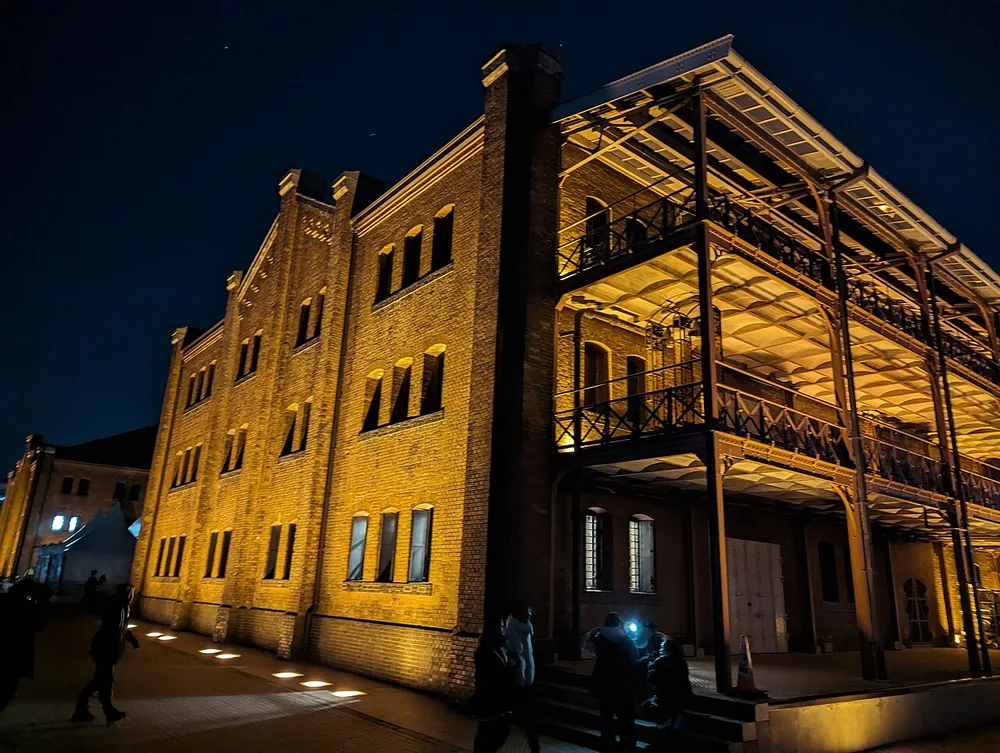
The Red Brick Warehouse consists of two buildings framing an open-air event plaza. Shops on 1F of Building 1 generally open 10:00–19:00, while its cafe and the exhibition and performance spaces on 2F and 3F keep their own schedules. Building 2 focuses on shopping and dining, with shops typically open 11:00–20:00 and restaurants operating to individual hours. Early arrivals can start on Building 1's ground floor, while evening visitors should clear Building 1 first before it closes.
For Red Brick Warehouse-branded keepsakes, Akarenga Depot on 1F of Building 1 stocks items decorated with warehouse and Yokohama motifs. For stationery, leather accessories and wooden crafts, head up to 2F of Building 2 for shops such as Hacoa and LIBRETTO MARKET. If you just need a boxed sweet for colleagues, compare box sizes and piece counts at Akai Kutsu no Onnanoko on Building 2's 2F before picking up food gifts on 1F; if practicality matters more, tote bags and compact stationery pack far better than fragile ornaments.
If your visit falls around dusk, use the floor guide to pick up your shopping first, then step out to enjoy the harbour lights. To walk onwards to Chinatown, exit the plaza towards Nihon-odori. If strong winds pick up or feet get tired, take a Local train from Nihon-odori Station to Motomachi-Chukagai and surface from the exit closest to your chosen shop. Walking between the two buildings and the stations involves exposed stretches, so pack a waterproof carrier bag for large boxes rather than trying to juggle paper bags under an umbrella.
The Port and Harbor Bureau of the City of Yokohama has scheduled refurbishment works on the Kishamichi Promenade boardwalk from mid-November to late December 2026, narrowing walkways and introducing partial one-way traffic, primarily on weekday daytimes. To skip any bottlenecks, enter Shinko directly from Bashamichi or Nihon-odori instead. For a scenic coastal walk onwards to Chinatown, follow the Yamashita Rinko Line Promenade from the Red Brick Warehouse towards Zou-no-hana Park and Yamashita Park, then cut inland into the streets.
If you had planned to cap off your shopping with night views from Landmark Tower, finish at Red Brick Park instead. Landmark Tower's 69F Sky Garden observation deck closed on 1 January 2026 for building renovations and is expected to reopen in 2028 or later. The Landmark Plaza shopping centre beneath it remains open and fits neatly into a station-area route.
2026 Red Brick Warehouse Christmas Market: buy tickets by zone
In 2026, the Yokohama Red Brick Warehouse Christmas Market runs from 20 November to 25 December. Standard admission costs ¥500 on regular days and ¥1,000 on designated peak dates, including 24 and 25 December. To pay cash for a standard ticket, buy at the main entrance ticket booth; for cashless payment, book through the official Asoview ticketing page and join the standard entry queue. Only compare the limited-quantity priority tickets with dedicated fast-track entry if your schedule is tight or your group cannot stand in long queues.
Up to 4 December, junior high school students and younger enter free of charge. From 5 December onwards, free entry applies only to primary school children and younger, who must be accompanied by a parent or guardian—meaning families with junior high students will need an extra ticket after 4 December. The main venue stays open until 21:00 from 21 November to 4 December, and extends to 22:00 from 5 to 25 December. Use those closing times to work backwards for dinner and trains, and still factor in earlier closing times if you want permanent warehouse souvenirs.
If you simply want festive atmosphere, start at the free-to-enter Christmas Gate 2026 in Shinko Central Square, where stalls operate cashlessly. Buy a ticket for the paid zone only if you want to browse the main market stalls or photograph the centrepiece Christmas tree. Choose a clear landmark such as a square or building entrance when arranging meetups, as standard-ticket holders and visitors staying in the free area follow different routes. For full ticket types and layouts, check our Red Brick Warehouse Christmas Market guide and cross-check dates and prices against the official event page.
Separate your ticket budget from food and gift spending. Two adults and one junior high student pay ¥1,000 combined for standard entry on 4 December, rising to ¥3,000 on a designated day like 5 December, before any food, drinks or shopping. Cash is accepted at the main entrance for standard tickets, while stalls inside take cash or supported e-payments. Organisers ask visitors not to bring outside food or drinks into the venue, so finish anything bought elsewhere before joining the queue.
If you are adding an evening winter activity after shopping, schedule the market after the stores. According to the official event calendar, the Art Rink ice-skating venue runs from 28 November 2026 to 14 February 2027, overlapping only partway with the market. Keep skating as its own separate slot on your itinerary—from the day after the market closes, you can still pair ice skating with warehouse shopping.
Pastries, tea and dried goods in Chinatown: separate snacks from gifts
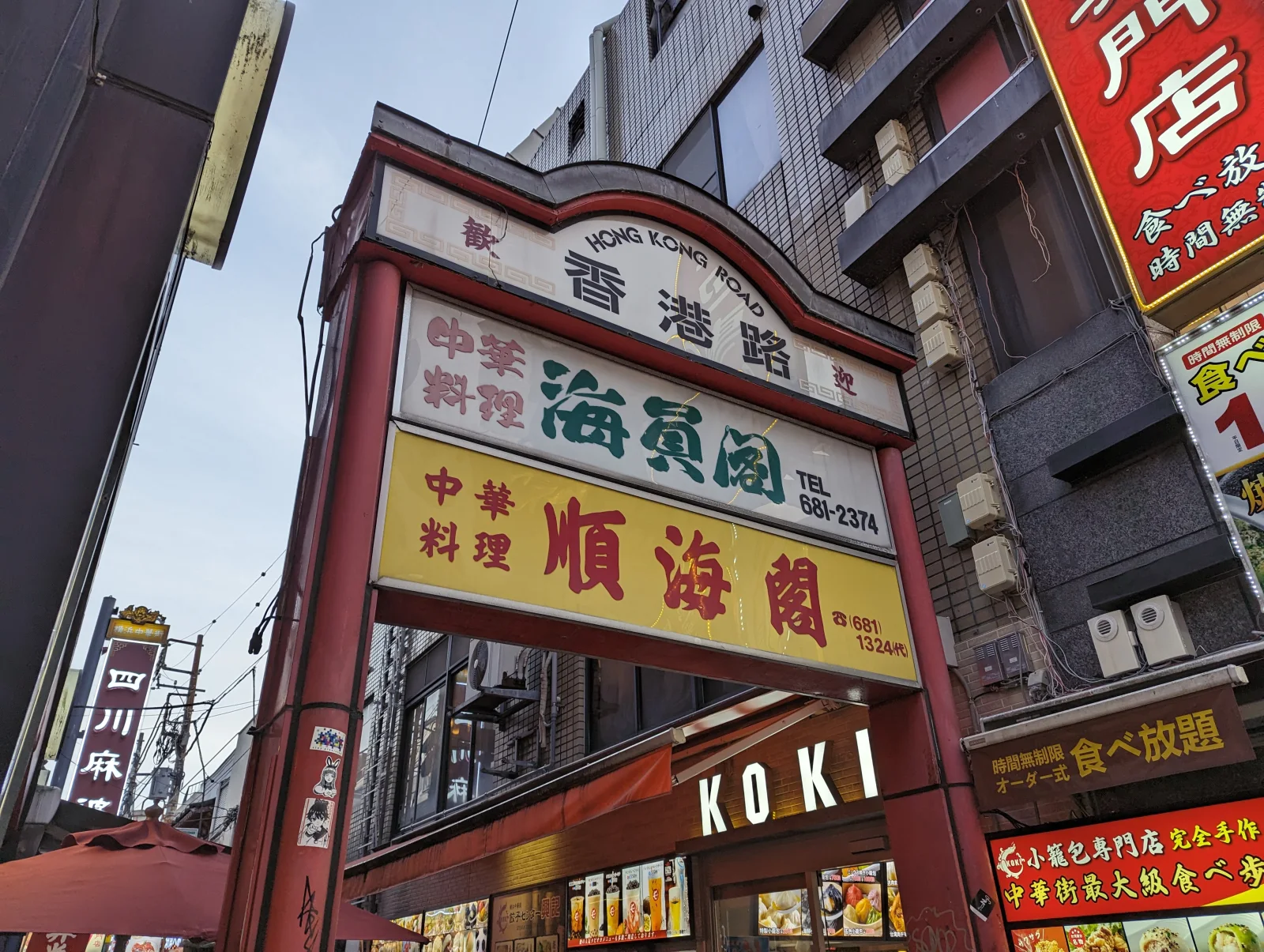
Chinatown's shops weave across main avenues and side alleys, making it easy to bounce back and forth between restaurant queues and souvenir counters. To buy boxed gifts after lunch, start at the Chungking Hanten Main Store Shop on Chinatown Main Street, then use the official district directory's 'Chinese Food' and 'Chinese Tea' filters to pick your next stop. For tea, walk over to TenRen's Tea on Seimon-dori; 2026 directory listings note daily hours of 10:00–19:00, with loose-leaf tea weighed from 100 g upwards. If you only want small tasting portions, look for pre-packed mini bags first.
When buying skewered street snacks, the Chinatown Development Association asks visitors to step into a safe spot while eating and avoid blocking neighbouring shop entrances. Guests staying nearby can carry snacks back to their hotel; if anyone in your party needs a quick breather in the district, head for Yamashitacho Park, a small pocket park tucked inside Chinatown. Save bulk pastry boxes for later in your walk so parents have free hands to guide children through crowded alleys.
Chungking Hanten Main Store Shop stocks mooncakes, filled pastries and dim sum-style treats. Before buying for a group, check the piece count per box, whether items are individually wrapped or cut from a whole cake, and the best-before date. Whole pastries suit family sharing, whereas individually wrapped pieces are far easier to hand out at the office. If you want an extra box for yourself, pick it up at the same shop rather than carrying multiple bags all afternoon.
If you are buying loose tea to brew at home, decide on your preferred tea style and pack size in advance. Anyone wanting to brew gongfu-style tea can browse small teapots in the same tea shop, leaving room in checked luggage for fragile items. For dried ingredients, shop from a recipe list—such as braising spices or soup bases—so you know which seasonings to match. When offered samples or scoop-your-own bulk bins, ask for packets with full ingredient and storage labels; when flying home, original packaging makes customs checks far easier than relying on verbal descriptions.
Keep cooked meats and hot snacks for same-day lunches, snacks or dinners. Strict biosecurity and customs rules in many home countries, including the UK, prohibit travellers from bringing in processed meat products such as vacuum-packed jerky, sausages and meat-filled mooncakes—so enjoy anything containing pork floss or meat fillings before leaving Japan. For jarred sauces, factor jar weight and luggage space into your plan and pick securely sealed, clearly labelled bottles; tea bags and biscuits pack far more easily and leave room for Motomachi buys.
For seasonal specialities around Lunar New Year or the Mid-Autumn Festival, check each shop's current-year product announcements. Standard mooncakes are stocked year-round, whereas limited-edition flavours and gift tins appear ahead of major holidays; during busy festival weekends, collect pre-planned items from your target shop first and use leftover time to wander. When buying pre-packaged gift boxes, ask whether the inner pieces are individually sealed so you know if you can discard bulky outer cartons when packing.
Start Motomachi from Exit 5 and go straight to named shops
Come out of Exit 5 at Motomachi-Chukagai Station to begin along Motomachi Shopping Street's main drag. You can also walk it in reverse from JR Ishikawacho Station and return to Yokohama via the Minatomirai Line. On a first visit paired with a Chinatown meal, browsing one or two pre-picked stores and turning back is plenty. Once your main shopping is done, stroll along parallel Motomachi Nakadori before cutting back onto the main street at whichever junction catches your eye.
For long-lasting classics, look to Kitamura for bags, FUKUZO for apparel, or Chikazawa Lace Motomachi Main Store for lace accessories. Test zips and strap lengths in person when buying leather bags, and check whether your everyday water bottle fits through the opening. Handkerchiefs and small pouches make tidy gifts in consistent sizes; if you plan to buy clothes, check each shop's opening hours beforehand and budget 30 minutes for fitting.
Kikuya Confectionery stocks a classic selection of Western-style cakes and pastries in Motomachi. Save fresh-cream cakes or chilled items from the display counter for a sit-down break rather than carrying them around. If you are checking out or flying home the next day, check best-before dates and storage temperatures before paying, choosing ambient-temperature bakes first and checking whether the box fits neatly in your bag.
On weekends and public holidays, the main street normally becomes a pedestrian-only promenade from 12:00 to 18:00, extending to 11:00–18:00 during Charming Sale events. Visit priority shops on sale days if you are hunting bargains, or avoid peak promenade hours if you prefer quiet fitting rooms, unhurried advice on handbags or a relaxed tea break. In wet weather, ducking straight into pre-selected shops beats queuing outside along the open-air street.
Souvenir shopping at Yokohama Station: start at the East Exit
Follow the central corridor of the PORTA underground arcade from Yokohama Station's East Exit to reach SOGO Yokohama. The tax-free counter sits on B1, while Japanese and Western confectionery fills B2. If you want to compare ambient gift boxes from different Yokohama makers under one roof, head straight down to B2 to browse counters including Muteikiro, Bashamichi Jubankan and Motomachi Kouroan.
When buying for a large group, calculate the cost per piece rather than comparing box prices at face value. On SOGO's souvenir guide, for instance, Bunmeido's 10-piece Castella Roll box is ¥1,674, Bashamichi Jubankan's 9-piece Biscaut box is ¥2,139, and Muteikiro's 4-piece Yokohama Renga box is ¥1,534. For 20 people at one piece each, two boxes of Castella Rolls come to ¥3,348—roughly ¥167 per person. If you have already finished buying in Motomachi, focus here only on brands you cannot find near your hotel.
On the West Exit side, Takashimaya sits about a minute from the West Exit and is also reachable via the JR South Ticket Gate area. Its Foodies' Port food hall spans the main building and underground arcade, with cakes, bakeries and Yokohama gifts centred on B1. Foodies' Port 2 in the underground section usually stays open until 21:00, making it a reliable late-evening stop after leaving Minato Mirai. Note that Yokohama Takashimaya closes completely on 1 and 2 January 2027, so anyone departing on those days should buy on 31 December, when the food hall closes early at 18:00.
When taking the Keikyu Line from Yokohama to Haneda Airport, verify that the train's destination board reads Haneda Airport and check which terminal your ticket uses. Terminals 1 and 2 share one Keikyu station, while Terminal 3 has its own stop. If you step outside the gates for one last gift box, allow time to pass back through and collect luggage; anyone needing customs inspection or automated tax-free confirmation at the airport should leave Yokohama earlier.
International passengers flying out of Haneda with hand luggage only should check container sizes on bottled drinks, sauces and liquid cosmetics. Each container is capped at 100 ml or 100 g, and all liquids must fit inside a single resealable plastic bag no larger than 1 litre per person. Without checked baggage allowance, stick to compliant mini packs or solid baked sweets; if you have tax-free goods packed in hold luggage, take them through customs verification before checking your bag.
From November 2026: pay tax-inclusive prices and claim refunds on departure
From 1 November 2026, Japan transitions to a departure-based tax-free refund system. Eligible visitors pay the full tax-inclusive price at participating stores and complete the shop's purchase registration at checkout. When departing Japan within 90 days of purchase, you present your passport—and the purchased items if requested—for Japan Customs verification, after which the store or designated operator issues the refund. The old distinction separating general goods from consumables no longer applies under the new rules.
At SOGO Yokohama, eligible same-day purchases totalling at least ¥5,000 before tax qualify; the purchaser must visit the B1 tax-free counter in person during store hours on the same day. SOGO lists the required documents as your original passport bearing an entry stamp, the eligible goods, original store receipts, the payment card used for the purchase, and either a refund credit card or supported e-wallet, noting that department store refunds carry a handling fee. If you pass through automated airport gates on arrival, make sure you obtain an entry stamp in your passport if you plan to claim at SOGO.
Because different concessions inside the same complex operate under different terms, ask before paying whether a shop processes tax-free registration itself or combines receipts at a central counter. SOGO's rules also exclude certain in-house boutiques and dine-in restaurants. If you plan to buy a coat and boxed pastries before heading upstairs for dinner, base your qualifying spend on the coat and pastries using tax-inclusive shelf prices for budgeting. Pay separately for snacks you intend to open in Japan, and keep all export goods together in an easily accessible bag.
If tax-free goods are going into checked luggage, the airport order is customs inspection first, airline bag drop second. SOGO's terms specify that if even one item from a registered transaction is missing, the entire transaction becomes ineligible for a refund. When sharing gifts across a group, each buyer should keep every item from their own transaction until departure; if travellers are on different flights, split purchases at the till rather than sorting them at the airport.
Adjusting your route for children, heavy rain or luggage
In heavy rain, anchor your day around Minato Mirai Station. The direct indoor connections into MARK IS and Queen's Square let you buy essentials first and wait out downpours in a food court or cafe. Walking around the Red Brick Warehouse, Kishamichi Promenade and Chinatown involves exposed outdoor stretches; if rain persists into the evening, ride the Minatomirai Line back to Yokohama Station and switch to the East Exit underground arcades and department stores.
When pushing a buggy along the waterfront, locate the station lifts up to street level first and check aisle widths before entering warehouse boutiques or smaller shops. Larger groups can split up briefly and regroup at a marked building exit or a fixed floor. At MARK IS, handle meals, nappy changes and rest breaks first, then pick just one waterfront spot afterwards. To continue to Motomachi, take the train over so you save your walking energy for the main street and chosen shops.
The Red Brick Warehouse also offers a handy family pit stop: on 2F of Building 2 near the harbour-facing balcony exit, there is a nursing room, changing tables and hot water for formula. If you need an indoor buggy, borrow one at the 1F information desk in Building 2 and return it to the same spot—house rules restrict use to inside the building during opening hours. Families hoping to wheel a borrowed buggy all the way to Chinatown should factor in those boundary and return rules before choosing between staying by the harbour or heading straight to Motomachi.
If you have suitcases with you, lock in a storage spot you can easily reach at the end of the day. If you are transferring to JR or Keikyu trains at Yokohama Station, leaving bags at Yokohama Station is smoothest; if you are staying locally, ask your hotel whether it can hold luggage into the evening, or choose the hotel or your departure station whenever you expect to collect bags after shops close. Whenever you use station lockers, photograph the locker number, floor level and nearest ticket gate—if rain forces you to return via a different station, allow time to retrieve your bags.
For glassware, ceramics or multiple sauce bottles, inspect items in Motomachi or the Red Brick Warehouse first, leave payment until the end of your visit, and ask staff for protective boxing. If you are walking through Chinatown afterwards, keep heavy items in one bag, boxed pastries separate, and wet umbrellas away from food packaging. When asking about hotel delivery at the till, state clearly which hotel will receive the parcel and how long you are staying; note that goods registered for tax-free export at SOGO cannot be shipped domestically and must be carried out of Japan with you.
Full-day route: work backwards from your hardest-to-move stop
For a first visit focused on the waterfront, start the morning from Minato Mirai Station inside MARK IS or Queen's Square to handle clothes shopping and everyday goods. Have lunch in the station-side malls before walking out to Shinko. Spend the afternoon at either World Porters or the Red Brick Warehouse, continue via Nihon-odori to Chinatown, and depart from Motomachi-Chukagai Station in the evening. If you also want named shops in Motomachi, set a fixed departure time from the waterfront so you reach them before closing.
For a souvenir-led day, run the route in reverse. Exit Motomachi-Chukagai Station on the Motomachi side to pick up small leather goods, handkerchiefs or Western pastries, then head into Chinatown for lunch and tea or pastry shopping. If your bags are light and the weather holds after lunch, walk through Yamashita Park to the Red Brick Warehouse; in heavy rain, take the train to Bashamichi and use the nearest street exit for the warehouse, or ride straight to Yokohama Station to finish buying gift boxes under one roof.
When the Christmas Market is your main event, dedicate the daytime to one mall and an early dinner, then head to Shinko Central Square and the paid market zone at dusk. Holders of dated priority tickets should match their arrival to the specified entrance and ticket slot, grabbing food along the walk back to the station afterwards. Families with school-age children hoping for free entry should target eligible dates early in the run, and anyone wanting permanent warehouse souvenirs should visit those shops earlier in the same afternoon.
If you still have shopping time on departure day, start at Yokohama Station. Collect your luggage from your hotel and return to the station, then choose either the familiar confectionery counters on East Exit SOGO's B2 or one specific floor on the West Exit side. Anyone who has completed tax-free registration in advance should leave extra time at the airport for customs checks. Let your checked-baggage space dictate your final buys—ambient gift boxes and flat goods are always easiest to pack at the station.
A few useful answers
How should I plan a half-day first-time shopping trip in Yokohama?
For clothing, family goods or character merchandise, start at Minato Mirai Station, pick one station-side mall and walk out to Shinko. For tea, mooncakes or gifts from heritage Motomachi shops, take the train directly to Motomachi-Chukagai Station.
Which station is most convenient for the Yokohama Red Brick Warehouse?
Venue estimates put the walk at about 6 minutes from Bashamichi or Nihon-odori stations, roughly 12 minutes from Minatomirai Station, and around 15 minutes from Sakuragicho Station via Kishamichi Promenade. To continue to Chinatown afterwards, leave towards Nihon-odori.
Which exits should I use at Motomachi-Chukagai Station?
Take Exit 3 to start in Chinatown, and Exit 5 for Motomachi Shopping Street. If you want to head straight to Yamashita Park first, use Exit 1.
Can you still go up to the Sky Garden at Yokohama Landmark Tower?
No. The 69F Sky Garden observation deck closed on 1 January 2026 for renovations, with the operator expecting a reopening in 2028 or later. For harbour views after shopping, head to Kishamichi Promenade or Red Brick Park instead.
Do I need a ticket to visit the Yokohama Red Brick Warehouse?
General entry to the Red Brick Warehouse buildings is free. For the 2026 Christmas Market in the event plaza, there are both free and paid zones, with standard admission costing ¥500 or ¥1,000 depending on the date.
Do Yokohama department stores still hand out cash tax-free refunds on the spot?
From 1 November 2026, you pay the tax-inclusive price in store and complete purchase registration on the day of shopping. Refunds are issued by the retailer or designated operator after Japan Customs verifies your items upon departure within 90 days of purchase.
Can I bring vacuum-packed meat products or meat mooncakes from Chinatown home in my luggage?
Meat-filled mooncakes and general processed meat products are prohibited by inbound customs biosecurity rules in many destinations, even when vacuum-sealed. For gifts to take home, choose ambient-temperature pastries with clear ingredient lists instead.
Which area is easiest to navigate in heavy rain or with a toddler?
Take the train to Minato Mirai Station and enter MARK IS or Queen's Square directly from the concourse. MARK IS provides baby rest rooms on B2, 3F and 4F plus a food court on 4F; in heavy rain, stay inside the station malls instead of walking out to Shinko.
Official information and references
Sources used in this guide.
- Yokohama Minatomirai Railway: Minatomirai Line Route Map and Transfers
- Yokohama Minatomirai Railway: Motomachi-Chukagai Station Map
- MARK IS Minatomirai: Station Access, Floor Guide and Family Facilities
- Queen's Square Yokohama: Access and Shopping Hours
- Yokohama World Porters: Hawaiian Town Guide
- Bandai Namco Cross Store Yokohama: Location and Store Information
- Yokohama Red Brick Warehouse: Rail Access and Walking Times
- Yokohama Red Brick Warehouse: Opening Hours and Floor Guide
- Yokohama Red Brick Warehouse: 2026 Christmas Market Dates and Tickets
- Yokohama Red Brick Warehouse: Shinko Central Square Christmas Gate 2026
- Yokohama Red Brick Warehouse: Event Schedule and Art Rink
- Yokohama Landmark Tower: Sky Garden Temporary Closure Notice
- Yokohama Chinatown Development Association: Chungking Hanten Main Store Shop
- Yokohama Motomachi Shopping Street: Access and Pedestrian Promenade Hours
- Yokohama Motomachi Shopping Street: Shop and Brand Directory
- Seibu / SOGO Yokohama: Yokohama Station East Exit Access
- Seibu / SOGO Yokohama: Kanagawa and Yokohama Souvenirs
- Seibu / SOGO: Tax-Free Refund Procedures from November 2026
- Seibu / SOGO Yokohama: Tax-Free Counter Floor Guide
- National Tax Agency of Japan: Tax-Free Shopping System from November 2026
- National Tax Agency of Japan: Tax-Free Confirmation Upon Departure
- Animal and Plant Health Inspection Agency (Taiwan): Meat Products Prohibited for Inbound Travellers
- Keikyu Corporation: Haneda Airport Train Access Guide
- Yokohama Minatomirai Railway: Single Fares and One-Day Pass
- Bandai Namco: Yokohama Ichiban Kuji Official Shop Stock Check
- City of Yokohama Port and Harbor Bureau: Kishamichi Promenade Boardwalk 2026 Renovation
- City of Yokohama: Waterfront Promenade and Shinko Connection
- Yokohama Chinatown Development Association: Takeaway Snacks and Yamashitacho Park Etiquette
- Yokohama Takashimaya: Yokohama Station West Exit and JR Access
- Yokohama Takashimaya: Food Floor Hours and New Year Closure
- Haneda Airport: Terminals and International Liquids Rules
- Yokohama Chinatown Development Association: TenRen's Tea Hours and Loose-Leaf Sales