Explore Oya stone culture in Utsunomiya through the underground quarry, Oya Temple, Peace Kannon and old public hall. Plan around December 2026 works, stairs, weekend quarry visits and half-day choices.
- Region & Focus
- Utsunomiya
- Reading Scope
- 28 min read · 15 chapters · 4 Q&As
- Official Verification
- 12 official sources checkedUpdated November 22, 2026
- Key Topics
- ItinerariesTokyo & Kanto
Chapter Route Map (tap any stop)
- Choose between going underground and exploring stone culture above ground
- Start the 20,000-square-meter underground quarry with one wall
- Separate the stone’s name, extraction methods and quarry types
- How a 150-kilogram block left the quarry
- Plan winter visits around the December 2026 works
- At Oya Temple, see the principal image before the three triads
- Beyond today’s stone color: pigment and gold leaf
- Peace Kannon: distinguish ancient Buddhas from postwar sculpture
- Mount Otome is an out-and-back mountain walk
- The old Oya public hall: read a restoration through its stone blocks
- KANEHON adds an open-air view of quarrying
- From Utsunomiya to Oya: match three stop names to your visits
- Oya sightseeing day pass: compare two admissions with your bus fares
- Half a day or a full day: give time to what interests you
- Prepare admission money, cash and photography rules
- Quick Q&A
Begin a day in Oya in the underground quarry, continue to the rock-carved Buddhas at Oya Temple, and finish at the old Oya public hall. The same local material carries traces of quarrying, sculpture and architecture at each stop. If you can manage stairs, make Oya History Museum and Oya Temple the main route. Add weekend-opening KANEHON if open-air quarry scenery interests you. From December 2026, the museum’s above-ground exhibition room closes for renovation while the underground space stays open, so the quarry can remain the focus of a winter visit.
Choose between going underground and exploring stone culture above ground
Oya, in Utsunomiya, gives a day trip a clear theme: where stone comes from, how people remove it, and how they leave it in place. Oya History Museum takes you into the void left by extraction. Oya Temple preserves Buddhas carved into the rock face. The public hall shows how stone became a civic building and was later dismantled and reused. This sequence connects the stops and makes it easy to shorten the route.
The first decision concerns stairs. Normal museum entry does not accommodate wheelchairs, strollers or handcarts. Visitors with walking difficulties can arrange advance-booked golf-cart entry for an extra fee on weekdays only; same-day bookings are unavailable. Golden Week, Obon, group vehicles and filming can also affect acceptance. Arrange this dedicated access with the museum before choosing the date. If it cannot be arranged, focus on the public hall and stone scenery above ground.
For a first visit by people who can use stairs, treat the museum and temple as two main stops, with lunch between them and time afterward for the hall and park. Give the museum longer if you enjoy industrial history, or the temple if sculpture and religious sites interest you more. The two involve different ways of looking, so you need not fill the day with every stone-related facility.
Weekday plans work with scheduled buses and walking. Consider KANEHON’s open-air quarry or the seasonal low-speed electric vehicle on weekends. Pick individually from underground extraction, open-air quarrying, rock-carved Buddhas and public architecture before buying the pass with the most inclusions. With only half a day, choose the underground quarry or above-ground Buddhas as the main stop, then add one short visit.
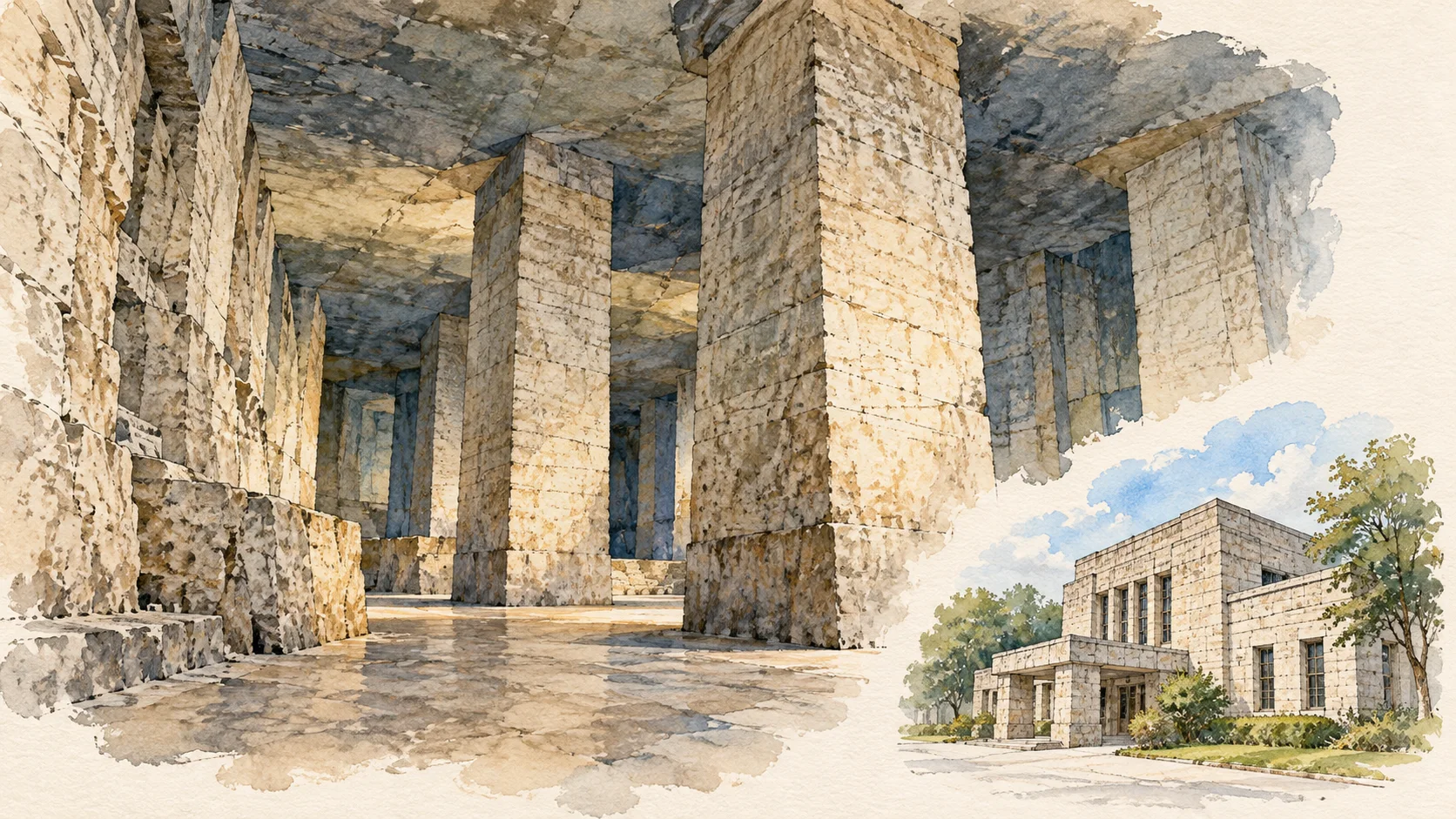
Explore Oya stone culture in Utsunomiya through the underground quarry, Oya Temple, Peace Kannon and old public hall. Plan around December 2026 works, stairs, weekend quarry visits and half-day choices.
Start the 20,000-square-meter underground quarry with one wall
The museum’s former underground quarry covers about 20,000 square meters and reaches roughly 30 meters deep. Those figures explain its scale, but begin with a small section of wall. Look at planes, corners and tool marks, then look upward and into the distance. Close views show the work left on the stone; distant views reveal the space created by its removal. Together they make the former workplace easier to understand.
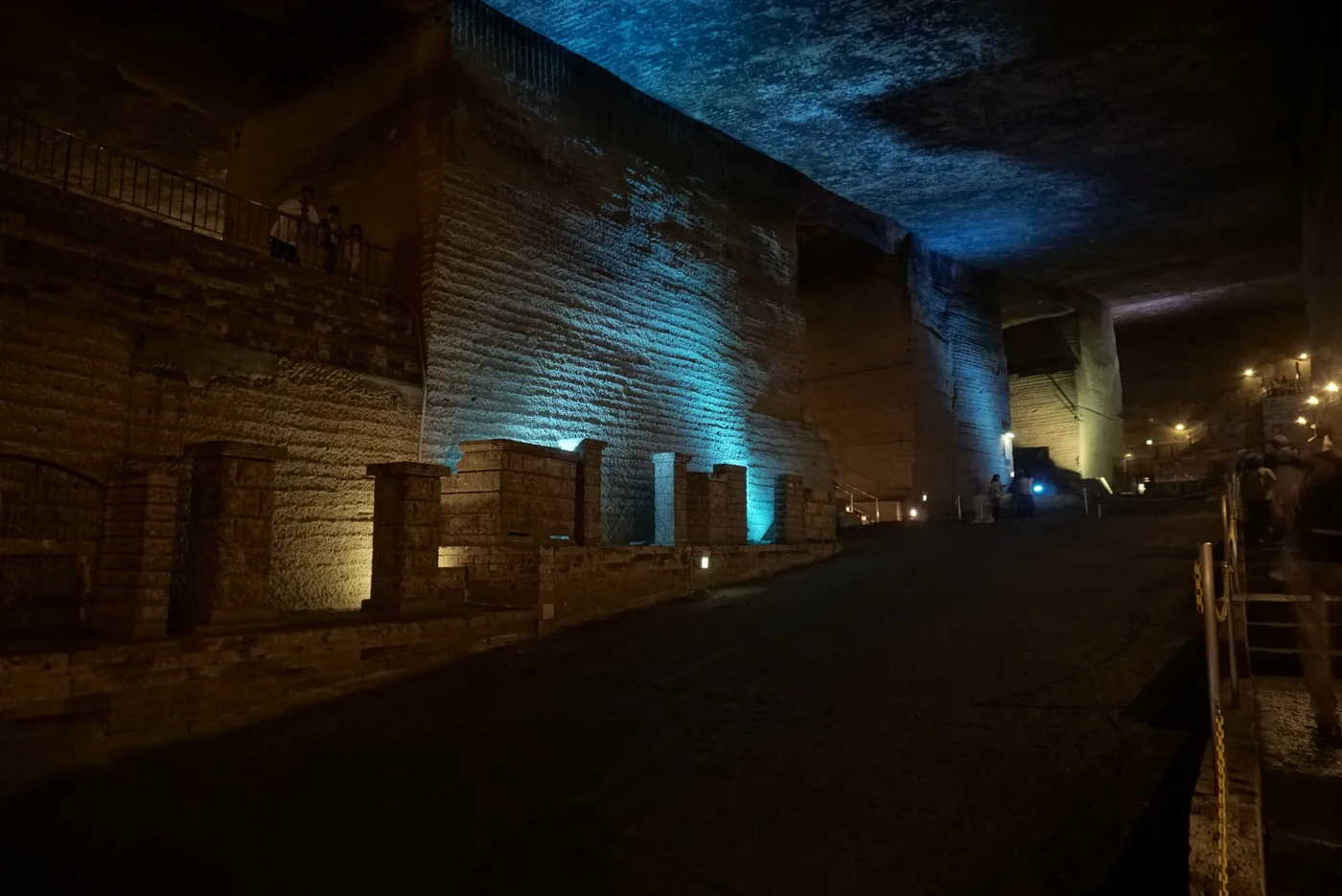
The museum specifically identifies pickaxe marks from the hand-quarrying era on the rock surfaces. Choose a clear patch and look at the marks’ direction, density and relationship to adjoining planes. Then step back to a permitted stopping place to view the whole wall.
Imagine the empty space as stone that once filled it. Buildings usually take shape as material is added; this walkable space emerged as material was taken out. Examine wall corners and the high masses alongside the visitor route. Today’s walking route is only part of the site; the extent of the original extraction determined its scale.
Tochigi Prefecture’s 2016 introduction to Oya History Museum covers Oya stone quarrying history and the underground quarry.
Separate the stone’s name, extraction methods and quarry types
Oya stone is the collective name for rhyolitic breccia tuff quarried around Oya-machi in Utsunomiya. For visitors, the geological name helps connect the underground quarry, rock-carved statues and stone buildings to one material-producing area. Compare rock in place, carved surfaces and cut building blocks to see how use changes what you notice.
The museum describes extraction methods as hiraba-bori and kakine-bori, while quarry types are described as open-pit and underground. These pairs answer different questions: how stone is cut, and what form the quarry takes. Keep them separate when reading the displays, rather than equating hiraba-bori directly with open-pit work or kakine-bori with underground work.
How a 150-kilogram block left the quarry
The museum’s account of removal describes workers carrying individual blocks weighing as much as 150 kilograms on their backs in the hand-quarrying era. That weight brings the immense space back to a human scale. Cutting a block was only part of the job; it still had to leave the working face. After looking at the high walls, consider the hauling route and the different arrangements needed to extract and remove stone.
The museum distinguishes the hand-quarrying period, which grew from the middle Edo period until mechanization around 1960, from later mechanical extraction. Hand tools included several types of pickaxe and carrying frames. Motors and winches later moved the blocks out. Read the tools, weight and space together: how tools met stone, how hauling overcame weight, and how the quarry accommodated this work.
After leaving the quarry, stone still had to reach its destination. The museum lists rafts, packhorses, horse-drawn carts and trolleys, followed by railways and trucks; trucks predominate today. Think of removal from the quarry and transport elsewhere as two separate diagrams. One handles height and paths within the quarry, the other much longer distances. Changes to both enabled the material to reach many kinds of buildings.
Plan winter visits around the December 2026 works
In its October 20, 2026 notice, the museum says the exhibition room closes for renovation from December while the underground space stays open. Reopening the following spring is a planned timetable. Keep the underground quarry in a winter itinerary, using the history of tools and hauling as background. View the physical above-ground exhibits after the room reopens.
If pickaxes, carrying frames and quarrying machines are your main interest, choose a date according to the exhibition room’s reopening notice. If the underground quarry is your priority, focus on wall marks, space and the visitor route, then continue to the temple or hall. The works change the displays available that day without requiring cancellation of the whole Oya trip.
Winter hours also change. From December to March the museum opens 9:30–16:30, with last entry at 16:00. It closes on Tuesdays during that period, moving the closure to the following day if Tuesday is a holiday, and also closes December 26–January 3. Oya Temple’s regular closure is Thursday, but it opens on holidays; it closes December 26–31. For both sites in one day, choose a date when both open and put the longer underground visit in the morning.
Warm clothing affects how comfortably you can stay underground. The museum asks visitors to bring jackets and has stopped summer blanket loans. Carry a layer that is easy to put on and remove, rather than hurrying through because you are cold. Eat and rest above ground afterward; eating and drinking are prohibited underground. Leave backpack space for your jacket as you move between outdoors and underground.
At Oya Temple, see the principal image before the three triads
Oya Temple’s principal Thousand-Armed Kannon is about four meters high and carved directly into the rock. Together with the Shaka, Yakushi and Amida triads, there are ten stone Buddhas. Give the principal image a complete stop before moving to the three groups. Distinguishing one figure from grouped images makes it easier to remember what you saw. The temple lists designation of the stone Buddhas as a national Special Historic Site in 1954 and an Important Cultural Property in 1961.
Look at how the carved figures join the rock: how a body emerges and how its outline meets the surrounding surface. This provides a useful comparison with the museum’s tool marks. Quarrying removed material; the Buddhas retained a devotional image in place. Both involve human work on stone, with different aims and final forms.
Beyond today’s stone color: pigment and gold leaf
The temple describes stages in making the principal image: carving the rock, applying vermilion, refining it with clay, then lacquer and gold leaf. This adds a question about how the figure’s color and surface appeared historically. Separate the carved form from the layers applied later to understand that making the Buddha involved more than cutting an outline.
Read this account before entering, then give your attention to the figures inside. Look at form, rock and the whole surviving work without crowding closer or moving repeatedly to find a small patch of color. Photography of the Buddhas in the hall is prohibited. The temple also states that building interiors cannot be photographed, while the grounds can.
The temple presents two different kinds of account of the principal image’s origin: tradition attributes it to Kobo Daishi in 810; a newer theory by Kitaguchi Hideo links it to late Nara-period monks of the Silk Road.
For a longer view of local life, make a short stop at the excavated pottery and stone tools displayed in the temple. The temple explains that Jomon-period remains were found below the hall and connects natural rock shelters with life at that time. This differs from the Buddhas: rock became religious sculpture in one case, while people left everyday traces beneath a rock shelter in the other. With limited time, keep the statues central and use the finds as an extension.
Peace Kannon: distinguish ancient Buddhas from postwar sculpture
The scale changes at Peace Kannon. The 27-meter figure was made to commemorate those who died in the Pacific War and pray for world peace. Work began in 1948 and finished in 1954. The temple credits Tobita Asajiro with its design and production, with Oya stoneworkers carving it. This postwar history differs from that of the ancient Buddhas inside the hall; allow each its own stop.
First view the full figure’s proportions from the park, then its relationship to the rock behind it. Oya Temple offers close views of sculpture joining a rock face; Peace Kannon shows how a large figure enters an outdoor setting. Together they reveal stoneworking serving different purposes in different periods. Temple worship, postwar remembrance and a park rest can each have a quiet place in the day.
The park containing Peace Kannon is freely accessible for worship and suits a ground-level walk after Oya Temple. If your companions have used much of their energy underground and at the temple, make this the last outdoor stop before the bus back to Utsunomiya. Photograph from a place that keeps the path clear. One view showing the statue and rock can suffice, leaving time for worship and rest.
Mount Otome is an out-and-back mountain walk
Mount Otome at Oya Temple is known for unusual Oya stone formations and red pines, and became a national Place of Scenic Beauty in 2006. If natural rock interests you, add it as a separate walk after the temple and decide how much walking time to allow beforehand. If you also want the underground quarry and public hall, you can omit the mountain and save your energy for the public spaces above ground.
The temple states that parts are slippery and safety fences and similar equipment have not been installed to preserve the natural scenery. Wear suitable sports shoes and read the mountain-walking notes. Weather can close the route. The summit is a dead end, with no descent on the other side. Allow for climbing, stopping and returning the same way; the far side on a map is not a through route to the museum.
Choose this walk when the ground is dry and everyone has energy left. In rain, unsuitable shoes or with knee discomfort, stay around the temple and Peace Kannon. The underground space and rock-carved figures already give the day a theme. Add the mountain when it is an activity you want, so the schedule can suit everyone.
The old Oya public hall: read a restoration through its stone blocks
Oya CONNECT includes the old Oya public hall, a visitor center and an outdoor multipurpose space, making it a useful start or finish. The hall was completed in 1929. Restoration reused dismantled stones to recover its early appearance. After the underground quarry, attention shifts naturally from the rock mass to shaped building blocks.
Begin with the hall as a whole, then move closer to see how blocks line the walls and joints connect them. This is an accessible way to look at architecture without knowing every structural term. Underground you saw surfaces left after stone was removed; here you see how one piece meets the next to create a building’s scale and outline.
The new visitor center beside it also uses Oya stone inside and out. View it from the same distances: overall proportions from afar, surfaces and joints close up, then the meeting of material and entrances. The old and new buildings extend the story from preservation to current visitor services without requiring another distant building for comparison.
The visitor center has permanent tourist information staff, accessible toilets and infant-care facilities. Visit in the morning to organize the day’s ground-level route, or finish there for a rest and toilet stop before the bus. General public access to the hall and visitor center is 9:00–17:00. Both close on the third Tuesday of each month and December 29–January 3. Evening venue-hire hours are separate from ordinary visiting hours.
KANEHON adds an open-air view of quarrying
If the underground quarry is your favorite part of the day, KANEHON can extend the theme on a weekend. The Utsunomiya tourism association describes it as an active quarry offering tours and several activities during visitor opening hours. Underground you examine the interior left by extraction; the open-air site places the working area in the ground-level landscape. Each gives you a different question to explore.
The association currently lists opening hours as 10:00–15:00 on the first, third and fifth Saturdays, Sundays and national holidays. It closes on non-holiday weekdays. Check which Saturday you are choosing, rather than assuming the second and fourth Saturdays are regular opening days. On weekdays, complete the museum, temple and hall route and save the open-air quarry for a suitable date.
The association lists admission at ¥500 and the guided quarry tour at ¥300, charged separately. For a quarrying-focused visit, begin with entry and the tour. Pizza and stoneworking activities have separate charges and booking arrangements. Budgeting for admission plus the tour keeps the plan clear and leaves time to return to Utsunomiya.
To include KANEHON in one full day, make it another main stop, shorten the park walk after the temple and omit Mount Otome. If ancient Buddhas and restoration of the hall matter more, leave out this extension. Both open-air and underground quarries merit attention; choose according to the quarry landscapes you want to compare rather than the number of stops.
From Utsunomiya to Oya: match three stop names to your visits
From JR Utsunomiya Station, take a Kanto Bus toward Oya and Tateiwa from west-exit stop 6. The museum website gives a ride of about 30 minutes to Shiryokan Iriguchi, then a walk of about five minutes. From near Tobu-Utsunomiya Station, board at Tobu Eki-mae. Save the complete stop names so arrival time goes into sightseeing rather than sorting out similar place names.
For Oya Temple, use Oya Kannon-mae, about a three-minute walk according to the temple. For KANEHON, use the Tateiwa terminus, also about a three-minute walk according to the tourism association. These three stops serve different ends of the route; you can board home near your last visit. Look up outbound and return services with Kanto Jidosha for your travel date, including time to walk from the last sight to its stop.
The 2026 Oya low-speed electric vehicle season runs April 25–November 23, with services on selected weekends and holidays from 10:00 to 16:30 between Oya CONNECT and the KANEHON area. It combines scenery with guidance along the way. For a December underground visit, use scheduled buses and walking. The seasonal local vehicle and buses to Utsunomiya serve different purposes; winter transport plans should use the latter.
On the operator’s Utsunomiya west-exit timetable, read the “45 大谷経由 立岩” column for Tateiwa via Oya. The same page has “47 荒針経由 新鹿沼” for Shin-Kanuma via Arahari; do not mix the minutes from these columns. The weekday table checked on October 29, 2026 lists morning Tateiwa departures at 8:51, 9:10, 9:59 and 10:26. Missing a planned 9:10 departure means a 49-minute gap until 9:59, shifting the morning visit later.
For a return from Oya Keikan Koen stop, the weekday table lists 15:09, 15:43, 16:05 and 16:35 toward “01 宇都宮駅” (Utsunomiya Station). These are departures at the park. Shiryokan Iriguchi, Oya Kannon-mae and Tateiwa each have separate stop timetables. If finishing at the park, fix that return stop in the plan rather than treating the same bus’s time at another stop as your deadline.
Oya sightseeing day pass: compare two admissions with your bus fares
Kanto Jidosha’s prices from April 1, 2026 are ¥2,200 for adults, ¥1,400 for junior high students and ¥700 for elementary school students. The Oya Sightseeing One-Day Bus Pass includes Oya History Museum entry, Oya Temple admission and unlimited travel for one day on the JR Utsunomiya–Oya–Tateiwa line at the stops shown on the ticket. The simplest use is to ride to Oya, visit both sites and return. KANEHON entry and its tour cost extra.
Separate adult admission to the museum and temple totals ¥1,500, so the pass adds ¥700. It becomes cheaper only if the bus journeys you would otherwise pay for total more than ¥700; at exactly ¥700 the costs match. For junior high students, the two admissions total ¥600, leaving an ¥800 gap to the ¥1,400 pass. For elementary pupils, admissions total ¥500, just ¥200 below the ¥700 pass. Calculate each family member’s ticket category separately.
If an adult visits only the underground quarry, the ¥1,000 museum ticket leaves a ¥1,200 gap to the pass, so bus fares need to exceed that amount for savings. With only the temple’s ¥500 adult admission, the gap is ¥1,700. If your date falls on the temple’s Thursday closure or the museum’s winter Tuesday closure, calculate using the sites you can enter. These differences are break-even thresholds: add the fares for outward, return and intermediate rides to decide.
The city’s sales information updated September 16, 2026 lists the tourist information office beside JR’s conventional-line gates as selling daily from 9:00 to 14:50, except closures such as the year-end period. Earlier arrivals can use Kanto Jidosha’s Utsunomiya station-front commuter-pass center, about one minute from the west exit, south of Chisun Hotel. It opens weekdays 8:00–19:00 and weekends and holidays 8:30–17:00, with sales suspended 12:00–13:00. For a 9:10 bus, buy there first and return to stop 6 without squeezing the purchase into the ten minutes after the information office opens.
The city also lists Tobu Hotel Grande and Four Points Flex by Sheraton Utsunomiya as sales points. The information office and these two hotels suspend sales when the temple or museum is closed. From Tobu-Utsunomiya, Grande near Tobu Eki-mae is convenient; from JR, use the station office or west-exit center. This scheduled-bus day pass and the local low-speed electric vehicle passport are separate products. One covers Utsunomiya return travel and intermediate stops; the other operates locally in Oya. Give the complete ticket name when buying.
Half a day or a full day: give time to what interests you
The following stays are suggested planning allowances. For an underground half-day, give the museum 60–90 minutes and the hall and visitor center 30–45 minutes, plus buses, walks to stops and rest. If tools and industrial history interest you, extend the reading time while the exhibition room is open. In winter focus on the underground space, eat above ground afterward and return to Utsunomiya.
For a stone-Buddha half-day, allow 45–60 minutes at the temple, 20–30 minutes for Peace Kannon and the park, then view the hall’s architecture. This gives separate time to ancient images, postwar sculpture and a modern civic building. Allow an additional return walk for Mount Otome. With older companions or children, you can replace that walk with a seated rest.
A full day can follow the basic order of underground quarry in the morning, lunch above ground, temple and Peace Kannon in the afternoon, and the hall last. Complete the main stair-dependent stop first, then shorten the park walk according to energy. If you want longer in the temple, make the hall brief; if architecture matters most, protect its time first. One main place worth a long stay is enough, with the others providing comparisons.
For an extended weekend quarry route, make KANEHON and the underground quarry the two main aims. Add the temple only if hours and energy allow. The open-air site lists a 15:00 finish, so it cannot be left until all other sights are done. If visiting KANEHON first, go underground in the afternoon with enough time before seasonal last entry. If going underground first, prioritize the open-air quarry after lunch and make the hall a short return stop.
For example, on Friday, October 30, 2026, use the weekday timetable checked on October 29. Buy the ticket first, take the 9:10 Tateiwa-bound bus from JR Utsunomiya’s west exit, and get off at Shiryokan Iriguchi. With the museum’s approximate 30-minute ride and five-minute walk, plan a 10:00–11:30 visit. This is an itinerary allocation; move it later if traffic delays the bus. Taking 9:59 still allows the underground visit if you shorten the park stop after lunch. This Friday version omits weekday-closed KANEHON and does not rely on the seasonal local vehicle.
After the museum, the tourism association’s walking route gives about ten minutes to Oya Keikan Park and another five minutes to Oya Temple. Put lunch and rest between these above-ground walks. Leave 13:00–14:00 for the temple, then continue to Peace Kannon and the hall. Omitting Mount Otome removes the separate uphill return walk. The park lies between museum and temple; returning there for the bus gives a final view of grass and the rock wall across the Sugata River.
Target the 15:43 bus from the park. Finish the last visit at 15:20, allowing twenty minutes to walk to the stop, sort your jacket and wait. The 16:05 departure is the next backup, 22 minutes later. Budget sixty minutes for the return to Utsunomiya, then another thirty to enter the station, buy food or connect with rail. If instead waiting beside the temple, check the Oya Kannon-mae return timetable and remove the park’s 15:43 time from your plan.
Prepare admission money, cash and photography rules
After the museum’s April 2026 adult admission change, normal entry is ¥1,000 for adults and ¥400 for elementary and junior high students; preschool children enter free. Payment is cash only. Oya Temple costs ¥500 for adults, ¥200 for junior high students and ¥100 for elementary pupils. Two adults buying separate tickets for both sites pay ¥3,000. Add transport and meals to form the basic budget for the main route.
Individual bus fares can be paid by cash or IC card. The operator says to board at the rear and leave at the front. Cash passengers take a numbered ticket when boarding, check the fare display and deposit the fare with the ticket when leaving. IC users tap on both boarding and alighting. Prepare this separately from the museum’s cash-only ticket office: paying bus fares by IC still leaves a need for cash if buying museum entry separately.
The museum opens April–November from 9:00 to 17:00, with last entry at 16:30. Oya Temple starts at 8:30 in April–September and 9:00 in October–March, closing at 16:30 throughout, with reception ending twenty minutes earlier. If arriving in the afternoon, choose the paid site you most want first, then finish with the park or hall, preserving viewing time instead of rushing between ticket deadlines.
Follow the visitor flow when photographing underground. The museum bans tripods, monopods and selfie sticks, stopping for photographs on stairs, landings and narrow passages, and fixing cameras to the ground or handrails. Reach a permitted stopping area before taking handheld photographs. Photography lasting more than two hours needs permission. Shoots using figures, props or special clothing require permission and an extra fee.
If comparing trips from Tokyo, read Tokyo day trips and overnight stays. For another use of Oya stone as a building material, the Meiji Mura buildings and rides guide includes the Imperial Hotel’s central entrance.
A few useful answers
How do I get from JR Utsunomiya Station to the Oya History Museum or Oya Temple?
Take the Kanto bus toward Oya and Tateiwa from bus bay 6 at the west exit of JR Utsunomiya Station. For the museum, ride about 30 minutes to Shiryokan Iriguchi and walk about 5 minutes. For Oya Temple, get off at Oya Kannon-mae and walk about 3 minutes.
How much is the adult Oya sightseeing day pass, and what does it cover?
From April 1, 2026, the adult pass costs ¥2,200 and covers the Oya History Museum, Oya Temple, and unlimited same-day bus rides on the JR Utsunomiya Station–Oya–Tateiwa route. The two admissions cost ¥1,500 separately, so the pass saves money if your bus fares for the day total more than ¥700.
Can I still visit the Oya underground quarry during renovations from December 2026?
The underground quarry stays open when the aboveground exhibition room closes for renovation in December 2026. From December through March it opens 9:30 a.m. to 4:30 p.m., with last entry at 4 p.m. It closes on Tuesdays (the next day if Tuesday is a public holiday) and from December 26 through January 3.
Can I take a wheelchair or stroller into the Oya History Museum’s underground quarry?
Wheelchairs, strollers, and handcarts are not allowed on standard visits to the underground quarry. Visitors who have difficulty walking can take a paid golf cart into the quarry on weekdays by booking in advance.
Official information and references
Sources used in this guide.
- Oya History Museum: fees, access and entry rules
- Utsunomiya City: 2026 Oya low-speed electric vehicle
- Utsunomiya City: Oya CONNECT and public hall restoration
- Oya History Museum: exhibits and quarrying history
- Utsunomiya tourism association: KANEHON quarry
- Oya Temple: stone Buddhas, Mount Otome, Peace Kannon and visits
- Oya History Museum: December 2026 exhibition room renovation notice
- Kanto Jidosha: Oya day-pass prices from April 2026
- Utsunomiya City: Oya day-pass coverage and sales points, updated September 16, 2026
- Kanto Jidosha: weekday departures from Utsunomiya west exit toward Oya and Tateiwa
- Kanto Jidosha: weekday Oya Keikan Koen departures toward Utsunomiya
- Utsunomiya tourism association: car-free Oya walking route