Start at Taketomi East Port and Yugafu-kan, then explore the red-tiled village, West Pier, Kondoi and Kaiji beaches. Plan bicycle pickup and return, lunch, water, sea safety and a shorter family route.
- Region & Focus
- Taketomi Island
- Reading Scope
- 32 min read · 14 chapters · 6 Q&As
- Official Verification
- 15 official sources checkedUpdated October 29, 2026
- Key Topics
- ItinerariesNeighborhoodsFood
Chapter Route Map (tap any stop)
- Give the day to Taketomi: connect the village, west coast and return to port
- Visit Yugafu-kan after landing to put names to what you see in the lanes
- Walk to study the village; cycle to save energy for the coast
- For this rental service, check outbound pickup and the return location first
- Village details: red tiles, coral-stone walls and household boundaries
- Treat Nagomi Tower, the Former Yonaguni House and sacred sites separately
- Eat in the village so beach time does not depend on finding supplies
- See West Pier by day; do not set an Ishigaki return by sunset
- Give Kondoi Beach a full stop for tide colors, sand or swimming
- Add Kaiji for star sand and shade only with energy left
- An unhurried walking day: village and one west-coast stop
- A fuller cycling day: two beaches and a seated lunch
- Start with a light route for young children and older travelers
- The final leg: return from the beach to the actual ferry port
- Quick Q&A
On Taketomi, a day on foot can link the red-tiled village with one seaside stop. Rent a bicycle if you want both Kondoi and Kaiji in the afternoon. Visit Yugafu-kan by the port first, eat lunch and refill water before the west coast, then work backward from bicycle return and ferry boarding. Shorter options suit children and older travelers.
Give the day to Taketomi: connect the village, west coast and return to port
After landing at Taketomi East Port, visit nearby Yugafu-kan, then follow public roads into the village. See West Pier around lunchtime, give a longer afternoon stop to Kondoi Beach and add Kaiji only with enough energy. Finish by returning a bicycle in the village or walking to the port. This links cultural displays, residential streets and west-coast views for a first visit without renting a car. Leave eastern Aiyaru Beach out of the basic route to avoid a return crossing of the island.
If still comparing Ishigaki accommodation or other islands, first read the Ishigaki and Yaeyama guide to stays, island choices and ferries. Leave large luggage at your accommodation for this Taketomi day. Carry drinking water, sun protection, regular medicine and a change of clothes. You can decide on bicycle rental after seeing the roads and your companions’ condition. Walkers can also make a complete day of the village and one west-coast stop.
The Taketomi Tourism Center notices read on October 29, 2026 said operations resumed on October 26, while warning of poor roads and footing in places after the typhoon. The same page announced that buffalo carts, bicycle rental and Kanifu restaurant would close November 10–13 for the Tanadui festival, reopening November 14. On those dates, use other operating transport and restaurants rather than copy the usual service combination.
Taketomi Town Tourism Association records an evening walk in August 2024 after the last ferry has left the island, adding scenes of daily life on Taketomi.
Start at Taketomi East Port and Yugafu-kan, then explore the red-tiled village, West Pier, Kondoi and Kaiji beaches. Plan bicycle pickup and return, lunch, water, sea safety and a shorter family route.
Visit Yugafu-kan after landing to put names to what you see in the lanes
Taketomi Island Yugafu-kan is about two minutes on foot from Taketomi Port. Official hours are 08:00–17:00, with free admission and closure during typhoons. It is more useful before the village than as a rushed stop before the return ferry: look at the island map and displays, then choose how far to go. Reading, learning and rest spaces let you pause after boarding and landing, give children water and organize bags before starting.
Displays focus on how nature and human life coexist, including festivals, islanders’ voices, songs and folk tales. A roughly seven-minute film on utsugumi introduces the island’s emphasis on mutual help. Hearing residents speak before walking their regularly swept white-sand lanes helps explain the streets’ appearance. With children, choose one detail to find later, such as a roof shisa or stone wall, rather than read every panel.
The center also introduces a six-kilometer nature-learning trail. This is a complete walking route with different priorities from this village-and-west-coast day. Experienced walkers can select one section from the center’s map; families with young children can keep the center as a short stop. Do not add the full trail merely because it is called educational: lunch, coast and the return to port still follow. Choosing the day’s main interest preserves rest time better than adding branches as you go.
The port waiting area and Yugafu-kan have separate purposes. The former is the ferry meeting point; the latter introduces the island. Rental shops have their own pickup points. If a booked product requires meeting immediately after landing, check in as ordered first rather than leave pickup staff waiting. Independent walkers are best placed to make the center their first stop. Save the official map on your phone before leaving. Knowing which side the port is on avoids searching again at every village junction.
Walk to study the village; cycle to save energy for the coast
The Taketomi Tourism Center FAQ gives distances from its shop: about 700 meters or 10 minutes on foot to West Pier, 1.3 kilometers or 20 minutes to Kondoi, and 1.5 kilometers or 25 minutes to Kaiji. The shop-to-port distance is about 1.2 kilometers or 15 minutes. These explicit starting points help assess a day’s walking. They are not a total route made by adding stops; calculate the return from Kaiji separately rather than use shop-to-beach time for beach-to-port travel.
Walking is simplest for stopping to study entrance screens, shisa figures and plants in the village. Cyclists must find somewhere clear to park when they see an appealing corner. Dismount when crowds, loose sand or narrow junctions make riding awkward. A bicycle mainly saves energy between village and coast; it does not make every lane suitable for fast riding. If one companion wants to walk and another to cycle, walk together first and decide on the coastal leg after lunch.
For an all-walking day, choose West Pier or Kondoi for a longer stop, then return to the village for food and rest. Renting a bicycle makes both Kondoi and Kaiji easier on your energy. The decision also depends on stable starts and braking, and whether children can truly ride the whole return trip independently. Children used only to park practice need more care on unfamiliar sandy roads with vehicles and buffalo carts. A shorter walk suits that situation better than adults trying to chase them while riding.
Test the bicycle outside the shop before leaving. Change it or walk if it does not fit. Wear shoes suited to pedaling, pushing a bicycle and sand, and secure hats and bags. Take valuables when parking. Cycling does not reduce the need for water and shade; fatigue builds after a beach stop and the return. If swimming, pack dry clothes and a wet bag so clothing on the village return works for the transport afterward.
For this rental service, check outbound pickup and the return location first
The Taketomi Tourism Center bicycle page says all bicycles are rented by the day, with no hourly rate, and payment is cashless only. For a short afternoon rental, check the full daily price for your chosen model and keep the walking option if it is poor value. Do not estimate using another shop’s hourly rate or assume restaurants and ferries take the same payments. Bring a usable card or electronic payment method and retain cash for port tickets.
This shop’s FAQ limits free pickup from the port to buffalo-cart customers. Bicycle-only customers make their own way to the shop. After renting, they may use the return transfer to Taketomi Port, but must return the bicycle first and wait at the shop’s stated time. Do not board a vehicle by its shop name at the port if renting only. Nor is there a need to buy an unwanted buffalo-cart ride just for a transfer. Walking from port to village is already part of the day route.
Return the bicycle to Taketomi Tourism Center by its specified time. Do not leave it at the port, a beach or another rental shop; next-day returns are not offered. From the west coast, return it, complete checks and settlement, then go to the port-transfer meeting point. Allow separate time if walking to the port. With the shop transfer, the rental shop is your final service stop; you cannot stay at the beach and expect pickup there.
The FAQ says advance reservations by direct phone and similar means are not accepted. Customers combining a buffalo-cart ride and bicycle rental must finish the ride before renting. For children’s bicycles, child seats or particular sizes, give the child’s height and needs on arrival, then assess available stock. If nothing fits, take a short walk instead. Independent visitors can save the return rules, model price and port-transfer method together in one record rather than search several pages later.
Village details: red tiles, coral-stone walls and household boundaries
Taketomi’s village is recognized by red-tiled roofs, roof shisa, coral-stone walls and white-sand lanes. The Taketomi Island Charter records the preservation district’s designation in 1987 and places culture, nature and daily life before island development. Look beyond a named house to how several homes form a continuous streetscape. Low walls, plants and roofs vary, while the road remains residents’ daily route.
Observe from public space on your side of the road, leaving room for residents, delivery vehicles and buffalo carts. Wait for pedestrians before photographing a whole wall, and stay outside even when a gate is open. Courtyards, drying laundry and family life do not become open exhibits because a house appears on a tourist map. Explain the difference between inside and outside the wall to children first to avoid hurriedly pulling them back while sightseeing.
You do not need to reach the end of every lane. Choose a public-road stretch with continuous red roofs and walls, then turn back at a nearby junction toward lunch or the west coast. Retrace your route when unsure about a narrow path. Keep bicycles clear of home entrances and pull aside to read maps. Moving this way takes longer but reveals shisa poses, wall plants and roof-tile patterns without making the whole day a search for the next landmark.
Residents maintain the white-sand roads, and the center’s cultural route describes morning sweeping. Keep cups, wrappers and wet wipes in your own rubbish bag; do not hide them in wall gaps or leave them to shops. Ask permission before photographing people at work, and do not follow sweeping residents with a camera. Appreciate the village’s tidiness by adding no cleaning burden. Seal the rubbish bag before returning to port and take it back to your accommodation for disposal.
Treat Nagomi Tower, the Former Yonaguni House and sacred sites separately
Old photos can make Nagomi Tower in Akayama Park seem like a viewpoint to climb. The Yugafu-kan cultural-properties route says climbing has been prohibited for safety since 2016; Taketomi Island Kotsu’s current introduction also says the upper part cannot be climbed. View the tower and street from ground level, use it as a village landmark, then continue on public lanes. Families need not queue for a prohibited roof panorama.
For house construction, first read Yugafu-kan’s account of the Former Yonaguni House. Its main building is called the fuya, with a separate kitchen building, the tora. Look at the arrangement from public roads, entering only where an open entrance and visitor instructions permit it. Separate main and kitchen buildings offer a different subject from roof color alone. Read the center’s building explanation with children, then identify similar structures from village roads to link exteriors with past living patterns.
Utaki beside village roads are sacred places. The center’s cultural route discusses Nishito and Yomochi Utaki and explicitly prohibits entry to utaki worship areas. Some sacred sites lack an obvious torii gate. View from public roads, do not enter prayer spaces or touch offerings, and do not cross boundaries to reach a map marker. If a ritual is underway, use another public road and move photography and conversation elsewhere to preserve quiet.
The Tanadui festival, island faith and performing arts remain living practices. Learn the relationship with Yomochi Utaki at the center first; follow local controls on your travel day. The November 10–13, 2026 closure of Taketomi Tourism Center and Kanifu is a practical effect of that rhythm. On those dates, remove these two service stops and leave the village visit flexible. Do not treat a ritual as a performance you can join at the last minute.
Eat in the village so beach time does not depend on finding supplies
Eat before going to the coast or after returning to the village, but do not start looking for lunch just before bicycle return. One named choice, Kanifu restaurant, is at 494 Taketomi. Official hours are 11:00–15:30, with last orders at 15:00; reservations and takeaway are not accepted. Treat it as a seated break within opening hours rather than an all-day takeaway counter. Check the day’s menu and queue on arrival.
Kanifu is cashless only, offers an English menu, has a changing table, wheelchair access and an accessible restroom, and has no tatami seating. Families can combine changing and eating rather than seek facilities at the beach. Food-allergy requests can be discussed within the existing menu. State the allergen before ordering and choose a dish staff can explain.
For bicycles, the designated parking area is on the right when facing the entrance. Follow instructions to park from the back, avoid parked cars and keep off roadsides and the entrance. Park before joining the queue so doors, resident roads and later customers remain clear. Check monthly closing notices; November festival closures are specified. If closed that day, eat at another open village restaurant and head toward the coast earlier rather than lose the afternoon to one shop.
Refill water before Kondoi. Taketomi Island Kotsu says the beach has no vending machines and summer mobile stalls have no fixed schedule. The tourism association’s model route mentions mobile food services around late March through October. Treat stalls as an option if present, but bring basic drinking water from the village. Eat where you can clean up properly. Crows frequent the beach, so secure food and bags. Bag wet rubbish and take it away on the return.
See West Pier by day; do not set an Ishigaki return by sunset
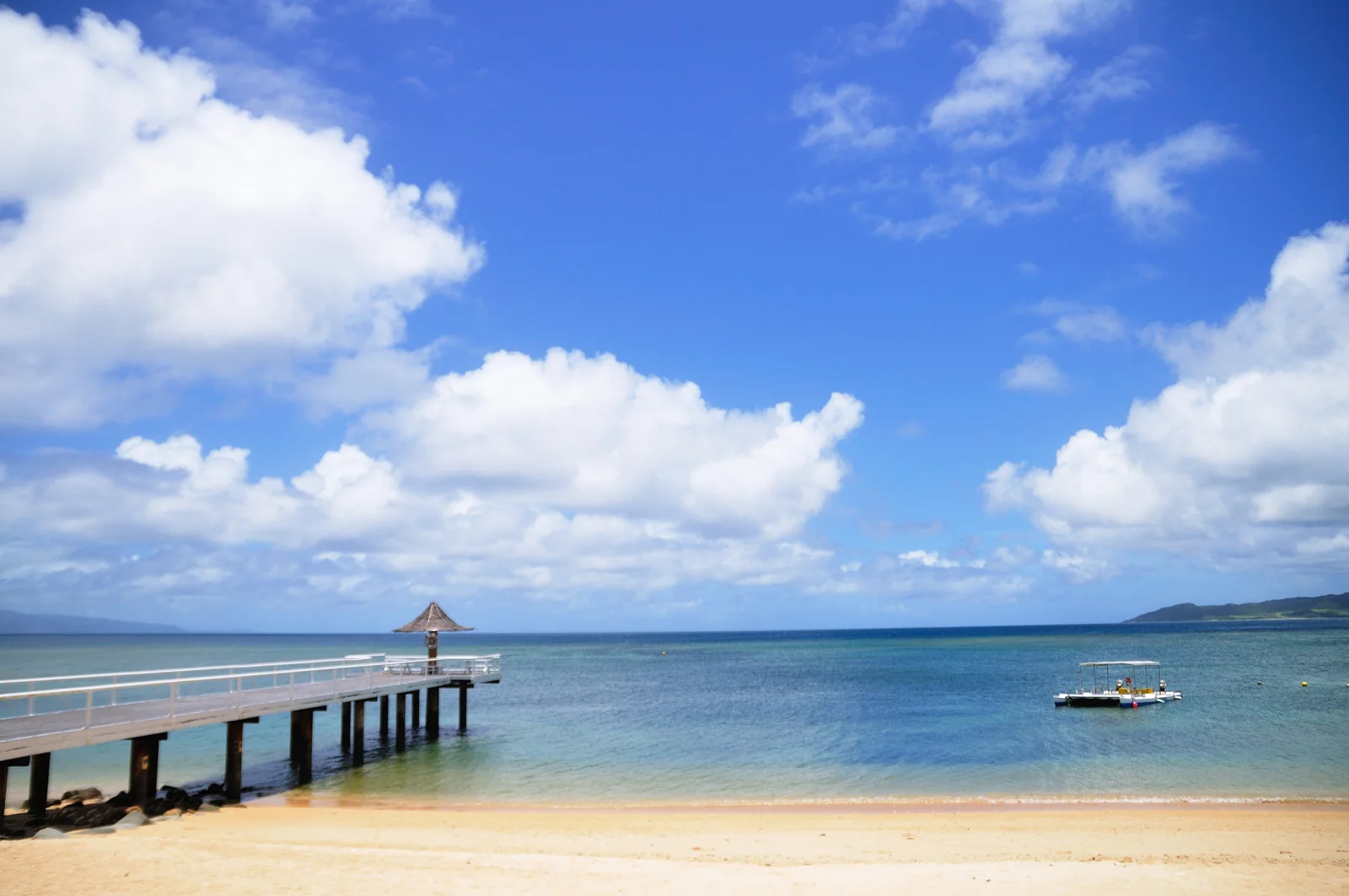
Walk west from the village to West Pier for a short coastal stop around lunch. Yugafu-kan lists it as a tangible cultural property registered in 2005 and describes residents setting out in sabani boats to farm on Iriomote. This history gives the long pier a role in transport and livelihood. Daylight already shows sea colors and distant islands, making it suitable for a same-day return route.
A Taketomi Town Tourism Association notice dated August 20, 2024 explicitly prohibits entry to the pier tip because it is dangerously slippery. Stop at the control line and view from permitted areas. After rain or in large waves or strong wind, shorten the stop or return to the village. Do not cross chains for an empty-tip photograph or let children run toward the seaward end. Adults with young children should focus on footing and the child.
West Pier and Taketomi East Port are separate places. Scheduled ferries to Ishigaki leave from East Port. Return through the village and connect to the port rather than search the shore for an imagined boarding point. With a village-rented bicycle you can continue from the pier to Kondoi, but check time before the afternoon. If lunch is unfinished, clothes are wet or companions tired, make this the only coastal stop. Even a short next leg adds parking and visiting time.
Give Kondoi Beach a full stop for tide colors, sand or swimming
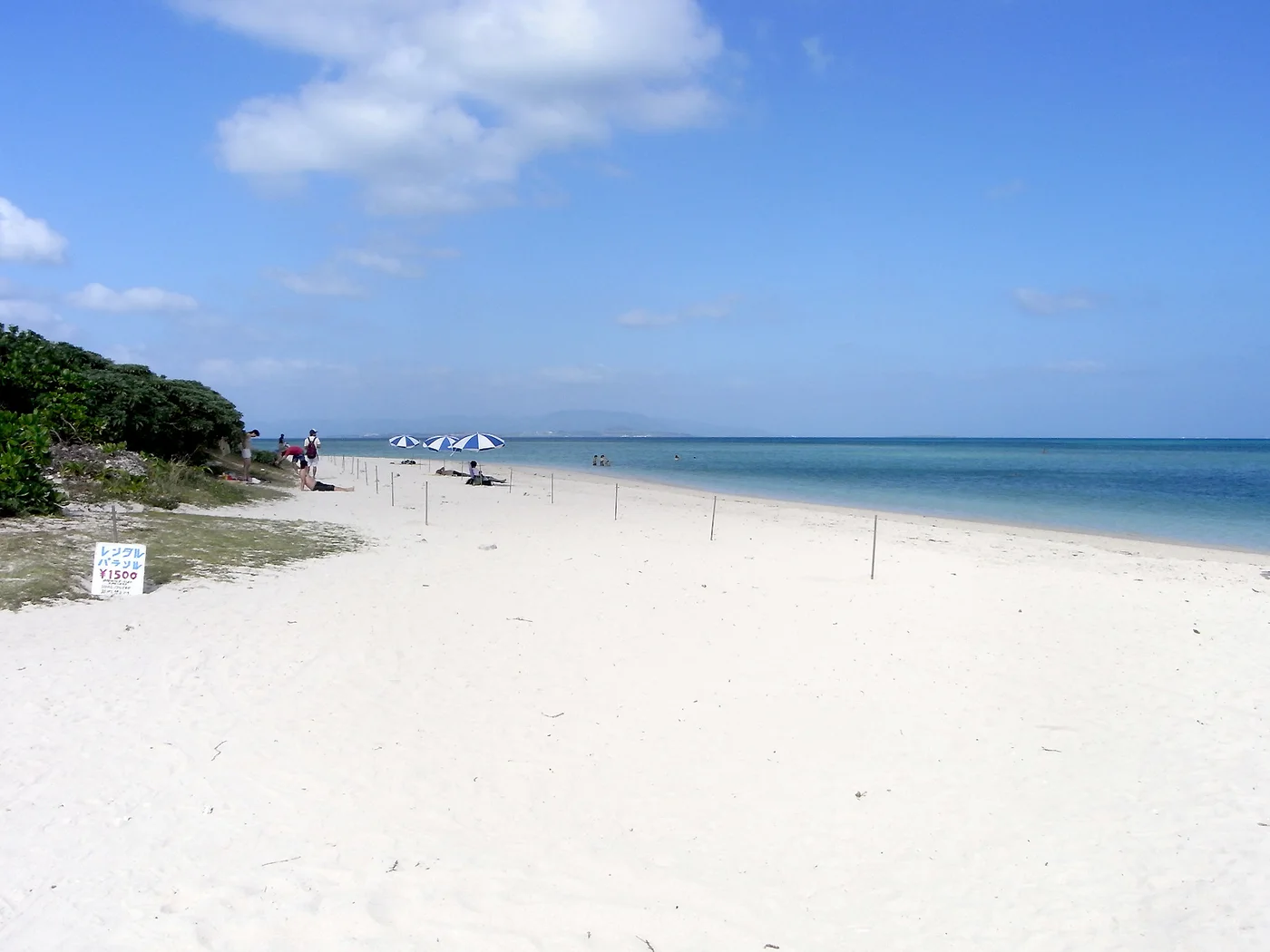
Kondoi’s white sand and shallow water invite a slower stop. The tourism association’s Taketomi model route describes exposed sand farther out at low tide and lists showers, changing rooms and restrooms. First look at the current water level from shore, then choose sand play, sitting by the sea or entering the water. For views alone, no full swimming kit is needed. Families can bring sand toys and spare clothes and keep waterside play within what adults can supervise.
Tide changes directly affect activities. At low water, swimmers may have a longer walk; rising water deepens places that were previously shallow enough to stand. Taketomi Island Kotsu also warns of sudden depth changes and faster currents farther out. Treat exposed sand as scenery rather than make the farthest sandbar a required destination, and include the return to shore in your time. Even if children see others walking out, adults must set boundaries according to where they can supervise.
Before entering, assess the day’s waves, currents and local instructions. Taketomi Town’s coastal safety rules require companions, checking sea conditions and ensuring buoyancy, and recommend life jackets or wetsuits. Most town coasts are natural shores without swimming lifeguards. Calm-looking water is not the only criterion. An adult able to enter and care for children should remain beside them. Someone taking photos or guarding luggage should not simultaneously be counted as their in-water carer.
Leave the water before the actual beach departure, allowing time to wash feet, rinse, change, pack wet items and drink again. Change into clothing suitable for the village and transport before leaving. The island charter prohibits swimwear or bare bodies outside bathing beaches. The rental shop has no showers or changing rooms; its FAQ directs visitors to Kondoi’s facilities. Do not ride back wet and discover that the preparation point is behind you. One adult can pack while the other stays with children, then leave together.
In poor sea conditions, keep a short shore stop or cancel the coast and return to village food and displays rather than seek another beach to swim in wind and waves. Learn to use flotation equipment first; do not enter after drinking alcohol or when unwell. For an emergency at sea, call 118. Call for help and clearly name Kondoi Beach and your position, with companions helping contact rescuers. Do not let people without rescue skills enter one after another.
Add Kaiji for star sand and shade only with energy left
Kaiji Beach is also called Star Sand Beach and should be planned separately from Kondoi. Taketomi Island Kotsu explains that the star-shaped grains are foraminifera shells. Look at a small pinch in your palm, then return it. This changes children’s activity from running to studying details. Everyone need not find the same number; seeing the shape is enough. Do not dig large holes or take bags away, leaving the shore for later visitors to observe.
For swimming, the tourism association warns of fast currents, while Taketomi Island Kotsu’s current introduction explicitly prohibits it. Use Kaiji for shore observation and rest on this route, reserving water activity for Kondoi when conditions are suitable. Follow any no-entry-to-water signs. The beaches appear close, but assess currents and activities separately. If children still want water play, return to the activity already chosen rather than follow the waterline farther out here.
The association’s model route estimates about five minutes by bicycle or 10 minutes on foot between Kondoi and Kaiji. This is only a leg estimate. With children, add the return, stop and rest; Kaiji occupies a substantial part of the afternoon. If Kondoi has already been satisfying, return to the village. To focus on star sand, skip swimming at Kondoi and make Kaiji the main coast instead of giving both equal time.
An unhurried walking day: village and one west-coast stop
For a walking day, arrive on Taketomi in the morning and return to Ishigaki in the afternoon. Spend 20–30 minutes at Yugafu-kan after landing, then enter the village for white-sand lanes, red-tiled houses and cultural landmarks. This duration is a planning suggestion. Extend it if the displays interest you and shorten the coast afterward. The key is to have eaten and rested along the way rather than walk straight to the sea and start seeking supplies there.
Visit West Pier around lunch and continue to Kondoi only if energy and weather suit. Focus on views and sand play at Kondoi, with time to sit, then return through the village to East Port. Omit Kaiji or substitute it for Kondoi. Choose Kaiji for star sand, or Kondoi for a coastal stop with fuller restroom and changing facilities. Let actual needs determine one main stop.
For a 15:50 Taketomi return, for example, you could plan to be back in the village at 15:00 and start walking to the port. This is your own buffer, not a ferry check-in rule. Turn back earlier with slow walkers, a stroller or morning fatigue. If everyone is exhausted on reaching Kondoi, stop adding sights, rest and return on known roads. Do not assume on-demand transfers wait at the beach.
For stroller families, the route between village and coast is real pushing distance, with adults handling sand, turns and sun. If a child needs carrying, the empty stroller is still with you. One beach is more practical than extending a circuit because the child can sit. Rest until you can walk back steadily, then end the afternoon. If a child is already asleep in the village, keep a quiet shaded rest and leave the beach for another visit.
A fuller cycling day: two beaches and a seated lunch
Adults and older children who ride confidently can visit the center, walk village lanes, then rent bicycles for West Pier, Kondoi and Kaiji before returning to the village. Ride between sights and walk inside the village. Omit eastern Aiyaru Beach so the west-coast loop does not become a cross-island return. For a buffalo-cart ride, finish it before rental and shorten the later coast accordingly; both activities take time.
Eat in the village a little after 11:00 before going to Kondoi, giving the longest afternoon stop a base of food and water. If already at the beach in the morning, return early for lunch and decide whether you have energy for a second outing. You need not repeat a leg: choose lunch’s place before leaving. In summer or with children sensitive to sun, extend seated rest and make Kaiji brief or omit it.
Ask the actual bicycle-return deadline and port-transfer meeting time when renting, then work backward. Leave the coast earlier than the return deadline to allow pushing, yielding at junctions and unexpected organizing. At the shop, putting down the kickstand is not the whole return process. You can buy a craft or drink near the end, but first ensure the bicycle is returned on time and port transport is arranged, then use the remaining short gap.
Even with older children able to cycle, agree where to wait at junctions rather than let the group merely follow an adult’s back. With buffalo carts or crowded sandy lanes, dismount together instead of splitting around traffic. After a fall or a tire or brake problem, stop safely and use the shop’s instructions rather than force a ride back. An extra beach is worth less than everyone retaining energy for the final leg.
Start with a light route for young children and older travelers
A light family day has port-side displays, village lunch and one short coastal stop. At Yugafu-kan, choose what holds children’s interest. Do not pursue every cultural landmark in the village. After food and diaper changing, decide between West Pier and Kondoi. If morning brings sleepiness, overheating or rubbing shoes, rest in the village and return to port early. Lunch is already a useful stop; there is no need to refill the afternoon just to prove the island visit worthwhile.
For Kondoi, prepare changing clothes, water and care roles first. With two adults, one watches children while the other handles bags, then swap to finish packing. For one adult with a young child, shore sand play or sea views are easier to manage. Resting by the sea and entering it impose different demands. Do not use all remaining energy just because a child likes water. Cycling or walking back still follows; let children eat, drink and rest after changing before moving.
For greater mobility assistance, confirm the actual available transport before setting the route. The tourism center FAQ lists a buffalo cart that can take a wheelchair directly and an accessible transfer vehicle, but booking is only through travel agencies or tour companies, with no same-day acceptance. This is a specific service to arrange ahead. Without it on an independent walking day, stay within companions’ abilities. Village displays and a meal can form a complete island experience.
The final leg: return from the beach to the actual ferry port
When read on October 29, 2026, the Anei Taketomi route page listed afternoon Taketomi departures including 14:50, 15:50, 16:50 and 17:50. Use 15:50 as one example for this day route, selecting for your own travel date when buying. Boarding is at Taketomi East Port. Check the operator, boarding point and order’s meeting requirements before leaving the village. A short crossing does not shorten island travel, waiting and boarding procedures.
The same page gave ordinary return fares of ¥1,880 for adults and ¥990 for elementary school children, including the current fuel adjustment, with cash listed for payment at Taketomi Port. Electronic payment sufficient for rental and restaurants may not suffice for a last-minute port ticket. Buy ahead or complete ticketing through your order, retain cash for necessary items, and keep separate ferry, rental and meal confirmations. Do not begin ticket arrangements only after returning the bicycle.
Choosing an earlier intended ferry leaves time for adjustment, but later sailings and ticket availability remain subject to the operator that day. Check your order and service information before returning. If deteriorating weather is known, remove the coast and go to port early or remain safe as officially directed. A later row on a phone timetable is not a guaranteed alternative seat. Do not delay bicycle return just to use the whole daily rental price.
At East Port, use the restroom, organize tickets, secure wet bags and wait for your boat. With time left, recall place names learned at the center or ask children which shisa they saw. Do not go back to the village for one final purchase. Leave the next activities for Ishigaki after the crossing.
A few useful answers
Can I spend a day on Taketomi without renting a bicycle?
Yes. Focus on Yugafu-kan, village lunch and either West Pier or Kondoi, with full walking time back to port. Compare bicycle rental if you want two beaches.
Can bicycle-only customers use Taketomi Tourism Center’s outbound port transfer?
Its FAQ limits port pickup to buffalo-cart customers. Bicycle-only customers reach the shop themselves. After rental, return transfers are available: return the bicycle first, then meet as the shop directs.
Can I climb Nagomi Tower for red-roof village views?
Climbing has been prohibited since 2016. View the tower and streets from public roads and permitted ground-level areas.
Is Kaiji suitable for swimming with children?
This route uses Kaiji for shore-based star-sand viewing and rest. The local transport operator lists fast currents and prohibits swimming; the tourism association also warns of strong currents. Assess water activity separately at Kondoi in suitable conditions.
Does Kondoi have changing rooms and showers?
Both the tourism association and Taketomi Island Kotsu list showers, changing rooms and restrooms. Change into dry clothes before returning to the village and bring enough drinking water from there.
Will the November 2026 Tanadui festival affect shops?
Taketomi Tourism Center announced buffalo-cart, bicycle-rental and Kanifu closures November 10–13, reopening November 14. Use other operating transport and restaurants on those dates.
Official information and references
Sources used in this guide.
- Taketomi Town Tourism Association: Taketomi model route and facilities
- Taketomi Island Yugafu-kan: official opening information
- Taketomi Tourism Center: rental, transfers and luggage FAQ
- Taketomi Tourism Center: daily bicycle rental and payment
- Kanifu restaurant: hours, facilities and parking
- Taketomi Tourism Center: reopening and 2026 festival closures
- Taketomi Town Tourism Association: no entry to West Pier tip
- Taketomi Town: coastal swimming safety rules
- Taketomi Island Kotsu: landmarks, coasts and culture
- Anei Kanko: Taketomi schedules, fares and payment
- Taketomi Island Yugafu-kan: 2017 Taketomi Island Charter
- Taketomi Island Yugafu-kan: displays, rest area and distance from port
- Taketomi Island Yugafu-kan: cultural properties, houses and utaki route
- Taketomi Town Tourism Association: August 2024 Taketomi walk video
- Taketomi Town Tourism Association: media library and official video-channel links