Start at Taketomi East Port and Yugafu-kan, then link the red-tiled village, West Pier, Kondoi and Kaiji. Covers bicycle transfers and returns, lunch, water, sea safety and shorter family routes.
- Region & Focus
- Taketomi Island
- Reading Scope
- 32 min read · 14 chapters · 6 Q&As
- Official Verification
- 15 official sources checkedUpdated 29 October 2026
- Key Topics
- ItinerariesNeighbourhoodsFood
Chapter Route Map (tap any stop)
- Keep the day on Taketomi: link the village, west coast and return to port
- Visit Yugafu-kan first and put names to what you will see in the sand lanes
- Walk to study the village; cycle to save energy for the coast
- For this hire shop, distinguish the outward transfer from the bicycle return
- What to see in the village: red tiles, coral walls and the boundary of a home
- Treat Nagomi Tower, the former Yonaguni house and sacred sites separately
- Eat in the village so the beach does not depend on uncertain supplies
- See West Pier by day; do not base an Ishigaki return on sunset
- Give Kondoi a full stop for sea colours, sand or swimming
- Kaiji: star sand and shade for an afternoon with energy left
- A relaxed walking day: the village and one west-coast stop
- A fuller bicycle day: two beaches and a seated lunch
- With young children or older relatives, start with the shorter route
- The final leg: leave the beach for the actual ferry port
- Quick Q&A
On foot, a day on Taketomi can link the red-tiled village with one seaside stop. Hire a bicycle if you want both Kondoi and Kaiji in the afternoon. Start at Yugafu-kan by the port, eat lunch and refill your water before heading west, then work back from bicycle return and ferry times. Children and older relatives can use a shorter version.
Keep the day on Taketomi: link the village, west coast and return to port
After landing at Taketomi East Port, visit nearby Yugafu-kan, then follow public roads into the village. See West Pier around lunchtime, give Kondoi Beach a longer afternoon stop, and add Kaiji only if you have the energy. Finish by returning the bicycle in the village or walking to port. This links cultural displays, residential streets and the west coast for a first visit without a hire car. Leave eastern Aiyaru Beach out of the basic route to avoid crossing back and forth across the island.
If still comparing Ishigaki accommodation or other islands, read the Ishigaki and Yaeyama guide to accommodation, island choices and ferries. Leave large bags at your accommodation for this day. Carry water, sun protection, regular medicine and spare clothes. Decide whether to hire bicycles after seeing the road conditions and how your group feels. Walkers can still enjoy a complete village visit and one west-coast stop.
The Taketomi Tourism Centre notices read on 29 October 2026 said business had resumed on 26 October, with some roads and footing still poor after the typhoon. The same page announced closure of buffalo carts, bicycle hire and Kanifu restaurant from 10–13 November for Tanadui, reopening on 14 November. On those dates, choose other operating transport and lunch services rather than copying a normal weekday combination.
The association records an evening walk in August 2024 after the last ferry has left, adding everyday island scenery.
Start at Taketomi East Port and Yugafu-kan, then link the red-tiled village, West Pier, Kondoi and Kaiji. Covers bicycle transfers and returns, lunch, water, sea safety and shorter family routes.
Visit Yugafu-kan first and put names to what you will see in the sand lanes
Taketomi Yugafu-kan is about two minutes’ walk from the port. Official hours are 08:00–17:00, with free entry and closure during typhoons. Visit before entering the village, when the map and displays can help you choose your route, rather than rushing past before the ferry. Reading, learning and rest spaces let children drink and the group organise bags before starting.
The displays focus on the relationship between nature and daily life, including festivals, islanders’ voices, songs and folk tales. A roughly seven-minute film introduces utsugumi, the island’s principle of mutual support. Hearing residents first helps explain the white sand lanes they sweep each day. With children, choose one detail to find later, such as a roof shisa or stone wall, rather than reading every panel.
The centre also introduces a six-kilometre nature-learning trail. It is a full walking route, separate from this village-and-west-coast day. Experienced walkers can select a section from the map; families with young children can keep the centre visit short. Adding the whole trail still leaves lunch, beaches and the return to port to fit in. Choose your main interest before adding branches.
The port waiting area, Yugafu-kan and hire-shop pick-up points have different purposes. The first is for ferry boarding, the second for learning about the island, and shops have their own meeting places. If a booked product requires immediate assembly after landing, check in first rather than keeping staff waiting. Independent walkers can make the centre their first stop. Save the official map on your phone before leaving so that you know which side the port is on.
Walk to study the village; cycle to save energy for the coast
The Taketomi Tourism Centre FAQ gives distances from its shop: West Pier about 700 metres or 10 minutes on foot, Kondoi about 1.3 km or 20 minutes, Kaiji about 1.5 km or 25 minutes, and the port about 1.2 km or 15 minutes. These have a specific starting point. They are not distances to add together as a complete circuit, and a shop-to-beach time does not give the beach-to-port return.
Walking makes it easy to stop for entrance screens, shisa and plants. On a bicycle, you must find somewhere clear of others before stopping. Dismount in crowds, loose sand or narrow junctions. Bicycles mainly save energy between village and coast; the lanes do not all suit continuous fast riding. If one companion prefers walking and another cycling, walk together first and decide on the coast after lunch.
For an all-day walk, choose a longer stop at either West Pier or Kondoi, then return to the village to eat and rest. Bicycles make both Kondoi and Kaiji easier to fit in. Check whether everyone can start and brake steadily, and whether children can complete the whole return ride independently. A child used only to park practice needs more help on unfamiliar sandy roads with vehicles and buffalo carts. A short walking route may work better than adults trying to ride and chase.
Test the bicycle outside the shop. Change it or walk if it does not fit. Choose shoes for stable pedalling, pushing and sand, and secure hats and bags. Take valuables when parking. Cycling still requires water and shade, especially as fatigue builds on the return from the beach. If swimming, pack dry clothes and a wet bag so that you can return through the village and continue travelling suitably dressed.
For this hire shop, distinguish the outward transfer from the bicycle return
The Taketomi Tourism Centre bicycle page states that all bicycles are hired by the day, with no hourly rate, and payment is cashless only. For a short afternoon ride, check the selected model’s full-day price and keep walking as an option. Do not estimate from another shop’s hourly rates or apply these payment rules to restaurants and ferries. Bring an accepted card or electronic payment method, and retain cash for port tickets.
The FAQ limits the free outward transfer from the port to buffalo-cart customers. Bicycle-only customers must reach the shop themselves. After hiring, you may use the return transfer to Taketomi Port, but first return the bicycle and wait at the time specified in the shop. Do not board at the port merely because the vehicle shows the shop name. There is no need to add an unwanted buffalo-cart ride for a transfer; walking into the village is part of the route.
Return bicycles to Taketomi Tourism Centre by the specified time. Do not leave them at the port, beach or another hire shop; next-day returns are unavailable. After the west coast, complete the return, check and settlement before going to the port-transfer meeting point. Allow a separate walk if returning to port on foot. Shop transfers start from the hire shop, not from the beach.
The FAQ says direct advance reservations, including by telephone, are not accepted. Customers combining a buffalo cart and bicycle must finish the cart ride before hiring. For children’s bicycles, child seats or particular sizes, explain the child’s height and needs on arrival and assess available bicycles. Walk a short route if none suits. Keep return rules, total model price and port arrangements in one record for easy reference.
What to see in the village: red tiles, coral walls and the boundary of a home
Taketomi’s village is marked by red-tiled roofs, roof shisa, coral-stone walls and white sand lanes. The Taketomi Island Charter records the preservation district’s designation in 1987 and places culture, nature and daily life before island development. Look beyond individual named houses to how several homes form a streetscape. Walls, plants and roofs vary, while the road remains residents’ everyday access.
Stay on public space on your side of the road and leave room for residents, delivery vehicles and buffalo carts. Wait for pedestrians before photographing a wall. Even with an open gate, remain outside. Gardens, laundry and family life do not become open attractions because a house appears on a tourist map. Explain the wall boundary to children before walking.
There is no need to reach the end of every lane. Choose a public stretch with continuous roofs and walls, then turn back at a nearby junction towards lunch or the coast. Retrace your route if unsure about a narrow path. Park bicycles clear of home entrances and stop at the side to read maps. A slower route gives time for shisa poses, wall plants and tile patterns without spending the day searching for the next landmark.
Residents maintain the sand lanes, and the centre’s cultural route describes morning sweeping. Carry cups, wrappers and wet wipes in your own rubbish bag. Keep them out of wall gaps and do not leave them for shops. Ask before photographing people at work rather than following residents with a camera as they sweep. Seal your rubbish before returning to port and take it back to your accommodation for disposal.
Treat Nagomi Tower, the former Yonaguni house and sacred sites separately
Old photographs can make Nagomi Tower in Akayama Park look like a lookout destination. The Yugafu-kan cultural-property route states that climbing has been prohibited for safety since 2016; Taketomijima Kotsu’s current introduction also says the upper part cannot be climbed. View the tower and streets from permitted ground areas and use it as a village landmark. There is no reason to queue for a roof view from a closed tower.
For house construction, first read Yugafu-kan’s account of the former Yonaguni residence: the main house is called fuya and the separate kitchen building tora. Observe the arrangement from public roads, entering only where there is an open entrance and visitor guidance. Separate main and kitchen buildings offer a different subject from roof colour. Families can read the explanation, then find similar forms from the village roads and connect their appearance with past daily life.
Utaki beside the village roads are sacred places. The cultural route discusses Nishito and Yumuchi Utaki and explicitly prohibits entry to utaki worship areas; some sacred sites have no obvious torii gate. View from public roads, leave prayer spaces and offerings undisturbed, and keep within boundaries even when following a map. If a ritual is taking place, use another public road and move photographs and conversation elsewhere.
Tanadui and the island’s religious practices and performing arts remain part of living culture. Learn about Yumuchi Utaki and festivals in the centre first, then follow any controls during your visit. The Tourism Centre and Kanifu closure on 10–13 November 2026 is a practical effect on travel. Remove these service stops on those dates and allow a relaxed village visit, respecting ceremonies rather than treating them as performances to join at short notice.
Eat in the village so the beach does not depend on uncertain supplies
Eat before heading to the coast or after returning to the village, but avoid searching for lunch just before bicycle return. One named option, Kanifu at Taketomi 494, lists 11:00–15:30, last orders 15:00, with no reservations or takeaway. Treat it as a timed seated rest, then check the day’s menu and queue on arrival.
Kanifu accepts cashless payment only and has an English menu, nappy-changing table, wheelchair access and an accessible toilet. There is no tatami seating area. Families can combine lunch and changing before the beach. Allergy enquiries are handled within the existing menu; explain allergens before ordering and choose a dish staff can describe.
The designated bicycle area is on the right when facing the entrance. Park from the back as requested, clear of parked cars, roadside and entrance. Park before joining the queue to preserve access. Check monthly closure notices, including the stated November festival closure. If closed on arrival, use another open village restaurant and leave for the beach earlier rather than losing the afternoon to one shop.
Refill water before Kondoi. Taketomijima Kotsu says the beach has no vending machines and summer mobile stalls have no fixed hours. The tourism association’s model route mentions mobile food roughly from late March to October. Treat stalls as an extra if present and carry basic water from the village. Keep food and bags secured from crows, eat where you can clear up, and bag wet rubbish to take away.
See West Pier by day; do not base an Ishigaki return on sunset
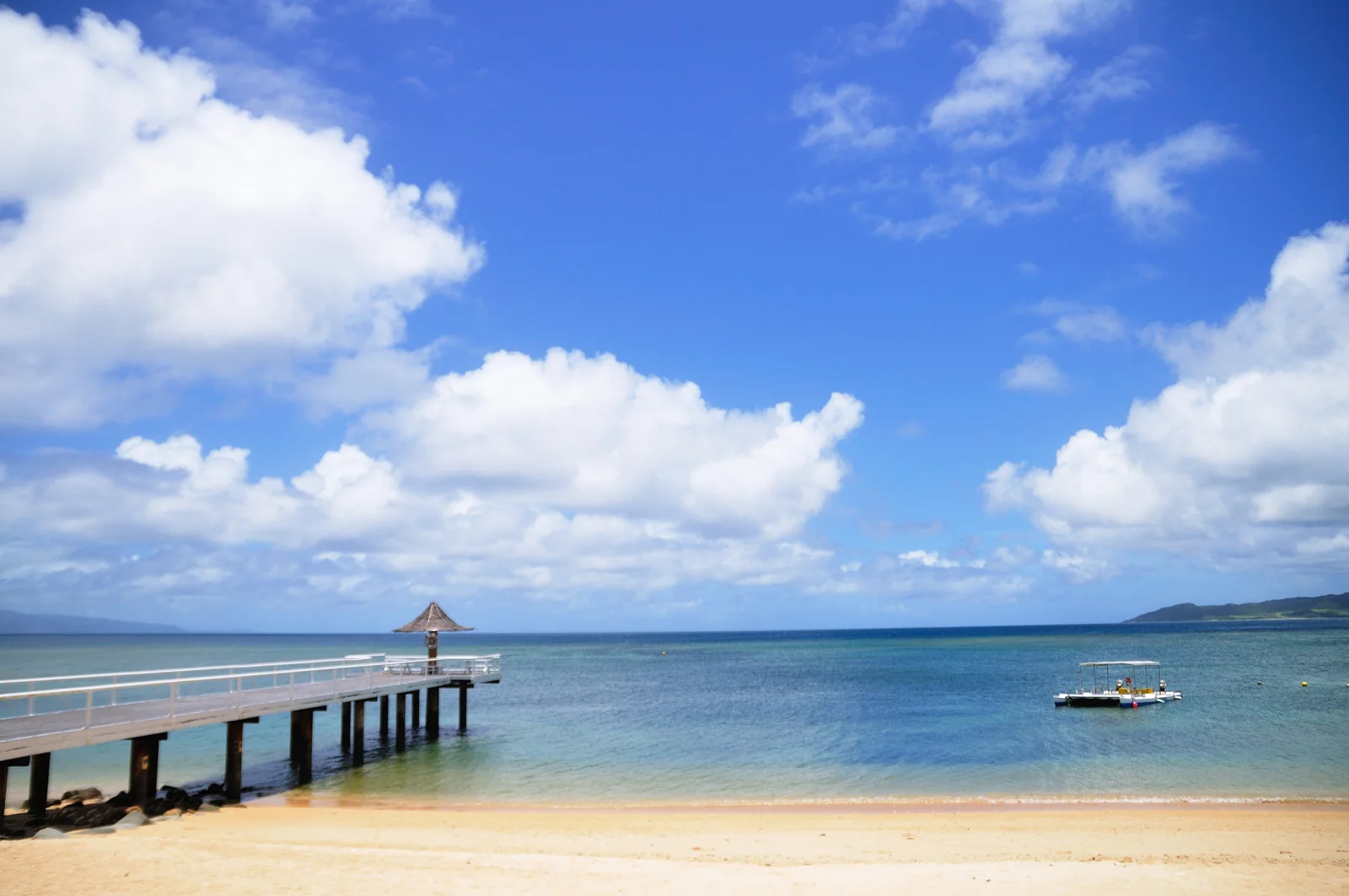
West Pier is a short seaside stop west of the village, convenient around lunch. Yugafu-kan lists it as a Registered Tangible Cultural Property from 2005 and explains how residents once left here in sabani boats to farm on Iriomote. This gives the long pier a history of transport and livelihoods. Daylight sea colours and distant islands fit well into a same-day return.
The tourism association notice dated 20 August 2024 explicitly closes the tip because it is dangerously slippery. Stop at the control line and view from permitted areas. Shorten the visit or return to the village after rain, in high waves or strong wind. Stay behind chains and keep children from running towards the sea end. Adults holding young children should watch both their footing and the child.
West Pier is separate from Taketomi East Port, where scheduled ferries to Ishigaki depart. Return through the village to reach the port. If you hired in the village, Kondoi can follow the pier, but check time first. If lunch remains uneaten, clothes are wet or companions tired, make this the only seaside stop. Even a short next leg adds parking and visiting time.
Give Kondoi a full stop for sea colours, sand or swimming
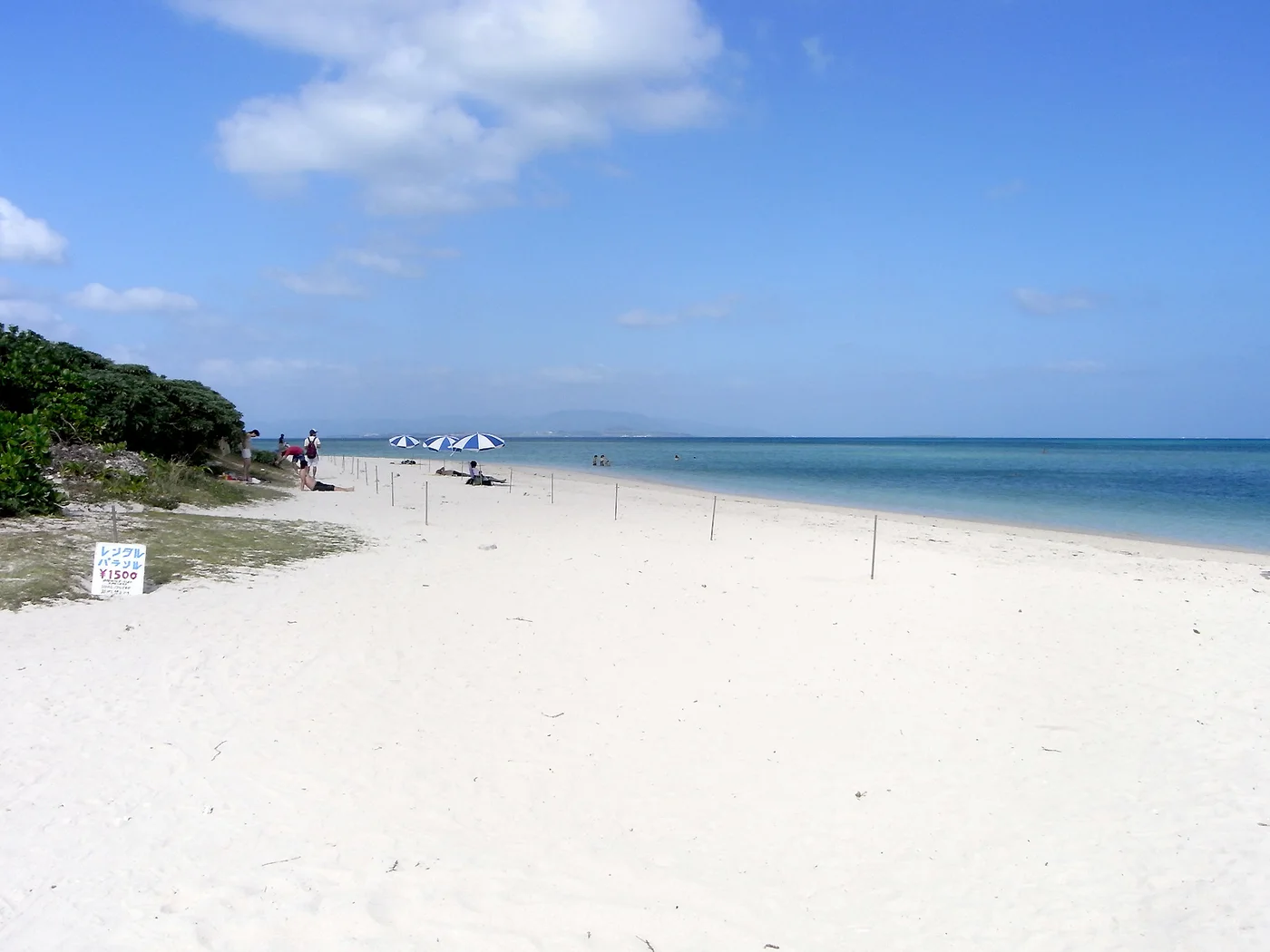
Kondoi’s white sand and shallow water invite a slower visit. The tourism association model route notes exposed sand offshore at low tide and lists showers, changing rooms and toilets. Look at the current water level before choosing sand play, sitting or entering the sea. Sea-view visitors need no full swimming kit; families can bring sand toys and spare clothes, keeping activities within their ability to supervise.
Tide changes affect activities directly. At low tide, swimmers may have a longer walk to water; with the rising tide, standing areas deepen. Taketomijima Kotsu warns of sudden depth and faster currents further out. Treat exposed sand as scenery rather than a compulsory target, and include the return to shore. Adults must set a limit they can supervise even if others walk further out.
Before entering, assess wind, waves, currents and on-site guidance. Taketomi Town’s coastal safety rules require company, checking sea conditions and buoyancy, and recommend life jackets or wetsuits. Many town shores are natural beaches without lifeguards, so calm-looking water alone is insufficient. A capable adult should stay continuously beside children in the water. Someone taking photographs or watching bags cannot simultaneously be their water supervisor.
Leave the water well before leaving the beach to wash feet, rinse, change, pack wet items and drink again. Change into clothes suitable for the village and transport. The charter prohibits swimwear or going bare outside bathing beaches. The hire shop has no showers or changing rooms; its FAQ directs visitors to Kondoi’s facilities. Prepare here before riding back. One adult can pack while another supervises the children, then leave together.
In poor sea conditions, make a short shore stop or cancel the coast and return to village food and displays. Do not search another shore for somewhere to swim in rough weather. Learn to use buoyancy aids beforehand, and stay out after drinking alcohol or when unwell. For a sea emergency call 118, clearly stating Kondoi Beach and your location. Call for help and involve companions in contacting rescuers; people without rescue skills should not enter one after another.
Kaiji: star sand and shade for an afternoon with energy left
Kaiji is also called Star Sand Beach and deserves a different plan from Kondoi. Taketomijima Kotsu explains that the star shapes are foraminifera shells. Examine a small pinch in your palm, then put it back, turning children’s activity towards small details. Finding the shape is enough; nobody needs a matching tally. Leave the sand in place, without digging large holes or taking bags away.
On swimming, the tourism association route warns of fast currents, while Taketomijima Kotsu’s current introduction says swimming is prohibited. Use Kaiji for shore observation and rest, keeping any sea activity for Kondoi after assessing conditions there. Follow on-site no-entry signs. Nearby beaches still have different currents and suitable activities. If children want more swimming, return to the chosen activity rather than following the waterline out here.
The model route estimates about five minutes by bicycle or 10 minutes on foot from Kondoi to Kaiji. This is only the connecting leg. With children, the return, visit and rests take a substantial part of the afternoon. If Kondoi has already satisfied everyone, return to the village. For a star-sand focus, skip swimming at Kondoi and make Kaiji the main coast stop.
A relaxed walking day: the village and one west-coast stop
For a walking day, arrive in the morning and return to Ishigaki in the afternoon. Spend 20–30 minutes in Yugafu-kan, then use the first half of the day for sand lanes, red-tiled houses and cultural landmarks. This is a suggested allowance; extend displays if interested and shorten the coast. Eat and rest along the way rather than reaching the beach before seeking every supply.
Visit West Pier around lunch, adding Kondoi only if energy and weather suit. At Kondoi, focus on views, sand and sitting. Return through the village to East Port. Omit Kaiji or substitute it for Kondoi: choose Kaiji for star sand or Kondoi for a shore stop with fuller toilet and changing facilities.
For example, with a 15:50 ferry, set 15:00 as a planning point to be back in the village and start towards the port. This is your buffer, not a ferry-company check-in rule. Turn back earlier for slow walkers, pushchairs or morning fatigue. If everyone is exhausted on reaching Kondoi, stop adding places, rest and return by known roads. Do not assume an immediate beach transfer exists.
For pushchair families, the distance between village and coast still has to be pushed. Adults carry the burden of sand, turns and sun, and an empty pushchair still needs handling when a child must be carried. One seaside stop is more practical than extending a circuit because the child can sit. Rest until the return is manageable. If the child has fallen asleep in the village, keep a quiet shaded rest and leave the beach for another visit.
A fuller bicycle day: two beaches and a seated lunch
Confident adult riders and older children can visit the centre and walk the village in the morning, then hire bicycles for West Pier, Kondoi and Kaiji before returning to the village. Ride between sights and walk within the village. Leave Aiyaru out to keep a west-coast circuit. If taking a buffalo cart, finish it before hiring and shorten the coast accordingly; both activities use time.
Have lunch in the village after 11:00 before leaving for Kondoi, supporting the longest afternoon stop with food and water. If already at the coast in the morning, return early for lunch and decide whether to head out again. Choose where lunch fits before leaving to avoid repeated journeys. In summer or with children who tire in sun, allow a longer seated rest and shorten or omit Kaiji.
Ask the actual bicycle-return deadline and port-transfer meeting time when hiring, then work backwards. Leave the coast early enough for pushing, giving way at junctions and unexpected adjustments. Return is more than putting down the stand. You can use a short final gap for a craft purchase or drink, but only after returning on time and securing port transport.
Even capable older children need agreed waiting points at junctions. Where buffalo carts or pedestrians share sandy roads, dismount together rather than splitting around them. After a fall or tyre or brake problem, stop safely and contact the shop as instructed instead of forcing the ride back. Keep enough energy for the final journey.
With young children or older relatives, start with the shorter route
A light family day combines port displays, village lunch and one short coastal stop. At Yugafu-kan, follow what interests the child, then avoid chasing every cultural landmark. Eat and change nappies before deciding on West Pier or Kondoi. For sleepiness, overheating or sore feet, rest in the village and return early. Lunch is already a useful stop; the afternoon need not be filled to justify the trip.
For Kondoi, prepare changing, water and care roles first. With two adults, one watches children while the other handles bags, then swap to finish packing. A solo adult with a young child can more easily manage shore play or sea views. Resting beside the sea and supervising swimming place different demands on adults. Leave energy for the return walk or ride, and let children eat, drink and rest after changing before moving.
For greater mobility assistance, confirm usable transport before choosing the route. The Tourism Centre FAQ lists wheelchair-accessible buffalo carts and accessible transfer vehicles, booked only through travel agencies or tour companies, with no same-day acceptance. Arrange this specific service ahead. Without it, use the distance companions can manage; village displays and a meal can form a complete island visit.
The final leg: leave the beach for the actual ferry port
The Anei Taketomi route page read on 29 October 2026 listed afternoon departures from Taketomi including 14:50, 15:50, 16:50 and 17:50. A 15:50 return is one day-trip example; choose for your actual date when buying. Boarding is at Taketomi East Port. Identify the operator, boarding point and your order’s meeting requirements before leaving the village. A short crossing still requires island travel, waiting and boarding.
The same page listed an ordinary Anei return at ¥1,880 for adults and ¥990 for primary school pupils, including the applicable fuel adjustment. Taketomi Port’s payment field said cash. Electronic payment accepted by hire shops and restaurants may not suffice for a last-minute port ticket. Buy beforehand or complete your order’s ticketing, keeping cash for actual needs. Retain ferry, bicycle and meal confirmations separately rather than starting ticket arrangements after returning the bicycle.
An earlier planned return leaves room to adjust, but later operation and available seats depend on the operator that day. Check your order and operating information before returning. If weather is known to be worsening, remove the coast and go to port early or stay safe as officially directed. A later timetable row does not guarantee a seat. Do not delay bicycle return to extract the full day’s hire value.
At East Port, use the toilets, organise tickets, stow wet bags and wait for your ferry. If time remains, revisit place names from the centre or ask children which shisa they saw. Stay at the port rather than returning to the village for one last purchase. Leave the next part of the day for Ishigaki.
A few useful answers
Can I spend a day on Taketomi without hiring a bicycle?
Yes. Focus on Yugafu-kan, village lunch and either West Pier or Kondoi, allowing the full walk back to port. Compare bicycle hire if you want two beaches.
Can bicycle-only customers use the Tourism Centre’s outward port transfer?
Its FAQ limits the outward transfer to buffalo-cart customers. Bicycle-only customers reach the shop themselves. A return port transfer is available after hiring: return the bicycle first, then assemble as the shop instructs.
Can I climb Nagomi Tower for a view of the red roofs?
Climbing has been prohibited since 2016. View the tower and streets from public roads and permitted ground areas.
Is Kaiji suitable for children to swim?
This route uses Kaiji for star sand and rest on shore. The local transport operator lists fast currents and prohibits swimming; the tourism association also warns of currents. Assess any sea activity separately at Kondoi in suitable conditions.
Does Kondoi have showers and changing facilities?
Both the tourism association and Taketomijima Kotsu list showers, changing rooms and toilets. Change into dry clothes before returning to the village, and bring water from the village.
Will Tanadui affect businesses in November 2026?
The Tourism Centre has announced closure of buffalo carts, bicycle hire and Kanifu on 10–13 November, reopening on 14 November. Use other operating transport and food services on those dates.
Official information and references
Sources used in this guide.
- Taketomi Town Tourism Association: model route and facilities
- Taketomi Yugafu-kan: official opening information
- Taketomi Tourism Centre: bicycle, transfer and luggage FAQ
- Taketomi Tourism Centre: daily bicycle hire and payment
- Kanifu: hours, facilities and parking
- Taketomi Tourism Centre: reopening and 2026 festival closures
- Taketomi Town Tourism Association: West Pier tip closure
- Taketomi Town: coastal swimming safety
- Taketomijima Kotsu: island landmarks, coasts and culture
- Anei Kanko: Taketomi timetable, fares and payment
- Taketomi Yugafu-kan: 2017 Island Charter
- Taketomi Yugafu-kan: displays, rest areas and distance from port
- Taketomi Yugafu-kan: cultural properties, houses and sacred sites
- Taketomi Town Tourism Association: August 2024 island walk video
- Taketomi Town Tourism Association: media library and official video channel