Use Shima Soba Ichibanchi’s tax-inclusive menu, set meals and booking rules, market floors and closing days, sweets and chilli-oil reservations to plan two central food walks around your appetite.
- Region & Focus
- Ishigaki Island
- Reading Scope
- 29 min read · 16 chapters · 9 Q&As
- Official Verification
- 21 official sources checkedUpdated 28 October 2026
- Key Topics
- FoodItinerariesNeighbourhoods
Chapter Route Map (tap any stop)
- Allow for one meal and one snack
- Walk into town from the port using the shop addresses
- Yaeyama noodles: noodles, broth and pipazu
- Ordering at Shima Soba Ichibanchi: size, toppings and weekday sets
- Check last orders before closing time
- Start on the market’s ground floor (1F); Ichiba Shokudo is on Level 3 (3F)
- Market lunch: noodles from a maker or a meat-based main
- Salt-flavoured sweets and shakes on the ground floor (1F)
- Fish cakes and rice balls: decide where to eat them
- Ichiba Shokudo on Level 3 (3F) for a meal together
- Visit the former Pengin Shokudo for shopping
- Two half-day routes: noodles first or market lunch first
- Check market closures, then each shop’s extra days off
- Ordering with children or allergies: give the full dish name
- In strong winds, follow closure rules rather than the shopping street roof
- Calculate one meal and leave a flexible market budget
- Quick Q&A
With half a day for food in central Ishigaki, choose a bowl of Yaeyama noodles first, then add market snacks and chilli-oil shopping nearby. Choose Shima Soba Ichibanchi for a seated lunch with time to order. If your companions want different dishes, centre the meal on the market’s ground floor (1F). At the October 2026 check, Pengin Shokudo remained closed as a restaurant; its former premises house the Ishigaki Penguin shop. Plan a chilli-oil purchase there, rather than waiting for lunch.
Allow for one meal and one snack
Making Yaeyama noodles, an Ishigaki beef burger, a hot dog, fish cakes and dessert all compulsory can leave you carrying food while looking for a seat. Choose one main meal and one snack. Keep other market dishes as options for companions or a later meal. Then buy according to your appetite rather than eating a second lunch to complete a list.
Each lunch has a purpose. Shima Soba Ichibanchi’s Ishigaki main branch offers named toppings, bowl sizes and extra-cost sets for people interested in the noodles themselves. The market puts noodles, rice balls, meat sandwiches, burgers and sweets in one building, which helps when companions want different mains. Decide what you want from lunch before choosing the route.
Keep the half-day area to Ishigaki Port, the market and Ishigaki Penguin at 199-1 Okawa. For accommodation, the airport and island trips, see Ishigaki accommodation and choosing Yaeyama islands. The meal order here follows central addresses. You can finish midway to return for a nap, continue to dinner or simply browse the market.
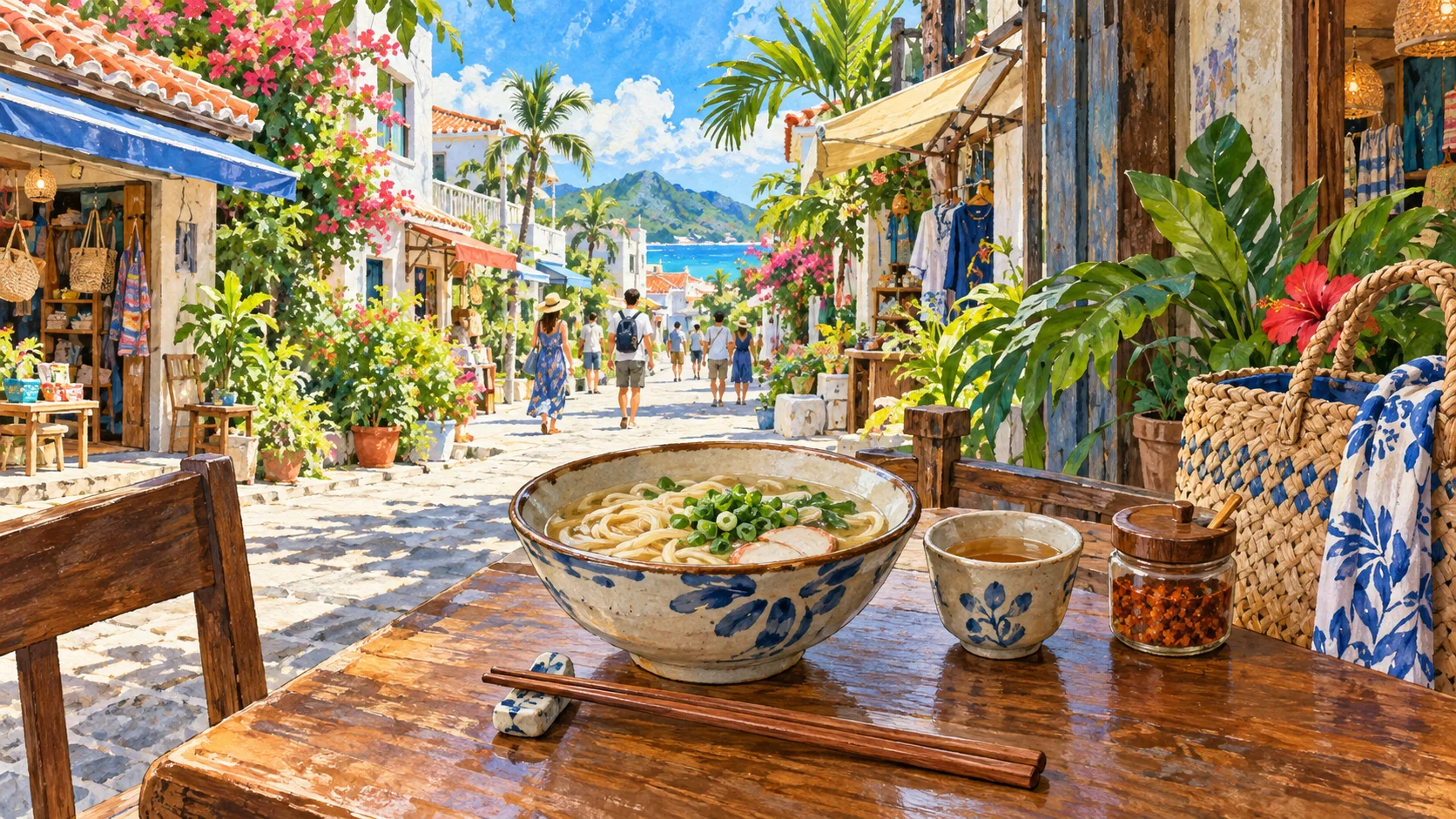
Use Shima Soba Ichibanchi’s tax-inclusive menu, set meals and booking rules, market floors and closing days, sweets and chilli-oil reservations to plan two central food walks around your appetite.
Walk into town from the port using the shop addresses
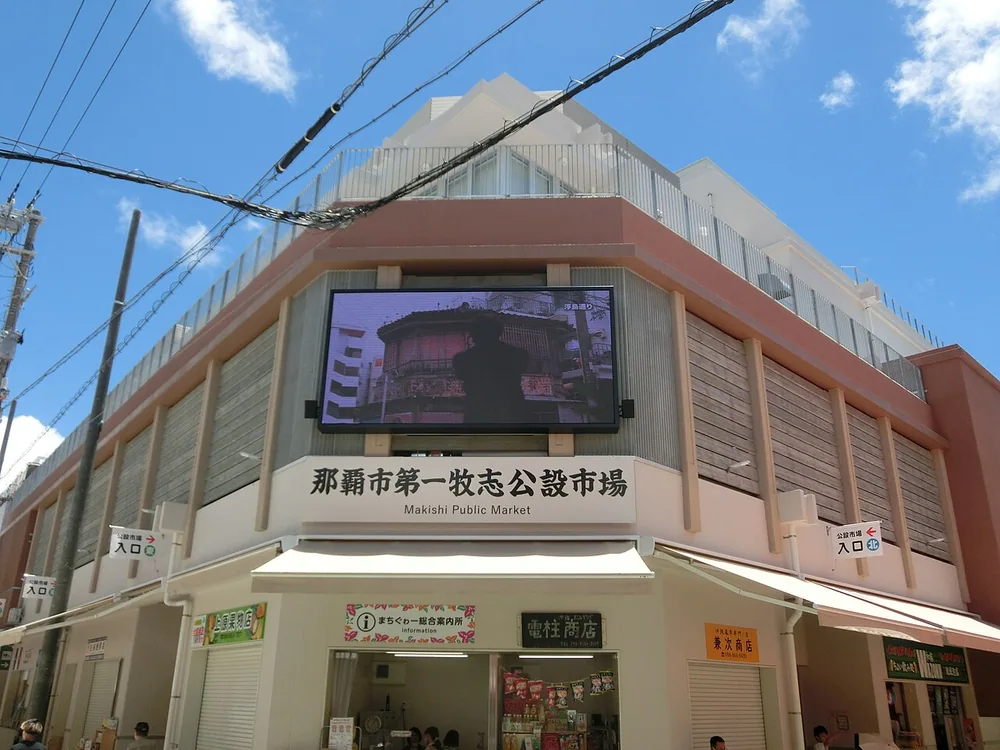
Ishigaki Public Market is at 208 Okawa. Its official access page estimates nine minutes or 650 metres from the ferry terminal, and four minutes or 280 metres from the Azuma Bus Terminal. Walk this stretch from the port. Leave large luggage at your accommodation before browsing stalls. The market has no car park of its own, so drivers need separate parking.
Shima Soba Ichibanchi is at 1-1 Aza Ishigaki; its name comes from “Ishigaki number one”. The website estimates a seven-minute walk from Ishigaki Port’s terminal. Add “Ishigaki main branch” to searches because the brand also has a Naha branch with different closing days, meal times and reservation rules. Save the full addresses of the noodle shop, market and Ishigaki Penguin, then choose noodles before the shopping street or lunch at the market.
You do not need to hire a car for this small loop from the port. If you already have one, find a space you can use until shopping is finished, rather than treating a restaurant’s spaces as half-day shopping parking. Shima Soba Ichibanchi lists three spaces outside. Its former ¥100 partner-parking refund ended in late May 2024; remove that old offer from your budget.
Ishigaki Penguin also has no dedicated parking. Its FAQ lists Marukuni Parking and KLATCH COFFEE paid parking about one minute away on foot, and Island Parking 20 Ishigakijima about two minutes away. If parked near the market, compare the walk to the shop with the return to your car. List actual parking charges separately.
Yaeyama noodles: noodles, broth and pipazu
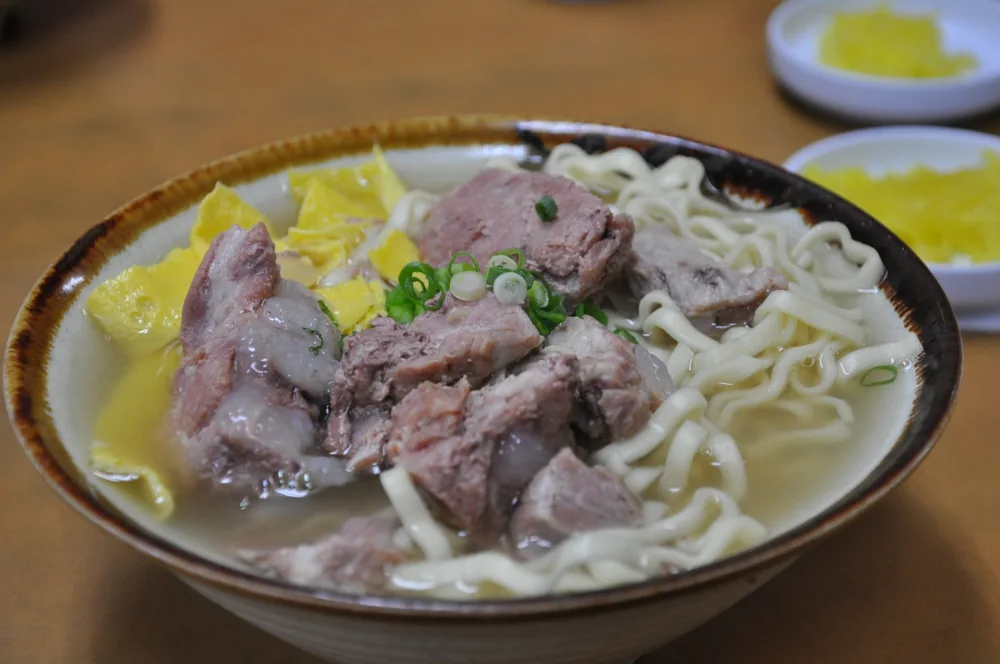
For a first bowl, start with plain shima soba. Shima Soba Ichibanchi’s standard bowl has finely cut pork, fish cake and island spring onions. Versions with more pork slices or ribs offer different toppings for the same meal.
The shop’s preparation page describes thin, slightly flat homemade noodles without preservatives or colouring. The broth uses local island pork and bones, simmered for a long time, skimmed of fat and seasoned with Ishigaki salt and other ingredients.
If meat quantity matters, decide between ribs and skin-on pork belly before choosing a dish. For a clear basic combination, there is no need to add every meat because a bowl is called a signature dish. Two people ordering different toppings can compare the bowls. Ask staff about sharing and small bowls when being seated, rather than changing the dining headcount after ordering.
Pipazu is a name worth learning with Yaeyama noodles. Shima Soba Ichibanchi steams, dries and grinds the fruit of hihatsumodoki long pepper. It describes its homemade spice as reddish, aromatic and mildly hot. It differs from koregusu, chillies steeped in awamori. Read the labels before choosing between jars on the table.
Taste the unseasoned broth first, then add a little spice to your own bowl to compare. You need not try every condiment at once. If sharing with a child, travelling with someone who avoids heat or comparing another broth, let each person season their own portion.
If you have eaten jushi rice and want to buy its spice, note that the rice uses young shoots while the table powder comes from the fruit. Liking one does not establish how the other tastes. Tell the shop whether you want the table spice or ingredients to recreate the rice. Referring to the item you ate or saw is clearer than asking only for island pepper.
The shop distinguishes two kinds of jushi: moist, porridge-like suru-jushi and cooked-rice-style ko-jushi. It serves the latter, so the rice add-on is seasoned cooked rice.
Ordering at Shima Soba Ichibanchi: size, toppings and weekday sets
The Ishigaki branch’s website, read on 28 October 2026, lists standard shima soba at ¥715 including tax, a small bowl at ¥605 and an extra-large bowl at ¥880. Small and standard differ by ¥110. Choose for appetite: a small bowl may suit breakfast eaters, a rice add-on or a later market visit. For a full lunch, start with standard rather than losing the portion you need to save ¥110.
For seaweed, look for mozuku soba; for skin-on pork belly, sanmainiku; for pork ribs, hon-soki. These names tell you more than “deluxe” or “popular”. Kokki soba combines ribs, pork belly, fish cake and island spring onions for a meat-focused meal.
Read the tax-inclusive figure marked 税込 in brackets. The website gives both before-tax and after-tax prices: hon-soki is shown at ¥1,000 before tax and ¥1,100 including tax. Add the tax-inclusive figures when ordering together. This avoids mistaking the difference between an old rounded price and today’s tax-inclusive menu for an overcharge.
To try several side dishes, add the weekday lunch set to your chosen noodles for ¥550 including tax. It includes jushi rice, pickles, mozuku in vinegar and jimami tofu. The last two are smaller than their individual portions. Standard shima soba with the set costs ¥1,265.
For rice alone, jushi costs ¥330 including tax, making ¥1,045 with standard noodles. The shop describes it as Yaeyama-style seasoned rice, with finely chopped young pipazu shoots added after cooking and left to infuse.
The set is limited to weekday lunchtime. Use the individual menu at weekends and in the evening. Fried noodles are evening-only, so plan from the 18:00 dinner opening if that is your aim. Put the market walk earlier and allow an afternoon rest. Match menu availability to the meal you want.
For a fried-noodle dinner, the dish costs ¥935 including tax. Individual sides include a Yaeyama kamaboko assortment at ¥605, sea grapes at ¥550, and island shallots, mozuku in vinegar or jimami tofu at ¥385 each. These are separate from the roughly half-size vinegar dish and jimami tofu in the lunch set. Build your own combination at weekends or dinner without waiting for a weekday set.
Non-drinkers can choose juice: the website lists mango juice direct from Kabira Farm at ¥660 including tax, passion fruit juice at ¥550 and shikuwasa juice at ¥440. Iced coffee and ginger ale are ¥330 each. Add the tax-inclusive price of your chosen drink to the meal total.
| Choice | Contents or condition | Tax-inclusive price |
|---|---|---|
| Small shima soba | Smaller standard bowl | 605 |
| Standard shima soba | Finely cut pork, fish cake, island spring onions | 715 |
| Extra-large shima soba | Larger standard bowl | 880 |
| Mozuku soba | Standard toppings plus Ishigaki mozuku seaweed | 825 |
| Sanmainiku soba | Skin-on pork belly, fish cake, island spring onions | 935 |
| Hon-soki soba | Pork ribs and island spring onions | 1,100 |
| Kokki soba | Ribs, pork belly, fish cake, island spring onions | 1,375 |
| Weekday lunch set add-on | Jushi, pickles, half portions of vinegar side and jimami tofu | Noodle price plus 550 |
Check last orders before closing time
Shima Soba Ichibanchi’s Ishigaki branch serves lunch 10:30–15:30, last orders 15:00, and dinner 18:00–21:30, last orders 21:00. Thursdays are lunch-only; the website says it opens as usual on public holidays. If leaving the market at 14:50, judge whether you can order by 15:00 rather than treating 15:30 as final admission. Arrive before the deadline if you want to choose a set slowly, have children or need onward transport.
The official reservation page says the Ishigaki branch generally does not take bookings. Groups of 15–30 may discuss arrangements by phone. A couple or family should not assume a web message or call secures a fixed seat. Leave flexible browsing time and adjust lunch to the queue on arrival.
The website lists au PAY, d Payment, Merpay, WeChat Pay and WeChat Pay HK. Customers scan the till barcode and enter the amount. Have staff check the bill amount before completing payment. Carry cash as another option; do not assume other payment apps on your phone are supported.
Start on the market’s ground floor (1F); Ichiba Shokudo is on Level 3 (3F)
The market’s shop and floor guide lists fresh meat, fish, processed food and several eateries on the ground floor (1F), with Ichiba Shokudo on Level 3 (3F). Start on the ground floor (1F) for noodles or separate snacks; go to Level 3 (3F) for that named dining room. Match shop names to the official floor guide where other pages mix semi-basement, ground-floor (1F) and dining-room descriptions. The market closes on the second and fourth Sundays each month: remove indoor meals and shopping on those dates. Outside shops follow their own calendars.
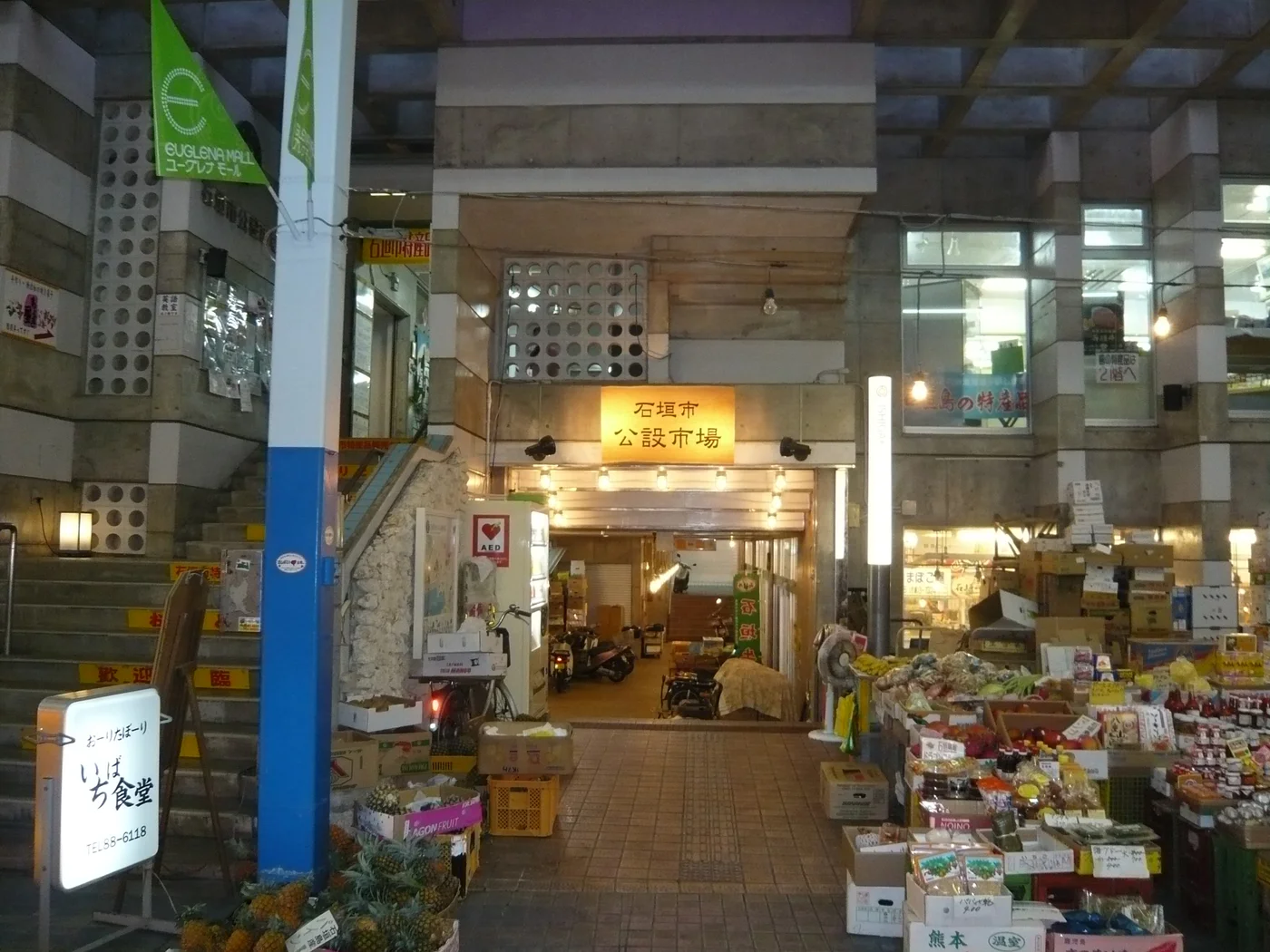
The current building was completed in 1987 and refurbished with eat-in space in 2021. That differs from the 2026 refurbishment of the local-products sales centre, which closed after 30 September 2026. That notice says other shops remain open. A cordoned-off area need not cancel lunch; head to the named shop you want.
The shared eating area helps combine choices within one building. Follow on-site signs for seats, collection and clearing. Find suitable seats before buying several hot dishes. If one person has fresh food while another is still choosing across the floor, the meal takes longer. Return trays and rubbish to the designated places and leave a clean table.
An episode of OTV Okinawa Television’s Gushiken-san, released in January 2025, visits Ishigaki Public Market with food coverage and interviews.
Market lunch: noodles from a maker or a meat-based main
Kinjo Seimen is the direct market choice for Yaeyama noodles. The official listing gives the ground floor (1F), 10:00–17:00, closed the second and fourth Sundays. Make it the main meal if you want to browse the market without a separate noodle-shop visit, then explore the same floor.
Companions avoiding soup noodles can compare island-pork sausage hot dogs, ham sandwiches or smoked-bacon sandwiches at Jugo Banchi’s market branch. It is listed at 10:00–17:00, closed Wednesdays and the market’s second and fourth Sundays. The brand’s main shop at 15-6 Shineicho has different hours. Do not delay a market visit using the main shop’s 19:00 closing time.
For an Ishigaki beef burger, Heart Land on the ground floor (1F) lists 11:00–16:00, closed Sundays. Noodles, sandwiches and burgers let companions choose separately. Use each shop’s menu and prices on the day.
Salt-flavoured sweets and shakes on the ground floor (1F)
For dessert, stay on the ground floor (1F) for ISHIGAKI ISLAND FARM. The official listing gives 09:00–20:00, closed the second and fourth Sundays. Its page introduces handmade sata andagi doughnuts using Ishigaki salt and Mariya shakes.
Check the stall’s available doughnuts, shakes and prices that day, then take your order to the eating area.
Fish cakes and rice balls: decide where to eat them
Miyara Kamaboko is listed on the ground floor (1F), 09:00–20:00, closed the second and fourth Sundays. It says its fish cakes use fish from waters near Ishigaki. Browse the display before deciding to eat now or take them back. For takeaway, tell staff when you will eat and how you will travel, then ask about packaging, storage and the use-by period.
For rice balls instead of noodles, Shima no Onigiriya Uchourya is also on the ground floor (1F), listed at 10:00–17:00, closed Thursdays as well as the market’s second and fourth Sundays. Choose additions to taste. Its closing day differs from the noodle and sandwich shops, so on Thursday switch to another open market main. This keeps the half-day route compact.
Before taking food aboard a boat, check eating and rubbish rules. Buy chilled products at the last stop before returning to your accommodation. If you are only walking around town, eating on site is simplest. Gifts need suitable packaging and transport; lunch needs a timely place to sit. Handle them separately so shopping bags do not sit in the sun alongside hot food.
Ichiba Shokudo on Level 3 (3F) for a meal together
For lunch at one table, or a meal focused on market fish and home-style cooking, go to Level 3 (3F) Ichiba Shokudo. The market lists 11:00–20:00, closed Sundays, telephone 0980-84-1426. This named dining room differs from buying ground-floor (1F) food to eat in the shared area.
If fixed seats, a group at one table or a particular dish matters, contact the dining room with the date, headcount and needs before making it your meeting point. Near closing, ask its last-order time for that day. Alternatively, dinner at Shima Soba Ichibanchi has an explicit last-order rule for planning backwards.
Decide whether to sit together at the dining room or buy separate ground-floor (1F) meals, then agree a meeting place. The Level 3 (3F) dining room and ground-floor (1F) shared eating area are on different floors.
Visit the former Pengin Shokudo for shopping
The official Pengin Shokudo restaurant page states that the restaurant has been closed since March 2020. The premises now house the direct-sales general store Ishigaki Penguin. Searches may still show old lunch and dinner hours or jajang suba dishes. Treat this address as a shop for chilli oil and other products, and eat at one of the restaurants already chosen.
The Ishigaki Penguin shop page lists 199-1 Okawa, 10:00–18:00, closed Sundays and irregular days. It moved into the former restaurant in May 2021. Its FAQ estimates three minutes on foot from Euglena Mall and seven from the ferry terminal, so it fits before or after market shopping without a taxi to another district.
To reserve Ishigakijima chilli oil, give your visit date, name, contact telephone number and bottle quantity. The product-reservation line is 0120-392-545; the shop page lists Monday–Friday, 10:00–15:00. Bottles are also sold on the day, with daily quantities varying. This reserves products, not restaurant seats. Check labels and packaging when collecting, then pack for your own checked and cabin luggage if flying next.
Alongside chilli oil, the shop sells jajang meat miso, Ishigakijima hachagumi made with local ingredients, and pottery and general goods by Okinawan makers. For flavours from the former restaurant, choose products such as chilli oil and meat miso to use at home. Tell staff about packing needs for ceramics and carry them separately from food.
The chilli-oil FAQ gives an unopened best-before period of one year. After opening, keep it away from direct sunlight, heat and humidity and use promptly. Mix oil and solids together before serving. For gifts, check the date on your bottle and pass on storage instructions. Handle this separately from short journeys with market food to eat immediately.
Handmade production can limit reserved quantities. For date changes or cancellation, the FAQ gives the same reservation number, 0120-392-545, with cancellation enquiries Monday–Friday, 12:00–17:00. Use the shop page’s 10:00–15:00 window for ordering and the FAQ’s cancellation window for cancelling.
Two half-day routes: noodles first or market lunch first
First rule out the market’s second and fourth Sunday closures. For the noodle-first route, aim to reach Shima Soba Ichibanchi around 10:30, have noodles as brunch and walk into the market. This suits people already in town, without a flight or ferry arrival to rush from. Opening is 10:30; seating and food follow the queue.
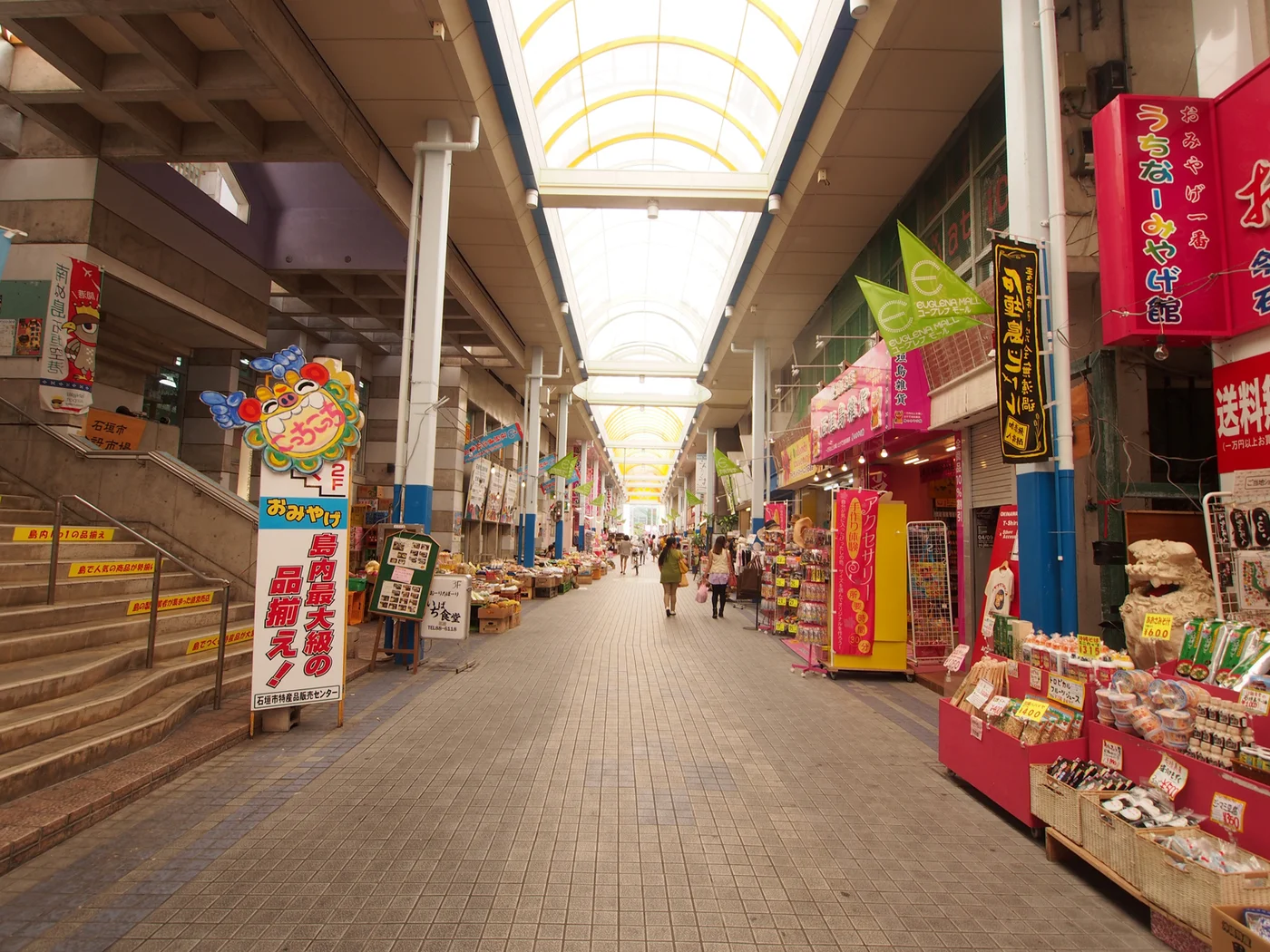
At the market, see which ground-floor (1F) shops are open before choosing Miyara fish cakes, dessert or browsing alone. For food to take back, ask about storage and collect it just before leaving. For Ishigaki Penguin chilli oil, browse the shopping street, collect reserved products at the shop, then return to the market for food unsuitable for a long walk.
If arriving in town at noon and companions want different mains, start at the market. Kinjo Seimen, Jugo Banchi and Heart Land have separate hours and closing days. Finish lunch on the ground floor (1F), decide on dessert, then go to Ishigaki Penguin. This keeps food and shopping close and suits people near Euglena Mall or unwilling to queue separately for noodles.
If free only after 15:00, remove Shima Soba Ichibanchi lunch because that is last orders. Compare market shops still open or browse before dinner at 18:00. The noodle shop closes Thursday evenings; move it to lunch on another day and eat at the market today without extending the route.
Check market closures, then each shop’s extra days off
The market facilities page and access page both list second and fourth Sunday closures. Kinjo Seimen, Jugo Banchi’s market branch, Heart Land, ISHIGAKI ISLAND FARM, Miyara Kamaboko, Uchourya and Level 3 (3F) Ichiba Shokudo all have addresses inside the market at 208 Okawa. Avoid the common closure first, then individual days off. Heart Land and Ichiba Shokudo close every Sunday.
Jugo Banchi’s market branch closes Wednesdays and Uchourya Thursdays. Shima Soba Ichibanchi opens Thursday lunch but not dinner. On Thursday, eat noodles first and choose market dessert afterwards; on Wednesday, choose another main instead of the sandwich shop. Put closing days beside each shop name to keep the same compact loop. Shima Soba Ichibanchi at 1-1 Aza Ishigaki and Ishigaki Penguin at 199-1 Okawa are outside the building. The former follows its meal periods, the latter closes Sundays and irregular days. Market closures do not automatically apply to them.
The market building’s normal opening-day hours are 09:00–20:00, while each shop starts and stops food service separately. At 09:00, browse fresh food and open stalls; choose Kinjo noodles or Jugo Banchi after 10:00, then Heart Land or the Level 3 (3F) dining room from 11:00. Pick your meal before choosing an arrival time.
| Shop | Hours | Closed |
|---|---|---|
| Shima Soba Ichibanchi Ishigaki main branch | 10:30–15:30 (last orders 15:00); 18:00–21:30 (last orders 21:00) | Thursday evenings |
| Kinjo Seimen | 10:00–17:00 | Second and fourth Sundays |
| Jugo Banchi market branch | 10:00–17:00 | Wednesdays; market closed second and fourth Sundays |
| Heart Land | 11:00–16:00 | Sundays |
| ISHIGAKI ISLAND FARM | 09:00–20:00 | Second and fourth Sundays |
| Miyara Kamaboko | 09:00–20:00 | Second and fourth Sundays |
| Uchourya | 10:00–17:00 | Thursdays; market closed second and fourth Sundays |
| Ichiba Shokudo | 11:00–20:00 | Sundays |
| Ishigaki Penguin | 10:00–18:00 | Sundays and irregular days |
Ordering with children or allergies: give the full dish name
Shima Soba Ichibanchi’s small shima soba is a smaller menu portion, not an automatic age-based children’s set. Estimate appetite with a small or standard bowl, then ask about sharing bowls, children’s cutlery and suitable seating before being seated. Choose market rice balls, sandwiches or soup noodles by what the child can eat.
The weekday lunch set contains jimami tofu. The Japanese agriculture ministry’s dish guide explains that it uses peanut milk worked with starch. For peanut allergies, tell staff “落花生” and the dish name before ordering, and ask about the set ingredients and what the kitchen can accommodate. Do not treat it as ordinary soya tofu because of its name.
For vegetarian diets, pork restrictions or other allergies, name the ingredients directly. Standard shima soba contains pork and fish cake; the shop describes a pork-and-bone broth. Removing visible meat leaves that broth. For market rice balls, fish cakes and sweets, explain ingredients to avoid and cross-contact needs, obtain a specific answer, then order. Words such as light, handmade or island-grown do not answer ingredient questions.
In strong winds, follow closure rules rather than the shopping street roof
The market’s 22 October 2026 typhoon notice says it closes temporarily while a storm warning is issued for Ishigaki City. Even after cancellation of the warning, reopening depends on safety checks of the facilities and surroundings. In ordinary light rain, shorten walks and eat in one building. During a storm warning, cancel the market visit and arrange food at your accommodation under local instructions. A roof over the shopping street does not establish normal opening.
In its 2026 typhoon notice, Shima Soba Ichibanchi separately stated it would reopen at 18:00 on 24 October. Ishigaki Penguin’s notice listed closures on 23 and 24 October. Handle each notice separately. Read the latest message from your chosen shop before leaving; one reopening does not reopen the whole market. If switching meals, use the lunch and dinner periods above rather than adding a distant attraction.
If the market closes temporarily, secure an available meal first and move chilli oil or processed-food shopping to another day. Contact the original shop about reserved food. With only a final half-day left, limit shopping to what you can safely complete rather than returning to a closed district for one bottle or dessert. Saved addresses, order details and telephone numbers let you handle the affected item directly.
Calculate one meal and leave a flexible market budget
Standard shima soba plus individual jushi is ¥715 + ¥330 = ¥1,045. With the weekday lunch set, it is ¥715 + ¥550 = ¥1,265. The ¥220 difference adds pickles, mozuku in vinegar and jimami tofu. Choose by the sides you want rather than automatically selecting a larger set.
Two adults ordering standard noodles pay ¥1,430 for mains, or ¥1,760 with one jushi. Add a child’s small bowl at ¥605 and the noodles plus one rice total ¥2,365. These examples add the website’s tax-inclusive individual prices. List extra drinks, dishes and market purchases separately to divide meal and snack budgets clearly.
Choose market hot dogs, burgers, desserts and chilli oil using the menu or product prices on arrival. Once the final bag of food needing storage is collected, follow your saved addresses back to your accommodation or the port.
A few useful answers
How should I plan half a day eating in central Ishigaki?
Choose one noodle-shop or market lunch, then one snack. Either eat at Shima Soba Ichibanchi before the market, or start with a market main and continue to Ishigaki Penguin for shopping.
Do I need a booking for Shima Soba Ichibanchi’s Ishigaki branch?
It generally does not take reservations. Groups of 15–30 may discuss arrangements by phone; families are seated in queue order on arrival.
When are lunch last orders at Shima Soba Ichibanchi?
Lunch last orders are 15:00, closing 15:30. Dinner starts 18:00, with last orders 21:00 and closing 21:30. Thursday evenings are closed.
How does the weekday lunch set differ from adding rice?
Standard noodles at ¥715 plus individual jushi at ¥330 total ¥1,045. The weekday lunch set add-on is ¥550, making ¥1,265, and includes pickles and small portions of mozuku in vinegar and jimami tofu. All prices include tax.
Can I have lunch at Pengin Shokudo now?
The official site states that the restaurant has been closed since March 2020. The former premises house the Ishigaki Penguin shop for chilli oil and other products.
Which floor is Ichiba Shokudo on?
The market’s official shop page lists Level 3 (3F), 11:00–20:00, closed Sundays. Kinjo Seimen, sandwiches, burgers and sweets are also available on the ground floor (1F).
Are all Ishigaki Public Market shops open on Sundays?
The building closes on the second and fourth Sundays, so avoid indoor meals and shopping then. Heart Land and Level 3 (3F) Ichiba Shokudo close every Sunday. Outside, Ishigaki Penguin closes Sundays and irregular days; Shima Soba Ichibanchi follows its own days and meal periods.
How long is the walk from the ferry terminal to the market?
The market estimates nine minutes or 650 metres, or four minutes and 280 metres from the Azuma Bus Terminal.
Which set dish matters for a peanut allergy?
The set contains jimami tofu, a peanut-based dish. Before ordering, tell staff “落花生” and the dish name, and ask about ingredients and what the kitchen can accommodate.
Official information and references
Sources used in this guide.
- Public Market: facilities, history and eating area
- Public Market: access and parking
- Public Market: shops and floors
- Public Market: Kinjo Seimen
- Public Market: Jugo Banchi market branch
- Public Market: Heart Land
- Public Market: ISHIGAKI ISLAND FARM
- Public Market: Miyara Kamaboko
- Public Market: Uchourya
- Public Market: Ichiba Shokudo
- Public Market: local-products sales centre refurbishment
- Public Market: storm-warning closures
- Shima Soba Ichibanchi: full Ishigaki menu and hours
- Shima Soba Ichibanchi: noodles, broth and spices
- Shima Soba Ichibanchi: reservation rules
- Shima Soba Ichibanchi: payment methods and reopening
- Pengin Shokudo: restaurant closure and current use
- Ishigaki Penguin: shop and product reservations
- Ishigaki Penguin: walking access and shopping FAQ
- Ishigaki Penguin: October 2026 typhoon closures
- Agriculture ministry: jimami tofu ingredients