How to get from Takamatsu Airport to Takamatsu Station, Kawaramachi, Kotohira, and Takamatsu Port, plus Matsuyama Airport buses to Dogo Onsen, JR trains and express buses between the two cities, late arrivals, early flights, and one-way car rentals.
- Region & Focus
- ShikokuTransportation and passes
- Reading Scope
- 24 min read · 7 chapters · 5 Q&As
- Official Verification
- 26 official sources checkedUpdated November 22, 2026 at 08:00 AM GMT+8
- Key Topics
- Airport transfersRail travelItineraries
Chapter Route Map (tap any stop)
- Takamatsu Airport Transit: Pick Your Drop-Off Stop First
- Heading Straight to Kotohira, Marugame, or Shodoshima After Landing
- Matsuyama Airport to Dogo Onsen and Three Downtown Stops
- Takamatsu to Matsuyama: JR Train or Highway Express Bus?
- Round-Trip Into One Airport or Open-Jaw Into Takamatsu and Out of Matsuyama?
- Which Days Actually Need a Rental Car—and How to Plan Drop-Off
- Passes, Luggage, and Early or Late Flights
- Quick Q&A
If you are staying near Takamatsu Station or catching a ferry from Takamatsu Port, the city limousine bus from Stop 2 at Takamatsu Airport takes about 45 minutes and costs ¥1,300 for adults; travelers booked near Kawaramachi or Ritsurin Garden can hop off earlier. If you want to head straight to Dogo Onsen after landing, fly into Matsuyama Airport in Ehime Prefecture instead, where a direct bus gets you there in around 40 minutes. Planning to visit both cities? Pin your first and last nights on a map before booking flights: keep Takamatsu for ferry days and save Dogo Onsen or central Matsuyama for the end of your trip if you want one last soak before flying out.
Takamatsu Airport Transit: Pick Your Drop-Off Stop First
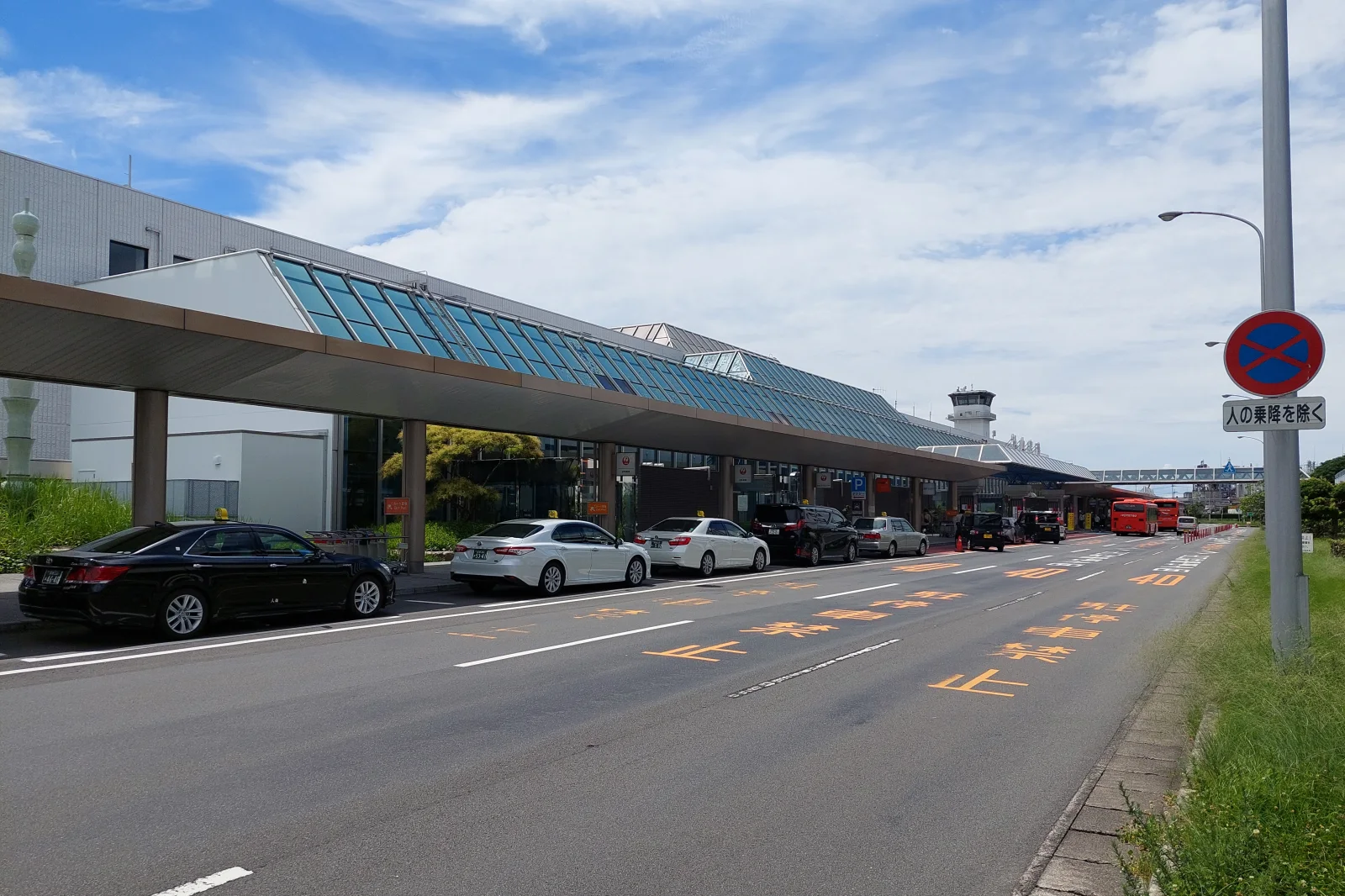
Step out of the arrivals lobby and head to Bus Stop 2 for the Kotoden Bus limousine service into central Takamatsu. Following the October 1, 2026 fare revision, one-way adult fares from the airport are ¥1,000 to Ritsurin Koen-mae and Kawaramachi, and ¥1,300 to Hyogomachi, Takamatsu Chikko, JR Takamatsu Station, or the Ferry Terminal, with children riding for half price. Airport estimates put travel times at roughly 23 minutes to Ritsurin Koen-mae, 30 minutes to Kawaramachi, 40 minutes to Takamatsu Chikko, and 45 minutes to JR Takamatsu Station and the Ferry Terminal. Check exact downtown stop locations and fares on the Takamatsu Airport bus route map.
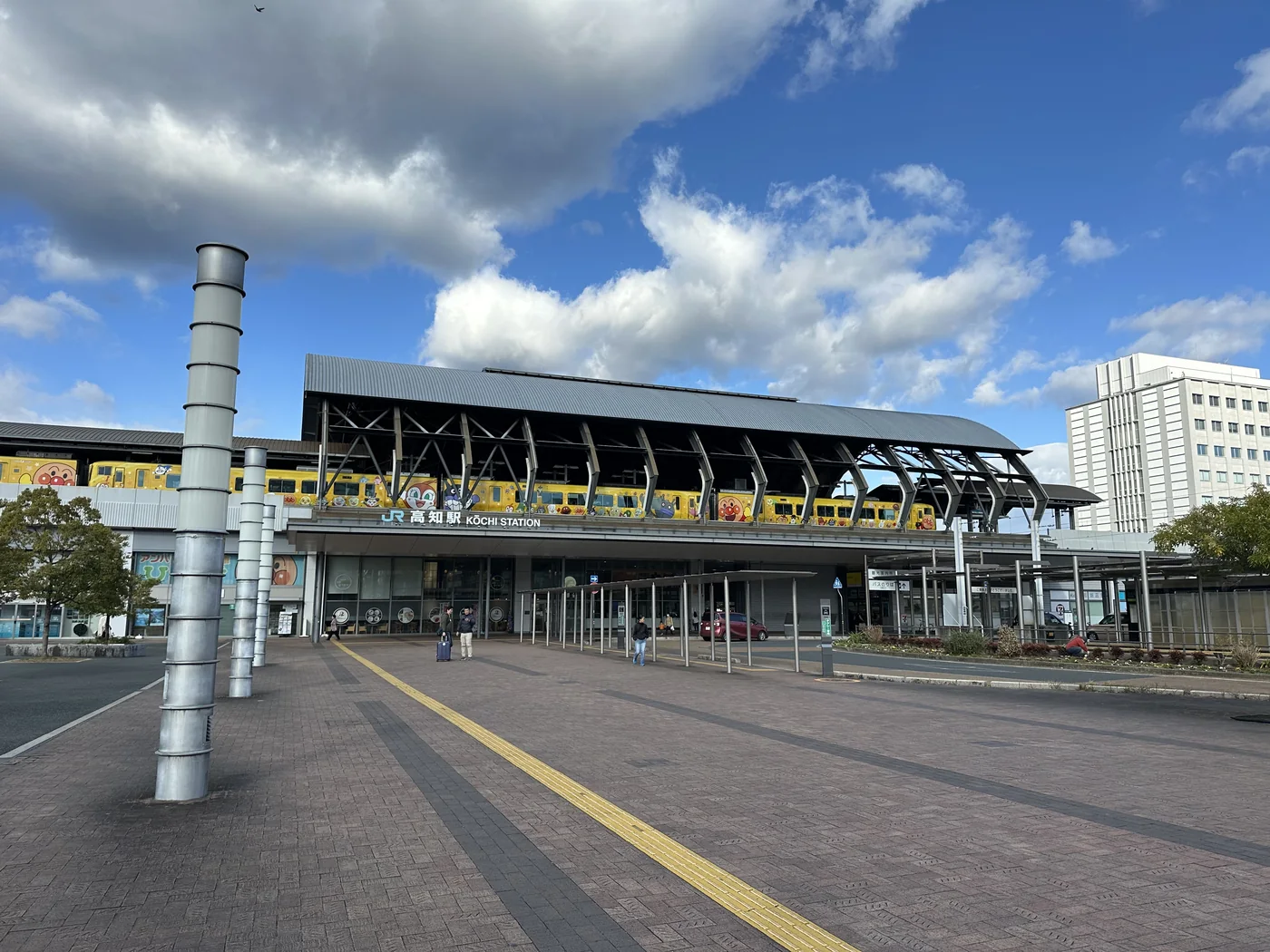
Several stops around Takamatsu Station sound similar, so check the stop names carefully. If your hotel is next to JR Takamatsu Station or you are catching a JR train to Tokushima or west toward Matsuyama the next morning, get off at Takamatsu Station (Takamatsu-eki). If you are transferring to the Kotoden railway for Yashima or Kotohira, Takamatsu Chikko is the more convenient stop. Heading straight for a boat? Look for the Ferry Terminal (Ferry Noriba) column on the timetable, and confirm which island and ferry operator you are boarding first. If the bus that lines up with your flight terminates at Takamatsu Station, you can still step off there, walk into the port area, and follow signs to the pier specified by your ticket counter. Matching your hotel's street address against the nearest bus stop is far more reliable than searching for "downtown Takamatsu." If you have half a day to explore town the next day, use our Takamatsu city food and transit guide to choose the best neighborhood to step off in.
Shoppers heading for the covered arcades should look at Kawaramachi or Hyogomachi. On the year-end/New Year timetable, airport buses arriving in town drop off at Kawaramachi Stop 5, Takamatsu Station Stop 6, and Takamatsu Chikko Stop 8. Returning to the airport, you will board at Kawaramachi Stop 2, Takamatsu Station Stop 3, or Takamatsu Chikko Stop 4—though note that some airport-bound runs skip Kawaramachi altogether. Hyogomachi also uses different hotel landmarks depending on direction: inbound buses stop in front of Clement Inn, while airport-bound buses pick up across from the Rihga Hotel. Take a quick walk past your return stop on check-in day so you are not hauling suitcases back and forth between similarly named poles the morning you leave.
Kotoden Bus schedules are built around specific flight arrivals, with separate timetables for inbound and outbound directions that update at the turn of the month. The operator times departures roughly 15 minutes after domestic landings and 45 minutes after international landings. Read the flight column on the left side of the schedule first, then follow that row across to the airport departure and destination columns, checking any footnote symbols for active dates or days of the week. A special year-end schedule applies from December 1, 2026 through January 4, 2027, so New Year's Day may not follow the same departures as other weekdays that same week. The timetable also notes that flight delays can push back downstream stop times, and if a bus fills up, passengers must wait for the next departure. International arrivals should budget real time for immigration and baggage claim rather than assuming you will clear the terminal in time for the first bus on the grid.
This city route accepts cash, IruCa, and major Japanese IC cards listed by the operator, including Suica, ICOCA, and PASMO. Contactless credit card tap-to-pay is also supported—tap the same physical card or mobile wallet when boarding and again when exiting. Airport limousine buses are unreserved seating only; if you buy a paper ticket from the airport vending machine beforehand, hand it to the driver as directed. Large suitcases go into the underfloor luggage bay, while smaller bags come onboard with you. If multiple people in your group are paying with a single IC card, tell the driver how many riders you are covering before tapping, rather than sorting it out mid-boarding.
Wheelchair users can reserve lift-equipped coaches on Kotoden Bus. Launched on July 1, 2026, this service lets passengers remain seated in their wheelchair onboard, though advance phone reservations are required. Wheelchair boarding and alighting are handled only at three stops: Takamatsu Airport, Kawaramachi, and Takamatsu Station. If your hotel is near Ritsurin Garden or along the waterfront, factor in the last-mile transfer from one of those three stops to your lodging. Travelers planning to catch a ferry at Takamatsu Port should confirm pier access, vessel type, and boarding assistance ahead of time before committing to an island crossing on arrival day.
| Drop-Off Stop | Est. Ride Time | Adult One-Way | Nearby Connections |
|---|---|---|---|
| Ritsurin Koen-mae | 23 min | ¥1,000 | East side of Ritsurin Garden |
| Kawaramachi | 30 min | ¥1,000 | Kotoden Kawaramachi Station, south downtown |
| Takamatsu Chikko | 40 min | ¥1,300 | Kotoden Takamatsu Chikko Station |
| Takamatsu Station / Ferry Terminal | 45 min | ¥1,300 | JR trains, express buses, Takamatsu Port |
How to get from Takamatsu Airport to Takamatsu Station, Kawaramachi, Kotohira, and Takamatsu Port, plus Matsuyama Airport buses to Dogo Onsen, JR trains and express buses between the two cities, late arrivals, early flights, and one-way car rentals.
Heading Straight to Kotohira, Marugame, or Shodoshima After Landing
If your first night is in Kotohira, board the Kotoku Bus from Bus Stop 1 at Takamatsu Airport. The airport lists the ride to JR Kotohira Station at about 48 minutes, with fares of ¥2,000 for adults and ¥1,000 for children. If you are traveling with older family members and staying along the Kotohira-gu approach, check the exact walking distance from the bus drop-off to your hotel entrance—and if your ryokan offers a shuttle, schedule pickup around your bus arrival time. A morning landing leaves enough time to drop your bags and climb the stone steps the same day, whereas an afternoon arrival is better paired with an early-morning shrine visit the next day. If the direct bus schedule misses your flight, look at riding into downtown Takamatsu and transferring to JR or the Kotoden line instead; keep in mind that the two railways arrive at different stations in Kotohira, so check your hotel address against the final station.
For stays in Ayagawa, Sakaide, Utazu, or central Marugame, take the Kotosan Bus from Bus Stop 4. Airport schedules put travel times at around 20 minutes to Ayagawa Station (¥600 adult), 60 minutes to Utazu Station South Exit (¥1,300 adult), and 75 minutes to the Marugame Station area (¥1,400 adult). Seisan Kanko Bus, departing from Stop 0, also lists a "Kosoku Marugame" stop, which drops passengers along the expressway rather than downtown. If your hotel is near JR Marugame Station and you plan to walk to Marugame Castle the next morning, follow the "Marugame Station" column on the Stop 4 route. Only compare the Stop 0 expressway times if you are staying near the highway interchange or getting picked up by car.
For an overnight on Shodoshima, lock in your destination port first. From Takamatsu to Tonosho Port, the conventional car ferry takes about 60 minutes while the high-speed boat takes about 35 minutes. The high-speed boat carries foot passengers only; cars, motorcycles, and bicycles must use the conventional ferry. Beginning May 16, 2026, high-speed service was temporarily reduced from 15 daily sailings to 8, and the two vessel types run on separate timetables with separate ticket booths. Tonosho Port is the obvious choice if you are staying in Tonosho. If your hotel is in Ikeda or Sakate, check property shuttles and local island bus schedules before defaulting to Tonosho—otherwise, the 25 minutes saved on the water can vanish waiting for the next island bus. If the ropeway is on your itinerary, read our Shodoshima Kankakei Gorge port and mountain transit guide next.
You can tell the two ticket offices apart by their street addresses. Even though both routes read "Takamatsu Port to Tonosho," the Shodoshima Ferry conventional car ferry uses the ferry center at Sunport 8-22, while the high-speed boat departs from Sunport 8-1. Decide which boat you are taking before opening maps, and save both addresses to your phone to save time. If your group splits up to grab breakfast and buy tickets, agree to meet at the specific ticket window you chose. When connecting to a bus in Tonosho after taking the high-speed boat, build in buffer time to walk from the pier and locate your bus stop instead of assuming you can step straight off the dock onto a departure scheduled for the exact minute the boat arrives.
There is one easy-to-miss exception on the conventional ferry schedule. According to Shodoshima Ferry notices, the designated weekday sailings departing Takamatsu at 15:10 and Tonosho at 19:30 are restricted to vehicles carrying hazardous materials and do not carry passengers; Saturdays, Sundays, and national holidays follow a separate timetable. Whenever you pull a sailing time from a search result, check the footnotes on that row. High-speed boat tickets are sold at the pier on a first-come, first-served basis. If strong winds cut sailings or a boat sells out, you can switch to the conventional ferry as long as space remains. If you have a set dinner reservation on the island, pick two candidate sailings that match your hotel check-in window so you have a backup once you reach downtown Takamatsu.
Putting Shodoshima in the middle of your trip with a night in Takamatsu on either side gives you the most flexibility. You can catch an early boat over, return to the city for dinner, or swap your island day with Ritsurin Garden if the weather turns. If you need to cross on arrival day, add up every link in the chain separately: international landing, immigration and baggage, waiting for the bus, the city bus ride itself, and walking to the ferry ticket counter. The 45 minutes printed on the timetable covers only the bus leg once it pulls out. If your flight home leaves in the morning, stay in Takamatsu the night before rather than gambling on catching both a morning ferry and an airport bus on departure day.
Matsuyama Airport to Dogo Onsen and Three Downtown Stops
When looking up directions for Ehime Prefecture's Matsuyama Airport, use the airport code MYJ. Because map apps sometimes autofill Taipei Songshan Airport—which shares the same Japanese name in kanji—search for "Matsuyama Airport MYJ" or "Matsuyama Airport Ehime" if results look off. Outside arrivals, Stops 4 and 5 serve airport limousine buses bound for central Matsuyama, Stop 3 serves local route buses, and Stops 1 and 2 handle coaches heading to Toyo and other destinations. Guests booked in Dogo should look for buses marked "Dogo Onsen Ekimae" (Dogo Onsen Station) at Stops 4 and 5; the direct ride takes about 40 minutes. The adult fare is ¥1,200 in cash, or ¥1,180 with an accepted nationwide transit IC card or the Mican App. You pay when exiting, and Iyotetsu boards passengers in order of arrival at the stop, so check the destination sign carefully when lining up with your luggage.
The Matsuyama Airport limousine timetable lists separate columns for JR Matsuyama Station, Ehime Shimbun-sha Mae, Matsuyama City Station (Matsuyamashi-eki), Okaido, Minamimachi Kenmin Bunka Kaikan Mae, and Dogo Onsen Station. Runs that terminate at Matsuyama City Station show a blank space or dash in the Dogo column. If that happens for your timing, either check whether the next bus goes all the way through or step off at JR Matsuyama Station and switch to Streetcar Line 5, which reaches Dogo in about 25 minutes. The airport-to-JR-Matsuyama-Station leg takes around 15 minutes and costs ¥1,000 in cash (¥980 via accepted cashless payment). The streetcar charges a separate fare—listed on Iyotetsu's Dogo transit page at ¥250 in cash or ¥230 via accepted cashless payment. Total riding time works out to roughly 40 minutes either way; the real difference is waiting and hauling suitcases onto the tram.
For example, on Iyotetsu's December 1, 2026 to January 4, 2027 timetable, departures leaving Matsuyama Airport around 21:30 include one bus that ends at Matsuyama City Station at 21:54 and another that continues to Dogo Onsen Station by 22:10. If you are bound for Dogo, trace the entire row to its final stop and verify the boarding bay—or ask the attendant at the stop, "Dogo Onsen Ekimae made ikimasu ka?" (Does this go to Dogo Onsen Station?). If you booked a half-board ryokan stay with dinner included and are arriving on a late flight, consider spending your first night downtown where airport buses run more frequently, then moving to the hot-spring inn the next afternoon in time for dinner.
Matsuyama's local route buses also serve the city from the airport. The Matsuyama Airport Line at Bus Stop 3 runs via JR Matsuyama Station, with services going to Matsuyama City Station as well as routes continuing toward Dogo and Okudogo. When checking Iyotetsu's route map, verify which bus stops on the side of town where your hotel sits and toggle to the correct weekday or weekend/holiday timetable. If you have heavy bags and are staying near Dogo Onsen Station, the airport limousine bus is far simpler; the local bus makes sense if your lodging is along a local stop or if there is a long gap between direct limousine departures. For late-night arrivals after buses stop running, taxis waiting outside the terminal can take you straight to your hotel door. Keep in mind that front-desk check-in, last call for dinner, and bath closing times are three separate cutoffs—when booking half-board, check the dinner deadline first.
If you plan to catch JR trains to Imabari, Uchiko, or Ozu, staying near JR Matsuyama Station works best. For an easy walk to the Matsuyama Castle ropeway entrance and shopping-arcade dining, base yourself around Okaido. If you want a soak at the end of your trip, stay in Dogo and board the airport bus right in front of Dogo Onsen Station the next day. And if your inter-prefecture express bus ticket specifies Matsuyama City Station (Matsuyamashi-eki), picking a hotel near the department store and Iyotetsu station plaza saves an extra transfer. Remember that JR Matsuyama Station and Matsuyama City Station are two completely different places—save both full names in your phone itinerary so you do not mix them up, and send the complete station name to travel companions whenever you arrange to meet or board a downtown streetcar.
On October 1, 2026, bus boarding bays at the Matsuyama City Station plaza were reconfigured, moving the airport limousine bus stop to a new position. If older photos or blog posts point you to the opposite side of the plaza, follow the Iyotetsu Matsuyama City Station boarding bay relocation notice instead. Travelers staying in Okaido should also open the "Okaido (Airport-bound stop)" map on Iyotetsu's website before heading back; multiple bus lines share that curb, so check that the display reads "Matsuyama Airport" before boarding. Use streetcars or local city buses to move between downtown stops, as airport limousine buses only pick up at the airport when inbound and only allow boarding at city stops (with drop-off solely at the airport) when outbound.
Takamatsu to Matsuyama: JR Train or Highway Express Bus?
JR trains run along the Yosan Line—look up the Limited Express Ishizuchi between Takamatsu Station and JR Matsuyama Station. Several runs couple with or split from the Shiokaze express (which operates to and from Okayama) at Utazu or Tadotsu. If your itinerary or ticket specifies a transfer at Tadotsu, follow that transfer rather than assuming a later direct train at the same station works the same way. When traveling with family, screenshot your search results showing the train number, direction, car number, and seats so you can double-check platform departure boards before switching tracks. If you plan to stop partway for a meal or to visit the Shikoku Aquarium, split your trip into two separate schedule blocks and include walking or transit time between the station and the attraction.
From December 25, 2026 through January 4, 2027, JR Shikoku and JR West announced expanded reserved seating on select Shiokaze trains between Okayama and Matsuyama, converting 6 of the 8 cars on listed runs into reserved-seat cars. If your year-end itinerary connects onto a Shiokaze at Utazu or Tadotsu, check that train number and car configuration on the reservation page before locking in hotel dinner times. Booking ahead is especially worthwhile if a group of four wants to sit together, if you need wheelchair-accessible seating, or if you cannot afford to miss an onward connection. Travelers entering Shikoku from Okayama are covered by the same notice—particularly when rushing back to catch the Sanyo Shinkansen over the holidays.
During that same year-end window, JR Shikoku's winter timetable also changes transfer patterns for Ishizuchi trains that normally couple with the Shiokaze: Takamatsu-to-Matsuyama runs transfer at Tadotsu, while Matsuyama-to-Takamatsu runs transfer at Utazu. As listed in the notice, Ishizuchi No. 5 departs Takamatsu at 09:42, arrives at Tadotsu at 10:10, and connects to Matsuyama-bound Shiokaze No. 5, reaching JR Matsuyama at 12:10. If you had planned on a 10:00 hotel checkout in Takamatsu, you will need to pack earlier or push to the next departure. When members of a group book tickets separately, verify both the transfer station and train numbers in both directions.
The highway option is the Botchan Express bus. Effective October 1, 2026, the adult one-way fare between Takamatsu Station Express Bus Terminal and JR Matsuyama Station, Matsuyama City Station, or Okaido is ¥4,400, with children at half price. Under the revised timetable, the run from Takamatsu Station Express Bus Terminal to JR Matsuyama Station takes roughly 2 hours 25 minutes to 2 hours 50 minutes. All seats are reserved, bookings open one month and one day before travel (JST), and there is no scheduled passenger rest stop along the way. If you plan to board or get off at Ritsurin Koen-mae or Okaido, check the column for your specific bus, as certain runs bypass those stops. Travelers staying in Okaido who catch a bus that stops there can walk straight to their hotel and skip a streetcar transfer from JR Matsuyama Station; if you are connecting to a JR train for Imabari or southern Ehime, book through to JR Matsuyama Station.
When comparing same-day options, map both routes door-to-door from hotel checkout to dropping your bags at the next hotel. JR connects cleanly into onward rail lines, making it better if you are staying near JR Matsuyama Station or stopping along the way in Imabari. The highway bus drops right at Okaido, which is far friendlier if you are staying in the castle-town center with large suitcases. Heavy winter winds or rain can disrupt different segments of rail versus highway routes, so before buying tickets, jot down the last viable departure of the backup mode in your notes. If you need to change a reserved highway bus ticket, contact the operator before the original departure time—and update your hotel if a switch delays your arrival.
Digital maps often lump both airport limousine buses and intercity coaches together around Takamatsu Station. Highway buses to Matsuyama depart from Platform 1 at the Takamatsu Station Express Bus Terminal on the south side of the JR station; because buses for Tokushima and Kochi use the same platform, double-check the destination sign on the front of the coach before boarding. Anyone hoping to board earlier at Ritsurin Koen-mae must verify that their specific departure stops there. If you are coming straight from the airport, walk over to the south-side express terminal to wait—staying at the station hub also makes it much easier to ask about ticket changes or backup departures if weather causes delays.
Round-Trip Into One Airport or Open-Jaw Into Takamatsu and Out of Matsuyama?
When planning your flights, compare same-day nonstop and connecting schedules for both airports before mapping out your hotel nights. Flying into Takamatsu puts you right at the gateway to Kagawa Prefecture and Shodoshima without an extra long-distance leg, while Matsuyama is ideal for Dogo Onsen, Matsuyama Castle, Imabari, and western Ehime. If you are connecting via domestic flights out of hubs like Tokyo Haneda or Osaka Itami, note carefully which airport your international flight lands at: transferring across airports (such as Narita to Haneda or Kansai to Itami) and re-checking bags eats up hours, and separate tickets mean separate check-in cutoffs. If flying into Takamatsu and out of Matsuyama only saves a single train or bus ride on the ground but forces two connections and an inter-airport transfer bus, compare total door-to-door travel hours and your final night's hotel cost again.
A four-day, three-night itinerary splits cleanly into two nights in Takamatsu and one night in Matsuyama. Land in Takamatsu and keep day one near your hotel and the harbor, choose either Kotohira or Shodoshima for day two, ride the JR train or express bus to Matsuyama during the day on day three, and spend your final night in Dogo Onsen. With an afternoon flight out of Matsuyama, you have time that morning for breakfast downtown, a quick soak, or a stroll before catching a bus timed cleanly for check-in—meaning you only pack up and switch hotels once. If your flight home is an early morning departure from Takamatsu instead, put Matsuyama first and loop back to Takamatsu on your last day, or save Ehime for a separate trip. Building your ground route around actual flight slots is far simpler than locking in every prefecture first and struggling to force flights to fit.
If Tokushima City, Naruto, or Kochi City is your main focus, bring Shikoku's other two airports into the comparison. Tokushima Awaodori Airport (TKS) has an airport limousine bus to JR Tokushima Station, while trips toward Naruto require a separate local bus route. Under a Tokushima Bus announcement taking effect December 1, 2026, cash and ticket-machine fares on the airport shuttle rise from ¥800 to ¥1,000, while onboard transit IC card and contactless tap payments remain ¥800. Kochi Ryoma Airport (KCZ) has an airport shuttle linking to Kochi Station, where Tosaden Kotsu charges ¥1,000 for an adult one-way ride between Kochi Station and the airport. If flight times line up in both directions, flying directly in and out of the local airport saves a transfer via Takamatsu; if only one leg works, use Tokushima or Kochi as one end of an open-jaw itinerary.
If you are continuing into Shikoku from Kansai or the Sanyo region, rail can serve as one end of your trip. Ride the Shinkansen to Okayama and switch to the Rapid Marine Liner for Takamatsu, or look up the Shiokaze limited express from Okayama to Matsuyama, leaving extra minutes at Okayama Station to navigate the transfer gates and elevators. You can easily enter Takamatsu by train and fly out of Matsuyama on your return leg. Conversely, if a round-trip fare into Takamatsu is significantly cheaper and you only plan a single night in Matsuyama, visit Matsuyama mid-trip and keep your final night in Takamatsu before departing Shikoku.
For a five- to seven-day route crossing the central mountains, start from Takamatsu via Kotohira or Awa-Ikeda, dedicate a full day to Oboke and the Iya Valley, stay in Kochi, and fly out of Matsuyama. Traveling by public transit, treat Takamatsu-to-Kochi and Kochi-to-Matsuyama as two dedicated travel days, or cover the Iya Valley as a day trip out of Oboke. Between Kochi and Matsuyama, the direct Whale Express highway bus picks up at Kochi Station Bus Terminal or Harimayabashi and drops off at Matsuyama City Station, Okaido, or JR Matsuyama Station—a smart shortcut since mountains separate the two cities and JR trains require a long detour and transfer. Booking hotels close to each city's bus terminal eliminates an extra luggage transfer. If you want to fit Tokushima, Matsuyama, Kochi, and Kagawa into one sweep, start with our five- and seven-day Shikoku route planner and trim a leg to fit your flights.
Local buses in the Iya Valley require checking exact stop names. Shikoku Kotsu timetables list stops including Oboke-ekimae (Oboke Station), Oboke-kyo (Oboke Gorge), and Kazurabashi Yumebutai, and different departures follow different routes. If you board at Oboke Station and want to continue deeper into Higashi-Iya (East Iya), follow the operator's guidance to transfer at Yumebutai. If you are only visiting the Kazurabashi vine bridge and surrounding sights, let the return bus timetable dictate how long you stay. Keep in mind that if your ryokan is on the far side of the Iya Gorge, arriving at Oboke by train completes only the first leg—plan check-in on a day when scheduled buses or a property shuttle can meet you, then ride back down to the JR line at checkout. Shikoku Kotsu also runs reservation-only sightseeing buses departing from stops including JR Oboke Station, cutting down on walking and bundling multiple valley stops onto one schedule.
Which Days Actually Need a Rental Car—and How to Plan Drop-Off
Urban sightseeing in Kagawa, ferry hopping from Takamatsu Port, downtown Matsuyama, and Dogo Onsen are all easily handled by airport buses, walking, and streetcars. Where you really lose time waiting on transit is in the Iya mountains, small coastal stations outside Matsuyama, and drives out to Kochi's gorges or coastline. Head into the city by bus when you land and pick up your rental car only when leaving Takamatsu to avoid paying for overnight city parking and unused rental days. You can also drop the car off before checking into Dogo Onsen on your final night and take the direct bus to the airport the next morning. Concentrating the rental on days when you are hauling luggage between remote sights pays off—especially for groups of four once you factor in expressway tolls, parking, and fuel.
For a Takamatsu pickup and Matsuyama drop-off, enter both exact branches into a single quote from the start. Even major rental chains charge one-way drop-off fees across prefectures, and multiple branch locations often operate near the same airport. On the booking screen, verify the full branch name and street address under the return location field, and check whether shuttle transfers to the terminal are included. If you intend to take a car onto a ferry, you must book a vehicle-carrying sailing based on your car's exact length. For a half-day island visit, leave the car parked in Takamatsu and rely on island buses or taxis instead—it saves boarding queues, vehicle-length reservations, and island parking headaches. If a multi-day route requires bringing the car across the water, review your rental contract's ferry and accident coverage terms first. For help comparing vehicle classes, collision damage waivers, and one-way fees on booking portals, see our Shikoku driving and car rental guide.
On return day, budget time to refuel, grab your fuel receipt, unload bags, complete the vehicle inspection, and catch the shuttle to airport check-in. If your rental branch opens too late for a morning flight, return the car the evening before or choose an airport-accessible hotel that lets you skip an early drop-off. Confirm branch hours the day before and save a sequential navigation route from your hotel to a gas station, the rental return lot, and the terminal—car-rental compounds and the main "Airport" sat-nav pin often sit on different access roads. If it is your first time driving on the left, keep your pickup day to a short daylight stretch until you are comfortable with the car's width, turn-signal stalk, and wipers before tackling narrow mountain roads.
If icy roads, post-rain rockfalls, or traffic restrictions close routes into the Iya Valley, pivot to towns reachable by bus and rail instead. Choosing backup sights in the city where you are already staying lets you leave bags at the hotel and easily shift your mountain drive to the following day. If you are staying a night in Dogo and want to visit Shimonada Station, plan it as a half-day excursion from JR Matsuyama Station: make sure your train follows the coastal Yosan Line route via Iyo-Nagahama, and lock in your return departure before heading out. For sunset at Shimonada, check that day's sunset time against the Matsuyama-bound schedule, and pack warm layers if you will be waiting on an open-air platform after dark. Store suitcases at your hotel or station lockers rather than dragging large luggage onto local trains.
Passes, Luggage, and Early or Late Flights
When comparing rail passes, list every limited express ride you are certain to take each day. The ALL SHIKOKU Rail Pass pays off for multiple JR Shikoku limited express legs plus covered networks like Kotoden, though note that Iyotetsu dropped out of the pass starting March 7, 2026—so budget separate fares for Matsuyama's streetcars and airport buses. Between Takamatsu and Tonosho, the pass covers eligible conventional ferries only; high-speed boats and other crossings cost extra. Seat reservations follow specific rules as well, so check JR Shikoku's pass-holder guidelines for international visitors before purchasing. If a five-day trip includes only one long Takamatsu-to-Matsuyama leg plus airport transfers, price out individual point-to-point tickets first; the pass usually makes sense only when stringing together consecutive travel days across Kotohira, Kochi, and Matsuyama. See our Shikoku rail pass guide for coverage maps and fare comparisons.
Travelers crossing two or three prefectures should also look at the Shikoku Highway Bus Free Pass. Shikoku Kosoku Bus lists the current pass edition as valid through March 31, 2027, priced at ¥10,000 for two days, ¥11,000 for three days, and ¥12,000 for five days (adult fares only). The three-day pass lets you pick any three travel days within a five-day window, and the five-day pass lets you pick any five days within a seven-day window, covering designated routes such as Takamatsu–Matsuyama and Takamatsu–Kochi. For a single Takamatsu-to-Matsuyama trip, a standard one-way ticket still wins. The Free Pass is purchased on a smartphone, and per the published terms, each leg still requires an advance seat reservation on the dedicated booking portal; airport shuttle buses are purchased separately.
When traveling with heavy luggage, decide upfront which stop makes the cleanest drop-off. On Matsuyama Airport limousine buses, passengers load and unload their own bags in the underfloor compartment, while lithium batteries and power banks must stay inside the cabin; bicycles are subject to separate operator rules. If you are bringing a wheelchair, folding stroller, or oversized gear, confirm folded dimensions with the bus company in advance and aim for a direct one-seat ride for the whole group. If a streetcar transfer is unavoidable, have one person handle tickets and IC cards while another watches the kids and bags. Groups flying in on domestic connections from Tokyo or Osaka who retrieve bags separately should agree to meet at a specific numbered bus stop outside arrivals—that way nobody gets separated if a bus is about to pull out.
Arriving in Takamatsu at night, travelers staying in Kawaramachi, Hyogomachi, or near JR Takamatsu Station can check that day's bus schedule column to choose the closest drop-off. For late-night arrivals in Matsuyama bound for Dogo Onsen—when the last few timetable rows stop at Matsuyama City Station—compare the final downtown streetcar connection against taking a taxi directly from the airport. On the return leg, work backward from your airline's check-in deadline and treat the latest viable bus as your backup rather than your primary plan, since hotel checkout, breakfast, walking to the correct boarding pole, and morning traffic all add friction. When asking your hotel to call a cab, specify the airport code or its full name, and if your group splits across two taxis, pick a single terminal arrivals zone as your meeting point.
For year-end and New Year trips, both operators publish timetables covering the exact same window: Kotoden Bus in Takamatsu and Iyotetsu in Matsuyama have both released airport schedules for December 1, 2026 through January 4, 2027. Takamatsu publishes inbound and outbound runs on separate sheets, whereas Matsuyama splits directions inside one table and marks whether each bus continues to Dogo Onsen. For travel on or after January 5, 2027, switch to the updated schedule on each operator's main portal. If you have an early flight, lock in your return bus slot first and fit breakfast and checkout around it. Families with young kids wanting a calmer final morning can book their last night right next to a direct airport bus stop and get any train or ferry transfers out of the way the day before.
A few useful answers
Is there a direct train from Takamatsu Airport to Takamatsu Station?
No—to reach downtown from Takamatsu Airport, take the Kotoden airport limousine bus or a taxi. Buses depart from Stop 2 outside arrivals, reaching JR Takamatsu Station in about 45 minutes for ¥1,300 (adult). To transfer to the Kotoden railway, get off at Kawaramachi or Takamatsu Chikko.
Do I need to reserve the Matsuyama Airport bus to Dogo Onsen in advance?
No reservation is needed; Iyotetsu airport buses board in order of arrival at the stop. At Airport Stops 4 and 5, check whether the bus continues to Dogo Onsen Station (a roughly 40-minute direct ride). If a departure ends at Matsuyama City Station, either wait for the next through bus or transfer to a streetcar downtown.
If I am staying near Takamatsu Port, should I get off at Takamatsu Chikko or Takamatsu Station?
Takamatsu Chikko connects to the Kotoden railway, while JR Takamatsu Station connects to JR trains and highway express buses. If you already hold a ferry ticket or reservation, confirm your ferry operator's designated boarding pier first; if your airport bus includes the Ferry Terminal (Ferry Noriba) stop, check the walking route from that stop to your check-in counter.
Where do I buy tickets for the highway express bus from Takamatsu to Matsuyama?
Follow the reservation link on Shikoku Kosoku Bus's Takamatsu-to-Matsuyama route page—every seat on the bus is reserved. The adult one-way fare from Takamatsu Station Express Bus Terminal to JR Matsuyama Station and downtown stops is ¥4,400. If you want to step off at Okaido, make sure you book a departure that includes that stop.
Does the JR Shikoku rail pass cover the Matsuyama Airport bus and streetcars?
No—airport limousine buses require a separate ticket. As of March 7, 2026, Iyotetsu is also no longer included in the ALL SHIKOKU Rail Pass, so Matsuyama streetcar fares must be paid separately.
Official information and references
Sources used in this guide.
- Takamatsu Airport Bus Stops and Fares by Route
- Kotoden Bus Takamatsu Airport Limousine Timetable and Payment Methods
- Kotoden Bus Takamatsu Airport to City Year-End/New Year Timetable
- Matsuyama Airport Bus Boarding Stops
- Iyotetsu Matsuyama Airport Limousine Bus Year-End Timetable and Boarding Rules
- Iyotetsu Dogo Onsen Access and Streetcar Fares
- Iyotetsu Notice on Matsuyama City Station Bus Boarding Stop Changes
- Iyotetsu Matsuyama Airport Local Bus Route Map
- Shikoku Kosoku Bus Takamatsu to Matsuyama Timetable and Fares
- JR Shikoku Limited Express Ishizuchi Route Information
- JR Shikoku Shiokaze Year-End/New Year Reserved Seating Notice
- JR Shikoku ALL SHIKOKU Rail Pass Coverage Changes Notice
- Shodoshima Ferry Takamatsu–Tonosho Conventional Ferry Route
- Shodoshima Ferry Takamatsu–Tonosho High-Speed Boat Timetable
- Shodoshima Ferry High-Speed Boat Service Reduction Notice
- Tokushima Bus Airport Shuttle December 2026 Fare Revision Notice
- Tosaden Kotsu Kochi Ryoma Airport Bus Routes and Fares
- Shikoku Kotsu Oboke and Iya Valley Local Bus Routes
- Shikoku Kotsu Oboke and Iya Valley Reservation Sightseeing Bus
- Shikoku Kosoku Bus Shikoku Highway Bus Free Pass Sales and Validity Period
- Kotoden Bus Downtown Takamatsu to Airport Year-End/New Year Timetable
- Kotoden Bus Wheelchair Lift-Equipped Coach Reservations and Eligible Stops
- JR Shikoku Winter Seasonal Trains and Ishizuchi Transfer Notice
- Shikoku Kosoku Bus Takamatsu Station Express Bus Terminal Boarding Guide
- JR Shikoku Rapid Marine Liner (Okayama to Takamatsu)
- Iyotetsu Kochi–Matsuyama Direct Express Bus Timetable