How to get from Takamatsu Airport to Takamatsu Station, Kawaramachi, Kotohira and Takamatsu Port, plus direct buses from Matsuyama Airport to Dogo Onsen, cross-prefecture JR trains and highway coaches, late arrivals, early flights and one-way car hire.
- Region & Focus
- ShikokuTransport and passes
- Reading Scope
- 24 min read · 7 chapters · 5 Q&As
- Official Verification
- 26 official sources checkedUpdated 22 November 2026 at 08:00 GMT+8
- Key Topics
- Airport transfersRail travelItineraries
Chapter Route Map (tap any stop)
- Choosing your Takamatsu Airport bus stop
- Heading straight to Kotohira, Marugame or Shodoshima
- Matsuyama Airport to Dogo Onsen and three city stops
- Takamatsu to Matsuyama: JR train or highway coach?
- Return flights vs flying into Takamatsu and out of Matsuyama
- Which days are actually worth hiring a car?
- Rail passes, luggage and early or late flights
- Quick Q&A
If you are staying near Takamatsu Station or catching a ferry from Takamatsu Port, the city limousine bus from stop 2 at Takamatsu Airport takes around 45 minutes and costs ¥1,300 for adults. Passengers staying around Kawaramachi or Ritsurin Park can hop off earlier along the route. If you want to head straight to Dogo Onsen upon landing, fly into Matsuyama Airport in Ehime instead, where direct buses reach the spa town in roughly 40 minutes. Planning to see both sides of Shikoku? Pin your first and final nights on the map before booking: keep Takamatsu for ferry-heavy days, and save Dogo Onsen or central Matsuyama for the end of your trip if you want a final hot-spring soak before flying home.
Choosing your Takamatsu Airport bus stop
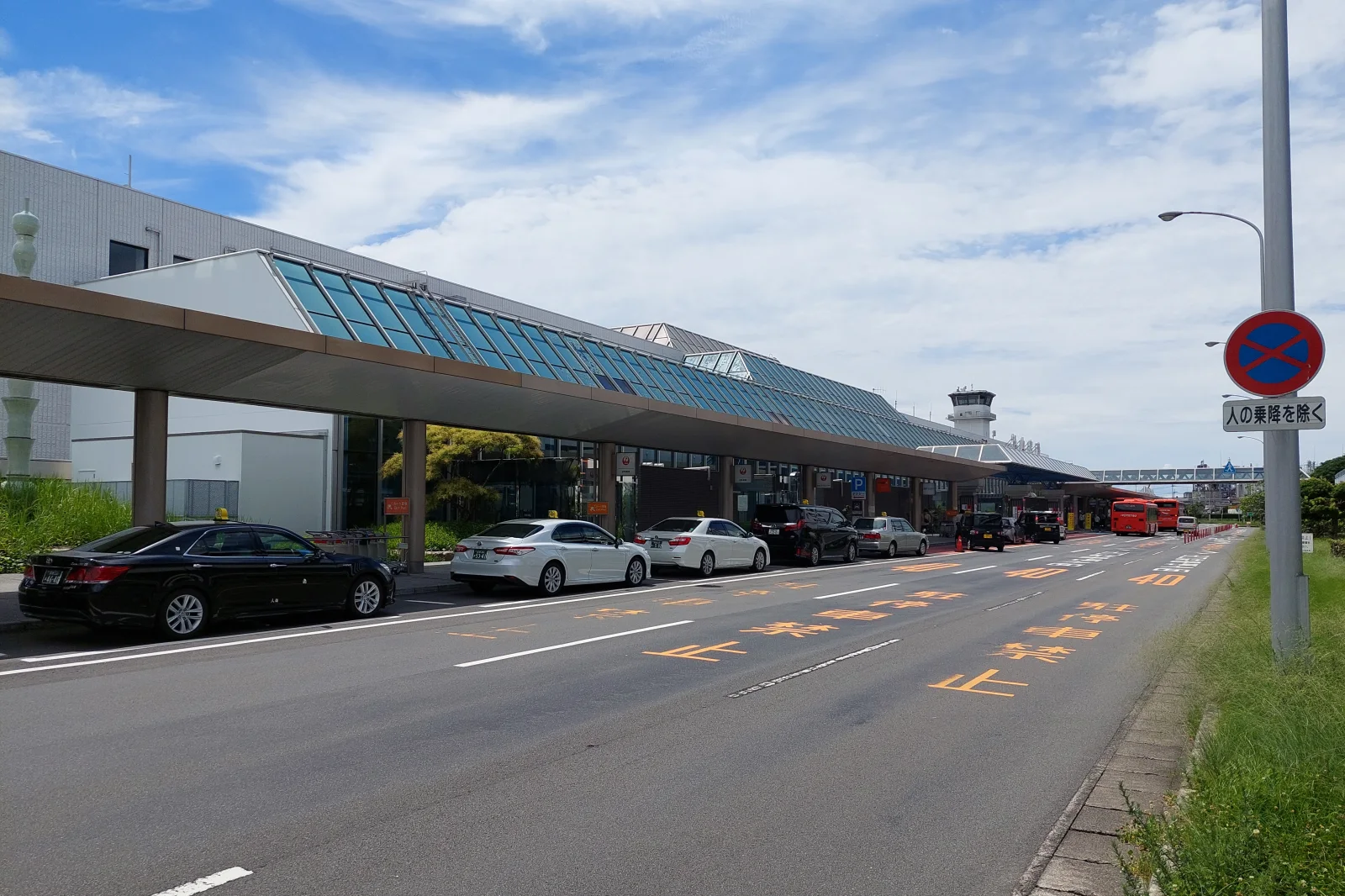
Step outside the arrivals hall and head to bus stop 2 for the Kotoden Bus heading into central Takamatsu. Following the fare revision on 1 October 2026, adult single fares are ¥1,000 to Ritsurin-koen-mae and Kawaramachi, and ¥1,300 to Hyogomachi, Takamatsu-Chikko, JR Takamatsu Station and the Ferry Terminal, with children paying half price. Indicative journey times listed by the airport are roughly 23 minutes to Ritsurin-koen-mae, 30 minutes to Kawaramachi, 40 minutes to Takamatsu-Chikko, and 45 minutes to JR Takamatsu Station and the Ferry Terminal. You can check exact city stop locations and fares on the Takamatsu Airport bus route map.
Several stops around the station carry similar names, so double-check which one matches your plans. If your hotel sits beside JR Takamatsu Station or you are boarding a JR train to Tokushima or west towards Matsuyama the next morning, alight at Takamatsu Station. For Kotoden local rail transfers towards Yashima or Kotohira, Takamatsu-Chikko is often handier. Heading straight for a boat? Check the Ferry Terminal column on the timetable and confirm beforehand which island and operator you are sailing with; if the next bus after your flight terminates at Takamatsu Station, you can still alight there and walk across the waterfront to the pier specified at the ticket office. Checking your hotel's exact address against the nearest bus stop is far more reliable than searching for "Takamatsu city centre". If you have a spare half-day in town before moving on, our Takamatsu city transport and food guide can help you pick the best neighbourhood to stay in.
For covered shopping arcades, look at Kawaramachi or Hyogomachi. On the year-end timetable, inbound buses from the airport call at Bay 5 in Kawaramachi, Bay 6 at Takamatsu Station and Bay 8 at Takamatsu-Chikko. Returning to the airport, board at Bay 2 in Kawaramachi, Bay 3 at Takamatsu Station or Bay 4 at Takamatsu-Chikko, bearing in mind that certain departures skip Kawaramachi altogether. At Hyogomachi, the landmark hotels have also shifted: inbound buses drop off outside the Clement Inn, whereas airport-bound buses pick up outside the Rihga Hotel. Take a quick walk past your departure stop on the day you check in so you are not shuttling between identically named bays with suitcases in the morning.
Kotoden Bus timetables are built around flight schedules, with inbound and outbound directions listed separately and updated at month changes. As a rule of thumb, the operator times airport departures for roughly 15 minutes after domestic landings and 45 minutes after international arrivals. Start with the flight column on the left side of the timetable, then read across that row for the airport departure and your drop-off stop, watching for symbols that mark specific dates or days of the week. From 1 December 2026 to 4 January 2027, the year-end/New Year timetable applies, meaning New Year's Day and ordinary weekdays in the same week do not necessarily share the same departures. The schedule also notes that flight delays may push back arrival times at subsequent stops, and if a coach fills up you will have to wait for the next one. International arrivals should allow proper time for immigration and baggage reclaim rather than assuming they will clear the terminal in time for the nominal departure.
On the city route, you can pay with cash, an IruCa card, or supported nationwide IC cards including Suica, ICOCA and PASMO. For contactless bank card payment, use the exact same physical card or mobile device to tap on when boarding and tap off when alighting. Seating on the airport bus is unreserved; you can also buy a paper ticket from the airport vending machine beforehand and hand it to the driver as directed. Large suitcases are stowed in the under-floor luggage hold, while smaller bags come aboard with you. If several people are paying with a single card, tell the driver how many are in your party before boarding rather than trying to sort it out one by one.
Wheelchair users can book Kotoden airport buses fitted with a hydraulic lift. Introduced on 1 July 2026, the service lets passengers travel seated in their wheelchair, but requires advance telephone reservation. Wheelchair boarding and alighting are only supported at three stops: Takamatsu Airport, Kawaramachi and Takamatsu Station. If your hotel is near Ritsurin Park or along the harbour, plan how you will cover the final stretch from one of those three stops. Likewise, if you intend to catch a ferry from Takamatsu Port, verify the accessible route to the quay, the vessel type and boarding assistance ahead of time before committing to an island crossing on arrival day.
| Drop-off stop | Approx. journey time | Adult single fare | Nearby connections |
|---|---|---|---|
| Ritsurin-koen-mae | 23 mins | ¥1,000 | East side of Ritsurin Park |
| Kawaramachi | 30 mins | ¥1,000 | Kotoden Kawaramachi Station, southern city centre |
| Takamatsu-Chikko | 40 mins | ¥1,300 | Kotoden Takamatsu-Chikko Station |
| Takamatsu Station / Ferry Terminal | 45 mins | ¥1,300 | JR trains, highway coaches, Takamatsu Port |
How to get from Takamatsu Airport to Takamatsu Station, Kawaramachi, Kotohira and Takamatsu Port, plus direct buses from Matsuyama Airport to Dogo Onsen, cross-prefecture JR trains and highway coaches, late arrivals, early flights and one-way car hire.
Heading straight to Kotohira, Marugame or Shodoshima
If your first night is in Kotohira, board the Kotoku Bus from bay 1 at Takamatsu Airport. The airport lists the journey to JR Kotohira Station at roughly 48 minutes, costing ¥2,000 for adults and ¥1,000 for children. When travelling with older relatives to a ryokan along the Kotohira-gu shrine approach, measure the walking distance from the drop-off stop to your accommodation beforehand and arrange a hotel shuttle using your estimated arrival time if one is offered. Landing in the morning leaves enough daylight to drop your bags and tackle the stone steps the same day; an afternoon arrival is better saved for the next morning's climb. If the direct airport coach does not line up with your flight, check the combination via central Takamatsu onto JR or the Kotoden line, keeping in mind that the two railways terminate at different stations in Kotohira.
For Ayagawa, Sakaide, Utazu or central Marugame, catch the Kotosan Bus from bay 4. Reference journey times and adult fares from the airport are roughly 20 minutes and ¥600 to Ayagawa Station, 60 minutes and ¥1,300 to the south exit of Utazu Station, and 75 minutes and ¥1,400 to the Marugame Station area. Nishisan Kanko Bus departures from bay 0 also call at Kosoku Marugame, which as the name suggests drops you beside the expressway interchange rather than in town. If your hotel is near JR Marugame Station and you plan to walk to Marugame Castle the next day, stick to the bay 4 service showing Marugame Station; only factor in bay 0 if you are staying by the motorway junction or being picked up by car.
If you are spending a night on Shodoshima, lock in your arrival port first. Conventional car ferries from Takamatsu to Tonosho Port take around 60 minutes, while high-speed passenger boats take roughly 35 minutes. High-speed boats carry foot passengers only; cars, motorbikes and bicycles must travel on the car ferry. Since 16 May 2026, high-speed sailings have been temporarily reduced from 15 to 8 round trips per day, and each vessel type keeps its own timetable and ticket desk. Tonosho Port is the natural choice if you are staying in Tonosho itself, whereas travellers bound for Ikeda or Sakate should check hotel pickups and island bus connections before defaulting to Tonosho, or the 25 minutes saved at sea can easily disappear waiting at an island bus stop. If the ropeway is on your itinerary, check our Shodoshima Kankakei Gorge ports and mountain transport guide.
You can distinguish the two ticket offices at Takamatsu Port by their street numbers. Both sailings are signed as Takamatsu Port to Tonosho, yet Shodoshima Ferry's car ferry uses the ferry centre at Sunport 8-22, while the high-speed boat departs from Sunport 8-1. Decide which vessel you want before setting your navigation app, and save both addresses on your phone. If part of your group goes off to grab breakfast while others buy tickets, agree to meet at the specific ticket counter you chose. When connecting to an island bus after a high-speed crossing to Tonosho, build in a buffer to disembark, walk to the bus stop and locate the right bay instead of assuming you can catch a bus leaving the minute the boat docks.
There is one easy-to-miss trap on the car ferry timetable. According to Shodoshima Ferry notices, the designated weekday sailings departing Takamatsu at 15:10 and Tonosho at 19:30 carry hazardous-goods vehicles only and do not accept general passengers, while weekends and public holidays follow a separate schedule. Never rely on a quick search for a sailing time without reading the footnotes on that row. High-speed boat tickets are sold on the spot on a first-come, first-served basis; if high winds cut sailings or a boat sells out, you can switch to the car ferry whenever space remains. If your ryokan dinner is booked for a fixed hour, bookmark two candidate sailings that connect with your hotel pickup so you can adapt once you reach the port.
Slotting Shodoshima into the middle of your trip with a night in Takamatsu before and after gives you the most flexibility: you can sail out early, return to town for dinner, or easily swap your island day with Ritsurin Park if the weather turns. If you do intend to cross on arrival day, add up every link in the chain separately: landing, clearing passport control and baggage reclaim, waiting for the bus, the city coach ride itself, and walking to the ferry ticket desk. The 45 minutes printed on the timetable covers only the bus journey once the wheels start rolling. And if your departure flight leaves in the morning, head back to Takamatsu the night before rather than gambling on a ferry crossing and an airport bus on the same morning.
Matsuyama Airport to Dogo Onsen and three city stops
Ehime's Matsuyama Airport carries the IATA code MYJ; if a map app tries to auto-complete "Matsuyama" to Taipei Songshan Airport, search for "Matsuyama Airport, Ehime" or "MYJ" instead. Outside arrivals, bays 4 and 5 serve airport limousine buses into central Matsuyama, bay 3 handles local route buses, and bays 1 and 2 serve destinations such as Toyo. Headed straight to Dogo Onsen? Look for buses bound for Dogo Onsen Station at bays 4 and 5, which make the direct run in roughly 40 minutes. The adult fare is ¥1,200 in cash, or ¥1,180 using a supported nationwide IC card or the Mican App. You pay when alighting, and Iyotetsu boards passengers in queue order on the kerb, so check the destination sign on each coach carefully before stepping aboard.
Matsuyama airport bus timetables list columns in order for JR Matsuyama Station, Ehime Shimbun-sha, Matsuyamashi Station, Okaido, Minamimachi Kenmin Bunka Kaikan and Dogo Onsen Station. Services that terminate at Matsuyamashi Station show blanks or dashes in the Dogo columns beyond it. When your flight meets one of these short-turn buses, either wait for the next through-service or alight at JR Matsuyama Station and switch to city tram line 5, which takes roughly 25 minutes to reach Dogo. The airport-to-JR Matsuyama Station leg takes around 15 minutes and costs ¥1,000 in cash or ¥980 by supported cashless payment, plus a separate tram fare listed on Iyotetsu's Dogo access page at ¥250 in cash or ¥230 cashless. Either option totals roughly 40 minutes of riding time, with the trade-off being the wait and hauling luggage onto a tram.
On Iyotetsu's 1 December 2026 to 4 January 2027 timetable, for instance, two buses leaving Matsuyama Airport around 21:30 behave quite differently: one terminates at Matsuyamashi Station at 21:54, while another runs through to reach Dogo Onsen Station at 22:10. Always scan the full row to the final column and confirm with the attendant or driver at the bay that the coach goes all the way to Dogo Onsen Station before boarding. If you are arriving on a late flight and have booked a half-board ryokan stay, consider spending night one in central Matsuyama — where airport buses run more often — and checking into your onsen inn early the following afternoon in time for dinner.
Ordinary local buses from bay 3 also connect the airport with the city. Iyotetsu's Matsuyama Airport local line serves JR Matsuyama Station, with some services continuing to Matsuyamashi Station, Dogo and Okudogo. When checking the Iyotetsu route map, confirm which variants stop on the side of town nearest your hotel and make sure you are reading the weekday or weekend schedule. With heavy bags and a hotel near Dogo Onsen Station, the airport limousine bus is far easier; local buses make more sense if you are staying along an intermediate stop or facing a long gap between direct airport coaches. For late-night landings after buses finish, taxis outside arrivals will drop you at your hotel door. Keep in mind that reception closing, last dinner seating and public bath hours are three separate cut-offs — on a half-board booking, verify dinner last orders first.
If you are catching JR trains towards Imabari, Uchiko or Ozu, basing yourself near JR Matsuyama Station saves steps. Okaido suits travellers who want an easy walk to the Matsuyama Castle ropeway in the afternoon and covered arcade dining at night, while staying in Dogo on your final night lets you bathe and board the airport bus directly from Dogo Onsen Station the next morning. If your inter-prefectural highway coach ticket shows Matsuyamashi Station, booking around the department store and Iyotetsu station square avoids an extra transfer. Crucially, JR Matsuyama Station and Matsuyamashi Station are two completely different hubs across town: write the full station names into your itinerary and group messages so nobody turns up at the wrong forecourt.
On 1 October 2026, several bus bays at Matsuyamashi Station square were relocated, including the airport limousine bus stop. If older blog posts or photos point to the opposite side of the plaza, follow the Iyotetsu Matsuyamashi Station bus bay relocation notice instead. Travellers staying at Okaido should also tap the airport-bound Okaido stop map on Iyotetsu's site before leaving; multiple routes share that kerb, so only board a coach displaying Matsuyama Airport. To hop between stops within central Matsuyama, use the trams or ordinary city buses — inbound airport coaches pick up only at the airport, while airport-bound services are pick-up only until they reach the terminal.
Takamatsu to Matsuyama: JR train or highway coach?
JR services follow the Yosan Line: search for the Ishizuchi limited express between Takamatsu and JR Matsuyama Station. Several departures couple with and uncouple from the Okayama-bound Shiokaze limited express at Utazu or Tadotsu. If your itinerary or ticket specifies a cross-platform change at Tadotsu, follow that exact connection rather than boarding an adjacent through-train on impulse. When travelling with family, save a screenshot of your search results showing the train number, destination, carriage and seat numbers so you can cross-check station departure boards before shifting platforms. Planning to break the trip for lunch or the Shikoku Aquarium? Split the journey cleanly into two legs and allow for the walk to and from the station.
Between 25 December 2026 and 4 January 2027, JR Shikoku and JR West are expanding reserved-seat allocations on selected Shiokaze services between Okayama and Matsuyama, converting six of the eight carriages into reserved seating. If your New Year itinerary connects onto a Shiokaze train at Utazu or Tadotsu, check your specific train and carriage layout on the booking page before locking in dinner times. Groups of four wanting seats together, passengers requiring wheelchair-accessible spaces or anyone facing a tight onward connection will be far better off reserving ahead than gambling on unreserved cars. Travellers entering Shikoku from Okayama — particularly those racing back for a Sanyo Shinkansen connection over the holidays — are covered by the same notice.
Over that same New Year window, JR Shikoku's winter timetable also alters how Ishizuchi trains pair with Shiokaze services: westbound trains from Takamatsu to Matsuyama transfer at Tadotsu, while eastbound trains from Matsuyama to Takamatsu transfer at Utazu. Under the published schedule, for instance, Ishizuchi 5 leaves Takamatsu at 09:42 and reaches Tadotsu at 10:10 to connect with the Matsuyama-bound Shiokaze 5, arriving at JR Matsuyama at 12:10. If you had planned on a 10:00 hotel checkout in Takamatsu, you will need to pack earlier or take the following departure. When companions book tickets separately, verify both the interchange station and train numbers for both directions.
The road alternative is the Botchan Express highway coach. From 1 October 2026 onwards, adult single fares from Takamatsu Station Highway Bus Terminal to JR Matsuyama Station, Matsuyamashi Station or Okaido are ¥4,400, with half-price fares for children. Under the revised timetable, the run between Takamatsu Station Highway Bus Terminal and JR Matsuyama Station takes between 2 hours 25 minutes and 2 hours 50 minutes. All seats are reserved — bookings open one month and one day before travel — and there is no scheduled passenger comfort break en route. Always check the columns for Ritsurin-koen-mae and Okaido before booking, as some departures bypass them; if you are staying in Okaido and choose a coach that calls there, you can walk straight to your hotel instead of transferring onto a tram at JR Matsuyama Station. If you need an onward JR train towards Imabari or southern Ehime, book all the way to JR Matsuyama Station.
When comparing departures on the same day, weigh the full door-to-door move from checking out of one hotel to dropping bags at the next. JR connects smoothly with onward rail lines and tends to suit anyone staying by JR Matsuyama Station or stopping off in Imabari, whereas the highway coach wins if you are rolling large suitcases straight into a castle-town hotel around Okaido. Winter gales and heavy rain can disrupt rail and road corridors differently, so note the last viable backup departure on the alternative mode beside your itinerary before buying tickets. Should you need to amend a reserved highway coach, process the change with the operator before your original departure time and let your hotel know if you will arrive late.
Map apps sometimes label both airport limousine stops and long-distance coach bays around Takamatsu Station as a generic "Takamatsu Station Bus" pin. Matsuyama-bound highway coaches depart from bay 1 at Takamatsu Station Highway Bus Terminal on the south side of the JR station; coaches for Tokushima and Kochi use the same bay, so verify the destination display on the front windscreen before boarding. If you hope to board one stop earlier at Ritsurin-koen-mae, check first that your booked departure calls there. Arriving at Takamatsu Station straight from the airport requires walking around to the south-side coach bays, though waiting at the main station terminal makes it far easier to ask staff about rebooking if delays strike.
Return flights vs flying into Takamatsu and out of Matsuyama
When planning your flights, compare same-day direct options and domestic connections for both airports before locking in your hotel nights. Landing in Takamatsu puts Kagawa's sights and Shodoshima ferries right on your doorstep without an extra long-haul transfer, while Matsuyama gives immediate access to Dogo Onsen, Matsuyama Castle, Imabari and western Ehime. If you are connecting onto domestic flights via Tokyo Haneda or Osaka Itami, check carefully which international airport your long-haul flight lands at: cross-city airport transfers and rechecking luggage eat up hours, and separate tickets carry independent check-in deadlines. If flying into Takamatsu and out of Matsuyama merely swaps one easy overland leg for two awkward connections and a cross-airport shuttle, compare total door-to-door travel time and your final night's room rate before committing.
A four-day, three-night trip splits neatly into two nights in Takamatsu and one night in Matsuyama. Keep your Takamatsu arrival day light around your hotel and the waterfront, save day two for Kotohira or Shodoshima, take a daytime train or coach to Matsuyama on day three, and spend your final evening in Dogo Onsen. With an afternoon flight out of Matsuyama, you still have time for breakfast, a morning soak or a stroll before catching a confirmed airport bus that meets check-in — leaving you with just one hotel move all trip. If you are flying home early from Takamatsu instead, tackle Matsuyama first and loop back to Takamatsu on your last afternoon, or save Ehime for another trip. Fitting your overland route around your flights is always simpler than building a cross-island wish list first and hunting for awkward airfares later.
If Tokushima City, Naruto or Kochi City sits at the top of your list, weigh Shikoku's other two airports as well. Tokushima Awaodori Airport (TKS) runs direct limousine buses to JR Tokushima Station, though onward connections towards Naruto require separate local routes; Tokushima Bus has announced that from 1 December 2026, cash and ticket-machine fares on the airport shuttle rise from ¥800 to ¥1,000, while on-board IC card and contactless payments remain ¥800. Kochi Ryoma Airport (KCZ) connects to Kochi Station by airport shuttle, with Tosaden Kotsu charging ¥1,000 for an adult single. When domestic flights line up cleanly in both directions, using these local airports spares you a transfer via Takamatsu — or even on one leg, lets you anchor one end of an open-jaw route in Tokushima or Kochi.
When combining Shikoku with Kansai or the Sanyo coast, rail cleanly anchors one end of your itinerary. Take the Shinkansen to Okayama and change onto the rapid Marine Liner for Takamatsu, or catch a Shiokaze limited express straight from Okayama to Matsuyama, leaving extra time at Okayama Station to navigate transfer gates and lifts. You can easily enter Takamatsu by rail and book your departure flight out of Matsuyama. Equally, if return airfares into Takamatsu are noticeably cheaper and you only want one night in Matsuyama, slot Ehime into the middle of your stay and return to Takamatsu for your final evening.
On a five-to-seven-day crossing through the central mountains, start from Takamatsu via Kotohira or Awa-Ikeda, dedicate a full day to Oboke and the Iya Valley, overnight in Kochi and fly out of Matsuyama. By public transport, treat Takamatsu-to-Kochi and Kochi-to-Matsuyama as two dedicated travel days, using Oboke as a day-trip base for Iya. Between Kochi and Matsuyama, the direct Whale Express highway coach departs from Kochi Station Bus Terminal and Harimayabashi and drops off at Matsuyamashi Station, Okaido and JR Matsuyama Station — far more direct than JR rail, which has to loop around mountain junctions. Picking hotels close to the coach terminals in both cities also trims out extra luggage transfers. To weave Tokushima, Matsuyama, Kochi and Kagawa into one trip, read our five- and seven-day Shikoku routes guide and trim sections to suit your flights.
In the Iya Valley, always check schedules by the exact stop name. Yonko (Shikoku Kotsu) timetables list stops such as Oboke Station, Oboke Gorge and Kazurabashi Yumebutai, and different departures follow different branches. After boarding outside Oboke Station, travellers heading further east into Higashi-Iya follow operator instructions to transfer at Kazurabashi Yumebutai. If you are only visiting the vine bridge and nearby sights, let the return bus departure set your pace. Bear in mind that if your ryokan lies deeper up the gorge, arriving at Oboke by train only completes the first leg: schedule your stay for a day when connecting buses or hotel pickups operate, and ride back down to the JR station at checkout. Yonko also runs bookable sightseeing buses from JR Oboke Station and other hubs, linking several viewpoints on a single timetable with minimal walking.
Which days are actually worth hiring a car?
City sightseeing in Kagawa, island-hopping from Takamatsu Port, central Matsuyama and Dogo Onsen are all easy on foot, by tram and by airport bus. Where public transport really eats into your day is up in the Iya mountains, out along Ehime's rural coastal stations, or deep in Kochi's river valleys and coastline. Heading into town by bus on arrival day and picking up a hire car only as you leave Takamatsu avoids overnight parking charges and wasted rental days; likewise, returning the car before your final night in Dogo lets you take the direct bus to the airport next morning. Concentrate your hire window on the days you are hauling luggage between remote sights, and for a party of four, tally motorway tolls, parking and petrol alongside the base rate.
For a Takamatsu pick-up and Matsuyama drop-off, put both branches into a single quote from the start. Even major chains with outlets across Shikoku often levy one-way cross-prefecture fees, and an airport may be served by several different branch locations. Check the exact branch name and street address shown for the return depot on your booking screen, and factor in any shuttle ride back to the terminal. Taking a hire car onto a ferry also requires reserving a vehicle-carrying sailing under the car's exact length class; for a half-day island visit, it is usually easier to leave the car in Takamatsu and use island buses or taxis rather than queuing for the car deck and hunting for island parking. If you are bringing a car across on a multi-day loop, check your rental terms for ferry and breakdown rules first. Our Shikoku driving and car hire guide breaks down vehicle classes, excess cover and one-way surcharges.
Allow proper margin on drop-off day to fill the tank, keep the fuel receipt, unload bags, complete the walk-around check and ride the shuttle to departures. If your morning flight leaves before the depot opens, return the car the evening before or pick a hotel with easy morning airport transport. Check opening hours a day ahead and save a multi-stop route in your sat-nav from your hotel to a petrol station, the return branch and finally the terminal — hire-car depots and airport drop-off lanes rarely sit on the same approach road. If it is your first time driving on the left or in an unfamiliar Japanese car, start with a short daylight stretch so you can get used to the vehicle's width, indicator stalks and windscreen wipers before heading into mountain roads.
If winter ice, post-rain rockfalls or road closures block the Iya Valley, switch straight to towns accessible by rail and bus. Choosing backup sights in the city where you are already based lets you leave bags at the hotel and easily slide your mountain drive to the next day. Staying in Dogo and keen to visit Shimonada Station? Make it a half-day rail excursion from JR Matsuyama Station on the coastal Yosan Line branch, checking your return train before you set out. Anyone timing a sunset visit at Shimonada should match that evening's sunset against the Matsuyama-bound timetable, pack warm layers for waiting on an open seafront platform after dark, and store big suitcases at your hotel or station lockers rather than hauling them aboard local trains.
Rail passes, luggage and early or late flights
When weighing up regional passes, list the limited express rides you are certain to take each day. The All Shikoku Rail Pass covers multiple JR Shikoku limited express trains plus participating networks such as Kotoden, though Iyotetsu lines were removed from coverage on 7 March 2026 — so budget separately for Matsuyama trams and airport coaches. Between Takamatsu and Tonosho, the pass covers eligible car ferries only, meaning high-speed boats and other ferry routes cost extra, and seat reservations follow separate rules set by JR Shikoku for each pass tier. If a five-day stay involves only one long rail leg from Takamatsu to Matsuyama plus airport buses, single tickets may still win; the pass pays off when consecutive days link Kotohira, Kochi and Matsuyama. See our Shikoku rail pass guide for full coverage and price comparisons.
Travellers crossing two or three prefectures by coach can also look at the Shikoku Highway Bus Free Pass. Under Yonkou Bus's current release — valid for travel until 31 March 2027 — adult-only passes cost ¥10,000 for two days, ¥11,000 for three days and ¥12,000 for five days. The three-day pass covers any three days within a five-day window, and the five-day pass any five days within seven consecutive days, spanning routes such as Takamatsu–Matsuyama and Takamatsu–Kochi. A single trip between Takamatsu and Matsuyama is still cheaper as a standard ticket. Passes are purchased on your phone and, per operator terms, each journey still requires a seat reservation via the dedicated booking site; airport limousine buses require separate tickets.
If you are travelling with heavy bags, choose in advance where you want to handle them. On Matsuyama Airport limousine buses, passengers load and retrieve their own suitcases from the under-floor hold — keeping power banks and lithium batteries inside the cabin — while bicycles are subject to separate carrier rules. If you have a wheelchair, folding pushchair or oversized gear, confirm its folded dimensions with the bus operator ahead of time and aim for a single-seat journey straight to your hotel stop. Where a tram transfer is unavoidable, have one adult manage fares while another stays with children and luggage. Groups arriving off connecting flights from Tokyo or Osaka who collect bags at different carousels should agree on a specific bay number outside arrivals so nobody splits up chasing an imminent bus.
Landing in Takamatsu at night, use that day's bus stop column to pick between Kawaramachi, Hyogomachi and JR Takamatsu Station. For late arrivals into Matsuyama bound for Dogo Onsen when the final buses terminate at Matsuyamashi Station, weigh the last city transfer against taking a taxi straight from the airport. For your flight out, count backwards from your airline's check-in deadline and treat the latest viable bus as a fallback rather than your primary plan — morning checkout, breakfast, walking to the right bay and commuter traffic all eat into your margin. If your hotel calls a taxi, give the airport code or full Japanese name, and if a group takes two cabs, agree on a single terminal door to meet at.
Travelling over the year-end holidays lets you plan both ends using matching schedule periods: Kotoden Bus in Takamatsu and Iyotetsu in Matsuyama have both published airport timetables running from 1 December 2026 to 4 January 2027. Takamatsu splits inbound and outbound services onto separate tables, while Matsuyama distinguishes directions within one timetable and notes which coaches extend to Dogo Onsen; for travel from 5 January 2027 onwards, switch to the next schedule period on each operator's portal. Early-morning flyers should pencil in their airport bus first and fit breakfast and checkout around it — or, when travelling with young children, move to a hotel beside a direct airport bus stop the night before to keep the final morning calm.
A few useful answers
Can you take a train directly from Takamatsu Airport to Takamatsu Station?
No — there is no rail link at Takamatsu Airport, so you will need a Kotoden airport bus or a taxi. Buses depart from bay 2 outside arrivals, taking around 45 minutes to JR Takamatsu Station for ¥1,300 (adult single). Alight at Kawaramachi or Takamatsu-Chikko if you are connecting onto Kotoden local trains.
Do you need to book the Matsuyama Airport bus to Dogo Onsen in advance?
No advance booking is needed — passengers board Iyotetsu's airport buses in queue order at the stop. Check bays 4 and 5 at the airport for a service running through to Dogo Onsen Station, which takes about 40 minutes direct; if the next coach terminates at Matsuyamashi Station, wait for the following through-bus or transfer onto a city tram in town.
Staying near Takamatsu Port: should I get off at Takamatsu-Chikko or Takamatsu Station?
Takamatsu-Chikko connects to Kotoden local trains, while JR Takamatsu Station connects to JR railways and highway coaches. If you already hold a ferry booking, check which pier your operator uses first; if your airport bus stops at the Ferry Terminal, compare the walk from that stop against your check-in quay.
Where can I buy tickets for the Takamatsu to Matsuyama highway coach?
Follow the booking link on Yonkou Bus's Takamatsu–Matsuyama route page, as all seats are reserved. Adult single fares from Takamatsu Station Highway Bus Terminal to city stops such as JR Matsuyama Station are ¥4,400; if you want to alight at Okaido, pick a departure listed as stopping there.
Does the JR Shikoku rail pass cover Matsuyama Airport buses or city trams?
Airport limousine buses require a separate fare. Moreover, since 7 March 2026 Iyotetsu is no longer included in the All Shikoku Rail Pass, so Matsuyama's city trams must also be paid for separately.
Official information and references
Sources used in this guide.
- Takamatsu Airport Bus Stops and Fares by Route
- Kotoden Bus: Takamatsu Airport Limousine Timetable and Payment Methods
- Kotoden Bus: Takamatsu Airport to City Centre Year-End Timetable
- Matsuyama Airport Bus Boarding Bays
- Iyotetsu: Matsuyama Airport Limousine Bus Year-End Timetable and Boarding Rules
- Iyotetsu: Dogo Onsen Access and City Tram Fares
- Iyotetsu: Notice on Matsuyamashi Station Bus Bay Relocations
- Iyotetsu: Matsuyama Airport Local Bus Route Map
- Yonkou Bus: Takamatsu to Matsuyama Highway Coach Timetable and Fares
- JR Shikoku: Ishizuchi Limited Express Route Information
- JR Shikoku: Shiokaze Year-End and New Year Reserved-Seat Notice
- JR Shikoku: Changes to All Shikoku Rail Pass Coverage
- Shodoshima Ferry: Takamatsu–Tonosho Ferry Route
- Shodoshima Ferry: Takamatsu–Tonosho High-Speed Boat Timetable
- Shodoshima Ferry: High-Speed Boat Service Reduction Notice
- Tokushima Bus: Airport Limousine Fare Revision Notice (December 2026)
- Tosaden Kotsu: Kochi Ryoma Airport Bus Routes and Fares
- Yonko (Shikoku Kotsu): Oboke and Iya Valley Local Bus Routes
- Yonko (Shikoku Kotsu): Bookable Oboke and Iya Sightseeing Bus
- Yonkou Bus: Shikoku Highway Bus Free Pass Sales and Validity
- Kotoden Bus: Central Takamatsu to Airport Year-End Timetable
- Kotoden Bus: Wheelchair Lift Bus Reservations and Eligible Stops
- JR Shikoku: Winter Extra Trains and Ishizuchi Transfer Notice
- Yonkou Bus: Takamatsu Station Highway Bus Terminal Boarding Bays
- JR Shikoku: Okayama to Takamatsu Rapid Marine Liner
- Iyotetsu: Direct Kochi to Matsuyama Highway Coach Timetable