Plan Mount Moiwa's two-stage ropeway and cable car journey and choose whether to buy priority tickets. Covers autumn and winter weekday sunsets before the first shuttle, family fares, THE JEWELS dinners with transport included, cancellation fees and the descent.
- Region & Focus
- Sapporo
- Reading Scope
- 34 min read · 16 chapters · 4 Q&As
- Official Verification
- 21 official sources checkedUpdated November 22, 2026
Chapter Route Map (tap any stop)
- For sunset and night views, keep the evening free on the mountain
- Know the three stations: tickets at the base, transfer midway, views at the summit
- Most visitors need a round trip on both stages
- Priority tickets reserve the first ascent, making its timing easier to plan
- Check sunset for your date: October weekdays can be too early for the first shuttle
- Tram and shuttle: check both the platform and the last stretch
- Tram fares and passes: ordinary tickets are simple for one return trip
- Buses and taxis: navigate to the base station
- At the summit, look around first, then choose a direction to watch
- With children or a wheelchair, plan queues, food and warmth together
- Dinner at THE JEWELS: choose a course, then transport and seating
- Children's meals, takeaway and cancellation fees shape the dinner choice
- Plan the first downhill queue: the summit Mini Cablecar is a common wait
- Two evening plans: dinner downtown or an evening at the summit restaurant
- Drivers have two entrances: park at the base, or drive to mid-slope in summer
- For low cloud, strong wind or maintenance closures, have a workable city evening
- Quick Q&A
For Mount Moiwa in Sapporo, first decide whether you want sunset or only the night view. Then choose transport to the base and a dinner plan. On autumn and winter weekdays, sunset may come before the first free shuttle at 17:17. Reserved priority ascent services also start only at 17:00. To watch the light change, reach the base early and take both stages up. Work out dinner and your return to the city from the queue to descend. With children, wheelchair users or older relatives, use station elevators and plan the full return journey, keeping outdoor time for the light you most want to see.
For sunset and night views, keep the evening free on the mountain
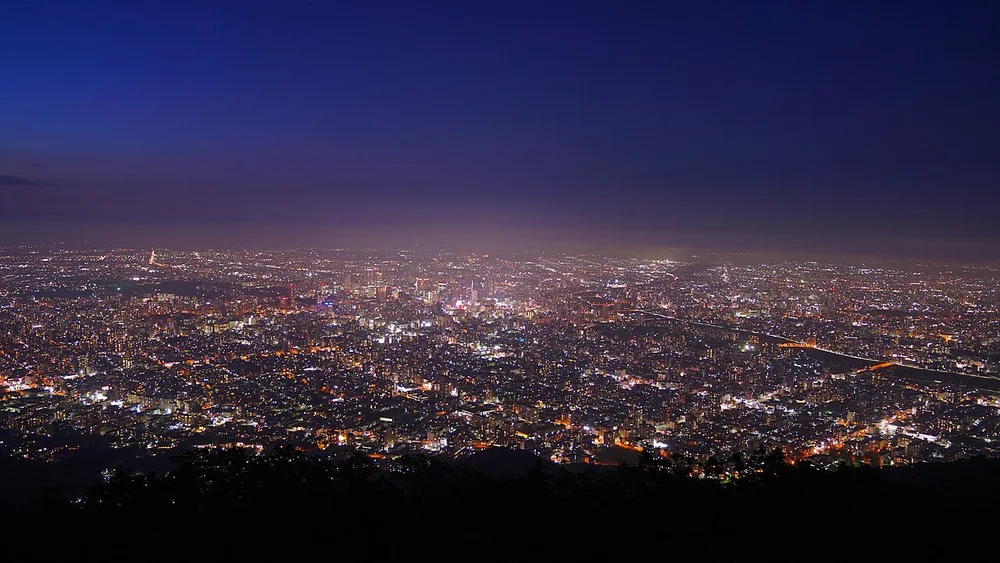
Mount Moiwa is worth visiting for the change from Sapporo's daytime street grid to a field of lights. Leave later if you only want a quick night view after dinner. To see the ridges, sunset colors and city lights together, go up before dinner and drop a lengthy afternoon stop. The operator's congestion guidance gives about an hour for a smooth round trip from base to summit, but more than two hours may be needed during busy night-view periods. This starts at the base. Add the tram, shuttle and walk from your hotel.
Choose an evening you can swap with other city activities. Spend the day in central Sapporo and check the summit livestream in the afternoon before deciding whether to go up. This handles flight delays and low cloud more easily than fixing Mount Moiwa to your first evening in Hokkaido. If a formal meal matters more to your companions than photography, first choose dinner downtown or reserve the summit restaurant, then work backward to viewing time. These options require very different tickets, meeting times and descent plans.
For a family's first ropeway trip, start with reaching the summit before sunset and preparing to descend once the night view develops, then have dinner downtown. You can learn the route in daylight, and children can see the forest and two different kinds of vehicle. If you stay up late and want an unhurried meal on the mountain, give the summit the whole evening. Do not also book a downtown restaurant immediately afterward.
Plan Mount Moiwa's two-stage ropeway and cable car journey and choose whether to buy priority tickets. Covers autumn and winter weekday sunsets before the first shuttle, family fares, THE JEWELS dinners with transport included, cancellation fees and the descent.
Know the three stations: tickets at the base, transfer midway, views at the summit
Mount Moiwa Ropeway Sanroku Station is at 5-3-7 Fushimi, Chuo-ku, Sapporo. This is the base entrance reached from the city by tram, shuttle or taxi. The base station facilities page lists an elevator from floors one to four. The ticket office and ropeway boarding area are on the fourth floor. Go inside and upstairs after arriving, then buy or exchange tickets before joining the boarding queue. Open your phone's QR code there rather than sorting your booking beside the roadway.
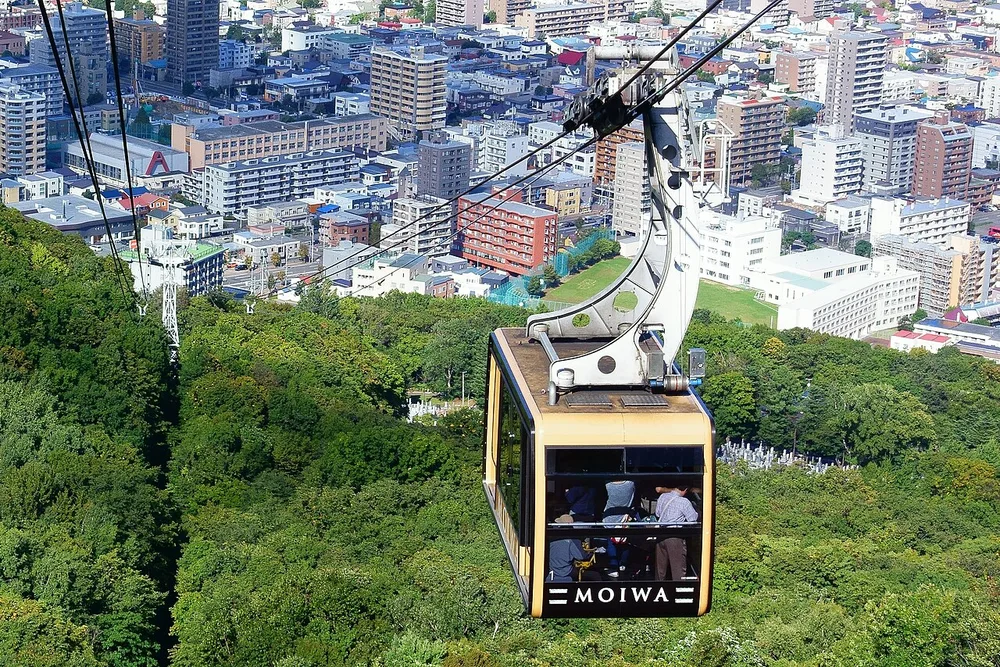
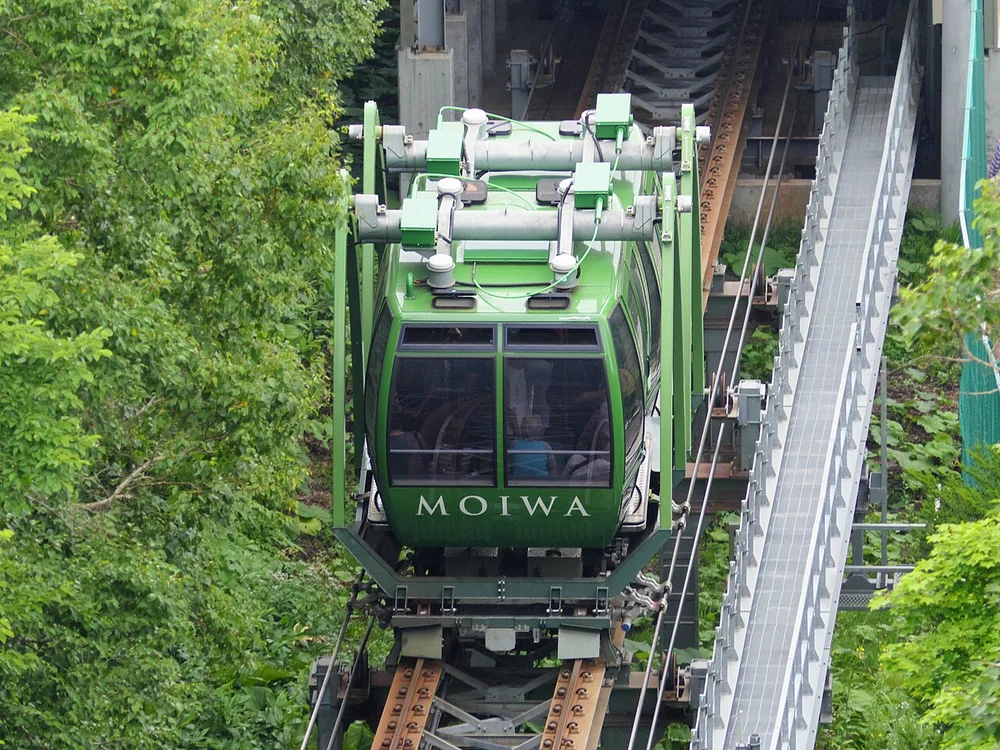
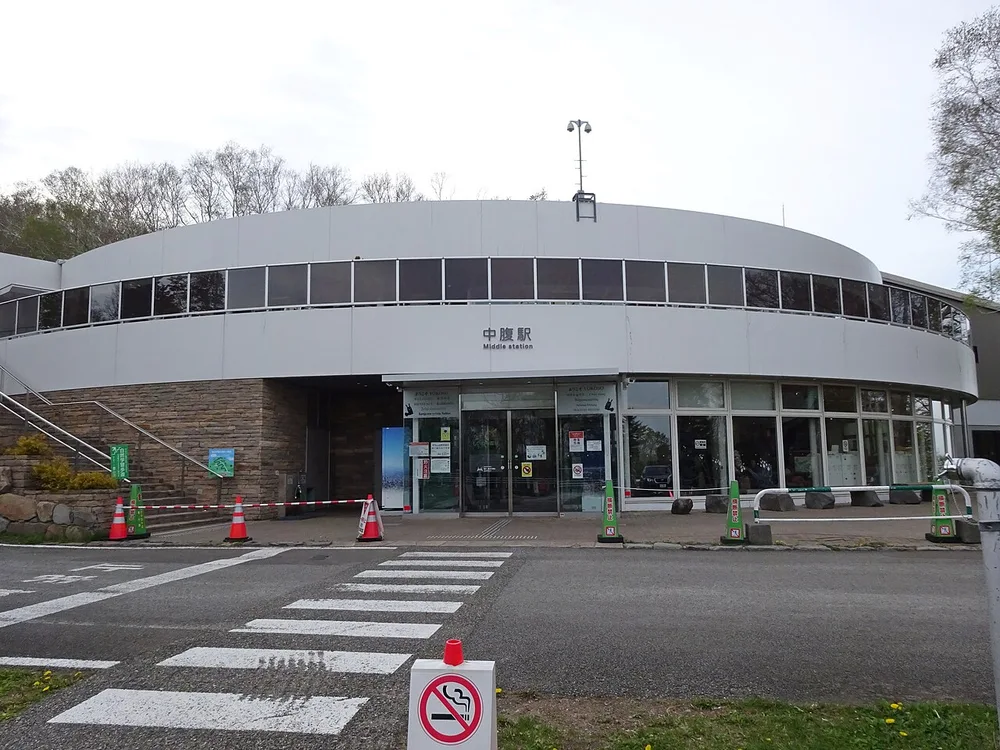
The first stage, the Ropeway, takes about five minutes from the base to Mount Moiwa Chufuku Station. This mid-slope station is a transfer point. Change to the Mini Cablecar, called mini kēburukā in Japanese, to reach the summit. The Mini Cablecar facilities page gives about two minutes for this stage, with a total capacity of 60 across two cars. The aerial ropeway carries 66. Capacity and waiting areas differ, so allow transfer time even if boarding the first stage is quick. Mount Moiwa Summit Observation Deck is the destination for the 360-degree view. From the summit station building, you still need to walk, use an elevator and find a viewing spot. Five plus two minutes is only vehicle travel time. Tickets, queues, transfers and reaching the railing all come in addition. For sunset planning, arrival means standing on the deck, not the moment the ropeway departs.
Most visitors need a round trip on both stages
If you arrive at the base from the city and return there after viewing, the usual choice is the round-trip ticket for both stages: ¥2,100 for adults and ¥1,050 for children of elementary school age or younger. Up to two preschool children travel free per adult. Two adults and an elementary school child pay ¥5,250 for both stages return. If the child is preschool age and within the free allowance, the two adult tickets total ¥4,200. City transport and food are extra; this family calculation covers only the base-to-summit round trip.
The website also lists an adult round trip for the base-to-mid-slope section at ¥1,400 and the mid-slope-to-summit section at ¥700. The ¥1,400 fare looks cheaper because it reaches only the transfer station. Add the summit section and the total is still ¥2,100. Mini Cablecar-only passengers are usually those who have driven to the mid-slope area in summer. If you reach the base by public transport, budget for both stages together.
A one-way ticket covering both stages is also available at ¥1,050 for adults and ¥530 for children. This suits people who already have another way up or down. Deciding after dark to save the return fare turns a city night-view outing into a mountain walk. Keep return transport in an ordinary sightseeing plan. Group discounts start at 15 people. Resident discounts require proof of a Sapporo address for each person, so ordinary visitors from elsewhere should compare standard fares. The website has announced that senior discounts ended March 31, 2026. Budget for older relatives at the current standard fare or a disability fare for which they qualify.
Priority tickets reserve the first ascent, making its timing easier to plan
The operator-linked priority ascent ticket page offers specified departures from 17:00 to 21:00 on the chosen day. Tickets can be bought up to 90 days ahead; same-day sales close at 11:59. Exchange them for paper tickets on the base station's fourth floor at least 15 minutes before departure, then use the advance-reservation route. This suits visitors committed to an evening ascent who can reach the base on time. For autumn sunset colors requiring an ascent before 17:00, use tickets and boarding arrangements available during the day.
Priority applies to the uphill Ropeway from the base. The Mini Cablecar transfer and both downhill stages use ordinary boarding procedures. For families concerned about long waits, that distinction changes the reason to buy: it helps plan the first ascent, but you still need time for the queue leaving the summit. A 17:00 reservation does not mean arriving at the base at 17:00. Complete ticket exchange by 16:45 and allow earlier time for the shuttle, entering the building and reaching the fourth floor.
Arriving early or late does not allow priority use on a different departure. Handle date or time changes through the original ticket platform. The product notes say changes are unavailable after 12:00 on the day. If weather suspension or entry restrictions prevent use, contact KKday customer support to request a refund. Save the purchase email, use date, departure and exchange deadline together. If your itinerary is still changing substantially, decide whether you can meet the time before buying a priority reservation.
Check sunset for your date: October weekdays can be too early for the first shuttle
Mount Moiwa's home page gives the day's sunset and night-view times. For example, the National Astronomical Observatory of Japan's Sapporo table lists sunset at 16:36 on October 26, 2026, while the first weekday free shuttle is at 17:17. Sunset would already have passed by the time you took that shuttle to the base. For sunset, take an earlier tram and walk, or use a bus or taxi that reaches the base in time. If your family wants to use only the free shuttle, plan for the night view without rushing through the afternoon to catch sunset.
Use sunset as the reference point and work backward. With a 16:36 sunset, aiming to stand on the deck around 16:00 might mean reaching the base at 15:00–15:15, leaving room for tickets, both queues and the transfer. This example allows 45–60 minutes at the base and through the ascent. Arrive earlier on busy days or switch to a night-view-only plan. Photographers can use an early ascent to identify viewing directions before the light changes, avoiding a search along crowded railings.
Summer daylight lasts longer, so an early ascent may leave a long wait for the night view. Families may find an early dinner before going up works better with bedtime. In autumn and winter, early darkness lets you return downtown for dinner without staying late on the summit. Sunset values on the official monthly congestion calendar refer to the first day of each month. Use the home page's daily information for your travel date rather than applying early-month times to the end of the month.
The operator's summer promotional video, using footage released in summer 2020, shows Mount Moiwa and Sapporo as daylight turns to night.
Tram and shuttle: check both the platform and the last stretch
From Nishi Yonchome tram stop or Susukino tram stop, set Ropeway Iriguchi tram stop as your destination. The tram is a loop, with platforms for different directions at the same stop. Check the next stop on the route map against your boarding direction to avoid the longer way around. From near Sapporo Station, first reach a tram connection or compare buses to the base. The whole trip from your hotel to the ropeway station matters more than one vehicle's travel time.
The operator's access page gives about one minute on foot from the tram stop to the free shuttle stop, followed by a two-minute ride. Walking from the shuttle stop to the base is about 0.5 km and ten minutes. This is a road to the base entrance, not a hiking trail. In dry weather, with comfortable shoes and no large bags, it can be your planned final stretch. In snow, when pushing a wheelchair or with tired children, use an operating shuttle or a vehicle directly to the base. Saving a wait should not become a difficult uphill walk.
The first free weekday shuttle is at 17:17. On weekends and holidays, it starts at 10:17 in summer and 10:47 in winter. Service is generally every 15 minutes, with some omitted departures shown in the timetable. Outbound and return times are separate. From the tram stop, use the timetable toward Ropeway Sanroku Station; downhill, use the one toward the Ropeway Iriguchi tram stop. Save both boarding points on your map. After dark, saved locations are easier to follow than memories of the daylight view through the window.
Tram fares and passes: ordinary tickets are simple for one return trip
The Sapporo City Transportation Bureau lists ordinary tram fares at ¥230 per adult ride and ¥120 for elementary school students. Two adult rides total ¥460, below the ¥570 weekday adult day pass. A third ride brings the total to ¥690, when the day pass starts to save money. The tram pass covers trams. Subway travel to Odori or Susukino and ropeway tickets cost extra.
On Saturdays, Sundays, national holidays and December 29–January 3, the Dosanko Pass costs ¥460 and covers one adult and two children on the tram. For one adult and one elementary school child making a return trip, ordinary fares total ¥700, compared with ¥460 using the pass on an eligible date. On the same tram journey, each adult or elementary-school-age guardian may accompany four young children free. This covers ages one to under six, plus six-year-olds not yet in elementary school. Infants under one travel free. The ropeway instead allows two preschool children free per adult. Agree on payment and boarding arrangements before leaving. Tram fares are paid when getting off. Top up your transport IC card before travel; if one person pays for the family, tell the driver the numbers of adults and children before paying. Leave large bags at your accommodation and carry only summit essentials to make the walk from the tram to the shuttle easier.
Buses and taxis: navigate to the base station
The Mount Moiwa bus access page lists JR Hokkaido Bus loop Maru 11 from Maruyama Koen Station bus terminal to Moiwayama Ropeway, with a stated journey of about 15 minutes. This is worth checking if you are already near Maruyama that afternoon and want to avoid the walk from the tram to the base. Check outward and return times together. After a formal dinner, you need a service still running then, not simply the route with least walking during the day.
The operator explicitly says similarly named loop services Maru 10 and Maru 12 do not stop at Moiwayama Ropeway at the base. They use other stops such as Minami 19 Nishi 16. If search results show a similar name, open the map for the final walk before comparing. Some Keimei Line 50 services from Sapporo Station also reach the base directly, but the attraction's access page lists only three a day. Find a departure first and plan around it rather than expecting a direct bus whenever you reach Sapporo Station.
A taxi suits groups, arrivals before the free shuttle starts, or returns after convenient services have ended. Tell the driver you want Moiwayama Ropeway Sanroku Station in Fushimi, Chuo-ku. This distinguishes the base from the tram stop and the sightseeing road entrance. Fares depend on your starting point, traffic and the meter. For two or three people, compare the whole taxi fare plus ropeway tickets with the family's tram and subway costs. Allow time to call a return taxi; the mountain base is not a downtown station with empty taxis arriving every minute.
At the summit, look around first, then choose a direction to watch
The summit deck offers a 360-degree view. On a first visit, make a circuit to identify the city lights, ridges and open views in the distance, then choose where to stay longer. Waiting until full darkness to find your view often means crowding onto the same side as new arrivals. Daylight reveals the city and surrounding terrain; after dark, illuminated streets become the focus. One round trip can include both.
The Bell of Happiness on the deck works for a brief group photo. Love locks can be bought from a vending machine on the summit roof. Everyone need not wait outside for the same picture. Agree on an indoor meeting point so some can watch while others rest. Secure bag straps and do not place phones or cameras on the railing; leave room for people to pass. The observation deck facilities guide lists an elevator from basement level one to the roof and accessible public spaces. Families avoiding stairs can follow the elevator route, then decide how long to stay outside. Adjust coats, gloves and cameras indoors before going out. If the cold upsets children, shorten the outdoor visit and prepare to return instead of exhausting everyone to photograph every angle.
With children or a wheelchair, plan queues, food and warmth together
The operator's FAQ explicitly allows wheelchairs on the Ropeway and Mini Cablecar to the summit. The base station and observation deck also have elevators. Plan a full round trip by cable transport, saving energy for boarding, transfers and viewing. At the base, help anyone who needs assistance upstairs by elevator while others handle tickets. Keep the family in the same boarding group during transfers. Children should not rush after an earlier departure; leave someone with relatives who need to walk slowly.
Free preschool allowances, child fares and children's dinners are separate matters. Two adults with two preschool children may qualify for free child transport, but restaurant reservations and food must still cover the actual party. Add ¥1,050 for a round-trip cable ticket if a child is in elementary school. Give each child's age and school stage when buying tickets so the mountain transport, restaurant and tram can each apply their own rules. A single definition of 'child' does not cover every service.
When children need a full meal, eat below before the ascent or reserve a children's meal at the summit. For a snack around viewing time, the summit takeaway counter gives more flexibility but has its own hours. Put restroom stops, extra layers, stroller adjustments and the descent queue around the viewing session. Dinner should not become a reward everyone waits for hungry. The same applies with older relatives: less time outside and an earlier descent are often more comfortable than another night-view stop.
Dinner at THE JEWELS: choose a course, then transport and seating
THE JEWELS occupies the summit building and suits visitors who want a formal dinner and night view in one place. The current official menu lists dinner courses including tax: Éclat at ¥6,380, Lumière at ¥8,800, JEWELS at ¥12,100 and the limited-quantity Brillant at ¥16,500. Dishes change seasonally. Choose by the main course and your budget first, then compare reserved-seat charges if a window matters.
The restaurant's official reservation system says advance course bookings receive round-trip Ropeway and Mini Cablecar travel, with ticket collection on the base station's fourth floor targeted for 30 minutes before the reservation. If your course includes this service, bring the confirmation to the base rather than also buying ordinary round-trip tickets. Thirty minutes is the restaurant's collection target; reach the base earlier during busy periods. If you want sunset photos before dinner, put summit viewing before the meal.
Unspecified seating, reserved window seating, Luxury and Premium seats have different arrangements. Designated seats cost extra, and Luxury and Premium are for two people only. For three people or a family, first choose a table that fits everyone. Parties of five or more can ask the reservation center if online booking is difficult. The system also requires the same course for the group. State allergies, children's ages and ingredients you cannot eat when booking so the restaurant can address menu needs before you go up.
Children's meals, takeaway and cancellation fees shape the dinner choice
The menu lists children's curry with juice and ice cream at ¥1,100, and a children's hamburger steak set with juice, soup and ice cream at ¥1,540. It explicitly offers children's meals at dinner too. If children cannot manage a full French course, discuss these options, party size and meals with the restaurant. Adult evening à la carte options differ from children's meals. For a proper dinner, arrange food for everyone before deciding how long to stay at the summit.
THE JEWELS serves dinner 17:00–21:00, with last orders at 19:30. Lunch is not served on weekdays. Weekend and holiday lunch starts at 11:30 in summer and 12:00 in winter, with last orders at 13:30. Full meal service pauses 14:30–17:00. For drinks or a light bite, the takeaway counter starts at 11:30 in summer or 12:00 in winter; the operator lists service until 20:30. If an early afternoon arrival falls during the meal break, use takeaway or eat downtown beforehand. Opening hours do not mean continuous full meal service all day.
The restaurant's cancellation terms charge 30% from three days before, 50% from the day before and 100% on the day. The restaurant may also close if the cable services are suspended. The booking system says it will contact you by phone or email, so give details you can receive while in Japan. For a flexible night-view trip decided by clear weather, eat downtown. If an anniversary dinner is the priority, consider the cancellation charges, course, ticket collection and descent together as one booking decision.
Plan the first downhill queue: the summit Mini Cablecar is a common wait
Many visitors leave together once the night view develops. The official congestion page specifically warns of roughly an hour's wait for the downhill Mini Cablecar. Calculate your return from joining that summit queue, rather than guessing backward from already reaching the base. Descend earlier for a dinner below that you cannot miss. If you simply want a hot meal, a city restaurant with flexible seating is easier than a tight fixed reservation.
The Ropeway normally starts at 10:30 from April to November and 11:00 from December to March. In both seasons the last ascent is 21:30 and downhill service runs until 22:00. The Mini Cablecar's last ascent is 21:40, and its summit departure timetable lists the last descent at 21:50. These are separate service limits, and you still change back to the Ropeway at mid-slope. For late travel, open both seasonal timetables before leaving and compare the summit departure with its onward connection. 'Open until ten' does not describe every return departure.
After the base, the free shuttle to the tram and the tram ride remain. The April–November shuttle timetable lists the last base-to-tram service at 22:10 and the last tram-to-base service at 21:02. Opposite directions have different final times. Trams also have different directions and destinations, and late services may terminate partway around the route. Check usable services back to your accommodation on the outward trip. To catch a particular one, allow time from leaving the deck for the descent queue, both rides, the transfer and the journey to the tram stop.
Two evening plans: dinner downtown or an evening at the summit restaurant
For an autumn day with an early sunset, a downtown-dinner plan can start with an afternoon hotel break or a meal in the center. Reach the base early, arrive at the summit before sunset and join the descent queue after watching the sky darken. Back at the tram stop, decide whether to eat in Odori or Susukino or first return to the hotel for a thicker coat. This keeps the mountain visit focused on changing light, avoids a fixed restaurant time and may let children finish outdoor activities earlier.
For dinner at the summit, choose a THE JEWELS course and seating time first, then decide on viewing before the meal. For a 17:00 reservation, collect tickets at the base by 16:30 under the restaurant's rule. To be on the deck at 16:00, move ticket collection and the ascent earlier. Do not book an activity in the city with a fixed start time immediately after dinner. Complete both downhill stages first, then take the shuttle, tram or taxi to your accommodation. The restaurant and deck share the summit building, so this plan avoids going down and traveling again for dinner. With a later summer sunset, eat early below or reserve a summit meal that includes the evening light. In winter, shift viewing toward early evening, reduce outdoor waiting and return to the hotel after dinner. If some want a long photo session while others want to leave, agree on separate return transport and tickets first. Everyone need not stay until the end for one camera angle.
Drivers have two entrances: park at the base, or drive to mid-slope in summer
The base parking lot charges ¥1,000 per ordinary car per visit and has space for 95 cars and five buses. Park there and buy both cable stages return, following the same ascent route as tram visitors. Without a parking waiver, two adult tickets at ¥4,200 plus ¥1,000 parking total ¥5,200, excluding car rental and meals. The official driving page also lists free base parking with combined spending of at least ¥3,000 at the summit shop, restaurant and takeaway counter. THE JEWELS' official booking page currently offers free parking for restaurant reservation guests too; mention parking when paying. Sightseeing road tolls are separate.
The Mount Moiwa Sightseeing Road leads to mid-slope parking, not the summit. Its 2026 season runs April 24–November 20. The toll for an ordinary passenger car is ¥1,200, with an additional adult Mini Cablecar round trip at ¥700 from mid-slope. For two adults in one car, these total ¥2,600. Compare this with parking at the base and taking both stages, including whether you want to ride the Ropeway. Account for mountain driving and a return after dark.
The sightseeing road closes for winter from November 21, 2026, until around late April the following year. Mid-slope parking holds about 80 cars; access is controlled at the road entrance when full. In winter you can still drive to the base for cable transport. Navigate directly to the base station rather than the closed sightseeing road. The restaurant's advance-course transport service covers the Ropeway and Mini Cablecar from the base. Its booking page specifically says sightseeing road tolls and Mini Cablecar fares are extra if you drive up that road, so choose your entrance before booking dinner.
For low cloud, strong wind or maintenance closures, have a workable city evening
Before leaving, open Mount Moiwa's website and check the day's operating notice, summit livestream and sunset time in that order. If the base is sunny but low cloud covers the summit, swap the visit to another evening. With only one day left and a city panorama as your goal, use the livestream to judge whether your preferred direction is visible. Follow same-day operating notices when wind affects service; stay in the city if suspension is announced.
Both cable stages are closed December 31, 2026, and January 1, 2027. Annual maintenance closure is announced for March 29–April 28, 2027. Remove Mount Moiwa from those days of a New Year or spring itinerary and keep dinner downtown. A suspension is not a reason to improvise a night hike. Clothing, lighting and energy planned for a city night-view outing are usually intended for urban travel. Return to transport and activities you can complete that evening.
A few useful answers
Can I take the free Mount Moiwa shuttle in time for sunset on a fall or winter weekday?
The first weekday shuttle leaves at 5:17 p.m., and sunset can be earlier in fall and winter. To get there sooner, take a taxi to the base station or take the streetcar to Ropeway Iriguchi and walk uphill about 10 minutes from the nearby shuttle stop.
How much is a round-trip ticket to the top of Mount Moiwa?
A round trip on both rides costs ¥2,100 per adult and ¥1,050 for children of elementary school age or younger. Up to two preschoolers per adult ride free. Priority boarding is available on designated departures from 5 to 9 p.m. for the first uphill ride only.
Does dinner at THE JEWELS include Mount Moiwa cable car tickets?
Book a set menu that includes round-trip rides on the ropeway and Mini Cablecar. Aim to pick up the tickets on level 4 (4F) of the base station 30 minutes before dinner. The kids’ curry (¥1,100) and kids’ hamburger steak meal (¥1,540) are also served at dinner.
What time is the last ride down from Mount Moiwa?
The last Mini Cablecar leaves the summit at 9:50 p.m. and the ropeway from the mid-station runs until 10 p.m. The summit line can take about an hour on busy evenings. From April through November, the last free shuttle from the base to the streetcar stop leaves at 10:10 p.m.
Official information and references
Sources used in this guide.
- Mount Moiwa: hours, fares and annual maintenance
- Mount Moiwa: tram and free shuttle
- Mount Moiwa: 2026 summer free shuttle timetable
- Mount Moiwa: congestion and downhill waits
- Mount Moiwa: base station and Ropeway
- Mount Moiwa: mid-slope Mini Cablecar
- Mount Moiwa: summit deck and accessible route
- Mount Moiwa: FAQ and parking
- Mount Moiwa: bus access
- Mount Moiwa: driving access
- Operator-linked KKday priority ascent ticket terms
- KKday: Mount Moiwa priority ascent tickets and exchange rules
- THE JEWELS: current courses and children's meals
- THE JEWELS: reservations and cancellation charges
- THE JEWELS official booking system: included transport and seating conditions
- Mount Moiwa: daily sunset, operations and official livestream
- Mount Moiwa: winter Ropeway timetable
- Mount Moiwa: winter Mini Cablecar timetable
- Sapporo City Transportation Bureau: current ordinary fares and child ages
- Sapporo Tourism Association: tram payment, Dosanko Pass and day pass
- National Astronomical Observatory of Japan: Sapporo sunrise and sunset table, October 2026