Plan both cable-car stages on Mount Moiwa, choose priority tickets and work around early autumn and winter sunsets. Includes family fares, THE JEWELS dinner with transport, cancellation charges and the return journey.
- Region & Focus
- Sapporo
- Reading Scope
- 34 min read · 16 chapters · 4 Q&As
- Official Verification
- 21 official sources checkedUpdated 22 November 2026
Chapter Route Map (tap any stop)
- Keep the evening free for sunset and the city lights
- Know the three stations: tickets below, change midway, views at the summit
- Most visitors need a return ticket for both stages
- Priority tickets reserve the first uphill stage
- Check the day’s sunset: the first weekday shuttle can be too late
- From Odori or Susukino, allow for the shuttle or uphill walk
- Tram fares and passes: a simple return is easy to price
- Buses and taxis: set the destination to Sanroku Station
- At the summit, look around before choosing where to wait
- With children or wheelchair users, plan queues, food and warmth together
- Dinner at THE JEWELS: choose a course, then transport and seating
- Children’s meals, takeaway and cancellation charges shape the dinner choice
- Plan the descent from the summit Mini Cablecar queue
- Two evening plans: dinner in town or the whole evening at the summit
- Driving: park below for both stages or drive midway in summer
- For cloud, strong wind or maintenance, keep a workable evening in town
- Quick Q&A
For Mount Moiwa in Sapporo, decide first whether you want sunset or just the night view, then choose transport to the foot of the mountain and dinner. On autumn and winter weekdays, sunset may precede the first free shuttle at 17:17. Priority uphill tickets also offer specified departures only from 17:00. To see the changing light, arrive earlier at the lower station and take both cable-car stages up. Work out dinner and the return to town from the queue to descend. With children, wheelchair users or older relatives, use the station lifts and a full return journey, concentrating outdoor time on the light you most want to see.
Keep the evening free for sunset and the city lights
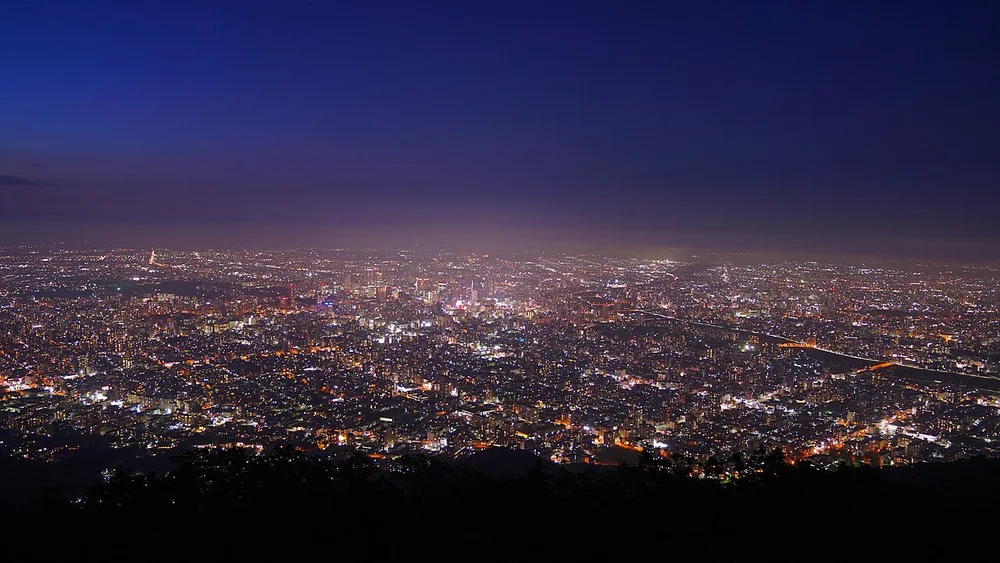
The appeal of Mount Moiwa is watching Sapporo’s streets change from daylight to a sea of lights. Leave later for a quick night view after dinner. For mountain outlines, sunset colours and city lights together, go up before dinner and remove a lengthy afternoon visit elsewhere. The operator’s congestion guidance estimates about an hour for a lower-station-to-summit return trip in smooth conditions, but over two hours during busy night-view periods. That starts at the lower station; add the tram, shuttle and walking from your hotel.
Keep an evening that can swap with another city activity. Spend the day in central Sapporo, check the summit live camera in the afternoon, then decide whether to go up. This handles flight delays or low cloud more easily than fixing Moiwa to your first night in Hokkaido. If a formal dinner matters more than photography, first choose between a city restaurant and a summit booking, then plan viewing around it. The tickets, arrival deadlines and descent timings differ considerably.
For a family’s first cable-car visit, start with arrival at the summit before sunset and descent once the night view has formed, followed by dinner in town. You can find your way in daylight, and children can see the forest and two different vehicles. If you stay up later and want a leisurely mountain dinner, give the summit the whole evening. Do not book a city restaurant immediately afterwards.
Plan both cable-car stages on Mount Moiwa, choose priority tickets and work around early autumn and winter sunsets. Includes family fares, THE JEWELS dinner with transport, cancellation charges and the return journey.
Know the three stations: tickets below, change midway, views at the summit
Mount Moiwa Ropeway Sanroku Station, at 5-3-7 Fushimi, Chuo-ku, Sapporo, is the lower entrance reached by tram connections, shuttle or taxi. Its facility page lists lifts from the first to fourth floors. Ticket sales and ropeway boarding are on the fourth floor. Go inside and upstairs after arrival, buy or exchange tickets, then join the boarding queue. Open your phone’s QR code inside rather than sorting the booking beside the road.
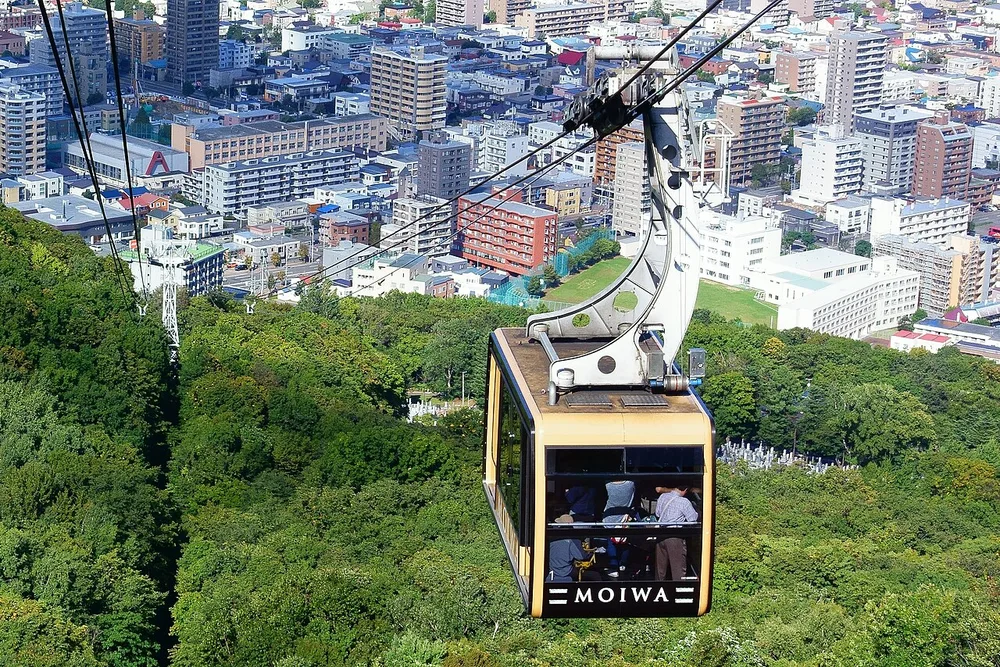
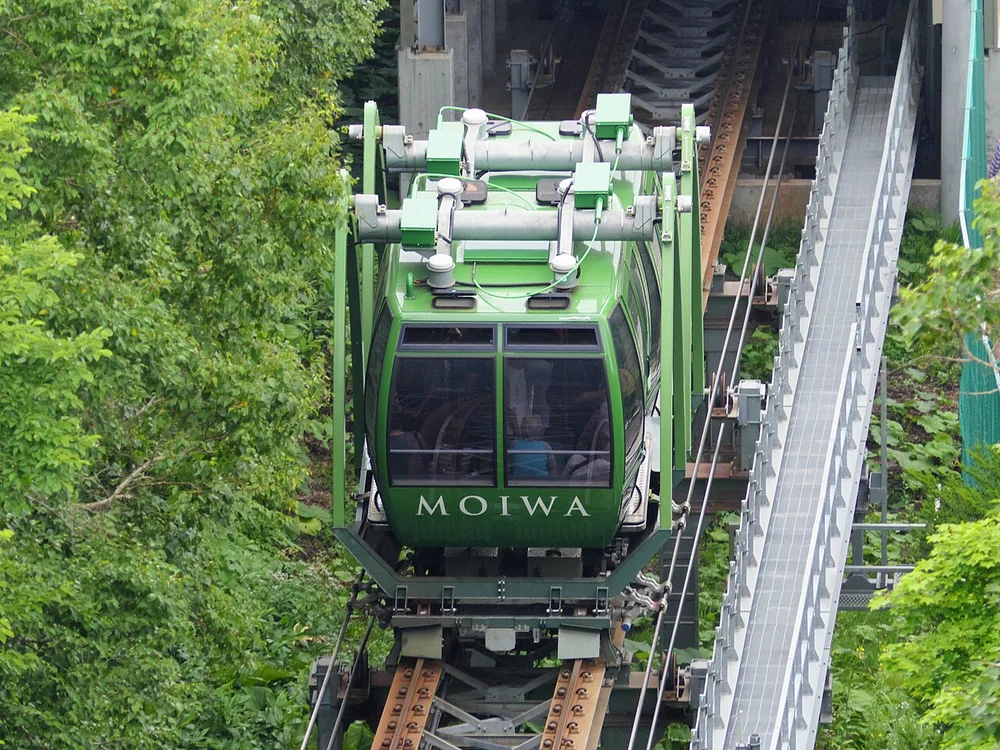
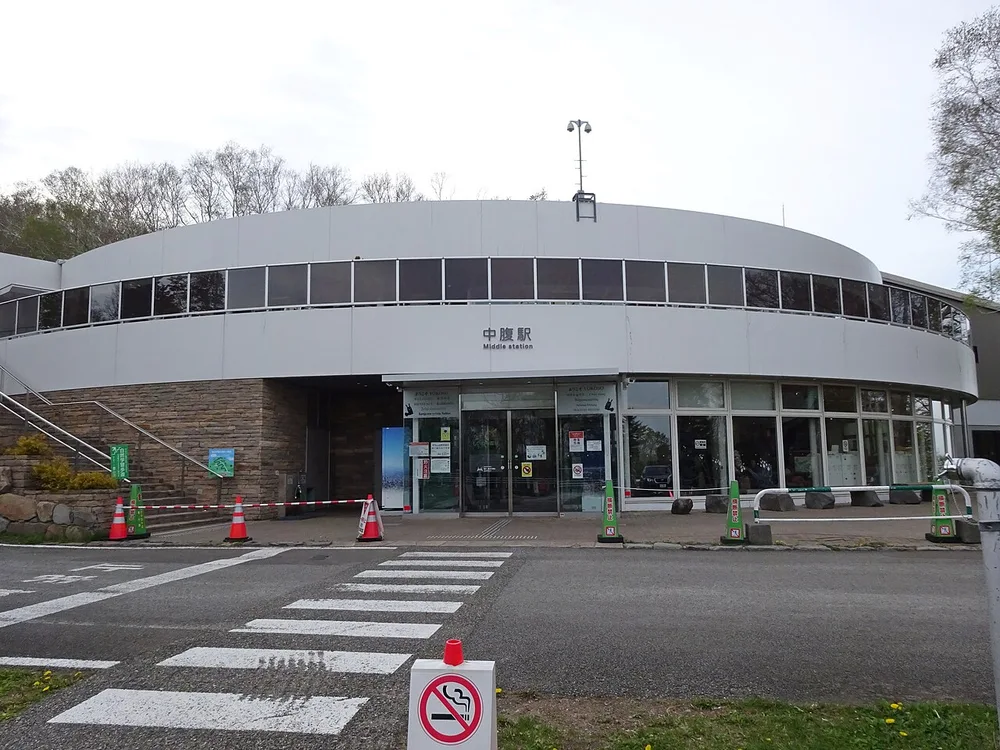
The first ropeway stage takes about five minutes from Sanroku to Chufuku Station. Change there to the Mini Cablecar for the summit. The Mini Cablecar facility page gives about two minutes for this stage and a combined capacity of 60 across its two carriages; the first ropeway holds 66. Capacities and waiting areas differ, so allow time at Chufuku even if boarding below goes smoothly. The Mount Moiwa summit observation deck is the destination for the 360-degree view. You still need to move through the summit building, use the lift and find a viewing position. Five plus two minutes measures only vehicle travel. Ticketing, queues, changing and reaching the railing all come on top. For sunset, define arrival as standing on the deck, not the ropeway departing.
Most visitors need a return ticket for both stages
If you arrive from town at the lower station and return there afterwards, the usual choice is the two-stage return ticket: ¥2,100 for adults and ¥1,050 for primary-school-age children and younger. Up to two preschool children per adult travel free. Two adults and one primary school pupil pay ¥5,250 in total. With a preschool child covered by the free allowance, the two adults’ tickets total ¥4,200. These examples cover only the return journey between the foot and summit; city transport and food cost extra.
The official site also lists adult return fares of ¥1,400 between Sanroku and Chufuku and ¥700 between Chufuku and the summit. The ¥1,400 price reaches only the interchange; adding the summit stage still totals ¥2,100. Visitors buying only the Mini Cablecar usually drive to Chufuku in summer. For public-transport arrivals at Sanroku, budget for both stages together.
There is also a combined one-way ticket at ¥1,050 for adults and ¥530 for children, intended for visitors with another planned way up or down. Deciding after a night view to save the return fare means walking mountain paths. Keep return transport in an ordinary city night-view plan. Group discounts require 15 people, and resident discounts require proof of a Sapporo address for each person. Standard fares are the simplest comparison for visitors. The official site has also announced that the senior discount ended on 31 March 2026. Budget for older relatives at the current standard fare or a disability fare if eligible.
Priority tickets reserve the first uphill stage
The operator-linked uphill priority ticket page offers specified departures between 17:00 and 21:00 on the date of use. Booking opens up to 90 days ahead; same-day sales end at 11:59. Exchange the booking for a paper ticket on Sanroku’s fourth floor 15 minutes before departure, then use the advance-booking route. This suits visitors committed to an evening departure who can reach the lower station on time. For autumn sunset colours before 17:00, use a ticket and boarding arrangement available during the day.
Priority applies to the uphill ropeway from Sanroku. The Mini Cablecar change at Chufuku and both downhill stages follow normal boarding procedures. For families concerned about queues, that distinction matters: it helps schedule the first ascent, but you still need time to queue down. A 17:00 reservation does not mean arriving at Sanroku at 17:00. Complete the exchange by 16:45, and allow earlier time for the shuttle arrival, entering the building and reaching the fourth floor.
Early or late arrival does not let you transfer priority to another departure. Change dates or times through the original seller; the product conditions say rescheduling is unavailable after 12:00 on the day. If weather suspension or admission restrictions prevent use, contact KKday customer service to request a refund. Save the confirmation, date, departure and exchange deadline together. If the itinerary is still changing substantially, decide whether you can keep the time before choosing priority booking.
Check the day’s sunset: the first weekday shuttle can be too late
The Moiwa homepage gives the day’s sunset and night-view times. For example, the National Astronomical Observatory of Japan’s Sapporo table lists sunset at 16:36 on 26 October 2026, while the first weekday free shuttle is at 17:17. By the time that shuttle leaves for Sanroku, sunset has passed. For sunset, take an earlier tram and walk, or use a bus or taxi that reaches Sanroku at your planned time. If the family wants only the free shuttle, choose the night view and avoid an afternoon rush to catch sunset.
Work backwards from sunset to set your arrival. Using the 16:36 example, you could aim to reach Sanroku at 15:00–15:15 to stand on the deck around 16:00. This allows 45–60 minutes below for tickets, queues and changes. Go earlier on busy days or choose the night view alone. Photographers can also identify viewing directions before the light changes rather than looking for a position at a crowded railing.
Long summer days may mean a lengthy wait between an early ascent and the night view. Families often find an early dinner below easier to fit around bedtime. In autumn and winter, early darkness allows dinner in town afterwards without staying on the mountain late. Sunset times on the operator’s monthly congestion calendar are for the first day of each month. Use the homepage’s information for your actual date rather than applying a month-start time to its end.
The operator’s summer promotional film uses material released in summer 2020 to show Mount Moiwa and Sapporo changing from daylight to night views.
From Odori or Susukino, allow for the shuttle or uphill walk
From Nishi 4-chome tram stop or Susukino tram stop, travel to Ropeway Iriguchi tram stop. The tram follows a loop, and platforms with the same stop name serve opposite directions. Check the next stop and direction on the route map before boarding to avoid the longer way round. From near Sapporo Station, first connect to the tram or compare a bus to Sanroku. Compare the whole hotel-to-ropeway journey rather than a single ride.
The operator lists about one minute on foot from the tram stop to the free shuttle stop, followed by about two minutes on the shuttle. Walking from the shuttle stop to Sanroku is about 0.5 km or ten minutes. This is the road to the lower entrance, not a hiking trail. In dry weather, with comfortable shoes and no large luggage, you can plan on walking this final stretch. With snow, a wheelchair or tired children, use an operating shuttle or a vehicle direct to Sanroku rather than turning saved waiting time into a difficult slope.
The free shuttle starts at 17:17 on weekdays, and at 10:17 in summer or 10:47 in winter on weekends and public holidays. It generally runs every 15 minutes, with individual gaps in the timetable. There are separate tables for each direction. Towards Sanroku, use the one for “Ropeway Sanroku Station”; downhill, use “tram Ropeway Iriguchi”. Save both boarding points on your map. In darkness, a saved stop is easier to follow than a memory of the daytime view from the window.
Tram fares and passes: a simple return is easy to price
The Sapporo City Transportation Bureau lists ordinary tram fares of ¥230 per adult journey and ¥120 for primary school pupils. Two adult journeys cost ¥460, below the ¥570 weekday adult day pass. Three journeys cost ¥690, when the day pass starts to save money. A tram day pass covers the tram; subway travel to Odori or Susukino and ropeway tickets are separate.
On Saturdays, Sundays, public holidays and 29 December–3 January, the ¥460 Dosanko Pass covers one adult and two children on the tram. For one adult and one primary school pupil making a return journey, ordinary fares total ¥700 versus ¥460 with the eligible-date pass. On the tram, each accompanying adult or primary school pupil may take up to four young children free on the same journey. This category is age one to under six, also including six-year-olds not yet in primary school; infants under one travel free. The ropeway instead allows two free preschool children per adult. Agree payment and boarding arrangements before leaving. Tram fares are paid when alighting. Top up transport IC cards before travelling; if one person pays for the family, tell the driver the adult and child numbers before paying. Leave large luggage at your accommodation and carry only what you need at the summit to make the change from tram to shuttle easier.
Buses and taxis: set the destination to Sanroku Station
The Mount Moiwa bus access page lists JR Hokkaido Bus loop Maru 11 from Maruyama Koen Station bus terminal to “Moiwayama Ropeway”, with a stated journey of about 15 minutes. This is worth checking if you are already around Maruyama in the afternoon and want to avoid the walk up from the tram stop. Check outward and return times together. After a formal dinner, you need a service still running then, not merely the daytime route with least walking.
The operator explicitly says similarly named loop services Maru 10 and Maru 12 do not stop at the Sanroku “Moiwayama Ropeway” stop; they use other stops such as Minami 19 Nishi 16. Open the final walking route if search results show a similar name. Some Keimei route 50 services from Sapporo Station reach Sanroku directly, but the attraction’s access page lists only three a day. Check a departure first and plan around it rather than expecting a frequent direct bus on arrival at the station.
A taxi suits groups, arrivals before the free shuttle starts or returns after convenient services have ended. Tell the driver “Moiwayama Ropeway Sanroku Station” in Fushimi, Chuo-ku, to distinguish it from the tram stop and sightseeing-road entrance. Fares depend on the actual starting point, traffic and meter. For two or three people, compare the whole taxi fare plus ropeway tickets against the family’s tram and subway costs. Allow time to call a taxi back; the mountain foot is not a city-centre station with a constant stream of empty cabs.
At the summit, look around before choosing where to wait
The summit observation deck has a 360-degree view. Walk around once to locate the city lights, mountain ridges and open views, then choose a place to linger. Waiting until it is dark to find a composition often puts you in the same crowd as new arrivals. Daylight shows the city and surrounding terrain; after dark the street patterns become bands of light. Both experiences fit into one return trip.
The Bell of Happiness is a place for a brief group photograph. Love locks are sold from a vending machine on the summit rooftop. Everyone need not wait outside for the same picture. Agree an indoor meeting point so some can rest while others watch the view. Secure bag straps and do not rest phones or cameras on the railing, leaving room for others to pass. The observation deck facility information lists lifts from basement level one to the rooftop and accessible public spaces. Families avoiding stairs can use the lifts and decide how long to stay outdoors once upstairs. Adjust coats, gloves and cameras indoors before going out. If cold upsets a child, shorten the viewing and prepare to descend rather than exhausting everyone for every angle.
With children or wheelchair users, plan queues, food and warmth together
The operator FAQ states that wheelchair users can take both the ropeway and Mini Cablecar to the summit. Sanroku and the observation deck also have lifts. Plan a full cable-car return journey and save energy for boarding, changing and viewing. At Sanroku, help anyone who needs it to reach the upper floor by lift while others handle tickets. Keep the family together during changes; children should not chase the previous departure, and someone should stay with a relative who walks slowly.
Free preschool allowances, child fares and restaurant children’s meals are separate items. Two adults with two preschool children may qualify for free cable-car places for the children, but restaurant reservations and food must still cover the real party size. Add the ¥1,050 return fare for a primary school pupil. Give each child’s age and school stage when buying, so the mountain ticket office, restaurant and tram apply their own rules rather than one universal “child” category.
For a proper meal, eat below first or reserve a children’s meal at the summit. The summit takeaway counter gives more flexibility for a snack before or after viewing, but has its own opening hours. Put toilet visits, coats, pushchair adjustments and the descent queue around the viewing, so dinner does not become a reward everyone waits for while hungry. The same applies to older relatives: shorter outdoor viewing and an earlier descent often feel better than adding another night-view stop.
Dinner at THE JEWELS: choose a course, then transport and seating
THE JEWELS is in the summit building, suitable for a formal dinner and night view in one place. The current official menu lists dinner courses including Éclat at ¥6,380, Lumière at ¥8,800, JEWELS at ¥12,100 and limited-quantity Brillant at ¥16,500, including tax. Dishes change seasonally. Choose by main course and budget first, then compare extra charges if a window seat matters.
The restaurant’s official reservation system says advance course-meal reservations include return ropeway and Mini Cablecar transport. Collect tickets on Sanroku’s fourth floor, aiming for 30 minutes before your reservation. Bring the booking confirmation to Sanroku to collect the included tickets and avoid buying another ordinary return ticket. Thirty minutes is the restaurant’s collection target; arrive earlier during busy periods. If you want sunset photographs before eating, put summit viewing before the meal.
Unspecified seating, window seats, Luxury and Premium seats have different arrangements. Designated seats cost extra; Luxury and Premium are for two people only. Parties of three or families should first choose a table that fits everyone. If an online reservation for five or more is difficult, ask the reservations centre. The system also asks everyone in the party to have the same course. State allergies, children’s ages and ingredients you cannot eat when booking, so menu requirements can be addressed before you ascend.
Children’s meals, takeaway and cancellation charges shape the dinner choice
The menu lists children’s curry with juice and ice cream at ¥1,100 and a children’s hamburger-steak set with juice, soup and ice cream at ¥1,540. Children’s meals are explicitly available at dinner too. For children who cannot manage a full French course, discuss these two options with the restaurant alongside party size. Adult evening à-la-carte options differ from children’s meals. Settle the whole group’s food first if dinner is the aim, then decide how long to stay at the summit.
THE JEWELS serves dinner 17:00–21:00, with last orders at 19:30. Lunch is closed on weekdays. On weekends and public holidays it starts at 11:30 in summer or 12:00 in winter, with last orders at 13:30. Full meal service pauses from 14:30 to 17:00. For drinks or a small bite, the takeaway counter starts at 11:30 in summer or 12:00 in winter; the operator lists closing at 20:30. Early sunset visitors arriving during the meal-service break should use takeaway or eat in town first, rather than assuming continuous restaurant service.
The restaurant cancellation policy charges 30% from three days before, 50% from the previous day and 100% on the day. The restaurant may also close when cable-car operations are suspended. Its booking system says it will contact guests by phone or email, so provide a phone number or email address you can use in Japan. For a weather-dependent night-view outing, dinner in town leaves more flexibility. For an anniversary dinner as the main event, treat cancellation charges, the course, ticket collection and descent as one booking decision.
Plan the descent from the summit Mini Cablecar queue
Many visitors leave together once the night view has formed. The official congestion page specifically warns of about an hour’s wait for the downhill Mini Cablecar. Count your return from joining that summit queue, not from already reaching the lower station. Descend earlier for a dinner booking you cannot miss. If you simply want a hot meal, a city restaurant with flexible seating is easier than a narrow fixed reservation.
The ropeway normally starts at 10:30 from April to November and 11:00 from December to March. In both seasons the last ascent is 21:30 and downhill operation runs to 22:00. The Mini Cablecar’s last uphill departure is 21:40, with the last listed summit descent at 21:50. These are separate operating limits, and you must still change back to the ropeway. For late travel, open both seasonal timetables and compare the summit departure with the Chufuku connection. “Open until ten” does not describe every return departure.
At Sanroku you still need the free shuttle to the tram and then the tram itself. The April–November shuttle timetable gives the last Sanroku-to-tram departure at 22:10 and the last tram-to-Sanroku departure at 21:02. Opposite directions have different last services. Trams also have different directions and termini, with some evening services ending partway. Check usable services back to your accommodation on the outward journey. To catch a particular departure, leave the deck with enough time for downhill queues, both rides, the change and the connection to the tram stop.
Two evening plans: dinner in town or the whole evening at the summit
For an early autumn sunset followed by dinner in town, rest at your accommodation or eat in the city in the afternoon, reach Sanroku early and be at the summit before sunset. Join the descent queue once the sky darkens. Back at the tram stop, choose whether to go straight to Odori or Susukino for food or return to the hotel for a warmer coat. This concentrates mountain time on the changing light, avoids a fixed restaurant deadline and may let children finish outdoor activities earlier.
For summit dinner, first choose THE JEWELS course and seating time, then decide on viewing beforehand. A 17:00 booking means collecting tickets at Sanroku by 16:30 under the restaurant’s instructions. To stand on the deck at 16:00, collect and ascend earlier still. Do not put a time-critical city activity immediately after dinner. Complete both downhill stages before connecting to a shuttle, tram or taxi. The restaurant and deck share the summit building, saving a descent and extra journey for dinner. For a later summer sunset, eat early below or choose a summit meal time that includes darkness. In winter, shift viewing to early evening, shorten outdoor waiting and return to the hotel after dinner. If some want long photography while others leave, agree separate return transport and tickets first so the whole group need not wait for one angle.
Driving: park below for both stages or drive midway in summer
The Sanroku car park charges ¥1,000 per ordinary car per visit and has 95 car spaces and five coach spaces. Park below and buy the two-stage return ticket to follow the same ascent as public-transport visitors. Without a parking waiver, two adults’ tickets at ¥4,200 plus ¥1,000 parking total ¥5,200, excluding car hire and food. The official driving page also lists free Sanroku parking for combined spending of at least ¥3,000 at the summit shop, restaurant and takeaway counter. THE JEWELS official booking page currently offers restaurant reservation guests free parking too; mention parking when paying. The sightseeing road toll is separate.
The Mount Moiwa Sightseeing Road reaches the Chufuku car park, not the summit. Its 2026 season is 24 April–20 November, with a ¥1,200 toll for an ordinary passenger car. From Chufuku, an adult Mini Cablecar return costs another ¥700. For two adults in one car these total ¥2,600. Compare that with parking below and riding both stages, including whether you want the ropeway experience. Also consider mountain-road driving and darkness on the way back.
The sightseeing road closes for winter from 21 November 2026 until around late April the following year. The Chufuku car park has about 80 spaces; entry is controlled at the road entrance when full. In winter you can still drive to Sanroku for the cable cars. Set navigation to the lower station rather than the closed sightseeing road. Transport included with advance restaurant courses covers the ropeway and Mini Cablecar from Sanroku. The booking page specifically says sightseeing-road users pay separately for the road and Mini Cablecar, so choose your entrance before booking.
For cloud, strong wind or maintenance, keep a workable evening in town
Before leaving, open the official Moiwa site and check the day’s operating notice, summit camera and sunset time in that order. Sunshine below can coexist with low cloud at the summit. Swap to another evening if possible. If only one day remains and seeing the city outline is the aim, use the live view to judge whether your chosen direction is visible. Adjust departure to the day’s operating notice when wind affects services; stay in town if suspension has been announced.
Both cable-car stages close on 31 December 2026 and 1 January 2027. Annual maintenance closure is announced for 29 March–28 April 2027. Remove Moiwa from those days’ New Year or spring plans and keep dinner in the centre. Do not improvise a night hike when services stop. Clothing, lighting and energy for a city night-view trip are usually planned for urban travel; return to transport and activities you can complete that evening.
A few useful answers
Can I take the free Mount Moiwa shuttle in time for sunset on an autumn or winter weekday?
The first weekday shuttle leaves at 17:17, which can be after sunset in autumn and winter. For an earlier arrival, take a taxi to the base station or take the tram to Ropeway Iriguchi, then walk uphill for about ten minutes from the nearby shuttle stop.
How much is a return ticket to the top of Mount Moiwa?
A return ticket for both rides costs ¥2,100 per adult and ¥1,050 for children of primary school age or younger. Up to two preschool children per adult travel free. Priority boarding is available on designated departures from 17:00 to 21:00 for the first uphill ride only.
Does dinner at THE JEWELS include Mount Moiwa cable car tickets?
Book a set menu that includes return travel on the ropeway and Mini Cablecar. Aim to collect the tickets on level 4 (4F) of the base station 30 minutes before your booking. The children’s curry (¥1,100) and children’s hamburger steak meal (¥1,540) are also served at dinner.
What time is the last ride down from Mount Moiwa?
The last Mini Cablecar leaves the summit at 21:50 and the ropeway from the mid-station runs until 22:00. Allow around an hour for the queue at the summit on busy evenings. From April to November, the last free shuttle from the base to the tram stop leaves at 22:10.
Official information and references
Sources used in this guide.
- Mount Moiwa: hours, fares and annual maintenance
- Mount Moiwa: tram and free shuttle
- Mount Moiwa: 2026 summer free shuttle timetable
- Mount Moiwa: congestion and downhill waiting
- Mount Moiwa: Sanroku Station and ropeway
- Mount Moiwa: Chufuku Mini Cablecar
- Mount Moiwa: summit deck and accessible routes
- Mount Moiwa: FAQ and parking
- Mount Moiwa: bus access
- Mount Moiwa: driving access
- Operator-linked KKday uphill priority ticket conditions
- KKday: Mount Moiwa uphill priority tickets and exchange rules
- THE JEWELS: current courses and children’s meals
- THE JEWELS: reservations and cancellation charges
- THE JEWELS official booking system: included transport and seating conditions
- Mount Moiwa: daily sunset, operation and official live camera
- Mount Moiwa: winter ropeway timetable
- Mount Moiwa: winter Mini Cablecar timetable
- Sapporo City Transportation Bureau: current ordinary fares and child age categories
- Sapporo Tourism Association: tram payment, Dosanko Pass and day passes
- National Astronomical Observatory of Japan: Sapporo sunrise and sunset table for October 2026