Start at moyuk's fourth-floor entrance to explore artificial seawater, library tanks, fish fins and penguins. Compare standard tickets, after-17:00 food packages and annual passes, with pushchairs, baby care, breaks and an Odori–Tanukikoji half-day.
- Region & Focus
- Sapporo
- Reading Scope
- 30 min read · 18 chapters · 7 Q&As
- Official Verification
- 11 official sources checkedUpdated 28 October 2026 at 09:36 GMT+8
- Key Topics
- ItinerariesTravel budgetHokkaido
Chapter Route Map (tap any stop)
- Choose day or evening, then set the duration by your interests
- Keep standard tickets, evening food packages and annual passes separate
- From purchase to the fourth-floor gate: entry slots do not limit your stay
- From Odori to moyuk: find the fourth-floor entrance and lifts
- Fourth-floor CONNECT: where seawater comes from in the city
- Raising animals and Siberian salamanders: connect care with growth
- Fifth-floor NATURE AQUARIUM: plants and small animals together
- LIBRARY AQUARIUM: use shape to read the tanks
- The updated fifth floor: compare ways of life through fish fins
- Sixth-floor penguins: watch land movement before entering the water
- PLANKTON ROOM and BLUE ROOM: live tanks and digital seascapes
- GREEN ROOM: birds, lizards and dinosaurs in one question
- Pushchairs, baby care and wheelchairs: plan a fifth-floor break
- Outside food is allowed throughout; croissants and drinks are on 6F
- A three-hour family route: understand on 4F, compare on 5F, rest on 6F
- Two hours after dinner: priorities first, then time to sit
- An Odori–Tanukikoji half-day: put shopping on one side of the visit
- Photographs and books: keep what you actually observed
- Quick Q&A
AOAO SAPPORO occupies floors 4–6 of moyuk SAPPORO beside Tanukikoji. Give part of an afternoon to aquatic plants, penguins and the work of raising aquarium animals. Choose daytime for animal activity. For a rest after dinner, lower evening lighting and the bakery and bar offer a different visit. Start on the fourth floor with how water reaches the tanks, go upstairs to the animals, then rest on the sixth. Two to three hours make a substantial stop.
Choose day or evening, then set the duration by your interests
For a first visit with young or primary-school children, arrive in the afternoon. Divide the visit into artificial seawater on 4F, plants and fish fins on 5F, and penguins on 6F, with a seated snack break. Allow two and a half to three hours including rests. Penguins and jellyfish alone can make a shorter visit of about 90 minutes. The route is free-flowing: you need not finish each floor before going up, and can return to a favourite tank.
Evenings suit visitors who have eaten a main meal and want aquarium time after shopping. The official day-and-night introduction explains that lighting is lowered at night and sleeping animals can be observed. Prioritise daytime for active penguins; at night, focus on resting postures, tank landscapes and changing light. Adults can choose a food package for a dessert or drink. With children, finish according to their usual bedtime.
Normal opening is 10:00–22:00, last entry 21:00. Arriving at 20:00 leaves two hours for a closer look at two floors. At 21:00, only one hour remains, so put your priority first. Last entry, closing and last food orders are separate times. Choose the route back to your accommodation first to establish your departure time. Children need not stay until closing to use the ticket fully.
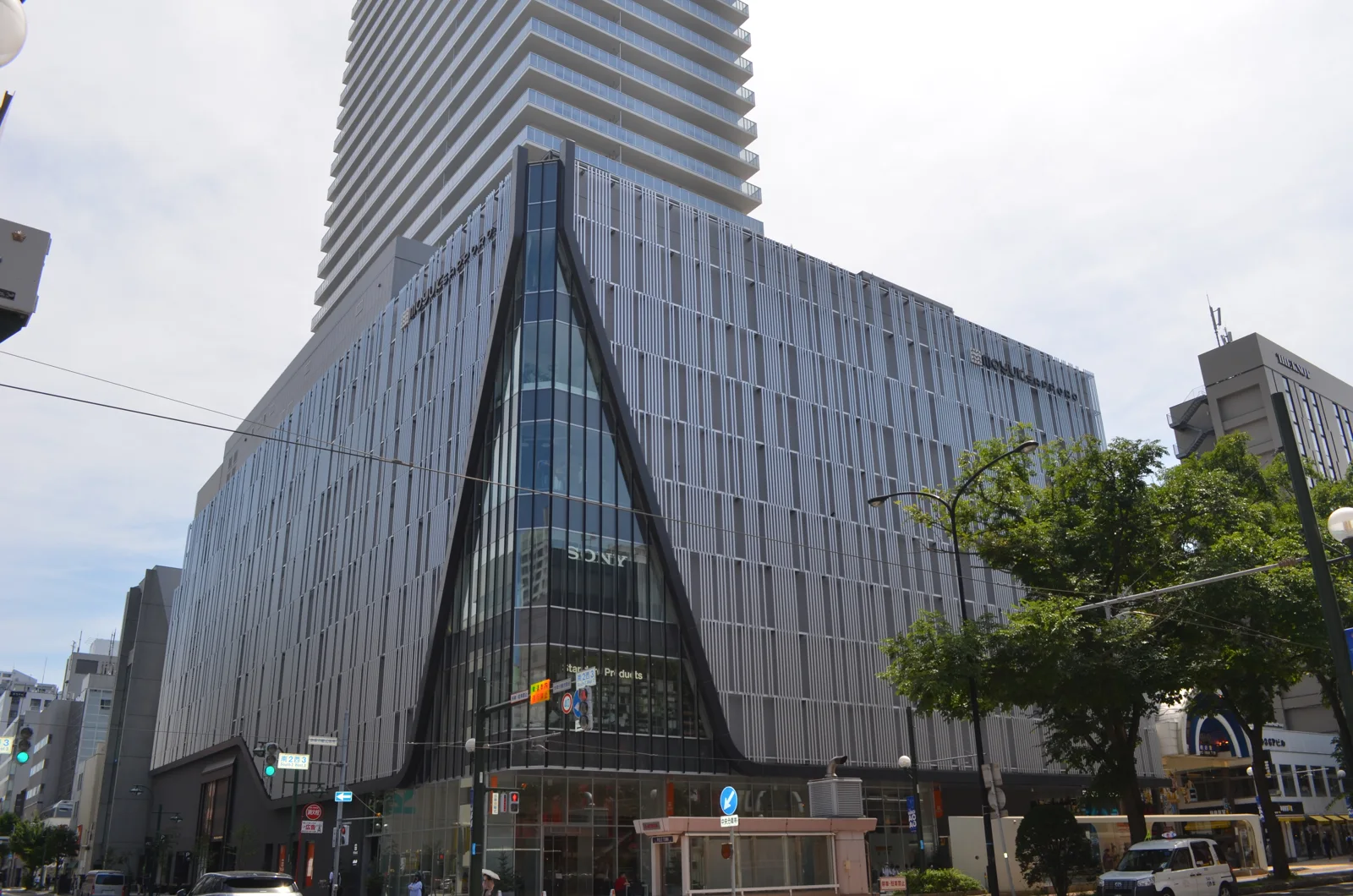
Start at moyuk's fourth-floor entrance to explore artificial seawater, library tanks, fish fins and penguins. Compare standard tickets, after-17:00 food packages and annual passes, with pushchairs, baby care, breaks and an Odori–Tanukikoji half-day.
Keep standard tickets, evening food packages and annual passes separate
The official ticket page currently lists tax-inclusive standard admission at ¥2,200 for upper-secondary pupils and older visitors, ¥1,100 for primary and lower-secondary pupils, ¥200 for preschool children aged three or over, and free below three. On 28 October 2026, the linked Asoview page for 29 October showed entry slots from 10:00 to 21:00 and an indicative price from ¥2,200. Use both age and school stage: a three-year-old does not need a primary-school ticket, and an upper-secondary pupil is not in the child category.
Two adults, one primary-school child and one three-year-old total ¥5,700: ¥2,200 × 2 + ¥1,100 + ¥200. If the youngest is under three, the total is ¥5,500. Budget separately for food and shopping. This is a useful starting combination for a single visit. A holder of a disability certificate meeting the aquarium's rules and one companion receive half-price admission; show proof at the 4F gate. The FAQ currently lists no additional general senior or student discount.
The online-only Waterside Night Owl Ticket is a separate package valid after 17:00: ¥2,500 for adults and ¥1,800 for primary and lower-secondary pupils, including specified food or drink. Listed choices include a seasonal finishing parfait or penguin parfait, Sapporo beer with mixed nuts, and glowing AOAO soda with a croissant. Choose an alcoholic combination if you want alcohol, or a non-alcoholic one for families. Read what each ticket includes before judging value. Preschool admission follows ordinary age categories; do not divide an adult package's contents across the whole party to calculate a discount.
Annual passes are a separate membership system. Aoao, Nichinichi and Yonayona cover all-day, daytime and evening admission respectively, valid for 365 days from issue. For one visit, start with a day ticket. Compare time restrictions, card issue and registration only if planning repeat visits. In particular, Yonayona is an evening annual pass, distinct from a one-visit evening food package. Read the full product name and validity period.
From purchase to the fourth-floor gate: entry slots do not limit your stay
Buy online in advance or get a same-day ticket from the aquarium's machines or counter. The FAQ says that once a slot's quota sells out, no same-day tickets for that slot are sold on site. Once lunch and naps are settled, a family can select its date and time. For a last-minute rainy-day change, check remaining options in the officially linked ticket list before going to 4F.
Tickets use entry slots, but there is no rotation clearing visitors out and no 90-minute stay limit. Keep the purchase email and QR code ready to open. Both parents should know where tickets are, so toilet trips or separate shopping are easier to coordinate. For different arrival times, the aquarium recommends separate purchases for each arrival. If already booked as one group but arriving separately, speak to staff near the information desk on the day.
Voluntary cancellation, refunds and changes to dates or numbers are not accepted, including partial refunds. Check date, category and party size before buying. If late on the booked day, speak to staff near information; they arrange admission in order during that day's business hours, with last entry still 21:00. For inability to arrive because of heavy snow or another unavoidable event, submit an individual enquiry through the official form. Distinguish late arrival from changing travel dates to know what to do.
From Odori to moyuk: find the fourth-floor entrance and lifts
AOAO's address is 20 Minami 2-jo Nishi 3-chome, Chuo-ku, Sapporo, on moyuk SAPPORO's floors 4–6. The official access page gives about three minutes on foot from Odori Station and one from the Tanukikoji tram stop. The shopping complex also gives about five minutes from Susukino Station. These estimates end at the building; add pushchair travel, lift waits and the ascent to 4F. Save moyuk or AOAO on your map, then follow floor signs inside.
Ticketing and entry start on 4F, which also contains the shop and book area. Identify the entrance, information desk and lifts or escalators for your return before entering the displays. With a pushchair or wheelchair, follow building lift signs, then ask staff on 4F about internal lifts. The FAQ confirms lifts and multifunction toilets. Treat the outside approach, ascent to 4F and internal floor changes separately so you can change to an accessible entrance if you meet stairs.
AOAO has no dedicated or partner car park. From Odori or Susukino accommodation, walk or use public transport. The shopping complex lists nearby parking, with benefits governed by each shop; budget parking separately for an aquarium visit. Large luggage that obstructs others is not allowed. On an airport-arrival day, leave cases at your accommodation first. Paid lockers are inside the aquarium, with none elsewhere in the complex. Do not assume you can bring a large case and find an empty locker.
Fourth-floor CONNECT: where seawater comes from in the city
The fourth-floor theme is CONNECT. The floor guide places the Water Circulation Lab here. Fish and penguins each have an artificial seawater unit, each producing about 3,000 litres at a time for distribution to display tanks. This is not a seawater pipe drawn in from the streets of Sapporo. Follow the steps of making, moving and maintaining seawater to understand tanks on the upper floors of a shopping complex.
Ask primary-school children where water for penguins and fish in the same building comes from. Look at equipment, pipes and explanations, then find the answers in upstairs tanks. Mechanically minded children may prefer this to rushing to the next animal. Adults can compare the seawater plant with later aquatic-plant tanks: one is work maintaining a marine environment, the other a different underwater living space. The visit covers more than tank appearance.
Raising animals and Siberian salamanders: connect care with growth
On the same floor, the Aquatic Life Lab displays reserve tanks for health management and work such as preparing animal food. Observe tank arrangements, food preparation and staff work areas, then read the explanations. This reveals care beyond the display animals without waiting for a scheduled show. Remain in visitor areas when staff are working. Children can ask when staff have time, rather than tapping glass for attention.
The 2026 update placed a Siberian salamander growth observation tank in the fourth-floor LABORATORY. The permanent-display announcement describes AOAO's conservation partnership with Shibecha, Hokkaido, and the stages from eggs to larvae and adults. Find the stage currently displayed and compare it with the others in the explanation. Growth becomes a change in body and way of life. Young children can look for outlines, primary pupils read stages, and adults read the conservation background. Before leaving, each person can name a difference, then continue to fish anatomy on 5F. The sections form a connected visit.
AOAO SAPPORO's 2024 record of a fairy penguin chick's birth. Alongside fourth-floor animal-care work and the Siberian salamander growth display, it offers another animal through which to understand care for young life.
Fifth-floor NATURE AQUARIUM: plants and small animals together
NATURE AQUARIUM in fifth-floor SCOPE presents underwater landscapes through aquatic planting. Step back to see the arrangement of plants, rocks, wood and space, then approach to find where small creatures stop. After following a fish, locate the foreground, middle distance or shelter it passed through. Attention shifts from one animal to its environment. Make this the main fifth-floor stop if you enjoy quietly looking at scenery.
Children need not name every plant. Ask whether a fish swims in open water or stops beside plants. Let them point, then watch whether it changes direction. This needs no contact with the tank or fixed schedule. Young children can find colours; primary pupils can compare swimming with cover. A sentence or two from a parent is enough. Every tank need not become a test.
LIBRARY AQUARIUM: use shape to read the tanks
The Room of Observation and Discovery combines tanks, explanations and books within display units, grouping animals through Japanese words that evoke their shapes and features. Choose a shape or feature you understand, then compare the animals, rather than reading every label from start to finish. With limited Japanese, begin with outlines, colours, body lengths and movement.
Spend half a minute looking before reading, and guess why the animals are grouped. A wrong guess still offers a new way to look. Primary-school children can sketch two creatures as simple lines and compare their most different parts. Adults can read a related display book or text more deeply. The area combines library reading with direct aquarium observation and rewards time at a few tanks. If splitting up, choose a visible seat or named area on the same floor, rather than meeting 'by the fish'. Note books you want and buy them at 4F WONDER BOOKS at the end, avoiding carrying purchases around the tanks.
The updated fifth floor: compare ways of life through fish fins
CO-WORKING AQUARIUM was updated on 24 July 2026 with fin-themed tanks. Listed fish include spotfin lionfish, mudskippers and African butterflyfish. Their different fins show adaptation to living conditions. The area now combines observation displays with its co-working name; plan it as a stopping area with fish tanks rather than relying on older descriptions of desks.
Start with what keeps the body pointing in a direction. Compare two tanks and watch which fins move as fish turn, stop or advance. Let children find the part first, then read its purpose. Varied shapes and postures extend LIBRARY AQUARIUM's comparison of form into movement. Science-minded families can give it another 20 minutes; visitors less interested in fish can simply compare two tanks.
For notes or drawing, use one page for fish name, body part seen and one movement. This leaves a memory without filming every tank at length. The aquarium also offers a WONDER SHEET learning booklet, announced at ¥300 in 2026, with questions about water, animals and aquarium work. Ask on site if you want one. Observation needs no additional booklet; younger children can play with one question.
Sixth-floor penguins: watch land movement before entering the water
Northern rockhopper penguins are a main feature of sixth-floor COMMONS. The official introduction highlights their habit of hopping with both feet together. Hexagonal land blocks allow the display's shape to be adjusted. First watch where penguins stand and how they cross height differences, then move to a position showing underwater movement. One animal offers two observation themes.
If a child fixes on a motionless penguin, ask which nearby birds are resting and which are moving. Let them find an answer rather than waiting for that one bird to jump in. Compare standing posture with swimming, instead of taking many identical photos. Take turns at a suitable viewpoint, keeping pushchairs and bags out of the passage so other families can approach.
The day-or-night choice matters most here. Daytime prioritises activity; evening offers rest and a darker environment. If movement is the family's main interest, do not leave penguins until last entry. A young child interested only in penguins can go directly from 4F to 6F, then return to 5F for a rest. The free route lets parents meet the main interest first and extend the visit according to the child's condition.
PLANKTON ROOM and BLUE ROOM: live tanks and digital seascapes
PLANKTON ROOM has 16 tanks of different sizes showing plankton, including jellyfish. Watch contraction and expansion first, then position relative to the current. Turn off flash and lights before photographing. Stay in one position for a while; as your eyes adjust, small outlines become easier to find. Children need not identify a species to notice one repeated movement.
BLUE ROOM uses digital imagery about the Shiretoko sea, with a screen about 20 metres wide and floor projection. After small-scale tank observation, it offers a larger marine scene. Image enthusiasts can stay longer; a child tired of light effects can rest nearby with one adult while another stays. Use different approaches: details for jellyfish, overall screen and floor changes for BLUE ROOM. Watch for other people's feet, pushchairs and belongings in the dark. With only 40 minutes left, see one area properly and sit down afterwards rather than rushing around every room.
GREEN ROOM: birds, lizards and dinosaurs in one question
After the July 2026 update, GREEN ROOM became the Room of Birds, Lizards and Dinosaurs, adding green-cheeked parakeets and models. The museum describes a bird enclosure about three metres high. The Dinosaur Wall, supervised by the Mukawa Town Hobetsu Dinosaur Museum, uses models and evolutionary relationships. Dinosaur-loving children can connect aquarium animals to natural history here.
Watch living birds first, then models and the evolutionary tree. Ask which forms look bird-like and which do not. Children can point to heads, feet or proportions before finding the explanation. Kamuysaurus links the models directly to Hokkaido's natural history, widening adult interest beyond appealing animals. Compare the displays rather than testing children on a long list of names. Family members interested in fish or dinosaurs can take separate short stops on 6F and meet at an agreed point. GREEN ROOM, penguins and jellyfish differ. For depth in all three, give 6F more time and choose two areas on 5F. Selecting by interest suits mixed-age families better than equal time on every floor.
Pushchairs, baby care and wheelchairs: plan a fifth-floor break
The aquarium does not rent pushchairs, so bring your own. It has lifts and multifunction toilets. Loan wheelchairs are limited and cannot be reserved. Keep water, nappy supplies and coats you may need to take out together so floor changes can go straight to the lift without searching a large bag in a narrow route. Wheelchair users can ask staff on 4F for the day's access guidance.
The fifth-floor baby-care area is within paid admission and includes a nursing room, nappy-changing table and children's space. With two adults, one can care for a younger child while the other explores plants or library tanks with an older child, then meet in the same place. Visitors only shopping in the complex should use its facilities; the aquarium's baby area is not a free shopping-centre rest stop.
Care needs change the order. See favourite penguins when a child has just woken and is alert. Near feeding or changing time, remain on 5F and deal with that before 6F. After parking the pushchair, adults can take turns holding the child for short observations. If tired, shorten the next area so dinner and the return still have room.
Outside food is allowed throughout; croissants and drinks are on 6F
AOAO permits outside food and drinks and allows eating on every floor. Bring a familiar snack, see 4F and 5F, sit down to eat, then continue upstairs. The whole family need not leave for a snack. Use covered containers, choose a position that does not obstruct viewing, and put food away before moving to keep tank-side passages clear.
Sixth-floor Shirokuma Bakery & serves croissants made with Hokkaido wheat, coffee, beer and bar food. The official shop page gives normal hours of 10:00–22:00 and last orders at 21:30. For an evening drink or parfait, order before your final display stop. Arriving at 20:30 and leaving food until after every area leaves little eating time. Redeem package items according to the purchased product.
The menu gives a concrete budget: an Aoao croissant at ¥480 plus coffee at ¥490 totals ¥970 for one adult, or ¥1,940 for two ordering the same. Compare these individual menu items separately with the specific food included in a ¥2,500 evening package. Eat a full dinner beforehand and keep the aquarium to snacks, or use a sixth-floor snack to sustain an afternoon family visit before a nearby meal.
A three-hour family route: understand on 4F, compare on 5F, rest on 6F
For a 14:00 entry, see artificial seawater and animal care on 4F until 14:25, then choose two of plants, LIBRARY AQUARIUM and fins on 5F until 15:15. Deal with child-care needs there. This is an editorial itinerary, adjustable around naps. The aim is watching, resting and watching again, rather than standing for more than two hours.
Sit for a snack 15:15–15:40, then go to 6F for penguins, GREEN ROOM and jellyfish. Take time from another area for BLUE ROOM. Finish around 17:00, then return to 4F for books or small items before leaving. Different interests readily separate on 6F, so agree where to meet. If children remain absorbed, eat later; if tired, go straight to the planned dinner.
Two adults with a three-year-old and primary-school child can divide tasks. Let the younger child find penguins and fish colours, the older choose a fin question, and adults alternate observation and rest. Nobody needs to read every explanation in three hours. Back at the room, choosing a favourite animal or drawing a movement gives the day a memory. Another evening attraction with a queue is unnecessary.
Two hours after dinner: priorities first, then time to sit
Adults can dine around Odori or Tanukikoji and enter around 19:30. Give 4F water and care work 20 minutes, spend half an hour on plants or library tanks on 5F, then go upstairs. Repeat visitors interested only in night-time penguins can go straight from the 4F gate to 6F and revisit earlier material only if interested.
Arrange a drink or parfait around 20:30, finish the last priority area before 21:00 and sit for the remaining time. Place extra food orders before 21:30. Standard tickets also permit evening entry. The evening package combines admission with specified food, so compare whether you want those items. After alcohol, walk or use public transport to your accommodation; each companion should save their return route.
Arriving just before 21:00 means a one-hour version. Go first to the preferred 6F areas: penguins and jellyfish, or GREEN ROOM and BLUE ROOM, then leave. For 4F equipment and 5F panels, arrive earlier. An evening visit can be quiet or simply a brief stop within a trip.
An Odori–Tanukikoji half-day: put shopping on one side of the visit
From Odori, have lunch and walk a short stretch of the neighbourhood you want to see towards moyuk. Make AOAO the afternoon's main activity, then eat near Tanukikoji. Buy large goods or many gifts first and leave them at your accommodation; keep after-dinner shopping small. Three aquarium floors already involve standing, reading and changing levels. One short block before and after is enough without crossing the whole shopping arcade.
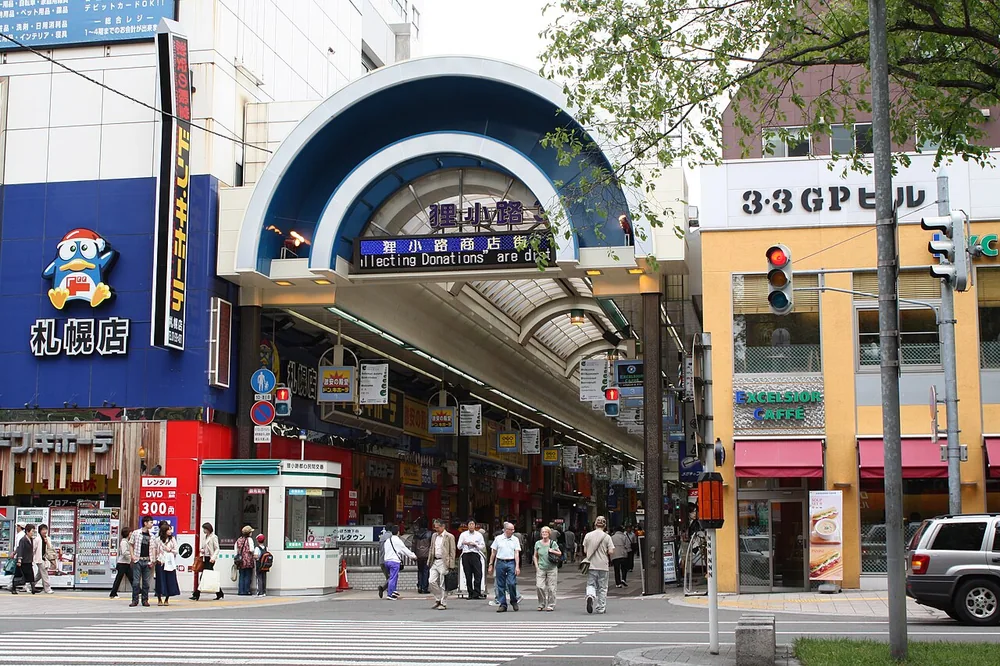
In rain or snow, reduce outdoor walking to necessary building connections and use the 4F entrance at moyuk. Read underground routes and lift exits with the four-day Sapporo and Otaru itinerary. Connect the aquarium, food and accommodation for this day. If weather improves, retain the pre-entry Odori walk but keep the planned aquarium duration, so an extended outdoor detour does not squeeze the tanks you want.
Ask staff before leaving if you need re-entry. A used QR code is not an automatic pass to return whenever you wish. For an ordinary family half-day, snack inside and eat a meal after leaving, reducing coat changes and entry procedures. Use the official re-entry arrangement if family members need separate meals or a trip to the room. Finish at the agreed meeting point and check tickets, phones and coats before continuing.
Photographs and books: keep what you actually observed
Personal souvenir photography is allowed, but flash, lighting, tripods and photographic support equipment are prohibited. Do not occupy space or disturb others with loud sound. Turn off camera and phone lights before approaching tanks, then give up the viewpoint after shooting. For a child's penguin picture, watch a movement together and choose one shot so the image connects to the observation.
Commercial or profit-making use of aquarium photographs and live streaming are restricted. Personal sharing must respect visitors' and staff privacy. If photography is work, obtain the aquarium's applicable permission first. For ordinary travel records, focus on your companions and tanks and choose a photograph that recalls the visit. In dark areas, simply watching is worthwhile. Fourth-floor WONDER BOOKS centres on natural science, with art and literature, original goods, Hokkaido sweets and wine too. A child newly interested in fins or dinosaurs can find further reading; adults can follow an interest in planted landscapes. Take a question from the visit to the shelves so this final stop follows the preceding two or three hours.
A few useful answers
How long should I allow for AOAO SAPPORO?
For a first visit, allow two and a half to three hours for three floors and a snack break. Penguins and jellyfish alone can take about 90 minutes. The aquarium does not limit your stay within opening hours.
Which tickets suit a three-year-old and a primary-school child?
Standard admission is ¥200 for preschool children aged three or over, ¥1,100 for primary and lower-secondary pupils, and ¥2,200 for upper-secondary pupils and older visitors. Under-threes enter free.
Is evening admission cheaper?
Standard tickets also work in the evening. The Waterside Night Owl Ticket after 17:00 costs ¥2,500 for adults or ¥1,800 for primary and lower-secondary pupils and includes specified food or drink. It is a different package from standard admission.
What is the latest entry time?
Normally 21:00, with closing at 22:00. Sixth-floor Shirokuma Bakery & takes last orders at 21:30.
What about pushchairs, feeding and nappy changing?
Bring your own pushchair; none are rented. There are lifts, and a nursing room, changing table and children's space inside the paid area on 5F.
Can I bring food and re-enter?
Outside food and drinks are permitted, and eating is allowed on all floors. Ask staff before leaving if you need re-entry.
Can I change or refund a wrong date or late booking?
Voluntary cancellations, refunds and changes are not accepted. If late on the booked day, speak to staff near the information desk for admission in order. Last entry remains 21:00.
Official information and references
Sources used in this guide.
- Official floor guide: three floors and tanks
- Official ticket prices and memberships
- Official ticket sales: standard, disability and evening food packages
- Official FAQ: admission, re-entry, baby care and photography
- Official day-and-night and free-route introduction
- New permanent displays in 2026: salamanders, fins and GREEN ROOM
- Follow-up announcement for the 2026 displays
- Official shops and dining: items, prices and last orders
- AOAO official address and access
- moyuk official access
- AOAO SAPPORO: a fairy penguin chick is born, the world's smallest penguin