Walk from Minami-Otaru Station to Otaru Music Box Museum, Kitaichi Glass, and Otaru Canal. Check Building No. 2 free concerts, Yukobo workshops, Kitaichi Hall lamp lighting, and glassblowing bookings.
- Region & Focus
- Otaru
- Reading Scope
- 24 min read · 9 chapters · 7 Q&As
- Official Verification
- 21 official sources checkedUpdated November 22, 2026
- Key Topics
- First tripNeighborhoodsWinter
Chapter Route Map (tap any stop)
- Arrive at Minami-Otaru and Walk Sakaimachi Street to Otaru Station
- Three Floors at the Main Building and the Steam Clock Outside
- Free Concerts at Building No. 2: When to Time Lunch
- Making a Music Box at Yukobo: Factor In Drying Time
- Kitaichi Glass Building No. 3 and the 9:00 JST Lamp Lighting
- Kitaichi Glass Studio: Choosing Between Sandblasted Glasses and Beads
- Only Two or Three Hours? Prioritize What Matters Most
- How to Audition Music Boxes and Pick Gifts That Travel Well
- Rainy or Snowy Days: Shorten Outdoor Walks and Save the Canal for Sunset
- Quick Q&A
On a first visit to Otaru Music Box Museum, get off at JR Minami-Otaru Station, start at Marchen Crossing, follow Sakaimachi Street past Kitaichi Glass to the canal, and catch your return train to Sapporo from JR Otaru Station. Anchor your schedule around the free antique instrument demonstrations at Building No. 2, or book Craft Studio Yukobo first if you want to make a music box and slot shopping and coffee before or after. Kitaichi Glass adds retail halls, a lamp-lit cafe, and a hands-on glass studio—early risers aiming for the 9:00 JST lamp lighting can start straight at Building No. 3.
Arrive at Minami-Otaru and Walk Sakaimachi Street to Otaru Station
Coming from Sapporo, set your outbound destination to Minami-Otaru and board your return train from Otaru Station, which sits closer to the canal. Both stations are on the JR Hakodate Main Line, and Otaru-bound trains stop at Minami-Otaru first. Since some Sapporo departures terminate early at Teine or Hoshimi, check the departure board for trains bound for Otaru and verify the stops before boarding. From New Chitose Airport, select Rapid Airport trains run directly to Otaru—again, confirm the final destination on the train. If you are connecting to a flight or an intercity train, see getting between New Chitose Airport, Sapporo, and Otaru.
Exit Minami-Otaru Station and head downhill to the left; the Otaru Tourism Association walking route estimates a 7-minute walk to the Main Building. Search your map app for "Marchen Crossing" (Marchen Kosaten)—once you spot the steam clock and brick facade, you are there. If you booked a workshop at Yukobo, save "Tezukuri Taiken Yukobo" at 1-1-5 Irifune, just steps from the Main Building. For Building No. 2, search "Otaru Music Box Museum Building No. 2 Antique Museum," because searching "Otaru Music Box Museum" alone often routes you to the Main Building or the Sakaimachi Store near the canal.
Starting from Otaru Station makes more sense if you already booked a canal cruise, want lunch near the station first, or plan to leave luggage in station lockers. Finish your station or canal plans, then walk south along Sakaimachi Street toward the Main Building. Keep in mind that walking back from the Main Building to Minami-Otaru Station goes uphill. In snowy conditions, or when traveling with older relatives or strollers, arriving at Minami-Otaru for the downhill walk and departing from Otaru Station takes much less effort. Factor in extra time to retrieve stored bags, or grab a short taxi ride back from the shopping street.
On a tight schedule, pick one unmistakable entrance as a regrouping point. If part of your group wants to browse Building No. 3 for glass while others catch a concert at Building No. 2, split up for one stop and meet at the Sakaimachi Street entrance of Building No. 3 before heading toward Asakusabashi Bridge and the canal. Anyone carrying heavy bags or fragile glassware can peel off toward Otaru Station early. To extend the day with the Former Temiya Line, a canal boat, or lunch by the station, match your pacing against a full-day Otaru Canal and Sakaimachi Street itinerary.
Walk from Minami-Otaru Station to Otaru Music Box Museum, Kitaichi Glass, and Otaru Canal. Check Building No. 2 free concerts, Yukobo workshops, Kitaichi Hall lamp lighting, and glassblowing bookings.
Three Floors at the Main Building and the Steam Clock Outside
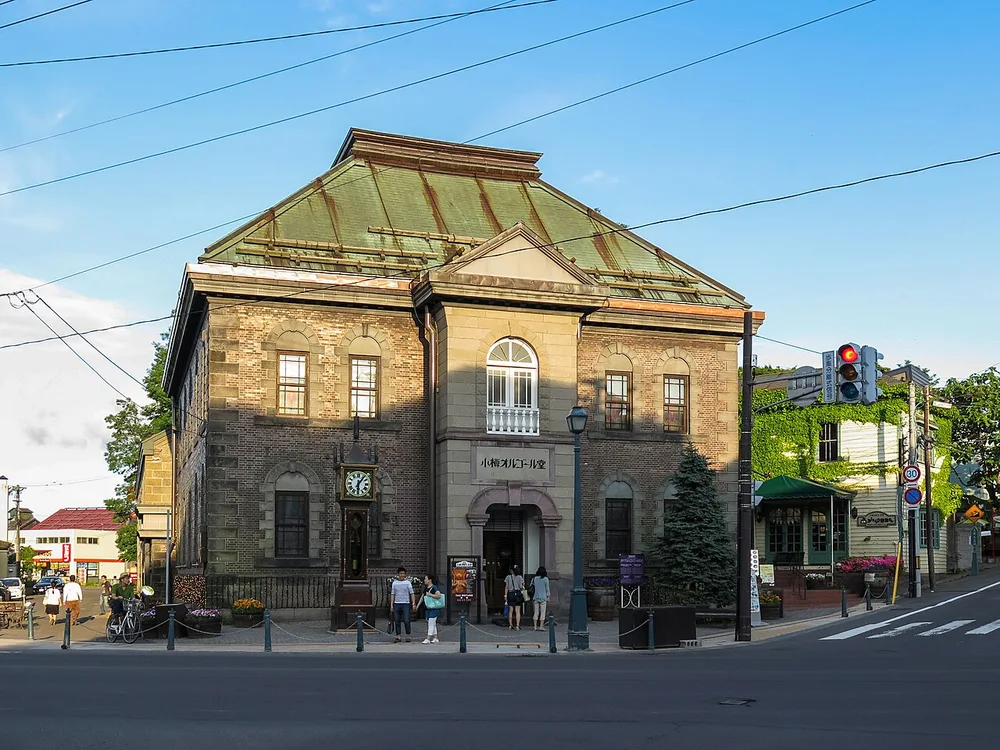
The Main Building at 4-1 Sumiyoshicho is typically open from 9:00 to 18:00 JST, with the second and third floors closing at 17:45 JST. Built in 1915 as the headquarters for rice merchant Kyosei Co., Ltd., it is designated as Otaru Historic Building No. 17. Look for the arched windows and brown brick exterior outside, then step inside and glance up along the columns to see the high atrium and second-floor gallery. If you only have 20 or 30 minutes, stick to the ground floor, sample a few music boxes, and step outside once for the steam clock.
Near the front of the ground floor you will find jewelry boxes, kaleidoscopes, and Japanese designs including Aizu lacquerware. The center of the floor carries more casual picks—glass, wooden, illuminated, and kinetic boxes grouped together. If you want an everyday keepsake box for a bedroom shelf, narrow down your melody and size options on the ground floor first. Travelers hunting character merchandise or animal figurines should head straight to the third-floor Yume no Oto and animal goods section, where the exposed roof trusses are also visible overhead. If everyone is browsing different floors, meet back at the ground-floor entrance rather than trailing behind one another display by display.
If the mechanical movements interest you, save some quiet time for the second floor. The high-end corner features Japanese ORPHEUS and Swiss REUGE models along with custom orders. Toward the back on the front side sits a working historical display tracing the evolution of music boxes; ask a clerk if you want to see it run. From the gallery railing, you can also look down over the lights and displays on the ground floor. Arriving late in the afternoon with an eye on a collector piece? Head up to the second floor first so you have time to listen and ask about prices before it closes at 17:45 JST.
The steam clock out front was installed in 1994 by Raymond Saunders, the same clockmaker behind Vancouver's Gastown steam clock. Standing 5.5 meters tall, the Otaru clock runs on an electric dial while an internal boiler feeds steam to five upper whistles every 15 minutes. To catch a performance, simply aim for the top of the hour or any quarter-hour mark. If you have time to kill beforehand, browse near the entrance and step back out right before the chime. Both the whistles and steam plumes rise from the very top, so keep the crown of the clock in frame when shooting video.
To capture both the Main Building entrance and the steam clock in one shot, shoot from the pedestrian space across the intersection so the spatial layout reads clearly. If you only want to hear the whistles, stand off to the side of the entrance, clear of the corner and doorway traffic. For kids sensitive to loud sounds, watch the steam from the outer edge of the crossing and move along once they have heard a cycle. If someone in your group would rather skip the wait, let them browse the ground floor while the photographers step out just before the next quarter-hour chime, then regroup to head down Sakaimachi Street.
Free Concerts at Building No. 2: When to Time Lunch
The Antique Museum at 6-13 Sakaimachi usually stays open until 18:00 JST and charges no admission. Six regular demonstrations run daily at 10:00, 11:00, 12:00, 14:00, 15:00, and 16:00 JST, each lasting 15 minutes. Notice the midday gap: if you wander in after 12:15 JST, the next show is not until 14:00 JST, which makes that window ideal for a sit-down lunch, glass shopping, or waiting for workshop glue to dry. If you arrive after 15:00 JST, treat 16:00 JST as your final chance and head here before browsing Building No. 3.
Staff introduce each antique instrument during the demonstration. One highlight is the 1908 Aeolian pipe organ—originally installed in a Yorkshire manor in England—played live using perforated paper rolls. The visible pipes across the front are purely decorative; roughly 690 air-blown pipes hidden inside produce the actual sound. Visiting with kids, challenge them to spot where the paper roll feeds in, identify the dummy pipes, and listen for when the sustained organ notes enter.
Cylinder music boxes pluck tuned steel combs with tiny pins set on a rotating drum, while disc music boxes read melodies from interchangeable metal discs driven by gears—both are easy to tell apart in the display cases. During the concert, pay attention to how those crisp, plucked notes stack into chords once a machine winds up, and how starkly they contrast with the sustained breath of the pipe organ. The whole program stays well under an hour. If some of your group want to study the automated instruments while others just want souvenirs, split between the exhibit hall and the attached shop once the demonstration wraps up.
When buying a music box to take home, always audition the exact box you intend to buy. The museum's room-sized antiques have entirely different acoustics, housings, and scale than a tabletop box, so the concert hall sound will not help you judge a modern movement. If your sole goal in Otaru is picking up a specific song for a friend, head straight to the Main Building or the Sakaimachi Store near the canal. Save Building No. 2 for when you actually want to hear the antique instruments and linger over the exhibition afterward.
Making a Music Box at Yukobo: Factor In Drying Time
To choose your own song and figurines freely, book the Topping Free workshop. Your reservation secures a seat, and you pick your base, melody, and miniature ornaments at the studio—Yukobo estimates prices starting around ¥4,000, depending on the base and decorations selected. Dry-fit everything on the lid first and check that your hand clears the winding key and hinges before gluing pieces down. Selecting parts and assembling takes 30 to 90 minutes, followed by roughly 30 minutes of drying time before you return with your claim ticket. Slow shoppers can easily spend two hours from start to pickup.
If you want a predictable budget and schedule, book a Topping Kit instead: ¥2,700 for the round white base, ¥3,000 for a hand-crank box, ¥3,300 for the clear dodecagonal box, or ¥5,500 for the illuminated dome. You select the box style, melody, and decorative sand color on the booking form, with song choices tied to each kit. If a family wants the same tune in different box styles, look at the overlapping song options before booking. Assembly takes around 30 minutes plus 30 minutes to dry. Kits must be reserved at least one day in advance (phone bookings only within three days of the workshop), whereas Topping Free accepts same-day walk-ins only when seats remain open.
Because both classes involve small parts and strong adhesives, they are geared toward elementary school age and older; Yukobo requires elementary students and younger to craft alongside a guardian. With younger kids, let them pick the melody and place the figures while an adult handles the glue and tiny pieces. If two children want separate boxes, register both crafters on the booking. Anyone who just wants to watch can step over to the Main Building during the 30-minute drying window to see the steam clock while one person collects the finished boxes and meets everyone near Kitaichi Glass.
To assemble the musical mechanism itself, choose the Movement Assembly course, open to junior high school age and up. Sessions typically run at 9:15, 11:00, and 15:00 JST, capped at 6 participants per slot. Pricing is ¥3,300 for an acrylic frame, ¥3,630 for an open-top wooden box, ¥3,960 for assembly with decoration, or ¥6,160 for a designated natural or brown wooden box. You choose your song and case when registering, then fit the spring, align the steel comb against the pinned cylinder, and mount the movement inside the case. Mechanism-only classes take about 60 minutes with immediate pickup; adding decoration takes roughly 90 minutes plus 30 minutes to dry.
Movement Assembly and stained-glass classes are suspended from November 20 to 24, 2026, December 20, 2026 to January 15, 2027, and February 1 to March 31, 2027. If you plan to craft a music box over New Year's or in February or March, check availability for Topping Free or Topping Kit sessions instead. Yukobo closes at 18:00 JST with last workshop entry posted at 16:30 JST. To take your box home the same day, leave enough cushion for crafting and pickup—especially for Topping Free, which should never be squeezed into the last evening slot.
Yukobo also runs a glass-fusing class taking 15 to 30 minutes for ¥2,200 plus shipping; you arrange glass beads on a base, the studio fires it in a kiln, and the finished piece is mailed later. Their stained-glass night light workshop runs about 3 hours or more, enough to anchor an entire half-day on its own. For sandblasted glasses, go to Kitaichi Glass instead—Yukobo's sandblasting equipment is currently out of service. If leaving Otaru with your finished craft in hand matters most, stick to Yukobo's music boxes or small accessories at Kitaichi's studio.
Kitaichi Glass Building No. 3 and the 9:00 JST Lamp Lighting
Search for "Kitaichi Glass Building No. 3" (Sangokan) at 7-26 Sakaimachi. Housed in the 1891 Former Kimura Warehouse, once used for fishing storage, the building connects directly to Kitaichi Glass's origins in kerosene lamps and marine gear—its predecessor began blowing glass fishing floats in 1910. The Country Floor inside Building No. 3 still displays oil lamps and glass floats, and seeing them inside the stone-and-timber warehouse explains their Otaru roots far better than snapping a quick photo of the sign outside. Before buying either as decor, picture where it will sit at home and how large a piece you can safely carry back.
Browse Building No. 3 by section—Japanese, Country, or Western—depending on whether you want sake cups, everyday tumblers, or lighting fixtures. To compare facet cuts, clarity, and light refraction, stop by Kitaichi's Crystal Hall at 6-7 Sakaimachi as well. When a glass catches your eye, check the thickness of the rim, hold the empty cup, and estimate how much liquid it holds for your usual drink. If you plan to visit several showrooms, jot down item codes, prices, and store names as you go, then return to buy your favorites last instead of lugging fragile bags down the street.
Inside Building No. 3, the Kitaichi Hall cafe opens from 9:00 to 17:30 JST, with food and drink orders taken from 9:30 to 17:00 JST. Arrive between 9:00 and 9:30 JST to watch staff light all 167 oil lamps one by one from a designated viewing area; entry is first-come, first-served and capped once the space fills. If your companions just want coffee under the warm glow of the lamps, skip the opening rush and come back after visiting the Music Box Museum or a concert. Full meals at Kitaichi Hall are normally served only on Thursdays, Saturdays, and Sundays from 11:00 to 14:50 JST, so plan lunch elsewhere on other days and treat this stop as a drink or dessert break.
The lamp lighting happens early, making it an easy pairing for early starters: catch the 9:00 JST lighting, stroll over for the 10:00 JST concert at Building No. 2, and grab a hot drink along the way. If you reach Otaru closer to noon, there is no reason to force shopping and a cafe break into the same stop—lock in the 12:00 JST concert or a booked workshop first, then decide between glass shopping or drinks. Mixed groups can easily split up here too, with coffee drinkers waiting near the Building No. 3 entrance while shoppers finish browsing and loop back.
Kitaichi Glass Studio: Choosing Between Sandblasted Glasses and Beads
Kitaichi Glass Crafting Studio sits nearby at 7-8 Sakaimachi. For a practical souvenir you will use daily, book sandblasting: pick a glass and adhesive stencils, lay out your design, and frost the exposed surface in a sandblasting cabinet. Kitaichi can also sandblast select glassware bought at its other Otaru branches—just ask a clerk to verify the shape before walking it over. Otherwise, choosing your glass right at the studio saves an extra trip and keeps your total workshop bill transparent.
The quick sandblasting course runs about 30 minutes solo: a ¥1,200 workshop fee, glasses starting at ¥1,800, and three stencils at ¥80 to ¥150 each. Crafters who want to layer patterns or carefully space lettering can take the longer 40-to-90-minute session for a ¥1,300 workshop fee plus glass and stencils—the studio estimates about 45 minutes when applying four stencils. In a group where everyone makes their own glass, choosing shapes and arranging designs takes noticeably longer than solo work, so leave extra breathing room before your next stop.
For two people each making a quick sandblasted glass with the lowest-priced cup and three base-tier stencils, expect ¥3,240 per person, or ¥6,480 total—simply add the price difference for larger or pricier glassware. Families watching their budget can share a single glass decorated with initials, the trip date, or one pattern picked by each person. If kids want to make and keep something of their own, letting each child craft a small glass bead accessory keeps you from hauling home multiple fragile tumblers.
For a compact, lightweight keepsake, try the Glass Bead Arrangement (Tonbodama Arrangement) class, pairing pre-made glass beads with hardware to build a hair tie, necklace, charm, or bracelet. Hair ties take roughly 15 minutes (¥200 workshop fee plus ¥60 for findings, with beads priced individually from ¥80 to ¥2,000); charms take about 30 minutes, and bracelets around 50 minutes. Decide how you will wear or hang the piece first, pick your focal bead, then match accent colors. Note that glue on leather-cord necklaces takes about 24 hours to cure, so pick a clasp or jump-ring style if you want to wear it for photos right away.
Standard bookings are accepted by web form, phone, or email until 17:00 JST two days prior, by phone one day ahead, or as same-day walk-ins when seats allow. If you need a morning slot, wait for the studio's confirmation email before locking in other timed tickets. The last regular sandblasting session starts at 15:00 JST and the last bead session at 15:15 JST. In the afternoon, pick your priority between the studio and Building No. 2—a 15:00 JST craft slot collides directly with the 15:00 JST concert, making it far smoother to finish crafting first and walk over for the 16:00 JST show.
Only have time for one class? Choose Yukobo for a playable keepsake, Kitaichi's glass beads for fast crafting and light luggage, or sandblasting if you genuinely have space for a drinking glass you will use at home. Doing both takes careful sequencing: book Yukobo in the morning, fill the drying break nearby, pick up your box, and continue to Kitaichi—or reverse it by crafting small glass pieces in the morning and saving the longer music box session for afternoon. Midday gives kids a proper lunch break and gives adults time to wrap finished crafts safely into carry bags.
Only Two or Three Hours? Prioritize What Matters Most
Shoppers should aim to reach Minami-Otaru around 10:00 JST, walk to the Main Building for the next quarter-hour steam clock chime, audition two or three boxes, and continue to Building No. 2 for the 11:00 or 12:00 JST concert. Browse Building No. 3 afterward if glassware interests you, or simply follow Sakaimachi Street straight to the canal. Keeping paid reservations off the calendar leaves lunch flexible and lets you linger wherever you like. Running behind schedule? Put Building No. 2 first so you catch the live performance, then backtrack for shopping if time allows.
For a workshop-first half-day, build the schedule around your class block. With an 11:00 JST Topping Kit booking at Yukobo, you finish assembling around 11:30 JST and pick up the dried box around 12:00 JST—the exact start time of the noon concert. To keep both stress-free, aim for the 14:00 JST concert after lunch and pickup, or catch the 10:00 JST concert before crafting. Because Topping Free takes longer, its drying window pairs best with browsing one nearby shop. Avoid trekking all the way to the canal and looping back for one missed store, or you will haul fragile boxes across the same stretch twice.
If you leave Sapporo after lunch, choose two stops among Building No. 2, the Main Building, and Kitaichi Glass so you still reach the canal in daylight. Companions hunting quick gifts can also walk from Otaru Station to Asakusabashi Bridge and drop into the Otaru Music Box Museum Sakaimachi Store at 1-21 Sakaimachi, which houses the OTARU MUSIC in-house workshop just steps from the canal—skipping Marchen Crossing entirely. Anyone set on seeing the historic brick Main Building and steam clock, however, should start directly at Minami-Otaru Station.
Beyond the morning lamp lighting, the Kitaichi Venetian Art Museum at 5-27 Sakaimachi offers another timed indoor stop, open 9:00 to 17:00 JST with last admission at 16:30 JST. Admission is ¥700 for adults, ¥500 for high school and university students, and ¥300 for elementary and junior high students; note that the museum closes on November 30, 2026 for exhibition turnover while its ground-floor shop remains open. Skip the ticket if buying glassware is your main goal, or pay to explore Venetian glass art and period interiors. Photography is prohibited in the galleries, though families may take photos in front of the gondola on the first floor.
How to Audition Music Boxes and Pick Gifts That Travel Well
If you have a specific tune in mind, start with the title. Japanese store tags—especially for anime themes, film scores, and classical pieces—may appear only in Japanese or under slightly different phrasing than English listeners expect, so keep the original title and artist pulled up together on your phone to show staff. Once you locate the melody, ask a clerk to play the exact box you are buying so you can verify which phrase of the song plays and whether the arrangement matches what you expect. Shopping for a fan of a particular character? Start on the third floor to narrow the designs, then pick a box size that fits where it will be displayed.
When comparing two boxes, listen to both in a similarly quiet spot. Pay attention to the sustain, the bass notes, and whether you enjoy the tone with the lid open. Wood, glass, and clear acrylic housings resonate differently, and many boxes sound noticeably fuller resting on a table than held in your palm. If other shoppers are winding boxes around you, note your top two choices on your phone and ask staff to play them one after the other—comparing either two arrangements of the same tune or two songs inside the same style of box.
Check the winding mechanism before buying for kids. Hand-crank models only play while turned, which appeals to children who like controlling the tempo, whereas wind-up boxes play continuously on their own for bedroom listening. For a jewelry box that will mostly stay shut, check the interior compartment layout and where the winding key sits underneath. On the second floor, ask clearly which collector models can be auditioned, which items are in stock to take home that day versus custom-ordered, and what packaging and after-sales contact details come with high-end pieces before committing to a custom build.
When buying both glassware and music boxes, decide early who is carrying what. Kitaichi Glass packs its own glassware and offers simple ribbons, gift cards, and Japanese noshi wrapping, along with paid shipping services. If your purchase depends on international shipping—or if you need Yukobo's kiln-fused glass mailed to an address in Japan or abroad—have staff confirm eligible destinations and postage fees before paying. Travelers switching hotels the next day should match delivery dates to their check-in schedule, while one-night visitors catching early trains are much better off sticking to compact music boxes or glass beads instead of bulky glassware.
If you plan to carry glassware onto your flight, ask the counter to wrap it for hand luggage and label each box clearly. Back at your hotel, pad music boxes and glasses separately so cartons cannot knock against each other, and keep drink bottles or heavy snacks out of the same tote bag. Buying multiple similar-looking gifts? Mark each outer box with the recipient's name or song title as soon as you buy it so you never have to unwrap professionally packed glass at home just to tell them apart.
Under Japan's updated tax-free rules taking effect November 1, 2026, shoppers pay the tax-inclusive price at checkout, show their passport at participating stores, and have Customs inspect the registered goods when departing Japan within 90 days of purchase before the retailer issues the consumption tax refund. Ask at the register how your refund will be credited. If you plan to ship purchases abroad while also claiming tax-free status, raise both requests upfront—exit procedures require proof that the goods leave Japan with the traveler, and you should carry enough yen to cover the full tax-inclusive total at the counter.
Rainy or Snowy Days: Shorten Outdoor Walks and Save the Canal for Sunset
In rain or snow, break outdoor stretches into short hops. Walk from Minami-Otaru straight to the Main Building—if wind whips across the plaza, duck inside right away and move to Building No. 2 just before the next concert. Leave purchased glassware wrapped at the shop to collect on your way past later. Slow down on the downhill slope from Minami-Otaru and at snowy crosswalks, where grippy winter boots matter far more than squeezing in one extra store. If a blizzard hits or slush freezes into black ice, skip the canal walk altogether and head straight back to the station from Sakaimachi Street.
For the 2026–27 winter season, Otaru's Blue Canal runs from November 1, 2026 through January 31, 2027, illuminating the stretch between Asakusabashi Bridge and Chuo Bridge from sunset until 22:30 JST. Wrap up shopping and collect held packages before dusk, then walk out to Asakusabashi Bridge from the north end of Sakaimachi Street. Arrive right around sunset to catch blue reflections before the sky turns pitch black, or eat dinner first and stroll past the lit canal afterward with your return train times saved on your phone.
February visitors catch a different winter event: the 2027 Otaru Snow Light Path is scheduled for February 6 to 13, separate from the Blue Canal dates that end in January. To pair daytime craft shops with the evening lanterns, arrive in the afternoon and anchor your visit around the 16:00 JST concert or an earlier glass workshop. Remember that Yukobo's Movement Assembly class is closed in February, so budget time and money for a Topping Kit or Topping Free session instead.
Traveling with a stroller or wheelchair, cluster nearby stops into a single short block. The Kitaichi Venetian Art Museum has an interior elevator reaching its exhibition floors, though its exterior entrance ramp is removed in winter because of snow and ice. For baby changing facilities, Kitaichi Glass lists women's restrooms at Crystal Hall and on the first floor of the Venetian Art Museum; visitors needing the museum's third-floor accessible restroom should let the first-floor desk know. In rough weather, keep the walk flexible—a quick look at the steam clock, one shop, and a warm cafe—letting everyone's footing decide how far to go.
Staying overnight in Otaru lets you split indoor reservations from weather-dependent strolling: tackle shopping, concerts, and workshops on day one, then save a clear morning for the canal and historic warehouses. If you want to make the 9:00 JST lamp lighting or stay late for the canal illuminations, choosing a hotel by Otaru Canal or Otaru Station directly cuts down trips back to drop off bags or haul luggage the next morning. On a day trip from Sapporo with dinner reservations back in the city, count backward from your train departure to decide which bridge to turn around at, leaving plenty of margin for the walk back to the station.
A few useful answers
Which station is closest to Otaru Music Box Museum?
For the Main Building, take the train to JR Minami-Otaru Station, exit to the left, and walk downhill for about 7 minutes. From there, continue along Sakaimachi Street through Kitaichi Glass to Otaru Canal and JR Otaru Station—an ideal half-day route for a round trip from Sapporo.
Do you need tickets for the concerts at Otaru Music Box Museum Building No. 2?
Admission is free. Regular demonstrations are scheduled at 10:00, 11:00, 12:00, 14:00, 15:00, and 16:00 JST, with each session lasting about 15 minutes.
Does the steam clock only chime on the hour?
The steam clock outside the Main Building plays a melody on its steam whistles every 15 minutes. To frame both the clock and the Main Building facade together, step across to the pedestrian areas on the opposite side of Marchen Crossing.
Can you walk in on the same day to make a music box at Yukobo?
The Topping Free class accepts same-day walk-ins when seats are open; crafting takes 30 to 90 minutes, plus about 30 minutes for the adhesive to dry. Topping Kit classes require booking at least one day ahead (phone only within three days of your visit). Movement Assembly runs on fixed session times and has scheduled blackout dates.
Where do you watch the Kitaichi Glass oil lamp lighting?
Go to Kitaichi Hall inside Kitaichi Glass Building No. 3 at 7-26 Sakaimachi. Lamp-lighting viewing runs from 9:00 to 9:30 JST on a first-come, first-served basis from a designated area while staff light the oil lamps one by one. Cafe orders open at 9:30 JST.
Where should you go to make a custom glass in Otaru?
Head to the Kitaichi Glass Crafting Studio at 7-8 Sakaimachi. A quick solo sandblasting class takes about 30 minutes and costs ¥1,200 plus the glass and design stencils. Yukobo's sandblasting machine is currently out of service, though Yukobo still offers glass fusing and other workshops.
What indoor spots work best for a New Year's visit to Otaru?
Stick to the Music Box Museum Main Building, Building No. 2 demonstrations, and Kitaichi Glass shops or Kitaichi Hall. Yukobo's Movement Assembly and stained-glass workshops are closed from December 20, 2026 to January 15, 2027. For the 2026–27 season, the Blue Canal runs through January 31, 2027, lighting up between Asakusabashi Bridge and Chuo Bridge after sunset.
Official information and references
Sources used in this guide.
- Otaru Music Box Museum Store Locations and Hours
- Otaru Music Box Museum Main Building Floor Guide
- Otaru Music Box Museum Steam Clock
- Otaru Music Box Museum Building No. 2 Antique Instrument Concerts
- Craft Studio Yukobo Topping Free Workshop
- Craft Studio Yukobo Topping Kit Workshop
- Craft Studio Yukobo Movement Assembly Class
- Craft Studio Yukobo Glass Craft Workshops
- Kitaichi Glass Store Directory
- Kitaichi Glass Building No. 3 Kitaichi Hall
- Kitaichi Glass Crafting Studio
- Kitaichi Glass Service Guide
- History of Kitaichi Glass
- Kitaichi Venetian Art Museum Hours and Admission
- City of Otaru Designated Historic Buildings List
- Otaru Tourism Association: Minami-Otaru and Sakaimachi Walking Route
- Otaru Tourism Association: Downhill Route from Minami-Otaru Station
- Otaru Tourism Association: Blue Canal 2026–27
- Otaru Tourism Association: Otaru Snow Light Path 2027
- JR Hokkaido: Rapid Airport Train Between Sapporo and Otaru
- National Tax Agency of Japan: Updated Tax-Free Refund Procedures