How to get to Obihiro's Kofuku Station by Tokachi Bus 60, airport shuttle, or car, plus the old platform, Aikoku Station museum, souvenir tickets, and Hanabatake Bokujo's 2026–2027 winter closure.
- Region & Focus
- Eastern Hokkaido
- Reading Scope
- 22 min read · 11 chapters · 5 Q&As
- Official Verification
- 20 official sources checkedUpdated November 22, 2026
- Key Topics
- ItinerariesRail travelHokkaido
Chapter Route Map (tap any stop)
- Where Kofuku Station Fits in Your Obihiro Itinerary
- Taking Tokachi Bus 60 from JR Obihiro Station (Check the Return First)
- Visiting Kofuku Station Straight from Tokachi-Obihiro Airport
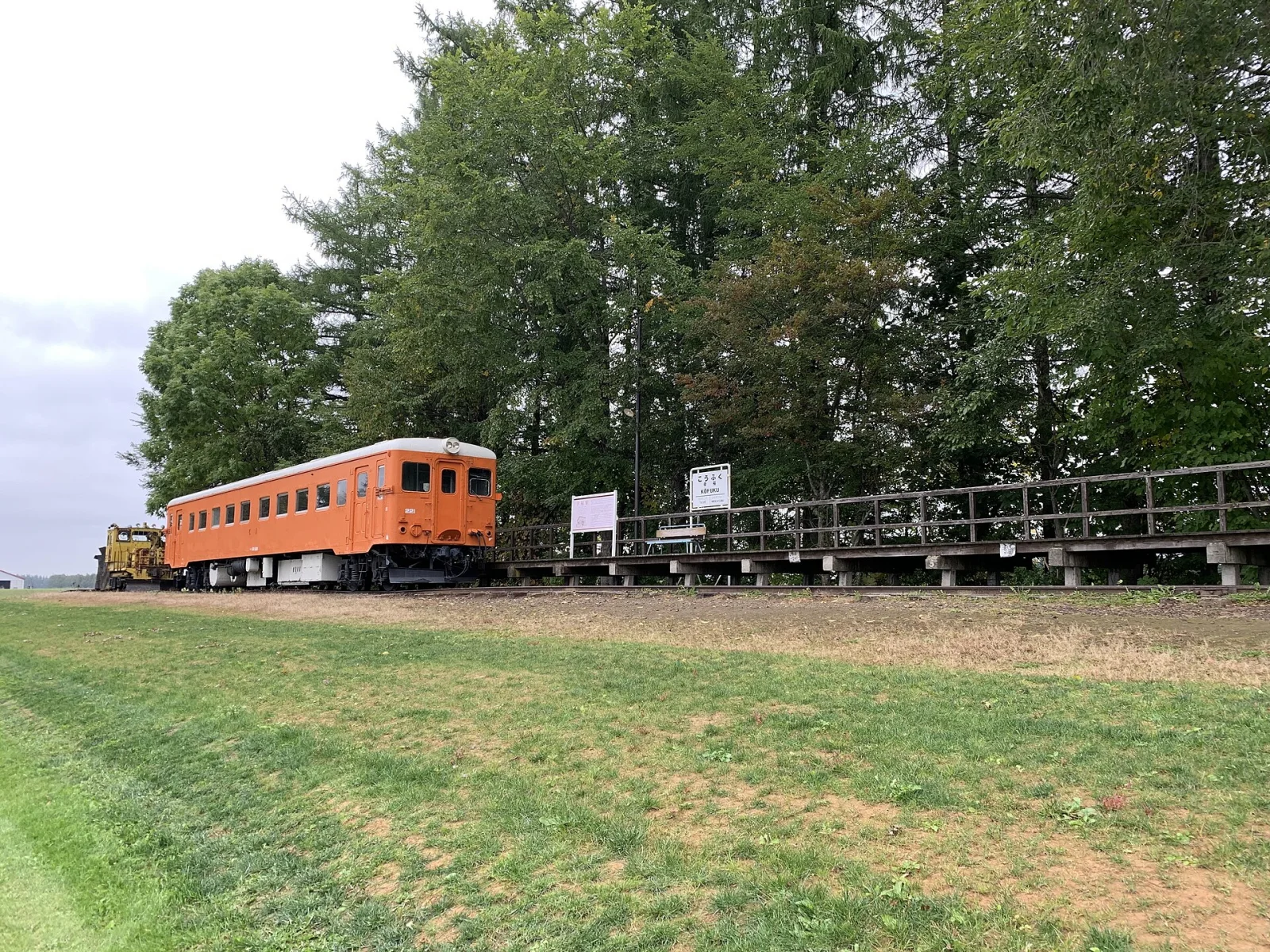
- What to See: Station House, Wooden Platform, and Two Diesel Railcars
- How an "Aikoku to Kofuku" Train Ticket Became Famous
- Save Aikoku Station for Vintage Tickets and a Steam Locomotive
- Want Keepsake Photos? Check Kofuku Station's Wedding Ceremony Experience
- Driving Routes: National Highway vs. Kofuku Interchange
- Hanabatake Bokujo Hours and Winter Backup Stops in Nakasatsunai
- Shortening Outdoor Time in Winter and Rainy-Day Alternatives
- One or Two Nights in Obihiro: Which Day Fits the Suburbs Best?
- Quick Q&A
No rental car? From the bus terminal next to JR Obihiro Station, take Tokachi Bus 60 toward Hiroo, get off at "Kofuku," and walk about 5 minutes. Admission to the former station is free. Plan 30 to 45 minutes on a first visit to see the station house, wooden platform, and orange diesel railcars, and time your visit for shop hours if you want an "Aikoku to Kofuku" souvenir ticket. By car, it is about 10 minutes from Tokachi-Obihiro Airport, and you can continue south to Hanabatake Bokujo in Nakasatsunai. Note that the ranch's shop and cafe are closed for winter from November 4, 2026, with reopening slated for late April 2027. In winter, swap in Aikoku Station or Roadside Station Nakasatsunai for an extra suburban stop.
Where Kofuku Station Fits in Your Obihiro Itinerary
Kofuku Station sits south of downtown Obihiro, roughly 22 km from JR Obihiro Station. The wooden station building and a stretch of platform stand inside Kofuku Traffic Park, with historic railcars displayed along the former track alignment. Because the grounds are compact, walking the site often takes less time than the bus ride from downtown. If you only want photos of the station sign and railcars, half an hour is plenty. If your group wants to browse souvenir tickets or linger over photos, allow 45 to 60 minutes.
Heading south from downtown, the route passes through Aikoku-cho, Kofuku-cho, and Nakasatsunai Village. Rail fans can easily turn the two former stations into a half-day outing. If you want lunch in the countryside or fresh caramel, pair the station with Hanabatake Bokujo by car on a day it is open. Traveling strictly by bus and hoping for more rural scenery? Make Roadside Station Nakasatsunai your southern turnaround and ride Route 60 both ways. Pick your farthest suburban stop first, then check return times to Obihiro so you know where lunch fits.
If you have a JR limited express train to catch later that day, lock in your return arrival at Obihiro Station first. The two station names look close together on a souvenir ticket, yet riding a single bus past Aikoku and Nakasatsunai takes far less time than getting off at every stop and waiting for the next departure. With only a two-hour gap between trains, a round-trip local bus ride plus two walks is tight—staying downtown is much more relaxed. On the flip side, if you are flying in with a car waiting, Kofuku Station is an easy first stop while you are already near the airport.
| Main Interest | Transport | Time Needed |
|---|---|---|
| Kofuku Station & souvenir tickets | Tokachi Bus 60 round-trip from Obihiro Station | 30–45 minutes on-site, plus bus wait time |
| Both Aikoku and Kofuku stations | Sequential stops by car, or split into 3 legs on Bus 60 | Relaxed half-day by car; factor in 2 bus waits by transit |
| Kofuku Station & Hanabatake Bokujo | Rental car or pre-arranged taxi | Half-day on open days; eat lunch in Nakasatsunai |
| Kofuku Station & Roadside Station Nakasatsunai | Tokachi Bus 60 serves both stops | Check both southbound and return schedules; build in lunch |
How to get to Obihiro's Kofuku Station by Tokachi Bus 60, airport shuttle, or car, plus the old platform, Aikoku Station museum, souvenir tickets, and Hanabatake Bokujo's 2026–2027 winter closure.
Taking Tokachi Bus 60 from JR Obihiro Station (Check the Return First)
Walk from JR Obihiro Station to the adjacent Obihiro Station Bus Terminal and board Tokachi Bus 60 (Hiroo Line) at Stop 11, looking for buses bound for "Hiroo." City estimates put the ride at 40 to 50 minutes, with some scheduled runs taking 51 minutes. Get off at "Kofuku," which sits right between "Taisho 27-go" and "Taisho 29-go." Save the Japanese stop name on your phone before boarding, watch the onboard display or listen for the announcement as you approach, and press the stop button.
After stepping off the bus, turn off National Route 236 and walk about 5 minutes to Kofuku Traffic Park. Outbound and return bus stops sit on opposite sides of the road. Pin the return stop on your map app as soon as you arrive, before heading to the station building. For the ride back downtown, look for buses signed for "Obihiro Station Bus Terminal"—even if the headsign also lists Aikoku or other intermediate stops, follow the direction of travel. Cross only at safe spots, and allow extra time if you are traveling with seniors or young children.
Tokachi Bus runs separate timetables for weekdays and weekends/holidays. Starting October 13, 2026, the 14:30 weekday departure from Obihiro Bus Terminal toward Hiroo was discontinued, so relying on old screenshots can throw off an afternoon plan. Tokachi Bus also notes a special year-end/New Year schedule from December 29 through January 3. If you are visiting around New Year's, check the operator's seasonal notice for both directions. The route page keeps weekday and weekend/holiday columns separate—save the return timetable page on your phone beforehand.
Under the revised weekday schedule effective October 13, 2026, a 10:05 departure from Obihiro Bus Terminal reaches "Kofuku" at 10:56. An 11:25 return looks tempting, yet after subtracting two 5-minute walks you only get 19 minutes on-site—before even counting buffer time at the stop. To see the station house and buy tickets comfortably, catch the 12:25 weekday return, which arrives back at Obihiro Bus Terminal at 13:20. Note that this 12:25 bus does not run on weekends or holidays; taking the same 10:05 outbound bus on a weekend means waiting until the 13:25 return (back downtown at 14:20).
For a weekend trip with lunch in Obihiro, eating first works smoothly. Depart at 12:20 to arrive at "Kofuku" at 13:11, then take the 14:25 return to reach Obihiro Bus Terminal at 15:20, leaving nearly an hour at the station. This pairs lunch with downtown's wider restaurant selection and avoids a two-hour morning layover waiting for the bus. If you are taking photos or shopping, add your return departure to your calendar and set an alarm for the walk back to the highway stop.
A single adult fare on Bus 60 between Obihiro Bus Terminal and "Kofuku" is ¥710 one-way, or ¥1,420 round-trip in cash. The local Obihiro 1-Day Bus Pass ("Obihiro 1-day Norihodai Kippu") costs ¥1,200 for adults and ¥600 for children and is sold at the "Obikuru" counter inside Obihiro Station Bus Terminal. Even a single adult round-trip within Obihiro City beats cash fares with this pass, and it also covers hopping off at "Aikoku" along the way. If you plan to ride onward to Nakasatsunai—which crosses outside Obihiro City limits—pick up the ¥2,000 adult Visit Tokachi Pass (1-day) at Obihiro Station Bus Terminal instead.
Paying cash is straightforward: take a numbered paper ticket (seiriken) upon boarding, match your ticket number to the overhead fare chart when your stop approaches, and drop the exact fare plus your ticket into the fare box. An onboard machine breaks ¥1,000 bills into coins, but higher-denomination notes cannot be changed on the bus. If you have bulky luggage, use a wheelchair, or want a group seated together, check with Tokachi Bus ahead of time regarding vehicle type and boarding layout—wheelchair passengers on weekend schedules are asked to contact the operator in advance. Counting fares and passengers before boarding with young children speeds up getting on and off.
| Day | Depart Obihiro Terminal | Depart Kofuku | Back at Obihiro Terminal |
|---|---|---|---|
| Weekdays | 10:05 → 10:56 | 12:25 | 13:20 |
| Weekends/Holidays (afternoon arrival) | 12:20 → 13:11 | 14:25 | 15:20 |
| Weekends/Holidays (morning, longer stay) | 10:05 → 10:56 | 13:25 | 14:20 |
Visiting Kofuku Station Straight from Tokachi-Obihiro Airport
City estimates put the drive or taxi ride from Tokachi-Obihiro Airport at about 10 minutes. You can also take Tokachi Bus's airport shuttle directly; its timetable lists the stop as "Kofuku-eki," which is a different stop from Route 60's "Kofuku" along the highway. Both seasonal timetables—October 25 to November 30, 2026, and December 1, 2026 to January 4, 2027—include this stop, with an adult fare of ¥400 between the airport and Kofuku Station and a scheduled ride of about 9 minutes. Open the timetable period matching your flight date before planning.
Airport shuttles bound for downtown Obihiro stop at "Kofuku-eki" for drop-off only. You can hop off right after landing, explore the park, and then walk over to the separate "Kofuku" highway stop to catch Bus 60 into town. In the reverse direction, airport-bound shuttles pick up passengers at "Kofuku-eki." To visit Kofuku Station from downtown on your way to a flight, ride Bus 60 to "Kofuku" and board the airport shuttle at "Kofuku-eki," provided the timing lines up with your flight's shuttle. If the bus connection leaves little margin, visit the station earlier in your trip instead.
Claim your luggage in the arrivals hall, where bus ticket machines sit before you head outside to the curb stops. Airport shuttles are timed to flight arrivals, and the operator notes they may depart early if a flight lands ahead of schedule. If waiting outdoors in the suburbs with rolling bags sounds stressful, take a taxi from the airport and arrange for the driver to wait or pick you up at a set time. Giving the dispatcher both your pickup and drop-off points upfront works far better than trying to hail a cab from the park—especially if you are picking up a rental car afterward, carrying heavy bags, or traveling in snow.
If you have already booked an airport rental car, slot Kofuku Station onto whichever end of your trip offers better daylight and a secure spot for your bags. Should your arrival flight be delayed, skip the detour and head straight downtown for a meal. On departure day, subtract time for refueling, returning the car, and airport check-in before deciding whether to stop. Kofuku Station is close to the airport, yet rental paperwork and parking-lot shuttles eat up minutes—save the stop for a window where you can actually get out and stroll.
What to See: Station House, Wooden Platform, and Two Diesel Railcars
Walk through the station building before stepping onto the platform to get a feel for how the stop once worked. Kofuku Station opened on the former JNR Hiroo Line in 1956 and closed when the line was abandoned in 1987. The current wooden station house and surrounding grounds reopened in November 2013 after renovation, preserving the scale of a rural wayside stop. Paper tickets and notes pinned by travelers inside have become part of the exhibit themselves. Together, the information boards, station sign, and two diesel railcars show how passengers once waited for trains here.
Start from a vantage point where you can take in the full stretch of the platform. Orange railcars rest along one side while timber planks outline the old waiting area. Follow the visitor path to the station sign, check out the Japanese place names, and glance back at how the cars sit against the platform. Although the Hiroo Line stopped running decades ago, the signage traces the old route and lets you appreciate the scale of the car doors, windows, and steps. When the railcar interiors are open, climb aboard from the platform to see the seats and windows; guests with small children or limited mobility can still peer inside easily from the outside.
For a clean shot of the station sign, step back slightly along the platform side to frame the orange railcar and sign together. The front facade of the wooden station house reading "Kofuku-eki" is another classic angle. If your group wants a portrait at the entrance, step aside until foot traffic clears before lining up. Save close-ups of window latches, door handles, and weathered planks for a second frame instead of blocking the queue in front of the main sign. For family group photos, scout a wide spot farther back first rather than shuffling everyone around on the narrow platform edge.
The Bell of Happiness sits in the adjacent Kofuku Exchange Plaza. Obihiro City temporarily closed the structure for aging repairs in July 2025 before reopening it on July 23. On a quick stop, loop from the station sign to the railcars, walk over to the bell, and head back toward the shops or bus stop. If you are pushing a stroller or someone in your party moves slowly, stick together near the station building while faster walkers explore the far end of the platform. Wooden planks and steps turn slick after rain, so stay on designated walkways and keep off the display rails and behind safety ropes.
Kids usually enjoy spotting details on the railcar doors, noses, and station signs. Taking a seat for a few minutes and then walking a short stretch works better than constantly chasing new photo angles. To build a genuinely kid-friendly half-day, anchor your next stop around lunch or restrooms. Roadside Station Nakasatsunai offers indoor facilities and downtown Obihiro has plenty of sit-down spots, leaving Kofuku Station purely for an outdoor leg-stretcher.
How an "Aikoku to Kofuku" Train Ticket Became Famous
"From Aikoku to Kofuku" started as an actual rail journey. Both Aikoku and Kofuku were small stations on the old JNR Hiroo Line, and printed side by side on a ticket they read as "From the Land of Love to Happiness." Obihiro City traces the boom to March 1973, when NHK's travel program Shin-Nihon Kiko aired an episode on Obihiro titled "Journey to Happiness." City records note roughly 10 million tickets sold during the peak four-year craze. Visit Aikoku Station today and you can still see vintage tickets showing exactly how the wording appeared in print.
To take a souvenir ticket home, buy one at the shops outside Kofuku Station or Aikoku Station. Souvenir tickets are sold separately from transit day passes used to pay bus fares. Entering Kofuku Station itself is free, so you do not need to stop by the shop first to look around. The Obihiro Tourism and Convention Association lists typical shop hours at Kofuku Station as roughly 9:00 to 17:30 in summer and 9:30 to 15:00 in winter. Early buses are great for crowd-free station photos, whereas midday arrivals line up better with shop hours. Aikoku Station also has a shop out front—if it is open while you visit the museum, buy your tickets there and head straight to the platform when you reach Kofuku.
Photos online often show the station walls plastered in pink tickets, though that depends on when the picture was taken. In 2024, Obihiro City cleared accumulated tickets from the building, and the local plaza council dedicated them at Kofuku Shrine. If you want to leave a wish behind, follow posted signs for designated spots and think twice before writing personal details in a public space. Keep your own souvenir ticket inside an envelope or ticket sleeve away from damp umbrellas and drinks. When everyone in your group buys one, you can hold them up together in one photo showing each person's date or message.
You may also spot signs mentioning "Hexing" at the station grounds. On October 22, 2016, Obihiro City formed a sister-station partnership with Hexing Station on Taiwan's Neiwan Line in Hsinchu, often nicknamed the "Love Station." Kofuku Station's story grew out of two Hokkaido place names paired on a single paper ticket, developing independently before linking up with Hexing through shared tourism appeal. Small and lightweight, a paper souvenir ticket makes an easy keepsake or gift marking this specific stop on your trip.
Save Aikoku Station for Vintage Tickets and a Steam Locomotive
Aikoku Station sits between Obihiro Station and Kofuku Station at 39-40 Kisen, Aikoku-cho, Obihiro. It is roughly a 20-minute drive from JR Obihiro Station, then another 15 minutes onward to Kofuku Station. By Bus 60, get off at the "Aikoku" stop and look for the station house and the oversized "Bound for Kofuku" ticket monument out front. Today Aikoku operates as a free transportation museum focused on vintage tickets and archival displays—a different experience from Kofuku's wooden depot, bell, and orange diesel railcars.
Pay attention to two separate winter closures here. The Aikoku Memorial Hall opens daily from 9:00 to 17:00 between March and November, then drops to Sundays only (same hours) from December through February. Meanwhile, the outdoor steam locomotive is closed to viewing from November through March. That means in March the museum building is back to daily hours while the locomotive remains closed for the season. Plan a winter Sunday visit for the ticket collection, or come between April and October if seeing the steam locomotive is your priority.
Linking both stations by bus is easiest if you stop at Aikoku first in the morning so you catch the museum open. On a standard weekday schedule, take the 10:05 bus from Obihiro Terminal to reach "Aikoku" at 10:41, hop back on the 12:56 southbound Bus 60 to reach "Kofuku" at 13:11, and return on the 14:25 bus to town. That gives you over two hours in Aikoku—plenty for a leisurely look and a packed lunch—while driving eliminates the layover altogether. If you prefer photographing Kofuku Station first and heading north afterward, work backward from Aikoku's 17:00 closing time.
When traveling with companions who vary in rail enthusiasm, decide upfront what kind of memory you want from the outing. For souvenir tickets and a photo by the station sign, Kofuku alone covers it. Rail history fans will get more out of Aikoku's ticket exhibits and Hiroo Line background. Families balancing group photos with mealtime can save Aikoku for the drive back, snapping the giant ticket outside before checking whether the hall is open for a longer stop.
Want Keepsake Photos? Check Kofuku Station's Wedding Ceremony Experience
Visitors hoping to rent outfits for photos at the old station can check the "Kofuku-eki Happy Ceremony" operator website linked by the city. Friends and parent-child pairs are welcome alongside couples. Plans listed on the operator's page range from costume-only self-shoots to staff-assisted photography and packages adding music and a commemorative wooden plaque. Posted rates run ¥2,000, ¥3,000, and ¥5,290 per group respectively, with reservations required for photography and ceremony packages. All three plans require advance booking in winter; posted hours are 11:00 to 16:00, closed Wednesdays.
Check-in takes place at "Cafe Kofukumura" at the back of the shop parking lot, where payment is collected in cash upfront before guests change in a dedicated cabin. If you want plain-clothes shots by the station sign first, snap those before checking in. Once in rental attire, sequence your photos at the station house, platform, and bell within your reserved window, scouting angles if you arrive early. Self-shoot plans work well if you are comfortable with a tripod and picking outfits yourself, while the staffed photo plan takes care of framing. Bus riders should factor changing in and out of outfits into their return cutoff time.
Driving Routes: National Highway vs. Kofuku Interchange
Taking National Route 236 south from central Obihiro takes roughly 30 minutes according to city estimates. Staying on the highway passes Aikoku, making it easy to visit both old stations in one sweep. Heading straight to Kofuku Station? Enter the Obihiro-Hiroo Expressway at Obihiro-Kawanishi IC; the city estimates about 15 minutes from there to Kofuku IC, plus another 5 minutes off the exit to the station. Because those figures start at the expressway entrance, add extra time to reach Kawanishi if you are leaving from near Obihiro Station. Set your navigation to "Kofuku-eki" or "Kofuku Traffic Park" at Higashi 1-sen, Kofuku-cho, Obihiro.
Obihiro City lists around 36 parking spaces at Kofuku Station, including 5 for large buses. If a tour coach unloads while you are there, explore the platform end first and save photos at the station entrance for after the crowd clears. Once parked, orient yourself to the shops, platform path, and an obvious landmark in the park to regroup. Phone navigation sometimes routes to the "Kofuku" bus stop out on the highway instead, so double-check that your pin matches the city's station location when driving. If you have another stop queued up afterward, load the next address before everyone piles back into the car.
Only 15 minutes apart by road, the two former stations pair naturally on one drive. Most drivers pass Aikoku on the way out to Kofuku, though on a winter afternoon you can drive straight to Kofuku first and decide on Aikoku while heading north depending on daylight and open hours. Farm fields and homes line the roadside, and visitor parking sits inside the park grounds—even if a field view catches your eye, park legally and walk over. Stick to the park paths for locomotive and track angles so your driving time stays focused on moving between stops.
Hanabatake Bokujo Hours and Winter Backup Stops in Nakasatsunai
Hanabatake Bokujo (Flower Field Ranch) sits at 311-6 Motosatsunai Higashi 4-sen in Nakasatsunai Village. Official drive estimates are about 50 minutes from JR Obihiro Station and 20 minutes from Tokachi-Obihiro Airport. Local buses from Obihiro Station continue past Kofuku into Nakasatsunai along the highway, but you still have to cover the last leg to the ranch itself. Note that "Nakasatsunai Higashi 4-sen" on the bus timetable is a stop along the main highway, whereas the ranch's street address is "Motosatsunai Higashi 4-sen." For a first visit combining fresh caramel shopping and lunch at the ranch, driving south from Kofuku Station is far easier—set your GPS directly to "Hanabatake Bokujo Shop."
According to notices on the shop and cafe pages, both facilities close for winter starting November 4, 2026, with reopening planned for late April 2027. If you still want a meal stop in Nakasatsunai during those months, Roadside Station Nakasatsunai (Michi-no-Eki Nakasatsunai) is the better bet. Rokkatei's Rokka-no-Mori garden and Nakasatsunai Art Village have also wrapped up their 2026 seasons; check Rokkatei's facility announcements for next season's opening dates if you want to include gardens or galleries.
During regular operating months, posted shop hours are 10:00 to 16:00, and the cafe runs 10:00 to 16:00 with last orders at 15:30. If you want cheese dishes or a sit-down break, grab a table and order at the cafe first before browsing souvenirs. Official pages note that the shop accepts JCB, VISA, and other major cards, while the cafe does not take credit cards—bring cash for dining. Picking up caramel alone makes a quick stop, whereas a full meal requires calculating your arrival from Kofuku Station well before the 15:30 kitchen cutoff rather than aiming for 16:00.
Visiting with kids for the animals? Look up the ranch's posted "Farm Show" schedule ahead of time. The ranch runs an animal interaction area and previously posted special Golden Week sessions for goat petting and butter making, alongside separate Obon show schedules. Plan lunch around event times if your group wants to join, leaving extra time to park after driving down from Kofuku. If you are only shopping and eating, standard shop and cafe hours are all you need; follow staff directions when approaching the animals.
Hanabatake Bokujo's signature fresh caramel (Nama Caramel) comes in both refrigerated and room-temperature varieties. Check the storage instructions on the box if you are heading to a hot spring afterward, leaving bags in a hot car, or still have several days before flying home. Planning to eat the chilled version the same day? Carry an insulated bag with an ice pack so you are not hunting for fridge space en route. Focus ranch shopping time on store exclusives or snacks for your group; if you just want general Hokkaido sweets without dining at the ranch, buying them back in downtown Obihiro saves a trip.
Roadside Station Nakasatsunai sits right off National Route 236 and has its own stop on Bus 60. It works well if you want local chicken, edamame, or regional produce with minimal walking from the bus. Hokkaido's official Michi-no-Eki portal lists main building hours as 9:00 to 18:00 from April to October and 9:00 to 17:00 from November to March, open daily from April to November, and closed Mondays from December to March plus December 29 to January 3. Individual food stalls keep their own serving windows, so treat a late-afternoon arrival as a quick snack stop rather than banking on a full sit-down meal.
You can pair Kofuku Station and the roadside station in one day without a car. Under the revised weekday schedule, ride the 10:05 bus toward Hiroo to reach "Kofuku" at 10:56, then catch the 12:20 bus passing "Kofuku" at 13:11 and step off at the roadside station at 13:20. After lunch, take the 14:15 return toward Obihiro (back at the terminal at 15:20), or linger longer and ride the 15:45 bus straight back. Point-to-point adult cash fares run ¥710 from Obihiro to "Kofuku," ¥370 from "Kofuku" to Roadside Station Nakasatsunai, and ¥860 back to Obihiro—¥1,940 total, a handy benchmark when weighing the ¥2,000 Visit Tokachi Pass.
Shortening Outdoor Time in Winter and Rainy-Day Alternatives
On snowy visits to Kofuku Station, keep your walk focused on the short stretch between the station house and platform. Planks, steps, and parking-lot edges get treacherous when iced over, so stick to cleared paths—boots with solid traction matter far more than extra camera gear. Keep gloves on until the moment you press the shutter for snowy train shots, then head back into the shop or a warm car. If traveling with seniors, point out the sign and railcars first rather than saving the iciest walkways for right before departure.
Outdoor bus waits are the easiest thing for transit riders to underestimate in winter. Aim for a schedule pairing 30 to 40 minutes of sightseeing with a prompt return bus rather than arriving early and killing over an hour in the wind. Save your stop direction and target bus on your phone, and cut the park walk short if snow picks up. Since Aikoku Memorial Hall opens only on Sundays in winter, keeping lunch and dessert stops around Obihiro Station guarantees a warm indoor refuge.
In light rain, bring a compact umbrella, check the wooden exterior, step toward the plaza, grab one shot each of the sign and railcar, and head back. Rain ponchos keep hands free and take up less room at the station doorway than wide umbrellas. On heavy rain or windy days, trim Kofuku to a brief stop and head back to Obihiro for a bowl of butadon (pork rice bowl). At Rokkatei's Obihiro Main Store, posted hours are 10:00 to 18:00 for the ground-floor shop and 11:00 to 16:30 (last order 16:00, closed Wednesdays) for the second-floor tearoom. You can easily separate buying sweets from sitting down for dessert instead of missing a return bus waiting for a table.
From late November 2026 through early spring 2027, both the ranch shop/cafe and Rokkatei's two Nakasatsunai venues are closed for the season. If your main goal was a countryside meal, staying downtown saves an extra bus round-trip. Want to see historic railcars in the snow? Spend all your suburban time right at the station grounds and save warming up and dining for Obihiro, keeping taxi or bus schedules clean. Drivers continuing onto longer routes should clear the old stations in daylight before rejoining main highways.
One or Two Nights in Obihiro: Which Day Fits the Suburbs Best?
Arriving by JR train from Sapporo or Kushiro for a single night? Stay near Obihiro Station so you can drop bags at your hotel or a locker, then fit Kofuku Station into that afternoon or the next morning. If you arrive late, have dinner downtown, ride a well-timed Hiroo Line bus out the next morning, and return to town for lunch before moving on. Catching an early bus gets you an emptier platform, though decide whether photos or tickets matter more—early arrivals often finish the platform before the shop opens, leaving souvenir tickets for Aikoku or later shop hours.
Staying overnight at Tokachigawa Onsen? Put your suburban stop on check-in day: arrive at Obihiro Station, head out to Kofuku Station, return to the bus terminal, and transfer to Bus 45 for Tokachigawa Onsen. Because the routes to Kofuku and Tokachigawa head in different directions out of town, treat the downtown terminal as your hub. If your ryokan serves dinner at a fixed hour, work backward from check-in to pick your Bus 45 departure, then select your return Bus 60 accordingly. When bus gaps feel awkward, check into the hot spring first and visit Kofuku Station on your way back to Obihiro the next day rather than juggling luggage between stops.
With a rental car and two nights in town, dedicate your brightest daylight day to Aikoku, Kofuku, and Nakasatsunai. On a season when venues are open, start at Aikoku's museum in the morning, continue to Kofuku for tickets and photos, drive down to Hanabatake Bokujo for lunch or shopping, and tack on one nearby garden or museum if energy allows. Returning the car before late afternoon or booked for an onsen dinner? Pick either the ranch or Rokka-no-Mori rather than both, saving the second day for downtown sweets and Tokachigawa instead of cramming rural stops in two opposite directions into one day.
Heading to Kushiro next? Let your JR train departure dictate how far south you stretch your Obihiro morning. Getting back from Kofuku involves city traffic and walking from the bus terminal back to the JR platforms, so save car-only ranch visits for a day without a tight train connection. Planning a wider regional loop? Check our Eastern Hokkaido lakes and wildlife route and save longer lake drives for your Kushiro or eastern Hokkaido bases.
A few useful answers
Can you take a JR train directly to Kofuku Station in Hokkaido?
No—Kofuku Station became a traffic park after the former JNR Hiroo Line closed. Take a JR train to Obihiro, then board Tokachi Bus 60 from Stop 11 at the adjacent Obihiro Station Bus Terminal, get off at "Kofuku," and walk about 5 minutes.
Do you need a ticket to visit Kofuku Station, and where can you buy the Aikoku-to-Kofuku souvenir ticket?
Entry to Kofuku Station is free. Souvenir tickets reading "From Aikoku to Kofuku" are sold at the shops right outside Kofuku Station or Aikoku Station. The tourism association lists typical winter hours for the Kofuku Station shop as 9:30 to 15:00.
Can you visit Kofuku Station straight from Obihiro Airport before heading downtown?
Yes. Take the Tokachi Bus airport shuttle and get off at "Kofuku-eki," then walk over to Route 60's separate "Kofuku" stop to catch a bus into downtown Obihiro. Note that downtown-bound airport shuttles stop at "Kofuku-eki" for drop-off only.
If you only have time for either Kofuku Station or Aikoku Station, which should you pick?
Pick Kofuku Station on a first visit if you want photos of the classic station sign and orange diesel railcars. Choose Aikoku Station to see vintage tickets and a steam locomotive, keeping in mind that Aikoku's hall opens only on Sundays from December to February and the locomotive closes from November to March.
Is Hanabatake Bokujo open in winter 2026?
The Nakasatsunai shop and cafe close for winter starting November 4, 2026, with reopening slated for late April 2027. In winter, plan lunch in downtown Obihiro or stop at Roadside Station Nakasatsunai on days it is open.
Official information and references
Sources used in this guide.
- City of Obihiro | Kofuku Station Access, Parking, and the Bell of Happiness
- City of Obihiro | Former Hiroo Line, Souvenir Tickets, Aikoku Station Hours & Hexing Sister Station
- City of Obihiro | Aikoku Station Driving Times and Obihiro Sightseeing Spots
- Obihiro Tourism and Convention Association | Kofuku Station and Shop
- City of Obihiro | Kofuku Station Souvenir Ticket Dedication Record
- Tokachi Bus | Route 60 (Hiroo Line) and Route 45 (Tokachigawa Onsen Line) Timetables
- Tokachi Bus | Schedule, Stops, and Fare Data (Effective October 13, 2026)
- Tokachi Bus | How to Ride and Pay on Local Buses
- City of Obihiro | City 1-Day Bus Pass and Visit Tokachi Pass
- Tokachi Bus | Tokachi-Obihiro Airport Shuttle Date-Specific Timetables
- Hokkaido Airports | Tokachi-Obihiro Airport Bus Facilities
- Kofuku-eki Happy Ceremony | Wedding Experience Plans and Check-In Guide
- Hanabatake Bokujo | Nakasatsunai Shop Hours and Winter Closure
- Hanabatake Bokujo | Nakasatsunai Cafe Hours and Winter Closure
- Hanabatake Bokujo | 2026 Obon Event Portal
- Hanabatake Bokujo | 2026 Golden Week Animal Interaction Area and Show Times
- Hanabatake Bokujo | Chilled and Room-Temperature Nama Caramel
- Hokkaido Michi-no-Eki | Roadside Station Nakasatsunai Opening Hours
- Rokkatei | Nakasatsunai Rokka-no-Mori and Art Village Opening Notices
- Rokkatei | Obihiro Main Store and Tearoom