Take the Joban Line from Tokyo to Mito. Compare admission and hours for Kairakuen's main garden, Kobuntei and Kodokan, choose an entrance, assess the day pass and plan full-day, half-day or rainy-day visits.
- Region & Focus
- KantoAttractions
- Reading Scope
- 29 min read · 9 chapters · 6 Q&As
- Official Verification
- 15 official sources checkedUpdated October 28, 2026
- Key Topics
- ItinerariesRail travelSeasons
Chapter Route Map (tap any stop)
- Choose the order by arrival time: two sites in a day, one focus in half a day
- Main garden, Kobuntei and Kodokan: three tickets and three schedules
- Mito Station north exit to Kodokan: Ichozaka and the side entrance
- What to see at Kodokan: Seicho, Shizendo and the domain school's role
- On to Kairakuen: choose the bus destination and admission gate together
- Plum and bamboo walks: choose blossoms or the garden approach from Omotemon
- Is Kobuntei worth entering? Rooms, views and the last-entry deadline
- Full day, afternoon or rain: dividing your time
- Back to Mito Station: connect the city bus before your Tokyo train
- Quick Q&A
Plan the order of Mito's two historic sites and Kobuntei's last entry first. From Tokyo, visit Kodokan near Mito Station's north exit, then take a bus to Kairakuen after lunch. During the plum festival, adult main-garden entry costs ¥500, with Kobuntei another ¥230. With only an afternoon, focus on the domain-school buildings or garden rather than rushing all three admissions before closing.
Choose the order by arrival time: two sites in a day, one focus in half a day
For a first visit from Tokyo, plan Kodokan, lunch, then Kairakuen and Kobuntei. Kodokan is near Mito Station's north exit: visit the domain school before the garden. In autumn and winter, Kodokan closes at 16:30, Kobuntei stops admission at 16:15, and the garden stays open until 18:00. Buildings first and outdoor walking afterward protect visiting time. If already staying in Mito and using free garden entry before 9:00 outside the plum festival, reverse the order: Kairakuen first, then Kodokan in town.
There is a historical reason to combine them. The official Kodokan FAQ explains that Tokugawa Nariaki conceived Kodokan's academic and martial training and Kairakuen's recreation as paired educational facilities, describing their relationship as alternating tension and relaxation. Walking the ordered school spaces before the bamboo and open garden views helps you understand this design. Architecture enthusiasts need not wait for blossoms; flower-focused visitors should consider bloom conditions before choosing a date.
From Tokyo, travel toward Mito on JR's Joban Line. For Saturday, November 7, 2026, JR East's November timetable for Hitachi 5 lists Tokyo departure at 08:53, Ueno at 09:00 and Mito arrival at 10:16; you can also board at Shinagawa. This service is listed for weekends and holidays, with all ordinary-car seats reserved. Choose your departure station and seat before planning beyond Mito Station. Allow time between train arrival and Kodokan entry for leaving the station, storing bags and walking.
With only an afternoon, choose either domain-school architecture or a garden walk. Arriving around 13:00 and keen to see Seicho and Shizendo, enter Kodokan first, then judge whether time remains for Kairakuen. For the plum grove, bamboo and Kobuntei alone, go directly from the station to the garden and save Kodokan for another visit. With small children, a wheelchair user or a long journey already behind you, one area leaves time to eat and rest.
Mito also works as a separate day within a Tokyo trip. Kawagoe northwest of Tokyo and Kasama, where pottery workshops require a connection at Tomobe, have different travel patterns. Compare destinations in Tokyo side trips and overnight stays, or see the Kasama day trip for pottery and the Inari shrine. Once you choose Mito, give the day to these two sites rather than moving to another city after lunch.
Take the Joban Line from Tokyo to Mito. Compare admission and hours for Kairakuen's main garden, Kobuntei and Kodokan, choose an entrance, assess the day pass and plan full-day, half-day or rainy-day visits.
Main garden, Kobuntei and Kodokan: three tickets and three schedules
Kairakuen's main garden, Kobuntei inside it and Kodokan in town charge separately. Standard adult admission outside the plum festival totals ¥320 + ¥230 + ¥420 = ¥970; during the festival it is ¥500 + ¥230 + ¥420 = ¥1,150. These totals cover entry only; Tokyo trains, city buses and meals are extra. Omit ¥230 if you skip Kobuntei, or buy only Kodokan admission if visiting that site alone.
Kairakuen's October 28, 2026 fare announcement lists individual main-garden admission during the plum festival at ¥500 for adults and ¥250 for elementary and junior high pupils, compared with ¥320/¥160 on ordinary dates. Kobuntei remains ¥230/¥120. The garden's visitor guide defines adults as age 15 and over, excluding pupils in compulsory education. Choose children's tickets by school stage rather than assigning a fixed age limit to the general word “child.”
Outside the plum festival, main-garden entry is free for everyone from opening until 9:00. Ibaraki residents also have an exemption with original proof of residence. For visitors from elsewhere using the free morning period, enter the garden for a walk first; Kobuntei still opens at 9:00 and requires a separate ticket. Festival dates do not have this free early entry, so budget festival prices. For same-day re-entry, show your original ticket as required and keep it until your final exit.
Kodokan charges ¥420 for general adults, ¥210 for elementary and junior high pupils, and ¥210 for ages 70 and over. Preschool children enter free. It closes December 29–31; Kobuntei closes on the same dates. For a year-end garden walk, use the main garden's hours. For interiors, choose a date when both buildings open. Kodokan also has exemptions such as free admission for everyone on November 13. Compare eligibility before buying tickets for that date.
Electronic tickets suit fixed dates and party sizes after you have checked discounts. Kodokan states that purchased electronic tickets are nonrefundable and recommends showing a QR-ticket screenshot for faster entry. If rain or arrival time may leave you visiting only Kairakuen, buy Kodokan admission once you decide to enter. If your Mito Manyu day pass qualifies for discounted entry, show it at the counter first. This avoids buying a standard electronic ticket before finding a different applicable price.
| Facility | General adult / elementary and junior high pupils | Hours and last entry |
|---|---|---|
| Kairakuen main garden, outside plum festival | ¥320 / ¥160 | Mid-February–September 30: 6:00–19:00; October 1–mid-February: 7:00–18:00. Free from opening until 9:00 outside the festival |
| Kairakuen main garden, plum festival | ¥500 / ¥250 | Paid entry during the festival; the standing information page describes roughly mid-February–late March each year |
| Kobuntei | ¥230 / ¥120 | Mid-February–September 30: 9:00–17:00, last entry 16:45; October 1–mid-February: 9:00–16:30, last entry 16:15 |
| Kodokan | ¥420 / ¥210 | February 20–September 30: 9:00–17:00; October 1–February 19: 9:00–16:30 |
Mito Station north exit to Kodokan: Ichozaka and the side entrance
After arriving at Mito Station, head into town through the north exit. The venue's illustrated directions start at the JR gates: turn right toward the north exit, go straight along the pedestrian deck, descend the stairs and continue, then turn right before the ginkgo tree. Keep Keisei Hotel on your left and climb Ichozaka. Turn right beside Sannomaru Elementary School, follow the road and enter through the fence on your left. Match the photographed landmarks to the street rather than watching only a straight map line.
Kodokan's main gate is normally closed. Use the side entrance to its right to reach the ticket office. If the main gate is shut, continue along the entrance signs: this is the normal visitor route. Even with Kodokan as your navigation destination, use the official entrance map for the final stretch. Reaching the grounds from the plum grove or Sannomaru government building is different from reaching the admission entrance.
The station walk includes slopes and stairs. It suits visitors with a small bag who want to see the town. With a stroller or difficulty using stairs, first use an accessible station exit and choose a suitable road. The venue also lists bus 10 to Kairakuen from north-exit stop 4, reaching Kodokan in about three minutes, and asks visitors to check that it stops there before boarding. Waiting and boarding still take time; it saves effort when a service fits.
To use the Mito Manyu day pass for both sites' discounts, buy it before your first attraction ticket. Ibaraki Kotsu sells it at the Mito Station information office in front of north-exit stop 7; Kanto Railway's Mito Station information office also sells it. Buy the pass before walking or riding to Kodokan rather than returning from Kodokan to get it. For Kodokan alone with walking both ways, simply buy the venue ticket.
Luggage affects this walk too. Garden paths and Kobuntei follow the town walk, so leave large bags at your accommodation or available station storage and carry only daily needs. Kairakuen lockers are concentrated at Miharashitei by the east gate and the park center, with different locations and hours. If entering at Omotemon and leaving at the east gate, do not put luggage collection at the opposite end.
What to see at Kodokan: Seicho, Shizendo and the domain school's role
Start with about an hour for Kodokan, extending it for the plum grove. Include reading, buildings and seated rest. A quick photo outside Seicho misses the school's central idea: academic, martial and medical study within one educational system. The venue overview records a provisional opening ceremony in 1841 and formal opening in 1857, marking different stages.
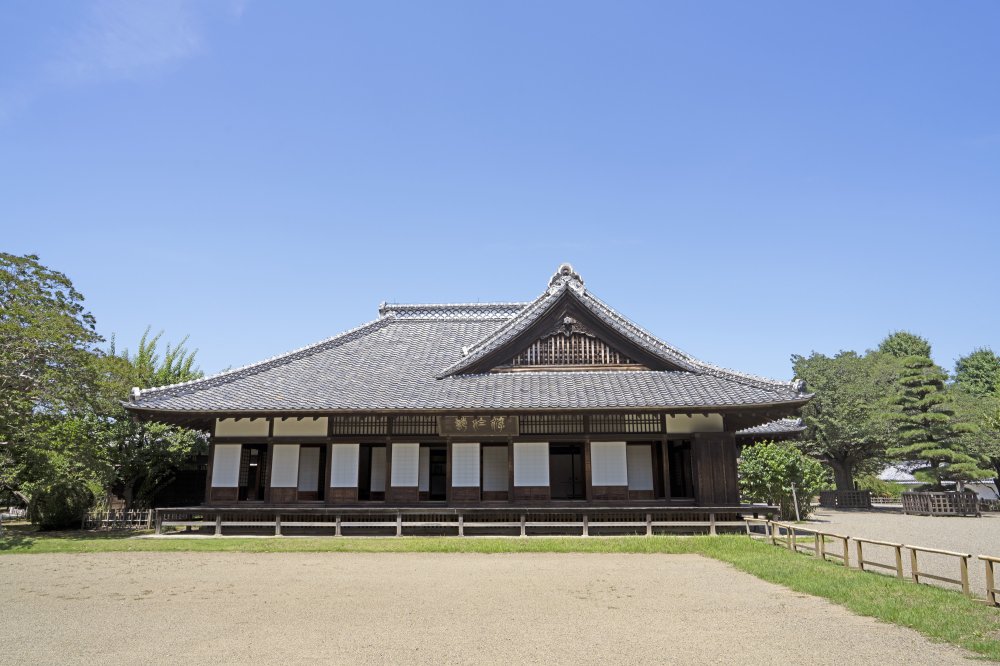
See Seicho first, then follow the visitor route through Shizendo and surrounding spaces. The main gate, Seicho and Shizendo became nationally designated Important Cultural Properties in 1964. The former school also had academic, martial and medical halls, an observatory and training grounds. Today's visiting area differs from the old layout. On the bird's-eye plan, locate surviving buildings first, then compare the distribution of activities. This explains the site better than memorizing building names as a checklist.
The venue records that domain retainers and their sons entered at 15 and had a duty to study until 40, with no graduation system. Subjects included Confucian studies, history, astronomy, mathematics, maps and music; martial training included swordsmanship, spearmanship, riding and swimming. Reading this before the garden helps explain why recreation accompanied schooling. With school-age children, start with what people learned in a day rather than requiring knowledge of the entire late-Edo period.
For architectural conservation, also read the earthquake-repair records. The 2011 earthquake damaged roofs, walls and the Kodokan memorial stele, and the venue records the restoration. Repairs form part of understanding how the wooden buildings survive. Take time to read, but set a departure target if Kobuntei follows that afternoon so the next visit does not become a closing-time rush.
Kodokan has its own plum grove, listed at about 800 trees of 60 varieties. If architecture is the priority and you have half a day, view these after the buildings rather than shortening the indoor visit to reach two plum sites. Wheelchair users should plan with the venue's accessibility map. Its guide identifies level changes and areas inaccessible by wheelchair. Make shared accessible areas the main route and ask staff about suitable paths on arrival.
Kodokan's Traditional Chinese short video released in 2024 moves from Seicho's exterior into Seiseki-no-ma, introducing the room layout and Kodokan inscription. It helps visitors recognize the domain school's central space before visiting.
On to Kairakuen: choose the bus destination and admission gate together
After Kodokan, see whether Ibaraki Kotsu route 10 has a suitable bus to Kairakuen. If eating or handling luggage at the station, return there first. Route 10 is marked via Kodokan and the Prefectural Museum of History, unlike buses traveling through Daikumachi in other directions. Many buses share north-exit stops. Check the destination and intermediate stops rather than boarding solely because it is stop 4.
For Saturday, November 7, 2026, the Saturday timetable for north-exit stop 4, revised November 1 lists route 10 to Kairakuen at 11:58, 12:43, 13:25 and 14:40, among others. The gaps are 42 minutes from 12:43 to 13:25 and 75 minutes from 13:25 to 14:40. Extra time at Kodokan can change the rest of your day. These are Mito Station departures. To board at Kodokan, open that stop's timetable in the same direction; do not use the station minutes as Kodokan boarding times.
Choose your garden entrance before the bus. The operator's day-pass page distinguishes nearby stops including Kairakuen / Tokiwa Jinja-mae, Kairakuen Higashimon / Tokiwa Jinja Kita-sando, Kobuntei Omotemon Iriguchi and Rekishikan Kairakuen Iriguchi. Each leads to a different walk. For the bamboo-to-Kobuntei route, prioritize Omotemon. For the plum grove, eastern entrances and departure transport, compare east-gate stops.
Togyokusen has a clear seasonal restriction. The Kairakuen access page says its admission booth closes outside the plum festival and the gate becomes exit-only. From Sakurayama parking lots 1–3, Togyokusen is the nearest main-garden entrance during the festival, about 200–300 meters away. Outside the festival, use Omotemon, about 500–600 meters. Following a festival map to Togyokusen on an ordinary day adds a detour. Choose the gate from your bus stop or parking space first.
Drivers should follow the same entrance principle. Kairakuen-shita parking is closest to the east gate, about 250 meters according to the website; Tokiwa Shrine parking is about 100 meters from it. Parking near Omotemon may close during the festival or require priority reservations for disabled visitors, so the nearest map marker is not enough. At Kodokan, the entrance road is one-way. The venue lists 13 free general spaces; at Sannomaru government-building parking, take your ticket to the Kodokan counter for three hours free from entry.
Plum and bamboo walks: choose blossoms or the garden approach from Omotemon
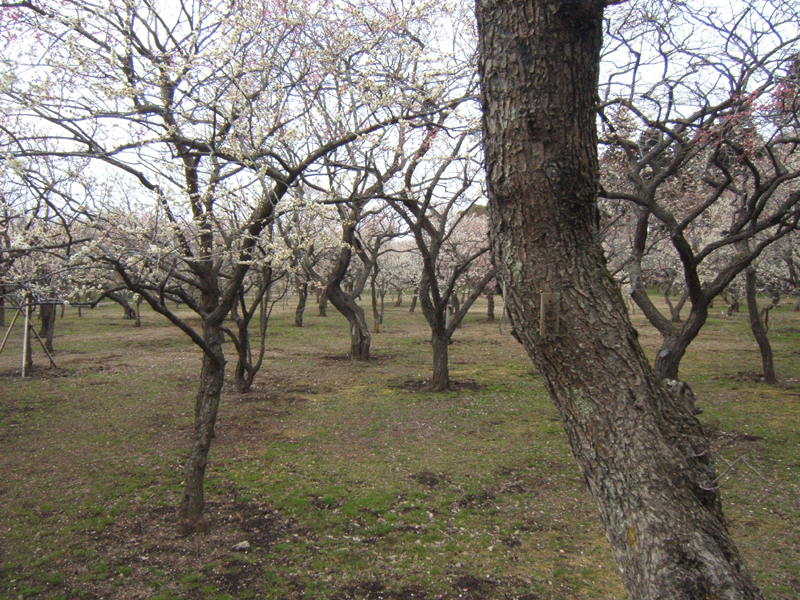
For plum blossoms, check current bloom reports on the Kairakuen website, then give the grove most of your time. Varieties flower in sequence, so do not require every tree to peak at once. Observe flower colors, branches and tree forms instead of rushing between areas for one full-bloom photo. Compare several reports for the same location when choosing your date and grove.
The garden's standing page describes the plum festival as roughly mid-February to late March each year. For the next season, make a daytime visit the core of your day. Choose evening activities, temporary transport and event programs from that edition's official announcements. Allow more entry, meal and transport time on festival weekends; weekdays can leave longer for paths and buildings.
On ordinary days or outside plum season, enter Omotemon and walk through the moso bamboo grove and Osugi forest toward Kobuntei. The garden's Route A explains Nariaki's design through the transition from darker woodland to open views, giving about 45 minutes at a slow pace to Rakujuro. This reference applies to the specified Omotemon-to-Rakujuro route. For extra plum viewing, photos or a detailed pavilion visit, make the garden your main afternoon activity.
At Togyokusen, notice the white stone wellhead and surrounding land. The garden explains a design using spring water and changes in elevation, which also make the route uneven. With a stroller, wheelchair or difficulty on slopes, choose usable paths on the accessibility map and appropriate gates. For woodland without all of Route A, focus on a short bamboo section and flatter paths.
Near Kobuntei, decide whether to enter before planning the final east-gate stretch. Route A lists about ten minutes from Kobuntei to the east gate, excluding photos, toilets and bus waits. If leaving east, keep luggage collection, toilets and your return stop at that end to avoid going back to Omotemon. The visitor guide lists lockers at Miharashitei inside the east gate: small ¥100, large ¥300. Small free lockers at the park center operate 9:00–16:30, at a different location.
Areas outside the main garden remain open at all times. Decide on extra outdoor walking after both building visits. An autumn or winter evening can finish with garden views before dinner at Mito Station. If tired, ending at the east gate is a complete visit. Changing light and temperature affect comfort; choose your return bus and resting place before the last photo.
Is Kobuntei worth entering? Rooms, views and the last-entry deadline
Add Kobuntei for wooden architecture, painted sliding doors and garden views. For outdoor plum viewing alone, or with a wheelchair user, spend the time in the main garden. The official introduction describes a wooden main building with two structural stories and three floor levels, plus the single-story Okugoten. It burned in the 1945 Mito air raid and was reconstructed over three years from 1955. Today's rooms belong to that reconstruction; surviving structures such as Omotemon have their own histories.
Use hospitality, rest and views as your visiting themes. Woven doors connect Goza-no-ma with surrounding spaces; the small room at Katoguchi and cedar-door paintings served reception functions. Higher up, Rakujuro opens the view. Look at room scale and openings before the garden to understand why the woodland approach from Omotemon ends here. Allow time for details if architecture interests you.
Okugoten has plant-named rooms and painted sliding doors. The garden explains that Suda Kochu and Tanaka Seiho painted plants matching room names during reconstruction, giving each room a focus. Flower enthusiasts can connect these painted plants to the outdoor grove. If you have read many Kodokan displays already, focus here on rooms and images rather than reading every final line.
In autumn and winter, use 16:15 as the entry deadline and 16:30 as closing time. From mid-February through September, last entry is 16:45 and closing 17:00. Staying in the grove until 16:20 misses winter Kobuntei even while the garden remains open. For the full building visit, enter early in the afternoon and view the grove afterward. With only minutes before the deadline, a garden walk is better than rushing to buy entry.
Wheelchairs are prohibited inside Kobuntei but can be used in other accessible garden areas. Walking-stick users must switch to a loan stick supplied at the Kobuntei admission booth. Tripod photography is prohibited indoors. Eating and drinking are prohibited in ordinary visitor areas. For a seated drink, separately plan the cafe introduced by the garden, checking its day's hours and allowing visiting and departure time.
Kairakuen lends wheelchairs free on the day, without advance reservations. The guide lists loan points at east-gate Miharashitei, Omotemon admission booth, Kairakuen-shita parking and the park center. Numbers are limited and festival arrangements vary. Choose entry and exit according to the loan point, and use the garden accessibility map to plan shared paths, with garden rest during the time you cannot enter Kobuntei.
Full day, afternoon or rain: dividing your time
For a full day, use the November 7 Hitachi 5 example above. Arrive Mito at 10:16, buy the day pass and head through the north exit to Kodokan for the morning. Eat near the station or in town, then use the revised November Saturday timetable for a 12:43 or 13:25 bus toward Kairakuen. Enter Kobuntei first, then walk the garden. If lunch finishes later, take 13:25 and shorten the garden route.
If staying in Mito and keen on an early walk, reverse the order. Outside the plum festival, the main garden opens at 7:00 in autumn/winter and 6:00 in warmer months, with free entry before 9:00. Walk the bamboo or plum grove, decide on Kobuntei after 9:00, then return to town for food and Kodokan. This exchanges an early start for more outdoor time and suits an overnight stay. From Tokyo, choosing a comfortable train is usually better than losing sleep to save ¥320.
Arriving in the afternoon and wanting both sites, eat near the station first and begin with your preferred building. In autumn/winter, Kodokan and Kobuntei both close at 16:30, but Kobuntei stops entry at 16:15 and city transport separates them. Entering Kodokan after 13:00 calls for a shorter garden route and treating Kobuntei as optional. After 15:00 arrival in Mito, choose one site, then eat in town before returning.
In rain, focus on Kodokan with a short Kairakuen walk, or visit Kodokan alone and return to the station. Kodokan still involves outdoor movement from the entrance to the buildings and along garden paths; reaching Kobuntei also requires crossing the garden. Wear suitable shoes, carry rain gear you can pack away, and manage wet umbrellas before entering. If wind and rain make walking difficult, finish early rather than assuming two historic buildings form a continuously indoor route.
For strollers and wheelchairs, focus on paths everyone can use. Replace Kobuntei entry with a main-garden walk and choose Kodokan areas from its accessibility map. Allow boarding, toilets and rest time for caregivers. Kodokan and lunch in the morning plus a short Kairakuen afternoon are substantial. For the Omotemon bamboo route with a stroller, read the recommended stroller route and elevation markings before choosing the gate, rather than deciding how to climb only at Togyokusen.
The Mito Manyu one-day pass currently costs ¥500 for adults and ¥250 for children, covering listed sections of Ibaraki Kotsu and Kanto Railway buses. Outside the plum festival, adults presenting it at counters pay ¥240 for the main garden, ¥170 for Kobuntei and ¥320 for Kodokan: ¥1,230 including the pass. Standard admissions total ¥970, plus the operator's usual ¥540 Mito Station–Kairakuen bus round trip, or ¥1,510: a ¥280 difference. This comparison assumes all three entries and return bus travel. For Kodokan alone with walking throughout, pass plus discounted entry is ¥820, more than a ¥420 ticket alone.
Back to Mito Station: connect the city bus before your Tokyo train
Before leaving, separate garden walking from waiting outside for a bus. The ten-minute Kobuntei-to-east-gate estimate covers that specified path. From deep in the plum grove, lockers or extended park areas, add time to reach the stop. With a reserved Tokyo train, choose a bus reaching Mito Station early, then decide your final garden stretch. Allow luggage collection and dinner shopping before train departure.
Use the full stop name and direction at the site. Ibaraki Kotsu and Kanto Railway use different stop names, routes and positions near Kairakuen. A shared day pass does not make every bus stop at one sign. Choose toward Mito Station, then the weekday, Saturday or holiday timetable, keeping the next bus as backup. Ibaraki Kotsu changes schedules November 1, so use the revised version for November. During the plum festival, read the operator's separate blossom-season transport announcements.
Use Kairakuen railway station only on JR's official operating dates. For an ordinary day trip, enter and leave through Mito Station with city buses between it and the garden. During plum season, if using a temporarily stopping train, check the day's services and direction at the JR Kairakuen Station timetable entry before choosing where to alight. A station marker on the map does not make it an ordinary daily connection to and from Tokyo.
Separate base fare and limited-express charge in your Tokyo budget. JR West's October 2026 fare guide lists Tokyo–Mito ordinary-car reserved travel as ¥2,420 base fare plus ¥1,580 limited-express charge: ¥4,000 one way or ¥8,000 return. Ordinary trains use the ¥2,420 base fare, or ¥4,840 return. Check seat availability and the price of your selected discount product in the official booking screen after choosing date and train. On ordinary trains, check the terminus. A Tsuchiura-bound train requires a connection toward Mito; rapid services to Toride or Narita do not run all the way there either.
For two adults outside the plum festival, using the standard reserved fares above both ways, two ¥500 day passes and all three entries each, transport and admission total ¥16,000 + ¥2,460 = ¥18,460. Ordinary trains give ¥9,680 + ¥2,460 = ¥12,140, with meals extra. The ¥6,320 difference buys different journey times and seating arrangements. With ordinary trains, leave earlier and use savings for lunch. With limited expresses, reserve the return seats first and connect the evening to your Tokyo accommodation station.
A few useful answers
Does Kairakuen's free entry before 9:00 apply during the plum festival?
No. Free morning entry applies only outside the festival. During the festival, general adult main-garden admission is ¥500 and elementary/junior high pupils pay ¥250. Kobuntei requires a separate ticket.
Can I still visit Kobuntei after arriving in Mito on an autumn or winter afternoon?
From October 1 to mid-February, last entry is 16:15 and closing is 16:30. Go to the garden first if you want the pavilion, leaving the grove afterward. Arriving in Mito after 15:00, choose just one site.
Can one admission ticket cover Kairakuen and Kodokan?
They charge separately, and Kobuntei also needs its own ticket. Standard adult admission to all three outside the festival totals ¥970. With the ¥500 Mito Manyu pass and counter discounts, all three plus the pass total ¥1,230.
Can I enter Kairakuen at Togyokusen outside the plum festival?
Outside the festival, Togyokusen is exit-only and its admission booth closes. From Sakurayama parking, use Omotemon instead.
Can a wheelchair enter Kobuntei?
Wheelchairs are prohibited inside Kobuntei. Other accessible Kairakuen paths allow them. Kodokan has level changes and areas inaccessible by wheelchair; choose routes using each venue's accessibility map.
Can I refund a Kodokan electronic ticket?
The official visitor guide states that purchased tickets are nonrefundable. Check exemptions and discounts, then buy once you decide to visit that day. Show the Mito Manyu pass at the counter first if using it.
Official information and references
Sources used in this guide.
- Visitor information | Kairakuen
- News and admission announcement | Kairakuen
- Access | Kairakuen
- Route A: walking Kairakuen
- Kobuntei | Kairakuen
- Accessibility map | Kairakuen
- Visitor information | Kodokan
- Access | Kodokan
- About Kodokan
- Explore Mito by bus: Mito Manyu one-day pass | Ibaraki Kotsu
- Mito Station north-exit timetable | Ibaraki Kotsu
- Hitachi 5 (Shinagawa–Iwaki) station times | JR East
- Tokyo Station Ueno–Tokyo Line (Joban Line) timetable | JR East
- October 2026 ticket rules | JR West
- Kairakuen Station timetable entry | JR East