Which exit should you take for shopping in Kichijoji? Start from the North Exit through Sunroad and Daiyagai to Nakamichi-dori for ceramics, stationery, craft supplies, and character goods, then head out the Park Exit to Inokashira Park.
- Region & Focus
- TokyoNeighborhoods and shopping
- Reading Scope
- 18 min read · 11 chapters · 5 Q&As
- Official Verification
- 36 official sources checkedUpdated November 22, 2026
- Key Topics
- NeighborhoodsItinerariesTokyo & Kanto
Chapter Route Map (tap any stop)
- Start by Getting Oriented: North Exit vs. Park Exit
- Sunroad, Daiyagai, and Harmonica Yokocho
- Ceramics, Tableware, and Print Goods on Nakamichi-dori
- Farther West on Nakamichi-dori: Paper Goods and Custom Watches
- Splitting Your Craft Run Between Fabric and Washi
- Character Goods, Vintage Picture Books, and Secondhand Fashion
- Shelf-Stable Souvenirs vs. Hot Snacks Near the Station
- Rainy Days and Strollers: Pick One Multi-Floor Building
- Adjusting Store Order for Early Arrivals or Late Afternoon Visits
- Pond Views from Nanaibashi Bridge and Choosing Your Return Station
- Pick a Route by Available Time—and Leave a Buffer
- Quick Q&A
For a first shopping trip in Kichijoji, start at the North Exit to browse Sunroad and Daiyagai, then head west along Nakamichi-dori. If you are looking for studio ceramics, Nordic tableware, or secondhand picture books, save most of your time for Nakamichi-dori. Crafters can flip the route: pick up fabric on the 8th floor of KiRaRiNa next to the station first, then head to Loft on the North Exit side (4th floor) for washi paper. With only half a day, pick one shopping focus and finish by walking out the Park Exit to Inokashira Pond. Character and anime fans have clear stops too—head to the character goods floor on 6F of coppice Building A, or check 7F of Kichijoji PARCO for manga and anime merchandise.
Start by Getting Oriented: North Exit vs. Park Exit
From Shinjuku, take the JR Chuo Line Rapid or the Chuo-Sobu Line Local to Kichijoji, checking the onboard stop display to make sure your train calls at Kichijoji. From Shibuya, ride the Keio Inokashira Line straight to Kichijoji. The JR Central Gate and the Central Exit leading onto the North Exit plaza make the cleanest starting point—once you spot the Sunroad sign ahead, you are right at the covered arcade. Keio riders can also follow signs out toward the North Exit. If your goal is Inokashira Park, the vintage shops on the south side, or a stroll around Nanaibashi Bridge first, follow signs for the Park Exit (South Exit). Reaching the south side requires walking through the station's connecting passage, so do not look for both exits on the same plaza.
Before stepping outside, check the chome district name on your phone map. Kichijoji-Honcho covers most of the north-side stops, while Kichijoji-Minamicho covers the south side and park area. Malls here often span multiple entrances, so the building wing and floor number next to a store name are more reliable than a map pin. The JR West Gate connects directly to the atre Main Building, and the East Exit Gate connects to atre East. JR East lists operating hours for both gates as 7:30 AM–10:00 PM, and the East Exit closes on days when atre is closed. If you are heading to the park early in the morning, use the Central Exit or Park Exit directly instead of hunting for a cut-through inside the mall.
On a half-day trip, treat the station as your midpoint turnaround. After browsing the north side, you can pass through atre to grab a snack and use the restrooms before exiting on the south side. If someone in your group goes ahead to the park while you are still picking out fabric, meet at the entrance to Kichijoji Marui just outside the Park Exit rather than texting "see you at Kichijoji Station." If you plan to take JR back, note the stairs leading back up from the Park Exit. To meet someone arriving on the Keio Line, pick a spot outside the station or outside the ticket gates, since JR and Keio have separate fare gates.
Drop four pins on your map in order: Kichijoji Station, Sunroad, Kichijoji PARCO, and Inokashira Park. The first three trace your north-side route, and the fourth reminds you that the park sits on the opposite side of the tracks. If you are headed to Nakamichi-dori, pin a specific shop you plan to enter—search results for the street name alone often drop you nowhere near the shopfronts you want. When traveling with a stroller, wheelchair, or luggage, check the JR or Keio station maps for elevators before leaving and agree to regroup with walking companions at an exit plaza.
Which exit should you take for shopping in Kichijoji? Start from the North Exit through Sunroad and Daiyagai to Nakamichi-dori for ceramics, stationery, craft supplies, and character goods, then head out the Park Exit to Inokashira Park.
Sunroad, Daiyagai, and Harmonica Yokocho
Sunroad Shopping Arcade runs north from in front of the station all the way to Itsukaichi-kaido. Its main stretch sits under a long retractable roof, so if it rains, you can browse under cover and decide your next move before stepping back out. For drugstore items, snacks, or everyday travel essentials, take your pick along this main strip. If you are connecting to Nakamichi-dori, turn west at the intersection where Sunroad meets Daiyagai rather than walking all the way up to Itsukaichi-kaido and doubling back.
Daiyagai Shopping Arcade is divided into three zones. The arcade map marks EAST on the Kichijoji Station side, WEST by Tokyu Department Store, and SOUTH near the Kichijoji PARCO entrance. After exploring the north side, watch for the WEST or SOUTH exits to reach Nakamichi-dori, using Tokyu Department Store or PARCO as your street-level landmarks. You can also cut through Daiyagai to move between coppice and PARCO. If your group splits up, meet at a specific mall entrance with benches or an awning rather than blocking a busy arcade junction. Daiyagai Official Map
Right outside the North Exit, Harmonica Yokocho is a tight grid of narrow alleys whose scale feels completely different from the main arcades just steps away. The Musashino City Tourism Organization traces its roots to a station-front market that sprang up in 1945. By day you will see fishmongers, florists, and wagashi sweet shops, while at night the lanes fill with casual eateries and izakaya. Put this stop before lunch if you want the daytime market feel. Browse only the stalls along the lane you are in—if a line blocks a narrow alley, step back out to the main street and enter from the next lane over.
For a quick station-front look, peek into Harmonica Yokocho toward Daiyagai and pick one side to exit from instead of weaving down every alley. Stick to the main avenues of Sunroad and Daiyagai when you want wider walkways. If family members want to queue for snacks while you browse Loft, Daiyagai makes it easy to split into two groups and regroup on the plaza afterward. Separating line-waiting from browsing means half your group can still pick up other items when queues run long.
Ceramics, Tableware, and Print Goods on Nakamichi-dori
From the North Exit, turn left toward PARCO, cross Kichijoji-dori, and step onto Nakamichi-dori. Along Kichijoji-Honcho 2-chome, some shops sit at street level while others tuck upstairs. For Nordic tableware and everyday design objects, head first to 2-18-2 Honcho and go up to the second floor for free design. Listed hours are 11:00 AM–7:00 PM, with special schedules over the New Year holiday. Continue west to 2-25-7 Honcho, where Torashi on the ground floor of the Daiwa Building focuses on studio ceramics by Japanese makers—budget time to pick up mugs, feel the foot rings of bowls, and examine the glazes. Directions to free design
At free design, start by thinking about what format your kitchen is missing—flat breakfast plates for two, double-handled mugs kids can grip, or cutlery easy to pair as a gift. When buying plates in pairs, stack two together to check how tall they sit in storage. At Torashi, switch your approach and think about the dishes you serve most often. A soup bowl feels heavier once filled, so cradle the base in your palm to judge whether you will actually reach for it at home. If you want to follow a potter's work, ask the staff to point out the maker's name on the display card so you can look them up later.
Large platters grow bulkier once wrapped, and long handles or protruding mug ears need extra clearance. Factor in your remaining luggage space before checking out. Ask staff to wrap pieces individually, then pack cups and plates separately between folded clothes back at your hotel so rims cannot knock together. If you are transferring by train, leave the heaviest purchase for last on this street so you do not haul it down the west end and back. Traveling carry-on only? Shallow plates, small sauce dishes, chopstick rests, and table linens tuck much more safely between clothes.
Keep walking along Nakamichi-dori to 3-3-9 Honcho for Machimachi Shorin Books & Gallery, which curates travel books and hosts small exhibitions. If you want an easy-to-pack souvenir for coworkers or travel companions, look through their street-scene prints and books. Save the address in your map app before leaving the ceramics shops so you can gauge how much time remains for the west end. Keep in mind that every block you add heading west means a longer walk back toward the Park Exit and less time left by Inokashira Pond.
If you want an afternoon focused on independent shops, arriving on Nakamichi-dori around noon pairs naturally with lunch and several browseable stops, with side streets cutting easily back toward Tokyu Department Store. To vary your return walk after buying ceramics, head toward Tokyu Department Store, pick up boxed sweets in the B1 food hall, and follow Daiyagai back to the station. Large ceramic platters, vases, or bulky bags holding two sets of dishware are worth dropping back at your hotel before heading out to your next neighborhood.
Farther West on Nakamichi-dori: Paper Goods and Custom Watches
For lightweight gifts that take up almost no luggage space, continue west to 4-chome on Nakamichi-dori. Paper message Kichijoji sits at 4-1-3 Honcho, where a Kochi-based printing company sells its original paper goods and takes custom print orders. When shopping for ready-made gifts, browse their illustrated postcards, greeting cards, and envelopes—a very different selection from the raw craft sheets at Onao. Pairing one bold illustrated card with a photo from the neighborhood or the pond makes a thoughtful keepsake for someone traveling with you, or use a patterned card as a cover to organize the day's ticket stubs.
Heading back toward 2-chome, stop by Maker's Watch Knot Kichijoji Flagship if you want to try on watches. The store's official page notes that it moved to the ground floor at 2-33-3 Honcho in November 2025; older neighborhood maps still list 2-33-8, so enter the new street number in your navigation app. Watch faces and straps mix and match—try on the case first to check whether the lugs overhang your wrist, then pick the strap you will wear most. The shop also offers caseback engraving; if you plan to add your travel date, type the exact text on your phone beforehand so you can double-check it at checkout.
Both stops pair easily right after the ceramics shops, and on the west stretch of Nakamichi-dori it is worth choosing just one. If you only have an hour, stationery lovers can walk straight to Paper message and let shop windows along the way decide any detours. If you want to try on watches, shift your ceramics browsing time into Knot while a companion browses for a book nearby. Text your companion the shop name plus street number before they start walking back to the station—since these shops sit in different chome blocks, saying "meet on Nakamichi-dori" turns into a long search.
Splitting Your Craft Run Between Fabric and Washi
Yuzawaya occupies the 8th floor of KiRaRiNa Keio Kichijoji. The mall connects directly to the Keio Inokashira Line station, and JR riders can follow indoor station signs straight across. Posted hours are 10:00 AM–9:00 PM, with stock covering fabric, sewing notions, buttons, knitting yarn, and beads. Hit this floor in the morning and you will still have plenty of time for north-side boutiques afterward. If you are riding the Keio Line home with a heavy haul, save KiRaRiNa for last so you can step straight into the station.
Before buying fabric, convert the dimensions of your bag, garment, or curtain into centimeters and save them on your phone, noting piece counts, pattern direction, and whether prints need pattern matching. Tags normally list the roll width as fabric width, and you will need to specify your cut length at the counter. If a print requires matching seams, or your pattern pieces barely fit once selvedges are subtracted, show the layout to a staff member and ask for the minimum cut and pricing increment. Even if you only have a reference photo of a finished project, jotting simple length and width numbers helps staff recommend the right fabric weight much faster than a photo alone.
Pick out your main fabric first, then carry that swatch around to color-match zippers, lining, webbing, and thread. If you are restocking yarn for a half-finished project at home, snap a photo of the original label showing not just the product name and color code, but the dye lot number too. When considering a look-alike yarn with different needle size or care instructions, check your project notes first. If you already own a full tool kit at home, stick to replacing consumable supplies instead of sacrificing luggage space for extra boxes of tools.
Cardmakers, gift wrappers, and bookbinders should visit Washi no Mise Onao on the 4th floor of Kichijoji Loft on the north side. Beyond handmade sheets, the shop stocks printer-ready washi, envelopes, postcards, mizuhiki cords, and paper goods, with listed hours of 10:30 AM–8:00 PM (holiday hours apply over New Year). If you plan to print on washi at home, bring your target sheet dimensions and check your printer's paper-feed style. Feel both sides to see which surface takes ink or pen best—sheets with prominent surface fibers often work better as covers. To test colors, buy single sheets or small packs matched to your project, and pack heavy paper flat between rigid backing boards for the trip home.
When hitting both stores in half a day, a concrete supply list beats a long list of bookmarked shops. Starting from the JR North Exit, go to Loft first, walk Daiyagai, and finish back at KiRaRiNa. Arriving from Shibuya on the Keio Line? Head straight up to KiRaRiNa 8F so you have an unhurried block of time to browse bolts and wait at the cutting counter before walking over to Loft. If you buy an oversized sheet of washi, ask the staff whether rolling or packing it flat makes more sense before deciding whether to tack on a park walk.
Character Goods, Vintage Picture Books, and Secondhand Fashion
For character goods with kids, head straight to Chara Park Kichijoji on the 6th floor of coppice Kichijoji Building A. For newly released manga and anime merchandise, go to animate Kichijoji PARCO on the 7th floor of Kichijoji PARCO. Both wings of coppice have a 6th floor, and Junkudo Bookstore spans floors 6 and 7 of Building B. If kids want prize draws or toys while adults browse books, agree on a fixed meeting spot on the shared 6th floor. Note that the official Nintendo TOKYO store is on 6F of Shibuya PARCO, which is an easy hop away on the Keio Inokashira Line if you want to pair it with your trip.
As of October 1, 2026, coppice adjusted its building schedule: standard hours across the complex are 10:00 AM–8:00 PM, extending to 9:00 PM on Fridays, Saturdays, and the day before public holidays. Individual character shops and the bookstore keep their own hours, so check the online calendar before making an evening trip for a single store. Kichijoji PARCO's base hours are 10:00 AM–8:00 PM, with the UPLINK Kichijoji cinema down in B2. If someone in your group has no interest in character goods, they can catch a film or browse books and meet back on PARCO's ground floor once the movie lets out. coppice Hours
If you are hunting for vintage picture books, head to MAIN TENT at 2-7-3 Kichijoji-Honcho. This specialist secondhand picture bookshop usually closes on Wednesdays, unless Wednesday falls on a public holiday. Pairing it with Junkudo for craft books? Save the big bookstore for specific titles or ISBNs, and keep unhurried time for flipping through picture books here. If you are buying for a child learning Japanese, check inside pages for furigana readings next to kanji and see how much text appears per page. When buying a secondhand book as a gift, peek inside the back cover for previous owner inscriptions or old bookstore stamps to make sure the vintage wear fits the recipient.
For designer secondhand clothing, walk out the Park Exit to RAGTAG Kichijoji at 1-8-6 Minamicho (1F), listed as roughly a two-minute walk from the South Exit and open 11:00 AM–8:00 PM (closed over the New Year period). If you only have 30 minutes before leaving the neighborhood, focus on a single category you actually need and try on only the strong contenders. Bring measurements of a favorite pair of jeans (waist and inseam) or coat (shoulder width and sleeve length) for quick comparison. Shoppers looping back from the park to JR can stop in at the very end; anyone comparing sizes elsewhere should jot down exact item names and tag sizes after trying them on.
Shelf-Stable Souvenirs vs. Hot Snacks Near the Station
Two famous lines in the Daiyagai area serve completely different purposes. Kichijoji Satou's Ganso Maru Menchi Katsu is a hot minced-beef cutlet meant to be eaten on the spot—carrying a greasy paper bag while browsing home goods is asking for stains, so save it for the tail end of your north-side loop. Ozasa's yokan is strictly limited in daily quantity, with the Musashino City Tourism map noting morning queues. If your real goal is boxed sweets to share after your trip, look at Ozasa's monaka wafers instead. On its official site, Ozasa announced updated pricing effective December 1, 2026: ¥130 per individual monaka and ¥1,220 per yokan bar, with boxed sets priced by box size.
When you realize you are carrying more bags than planned, push boxed food shopping until right before heading back to the station. Tokyu Food Show on B1 of Tokyu Department Store gathers wagashi, tea, baked goods, and deli counters on one floor so you can check everything off in a single stop. When buying gifts for multiple people, ask whether smaller boxes or extra carry bags are available. Grab loose pieces if two companions are sharing immediately, and pick individually wrapped treats for office souvenirs. Over at the station, atre Main Building also has a food floor—buy anything that needs refrigeration right before boarding instead of lugging chilled items through boutique aisles.
Check the box for its best-by date or shorter use-by date, and confirm how many days it keeps at room temperature before deciding when to hand it over. Delicate, flaky treats like monaka travel better wedged beside shoeboxes, books, or rigid bags than buried at the bottom of a soft suitcase. If you buy filled pastries that melt easily, think about whether your route keeps you outdoors in the sun. For a gift that clearly says Kichijoji, the shop name and local address on the packaging do the work for you—or pair a tin of tea with a washi envelope from Onao and a short note naming the street where you bought it.
Rainy Days and Strollers: Pick One Multi-Floor Building
In light rain, you can stick to the North Exit route through Sunroad and Daiyagai. Walking between Nakamichi-dori shops means stepping outdoors, so if wind and rain pick up, consolidate your shopping inside one multi-floor complex. Stay in coppice for family goods and books, head to Loft for washi and stationery, or step straight from the Keio Line into KiRaRiNa to knock out a craft list. If rain scrubs your park walk, PARCO's cinema or the bookstore in coppice works as a ready backup for that rest break—just pick a screening time first and count backward to when you need to wrap up shopping.
Visiting coppice with kids? Building A's 5th floor has family restrooms, a nursing room, and a rest area with child-sized tables and chairs, while the 1F information desk in Building B handles wheelchair and stroller loan inquiries. If kids need room to move, start on floors 5 and 6 of the same wing before deciding whether adults want to cross buildings. Whenever anyone needs a break, meet on the same floor so restrooms, seating, and elevators stay right at hand. Part of the group heading to PARCO can use the kids' area and nursing facilities on 7F, then walk back via Daiyagai SOUTH.
Inside the malls you have elevators, but outside you still face narrow lanes and single-step thresholds at ground-floor shops. With a folding stroller at Harmonica Yokocho, send one adult ahead to check alley width and queue length; if it is tight, the other adult can keep the stroller on the wider main arcade. Visiting with grandparents? Switch to an indoor loop linking Tokyu Department Store and atre—picking one floor to browse plus one seated break is far easier to coordinate than hopping between street-level shops. Keep umbrella sleeves, kid snacks, and a small pack of wet wipes in an outer pocket so you are not setting shopping bags on wet pavement to dig for them.
If you are shopping with luggage, decide which station you will depart from first. atre's official guide lists coin lockers on B1 and 1F of the East Building, and Keio publishes a station locker map for Kichijoji. If you plan to walk the length of the pond and board at Inokashira-koen Station, keep purchases light enough to carry—or wait to shop until you return to Kichijoji Station. Once your bags are stowed, pin the exact locker location on your phone and snap a photo showing whether it is in the East Building, Main Building, or inside or outside the ticket gates. Combining small bags into one locker? Check the locker door opening first, since the widest bulge of a packed bag determines whether it slides in. Keio Kichijoji Station Locker Map
Adjusting Store Order for Early Arrivals or Late Afternoon Visits
Arriving around 9:00 AM before independent shops open? Walk out the Park Exit toward Nanaibashi Bridge first, then loop back into the station by 10:00 AM when Yuzawaya at KiRaRiNa opens. North-side shoppers can browse PARCO or coppice from 10:00 AM, then cross over to Nakamichi-dori when free design opens at 11:00 AM. For washi paper, head from the North Exit toward Loft after 10:30 AM. This pacing works especially well for families—let kids burn energy outdoors first, then switch indoors for toys and books.
Arriving after 4:00 PM? Tackle the small shops with fixed closed days and earlier closing times first. MAIN TENT closes at 5:00 PM on weekdays, 5:30 PM on Saturdays, and 6:00 PM on Sundays and holidays. free design stays open until 7:00 PM, while craft supplies can wait until later since Yuzawaya's posted hours run until 9:00 PM. When saving shops to your map, note their closed days and closing hours alongside the pins—if your trip lands on a Wednesday when MAIN TENT is closed, pivot your book stop to Junkudo in coppice Building B.
Passing through Kichijoji only in the evening and need a practical gift? Pick one North Exit department store or mall with an 8:00 PM close. At Tokyu Department Store, pair stationery and food in one trip: pick up envelopes or paper goods at Kyukyodo on 8F (open until 8:00 PM), take the elevator down to the B1 food hall, and return to the station through Daiyagai. Heading back from the Park Exit with extra time? Grab travel essentials at Kichijoji Marui or atre depending on which ticket gate you are using.
When shopping during the final hour before closing, reserve the last few minutes strictly for wrapping and checkout. If you already know what you want, pull up a product photo or the exact Japanese item name on your phone and ask staff directly whether it is in stock. If you still want to browse variations, stick to one aisle or a single floor, factoring in walking time and elevator waits as part of your one-hour window.
Pond Views from Nanaibashi Bridge and Choosing Your Return Station
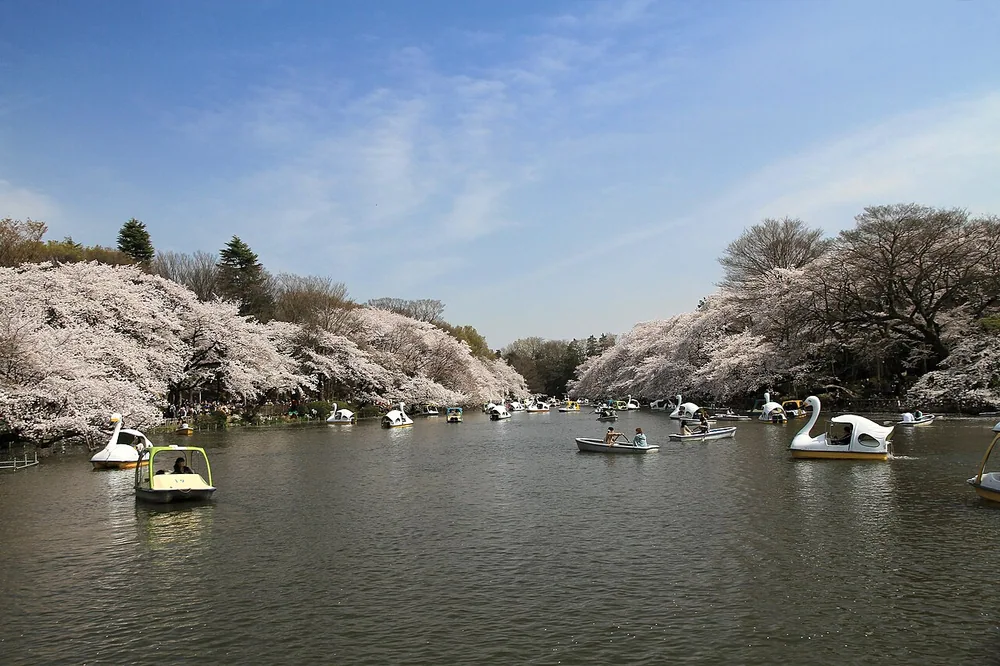
From the Park Exit, walk toward Kichijoji Marui, cross Inokashira-dori, and follow Nanaibashi-dori beside Marui straight into Inokashira Park. Tokyo Metropolitan Government's access guide puts the walk from Kichijoji Station to the park at roughly five minutes. You can stop right at Nanaibashi Bridge, take in both halves of Inokashira Pond from the railing, and stroll a short stretch along one shore. If you still have bags waiting in a locker at Kichijoji Station, return the same way you came. Carrying heavy gift boxes and just want a place to sit with a drink? End your walk at a lakeside bench rather than looping halfway around the pond. Inokashira Park Map
For a one-way walk, cross the bridge, follow the east edge of the pond, and depart via Inokashira-koen Station on the Keio Inokashira Line. Tokyo's guide notes that the station is about one minute from the adjacent park entrance, though you should still budget the walk from Nanaibashi Bridge to reach that gate. Note that only Local trains stop at Inokashira-koen Station; to catch an Express toward Shibuya, take a Local to a transfer station where Express trains stop. Carrying lots of bags? Staying on the Local all the way to Shibuya saves an extra transfer. If you are heading back to Shinjuku or another JR station, walking back to Kichijoji Station is the most direct choice.
In cherry blossom season, put the park at the very start of your day while your hands are free. Ride a Keio Local train to Inokashira-koen Station, walk along the pond to Nanaibashi Bridge, exit toward the Park Exit for south-side shops, and then cross through the station to browse the north side before boarding at Kichijoji Station with your purchases. Conversely, if you start the morning with a large suitcase, stash it in a locker at Kichijoji Station first and make the station both your starting point and finish line to avoid backtracking for your bags.
Pick a Route by Available Time—and Leave a Buffer
With two hours, stick to one shopping category. For craft supplies, spend the whole block on KiRaRiNa 8F and leave a cushion after checkout to navigate the station and find your platform. Anyone in your group who just wants to sit and rest can wait outside the atre ticket gates. Aiming to bring home one or two pieces of Kichijoji homeware? Enter Nakamichi-dori from the PARCO side, start at free design, and if time permits, continue to Torashi or loop back through Daiyagai for sweets. Walking into two targeted shops beats racing past three malls' worth of storefronts.
For a first-timer half-day plan, leave the North Exit in the morning, follow Sunroad to Daiyagai, and cut past PARCO onto Nakamichi-dori. Spend the hours around lunch browsing Nakamichi-dori's boutiques, return to the station in the afternoon, and walk out the Park Exit to Nanaibashi Bridge. That puts the park right when your shopping decisions are done and you just want fresh air. If a north-side food line eats up more time than expected, trim extra mall detours or the full pond loop and settle for a quick overlook of the water. Need to grab bags from a locker? Swing back to Kichijoji Station first so tired companions can wrap up early if they want.
With a full day and plans for lunch and coffee in Kichijoji, start with a focused fabric stop, then let north-side browsing unfold at an easy pace. Crafters can pair KiRaRiNa with washi shopping at Loft, grab lunch, and spend the afternoon drifting toward Tokyu Department Store and Nakamichi-dori. Families can walk from the park to coppice for kid-focused floors, plus one bookstore stop with specific titles in mind. If part of the group accumulates heavy bags by late afternoon, meet back at the station—those with energy left can hit PARCO while everyone else heads back.
Combining Kichijoji with Shibuya on the same day? Use the Keio Inokashira Line. Staying in Shinjuku or along the Chuo Line? Stick with JR. If you have a timed reservation later in the afternoon, pick your hard departure time from Kichijoji Station first and count backward to your last checkout. Saving edible souvenirs for last? Split up so one person retrieves lockers while another grabs sweets in the food hall, then meet back outside the ticket gates—and drop a map pin on any intriguing new shop you spot for next time.
A few useful answers
Which station exit should I take for shopping in Kichijoji?
Take the North Exit (Central Exit) for Sunroad, Daiyagai, coppice, and Nakamichi-dori. Take the Park Exit for south-side vintage shops and Inokashira Park.
Where can I buy craft fabric and washi paper in Kichijoji?
Head to Yuzawaya on the 8th floor of KiRaRiNa for fabric, buttons, and knitting yarn. For washi paper, envelopes, and mizuhiki cords, visit Onao on the 4th floor of Kichijoji Loft.
Is there a Nintendo TOKYO store in Kichijoji PARCO?
No—Nintendo TOKYO is on the 6th floor of Shibuya PARCO. In Kichijoji, visit coppice Building A 6F for character goods, or animate on 7F of Kichijoji PARCO for anime merchandise and manga.
Can I still browse Nakamichi-dori on a rainy day?
Walking between shops on Nakamichi-dori takes you outdoors. In heavy rain, stick to the covered arcades of Sunroad and Daiyagai or consolidate your browsing inside one multi-floor mall.
Can I catch a train straight back to Shibuya after walking through Inokashira Park?
Yes. Walk to Inokashira-koen Station on the east side of the pond and take a Keio Inokashira Line Local train toward Shibuya. If you stored bags in a locker at Kichijoji Station or need a JR line, walk back to Kichijoji Station instead.
Official information and references
Sources used in this guide.
- JR East Kichijoji Station Information (Ticket Gates and Operating Hours)
- JR East Kichijoji Station Chuo and Sobu Line Timetables
- JR East Kichijoji Station Map and Accessible Routes
- Keio Corporation Kichijoji Station Map and Timetables
- Kichijoji Sunroad Shopping Arcade Association (Street and Canopy Info)
- Kichijoji Daiyagai Shopping Arcade Cooperative (Zones and Map)
- Musashino City Tourism Organization: Harmonica Yokocho Guide
- Musashino City Tourism Organization: Kichijoji Area Map (Landmarks and Ozasa)
- free design Kichijoji Shop Address and Opening Hours
- Nakamichi-dori Shopping Association: Torashi Address and Selection
- Machimachi Shorin Books & Gallery: Store and Exhibition Info
- Nakamichi-dori Shopping Association: Paper message Kichijoji Address
- Paper message Brand Overview and Printing Services
- Maker's Watch Knot Kichijoji Flagship Address and Engraving Service
- KiRaRiNa Keio Kichijoji Access and Floor Entrances
- KiRaRiNa Keio Kichijoji 8F: Yuzawaya Store Page
- Washi no Mise Onao Kichijoji Loft Shop (Floor and Selection)
- coppice Kichijoji Floor Guide and Family Facilities
- coppice Kichijoji 6F Store Directory
- coppice Kichijoji Current Hours and Store Calendar
- Kichijoji PARCO Floor Guide (Anime Goods and Cinema)
- Kichijoji PARCO Hours and In-Mall Facilities
- animate Kichijoji PARCO Store Access
- Nintendo Official Stores Directory (Nintendo TOKYO Location)
- MAIN TENT Secondhand Picture Bookshop Info
- RAGTAG Kichijoji Store Address, Selection, and Hours
- Kichijoji Satou: Ganso Maru Menchi Katsu and Store Info
- Ozasa December 2026 Price Revision Notice
- Tokyu Department Store Kichijoji B1 Food Hall Directory
- Tokyu Department Store Kichijoji: Kyukyodo Floor and Hours
- Kichijoji Marui Access Route from Park Exit
- atre Kichijoji Services and Coin Locker Locations
- Keio Kichijoji Station Coin Locker Map
- Musashino City: Kichijoji Station South Exit Area and Nanaibashi-dori
- Tokyo Metropolitan Government: Inokashira Park Access and Map
- Keio Corporation Inokashira-koen Station Train Service Stops