Which exit should you take for shopping in Kichijoji? Start from the North Exit for Sunroad, Daiya-gai and Nakamichi-dori to browse ceramics, paper goods, craft supplies and character merchandise, then head out via the Park Exit to Inokashira Park.
- Region & Focus
- TokyoNeighbourhoods and shopping
- Reading Scope
- 18 min read · 11 chapters · 5 Q&As
- Official Verification
- 36 official sources checkedUpdated 22 November 2026
- Key Topics
- NeighbourhoodsItinerariesTokyo & Kanto
Chapter Route Map (tap any stop)
- Get your bearings: North Exit vs Park Exit
- Sunroad, Daiya-gai and Harmonica Yokocho
- Ceramics, tableware and printed works on Nakamichi-dori
- Further west on Nakamichi-dori: paper goods or a bespoke watch
- How crafters should split fabrics and washi paper
- Where to find character goods, vintage picture books and designer secondhand
- Room-temperature souvenirs vs hot snacks by the station
- Rainy days and pushchairs: pick one building first
- Reordering your stops for early or late arrivals
- Inokashira Pond from Nanaibashi Bridge and choosing your return station
- Pick a route to match your time, and leave room to wrap up
- Quick Q&A
For a first shopping trip to Kichijoji, start at the North Exit to browse Sunroad and Daiya-gai before heading west along Nakamichi-dori. Keep plenty of time for Nakamichi-dori if you are looking for studio ceramics, Nordic tableware or secondhand picture books. Craft shoppers can reverse the route: start with fabrics at Yuzawaya on the 8th floor of KiRaRiNa beside the station, then head out of the North Exit to Loft's 4th floor for washi paper. With only half a day, pick one shopping focus and finish by walking out of the Park Exit towards Inokashira Pond. Character goods are easy to pinpoint too: head to the character zone on the 6th floor of coppice Building A, or the 7th floor of Kichijoji PARCO for manga and anime merchandise.
Get your bearings: North Exit vs Park Exit
From Shinjuku, take either the JR Chuo Line Rapid or a Chuo-Sobu Line Local service to Kichijoji, checking the departure boards to make sure your train stops there. From Shibuya, ride the Keio Inokashira Line straight to Kichijoji. The JR Central Ticket Gates and Central Exit open onto the North Exit plaza, where the Sunroad sign points directly into the covered arcade. If you arrive on the Keio line, follow the North Exit signs from the platforms as well. For Inokashira Park, south-side vintage shops or a stroll towards Nanaibashi Bridge, follow the signs for the Park Exit (South Exit). You have to cross through the station concourse to reach the south side, so do not look for both exits on the same station square.
Before stepping outside, check the chome district numbers on your phone map. Kichijoji Honcho covers most northern routes, while Kichijoji Minamicho covers the south side towards the park. Shopping centres often span several entrances, so the building wing and floor number listed after a shop's name are far more reliable than a blue map dot. The JR West Ticket Gates lead straight into the atre Main Building, and the East Exit Gates connect to the atre East Building. JR East lists both sets of gates as open from 07:30 to 22:00, with the East Exit closing on days when atre is shut. If you are heading to the park early in the morning, stick to the Central Exit or Park Exit rather than hunting for a cut-through inside a mall.
On a half-day itinerary, treat the station as your mid-point pivot. After browsing the north side, you can duck through atre to grab a snack and use the toilets before heading out the south side. If someone in your group goes ahead to the park while you are still picking out fabric, agree to meet outside the Park Exit by the entrance to Kichijoji Marui rather than just texting 'meet at Kichijoji Station'. Anyone returning by JR should note the stairs back up into the Park Exit. If you are meeting friends arriving on the Keio line, arrange a spot outside the gates or outside the station altogether, as JR and Keio operate separate ticket barriers.
Pin four markers on your map first: Kichijoji Station, Sunroad, Kichijoji PARCO and Inokashira Park. The first three trace the northern shopping loop, while the fourth reminds you that the park sits on the opposite side of the railway tracks. When heading to Nakamichi-dori, pin the exact shop you plan to visit rather than the street name, as search results for an entire arcade rarely drop you outside the right door. If you have a pushchair, wheelchair or luggage, check the JR or Keio station maps for lifts beforehand and arrange to regroup with walking companions in the exit plaza.
Which exit should you take for shopping in Kichijoji? Start from the North Exit for Sunroad, Daiya-gai and Nakamichi-dori to browse ceramics, paper goods, craft supplies and character merchandise, then head out via the Park Exit to Inokashira Park.
Sunroad, Daiya-gai and Harmonica Yokocho
Kichijoji Sunroad runs north from the station plaza all the way up to Itsukaichi-kaido. Its main avenue sits under a retractable roof, making it easy to browse in the rain and pause under cover before deciding your next turn. Pick up toiletries, snacks or travel essentials along the main strip at whatever chemist or convenience store suits you. If you are heading to Nakamichi-dori, turn west at the junction with Daiya-gai rather than walking all the way to Itsukaichi-kaido and doubling back.
Daiya-gai is divided into three sections: the arcade map labels EAST on the Kichijoji Station side, WEST towards Tokyu Department Store and SOUTH by the Kichijoji PARCO entrance. When leaving the north side for Nakamichi-dori, spot the WEST or SOUTH exits and use Tokyu or PARCO as your street-level landmarks. Daiya-gai also works well as a sheltered shortcut between coppice and PARCO. If your group wants to split up, arrange to meet outside one of the department store entrances with seating or a canopy rather than blocking the covered crossroads. Official Daiya-gai map
Directly opposite the North Exit lies Harmonica Yokocho, a tight grid of narrow lanes that immediately feels worlds apart from the wide arcades. The Musashino City Tourism Organization traces its origins back to a post-war station-front market established in 1945. By day you will pass fishmongers, florists and wagashi sweet shops, before izakaya and small eateries take over in the evening. Schedule a pass before lunch if you want to see the daytime market atmosphere. Browse whatever stalls catch your eye along the open lanes, and if a queue blocks a narrow alley, step back out to the main road and enter via a neighbouring passage.
For a short stop near the station, peek into Harmonica Yokocho as far as the Daiya-gai intersection and exit cleanly on one side instead of walking every alley twice. If you prefer wider walkways, stick to the main spines of Sunroad and Daiya-gai. When family members want to queue for street snacks while you want to browse Loft, Daiya-gai lets both groups stay close and regroup back at the plaza afterwards. Splitting queuing from browsing means half the group can finish picking up items while the line moves.
Ceramics, tableware and printed works on Nakamichi-dori
Leave the North Exit, turn left towards PARCO and cross Kichijoji-dori to enter Nakamichi-dori. Along Kichijoji Honcho 2-chome, some shops open onto the pavement while others sit on upper floors. For Nordic tableware and everyday design objects, walk to Honcho 2-18-2 and head up to free design on the 2nd floor, which lists opening hours of 11:00–19:00 (with separate schedules over the New Year period). Continue west to Honcho 2-25-7, where Torashii on the ground floor of the Daiwa Building focuses on studio ceramics from makers across Japan; set aside time here to pick pieces up and inspect the handles, foot rings and glazes. Directions to free design
At free design, start by checking what gaps you have at home: flat breakfast plates for two, double-handled cups small hands can grip, or cutlery that mixes easily with what you already own. If buying plates in pairs, stack two together in the shop to see how much cupboard height they take up. At Torashii, switch your approach and think about the dishes you actually cook most often. A soup bowl feels heavier once filled, so cradle the base in your palm rather than judging by rim width alone to tell whether you will reach for it daily. If a potter's work stands out, ask staff to point out the name on the maker card so you can look them up later.
Wrapped dinner plates take up more thickness than you might expect, and long handles or protruding lugs need extra clearance. Factor in your remaining luggage space before paying. Ask staff to wrap pieces individually, then tuck cups and plates separately between folded clothes back at your hotel so edges cannot knock together. If you have train transfers ahead, make your heaviest purchase last on the street so you carry it back towards the station only once. Travelling with just a cabin bag? Flat plates, small side dishes, chopstick rests and table linens pack much more neatly among clothing.
Further west at Honcho 3-3-9 sits Machimachi Shorin Books & Gallery, a small bookshop and gallery specialising in travel titles and exhibitions. Look through its street-scene prints and books if you want an easy-to-pack souvenir for a colleague or travel companion. Save the address in your map app and check how much time you have left after leaving the ceramics shops before walking further west. Remember that every extra block down Nakamichi-dori adds to the walk back to the Park Exit and trims time off your stroll around Inokashira Pond.
If you plan to spend the afternoon among independent shops, aim to reach Nakamichi-dori around midday so lunch fits naturally between stops, with easy side-alley links back towards Tokyu Department Store. To vary the walk back, cut towards Tokyu Department Store after buying ceramics, pick up boxed sweets in its basement B1 food hall and return to the station via Daiya-gai. Large ceramic platters, vases or bulky bags holding two tea sets are worth dropping back at your accommodation before heading on to your next stop.
Further west on Nakamichi-dori: paper goods or a bespoke watch
For a lightweight gift, continue along Nakamichi-dori into Honcho 4-chome. At Honcho 4-1-3, Paper message Kichijoji sells original stationery produced by a Kochi-based printing company and also takes custom print orders. When shopping for ready-made gifts, browse the patterned postcards, greeting cards and envelopes—a very different selection from the sheet papers at Onao. Pairing one bold printed card with a photo of a shopfront or the pond makes a thoughtful keepsake for a travelling companion. You can even pick a patterned card as a cover for the day's tickets and receipts.
Head back towards Honcho 2-chome if you want to try on watches at Maker's Watch Knot Kichijoji Flagship Store. Its official store page notes that the shop moved in November 2025 to the ground floor of Honcho 2-33-3. Older area maps still list 2-33-8, so enter the new street number into your satnav or map app. Cases and straps are sold separately to mix and match: try the watch case on first to check the lugs do not overhang your wrist, then pick the strap you will wear most often. The shop also offers case-back engraving; if you want your travel dates inscribed, type out the exact text on your phone beforehand to double-check at the till.
Both stops pair neatly after the ceramics shops, though choosing just one works well for the western end of Nakamichi-dori. With only an hour to spare, stationery fans can head straight to Paper message and let window displays dictate any quick detours along the way. Anyone keen on watches can shift browsing time into trying on cases while a companion browses a nearby bookshop. Text your group the shop name and street number before they walk back to the station—both addresses sit in different chome blocks, so saying 'meet on Nakamichi-dori' leaves people hunting up and down the street.
How crafters should split fabrics and washi paper
Yuzawaya occupies the 8th floor of KiRaRiNa Keio Kichijoji, directly linked to the Keio Inokashira Line station and easy to reach via concourse signs from JR. Listed opening hours are 10:00–21:00, covering dressmaking fabrics, haberdashery, buttons, knitting yarns and beads. Start here in the morning and you still have plenty of daylight left for north-side shops afterwards. If you are returning via the Keio line with heavy fabric bolts, flip the order and make Yuzawaya your final stop right before boarding.
Before shopping for fabric, convert bag, garment or curtain dimensions into centimetres on your phone, noting how many pieces you plan to make, whether your pattern is directional and whether prints need pattern matching. Bolt hangtags mark fabric width as 'kijihaba' (fabric width); you will also need to specify your cut length at the cutting counter. If a print requires matching along seams or your pattern pieces barely fit once selvedges are deducted, show your diagram to staff and ask about minimum cut lengths and increments. Even a photo of a finished project works far better when paired with rough length-and-width notes so staff can gauge the weight you need.
When matching zips, linings, webbing or thread, choose your main fabric first and hold that exact swatch against notions. To top up half-used yarn at home, photograph the saved ball band so you have the shade number and ideally the dye lot as well. If you find a lookalike yarn with a different needle size or washing care label, check your project notes before committing. Leave basic tools out of your basket if you already own a set at home—replacing only missing supplies saves packing bulky toolboxes.
Cardmakers, gift wrappers and bookbinders should head to Washi no Mise Onao on the 4th floor of Kichijoji Loft outside the North Exit. Alongside traditional sheets, the shop lists printer-ready washi, envelopes, postcards, mizuhiki cords and paper crafts, open 10:30–20:00 (with seasonal New Year hours). If buying handmade paper for printing, bring your sheet dimensions and check how your printer feeds paper. Feel both sides to see which face takes ink or pen best—papers with prominent surface fibres often work better as covers. To test colours, buy single sheets or small packs matched to your project, and sandwich heavier card between stiff backing boards for the journey home.
Visiting both shops in half a day works best with a materials checklist rather than a long list of saved pins. Arriving at the JR North Exit, start at Loft, walk through Daiya-gai and finish back at KiRaRiNa. Arriving on the Keio line from Shibuya, ride straight up to the 8th floor first, leave an unhurried block for fabric selection and cutting queues, then walk over to Loft. If you buy an oversized sheet of washi, ask staff whether flat packing or rolling travels better before deciding whether to detour through the park.
Where to find character goods, vintage picture books and designer secondhand
With children in tow for character merchandise, head straight to Chara Park Kichijoji on the 6th floor of coppice Building A. For newly released manga and anime goods, go to animate Kichijoji PARCO on the 7th floor of Kichijoji PARCO. Both wings of coppice have a 6th floor, with Junkudo Bookstore spanning the 6th and 7th floors of Building B. If children want blind-box draws or toys while adults browse books, agree on a fixed meeting point on that shared level. Note that Nintendo TOKYO's official store is on the 6th floor of Shibuya PARCO, easily reached as an add-on stop via the Inokashira Line.
Note that coppice updated its operating schedule from 1 October 2026: standard building hours are 10:00–20:00, extending to 21:00 on Fridays, Saturdays and the eve of public holidays. Individual character shops and the bookshop keep their own hours, so check the official calendar if making a dedicated evening trip. Kichijoji PARCO generally opens 10:00–20:00 and houses the UPLINK Kichijoji cinema on basement B2. If part of your group has zero interest in character shops, split up between the cinema and the bookshop and set a ground-floor meeting time outside PARCO tied to when the film lets out. coppice opening hours
If you are hunting for vintage picture books, head to MAIN TENT at Kichijoji Honcho 2-7-3, a dedicated secondhand picture bookshop normally closed on Wednesdays (unless Wednesday falls on a public holiday). If you also want craft books at Junkudo, save the big bookstore for specific titles or ISBNs and keep unhurried browsing time for MAIN TENT. Buying for a child learning Japanese? Flip through the pages to see whether kanji carry furigana reading guides and how dense the text is per page. For secondhand gifts, check inside the back cover for previous inscriptions or vintage bookshop stamps to make sure the book's character suits the recipient.
For branded secondhand fashion, walk out towards the Park Exit to RAGTAG Kichijoji on the ground floor at Minamicho 1-8-6—listed as roughly two minutes from the South Exit, open 11:00–20:00 (closed over the New Year period). With only half an hour left nearby, focus on one category you genuinely need and try on only standout finds. Measure a favourite pair of jeans at the waist and inseam before travelling, or check shoulder and sleeve measurements when eyeing coats. Anyone walking back from the park to JR can drop in at the end of the day; if you want to compare sizing elsewhere, jot down the brand, model name and size tag after trying things on.
Room-temperature souvenirs vs hot snacks by the station
The two famous queues around Daiya-gai serve very different purposes. Kichijoji Satou's original round menchi katsu are fried minced-beef cutlets made to eat hot on the spot—carrying an oily paper bag while browsing homeware risks marking other bags, so leave it until your final loop back to the station. Ozasa's yokan jelly is strictly limited in quantity, and the Musashino City tourism map notes the morning queues it draws. If you simply want sweets to hand out after your trip, look at Ozasa's monaka wafers instead. From 1 December 2026, Ozasa lists monaka at ¥130 each and yokan at ¥1,220 per bar, with boxed sets priced according to box size.
Once you are carrying more bags than planned, save boxed confectionery until just before returning to the station. Tokyu Food Show in basement B1 of Tokyu Department Store brings wagashi, loose-leaf tea, baked goods and deli counters together on one floor so you can stock up in a single stop. If buying gifts for several people, ask staff whether smaller boxes or extra individual paper bags are available. Loose pieces work fine if two companions are sharing, while individually wrapped packs suit an office tin. At the opposite end of the station, the food hall in atre Main Building is ideal for picking up supper right before boarding without lugging chilled items around boutique shops.
Check the 'best before' (shomi kigen) or 'use by' (shohi kigen) date and ask how many days items keep at room temperature before deciding when to hand them out. Fragile treats like crumbly monaka travel far better wedged beside shoe boxes, books or rigid tote bags than at the bottom of a soft suitcase. For chocolate-coated or filled sweets, consider whether they will sit in warm sun during the afternoon. To give something unmistakably from Kichijoji, leaving the shop's name and local address on the wrapping is often touch enough. For a non-sweet gift, pair a tin of tea with a washi envelope from Onao and tuck in a note naming the street where you found it.
Rainy days and pushchairs: pick one building first
In light drizzle, keep to the original North Exit route through Sunroad and Daiya-gai. Walking between shops on Nakamichi-dori is completely outdoors, so if wind and rain pick up, pivot to one multi-storey building. Stay in coppice for family goods and books, head into Loft for washi and stationery, or take Keio arrivals straight into KiRaRiNa to work through a craft list. If rain rules out the park, a screening at PARCO's cinema or reading time at coppice's bookshop neatly fills the afternoon break—just pick a film time first and work backwards to see when to wrap up shopping.
With young children in coppice, Building A's 5th floor has family toilets, nursing rooms and a rest area with child-sized tables and chairs, while the Building B 1st-floor information desk handles wheelchair and pushchair loan enquiries. Keep children occupied on the 5th and 6th floors of the same wing before deciding whether adults want to cross buildings. When taking a short breather, meet on one designated floor where toilets, seating and lifts are easy to spot. Anyone splitting off to PARCO can use the children's space and nursing facilities on its 7th floor before walking back via the SOUTH exit of Daiya-gai.
Department stores have lifts, but stepping outside still means navigating narrow alleys and single-step shop thresholds. If pushing a folded buggy into Harmonica Yokocho, send one adult ahead to check crowd levels and aisle width, or let the other adult keep to the main arcades with the children. Travelling with older relatives? An indoor route linking Tokyu Department Store and atre—picking one floor to browse followed by a proper sit-down rest—is far easier to coordinate than hopping between street-level boutiques. Keep umbrella sleeves, children's snacks and a small pack of wet wipes in an outer pocket so you never have to set shopping bags on wet pavement to dig for them.
If you are shopping with luggage, decide which station you are departing from first. The atre website lists coin lockers on basement B1 and the 1st floor of the East Building, and Keio publishes a Kichijoji Station locker map. If you plan to walk the length of the pond and depart from Inokashira-koen Station, keep purchases light enough to carry or save heavier shopping for your return through Kichijoji. Once you lock bags away, save a reminder on your phone and snap a photo of the signs showing East Building, Main Building or inside versus outside the ticket gates. Before stuffing multiple small bags together, check the locker door width—the widest bulge in your bags determines what fits. Keio Kichijoji Station locker map
Reordering your stops for early or late arrivals
Arriving around 09:00 before independent boutiques open? Head straight out of the Park Exit towards Nanaibashi Bridge first. By the time you return to the station at 10:00, Yuzawaya inside KiRaRiNa will be open. North-side shoppers can browse PARCO or coppice from 10:00, then cross the road when free design on Nakamichi-dori opens at 11:00. Washi shoppers can leave the North Exit for Loft once it opens at 10:30. This rhythm works especially well for families: let children burn energy outdoors first, then use the morning indoors for toys or books.
Arriving after 16:00? Prioritise small shops with early closing times and fixed weekly holidays. MAIN TENT closes at 17:00 on weekdays, 17:30 on Saturdays and 18:00 on Sundays and public holidays. free design stays open until 19:00, while craft runs can sit later in the evening since Yuzawaya trades until 21:00. As you pin shops on your map, add their closing days and times too: if your trip falls on a Wednesday when MAIN TENT is shut, switch picture-book shopping to Junkudo in coppice Building B.
Only passing through Kichijoji in the evening for a practical gift? Pick one north-side department store open until 20:00. At Tokyu Department Store, combine paper goods and food in one loop: browse Kyukyodo on the 8th floor until 20:00 for envelopes and stationery, take the lift down to B1 for food gifts, then follow Daiya-gai back to the station. If you have time left near the Park Exit, Kichijoji Marui or atre can cover last-minute travel essentials—pick whichever sits nearest your departure ticket gates.
When squeezing shopping into the final hour before closing, leave the last few minutes strictly for wrapping and paying. If you already know what you want, have a product photo or exact Japanese item name ready on your phone so staff can check stock immediately. Still comparing options? Stay on one floor or aisle rather than dashing between buildings, remembering that lifts and escalators eat into that final hour.
Inokashira Pond from Nanaibashi Bridge and choosing your return station
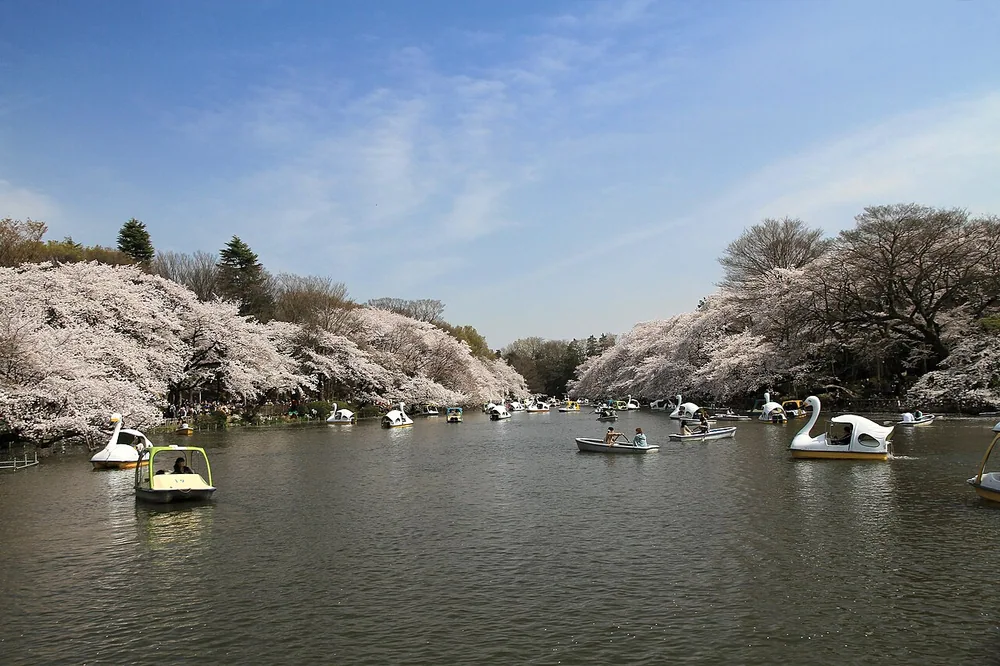
To reach Inokashira Park from the Park Exit, walk towards Kichijoji Marui, cross Inokashira-dori and follow Nanaibashi-dori beside Marui straight into the grounds. Tokyo Metropolitan Government guidance puts the walk from Kichijoji Station to the park at roughly five minutes. You can stop at Nanaibashi Bridge, take in both sides of Inokashira Pond and stroll a short stretch along one bank before heading back via the same entrance if you need to retrieve items from the station. Anyone carrying gift boxes who simply wants somewhere to sit with a drink can end the walk at a waterside bench rather than looping round the full pond. Inokashira Park official map
To turn the walk into a one-way route, continue east along the pond from the bridge and board the Keio Inokashira Line at Inokashira-koen Station. The metropolitan park guide notes a walk of roughly one minute from the park to that station—referring to the adjacent park entrance—so allow extra time from Nanaibashi Bridge. Only Keio Local trains stop at Inokashira-koen Station; if you want an Express service to Shibuya, take a Local train first and change at an express stop. Carrying plenty of bags? Staying on the Local train straight to Shibuya avoids changing platforms. Anyone heading back to Shinjuku or another JR line is better off returning to Kichijoji Station.
In spring, if you want to see the cherry blossoms along the pond before carrying any shopping, put the park at the start of your day. Ride a Keio Local train to Inokashira-koen Station, walk past the pond to Nanaibashi Bridge, head up to the south-side shops via the Park Exit and cross through the station to browse the north side afterwards. Departing from Kichijoji Station means everything you buy stays with you until you leave. Conversely, if you already have a large suitcase in the morning, stow it in a locker at Kichijoji first and start and finish your walk there to avoid a detour back for your bags.
Pick a route to match your time, and leave room to wrap up
Two hours is just right for a single shopping theme. If you are after craft supplies, dedicate that window to the 8th floor of KiRaRiNa and leave a small buffer after paying to navigate the station and find your platform. Anyone in your party who just wants a quiet coffee or seat can meet outside the atre ticket gates. If you want to bring home one or two Kichijoji homeware pieces, enter Nakamichi-dori from the PARCO side, start at free design and, if time allows, continue to Torashii or loop back along Daiya-gai for snacks. Stepping inside two targeted shops beats skimming a checklist of three whole department stores.
For a classic half-day first visit, leave the North Exit in the late morning, follow Sunroad to Daiya-gai and cut across towards PARCO onto Nakamichi-dori. Spend the hours around lunch in the Nakamichi-dori boutiques, return through the station in the afternoon and walk out of the Park Exit to Nanaibashi Bridge. That puts the park right when your shopping is done and no further buying decisions await. If a north-side queue eats up more time than expected, simply trim extra mall browsing or the full pond circuit and enjoy a short waterside stretch instead. Anyone picking up stored luggage mid-afternoon should swing back through Kichijoji Station first so companions who are ready to leave can head off early.
With a full day and plans for lunch and coffee in Kichijoji, start with a short morning stint for fabrics before opening up the north side for unhurried browsing. Crafters can begin at KiRaRiNa, cross to Loft for paper and continue after lunch into Tokyu Department Store and Nakamichi-dori. Families can walk up from the park to coppice for character floors and add a bookshop stop with specific titles in mind. If anyone ends up heavily laden, regroup at the station in the early evening so keen shoppers can carry on to PARCO while others head home.
Pairing Kichijoji with Shibuya on the same day makes the Keio Inokashira Line the natural link; if you are staying in Shinjuku or along the Chuo Line, stick with JR. When you have a timed booking later in the afternoon, pick your latest departure time from Kichijoji Station first and work backwards to set a cutoff for your final purchase. Saving souvenir food for last lets one person collect locker bags while another picks up sweets in the food hall, meeting back outside the ticket gates—and any new boutique you spot on the map can be pinned for next time.
A few useful answers
Which exit should I use for shopping in Kichijoji?
Take the North Exit (Central Exit) for Sunroad, Daiya-gai, coppice and Nakamichi-dori. Use the Park Exit for vintage shops on the south side and for Inokashira Park.
Where can I buy craft fabrics and washi paper?
Head to Yuzawaya on the 8th floor of KiRaRiNa for fabrics, buttons and knitting yarns. For washi paper, envelopes and mizuhiki cords, visit Onao on the 4th floor of Kichijoji Loft.
Is there a Nintendo TOKYO in Kichijoji PARCO?
Nintendo TOKYO is on the 6th floor of Shibuya PARCO. In Kichijoji, browse character merchandise on the 6th floor of coppice Building A, or visit animate on the 7th floor of Kichijoji PARCO for manga and anime goods.
Can I still browse Nakamichi-dori if it rains?
Walks between shops on Nakamichi-dori are outdoors. In heavy rain, switch to the covered arcades of Sunroad and Daiya-gai, or base yourself inside a single multi-floor department store or shopping centre.
Can I catch a train straight back to Shibuya after walking through Inokashira Park?
Yes. Walk to Inokashira-koen Station on the eastern side of the pond and take a Keio Inokashira Line Local train towards Shibuya. If you have left bags in a locker at Kichijoji or need a JR line, return to Kichijoji Station instead.
Official information and references
Sources used in this guide.
- JR East Kichijoji Station Information (Ticket Gates and Opening Hours)
- JR East Kichijoji Station Chuo Line and Sobu Line Timetables
- JR East Kichijoji Station Map and Step-Free Access Routes
- Keio Corporation Kichijoji Station Map and Timetables
- Kichijoji Sunroad Shopping Street Promotion Association (Street and Arcade Canopy)
- Kichijoji Daiya-gai Shopping Street Cooperative (Zones and Map)
- Musashino City Tourism Organization: Harmonica Yokocho Guide
- Musashino City Tourism Organization: Kichijoji Shopping Area Map (Landmarks and Ozasa)
- free design Kichijoji Shop Address and Opening Hours
- Nakamichi-dori Shopping Association: Torashii Address and Curated Selection
- Machimachi Shorin Books & Gallery Shop and Exhibitions
- Nakamichi-dori Shopping Association: Paper message Kichijoji Address
- Paper message Brand and Printing Services Overview
- Maker's Watch Knot Kichijoji Flagship Store Address and Engraving Service
- KiRaRiNa Keio Kichijoji Access and Floor Entrances
- KiRaRiNa Keio Kichijoji 8F Yuzawaya Store Page
- Washi no Mise Onao Kichijoji Loft Shop (Floor and Product Range)
- coppice Kichijoji Floor Guide and Family Facilities
- coppice Kichijoji 6F Shop Directory
- coppice Kichijoji Current Opening Hours and Store-by-Store Calendar
- Kichijoji PARCO Floor Map (Anime Goods and Cinema)
- Kichijoji PARCO Opening Hours and In-House Facilities
- animate Kichijoji PARCO Store Access
- Nintendo Official Store Information (Nintendo TOKYO Location)
- MAIN TENT Secondhand Picture Bookshop Information
- RAGTAG Kichijoji Store Address, Stock and Opening Hours
- Kichijoji Satou Original Round Menchi Katsu and Shop Information
- Ozasa December 2026 Price Revision Notice
- Tokyu Department Store Kichijoji B1 Food Floor Directory
- Tokyu Department Store Kyukyodo Floor and Opening Hours
- Kichijoji Marui Access Route from Park Exit
- atre Kichijoji In-House Services and Coin Locker Locations
- Keio Kichijoji Station Coin Locker Map
- Musashino City: Kichijoji Station South Exit Area and Nanaibashi-dori
- Tokyo Metropolitan Government: Inokashira Park Access and Park Map
- Keio Corporation: Inokashira-koen Station Train Service Types