How to plan a half-day shopping route through Asakusa: start with cookware in Kappabashi, pick up souvenirs along Nakamise via Kaminarimon, and finish at Tokyo Solamachi beneath Skytree. Covers Sunday closures, rainy-day routes, packing kitchen knives in hold luggage, and tax-free refunds.
- Region & Focus
- TokyoNeighbourhoods and shopping
- Reading Scope
- 20 min read · 12 chapters · 6 Q&As
- Official Verification
- 36 official sources checkedUpdated 22 November 2026
- Key Topics
- NeighbourhoodsItinerariesTokyo & Kanto
Chapter Route Map (tap any stop)
- Choosing Your Starting Point
- How to Browse Kappabashi Kitchen Town
- Testing Kitchen Knives & What to Ask Before Paying
- Replica-Food Workshops & Light Souvenirs
- What to Buy Along Nakamise-dori
- Shin-Nakamise, Orange Street & EKIMISE
- Crossing the Sumida River to Tokyo Skytree
- Navigating the Floors at Tokyo Solamachi
- Half-Day Plans by Arrival Time
- Rainy Days, Pushchairs & Luggage Storage
- Tax-Free Refunds, Packing & Heading Home
- Year-End 2026: Hagoita-ichi Fair & Skytree Christmas Market
- Quick Q&A
If you are shopping in Asakusa for kitchen knives or tableware, start in Kappabashi from Tawaramachi Station on the Ginza Line and walk east towards Nakamise. If you are mainly after ningyo-yaki cakes and small craft shops, step straight out of the Kaminarimon side of Asakusa Station. Tokyo Solamachi sits across the Sumida River and works best before dinner. With only two hours in heavy rain, head directly into the mall from Oshiage Station to save your legs. Whether you want to compare knives, try making replica food, or go up Tokyo Skytree, pick one as your main focus for the half-day and arrange the rest around shop opening hours.
Choosing Your Starting Point
A shopping route through Asakusa flows naturally from west to east. Towards Ueno sits Kappabashi, where cookware shops line both sides of a north–south street. Cross Kokusai-dori heading east and you reach Kaminarimon Gate and the Nakamise arcade. Continue east over the Sumida River for Oshiage and Tokyo Skytree. Pinning your first shop and your departure station on a map makes it immediately clear how much walking you will do outdoors.
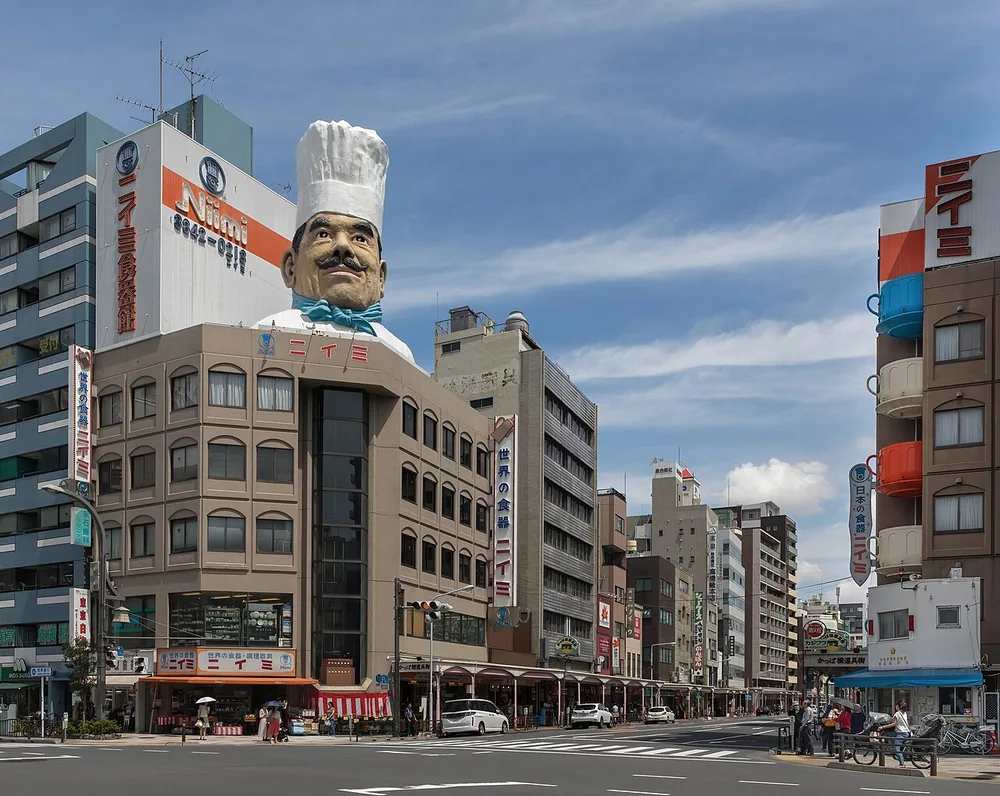
Coming from Ueno or Ginza, take the Tokyo Metro Ginza Line to Tawaramachi Station to enter Kappabashi from the south. The shopping association puts the walk at around five minutes; head to the junction of Asakusa-dori and Kappabashi-dogugai-dori and look for the giant chef statue as your landmark. If your target shops are at the northern end, arriving at Iriya Station on the Hibiya Line is smoother, around six minutes on foot according to the association. Arriving from Akihabara on the Tsukuba Express to Asakusa Station, use Exit A2 for kitchenware or Exit A1 for Nakamise.
To go straight to Kaminarimon Gate, take the Ginza Line to Asakusa Station and use Exit 1, which has a street-level lift. The Ginza Line, Toei Asakusa Line, and Tobu Railway Asakusa stations sit near Kaminarimon and the riverside, while the Tsukuba Express Asakusa Station sits on Kokusai-dori, better placed for Kappabashi and the Rokku district. You have to walk outdoors between the two station clusters. If members of your group are arriving on different lines, agree to meet outside a specific shop rather than simply saying 'meet at Asakusa Station'.
If you have plans afterwards, end your route on the side that gives you the easiest train connection. Heading back towards Ueno, walk west from Kaminarimon and finish at Tawaramachi for the Ginza Line. Leaving on the Hanzomon Line or heading into central Tokyo on the Toei Asakusa Line, depart from Oshiage instead. If you are staying in Asakusa and plan to buy a heavy box of crockery, tackle Kappabashi as a dedicated trip first, drop your boxes back at the hotel, and return to Kaminarimon empty-handed. If you are still deciding where to stay, check our Tokyo neighbourhoods accommodation comparison to weigh up the station access between Asakusa and Ueno.
| Top Priority | Station or Meeting Point | How to Budget Your Time |
|---|---|---|
| Kitchen knives, tableware, or baking tins | Tawaramachi Station, starting at the southern end of Kappabashi | Keep a full block of daytime trading hours free to compare stock |
| Ningyo-yaki, rice crackers, and kimono accessories | Ginza Line Asakusa Station, Exit 1 | Browse Nakamise during the day, then continue into Shin-Nakamise |
| Character goods, department stores, and dinner | Oshiage Station Exit B3 or Tobu Tokyo Skytree Station | Cover the retail floors first and leave dinner for afterwards |
How to plan a half-day shopping route through Asakusa: start with cookware in Kappabashi, pick up souvenirs along Nakamise via Kaminarimon, and finish at Tokyo Solamachi beneath Skytree. Covers Sunday closures, rainy-day routes, packing kitchen knives in hold luggage, and tax-free refunds.
How to Browse Kappabashi Kitchen Town
Kappabashi grew up supplying the restaurant trade, though the street association notes that almost every shop sells to retail customers as well. To inspect pieces in person, Niimi Tableware at the southern entrance stocks Western-style plates, glassware, cutlery, and cooking utensils. For knives, make Kama-Asa in Matsugaya 2-chome your second stop. Shops are scattered on both sides of the street, so save every address you want to visit on the same map and cross over mid-way rather than zig-zagging. If you spot plates you like near the south end while still heading north, note down the shop name, floor, and item code so you can pick them up on the way back instead of carrying fragile goods up and down the street.
Sundays and public holidays make a huge difference here. The Kappabashi shopping association advises that roughly 70% of shops close on Sundays and national holidays, so do not assume the whole street is trading just because one replica-food shop has its doors open. On the association directory, Niimi Tableware lists hours of 10:00–17:45 Monday to Saturday, closed Sundays and public holidays. Kama-Asa's official site lists 11:00–17:30 daily, closing for the New Year period and shutting early at 16:30 on the final day of each month. If you want to compare two or more cookware or knife specialists, go on a weekday or Saturday morning. If Sunday is your only option, check individual store listings in advance and walk a short stretch covering the few places that open.
Two people looking at the same shelf of bowls often pick completely different sizes. Before replacing everyday pieces, measure the depth of your kitchen cupboards, the diameter of your microwave turntable, and the base of your lunch bag at home. Small Japanese bowls (kobachi) sometimes list outer diameters only, so check the depth and foot ring as well. If you plan to buy a stack, ask staff to nest two pieces together so you can gauge the packed height with wrapping. If you use a dishwasher, ask whether the glaze or material is dishwasher-safe. Lacquerware, wood, and stoneware all come with different care rules, and buying one versatile piece you will use every day beats forcing together a mismatched set.
For pots and pans, check your hob dimensions first. If you cook on induction at home, keep a photo of your hob or its model number on your phone and look for labels marked as IH-compatible in the shop. When choosing baking tins, check the width including handles and outer rims, as some moulds quote internal measurements only. Before paying for everyday tools, ask whether replacement lids, strainers, or gaskets can be bought separately; for one-off decorative plates you only buy on holiday, weight in your suitcase matters more.
Bakers should add a stop at Asai Shoten. The association directory lists pullman loaf tins, wooden wagashi moulds, and branding irons, so decide what you want to bake before stepping inside. When buying a Japanese '1-kin' loaf tin, check the listed length, width, height, and capacity so you can scale your dough recipe accurately at home. For lidded Pullman tins, factor in the clearance needed to slide the lid off inside your oven. If you are eyeing biscuit cutters, keep in mind how thinly your rolling pin rolls dough, and check whether intricate stamps dismantle for cleaning or sell spare parts. For bread branding irons, bring a photo of any irons you already own to compare stamp size and handle length.
Testing Kitchen Knives & What to Ask Before Paying
If you are buying your first Japanese kitchen knife, start by explaining what you normally prep. For home cooking centred on vegetables, boneless meat, and fish fillets, use a santoku as your baseline and pick a blade that fits your hand size and chopping-board width. Only look specifically at deba knives if you regularly break down whole fish. If people with different dominant hands share the knife at home, tell the staff up front so they can steer you to the right bevel grind and handle shape. Holding two knives meant for the same job side by side tells you far more than memorising steel names—you will feel immediately which handle pinches your fingers and which balance feels natural.
Factor in your cleaning habits when comparing steels. Carbon steel is worth considering if you dry blades straight after washing and do not mind routine maintenance. If several people cook in your household or knives tend to sit by the sink, ask to look at easier-care stainless options first. When inspecting a single-bevel knife, ask staff to demonstrate the proper grip, show you how to tell left- from right-handed grinds, and explain how to sharpen it once you are back home. If you are buying a knife as a gift, check what the recipient actually cooks before choosing—blade profile is far harder to change later than an engraved name.
Kama-Asa runs a dedicated knife shop in Kappabashi. To make your needs clear quickly, jot down 'home use', 'right-handed' or 'left-handed', and your budget on your phone alongside photos of the knives you already own. Write down the model code, blade length, and steel type of any contender so you can compare fairly if you browse neighbouring shops. If you want engraving, ask before paying whether it can be finished the same day, which side of the blade it goes on, and have the clerk read back your spelling. If you have a timed workshop or Skytree entry later, work out the collection time before handing over your card.
Japan's Ministry of Land, Infrastructure, Transport and Tourism prohibits carrying kitchen knives in aircraft cabins. Any knife you fly home with must go into checked hold luggage, packed and declared according to your airline's rules—ask the shop to wrap the blade securely at checkout. Travellers flying with cabin baggage only should price up adding a checked bag or look for shops and couriers that ship knives abroad. When arranging international shipping, state clearly that the parcel contains kitchen knives and confirm eligible destination countries, postage fees, tracking, and transit times. Keep in mind that Japanese tax-free shopping requires goods to leave the country with you on departure, so do not count on a tax refund for items shipped overseas separately.
Replica-Food Workshops & Light Souvenirs
If you only want a small keepsake from Kappabashi, look at miniature replica food instead. While the street supplies full-size display plates for restaurant windows, Sato Sample stocks small accessories and Ganso Shokuhin Sample-ya offers both retail goods and hands-on workshops. When choosing pieces to pack, watch out for delicate protrusions like prawn tails or dangling noodles—keep them in their original boxes and pack them near the top of your suitcase above soft clothes. For practical gifts, chopstick rests, bento accessories, and compact kitchen gadgets pack easily and take far less time for non-cooking companions to pick out.
The standard workshop at Ganso Shokuhin Sample-ya's Kappabashi branch teaches you to make two pieces of wax tempura and one head of lettuce for ¥3,300 per person. It lasts around 40 minutes and requires check-in 10 minutes before your booked slot. Online bookings cover groups of one to four, while parties of five or more must book by phone. Participants must be in primary school year one or above; pre-school children cannot enter the workshop floor. Up to two non-participating spectators per group may watch at ¥500 each. If one parent needs to look after a toddler, split up and arrange to meet after the session rather than trying to alter tickets at the door.
Morning sessions run at 11:00 and 11:30, with several afternoon slots starting from 14:00. With a morning booking, browse the open cookware shops near the south entrance first and work your way north to the studio. With an afternoon slot, have lunch in Nishi-Asakusa rather than crossing the river and doubling back. Because the workshop uses hot water, wear sleeves you can roll up to the elbow; aprons are provided, and staff ask guests not to film the making process. Companions who only want to shop can browse the retail area while you finish, then head towards Shin-Nakamise together.
What to Buy Along Nakamise-dori
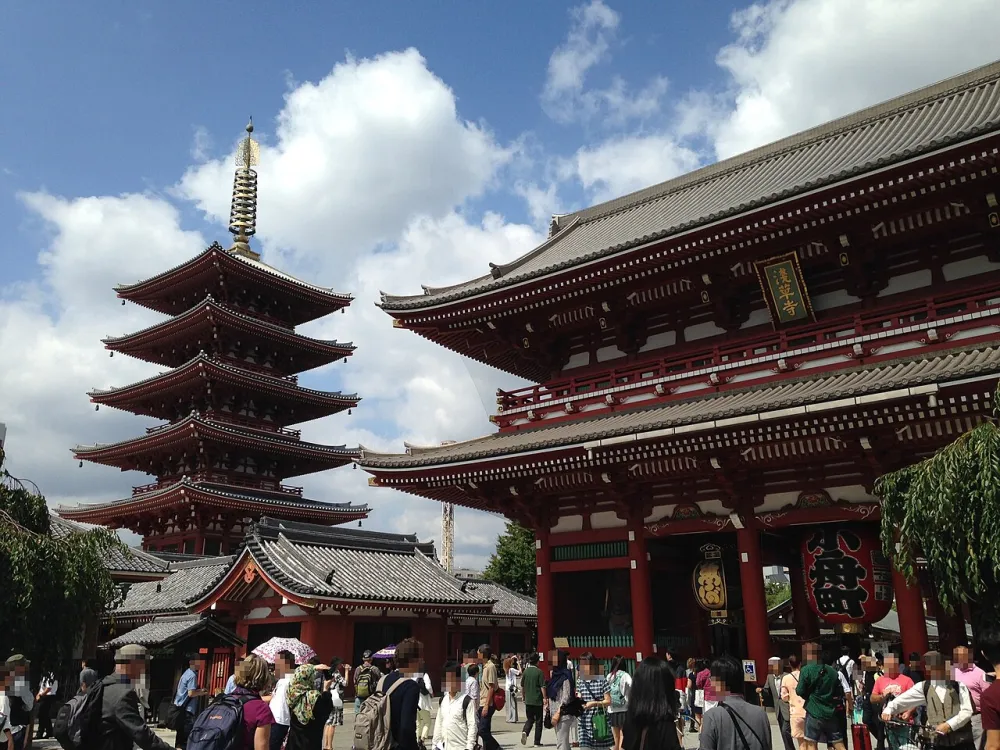
Nakamise runs roughly 250 metres from Kaminarimon Gate to Hozomon Gate, packed shoulder-to-shoulder with stalls on both sides. If you are hunting for both street snacks and souvenirs, circle your target shops on a map beforehand. Walk through once with the crowd to see where queues are forming and which items catch your eye, then loop back to buy. For a clear shot of the Kaminarimon lantern, cross to the opposite pavement to frame the whole gate. Whenever you stop to browse or take photos, step to the edge of the arcade so the central path stays clear, and finish freshly made snacks in the shop's designated eating spot before walking on.
To snack as you stroll, start with ningyo-yaki sponge cakes. Kimuraya Ningyo-yaki Honpo on Nakamise makes shapes including doves, five-storey pagodas, lanterns, and the Thunder God, and also lists unfilled plain cakes. If you prefer toasted rice aroma and crunch, try kaminari-okoshi, made from puffed rice and quite different from sweet red-bean ningyo-yaki. Buy a small bag for eating on the spot; for gifts you will hand out days later, check the best-before date and storage instructions on the box. If you are bringing treats into an office, check how many pieces are inside and whether each is individually wrapped—one big unsealed bag creates extra repacking work back home.
Beyond sweets, Nakamise is a good stretch for nori seaweed, folding fans, and tenugui cotton towels. Isekan specialises in nori and lists hours of 11:00–16:30, closed Mondays and Thursdays, with occasional consecutive closures at the end of the month. If you specifically want their seaweed, check opening days first, though you should not rearrange your whole day around one shop if you simply need ambient-temperature gifts. Folding fans and tenugui slide effortlessly into cabin bags: ask staff to open fans fully to judge their size, and unfold tenugui to see whether the print works better as a table mat, bento wrap, or wall hanging. For a whole household, one practical textile paired with a small box of sweets is far easier to pack than individual boxes for everyone.
If you still have several nights in Japan before flying home, look for vacuum-packed options. Mihatodo on Nakamise sells ambient-temperature souvenir ningyo-yaki, noting that its vacuum-sealed packs keep for about a month and come with either chunky or smooth red bean paste. Check the date stamp before buying and keep freshly baked snacks separate from boxed gifts. Anything marked 'keep refrigerated' needs cold storage; if you have two more shopping districts ahead that afternoon, stick to room-temperature goods. When a gift hamper mixes different items, store and distribute the whole box according to the shortest expiry date on the label.
Anyone with dietary restrictions should check ingredient labels and ask staff before buying a small portion to try, and keep the outer box with full product and allergen details for anyone receiving a gift. Payment policies vary among smaller stalls—Kimuraya accepts credit cards, whereas Isekan's listing notes cash only—so carry enough yen coins and notes to pay quickly at the counter after queueing. For timing temple visits and goshuin stamps around your shopping, follow our Senso-ji half-day route.
Shin-Nakamise, Orange Street & EKIMISE
While Nakamise runs north towards Hozomon Gate, Shin-Nakamise is the covered shopping arcade cutting across it east–west. Returning from Kappabashi on the western side, walk into Shin-Nakamise near Kokusai-dori and Rokku, follow the covered arcade east across Nakamise, and continue to Umamichi-dori for the underground or Tobu stations. In light rain, keep your time at Kaminarimon and Nakamise brief—grab the snacks you want and duck straight under the roof. If lunchtime queues spill across an alleyway, keep walking until things open up and circle back once tables turn.
For kimono accessories and traditional crafts, turn off Shin-Nakamise onto Orange Street. The street association directory includes tenugui specialist Kamawanu, traditional lacquered-deerskin craft shop Asakusa Maekawa Inden, and several kimono outfitters. It is well worth setting aside extra time here if you are looking for tenugui, coin purses, or thoughtful gifts for older relatives. If you need a pouch of a particular size, measure the cards or keys you carry daily—buying something slightly too small is far more likely than picking the wrong pattern.
Back at Tobu Asakusa Station, the attached EKIMISE complex gives you an indoor option without crossing the river. The building lists Matsuya Asakusa open 10:00–19:00, speciality floors 4 to 7 open 10:00–20:00, and 7th-floor restaurants generally serving 11:00–22:00. In clear weather, head up to the rooftop Asakusa Hare Terrace (open 10:00–20:00) for views across the water towards Tokyo Skytree. If you only have an hour left and dinner is already booked in Asakusa, this makes a neat place to wrap up before catching your train.
For a quick breather near Kaminarimon, cross the street to the Asakusa Culture Tourist Information Center to pick up maps and check out its 8th-floor free observation terrace, listed by Taito City as open 09:00–22:00. If your group needs to split up for different shops, pick a specific street-level entrance and time to regroup—or agree to meet inside a restaurant—rather than standing under the giant red lantern, where weekend photo queues make finding each other slow.
Crossing the Sumida River to Tokyo Skytree
On a clear day, walk from Kaminarimon towards Tobu Asakusa Station and the riverbank, join the Sumida River Walk running alongside the railway bridge, pass through Tokyo Mizumachi, and continue on to Tokyo Skytree. From Tobu Asakusa Station's North Exit, it is around a five-minute walk across the bridge to Mizumachi, or roughly seven minutes from Ginza Line Asakusa Station Exit 5—bearing in mind those times reach Mizumachi only, with another stretch beyond it to the mall. Allow an extra half-hour if you want to take in the river views, grab a coffee, or stop for photos.
The Sumida River Walk is open 07:00–22:00. If you plan to walk back to Asakusa after dinner, watch the clock—after 22:00 you will need to take the Azuma Bridge road crossing or catch one of the remaining trains. If you are already carrying a heavy box of bowls or the wind and rain pick up along the river, take the Tobu Skytree Line one stop from Asakusa to Tokyo Skytree Station instead. If you are already near the Toei Asakusa Line entrance, ride directly to Oshiage Station and enter the mall via Exit B3. Because the two stations have separate entrances and platforms, specify the exact operator in your navigation app.
At the foot of Skytree, the two rail stations land you at opposite ends of the complex. Tobu Tokyo Skytree Station sits by the western edge, whereas Oshiage Station exits B3 and A2 bring you up at the eastern end. When meeting someone for dinner, give the zone name or specific restaurant as well as the floor—the complex stretches across West Yard, Tower Yard, and East Yard, so simply saying 'meet on the 4th floor' can leave someone walking the entire building. To avoid backtracking at the end of the evening, start shopping at the far end and work towards the station you plan to leave from.
Navigating the Floors at Tokyo Solamachi
Standard retail hours at Tokyo Solamachi are 10:00–21:00, while restaurants on floors 6, 7, 30, and 31 generally trade 11:00–23:00, though individual outlets set their own hours and last-order times. If you arrive in the early evening, finish your retail shopping before sitting down to dinner. When buying food gifts only, browse the 2nd-floor food hall for pastries, wagashi, and deli items, then head up to the 3rd-floor food court for an easy meal where everyone in a family can order from different counters without extra trips between floors.
Entering from Oshiage with limited time, start along the 1st-floor Solamachi Shotengai in East Yard. Food stalls, gifts, and cafés line a single corridor, letting you pick up a range of presents in one short walk. If you are hunting for Skytree-motif goods or specific character stores, check the official floor guide beforehand for the shop name and block number. Arriving from the west via Tobu, browse eastwards towards the gift shops. If you have timed tickets for the Tokyo Skytree observation decks, anchor your schedule around the 4th-floor entrance and leave long browsing stops until after you come down.
For the Pokemon Center, take the lift to the 4th floor of East Yard. Fans of Japanese television characters will find the NHK Character Shop on the same floor over in West Yard—keep the zones clear so no one waits outside the wrong '4th-floor character shop'. Official tower souvenirs sit at the SKYTREE SHOP on the 5th-floor exit level, which makes a natural meeting point if part of your group goes up the tower while others shop. If you are heading to Sumida Aquarium next, use the dedicated exterior lift or escalator on the 4th floor of West Yard up to the 5th-floor aquarium entrance—both the tower exit and the aquarium entrance sit on the 5th floor, so follow signs by facility name rather than floor number alone.
You do not need an observation deck ticket to visit the 5th-floor SKYTREE SHOP, which carries collaborations and official tower merchandise. A second branch with the same name sits inside the tower at 345 metres and stocks a handful of deck-exclusive items accessible only to ticket holders. If you are picking up something for a friend, ask them to send the exact product name or current campaign page so you know which of the two branches to check.
Families with young children can head straight to the 5th-floor Sumida Aquarium entrance. Its gift shop sits right outside the ticket gate, so anyone without admission can still browse inside; groups wanting limited-edition marine merchandise can meet at the shop before taking the lift to dinner. Trying to fit Kappabashi, the observation deck, and the aquarium into the same day usually leaves you racing between timed entrances—with younger kids, pick one ticketed attraction for the afternoon and leave unhurried time for dinner and toy browsing.
Even arriving after 19:00 leaves time to shop if you shortlist two priority stores first. Restaurants stay open later, so leaving biscuit shopping until after dinner often means finding the retail shutters down. Floors 6 and 7 are best for checking menus and queue times on arrival; if you want skyline views with dinner, reserve a slot on floors 30 or 31. When dining on the east side with armfuls of shopping bags, leaving via Oshiage Station saves a long walk back to the Tobu terminal.
Half-Day Plans by Arrival Time
For a dedicated cookware weekday, leave Tawaramachi Station at 10:00, browse tableware at the south entrance of Kappabashi, and head to Kama-Asa when it opens at 11:00 to test knives. Judge the weight before deciding whether to drop bags at your hotel or carry on. If Nakamise is next, stop for lunch in Nishi-Asakusa, walk towards Kaminarimon, pick up boxed gifts first, and buy a fresh snack to eat on the way. Cross the river to Solamachi for dinner only if you still have energy—otherwise staying on the west bank makes catching the Tobu or underground lines straightforward.
Visiting at the weekend with older relatives, stick to Kaminarimon, the covered Shin-Nakamise arcade for shelter, and the specific shops you need on the Asakusa side. Build in seated breaks at the Asakusa Culture Tourist Information Center or EKIMISE so nobody has to stand in long queues. If you cross to Skytree, ride the Tobu train one stop rather than walking the bridge, saving legs for shopping and dinner. Save Kappabashi for a Saturday or target a couple of confirmed open shops instead of walking the street checking closed shutters.
With just over two hours in the afternoon, start at Kaminarimon, pick up ambient-temperature souvenirs along Nakamise, stop for coffee in Shin-Nakamise, and return to Asakusa Station. If Skytree souvenirs or character shops are your priority, enter straight from Oshiage and spend the whole window inside Solamachi. If you are flying out of Haneda or Narita later that evening, remember you still have transfers and luggage to manage—avoid queuing for knife engraving, heavy packing, or tax-free registration in your final hour.
Arriving in Kappabashi in the afternoon with a replica-food workshop booked, lock your plan around the fixed class time and pick lunch nearby. A 14:00 session means checking in by 13:50 and finishing roughly 40 minutes later. Fit one or two nearby knife or tableware shops around the class, adding a third only if time allows. If your workshop ends close to early evening, pick up retail items before class starts, then head straight to Shin-Nakamise or Skytree afterwards for dinner.
Rainy Days, Pushchairs & Luggage Storage
In heavy rain, start indoors at Solamachi and only add a riverside walk if the sky clears. Enter via the Oshiage B3 underground link, browse the 1st floor, eat lunch inside, and step out for Skytree photos once the rain eases. Kappabashi consists of separate street-level storefronts, meaning every shop change and road crossing puts you back in the rain—if there is one cookware store you cannot miss, time a quick dash during open hours and save covered Shin-Nakamise for the worst downpours.
If you are navigating with a pushchair, map out your route around nappy changes, meals, and your departure train. Solamachi's service directory lists baby care rooms—with changing tables, hot water for formula, and private nursing rooms—at Block 7 on the 1st floor, Block 3 on the 3rd floor, Block 7 on the 4th floor, and Block 9 on the 6th floor. Free wheelchair loans are available from the information desks at Block 12 on the 1st floor and Block 5 on the 3rd floor, requiring ID and a short form. Grouping stops on adjacent floors cuts down waiting for lifts.
Leave large suitcases at your hotel where possible, or use the paid lockers inside the complex. Solamachi lists coin lockers ranging from ¥300 for extra-small to ¥1,000 for extra-large, alongside paid left-luggage and courier dispatch at Sagawa Express in Block 7 on the 1st floor. If you plan to depart from Oshiage, choose lockers near the eastern end and note the floor and block number; if you left bags at Asakusa Station, factor in time to cross back over the river. For perishable food purchases, ¥100 refrigerated lockers are available at Food Marche in Block 3 on the 2nd floor for short stays inside the mall, though you will still need insulated packing for the trip back to your hotel.
Tax-Free Refunds, Packing & Heading Home
From 1 November 2026, Japan's tourist tax-free system switches to a pay-first, refund-at-departure model: you pay the tax-inclusive price in store and receive your refund after customs confirms at departure that the goods are leaving Japan with you. Japan Customs sets the standard threshold at ¥5,000 or more (excluding tax) at a single shop on the same day, with departure required within 90 days of purchase. Solamachi advises travellers to complete purchase registration at participating stores displaying the tax-free mark; if you buy knives in one shop and bowls in another, each store's total is counted separately, so keep your passport on you at checkout.
Pack any tax-free purchases going into hold luggage where you can reach them easily. At international departure lobbies in Narita and Haneda, Japan Customs kiosks let you complete tax-free confirmation before passing through security—supported airports also let you use Visit Japan Web over designated Wi-Fi. If the kiosk flags an inspection, take the items to the designated counter. Both Narita and Haneda require you to complete customs departure confirmation before checking hold luggage containing tax-free goods at your airline desk. Keep snacks you intend to eat during the trip on a separate receipt from tax-free gifts so nothing goes missing at inspection.
Once you pay for ceramics, ask staff to wrap pieces individually with padding between plates. Back at your hotel, nest the boxes inside your suitcase and pad all surrounding gaps with clothing. Leave boxed biscuits and thin rice crackers until the end of your mall visit so they are not crushed inside shopping bags. If you plan to travel straight to the airport from Oshiage after Skytree, check before buying where your dinner spot and luggage lockers sit in relation to your exit, or allow time to collect bags from your hotel.
Set aside your main budget for knives or cookware first, then factor in checked-baggage fees, courier rates, and extra packing material. When buying shareable office or family souvenirs, compare the cost per individual piece between single packs and gift boxes, and check whether everything fits in one trip home. If most of your budget goes on kitchenware, stick to small same-day treats along Nakamise and enjoy them before moving on.
Year-End 2026: Hagoita-ichi Fair & Skytree Christmas Market
Taito City lists the 2026 Senso-ji Toshi-no-ichi (Hagoita-ichi battledore fair) for 17–19 December. Stalls inside the temple grounds sell decorative wooden paddles adorned with raised padded fabric figures—from kabuki characters to figures inspired by the year's news. If you want to bring one home, ask whether a display stand is included and check the boxed length against your suitcase dimensions before buying. To browse unhurriedly, pair the fair with your Nakamise walk and keep Kappabashi cookware shopping for a different day.
In the same season, Tokyo Skytree Town's 4th-floor Sky Arena hosts its Christmas market from 5 November to 25 December 2026, open 11:00–22:00 with last orders for food and drinks at 21:00. Because the two events overlap from 17 to 19 December, you can visit Senso-ji for the battledore fair during the day, cross the river for indoor Solamachi shopping before dinner, and head up to the open-air 4th-floor plaza afterwards. Pack a windproof jacket for eating outdoors on winter nights, and if you need to cross back to Asakusa for your bags or hotel, remember the Sumida River Walk closes at 22:00.
A few useful answers
Is half a day enough for shopping in Asakusa?
Pick two out of the three zones—Kappabashi, Nakamise, and Tokyo Solamachi. Allow extra time in Kappabashi if you plan to compare knives or join a replica-food workshop, or cross from Nakamise to finish at Oshiage if you are visiting Skytree or Sumida Aquarium.
Is Kappabashi Kitchen Town open on Sundays?
The street association notes that around 70% of shops close on Sundays and public holidays. Kama-Asa and Ganso Shokuhin Sample-ya open on Sundays, while Niimi Tableware closes on Sundays and holidays. Visit on a weekday or Saturday if you want to compare several cookware stores.
Where are the best spots for Asakusa souvenirs?
Browse Nakamise for ningyo-yaki sponge cakes, kaminari-okoshi, and rice crackers, and turn onto Orange Street for tenugui towels and traditional crafts. Head across the river to Tokyo Solamachi beneath Skytree for character goods, tower merchandise, and boxed sweets.
Which train line goes from Asakusa to Tokyo Solamachi?
Take the Tobu Skytree Line one stop from Asakusa Station to Tokyo Skytree Station, or ride the Toei Asakusa Line to Oshiage Station and enter via Exit B3. On foot, cross the Sumida River Walk through Tokyo Mizumachi.
Can I pack Japanese kitchen knives in cabin luggage?
No—kitchen knives are banned from aircraft cabins. Have blades wrapped securely at checkout and pack them in your checked hold luggage according to airline rules. If you are claiming tax-free, complete Japan Customs departure confirmation before dropping your bag at the airline desk.
What time does Tokyo Solamachi close at night?
Main retail floors generally run 10:00–21:00, while restaurants on floors 6, 7, 30, and 31 usually open 11:00–23:00, subject to individual last-order times. In the evening, finish your shopping before sitting down for dinner.
Official information and references
Sources used in this guide.
- Kappabashi Kitchen Town Official Access Guide
- Kappabashi Kitchen Town FAQ (Sunday Closures & Retail Sales)
- Kappabashi Kitchen Town: Niimi Tableware Store Listing
- Kama-Asa Kappabashi Store Locations & Opening Hours
- Kappabashi Kitchen Town: Asai Shoten Baking Supplies
- Kappabashi Kitchen Town: Sato Sample Replica Food Goods
- Ganso Shokuhin Sample-ya Kappabashi Branch Workshop Menu
- Taito City Official Tourism Guide: Nakamise Shopping Street
- Nakamise Shopping Street: Kimuraya Ningyo-yaki Honpo
- Nakamise Shopping Street: Isekan Nori Shop
- Nakamise Shopping Street: Mihatodo Vacuum-Packed Ningyo-yaki
- Shin-Nakamise Shopping Arcade Directory & Map
- Asakusa Orange Street Association Store Directory
- Tokyo Metro Ginza Line Asakusa Station Exits
- Tsukuba Express Asakusa Station Exits
- Taito City: Asakusa Culture Tourist Information Center Floor Guide
- Asakusa EKIMISE Opening Hours & Floor Information
- GO TOKYO Official Guide: Tokyo Mizumachi & Sumida River Walk
- Tobu Railway: Tokyo Skytree Station Information
- Tokyo Solamachi Opening Hours & Access
- Tokyo Solamachi Floor Guide
- Tokyo Solamachi Coin Lockers, Baby Rooms & Tax-Free Services
- Sumida Aquarium Shop & Entrance Information
- Japan MLIT Cabin Baggage & Checked Luggage Rules
- Japan Customs: Tourist Tax-Free Shopping & Departure Confirmation
- Taito City: 2026 Hagoita-ichi (Toshi-no-ichi) Event Information
- Tobu Railway: Tokyo Mizumachi Walk & Tobu Asakusa Station Walking Times
- Tobu Railway: Shitamachi Walking Campaign (Ginza Line Asakusa Station Access)
- Tokyo Skytree Entrance & Exit Floor Guide
- Pokemon Center Skytree Town Official Access & Floor Details
- Tokyo Solamachi 2026 Christmas Event Information
- Japan Customs: Departure Tax-Free Procedure & Checked Baggage Order
- Toei Transportation: Asakusa Line Asakusa Station & Connections
- Narita Airport: Tax-Free Confirmation & Checked Baggage Sequence
- Haneda Airport: Tourist Tax-Free Procedures & Terminal Kiosks
- Tokyo Skytree Shops (5F & Observation Deck Branches)