Start a Harajuku shopping trip from JR Harajuku, Meiji-jingumae or Omotesando Station. Compare Takeshita Street, Ura-Harajuku, Cat Street and Omotesando, with half-day routes, wet-weather options and year-end hours.
- Region & Focus
- TokyoNeighbourhoods and shopping
- Reading Scope
- 18 min read · 9 chapters · 8 Q&As
- Official Verification
- 29 official sources checkedUpdated 22 November 2026
- Key Topics
- NeighbourhoodsItinerariesFirst trip
Chapter Route Map (tap any stop)
- Choose Which Station to Start From
- Walk Takeshita Street Once, One Way
- Hunt for Clothes in Ura-Harajuku, Then Follow Cat Street to Shibuya
- Two Tokyu Plaza Buildings Stand at the Jingumae Crossing
- Save Laforet for Shoppers Who Want to Try Clothes On
- Walking Omotesando from the Aoyama End Works Just as Well
- Visiting with Children, a Buggy or Heavy Bags
- Visit Meiji Jingu Early, Save Yoyogi Park for Before Shops Open
- Build Your Half-Day Around Your Next Stop, and Cut Street Time in Bad Weather
- Quick Q&A
For a first shopping trip to Harajuku, leave JR Harajuku Station via the Takeshita Exit, walk through Takeshita Street to Meiji-dori, and choose your next leg from there. Head into the backstreets of Ura-Harajuku for vintage clothes and streetwear, or follow Omotesando towards Aoyama for flagship boutiques and architecture. If you are continuing to Shibuya, take the southern stretch of Cat Street down to Miyashita Park before heading into the main shopping district. Giving half a day to one street and one shopping centre leaves proper time to try things on and sit down for a meal, rather than rushing down every lane.
Choose Which Station to Start From
West of Harajuku Station lie Meiji Jingu Shrine and Yoyogi Park; most of the shops sit to the east of the railway tracks. On the JR Yamanote Line, you can ride straight to Harajuku from Shinjuku or Shibuya. If Takeshita Street is your first stop, take the Takeshita Exit and cross the road outside the station to reach the entrance arch. To walk along tree-lined Omotesando towards Meiji-dori, use the East Exit from the Omotesando Ticket Gate. If you plan to visit the shrine first, take the West Exit from the same gate towards the Meiji Jingu Harajuku Entrance. Both exits branch off the same ticket gate, so specify East or West when meeting friends.
If you prefer to walk first and catch a train back from elsewhere, save your arrival and departure stations separately. The Chiyoda and Fukutoshin lines stop at Meiji-jingumae (Harajuku) Station, which has exits clustered around Jingubashi Bridge and the Jingumae intersection. Exit 2 leads to Harajuku Station, Meiji Jingu and the Yoyogi Park Harajuku Gate; Exit 5 brings you up near Laforet, with Omotesando Hills further east. For Harakado, use Exit 4 or Exit 7, both officially listed as roughly a 1-minute walk to the building. If your maps app only shows the station name, tap through to check the exact exit number before heading upstairs.
The Ginza, Hanzomon and Chiyoda lines all serve Omotesando Station. If you are staying towards Akasaka or Ginza and want luxury boutiques or Omotesando Hills first, come straight out of Omotesando Station Exit A2 and browse from the Aoyama end. Walking back towards Harajuku is mostly gently downhill. Once you reach the Jingumae intersection laden with bags, you can hop on Tokyo Metro there—or press on to the JR station if you still have the legs for it. Going the other way from JR Harajuku, Omotesando Hills officially puts the walk from the Omotesando Ticket Gate area at about 7 minutes, before factoring in browsing time.
Chiyoda Line passengers at Meiji-jingumae who need a lift should take the Yoyogi Park-bound ticket gate to Exit 2 when heading to the shrine, or the Meiji-dori-bound gate to Exit 6 for Meiji-dori, where the street-level lift operates from 06:00 to 24:00. On the Fukutoshin Line, follow lift signs for the Jingumae Crossing ticket gate. Omotesando Station has a street-level lift at Exit B3; from the surface, walk along Aoyama-dori to the Omotesando intersection and turn towards Harajuku. For step-free access on JR, use the Omotesando Ticket Gate; if you are bound for Takeshita Street, step out of the East Exit and follow the pavement along the station front.
Before boarding across town, think about where your route ends. Staying in Ikebukuro with dinner booked in Shibuya? Take the Fukutoshin Line into Meiji-jingumae, walk down to Shibuya for dinner, and catch the Fukutoshin Line or JR back. Coming from the Ueno area on the Ginza Line, you can arrive at Omotesando, stroll between stops and depart from Shibuya on the same line. Treat your return train as flexible: if trying clothes on takes longer than planned, you can wrap up once you reach Meiji-dori.
| First Stop | Station & Exit | Landmark Outside |
|---|---|---|
| Takeshita Street entrance | JR Harajuku Station, Takeshita Exit | Takeshita Street arch directly across the road |
| Meiji Jingu or Yoyogi Park | JR Harajuku Station, Omotesando Gate West Exit / Meiji-jingumae Exit 2 | Jingubashi Bridge and the Harajuku torii gate |
| Laforet Harajuku | Meiji-jingumae Station, Exit 5 | Laforet corner of the Jingumae intersection |
| Harakado | Meiji-jingumae Station, Exit 4 or Exit 7 | Tokyu Plaza at Jingumae 6-chome |
| Omotesando Hills | Omotesando Station, Exit A2 | Aoyama end of Omotesando |
Start a Harajuku shopping trip from JR Harajuku, Meiji-jingumae or Omotesando Station. Compare Takeshita Street, Ura-Harajuku, Cat Street and Omotesando, with half-day routes, wet-weather options and year-end hours.
Walk Takeshita Street Once, One Way
Tokyo's barrier-free tourism map measures Takeshita Street at roughly 350 metres from Harajuku Station to Meiji-dori. You can walk this stretch eastwards from the Takeshita Exit with just a shop name or two saved on your phone. Accessories, sweets, crepe stands and clothing boutiques sit shoulder to shoulder behind narrow shopfronts. When a window display catches your eye, step aside from the flow of walkers before stopping. The Takeshita Street shopping association asks pedestrians to keep left and explicitly bans street touting and solicitation. To check whether a spot from an older list is still open, consult the association's block map to confirm which section it is in and whether you need to head upstairs.
If you can visit on a weekday just after your target shops open, put Takeshita Street first. If you only want a photograph of the arch by the Takeshita Exit, take it before opening time and continue across to the west side of the tracks for a morning walk. Arriving at a packed weekend station front, decide whether you are here to browse casually or buy something specific. For street atmosphere alone, walking from the Omotesando Gate East Exit towards the Jingumae intersection is far more direct, leaving Takeshita Street for another day. If you have a particular item or purikura photo booth in mind, check the queue at the shopfront first and tick off that single priority if there is room.
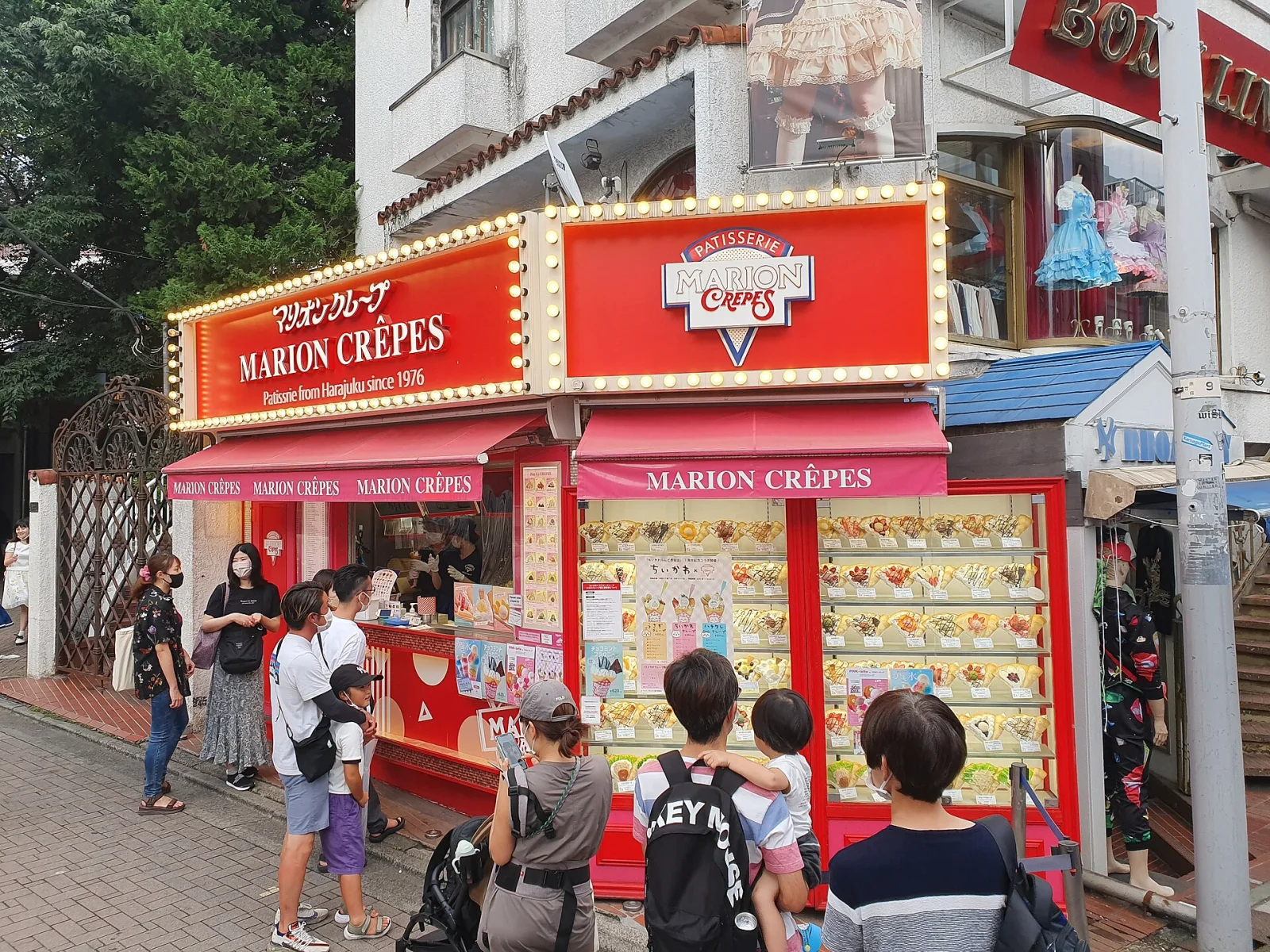
When buying crepes, the branch name matters more than the brand alone. The red-fronted Marion Crêpes pictured here is the Harajuku Takeshita Street branch at 1-6-15 Jingumae; further down the same street is the CUTE CUBE Harajuku branch at 1-7-1 Jingumae. Send the full branch name when splitting up from friends. Check whether a takeaway stall designates an eating area, and step clear of the doorway before tucking in. On drizzly days, juggling an umbrella, a coat and a paper cone quickly gets awkward, so switch to a sit-down dessert spot instead. For sit-down lunches and sweets in the neighbourhood, see our Harajuku and Omotesando food guide.
To photograph the Takeshita Street entrance, stand on a clear stretch of pavement and step back if traffic or queues build up. Inside clothing or accessory shops, ask staff before photographing displays, and ask permission before taking street-style portraits of passers-by. If someone in your group wants purikura booth photos, let them finish inside while everyone else meets at an agreed shop on the same side of the street rather than doubling back through the crowd.
Because similar trinkets appear all along the street, check whether souvenirs are individually wrapped, whether multiple colours are available and how much bag space they will take up once opened. Keep snacks to eat at the hotel that night separate from gifts bound for your suitcase. For clothing, check care labels before committing to the fitting-room queue. Decide which single shop matters most and spend your queueing and trying-on time there, instead of giving every storefront the same slow browse.
At the eastern end, Takeshita Street meets Meiji-dori. For Laforet, stay on the same side of Meiji-dori and walk south towards Omotesando and the Jingumae intersection. To enter Ura-Harajuku, cross Meiji-dori at the pedestrian crossing and start in the lanes around Harajuku-dori. If midday hunger hits first, find a sit-down meal before hunting for vintage clothes in the afternoon—browsing racks is far easier when you are not balancing street food.
Hunt for Clothes in Ura-Harajuku, Then Follow Cat Street to Shibuya
Treat Ura-Harajuku as a patchwork of side streets rather than a single avenue. Turn into the lanes off Harajuku-dori and you will often find streetwear labels, second-hand clothing and independent coffee shops along the same block. Save both the Japanese and English names of long-bookmarked shops, and check the floor number at the end of the address. Second-floor boutiques often open off a side door or external staircase, while street-level signs may belong to a different tenant entirely. Dropping a map pin with the floor number saves far more time than trying to retrace turns later.
To try several styles under one roof, start in the basement (B1) of YM Square Harajuku at 4-31-10 Jingumae, home to KINJI Harajuku (typically open 11:00–20:00). Its website lists menswear, womenswear and accessories, making it a practical first stop east of Meiji-dori if you are looking for an easy-to-wear shirt or jacket. Locate the building entrance and B1 signage off Meiji-dori, then wander deeper into the Ura-Harajuku lanes before deciding whether to cross Omotesando.
With vintage clothing, time is best spent checking sizing and condition. Save the shoulder width, chest width and sleeve length of a well-fitting jacket on your phone so you can measure garments flat on the spot. Compare a Japanese brand's medium against the size you normally buy at home, and let the actual tape measurements decide. Check denim along the inside seams and hems for alterations, and inspect leather jackets at the underarms, cuffs, zips and lining. If shopping as a gift, confirm the recipient's usual shoulder line and length—and if a piece you love is only slightly off, ask if there is a fitting room before buying.
If you are shoe shopping, wait until afternoon, take a short sit-down break if your feet are tired, and factor in the thickness of your usual socks when trying pairs on. For pre-owned bags, test the zips and clasps by hand, check whether the strap is adjustable or detachable, and make sure inner pockets fit what you carry daily. Comparing several shops? Note the colour, size, shop name and time. Return and exchange rules on second-hand goods vary by retailer, so check the receipt or ask at the till before paying—and only buy pieces you are genuinely happy to carry home.
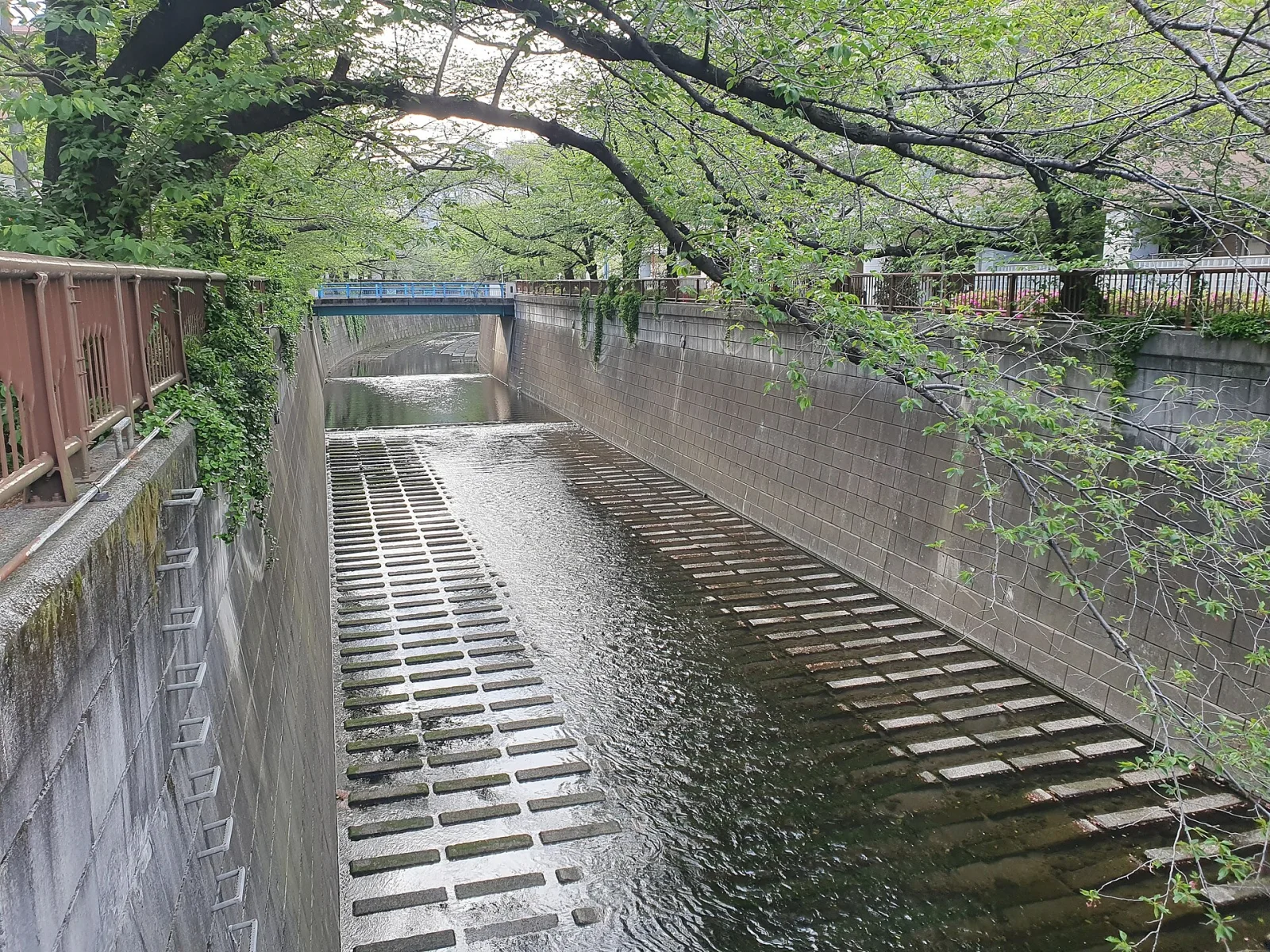
To walk onwards towards Shibuya, look for signs to Cat Street or the Former Shibuya River Promenade (Kyu-Shibuyagawa Promenade). Shibuya City describes this route as a pedestrian promenade built over a culverted former river, linking the area near the Omotesando Police Box down to Miyashita Park along Meiji-dori. You can browse both the northern lanes in Harajuku and the southern stretch of Cat Street. Coming from Takeshita Street, cut through Ura-Harajuku first and emerge onto Omotesando; if you want a clear landmark to reset your bearings before deciding where next, aim for the Omotesando Police Box.
For pre-owned designer pieces along the stretch from Omotesando towards Miyashita Park, add RAGTAG Harajuku to your route. The current shop sits at 5-17-9 Jingumae, with womenswear on 1F and menswear on 2F, typically open 11:00–20:00 and closed over the New Year holidays. Searches for the Harajuku branch still surface photos of its former address, so navigate by the current street number or official map. If you want to compare current-season pieces with past collections from the same label, check silhouettes along Omotesando first, then head to Cat Street to browse earlier seasons—keeping the same close eye on sleeve length and shoulder fit.
To walk all the way into Shibuya, set Miyashita Park as your second waypoint after reaching Omotesando, then join the southern half of Cat Street. Setting Omotesando Station as your destination will pull you east towards Aoyama and add an unnecessary detour back. GO TOKYO estimates roughly 20 minutes on foot from Harajuku Station to the Shibuya area, though that is strictly non-stop walking time. Stop to try on clothes twice or pause for a coffee and you will easily fill an afternoon. If you have dinner or an observation deck booked in Shibuya, set yourself a hard cut-off time for your last fitting room.
At Miyashita Park, pick your final side of the tracks. Head down the Meiji-dori side for Miyamasuzaka or the east side of Shibuya Station; if you are meeting friends or heading straight for the Scramble Crossing, switch your destination to a meeting point near the Hachiko Exit. If anyone in your group already has full shopping bags, you can pause around Miyashita Park to decide whether to drop purchases at the hotel or continue shopping in Shibuya.
Two Tokyu Plaza Buildings Stand at the Jingumae Crossing
The building with the mirrored escalator entrance is Tokyu Plaza Omotesando Omokado, at 4-chome Jingumae. Directly across the intersection, clad in faceted glass panels, stands Tokyu Plaza Harajuku Harakado at 6-chome Jingumae. Agree on exact meeting points such as 'Omokado 6F' or 'Harakado 5F'—simply saying 'Tokyu Plaza' often sends people into different buildings. Moving between the two requires crossing the street at ground level, so pick the right side before exiting the underground on rainy days.
At Harakado, the B1 to 4F retail floors generally run 11:00–21:00, while the 5F and 6F Harajuku Central dining floors typically stay open 11:00–23:00. If you only want one building during the day, browse the shops first and head upstairs when you are ready to eat. When part of your group wants a full meal and others only want a drink, meet on the same dining floor rather than pulling everyone into one long restaurant queue. Note that Kosugiyu Harajuku on B1 keeps separate hours, generally 07:00–23:00 and closed on Thursdays, and the complex lists 1 January as a closed day—so leave Harakado off a New Year's Day itinerary.
Omokado's B1 to 5F shops and services generally open 11:00–20:00, whereas the 6F rooftop garden, Omohara no Mori, operates 08:30–22:30 on a different schedule. To dodge the midday lunch rush, head up to look over the crossing first and browse the lower floors afterwards. In high winds or heavy rain, or when someone in your party needs a proper seat, pick an indoor cafe as your rendezvous. With only an hour left in the evening, decide first whether you want shopping, dinner or rooftop views, and choose your building accordingly.
For character merchandise, save two addresses: Kiddy Land Harajuku stands at 6-1-9 Jingumae, while its Omokado branch is on 4F of Omokado at 4-30-3 Jingumae; both generally open 11:00–20:00. If you are chasing a specific new release, check the event announcement to see which store is hosting it before choosing your station exit. For a quick toy stop for children, simply pick whichever branch is closer so you save walking and checkout time for the streets you actually came to see.
Save Laforet for Shoppers Who Want to Try Clothes On
Laforet Harajuku sits right beside the Jingumae intersection, roughly a 1-minute walk from Meiji-jingumae Station Exit 5, and generally opens 11:00–20:00. Its directory uses half-floor levels from B1.5 up to 6F, each with its own pocket of labels. For Lolita and Gothic fashion, check the B1.5 floor guide, which lists Angelic Pretty, ATELIER PIERROT and ALICE and the PIRATES. Limited-time pop-ups frequently appear on 2F at CONTAINER. Save your target shop names and half-floor levels before riding the escalators up or down so newcomers can pick two floors to browse unhurriedly.
Note that on Friday, 4 December 2026, a private in-house event closes general trading early at 17:00. If you plan to visit Laforet that day, slot it around lunchtime and shift your late afternoon to Omotesando Hills or Harakado. Anyone heading to the TOKYO DESIGNERS SALON pop-up at 2F CONTAINER (running 3–9 December) should likewise factor in the 4 December early closing. Accessory shoppers can also scan the CONTAINER floor guide for neighbouring concessions on the same level to save an extra trip.
For Osaka Expo or 2027 International Horticultural Expo character goods, Laforet hosts an official pop-up shop on B0.5, announced for 7 November 2026 to 31 January 2027. Because the floor guide lists both B1 and B1.5, look specifically for the B0.5 signage. Store announcements also listed opening-day photo sessions on 7 November; for future pop-ups, always check event dates separately from general sales periods, as photo or signing slots keep their own schedules.
When a limited release is the anchor of your visit, check announcements for numbered entry tickets, lottery draws, advance reservations and purchase limits. An entry slot may only grant admission to the shop, while item quotas follow separate sales rules. If you hold a timed entry ticket, stand by the floor map to share a clear meeting point with your companions before splitting up. Once people drift back from shoe shops, pop-up spaces and fitting rooms, waiting at an outside street corner is far easier than crowding around an indoor escalator landing.
Walking Omotesando from the Aoyama End Works Just as Well
Omotesando links Jingubashi Bridge with the Omotesando intersection on the Aoyama side. As you take in the shopfronts and architecture, stay on one pavement for a decent stretch before crossing, rather than zig-zagging from block to block. If luxury houses or specific flagships are your priority, start straight from Omotesando Station to handle your main shopping first. For an architectural detour, step into the Main Building atrium at Omotesando Hills to see its spiral ramp rising through the central void before rejoining the zelkova-lined boulevard outside. In the rain, strolling the indoor ramps or taking the lift beats juggling an umbrella along the kerb.
Omotesando Hills is about a 2-minute walk from Omotesando Station Exit A2, or roughly 3 minutes from Meiji-jingumae Exit 5. Standard shop and cafe hours are 11:00–20:00, while restaurants open 11:00–22:30, extending to 23:00 on Fridays, Saturdays and Sundays preceding a Monday public holiday. Because dining rooms stay open later than retail floors, put gift shopping and trying clothes on earlier in your plan. If you have a timed appointment, save the floor number, shop name and street address together in a single calendar entry.
When seeking a specific size or colour at a flagship store, verify the branch and model on the brand's website beforehand so you can focus on comparing materials in person. For engraving, alterations or gift wrapping, check fees, turnaround times after payment and whether next-day collection is possible—tailoring requires returning to the shop, so confirm completion dates if you leave Tokyo the following morning. Keep your core shopping budget separate from meals and fares, reserving funds for hero pieces before spending casually on Takeshita Street. Before tapping a transit IC card at the till, check accepted payment methods at the counter and keep a little cash for smaller pop-ups or unexpected queues.
Keep tax-free rules separate from ticketed shelf prices at checkout. From 1 November 2026, eligible travellers pay the tax-inclusive price upfront at Japanese duty-free stores. Japan Customs sets the minimum spend at ¥5,000 before tax at the same tax-free shop on the same day; purchases must leave Japan within 90 days and pass customs verification before the retailer issues the refund via your registered method. Show the item or price tag to staff and ask directly which floor handles checkout, how your passport should be presented and where the refund will be credited. If you are picking up small items across several shops, budget based on the tax-inclusive total at each till.
Try on clothing and size-sensitive accessories before paying. Pay separately for snacks you plan to eat that evening or cosmetics you intend to open on the trip, keeping them apart from goods leaving Japan. Keep refund-eligible items handy alongside your passport and receipts, as customs checks take place in the international departures hall before you check in hold luggage. If your suitcases are back at the hotel, wait until you return to pack—leaving items from the same receipt easy to lift out if an officer asks to inspect them.
From 1 to 27 December 2026, Omotesando Hills extends shop and cafe hours to 21:00 and restaurant hours to 23:00. Over the same period, street illuminations run from the Jingubashi intersection to the Omotesando intersection from dusk until 22:00, with shrubbery lights continuing until 5 January 2027. To combine shopping with the lights, meet inside the complex around dusk, walk the full illuminated stretch outside, then sit down for dinner. To return to Harajuku Station afterwards, stay on the same pavement towards Jingubashi Bridge and cross only at signalised junctions.
If you are visiting Ginza the next day, divide your shopping goals cleanly: save Omotesando for street-level flagships and architecture, and leave department-store multi-brand sweeps for Ginza. With one non-negotiable purchase on a half-day visit, go to that shop first. If you want a gentler stroll with less shopping, start at the Aoyama end from Omotesando Station and decide at Jingumae whether to continue into Meiji Jingu—the boulevard scenery alone makes a rewarding walk.
Visiting with Children, a Buggy or Heavy Bags
With a buggy, take the Omotesando Gate East Exit from JR Harajuku Station to street level and roll smoothly down the Omotesando pavement towards Jingumae. Steps down from the Takeshita Exit drop straight into a narrow, crowded street mouth, so save it for later on a weekend afternoon once you have gauged the crowd. If the family wants character goods, enter Kiddy Land directly from the wider main road while everyone else waits along the broader pavement or at an indoor meeting spot. Agree on exactly which entrance the buggy will park outside so nobody is stuck phoning back and forth in the crush.
If anyone needs baby-changing facilities or toilets, build that stop in early. On the Tokyo Metro Chiyoda Line at Meiji-jingumae Station, accessible family facilities sit inside both the Yoyogi Park-bound and Meiji-dori-bound ticket gates, so you can use them before tapping out. Omotesando Hills offers buggy hire from 11:00 to 19:00, with last requests taken at 18:00. On shorter Omotesando outings, anchor your route with one reliable indoor rest stop; letting older relatives settle into a seat between shops beats hunting for spare cafe tables down side alleys on weekends.
When a group is buying very different things, set two fixed regrouping times: the first on a dining floor once everyone has finished browsing, and the second at your departure station exit. Save rigid posters or bulky shoeboxes for your final stop, or take the nearest underground straight back to your hotel. JR East lists coin lockers at Harajuku Station, though if you are carrying full-size suitcases, it is better to store them at the station where you already plan to collect bags, catch an airport transfer or board your next train, rather than backtracking from Shibuya. For longer transfers, see our Japan luggage storage and delivery guide.
Remember that Harajuku's lanes are shared by shoppers, local residents heading out and delivery drivers. When a vehicle turns down a narrow side street, step onto the verge to let it pass; if you pick up a child for a better look at a shop window, step clear of the moving stream of pedestrians first. When popular Takeshita Street queues spill across the pavement, switching to Omotesando or Meiji-dori usually gets you to the same junction—and short indoor hops will still cover character goods and clothing.
Visit Meiji Jingu Early, Save Yoyogi Park for Before Shops Open
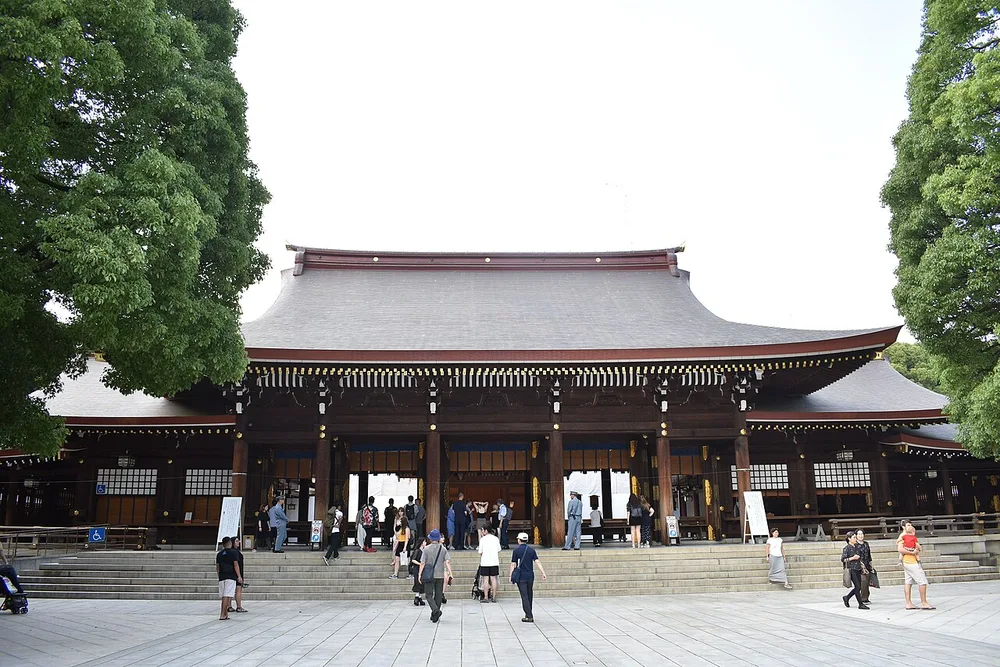
Arrive in Harajuku early in the morning and head west of the tracks first. The Meiji Jingu Harajuku Entrance lies right beside JR Harajuku Station's Omotesando Gate West Exit and Meiji-jingumae Station Exit 2. Official shrine guidance puts the walk from the entrance to the main sanctuary at around 10 minutes. Allow 45 minutes to an hour from torii to torii if you plan to pay respects, see the sake barrels or pause along the southern approach before heading back towards Omotesando—more if you are pushing a buggy or walking with older relatives along the gravel path. If you only want photographs of the torii gate and forest approach, you can keep most of your schedule for the shops.
Meiji Jingu's standard closing times shift with the seasons: 06:10–16:10 in November, 06:40–16:00 in December and 06:40–16:20 in January. Leaving the shrine until after shopping invites a race against dusk, so in winter visit the shrine first and move on to Takeshita Street or Laforet afterwards. Because walking to and from the main sanctuary takes time, if fewer than 30 minutes remain before closing, take a short stroll through the Yoyogi Park Harajuku Gate instead. For the Inner Garden, Meiji Jingu Museum and full visitor routes, read our Meiji Jingu and Harajuku walking guide.
If children simply need to burn off energy after a train ride, the park beats waiting outside crowded shop doors. The Tokyo Metropolitan Park Association lists Yoyogi Park as open around the clock with free general admission, while the service centre and individual facilities keep separate hours; the park is roughly a 3-minute walk from Harajuku Station. From 13 November 2026 to 31 January 2027, the park's Mori no Funsui fountain extends operating hours until 23:00—worth keeping for a separate winter evening rather than combining with daytime shopping.
Build Your Half-Day Around Your Next Stop, and Cut Street Time in Bad Weather
Arriving late with a specific purchase in mind? Work backwards from closing time. Reach Jingumae at 19:00 and Laforet normally has just an hour left, so head straight upstairs to your shoe or clothing shop first; you will still have plenty of time to stroll over to Harakado for dinner afterwards. If you only fancy an evening walk, head north up Meiji-dori from the Shibuya side towards the lit-up Jingumae crossing, saving the open-air backstreets for daylight when vintage garment colours read clearly and independent shops are open.
With only two hours to spare before returning to the Yamanote Line, enter Takeshita Street from the Takeshita Exit, pick one shop and one snack, then follow Meiji-dori to Laforet. Give an extra hour to fitting rooms if clothes are your focus, or swing by Omokado for its mirrored entrance and rooftop garden if photos come first. Walking west along Omotesando from the Jingumae crossing back to JR Harajuku's Omotesando Ticket Gate completes a neat loop without fighting back up Takeshita Street—just factor in checkout queues and the walk back to the platform.
If your next stop is towards Aoyama or Ginza, work steadily east from Harajuku Station: Meiji Jingu at 10:00, back past the Takeshita Exit around 11:00, and down to Jingumae before lunch. Spend the afternoon between Omotesando Hills and one or two flagships near Aoyama, then board at Omotesando Station. If Omotesando's architecture is your main draw, reverse the order—step out of Exit A2 first, walk downhill towards Jingumae and choose one shopping centre there, giving you an easy morning route before Takeshita Street shops even open.
Arriving in the afternoon with Shibuya still ahead? Skip the detour down Takeshita Street. Exit at Meiji-jingumae Station, grab a bite or browse a pop-up near Laforet, then cross by the Omotesando Police Box onto the southern stretch of Cat Street. Dedicate the rest of the afternoon to vintage and select shops, choosing your next station entrance once you reach Miyashita Park. If you have a timed event with strict late-entry rules and realise at the police box that time is tight, jump on the Fukutoshin Line at Meiji-jingumae straight to Shibuya and walk from there.
On wet days once shops are open, step straight out of Meiji-jingumae Exit 5 into Laforet, then cross the Jingumae intersection to Harakado—eat first, then browse indoors floor by floor. In a heavy downpour, settle into one building for longer rather than darting outdoors between complexes; if you want to add Omotesando Hills, ride the Chiyoda Line one stop to Omotesando and use Exit A2. Save Japanese street addresses on your phone before boarding so you can step a few paces out of an exit under a shop awning or arcade to check floor numbers while holding an umbrella.
In summer, alternate shaded streets with air-conditioned shopping centres: walk the shrine or park before opening time, retreat indoors around midday and leave the longer stretch down Cat Street for late afternoon. In winter, flip the order—tackle outdoor architecture and Meiji Jingu in daylight, saving malls and restaurants for after dark. Whenever a festival or timed entry slot anchors your day, protect that window first and fill spare minutes in the park or a nearby complex. If you are only meeting friends, keep both your chosen station exit and indoor floor number saved on your phone.
A few useful answers
Which station should I get off at for shopping in Harajuku?
Take the JR Yamanote Line to JR Harajuku Station—the Takeshita Exit opens straight onto Takeshita Street. On the Tokyo Metro Chiyoda or Fukutoshin lines, get off at Meiji-jingumae (Harajuku) Station: Exit 5 is closest to Laforet, and Exits 4 or 7 serve Harakado. Coming via the Ginza or Hanzomon lines, leave at Omotesando Station and use Exit A2 for Omotesando Hills.
How do I plan a half-day shopping route in Harajuku?
Walk Takeshita Street first, choose either Laforet or Ura-Harajuku near Meiji-dori, then let your next stop dictate the exit route. Follow Omotesando towards Aoyama for flagships and architecture, or turn onto the southern stretch of Cat Street by the Omotesando Police Box to reach Shibuya.
Are Ura-Harajuku and Cat Street the same street?
No—Ura-Harajuku refers to the network of crisscrossing backstreets around Jingumae, while Cat Street is an easy-to-follow pedestrian promenade whose southern stretch runs from near the Omotesando Police Box down to Miyashita Park.
How do I tell Harakado and Omokado apart?
Harakado is the Tokyu Plaza on the Harajuku side at 6-chome Jingumae, with the Harajuku Central dining floors on 5F and 6F. Omokado is the Tokyu Plaza on Omotesando at 4-chome Jingumae, known for its mirrored escalator entrance and the 6F Omohara no Mori rooftop garden. Always share the building name and floor when meeting up.
Is Takeshita Street worth visiting when it rains?
In light, passing drizzle, a quick one-way walk is manageable. In steady rain, head straight for Laforet or Harakado and browse several floors before switching buildings; for Omotesando architecture, explore the indoor ramp at Omotesando Hills and depart via Exit A2.
What is the best time to visit Takeshita Street?
To actually go inside shops, arrive just after your target stores open, ideally on a weekday if your schedule allows. If you only want a clean photo of the entrance arch, go before opening hours. Pedestrians are asked to keep left—and if queues look daunting, move straight on to the next stretch.
Can I visit Meiji Jingu after shopping in Harajuku?
Standard closing times are 16:10 in November, 16:00 in December and 16:20 in January, and you need to allow walking time in and out from the main sanctuary. Whenever possible, visit the shrine first thing in the morning, then step out of the Harajuku Entrance towards Takeshita Street or the Jingumae intersection.
Which exits should I use in Harajuku with a buggy?
At JR Harajuku Station, use the Omotesando Ticket Gate. On the Tokyo Metro Chiyoda Line, take the Exit 2 lift for Meiji Jingu or the Exit 6 lift for Meiji-dori. From the Ginza or Hanzomon lines at Omotesando Station, Exit B3 has a lift directly to street level.
Official information and references
Sources used in this guide.
- JR East Harajuku Station map and accessibility information
- JR East Harajuku Station facilities and coin lockers
- Tokyo Metro Meiji-jingumae (Harajuku) Station exits
- Tokyo Metro Meiji-jingumae Station step-free lift routes
- Tokyo Metro Omotesando Station step-free lift routes
- Tokyo Metropolitan Government Accessible Tourism Map 2026 (Harajuku)
- GO TOKYO Harajuku neighbourhood guide
- Harajuku Takeshita Street Shopping Association map and pedestrian guidance
- Marion Crêpes official Tokyo store directory
- Shibuya City street guide (Former Shibuya River Promenade)
- KINJI Harajuku address and opening hours
- RAGTAG Harajuku current address, floors and opening hours
- Harakado access and station exits
- Harakado floor-by-floor opening hours
- Omokado retail and rooftop garden opening hours
- Kiddy Land official store directory
- Laforet Harajuku access and standard opening hours
- Laforet Harajuku floor guide
- Laforet Harajuku 4 December 2026 early closure and event notice
- Laforet Winter 2026 TOKYO DESIGNERS SALON pop-up
- Laforet EXPO2027 official pop-up shop
- GO TOKYO Omotesando Hills (Main Building spiral ramp and access)
- Omotesando Hills opening hours and buggy hire times
- Omotesando Hills 2026 Christmas hours and Omotesando Illuminations notice
- Meiji Jingu visitor routes and monthly opening and closing hours
- Tokyo Metropolitan Park Association Yoyogi Park admission and access
- Yoyogi Park Mori no Funsui fountain 2026–2027 winter operating hours
- Japan Customs tax-free shopping for visitors (minimum spend and customs procedure)
- JNTO Japan tax-free shopping guide (customs inspection before baggage check-in)