How to plan a half-day Asakusa shopping route from Kappabashi kitchenware through Kaminarimon and Nakamise souvenirs to Tokyo Solamachi at Skytree, including Sunday closures, rain routes, knife check-in rules, and tax-free procedures.
- Region & Focus
- TokyoNeighborhoods and shopping
- Reading Scope
- 20 min read · 12 chapters · 6 Q&As
- Official Verification
- 36 official sources checkedUpdated November 22, 2026
- Key Topics
- NeighborhoodsItinerariesTokyo & Kanto
Chapter Route Map (tap any stop)
- Choosing Your Starting Point
- How to Shop Kappabashi Dougu Street
- Testing Kitchen Knives and What to Ask Before Paying
- Food-Replica Workshops and Lightweight Souvenirs
- How to Pick Souvenirs on Nakamise Street
- Continuing Through Shin-Nakamise, Orange-dori, and Tobu Asakusa
- Crossing the Sumida River to Tokyo Skytree
- Navigating Tokyo Solamachi by Floor
- Half-Day Itineraries by Arrival Time
- Rain Plans, Strollers, and Luggage Storage
- Tax-Free Rules, Packing, and Heading Home
- Year-End Hagoita Market and Skytree Christmas Market (2026)
- Quick Q&A
For kitchen knives or tableware in Asakusa, start at Kappabashi via Tawaramachi Station on the Ginza Line, then walk east toward Nakamise. If you're only after ningyoyaki cakes and small gifts, step out of Asakusa Station on the Kaminarimon side and begin right there. Tokyo Solamachi sits across the Sumida River and pairs naturally with dinner. If you only have two hours on a rainy day, enter the mall directly from Oshiage Station to save steps. Pick one anchor activity—comparing knives, making food replicas, or going up Tokyo Skytree—and sequence the rest around shop hours.
Choosing Your Starting Point
An Asakusa shopping route runs cleanly from west to east. On the Ueno side sits Kappabashi, where shops line both sides of a north-south street. Head east from Kappabashi across Kokusai-dori and you hit Kaminarimon and Nakamise. Cross the Sumida River farther east and you reach Oshiage and Tokyo Skytree. Pin your first shop and your departure station on a map to see at a glance how many outdoor stretches you'll walk.
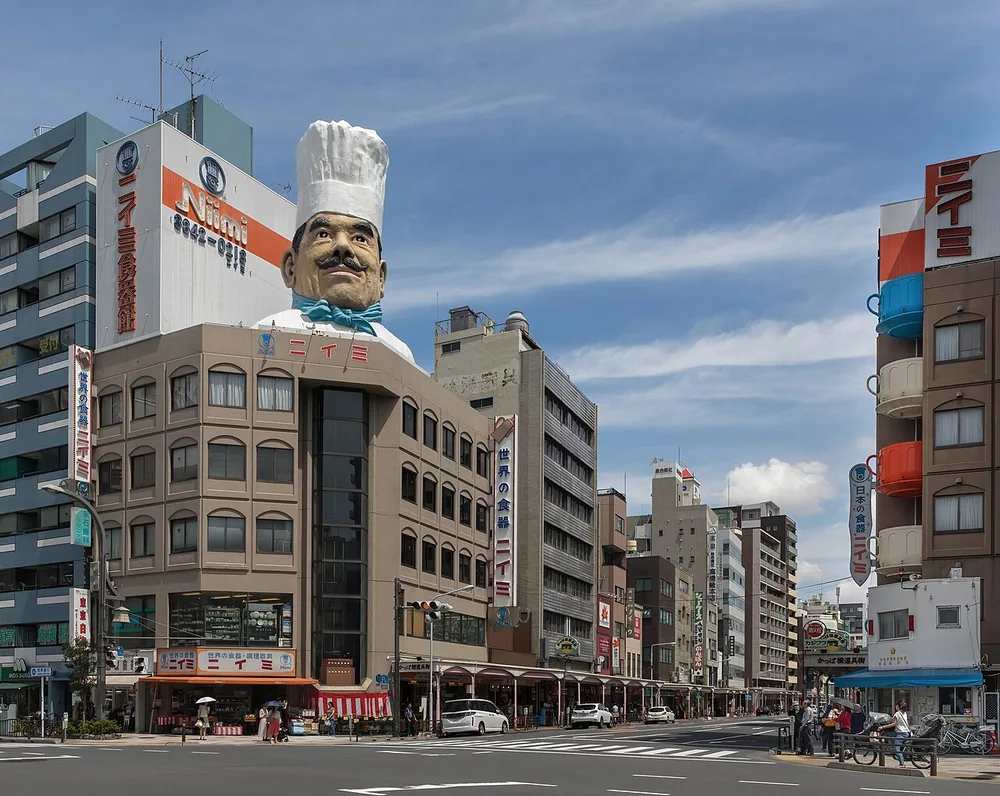
Coming from Ueno or Ginza to hit Kappabashi's south entrance first, take the Ginza Line to Tawaramachi Station. The shopping association lists it as roughly a 5-minute walk; head to the corner where Asakusa-dori meets Kappabashi Dougu Street, using the giant chef statue as your landmark. If your targets are near the north end, Iriya Station on the Hibiya Line is smoother—listed at about a 6-minute walk. Taking the Tsukuba Express from Akihabara to Asakusa Station? Use Exit A2 for kitchenware or Exit A1 for Nakamise.
To head straight to Kaminarimon, take the Ginza Line to Asakusa Station and use Exit 1, which has a street-level elevator. The Ginza Line, Toei Asakusa Line, and Tobu Asakusa stations cluster on the Kaminarimon and riverside end, whereas the Tsukuba Express Asakusa Station sits along Kokusai-dori—handier for Kappabashi and the Rokku district. Moving between the two station clusters requires walking outdoors at street level. If part of your group is coming from Akihabara and others on the Ginza Line, pick a specific storefront to meet at rather than texting "meet at Asakusa Station."
If you have plans afterward, finish on the side that gives you the easiest train out. Heading to Ueno next? Work west from Kaminarimon over half a day and catch the Ginza Line back at Tawaramachi. Leaving via the Hanzomon Line or taking the Toei Asakusa Line back into central Tokyo? Exit from Oshiage. If you're staying in Asakusa and plan to haul a box of plates, tackle Kappabashi as a dedicated run, drop the cardboard box at your hotel, and stroll Kaminarimon hands-free afterward. Still deciding where to stay? Check our Tokyo neighborhood guide to compare transit access between Asakusa and Ueno.
| Top Priority | Station or Meeting Point | How to Budget Time |
|---|---|---|
| Kitchen knives, tableware, or baking pans | Tawaramachi Station; start at Kappabashi's south entrance | Block a full open window to compare shops side by side |
| Ningyoyaki, rice crackers, and kimono-style accessories | Ginza Line Asakusa Station, Exit 1 | Walk Nakamise during the day, then continue into Shin-Nakamise |
| Character goods, mall shopping, and dinner | Oshiage Station Exit B3 or Tobu Tokyo Skytree Station | Hit retail floors first and push dinner to the evening |
How to plan a half-day Asakusa shopping route from Kappabashi kitchenware through Kaminarimon and Nakamise souvenirs to Tokyo Solamachi at Skytree, including Sunday closures, rain routes, knife check-in rules, and tax-free procedures.
How to Shop Kappabashi Dougu Street
Kappabashi was built to supply restaurants, though the street association notes that nearly every shop sells to retail customers too. To handle pieces in person, start at Niimi Tableware at the south entrance for Western plates, glassware, cutlery, and cooking utensils. For knives, make Kama-Asa in Matsugaya 2-chome your second stop. Because stores line both sides of the avenue, drop all your target addresses into one map and cross over partway down. If you spot plates you like near the south end before heading north, note the shop name, floor, and item code so you can pick them up on the way back instead of hauling fragile ceramics the whole way.
Sundays and national holidays change the street dramatically. Kappabashi's association notes that roughly 70 percent of shops close on Sundays and holidays, so don't assume the rest of the avenue is open just because one food-sample shop has its doors unlocked. Niimi Tableware's listing shows 10:00–17:45 Monday through Saturday, closed Sundays and national holidays. Kama-Asa's website lists 11:00–17:30 daily, closing over New Year's and shutting early at 16:30 on the last day of each month. Come on a weekday or Saturday daytime if you want to compare multiple cookware or tableware stores. If Sunday is your only option, check individual store listings first and stick to the short stretch of shops that are open.
Two people eyeing the same shelf of plates often walk away with totally different sizes. Before buying replacements, measure your cabinet depth, microwave turntable diameter, and lunch-bag base at home. Japanese kobachi small bowls are sometimes labeled by outer diameter, so check bowl depth and foot-ring width as well. Want to bring home a stack? Ask staff to stack two pieces together so you can gauge packed thickness with wrapping. If you use a dishwasher, ask outright whether a piece is dishwasher-safe. Lacquerware, wood, and ceramics all come with different care limits—one piece you'll use daily beats completing a delicate set.
Measure your stovetop before buying pots or pans. If you cook on induction at home, keep your cooktop model or a quick phone photo handy and look for "IH" compatibility labels in the store. For baking pans, check both handles and outer rim width, as some molds only list interior dimensions. Ask before paying whether replacement lids, strainers, or gaskets can be bought separately. That extra check pays off for everyday workhorses, while weight matters most for a one-off decorative platter.
Bakers should add Asai Shoten to their list. The association directory lists pullman loaf pans, wooden wagashi molds, and branding irons, so decide what you want to bake before stepping inside. On Japanese loaf pans labeled "1-kin," check the printed length, width, height, and volume so you can scale your dough weight back home. For lidded pullman pans, factor in the clearance needed to slide the lid off inside your oven. If you're shopping for cookie cutters, consider the dough thickness your rolling pin delivers, and ask whether molds come apart for cleaning or sell spare parts. For bread branding irons, bring a photo of any irons you already own to compare stamp dimensions and handle length.
Testing Kitchen Knives and What to Ask Before Paying
Shopping for your first Japanese kitchen knife? Start by telling the staff what you usually prep. For everyday vegetables, boneless meat, and fish fillets, use a santoku as your baseline and choose a blade that fits your palm and cutting board width. Only look closely at deba knives if you break down whole fish at home. If left- and right-handed cooks share the knife, say so upfront before evaluating the edge grind and handle shape. Holding two knives meant for the same job tells you far more than memorizing steel names—you'll feel right away which bolster pinches your fingers and which balance feels natural.
Factor your cleanup habits into the steel choice. If you wipe blades dry right after washing and don't mind routine upkeep, carbon steel is worth considering. If multiple people cook in your kitchen or knives sometimes sit by the sink, ask about easier-care stainless options first. Interested in a single-bevel knife? Have the staff show you how to hold it, how to tell which hand it's ground for, and how to sharpen it once you're home. Buying a gift? Ask what the recipient cooks most—blade profile is far harder to change later than an engraving.
Kama-Asa runs a dedicated knife shop in Kappabashi. To communicate cleanly, type "home use," "right-handed" or "left-handed," and your budget into your phone, and show a photo of the knife you currently use. Jot down the model, blade length, and steel type for favorites so you can compare if you see similar blades next door. Want custom engraving? Ask before paying whether same-day turnaround is possible and which side it goes on, and have staff confirm your spelling in writing. If you have a timed workshop or Skytree entry later, verify pickup timing before you check out.
Japan's Ministry of Land, Infrastructure, Transport and Tourism prohibits kitchen knives in carry-on cabin baggage. Any knife flying home with you needs checked luggage, packed per your airline's rules—ask the shop to wrap the blade securely at checkout. Traveling carry-on only? Price out adding a checked bag versus using a store or carrier that ships knives internationally. When arranging shipping, state clearly that the parcel contains a kitchen knife and confirm eligible countries, fees, tracking, and delivery time. Note that Japan's tax-free shopping rules require goods to leave the country with you, so don't factor a tax refund into your budget for anything shipped abroad.
Food-Replica Workshops and Lightweight Souvenirs
If you just want a small keepsake from Kappabashi, skip heavy cookware and browse food-replica trinkets. Alongside full restaurant display plates, Sato Sample lists smaller novelty items, and Ganso Shokuhin Sample-ya offers both retail goods and hands-on workshops. Watch out for fragile protruding parts—keep shrimp tails or noodle pieces inside their original boxes and pack them on top of clothes in your suitcase. For practical gifts, chopstick rests, bento picks, and compact prep tools pack easily and let non-cooking companions finish shopping quickly.
At Ganso Shokuhin Sample-ya's Kappabashi shop, the standard workshop uses wax to make two tempura pieces and one head of lettuce for ¥3,300 per person. It runs about 40 minutes, with check-in 10 minutes ahead of your slot. Online reservations accept 1 to 4 guests, while groups of 5 or more book by phone. Participants must be elementary school first-graders or older; preschoolers cannot enter the workshop area. Up to two non-participating spectators are allowed per group at ¥500 each. If one parent needs to stay with a younger child, split into two groups and plan to meet up afterward rather than sorting out ticket changes at the door.
Morning sessions run at 11:00 and 11:30, with several afternoon slots starting from 14:00. With a morning reservation, browse the shops that open early near the south entrance and work your way up toward the studio. Booked an afternoon slot? Have lunch in Nishi-Asakusa instead of crossing the river and backtracking. Because the class uses hot water, wear sleeves you can push past your elbows; aprons are provided, and staff ask guests not to record video of the making process. Companions who only want to browse finished replicas can explore the retail floor while you finish, then walk together toward Shin-Nakamise.
How to Pick Souvenirs on Nakamise Street
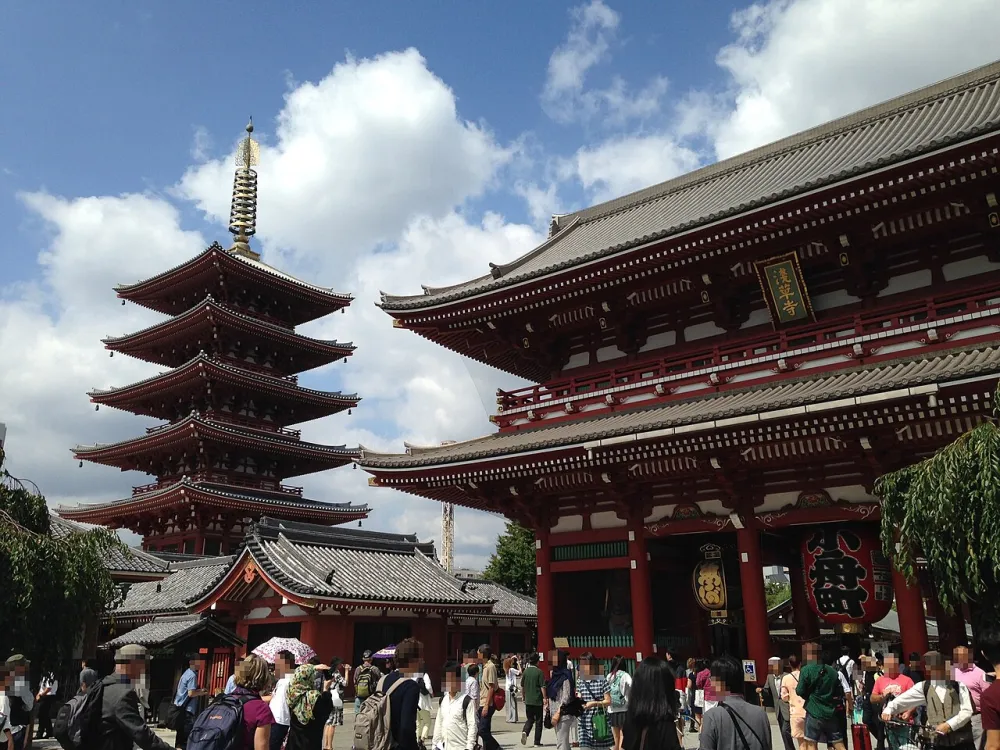
Nakamise packs tightly lined stalls along roughly 250 meters between Kaminarimon and Hozomon Gate. When shopping for snacks on one side and trinkets on the other, circle target stalls on your map first. Walk once with the flow of the crowd to spot queues and items you want, then loop back to buy. For a full shot of Kaminarimon's lantern, step across the street for a wider view. Whenever you pause to browse or take a photo, step aside toward the shopfronts to keep the central approach clear, and eat freshly made snacks in the designated area by the stall before moving on.
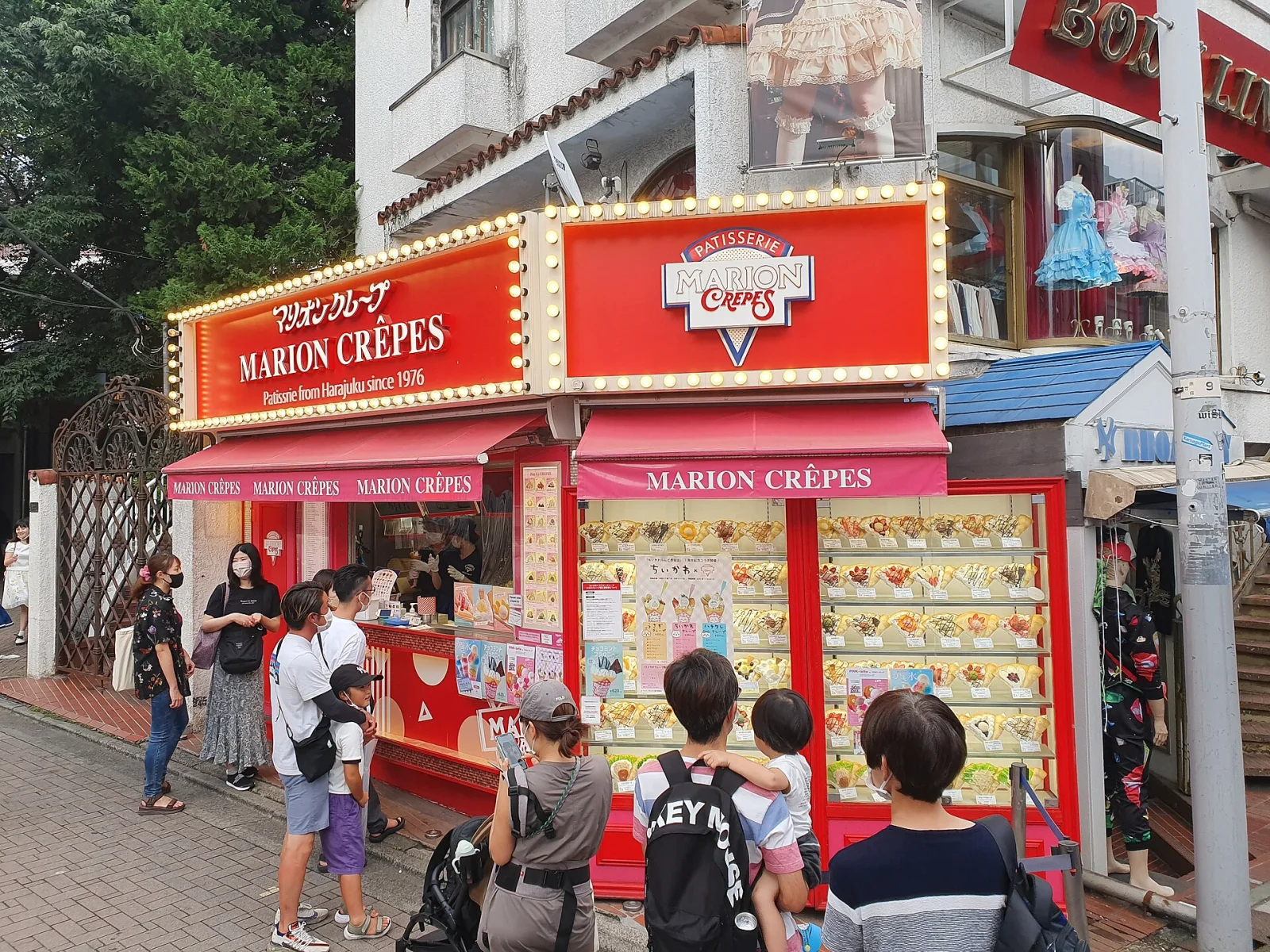
For fresh-tasting snacks as you walk, start with ningyoyaki sponge cakes. Kimuraya Ningyoyaki Honpo on Nakamise bakes dove, five-story pagoda, lantern, and thunder-god shapes, and its listing also includes unfilled versions. Prefer toasted rice aroma and crunch? Try kaminari-okoshi, crisp puffed-rice crackers that offer a totally different texture from red-bean-filled ningyoyaki. Buy a small bag for immediate snacking. For gifts you'll hand out days later, check the best-by date and storage instructions on the box first. Bringing treats to an office? Count the pieces per box and check whether they're individually wrapped—repacking loose snacks from one big bag creates extra work.
Beyond sweets, Nakamise stocks roasted nori seaweed, folding fans, and tenugui hand towels. Isekan specializes in nori, with hours listed as 11:00–16:30, closed Mondays and Thursdays, plus occasional consecutive closures at month-end. Check their open days if nori is a must-buy, though you shouldn't rearrange your whole day around one shop if you just need shelf-stable gifts. Folding fans and tenugui slip effortlessly into carry-on bags. Ask to see a fan fully opened to judge its size, and check whether a tenugui pattern works unfolded as a placemat, bento wrap, or wall hanging. For a household gift, one reusable textile paired with a small pack of snacks travels far better than separate boxes for everyone.
If you still have several nights in Japan before flying home, look for vacuum-sealed packs. Mihatodo on Nakamise sells shelf-stable souvenir ningyoyaki in vacuum packs that keep for about a month, in both chunky and smooth red bean paste. Check the date on the box, and keep fresh-baked snacks separate from sealed gift boxes. Anything stamped "keep refrigerated" needs cold storage right away, so stick to room-temperature items if you have two more shopping districts ahead of you. For assorted gift sets, base your storage and gifting timeline on the earliest expiration date in the box.
If you have dietary restrictions, read ingredient labels and ask staff before buying a small pack to sample. Keep the outer box with product names and ingredients intact for any food you're gifting. Card acceptance varies among small stalls—Kimuraya takes credit cards, for example, while Isekan's listing notes cash only. Keep yen cash handy if you plan to make small purchases across several stalls so you're ready at the register. For timing your temple visit and goshuin stamps around shopping, see our Sensoji half-day route guide.
Continuing Through Shin-Nakamise, Orange-dori, and Tobu Asakusa
While Nakamise runs north toward Hozomon Gate, Shin-Nakamise cuts across it under a covered arcade. Walking back east from Kappabashi, enter Shin-Nakamise from Kokusai-dori and the Rokku district, follow the arcade across Nakamise, and continue to Umamichi-dori to connect with the subway or Tobu station. In light rain, make a quick run to Kaminarimon and Nakamise for essential snacks, then duck back under the covered arcade. If lunch lines block a side alley, keep walking to an open stretch and circle back when seating clears.
For traditional Japanese accessories, turn off Shin-Nakamise onto Orange-dori. The street directory includes tenugui shop Kamawanu, inden deerskin-lacquerware maker Asakusa Maekawa Inden, and several kimono shops. It's worth padding your schedule here for tenugui, coin purses, or thoughtful gifts for older relatives. Shopping for a pouch in a specific size? Measure the cards and keys you carry daily—realizing your essentials don't fit is a far more common regret than picking the wrong pattern.
At Tobu Asakusa Station, the integrated EKIMISE building gives you an indoor fallback right on the Asakusa side. The center lists Matsuya Asakusa hours as 10:00–19:00, 4F–7F specialty shops as 10:00–20:00, and 7F restaurants generally 11:00–22:00. In clear weather, head up to the rooftop Asakusa Hare Terrace (open 10:00–20:00) for views of Tokyo Skytree across the river. If you only have an hour left and dinner plans in Asakusa, wrap up your shopping here and catch your train right downstairs after eating.
Need a quick breather or a map near Kaminarimon? Cross the street to the Asakusa Culture Tourist Information Center—Taito City's facility page lists its free 8th-floor observation deck as open 9:00–22:00. If your group splits up, pick a specific storefront entrance and time to regroup, or just meet inside the restaurant. On weekends, crowds lining up under the giant red lantern make finding each other slow.
Crossing the Sumida River to Tokyo Skytree
In good weather, walk from Kaminarimon toward Tobu Asakusa Station and the riverfront, cross the railside Sumida River Walk pedestrian bridge, cut through Tokyo Mizumachi, and continue toward Tokyo Skytree. From Tobu Asakusa Station's North Exit, it's about a 5-minute walk across the bridge to Mizumachi; from Ginza Line Asakusa Station Exit 5, allow around 7 minutes. Both estimates only get you to Mizumachi—you still have to walk past it to reach the mall. Add an extra half-hour if you want to linger over river views, grab coffee, or take photos.
Sumida River Walk is open 7:00–22:00. Planning to walk back to Asakusa after dinner? Watch the clock—past 22:00 you'll need to take the Azuma Bridge road crossing or catch a train instead. If you're carrying a box of dishes or running into wind and rain off the river, hop on the Tobu train from Asakusa Station one stop to Tokyo Skytree Station. Already at the Toei Asakusa Line entrance? Ride toward Oshiage directly to Oshiage Station and enter the mall via Exit B3. Since the two operators use different entrances and platforms, specify the exact line in your maps app.
Skytree Town also has two distinct arrival ends. Tobu Tokyo Skytree Station sits on the West Yard side, while Oshiage Station Exits B3 and A2 put you closer to the East Yard. When meeting someone for dinner, share the zone or restaurant name along with the floor—the building stretches across West Yard, Tower Yard, and East Yard, so saying "meet on 4F" can still leave you a long walk apart. Want to finish right at your departure station? Start at the far end and shop toward the exit you'll use later.
Navigating Tokyo Solamachi by Floor
Tokyo Solamachi's standard hours are 10:00–21:00, with dining on 6F, 7F, 30F, and 31F generally open 11:00–23:00 (individual venues set their own hours and last-order times). Arriving in the evening? Finish retail shopping before sitting down to eat. Just picking up food? Browse the 2F Food Marché for pastries, wagashi, and prepared dishes, then head up to the 3F food court to sit and eat. When family members all want something different, separating food-stall browsing from sit-down shopping saves extra back-and-forth trips.
Coming from Oshiage on a tight clock? Start at the 1F East Yard Solamachi Shotengai. Snacks, souvenirs, and cafes cluster along one corridor, making it easy to grab different gifts in a single pass. Hunting for Skytree-motif goods or specific characters? Pull up the official floor map to check shop names and zone numbers beforehand. Entering from the west via Tobu lets you browse straight across toward the east side for gifts. If you hold timed Tokyo Skytree observation deck tickets, anchor your schedule around the 4F entrance and save longer shopping stops for after you come down.
For the Pokemon Center Skytree Town, take the elevator to 4F East Yard; fans of Japanese TV characters can check the NHK Character Shop in 4F West Yard—they sit in opposite zones, so don't just agree to meet at "the 4F character shop." For official tower souvenirs, head to the 5F SKYTREE SHOP by the observation deck exit. Anyone skipping the deck can meet tower-goers right at this exit-floor shop. Heading to Sumida Aquarium next? Look for the dedicated outer elevator or escalator from 4F West Yard up to the 5F entrance. Both the tower exit and aquarium entrance sit on 5F, so follow the specific facility signs.
The 5F SKYTREE SHOP carries collaborations and official merchandise and doesn't require an observation deck ticket. A second branch up at 345 meters stocks select deck-exclusive items only accessible with a ticket. If you're picking up an item for a friend, ask them for the exact product name or current campaign page so you know which of the two branches to check.
Visiting with kids who want to see marine life? Start at the 5F Sumida Aquarium entrance—the museum shop sits right beside the entry and is open without an admission ticket. Companions shopping for exclusive merch can browse there and meet everyone afterward to take the elevator for dinner. Families trying to fit both the observation deck and the aquarium usually need to move Kappabashi to another day, otherwise the whole outing becomes a sprint between entry gates. With young kids, pick one ticketed attraction for the afternoon and leave unhurried time for dinner and toy shops.
Arriving after 19:00 still leaves time to shop if you narrow your list to one or two must-visit stores. Because restaurants stay open later, finishing dinner first often means retail floors have already closed before you can grab boxed cookies. Scope out menus and wait times on 6F and 7F early, or book a 30F or 31F restaurant slot if skyline views are part of your dinner plan. Dining on the east side with plenty of bags? Leave directly via Oshiage Station rather than walking all the way back west to Tobu.
Half-Day Itineraries by Arrival Time
On a weekday focused on kitchenware, start at Tawaramachi at 10:00, browse tableware near the south entrance, and wait for Kama-Asa to open at 11:00 to test knives. Depending on how heavy your haul gets, either drop it back at your hotel or carry it along. Continuing to Nakamise? Grab lunch in Nishi-Asakusa, walk toward Kaminarimon, and pick up boxed gifts first before buying snacks to eat on the spot. Only cross the river to Solamachi for dinner if you still have energy—otherwise staying on the west bank keeps your walk back to Tobu or the subway short.
Visiting on a weekend with older relatives? Keep the Asakusa leg simple: Kaminarimon, covered Shin-Nakamise for shade or rain shelter, and just the shops you need. Build in a seated break at the Asakusa Culture Tourist Information Center or inside EKIMISE so nobody spends the whole afternoon standing in lines. If you're crossing the river, walk to Tobu Station and ride one stop to save energy for shopping and dinner at Skytree. Only try Kappabashi with older family members on a Saturday or after checking specific open shops so they aren't trekking down blocks of shuttered storefronts.
With just over two hours in the afternoon, start at Kaminarimon, buy shelf-stable souvenirs along Nakamise, grab coffee on Shin-Nakamise, and loop back to Asakusa Station. If Skytree merchandise or character stores are your main goal, enter straight from Oshiage and spend your entire window inside Solamachi. Flying out of Haneda or Narita later that day? Leave ample buffer before dinner for train transfers and luggage logistics, and skip time-consuming tasks like knife engraving, box packing, or tax-free registration in your final hour.
Arriving at Kappabashi in the afternoon with a food-replica workshop booked? Lock your schedule around that fixed reservation before deciding where to eat. A 14:00 session requires check-in by 13:50, and the 40-minute runtime covers start to finish. Stick to one or two nearby knife or tableware shops and add a third only if time allows. If your workshop wraps up near evening, popular street shops will already be closing—handle retail purchases before class, then head straight to Shin-Nakamise or Tokyo Skytree for dinner afterward.
Rain Plans, Strollers, and Luggage Storage
On a rainy day, start inside Solamachi and only add the riverside walk if the weather clears. Take Oshiage Station's B3 connector straight into the building, browse 1F first, have lunch indoors, and wait for a dry break before stepping outside to photograph the tower. Kappabashi stores each have separate street-level doors, meaning every shop change and street crossing puts you back in the rain. If there's one must-visit kitchenware shop, make a short, targeted trip during its open hours and save Shin-Nakamise's covered arcade for the heaviest downpour.
Pushing a stroller? Plan your floor-map route around diaper changes, meals, and your exit train. Solamachi has baby care rooms—with changing tables, hot water for formula, and private nursing rooms—at 1F Area 7, 3F Area 3, 4F Area 7, and 6F Area 9. Need to borrow a wheelchair? Visit the info desks at 1F Area 12 or 3F Area 5 with photo ID to fill out a loan form. Grouping stops on adjacent floors cuts down on waiting for elevators.
Leave bulky suitcases at your hotel or use paid lockers inside the mall. Solamachi's service guide lists coin lockers from extra-small (¥300) up to extra-large (¥1,000), while Sagawa Express at 1F Area 7 handles paid temporary baggage storage and parcel delivery. Leaving via Oshiage? Pick a locker near the east end and note the floor and area number. If your bags are at Asakusa Station, budget time to cross back over the river. Buying chilled food? Food Marché at 2F Area 3 has ¥100 refrigerated lockers for short-term storage while you shop, though you'll still need insulated packing for the ride back to your hotel.
Tax-Free Rules, Packing, and Heading Home
Starting November 1, 2026, Japan's visitor tax-free system switches to a post-departure refund model: you pay tax-inclusive prices at the register, confirm with customs upon departure that the goods are leaving Japan with you, and receive the refund per the merchant's process. Japan Customs sets the standard threshold at ¥5,000 before tax at the same store on the same day, with departure required within 90 days of purchase. Solamachi's service guide directs shoppers to complete tax-free procedures at participating stores displaying the tax-free mark. Buying a knife in one shop and bowls in another? Each store's total counts separately. Carry your physical passport, as clerks must log your purchase record at checkout.
Pack any tax-free items going into checked luggage so you can pull them out easily. At Narita, Haneda, and other participating airports, Japan Customs kiosks in the international departure lobby let you complete export verification before security—and supported airports also work with Visit Japan Web over designated Wi-Fi. If a kiosk flags your purchase for inspection, take the items to the designated counter. Both Narita and Haneda require completing departure tax-free verification before checking bags that contain tax-free goods at your airline counter. Since snacks eaten during your trip don't leave Japan with you, ringing up immediate treats separately keeps checkout records clean.
Right after paying for ceramics, ask the clerk to wrap each piece individually with padding between plates. At your hotel, nest the boxes inside your suitcase and fill any gaps with clothes. Buying boxed sweets near the end of your trip also protects fragile cookies and thin rice crackers from getting crushed in shopping bags. Heading straight from Skytree to the airport via Oshiage? Check which exit sits closest to your restaurant and locker before you start shopping, or leave time to swing back to your hotel for your main luggage.
Set aside your core budget for knives or cookware first, then price out checked-bag fees, international shipping, and extra packing material. When choosing shareable souvenirs, divide both single-pack and bulk-box prices down to the per-piece cost, and consider whether you can hand them all out once you get home. If kitchenware takes up most of your budget, stick to small fresh snacks on Nakamise and take a moment off to the side to enjoy them.
Year-End Hagoita Market and Skytree Christmas Market (2026)
Taito City lists the 2026 Sensoji Toshi-no-Ichi (Hagoita-ichi, or battledore fair) for December 17–19, 2026. Held right on the temple grounds, stalls sell raised fabric-relief hagoita paddles featuring kabuki characters alongside designs inspired by the year's biggest news. Buying one for display? Ask whether a stand is included and check the boxed length against your suitcase before buying. If the market is on your list, pair your Nakamise stroll and temple visit in the same block—saving Kappabashi for another day—so you have time to browse the grounds unhurried.
That same season, Tokyo Skytree Town's 4F Sky Arena hosts a Christmas market from November 5 to December 25, 2026, running 11:00–22:00 with food and drink last orders at 21:00. During the December 17–19 overlap, browse the hagoita stalls at Sensoji by day, cross the river for indoor Solamachi shopping before dinner, and head up to the open-air 4F plaza afterward. Bring a windproof jacket if you plan to eat outside at night. Staying to see the lights while keeping luggage back in Asakusa? Time your return before Sumida River Walk closes at 22:00.
A few useful answers
Is half a day enough for shopping in Asakusa?
Pick two of the three areas—Kappabashi, Nakamise, and Tokyo Solamachi. Leave more time for Kappabashi if you're comparing knives or taking a food-replica workshop; if you're going up Skytree or visiting the aquarium, cross over from Nakamise and finish in Oshiage.
Is Kappabashi open on Sundays?
The street association states that about 70 percent of shops close on Sundays and national holidays. Kama-Asa and Ganso Shokuhin Sample-ya have Sunday hours, while Niimi Tableware is closed Sundays and holidays. Visit on a weekday or Saturday if you want to compare multiple kitchenware shops.
Where is best to buy Asakusa souvenirs?
Shop Nakamise for ningyoyaki, kaminari-okoshi, and rice crackers, and turn down Orange-dori for tenugui and craft accessories. Tokyo Solamachi beneath Skytree is the easiest one-stop hub for character goods, tower souvenirs, and boxed sweets.
Which train line goes from Asakusa to Tokyo Solamachi?
Ride the Tobu line one stop from Tobu Asakusa Station to Tokyo Skytree Station, or take the Toei Asakusa Line toward Oshiage and use Exit B3 straight into the mall. In nice weather, you can also walk across Sumida River Walk and through Tokyo Mizumachi.
Can I bring kitchen knives in carry-on luggage?
No—kitchen knives are banned from airplane cabins. Have the blade wrapped per your airline's guidelines and pack it in checked luggage. If you bought the knife tax-free, complete Japan Customs export verification before checking the bag containing the knife.
What time does Tokyo Solamachi close at night?
Main mall retail generally runs 10:00–21:00, while restaurants on 6F, 7F, 30F, and 31F usually operate 11:00–23:00 (individual shops may have separate hours and last-order cutoffs). Arrive in the evening and shop before dinner.
Official information and references
Sources used in this guide.
- Kappabashi Dougu Street Official Access Guide
- Kappabashi Shopping Street FAQ (Sunday Closures & Retail Shopping)
- Kappabashi Shopping Street: Niimi Tableware Store Listing
- Kama-Asa Kappabashi Store & Opening Hours
- Kappabashi Shopping Street: Asai Shoten Baking Supplies
- Kappabashi Shopping Street: Sato Sample Food Replica Goods
- Ganso Shokuhin Sample-ya Kappabashi Workshop Guide
- Taito City Official Tourism Info: Nakamise Shopping Street
- Nakamise Shopping Street: Kimuraya Ningyoyaki Honpo
- Nakamise Shopping Street: Isekan Store Information
- Nakamise Shopping Street: Mihatodo Vacuum-Packed Ningyoyaki
- Shin-Nakamise Shopping Street Directory & Map
- Asakusa Orange-dori Merchants Association Shop Directory
- Tokyo Metro Ginza Line Asakusa Station Exits
- Tsukuba Express Asakusa Station Exits
- Taito City: Asakusa Culture Tourist Information Center Floor Guide
- Asakusa EKIMISE Opening Hours & Floor Information
- GO TOKYO: Tokyo Mizumachi & Sumida River Walk
- Tobu Railway: Tokyo Skytree Station Information
- Tokyo Solamachi Hours & Access
- Tokyo Solamachi Official Floor Guide
- Tokyo Solamachi Coin Lockers, Baby Care Rooms & Tax-Free Services
- Sumida Aquarium Shop & Entrance Information
- MLIT Japan: Carry-On & Checked Baggage Rules
- Japan Customs: Tourist Tax-Free Shopping & Departure Verification
- Taito City: 2026 Toshi-no-Ichi (Hagoita-ichi) Event Info
- Tobu Railway: Tokyo Mizumachi Walk & Walking Time from Tobu Asakusa Station
- Tobu Railway: Shitamachi Walking Guide (Walking Time from Ginza Line Asakusa Station)
- Tokyo Skytree Entrance & Exit Floor Guide
- Pokemon Center Skytree Town Official Access & Floor Info
- Tokyo Solamachi 2026 Christmas Event Information
- Japan Customs: Departure Tax-Free Verification & Checked Baggage Order
- Toei Subway Asakusa Line: Asakusa Station & Connecting Stations
- Narita Airport: Tax-Free Export Verification & Baggage Check-In Order
- Haneda Airport: Tourist Tax-Free Procedures & Terminal Kiosks
- Tokyo Skytree Shop (5F & Observation Deck Locations)