Kitain Temple announced on November 20 that autumn foliage has entered peak viewing. Plan your trip from Tokyo to Kawagoe with last-entry times, Sanmon gate construction detours, and a route through Momijiyama Garden, the 500 Rakan statues, Toki no Kane, and Hikawa Shrine.
- Region & Focus
- Kawagoe
- Reading Scope
- 21 min read · 11 chapters · 7 Q&As
- Official Verification
- 30 official sources checkedUpdated November 22, 2026
- Key Topics
- SeasonsItinerariesTokyo & Kanto
Chapter Route Map (tap any stop)
- 2026 Autumn Foliage Is Peaking—Put Kitain Temple in the Morning
- Admission Is ¥400, With Winter Last Entry at 3:30 PM or 3:50 PM
- Garden Views From the Kyakuden and Lady Kasuga's Rooms in the Shoin
- Touring the 500 Rakan Statues and Navigating the Sanmon Gate Repairs
- Semba Toshogu Shrine Just South of Kitain Temple
- Choosing Between Kawagoe, Hon-Kawagoe, and Kawagoeshi Stations From Tokyo
- One Koedo Bus Ride Is Enough—Know the East and West Exits First
- Walking to the Kurazukuri Old Town and Timing Toki no Kane Around Lunch
- Saving Hikawa Shrine for the Afternoon—Why Enmusubidama Require a Dawn Trip
- Fair-Weather Routing vs. Adding a Castle Hall When It Rains
- Half-Day, Full-Day, and Late-Afternoon Pacing Options
- Quick Q&A
For an autumn foliage trip to Kawagoe, head into Kitain Temple's paid viewing area first thing in the morning. From the wooden veranda of the Kyakuden, you look straight out over Momijiyama Garden, and the same ticket covers rooms relocated from Edo Castle along with the 500 Rakan statues. On November 20, 2026, the temple announced that autumn leaves had entered peak viewing, listing last entry at 3:30 PM on weekdays and 3:50 PM on Sundays and Japanese national holidays. From Tokyo, ride the Tobu line to Kawagoe Station or the Seibu line to Hon-Kawagoe Station. After the temple, walk over to Ichibangai for lunch, then spend the afternoon following Toki no Kane toward Kashiya Yokocho or Hikawa Shrine.
2026 Autumn Foliage Is Peaking—Put Kitain Temple in the Morning
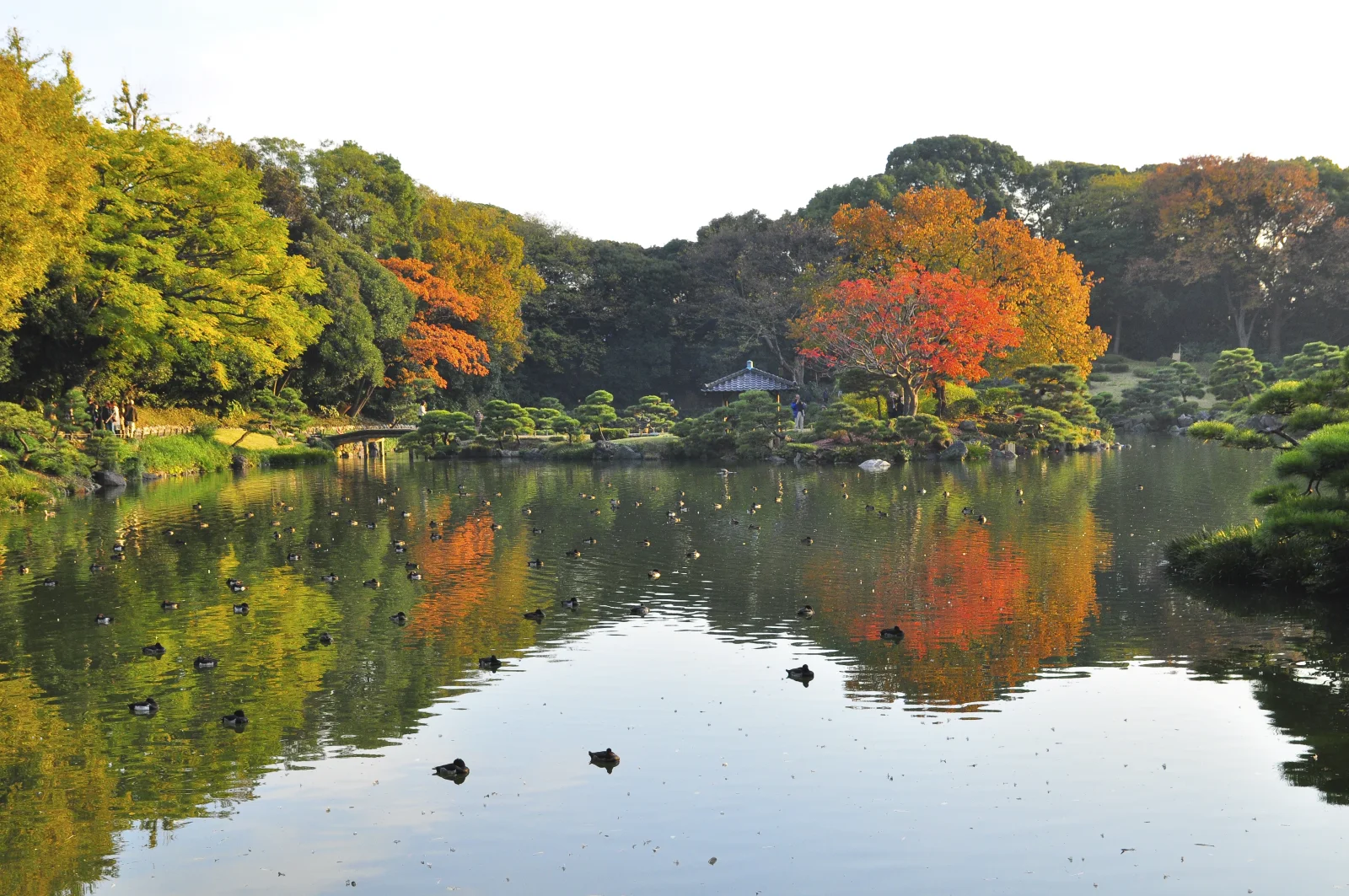
Kitain Temple lists late November through early December as its peak autumn color window. On November 20, 2026, the temple posted a 2026 foliage update reporting that trees on the grounds had begun to peak. If you are visiting this week, that live notice is far more reliable than older trip reports. Travelers with Tokyo hotels and flights booked for early December can still keep Kitain on the itinerary. If you have afternoon plans, give the morning to the temple: the historic shopfronts and bell tower along the street remain visible outside museum hours, whereas the Kyakuden closes early.
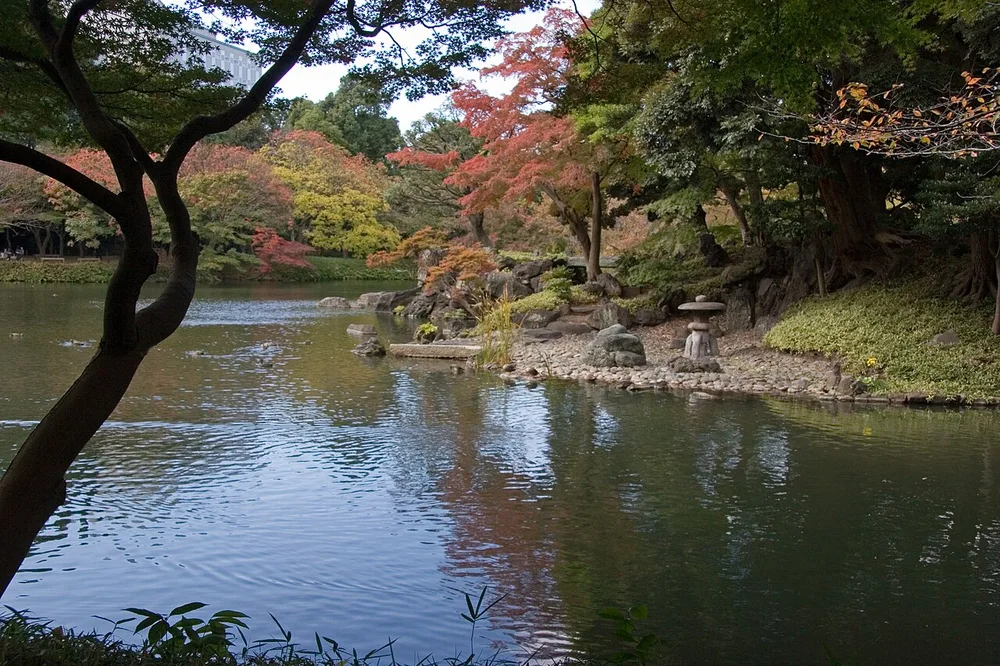
Two spots anchor the foliage viewing here. For canopy color, fallen leaves, and a full garden sweep, look out over Momijiyama Garden from the Kyakuden veranda. The 500 Rakan enclosure sits closer to the Sanmon gate, with rows of stone statues along stone-paved paths that suit close-up views of carvings, textures, and surrounding maples. Because the two areas sit on different parts of the route, shade and angles vary. If the trees around the statues are still partly green when you arrive, spend extra time at the Kyakuden; on days when leaves have already dropped, look for foliage gathered around the statues' bases. Step aside to let foot traffic pass before stopping for photos, as the stone plinths and steps sit closer to the walkway than they appear in pictures.
If you visit on November 22 or 23, you can pair the temple with the Koedo Kawagoe Chrysanthemum Festival held on the Kitain grounds. Kawagoe City scheduled the 2026 exhibition from November 1 to 23 with free admission, generally open 9:00 AM to 4:00 PM and closing early at 3:00 PM on the final day, November 23. Visitors arriving in the morning should tour the Kyakuden and Rakan first before last entry, then return to the outdoor festival tents. If you arrive on the afternoon of November 23 specifically for the flowers, start at the chrysanthemum display and buy your temple viewing ticket around 2:00 PM.
When deciding between Kawagoe and central Tokyo foliage spots for a day out, factor in how much walking you want to do. Combining Kitain Temple with Ichibangai is an urban walk lined with restaurants, with buses available to shorten the return leg to the station. If you only have a single morning or late afternoon free, central Tokyo offers shorter autumn foliage itineraries. Hikers looking for mountain trails can save Mount Takao for a separate day.
Kitain Temple announced on November 20 that autumn foliage has entered peak viewing. Plan your trip from Tokyo to Kawagoe with last-entry times, Sanmon gate construction detours, and a route through Momijiyama Garden, the 500 Rakan statues, Toki no Kane, and Hikawa Shrine.
Admission Is ¥400, With Winter Last Entry at 3:30 PM or 3:50 PM
Viewing tickets cost ¥400 for adults and ¥200 for elementary and junior high school students. Groups of 20 or more pay ¥350 for adults and ¥150 for students. This ticket grants access to the Kyakuden, Shoin, Kuri, and the 500 Rakan area. You can still view the exterior of the Tahoto pagoda and pray at the main hall along the open temple grounds without a ticket. If you only want half an hour to admire the rooflines and outer courtyard, wait until you reach the gate to decide whether to buy one. If you made the trip specifically for autumn colors, the ticket's main value is getting onto the designated Kyakuden viewing veranda and continuing straight to the 500 Rakan.
According to the temple's general visitor guide, gates open at 9:00 AM, seasonal hours split on November 24, and ticket sales stop 30 minutes before closing. The November 20 foliage notice already lists the shorter winter schedule: 9:00 AM to 4:00 PM on weekdays (last entry 3:30 PM) and 9:00 AM to 4:20 PM on Sundays and Japanese national holidays (last entry 3:50 PM). Plan around these earlier cutoffs right now. Arriving at 3:30 PM on a weekday leaves barely half an hour inside, so do not cut it close if you want an unhurried look at the garden and statues. If you prefer eating lunch in old town first, aim to enter the temple between 1:30 PM and 2:00 PM.
Goshuin temple seal requests also close 30 minutes before closing time. Keep your stamp book somewhere easy to reach, locate the calligraphy counter as soon as you enter, and leave enough margin if you plan to pick up your book after finishing the circuit. If two or more people in your group split up—say, one waiting for a stamp while another photographs the Rakan—agree on a clear landmark outside the ticketed lane to meet back up.
Kitain lists scheduled paid-viewing closures from December 25 to January 8, on the afternoon of February 2 and all day February 3, and from April 2 to April 4, with occasional additional closures for temple ceremonies. The January 3 Daruma Market falls during the winter paid-viewing closure. Year-end visitors can focus on old town and New Year shrine visits instead, saving the Kyakuden and Rakan for when viewing reopens. In early December, schedule the temple first thing in the morning. If it is raining when you head out, check how many daylight hours remain and prioritize the indoor temple halls rather than pushing both lunch and viewing to the afternoon.
| Dates | Weekdays | Sundays & Japanese National Holidays |
|---|---|---|
| March 1 – November 23 | 9:00 AM–4:30 PM (last entry 4:00 PM) | 9:00 AM–4:50 PM (last entry 4:20 PM) |
| November 24 – end of February | 9:00 AM–4:00 PM (last entry 3:30 PM) | 9:00 AM–4:20 PM (last entry 3:50 PM) |
Garden Views From the Kyakuden and Lady Kasuga's Rooms in the Shoin
A few hall names near the entrance look very similar on posted signs. Inside the Kyakuden (Guest Hall) sits the Tanjo-no-Ma (Birth Room), traditionally identified as the room where third shogun Tokugawa Iemitsu was born. The Shoin (Study) preserves the Kesho-no-Ma (Dressing Room) used by his wet nurse, Lady Kasuga, while the Kuri was also moved here from Edo Castle's Momijiyama palace. Jiedo (written Jike-do on-site) serves as the main hall, and Jigendo honors the monk Tenkai—when directional signs look confusing, scan for Iemitsu or the Birth Room first. Pause inside the Kyakuden to understand the Edo Castle connection before stepping onto the veranda facing the garden.
The Great Kawagoe Fire of 1638 destroyed most of Kitain Temple. Ordering its reconstruction, Iemitsu had residential quarters from Edo Castle's Momijiyama compound dismantled and moved to Kawagoe to serve as the Kyakuden, Shoin, and Kuri. The temple traces its origins back to 830, when the priest Ennin (Jikaku Daishi) founded Muryoshuji, before taking its current name under Tokugawa Ieyasu and Tenkai. Walking through the Kyakuden puts that history in human scale. The temple notes ink-wash landscape paintings on the sliding doors and walls of the Birth Room, and it is worth looking up at the painted floral motifs inside the coffered ceiling. Photography, video recording, and touching exhibits are prohibited indoors, so save your camera for the walk outside.
You view Momijiyama Garden from the Kyakuden side, where the temple highlights round, diamond-shaped, and square garden edging stones. It is easy to keep your eyes fixed on the treetops in autumn, but taking a few steps along the corridor constantly shifts how the foreground stones, branches, and garden borders line up. When the veranda gets crowded, move with the flow to the next open spot. Viewing is restricted to the designated corridor—never step off the veranda into the garden. If anyone in your group enjoys architecture and garden design, continue past the main view to the dry-landscape Kyokusui-no-Niwa behind the Shoin; the brief indoor walk between the two gardens resets your eye from autumn foliage to spatial layout.
When you reach the Tahoto pagoda, step back far enough to frame the full double roof. According to temple records, the pagoda was first built in 1639, relocated in modern times, and moved to its current site in 1973 during a full dismantling and restoration. Taking in the Tahoto feels very different from viewing Toki no Kane: at the temple you can back up across an open courtyard to study the stacked tiled eaves, whereas in town you look straight up at the bell tower from the narrow Kanetsuki-dori lane. On a clear autumn morning, give plenty of outdoor time to the temple grounds before heading toward the clock tower in the afternoon.
Touring the 500 Rakan Statues and Navigating the Sanmon Gate Repairs
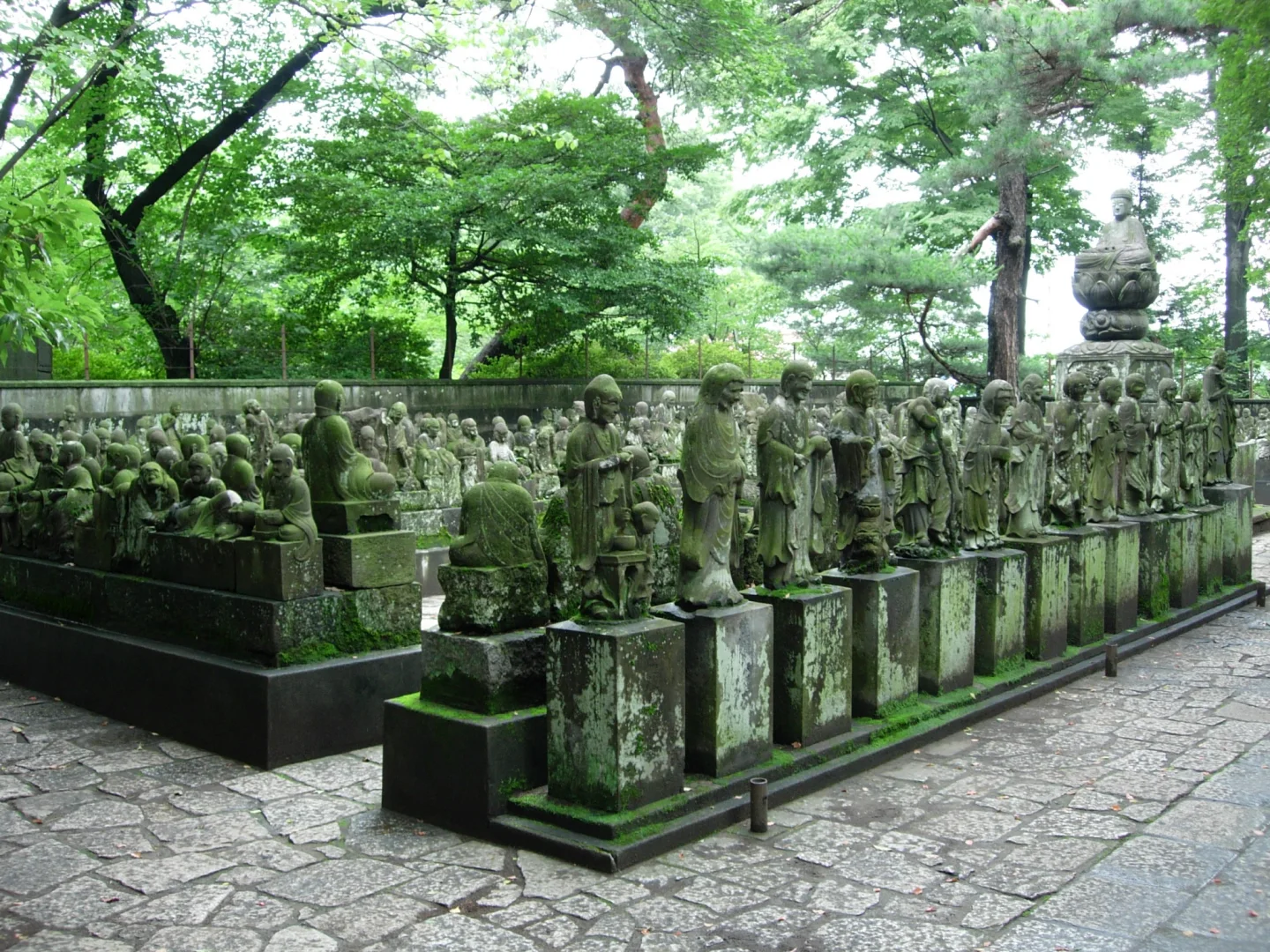
The name "500 Rakan" refers to the entire stone ensemble. Per temple records, the project was initiated by Shisei of Kitatajima in Kawagoe and carved between 1782 and 1825. There are 533 statues of disciples and arhats, joined by a central raised Shaka Nyorai flanked by Monju and Fugen, plus Amida Nyorai and Jizo Bosatsu on the sides—538 statues in total. To appreciate the layout, start with a glance at the elevated central figures before following the stone paths at eye level. Photos usually isolate a single row, whereas in person you see how the rows layer front-to-back and side-to-side.
If you are visiting with kids, pick one short aisle and take your time spotting details. Temple guides point out figures laughing, crying, whispering to neighbors, holding everyday objects, or accompanied by animals. Try guessing what a statue is doing from its posture, then move to the next row to find a completely different expression. Because the figures stand close together, stay on the marked paths without stepping onto stone bases or leaning on statues; you can see the small details clearly from the walkway. After rain, wet stone pavers and fallen leaves get slick, so wait until you reach a wider section before stopping—that also makes it easier to turn a stroller or cane.
The Sanmon gate, built in 1632 by the monk Tenkai, survived the 1638 fire. Under a 2026 conservation repair notice, restoration work is expected to run through roughly September 2027, restricting passage through the gate while signs guide visitors along a detour route. If you are walking from a train station, set your map destination to Kitain Temple (1-20-1 Kosemba-machi) and follow the directional boards next to the construction fencing once you arrive. Groups arriving separately should agree to meet inside an open part of the grounds rather than saying "just to the right after the Sanmon gate."
Budgeting 75 to 100 minutes at Kitain covers the Kyakuden, Shoin, 500 Rakan, and an outdoor look at the Tahoto pagoda. Allow two hours if you like reading exhibition plaques or searching for details with children. If you only have 45 minutes and autumn colors are your priority, give most of that window to the Kyakuden garden view and walk just a short loop through the Rakan. If the statues are your main goal, ask at the ticket counter for the direct route to the Rakan area first, then stroll the open grounds afterward. Factor in walking time to lunch before deciding whether to add nearby shrines along the way to old town.
Semba Toshogu Shrine Just South of Kitain Temple
If you have spare time after Kitain, walk just south to Semba Toshogu Shrine to see another chapter of Tenkai's ties to the Tokugawa clan on the same block. In 1617, Tokugawa Ieyasu's remains stopped at Kitain on the journey from Mount Kuno to Nikko, where Tenkai presided over memorial rites. Semba Toshogu was established here afterward, and its current buildings were rebuilt in 1640 following the 1638 fire. While the Kyakuden's Edo Castle rooms reflect Iemitsu's later reconstruction, this shrine brings the story back to Ieyasu's death—and if you have visited Nikko Toshogu, it adds the prologue before Nikko.
If you are short on time, simply stop by Hie Shrine right outside Kitain's Sanmon gate; its vermilion main hall is designated a National Important Cultural Property. Hie Shrine and Semba Toshogu sit on different sides of the street grid, so do not try to cut along the Sanmon construction fence expecting a shortcut between them. Visitors eager to pack in more temples and shrines can tack this stop onto the end of the paid temple tour and drop one afternoon museum instead. If you already have a lunch reservation or want to catch the noon bell at Toki no Kane, save Semba Toshogu for another trip.
Choosing Between Kawagoe, Hon-Kawagoe, and Kawagoeshi Stations From Tokyo
If you are staying near Ikebukuro, the Tobu Tojo Line runs straight to Kawagoe Station—Tobu's access guide lists the ride at roughly 30 minutes. Check platform displays to confirm your train stops at Kawagoe. JR lines also serve Kawagoe Station, so travelers staying along JR routes in Shinjuku or Shibuya can look for JR Saikyo Line through-services continuing onto the Kawagoe Line with Kawagoe as the terminus. Include time for station transfers, waiting on the platform, and walking to the temple; door-to-veranda travel from Ikebukuro takes noticeably longer than the 30-minute train ride alone.
If you are based near Seibu-Shinjuku or Takadanobaba stations, ride the Seibu Shinjuku Line to Hon-Kawagoe Station. To reserve a seat in advance, book the Koedo Limited Express, which requires both a base fare ticket and a limited express ticket. Travelers staying in Shinjuku should check which JR Shinjuku exit is closest to their hotel and factor in the walk over to Seibu-Shinjuku Station. Reserved seats are most worthwhile when traveling in a group that wants to sit together; make sure you select Hon-Kawagoe as the destination when booking, as the Laview limited express on the Seibu Ikebukuro Line heads toward Seibu-Chichibu instead.
Kitain Temple lists walking times of roughly 15 minutes from Hon-Kawagoe Station, 20 minutes from the shared Tobu/JR Kawagoe Station, and 18 minutes from Tobu Kawagoeshi Station. All three are separate stations. Kawagoeshi works well for Ikebukuro-based travelers who end up west of Hon-Kawagoe on their return walk and want a Tobu train back. If you hold a single-operator pass, stick to that company's station at both ends. If you finish your afternoon near Hikawa Shrine, look for a bus directly to whichever station matches your return line rather than riding to one station and walking to another.
When mixing lines, starting close to your Tokyo hotel usually matters more than shaving five minutes off the walk in Kawagoe. One easy pairing is arriving via Hon-Kawagoe on the Seibu Shinjuku Line in the morning and walking straight to Kitain, then returning to Ikebukuro from Tobu Kawagoeshi Station at the south end of Ichibangai—or taking a bus from near Hikawa Shrine to Tobu/JR Kawagoe Station. If you bought a round-trip discount ticket tied to one railway, use that operator for both legs; otherwise, compare single-fare costs and hotel transfers before buying tickets.
One Koedo Bus Ride Is Enough—Know the East and West Exits First
Two similarly named sightseeing loops depart from Kawagoe Station. Eagle Bus operates the Koedo Loop Bus from West Exit bus stop 2 via Hon-Kawagoe Station: route C01 heads toward Kitain Temple first, while C02 runs toward the warehouse district first. Tobu Bus operates the Koedo Meisho Meguri Bus from East Exit bus stop 3. Before following map directions to a bus stop, pull up the right operator's timetable so you wait at the correct platform—walking out the East Exit only to realize you want C01 adds an extra trek back across to the West Exit.
Standard Eagle Bus fares are ¥220 for adults and ¥110 for children per ride, or ¥600 for an adult one-day pass (¥300 for children). A short hop solely between Kawagoe Station West Exit and Hon-Kawagoe Station costs ¥100 for adults and ¥50 for children. Two standard rides come to ¥440 for an adult, meaning a day pass only pays off on your third regular ride. If you expect to walk most of the day and only ride back at the end, pay per trip instead. Transit IC cards like Suica and PASMO work at the same fare as cash; one-day passes are sold on board, at designated counters, or digitally through RYDE PASS.
Which leg makes the most sense by bus? In the morning from Hon-Kawagoe Station, walking is more flexible than matching a 9:00 AM arrival to loop bus headways. In the afternoon, catching a bus from near Hikawa Shrine back to the station cuts out the longest tired walk at the end of the day. If you prefer riding into the temple in the morning, board C01 at Kawagoe Station West Exit. When traveling with anyone who tires easily, check loop intervals and rest stops before moving from the temple to old town. Eagle Bus runs smaller-bodied vehicles and lists wheelchair-accessible stops and boarding details on its timetable page—verify both pickup and drop-off stops before boarding.
Drivers arriving by car can use Kitain's Myojo Parking Lot, which charges ¥200 for the first hour and ¥100 per additional hour on regular days. From November 24 through the end of February, the lot closes at 4:00 PM on regular days with last entry at 3:30 PM. If you plan to stay on Ichibangai for the 6:00 PM bell or dinner, retrieve your car before closing or park in a lot with later hours. Year-end, New Year, and Setsubun follow separate hours and rates; check the temple parking notice if driving over the holidays.
Walking to the Kurazukuri Old Town and Timing Toki no Kane Around Lunch
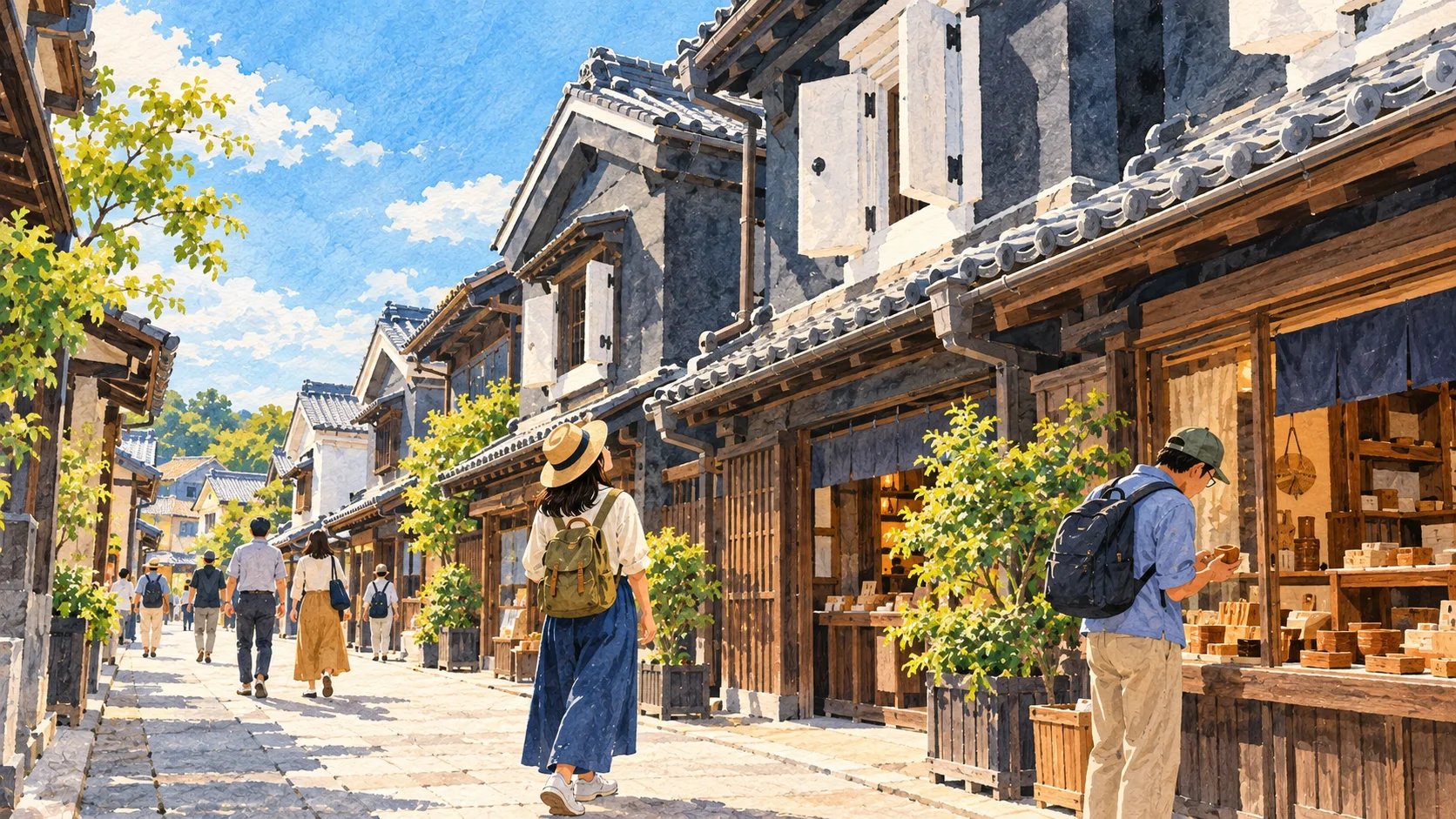
Kitain sits in Kosemba-machi, with the historic warehouse district to the northwest. Set your map to Toki no Kane or Ichibangai when leaving the temple and allow about 20 minutes on foot. If you are ahead of schedule, enter Ichibangai from its southern end and walk north to take in the rooflines. Whereas Kitain showcases the reconstruction after the 1638 fire, Kawagoe's heritage records link old town's streetscape to a later disaster: after the Great Fire of Kawagoe in 1893, merchants rebuilt using fireproof *kurazukuri* earthen-walled architecture, giving Ichibangai its thick dark plaster facades and heavy tiled roofs.
Watch for the Osawa Family Residence as you walk north. Listed by Kawagoe City as the city's oldest surviving kurazukuri merchant house, built in 1792, it lets you compare an Edo-period storefront side by side with neighboring Meiji-era buildings. Stepping back across the street makes the bay widths, shuttered windows, and massive tiled roofs easier to read. Ichibangai carries live vehicle traffic, so stay on the sidewalks for depth-of-field street shots instead of stepping into car or bicycle lanes. Turning off the main road onto Kanetsuki-dori pulls your eye straight up toward the bell tower—angle your shot upward while leaving room for people entering and leaving the side street. Visitors wanting to spend the afternoon diving deeper into local architecture and festival halls can follow our Kawagoe kurazukuri street and festival museum walk.
Toki no Kane was rebuilt in 1894, the year after the great fire. According to the city, its bell chimes four times daily at 6:00 AM, 12:00 PM, 3:00 PM, and 6:00 PM, making noon or 3:00 PM the easiest chimes to catch on an autumn day trip. If you finish Kitain just before noon, turn down Kanetsuki-dori to hear the bell before sitting down to eat. If you have a noon lunch reservation, aim to loop back past the tower around 3:00 PM on your way back from Kashiya Yokocho. You can hear the chimes from the main street too; if you arrive a few minutes early, wait out of shop doorways rather than rushing in for a quick snapshot and leaving.
For lunch, decide early whether your group wants a sit-down unagi (grilled eel) meal that takes about an hour. For popular spots, plan ahead for reservations or waitlist sign-ups right after finishing the temple. If you lingered an extra half-hour at Kitain and still want to catch the bell chime, grab faster soba or a set meal near Ichibangai and save sweets for the afternoon. With older travelers or kids, sitting down at a proper restaurant beats balancing street snacks in thick weekend crowds. Over on Kashiya Yokocho (Candy Alley), look for handmade hard candies, puffed *fugashi* wheat snacks, and sweet potato treats or soft-serve ice cream. Shops label sweet potato items as *satsumaimo*; if you are buying snacks to take home, check shelf life and airline carry-on rules and stick to smaller packs.
Lunch, snacks, and souvenirs account for most of the day's flexible spending. Two adults and one elementary school student pay ¥1,000 combined for Kitain admission, and one afternoon Eagle Bus ride each back to the station totals ¥550, plus train fares, meals, and shopping. If anyone plans to rent a kimono, confirm whether hair styling, accessories, and return deadlines are included in the package. Many rental shops sit near the southern end of Ichibangai—if you plan to walk all the way north to Hikawa Shrine in the afternoon, build at least 30 minutes of buffer time for the walk back and avoid booking lunch at the far opposite end.
Saving Hikawa Shrine for the Afternoon—Why Enmusubidama Require a Dawn Trip
Heading north from Toki no Kane and Kashiya Yokocho brings you to Kawagoe Hikawa Shrine. A standard visit centers on the giant torii gate, the main worship hall, and the wooden *ema* plaque tunnel. Because the main approach, plaza, and charm counter sit in different corners of the precinct, groups where some want amulets while others prefer exploring the architecture can visit the worship hall together and set a meetup spot beside the giant torii. If the shrine is your final stop, there is no need to add a detour to the river; if you have extra time before heading back, the Shingashi River behind the shrine makes an easy turnaround point.
The shrine's Enmusubidama charms consist of small stones wrapped in hemp netting and purified by priests; you can read how they are prepared in Hikawa Shrine's worship guide. According to the shrine's New Year notice, numbered distribution tickets are handed out around 6:00 AM for the 8:00 AM release, with special quotas on the first three days of January. If securing an Enmusubidama is the main purpose of your trip, flip the itinerary—stay nearby so you can arrive before 6:00 AM, then head to Kitain afterward. Keeping Hikawa Shrine in the afternoon leaves a relaxed window for prayers, the plaque tunnel, and regular charms.
From the shrine, you can either walk or catch a bus back to your departure station. To catch the 3:00 PM bell at Toki no Kane, eat on Ichibangai first, take a brief look at Hikawa Shrine, and retrace your steps down to Kanetsuki-dori. If you only want a single bus ride at the very end, put Kashiya Yokocho before the shrine and board a bus right outside Hikawa. Head for Tobu Kawagoe Station if returning to Ikebukuro, or Hon-Kawagoe Station if heading back to Seibu-Shinjuku or Takadanobaba. Once dusk settles, skip unnecessary backtracking and wrap up your evening near an easy transit connection.
Fair-Weather Routing vs. Adding a Castle Hall When It Rains
In wet weather, prioritize Kitain's covered Kyakuden, Shoin, and veranda garden views first. Because the 500 Rakan area is outdoors, wait for a lighter spell before heading out, watch your footing on slick pavers and narrow corners with an umbrella, and fold umbrellas according to posted instructions before stepping back indoors. Do not treat Ichibangai as a continuous covered arcade—pick a sit-down restaurant for lunch or plan a stop at the Kawagoe Festival Museum. Note that the Kurazukuri Museum is undergoing seismic retrofitting through fiscal year 2026 per Kawagoe City, so view its historic merchant neighbors from the street for now.
If rain starts in the morning, the simplest pivot is keeping lunch in old town and stepping into the Kawagoe Festival Museum at the north end of Ichibangai to see two full-size festival floats up close. From October through March, the museum opens from 9:30 AM to 5:30 PM with last admission at 5:00 PM. Admission is ¥300 for adults and ¥100 for elementary and junior high school students. It closes on the second and fourth Wednesdays of each month (or the following day if a Japanese national holiday falls on Wednesday) and from December 29 to January 1. Moving straight from lunch into the museum keeps you sheltered without walking all the way over to the castle district.
History buffs can detour east of Ichibangai to the Honmaru Goten of Kawagoe Castle, which connects smoothly walking north from Kitain or heading south back from Hikawa Shrine. Built in 1848, the surviving palace dates roughly two centuries later than Kitain's relocated halls—comparing the two pairs Edo Castle's rooms at Kitain against the grand entrance hall and audience chambers built by Kawagoe's feudal lords. On this route, visit Honmaru Goten right after Kitain, walk west to Ichibangai for a late lunch, and choose either Hikawa Shrine or shopping for the late afternoon.
Honmaru Goten generally opens 9:00 AM to 5:00 PM with last entry at 4:30 PM; tickets cost ¥100 for adults, ¥50 for high school and university students, and are free for junior high students and younger. City notices list closures on Mondays (shifted to Tuesday when Monday is a national holiday), the fourth Friday of each month (excluding national holidays), and December 29 to January 3. Because November 23 is a Japanese national holiday, Honmaru Goten takes its substitute closure the next day—head to the Kawagoe Festival Museum instead on that Tuesday. If both museums happen to be closed, keep Kitain and Toki no Kane in the plan and browse Ichibangai's shops in the afternoon.
When traveling with older relatives or a stroller, stick to two anchor stops—such as Kitain Temple and Ichibangai—and choose a lunch spot near the southern end of old town. Autumn rain slows walking pace and means extra time drying off coats, so build in a break after the Kyakuden. Anyone needing step-free access for the indoor temple halls should call Kitain's viewing office in advance (049-222-0859, 9:00 AM–4:00 PM) to confirm current routes around the construction zone before buying tickets. Travelers carrying rolling luggage on foot between the temple and old town should drop bags in coin lockers at their departure station first so narrow walkways stay manageable.
Half-Day, Full-Day, and Late-Afternoon Pacing Options
For a half-day plan arriving around 9:30 AM, stay at Kitain until roughly 11:00 AM, walk to Ichibangai to catch the noon bell at Toki no Kane, and finish with lunch. If you need to head back to Tokyo right after eating, save Hikawa Shrine for next time and walk straight to Hon-Kawagoe or Kawagoeshi Station. This pacing works well around a child's nap schedule, afternoon commitments, or a hotel change in Tokyo, clearing all ticketed stops early and keeping the return ride simple.
With a full day, give Kitain at least 90 minutes before reaching Ichibangai around noon, pause at Toki no Kane after lunch, and continue to Kashiya Yokocho or Hikawa Shrine. If you are finishing at the shrine, buy bulky souvenirs earlier only if they are light to carry—or pick them up on the way back if your route loops past the bell tower again. If your group wants a slow coffee or tea break after lunch, cut one afternoon stop rather than rushing. Mixed-interest groups can split up after lunch with an agreed departure station and train line, leaving shoppers on Ichibangai while walkers continue north to the shrine.
If you are leaving Tokyo in the afternoon, add 15 to 20 minutes of walking time onto your train arrival. On a winter weekday, reaching Kitain by 2:30 PM still leaves around 90 minutes before closing—enough for the main viewing highlights. Once it gets close to the 3:30 PM cutoff, skip waiting for infrequent buses and walk instead. If you arrive after ticket sales close, view the Tahoto pagoda and pray along the open grounds before heading to Ichibangai; if you only came for street food and the bell tower, head straight from the station to Kanetsuki-dori to save the extra walk.
A few useful answers
When is the best time to see autumn leaves at Kawagoe Kitain Temple?
The temple lists late November through early December as its peak season, and its November 20, 2026 update notes that autumn colors have begun to peak. Head to the Kyakuden for views of Momijiyama Garden, and visit the 500 Rakan area to photograph the stone statues under the trees.
How much is admission to Kitain Temple, and when is last entry?
Admission is ¥400 for adults and ¥200 for elementary and junior high school students. According to the November 20, 2026 foliage notice, last entry is 3:30 PM on weekdays and 3:50 PM on Sundays and Japanese national holidays, with closing at 4:00 PM and 4:20 PM respectively. Standard winter hours take effect from November 24, and paid viewing is closed from December 25 to January 8.
Where is Tokugawa Iemitsu's birth room, and what other historic buildings can I see?
The room traditionally known as the Birth Room (Tanjo-no-Ma) is inside the Kyakuden in the paid viewing area, while the adjacent Shoin preserves Lady Kasuga's Dressing Room (Kesho-no-Ma). The Kyakuden, Shoin, and Kuri were all relocated from the Momijiyama palace of Edo Castle. The temple's main hall is Jiedo.
How do I enter Kitain Temple during the Sanmon gate restoration?
Conservation repairs are scheduled through around September 2027, and passage through the Sanmon gate is restricted. Head to 1-20-1 Kosemba-machi, Kawagoe, Saitama, and follow the posted directional signs on the grounds.
Which station should I use from Ikebukuro or Shinjuku?
From Ikebukuro, take the Tobu Tojo Line to Kawagoe Station (about a 20-minute walk to the temple). From Seibu-Shinjuku or Takadanobaba, take the Seibu Shinjuku Line to Hon-Kawagoe Station (about a 15-minute walk). From JR Shinjuku, you can also take a JR Saikyo Line train running through onto the Kawagoe Line directly to Kawagoe Station.
Can I still get an Enmusubidama charm if I visit Kawagoe Hikawa Shrine in the afternoon?
Enmusubidama charms are distributed in limited quantities; the shrine's New Year notice states that numbered tickets are handed out around 6:00 AM with distribution starting at 8:00 AM. If you visit in the afternoon, focus on the worship hall, the ema wooden plaque tunnel, and the charm counter instead.
How should I adjust a Kawagoe day trip if it rains?
Start with the covered Kyakuden and Shoin at Kitain Temple, and save the outdoor 500 Rakan area for a break in the rain. For another indoor stop later in the day, pick whichever is open between the Kawagoe Castle Honmaru Goten and the Kawagoe Festival Museum, then take a bus back to the station.
Official information and references
Sources used in this guide.
- Kitain Temple Visitor Information (Hours, Last Entry, Closures, and Fees)
- Kitain Temple 2026 Autumn Foliage Update (November 20, 2026)
- Kitain Temple Autumn Foliage Viewing Guide
- Kitain Temple Sanmon Gate Conservation Repair Notice
- Kitain Temple Founding and Relocation History
- Kitain Temple Kyakuden and Tokugawa Iemitsu's Birth Room
- Kitain Temple 500 Rakan Statues
- Kitain Temple Tahoto Pagoda
- Kitain Temple Visitor Guide (Etiquette and Walking Times From Three Stations)
- Kitain Temple Myojo Parking Lot Information
- Kawagoe City Koedo Kawagoe Chrysanthemum Festival 2026
- Tobu Railway Ikebukuro–Kawagoe Access Guide
- Seibu Railway Shinjuku Line Limited Express Koedo
- Kawagoe City Sightseeing Bus Routes and Boarding Stops
- Eagle Bus Koedo Loop Bus Routes
- Eagle Bus Koedo Loop Bus Fares
- Kawagoe City Kurazukuri Preservation District and Osawa Family Residence
- Kawagoe City Toki no Kane Bell Schedule and Access
- Kawagoe City Kashiya Yokocho (Candy Alley)
- Kawagoe City Kurazukuri Museum Seismic Retrofitting Notice
- Kawagoe Hikawa Shrine Worship Guide and Grounds Map
- Kawagoe Hikawa Shrine New Year Guide and Enmusubidama Distribution
- Kawagoe Castle Honmaru Goten (Admission, Hours, and Closures)
- Kitain Temple Semba Toshogu Shrine
- Kitain Temple Hie Shrine
- Kawagoe City Semba Toshogu Shrine (Location and History)
- Kawagoe Festival Museum (Admission, Hours, and Closures)
- Eagle Bus Loop Timetable and Wheelchair Boarding Information
- JR East Kawagoe Line and Saikyo Line Station Directory
- Kawagoe City Tourism Promotion Plan (Sweet Potatoes and Merchant District)