Kita-in announced on 20 November 2026 that its autumn foliage has entered peak viewing. Travel from Tokyo to Kawagoe with full details on last admission, Sanmon gate repair detours, Momijiyama Garden, the 500 Rakan statues, Toki no Kane, and Hikawa Shrine.
- Region & Focus
- Kawagoe
- Reading Scope
- 21 min read · 11 chapters · 7 Q&As
- Official Verification
- 30 official sources checkedUpdated 22 November 2026
- Key Topics
- SeasonsItinerariesTokyo & Kanto
Chapter Route Map (tap any stop)
- 2026 autumn colour has arrived, so put Kita-in first thing in the morning
- Admission is ¥400, with winter last entry at 15:30 or 15:50
- Garden views from the Kyakuden and Kasuga no Tsubone's rooms in the Shoin
- Making the most of the 500 Rakan and navigating the Sanmon gate repairs
- Senba Toshogu Shrine just south of Kita-in
- Choosing between Kawagoe, Hon-Kawagoe, and Kawagoeshi stations from Tokyo
- One ride on the Koedo bus is enough—just check East vs West Exit
- Walking to Kurazukuri old town: timing lunch around Toki no Kane
- Afternoon at Kawagoe Hikawa Shrine—and why Enmusubi-dama need an early start
- Fair-weather temple walks and rainy-day indoor swaps
- Half-day, full-day, and afternoon-start itineraries
- Quick Q&A
For an autumn foliage trip to Kawagoe, start your morning in the paid admission grounds of Kita-in Temple. From the veranda of the Kyakuden hall you look straight out onto Momijiyama Garden, and the same ticket covers the historic rooms relocated from Edo Castle alongside the 500 Rakan stone statues. On 20 November 2026, the temple announced that the leaves had entered peak colour, listing last admission at 15:30 JST on weekdays and 15:50 JST on Sundays and Japanese public holidays. From Tokyo, take the Tobu line to Kawagoe Station or the Seibu line to Hon-Kawagoe Station. After touring the temple, walk to Ichibangai for lunch and spend the afternoon strolling past the Toki no Kane bell tower towards Kashiya Yokocho or Kawagoe Hikawa Shrine.
2026 autumn colour has arrived, so put Kita-in first thing in the morning
Kita-in lists late November through early December as its peak autumn foliage window. On 20 November 2026, the temple issued its current autumn foliage update confirming that colour inside the grounds had begun to peak. If you are planning a trip this week, the temple's live notice is far more reliable than older travel blogs. Even if your Tokyo hotel and flights are booked for early December, Kita-in still deserves a place on your itinerary. If you have other plans in the afternoon, give the morning to the temple: the historic shopfronts and bell tower along the street remain visible outside closing hours, whereas the Kyakuden hall requires an earlier arrival.
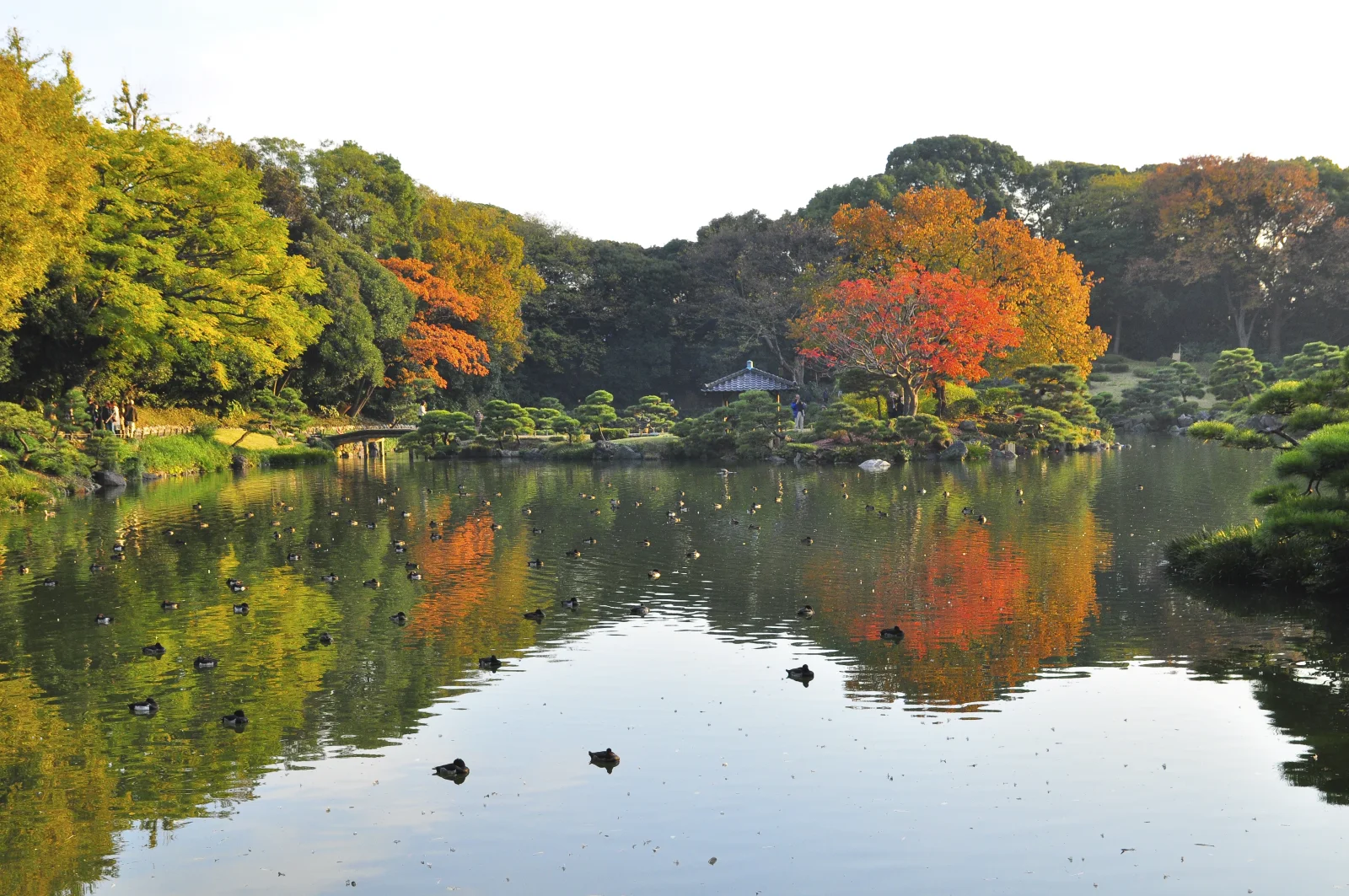
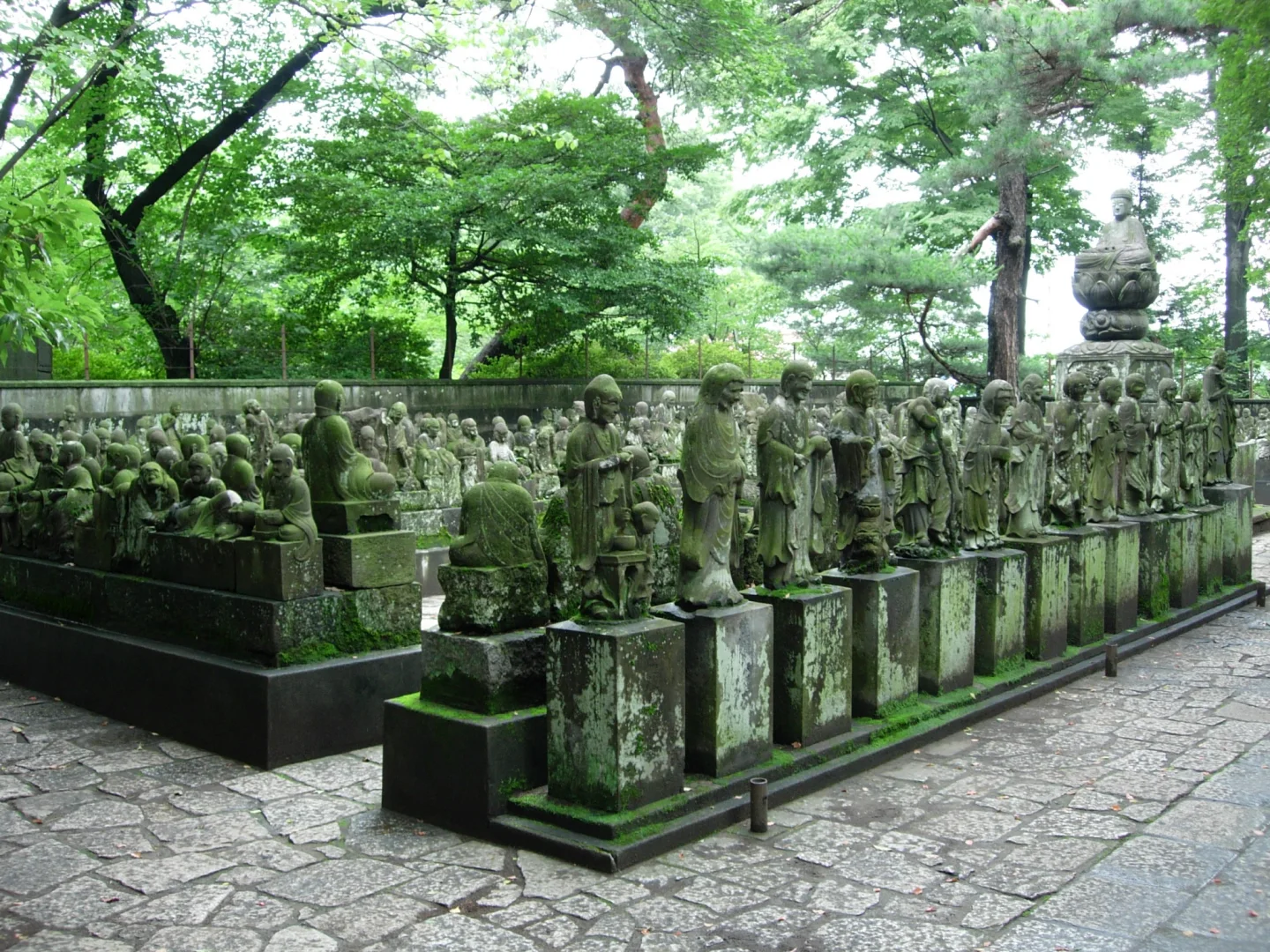
There are two main spots for leaf-viewing inside the grounds. For a sweeping view of the canopy, fallen leaves, and garden layout, look across Momijiyama Garden from the Kyakuden veranda. Near the Sanmon gate, the Gohyaku Rakan area lines rows of stone statues along paved paths, rewarding a closer look at individual poses, stonework, and overhanging branches. The two areas sit a short walk apart along the temple route, each offering different shade and sightlines. If the trees around the Rakan statues are still partly green when you arrive, spend extra time at the Kyakuden; later in the season, when more leaves have dropped, look for fallen foliage pooling around the statues' plinths. Step aside for passing visitors before stopping for photos, as the stone bases and steps sit closer to the narrow paths than they appear in pictures.
Visiting on 22 or 23 November also lets you catch the Koedo Kawagoe Chrysanthemum Festival held on the Kita-in grounds. Kawagoe City schedules the 2026 display from 1 to 23 November with free entry, running 09:00 to 16:00 on most days and closing early at 15:00 on the final day, 23 November. If you want to see both in the morning, prioritise the Kyakuden and Rakan statues before their admission cut-off, then browse the temporary chrysanthemum tent afterwards. Arriving on the afternoon of 23 November specifically for the blooms? Visit the festival display first and buy your temple admission ticket around 14:00.
When deciding between Kawagoe and an autumn walk within central Tokyo, consider how much walking you want to do. Combining Kita-in and Ichibangai makes for an easy town walk dotted with restaurants, with local buses available to trim the walk back to the station. If you only have a single morning or late afternoon spare, check shorter autumn foliage routes in central Tokyo. Travellers keen on woodland trails can save Mount Takao for another day.
Kita-in announced on 20 November 2026 that its autumn foliage has entered peak viewing. Travel from Tokyo to Kawagoe with full details on last admission, Sanmon gate repair detours, Momijiyama Garden, the 500 Rakan statues, Toki no Kane, and Hikawa Shrine.
Admission is ¥400, with winter last entry at 15:30 or 15:50
Standard admission is ¥400 for adults and ¥200 for primary and junior high school pupils, dropping to ¥350 and ¥150 respectively for groups of 20 or more. The ticket grants access to the Kyakuden, Shoin, Kuri, and Gohyaku Rakan grounds. You can still view the exterior of the Tahoto pagoda and pay respects at the main hall along the open worship route without buying a ticket, so if you only want half an hour to admire the eaves and outer courtyard, wait until you reach the entrance before deciding. If you are coming to Kawagoe specifically for the autumn garden, however, the ticket is essential for reaching the designated Kyakuden viewing deck and continuing straight through to the 500 Rakan.
According to the temple's visitor information page, gates open at 09:00 and seasonal hours shift on 24 November, with ticket sales ending 30 minutes before closing. However, the 20 November foliage update already lists the shorter winter hours: 09:00 to 16:00 on weekdays (last entry 15:30) and 09:00 to 16:20 on Sundays and Japanese public holidays (last entry 15:50). Plan around those earlier times. Arriving at 15:30 on a weekday leaves barely half an hour inside, so aim earlier if you want to linger over the garden and statues. If you prefer to have lunch in the old town first, arriving at the temple between 13:30 and 14:00 gives you comfortable breathing room.
Goshuin calligraphy stamp reception also closes 30 minutes before the gates shut. Keep your stamp book close at hand, check where the writing window is located as you enter, and allow time to collect it if you finish your tour near the exit. If you are travelling in a pair or group and one person wants to wait for a stamp while others photograph the Rakan statues, agree on a clear landmark outside the ticketed lane to meet up afterwards.
Paid admission is closed from 25 December to 8 January, on the afternoon of 2 February and all day on 3 February, and from 2 to 4 April, as well as during occasional temple ceremonies. The 3 January Daruma Market takes place on the grounds during that New Year closure period. Anyone visiting Kawagoe over New Year can focus on the old town or New Year shrine visits, leaving the Kyakuden and Rakan for another trip, while early December visitors can put the temple first thing in the morning. If it is raining when you set out, check how many hours of daylight remain and avoid pushing both the indoor temple tour and old-town stroll too late in the day.
| Dates | Weekdays | Sundays & Japanese Public Holidays |
|---|---|---|
| 1 March – 23 November | 09:00–16:30 (last entry 16:00) | 09:00–16:50 (last entry 16:20) |
| 24 November – end of February | 09:00–16:00 (last entry 15:30) | 09:00–16:20 (last entry 15:50) |
Garden views from the Kyakuden and Kasuga no Tsubone's rooms in the Shoin
Several hall names around the entrance look similar at a glance. Inside the Kyakuden, Tanjo-no-ma is traditionally held to be the birth room of Tokugawa Iemitsu, while the Shoin houses Kesho-no-ma, used by his wet nurse Kasuga no Tsubone; the Kuri was likewise brought over from the Momijiyama palace of Edo Castle. Jike-do serves as the temple's main hall, whereas Jigen-do is dedicated to High Priest Tenkai, so look for signs pointing to Iemitsu or Tanjo-no-ma if you lose your bearings. Before stepping out onto the veranda, take a moment inside the Kyakuden to understand why this garden has such close ties to Edo Castle.
The Great Fire of Kawagoe in 1638 destroyed most of Kita-in's buildings. Iemitsu ordered its reconstruction, relocating auxiliary halls from Edo Castle's Momijiyama to Kawagoe to serve as the Kyakuden and Shoin. While the temple traces its origins back to 830, when Jikaku Daishi Ennin founded Muryoju-ji, it only took its present name during the era of Tokugawa Ieyasu and High Priest Tenkai. Walking through the Kyakuden brings that history down to room scale: temple notes highlight the ink-wash landscape paintings on the sliding doors and walls of Tanjo-no-ma, alongside painted floral motifs in the coffered ceiling above. Photography, filming, and touching exhibits are prohibited indoors, so wait until you step outside before taking out your camera.
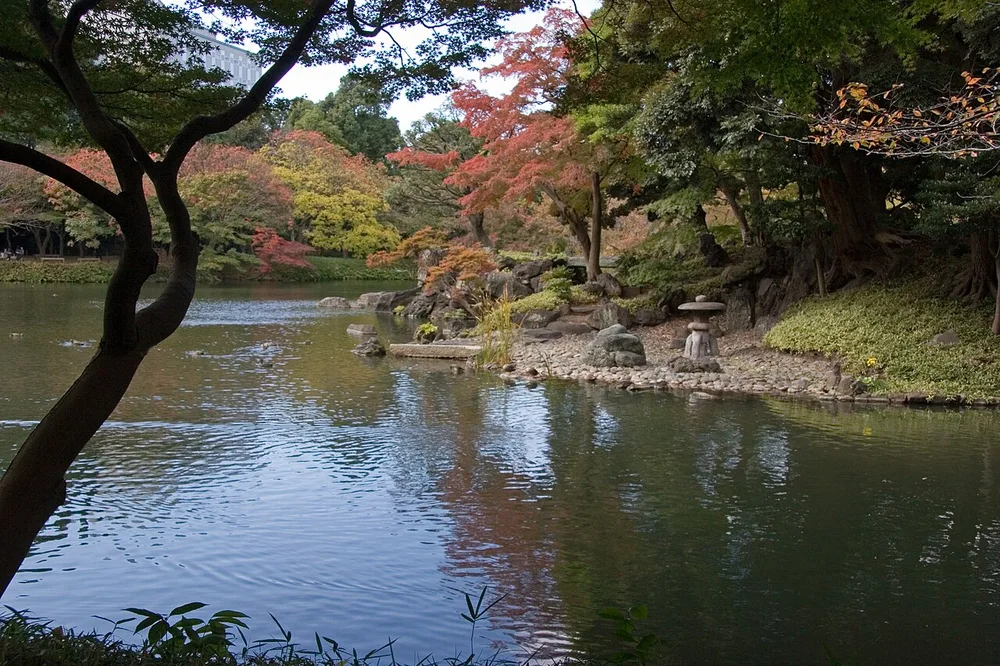
Momijiyama Garden is viewed from the Kyakuden side, with the temple singling out its circular, diamond-shaped, and square garden border stones as key details. It is easy to keep your eyes fixed on the treetops, but taking a few steps along the veranda continually reframes the foreground rocks, overhanging boughs, and garden edges. Keep moving smoothly along the corridor if it gets busy and pause at the next clear spot. Stay strictly within the designated viewing corridor rather than stepping into the garden itself. Architecture and landscape enthusiasts should continue past the Shoin to see the dry-landscape Kyokusui-no-niwa garden behind it; the short indoor walk between the two resets your eye from autumn foliage to compositional design.
When you reach the Tahoto pagoda, step back until you can see the full sweep of its roof. Temple records note that it was originally built in 1639, moved in modern times, and dismantled for restoration on its current site in 1973. Taking in the pagoda is a very different experience from viewing Toki no Kane: at Kita-in you can step across the courtyard to appreciate its stacked tiers and overlapping tiled roofs, whereas the bell tower is best seen by looking straight up from Kanetsuki-dori lane. On a crisp autumn day, prioritise the temple's outdoor grounds first and save the old-town bell tower for your afternoon walk.
Making the most of the 500 Rakan and navigating the Sanmon gate repairs
The name Gohyaku Rakan—the 500 Arhats—refers to the entire stone ensemble. According to temple records, the project was initiated by Shijo of Kitatajima in Kawagoe and carved continuously from 1782 to 1825. Alongside 533 disciples and arhats, the group includes Shakyamuni Buddha flanked by Manjusri and Samantabhadra on the raised central platform, plus Amitabha and Ksitigarbha on either side, making 538 statues in total. On entering, take in the elevated central figures first, then follow the flagged path past the rows standing at eye level. Photographs usually isolate a single row, whereas being there in person reveals the depth and spacing of the whole assembly.
If you have children in tow, pick one short aisle and take your time spotting details. Temple guides point out statues laughing, crying, whispering to one another, holding everyday objects, or accompanied by animals. Pause to guess what a figure is doing before moving on to look for a contrasting expression in the next row. Because some statues stand close together, stay on the marked walkway without leaning over the plinths—every hand-held detail is clearly visible from the path. After rain, fallen leaves on the flagstones turn slippery, so wait until a wider stretch of path before stopping to manoeuvre pushchairs or walking sticks.
The Sanmon gate dates to 1632, built under High Priest Tenkai and spared by the 1638 fire. According to the temple's conservation repair notice, work is expected to continue until around September 2027; passage through the gate is restricted in the meantime, with boards directing visitors along an alternative route into the grounds. If you are walking from the station, set your map pin to Kita-in (1-20-1 Kosenbamachi) and follow the worship-route signs beside the hoarding on arrival. Anyone meeting companions arriving separately should pick a landmark inside the open courtyard rather than saying "just to the right inside the Sanmon gate".
Allow 75 to 100 minutes at Kita-in to cover the Kyakuden, Shoin, and Rakan statues plus an outdoor look at the Tahoto pagoda, or stretch that to two hours if you enjoy reading information boards or hunting for expressions with children. With only 45 minutes to spare, focus on the Kyakuden and autumn garden first and stroll briefly through the Rakan enclave. If the statues are your top priority, ask at the ticket counter for the direct way to the Rakan area first, then loop back through the main courtyard. Leave yourself walking time before lunch, and wait until after Kita-in to decide whether to add neighbouring shrines on the way into town.
Senba Toshogu Shrine just south of Kita-in
If you have time after Kita-in, walk south to Senba Toshogu Shrine to trace another chapter of Tenkai's bond with the Tokugawa shogunate within the same block. In 1617, when Tokugawa Ieyasu's coffin was carried from Kunozan to Nikko, the procession halted at Kita-in for memorial services led by Tenkai. Senba Toshogu was later established on this spot; the current buildings were rebuilt after the 1638 fire and completed in 1640. Whereas the Kyakuden's Edo Castle rooms reflect Iemitsu's reconstruction, Toshogu winds the story back to Ieyasu's passing—a rewarding footnote if you have already visited Nikko Toshogu.
Short on time? Take a quick look at Hie Shrine along the outer edge of the Kita-in approach instead. Sitting right in front of the Sanmon gate, Hie Shrine has a vermilion-lacquered main sanctuary designated an Important Cultural Property of Japan. Note that Hie Shrine and Senba Toshogu sit on separate streets, so do not try to cut along the Sanmon construction hoarding expecting a shortcut between them. Treat this detour as an optional add-on after the paid temple grounds, skipping an afternoon museum if you stop here, or save it for another visit if you have a lunch booking or want to catch the midday bell.
Choosing between Kawagoe, Hon-Kawagoe, and Kawagoeshi stations from Tokyo
If you are staying near Ikebukuro, the Tobu Tojo Line runs straight to Kawagoe Station in roughly 30 minutes according to Tobu's timetable guide—just double-check on the platform display that your train stops at Kawagoe. Kawagoe Station is also served by JR, so travellers based near Shinjuku or Shibuya can look for JR Saikyo Line trains running directly onto the Kawagoe Line bound for Kawagoe. Factor in platform transfers, waiting times, and the walk at the far end, as getting from an Ikebukuro platform to the Kyakuden takes noticeably longer than the 30-minute train ride.
From Seibu-Shinjuku or Takadanobaba stations, take the Seibu Shinjuku Line to Hon-Kawagoe Station. If you want a reserved seat, look for the Limited Express Koedo, which requires both a base fare ticket and a limited express supplement. When starting in Shinjuku, check which JR Shinjuku exit is nearest your hotel so you can weigh up the walk to Seibu-Shinjuku Station. Group travellers who want to sit together may find the reserved seat worth budgeting for; just make sure you book for Hon-Kawagoe, as the Seibu Ikebukuro Line's Laview express heads towards Seibu-Chichibu instead.
Kita-in's official guide lists walking times of roughly 15 minutes from Hon-Kawagoe Station, 20 minutes from the shared Tobu/JR Kawagoe Station, and 18 minutes from Tobu's Kawagoeshi Station. Each sits in a different spot. Kawagoeshi Station works well if you are returning to Ikebukuro on the Tobu line after finishing near Hon-Kawagoe on the western side of town. If you plan to use the same rail operator both ways, keep your arrival and departure at the same station; otherwise, if you end the afternoon at Hikawa Shrine, catch a bus straight to whichever station matches your return line rather than walking across town to switch operators.
When mixing operators, picking the station closest to your Tokyo hotel usually matters more than shaving five minutes off the walk in Kawagoe. You might arrive via the Seibu Shinjuku Line at Hon-Kawagoe and walk straight to Kita-in, then head back to Ikebukuro from the southern end of Ichibangai via Kawagoeshi Station, or take a bus from Hikawa Shrine to Tobu/JR Kawagoe Station. Travellers using a single-operator round-trip discount pass should stick to that company's stations both ways; otherwise, compare single fares and your final walk back to the hotel before buying.
One ride on the Koedo bus is enough—just check East vs West Exit
Two sightseeing bus services share similar names at Kawagoe Station. Eagle Bus operates the Koedo Loop Bus from West Exit stop 2 via Hon-Kawagoe Station, with route C01 heading to Kita-in first and C02 running towards Kurazukuri Street first. Meanwhile, the Tobu Bus Koedo Meisho Meguri Bus departs from East Exit stop 3. Always check the operator's timetable and stop number on your phone before leaving the station—exiting on the East side when you meant to board C01 adds an unnecessary detour back across to the West Exit.
Eagle Bus standard single fares are ¥220 for adults and ¥110 for children, with a one-day pass at ¥600 for adults and ¥300 for children. Riding just between Kawagoe Station West Exit and Hon-Kawagoe Station costs ¥100 for adults and ¥50 for children. Since two standard adult rides total ¥440, the day pass only pays off from your third standard trip onwards; if you only expect to take the bus back at the end of the day, simply pay per ride. Transport IC cards such as Suica and PASMO work at the exact same fare as cash, and one-day passes can be bought on board, at designated counters, or digitally via RYDE PASS.
Which leg is actually worth taking by bus? If you start from Hon-Kawagoe aiming to reach Kita-in around 09:00, walking is usually quicker and more flexible than waiting for a loop bus departure. In the afternoon, catching a bus from Hikawa Shrine back to the station neatly cuts out the longest walk back. Boarding C01 from Kawagoe Station West Exit also makes sense in the morning if someone in your group prefers to save their legs for the old town—just factor in headway and rest stops. Because Eagle Bus uses compact vehicles, check their timetable and wheelchair-accessible stop guide to confirm step-free boarding and alighting points in advance.
If you are driving, Kita-in's Myojo Car Park charges ¥200 for the first hour and ¥100 for each additional hour on regular days. From 24 November to the end of February, standard closing is 16:00 with last entry at 15:30. Anyone planning to stay in Ichibangai for the 18:00 bell or dinner should retrieve their car before closing or park in a town car park with later hours. Special hours and rates apply over New Year and Setsubun, so drivers visiting at year-end should consult the car park's current schedule.
Walking to Kurazukuri old town: timing lunch around Toki no Kane
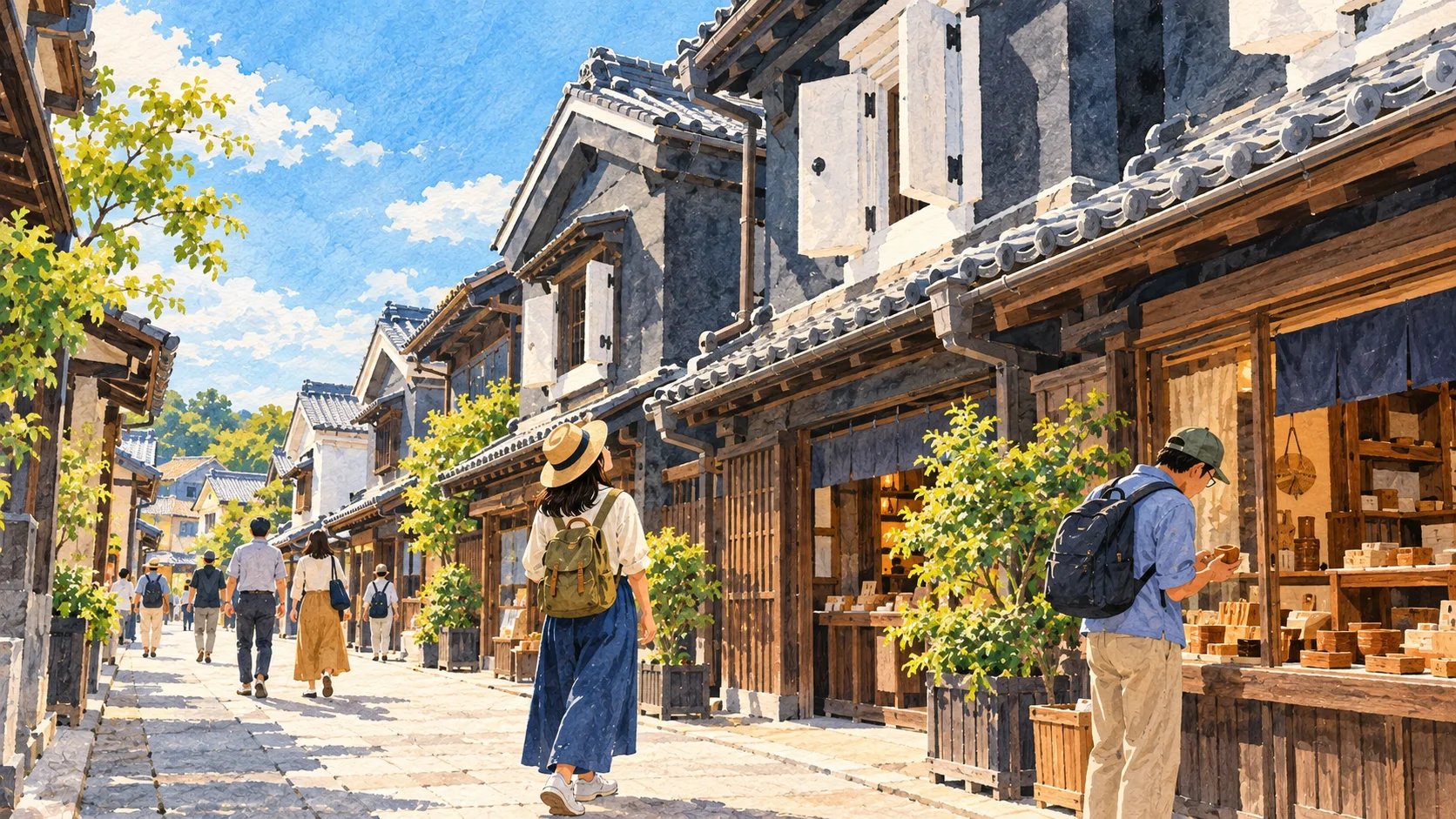
Kita-in sits in Kosenbamachi, while the historic merchant district lies to the north-west. Set your map first to Toki no Kane or Ichibangai and allow around 20 minutes on foot. If you arrive early, join Ichibangai at its southern end and walk north to take in the gabled facades. Just as Kita-in reflects reconstruction after the 1638 fire, Kawagoe's heritage listings link this streetscape to a later disaster: following the great town fire of 1893, merchants rebuilt using fireproof kurazukuri clay-walled storehouse construction, giving Ichibangai the thick plaster walls, dark timber shopfronts, and heavy tiled roofs seen today.
Watch out for the Osawa House along the main drag. Designated by Kawagoe City as the oldest surviving kurazukuri townhouse in town (built in 1792), its facade makes a sharp contrast with the Meiji-era storefronts beside it; step across the pavement for a clear view of the shopfront width, windows, and heavy eaves. Ichibangai carries live road traffic, so frame street-depth shots from the pedestrian walkway rather than stepping into the roadway or cycle path. Turning into Kanetsuki-dori lane draws your eye straight up to the bell tower—ideal for low-angle shots, provided you leave room for pedestrians entering and leaving the lane. For a deeper afternoon focused on architecture and heritage exhibits, read our Kawagoe Kurazukuri and Festival Museum walking guide.
Toki no Kane was rebuilt in 1894, the year after the fire, and chimes daily at 06:00, 12:00, 15:00, and 18:00—autumn day-trippers most often catch noon or 15:00. If you finish Kita-in just before midday, turn down Kanetsuki-dori to hear the bell before sitting down to lunch. If you have an earlier restaurant booking, save the 15:00 chime for the walk back from Kashiya Yokocho. The bell carries clearly along the main street, so if you arrive a few minutes early, stand clear of shop doorways and wait for it to ring rather than rushing off after a quick photo.
For lunch, decide whether your group wants to spend a unhurried hour over grilled eel (unagi). If so, book ahead or join the queue straight after leaving Kita-in. Visitors who lingered an extra half-hour at the temple and want to catch the bell can grab soba noodles or a set meal near Ichibangai and save sweet treats for later. When streets get crowded, sitting down in a proper restaurant is far easier on older relatives and young children than juggling street snacks in the throng. Moving on to Kashiya Yokocho ("Penny Candy Alley"), look for handmade sweets, puffed wheat-gluten fugashi, and sweet-potato confections or soft-serve ice cream—shops label local sweet potato as satsumaimo, and if you are buying gifts to take home, check shelf lives and choose compact packs that travel well in your luggage.
Lunch, afternoon snacks, and souvenirs account for most of the variation in daily spend. For two adults and one primary-school child, Kita-in admission comes to ¥1,000, and three standard Eagle Bus singles back to the station add ¥550 before trains, meals, and shopping. If anyone plans to rent a kimono, note whether hair styling, accessories, and return deadlines are included. When the rental shop sits at the southern end of Ichibangai, check whether you really want to walk all the way north to Hikawa Shrine and back—allow at least an extra 30 minutes for the return leg and avoid booking lunch at the opposite end of town.
Afternoon at Kawagoe Hikawa Shrine—and why Enmusubi-dama need an early start
Heading north from Toki no Kane and Kashiya Yokocho brings you to Kawagoe Hikawa Shrine. A standard visit takes in the towering torii gate, the main worship hall, and the tunnel of wooden ema prayer plaques. Because the approach, main courtyard, and amulet counter sit slightly apart, groups splitting between buying charms and admiring the shrine architecture should visit the main hall together first, then agree to regroup by the grand torii. If you are simply finishing your walk here, there is no need to detour down to the riverside, though early birds with time to spare can stroll out to the Shingashi River behind the shrine as a natural turning point.
The shrine's popular Enmusubi-dama amulets consist of small pebbles blessed by priests and wrapped in hemp netting; full details appear on Hikawa Shrine's worship guide. According to the shrine's New Year notice, same-day numbered tickets are distributed from around 06:00 JST for collection starting at 08:00, with special quotas on the first three days of January. If obtaining an Enmusubi-dama is the main goal of your trip, flip the itinerary—stay nearby so you can arrive before 06:00, then head to Kita-in once the shrine opens. For an afternoon visit, treat it as a relaxed stop for worship and the ema tunnel, budgeting extra only for standard charms.
From the shrine, you can either walk back or take a bus straight to the station. Visitors keen to catch the 15:00 chime back on Ichibangai should eat there first, make a brisk visit to the shrine, and retrace their steps to Kanetsuki-dori. Alternatively, visit Kashiya Yokocho before the shrine and board a bus right outside Hikawa Shrine at the end of the day. Head for Tobu Kawagoe Station if you are staying in Ikebukuro, or Hon-Kawagoe for Seibu-Shinjuku and Takadanobaba; once dusk settles, minimise backtracking and wrap up near a straightforward transport link.
Fair-weather temple walks and rainy-day indoor swaps
If it rains, start at Kita-in with the indoor Kyakuden, Shoin, and veranda garden views. Wait for a break in the showers before stepping out to the open-air Gohyaku Rakan, watch your footing on wet flagstones and tight corners with an umbrella, and follow entrance staff instructions on stowing umbrellas indoors. On Ichibangai, do not assume the shop eaves form a continuous covered arcade; head straight to a sit-down lunch spot or duck into the Kawagoe Festival Museum. Note that the Kurazukuri Museum (Storehouse Museum) is undergoing seismic retrofitting through fiscal 2026 according to the city, so admire the neighbouring historic townhouses from the street in the meantime.
If rain catches you mid-morning, keep your old-town lunch plan and head to the Kawagoe Festival Museum at the northern end of Ichibangai to see two full-sized festival floats indoors. From October to March, it opens 09:30 to 17:30 (last entry 17:00), costing ¥300 for adults and ¥100 for primary and junior high pupils; it closes on the second and fourth Wednesday of each month (shifted if a public holiday) and from 29 December to 1 January. Moving straight from lunch to the museum keeps you out of the weather without trekking across to the castle district.
History buffs can slot in Kawagoe Castle Honmaru Goten east of Ichibangai, easily reached walking north from Kita-in or south from Hikawa Shrine. Built in 1848, the surviving palace postdates Kita-in's Kyakuden by roughly two centuries: where Kita-in preserves rooms moved from Edo Castle, Honmaru Goten shows the residence built by the Kawagoe domain lord, complete with its entrance porch and grand reception hall. On this route, visit Honmaru Goten right after Kita-in, walk west to Ichibangai for a late lunch, and choose between Hikawa Shrine or browsing shops in the afternoon.
Honmaru Goten usually opens 09:00 to 17:00 (last entry 16:30), with admission at ¥100 for adults, ¥50 for high school and university students, and free entry for junior high pupils and younger. It closes on Mondays (moving to the following day when Monday is a public holiday), on the fourth Friday of each month (except public holidays), and from 29 December to 3 January. Note that because 23 November is a Japanese public holiday, Honmaru Goten closes the next day instead, making the Festival Museum the safer indoor pick on 24 November. If both indoor sites fall on a closure day, stick with Kita-in and the bell tower before browsing Ichibangai.
When travelling with older relatives or pushchairs, limit the day to two main bases—such as Kita-in and the southern end of Ichibangai for lunch. Autumn rain slows walking speeds and leaves coats damp, so build in a breather after the Kyakuden. Anyone unable to manage stairs who still hopes to enter the indoor halls should phone the Kita-in temple office on 049-222-0859 (09:00–16:00) to check step-free access during the current repair works before buying a ticket. Travellers carrying wheeled suitcases should leave luggage in lockers at their departure station rather than rolling bags over narrow temple paths and crowded pavements.
Half-day, full-day, and afternoon-start itineraries
For a half-day plan arriving around 09:30, spend until roughly 11:00 at Kita-in before walking to Ichibangai in time for the noon bell and lunch. If you need to head back to Tokyo straight after eating, save Hikawa Shrine for next time and walk directly from Ichibangai towards Hon-Kawagoe or Kawagoeshi Station. This order clears the ticketed attractions early—ideal around afternoon naps, late-day plans, or hotel check-ins—leaving just one simple train ride at the end.
On a full-day schedule, give Kita-in at least 90 minutes. Reach Ichibangai around midday, pause by Toki no Kane after lunch, and finish at Kashiya Yokocho or Hikawa Shrine. If you are ending at the shrine, pack light on old-town souvenirs or hold off on heavy purchases until your walk back past the bell tower. When everyone needs a proper sit-down rest after lunch, drop one afternoon stop rather than rushing. Groups with split interests can agree on a departure station and line beforehand—shoppers staying on Ichibangai while shrine-goers continue north.
Departing Tokyo in the afternoon? Add 15 to 20 minutes of walking onto your train arrival time. Reaching Kita-in at 14:30 on a winter weekday still gives you roughly 90 minutes before closing, enough for the main sights. If you will cut it close to the 15:30 admission cut-off, skip uncertain bus waits and walk straight in; if you miss ticket sales altogether, see the Tahoto pagoda and main hall from the open courtyard before heading to Ichibangai. And if your main goal is simply eating and hearing the bell, skip the temple detour and walk straight from the station to Kanetsuki-dori.
A few useful answers
When is the best time to see autumn leaves at Kawagoe Kita-in?
The temple lists late November to early December as the prime viewing window, and its 20 November 2026 update confirmed that the foliage has started reaching peak colour. Head to the Kyakuden hall for views of Momijiyama Garden, and visit the Gohyaku Rakan area to photograph the stone statues framed by turning trees.
How much is admission to Kita-in and what is the last entry time?
Admission is ¥400 for adults and ¥200 for primary and junior high school pupils. According to the 20 November 2026 autumn foliage notice, last entry is 15:30 on weekdays and 15:50 on Sundays and Japanese public holidays, with closing at 16:00 and 16:20 respectively. Standard opening hours switch to this winter schedule from 24 November, and paid admission is closed from 25 December to 8 January.
Where is Tokugawa Iemitsu's birthplace room, and which other buildings can I see?
The room traditionally said to be his birthplace, Tanjo-no-ma, is in the Kyakuden hall inside the paid admission zone, while the Shoin houses Kesho-no-ma used by Kasuga no Tsubone. The Kyakuden, Shoin, and Kuri were all relocated from Edo Castle's Momijiyama complex. The temple's main hall is known separately as Jike-do.
How do I enter Kita-in while the Sanmon gate is under repair?
Repair work is scheduled to run until roughly September 2027, restricting passage through the Sanmon gate. Once you arrive at 1-20-1 Kosenbamachi, Kawagoe, Saitama, follow the signposted visitor route inside the grounds.
Which station should I get off at when travelling from Ikebukuro or Shinjuku?
From Ikebukuro, take the Tobu Tojo Line to Kawagoe Station (around a 20-minute walk to the temple). From Seibu-Shinjuku or Takadanobaba, take the Seibu Shinjuku Line to Hon-Kawagoe Station (around a 15-minute walk). From JR Shinjuku, you can also catch a through-service on the Saikyo and Kawagoe lines to Kawagoe Station.
Can I pick up an Enmusubi-dama amulet at Kawagoe Hikawa Shrine in the afternoon?
Enmusubi-dama are limited-quantity amulets; the shrine's New Year notice states that same-day numbered tickets are handed out around 06:00 JST, with distribution beginning at 08:00. An afternoon visit still lets you see the main hall, the ema wish-plaque tunnel, and the amulet counter.
How should I adjust a day trip to Kawagoe if it rains?
Start with the covered Kyakuden and Shoin halls at Kita-in, and save the open-air Rakan statues for a lull in the rain. To add another indoor stop, choose either Kawagoe Castle Honmaru Goten or the Kawagoe Festival Museum depending on which is open that day, then take a bus back to the station.
Official information and references
Sources used in this guide.
- Kita-in Visitor Information (Hours, Last Entry, Closures, and Admission)
- Kita-in 20 November 2026 Autumn Foliage Update
- Kita-in Autumn Foliage Viewing Season
- Kita-in Sanmon Gate Conservation Repair Notice
- Kita-in Foundation and Building Relocation History
- Kita-in Kyakuden and Iemitsu's Birth Room (Tanjo-no-ma)
- Kita-in Gohyaku Rakan (500 Arhats)
- Kita-in Tahoto Pagoda
- Kita-in Multilingual Guide (Etiquette and Walking Times from Stations)
- Kita-in Myojo Car Park Information
- Kawagoe City: Koedo Kawagoe Chrysanthemum Festival 2026
- Tobu Railway: Ikebukuro and Kawagoe Access Guide
- Seibu Railway: Shinjuku Line Limited Express Koedo
- Kawagoe City: Sightseeing Bus Routes and Boarding Stops
- Eagle Bus: Koedo Loop Bus Routes
- Eagle Bus: Koedo Loop Bus Fares
- Kawagoe City: Kurazukuri Preservation District and Osawa House
- Kawagoe City: Toki no Kane (Chime Schedule and Access)
- Kawagoe City: Kashiya Yokocho (Penny Candy Alley)
- Kawagoe City: Kurazukuri Museum Seismic Retrofit Notice
- Kawagoe Hikawa Shrine: Worship Guide and Precinct Map
- Kawagoe Hikawa Shrine: New Year Guide and Enmusubi-dama Distribution
- Kawagoe Castle Honmaru Goten (Admission, Opening Hours, and Closures)
- Kita-in: Senba Toshogu Shrine
- Kita-in: Hie Shrine
- Kawagoe City: Senba Toshogu Shrine (Location and History)
- Kawagoe Festival Museum (Admission, Opening Hours, and Closures)
- Eagle Bus: Loop Bus Timetable and Wheelchair Access Guide
- JR East: Kawagoe Line and Saikyo Line Station Guide
- Kawagoe City Tourism Promotion Plan (Sweet Potatoes and Historic Merchant District)