Planning a trip during Japan's 2027 Golden Week? Here are the national holidays on April 29 and May 3-5, Shinkansen ticket release dates, hotel base strategy, and transit tips for Hitachi Seaside Park nemophila and Hirosaki's late cherry blossoms.
- Region & Focus
- KantoWhen to visit
- Reading Scope
- 19 min read · 8 chapters · 6 Q&As
- Official Verification
- 44 official sources checkedUpdated November 22, 2026
- Key Topics
- SeasonsItinerariesBooking
Chapter Route Map (tap any stop)
- 2027 Golden Week Dates at a Glance
- Shinkansen Seat Release Dates Depend on Your Route
- Balance Hotel Rates Against Airport Transfers and Luggage
- Hitachi Seaside Park Nemophila: Katsuta Station to the West Gate
- Wisteria and Moss Phlox: Picking Flower Parks With Simpler Transit
- Give Hirosaki Cherry Blossom Festival Two Nights; Save Hakodate for Another Trip
- Plan Half-Day City Stops Ahead so Rain Days Swap Effortlessly
- Time Theme Parks and Rental Cars Without Trapping Your Flight Home
- Quick Q&A
Japan's 2027 Golden Week national holidays fall on April 29 and May 3-5. Taking Friday, April 30 off turns the calendar into a seven-day stretch. If you are flying in from abroad, lock in your intercity trains and hotels first, then decide which day goes to theme parks or flower fields. On a three- or four-day trip, base yourself in one area and save Hitachi Seaside Park's nemophila or Ashikaga's wisteria for the clearest morning. If you are heading north specifically for the Hirosaki Cherry Blossom Festival, book two nights so you have room to shift days around the weather.
2027 Golden Week Dates at a Glance
The Cabinet Office's 2027 holiday calendar lists Showa Day on Thursday, April 29, Constitution Memorial Day on Monday, May 3, Greenery Day on Tuesday, May 4, and Children's Day on Wednesday, May 5. Friday, April 30 is a regular workday, and May 1-2 fall on the weekend. Normal workdays resume on Thursday, May 6, with no substitute holiday extending the break as happened in 2026. Planning your return flight off last year's calendar is an easy way to miscount by a day.
April 30 bridges the two holiday blocks. Searching hotel availability as a single block from April 29 through May 5 is usually more practical than checking the two holiday clusters separately. If you can arrive in the city on April 28, you can head straight to sightseeing from your hotel the next morning. Travelers who can push their flight home to May 6 or 7 should compare airfares on the same route and baggage allowance alongside the cost of an extra hotel night.
May 1 and May 2 are Saturday and Sunday. Even without taking leave, local families pack theme parks and suburban flower gardens on those two days. When your itinerary only fits over the weekend, skip guessing which hour will feel quietest; pick transit routes with backup departures and leave your late-afternoon dinner or show bookings unscheduled. Once an earlier bus or queue backs up, a prepaid, non-refundable evening reservation becomes a liability.
Even regular weekdays do not guarantee every museum is open. Facilities that state they stay open on national holidays and close on the next regular weekday count forward to the first non-holiday after the streak. Under that rule in 2027, the makeup closure falls on May 6. If you are keeping indoor museums in reserve for rain that day, verify each venue's own calendar date by date.
| Date | Japanese Calendar | How to Plan It |
|---|---|---|
| Thu, April 29 | Showa Day | Arrive in your hub city; reserve intercity trains in advance |
| Fri, April 30 | Workday | Use as a flexible buffer day; compare transit and hotel rates night by night |
| Sat-Sun, May 1-2 | Weekend | Dedicate a full morning to flower parks and keep afternoon transfers loose |
| Mon-Wed, May 3-5 | Three national holidays | Stay put in one hotel base and prebook must-visit venues |
| Thu, May 6 | Workday | Check airfares for flying home; watch for post-holiday museum closures |
Planning a trip during Japan's 2027 Golden Week? Here are the national holidays on April 29 and May 3-5, Shinkansen ticket release dates, hotel base strategy, and transit tips for Hitachi Seaside Park nemophila and Hirosaki's late cherry blossoms.
Shinkansen Seat Release Dates Depend on Your Route
For trains from Tokyo to Nagoya, Kyoto, Shin-Osaka, or Hakata, check Smart EX across the Tokaido, Sanyo, and Kyushu Shinkansen lines. Standard reserved seats normally go on sale one month before the travel date at 10:00 JST. Under that rule, tickets for April 29, 2027 open on March 29, and tickets for May 5 open on April 5. Set separate reminders for outbound and return legs, especially if your return train connects to an international flight.
Selected Smart EX products accept pre-bookings starting one year ahead at 05:30 JST. Early reservations are processed against a provisional timetable to hold the requested number of seats, while specific trains and seat assignments are finalized starting at 08:00 JST one month before departure. Once your confirmation arrives, check whether adults and children are seated together. If you want to pick exact seats on a seat map, adjust them once regular sales open. Wheelchair-accessible seats and oversized-baggage spaces also follow separate booking rules.
JR Central makes Nozomi trains between Tokyo and Hakata all-reserved during designated peak periods. Check JR Central's annual notice for exact 2027 Golden Week dates; if a search page only shows schedules through March 2027, it is still displaying the fiscal 2026 operating calendar rather than 2027 holiday dates. While Nozomi runs all-reserved, Hikari and Kodama services continue carrying non-reserved cars per their normal consists. When catching a flight or traveling with kids, look up backup reserved-seat departures and verify actual arrival times at Kyoto or Shin-Osaka.
Nationwide JR Pass holders riding Nozomi or Mizuho trains must buy a separate upgrade ticket for each ride, currently ¥4,960 per ride between Tokyo and Kyoto or Shin-Osaka. If your itinerary only uses a single one-way leg between Tokyo and Kyoto, compare that against buying a point-to-point ticket outright. Pass holders can also check Hikari schedules and reserve seats before departure to confirm adjacent seating. If you have dinner reservations in Kyoto, compare exact arrival times; the minutes saved on a faster train often just leave extra time waiting before hotel check-in.
For Sendai, Morioka, and Shin-Aomori, book through JR East. The Japanese-language Ekinet platform offers early-bird discounts on Shinkansen e-ticket basic fares for eligible trains such as the Hayabusa. Applications run from 14:00 JST three months before departure until 23:50 JST one month and eight days prior. The system holds seats for your party size upon acceptance and releases actual seat numbers starting at 08:00 JST one month out. Read the cancellation terms carefully first, as canceling a confirmed early-bird booking incurs a fee.
Ekinet also runs advance reservations (jizen uketsuke) from 14:00 JST one week before general sales open until 09:54 JST on release morning. You submit your preferred train in advance, and seats are allocated once general sales begin at 10:00 JST, so keep a backup option in mind until confirmation comes through. The overseas JR-EAST Train Reservation site maintains its own booking windows and product rules. If you need physical paper tickets, factor pickup into your station routing—especially when departing from a station operated by a different JR company, where ticket machines or counters may not issue every ticket type.
If you carry luggage measuring over 160 cm and up to 250 cm in combined dimensions (length + width + height) on the Tokaido, Sanyo, or Kyushu Shinkansen, you must reserve a seat with an oversized baggage area. Regular seats can still show availability after baggage seats sell out. Filter specifically for oversized-baggage seats on Smart EX first; if none remain, try an adjacent departure or ship suitcases ahead to your next hotel. Keep next-day clothes, chargers, and medication in a carry-on daypack so schedule or hotel tweaks stay painless. See also Japan train reservations and IC cards.
Balance Hotel Rates Against Airport Transfers and Luggage
Pin down your arrival airport, departure airport, and two non-negotiable stops before picking hotels. If you fly in and out of Tokyo and plan only one day trip to northern Kanto flower parks, Ueno keeps the JR Joban Line, the Tohoku Main Line toward Oyama, and rainy-day museums at one hub. For two days at Tokyo Disney Resort, factoring in early mornings and post-fireworks fatigue, two nights near Maihama are far easier than commuting back and forth from northern Tokyo. For a single park day, staying near Tokyo Station saves a hotel move—just allow extra walking time inside the station to reach the Keiyo Line platforms if anyone in your group moves slowly.
In Kansai, base yourself in either Kyoto or Osaka rather than splitting short stays. Staying near Kyoto Station makes it easy to drop bags straight off the train from Kansai Airport and catch JR lines to Umekoji, Fushimi, or Uji the next morning. If your dinners center on Umeda or Namba and you have an early flight home, Osaka fits better. Shin-Osaka's advantage is Shinkansen access; if you spend the next two days around Namba anyway, price in the daily subway commute. Saving ¥1,000 per room per night rarely justifies adding another transit transfer every morning.
To spot which night is driving up your total, search the same hotel one night at a time with identical guest counts, room types, meal plans, and cancellation rules. Families of four should compare one quadruple room against two twin rooms. Check whether a quad room actually provides four separate beds, and remember that booking two twin rooms means splitting adults across rooms or requesting connecting rooms—the label 'twin' alone only describes the bed type. If two options differ by roughly the cost of breakfast, check whether you will actually be around to eat before an early departure.
For ryokan stays with dinner and breakfast included, plan backward from dinner service. If you land in the afternoon and still face a long train ride plus a local shuttle, a single flight delay can cost you dinner. Put the ryokan on night two and stay near a major station on arrival night; eating breakfast before heading into the mountains beats hauling suitcases onto tight platform transfers. When comparing hot-spring inns against city hotels, put dinner, final-leg fares, and shuttle reservation slots into the same itinerary grid. For short stays from Kanto, see Nikko hotels near the station, shrines, and lakefront.
If you hold refundable reservations, convert each cancellation deadline into your local time zone and save it to your calendar, using the local time stated on the checkout page as the official cutoff. When waiting for bloom updates before committing to a city, make sure the free-cancellation deadline falls after your decision date. Before dropping an old hotel to switch cities, check return train availability, replacement room rates, and next-morning transit for the exact same dates. Forwarded luggage can arrive early or late, so confirm accepted delivery dates and addressing details with the receiving hotel before shipping.
If a four-night stay spans April 29 and May 3, price out the exact same hotel from April 29 to May 3 first, then test shifting the window one night earlier or later. Travelers hoping to beat weekend bus queues for flower parks can shift flights and lodging toward late April, visit the gardens the day after landing, and keep one spare day as a weather buffer. When your trip is anchored to fixed-date theme park tickets, build your hotel nights around that entry date and keep flight days separate. Friends arriving at different airports should meet at one central station rather than having the earlier group backtrack across town.
Hitachi Seaside Park Nemophila: Katsuta Station to the West Gate
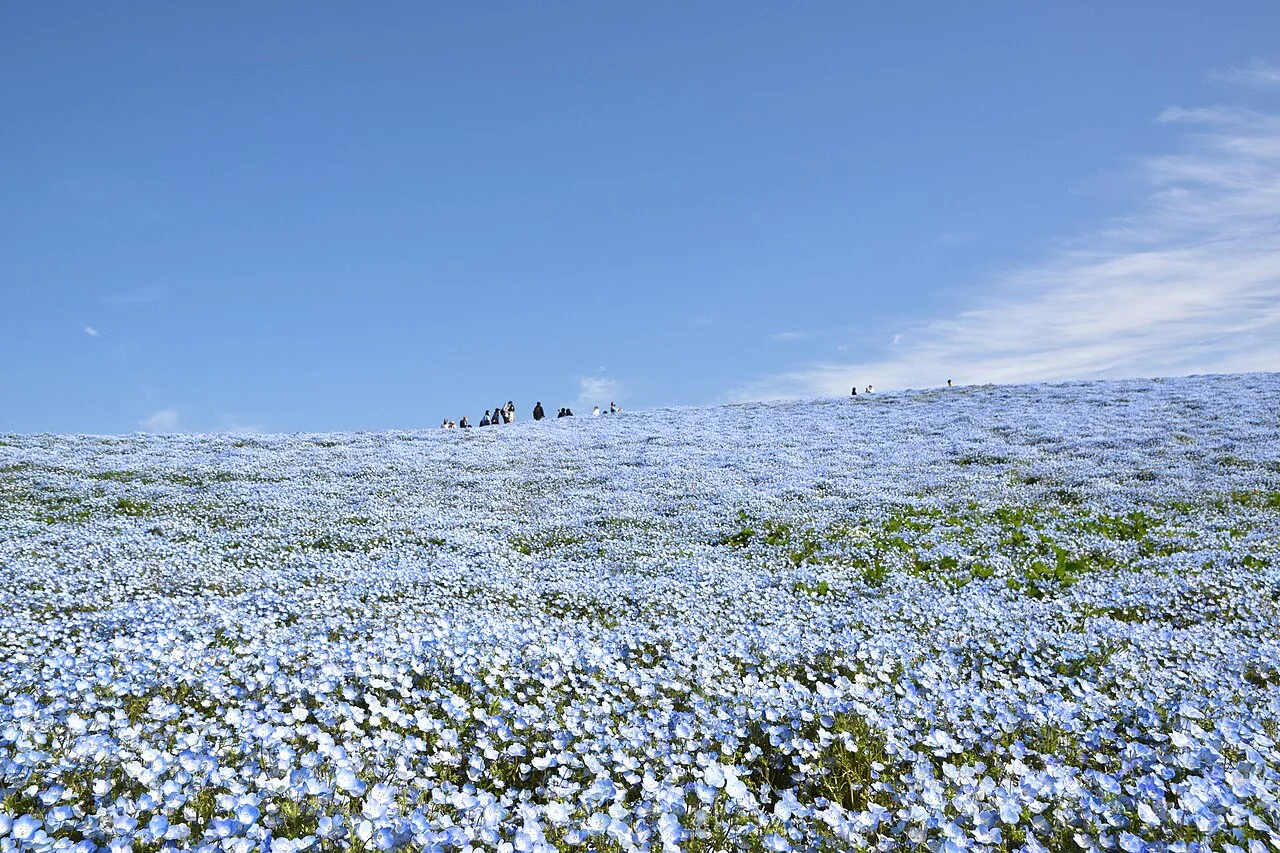
For the classic hillside carpet of blue nemophila, set your destination to Miharashi Hill inside Hitachi Seaside Park in Ibaraki Prefecture. The park lists typical peak viewing from mid-April to early May. When checking bloom updates on the official Japanese site, look for 'nemophila' and 'Miharashi-no-Oka.' If you have two full Tokyo days that can be swapped, follow the park's updates and save the sunniest morning for the slopes.
Ride the JR Joban Line from Ueno to Katsuta Station, prioritizing Hitachi or Tokiwa limited express trains that stop at Katsuta, and leave margin for the bus ride back from the park. Both limited express trains accept non-reserved seat tickets (zaseki mishiteiken), which cost the same as reserved-seat express tickets and let you sit in any vacant seat until a passenger with a reservation for that seat boards. If your outbound schedule is fixed or you are traveling with older relatives, lock in assigned seats ahead of time; on the return, you can assign a seat on a specific train at a ticket machine before boarding.
Exit Katsuta Station's East Exit and board an Ibaraki Kotsu bus from Stop 2 to 'Kaihin-Koen Nishiguchi' (Hitachi Seaside Park West Gate), listed on the park site as roughly a 15-minute ride. Buses on the same corridor also serve the Pleasure Garden Gate and South Gate. For flower viewing, enter through the West Gate (Tsubasa Gate) and follow signs toward Miharashi Hill; frame wide hillside shots from the lower path before deciding whether everyone wants to climb to the crest. Following the park's barrier-free map, walking from the West Gate to the base of the hill takes about 21 minutes before photo stops. Catch your return bus from the same West Gate, and pin the stop location early instead of hunting for exits near closing time.
Standard hours from March 1 to July 17 are 09:30-17:00, and the park opens daily during the spring season from March 26 to May 31. Standard admission is ¥450 for high school students and adults, ¥210 for seniors 65 and over, and free for junior high students and younger. On designated seasonal-surcharge days, a ¥350 supplement brings admission to ¥800 for adults and ¥560 for seniors, while children through junior high remain free. Check the park's seasonal calendar for surcharge dates and any early-opening announcements before booking the first morning express train to Katsuta.
In spring 2026, the park reported 70% bloom by April 11, and in November 2026 it announced plans to seed Miharashi-no-Sato at the foot of the slope for the following season. Check the lower-field bloom status before spring travel, especially if someone in your group prefers skipping uphill paths. If 2027 blooms early again, arriving in Ibaraki on May 5 gives less margin than late April. If your holiday dates are already locked in, use the park's bloom chart to distinguish late peak bloom (migoro kohan) from fading late-season blooms (nagoribana)—pick the former for solid carpets of blue, or combine tulips and grassy lawns if your family just wants an easy park stroll.
Skip renting bicycles as soon as you walk through the gate. Paths on Miharashi Hill are pedestrian-only, so see the flowers first and decide afterward whether you want bikes for the rest of the afternoon. Allow extra time before the return bus to fold strollers and repack bags. Strong wind and rain ruin both the views and camera footing atop the ridge, so travelers based in Ueno are better off pivoting to city plans.
If you are already staying in Mito when heavy rain hits, swap your flower-field day with indoor museums in town. For contemporary exhibitions at Art Tower Mito, take a bus from Mito Station North Exit Stops 4-7 about 10 minutes to 'Izumicho 1-chome,' cross Route 50, and walk roughly 2 minutes. The museum normally closes on Mondays—shifting to Tuesday when Monday is a holiday—and adjusts schedules across consecutive holidays, so check its event calendar. When galleries are between exhibitions, visit the indoor displays at the Ibaraki Prefectural Museum of History via North Exit Stop 4 to 'Rekishikan / Kairakuen Iriguchi.' Pay attention to both the stop number at Mito Station and the drop-off stop name, as the two routes diverge.
Wisteria and Moss Phlox: Picking Flower Parks With Simpler Transit
To skip a final bus transfer altogether, visit Ashikaga Flower Park in Tochigi Prefecture by taking the JR Utsunomiya Line from Ueno to Oyama, then transferring to the JR Ryomo Line to Ashikaga Flower Park Station, about a 3-minute walk from the gate. Do not select 'Ashikagashi' on a map app when coming from Tokyo: that is a Tobu Railway station, and the park explicitly notes there is no direct shuttle from there. If you are staying on the east side of Tokyo, compare total transfers via Ueno versus connecting onto JR at Kuki.
The great wisteria and purple clusters typically peak from late April through early May, followed by white wisteria in early May. Just as it did in 2026, the park ties operating hours and admission tiers to daily bloom progress, so check both bloom updates and that day's ticket price before setting out in spring 2027. Keep an early-May day flexible if white wisteria is a priority. When staying for evening illuminations, check Ryomo Line return departures back to Oyama ahead of time; crowds surge toward the station right after lights out, so anyone connecting onward at Oyama should aim one train earlier than the last possible connection.
The Fuji Shibazakura Festival takes place at Fuji Motosuko Resort in Yamanashi Prefecture, separated by highway from the walkable lakeside around Kawaguchiko Station. In recent seasons, Fujikyu has operated dedicated Shibazakura Liner buses taking roughly 40 minutes from Kawaguchiko Station; since this is seasonal event transit, check the current Golden Week timetable before departure. Cloud cover on site also matters—even at peak pink bloom, Mount Fuji can stay hidden. Pair this outing with a two-day Kawaguchiko stay so you can swap it with your lakefront stroll day, or plan a Tokyo day trip with lunch along Kawaguchiko or Motosuko and skip booking an early evening show back in the city.
If you have only one day from Ueno for flowers, Hitachi Seaside Park offers a direct express train to Katsuta plus a bus, whereas Ashikaga trades an extra rail transfer for a short walk from the platform. High winds also affect open hillsides and sheltered trellises differently. Both parks demand a dedicated round-trip transit window and plenty of walking inside the grounds, so do not try to cram both into morning and evening slots on the same day. Traveling with seniors, compare which transfer hub gives easier seating and whether return express seats can be reserved beforehand before choosing a hotel near the station.
Give Hirosaki Cherry Blossom Festival Two Nights; Save Hakodate for Another Trip
The Hirosaki Tourism and Convention Bureau lists the 2027 Hirosaki Cherry Blossom Festival from April 16 to May 5, subject to adjustment based on actual blooming. Hirosaki Park features Yoshino cherry, weeping cherry, and numerous double-blossom varieties, with bloom status updated separately by tree type and park zone. If you arrive late in the holiday window, read the official reports for the inner grounds, outer moat, and late double blossoms. When floating petal carpets (hanaikada) form along the outer moat, walk the town-facing edge before heading inside to seek out trees still in bloom; for peak Yoshino blossoms, aim earlier in the festival rather than assuming the final day is peak bloom.
From Tokyo, take the Tohoku Shinkansen Hayabusa to Shin-Aomori and transfer to the JR Ou Main Line for Hirosaki. Hayabusa trains are all-reserved, and not every departure runs all the way to Shin-Aomori, so verify the destination and stops when booking. Coming back, allow buffer time between the local train from Hirosaki and your Hayabusa connection at Shin-Aomori to change platforms with luggage. Flying is another option: Aomori Airport lists its airport bus to Hirosaki Station at roughly 55 minutes for ¥1,400 per adult. When catching an international flight out of Aomori Airport with limited bus frequencies, keep sightseeing closer to the city the day before.
Leave JR Hirosaki Station via the Central Exit. To enter through the Otemon Gate across from City Hall, ride the Konan Bus Dotemachi Loop Line and get off at 'Shiyakusho-mae' (City Hall)—the Hirosaki Civic Hall access guide puts the trip at about 15 minutes for ¥150 cash or ¥130 by IC card. Walking through Omachi and Dotemachi is also straightforward, with the Hirosaki City Museum of Literature near the park's south side roughly 2.5 km from the station. Buses crawl when festival traffic backs up, so consider walking once you drop your bags and saving the bus for your return. To explore the north side after viewing the outer moat, exit via the North Gate (Kameko Gate) instead of doubling back.
Plan on viewing Hirosaki Castle's keep from the outside in spring 2027. City updates reschedule moving the main keep back onto its original stone foundation to March 2027, followed by post-move inspections and anchoring work, leaving the interior closed during ongoing preservation repairs. First-time visitors are better off focusing on the outer moat, Otemon Gate, and open park paths. If an area is roped off for work, walk the western moat or grab a meal in nearby Dotemachi instead of chasing an old photo angle.
For late arrivals on night one or early departures on day three, Art Hotel Hirosaki City—about a 1-minute walk from JR Hirosaki Station's Central Exit—eliminates hauling suitcases onto extra transfers. In Honcho near Dotemachi and the park's south edge, Dormy Inn Hirosaki offers natural hot-spring baths and sits roughly a 30-minute walk from JR Hirosaki Station per the hotel's access page. Staying near the park cuts a round trip if you want early-morning moat walks and evening illuminations, though you will want to plan transit from the station on arrival night. Staying two nights at the same property near the park works best if you plan both morning and evening visits.
To pivot to Hakodate instead, replan around its bloom window and arrival airport. Hakodate's official tourism site records Goryokaku Park's Yoshino cherry trees typically opening in mid- to late April, with 2026 opening on April 18. Around May 1, you might catch full bloom or petals already drifting down from the star-fort ramparts. Take the streetcar to 'Goryokaku-Koen-Mae' and walk in; keep Goryokaku and the Kanemori Red Brick Warehouse bay area as swappable half-day blocks depending on weather. If adding Matsumae, treat it as a separate day trip out of Hakodate, and do not treat New Chitose Airport as local to Goryokaku without factoring in the long onward transit.
If you only have four days in early May, pick either Hirosaki or Hakodate, not both. Hirosaki keeps your trip centered on one castle town and works cleanly via Aomori Airport, while Hakodate still rewards you with its port district and Motomachi slopes even if blossoms pass peak. Crossing the Tsugaru Strait adds a separate Shin-Aomori to Shin-Hakodate-Hokuto Shinkansen leg plus local transit into central Hakodate. Once one Shinkansen segment is booked, stitch the connecting local trains around its timetable; hotels located far from stations on either side turn transit days into pure commuting.
Plan Half-Day City Stops Ahead so Rain Days Swap Effortlessly
For a three-night Tokyo stay, assign one clear day to a northern Kanto flower park and keep a half-day open around Ueno. The Tokyo National Museum is roughly a 10-minute walk from JR Ueno Station's Park Exit, with regular permanent-collection admission at ¥1,000 for adults and ¥500 for university students. General hours run until 17:00 with last entry at 16:30, plus extended evenings on select dates. If all-day rain washes out a morning trip to Hitachi, move Ueno into the morning slot and focus on the Honkan (Japanese Gallery). Suitcases are not permitted inside the galleries, so leave bags at your hotel or station lockers first. Check dates, special exhibitions, and baggage rules in our Tokyo National Museum visitor guide.
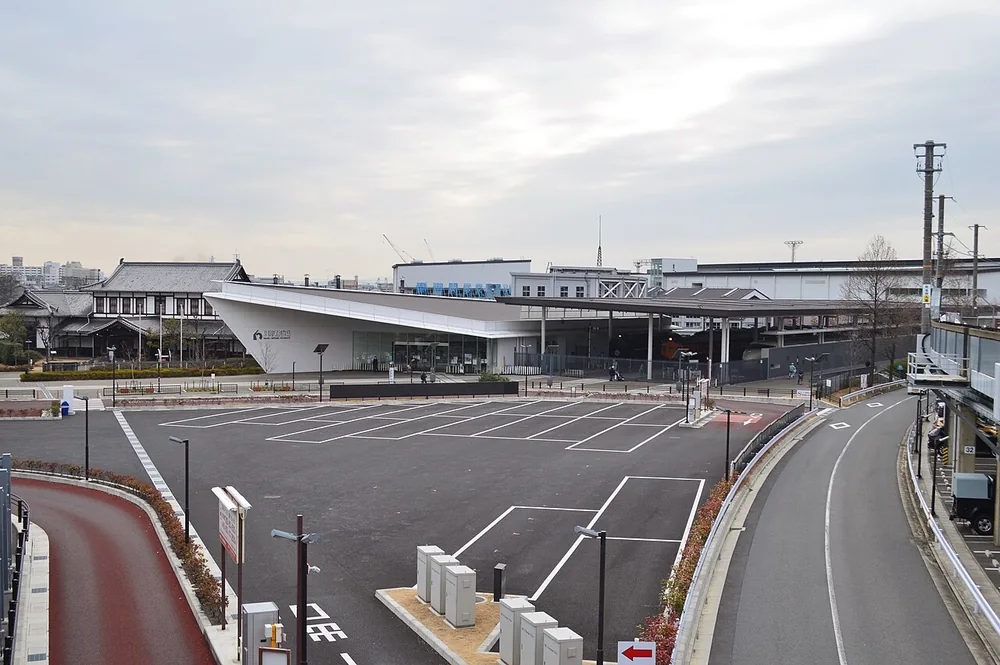
Families in Kansai can keep a rainy half-day in reserve for the Kyoto Railway Museum. Ride the JR Sagano Line one stop from Kyoto Station to Umekoji-Kyotonishi and walk about 2 minutes from the exit. Walking directly from Kyoto Station's Central Exit takes around 20 minutes, so taking the one-stop train spares you a wet walk in heavy rain. Standard hours are 10:00-17:00 with last admission at 16:30; regular Wednesday closures do not apply on national holidays, which covers Wednesday, May 5, 2027 (Children's Day)—just verify against the museum's operating calendar.
Starting March 1, 2027, Kyoto Railway Museum general admission rises to ¥1,900 same-day and ¥1,800 in advance for adults; ¥1,400 same-day (¥1,300 advance) for university and high school students; ¥600 same-day (¥500 advance) for elementary and junior high students; and ¥300 same-day (¥200 advance) for ages 3 and up. SL Steam Train rides cost an extra ¥500 for adults and ¥100 for ages 3 through junior high. Buy advance tickets if the museum is a fixed highlight, or check refund and date-change rules first if you are keeping it strictly as a weather backup. Watch separately for driving-simulator experience tickets. Details on zones and ticket pickup are in our Kyoto Railway Museum guide.
With three nights in Kyoto and Fushimi Inari plus Higashiyama at the top of your list, start early and give each area half a day. Reach Fushimi Inari via the JR Nara Line from Kyoto Station to Inari Station, or get off at Fushimi-Inari Station on the Keihan Line and walk east about 5 minutes. If keeping the museum as a backup, swap the Umekoji slot with Fushimi Inari and keep Higashiyama on its own day. Spend your checkout day around Kyoto Station so you can store bags before lunch or shopping; if flying out late from Osaka, simply return to the station for luggage instead of detouring across town mid-walk.
When two families travel together, agree on one lunch meetup spot after arriving in Tokyo or Kyoto. Sharing a hotel does not mean waiting in every line together: the theme-park group handles early entry and rides, while the museum group sleeps in and returns from a different line toward evening. Pick restaurants directly accessible from both transit corridors so a delayed train only forces one dinner adjustment.
Time Theme Parks and Rental Cars Without Trapping Your Flight Home
Tokyo Disney Resort releases date-specific tickets daily at 14:00 JST for the same calendar date two months ahead. Under current rules, May 3, 2027 tickets drop on March 3, and May 5 tickets drop on March 5. Pricing varies by date and age bracket; select your park, party size, and date on the official calendar. On-site ticket booths remain closed, dates sell out once capacity caps are hit, and tickets are non-refundable for personal cancellations. While still comparing hotels, drop both candidate park dates into your calendar and lock down which full day everyone can spend in Maihama.
If catching nighttime shows or meeting friends inside the park matters, set a meetup point outside Maihama Station or at your hotel beforehand. Never stack an intercity Shinkansen leg onto a fixed-date Disney day. Returning to Ueno or Shinjuku with kids at night is manageable if you eat inside the resort or at a transfer station and watch closing-hour crowds before boarding. Staying just one night in Maihama? Check your hotel's baggage-holding rules first so you know whether you will head straight to the station after closing or swing back for bags.
Rental cars shine on final-mile segments, such as linking two rural spots with sparse bus service in a single day. Take the train to the nearest hub station and pick up a car locally. For Hitachi Seaside Park alone, the bus from Katsuta Station's East Exit uses the same roads without forcing you into parking queues or sold-out lots. If you do drive, check NEXCO regional congestion forecasts for your direction of travel and program the exact parking-lot entrance name into your navigation system.
ETC weekend highway discounts in Japan apply only to eligible segments, and NEXCO suspends discounts during designated peak traffic periods. Budget full standard tolls first before checking the ETC discount calendar for your dates, and include insurance, parking, and one-way drop fees. Anyone driving both to and from an airport needs time for refueling, vehicle inspection, and the terminal shuttle—so keep your final stop along the route back to the rental branch rather than detouring into the mountains or coast.
When rail or road delays hit, secure flights, hotel check-ins, and final shuttles first before deciding what moves to tomorrow. Spend the final night of the holiday somewhere with direct airport transit so you have options the next morning. If suitcases were shipped ahead to your city hotel, sightseeing with just a daypack lets you end the night straight back at your room. And if your draft plan pairs Kyoto cherry blossoms with an evening flight out of Kansai Airport, move Kyoto to the day before and spend your departure day in Osaka or near the airport.
A few useful answers
What are the 2027 Japan Golden Week dates, and is there a makeup holiday?
The national holidays fall on April 29 and May 3-5. Taking Friday, April 30 off creates a seven-day break from April 29 through May 5. There is no Japanese national makeup holiday on Thursday, May 6.
When do Shinkansen tickets for May 5, 2027 go on sale?
Standard reserved seats open on April 5 at 10:00 JST. Selected Smart EX fares and eligible JR East trains on Ekinet offer earlier pre-booking windows.
Where do you catch the bus to see nemophila at Hitachi Seaside Park?
Board an Ibaraki Kotsu bus from Stop 2 outside Katsuta Station's East Exit and get off at Kaihin-Koen Nishiguchi (West Gate), usually about 15 minutes. Enter via the Tsubasa Gate for Miharashi Hill.
When is the 2027 Hirosaki Cherry Blossom Festival?
Official festival dates are April 16 to May 5, subject to blooming updates. Note that the interior of Hirosaki Castle's keep remains closed during preservation repairs.
When should I buy Tokyo Disney Resort tickets for Golden Week?
Official date-specific tickets go on sale two months before each visit date at 14:00 JST. Prices vary by date and age group, and tickets cannot be refunded for personal cancellations.
How much is general admission at Kyoto Railway Museum if it rains during Golden Week?
Starting March 1, 2027, adult general admission is ¥1,900 same-day or ¥1,800 in advance. SL Steam Train rides and select interactive experiences cost extra.
Official information and references
Sources used in this guide.
- Cabinet Office of Japan - 2027 National Holidays
- JR Central - Nozomi All-Reserved Peak Operating Periods
- Smart EX - One-Year Advance Reservation Service
- JR Group - Special Tickets for Nozomi and Mizuho on the Japan Rail Pass
- Smart EX - Seats with an Oversized Baggage Area
- JR East Ekinet - Shinkansen Early-Bird Reservations
- JR East Ekinet - Advance Ticket Acceptance (Jizen Uketsuke)
- JR-EAST Train Reservation - Overseas Booking Windows
- JR East - Non-Reserved Seat Ticket Rules (Zaseki Mishiteiken)
- Hitachi Seaside Park - Nemophila Season Guide
- Hitachi Seaside Park - 2026 Nemophila 70% Bloom Notice
- Hitachi Seaside Park - Operating Calendar and Hours
- Hitachi Seaside Park - Fall 2026 Seeding and New Miharashi-no-Sato Planting Area
- Hitachi Seaside Park - Standard and Seasonal Admission Fees
- Hitachi Seaside Park - Katsuta Station Bus and West Gate Access
- Ashikaga Flower Park - Wisteria Festival Information
- Hitachi Seaside Park - Barrier-Free Route and Walking Times from West Gate to Miharashi Hill
- Ashikaga Flower Park - JR Ryomo Line and Park Access
- Fuji Motosuko Resort - Fuji Shibazakura Festival and Shuttle Bus Access
- Hirosaki Tourism and Convention Bureau - 2027 Hirosaki Cherry Blossom Festival
- Hirosaki City - Revised Schedule for Returning the Castle Keep
- Hirosaki City - Castle Keep Interior Closure and Restoration
- Hirosaki Civic Hall - Dotemachi Loop Bus and Fares
- Hirosaki City Museum of Literature - Walking Distance from Station to South Park
- Aomori Airport - Airport Bus to Hirosaki Station
- Art Hotel Hirosaki City - Access from Hirosaki Station Central Exit
- Dormy Inn Hirosaki - Hotel Access
- Hirosaki Tourism and Convention Bureau - Dormy Inn Hirosaki Hot Spring Facilities
- Hakodate Official Tourism - Historical Goryokaku Cherry Blossom Opening Dates
- Hakodate Official Tourism - Goryokaku Streetcar and Blossom Access
- Tokyo National Museum - Access, Admission, and Hours
- Kyoto Railway Museum - Hours and Closed Days
- Kyoto Railway Museum - Admission Rates from March 2027
- Kyoto Railway Museum - Access
- Tokyo Disney Resort - Ticket Release Dates and Price Calendar
- Tokyo Disneyland - Ticket Purchase and Cancellation Rules
- NEXCO East - ETC Holiday Discount Rules and Eligible Calendar
- Art Tower Mito - Visitor Access
- Art Tower Mito - Gallery Hours and Regular Closures
- Ibaraki Prefectural Museum of History - Bus Stops and Walking Access
- Hirosaki City - Hirosaki Park, Otemon Gate, and Kameko Gate
- Fushimi Inari Taisha - JR Inari Station and Keihan Fushimi-Inari Station Access
- Hitachi Seaside Park - Miharashi Hill and Tsubasa Gate
- JR East - Hayabusa Stops and All-Reserved Seating