Take the bus from Shin-Sapporo’s north passage stop 10. Choose town, fishing, farming and mountain buildings to suit your energy, compare ¥1,000 village admission with the two-museum ticket, and plan seasonal horse transport, luggage storage, children’s activities and lunch.
- Region & Focus
- HokkaidoAttractions
- Reading Scope
- 32 min read · 19 chapters · 4 Q&As
- Official Verification
- 4 official sources checkedUpdated November 22, 2026
- Key Topics
- ItinerariesHokkaido
Chapter Route Map (tap any stop)
- Allow half a day, then choose how far to go
- Use north passage stop 10 at Shin-Sapporo
- Budget fares, luggage and driving separately
- General admission is ¥1,000; check each visitor’s eligibility
- Choose the combination ticket when both museums are already planned
- The entrance station is a reduced-scale reconstruction
- A short town route: offices, newspaper and school
- Choose two shops to compare work and home
- Fishing area: the Aoyama home and catch-storage buildings
- Farming area: compare soldier-settler and migrant homes
- Add sericulture, dairying or a pioneer hut for farming variety
- Keep the mountain area for forestry interests
- Choose horse tram or sleigh by season
- Give children toy-making time and select fewer buildings
- With strollers or wheelchairs, choose a short route at entry
- Lunch near the entrance; the farm-area snack shop is closed
- October–April closes earlier; divide winter outdoor time
- Photograph building uses and keep passage clear
- Finish with a route that follows your interests
- Quick Q&A
Give the Historical Village of Hokkaido half a day. Start with town offices and shops, then choose the fishing, farming or mountain area to see how homes and work fit together. The bus from Shin-Sapporo takes about 20 minutes to the terminus. Allow at least two hours inside, and more for the seasonal horse tram, traditional toy making or detailed building visits. Return to central Sapporo for dinner.
Allow half a day, then choose how far to go
The village’s 52 buildings form four groups: town, fishing village, farming village and mountain village. The site, including woodland, covers 54.2 hectares. The museum FAQ recommends at least two hours, while about one hour allows selected highlights and exteriors. The difference is time to enter exhibits, compare building uses and reach beyond the town. For a first visit, we suggest about three hours inside, with lunch and travel from Shin-Sapporo added separately.
With one hour, focus on the entrance and town: the station, an office and one or two shops. With two to three hours, combine town and fishing buildings, then select a few farm buildings. Add the mountain area if forestry, railways or timber construction particularly interest you. Use the entrance map and open paths for the actual walk. Turn back when time runs short rather than reducing every stop to reach all four groups.
In a four-day Sapporo and Otaru trip, replace the Maruyama half-day or day four’s flexible half-day; keep Otaru’s port neighborhoods on their own day. Hokkaido Shrine in the morning, this village in the afternoon and Mount Moiwa at night creates repeated changes of direction. If buildings interest you, make this the daytime focus and add only dinner back in town.
A Historical Village of Hokkaido introduction released in 2025, presenting the open-air museum’s buildings and visitor highlights.
Take the bus from Shin-Sapporo’s north passage stop 10. Choose town, fishing, farming and mountain buildings to suit your energy, compare ¥1,000 village admission with the two-museum ticket, and plan seasonal horse transport, luggage storage, children’s activities and lunch.
Use north passage stop 10 at Shin-Sapporo
The final public transport leg starts at Shin-Sapporo. The official access guide directs visitors from JR Chitose Line Shin-Sapporo or Tozai subway line Shin-Sapporo to stop 10 in the bus terminal’s north passage. Take a JR Hokkaido Bus bound for Kaitaku-no-mura and get off at the terminus after about 20 minutes. Keep the Japanese subway name 新さっぽろ and look for north, 10 and the bus destination. Sapporo and Shin-Sapporo are different transport hubs.
From Odori, plan around the Tozai Line. Near Sapporo Station, compare the JR connection to Shin-Sapporo. The 20 minutes covers only the bus ride, excluding hotel departure, station access, transfers, finding platforms and waiting. Put the bus departure into your plan first and work backward. A 9 a.m. opening does not mean leaving central Sapporo at 9 a.m. gives the same entry time.
Before entering, check that day’s bus stop information or public transport linked by the museum. Note your intended return, then allow time from the last building to the entrance, luggage collection and waiting. Save stop names, the official village map and your return plan. Spending the last half-hour chasing another area makes the return rushed.
Budget fares, luggage and driving separately
The official FAQ lists the Shin-Sapporo bus at ¥240 one way for adults and ¥120 for children, based on information dated October 28, 2026. An adult return is ¥480 at these fares; JR or subway travel from the center is extra. Any transfer discount depends on the actual journeys. Keep transport separate from village or combination admission when calculating family costs.
Deal with large luggage first. Free lockers are in the entrance building, the former Sapporo Station. Ask the ticket desk about bags too large for a locker. For a half-day return to the same hotel, leave large cases there and bring water, a jacket and essentials. On a hotel-change day, finish storage before entering the town area and include collection time on return.
Drivers can use the free 400-space parking lot. Its hours differ from admission: 8:30 a.m.–5:30 p.m. May–September and 8:30 a.m.–5 p.m. October–April. Allow parking, walking to entry and departure time. Driving does not require seeing all four areas; families and older visitors can still choose the entrance-and-town short route.
General admission is ¥1,000; check each visitor’s eligibility
Ordinary individual admission is ¥1,000, also ¥1,000 for university and high school students. Junior high students and younger, and visitors aged 65 or older, enter free; older visitors should bring proof of age. High school students enter free on Saturdays, Children’s Day and Culture Day in Japan. List each person’s age and visit date before buying, since these conditions change family totals.
The ¥800 Hokkaido resident price requires proof that the visitor lives in Hokkaido. Visitors traveling from overseas should budget ¥1,000. Accepted disability handbooks or handbook apps provide free entry, with conditions also allowing one accompanying guide or carer per holder. Compare your documents with the official exemption information.
For example, two adults under 65 and an elementary student pay ¥2,000 for village entry. If all three are at least three and each takes one operating horse tram or sleigh ride, add ¥250 × 3 = ¥750, for ¥2,750 before transport and meals. Free child admission does not remove the ride’s separate age and fare rules. The ticket desk accepts several cashless methods and the restaurant accepts credit cards, but the FAQ says the shop does not; prepare another payment method for purchases.
Choose the combination ticket when both museums are already planned
The Hokkaido Museum and Historical Village combination ticket costs ¥1,400 for ordinary individual admission, or ¥1,000 for university and high school students, and is sold at both ticket desks. For a general adult it is ¥400 above village admission. Choose it because you intend to give the other museum time, rather than compressing a three-hour outdoor visit into a hurried hour for a small price difference.
With only half a day, village admission and a thorough town-plus-one-village route are more suitable. For a museum day, put each site’s opening days and last admission together before choosing the order. The combination covers entry to both; buses and paid rides remain separate. Calculate exemptions for each museum so you do not buy unnecessary paid tickets.
The entrance station is a reduced-scale reconstruction
The former Sapporo Station entrance reproduces the front appearance and form of the station built in 1908 and used until 1952, at four-fifths scale, as an administration building. It is a useful start for reading labels: some buildings were relocated and restored; others recreate historical forms. The official building guide gives dates and original locations and identifies this station as a reconstruction.
Look at the clapboards and slender decorative timbers on its walls. The museum explains these through American Stick Style timber architecture. Notice the separate roles of wall boards and projecting sticks before storing luggage and collecting a map. This makes differences among the town’s Western-style buildings easier to see.
The former Kaitakushi Sapporo Main Office in the town area is also a reconstruction. It presents the office completed in 1873 and destroyed by fire in 1879, and now serves as the visitor center. Read it alongside the station to see how government architecture shaped early Sapporo. Their uses, original dates and preservation methods differ; one map number can contain several layers of history.
A short town route: offices, newspaper and school
The town includes homes, shops and public buildings. The former Kaitakushi Industrial Bureau Office is a strong choice for a short route. Built in 1877, it became a national Important Cultural Property on August 7, 2013. The bureau worked on roads, bridges, offices and schools, and manufactured machinery, farm tools and vehicles. Its office connects settlement history with practical infrastructure and manufacturing.
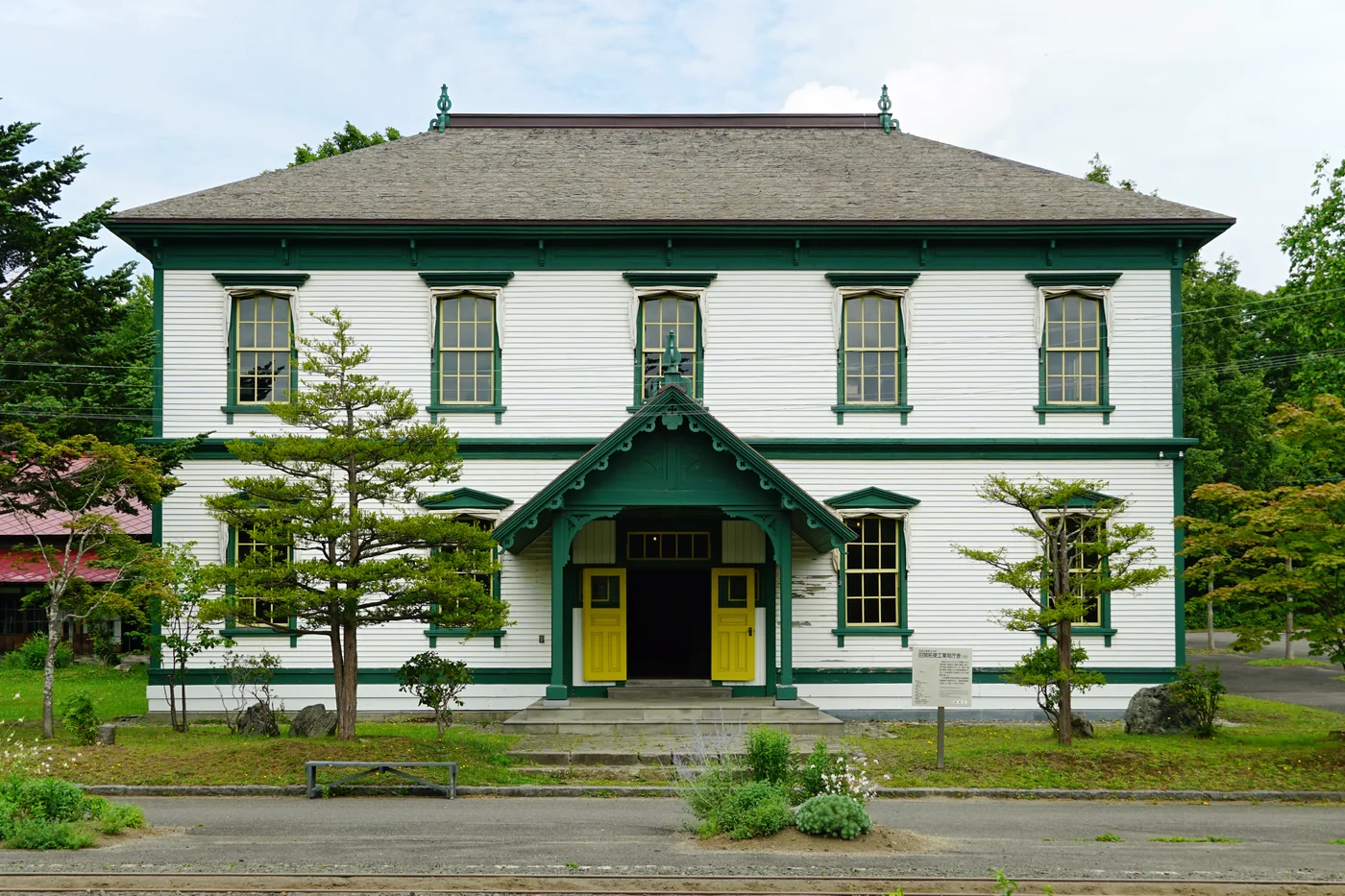
The former Otaru Newspaper Office, built in 1909, has Sapporo soft-stone exterior walls around a timber frame. Compare it with the timber Western-style offices: examine wall material, windows and framing. After Otaru’s stone warehouses, it extends an interest in building materials without changing that day’s itinerary. Its original location was Otaru’s Sakaimachi; the museum brings buildings from different places together.
The former Hokkai Middle School preserves part of the main building constructed in 1908–1909. Repairs in fiscal 2025 gave it a metal-sheet roof, white-toned walls and gray window surrounds and columns, restoring a Taisho-period appearance close to its early form. Ask which period a preserved building chooses to show. This explains changes between photographs from different years more usefully than expecting every old building to share one color.
Choose two shops to compare work and home
You need not enter every shop. For everyday services, choose the former Yamamoto Barber Shop and Shimauta Post Office. The barber shop retains a steep gabled roof and arched entrance canopy from late-Taisho Western-style architecture and was always used for hairdressing. The 1902 post office separates work from the postmaster’s and staff housing in different buildings. Compare customer-facing fronts and working spaces.
For a combined shop and home, choose the former Kondo Dye Shop. The Asahikawa business began in 1898; the displayed building was newly built in 1913. Locate trading and family areas in its plan. For photography and light, the reconstructed former Hirose Photo Studio presents a 1924 building with sloping glass on the north side upstairs. Its roof reveals the daylight requirements of photographic work.
The Hirose studio is a reconstruction. You can make these comparisons without memorizing every year: mark one service business, one combined home and shop, and an extra favorite. If the town takes longer than expected, shorten the farming area. For fishing homes and workplaces, move on after two or three town buildings.
Fishing area: the Aoyama home and catch-storage buildings
The former Aoyama fishing family residence was built in 1919 in Shukutsu, Otaru. The family came from Yamagata in 1859 and operated herring set-net fishing centered on Otaru’s coast. The museum explains that this work needed workers’ lodges, net and boat stores, drying grounds and mooring facilities. Read the residence together with working uses to see the range of spaces behind a fishing operation.
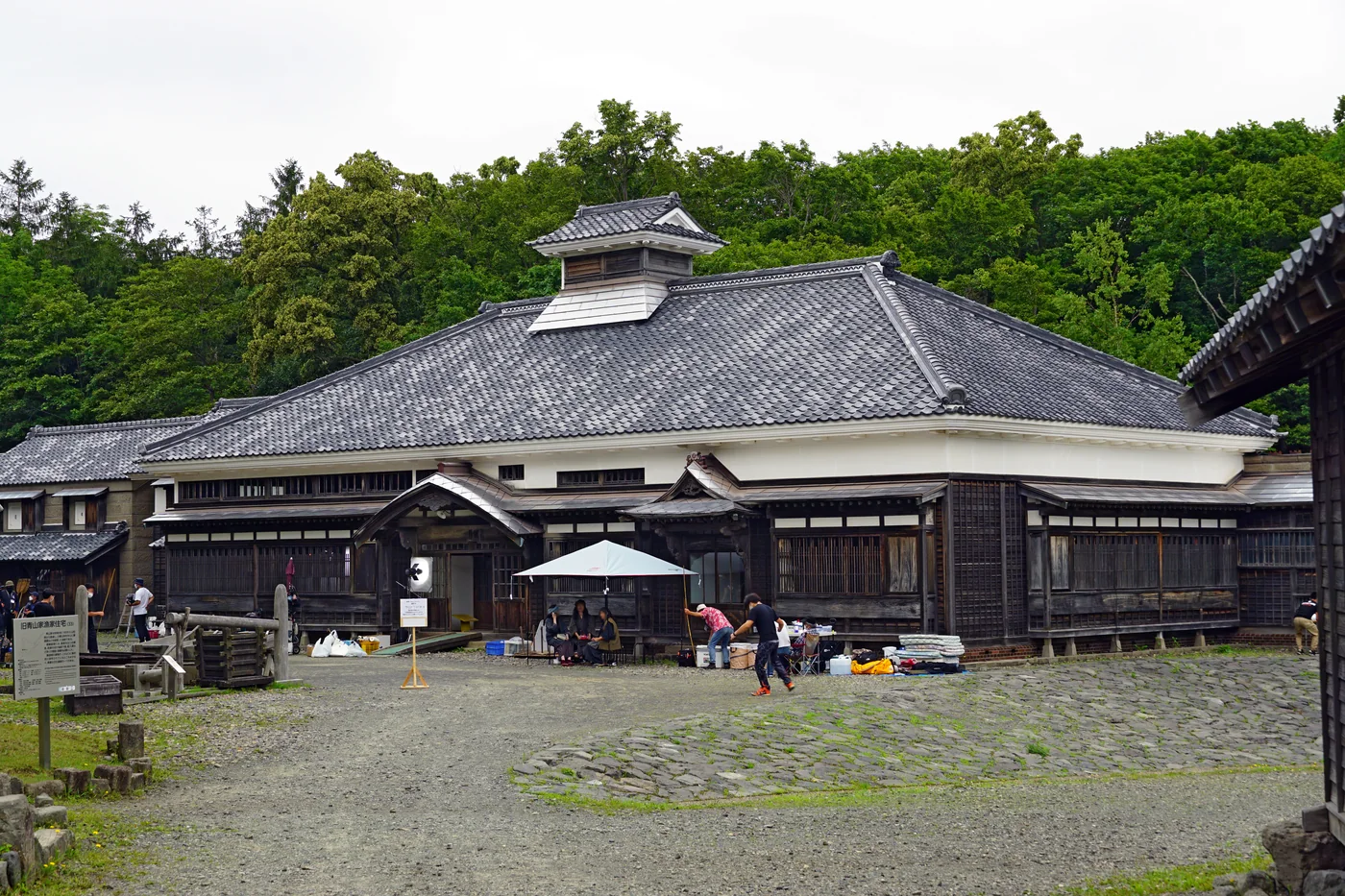
The fishing area’s roka temporarily held herring after landing, then stored boats, sculls, oars and processing tools after the season. Although the name can suggest a corridor, its purpose was receiving, processing and storage. Its removable-board wall construction helped fish handling and surrounding work. It is a reconstruction. Reading its use extends the residence into an industrial story.
The former Tsuchiya family hanedashi is a warehouse projecting toward the sea to suit the coast, built around 1887 in Kumaishi, now Yakumo. Goods passed directly through floor openings. It held fishing gear, catches and processed products including fish meal, dried herring and roe. Compare its floor-based handling with town shops facing a road. Doors, floors and storage explain the fishing area better than repeated front views.
Farming area: compare soldier-settler and migrant homes
The former Osamunai Tondenhei House was built in 1895 in Fukagawa. Soldier-settlers lived with their families in settlements combining northern defense and farming; Osamunai settlement took place in 1895 and 1896. Start here to consider family, work and institutions in one home. With children, ask what residents did each day before introducing many dates.
The former Iwama farmhouse has another migration background. The family belonged to a migrant group of former samurai from the Watari territory of the Sendai domain, settling in 1871. Carpenters from home built the house around 1882. Its layout followed their home region while using a stone-weighted roof uncommon around Sendai. Study roof and plan to see carried traditions beside methods adopted in Hokkaido.
For another comparison, visit the former Higuchi farmhouse. The family came from Toyama in 1893 and commissioned Toyama carpenters, retaining wakunouchi construction. Restoration also used dismantled materials from the Yamaguchi family house of the same form. Compare how different home-region techniques entered farm dwellings. With little time, read one thoroughly rather than passing quickly through two.
Keep the comparison simple: note building name and original location, then examine entry, roof, living rooms and work spaces. Iwama came from Date, Higuchi from Atsubetsu in Sapporo, and the soldier-settler house from Fukagawa. They now share one museum but belonged to different regions and families. These distinctions give the farming area clear dates and places.
Add sericulture, dairying or a pioneer hut for farming variety
The farming group includes production buildings beyond homes. The former Tamura Hokuseikan silkworm egg production facility, built in 1905, obtained eggs, produced and sold silkworm stock and trained technicians. It extends the subject from fields to sericulture and knowledge transfer. Textile enthusiasts can compare it with the former Yamada silkworm storehouse to see how soldier-settler households developed their own facilities.
For large timber structures or livestock, choose the former Ogawa dairy barn. Its design drew on American plans and uses balloon framing developed in 19th-century America. The adjacent soft-stone silo recreates a form common in the early Showa period. Read barn and silo separately through animal care and storage needs, rather than treating both as a generic Hokkaido farm.
The pioneer hut recreates an initial Meiji-period migrant dwelling: log posts, bamboo grass and thatch over roof and walls, straw mats at entry and windows, an earthen floor area, and living space with grass under mats and a hearth. Compare it with a fuller farmhouse. Choose the work that interests you instead of trying to see all homes, sericulture and dairying at once.
Keep the mountain area for forestry interests
The mountain group covers a forest railway engine shed, the former Taira logging workers’ lodge and a charcoal-burning hut. The reconstructed engine shed explains the move from floating timber to rail transport and the related locomotives, wagons, sheds and storage yards. Railway enthusiasts can connect it with the town station: one served urban passengers, the other timber, with different buildings for each.
The former Taira lodge presents late-Taisho forest workers’ accommodation. Around 40 felling and log-gathering workers lived in the lodge used as its model, with horse handlers in a separate building. Connect workplace with sleeping and meals, then compare fishing and farming homes to understand the four industry-based groups. The charcoal hut recreates a rectangular kiln used by part-time charcoal makers in the late Taisho period, extending timber use to fuel.
If tired, omit this group. Entrance and town, town plus fishing, or town plus one or two farmhouses each forms a coherent visit. For the mountain area, reserve time before entering the farming group and choose fewer town shops. Avoid making it a final dash near closing.
Choose horse tram or sleigh by season
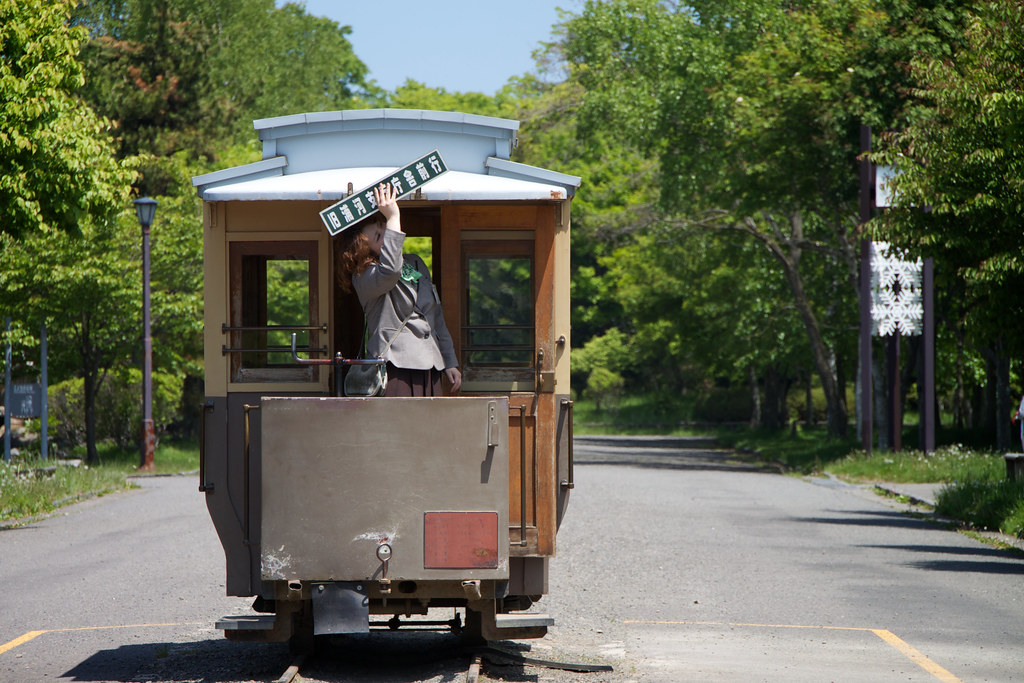
The official seasonal ride information lists the horse tram roughly mid-April–November, and the winter sleigh roughly mid-December–March on Saturdays, Sundays, Japanese holidays and during the Sapporo Snow Festival. Both cost ¥250 from age three. On winter weekdays outside the festival, plan a walking visit. For late November–early December, make buildings the focus and add rides according to the day’s notice.
Check entrance notices and that day’s operating times before deciding whether to ride first or later. The tram is one experience within the visit; buildings in the four groups still require walking and stopping time. If riding is a child’s main wish, do it early and reduce town stops rather than arriving tired after a suitable departure has passed.
For horses and transport work, select the former Ota farrier’s workshop and Fujiwara cart and sleigh workshop in town. One recreates hoof care; the other shows a workshop and home for vehicle making. Connect these trades with the seasonal ride for more context. Visitors who do not ride can follow the same building theme.
Give children toy-making time and select fewer buildings
The hands-on learning building offers two traditional toy-making activities each month, with free materials and participation, as well as old toys and tools. Busy periods involve waiting. Let children choose between an activity and more village walking, then adjust the remaining buildings. Give adults’ architecture interests and children’s making time their own part of the half-day.
The children’s square outside has stilts and hoop rolling, but closes under snow. In winter, alternate outdoor observation with indoor activities and remove the square from the plan. Clearly defined buildings such as the post office, barber shop and fire station suit questions about where people sent letters, cut hair or kept firefighting equipment.
Visitors may not bring balls, flying discs, scooters, bicycles or drones inside. Toddler tricycles with a parent push handle are an exception. Ask the ticket desk about storing a scooter brought to the entrance, then walk or use a suitable stroller. Keep picnic and spare-clothing bags light enough for adults on gravel paths.
With strollers or wheelchairs, choose a short route at entry
The village lends a limited number of strollers and wheelchairs free. Ask staff on arrival. Some routes have gravel, steps, slopes and uneven ground. Arrange equipment first, then ask staff to help choose a route on the map. With your own equipment, start in town and extend according to actual surfaces.
If companions want different interiors, set a clear meeting point in the same area and take turns, reducing repeated lifting or detours. Consider reaching a building, crossing its entrance and moving inside as separate questions. Where steps intervene, retain the exterior and explanation and move to the next building; the route can still follow a theme.
The nursing room is in the former Sapporo Station entrance. If occupied, ask the ticket desk to use the first-aid room. Changing tables are also in accessible toilets at the visitor center, restaurant, two town locations and one farming-area location. Handle care at the entrance before and after the walk, and use the map for toilets between. One less long return leaves more activity time.
Lunch near the entrance; the farm-area snack shop is closed
The entrance-area restaurant has about 200 seats. The official FAQ read on October 28, 2026 listed the Kita no Furusato snack shop near the farming area as closed, so plan the entrance restaurant or a picnic. Visit distant areas before lunch and eat on return, or feed children at the start rather than looking for food in the farming area.
Picnics are permitted on lawns and benches. Food and drink are generally prohibited inside buildings, with listed exceptions in rooms 1 and 2 of the former Sapporo Station and the second-floor hall of the former Kaitakushi Sapporo Main Office visitor center. In rain, ask at entry which indoor area is available before opening food.
For restaurant group reservations, contact 011-897-2321 directly. Individuals should count meals and rest within the half-day; two to three hours inside excludes the journey from central Sapporo and a full meal. Add a few nearby buildings after lunch if fresh, or return to Shin-Sapporo once the main theme is complete.
October–April closes earlier; divide winter outdoor time
May–September hours are 9 a.m.–5 p.m., last admission 4:30 p.m., with no closures during that period. October–April hours are 9 a.m.–4:30 p.m., last admission 4 p.m., closed Mondays. When Monday is a Japanese holiday or substitute holiday, closure moves to the next day; Mondays during the Sapporo Snow Festival are open. The village closes December 29–January 3. Check these before arranging transport, especially autumn Mondays and New Year travel.
Last admission at 4 p.m. leaves only half an hour for a short entrance visit. For the recommended two hours, arrive much earlier in winter. We prefer a morning start, completing priority areas before lunch and finishing according to energy. Even in summer, leave time before 5 p.m. to walk from the farthest building back to entry and the bus.
In winter, bring footwear for snowy surfaces, gloves and spare socks, and divide outdoor walking into short sections. If children become wet and cold or an older companion feels unsteady, shorten to town and entry, omitting the mountain or distant farmhouses. The exhibits are dispersed outdoors; sustained heavy rain or strong snowstorms favor an indoor city half-day. For a sleigh-focused visit, match its operation day first and keep other content flexible.
Photograph building uses and keep passage clear
Personal souvenir photography follows museum rules. Leave doors and narrow paths clear, keep exhibits in place and stay outside restricted areas. For cosplay or model shoots, read the photography FAQ: advance booking is required for those shoots, with separate restrictions on livestreaming, aerial filming and filming or publication for advertising revenue or other commercial purposes.
Let each detail photograph answer a question: decorative sticks at the station, soft-stone walls at the newspaper office, northern light at the studio, or floor loading at the Tsuchiya warehouse. Read signs first, then photograph. This preserves use and original location when sorting images, rather than leaving similar fronts with no remembered differences.
Finish with a route that follows your interests
For a first visit in suitable weather, start with the station and offices, choose the newspaper office or one shop, then the Aoyama residence and one farmhouse. Add silkworm production or the dairy barn for more workplaces. Fit the horse tram to an operating departure and return to the entrance for lunch. This editorial route connects life and work; adjust stops to reading, photographs and rest.
For architecture, spend longer in town and choose fishing or farming. For railways and forestry, retain the station and related workshops and make the mountain area central. For families, bring the learning building and seasonal ride forward and remove some adults’ building choices. Back in Sapporo, keep the planned dinner. Give both museums a full day if desired, so the combination ticket serves an established itinerary.
A few useful answers
How much time should I set aside for a first visit to the Historical Village of Hokkaido, and where should I start?
Allow about 3 hours in the village, plus time for lunch and travel. Start at the replica of the old Sapporo Station by the entrance, then walk through the town area to the former Aoyama family home in the fishing village and finish at a farmhouse.
Where do I catch the bus from Shin-Sapporo to the Historical Village?
From stop 10 in the north passage of Shin-Sapporo Bus Terminal, take the JR Hokkaido Bus bound for Kaitaku no Mura. The village is the last stop, about 20 minutes away. If you’re coming by subway, take the Tozai Line to Shin-Sapporo.
How much are village admission and the combined ticket?
Standard village admission is ¥1,000. Middle school students and younger children get in free, as do visitors 65 and older with proof of age. The standard combined ticket with the Hokkaido Museum is ¥1,400.
When can I ride the horse-drawn tram or the winter sleigh?
The horse-drawn tram runs roughly from mid-April through November. The sleigh runs from around mid-December to March on weekends, Japanese public holidays and during the Sapporo Snow Festival. Each ride costs ¥250 per person aged 3 and up.
Official information and references
Sources used in this guide.
- Historical Village of Hokkaido: hours, tickets and Shin-Sapporo access
- Historical Village of Hokkaido: four building groups, original locations and seasonal rides
- Historical Village of Hokkaido: visit length, exemptions, luggage, meals and care facilities
- Historical Village of Hokkaido: current notices and visitor information