Take the bus from Shin-Sapporo’s north passage stand 10, then choose town, fishing, farming and mountain districts for your energy and time. Compare ¥1,000 admission, the two-museum ticket, horse tram and winter sleigh, with luggage, family activities and lunch plans.
- Region & Focus
- HokkaidoAttractions
- Reading Scope
- 32 min read · 19 chapters · 4 Q&As
- Official Verification
- 4 official sources checkedUpdated 22 November 2026
- Key Topics
- ItinerariesHokkaido
Chapter Route Map (tap any stop)
- Allow half a day, then choose your districts
- Take the bus from Shin-Sapporo north passage stand 10 to the terminus
- Plan fares, luggage and driving separately
- Standard admission is ¥1,000: calculate each person’s eligibility
- The combined ticket suits a definite two-museum plan
- The first building: former Sapporo Station is a reduced-scale recreation
- A short town route: offices, newspaper and school
- Choose two shops and look for work and domestic spaces
- Fishing district: Aoyama’s house, then buildings for catches
- Farming district: compare settler life at the soldier house and Iwama home
- For agricultural variety, add sericulture, dairying or a settler hut
- Save the mountain district for forestry interests
- Horse tram and sleigh: choose by month
- Leave children time to make toys and select fewer adult-interest buildings
- Pushchairs and wheelchairs: select a usable short route at the entrance
- Eat near the entrance; the farming snack shop is closed
- Earlier closing from October to April: divide winter outdoors into short sections
- Understand building functions before photographing, and leave passage clear
- Finish with a main theme you want to follow
- Quick Q&A
Give the Historical Village of Hokkaido half a day. Start with offices and shops in the town district, then choose the fishing, farming or mountain district to see how homes connected with work. The bus from Shin-Sapporo takes about 20 minutes to its terminus, and the village recommends at least two hours inside. Allow longer for the seasonal horse tram, traditional toy-making or slow visits inside buildings, then return for dinner in central Sapporo.
Allow half a day, then choose your districts
The village’s 52 buildings form town, fishing, farming and mountain districts within a 54.2-hectare site including woodland. The visitor FAQ recommends at least two hours; with about one hour, you can select major sights and building exteriors. The difference is time to enter displays, compare functions and reach areas beyond the town. For a first visit, we suggest about three hours inside, with lunch and Shin-Sapporo travel counted separately.
With one hour, stay near the entrance and town: the station, an office and one or two shops. With two to three hours, link town and fishing districts and select a few farm buildings. Add the mountain district for forestry, railways or timber architecture interests. These are selection methods; follow the entrance map and open paths. Turn back when time runs short rather than shortening every stop merely to reach all four districts.
In the four-day Sapporo and Otaru itinerary, replace the Maruyama half-day or day-four flexible half-day and retain Otaru’s harbour neighbourhoods. Hokkaido Shrine in the morning, the village in the afternoon and Mount Moiwa at night require repeated changes of direction and fragment viewing time. For architecture, make this the main daytime outing and add only dinner after returning.
An introduction released in 2025 to the Historical Village of Hokkaido, presenting the open-air museum’s buildings and visitor highlights.
Take the bus from Shin-Sapporo’s north passage stand 10, then choose town, fishing, farming and mountain districts for your energy and time. Compare ¥1,000 admission, the two-museum ticket, horse tram and winter sleigh, with luggage, family activities and lunch plans.
Take the bus from Shin-Sapporo north passage stand 10 to the terminus
The final public-transport leg starts at Shin-Sapporo. The official access guide gives JR Chitose Line Shin-Sapporo (新札幌) or Tozai subway Shin-Sapporo (新さっぽろ), then stand 10 in the bus terminal’s north passage. Take a JR Hokkaido Bus bound for 開拓の村 and alight at the terminus after about 20 minutes. Retain the Japanese subway name and look for north, 10 and the destination display. Sapporo and Shin-Sapporo are different transport hubs.
From Odori, plan around the Tozai Line. Near Sapporo Station, compare the JR connection. The 20 minutes covers only the bus from Shin-Sapporo: leaving the hotel, entering stations, transfers, finding platforms and waiting are additional. For a morning visit, choose the bus first and work backwards to hotel departure. A 09:00 opening does not mean leaving central Sapporo at 09:00 gets you there at opening.
Before entering, check the day’s stop timetable or public-transport information linked by the village. Note your intended return service and allow walking from the final building, collecting bags and waiting. Save the stop name, official village map and return plan. Using the final half-hour to pursue another district turns a slow building visit into a rushed departure.
Plan fares, luggage and driving separately
The FAQ lists one-way Shin-Sapporo–village bus fares of ¥240 adult and ¥120 child, based on information dated 28 October 2026. At these fares an adult return is ¥480, with central Sapporo JR or subway travel additional. Transfer discounts depend on the actual combination. Keep transport separate from village or combined admission to compare the whole family’s spend.
Deal with large luggage first. Free lockers are in the former Sapporo Station entrance building; ask the ticket office about bags that do not fit. If returning to the same hotel that evening, leave large cases there and bring water, a layer and essentials. When changing hotels, finish storage before entering the town district and include collection in the return plan.
Drivers can use the listed free 400-space car park. Its hours differ from admission: 08:30–17:30 from May to September, 08:30–17:00 from October to April. Include parking, the entrance walk and departure. Driving does not require visiting all four districts; families and older companions can still choose the short entrance-and-town route.
Standard admission is ¥1,000: calculate each person’s eligibility
Standard individual admission is ¥1,000, including university and senior secondary students. Junior secondary pupils and younger, and visitors aged 65 or above, enter free. Those aged 65 or above should bring proof of age. Senior secondary pupils enter free on Saturdays, Japan’s Children’s Day and Culture Day. List each person’s age and visit date before buying, rather than simply counting adults and children.
The ¥800 Hokkaido-resident rate applies to the resident personally, with proof of residence. Visitors travelling from overseas should budget ¥1,000. Holders of disability handbooks or accepted handbook apps enter free, with one accompanying guide or carer per holder also eligible. Compare your evidence with the official free-admission conditions.
For example, two adults under 65 and one primary pupil pay ¥2,000 for village admission. If all three are aged at least three and each wants one seasonal horse-tram or sleigh ride, add ¥250 × 3 = ¥750, making ¥2,750 before transport and meals. Free village entry for the child does not remove the ride’s own age and fare rules. The ticket office accepts several cashless methods and the restaurant accepts credit cards; the FAQ says shops do not, so prepare another payment method.
The combined ticket suits a definite two-museum plan
The Hokkaido Museum and Historical Village combined ticket costs ¥1,400 for standard individual admission and ¥1,000 for university and senior secondary students, sold at both ticket offices. For a standard adult it adds ¥400 to village admission. Choose it because you intend to spend time at the other museum, rather than compressing a planned three-hour outdoor visit into one hurried hour for a small price difference.
With only half a day, village admission and a proper look at town plus one village district are more suitable. For a museum day, place both opening days and last-entry times in one plan before choosing the order. The ticket covers admission to both; buses and paid village rides are separate. Check each museum’s eligibility for anyone entering free and avoid unnecessary paid tickets.
The first building: former Sapporo Station is a reduced-scale recreation
The entrance reproduces the front appearance and shape of the Sapporo station building completed in 1908 and used until 1952, at four-fifths scale, as the administration building. It introduces the site’s labels: some buildings were moved and restored; others recreate historical forms. The official building guide lists dates and former locations individually and explicitly calls the station a recreation.
Look for weatherboards and decoration made from slender timber strips on the station walls. The village explains these through American timber Stick Style: the name corresponds to the stick-like lines you see. Before photographing only the front, distinguish wall boarding from decorative strips. Then store bags and collect the map; later Western-style town buildings will be easier to compare.
The town’s former Kaitakushi Sapporo headquarters recreates the office completed in 1873 and destroyed by fire in 1879, now serving as the visitor centre. Compare it with the entrance station to consider how government architecture shaped early Sapporo. Their functions, original dates and preservation methods differ. One map number can contain several layers of history.
A short town route: offices, newspaper and school
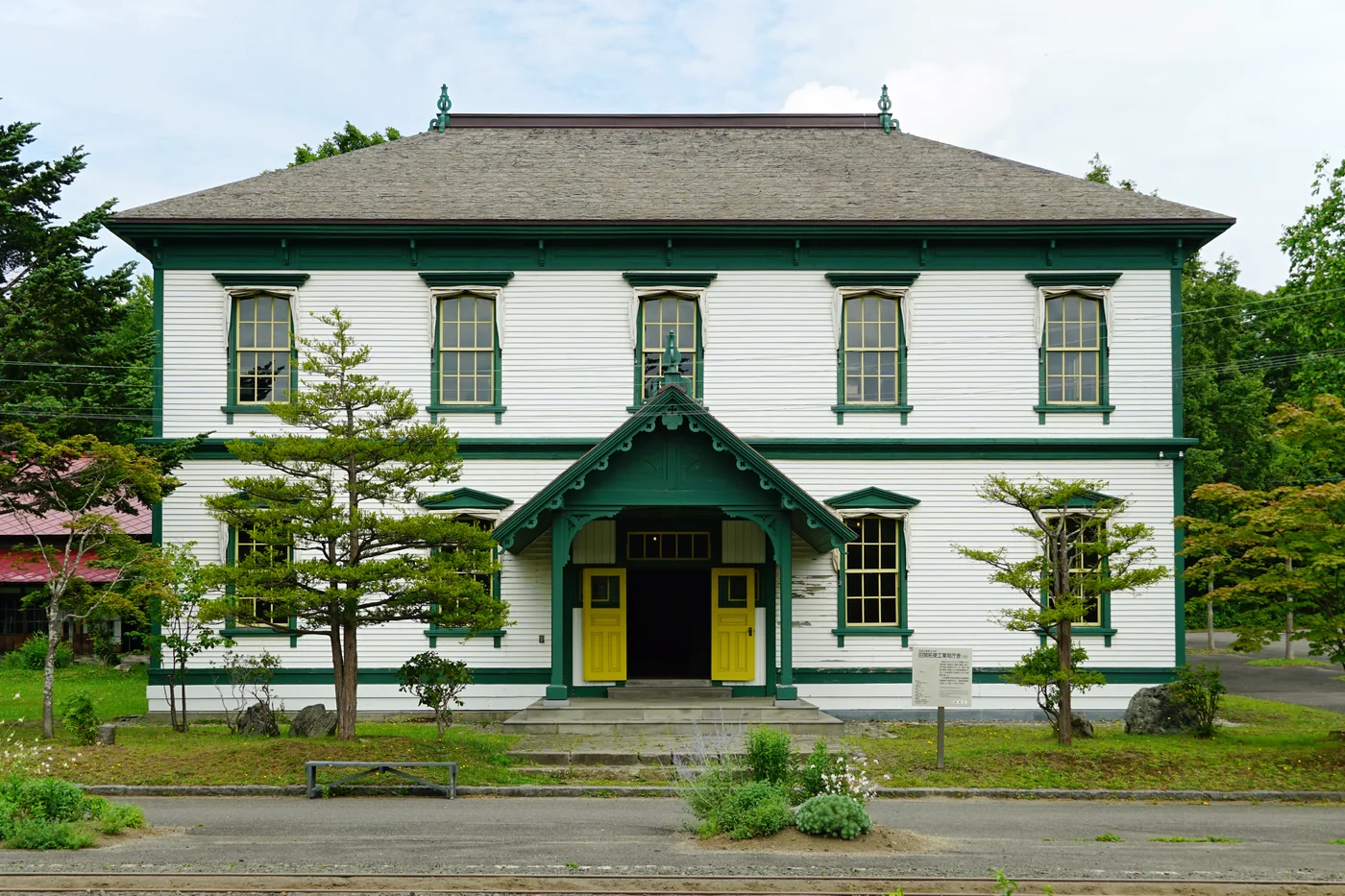
The town district includes houses, shops and public buildings. For a few selected stops, include the former Kaitakushi Industrial Bureau Office. Built in 1877, it was designated a national Important Cultural Property on 7 August 2013. The bureau built roads, bridges, offices and schools and manufactured machinery, farm tools and vehicles. Here, settlement history connects with specific infrastructure and manufacturing work.
The former Otaru newspaper office, built in 1909, has Sapporo soft-stone exterior walls around a timber frame. Compare it with the timber Western-style office: study wall material, windows and structure. After Otaru’s stone warehouses, it extends the building-material theme without requiring a changed Otaru itinerary. Its original location was Sakaimachi, Otaru; the village brings different regions together for comparison.
The former Hokkai Middle School is part of the main building constructed in 1908–1909. Restoration in fiscal 2025 changed the roof to sheet metal, walls to white tones, and window surrounds and columns to grey, returning it towards its early Taisho-era appearance near the founding period. Ask which period a conserved building represents. This explains changing appearances in photographs better than assuming one colour for all old buildings.
Choose two shops and look for work and domestic spaces
You need not enter every shop. For everyday services, choose the former Yamamoto barber shop and Shimauta post office. The barber retains its late-Taisho Western-style steep gabled roof and arched entrance canopy and was always used as a barber shop. The 1902 post office separates working premises from the postmaster’s and staff housing in different buildings. Together they show arrangements for customers and work.
For combined shop and home, choose the former Kondo dye shop. The Asahikawa business began in 1898; the displayed building was newly built in 1913 for both purposes. Find business and family areas separately in its plan. For photography and light, the former Hirose photographic studio presents a 1924 building, with sloping glass on the north side upstairs admitting natural light. Its roof reveals the work’s lighting needs.
The Hirose studio is also a recreation. You need not memorise every year: circle one service business, one combined home and shop, and another personal favourite. If town takes much of the half-day, shorten farming. To see fishing homes and work facilities, leave town after two or three chosen buildings.
Fishing district: Aoyama’s house, then buildings for catches
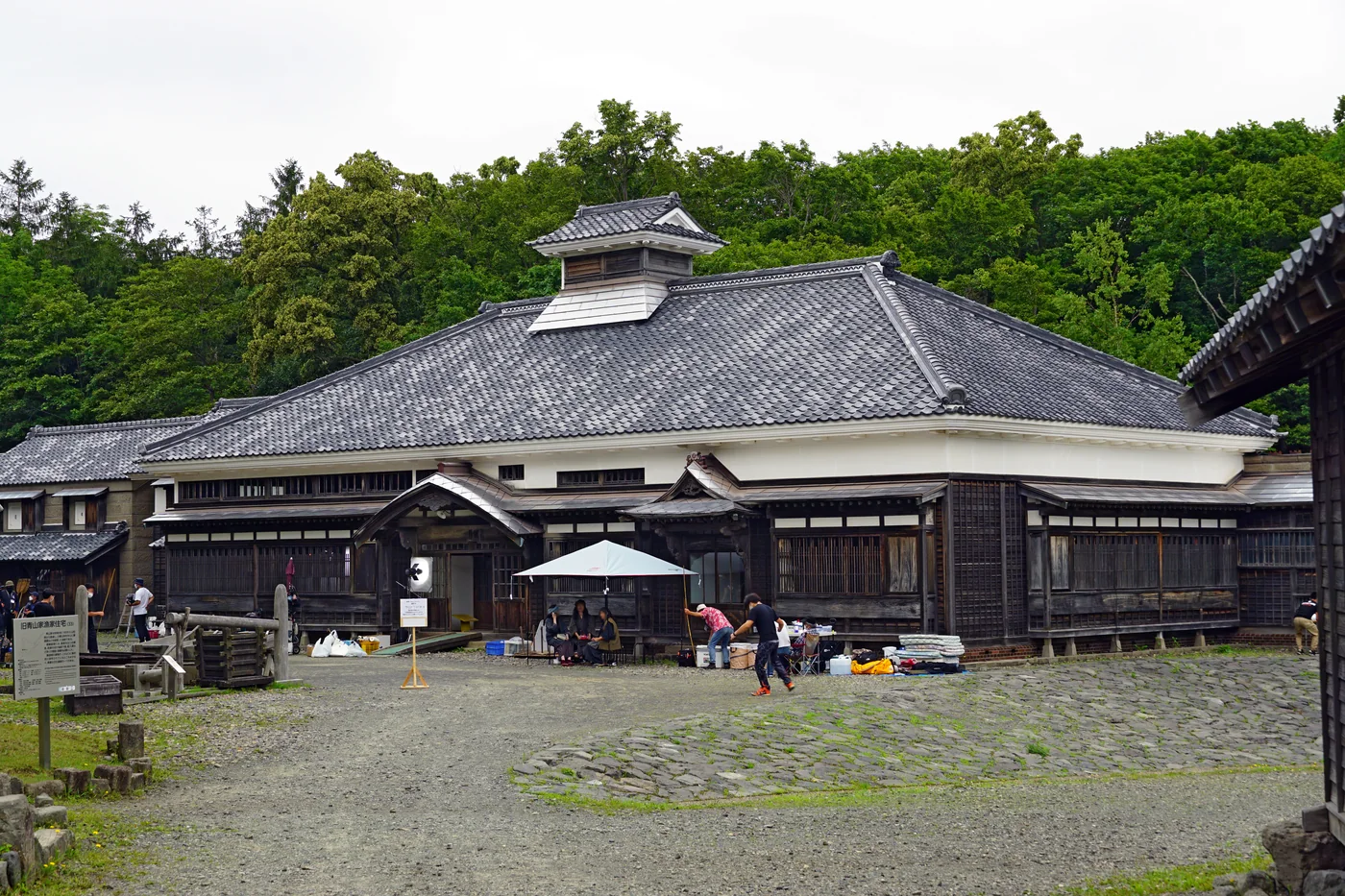
The former Aoyama fishing household residence stood in Shukutsu, Otaru, and dates to 1919. The family came from Yamagata to Hokkaido in 1859 and operated herring set-net fisheries centred on Otaru’s coast. The village explains that this work needed bunkhouses, net stores, boat stores, seafood-drying grounds and mooring facilities. Read home and work together to see the range of spaces supporting a fishery.
The fishing district’s roka temporarily held herring after landing and stored boats, sculls, oars and processing tools outside the season. Although its name can suggest a corridor, it served fish reception, processing and storage. Its drop-board wall construction eased moving catches and related work; it is a recreated building. Reading its function extends the Aoyama house into a fuller industrial study.
The former Tsuchiya hanedashi storehouse projects seawards to suit coastal terrain. Built around 1887, it came from Kumaishi in Yakumo. Goods moved directly through floor openings; it stored gear, catches and processed products including fish fertiliser, dried herring and roe. After street-facing town shops, this floor-loading store makes transport direction tangible. Doors, floors and storage methods explain the fishing district better than repeated front-view photographs.
Farming district: compare settler life at the soldier house and Iwama home
The former Osamunai tondenhei soldier-settler house came from Fukagawa and was built in 1895. Soldiers and families lived in settlements combining northern defence with farming; Osamunai settlement took place in 1895 and 1896. Start here to consider home, work and institutions in one space. With children, ask what residents did each day before listing dates.
The former Iwama farmhouse has another migration background. The family belonged to a former Sendai domain Watari samurai migration group, settled in 1871 and had home-region carpenters build the house around 1882. The plan followed their homeland while using a stone-weighted roof uncommon around Sendai. Study roof and layout to compare imported habits with practices adopted in Hokkaido.
For more, visit the former Higuchi farmhouse. The Higuchi family, from Toyama, settled in 1893, and Toyama carpenters retained wakunouchi construction. Restoration also used dismantled materials from the Yamaguchi family’s building of the same form. Compare Iwama and Higuchi for regional techniques entering farmhouses. With limited time, study one properly rather than rushing through both to include another storehouse.
A simple comparison uses map names and former locations, then entrances, roofs, living rooms and associated work spaces. Iwama came from Date, Higuchi from Atsubetsu in Sapporo and Osamunai from Fukagawa. Together today, they originally belonged to different places and households. Those differences make the district clearer than an undated, placeless idea of an old village.
For agricultural variety, add sericulture, dairying or a settler hut
The farming district also preserves production buildings. The former Tamura Hokuseikan silkworm-egg production house, built in 1905, obtained eggs, produced and sold silkworm seed, and trained technicians. It broadens farming beyond fields to sericulture and technical knowledge. Textile enthusiasts can compare it with the former Yamada sericulture board storehouse to see soldier-settler families’ own facilities.
For large timber structures or livestock, choose the former Ogawa dairy barn. Its design drew on American plans and used balloon framing developed in nineteenth-century America. The soft-stone silo beside it recreates a form widespread in early Showa. Read barn and silo separately through animal care and storage needs rather than the general label “Hokkaido farm”.
The settler hut recreates initial migrant accommodation: log posts, bamboo grass and thatch on walls and roof, straw mats at doors and windows, a partly earthen floor, and grass covered with mats and a hearth in the living area. Compare this recreated Meiji dwelling with developed farmhouses. You need not see all sericulture, dairy and residential buildings at once; follow the work that interests you.
Save the mountain district for forestry interests
The mountain district covers a forest railway engine shed, the former Taira logging workers’ bunkhouse and a charcoal-burning hut. The recreated engine shed explains the shift from floating timber to rail transport and the locomotives, wagons, shed and timber yards supporting it. Railway enthusiasts can connect it with the town station: one served urban passengers, the other timber movement, with different building functions.
The Taira bunkhouse presents late-Taisho forest-worker accommodation, based on a camp housing about 40 felling and timber-gathering workers; horse handlers had a separate bunkhouse. Connect work locations with eating and sleeping, then compare fishing and farming homes to understand the four industry-based districts. The charcoal hut recreates a rectangular kiln used by supplementary-income charcoal makers in late Taisho, extending timber use to fuel.
If tired, omit the mountain district. An entrance route, town plus fishing, or town plus one or two farmhouses each has a complete theme. To include forestry, reserve time before entering farming and reduce town shops rather than making the mountain a closing-time sprint.
Horse tram and sleigh: choose by month
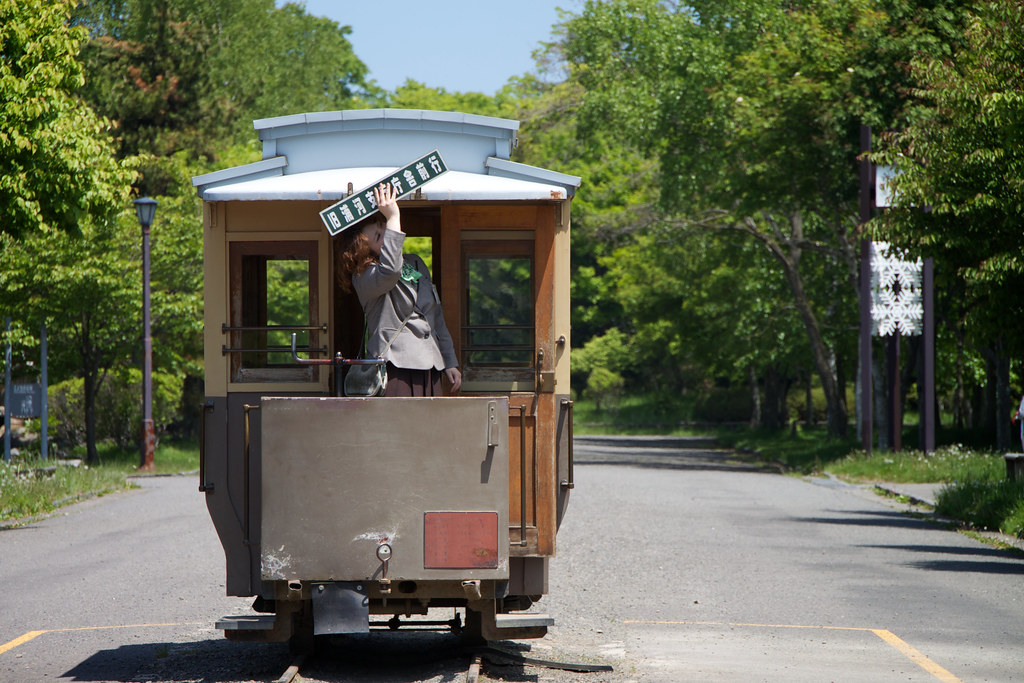
The seasonal ride information lists the horse tram approximately mid-April to November and the winter sleigh approximately mid-December to March on Saturdays, Sundays, Japanese holidays and during the Sapporo Snow Festival. Both cost ¥250 for ages three and above. Outside the festival on winter weekdays, plan to walk. From late November to early December, make buildings on foot the main plan and add rides according to that day’s notice.
For a ride within a half-day, read entrance notices and operating times first, then choose whether to ride early or later. The tram is one experience; reaching and studying the four building groups still requires walking. Homes and stores need separate time afterwards. If children most want the ride, do that first and select fewer town buildings rather than discovering after tiring everyone that a suitable service has passed.
For horses and transport work, add the former Ota farrier and Fujiwara vehicle-and-sleigh workshop in town. One recreates hoof-care premises; the other presents workshop and home for making vehicles and sleighs. Linking these trades with the seasonal ride adds context, and non-riders can follow the same building theme.
Leave children time to make toys and select fewer adult-interest buildings
The activity learning building offers two traditional toy-making projects each month, with no material or participation fee, plus old toys and tools. Busy periods can mean waiting. Ask children whether they prefer making something or continuing around the village, then adjust later building numbers. Allocate part of the half-day to adult architecture interests and part to children’s work without requiring every explanation together.
The children’s square outside has stilts and hoop-rolling toys and closes under snow. In winter, alternate outdoor buildings with the learning activity and remove the square from the plan. Post office, barber and fire station also suit simple questions about where people sent letters, cut hair or stored firefighting tools, reducing the route to recognisable workplaces.
Ordinary visitors may not bring balls, flying discs, scooters, bicycles or drones; toddler tricycles with a parent push handle are an exception. If a child arrives with a scooter, ask the ticket office about storage and walk or use a suitable pushchair inside. With packed lunches and spare clothes, keep backpack weight manageable for gravel walking.
Pushchairs and wheelchairs: select a usable short route at the entrance
A limited number of free pushchairs and wheelchairs can be requested from staff on entry. Some paths are gravel, with steps, slopes and changes of level. Borrow equipment first, then ask staff to help choose a route on the map. With your own equipment, start with a short town route and extend according to the actual surface.
If companions want different interiors, agree a clear meeting point within the district and take turns, reducing repeated lifting or detours for the whole group. Consider separately whether you can reach a building, cross its entrance and move inside. At a level change, enjoy the exterior and explanation, then move on while retaining a coherent theme.
The nursing room is in the entrance’s former Sapporo Station; if occupied, ask the ticket office about the first-aid room. Changing tables are also in multipurpose toilets at the visitor centre, restaurant, two town locations and one farming location. Arrange care at the entrance before and after the route and use the map for toilets in between. Avoiding a distant return leaves more time for chosen activities.
Eat near the entrance; the farming snack shop is closed
The village restaurant near the entrance has about 200 seats. The Kita no Furusato snack shop at the farming entrance was listed as closed in the official FAQ read on 28 October 2026, so plan around the entrance restaurant or a packed lunch. Walk farther in the morning and eat after returning, or feed children first at the start instead of searching in farming.
Packed lunches can be eaten on lawns and benches. Food and drink are generally prohibited inside buildings; listed exceptions are halls 1 and 2 of former Sapporo Station and the second-floor hall of the visitor centre in the former Kaitakushi headquarters. In rain, ask the entrance about available indoor areas before unpacking food. A roof does not make every historic building a lunch table.
For restaurant group reservations, contact 011-897-2321 directly. Independent visitors should include eating and rest in the half-day: two to three hours inside excludes central-city return travel and a full meal. If refreshed after lunch, add a few nearby buildings; if the theme is complete, return to Shin-Sapporo and leave the afternoon for the city rather than another distant attraction.
Earlier closing from October to April: divide winter outdoors into short sections
From May to September, hours are 09:00–17:00, last admission 16:30, open daily. From October to April, hours are 09:00–16:30, last admission 16:00, closed Mondays. If Monday is a Japanese holiday or substitute holiday, closure moves to the next day; Mondays during the Sapporo Snow Festival open. Closure also runs 29 December–3 January. Check before arranging transport, particularly autumn Mondays and New Year trips.
Last entry at 16:00 leaves only half an hour, suitable for a brief entrance-area look. Arrive much earlier in winter for the recommended minimum two hours. We prefer a morning start, priority district first, then lunch and a finish according to energy. Even in summer, do not leave the farthest building only at 17:00: you still need to walk to entrance and bus stop.
Bring snow-suitable shoes, gloves and spare socks in winter and divide outdoor movement into short sections. With wet, cold children or older companions unsteady on the surface, shorten to town and entrance and omit mountain or distant farms. Exhibits are scattered outdoors; persistent heavy rain or blizzards favour an indoor city half-day. For a sleigh-focused visit, match its operating day first and make other content adjustable.
Understand building functions before photographing, and leave passage clear
Personal souvenir photography follows village rules. Leave entrances and narrow paths clear, do not move exhibits or enter prohibited areas. For cosplay or model photography, read the photography FAQ first: those activities require advance reservations, and livestreaming, drones, and filming or publication for profit such as advertising revenue have further restrictions.
Give each detail photograph a question: Stick Style at the station, soft-stone walls at the newspaper office, north light at Hirose studio, floor-loading at Tsuchiya’s store. Read labels before shooting so later sorting distinguishes function and origin instead of leaving many similar fronts without an explanation.
Finish with a main theme you want to follow
For a first fair-weather visit, begin with station and offices, choose newspaper or a shop in town, then Aoyama’s fishing home and one farmhouse. Add silkworm-egg production or the dairy barn for more working buildings. Fit the horse tram to that day’s services and return to the entrance for lunch. This editorial route links home and work; adjust stops to reading, photography and rest pace.
For architecture, give town more time and choose fishing or farming. For railways and forestry, keep the station and relevant workshops in town and make the mountain central. Families can bring learning activities and seasonal rides forward and remove adult-interest buildings. Back in Sapporo, join your dinner plan. For both museums, allow a separate full day so the combined ticket serves an established itinerary.
A few useful answers
How long should I allow for a first visit to the Historical Village of Hokkaido, and where should I start?
Allow about three hours at the village, plus time for lunch and travel. Start at the replica of the old Sapporo Station at the entrance, then walk through the town area to the former Aoyama family home in the fishing village and finish at a farmhouse.
Where do I catch the bus from Shin-Sapporo to the Historical Village?
At Shin-Sapporo bus station, take the JR Hokkaido Bus for Kaitaku no Mura from stop 10 in the north passage. Stay on until the last stop, about 20 minutes away. If you’re coming by underground, take the Tozai Line to Shin-Sapporo.
How much do the village ticket and the joint ticket cost?
A standard ticket for the village costs ¥1,000. Pupils in lower secondary school and younger children go free, as do visitors aged 65 or over with proof of age. A standard joint ticket with the Hokkaido Museum costs ¥1,400.
When do the horse-drawn tram and the winter sleigh run?
The horse-drawn tram runs from around mid-April to November. From around mid-December to March, the sleigh runs on Saturdays, Sundays, Japanese public holidays and during the Sapporo Snow Festival. Each ride costs ¥250 per person aged three or over.
Official information and references
Sources used in this guide.
- Historical Village of Hokkaido: opening, admission and Shin-Sapporo access
- Historical Village of Hokkaido: four building groups, origins and seasonal rides
- Historical Village of Hokkaido: visit duration, free entry, luggage, food and care facilities
- Historical Village of Hokkaido: current notices and village information