Plan the Ebisu Festival on November 18–20, 2026, Hiroshima Dreamination from December 4 to January 24, 2027, and station Christmas events around dinner, your hotel, and the tram ride back.
- Region & Focus
- Hiroshima
- Reading Scope
- 34 min read · 21 chapters · 4 Q&As
- Official Verification
- 19 official sources checkedUpdated November 9, 2026
- Key Topics
- SeasonsItinerariesFood
Chapter Route Map (tap any stop)
- Visit the Ebisu Festival in November and Heiwa Odori’s lights in December
- The three days of the 2026 Ebisu Festival: save 5-14 Ebisucho
- Komazarae: leave time for the decorated rake stalls
- Arriving at Ebisucho or Hatchobori
- Hiroshima Station’s trams are on the second floor; platforms for routes 1 and 2 have changed
- For just two tram rides, start with ¥480
- The ¥600 8-hour pass suits three tram rides from afternoon into evening
- For weekend evenings, compare the ¥440 6-hour pass; the weekday pass ends at 16:00
- Use the live digital ticket screen; groups sharing one phone must travel together
- A November evening: dinner first, then the shrine and shopping streets
- Dinner at Okonomimura, then the rest of the evening from Shintenchi
- 2026 winter illuminations: December 4 to January 24, 2027
- From Shirakami Shrine toward Tanaka-machi: choose your direction around dinner
- Fukuromachi and Chuden-mae for a short walk through the lights
- Hondori, Namiki-dori, and Alice Garden: choose one side route first
- The sweets cafe has its own opening dates for hot drinks
- See the Christmas tree at Hiroshima Station from November 13
- Choose Hatchobori, Heiwa Odori, or Hiroshima Station by your evening’s endpoint
- With children, let one short stretch be the whole outing
- For rain or strong wind, keep dinner and one arcade stretch
- Check the destination for Hiroshima Station; save the final journey before dinner
- Quick Q&A
The 2026 Ebisu Festival runs from November 18 to 20. Winter illuminations on Heiwa Odori begin on December 4. Choose an evening outing that fits your hotel dates, then connect a shrine visit in Ebisucho, dinner in Hatchobori, a walk through the lights, and a tram back to Hiroshima Station. Even a one-night stay leaves room for an easy evening out.
Visit the Ebisu Festival in November and Heiwa Odori’s lights in December
For an autumn or winter visit to Hiroshima in 2026, use your dates to choose the evening activity. The Ebisu Festival takes place on November 18–20 at Ebisu Shrine near Hatchobori. Hiroshima Dreamination on Heiwa Odori begins on December 4 and continues through January 24, 2027. If you have one night, choose the event that falls within your stay. Keep your daytime city or Miyajima plans, rather than making repeated trips to the station for the night views.
Each venue has a useful starting point. For the Ebisu Festival, enter the shopping streets from Ebisucho or Hatchobori tram stop. For the winter lights, join Heiwa Odori from the Fukuromachi or Chuden-mae side, then walk east. If your hotel is near Hiroshima Station, save your return tram stop before leaving. If you stay downtown, walk over after dinner and return through the shopping streets.
The Hiroshima Station area also has Christmas events from November 13 to December 25. These allow a short evening outing near the station during a November stay. The shrine, shopping streets, Heiwa Odori, and station are arranged separately below. Choose a stretch that suits your group’s energy; you do not need to walk all of central Hiroshima.
Plan the Ebisu Festival on November 18–20, 2026, Hiroshima Dreamination from December 4 to January 24, 2027, and station Christmas events around dinner, your hotel, and the tram ride back.
The three days of the 2026 Ebisu Festival: save 5-14 Ebisucho
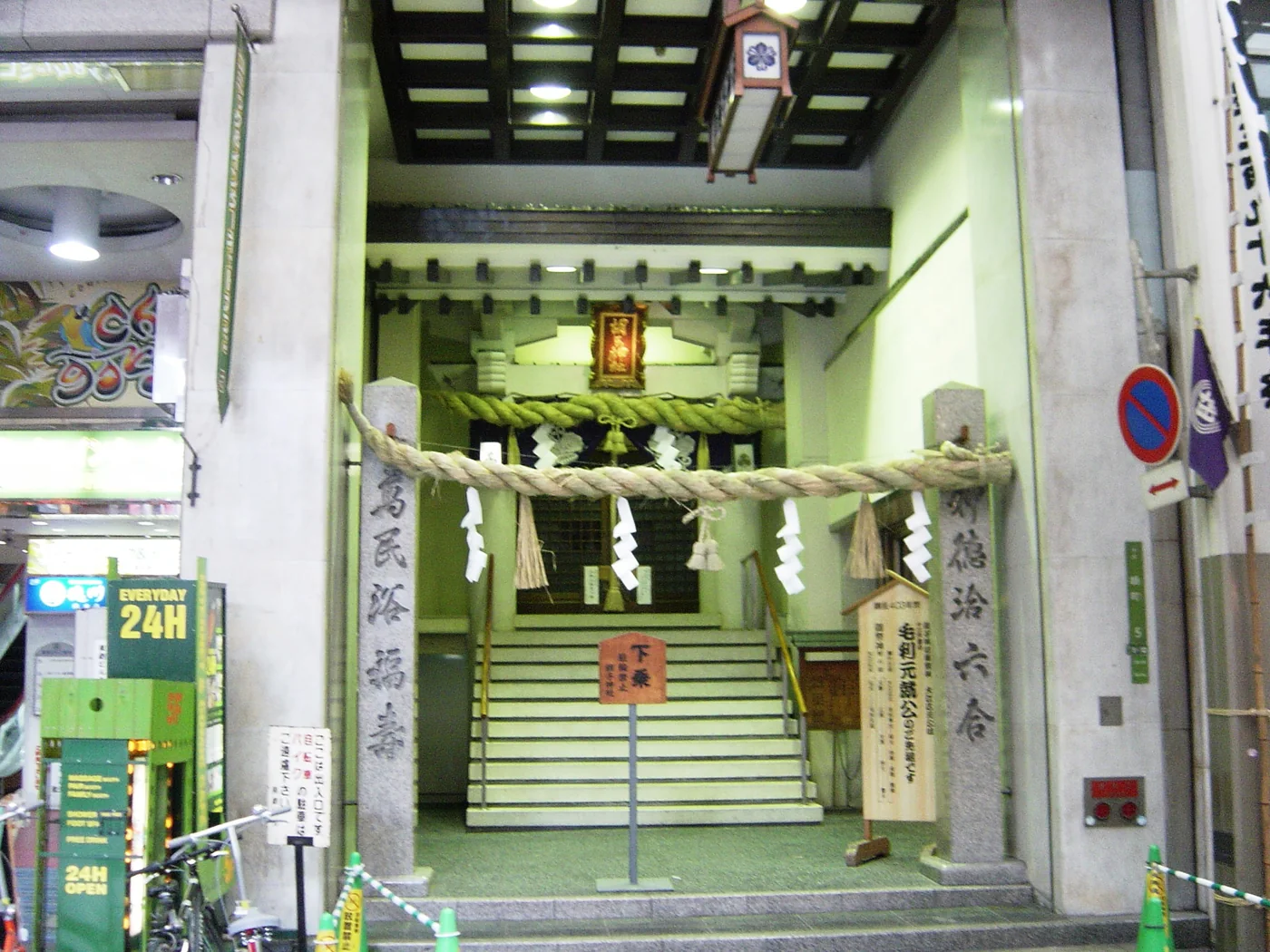
The shopping street federation’s October 30 announcement lists Wednesday, November 18, and Thursday, November 19, as the eve celebrations, with the main festival on Friday, November 20. Hiroshima’s official tourism page lists visiting hours of 10:00–22:00. The address is 5-14 Ebisucho, Naka Ward, Hiroshima, beside the south exit of Hiroshima Mitsukoshi. You can visit during the day; there is no need to wait until dark.
Save “Ebisu Shrine” on your map and check the Ebisucho address in Naka Ward. Hiroshima has other shrines with the same Japanese name. Choosing the first result after entering the characters can send you to Kusatsu, Kawauchi, or Senda-machi. The map button at the lower left of the photo links to the Ebisucho shrine covered here. For the tram journey, use Ebisucho as your stop.
For a slower look at the shrine and decorated rakes, visit in the afternoon and have dinner afterward. For the shopping streets after dark, reach Hatchobori in the early evening, eat first, then walk to the shrine area. The shrine sits within the city’s commercial streets. Pick a nearby meeting point so your group can find each other after visiting different shops.
Komazarae: leave time for the decorated rake stalls
The Ebisu Festival celebrates prayers for business prosperity. The lucky objects commonly seen along the streets are called komazarae: rakes decorated with large and small gold coins, treasure ships, and other ornaments. The large wooden tub used as an offering box in front of the shrine is another festival scene described by Hiroshima’s official tourism site. Browse the decorations as you walk. If you want to take one home, choose by its actual size and the price displayed at the stall.
These rakes have projecting decorations, so consider your next journeys before buying. They are easier to carry carefully if you go straight back to your hotel. If you still have a crowded tram ride or a Shinkansen journey the next day, ask about packaging and leave space in your luggage. Choose the size you can carry, then return to pay, instead of rearranging everything on the platform after buying.
Keep worship and shopping separate for a smoother visit. Put coins, your phone, and your bag where you can reach them. Concentrate on the shrine visit when your turn comes, then move away from the entrance before taking photos or putting things away. Ask before photographing a stallholder or close-ups of merchandise, and leave room for other customers to pass. Normal shopping street courtesy still applies during the festival.
Arriving at Ebisucho or Hatchobori
From Hiroshima Station, trams toward Kamiyacho stop at Ebisucho and Hatchobori, both close to the festival. Use Ebisucho to find the shrine first. Use Hatchobori for dinner or shopping in department stores and shopping streets first. After alighting, reach the sidewalk, enlarge the map to find the shrine’s block, then cross at the intersection. Avoid stopping in the flow of passengers while trying to find your way.
Combine the festival with a walk through Hondori, Kinzagai, and Ebisu-dori. All these names may appear on shopping street maps. Saving a particular shop or the shrine is more useful than remembering only “downtown.” If family members shop separately, agree on a meeting place with a full shop name and a recognizable storefront. Return there at the agreed time.
Hatchobori has a separate boarding point for the Hakushima Line if you need a tram toward Hakushima. Read both the route and destination on the stop signs. For Hiroshima Station, look for “広島駅.” After a tiring evening, avoid extra crossings of major roads where possible. Search for your return journey from the stop nearest your finishing point, rather than walking back to the stop where you arrived.
Hiroshima Station’s trams are on the second floor; platforms for routes 1 and 2 have changed
Hiroshima Station now connects to the trams on the station building’s second floor. After arriving by JR, follow the tram signs to the boarding area. If you have luggage, leave it at your hotel first, then return for the tram. The shrine and evening streets are easier to explore without it. If you have bought dinner or drinks inside the station, put away anything you need to store before joining the waiting area.
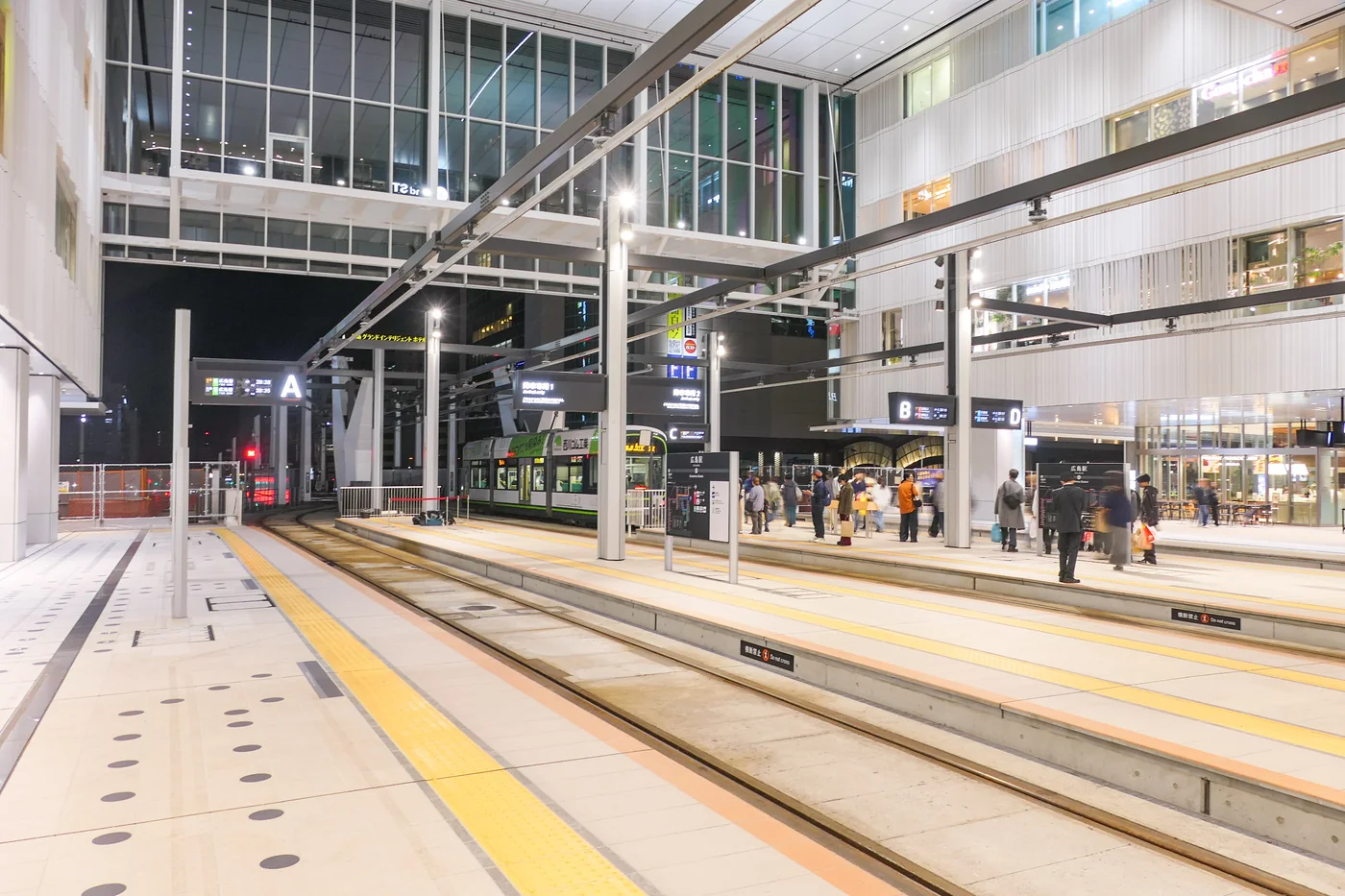
Hiroden’s March 28, 2026 platform change moved route 1 to platform B and route 2 to platform D. For Hatchobori and Ebisucho, use routes 1, 2, or 6 via Kamiyacho. Route 5 goes toward Hiroshima Port via Hijiyama and takes a different path through the city. While waiting, check your stop name against the destination display. The platform for each individual service is also shown on site.
If you will take a Shinkansen after returning, allow time to walk inside the station, collect luggage, and find your platform. Work backward from the train’s departure: allow the time needed inside the JR station, then tram waiting and riding time, and only then decide when to leave the venue. This is easier to manage than checking transport just before the lights go out.
For just two tram rides, start with ¥480
The regular Hiroden tram fare is ¥240 per adult ride and ¥120 per child ride. An adult round trip from Hiroshima Station to downtown costs ¥480. A paper one-day tram pass costs ¥700 for adults and ¥350 for children. If those are your only two tram rides that day, paying per ride costs less. If you have already used trams for daytime sights, count the full day’s rides together.
Three regular adult tram rides total ¥720, which is ¥20 more than the ¥700 day pass. For two adults and two children paying child fares, three rides each cost ¥2,160 in separate fares, compared with ¥2,100 for four day passes. The difference is ¥60. Choose around your actual route; adding a transfer just to use a pass again is usually not worth it.
The paper day pass is valid on the day of use. Scratch off the year, month, and day, then show it to the crew when getting off. Digital time passes come in 8-hour and 24-hour versions. Read the start-time rules and coverage together on the purchase page. If you plan to return to your hotel by bus after the lights, compare passes that include buses separately. The basic tram day pass covers all Hiroden tram lines.
The ¥600 8-hour pass suits three tram rides from afternoon into evening
MOBIRY TRAVEL’s tram time passes cost ¥600 for adults and ¥300 for children for 8 hours, or ¥700 for adults and ¥350 for children for 24 hours. Both cover all Hiroden tram lines. An afternoon ride downtown, a move to another area before dinner, and a final ride to Hiroshima Station would cost ¥720 in regular adult fares. If all three rides fit within the valid eight hours, the ¥600 pass saves ¥120.
The 24-hour pass can continue into the next day. Activate it at 18:00, for example, and it expires at 18:00 the following day. This suits an evening outing followed by more daytime Hiroden travel. Validity starts at activation. List tonight’s and tomorrow’s rides first, then choose 8 hours, 24 hours, or two regular fares.
Digital passes must be activated within 90 days, including the purchase date. Show the valid ticket screen to the crew when getting off. Your return ride must also fall within the valid period. Once you choose a start time, save the expiry time in your itinerary. For an early-evening departure, buy the pass in advance and follow the page’s activation process when you actually ride, so the valid hours cover your travel.
For weekend evenings, compare the ¥440 6-hour pass; the weekday pass ends at 16:00
For downtown lights on Saturdays, Sundays, and Japanese national holidays, compare the Weekend and Holiday Digital City Pass. It costs ¥440 for adults and ¥220 for children. It covers trams and eligible buses in the designated ¥240 flat-fare city area for six hours after activation. Two regular adult tram rides cost ¥480. If the round trip fits within six hours, the ¥440 pass saves ¥40.
For example, consider this pass if you head downtown around 17:00 on a Saturday and return to Hiroshima Station around 22:00 after dinner and the lights. Divide the time between the two rides as you like, but the ticket must still be valid when you get off on the return journey. The pass also covers route buses run by designated operators within the area. If your hotel is near a bus stop, choose a service and include it in that evening’s comparison.
The Weekday Digital City Pass costs the same but is valid from 10:00 to 16:00. The three days of the 2026 Ebisu Festival fall from Wednesday through Friday. You can plan an afternoon shrine visit around eligible services within those hours. For evening travel, calculate regular fares or another time pass. Read the full ticket name when buying: weekday and weekend/holiday versions have their own eligible dates and hours.
Both city passes focus on the city flat-fare area. For travel toward Miyajima beyond Hiroden-nishi-hiroshima, compare a pass covering all tram lines. Meipuru-pu, late-night buses, and certain express routes have separate fares. If your evening only connects Hiroshima Station, Hatchobori, and Heiwa Odori, compare those rides first. There is no need to buy extra coverage for a different area the following day.
Use the live digital ticket screen; groups sharing one phone must travel together
Register on the MOBIRY TRAVEL website and buy tickets by credit card. Open the ticket page and show it to the crew when using it. A valid screen has animation and time obtained from the server. Use the live screen for travel, with a working internet connection on your phone. You can screenshot maps and hotel addresses in advance; keep the original logged-in ticket screen for the pass.
One representative can buy tickets for a total of ten people on one phone and show the correct passenger count when the group travels together. If all tickets are on one phone, arrange the same tram and return journey for the family. If two people want to go back to the hotel while the others keep exploring, separate tickets are easier to manage. Before paying, check the adult count, child count, and total users. Keep the receipt and ticket page in the same account.
Your phone is often needed most at night just after you have taken the most photos. Before activating a digital pass, check the battery, connection, and login. Open the ticket screen again at your return stop. If the whole family depends on one ticket holder, meet up before entering the waiting area. When it is time to get off, the crew can then read the passenger count and expiry time together.
If plans change before activation, digital tickets can be refunded under the rules within the activation deadline, with a ¥200 fee per person. Group tickets are refunded together; activated tickets are treated as used. If two people each bought a ¥440 ticket and the whole group remains unused, the ¥880 payment is refunded as ¥480 after ¥400 in fees. Buying once you are sure you will travel reduces the cost of a last-minute cancellation.
A November evening: dinner first, then the shrine and shopping streets
With three hours for the Ebisu Festival, arrive in Hatchobori around 17:00, sit down for dinner, then follow the shopping streets to Ebisu Shrine. This is a suggested allocation for planning: one hour for dinner, about one hour for worship and the decorated rake stalls, and the rest for walking, shopping, and waiting for your return tram. If your restaurant has a queue, shorten the shopping time and avoid fixing the next stop too tightly.
To try festival food stalls, make your main meal smaller and see what is open around the shrine and Chuo-dori that day. If everyone has different tastes, agree on a time for a proper meal. This is easier than buying snacks separately all evening and discovering someone is still hungry. Find somewhere to stop before eating, dispose of rubbish properly, then rejoin the walking route.
If you are returning from Miyajima that day, go to your hotel first to leave souvenirs and outerwear, then take a tram downtown. If you stay near Hatchobori, make the shrine your after-dinner walk. For tides, ferries, and visiting times, read the two-day Hiroshima and Miyajima itinerary and connect it to the end of your daytime route.
November 20 is a Friday, so it is also a useful night for a downtown stay. Compare the tax-inclusive room total, guest count, and cancellation date first, then look at the walk from the shrine to the hotel. Booking somewhere within walking distance can save time otherwise spent transferring and waiting at night.
Dinner at Okonomimura, then the rest of the evening from Shintenchi
Okonomimura in Shintenchi fits into an evening with Hatchobori and Ebisu-dori. Choose a restaurant by its actual opening status, menu, and available seats. Sit down and finish eating before moving on. Hiroshima-style okonomiyaki is usually cooked on a hot plate. If you want to watch while eating, leave enough time for the meal so you do not have to rush away halfway through.
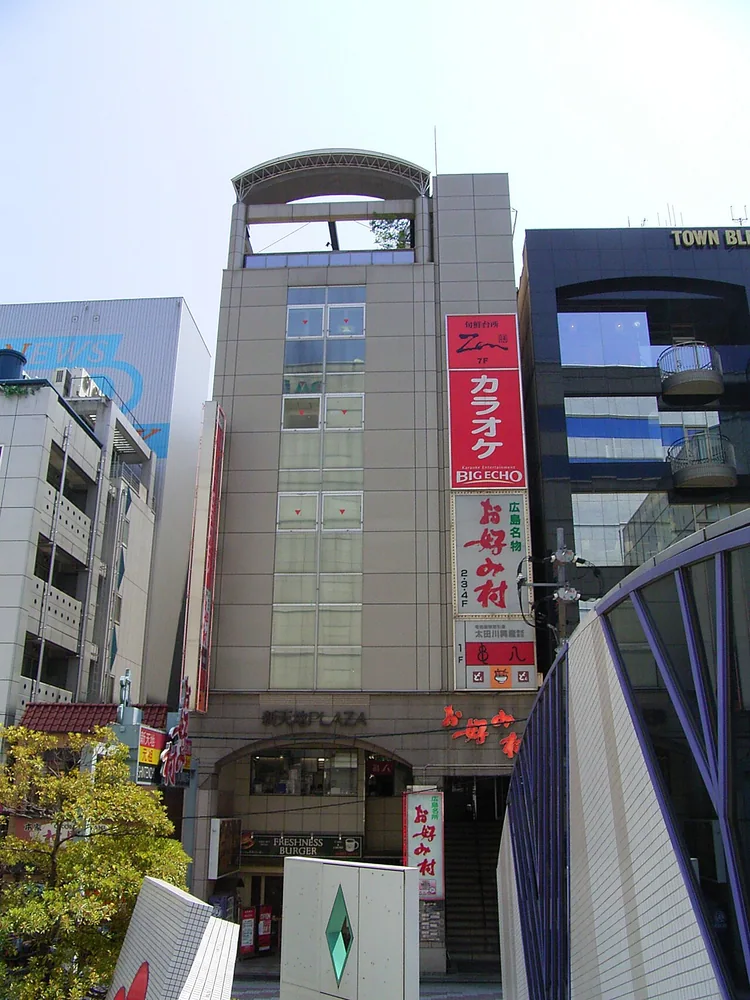
For a group, sort out seating first. Two people can more easily wait separately for counter seats. A family of four wanting to sit together should start with places that can seat the group. If the wait is long, decide how long you will stay before choosing an alternative nearby. Avoid leaving one family member queuing with the luggage while everyone else has moved to another shopping street.
If December’s lights are your main evening activity, eat in Shintenchi and enter Heiwa Odori from the east afterward. For photos from west to east, eat near Fukuromachi, then start from the Chuden-mae and Shirakami Shrine side. Letting dinner follow your starting point gives more flexibility than eating at the station before every evening outing.
2026 winter illuminations: December 4 to January 24, 2027
The organizer’s 2026 event outline gives this year’s dates as Friday, December 4, through Sunday, January 24 of the following year, normally from 17:30 to 22:30. On opening day, December 4, lighting begins around 18:00 because of the ceremony. If you are coming for the first evening, have dinner or visit the station events first, then reach the main venue around six.
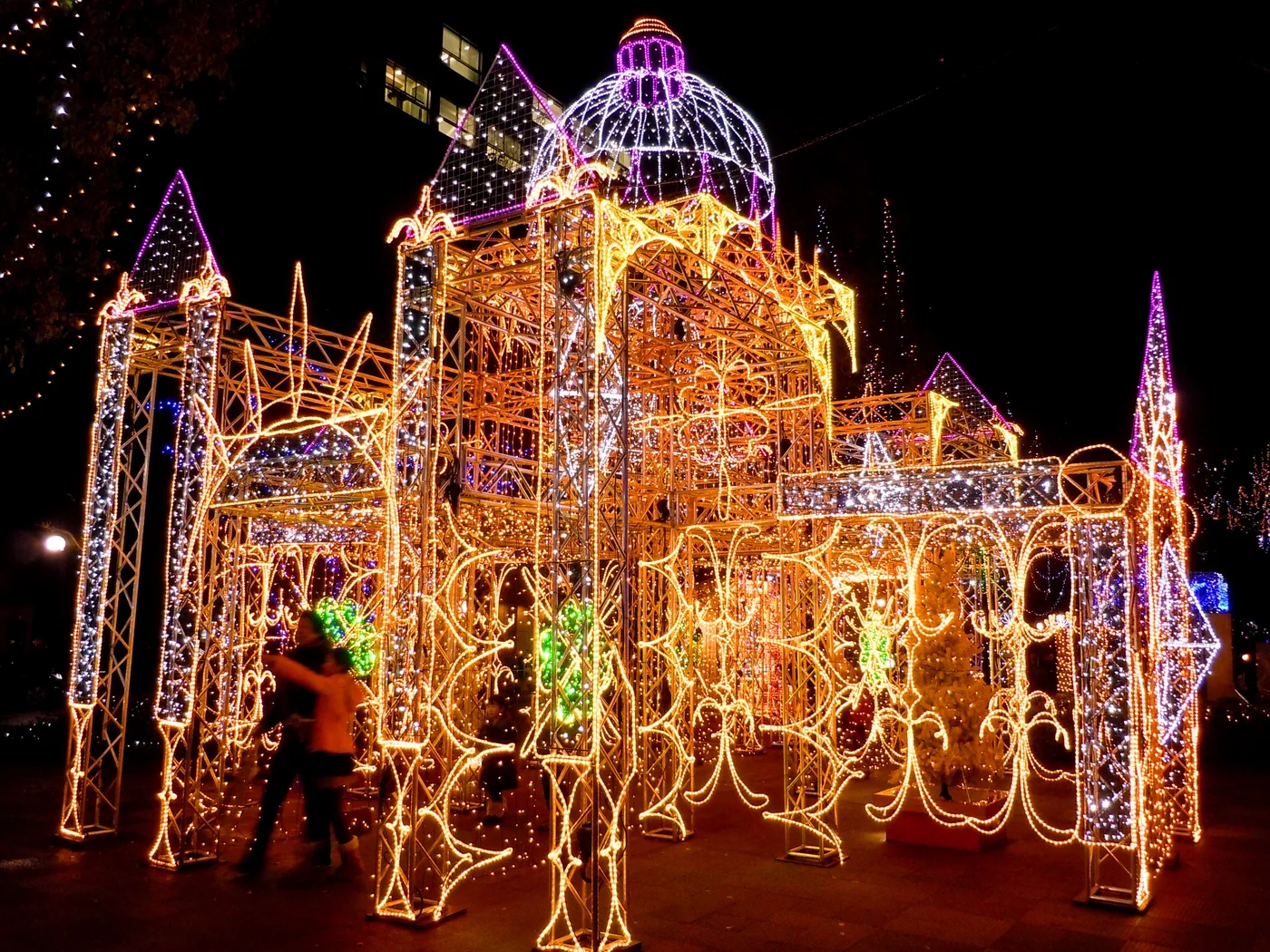
Hiroshima City’s September 29 announcement explains that the event period changes from fiscal 2026, placing it in December and January. Use these dates when booking accommodation and transport. The Ebisu Festival in November and the Heiwa Odori lights in December each have their own travel dates.
The theme is a “fairy-tale land,” with the main evening walking area in the green strips on both sides of Heiwa Odori. The official tourism page lists free admission. Food, shopping, and transport cost extra. Decide which end to start from and where to finish. If you want plenty of photo stops, a shorter stretch of greenery is more enjoyable than rushing through every display area.
From Shirakami Shrine toward Tanaka-machi: choose your direction around dinner
The organizer’s outline places the main route in the north and south green strips of Heiwa Odori, from in front of Shirakami Shrine to the Tanaka-machi intersection. If you stay near Otemachi or Fukuromachi, start in the west and follow the lights east. If dinner is in Shintenchi or your hotel is near Tanaka-machi, enter from the east and walk toward Chuden-mae. Different outward and return stops reduce backtracking.
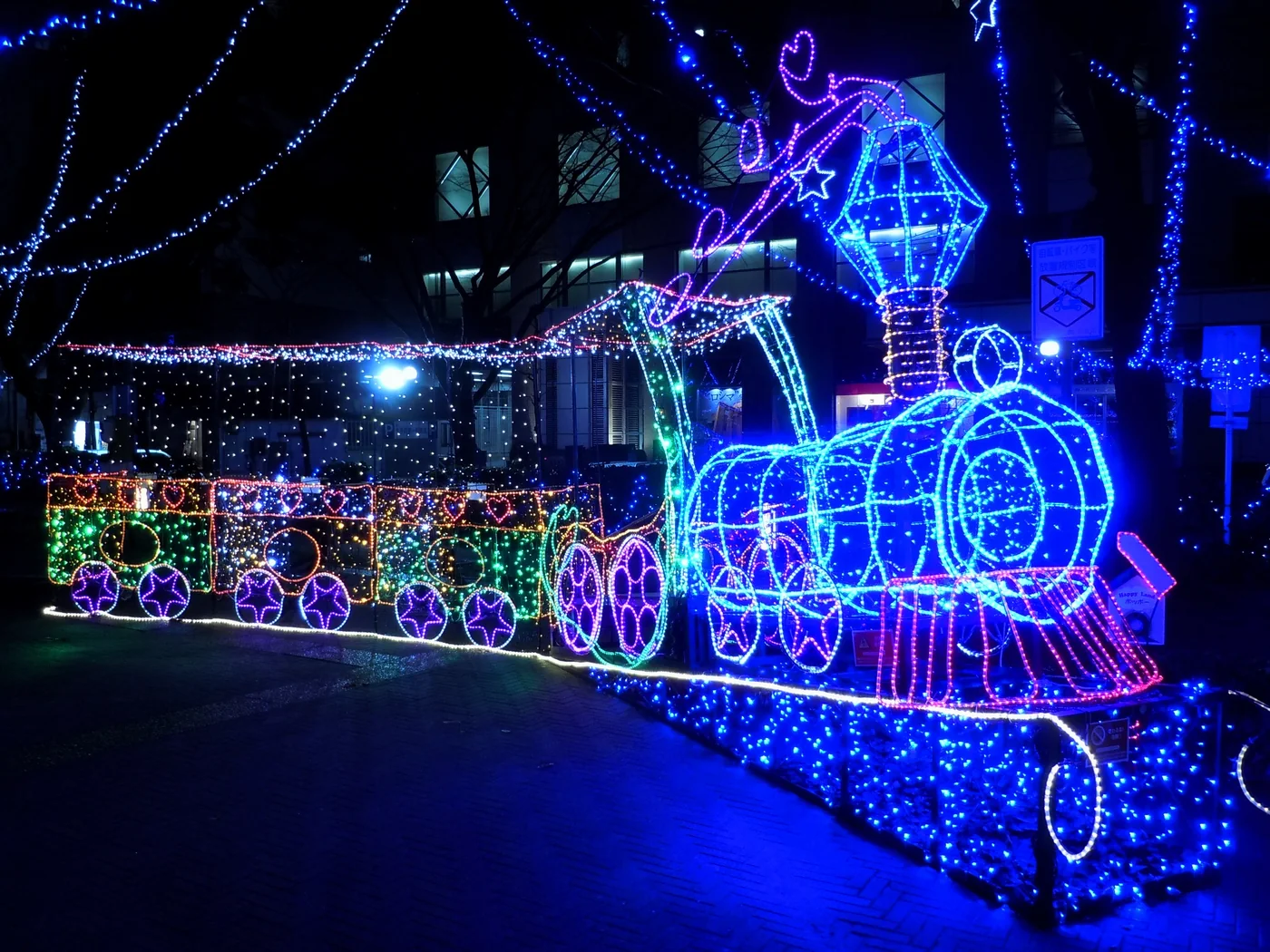
For photos, walk along one side first and spend more time at the displays you like. Then cross at a signal-controlled intersection to the other side. Heiwa Odori still has a road between the green strips, so use pedestrian crossings to move between them. Even if your phone map draws a straight line, follow the pedestrian route on site and take photos from a safe position.
Allow 60–90 minutes on a first visit. This is a suggested walking time including photos and short stops. If it is cold or the children want to leave, finish after a stretch you like. Add another half hour if you want photos of every design. If your group takes photos at different speeds, agree to meet at the next intersection within the same green strip so you can find each other.
Heiwa Odori’s winter lights filmed by Hiroshima’s official tourism organization, showing palace and animal-shaped decorations and nighttime street scenes for walking.
Fukuromachi and Chuden-mae for a short walk through the lights
Official access information for the winter lights lists a walk of about two minutes from Fukuromachi tram stop. Near the western venue, Chuden-mae is another useful stop name for return searches. Save Fukuromachi, Chuden-mae, and your hotel as separate map points, then choose a stop according to where you finish.
From Hiroshima Station, route 1 via Kamiyacho connects through downtown toward Fukuromachi and Chuden-mae. On the return platform, look for “広島駅” on the destination display. Route 7 connects toward Yokogawa, while the L Loop Line circles the city. They serve different destinations. To return to Hiroshima Station, read the destination on the front rather than judging by the tram’s color or boarding the first one that arrives.
If you spend the day around Peace Memorial Park, sit down at a restaurant in the early evening, then join the western lights. This can remove one ride from the evening. If you stay near Hiroshima Station and need an early JR train the next morning, keep it to a simple outward and return tram ride so transport after the walk is easy to manage.
Hondori, Namiki-dori, and Alice Garden: choose one side route first
The 2026 organizer’s outline also lists shopping streets such as Namiki-dori, Kinzagai, Chuo-dori, Hondori, and Nakanotana, plus public spaces including Alice Garden, Higashi Shintenchi Public Square, and the Kyobashi River open-air cafe area. Add these before or after your Heiwa Odori walk. If you stay downtown, choose a side route in the direction of your hotel and browse on the way back.
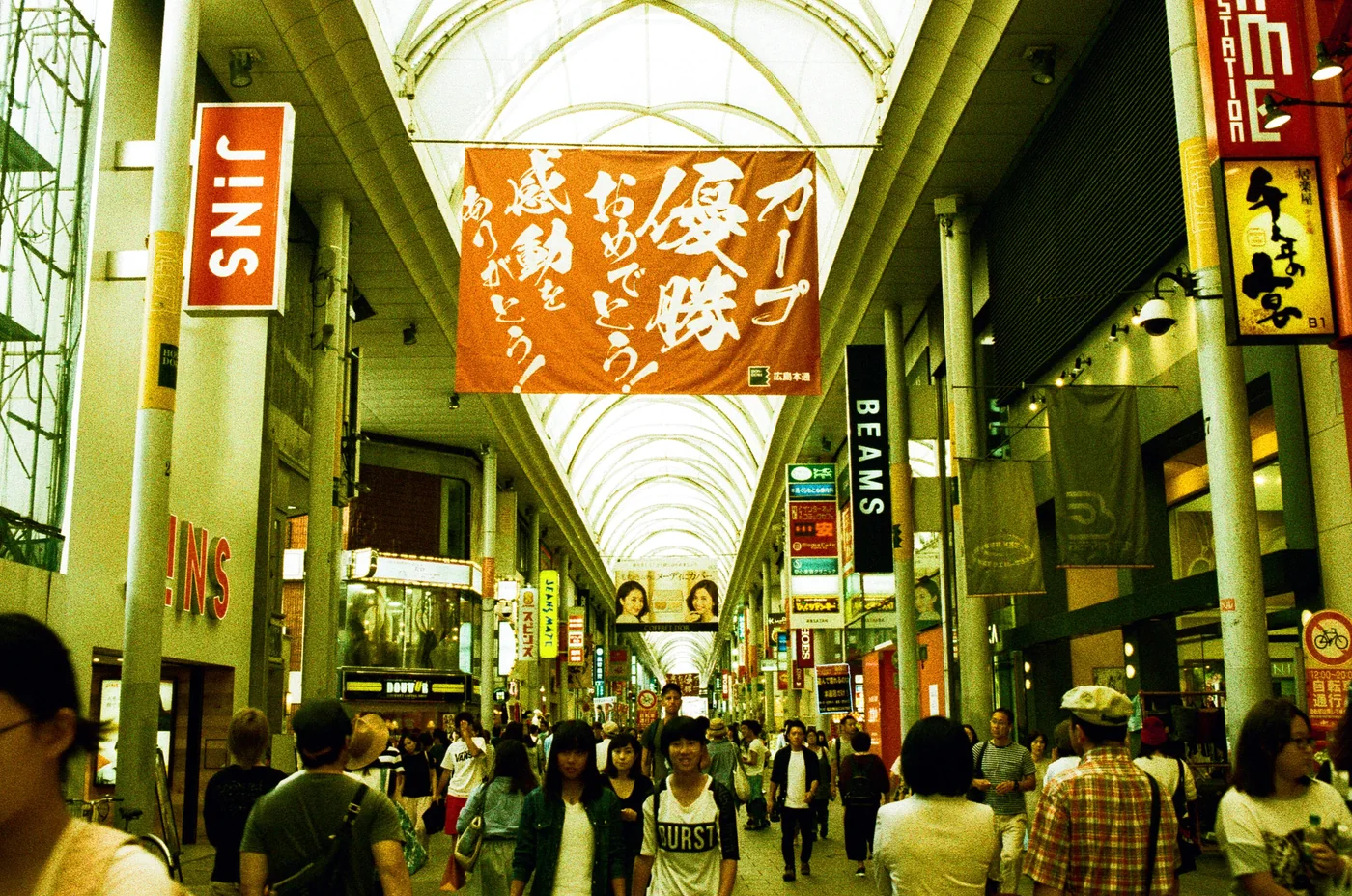
For shopping, visit the shops before dinner and leave the evening for outdoor lights. Opening hours vary by shop. Save the names of your shopping targets in advance; reaching a closed shop and searching for a replacement can use up the hour you meant to spend walking. If you only want street scenes, take your time through the arcades and intersections, and rest when you find somewhere to sit.
Nakanotana Shopping Street lies between Aioi-dori, Hondori, and Kinzagai and consists of five intersecting streets. Head south from Tatemachi tram stop to join the shops and restaurants. You can also turn in from Hondori, eat dinner, then continue toward Heiwa Odori. For a shorter walk, choose Hondori to Nakanotana. To stay closer to Shintenchi, pair Alice Garden with dinner nearby, then return from the nearest suitable tram stop.
The sweets cafe has its own opening dates for hot drinks
Hiroshima’s official 2026 tourism event page lists the Sweets Cafe in Area B, in the green space in front of Hiroshima Crystal Plaza, open from 17:30 to 21:30. Its December opening dates are 4–6, 11–13, 18–20, and 25–27. In January, they are 8–11, 15–17, and 22–24.
If you want a hot-drink break here, choose one of these dates and route your walk through Area B. The usual lights continue until 22:30, but the cafe closes earlier. Plan your stop before 21:30. On other dates, use surrounding shops for dinner and drinks, and save the opening hours of your chosen places before leaving.
With children or older relatives, decide where to sit and eat before choosing the light displays to walk through. Have a proper meal first if you need hot food. If you want to walk and take photos, use a bag that leaves your hands free. Carrying a drink, camera, and shopping bags at once makes busy intersections harder to manage. Put purchases away before moving on.
See the Christmas tree at Hiroshima Station from November 13
JR West’s October 29 release gives November 13–December 25 for HIROSHIMA STATION CHRISTMAS 2026 around Hiroshima Station. A lighting ceremony lasting about 15 minutes starts at 17:30 on November 13 at Eki × Den Square, in front of the second-floor tram boarding area. If your arrival leaves time, reserve this stop for the station.
The event links with illuminations north of the station and around the station area, across different facilities. If you are also going to Ebisu Shrine that evening, see part of the station area first, then take a tram to Ebisucho. If you have just arrived and stay nearby, a short station-area walk after dinner can finish the evening without another trip downtown.
To photograph the second-floor Christmas tree, deal with JR luggage and travel arrangements first, then return to the square. Keep the ceremony-night walk separate from normal tram queuing and leave space for passengers to pass. From December 4, Heiwa Odori’s event runs too. With two nights, spend one near the station and one downtown.
Choose Hatchobori, Heiwa Odori, or Hiroshima Station by your evening’s endpoint
If the Ebisu Festival is your main goal, compare accommodation around Hatchobori, Ebisucho, and Shintenchi first. Dinner, shopping streets, and the shrine are concentrated here, making a walk back convenient. Put the hotel’s full address on the map and check the street with its entrance. Area names in room listings are useful for narrowing the search.
For the winter lights, compare Heiwa Odori, Otemachi, and Tanaka-machi, choosing the end where you expect to finish walking. Enter the adults, children’s ages, and luggage count when comparing rooms. Check beds, breakfast, and tax-inclusive totals separately. On a winter night, a hotel near your endpoint is more comfortable than a long extra walk to collect luggage or change transport.
For a Shinkansen, airport journey, or a different destination each day, the Hiroshima Station area keeps luggage and long-distance travel at one starting point. Take a tram downtown in the evening and avoid another transfer after returning. Read the guide to Hiroshima Airport transfers to Hiroshima Station and the Bus Center and use your actual flight time to choose the final night’s location.
With children, let one short stretch be the whole outing
For a family evening, walk for just 30–45 minutes after dinner. Choose one display the children want to see, then identify a nearby rest point and return stop. This is a suggested short walk; one green strip is enough. If the children get sleepy, return to the hotel for a bath and rest, leaving the next day’s daytime routine intact.
With a stroller, check the intersections along your route on the map and allow time to board, position it, and get off the tram. With two adults, one can manage the stroller and belongings while the other checks the stop sign or route. Reorganize what you are carrying before arrival. If you need to carry a child on the return journey, this reduces last-minute searching through bags for tickets.
If children want food from different stalls, agree on a place to stop and eat. Finish eating before crossing the road or returning to the lights, and carry fewer things while walking. Older children can help remember the return stop, hotel name, and meeting point. At a shopping street fork, they will also know where the next part of the route goes.
For rain or strong wind, keep dinner and one arcade stretch
On an evening when you do not want to stay outdoors long, shorten the route to dinner, a stretch of Hondori or Ebisu-dori, and the hotel. Move the time reserved for Heiwa Odori to a restaurant, shops, or hotel rest. If you are already downtown, finish a nearby stretch and take the tram back. Shoes and a coat suited to the weather are more useful than pushing through the whole route for photos.
To photograph lights under an umbrella, stop where you will not obstruct others, put shopping bags away, then take out your phone or camera. Lower it before crossing and resume photos on the other side. An umbrella slows the group’s nighttime movement, so leave more time between your dinner reservation and return tram.
If your hotel is near the shopping streets, return to leave your things and go out briefly after dinner. If you stay near the station, keep the evening there and save energy for tomorrow. A two-night stay is especially easy to adjust: leave the longer walk for the more comfortable weather, and use the other evening for a good dinner and early rest.
Check the destination for Hiroshima Station; save the final journey before dinner
Hiroden provides timetable and tram-location searches. Enter your planned return stop, destination, and travel date, then save the evening services you find. Check the on-site electronic information again that day. Services differ by direction, date, and terminus. If you stay near Hiroshima Station, search directly for “広島駅” as the destination.
The L Loop Line opened on March 28, 2026, circling through areas including Inari-machi, Hijiyama-shita, Minami-machi, and Kamiyacho. Hiroden’s timetable states that it does not serve Hiroshima Station. If a loop tram arrives at Hatchobori, let passengers for its route board and wait for a tram with the destination you need. Late at night, some trams also display route 0. Continue to use the front destination and notices to identify them.
With a booked Shinkansen, head straight to the station after your walk, collect luggage, then enter the JR gates. If you stay near Hiroshima Station, follow the familiar exit to your hotel after returning. Save the hotel’s Japanese name and address in an offline phone note so you can clearly identify the side you need even when the battery is low.
A few useful answers
When is Hiroshima’s 2026 Ebisu Festival?
The eve celebrations are Wednesday, November 18, and Thursday, November 19. The main festival is Friday, November 20, at Ebisu Shrine, 5-14 Ebisucho, Naka Ward, Hiroshima. The official tourism page lists event hours of 10:00–22:00.
When do Hiroshima’s 2026 winter illuminations begin?
They run from December 4 to January 24, 2027, normally from 17:30 to 22:30. On opening day, December 4, they begin around 18:00. The main venue is the north and south green strips of Heiwa Odori, from in front of Shirakami Shrine to the Tanaka-machi intersection.
Which tram goes from Hiroshima Station to Ebisu Shrine?
Take route 1, 2, or 6 toward Kamiyacho and get off at Ebisucho or Hatchobori. Hiroshima Station’s tram area is on the second floor. Route 1 normally uses platform B and route 2 platform D. Check the destination and platform display for the service when waiting.
Do I need a one-day tram pass just to see downtown at night?
Two regular adult tram rides cost ¥480, less than the ¥700 paper day pass. On Saturdays, Sundays, and Japanese national holidays, compare the ¥440 digital 6-hour city pass. The weekday product with the corresponding name is valid only from 10:00 to 16:00. For three tram rides from afternoon into evening, compare the ¥600 8-hour pass.
Official information and references
Sources used in this guide.
- Hiroshima Central Shopping Street Federation: 2026 Ebisu Festival dates
- Dive! Hiroshima: Ebisu Festival address and hours
- Ebisu Shrine official website
- Hiroshima Dreamination organizer: 2026 event outline
- Hiroshima City: changes to the illumination period from fiscal 2026
- Dive! Hiroshima: 2026 winter lights and Sweets Cafe
- JR West: 2026 Hiroshima Station Christmas events
- Hiroden: 2026 Hiroshima Station platform changes
- Hiroden: riding trams and regular fares
- Hiroden: one-day tram pass prices and coverage
- Hiroden: lines and operating routes
- Hiroden: tram location information
- Hiroden: 2026 Loop Line timetable
- Dive! Hiroshima official video: Hiroshima Story
- MOBIRY TRAVEL: 8-hour and 24-hour tram passes
- MOBIRY TRAVEL: weekend and holiday 6-hour city pass
- MOBIRY TRAVEL: weekday city pass hours
- MOBIRY TRAVEL: live ticket screens and group purchase FAQ
- Dive! Hiroshima: Nakanotana Shopping Street and official map location