Compare routes, fares, boarding points and return trips via Hiroshima Station, Hiroshima Bus Center or a JR transfer at Shiraichi.
- Region & Focus
- Hiroshima
- Reading Scope
- 25 min read · 16 chapters · 5 Q&As
- Official Verification
- 12 official sources checkedUpdated October 29, 2026
Chapter Route Map (tap any stop)
- Transport planning
- Choose the route by destination first
- After landing: from arrivals to the bus stands
- Hiroshima Station Shinkansen Exit: for trains and station hotels
- Hiroshima Bus Center: for Kamiyacho and Hondori
- Transfer to JR at Shiraichi: check both legs together
- Paying with tickets, IC cards and credit cards
- Late arrivals, early flights and road delays: allow the right time
- Beyond Hiroshima city: Fukuyama, Mihara, Kure and Miyajimaguchi
- Four common itineraries
- Save three separate map points before traveling
- Families and groups: compare total cost and luggage transfers
- Use both legs to judge whether Shiraichi is worthwhile
- Checks for the evening before your return
- Write transfer time into your first-day plan
- Calculate transfers, ticket legs and group arrangements together
- Quick Q&A
After arriving at Hiroshima Airport, choose by your accommodation or onward destination. For hotels near Hiroshima Station or a Shinkansen connection, take the limousine bus to Hiroshima Station Shinkansen Exit. For Kamiyacho, Hondori or Peace Memorial Park, compare buses to Hiroshima Bus Center. Both routes cost ¥1,500 one way for adults, but follow different roads and leave from different airport stands. To avoid the Sanyo Expressway, or for travel along the JR Sanyo Main Line, take the shuttle to Shiraichi Station and transfer to JR.
Transport planning
Hiroshima Airport has no railway directly to the terminal. For your return, allow separately for the road journey from the city and check-in time after reaching the terminal.
Watch the airport introduction in Hiroshima Prefecture’s official program before choosing your route into the city below.
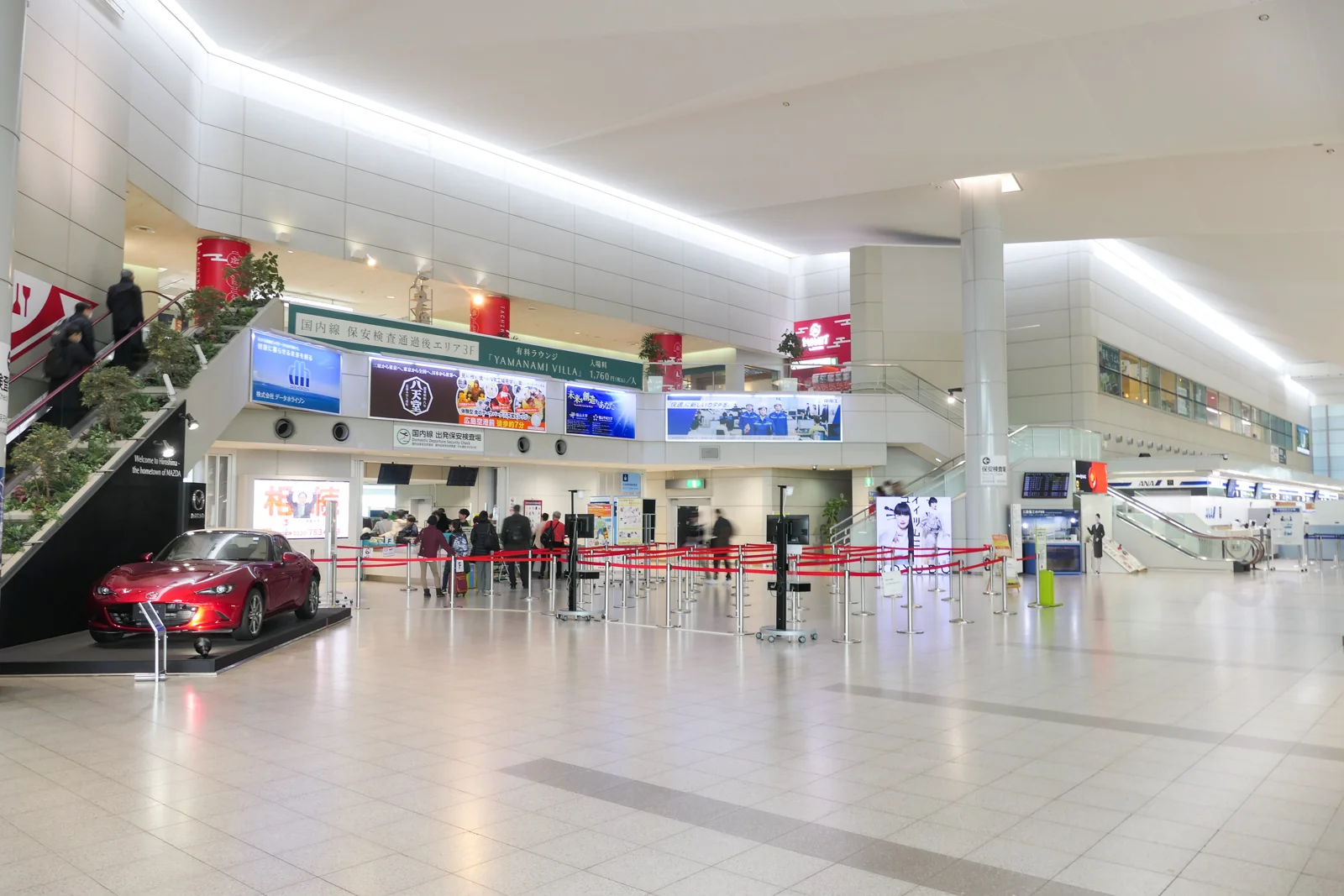
Compare routes, fares, boarding points and return trips via Hiroshima Station, Hiroshima Bus Center or a JR transfer at Shiraichi.
Choose the route by destination first
These are riding times, excluding immigration, waiting, transfers and the walk from your stop to the hotel. Children’s one-way fares on the two city limousine routes are ¥750. For child fares, operating days and payment on the Shiraichi shuttle and other routes, read each route’s notice. Hiroshima Airport’s transport timetable and fares links to the routes. See Hiroshima Bus for detailed rules on the two city routes.
Hiroshima Station and Hiroshima Bus Center are different places despite sharing “Hiroshima” in their names. Save your hotel address on a map and check walking distance or onward transport before choosing the bus terminus. Looking only for “central Hiroshima” can leave you crossing the city with luggage after getting off.
| Destination and situation | Route | One-way time and fare |
|---|---|---|
| Hiroshima Station, Shinkansen or nearby hotel | Airport stand 2 → Hiroshima Station Shinkansen Exit | About 45–50 minutes; adult ¥1,500 |
| Near Kamiyacho, Hondori or Peace Memorial Park | Airport stand 1 → Nakasuji Station → Hiroshima Bus Center | About 55 minutes; adult ¥1,500 |
| Travel along the JR Sanyo Main Line or avoid the expressway | Airport stand 4 → Shiraichi Station → JR | Bus about 15 minutes, adult ¥490; JR fare extra |
| Stay in Fukuyama, Mihara or Kure | Connecting buses from the airport | Fukuyama about 65 minutes, ¥1,600; Mihara about 38 minutes, ¥1,000; Kure about 58 minutes, ¥1,500 |
After landing: from arrivals to the bus stands
International and domestic arrivals are both on the first floor. Follow bus and destination signs outside the terminal. Main stands are grouped as follows: stand 1 for Hiroshima Bus Center via Nakasuji; 2 for Hiroshima Station Shinkansen Exit; 3 for Fukuyama, Mihara and Onomichi; 4 for Shiraichi and Saijo stations; 5 for taxis; and 6 for Takehara and Tadanoumi. The official boarding-point map also lists stands at stations for the return to the airport.
Check the electronic board and destination on the bus front before joining the correct queue. Pay particular attention to Bus Center services. The main city-center route runs via Nakasuji from stand 1. A few services run via Hiroshima Station to Bus Center from stand 2. These follow different routes. Use the timetable’s destination and intermediate stops for your specific departure that day.
First-floor airport ticket machines sell one-way tickets for designated routes including Hiroshima Station, Hiroshima Bus Center, Nakasuji, Kure, Mihara, Fukuyama, Saijo and Shiraichi. They accept cash and the card brands listed in the notice. Tickets to Miyajimaguchi, Onomichi, Takehara and Tadanoumi are not sold by this group of machines. Pay on board or in advance according to each operator’s rules. Airport ticket-machine guide
If checking a suitcase into the luggage hold, remove your power bank and keep it where you can see it. Prepare payment before queuing to avoid searching for your wallet while boarding. City limousine buses have unreserved seats. If a bus fills, staff may direct travelers to the next one, so leave more than a tight connection for a Shinkansen or booked activity.
Hiroshima Station Shinkansen Exit: for trains and station hotels
Take the Hiroshima Station route from airport stand 2 to reach the Shinkansen Exit in about 45–50 minutes. The operator lists no intermediate stops and an adult one-way fare of ¥1,500. The Shinkansen Exit is also called the north exit. For a nearby hotel, JR connection or early departure from Hiroshima the next day, this route avoids lifting large bags onto another city service.
After getting off, check whether your hotel is on the Shinkansen Exit side or the station’s south side. Even an address marked “Hiroshima Station front” may require crossing through the station or walking to the other side. With a stroller or large luggage, find station elevators first, then walk toward the hotel entrance. For a same-day Shinkansen, save your intended and alternative trains before leaving the airport so you can adjust if the bus is delayed.
The return airport bus leaves from stand 5 at Hiroshima Station Shinkansen Exit. Allow separately for walking to the station and finding north-side stand 5. The station has multiple modes of transport and exits. Identify the return stand while nearby the day before so you do not have to search with luggage in the morning.
Five companies jointly operate the airport line. Most vehicles share a color scheme, but maintenance or other needs may bring a replacement. Destination and stop signs are more reliable than color. One-way tickets are valid on the day, and ordinary passengers need no reservation. For wheelchair travel, contact the operator under Hiroshima Electric Railway’s notice to arrange a suitable vehicle and discuss departures. Hiroshima Electric Railway wheelchair-travel notice
For belongings left on a bus, use your travel date, departure time and direction to identify the company in the operator timetable and lost-property contacts. Each of the five companies holds its own lost property. For Hiroshima Bus-operated services, call its sightseeing office at 082-545-7959; for other services, use the corresponding company on that page. Note your seat position, item appearance and alighting stop to help staff narrow the search. A saved timetable can identify the service even if you discover the loss after leaving Hiroshima.
Hiroshima Bus Center: for Kamiyacho and Hondori
For accommodation near Kamiyacho, Hondori shopping street or Peace Memorial Park, first check the distance from your hotel to Hiroshima Bus Center. The route from airport stand 1 runs via Nakasuji Station and takes about 55 minutes to Bus Center. The adult one-way fare is also ¥1,500. Whether walking or onward city transport is convenient depends on your hotel entrance and luggage.
Bus Center and Hiroshima Station are separate stops. Do not simply add or subtract their bus-time estimates to calculate arrival at your hotel. Compare the whole journey: airport waiting, the ride and the final hotel walk. A hotel close to Bus Center usually means one less luggage transfer than going via Hiroshima Station. For a hotel right at the Shinkansen Exit, do not detour to Bus Center because it is described as central.
Return airport buses leave from Bus Center stand 2. Hiroshima Electric Railway’s stand map marks the airport line. Outside ticket-window hours, use another payment method the operator accepts; a closed window does not prevent boarding. For paper tickets bought on site, check window or machine service hours. For direct transit IC payment, ensure enough balance first.
Nakasuji is an intermediate stop on this route, useful for travelers connecting with the Astram Line. If your hotel is near one of its stations, compare transferring at Nakasuji with riding to Bus Center and backtracking. First-time visitors to Kamiyacho need not get off early merely because a railway connection exists.
Transfer to JR at Shiraichi: check both legs together
The sequence is airport → shuttle bus → Shiraichi Station → JR Sanyo Main Line. Board at airport stand 4. The shuttle takes about 15 minutes and costs ¥490 for adults. Hiroshima City estimates about 45 minutes by JR from Shiraichi to Hiroshima Station, with the train fare extra. Reverse the sequence for the return: JR to Shiraichi, then the airport bus. Hiroshima City transport guide
This route avoids the Sanyo Expressway. The airport officially lists it as an option during likely expressway congestion, though the shuttle, roads and railway each have operating conditions. Check beyond the first leg. Find your airport bus’s Shiraichi arrival, then the JR departure in the correct direction. For the return, find a bus reaching the airport before your flight check-in, then work back to a train that connects.
JR trains at Shiraichi run in different directions, toward Hiroshima and Iwakuni or toward Fukuyama. For Hiroshima city, check the displayed direction and stopping pattern; for Fukuyama, use the other direction. Do not board simply because a train arrives first. The airport’s Shiraichi connection timetable aligns the airport, Shiraichi and stations along the line. It helps check connections, but select the correct date and train.
The Shiraichi route requires moving luggage again at the station. With a wheelchair, stroller or several large bags, include platform movement and transfer waits in your comparison. It also suits journeys along the line. From a stay near Miyajimaguchi, for example, check whether a train in the same direction reaches Shiraichi directly, then connect to the airport bus. Not every train connects in the same way; check departures for your date.
The airport’s current table lists the Shiraichi shuttle adult fare as ¥490. Its route notice lists interoperable transit IC cards, but no onboard top-ups. Prepare enough balance before boarding or buy this leg’s ticket at the airport machine. JR and bus are separate journeys, and ticket use must be handled separately too.
Paying with tickets, IC cards and credit cards
The two city airport limousine routes accept paper one-way tickets and listed nationwide interoperable transit IC cards, such as Suica, PASMO and ICOCA. Hiroshima Bus also lists smartphone tickets and supported contactless payment cards. Buying a paper ticket by credit card at a machine differs from tapping a payment card on board. The airport says supported card networks may differ, so check the relevant notice for each method before departure.
Paper tickets are valid on the day and suit cash or machine card payment. Before using an IC card, keep enough balance for both the airport bus and connecting city transport. The ¥1,500 airport fare is not necessarily your whole hotel journey cost. Before tapping a payment card for multiple people or paying for a child, tell the driver as required by the operator. With a smartphone ticket, open the correct ticket screen and prepare to show it as directed.
MOBIRY DAYS is not accepted on every one of the five operators’ city airport buses. Hiroshima Bus specifies only departures operated by Hiroshima Electric Railway and Geiyo Bus. Short-term visitors already holding a nationwide interoperable transit IC card can use the commonly accepted card types listed by operators instead of guessing the company from the bus color.
Late arrivals, early flights and road delays: allow the right time
Flight landing time is not bus boarding time. International arrivals still require immigration, baggage collection and customs. Add toilets, ticket purchase or stroller preparation if needed. Check operating information for buses leaving the airport and save the operator timetable. The airport says bus departure times may adjust to flight arrivals.
For a late arrival, check the last few buses toward your hotel on the actual date, rather than only the ideal departure. Save the hotel’s check-in method and address, then check alternatives if you miss the intended bus. If no suitable bus remains, ask at the airport taxi stand about the hotel fare and boarding arrangements. Taxis use airport stand 5.
For an early flight, work back from the airline’s check-in deadline. Choose your target terminal arrival, then a bus reaching the airport, then add the hotel-to-stand walk. Timetables show rides of about 50 or 55 minutes, but Sanyo Expressway congestion or closure can delay or suspend buses. Do not set scheduled bus arrival equal to the check-in deadline.
If road disruption is forecast the day before, compare Shiraichi. Check that both JR and the shuttle are running, then compare arrival times. If expressway buses are already suspended that day, first read the airport bus operating information before switching. A change also takes time to reach a JR station, wait for a train and connect at Shiraichi.
Beyond Hiroshima city: Fukuyama, Mihara, Kure and Miyajimaguchi
Hiroshima Airport serves more than Hiroshima city. If your first night is in Fukuyama or Mihara, check a direct airport route first. You may not need to travel west to Hiroshima Station and double back. The airport lists Fukuyama Station at about 65 minutes and ¥1,600 for adults; Mihara Station at about 38 minutes and ¥1,000. Both use airport stand 3. Check the bus-front destination and operating date.
For Kure Station, the airport lists about 58 minutes and an adult fare of ¥1,500, with stand 1 on the map. When several routes share a stand, confirm your departure’s destination. Saijo Station is listed at about 25 minutes and ¥700 for adults, from stand 4. It shares the stand with Shiraichi but is a different route.
The airport also lists Miyajimaguchi and Onomichi services. Read fares, departures and payment rules separately, especially as regular airport machines do not sell those tickets. Miyajima travel also needs a ferry; the airport-to-Miyajimaguchi ride excludes waiting and crossing time. If the day’s direct service does not connect well with your flight, compare the complete journey via Hiroshima Station or Shiraichi and JR, rather than only published riding times.
Four common itineraries
First night near Hiroshima Station, Shinkansen the next day: Take the Hiroshima Station route from airport stand 2, then walk from the Shinkansen Exit to your hotel. Check which side the hotel is on before leaving the station. If returning via Hiroshima later, note stand 5 in advance.
Stay near Hondori, visit Peace Memorial Park on the first afternoon: Compare the walk from Bus Center to the hotel first, then board at airport stand 1. Leave luggage at the hotel before walking around town. For early-arrival storage, follow the services the hotel actually offers.
Travel directly from the airport to Fukuyama: Check departures from stand 3, including time for baggage collection and waiting. If the wait is long, compare the complete connection and cost via Shiraichi and JR. Each has riding and transfer time; the best departure depends on your arrival day.
Return from Miyajima to fly out: Put the ferry, JR from Miyajimaguchi to Shiraichi and airport shuttle on one timeline. Alternatively, check direct airport service from Miyajimaguchi. Include bus waits and possible ferry timing differences. If staying in Hiroshima city the night before, you can instead leave from Hiroshima Station or Bus Center.
Save three separate map points before traveling
Save the terminal, actual alighting stop and hotel entrance separately on your map. A hotel name or postal address helps locate it, but navigation to a station name may not lead to the bus stand. For the return from Hiroshima Station, head for the Shinkansen Exit, then stand 5. At Bus Center, find airport-line stand 2. Cross-check the Hiroshima Airport boarding-point page with on-site signs.
If connecting directly to JR after arrival, do not assume the whole route must be airport → Hiroshima Station → destination. Open your destination map and see which side of Hiroshima Station and Shiraichi it lies on. Then check direct airport buses and Shiraichi transfers. For Mihara, start with the airport–Mihara bus. For Hiroshima city, compare the direct Hiroshima Station bus with the Shiraichi transfer.
Save the airport stand map, hotel’s Japanese address and a screenshot of a current timetable before arrival in case your internet is not connected. A screenshot is a backup. Open the latest official version before departure and ensure its validity period includes your travel date. Timetables often show both airport-bound and airport-originating columns. Check the arrow before reading the time.
Families and groups: compare total cost and luggage transfers
At ¥1,500 per adult and ¥750 per eligible child for a one-way city limousine ride, two adults and one child-fare passenger total ¥3,750. Two adults and two child-fare passengers total ¥4,500. City transport after alighting costs extra. Child ages and infant seat-use conditions follow operator rules. List each traveler’s age when planning so ticket questions are easier to ask.
The same group can compare that bus total with an actual taxi quote. A taxi carries luggage directly to the accommodation entrance, while bus cost rises with passenger count. If you still need a taxi from Bus Center to the hotel, add that final fare. If the hotel is close to Hiroshima Station Shinkansen Exit, you may avoid the extra transfer.
For a stroller or traveler needing assistance, tell the airport bus operator your date, route and needs before the trip. For a wheelchair-compatible vehicle, book through Hiroshima Electric Railway’s designated phone contact and within its acceptance deadline. Contacting them once your itinerary is fixed lets the operator arrange the actual departure and helps you decide how early to reach the stand.
Use both legs to judge whether Shiraichi is worthwhile
Suppose the airport shuttle reaches Shiraichi and a JR train leaves a few minutes later. On paper it looks like a 15-minute bus plus about 45 minutes by train. But you must get off, collect luggage, enter the station, handle tickets and find the correct platform. Use the full timetable and leave enough transfer time for these actions. With slower companions or several bags, waiting for the next JR train may fit your needs better than rushing.
The reverse works the same way. After JR from Hiroshima Station reaches Shiraichi, the airport shuttle’s departure determines when you can leave the station. A long wait can make the full journey slower than a direct bus even if riding times look competitive. Compare hotel departure with terminal arrival and include every wait in between.
When the expressway is running normally, a direct bus offers one boarding and one alighting. When roads are restricted, Shiraichi offers another plan. There is no fixed speed ranking: departure time, train and shuttle schedules change the answer. Include the JR leg in cost comparisons too, rather than comparing only the ¥490 Shiraichi bus with the ¥1,500 limousine.
Checks for the evening before your return
First check the departure airport and flight date on your ticket. Use the airline’s check-in and checked-baggage deadlines to set your target terminal arrival. Airport buses drop off on the first floor; departures are on the second. Both domestic and international travelers go upstairs from the first floor. Allow for checked bags or assistance after terminal arrival. Airport boarding points and floor guide
Choose a bus arriving before your target time and note stop, stand, departure and payment method. Then check the hotel-to-stop route and the previous departure. The timetable’s departure is when the bus leaves the stand, not when you leave the hotel. Finding the entrance the day before lets you focus on check-out and bags in the morning.
Finally check road and transport information for the day. For Shiraichi, check both JR and shuttle and keep alternatives for both legs. Save airline and airport official links in the same itinerary note so you can find them quickly when adjusting, without searching across screenshots.
Write transfer time into your first-day plan
Suppose your flight lands at midday, your hotel is near Hiroshima Station and you have an afternoon booking. Put flight arrival first, then allow in sequence for immigration and baggage, buying tickets or preparing payment, waiting for the bus, the 45–50-minute ride, walking to the hotel and leaving luggage. Place the booked activity last. This is more useful than adding bus time directly to flight arrival because each wait affects what follows.
If the booked venue is near the station, check storage locations and luggage-size limits to decide whether you need to visit the hotel first. For a hotel near Bus Center, make the same calculation with that bus route and the actual walk after alighting. For larger groups, the leader should allow time for gathering, collecting separate bags and buying tickets based on the actual party size.
For Fukuyama or Mihara, first decide whether your first stop is a hotel near the station or another train. Direct airport buses reach their respective stations, but you still need to walk to JR boarding areas. With reserved train seats, allow room to transfer or take a later train. This handles flight and road changes better than treating the earliest possible arrival as your only option.
Use the same breakdown for the return. With the second-floor departure hall as your destination, work backward through check-in time, going upstairs from the first floor, bus arrival, bus departure and the hotel-to-stop walk. Listing each part shows whether you also need time for breakfast after check-out, collecting stored bags, or staying closer to an airport bus stop the night before.
Published riding time and actual waiting are different figures. After arrival, check the next actual departure before deciding whether to buy tickets, use the toilet or organize luggage. Once ready, wait at the correct stand.
Calculate transfers, ticket legs and group arrangements together
From Fukuyama, besides the direct airport bus, you can check JR to Shiraichi and then the shuttle. The airport table lists about 70 minutes and ¥1,170 for adults by JR from Fukuyama to Shiraichi, then about 15 minutes and ¥490 by shuttle. The two fares total ¥1,660; listed riding times exclude waiting. Compare this with the direct airport bus at about 65 minutes and ¥1,600. The direct bus saves one luggage transfer, but JR plus shuttle is another option to check if the direct bus’s departure does not fit.
From Iwakuni, the same airport table lists about 105 minutes and ¥1,520 for adults by JR to Shiraichi, then about 15 minutes and ¥490 by airport bus: ¥2,010 total. Check train direction, stops and shuttle times for your date. Find the airport-arriving shuttle first, then work back to the Iwakuni train to avoid reaching Shiraichi too late for your intended bus.
Record direction and ticket legs separately. The Hiroshima Station limousine is one airport-to-station leg; Shiraichi combines an airport–Shiraichi bus with JR to your destination. Keep paper bus and rail tickets separately. With transit IC cards, tap according to the bus and station equipment instructions. If companions get off at different stations, prepare tickets for their actual legs instead of assigning Hiroshima Station as everyone’s destination.
Airport stands are grouped by direction, but one stand may serve several routes. Both Saijo and Shiraichi use stand 4, with different alighting points and connections. Fukuyama and Mihara travelers identify bus-front signs at stand 3. Choose the destination first, then match stop sign, time and bus-front information. This is especially useful when a group splits toward different cities on arrival.
For a Shinkansen from Hiroshima Station, after leaving the airport bus check your train’s departure and ticket gate. If you have not collected reserved tickets, allow extra time to find a collection machine and queue. The stop is on the Shinkansen Exit side. If companions have different destinations, agree on a meeting point before splitting for tickets and luggage. For an afternoon booking, choose a bus based on when you can actually leave the terminal, not flight landing time.
For Miyajima, include the ferry in your plan. Choose direct airport–Miyajimaguchi service or JR to Miyajimaguchi via Hiroshima Station or Shiraichi, then take the boat. Compare every wait and walk. If staying on the island, reaching Miyajimaguchi still leaves the crossing and journey to your accommodation. Save the hotel address and evening check-in arrangements together.
The airport timetable also lists shared taxis and direct buses for Fukuyama as separate services. The shared taxi is listed at ¥4,500 for adults, versus ¥1,600 for the bus. Confirm service type and reservation conditions before comparing, so shared-taxi and regular-bus times or fares do not get mixed together.
A few useful answers
Does Hiroshima Airport have a direct subway or Shinkansen?
There is no railway directly to the terminal. Reach Hiroshima Station by limousine bus or by shuttle to Shiraichi and JR. For a Shinkansen, get to Hiroshima Station first and allow time to transfer inside.
Is Hiroshima Station or Hiroshima Bus Center better?
Choose by hotel and onward plans. Hiroshima Station suits the Shinkansen and nearby hotels; Bus Center suits Kamiyacho and Hondori. Adult fares are the same, so the final walk or transfer matters most.
Can I use Suica or ICOCA?
The city airport limousine operators list nationwide interoperable transit IC cards, including Suica and ICOCA. The airport’s Shiraichi shuttle notice also lists interoperable cards. Prepare enough balance before boarding.
Do I need to reserve the city limousine bus?
Ordinary seats are unreserved and need no booking. If a bus fills, you may need the next departure. Wheelchair travel has separate contact arrangements. Include a possible extra wait when catching a flight or train.
Where do I board for the airport?
Hiroshima Station Shinkansen Exit uses stand 5; Hiroshima Bus Center uses stand 2. For Shiraichi, transfer to the shuttle at JR Shiraichi Station. Check stops and directions in the official airport boarding guide.
Official information and references
Sources used in this guide.
- Hiroshima Airport transport timetable and fares
- Hiroshima Bus
- Official boarding-point map
- Airport ticket-machine guide
- Hiroshima Electric Railway wheelchair-travel notice
- Hiroshima Electric Railway stand map
- Hiroshima City transport guide
- Shiraichi connection timetable
- Operating information for buses from the airport
- Airport bus operating information
- Hero image source and author
- Hero image license terms