Take the JR Kure Line from Hiroshima, Mihara, or Onomichi to Tadanoumi, then ride a 15-minute ferry to Okunoshima. Covers rabbit etiquette, the free island shuttle, lighthouse walks, the Poison Gas Museum, and lunch or overnight stays at Kyukamura.
- Region & Focus
- Hiroshima
- Reading Scope
- 15 min read · 7 chapters · 6 Q&As
- Official Verification
- 23 official sources checkedUpdated November 22, 2026
- Key Topics
- Rail travelItinerariesSeasons
Chapter Route Map (tap any stop)
- Getting to Tadanoumi Station from Hiroshima, Mihara, or Onomichi
- Walking to the Port and Planning Your Return Ferry at the Ticket Window
- Waiting on the Lawn for the Rabbits to Move
- Shuttle Bus from the Pier and a Coastal Walk to the White Lighthouse
- A Quiet Peace Lesson at the Poison Gas Museum
- Lunch at Kyukamura, Plus Dining and Room Options for Overnight Stays
- Pacing a Half-Day Visit, Rain Plans, and Long Train Gaps
- Quick Q&A
To see the rabbits on Hiroshima's Okunoshima, walk about 5 to 7 minutes from JR Tadanoumi Station to Tadanoumi Port, then catch a 15-minute ferry across the water. Once you land, head to the lawn in front of Kyukamura Ohkunoshima and slow your pace. Kids can watch which rabbits turn their ears toward the sea, while parents lock in the times for the return ferry and train. For a first visit with elementary-age kids, plan on 3 to 4 hours on the island: pick either the lighthouse or the Poison Gas Museum to explore in depth, and leave time for lunch in between. Families with strollers can ride the free island shuttle to skip part of the walk.
Getting to Tadanoumi Station from Hiroshima, Mihara, or Onomichi
Okunoshima sits just off the coast of Takehara in Hiroshima Prefecture. When looking up routes, set "Tadanoumi" as your train destination and "Tadanoumi Port" for the ferry—they sound nearly identical, but they are two separate spots on the map. Watch for Tadanoumi on tickets and station departure boards. Mihara is the main hub connecting the Sanyo Shinkansen, JR Sanyo Main Line, and JR Kure Line. Kyukamura's access chart estimates the Kure Line ride from Mihara to Tadanoumi at about 20 minutes.
If you are staying in central Hiroshima and want an early start on the island, take a Sanyo Shinkansen train from Hiroshima Station that stops at Mihara, then transfer to the Kure Line bound for Takehara and Kure. When transferring with kids, factor in exiting the Shinkansen gates, finding the local line platform, and making a quick restroom stop. If your bullet train leaves only a few minutes to connect, taking one train earlier into Mihara makes the transfer much calmer. Searching only as far as Mihara makes the trip look nearly done, which is why travelers often overlook how long the gap between Kure Line departures can be.
If you prefer coastal scenery over speed, you can ride the Kure Line east straight from Hiroshima Station. Check your train details carefully so you do not confuse Hiro with Hiroshima—Hiro is a station in Kure City where some services require transferring to a train bound for Mihara. This slower route works well for families who treat the train ride as part of the day out. If you want to make lunch at Kyukamura, pick your target arrival using the final Kure Line leg into Tadanoumi first, then work backward to choose either the Shinkansen or the local line.
Heading west from Mihara toward Tadanoumi, the JR route map runs through Sunami, Aki-Saizaki, and Tadanoumi in order. Kids can listen to onboard announcements for "Tadanoumi" and trace which stop comes next on the map. Tadanoumi Station accepts ICOCA cards, though JR West lists it as a station where EX service and e5489 tickets cannot be picked up. Families using those tickets for either direction should collect them at a staffed pickup station beforehand so they do not have to search for a ticket counter at Tadanoumi. JR West Route Map
Staying in Mihara gives you the most breathing room in your schedule. Coming from Onomichi, board the Sanyo Main Line at downtown JR Onomichi Station to Mihara, then switch to the Kure Line. Note that Shin-Onomichi Station is in a separate location, so travelers arriving there by Shinkansen should look up the two stations independently. On the way back, look up the entire connection all the way to Onomichi instead of saving only the Tadanoumi-to-Mihara leg. If you want to visit both Senkoji Temple and Rabbit Island on the same trip, set aside another half-day for Onomichi's hillside temples and old town walk so kids have space to stroll and pause in both places.
Looking at the route map together lets kids point out the transfer at Mihara and then spot Tadanoumi. Parts of the Kure Line hug the shoreline—seeing the water tells you the city is behind you, though you still need to match the station name before stepping off. Save screenshots of the train direction, your arrival time at Tadanoumi, and the ferry schedule in one place. JR Tadanoumi Station splits its timetable into "Toward Mihara" and "Toward Takehara and Kure," which is much handier for planning your return than a single map screenshot. JR West Tadanoumi Station and Timetable Portal
If you are staying near Hiroshima Bus Center and want the whole family on one vehicle all the way to Tadanoumi, check Geiyo Bus's "Kaguya-hime-go" highway bus. On the Hiroshima-to-Takehara/Tadanoumi timetable, look specifically for departures marked "Tadanoumi Ekimae." Buses that terminate in Takehara require switching to the Kure Line to reach Tadanoumi. Parents carrying toddlers or pushing strollers can compare this direct bus against the Mihara rail transfer and pick whichever connects cleanly to a morning ferry. Geiyo Bus Kaguya-hime-go Timetable
| Starting Point | Route | Planning Notes |
|---|---|---|
| Hiroshima Station | Sanyo Shinkansen (stopping at Mihara) -> transfer at Mihara to JR Kure Line | Streamlined transfer; best for families aiming for a morning landing |
| Hiroshima Station | JR Kure Line toward Hiro, Takehara, and Mihara (transferring as scheduled) | Longer ride with coastal views; watch for transfers at Hiro Station |
| Mihara Station | JR Kure Line toward Takehara and Kure -> Tadanoumi | About 20 minutes by train; time it around your target ferry |
| Onomichi Station | JR Sanyo Main Line -> transfer at Mihara to JR Kure Line | Check the Mihara-to-Onomichi connection for the return trip too |
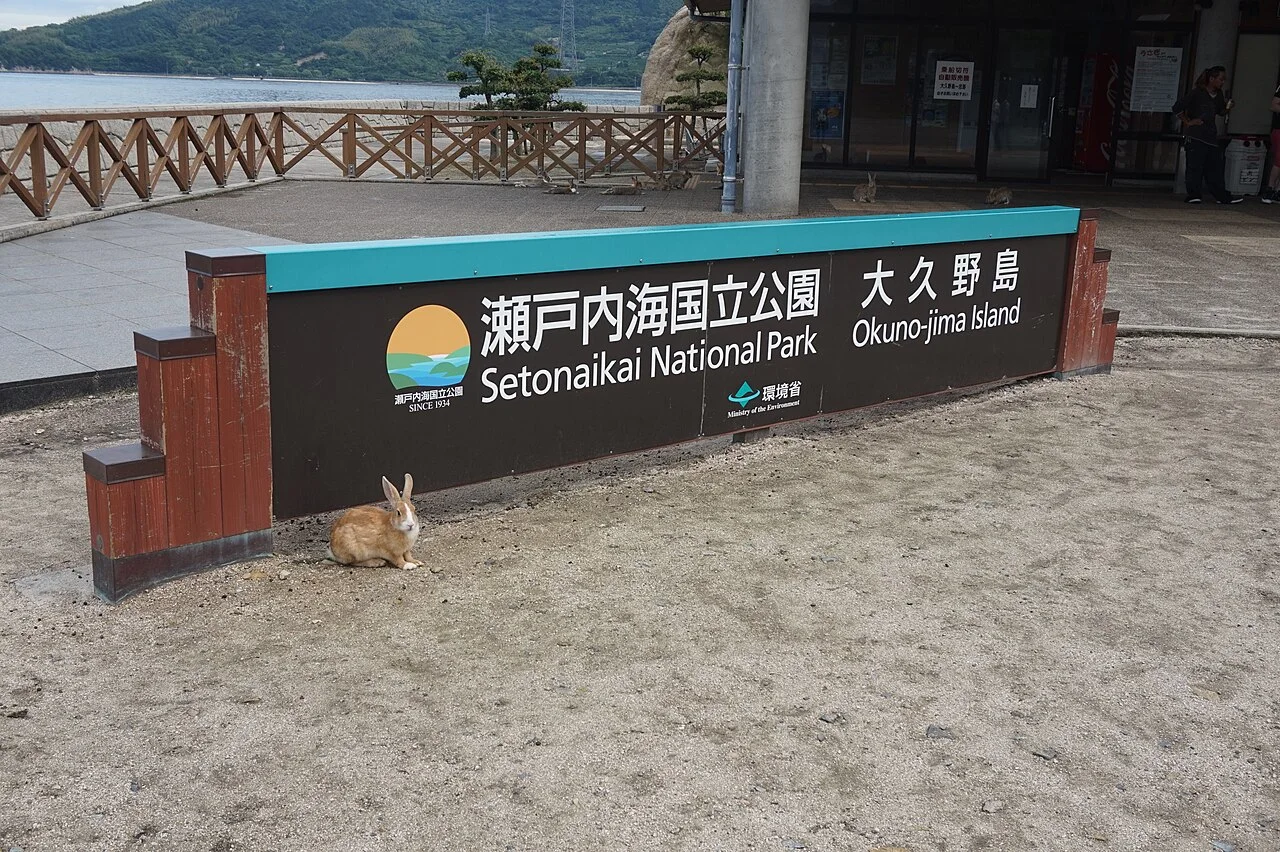
Take the JR Kure Line from Hiroshima, Mihara, or Onomichi to Tadanoumi, then ride a 15-minute ferry to Okunoshima. Covers rabbit etiquette, the free island shuttle, lighthouse walks, the Poison Gas Museum, and lunch or overnight stays at Kyukamura.
Walking to the Port and Planning Your Return Ferry at the Ticket Window
Exit Tadanoumi Station and walk toward the water to reach Tadanoumi Port. Takehara City estimates the walk at about 5 minutes, while Kyukamura's access map puts it at around 7 minutes. With small kids, rolling luggage, or rain, add extra buffer to buy tickets and find your boarding gate. JR Tadanoumi Station has no coin lockers, though Takehara's tourism site notes paid lockers at the port. Use the port to stock up on water and pack away any food securely, since dining options on the island are concentrated in one main spot.
The crossing from Tadanoumi Port to Okunoshima takes about 15 minutes on either the Omishima Ferry or the Kyukamura passenger boat. Kyukamura's combined timetable lists both operators separately and divides schedules into weekdays and weekends/national holidays. The Omishima Ferry continues across the channel to Sakari Port on Omishima, so when returning to Hiroshima Prefecture, board a sailing bound for Tadanoumi. Timetables also carry seasonal notes—for example, the 17:00 Omishima Ferry departing Sakari Port only stops at Okunoshima from February through October. Matching the vessel name and pier is not enough; verify the destination too.
You can also reach Okunoshima on the Omishima Ferry from Sakari Port, which works well if you are already on the Shimanami Kaido. Since Tadanoumi and Sakari sit on opposite sides of the island, read the "Departing Tadanoumi" and "Departing Sakari" columns separately. Families cycling the Shimanami Kaido who need to finish back at their original rental or drop-off point can check the Shimanami Kaido bike rental and return guide first. Vehicles are generally prohibited on Okunoshima, and anyone asking to bring a car over must contact Kyukamura in advance. For most families, crossing from Tadanoumi Port and combining the island shuttle with walking is the simplest option.
A one-way ferry ticket between Tadanoumi and Okunoshima costs ¥360 for adults and ¥180 for children. Round-trip fares are simply double the one-way rate, and train and ferry tickets are purchased separately. Families with toddlers or preschoolers can give the ages and headcount at the ticket counter so staff can apply the exact fare rules. When juggling multiple paper tickets for a family, have one adult hold the whole set.
Plan your transit in reverse. First pick a return ferry that gets you back to Tadanoumi with plenty of time to walk to the station, then note one later backup boat along with the train after it. If the schedule leaves a long wait after an early ferry, spend that buffer eating on the island or resting around Tadanoumi Port. Never cut your timing so close that the last viable train coincides with a restaurant's last order, and avoid back-to-back sprint connections on the way home.
As you step off onto Okunoshima, note which pier you arrived at, then check whether your return sailing is marked "Pier 1" or "Pier 2." Landing piers can vary by sailing, so confirm against the timetable and that day's posted notices. On windy days, you can still watch the water from inside the cabin; if kids want to watch the wake at the stern, stick to safe seating. Anyone prone to motion sickness should use the restroom at the port, bring a bottle of water, and keep breakfast light enough to settle before boarding. If ferries are suspended due to weather, switch to a mainland backup—travelers already staying in the city can follow Hiroshima city transit and dining routes. Kyukamura Ohkunoshima Access and Ferry Schedule, Omishima Ferry Timetable
Waiting on the Lawn for the Rabbits to Move
Okunoshima's rabbits descend from domesticated European rabbits and now live semi-wild across the island. They roam freely along the lawns and woodland edges. Japan's Ministry of the Environment warns that the rabbits dislike being touched or picked up and can injure themselves if they panic and struggle. Never chase them. Just standing still near a rabbit crouched in low grass is rewarding on its own: first its nose twitches, then its ears swivel toward a sound, and a second later it may bound back into the brush. Always leave it a clear path to hop away.
Ride the shuttle bus from the pier to the Kyukamura main building and start on the open lawn out front. When your child shouts, "There's one!", reply with, "Look with your eyes, stop your feet right here." Have both of you stand on the same side so the rabbit never feels cornered. Even if a rabbit hops right up to your shoes, keep your hands back and check around your feet before taking a step. Bikes and service vehicles share the paths toward the museum and shuttle stops, so step completely off the road and shoulder before snapping photos.
On a first visit to Rabbit Island, you do not need to pack carrots, leafy greens, or pellets—watching them on the lawn is plenty of fun. Older articles sometimes mention rabbit treats sold at Tadanoumi Port, but Takehara's current port prep guide focuses on packing drinking water and human meals instead. Kyukamura also states that rabbit food is not sold on the island. Keep bread, cookies, and kid snacks strictly for people, and pack away every wrapper and crumb as soon as you finish eating. Takehara Tourism Tadanoumi Port Prep Guide
If you see other visitors feeding rabbits, use the Ministry of the Environment's rules to explain what is happening to your kids. Food should never be held out right to a rabbit's mouth or placed on roadways. Anyone who puts food down must wait until the rabbit finishes and carry away any leftovers, since abandoned scraps rot and attract wild boars or rats. Cyclists also cannot brake in time if a rabbit darts out from the roadside. Kyukamura asks visitors to keep away from road shoulders and building entrances so walkways stay clear and rabbits are not lured beside moving vehicles.
A rabbit might trot over for a second and leave, or sit with its back turned to the sea. With younger kids, stand off the path and spot a pair of upright ears first, wait for a few hops, and talk through what you just saw. Kids' hands often move faster than a parent's warning, so agree on a rule beforehand—have them hold their own water bottle or clasp their hands behind their backs. Rabbits dig burrows along the lawns; never stick feet into burrow entrances, and do not let anyone herd a rabbit back from the far side.
To turn the visit into a memory, pick one rabbit and sketch its ears, or have each family member choose one detail to watch. Crouching safely beside the footpath, you can compare how its front and back paws differ or notice where it tucks its front feet when it stops. Watching two rabbits hop forward—one stopping to nibble grass while the other heads into the trees—gives kids a real story to tell back home. Shoot photos from the side of the path with a bit of zoom rather than chasing into the bushes.
Rabbit numbers and activity shift by location and season. On hot days, schedule lawn time earlier in the morning or when temperatures drop, and head indoors for lunch and museums around midday. In the rain, stick to a short stretch with covered walkways nearby and peek under the trees along the way; if a rabbit is tucked into shelter, leave it undisturbed. Pets are not allowed on the island, and no rabbits may be taken off it. Stop by the Okunoshima Visitor Center for nature exhibits whenever kids ask where the rabbits live or why a particular one would not come closer. Ministry of the Environment Okunoshima Rabbit Rules, Okunoshima Visitor Center Rabbit Guide
Shuttle Bus from the Pier and a Coastal Walk to the White Lighthouse
A free shuttle bus runs between the ferry piers and the Kyukamura main building for both overnight guests and day-trippers, with no reservation needed. After landing, look for the "Kyukamura Shuttle Bus" stop. The bus passes the campground, Visitor Center, and Poison Gas Museum along the way—just tell the driver when boarding if you want to hop off early. On the return, catch the bus back from the main building and check the front desk for that day's departure times. If anyone in your group uses a stroller or walks slowly, ride straight to the main building for a restroom break before deciding which stretch of coast to walk. Kyukamura Shuttle and Walking Guide
Kyukamura estimates the walk from Pier 1 to the main building at about 5 minutes, whereas Pier 2 is roughly 1 kilometer away—about a 15-minute walk. When your ferry docks at Pier 2, waiting for the shuttle saves plenty of legwork. Stick to the pedestrian paths marked on the island map and keep the roadway clear for shuttles and bikes. Whenever you pull out your phone to check directions, step off the path and let kids help spot the symbols for the main building, piers, and restrooms.
At the southern tip of the island stands the Okunoshima Lighthouse. Kyukamura, the Poison Gas Museum, and the Visitor Center are all clustered on the southern half of the island, making it easy to link the coastal path from the hotel to the lighthouse. Look for the lighthouse symbol on Kyukamura's island map—seeing the white tower perched on the headland is worth the stroll. First lit during the Meiji era, the current tower was rebuilt in 1992 and still serves as an active navigation aid managed by the Japan Coast Guard. When a ship passes offshore, challenge kids to spot which two islands it is threading between and imagine how the crew reads the headland.
For the lighthouse walk, sticking to this coastal side of the island is plenty. Kyukamura lists the outer perimeter loop at about 3.3 kilometers and the full coastline at roughly 4.3 kilometers. When kids stop every few steps to examine grass or pick up a dropped hat, a family walk takes much longer than a steady adult pace. On a first trip, an out-and-back walk is far easier to adjust: if the sun feels too intense halfway out, you can simply turn back toward the main building without feeling pressured to finish the full loop.
If you want higher views, the central Summit Observatory sits at an elevation of about 100 meters. Kyukamura estimates a leisurely round-trip climb at around 60 minutes, and the island map marks several closed mountain trails. Follow the open-trail signs and turn back immediately if you hit a closure barrier. The summit hike eats into time you could spend watching rabbits or eating lunch, so if you want energy left to stand on deck during the ferry ride home, save the climb for another visit.
Bicycles can be rented at the front desk inside the Kyukamura main building. Official options include standard city bikes, geared bikes, e-assist bikes, plus 16-inch and 20-inch kids' bikes. Have your child test the brakes and confirm both feet can touch the ground steadily before committing to a ride. Parts of the island have hills, the Ministry of the Environment designates the eastern perimeter road as clockwise one-way only for bikes, and certain zones require dismounting and walking. Whenever you stop to watch rabbits from a distance, park cleanly out of the lane. Cross-referencing the Ministry of the Environment Island Cycling Map with the Kyukamura Ohkunoshima Map makes picking a route straightforward.
Bikes cannot be reserved in advance; Takehara's tourism guide notes they are rented on a walk-up basis. Under Kyukamura's 2026 two-hour rates, day-trippers pay ¥600 for a standard bike and ¥900 for an e-assist bike, while overnight guests pay ¥400 and ¥700. Day-trippers also leave a ¥1,000 deposit, refunded upon return. If your child's wheel size is already rented out, switching to a short coastal walk is hassle-free. Keep the two-hour rental window in mind for your round trip, and leave extra buffer between returning the bikes and catching the shuttle to a scheduled ferry. Kyukamura Two-Hour Bike Rental Rates
| Option | Best For | How to Do It |
|---|---|---|
| Short Walk | Families who want to stop often and walk the lighthouse coast | Start from the main building toward the southern tip and turn back whenever legs tire |
| Free Shuttle + Walking | Slower walkers, stroller families, or saving energy for exhibits | Ride from the pier to the main building, then pick one short stretch outside |
| Bike Rental | Kids comfortable with brakes and speed who want more coastline | Rent at the main building, ride clockwise on the east loop, and walk bikes in dismount zones |
A Quiet Peace Lesson at the Poison Gas Museum
Walk from the lawns over to the Okunoshima Poison Gas Museum and the mood shifts. Takehara City records show the Imperial Japanese Army took over the island in 1927 and manufactured poison gas there from 1929 until 1945. Operations at the plant injured many workers and left lasting health effects. Opened in 1988, the museum brought a hidden chapter of wartime history into public view. Takehara City also notes the nearby Memorial Monument for Poison Gas Victims, erected in 1985 to honor those who died.
Before stepping inside with elementary-age kids, one plain sentence sets the right context: "There used to be a military factory here. What they made hurt a lot of people, so let's look at what the workers left behind." Inside, exhibits include worker handbooks, men's and women's work uniforms, and archival photos. Starting with the clothing helps kids connect real people to the history in front of them. If a photo sparks questions, pause to read one caption together; if younger kids grow restless, one adult can step outside with them for a break.
The museum's mission is to remember the harm caused by war and pass down what actually took place inside the plant. If kids ask, "Who worked here?", point out the worker documents in the display cases. If they ask, "How do we know what happened?", look together at the records the museum preserved. Walk a short distance afterward to the memorial monument, linking the people who commuted here to work with the people who later returned to mourn them. Other military ruins around the island are fenced off or closed—view their exteriors from open paths and rely on posted photos and signs to understand what each structure once did.
The museum temporarily closed on June 22, 2026 due to a power outage and reopened on August 8, according to Takehara City. Regular hours are 9:00 to 16:00 (last entry 15:40), closed December 29 through January 3. Admission is ¥150 for ages 19 and older and free for under 19. If your return ferry leaves in the afternoon, visit in the morning or right after lunch so kids have time to linger in front of an exhibit without rushing. Takehara City Poison Gas Museum Hours and Exhibit Info
When kids want to learn about the island's wildlife next, walk over to the nearby Okunoshima Visitor Center. The Ministry of the Environment lists hours from 9:00 to 16:00, closed Wednesdays and over the year-end/New Year holidays; in January and February it also closes on Thursdays, so in December plan indoor stops for Friday through Tuesday. Exhibits cover the island's ecology and how its facilities run on solar power. Entry is free, and its closure days differ from the Poison Gas Museum's. If you visit both, let kids pick one takeaway from each stop to share back home. Ministry of the Environment Okunoshima Visitor Center Info
If you want to connect this peace history with central Hiroshima, save another morning on the mainland for the Peace Memorial Park area. On Okunoshima, you start with worker records inside a wartime factory; in the city, you approach the war through atomic bomb victims and their families. An overnight stay between the two visits helps space things out. If your child remembers the worker uniforms clearly even without grasping every wall panel, let them talk through that one detail first. You can map the city portion using our two-day Hiroshima and Miyajima itinerary.
For a hands-on activity, pair the museum with the Visitor Center's bamboo washi papermaking workshop. Kyukamura's activity page lists it for ages 4 and up at ¥500 per person, available by reservation from 11:00 to 15:00 and taking about 30 minutes (phone: 0846-26-0100). Count backward from your return ferry to slot in the pulp-drying time and lunch. If you only came ashore for a brief loop, wrap up the nature exhibits and head straight back toward the coast.
Lunch at Kyukamura, Plus Dining and Room Options for Overnight Stays
For a hot sit-down lunch on the island, head to the Kyukamura Ohkunoshima main building. Its restaurant, Usanchu, serves lunch from 11:30 to 13:30, with last orders at 13:00. The official menu includes an octopus set meal, a fried oyster set meal, seafood curry, and a kids' lunch. As of November 2026, prices were ¥850 for the kids' lunch, ¥1,150 for seafood curry, and ¥1,750 for each of the two set meals. If a late morning ferry leaves kids hungry the moment you dock, ride the shuttle straight to the hotel to eat first, then pick your lighthouse route once everyone is fed.
If your kids are picky eaters who need simpler food, eat a full meal on the mainland before crossing. Arriving in the afternoon after restaurant hours? The main building also houses Usanchu Cafe, open 10:00 to 18:00 with light meals served from 11:00 to 15:00. Pick up snacks on the mainland beforehand and anchor your main meal around your ferry schedule. Pack away all wrappers and food scraps afterward—never open snacks out on the rabbit-filled lawns.
If you start with the lighthouse walk in the morning, aim to circle back to the main building near midday. Cutting it close to the 13:00 last order and then rushing off to the museum squeezes out all your rest time. Buying familiar kids' snacks near the station the night before also gives you backup if a ferry gets delayed. For early departures from the mainland, Mihara Station and the Tadanoumi Port area are your last convenient supply stops. Give water bottles and packed lunches their own spot in your bag so pulling out a jacket on the ferry does not crush anyone's food.
Staying overnight buys you the quiet evening hours after day-trippers depart on the last ferry, plus a morning walk out to the sea before breakfast. Choose a room layout that fits how your family sleeps and bathes. Kyukamura offers 8-tatami-mat Japanese-style rooms with toilets (sleeping up to 4), 10-tatami-mat Japanese-style rooms with toilets (sleeping up to 5), and Western-style twin rooms with private baths and toilets for two guests. Enter the exact count and ages of your children when searching to see available dinner-and-breakfast plans and total rates. Families of three wanting twin beds are asked to contact the hotel in advance about the 10-tatami Japanese-style twin option.
Early risers can join Kyukamura's Morning Stroll (Asa no Osanpo-kai). The official activity page lists a 7:00 meetup in the first-floor lobby for a free, 30-minute guided walk open to ages 4 and up with no reservation required. Staff point out island plants and local history along the way, with pauses whenever rabbits appear. Even the earliest mainland train leaves you scrambling to make a ferry in time, so staying on the island the night before is the easiest way to join. Kyukamura Ohkunoshima Activities
Standard check-in is 15:00 and check-out is 10:00. Overnight guests arriving on a morning ferry can check in early and leave luggage at the front desk. Day-trippers needing storage should use the coin lockers in the Pier 2 waiting room, per Kyukamura's FAQ. If you expect to arrive after 18:00, notify the hotel ahead of time so staff can coordinate dinner and pickup logistics. Write your ferry departure and meal times right next to your booking confirmation so you have them at a glance that afternoon. Kyukamura Luggage and Check-In Info
Even overnight guests live by the ferry timetable. Leaving Hiroshima City in the evening means matching a late sailing to the hotel's dinner window, and heading back the next morning for a Shinkansen requires building in potential wait times for the Kure Line after disembarking. An overnight stay pays off most for families who want to linger by the lawns and take their time inside the exhibits. If you mainly want the ferry ride and rabbit time, a day trip from Mihara or Onomichi works cleanly. Kyukamura Dining and Cafe, Kyukamura Guest Rooms
Pacing a Half-Day Visit, Rain Plans, and Long Train Gaps
For a day trip from Mihara returning in the afternoon, ride the shuttle to the main building once you land. Spend some time watching rabbits on the lawn, then walk over to the Poison Gas Museum when kids are ready to move. Have lunch at the hotel and check how much time remains afterward: if your return ferry is still a while away, walk down to the southern tip to see the lighthouse, leaving extra margin for restrooms, water, and the shuttle back to the pier. Treat 3 to 4 hours as your on-island window, and add train rides, ferry waits, and ticket lines on top of that.
Families who love walking can land early, stroll slowly down the open coastal road to the lighthouse, and loop back to the lawns for lunch. On hot, sunny days, drink water before deciding whether to push farther along the exposed path. If kids are still shaky on bikes, walking lets everyone stop together the instant a rabbit twitches its ears instead of craning necks from a moving saddle. Trying to squeeze in both the summit hike and the full museum means cutting rest short—save one of those for a day with a later return boat.
On windy or drizzly days when ferries are still running, lean heavily on the free shuttle. Make the Visitor Center or Poison Gas Museum your first stop, then step out onto the lawn or coast if the sky clears. While waiting out coastal gusts, parents can watch the clock while kids watch how the ferry angles into the pier. Tuck one dry spare shirt at the bottom of your bag for chilly train rides home. If ferries are canceled before you leave, pivot to a mainland plan; families already at Tadanoumi can walk back to the station and ride toward Takehara or Mihara rather than spending the afternoon stuck at the dock.
Winter mornings and evenings turn chilly on the island, so alternating between outdoor lawns and indoor exhibits keeps kids' energy up. For sunset sea views, schedule the lighthouse after lunch, but budget time to walk back to the shuttle stop before dusk. Around New Year's, note that the Poison Gas Museum keeps fixed closure days while Kyukamura's access page runs holiday ferry schedules from December 30 through January 2. Always check train, ferry, and museum calendars separately over the holidays instead of assuming one open listing means everything else is running.
You can estimate a family's island budget from three items: ferry tickets, lunch, and museum admission. For two adults and two elementary-age kids paying child fares, round-trip ferry tickets total ¥2,160. Two seafood curries and two kids' lunches at Kyukamura come to ¥4,000, and two adult entries to the Poison Gas Museum add ¥300—¥6,460 total. That assumes walking and riding the free shuttle on the island, with Kure Line and connecting rail fares counted separately. Eating lunch back on the mainland trims the bill further.
If you get back to Tadanoumi Port only to find a long gap between Kure Line trains, check station-front food options and verify the right platform direction first. Leave enough time in your walk from the port to retrieve any bags stored in dockside lockers. Travelers transferring to a Shinkansen at Mihara can use a long layover to grab bento boxes or snacks inside the station. If you are staying in Onomichi, plan dinner back in town after the return trip so you only have to manage two train connections rather than racing off a ferry for a restaurant reservation.
If ferries are suspended after you have already reached Tadanoumi, ride the Kure Line one stop toward Takehara and Kure to explore an old merchant quarter instead. A 15-minute walk from JR Takehara Station brings you to the Takehara Townscape Conservation Area, where second-story lattice windows and historic eaves offer a complete change of pace from the coastal train ride. If you are staying in Onomichi and the kids are already tired, heading straight back toward Mihara is the smoother call. Takehara Townscape Conservation Area Access
On a morning day trip from Onomichi, if kids get windblown waiting at the pier on the way back, duck inside Mihara Station to warm up before heading onto the platform closer to departure. Give each child one small item to carry—their own water bottle or a little sketchbook for drawing rabbits—while adults hold the transit tickets and return schedule screenshots so nobody has to rummage through bags at a transfer. On the island, pack just water and jackets into a single backpack so your hands stay free to hold kids' hands at shuttle stops and ticket gates.
A few useful answers
How do you get to Okunoshima (Rabbit Island)?
Transfer at Mihara Station to the JR Kure Line and ride about 20 minutes to Tadanoumi Station. Walk 5 to 7 minutes from the station to Tadanoumi Port, then take a 15-minute ferry to the island. From Onomichi, take the Sanyo Main Line to Mihara first; from Hiroshima, choose either a Shinkansen stopping at Mihara or the Kure Line straight to Tadanoumi.
How much is the ferry to Okunoshima?
One-way tickets between Tadanoumi Port and Okunoshima are ¥360 for adults and ¥180 for children. Kyukamura's access page publishes separate schedules for weekdays and weekends/national holidays. When returning to the Hiroshima mainland, board a ferry bound for Tadanoumi.
Can you bring carrots to feed the rabbits on Okunoshima?
On a first visit, you do not need to bring vegetables or pellets—watching the rabbits quietly from beside the lawns is plenty. Ministry of the Environment rules ask visitors not to touch rabbits, feed them directly from your hand, or feed them on roads, and to wait until they finish eating and take any leftovers with you. Do not feed them bread or human snacks.
Is there a bus on Rabbit Island for families with strollers?
Yes, a free shuttle bus runs between the ferry piers and the Kyukamura main building with no reservation required. From there, you can walk out to the front lawn or visit the nearby Poison Gas Museum, and treat the lighthouse as a separate coastal walk.
Is the Okunoshima Poison Gas Museum suitable for elementary-age kids?
Yes—focus on tangible items like worker handbooks and uniforms together to help kids understand the human side of the wartime history. The museum is open 9:00 to 16:00 (last entry 15:40), closed December 29 through January 3, and admission is free for anyone under 19.
Is half a day enough for Okunoshima, and is there food on the island?
Planning 3 to 4 hours on the island is enough to watch the rabbits, eat lunch, and pick either the museum or the lighthouse walk. Kyukamura's restaurant serves lunch from 11:30 to 13:30 (last order 13:00); if you are landing in the afternoon, eat on the mainland first.
Official information and references
Sources used in this guide.
- JR West Tadanoumi Station Information and Timetable Portal
- JR West Sanyo Main Line and Kure Line Station Route Map
- Kyukamura Ohkunoshima Access, Ferry Schedules, and Free Shuttle
- Omishima Ferry Timetable
- Takehara Tourism Okunoshima Access, Ferry Fares, and Visitor Guide
- Ministry of the Environment of Japan Okunoshima Rabbit Rules
- Okunoshima Visitor Center Rabbit Overview and Viewing Etiquette
- Ministry of the Environment of Japan Okunoshima Cycling Route Map
- Kyukamura Ohkunoshima Island Trails, Bike Rentals, and Visitor Center
- Kyukamura Ohkunoshima Island Map
- Kure Coast Guard Office Okunoshima Lighthouse Information
- Takehara City Okunoshima Poison Gas Museum History, Hours, and Admission
- Kyukamura Ohkunoshima Restaurant and Cafe
- Kyukamura Ohkunoshima Room Types, Amenities, and Capacity
- Kyukamura Ohkunoshima Official Rabbit Viewing and Food Notice
- Takehara Tourism Tadanoumi Port Water, Dining, and Walking Prep Guide
- Takehara Tourism Okunoshima Day-Trip Bike Rental and Deposit Info
- Kyukamura Ohkunoshima Bike Rental Rates
- Ministry of the Environment Okunoshima Visitor Center Facilities and Hours
- Kyukamura Ohkunoshima Morning Stroll Activity
- Takehara Townscape Conservation Area Access
- Geiyo Bus Hiroshima to Takehara and Tadanoumi Timetable
- Kyukamura Ohkunoshima FAQ (Port, Shuttle, Luggage, and Check-In)