Plan a day on Senkoji hill from Onomichi or Shin-Onomichi Station. Compare one-way and return ropeway tickets, wheelchair lifts, luggage storage and refund conditions, then choose a descent and lunch around opening days.
- Region & Focus
- Onomichi
- Reading Scope
- 30 min read · 16 chapters · 7 Q&As
- Official Verification
- 17 official sources checkedUpdated November 9, 2026
Chapter Route Map (tap any stop)
- Choose how to descend before buying ropeway tickets
- Onomichi and Shin-Onomichi Stations have different first legs
- Where you store luggage decides whether you must backtrack
- Calculate one-way, return and child tickets person by person
- Read payment and refund rules before using the machine
- A three-minute ride still needs waiting and summit time
- Use PEAK to orient yourself before the Path of Literature
- Look separately at Senkoji’s main hall, bell tower and rocks
- Arrange a temple seal early; climbing is optional
- Choose a main descent: the pagoda or Senkoji Shinmichi
- Find Cat Alley’s appeal slowly within a small area
- Choose lunch near the station or Hondori, eliminating closures first
- Buy dessert after descending, and distinguish the two shops
- Wheelchairs, strollers and rain: decide which segment to replace
- A full day or late half-day: make lunch the fixed point
- Separate fares, storage and food, then gather everything before departure
- Quick Q&A
A practical Onomichi day starts with a walk from JR Onomichi Station to the Senkojiyama Ropeway’s lower station. Ride up to PEAK, follow the Path of Literature to Senkoji Temple, then choose a descent to the old streets for lunch. If stairs are difficult for anyone, buy a return ticket, focus the hill visit on the observation deck and walk on level streets afterward. Arriving at midday? Eat first and keep the afternoon to one stretch of hillside.
Choose how to descend before buying ropeway tickets
Senkoji hill works well with a ropeway ascent and a walking descent, but discuss how many steps everyone can manage before buying tickets. An ordinary adult fare is ¥500 one way or ¥700 return. The extra ¥200 buys the option to ride down. Choose one way if you want the hillside lanes and are happy to descend slowly. Consider return first for sore knees, a stroller or a long onward journey in the afternoon.
The ropeway links the lower station in town with the upper station in Senkoji Park; Senkoji Temple is partway down the hill. Reaching the summit still leaves a walk to the temple. A return ride therefore has two versions: visit only the summit observation deck, or descend to the temple and climb back to the upper station. The latter includes an uphill return, so count that effort if you visit the temple on a return ticket.
A full day can include the summit, temple, descent and a seated lunch. For half a day, remove something. Keep PEAK if views matter most; shorten the summit stop if temples and lanes are the priority. Avoid linking Tenneiji’s three-story pagoda, Cat Alley, Senkoji Shinmichi and the waterfront first, then expecting everyone to finish within the same time allowance.
Fares and business hours were checked on October 28, 2026. The sample plans assume arrival at Onomichi Station at 9:30 or midday; adjust them to your train. Budget separately for meals, ropeway tickets, luggage storage and a temple seal.
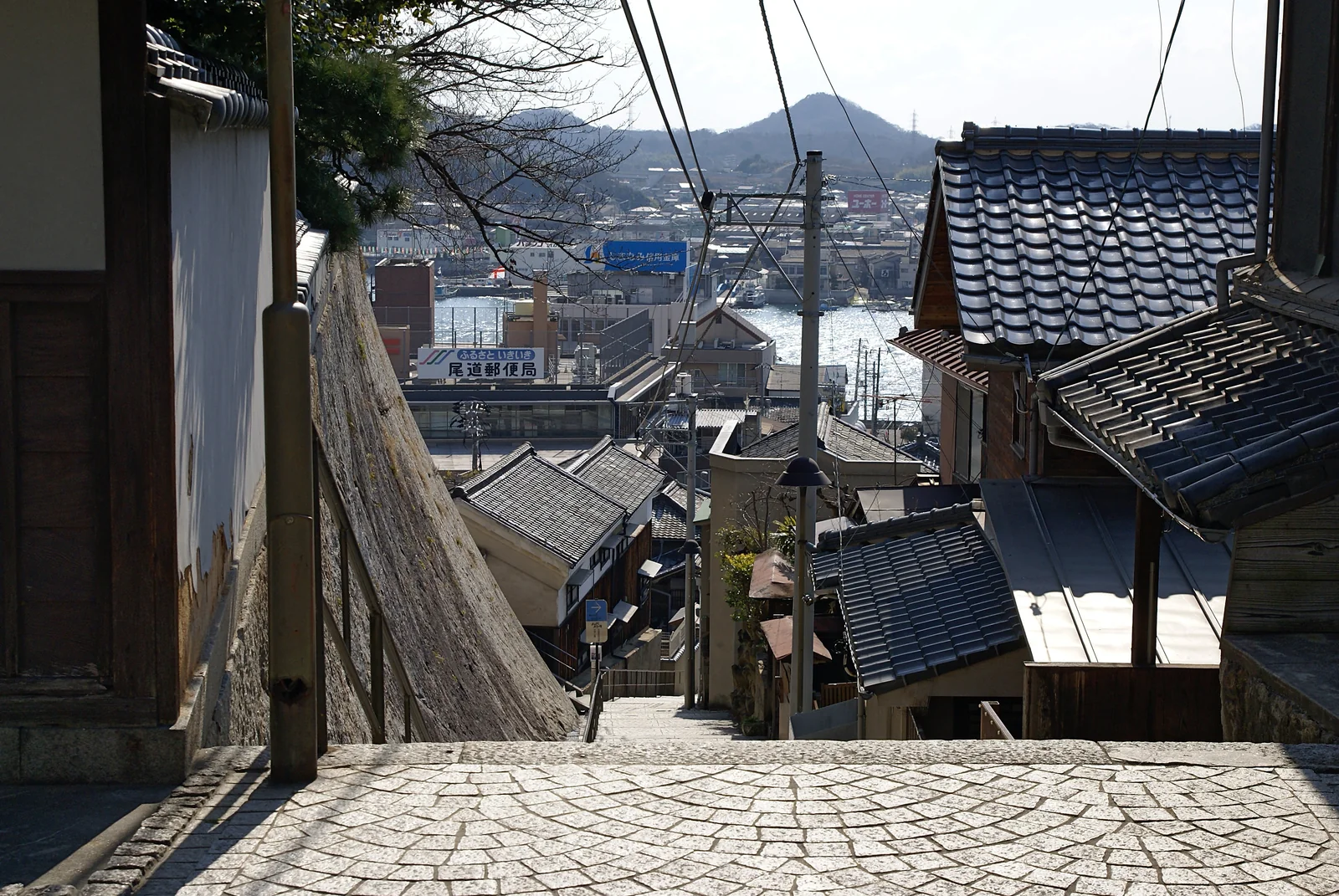
Plan a day on Senkoji hill from Onomichi or Shin-Onomichi Station. Compare one-way and return ropeway tickets, wheelchair lifts, luggage storage and refund conditions, then choose a descent and lunch around opening days.
Onomichi and Shin-Onomichi Stations have different first legs
JR Onomichi Station on the Sanyo Main Line is the town entrance; Shin-Onomichi is the Shinkansen station. Compare the time after the train as well: from Onomichi you can walk into town, while Shin-Onomichi needs a bus via Nagae. If your Sanyo Main Line train already brings you to Onomichi, store your luggage and begin walking.
The official ropeway access page gives about fifteen minutes on foot from JR Onomichi Station to the lower station, or about five minutes on an eastbound bus to Nagaeguchi. Use the walking figure to understand the distance, adding time for crossings, directions and finding the entrance on a first visit. Stops along Hondori take extra time. With a fixed return train, also leave time to walk from the lower station back to the station.
From Shin-Onomichi, the official route is a bus bound for Onomichi Station via Nagae, taking about ten minutes to Nagaeguchi. Check the destination and “via Nagae” before boarding, and find the correct station-bound service for the return. The ten-minute ride excludes waiting. If you have a reserved Shinkansen seat, protect the return bus connection and station buffer before deciding how long to spend on Hondori.
To ride up the ropeway, find the lower station near Nagaeguchi. The official page also lists a bus to Senkoji Park; from that park bus stop, it is about ten minutes on foot to the upper station. That is a different starting point from boarding in town. Write “lower station, 1-3-3 Nagae, Onomichi” in meeting messages rather than simply “Senkoji.”
Where you store luggage decides whether you must backtrack
Store large bags before starting the hill. The ropeway’s luggage guidance lists ¥300 per item at the summit office and ¥500 at the lower information office. These differ in height as well as price. If you ride up and walk down but leave a suitcase at the summit, you must return uphill to collect it, interrupting the continuous descent.
With storage at the lower station, collect bags after Tenneiji and Cat Alley when you return to that area. If you descend west along Senkoji Shinmichi, include collection in the return route. Remembering a case at Nagaeguchi only after heading toward the railway station adds a flat-street detour. Decide your descent exit when choosing storage.
When leaving a bag, ask the latest collection time that day and save the answer on your phone. That is more useful than remembering only the fee. Keep your passport, wallet, medicine and return tickets with you; carry water and daily essentials in a backpack. Free hands are useful for railings on the slopes and easier than carrying souvenir bags.
Choose storage near the station, at your accommodation or at the ropeway according to your departure direction. Do not take a suitcase uphill just to save ¥200 per item. For two people with one item each, lower-station storage totals ¥1,000, calculated from the official item price and excluding ropeway tickets. Separate storage and transport so you can see the cost of saving effort and avoiding luggage detours.
Calculate one-way, return and child tickets person by person
The ordinary fares classify junior-high students and older as adults: ¥500 one way or ¥700 return. Elementary-school children and younger pay ¥250 one way or ¥350 return. Each accompanying guardian may bring one preschool child free. Group the family by school stage before adding fares, rather than multiplying an adult rate by ages or total headcount.
For two adults and one elementary-school child, one way costs 500 + 500 + 250 = ¥1,250; return costs 700 + 700 + 350 = ¥1,750, a ¥500 difference. An additional preschool child qualifying for free accompanied travel does not increase this example. A child tired on the descent may need carrying, with the adult taking that weight. Discuss that possible return arrangement before buying one-way tickets.
Show eligibility for listed discounts, such as JAF or JR-WEST RAIL PASS, before purchase; discounts cannot be applied afterward. JAF covers up to four people, while the other listed discounts are limited to the holder. Discounted tickets also have payment restrictions. Do not pay by card at a machine and then ask for the difference back. If anyone needs a discount, explain eligibility and individual ticket types at the counter first.
An ordinary adult return ticket is ¥300 cheaper than two one-way tickets totaling ¥1,000, so choose return if you have decided to ride both ways. If you buy return but walk all the way from the temple to town without riding down, the extra ¥200 was the cost of keeping an option. Do not force a tired person back uphill merely to use the ticket.
Read payment and refund rules before using the machine
The official FAQ says machines at both stations accept some credit cards and electronic money; cards use contactless payment. Not all cards or electronic money are supported. Discounted purchases cannot use cards or electronic money, so bring cash for a discount rather than trying multiple cards at the machine.
The official rules list purchases using discounts, credit cards, electronic money or coupons as nonrefundable. If your descent is undecided, settle the route and everyone’s stamina before choosing tickets and payment. The extra ¥200 for return is not a deposit you can reclaim whenever you want.
Tickets are sold at the lower information office and upper station office, not inside the platforms. Find the sales point before joining the boarding queue. One person can coordinate a family’s different tickets, but anyone who must show discount eligibility should come to the counter too. Keep tickets safe; return passengers must retain what they need for the descent.
If wind or rain suspends service, visitors who have not bought tickets can switch to level streets. Ticket holders should take their tickets to the counter for handling of that suspension. The purchase rules explicitly list no refunds for discounts or noncash payment; include this condition when planning.
A three-minute ride still needs waiting and summit time
Normal operating hours are 9:00–17:15, with departures from both stations every fifteen minutes and a ride of about three minutes. Extra unscheduled services may run when full, but plan queues around the regular interval. An early departure you saw does not make the next service immediately available. Keep your party together in crowds so one person is not still buying tickets while another boards.
Allow separate time for buying, waiting, boarding, alighting and finding your way at the summit. For a slow morning visit, allow at least one normal departure interval beyond the three-minute ride, and further waits if services are full. With a fixed afternoon train, add luggage collection and the walk to Onomichi Station. Do not treat 17:15 as a time to start leaving the temple.
Hours may be extended for cherry blossoms or events, with notices on the operator’s homepage. Use ordinary hours for a normal day and read the notice for your travel date. Onomichi fireworks nights have separate extensions, traffic controls and departure crowds. This daytime hill walk can stand alone; for an overnight fireworks visit, continue with the Onomichi section of the Japan fireworks guide.
The temple’s model route gives about two minutes on foot from the upper station to PEAK. That is movement to the deck only, excluding elevator waits, finding a viewpoint and stopping. To see both the deck and temple, finish the panorama at the top before following the Path of Literature down, rather than returning uphill for a missing wide view.
Use PEAK to orient yourself before the Path of Literature
The temple model route places PEAK after the upper station and describes its 63-meter observation platform overlooking town and the Onomichi Channel. Identify the streets you will walk, the railway station direction and the channel before taking photos. The lanes below have narrower views; this high viewpoint helps define the day’s walking area.
Allow about half an hour at PEAK for views and rest before descending. Companions can spend it differently: photographers find a viewpoint while others sit down, then meet to leave together. This is a planning allowance. If morning queues took longer, shorten photography to preserve time for the temple and lunch.
The Path of Literature descends from the summit of Senkoji Park to the temple. Its 25 natural-stone literary monuments carry works by writers and poets connected with Onomichi. Reading Japanese takes time; choose a few inscriptions you understand or like and read them before continuing. You need not collect all 25. The stones give reasons to pause and divide the descent into shorter stretches.
The ropeway FAQ gives about ten minutes on foot from the summit to Senkoji via the Path of Literature or the route in front of Petit Anon. Count reading and rests separately. If your knees hurt near the start, turn back early and switch to a summit-only return ride. Deciding to climb back after reaching the temple requires different effort.
Look separately at Senkoji’s main hall, bell tower and rocks
Senkoji’s usual visiting hours are 9:00–17:00, at 15-1 Higashitsuchidocho, Onomichi. The hillside temple’s tradition attributes its foundation in 806 to Kobo Daishi and its revival to Tada no Mitsunaka. Find the main hall and worship route first, then look at rocks and scenery. Leave space for worship, walking and queues when photographing.
The main hall page dates the present hall to 1686. Its stage-style construction is known as the Red Hall. The principal thousand-armed Kannon is a hidden image displayed once every 33 years. On an ordinary visit, focus on how the building follows the slope, its red structure and views toward the channel. For a visit specifically to see the image, use dates announced by the temple.
The summit shows the broader relationship between town and channel; near the hillside main hall, you can better judge the distance between buildings, slopes and roofs below. You need not take two sets of the same distant views. Use PEAK for orientation, then focus on temple architecture, rocks and worship. This leaves energy for the lanes on the descent.
Tama-no-Iwa, also called Eboshi Rock, is listed by the temple as 50 meters around and 15 meters high. Its account tells of a jewel atop the rock lighting the sea at night. See the rock’s size, then read the legend to understand the story connecting the temple’s name, Taihozan and Tama-no-Ura. Keep the legend in its context as the temple’s account of local memory.
Tsuzumi Rock, also called Ponpon Rock, is described by the temple through the drum-like sound made when it is struck and a tradition concerning marks cut into its surface. If sounds or stone interest you, leave time after the main hall to read the on-site explanation. With limited stamina, prioritize the main hall and one rock rather than adding climbs to complete every map marker.
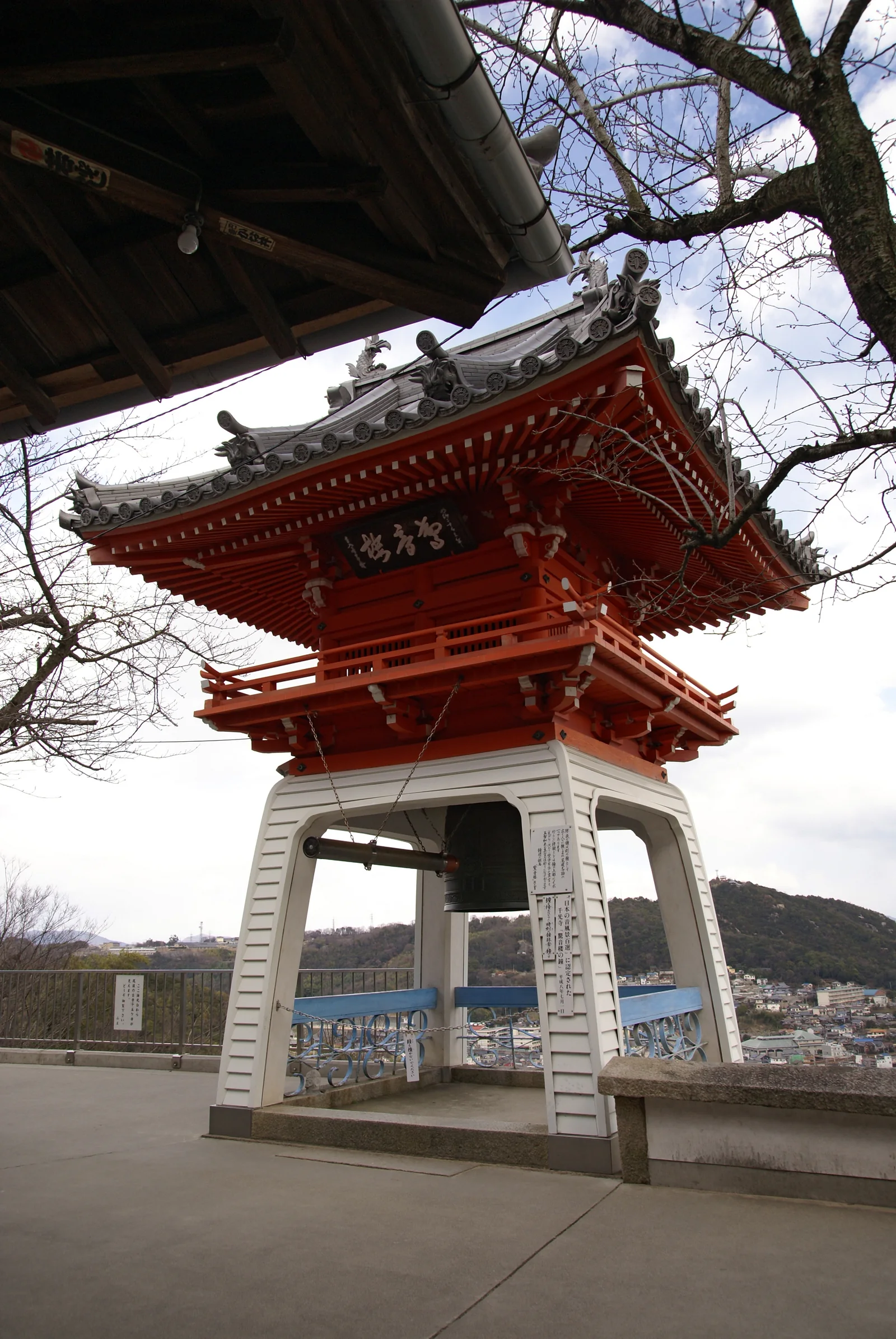
Beyond the main hall, walk to the small gate before Daishido to see the vermilion bell tower. The temple dates its rebuilding to 1890. Instead of the usual 108 studs, the bell is decorated with raised Sanskrit mantras and seed syllables of the Five Wisdom Buddhas. From the cliff-edge tower, you can also see the channel and opposite shore. The bell tower, stage-style hall and mass of Tama-no-Iwa give three distinct things to observe.
Spring aerial footage selected by Senkoji Temple and published in 2018, showing the hillside positions of the main hall, bell tower and rock face.
Arrange a temple seal early; climbing is optional
A temple notice dated March 31, 2026 sets the goshuin seal fee at ¥500 from April 1. Keep this separate from the ropeway fare. On arrival, check the seal office’s service and queue that day before dividing time around the main hall. Two ordinary seals cost 500 + 500 = ¥1,000; special paper versions and other religious items have their own charges.
If someone does not collect seals, arrange a waiting point clear of passage rather than having everyone queue. Do not wait until near closing to begin descending from the summit for a seal. The temple’s 17:00 visiting cutoff and the ropeway’s normal 17:15 end are separate. Treating the latter as extra temple time makes the return too tight.
The grounds map includes Kusariyama and other features, but a day focused on hillside walking does not need an added climb. The Path of Literature, worship and descent to the old streets already involve sustained steps. Skip activities needing additional effort if you want afternoon food and town time. With children or older companions, you can leave the main hall along your planned descent.
Choose a main descent: the pagoda or Senkoji Shinmichi
The temple’s model route links Senkoji, Tenneiji’s three-story pagoda, Cat Alley and the lower town in that order. Follow it for the pagoda and hillside lanes. Stop securely near the pagoda before framing it against town and channel. Do not walk backward down steps for a photo or have the whole group stand abreast on a narrow path while someone photographs.
Tenneiji’s three-story pagoda dates to 1388. The Agency for Cultural Affairs database lists this Important Cultural Property as a three-bay, three-story pagoda and notes that it originally had five stories. Look up at the tiers of eaves, then see the tower with roofs and channel behind to understand its hillside setting. If time is limited, keep the pagoda and descend straight to level streets, skipping other lane branches.
Senkoji Shinmichi instead focuses on steps and stone walls. The Onomichi stonework survey traces the Amashun stone-wall landscape to the Taisho era, when merchant Amano Harukichi built a tea garden and laid out walls, steps, fire cisterns and wells. Choose between the pagoda–Cat Alley route and Senkoji Shinmichi before descending, then continue toward Hondori. For luggage at the lower station, allow the additional level walk back to Nagaeguchi.
The ropeway FAQ gives about thirty minutes on foot back to the lower station via the Path of Literature, Senkoji and the pagoda. This is a movement reference; allow an hour or more with worship, photos and rests. Work back from lunch if you like slow observation. If the descent takes longer than expected, remove a dessert detour or defer shopping rather than rush your steps.
Find Cat Alley’s appeal slowly within a small area
The temple route describes Cat Alley as about 200 meters between Tenneiji’s pagoda and the east side of Ushitora Shrine, with lucky stone cats by artist Shunji Sonoyama. The artworks and old houses are the reason to walk; meeting live cats need not decide whether the visit is worthwhile. Finding a few stone cats you like suits the route better than pursuing animals for photos.
The alley also serves homes and shops. Leave passage when stopping for art and keep cameras out of private windows and doorways. Read opening and photography signs before entering a shop or venue. The outdoor walk and individual interiors can be planned separately. You can enjoy the public streets without buying a ticket or meal.
Keep children within an adult’s supervision and give way on steps rather than chasing the next stone cat. For an empty-lane photograph, wait in a wider spot for people to pass instead of asking other visitors to stop. Back near the lower station, collect stored bags before deciding on food toward Hondori or the railway station.
Choose lunch near the station or Hondori, eliminating closures first
The Onomichi Ittoku official restaurant list places Komedoko Shokudo on floor two at 5-2 Higashigoshocho. Lunch is 11:00–14:00 Tuesday–Sunday; Monday is closed. It suits a station-side lunch: eat near the station before walking to the ropeway, or finish the descent early and return toward the station. With an early return train, eating first gives lunch a more secure slot.
YAM TOU, at 1-3-20 Tsuchido, is described officially as a xiaolongbao bar. Hours are 11:00–14:00 and 17:00–22:00, closed Tuesday. Choose it for lunch on the Hondori side after the old-street descent, then walk slowly toward the station. The two restaurants differ in food and location. Pick the one convenient to your route rather than crossing town to compare every well-known place.
On Monday, eliminate Komedoko Shokudo; on Tuesday, eliminate YAM TOU. Check same-day notices for temporary closure or private bookings. Save official names and addresses, and if a place is closed, find somewhere serving food in the district you are in rather than climb for another restaurant. Both list lunch until 14:00; 13:59 is not a time to start hurrying from the temple.
If one restaurant is a priority, lunch before the hill is the easiest way to secure it. If morning summit views matter more, go uphill first and check the time at the temple or before descending, reducing branches when needed. Let lunch determine where the hill walk ends rather than speed up on the last steps. If you miss lunch, choose a place serving then instead of getting through the whole day on dessert.
Komedoko Shokudo’s official address specifies the second floor. If you need to avoid stairs or use a wheelchair, ask about entrance and upper-floor access when choosing lunch. After changing the hill to a return ropeway ride, choose an easy-access restaurant too. Do not infer elevators or seating arrangements absent from the dining page from appearance alone.
Buy dessert after descending, and distinguish the two shops
Oyatsu to Yamaneko’s main shop is at 3-1 Higashigoshocho. Official hours are 10:00–18:00, closing earlier if sold out, with Mondays closed and holiday adjustments. Pick up takeaway dessert as you return to the station. If it is a priority, check opening and pickup arrangements on arrival before choosing when to buy. It can sell out; skip the stop if only minutes remain before your train.
The seaside shop is on floor one at 5-2 Higashigoshocho. It is officially a cafe and takeaway shop, open 11:00–18:00, extended to 19:00 in July and August, also closed Mondays with holiday adjustments. Komedoko Shokudo is upstairs at the same address, so the two can fit around station-side lunch depending on that day’s opening. The main and seaside shops open at different times; use the full name when meeting.
Buy dessert after the hill so you do not carry boxes and bags on steps and can pack more easily in rain. For chilled products, follow the storage advice given at purchase and consider the remaining travel time. With a long train journey ahead, buy only what you can carry appropriately that day. Do not let a souvenir detour turn an easy station return into a rush.
Wheelchairs, strollers and rain: decide which segment to replace
The ropeway accessibility guidance permits wheelchairs. Both lower and upper stations have one wheelchair lift on the Kamome-car side, with a 180-kilogram load limit; ask staff to use it. The boarding opening is about 80 centimeters wide, and the ropeway does not rent wheelchairs. Check chair width and total lift load, then let staff arrange boarding. The 180 kilograms is the equipment load limit.
The ordinary stairs are also specified: fifteen steps at the lower platform, fifteen at the upper platform and 34 at the upper station exit. The observation deck has an elevator, which closes after operating hours. If relying on elevators and lifts, keep both trips within service hours and use staff-guided access. Returning by ropeway after summit views is the simplest version for reducing temple-slope steps.
A sloping approach to the temple goes downhill from beside the observation-deck shop toward the art museum, then left in front of Petit Anon to Senkoji. After descending, you still need to return uphill to the upper station for the ropeway. Routes from the temple entrance to the main hall and rocks need separate planning. Tell station staff the exact places you want to reach and select feasible sections. Focusing the hill visit on PEAK most directly reduces pushing and backtracking.
Families with strollers should decide before purchase whether to fold the stroller on the descent, who watches the child and who carries the stroller and bags. Keep a walking child within adult control. Carrying a sleeping child and a stroller on hillside steps is very different from an empty-handed walk. For an easier day together, a return ropeway ride and level streets are simpler to maintain.
In rain, consider wet stone steps, umbrellas and everything in your hands together. With light rain and normal service, shorten the visit to a return ropeway ride and a little Hondori. If wind and rain affect transport, eat and rest in town and use the day’s service notice to decide about the hill. If already uphill and footing is poor, remove the lane descent and return to the upper station. Do not speed up on wet steps to complete a fixed route.
A full day or late half-day: make lunch the fixed point
For a full-day example, arrive at Onomichi Station at 9:30, store luggage and walk to the lower station for tickets and waiting around 10:00. See PEAK in the morning, descend along the Path of Literature to worship, then choose the pagoda or Senkoji Shinmichi near midday. Aim for lunch at 12:00–13:00, with afternoon Hondori browsing and dessert near the station. This example is mainly on foot; allow bus waiting separately if using town buses.
If the morning queue is long, remove a descent branch before taking time from lunch or the return buffer. For the pagoda and Cat Alley, spend less time at PEAK. If you have enjoyed a long summit stay, choose one direct descent from the temple to lunch. Shorten the route on the day, while walking the slopes already begun at a comfortable pace.
Arriving around 12:00, eat near the station or Hondori before the lower station. Keep the afternoon to PEAK plus one temple segment, or a simple return ride for views. If walking down too, reduce dessert and lane branches. Eating first avoids being at the summit at 13:30 worrying about lunch ending at 14:00 and then chasing time downhill.
For a still later arrival with an evening departure, choose hill or town as the main theme. For channel panoramas, take a return ride and concentrate walking at the summit and between the railway and lower stations. For old streets, lane entrances and food, stay on level streets and save the hill for a full daylight visit. Join the queue and board before the final service. Luggage collection and the station walk remain afterward; a rail connection needs more than subtracting three minutes from 17:15.
Separate fares, storage and food, then gather everything before departure
For one adult walking between Onomichi Station and the lower station, riding up and walking down, known local transport costs ¥500; a return ride costs ¥700. Add ¥500 for one bag at the lower station and ¥500 for one ordinary temple seal. One way plus one stored bag plus one seal totals ¥1,500; return totals ¥1,700. Both exclude intercity rail and food.
You could allow ¥1,500 per person for lunch and ¥500 for dessert, adjusting to your order. This ¥2,000 is a travel allowance. Added to the ¥1,500 one-way, storage and seal example, it gives a sample solo budget of ¥3,500 excluding intercity rail. The official restaurant list supplies hours and addresses; after choosing a place open that day, use its on-site menu for actual meal costs.
Two adults and one elementary-school child all buying return tickets have known ropeway fares of ¥1,750. Add storage by bag count and seals only for those wanting them. Not everyone needs a seal or separate storage. A table of the family’s needs is usually closer to real travel than multiplying a solo budget containing both by everyone. If using a town bus, add the fare for the actual segment; a five-minute ride description is not a fare.
Collect luggage at the original storage point before heading to the correct station. For Onomichi Station, fit collection, takeaway shopping and toilets before entering. For Shin-Onomichi, protect the return bus connection via Nagae first and shop with the remaining time. Meet to count bags and tickets, without adding a distant shop at the end, so the hillside day is settled before boarding.
A few useful answers
With only half a day, should I eat or ride first?
Eat first if arriving at midday; both sample restaurants end lunch at 14:00. For a morning arrival and views, go uphill first and descend to lunch around noon. For late arrival, reduce PEAK, the temple and lanes to one segment.
How do I choose when adult return costs only ¥200 more?
Choose ¥500 one way if happy to walk the slope and steps to town, or ¥700 return to reduce descent. If you still walk from the summit to Senkoji, count the climb back before riding down.
When do children start paying adult fares?
The official categories use school stage: junior-high students and older pay adult fares, elementary-school children and younger pay child fares. Each accompanying guardian may bring one preschool child free; buy the applicable ticket for children beyond that allowance.
Can a wheelchair user ride to the observation deck?
Use the Kamome-side lift. Each station has one wheelchair lift, limited to 180 kilograms, and the boarding opening is about 80 centimeters. The deck has an elevator that closes after operating hours. Ask staff on site.
Is luggage storage cheaper at the summit?
The official price is ¥300 per item at the summit and ¥500 below. If you ride up and walk down, summit storage requires a return uphill. Choose storage for your descent exit rather than only the ¥200 difference.
How should I change lunch on Monday or Tuesday?
Komedoko Shokudo closes Mondays and YAM TOU Tuesdays. Remove the closed place first, then check temporary closure or private-event notices. After the 14:00 lunch period, find somewhere currently serving on level streets.
Can I walk straight to the ropeway from Shin-Onomichi Station?
This itinerary uses a bus connection into town. The official route is a bus toward Onomichi Station via Nagae, about ten minutes to Nagaeguchi, then a walk to the lower station. Allow return waiting and Shinkansen station time too.
Official information and references
Sources used in this guide.
- Senkojiyama Ropeway fares
- Senkojiyama Ropeway operating hours
- Senkojiyama Ropeway access
- Senkojiyama Ropeway FAQ
- Senkojiyama Ropeway FAQ, part 2
- Senkojiyama Ropeway equipment overview
- Senkoji Temple official website
- Senkoji recommended worship route
- Senkoji main hall
- Senkoji Tama-no-Iwa
- Senkoji Tsuzumi Rock
- Restaurant information | Onomichi Ittoku
- Cat Trail | Onomichi Ihatov official website
- Recommended Shimanami Kaido spots
- Cultural heritage database: Tenneiji pagoda
- Onomichi stonework survey: Amashun stone walls
- Senkoji bell tower