Use Naruto Strait’s daily tide calendar to choose your visit. Compare Uzu-no-Michi, the two Kameura ports and Awaji’s Fukura cruises, including duration, booking, children, wheelchair access and return buses on both shores.
- Region & Focus
- ShikokuAttractions
- Reading Scope
- 30 min read · 17 chapters · 7 Q&As
- Official Verification
- 25 official sources checkedUpdated November 9, 2026
- Key Topics
- ItinerariesTravel budgetBooking
Chapter Route Map (tap any stop)
- Choose your departure shore, then the bridge walkway or a boat
- Read the tide calendar for maximum current, rather than a fixed noon visit
- Compare the viewpoint, cruise duration and port procedures
- Entering Uzu-no-Michi from Naruto Park: walking and wheelchair routes differ
- The 450 m bridge walkway: find current boundaries before looking through glass
- Uzu-no-Michi tickets and 2026 construction: cash, e-tickets and discontinued combinations
- Uzushio Kisen at Kameura Fishing Port: short cruises, cash and arrival order
- Kameura Tourist Port’s two boats: deck views or an underwater cabin
- Fukura Port on Awaji: reserve a full hour for the cruise
- Fukura booking: the 45-day window, 40-minute deadline and early arrival
- From Tokushima or Naruto: match three bus stops to the day’s service
- Sannomiya or Maiko to Fukura: no bus reservations, with possible full return services
- Changing shores or returning to Kansai: Naruto Koen-guchi is not a two-way boarding stop
- Combining a cruise and Uzu-no-Michi: anchor the fixed check-in first
- Eddy and weather alternatives: learn how currents form, then see the water
- Wheelchairs, young children and uneasy sailors: choose a comfortable viewing position
- A half-day or full day: connect one main viewing option with your departure
- Quick Q&A
For Naruto’s whirlpools, first choose a period of faster current that fits opening hours or sailings. From Tokushima or Naruto, you will usually board at a Kameura port on the Shikoku side or walk Uzu-no-Michi beneath Onaruto Bridge. If your trip already takes you to southern Awaji, the one-hour cruise from Fukura fits more naturally. The three piers are separate, and Uzu-no-Michi does not reach Awaji Island. Connect the tide window, arrival shore and return station to choose the option that works for your day.
Choose your departure shore, then the bridge walkway or a boat
Naruto Strait lies between Naruto in Tokushima Prefecture and Minamiawaji in Hyogo Prefecture. On the Tokushima side, Naruto Park, Kameura Tourist Port and Kameura Fishing Port cluster at northern Oge Island. Fukura Port is within Minamiawaji on the Awaji side; boats sail from the bay toward Onaruto Bridge. They reach the same currents, but access and overall trip length differ greatly. If you stay in central Tokushima and return there for dinner, start with Shikoku. If you already plan to drive in southern Awaji or stay in Fukura, compare Fukura sailings first and avoid crossing the bridge just to change operators.
Two names on the Shikoku side are easy to confuse. Naruto Sightseeing Steamship operates Wonder Naruto and Aqua Eddy from Kameura Tourist Port. Uzushio Kisen is a separate company at Kameura Fishing Port behind the Otsuka Museum of Art. The first uses the “鳴門観光港” bus stop, while the second is nearest “亀浦口.” A generic search for Naruto sightseeing boats can take you to the other company’s entrance.
The non-boat option is the Onaruto Bridge walkway, Uzu-no-Michi. Enter on the Tokushima shore and walk into the lower bridge structure to look down from about 45 m above the sea. It suits people prone to seasickness, those wanting to see the current’s overall patterns, or those needing to pause and rest. Boats put your view closer to water level, where the bridge’s scale and the sound of the current are more immediate. Choose one main method according to your group’s stamina and preferred viewpoint.
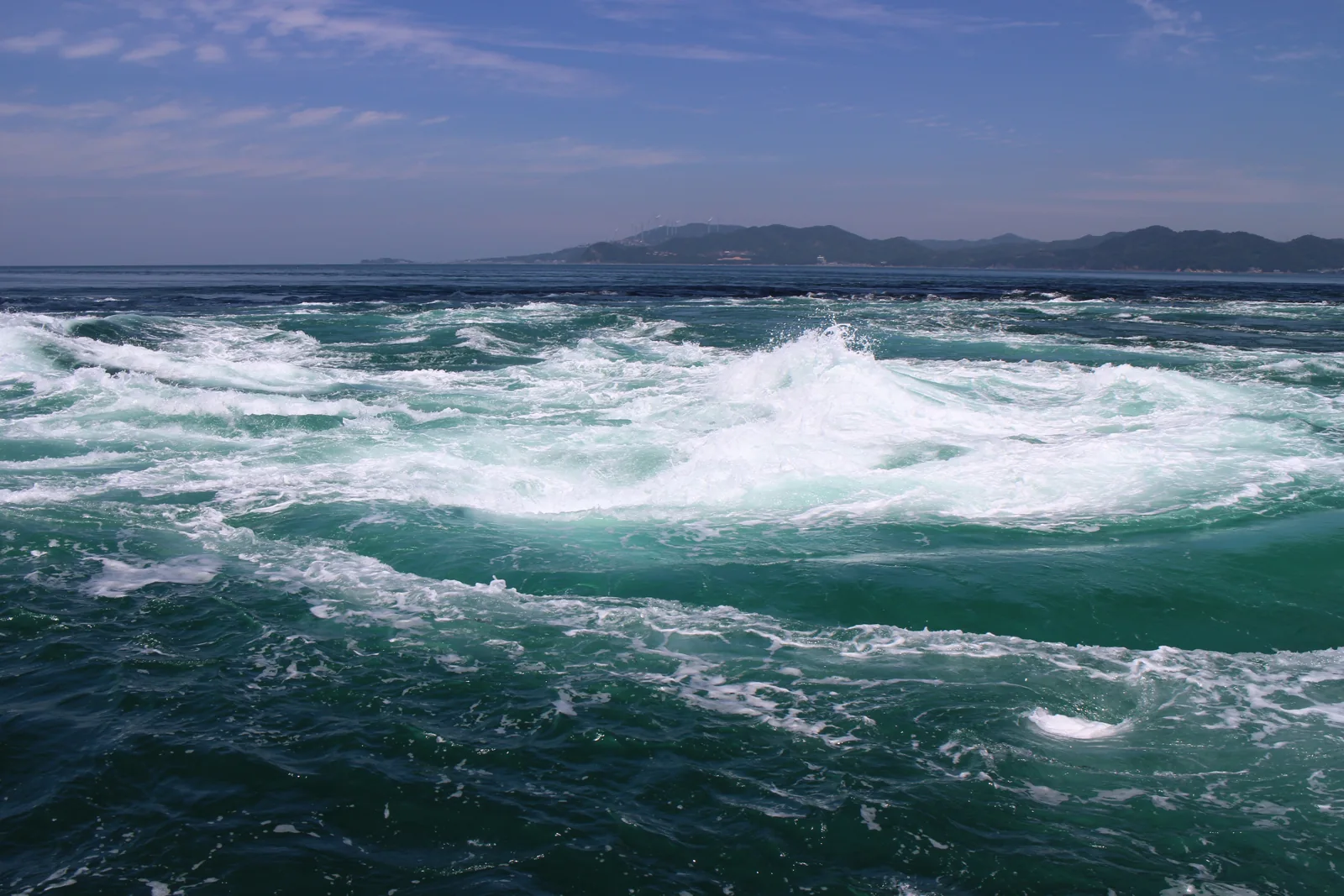
Use Naruto Strait’s daily tide calendar to choose your visit. Compare Uzu-no-Michi, the two Kameura ports and Awaji’s Fukura cruises, including duration, booking, children, wheelchair access and return buses on both shores.
Read the tide calendar for maximum current, rather than a fixed noon visit
The official Uzu-no-Michi tide calendar labels high tide as northbound flow and low tide as southbound flow. Its times are when the Naruto Strait current reaches its maximum speed. Select the actual boarding or entry date, find daytime northbound and southbound periods, then check whether each is spring, medium or neap tide. Use this viewing calendar directly without adding or subtracting time.
The official viewing windows center on the listed time: about two hours before and after for spring tides, one and a half hours for medium tides, and one hour for neap tides. If train connections only allow an earlier bus, arrive at the park and wait. When a day has two windows, choose the one that overlaps best with opening hours and both outward and return transport.
For October 27, 2026, for example, Uzu-no-Michi lists southbound flow at 12:40 and northbound at 18:40, with spring tide for the former and medium tide for the latter. From October through February it closes at 17:00, with final entry at 16:30, so choose around midday. For other dates, read that day’s calendar and cross-check seasonal opening hours to find a usable period.
For a Fukura boat, take another step: the Uzushio Cruise timetable gives each sailing a viewing expectation rating. Reaching the strait takes about 20 minutes from Fukura, so choosing a highly rated sailing already accounts for that journey. Both northbound and southbound flows produce observable currents; prioritize a service with better transport connections.
Compare the viewpoint, cruise duration and port procedures
Separate sailing time from actual time at the strait. The Fukura cruise lasts about 60 minutes: the operator estimates 20 minutes outward, 20 viewing and 20 back. It suits travelers happy to make the cruise a full activity. Uzushio Kisen takes about 20 minutes in total from Kameura Fishing Port close to the strait, concentrating the trip on the currents. Naruto Sightseeing Steamship offers a large deck-viewing boat and a smaller vessel with an underwater observation cabin, each with its own boarding conditions.
At Uzu-no-Michi, choose your stay according to stamina. The observation room is 450 m from the entrance, and you return the same way. Choose the walkway for fear of boats or an overall view of current patterns; choose a boat for sea-level views below the bridge. If someone must stay in a wheelchair, compare accessible routes and suitable vessels before buying admission.
Compare prices for the whole group too. Operators tie free preschool places to adult numbers, while elementary school children have child fares. Fukura also requires early port arrival and an hour aboard. Driving across from Tokushima specifically for it adds road charges.
| Option | Departure or entrance | Visit format | Arrange first |
|---|---|---|---|
| Uzu-no-Michi | Naruto Park; below the bridge on the Tokushima side | 450 m walkway to observation room | Seasonal hours, walking and accessible approach |
| Uzushio Kisen | Kameura Fishing Port | About 20 minutes; small vessel for 86 passengers | Cash, arrival order, Kameuraguchi bus stop |
| Naruto Sightseeing Steamship | Kameura Tourist Port | Wonder Naruto about 30 minutes; Aqua Eddy about 25 | Reservations and boarding by vessel type |
| Uzushio Cruise | Fukura Port, Awaji Island | About 60 minutes, including about 20 minutes of current viewing | Specific sailing; arrive 30–50 minutes early |
Entering Uzu-no-Michi from Naruto Park: walking and wheelchair routes differ
The Uzu-no-Michi access page explains the approach from Naruto Park Parking Lot No. 1. For the ordinary walking route, exit the lot to the right and find the pedestrian bridge. Cross to beside the Onaruto Bridge Crossing Memorial Hall Eddy, follow signs across the pedestrian crossing, loop along the road, pass under the expressway viaduct and continue toward Uzu-no-Michi. The entrance is beside the bridge structure; this walk remains after parking.
The wheelchair route avoids the pedestrian bridge. From Parking Lot No. 1, turn left toward Eska Hill, continue through the tunnel, then through the park toward Onaruto Bridge. Cross in front of the souvenir shop and follow the road to the entrance. With a stroller or difficulty using steps, follow the official accessible route together.
For driving, the official navigation recommendation is “大鳴門橋架橋記念館 エディ” and the paid Naruto Park parking facilities. It warns that setting only “渦の道” may direct you elsewhere. Uzu-no-Michi has no dedicated lot. Parking Lot No. 1 lists ¥500 for ordinary cars, followed by the walk. Usual lot hours are 09:00–17:30, extended July 20–August 31 to 08:30–18:00. Parking and facility hours are separate; for a late summer visit, check how long the car can remain.
On a local bus, use “鳴門公園” for the walkway. Official guidance lists about five minutes on foot after alighting. First locate the return stop and direction toward the city, then enter the park. If boating first, leave the bus at the stop for your specific port.
The 450 m bridge walkway: find current boundaries before looking through glass
Uzu-no-Michi occupies the girder space beneath Onaruto Bridge’s road deck. Mesh fencing on both sides lets in sea wind and wave sounds; it is not a fully enclosed, temperature-controlled corridor. Observe the water from either side as you approach the observation room at the end, then look down through its glass windows. For a quieter view, first stand to one side and find boundaries where water color and flow direction change. Then move to the glass below your feet instead of rushing to the first panel.
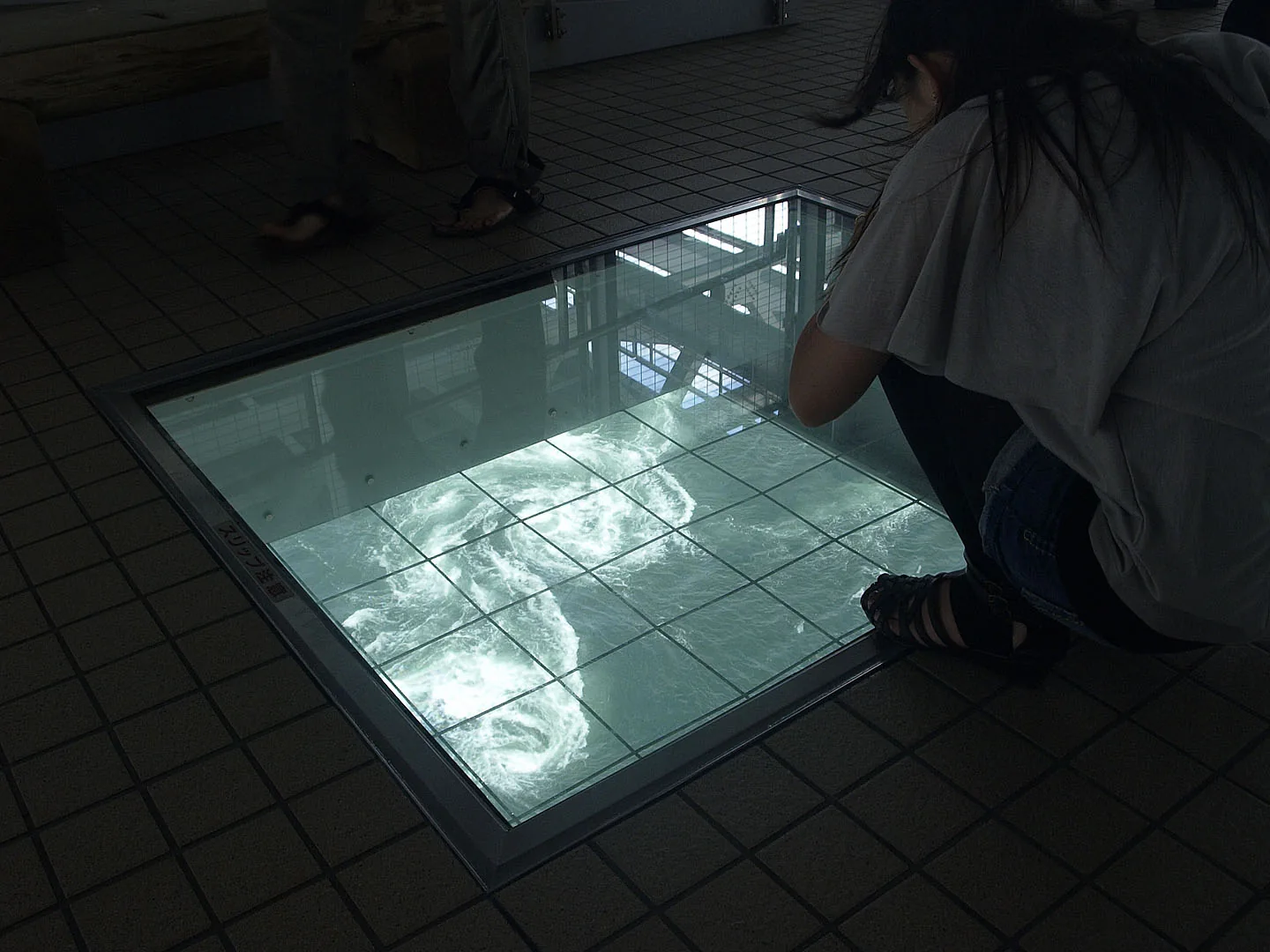
The official facility guide lists four glass-floor locations and four rest areas along the walkway, with eight further glass windows in the observation room. Each gives a different water angle. If one spot is busy, move to the next first. Circular patterns form, stretch and break apart. Keeping your gaze on one patch often reveals changes more easily than following other people’s cameras. With children, watch from beside the fence together before deciding whether to step onto transparent flooring.
The 450 m distance is one way from entrance to observation room. Returning adds the same distance, about 900 m for the walkway alone, plus the approach from parking or bus stop. If you need frequent seats, use rest areas as stops and combine watching with resting. You can also turn back earlier if a brief look at the bridge structure is enough. The route ends at the observation room and returns; it does not let you walk from Tokushima to Awaji Island.
Keep your phone or camera secure in your hand and stop where you will not block the route. Share viewing space beside the glass. Change your angle to reduce reflections. If you dislike heights, stay on solid flooring and enjoy the steel structure and sea from the sides.
Uzu-no-Michi tickets and 2026 construction: cash, e-tickets and discontinued combinations
Ordinary individual admission is ¥510 for adults, ¥410 for junior and senior high school students and ¥260 for elementary school children. Under-sixes enter free. Usual March–September hours are 09:00–18:00, last entry 17:30; October–February hours are 09:00–17:00, last entry 16:30. Golden Week and summer holidays have separate 08:00–19:00 hours with last entry 18:30. Regular closures are the second Monday of March, June, September and December. Match your date before buying a ticket for that day.
Construction brings specific changes in 2026. The May 10 ticket notice states that from May 12, on-site Uzu-no-Michi sales are cash only, with cashless payments temporarily unavailable. Previously purchased e-tickets remain usable. Under these construction rules, bring yen cash or buy an e-ticket before arrival. Work also reduces lobby space, so include queueing before entry.
For a bridge-and-boat combination, read the official March 31 notice: combined Uzu-no-Michi and sightseeing boat tickets stopped selling on March 31, 2026. Tickets bought before sales ended remain valid. The two-facility Uzu-no-Michi and Eddy ticket continues at ¥900 for adults, ¥660 for junior and senior high students and ¥400 for elementary school children.
A year-end temporary closure notice separately lists December 14–16, 2026, for cycle-route construction, with normal operation expected to resume December 17. December 14 is already the regular second-Monday closure, but the 15th and 16th are also closed this time. On those three dates, choose operating boats or other open facilities rather than making the walkway a required post-cruise stop.
Uzushio Kisen at Kameura Fishing Port: short cruises, cash and arrival order
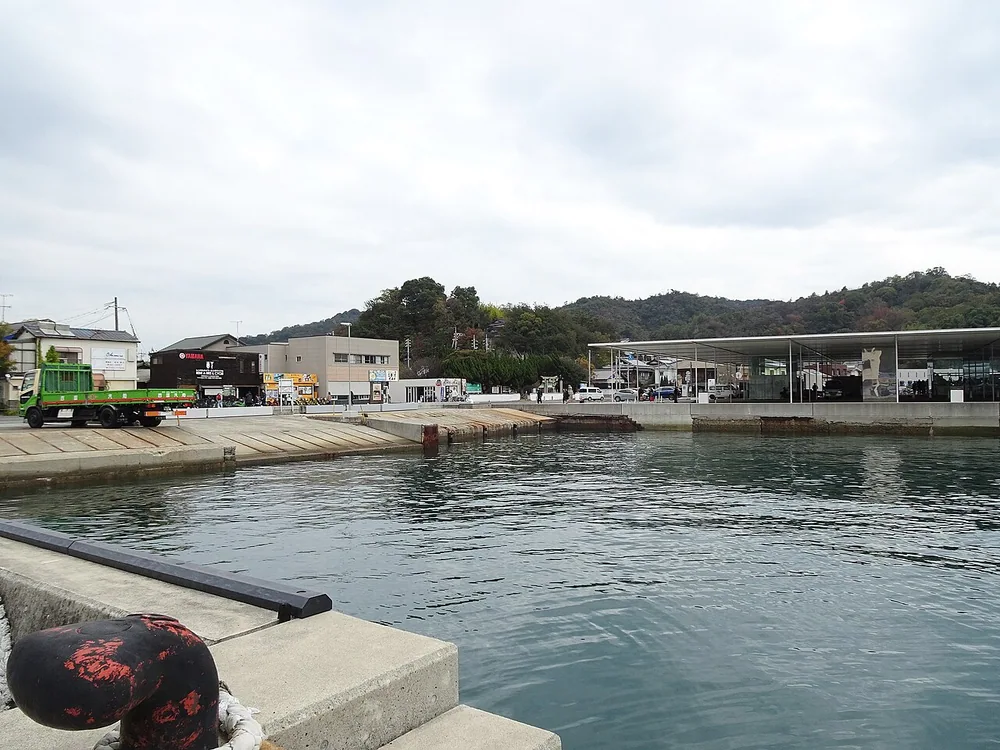
Uzushio Kisen’s boarding point is behind the Otsuka Museum of Art at 65-63 Fukuike, Tosadomariura, Narutocho. The Uzushio vessel holds 86 passengers and makes a roughly 20-minute round trip. Its visitor guidance says it generally takes no reservations; when full, visitors move to the next sailing in arrival order, with departures about every 30 minutes. It suits travelers avoiding a longer cruise, but allow waiting during popular current windows. Moving to the next departure also changes when you reach the strait.
The operator’s current fares are ¥2,000 for adults and ¥1,000 for elementary school children. Each adult can bring one preschooler free. Payment is cash only. Two adults with two preschoolers have two free places in total; obtain extra tickets at the counter for preschoolers beyond the adult count. Save the Japanese company name “うずしお汽船” and Kameura Fishing Port address on your phone to identify the right boarding place.
The nearest local bus stop is “亀浦口.” By car, head from Naruto-Kita Interchange toward Naruto Park, pass the Otsuka Museum of Art, then follow signs at the three-way junction to the boarding point. Official guidance lists parking for about 50 ordinary cars around the pier. Set navigation and meeting points to Uzushio Kisen at Kameura Fishing Port.
This small vessel has level changes and limited movement space. The operator states that boarding with a wheelchair or stroller in its normal unfolded form is difficult. If you must remain in a wheelchair, compare the large vessel or Uzu-no-Michi accessible route instead. With a folding stroller, arrange folding, carrying the child and handing over bags before boarding. Food, drink and ignition sources are prohibited aboard, and pets are not accepted. Eat newly bought snacks before boarding or after returning.
Kameura Tourist Port’s two boats: deck views or an underwater cabin
Kameura Tourist Port is Naruto Sightseeing Steamship’s departure point for Wonder Naruto and Aqua Eddy. Large Wonder Naruto takes about 30 minutes and offers deck views of the water and bridge. Smaller Aqua Eddy takes about 25 minutes and adds an underwater observation cabin. Choose the latter for underwater flow views. If confined spaces make you uncomfortable or you want more room to change position, compare the larger boat first. The underwater cabin is aboard a boat; Uzu-no-Michi’s glass floor is on the bridge. The current Tokushima official tourism listing gives Wonder Naruto fares of ¥2,000 for adults and ¥1,000 for elementary school children, and Aqua Eddy fares of ¥2,500 and ¥1,200. Two adults pay ¥4,000 on the large boat or ¥5,000 for the smaller underwater-cabin vessel.
The Tokushima official tourism guide lists 12 daily Wonder Naruto sailings and 15 Aqua Eddy sailings, with every Aqua Eddy departure requiring a reservation. The operator site is currently a maintenance page; its boarding guidance directs Aqua Eddy reservations and cancellations to 088-687-0101, with telephone service 9:00–17:00. The large boat needs no reservation. Buy tickets for either at least ten minutes before departure and arrive earlier in busy periods.
Aqua Eddy has steps and boat movement. Wheelchair users and travelers unable to walk independently cannot use it; official guidance recommends large Wonder Naruto for reduced mobility. With young children, arrange who helps them on the small boat’s stairs. Both vessels return to Kameura Tourist Port. For Uzu-no-Michi afterward, add the journey from the waterfront to the park.
On the local bus timetable, read the “鳴門観光港” row and choose a service that actually calls at the port. Not every Naruto Park Line bus enters the pier. An arrow means that service passes the stop. Read the arrival time in one column, then work backward for ticket procedures and waiting.
Fukura Port on Awaji: reserve a full hour for the cruise
Awaji-side Uzushio Cruise departs from Uzushio Dome Nanairo-kan at Fukura Port. The ticket counter and pier are within Roadside Station Fukura. The official cruise guide lists about 60 minutes: through the harbor and around small islands, to the currents beneath Onaruto Bridge, then back to Fukura. About 20 minutes out, 20 viewing and 20 back gives a useful scale for lunch and the next bus. This option particularly suits travelers already staying in southern Awaji.
Current ordinary individual fares are ¥3,000 from junior high school age and ¥1,500 for elementary school children. Each adult may bring one preschooler free; preschoolers above the adult count pay the child fare. Children cannot travel alone. Two adults and two elementary school children pay ¥9,000 altogether. If both children qualify as preschoolers, the two adults’ free places cover them.
Both Kanrin Maru and Nippon Maru appear on the timetable. For wheelchairs or strollers, include the vessel name in your choice. The official FAQ says the route to boarding is accessible, but many onboard areas of Nippon Maru do not allow wheelchair movement, so it recommends Kanrin Maru. Stairs still connect decks. Kanrin Maru also has a children’s space, nursing room and digital displays, useful for short rests during the hour. Include the deck of each needed facility and whether it is reachable in your booking requirements.
Fukura’s Kanrin Maru and Nippon Maru offer views from decks and interior spaces; neither has a glass bottom. For an underwater observation cabin, choose Aqua Eddy on the Tokushima side. For harbor and strait scenery in both directions, preserve the full hour from Fukura.
Fukura’s official Uzushio Cruise introduction page features eiyuki1’s spring 2012 whirlpool video. View the surface currents and whirlpool forms, then use the travel day’s tide calendar to select a sailing.
Fukura booking: the 45-day window, 40-minute deadline and early arrival
The official Fukura booking FAQ opens online booking at 00:00 45 days before travel and closes it 40 minutes before departure. Payment is by credit card, and a booking is confirmed only when payment completes. One booking holds up to 14 people; 15 or more require a phone booking. Same-day tickets for specified departures are sold on-site when seats remain. Book a recommended current-window sailing first, then calculate your arrival transport backward.
Port arrival is separate: reach the ticket counter at least 30 minutes early on weekdays and 40–50 minutes early on holidays. Bring the booking QR code and check in with the whole group. Fukura bus stop is about two to three minutes on foot from the counter; add parking, restrooms and queueing. Put the port arrival target in the itinerary first, then work backward from your starting point.
Online bookings can generally be changed once, including to another date, to an available sailing until 40 minutes before the original departure. Passenger numbers cannot be edited directly; cancel and rebook. For groups, settle actual adult, elementary school and preschool counts before purchase. Online cancellation also closes 40 minutes before departure. After that, phone the operator; cancellation is not accepted after the boat has sailed.
For weather cancellations or major delays, the operator emails the registered address. When cancellation of the sailing is confirmed, paid cruise fares are refunded. Book with an address you can access while traveling and check messages before leaving your hotel that morning. For disability fares, present the required documentation at the counter before sailing. The official rule excludes refunding the difference after disembarkation. Weather cancellations and personal changes are separate processes; use your booking number and original sales channel.
From Tokushima or Naruto: match three bus stops to the day’s service
Without a car from central Tokushima, use the Naruto City official bus page to open the Naruto Park Line timetable revised April 1, 2026, then select weekdays or weekends and holidays for your date. Facility access guidance gives about 80 minutes from Tokushima Station to Naruto Park and 25 minutes from Naruto Station. If taking JR first, add the walk from the arriving train to the station-front bus stop. Compare a direct city bus with train-plus-bus for your actual departure time.
For stops, Naruto Sightseeing Steamship uses “鳴門観光港,” Uzushio Kisen uses “亀浦口,” and Uzu-no-Michi uses “鳴門公園.” Share the Japanese stop and full company name together so everyone knows where to leave the bus.
The April 1, 2026 timetable has a 10:02 Naruto Station departure in both weekday and weekend/holiday columns, followed by Naruto Tourist Port at 10:23, Kameuraguchi at 10:26 and Naruto Park at 10:29. Stay on until 10:29 for the walkway; leave at 10:26 for Uzushio Kisen. Read the destination in the same column. A cell containing only an arrow means the bus passes it.
For the return, the same table’s 13:25 departure from Naruto Park illustrates the order: Kameuraguchi 13:26, Naruto Tourist Port 13:29, Kosoku Naruto Bus Stop-mae 13:47, Naruto Station 13:50 and Tokushima Station 14:58. This column is the same for weekdays and weekends/holidays. Walk from the boat to your stop and use its own time; from the tourist port, calculate with 13:29.
Check final departures by stop. In this timetable, Naruto Park’s last is 19:25 and Kameuraguchi’s 19:26, reaching Naruto Station at 19:42. The final call at Naruto Tourist Port is 17:49 on weekdays and 18:49 on weekends/holidays. For a direct return from the port after sailing, use that port’s row. If connecting to a reserved-seat train or intercity bus, choose an earlier service that fits.
Sannomiya or Maiko to Fukura: no bus reservations, with possible full return services
For Kansai travelers, the most direct public transport to Fukura Port is the highway bus from Sannomiya or Kosoku Maiko to Fukura. Awaji Kotsu’s route guidance lists one-way fares of ¥2,700 from Sannomiya and ¥2,350 from Kosoku Maiko. Neither route accepts reservations. Both are limited to seated capacity, so a full bus may leave you unable to board. A boat booking does not reserve a bus seat. Keep alternative services for both outward and return journeys.
The listed shortest Sannomiya–Fukura trip is about one hour 33 minutes. From Maiko, the shortest is about one hour 14 or 20 minutes depending on whether the route runs via Riku-no-Minato Seidan or Awajishima-Minami Interchange. These are route minima. Add the walk to the correct Sannomiya terminal or from JR Maiko to Kosoku Maiko, and road congestion. For a first Maiko transfer, locate the highway stop before setting your platform arrival time.
As an outward example, the Awaji Kotsu timetable effective April 1, 2026 has a daily service from Shinki Sannomiya Bus Terminal at 08:25, Kosoku Maiko at 08:55 and Fukura at 09:58. Walk about two to three minutes to the domed Nanairo-kan, then allow the required 30 minutes before a weekday sailing or 40–50 on holidays. A later boat lets you eat or wait after arrival.
The same table has a daily Fukura 17:45 departure reaching Kosoku Maiko at 18:48 and Shinki Sannomiya at 19:18. The last listed service is Fukura 20:40, Maiko 21:43 and Sannomiya 22:13. Add disembarkation, the walk to the stop and waiting before choosing your return. Neither direction is reserved; leaving before the last bus preserves another option. Distinguish Sannomiya services from those ending at Maiko. For a JR transfer there, add the walk from highway stop to railway platform.
Changing shores or returning to Kansai: Naruto Koen-guchi is not a two-way boarding stop
Some highway buses from Osaka, Kobe or Kyoto toward Tokushima let passengers alight at Naruto Koen-guchi and walk into Naruto Park. Return buses toward Kansai board at Kosoku Naruto instead. Leave the park on a local bus to reach that transfer.
The 2026 Naruto Park Line return stop is “高速鳴門バス停前.” For example, the 13:25 Naruto Park departure reaches it at 13:47. After alighting, follow the Otsuka Museum of Art official transfer map: use the slope by the tourist information center or free Suroppi slope vehicle, then the underpass to the Kosoku Naruto platform on the other side for Kyoto, Osaka and Kobe. Add walking, slope-vehicle waiting and boarding time. With a long-distance reservation, protect this connection before choosing when to leave the boat or Uzu-no-Michi.
Fukura and both Tokushima operators return to their original ports; these are round-trip viewing tickets. To continue from Naruto to Awaji, arrange separate land transport across the bridge. Drivers can visit different shores in morning and afternoon. Without a car, first check actual stops and transfers.
Combining a cruise and Uzu-no-Michi: anchor the fixed check-in first
For both a boat and Uzu-no-Michi in one day, start with the reservation that is harder to change. Aqua Eddy and booked Fukura departures require port arrival, procedures, sailing and return, with bridge viewing fitted before or after. Fukura is across the strait, so adding Uzu-no-Michi also means crossing the bridge. Without a car, consider staying on one shore. A short Tokushima cruise plus walkway still needs port-to-park transport.
If midday has suitable currents, start at Naruto Park and use the walkway to locate flow boundaries, bridge piers and boats before sailing. Boat first can suit an earlier booked departure or travelers wanting a close water view before identifying the same area from above. Choose the order by actual sailings and buses, rather than a fixed bridge-first rule.
For a two-hour gap, add separate blocks: the official roughly 30-minute Uzu-no-Michi visit, walking from parking or the stop, transfer to the port, a 20–30-minute cruise and waiting. Add more time or remove one viewing method if lunch is included. If the good current window is in the afternoon, use the morning for indoor exhibits or an early meal, then go directly to the day’s main activity instead of making two waterfront circuits.
Eddy and weather alternatives: learn how currents form, then see the water
Onaruto Bridge Crossing Memorial Hall Eddy is near Uzu-no-Michi. Official guidance gives about three minutes on foot between them and about 30 minutes for each, totaling roughly one hour to one hour 15 minutes. For current formation and bridge structure, exhibits before the sea can connect white foam, different flow directions and the terrain beneath the bridge. If whirlpools are your main purpose, visit the hall before the current window instead of still buying tickets when flow is fastest.
The slope between the facilities is fairly steep. Plan wheelchair or walking-aid needs alongside the indoor visits. The official FAQ lists free wheelchairs and strollers at both, plus electric assistance equipment for the slope, in limited numbers. Explain your return journey between the two to staff first, and agree on routes and turning points with companions. A three-minute map estimate is no reason to hurry someone who needs rest.
An exhibit maintenance notice dated October 8, 2026, lists partial projection failure on the left floor of Eddy’s “Play the Eddy!” while the right remains usable. Base the visit on current and bridge exhibits; The October 30 notice adds that from 15:00 on November 10 the projector will be replaced, suspending the whole feature until the work ends (end time not yet set). the right side remains available for that interactive projection. Uzu-no-Michi closes on the second Monday of March, June, September and December; Eddy is ordinarily open daily. Choose combined-ticket dates that avoid walkway closures.
Separate rain from wind and waves. The Fukura operator says cruises can run in rain, while strong wind or swell affects viewing and operation. Uzu-no-Michi is open to air on both sides, so weather also affects walking. If boats stop but Eddy opens, make exhibits the day’s main activity and handle cruise tickets through the original seller. The adult combined facility ticket is ¥900, versus ¥510 for Uzu-no-Michi alone. If you have decided on indoors only, do not add the walkway for a discount. If waterfront facilities all close, return to central Tokushima and move viewing to another daylight period with suitable currents.
Wheelchairs, young children and uneasy sailors: choose a comfortable viewing position
Wheelchair users can start by comparing Uzu-no-Michi’s official accessible approach, large Wonder Naruto or Fukura’s Kanrin Maru. Their usable areas differ. The walkway requires the park tunnel route. Fukura boats allow boarding but still have stairs between decks, and Kanrin Maru and Nippon Maru differ in onboard movement. If you must remain in a wheelchair, choose an arrangement where viewing, resting and restroom needs can be met on one deck. Boarding permission alone does not establish convenience for the whole trip.
Stroller families face different issues on the bridge and boats. Uzu-no-Michi lets you turn back according to stamina, and both facilities have nursing space and diaper tables. Uzushio Kisen’s internal level changes make unfolded stroller travel difficult. Decide who carries the child, folded stroller and bags, and feed children before boarding if needed. On the longer Fukura trip, Kanrin Maru’s nursing room and children’s space may fit better; choose by the actual sailing’s vessel name.
If prone to seasickness, choose bridge viewing directly. If you still want to sail, compare duration, indoor and outdoor areas and your own tolerance. The Fukura operator says medicines are not sold aboard, so prepare needed supplies before reaching the port. If you feel unwell, find a seat and tell staff. Photos and a place at the rail can wait.
Pet rules vary: Uzushio Kisen does not accept pets; Uzu-no-Michi allows them in carriers or held in your arms; Fukura limits small pets to no more than 8 kg in a carrier, with acceptance also depending on type and number. Follow the selected facility or operator’s rules.
A half-day or full day: connect one main viewing option with your departure
For a half-day from central Tokushima, use outward bus, port or park, main viewing and return as the framework. For Uzu-no-Michi alone, protect time for the glass observation room and park walk, then consider Eddy. For a short cruise, include check-in and the next return bus. If leaving in the morning for midday currents, eat early before viewing or have a late lunch back in town after sailing. Keep the best current window at the water.
For a full day driving in southern Awaji, book a highly rated Fukura sailing first, arrive 40–50 minutes early on holidays, complete the roughly one-hour cruise, then leave time for food and walks around Fukura. Official access says nearby parking is free, with staff guiding vehicles to the nearest available spaces. Drive first to the parking area in front of Roadside Station Fukura Nanairo-kan and follow instructions. Food or shopping after sailing is easier than a timed lunch followed by a rush to check in.
For a same-day Kansai return without a car, pair one Fukura cruise with Sannomiya or Maiko return buses, or choose Naruto Park and protect the transfer from the Kosoku Naruto local stop to its highway platform. Each has a complete transport chain; pick the one matching your accommodation direction. If continuing through Shikoku, return from Naruto to a Tokushima stay and follow the Shikoku regional itinerary guide. Leave large bags at a base you can return to so you can move lightly between port and park.
A few useful answers
Is noon always best for Naruto whirlpools?
Use the Naruto Strait tide calendar for your travel date. Uzu-no-Michi lists maximum current times; cross-check opening hours. For Fukura, choose by each sailing’s viewing expectation rating.
Are Uzushio Kisen and Naruto Sightseeing Steamship at the same port?
Uzushio Kisen is at Kameura Fishing Port, nearest Kameuraguchi bus stop. Naruto Sightseeing Steamship is at Kameura Tourist Port, served by Naruto Tourist Port stop. They are different operators and boarding places.
Can I walk to Awaji Island through Uzu-no-Michi?
Walk about 450 m from the Tokushima-side entrance to the observation room, then return the same way. Crossing to Awaji needs separate land transport.
Can I still buy a combined boat and Uzu-no-Michi ticket?
Sales ended March 31, 2026. Previously bought combined tickets remain usable. The Uzu-no-Michi and Eddy two-facility ticket is a separate current product.
When can I book a Fukura cruise, and how early should I arrive?
Online booking runs from 00:00 45 days before travel until 40 minutes before departure. Reach the counter at least 30 minutes early on weekdays or 40–50 minutes on holidays. Online bookings are confirmed after card payment completes.
Do Fukura boats have underwater glass viewing windows?
Fukura’s Kanrin Maru and Nippon Maru have no glass bottoms. An underwater observation cabin is available on Aqua Eddy, operated by Naruto Sightseeing Steamship on the Tokushima side.
Can I return from the same Naruto Koen-guchi stop where my Kansai bus dropped me?
For Kansai, take a local bus from Naruto Park to “高速鳴門バス停前,” then move to Kosoku Naruto on the expressway. The outward drop-off and return boarding points differ.
Official information and references
Sources used in this guide.
- Tide calendar | Uzu-no-Michi
- General visitor guide | Uzu-no-Michi
- Facilities | Uzu-no-Michi
- Access | Uzu-no-Michi
- FAQ | Uzu-no-Michi
- End of combined sightseeing boat ticket sales | Uzu-no-Michi
- How to purchase Uzu-no-Michi tickets
- Uzu-no-Michi closure: December 14–16, 2026
- Uzushio Kisen official high-speed whirlpool cruise site
- Uzushio Kisen visitor guidance
- About Uzushio Cruise from Awaji Island
- Uzushio Cruise fares
- Uzushio Cruise timetable
- Uzushio Cruise FAQ
- Uzushio Cruise access and parking
- Naruto Sightseeing Steamship: boarding and phone bookings during site maintenance
- Awaji Kotsu: Fukura highway bus fares and boarding
- Shinki Bus: Kobe Sannomiya and Maiko to Fukura
- Uzu-no-Michi: partial Eddy exhibit maintenance notice
- Naruto City: 2026 Naruto Park Line timetable page
- Naruto City: Naruto Park Line weekday and weekend/holiday timetable effective April 1, 2026
- Awa Navi: current Naruto Sightseeing Steamship vessels, fares and reservations
- Awaji Kotsu: Sannomiya–Maiko–Fukura timetable effective April 1, 2026
- Otsuka Museum of Art: Kosoku Naruto transfer map, updated February 1, 2024
- Edy museum | projector replacement from 15:00 on November 10, feature suspended during works (notice of October 30)