Plan the Ebisu Festival on 18–20 November 2026, Hiroshima Dreamination from 4 December to 24 January 2027, and station Christmas events around dinner, your hotel and the tram home.
- Region & Focus
- Hiroshima
- Reading Scope
- 34 min read · 21 chapters · 4 Q&As
- Official Verification
- 19 official sources checkedUpdated 9 November 2026
- Key Topics
- SeasonsItinerariesFood
Chapter Route Map (tap any stop)
- Visit the Ebisu Festival in November and Peace Boulevard lights in December
- For the three-day 2026 Ebisu Festival, save the address 5-14 Ebisucho
- Komazarae: allow time to look at the decorated rake stalls
- Arriving at Ebisucho or Hatchobori: choose your first stop
- Hiroshima Station’s trams are on level 2; platforms for routes 1 and 2 have changed
- For a simple tram return, start with ¥480
- The ¥600 eight-hour pass suits three tram rides from afternoon to evening
- For weekend evenings, compare the ¥440 six-hour pass; the weekday version ends at 16:00
- Use the live digital ticket screen; groups sharing one phone must travel together
- A November evening: dinner, then the shrine and shopping streets
- Have okonomiyaki in Shintenchi before the rest of your evening
- 2026 winter illuminations: 4 December to 24 January 2027
- Walk from Shirakami Shrine towards Tanakamachi, or reverse the route to suit dinner
- Fukuromachi and Chuden-mae suit a short walk through the lights
- Choose one side route through Hondori, Namiki-dori or Alice Garden
- For hot drinks, check the sweets café’s own opening dates
- See the station Christmas tree from 13 November
- Choose Hatchobori, Peace Boulevard or Hiroshima Station by where your evening ends
- With children, make one short stretch the whole evening outing
- In rain or strong wind, keep dinner and one covered arcade
- Read the destination for Hiroshima Station and save the final journey before dinner
- Quick Q&A
The 2026 Ebisu Festival runs from 18 to 20 November. Winter illuminations on Peace Boulevard begin on 4 December. Choose the event that fits your stay, then connect a shrine visit in Ebisucho, dinner in Hatchobori, a walk through the lights and a tram back to Hiroshima Station. Even a one-night stay leaves room for an easy evening out.
Visit the Ebisu Festival in November and Peace Boulevard lights in December
For an autumn or winter visit to Hiroshima in 2026, choose your evening activity by date. The Ebisu Festival takes place on 18–20 November at Ebisu Shrine near Hatchobori. Hiroshima Dreamination on Peace Boulevard runs from 4 December to 24 January 2027. If you have one night, choose the event that falls during your stay and keep your daytime city or Miyajima plans. This gives you more time than repeated trips to the station for night views.
The two venues have different useful starting points. For the festival, enter the shopping streets from Ebisucho or Hatchobori tram stop. For the illuminations, join Peace Boulevard from the Fukuromachi or Chuden-mae side and walk east. If your hotel is near Hiroshima Station, save your return tram stop before leaving. If you stay in the centre, walk to the event after dinner and return through the shopping streets.
Christmas events around Hiroshima Station run from 13 November to 25 December, so a November stay can also include a short evening walk near the station. The routes below treat the shrine, shopping streets, Peace Boulevard and station separately. Choose a stretch that suits your group’s energy; you do not need to walk across the whole city centre.
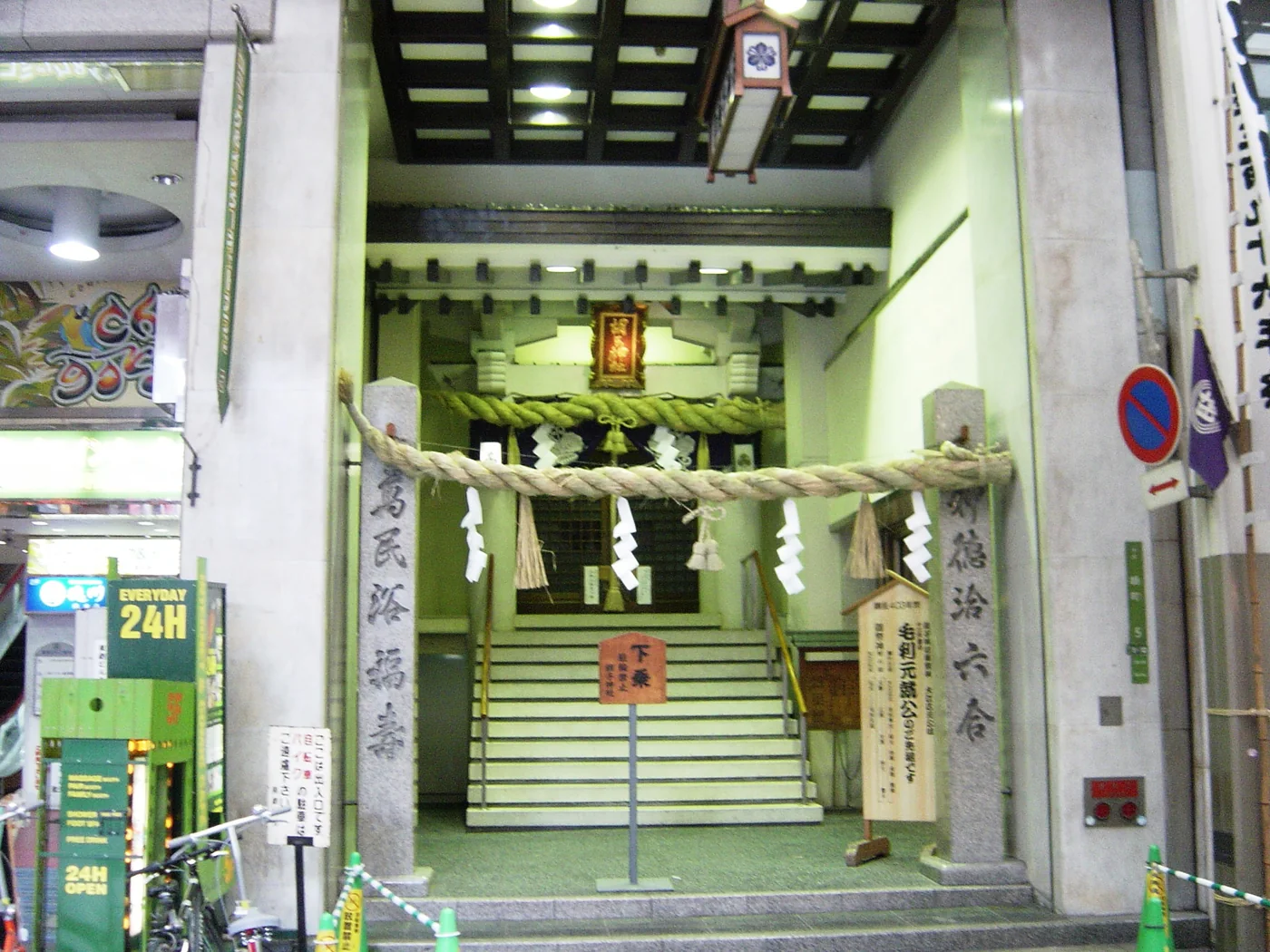
Plan the Ebisu Festival on 18–20 November 2026, Hiroshima Dreamination from 4 December to 24 January 2027, and station Christmas events around dinner, your hotel and the tram home.
For the three-day 2026 Ebisu Festival, save the address 5-14 Ebisucho
The shopping street federation’s announcement of 30 October lists Wednesday 18 and Thursday 19 November as the festival eves, and Friday 20 November as the main festival. Hiroshima’s official tourism page gives visiting hours of 10:00–22:00 and the address as 5-14 Ebisucho, Naka-ku, Hiroshima, beside the south exit of Hiroshima Mitsukoshi. You can visit during the day; you do not have to wait until dark.
Save “Ebisu Shrine” on your map and check the Ebisucho, Naka-ku address. Hiroshima has other Ebisu shrines. Choosing the first result after entering the Japanese name can save a shrine in Kusatsu, Kawauchi or Sendamachi instead. The map button at the lower left of the photograph leads to the Ebisucho shrine in this guide. Use Ebisucho tram stop as your arrival point.
If you want time to look at the shrine and decorated rakes, visit in the afternoon and have dinner afterwards. For the shopping streets after dark, arrive in Hatchobori towards evening, eat first and then visit the shrine area. The shrine stands within the city’s shopping streets. Pick a nearby meeting point so your group can find each other after visiting different shops.
Komazarae: allow time to look at the decorated rake stalls
The Ebisu Festival celebrates prayers for business prosperity. The lucky objects sold along the streets are called komazarae: rakes decorated with large and small gold coins, treasure ships and other ornaments. The large wooden tub used as an offering box in front of the shrine is another festival feature described by Hiroshima’s official tourism site. You can browse the decorations, then choose one to take home by its actual size and the stall’s displayed price.
The decorations project from the rake, so consider your next journeys before buying. If you are going straight back to your hotel, it is easier to carry and protect it. If you still have a crowded tram ride or a Shinkansen journey the next day, ask about packaging and leave space in your luggage. Choose a manageable size before returning to pay, rather than reorganising your bags on the platform afterwards.
Keep worship and shopping as separate stops. Put coins, your phone and your bag where you can reach them. Complete your visit when it is your turn, then move away from the entrance to take photographs or put things away. Ask before taking close photographs of stallholders and their goods, and stand where other customers can pass. Normal shopping-street courtesy still applies during the festival.
Arriving at Ebisucho or Hatchobori: choose your first stop
From Hiroshima Station, take a tram towards Kamiyacho. Ebisucho and Hatchobori are both close to the venue. Choose Ebisucho if you want to find the shrine first; choose Hatchobori for food and shopping in department stores and shopping streets. After getting off, move onto the pavement, enlarge your map to find the shrine’s block, then cross the road. Avoid stopping in the flow of passengers as you leave the tram.
You can combine the festival with walks through Hondori, Kinzagai and Ebisu-dori. All these names may appear on shopping-street maps. Save a particular shop or the shrine rather than relying on “city centre”. If family members shop separately, choose a meeting point with a full shop name and a recognisable entrance, and return there at the agreed time.
Hatchobori has a separate boarding area for trams towards Hakushima. Check both the route and destination on the stop sign. For Hiroshima Station, look for “広島駅”. After an evening on foot, avoid unnecessary crossings of major roads. Checking the journey from the stop nearest your finishing point saves more effort than walking back to your original arrival stop.
Hiroshima Station’s trams are on level 2; platforms for routes 1 and 2 have changed
Hiroshima Station now connects with the trams on level 2 of the station building. After arriving by JR, follow the tram signs to the boarding area. If you have luggage, leave it at your hotel first, then return for the tram. The shrine visit and evening walk will be easier. If you have bought dinner or drinks in the station, put everything away before joining the boarding route.
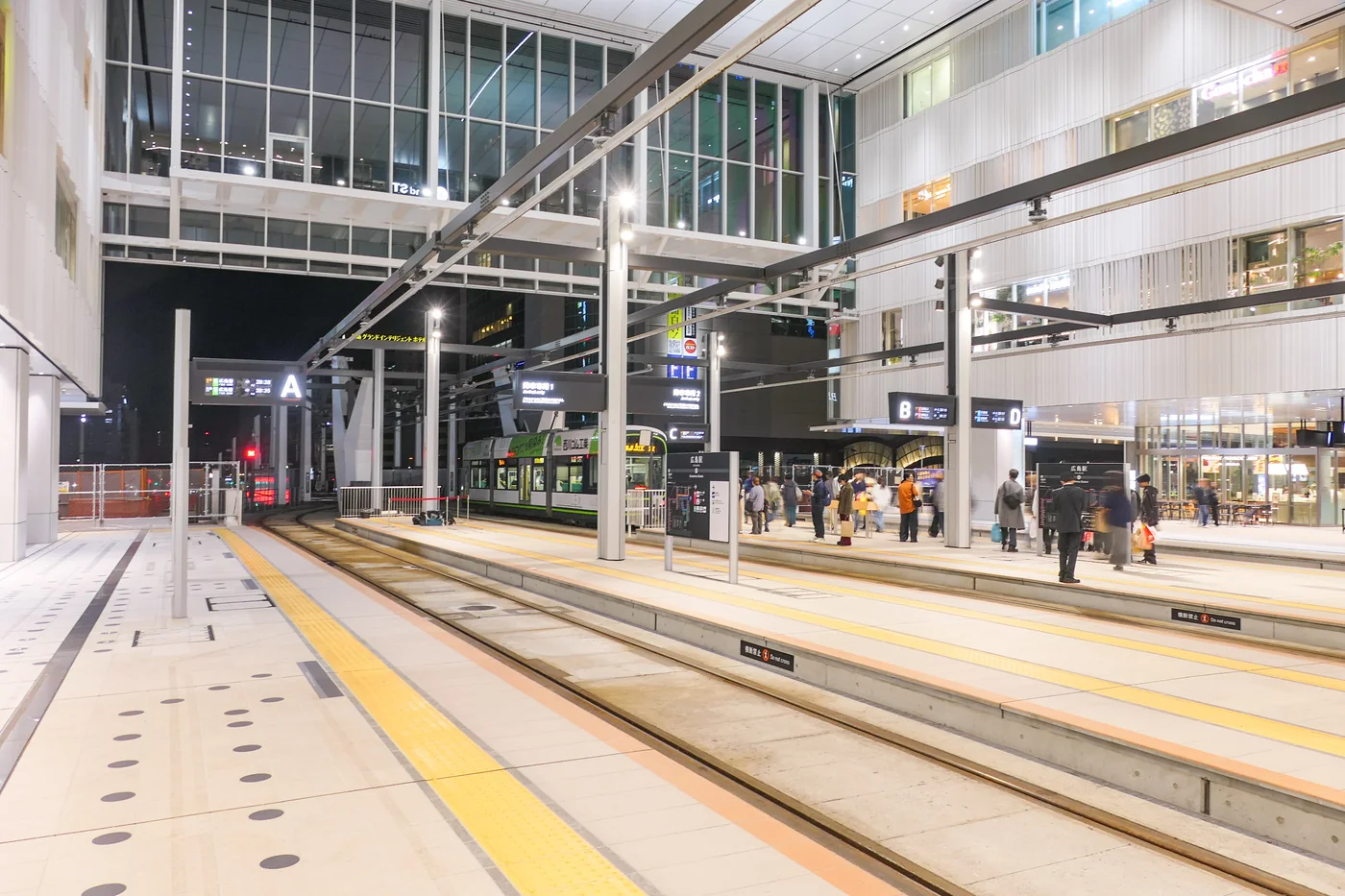
Hiroden’s platform change on 28 March 2026 moved route 1 to platform B and route 2 to platform D. For Hatchobori and Ebisucho, use routes 1, 2 or 6 travelling towards Kamiyacho. Route 5 goes to Hiroshima Port via Hijiyama and follows a different path through the city. Check your destination stop against the departure display; the platform for each service is also shown on site.
If you have a Shinkansen to catch afterwards, allow time to walk through the station, collect luggage and find the platform. Work backwards from the train’s departure: allow your time inside the JR station, then tram waiting and travel time, and only then decide when to leave the event. This is easier to manage than checking transport just before the lights go out.
For a simple tram return, start with ¥480
The standard Hiroden tram fare is ¥240 per adult journey and ¥120 per child journey. An adult travelling from Hiroshima Station to the centre and back pays ¥480. A paper one-day tram pass costs ¥700 for adults or ¥350 for children. If those are your only two tram rides, individual fares cost less. If you also visit other city sights by tram during the day, count all the day’s rides.
Three standard adult tram rides cost ¥720, ¥20 more than the ¥700 one-day pass. For two adults and two children paying child fares, three rides each cost ¥2,160 in total, compared with ¥2,100 for four one-day passes. That saves ¥60. Let your actual route guide your choice; adding a transfer simply to use the pass once more is usually not worthwhile.
A paper one-day pass is valid on the selected day. Scratch off the year, month and date, and show it to the crew when getting off. Digital timed passes include eight-hour and 24-hour products. Read both the start-time rules and coverage on the purchase page. If you will take a bus back to your hotel after the lights, compare a pass that covers buses separately. The basic one-day tram pass covers all Hiroden tram lines.
The ¥600 eight-hour pass suits three tram rides from afternoon to evening
MOBIRY TRAVEL’s timed tram passes cost ¥600 for adults and ¥300 for children for eight hours, or ¥700 and ¥350 respectively for 24 hours. Both cover all Hiroden tram lines. If you travel into the centre in the afternoon, move to another area before dinner and return to Hiroshima Station, three standard adult fares total ¥720. With all three journeys within the eight-hour validity period, the ¥600 pass saves ¥120.
The 24-hour pass can continue into the next day. For example, activation at 18:00 gives validity until 18:00 the following day. This suits an evening outing followed by more Hiroden travel the next day. Validity starts on activation. List tonight’s and tomorrow’s rides before choosing eight hours, 24 hours or two individual fares.
Digital passes must be activated within 90 days including the purchase date. Show the valid ticket screen to the crew when getting off, and complete your return journey within its validity period. Once you choose a start time, add the expiry time to your itinerary. If you leave only towards evening, you can buy in advance and activate through the page’s procedure when you actually travel, keeping the valid hours for your rides.
For weekend evenings, compare the ¥440 six-hour pass; the weekday version ends at 16:00
On Saturdays, Sundays and Japanese public holidays, compare the weekend and public holiday Digital City Pass. It costs ¥440 for adults or ¥220 for children and covers trams and eligible buses within the designated ¥240 flat-fare city zone for six hours from activation. Two standard adult tram rides cost ¥480. If both fit within six hours, the ¥440 pass saves ¥40.
For example, you could enter the centre at around 17:00 on a Saturday, eat, see the lights and return to Hiroshima Station around 22:00. You can divide the time between the rides as you like, but the ticket must still be valid when you get off on the return trip. It also covers designated operators’ local buses within the zone. If your hotel is near a bus stop, choose a service and include it in the evening’s transport calculation.
The same-price weekday Digital City Pass is valid from 10:00 to 16:00. The three days of the 2026 Ebisu Festival fall from Wednesday to Friday. An afternoon shrine visit can use a qualifying route within those hours, while evening rides require standard fares or another timed pass. Read the full product name before buying: the weekday and weekend/public holiday versions have separate dates and hours.
These two city passes mainly cover the city flat-fare zone. If you travel towards Miyajima beyond Hiroden-nishi-hiroshima, compare an all-tram-lines pass instead. Meipuru-pu, late-night buses and specified express routes have their own fares. For an evening between Hiroshima Station, Hatchobori and Peace Boulevard, compare those journeys first. You do not need to buy extra coverage for a different area the following day.
Use the live digital ticket screen; groups sharing one phone must travel together
With MOBIRY TRAVEL, register on the website, pay by credit card and open the ticket page to show the crew. The valid ticket screen has animation and a time obtained from the server. Use the live screen and keep your phone connected to the internet. Maps and hotel addresses can be saved as screenshots; for travel, keep the original ticket screen available after signing in.
One representative can buy tickets for up to ten people on a single phone and display the relevant number when travelling together. With group tickets on one phone, plan for everyone to take the same service and return journey. If two people want to go back to the hotel while the others continue, separate tickets are easier to manage. Check adult and child categories and passenger numbers before paying, and keep receipts and ticket pages in the same account.
You will need your phone for the return trip after using it for many photographs. Before activating a digital pass, check the battery, connection and sign-in status. Open the ticket again at the return stop. If the whole family depends on one ticket holder, meet up before entering the waiting area. The crew can then read the number of passengers and expiry time together when you get off.
If plans change before activation, digital tickets can be refunded under the rules within their activation deadline, with a ¥200 fee per person. Group tickets are refunded as a whole; once activated, they are treated as used tickets. For two unused ¥440 tickets bought together, the ¥880 payment minus ¥400 in fees leaves a ¥480 refund. Buying once you have decided to travel reduces the cost of a later cancellation.
A November evening: dinner, then the shrine and shopping streets
Allowing three hours for the Ebisu Festival, you could arrive in Hatchobori around 17:00, sit down for dinner and then walk through the shopping streets to Ebisu Shrine. As a planning example, allow an hour for dinner, about an hour for the shrine and rake stalls, and the rest for walking, shopping and waiting for your return tram. If your restaurant has a queue, shorten the shopping time rather than making the next appointment too tight.
If you want food from festival stalls, eat a smaller main meal and look at the day’s stalls around the shrine and Chuo-dori. When your group has different tastes, agree on a time for a proper meal. This is easier than everyone buying snacks separately and discovering late in the evening that someone is still hungry. Find somewhere to stop while eating, dispose of rubbish properly and then rejoin the walking route.
After returning from Miyajima, leave souvenirs and outerwear at your hotel before taking a tram into the centre. If you stay near Hatchobori, make the shrine your after-dinner walk. For Miyajima tides, ferries and visiting times, read the two-day Hiroshima and Miyajima itinerary and connect the end of your daytime route.
Friday 20 November also works well for a night in the centre. Compare the total room price including tax, occupancy and cancellation date before checking the walk from the shrine to the hotel. Booking somewhere you can reach on foot often saves evening transfers and waiting time.
Have okonomiyaki in Shintenchi before the rest of your evening
Okonomimura in Shintenchi fits an evening around Hatchobori and Ebisu-dori. Check which restaurants are open, their menus and available seats, then sit down and finish your meal before continuing. Hiroshima okonomiyaki is usually cooked on a griddle. If you want to watch while eating, allow a longer dinner so you do not have to leave midway for the next sight.
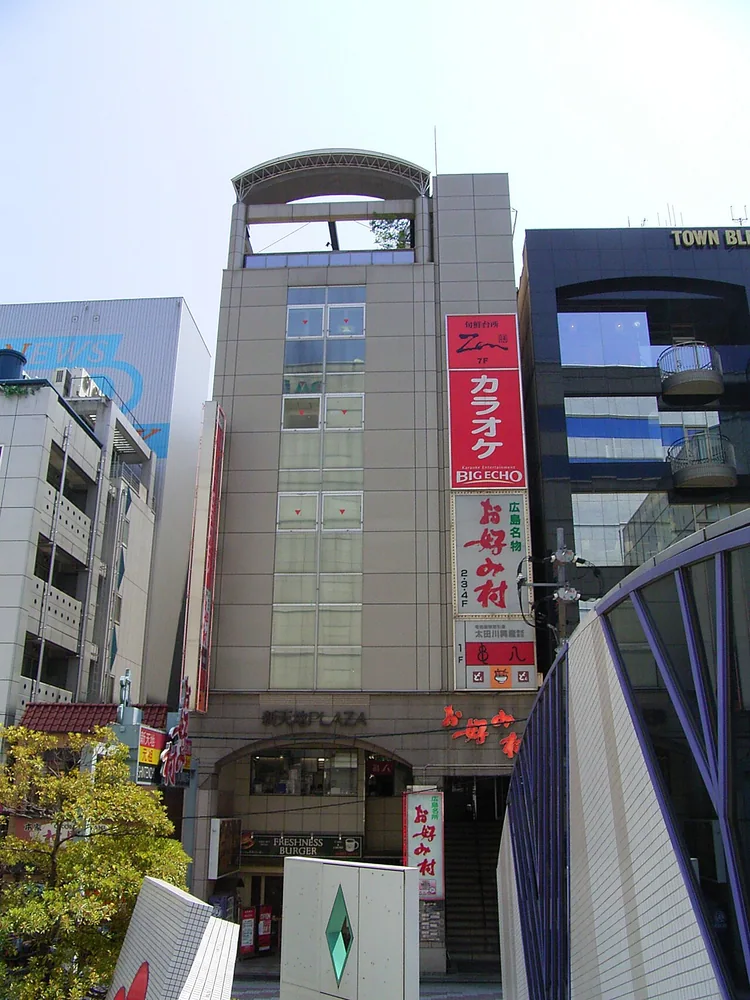
For a group, sort out seating first. Two people may find counter places separately, while a family of four who want to sit together should start with a restaurant that can accommodate them together. If the wait is long, agree how long you are willing to wait and choose a nearby alternative if needed. Avoid leaving one person with the luggage in a queue while everyone else has already moved to another shopping street.
If December lights are the main event, dinner in Shintenchi lets you join Peace Boulevard from the east. To photograph from west to east, eat near Fukuromachi and begin by Chuden-mae or Shirakami Shrine. Choosing dinner to suit your starting point gives you more flexibility than eating at the station before every evening outing.
2026 winter illuminations: 4 December to 24 January 2027
The organiser’s 2026 event outline gives this year’s dates as Friday 4 December to Sunday 24 January the following year, normally from 17:30 to 22:30. On opening day, 4 December, the lights begin around 18:00 because of the ceremony. If you are coming for that first night, have dinner or visit the station event first, then reach the main venue around six.
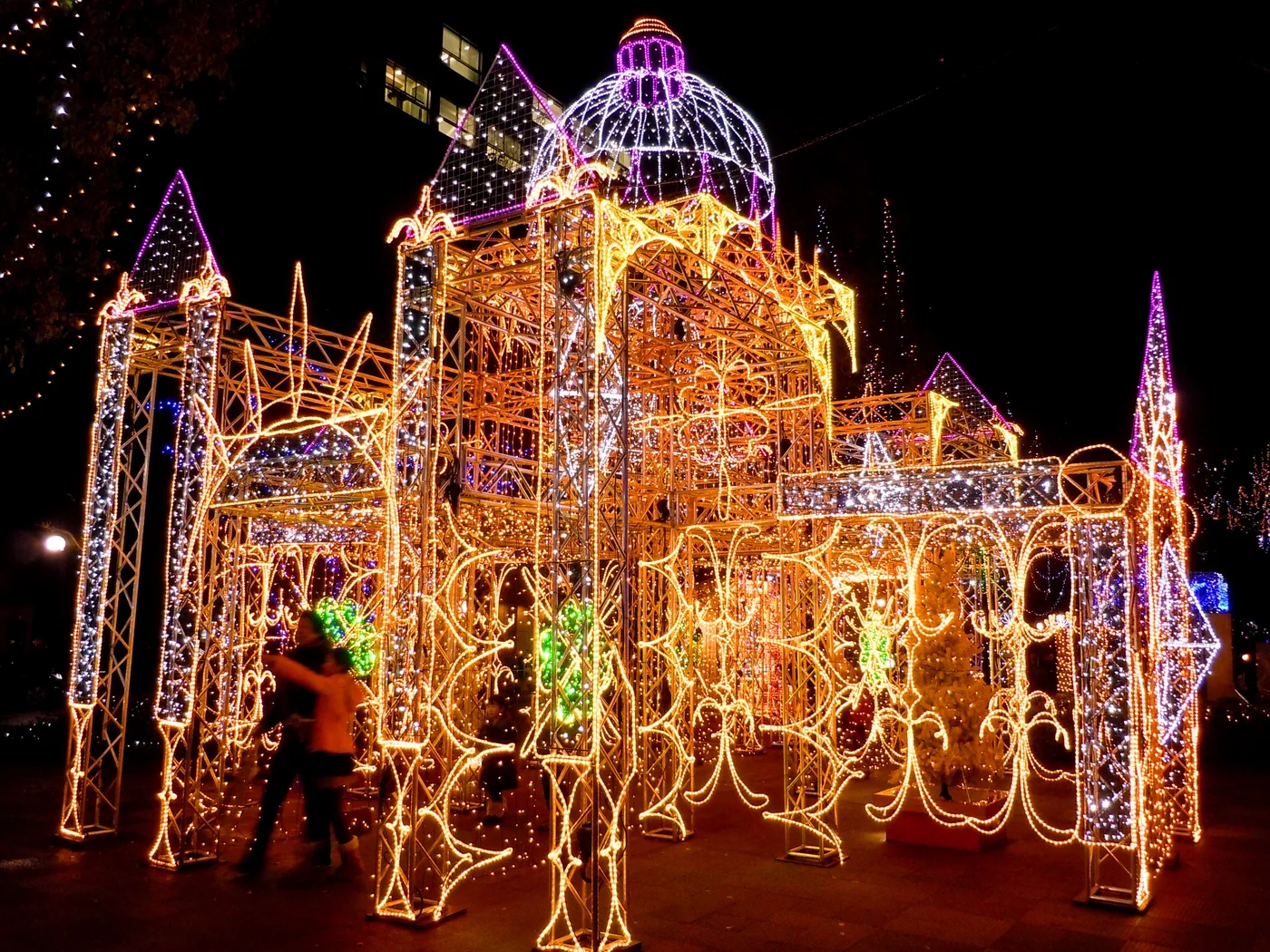
Hiroshima City’s announcement of 29 September explains that the event period moves to December–January from the 2026 season. Use these dates to book accommodation and transport. The Ebisu Festival in November and Peace Boulevard lights in December each have their own travel window.
The theme is a fairy-tale land, with the main evening walking area in the green strips on both sides of Peace Boulevard. The official tourism page lists free admission; food, shopping and transport cost extra. Before leaving, decide where to start and finish. If you spend time on photographs, choosing one green strip is more enjoyable than hurrying through every illuminated area.
Walk from Shirakami Shrine towards Tanakamachi, or reverse the route to suit dinner
The organiser identifies the main route as the green strips on both sides of Peace Boulevard, from in front of Shirakami Shrine to Tanakamachi junction. If you stay near Otemachi or Fukuromachi, start in the west and walk east through the lights. If dinner is in Shintenchi or your hotel is near Tanakamachi, enter from the east and walk towards Chuden-mae. Using different stops for arrival and departure reduces retracing your route.
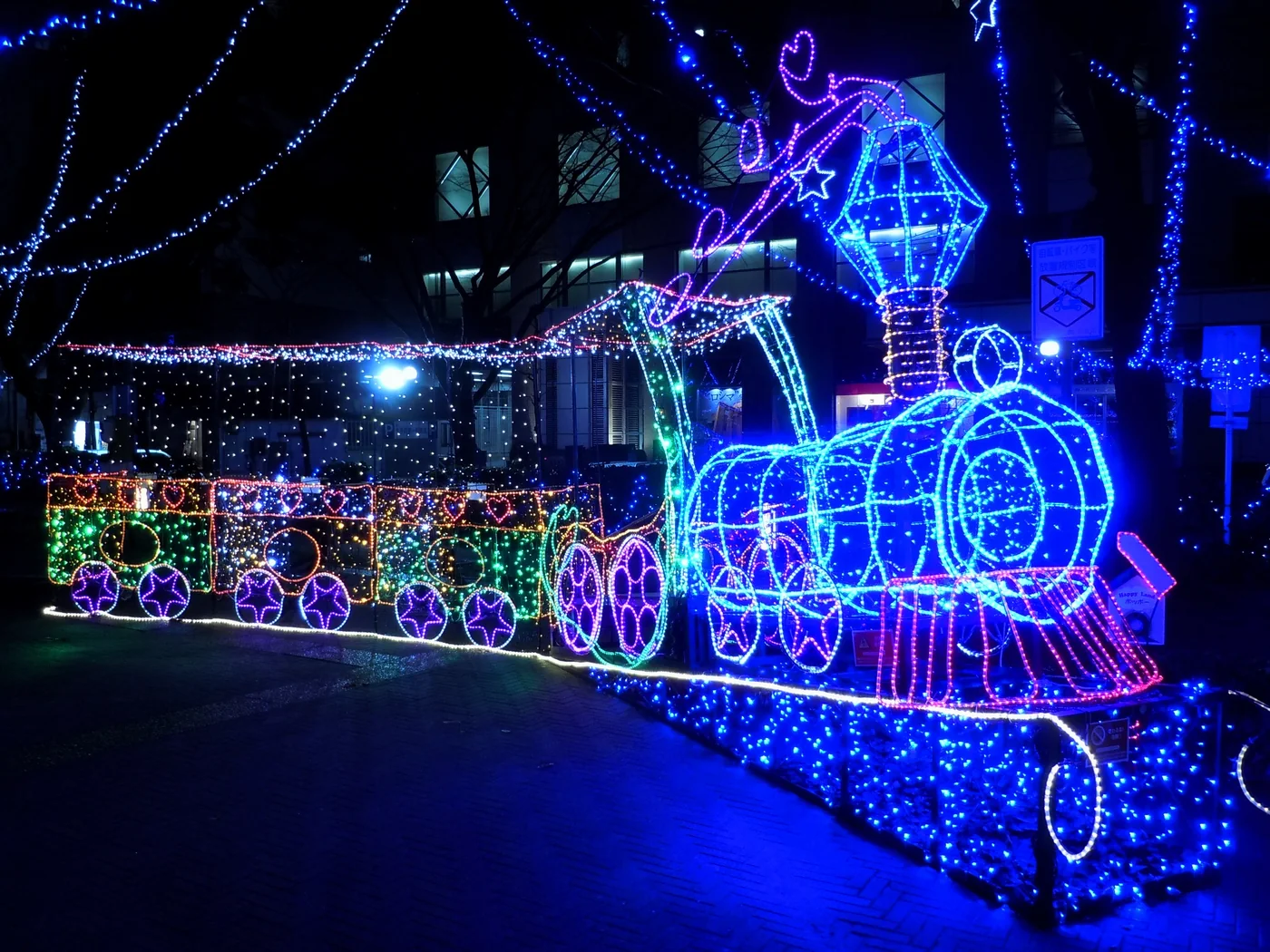
For photographs, walk along one side first and spend longer at the displays you like. Cross to the other side at a junction with signals. Peace Boulevard remains a road through the centre; use pedestrian crossings between the green strips. Even if your phone draws a straight line, follow the pedestrian route on the ground and take photographs from a safe position.
For a first visit, allow 60–90 minutes as a walking plan that includes photographs and short stops. If it is cold or children want to leave, finish after a favourite stretch. If you want to photograph every shape, allow another half-hour. If your group takes photographs at different speeds, agree to meet at the next junction within the same green strip so you can still find each other.
Peace Boulevard’s winter lights, filmed by Hiroshima’s official tourism organisation, show palace- and animal-shaped decorations and streets during an evening walk.
Fukuromachi and Chuden-mae suit a short walk through the lights
The official illumination access information gives a walk of about two minutes from Fukuromachi tram stop. If you are near the western end, also save Chuden-mae as a possible return stop. Save Fukuromachi, Chuden-mae and your hotel as separate map points, then choose your stop according to where you finish.
From Hiroshima Station, route 1 via Kamiyacho runs through the centre towards Fukuromachi and Chuden-mae. On the return platform, check for the destination “広島駅”. Route 7 goes towards Yokogawa, while the L loop circles the city; they serve different destinations. To return to Hiroshima Station, read the destination on the tram rather than relying on its colour or boarding the first arrival.
If you have spent the day near Peace Memorial Park, sit down for dinner towards evening and then visit the western lights. This can save one journey. If you stay near Hiroshima Station and have an early JR train the next day, a simple outward and return tram journey keeps the end of your evening easy to manage.
Choose one side route through Hondori, Namiki-dori or Alice Garden
The 2026 organiser’s outline also lists shopping streets including Namiki-dori, Kinzagai, Chuo-dori, Hondori and Nakanotana, plus public spaces such as Alice Garden, Higashi-shintenchi public square and the Kyobashi River open-air café area. You can add these before or after Peace Boulevard. If you stay in the centre, choose one route leading towards your hotel and browse on the way back.
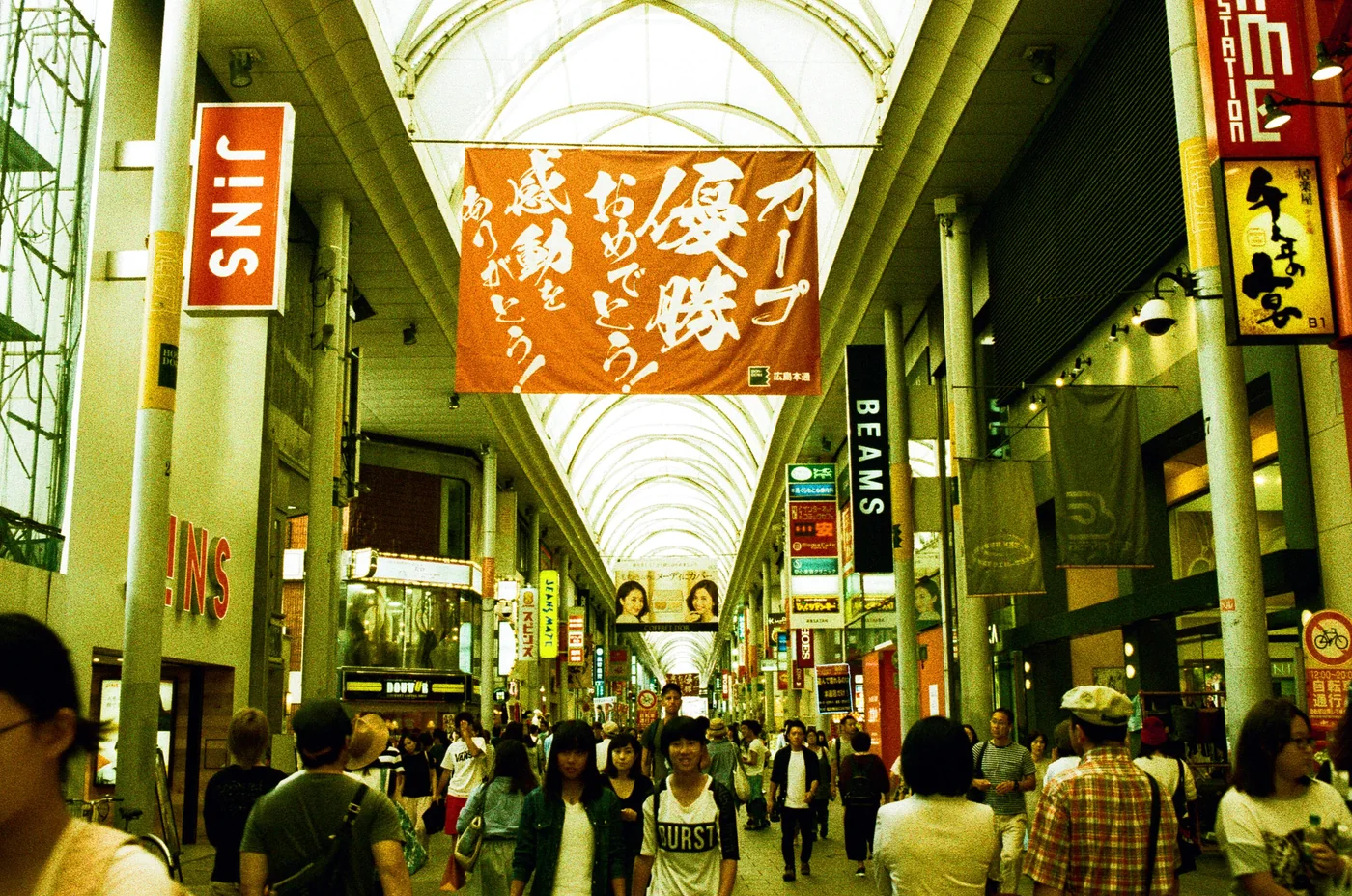
For shopping, visit your chosen shops before dinner and leave the evening for outdoor lights. Shop hours vary, so save the names of places you want to visit. Finding a closed shop and searching again for the same goods can use up the hour you had set aside for walking. If you only want street views, take your time through the arcades and junctions and stop when you find somewhere to sit.
Nakanotana shopping district lies between Aioi-dori, Hondori and Kinzagai and consists of five intersecting streets. Walk south from Tatemachi tram stop to reach its shops and restaurants. You can also turn in from Hondori, eat and continue to Peace Boulevard. For a shorter route, combine Hondori and Nakanotana. To stay closer to Shintenchi, combine Alice Garden with dinner nearby, then return from the nearest useful tram stop.
For hot drinks, check the sweets café’s own opening dates
Hiroshima’s official 2026 event page lists a Sweets Café in Area B, in the green strip in front of Hiroshima Crystal Plaza, open 17:30–21:30. Its December dates are 4–6, 11–13, 18–20 and 25–27. In January, they are 8–11, 15–17 and 22–24.
If a hot-drink break is part of your plan, choose one of those dates and route your walk through Area B. The main lights normally continue until 22:30, but the café closes earlier. Arrive before 21:30 if you want to stop there. On other dates, use nearby restaurants and cafés for food and drinks, and save their opening hours before leaving.
With children or older relatives, decide where to sit and eat before choosing the illuminated stretch to walk. Have a proper meal first if you need hot food. If you want to walk and take photographs, carry a bag that leaves your hands free. Holding a drink, camera and shopping bags becomes awkward at busy crossings. Put purchases away before moving on.
See the station Christmas tree from 13 November
JR West’s announcement of 29 October gives 13 November to 25 December as the dates for HIROSHIMA STATION CHRISTMAS 2026 around the station. On 13 November, a lighting ceremony lasting about 15 minutes starts at 17:30 in Eki × Den Square, in front of the level 2 tram boarding area. If it fits your arrival, leave time for this stop at the station.
The event links illuminations at different facilities north of and around the station. If you are also visiting Ebisu Shrine that evening, see a short stretch near the station first, then take the tram to Ebisucho. If you have just arrived and stay near the station, a short walk around the station after dinner can be enough, without another trip into the centre.
Before photographing the level 2 Christmas tree, deal with JR luggage and travel arrangements, then return to the square. Keep the lighting-ceremony outing separate from normal tram queuing and leave room for passengers to pass. From 4 December, Peace Boulevard is also illuminated. With two nights, you can keep one for the station and one for the centre.
Choose Hatchobori, Peace Boulevard or Hiroshima Station by where your evening ends
If the Ebisu Festival is your main aim, compare accommodation around Hatchobori, Ebisucho and Shintenchi first. Dinner, shopping streets and the shrine are close together here, making a walk back easier. Put the full hotel address on your map and check the entrance street. An area name in a room listing only helps narrow the search.
For winter illuminations, compare hotels along Peace Boulevard and around Otemachi or Tanakamachi. Choose the end where you expect to finish walking. When comparing rooms, enter the number of adults, children’s ages and luggage needs, then check beds, breakfast and the total including tax. On a winter night, staying near your finishing point is more comfortable than a long walk to collect bags or another transfer.
If you have a Shinkansen, airport journey or a different destination each day, Hiroshima Station lets you keep luggage and long-distance transport at one base. Take the tram into the centre at night and return without another transfer to arrange. For flights, use the guide from Hiroshima Airport to Hiroshima Station and the Bus Center and choose your last-night base around your actual flight time.
With children, make one short stretch the whole evening outing
For a family evening, plan just 30–45 minutes after dinner. Choose one display the children want to see, then a nearby rest point and return stop. This is a suggested short-walk duration; one green strip is enough. If children become sleepy, return to the hotel for a bath and rest so the next day can start at your usual pace.
With a pushchair, check the junctions on your route and allow time to board, position it and get off the tram. With two adults, one can look after the pushchair and bags while the other checks the stop or route. Redistribute what you are carrying before arrival. If a child needs carrying on the way back, this reduces last-minute searches for belongings and tickets.
If children want food from different stalls, agree where to stop and eat. Finish eating before crossing the road or returning to the lights, keeping fewer things in your hands while walking. Older children can help remember the return stop, hotel name and meeting point, so they know which way to go at shopping-street junctions.
In rain or strong wind, keep dinner and one covered arcade
On an evening when you do not want to stay outdoors for long, shorten the plan to dinner, a stretch of Hondori or Ebisu-dori and the hotel. Spend the time reserved for Peace Boulevard in a restaurant, shops or resting at the hotel. If you are already in the centre, walk a nearby stretch and take the tram back. Shoes and a coat suited to that evening’s weather matter more than completing the route for photographs.
When photographing lights with an umbrella, first stop where you will not obstruct others. Put shopping bags away before taking out your phone or camera. Lower the camera at crossings and resume photographs on the other side. Umbrellas slow the group’s evening progress, so leave more time between a dinner booking and the return tram.
If your hotel is near the shopping streets, you can put things in your room first and go out briefly after dinner. If you stay near the station, concentrate the evening there and save energy for tomorrow. Two nights give you flexibility: keep the longer walk for the more comfortable weather and use the other evening for a good dinner and an early rest.
Read the destination for Hiroshima Station and save the final journey before dinner
Hiroden provides official tram timetable and location searches. Enter your return stop, destination and travel date, and save the evening services. Check the displays on the day as well. Services vary by direction, date and terminus. If you stay near Hiroshima Station, searching with “広島駅” as the destination is the clearest approach.
The L loop opened on 28 March 2026 and runs through areas including Inarimachi, Hijiyama-shita, Minamimachi and Kamiyacho. Hiroden’s timetable states that it does not serve Hiroshima Station. If a loop service arrives at Hatchobori, leave it for passengers travelling along that route and take a service with the correct destination for the station. Some late-night trams display route 0; continue to use the front destination and notices to identify them.
If you have a specific Shinkansen, go straight to the station after your walk, collect luggage and then enter the JR gates. If your hotel is near Hiroshima Station, follow the familiar exit on arrival. Save the hotel’s Japanese name and address in an offline phone note so you can explain which side you need even when the battery is low.
A few useful answers
When is the 2026 Hiroshima Ebisu Festival?
Wednesday 18 and Thursday 19 November are the festival eves; Friday 20 November is the main festival. It takes place at Ebisu Shrine, 5-14 Ebisucho, Naka-ku, Hiroshima. The official tourism page lists 10:00–22:00.
When do Hiroshima’s 2026 winter illuminations begin?
They run from 4 December to 24 January 2027, normally 17:30–22:30. Opening day, 4 December, begins around 18:00. The main venue is the green strips on both sides of Peace Boulevard, from Shirakami Shrine to Tanakamachi junction.
Which tram goes from Hiroshima Station to Ebisu Shrine?
Take route 1, 2 or 6 towards Kamiyacho and get off at Ebisucho or Hatchobori. Hiroshima Station’s tram boarding area is on level 2. Route 1 normally uses platform B and route 2 platform D; check the service’s destination and platform display while waiting.
Do I need a one-day tram pass just for an evening in the centre?
Two standard adult tram journeys cost ¥480, less than the ¥700 paper one-day pass. On Saturdays, Sundays and Japanese public holidays, also compare the ¥440 six-hour digital city pass. The similarly named weekday version is valid only from 10:00 to 16:00. For three rides from afternoon into evening, compare the ¥600 eight-hour pass.
Official information and references
Sources used in this guide.
- Hiroshima Central Shopping Street Federation: 2026 Ebisu Festival dates
- Dive! Hiroshima: Ebisu Festival, address and hours
- Ebisu Shrine official website
- Hiroshima Dreamination organiser: 2026 event outline
- Hiroshima City: changes to the 2026 illumination period
- Dive! Hiroshima: 2026 winter illuminations and Sweets Café
- JR West: Hiroshima Station Christmas 2026
- Hiroden: 2026 Hiroshima Station platform changes
- Hiroden: riding trams and standard fares
- Hiroden: one-day tram pass prices and coverage
- Hiroden: routes and services
- Hiroden: tram location information
- Hiroden: 2026 loop timetable
- Dive! Hiroshima official video: Hiroshima Story
- MOBIRY TRAVEL: eight-hour and 24-hour tram passes
- MOBIRY TRAVEL: six-hour weekend and holiday city pass
- MOBIRY TRAVEL: weekday city pass hours
- MOBIRY TRAVEL: live ticket screens and group purchase FAQs
- Dive! Hiroshima: Nakanotana shopping district and official map location