2026–27 Appi Kogen Ski Resort guide: choosing between Shirakaba, Yamabato, and Nishimori, calculating the three lift pass tiers and child rates, and connecting rentals, lessons, and return buses from Morioka or Hanamaki Airport.
- Region & Focus
- Appi Kogen
- Reading Scope
- 22 min read · 10 chapters · 6 Q&As
- Official Verification
- 13 official sources checkedUpdated November 22, 2026
- Key Topics
- WinterBookingFirst trip
Chapter Route Map (tap any stop)
- Start with a Run on Shirakaba Before Heading Up Mt. Maemori
- Map Out Your Return Lifts Before Exploring Intermediate Terrain
- Powder, Tree Runs, and the Nishimori Snowcat
- Adult Lift Tickets: Counter Prices, Online Rates, and Deposits
- Calculating Lift Tickets for Two Adults and Two Kids
- Three Season Windows, Night Skiing, and Balancing Summit Time with Buses
- Morioka West Exit Stop 26: Public Buses vs. Guest Shuttles
- Hanamaki Airport Buses and the JR Hanawa Line
- Book Rentals and Lessons Separately, and Suit Up Before Lesson One
- Keep a Meetup Plan Ready for Mixed-Ability Groups
- Quick Q&A
First-timers at Appi Kogen Ski Resort should start on the Shirakaba run at the base to test gear and practice stopping. Only head up Mt. Maemori on the Appi Gondola for the 5.5 km Yamabato-to-Shirakaba run once you can control your speed consistently. The 2026–27 season is scheduled to run from December 5 through as late as May 5. Recreational skiers and riders need only the BLUE PASS, while experts chasing ungroomed terrain on Mt. Nishimori can buy a single snowcat ride or upgrade to the multi-ride BLACK PASS. Day-trippers coming from Morioka should work backward from their return bus departure to schedule their final run and rental drop-off.
Start with a Run on Shirakaba Before Heading Up Mt. Maemori
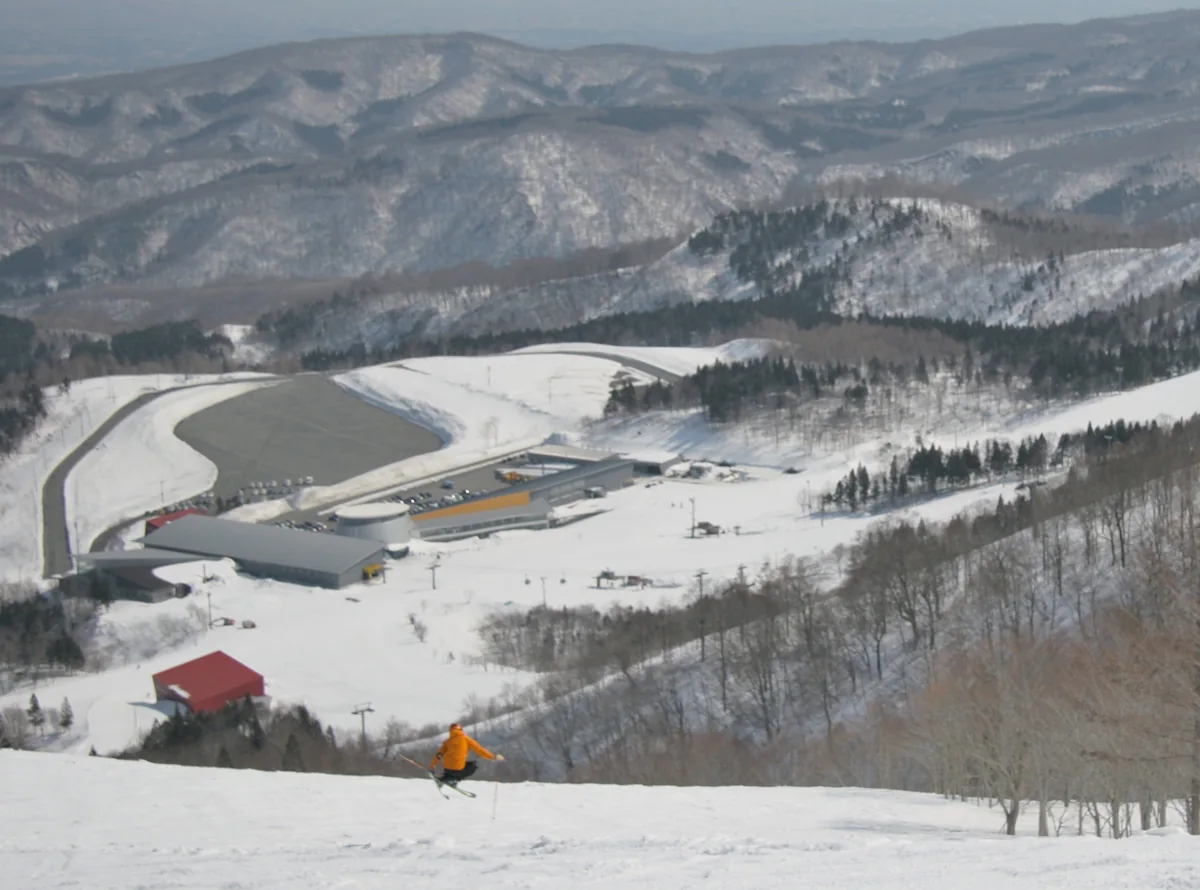
Step outside the Appi Resort Center and you are looking straight at the Shirakaba trail and the Central Quad chairlift. Rentals, the ski school, and ticket counters are all inside the center, making the base the easiest meeting point for first-timers and families with kids in lessons. Marked as beginner terrain, Shirakaba stretches about 1 km with an average pitch of 9 degrees and a maximum of 16 degrees. The trail map lists a top width of roughly 300 meters, though it narrows in places, so pick an uncrowded line with clear sightlines uphill and downhill and leave plenty of room to stop.
If you want a slightly longer beginner lap, try Karugamo, which runs about 1.2 km at an average pitch of 10 degrees and a maximum of 15 degrees, though it is narrower. Riders linking their first turns will find it easier to carve wide traverses on Shirakaba. Wait until you can pick your slowing point ahead of a turn and leave space for overtaking skiers before moving onto Karugamo or longer routes. If someone in your group is breaking in new boots or snowboarding for the first time, let them call for another Shirakaba lap at the bottom rather than deciding in the gondola line.
Yamabato is the resort's longest beginner descent. Riding the Appi Gondola to the 1,304-meter summit of Mt. Maemori and following Yamabato down into Shirakaba covers 5.5 km from top to base. Official specs list a maximum gradient of 20 degrees and a minimum width of around 15 meters, so even comfortable beginners need to pace themselves through sustained speed control, turns, and passing traffic. Snowboarders who stall on the flatter sections may have to unstrap one foot and skate; if your group splits up, regroup in open, visible spots well out of the main line of travel.
Anyone who just learned the falling-leaf technique and still needs to sit and rest every few dozen meters is better off taking two or three laps on Shirakaba than spending an entire morning working down from the summit. Conversely, skiers and riders who already handle full green runs smoothly across pitch changes should ride Yamabato while their legs are fresh. Check the directional signs carefully at the summit exit, as steeper routes branch off from the top of Mt. Maemori, and agree on the route with your group before pushing off.
Morning visibility may let you read terrain rollers well ahead, while afternoon fog can cut sightlines down to a turn or two. If visibility drops or any key segment of Yamabato closes, stick to the open base runs. Appi's live mountain report breaks Yamabato into separate sections, so check it to confirm the entire top-to-bottom line is open—seeing "Appi Gondola Operating" alone is not enough to commit the whole group to the summit.
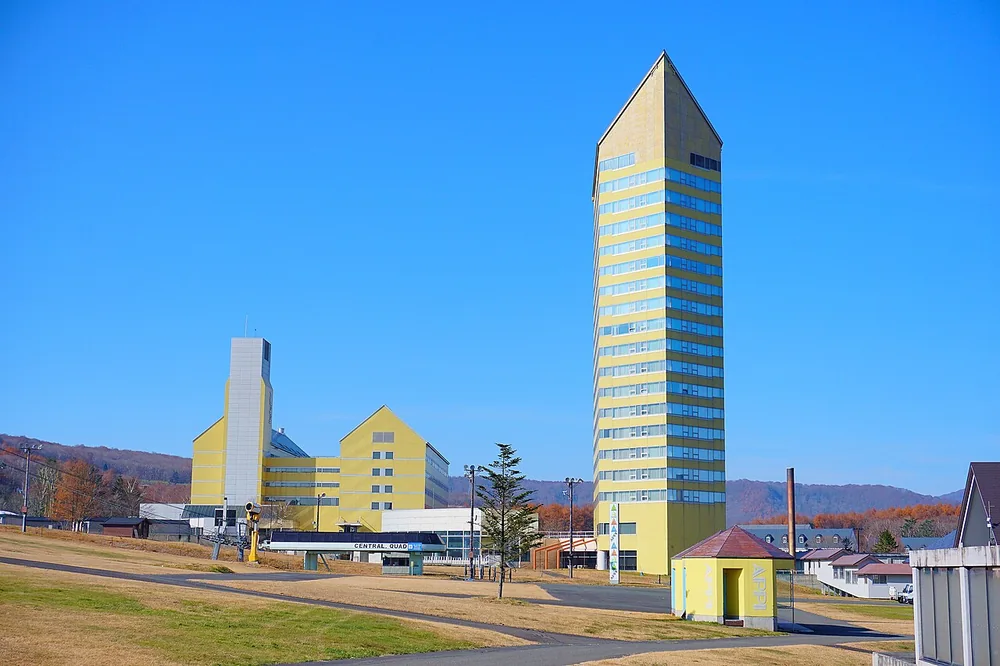
2026–27 Appi Kogen Ski Resort guide: choosing between Shirakaba, Yamabato, and Nishimori, calculating the three lift pass tiers and child rates, and connecting rentals, lessons, and return buses from Morioka or Hanamaki Airport.
Map Out Your Return Lifts Before Exploring Intermediate Terrain
Appi publishes 21 trails totaling 43.1 km spread across Central, Sailer, Second, and Nishimori—note that Mt. Maemori and Mt. Nishimori are two separate peaks. With the Appi Resort Center sitting at roughly 620 meters elevation, the resort's maximum vertical drop is 708 meters, divided about 30% beginner, 40% intermediate, and 30% advanced. Appi rewards a full ski day because several mid-mountain runs feed into junctions and chairlifts that take time to navigate, and your actual mileage depends heavily on what is open that day.
Take your first run in Central to gauge how everyone handles the snow surface and pitch changes. Kakkou spans about 2.8 km of intermediate-to-advanced terrain and also hosts races, while Kitsutsuki runs roughly 2.2 km with the same rating and tree-lined edges. Once you have your bearings, choose Kakkou or Kitsutsuki depending on daily grooming and lift status. Look past the average gradient to the maximum pitch column on the trail map: Kitsutsuki averages 12 degrees but hits 28 degrees at its steepest, and those steeper pitches determine whether the run fits your whole group.
Hayabusa drops straight from the Mt. Maemori summit for roughly 3 km, hitting a listed maximum of 30 degrees across mixed-difficulty segments, while upper Ootaka features steep ungroomed pitches. Before dropping into either run, trace where your chosen entry connects to the next trail down and check the snow surface right at the top gate. For many intermediates, repeating a few laps where you can hold clean turns beats following friends onto an unfamiliar black diamond.
Before crossing into Sailer or Second, identify the chairlifts and traverse trails that bring you back to Central. You can drop toward the Sailer base via the 3 km Sailer Long, which carries beginner-to-advanced ratings along its sections, then check the status of Sekirei to return—this roughly 1.6 km intermediate connector narrows to about 15 meters and pitches up to 26 degrees. Under normal schedules, the Vista Quad on the Second side closes at 15:00 and the Sailer Quad closes at 15:30, so anyone skiing the far side must reach the return lift line well before last chair.
Day-trippers arriving by bus should save new zones for the morning. If your group plans to split up after a warm-up lap, pick a specific indoor meeting point inside the resort center—such as the ski school desk, ticket counter, or rental station—rather than a vague spot "at the bottom of Shirakaba." If winds pick up while you are on the outer pods, check return lifts and connector trails immediately before taking another lap. Lifts can close earlier than scheduled, and resort notices state that Sailer Lift No. 2 only operates as a backup when bad weather shuts down the Sailer Quad.
Races also take familiar routes offline. The 2026–27 live snow report lists Kakkou closures on December 27, January 9–11, January 15–17, and February 15–21, while parts of Shirakaba face restrictions on January 24, March 13–14, and April 4. If Shirakaba's practice area is narrowed while you are with beginners, prioritize lessons early so instructors can guide them to safe open terrain. Intermediate groups hitting a Kakkou race closure can pivot to Kitsutsuki and the rest of the open Central runs.
Powder, Tree Runs, and the Nishimori Snowcat
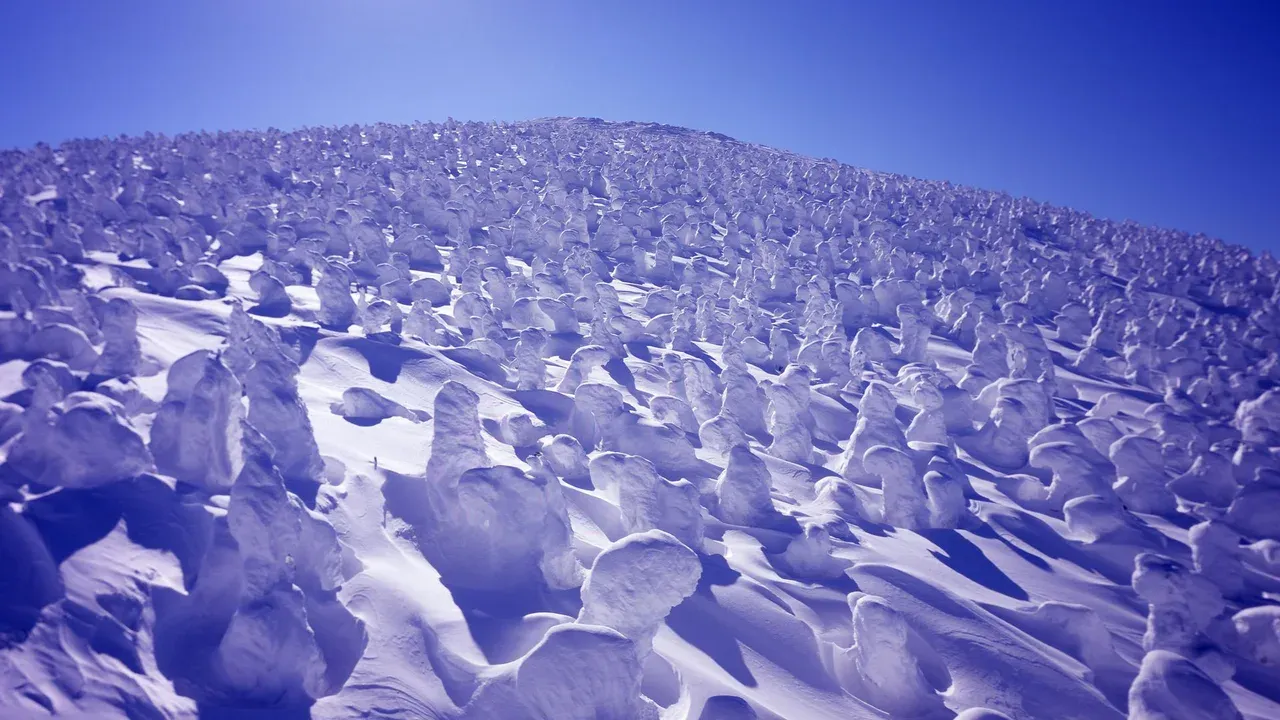
Appi markets its dry, light snowfall as "Aspirin Snow." If you are planning a trip specifically around fresh powder, build in at least two consecutive days during the regular season: watch overnight snowfall, then check Appi's summit and resort-center webcams along with the trail status board in the morning for wind and visibility. Even when skies look clear at the base after a storm, summit lifts can remain on wind hold.
Both main runs off the Mt. Nishimori summit carry advanced ratings. Yamagara stretches about 900 meters at up to 32 degrees and stays completely ungroomed, while Inuwashi runs roughly 1 km at up to 30 degrees and is mostly ungroomed. Hidden contours beneath soft snow change how your skis or board respond; if you feel confident on hardpack groomers but have little deep-snow experience, test how your gear floats on an open run with an easy bailout before committing to Nishimori. Resort notes point out that Inuwashi keeps a single snowcat-width groomed strip down the run, yet it remains rated advanced overall, while Sailer's Lift No. 2 Course A is entirely ungroomed and tops out at 34 degrees—the steepest pitch on the mountain.
Appi marks bounded tree-run zones on its official map: Attack and Bravo on Nishimori, Cruise 1 and 2 on Mt. Maemori, and Dragon Tail on the Sailer side. Entry depends on the daily open signs at each gate—never duck closed gates, ropes, or "Skiing Prohibited" markers. The resort specifically warns that upper Attack is steep and funnels into a gully where a wrong line can trap you below the trails, advising riders to carry a map or GPS and never ride alone. While the Nishimori Snowcat drops riders above the tree zones, ski patrol makes the final call on gate openings based on on-mountain conditions. For your first tree run, never follow random tracks as a guide or estimate descent times from groomed beginner runs; tree zones are restricted to advanced riders, and the resort lists a base search-and-rescue fee of ¥100,000 for up to one hour.
Included with the BLACK PASS, the Nishimori Snowcat is scheduled to run conditionally from 9:00 to 14:30 between December 19, 2026 and March 28, 2027, carrying up to 10 riders per trip on a first-come basis at the loading point, with priority and repeat rides for BLACK PASS holders. If you only want a single taste, walk-up single-ride tickets cost ¥5,000 at the Nishimori base loading area when seats remain—no advance booking is possible. Buying a regular-season adult counter BLUE PASS plus one snowcat ride totals ¥14,000, subject to same-day seat availability. The snowcat does not operate if both the Appi Gondola and Sailer Quad are closed. If only one person in your party wants a BLACK PASS, split up at the base, and factor in the traverse to Nishimori, loading wait times, and the return ski to Central—14:30 is the final cat departure from Nishimori, not the time to leave the resort center.
Adult Lift Tickets: Counter Prices, Online Rates, and Deposits
For a single day of riding, start your comparison with the BLUE PASS, which covers all operating chairlifts, the Appi Gondola, and scheduled night skiing on that day. During the 2026–27 regular season, an adult 1-day ticket costs ¥9,000 at the ticket window versus ¥9,500 listed online. Appi's seasonal rate sheets and pass overview separate prices with and without the IC card deposit by date, channel, and single- or multi-day duration. Window rates include a ¥500 IC card deposit that is refunded when you return the card to a ticket counter; skiers who already hold a compatible reloadable IC card can check the resort's separate online top-up portal and checkout rates.
Run the math before buying a consecutive 2-day pass during the regular season. Two separate ¥9,000 counter 1-day tickets cost ¥18,000 up front and net ¥17,000 after you return both IC cards for ¥1,000 back. By contrast, a consecutive 2-day window pass is listed at ¥18,500, or ¥18,000 net after returning one card. A 2-day pass only saves you a trip to the ticket window on day two, whereas buying single-day tickets at the counter costs less overall and leaves you free to take a rest day if storms roll in. In the early or spring seasons, a consecutive 2-day pass is ¥9,300 compared to ¥9,800 total for two separate 1-day tickets; if your trip straddles season dates or includes a rest day, calculate day by day.
The regular-season GOLD PASS lists at ¥14,500 at the ticket window—¥5,500 more than a same-day counter BLUE PASS—adding priority boarding on major quad lifts and the Appi Gondola plus access to the summit lounge. That surcharge only pays off if you plan to stack long top-to-bottom gondola laps or use the lounge. If you are spending the morning on Shirakaba in a lesson and catching an afternoon bus back to Morioka, priority lines make little difference. Appi caps both GOLD and BLACK passes at 30 tickets per day, available at the ticket counter or as an upgrade from a BLUE PASS.
The regular-season BLACK PASS is listed at ¥33,500 at the ticket window, adding the Nishimori Snowcat, First Track access, fast-track food court lanes, and the exclusive BLACK PASS Lounge on top of priority lifts and summit lounge access. Only pay the premium if there is at least one perk you will definitely use and you are willing to arrive early for it—high winds that shut down Nishimori will change how much value you get out of the pass. Because BLUE, GOLD, and BLACK all grant access to the same core lift network, a higher-tier pass never opens a closed trail.
A season pass only pencils out if you are logging a long consecutive stay or multiple trips to Appi all winter. The final early-bird season pass through November 30, 2026 is listed at ¥89,900, and the standard season pass at ¥110,000 (excluding deposit), on sale through March 31, 2027. Season pass benefits mirror the BLUE PASS, covering operating lifts, the gondola, and night skiing. For a standard three-day ski trip, simply match your actual ski days against the 1-day and multi-day rates.
| Pass Type | Valid Season | Adult 1-Day Window Price | Key Inclusions |
|---|---|---|---|
| BLUE PASS | Early & Spring | 4,900 | Open chairlifts and Appi Gondola |
| BLUE PASS | Regular Season | 9,000 | Open chairlifts, Appi Gondola, and same-day night skiing |
| GOLD PASS | Regular Season | 14,500 | Priority boarding on major lifts & gondola, summit lounge |
| BLACK PASS | Regular Season | 33,500 | Adds Nishimori Snowcat, First Track, and dedicated lounge |
Calculating Lift Tickets for Two Adults and Two Kids
Appi's 2026–27 child ticket rules depend on residency. Children aged 12 and under residing in the Tohoku region ski free when accompanied by a guardian. All other visitors fall under the standard policy: each ticketed adult can bring one child aged 12 or under free of charge, while each additional child beyond the adult count pays ¥3,500 in the regular season or ¥2,500 for early, spring, or night-skiing tickets. Free-riding children still need their own child IC card from the ticket counter with a ¥500 deposit. Adult pricing applies from junior high school age upward, so if a child is right on the age or grade cutoff, give the ticket agent both their birth date and school grade.
Take two adults skiing daytime in the regular season with an 8-year-old and a 10-year-old. Two counter BLUE passes cost ¥18,000, and each adult covers one free child, leaving only two ¥500 child card deposits (¥1,000 total). You pay ¥19,000 at the counter and get ¥2,000 back when all four cards are returned, for a net ticket cost of ¥17,000. If only one adult is skiing with those two kids, the second child pays the regular-season child fare; non-skiing family members waiting inside the resort center do not count toward the free-child ratio.
If your children are taking lessons, buy the pass required for the terrain their class uses—ask in advance whether the lesson rides standard chairlifts and make sure the child carries their own IC card when needed. Crayon Shin-chan Kids School uses dedicated indoor and outdoor learning areas, so if only the kids are taking lessons while parents stay off the snow, pay only for the skiers. Keep each rider's IC card in a dedicated scannable jacket pocket and avoid mixing up coats at lunch, or someone may get stuck at the lift gate with the wrong pass.
Three Season Windows, Night Skiing, and Balancing Summit Time with Buses
Early season runs from December 5 to December 18, 2026, with four lifts scheduled: the Appi Gondola (8:30–15:00) plus Central Quad, Central No. 2, and Central No. 5 (Central Quad 8:30–16:00). Day passes are cheaper if you just want early-season laps on Shirakaba or time to dial in gear, whereas anyone targeting Sailer, Second, or Nishimori should wait for the regular season. If you book an opening weekend requiring a long transfer, consider overnighting in Morioka so you can easily cut the ski day short for dinner and shopping in town if limited terrain is open.
Regular season runs from December 19 through March 28, adding the Sailer Quad and Vista Quad to the schedule. From December 19 to January 31, the Appi Gondola closes at 15:00, extending to 15:30 from February 1 through the rest of the regular season; the Central Quad operates until 17:00 for daytime skiing. If a year-end group includes first-timers, keep beginner lessons at the base while experienced skiers explore the upper mountain. Day-trippers on a tight clock can finish on Shirakaba and ski straight to the resort center door to return rentals.
Spring season starts March 29 and runs as late as May 5, 2027, with four scheduled lifts operating until 15:30. Direct public buses from Morioka are scheduled only through the final regular-season weekend on March 28, while hotel-guest shuttle buses run through April 4. Anyone planning an April or Golden Week ski trip should lock in last-mile transfers from Appi-Kogen Station or book a winter-equipped rental car before committing to a ski-focused stay. Spring snow shifts quickly between icy mornings and heavy afternoon slush, so adjust your first and last runs to pitches where you can stay in control.
Night skiing operates from December 19 through March 28, primarily on weekends, Japanese national holidays, and bonus dates marked on the official calendar, covering the lit Shirakaba area. Standard last chair is 19:30, extending to 22:30 on New Year's Eve (December 31). Adults arriving only for the evening can buy a ¥4,000 night pass at the counter starting at 16:00 on operating days, while daytime BLUE PASS holders can keep skiing through standard night hours (check with the ticket counter for New Year's Eve extended-hour entry).
Even if your legs still feel fresh enough for another lap at dusk, walking to the bus stop in ski boots is a different story. Regular Morioka buses leave before night skiing ends, so if you want to ski under the lights and still return to Morioka, align your exit with the day's bus timetable—or book a night slopeside so you can enjoy a hot bath and dinner at Appi. If you plan to stay on the snow past the last direct bus, make sure your return links a local transfer to the JR Hanawa Line rather than relying on train departure times alone.
Morioka West Exit Stop 26: Public Buses vs. Guest Shuttles
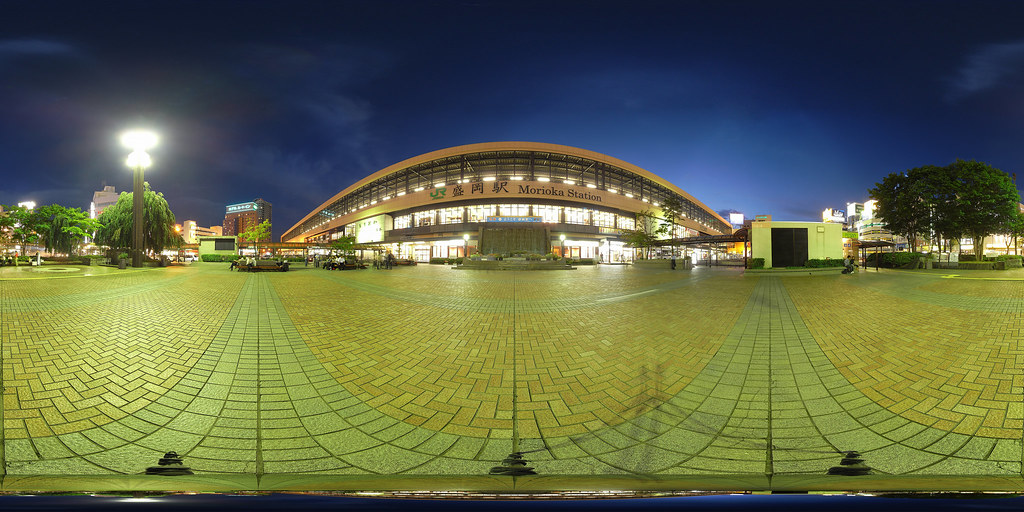
Arrive at Morioka Station via the Tohoku Shinkansen, follow signs for the West Exit Bus Terminal, and line up at Stop 26 for Appi. Iwate Kenpoku Bus's seasonal route requires no reservation, costs ¥1,650 one-way for adults (¥830 for children), and takes roughly one hour direct to Appi Kogen Ski Resort. Get off at the "Appi Kogen Ski Area" stop for skiing or lessons; the bus also serves ANA Crowne Plaza Resort Appi Kogen, the Appi Pension village, and Holiday Inn Resort stops. Build in extra transfer buffer when hauling ski or board bags from the Shinkansen platform out to the West Exit stop and loading queue.
During the peak timetable from December 18, 2026 through March 22, 2027, the 9:00 bus from Morioka West Exit reaches the ski area at 9:56, too late for the 8:30 first chair. An earlier 7:40 departure runs daily only from January 3 to March 7 (and weekends/holidays from March 8 to 22), routing via Hachimantai Onsen to reach the ski area at 9:06. There is also a Friday-only 21:50 late bus from Morioka to Appi between January 8 and March 19 at ¥1,850 for adults and ¥930 for children.
Afternoon return buses during that peak window leave the ski area at 15:06, 16:06, and 17:06. To catch the 17:06 bus back to Morioka West Exit (arriving 18:15), budget plenty of time beforehand to return rental boots, collect IC card deposits, and walk to the stop. If you visit on March 27–28, check the late-season weekend schedule: the bus leaves Morioka at 10:05 and returns from the ski area at 16:06, operating only if ski lifts run. Early-season dates (December 5–6 and 12–17) also have their own separate timetable column, so match your exact travel date—and leave cushion for snowy highway delays before catching an onward Shinkansen in Morioka.
The reserved Appi Resort shuttle for eligible hotel guests also departs from Stop 26, operating round-trip from December 5, 2026 to April 4, 2027. One-way fares are ¥2,200 for adults, ¥1,100 for ages 4–12, and free for ages 3 and under; reservations close at 23:59 the day before travel, and guests are asked to meet 10 minutes early. Departures from Morioka are at 12:00, 15:15, and 18:30, arriving at ANA Crowne Plaza Resort Appi Kogen at 13:15, 16:30, and 19:45 (InterContinental guests also board and disembark at ANA Crowne Plaza). Keep your reservation confirmation handy and check your specific bus time and hotel drop-off before boarding.
IHR guest shuttle cancellations incur a 30% fee starting seven days before departure and 100% after departure or for no-shows. Coordinate your lodging dates before locking in the shuttle, and remember to update your bus booking if you switch to a pension or spend your first night in Morioka. If you want to catch first chair in the morning, take the guest shuttle the afternoon before; if you want extra laps on checkout day, use the 16:45 shuttle from ANA Crowne Plaza back to Morioka as your anchor.
Hanamaki Airport Buses and the JR Hanawa Line
From Iwate Hanamaki Airport, the unreserved APPI Airport Liner runs from December 19, 2026 through March 22, 2027 for ¥3,000 per adult, ¥1,500 for elementary school students, and free for preschoolers. The scheduled outbound coach departs the airport at 9:30 and reaches the ski area at 10:54, while the return leaves the ski area at 15:51 and arrives at Hanamaki Airport at 17:20. This works best if your flight lands comfortably before 9:30—if immigration, oversized ski-bag claim, or arrival times push past 9:30, plan an alternative transfer.
The reservation-only Hanamaki Airport hotel shuttle runs through April 4, 2027 at ¥3,500 one-way for adults, ¥1,750 for ages 4–12, and free for ages 3 and under, requiring booking at least four days in advance. Departures from Hanamaki at 13:45, 16:30, and 18:45 drop guests at ANA Crowne Plaza Resort Appi Kogen. While the public Airport Liner drops you right at the slopes to start skiing, the hotel shuttle is better suited to checking in, storing bags, and sorting gear for the next morning. If young kids arrive tired from a flight, spend the afternoon fitting rental boots and locating your lesson meeting point, then start formal instruction the next morning.
Direct JR Hanawa Line trains link Morioka and Appi-Kogen Station in roughly one hour each way, though the station still requires an onward transfer to the slopes. Appi provides an area shuttle whose 2026–27 winter schedule was not yet posted as of November 22. Anyone relying on rail must plan the train and the base shuttle as a single combined leg, especially for morning lessons, last-train returns, or snowy trips with bulky luggage—looking at Morioka rail arrival times alone leaves too little margin. Because some Hanawa Line dates also see partial train suspensions, winter day-trippers from Morioka looking for a simpler ride should prioritize the direct bus whenever it is running.
Driving yourself eliminates bus transfers and makes hauling gear easier on your own schedule. Confirm winter tires and required equipment with your rental car agency before heading into the mountains, using snow tires and carrying chains as road conditions require. If you have no winter driving experience, staying near Morioka Station's West Exit avoids driving dark snowy roads altogether; if you want night skiing or don't want to haul gear daily, stay slopeside and save your highway travel for daylight.
Book Rentals and Lessons Separately, and Suit Up Before Lesson One
SALOMON RENTAL STATION inside the Appi Resort Center handles walk-up rentals alongside advance online reservations. For 2026–27, online booking closes at 12:00 PM JST two days before your rental date, with payment collected on-site—if you plan to ski Saturday, set a deadline for Thursday at 12:00 PM JST. Walk-ups can still fill out forms at the counter, and even with an online booking you must head to the right station for fitting and adjustments, though pre-booking saves paperwork if your group has wide height and boot-size gaps or a busy morning lesson.
Standard adult rentals cost ¥7,000 per day for either a 3-piece ski set (skis, boots, poles) or a 2-piece snowboard set (board, boots), dropping to ¥6,000 under the official hotel-guest rate. Equivalent kids' sets run ¥4,500 standard and ¥3,500 for hotel guests. Jacket-and-pant outerwear rentals cost ¥6,000 per day for adults and ¥4,000 for children, while helmets run ¥1,500 for adults and ¥1,000 for children. Once your hardgoods are sorted, double-check personal essentials—gloves, goggles, ski socks, and base layers—and pack a spare pair of dry gloves for windy ridge runs. Keep hotel booking proof ready at the counter to claim guest pricing.
Price out the full day-trip package before you go. An adult day-tripper from Morioka in the regular season buying a counter BLUE PASS, full ski/board set, outerwear, and a helmet spends ¥23,500 at the resort plus ¥3,300 round-trip on the public bus, totaling ¥26,300 net after the ¥500 IC card deposit refund (excluding lessons and meals). By comparison, an experienced skier bringing their own full kit spends just ¥11,800 net for the lift pass and bus—a huge budget gap even when riding the exact same coach.
Appi's official ski school offers lessons in Chinese, English, and Japanese. Standard private and group lessons start at age 7, with group tiers split into ages 7–12 and 13+; Chinese-language group lessons run mainly on weekends, holidays, and designated dates. Crayon Shin-chan Kids School serves ages 3–9 using an indoor learning carpet and a dedicated outdoor magic carpet. Pick the right age bracket if siblings want to learn together, and report honest ability levels for kids who already have a couple of days on snow. If adults in the same group are split between skiing and snowboarding, lock in everyone's gear choice before paying for lessons.
For 2026–27, Chinese-language private and group lessons generally accept bookings until 16:00 JST the day before, confirmed upon payment. First-day Chinese private lessons check in at the ski school counter at least 10 minutes before start time, and lesson fees do not include lift passes or rentals. If you want a morning lesson while taking the bus that arrives at 9:56, work backward to see if you actually have time to rent clothes, fit boots, buy tickets, and check in—if not, book an afternoon slot or stay overnight. Voluntary cancellation fees for Chinese private lessons cut off at 16:00 JST eight days prior (free) and three days prior (50%, then 100% inside three days), so factor JST deadlines carefully around flight or transit days.
Even if booking two lessons in one day, leave breathing room between sessions. Young beginners need time to swap wet gloves, use the restroom, and hydrate, while adults with sore feet may need a quick trip back to rentals for a boot swap. Meet at your pre-agreed indoor spot at lunch before deciding whether to drill another skill in the afternoon or wrap up early. Note that outside paid coaching at Appi requires official partner authorization, and the official ski school excludes tree runs, ungroomed powder zones, and terrain parks from its standard curriculum.
Keep a Meetup Plan Ready for Mixed-Ability Groups
If you only have one ski day on a broader Tohoku itinerary, staying near Morioka Station makes luggage management simplest. Board at the West Exit in the morning, stick to one rental counter and one meeting spot upon arrival, and let stronger skiers take extra Central laps on clear days before meeting beginners at the resort center for lunch. If the Appi Gondola is on wind hold in the morning, keep your day on Shirakaba if the base is open; if even the beginner zone is miserable, ride back to Morioka for lunch and city sightseeing instead of waiting around all day in ski boots.
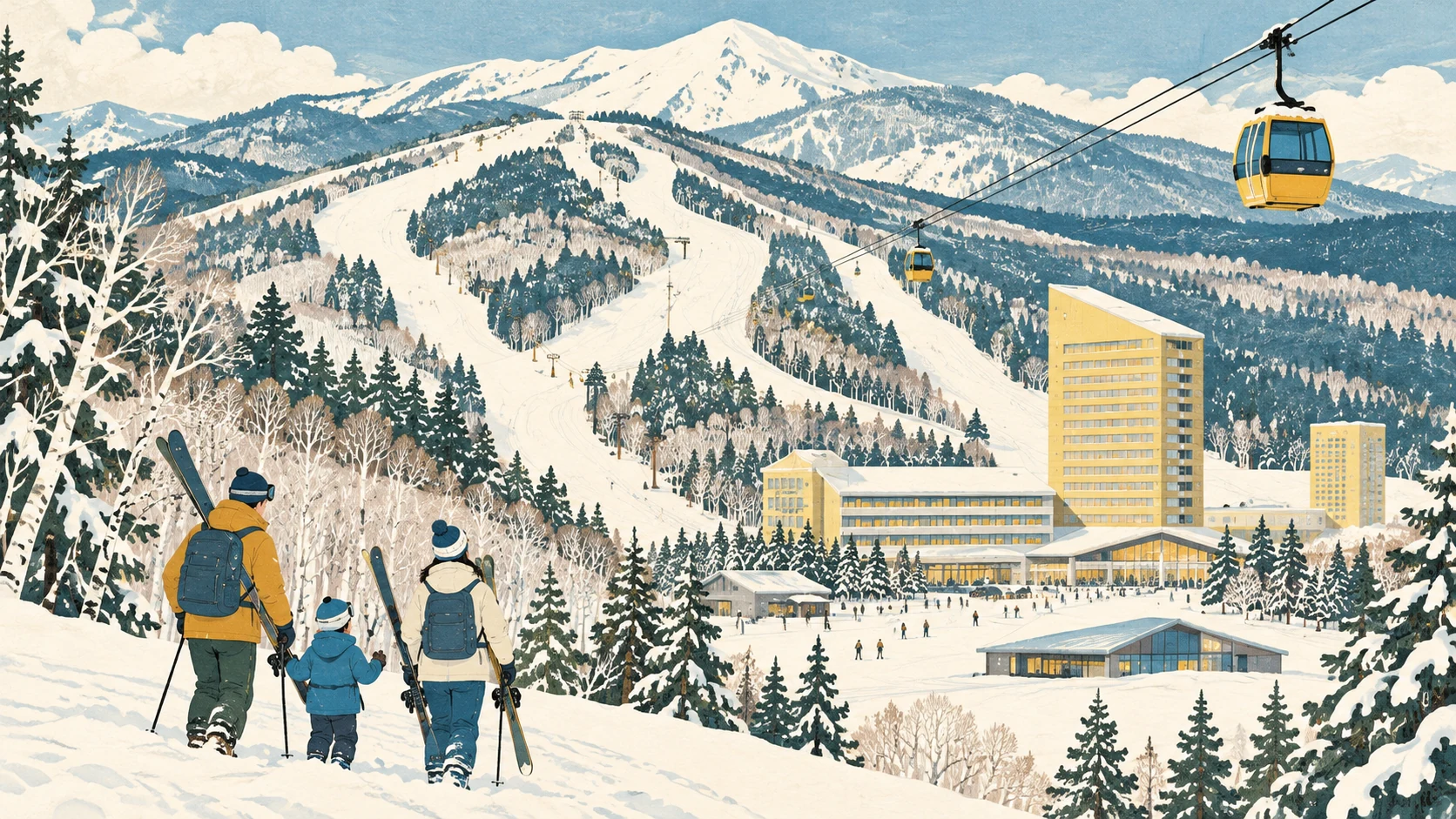
For stays of two days or more—especially with morning lessons or night skiing—sleeping at the base saves days of lugging gear back and forth from Morioka. ANA Crowne Plaza Resort sits right outside the Central Quad (the yellow tower in the lead photo), while the InterContinental sits across Shirakaba, though long-distance guest shuttles still load and drop off at Crowne Plaza. If you book a pension, locate it via the "Appi Pension" bus stop and confirm morning/evening shuttles to the slopes as well as post-checkout luggage storage—cheaper room rates only pay off if daily gear transfers fit your group's energy and lesson times. For details on individual properties and dining, see our Appi Kogen Ski Accommodation Guide.
A two-night base stay flows cleanly like this: spend arrival afternoon picking up rentals, fitting boots, and scouting the resort center meeting point before an unhurried dinner. Next morning, beginners start lessons while advanced skiers check return lifts across Central and Sailer, regrouping at the resort center for lunch. Decide day two's plan after seeing how day one goes—maybe a Yamabato summit run, or two more confidence-building laps on Shirakaba. Anyone catching an afternoon bus out should pad the schedule for photos, deposit refunds, and repacking bags rather than waiting until after everyone showers to look for the bus stop.
When weather limits skiing to half a day, Appi still works well for a relaxed afternoon. The resort center offers indoor dining, and non-skiers wanting snow play can head to the designated sledding area beside the Central Quad via the base entrance marked on the resort map—keep sleds inside that zone, since skiers and snowboarders descend along the main runs above. The on-site Shirakaba-no-Yu hot spring opens at 13:00 for day-use bathing (¥1,200 for junior high and adults, ¥800 for elementary students, free for preschoolers), though remember to factor in the walk back to the bus stop afterward. With toddlers seeing snow for the first time, having an indoor spot to change wet socks and fit in an afternoon nap beats cramming snow play, long runs, and an onsen soak into a single day trip.
If you are pairing Appi Kogen and Zao Onsen on the same trip, dedicate a full travel day to the transfer between them: check out at the base, get back onto the main Shinkansen corridor, and line up lifts at the next resort fresh. This pacing also works well for storm-chasers—if only the base lifts spin on an Appi morning, you can comfortably head back to Morioka early and save the next morning's lessons for after you overnight in Yamagata. If your main goal this trip is simply learning to link basic turns, spend both ski days at one mountain so you don't have to re-learn instructors, rental desks, and beginner slopes.
A few useful answers
Can complete beginners start straight on Appi's 5.5 km run?
Start on the Shirakaba run outside the resort center to practice stopping and turning first. Once you can control your speed smoothly and give way on narrower sections, take the Appi Gondola to the Mt. Maemori summit for the 5.5 km Yamabato-to-Shirakaba descent.
How much is a regular-season BLUE PASS at Appi Kogen for 2026–27?
An adult 1-day BLUE PASS costs ¥9,000 at the ticket window or ¥9,500 listed online. Window rates include a refundable ¥500 IC card deposit returned when you hand the card back. Early- and spring-season 1-day adult tickets are listed at ¥4,900.
If two adults bring two elementary-school children from outside Tohoku, do both kids ski free?
Yes—when two ticketed adults ski together, each adult covers one child aged 12 or under at no charge. Both children must still pick up an IC card at the counter and pay a refundable ¥500 deposit each.
Does Appi's night skiing work for a day trip back to Morioka?
Regular Morioka buses depart before night skiing ends. If you plan to ski until the lifts close at night, either stay slopeside or arrange alternative evening transportation in advance.
Are Appi-Kogen Station and the Appi Kogen Ski Resort bus stop the same place?
No. Appi-Kogen Station is on the JR Hanawa Line and requires an onward area shuttle or arranged pickup to reach the resort center. Iwate Kenpoku Bus coaches from Morioka West Exit drop you directly at the Appi Kogen Ski Area stop.
Are Chinese-language ski or snowboard lessons available at Appi?
Yes, Appi's official ski school offers Chinese-language private and group lessons starting at age 7; fees exclude lift passes and equipment. Children ages 3–9 can also enroll in Crayon Shin-chan Kids School depending on the program.
Official information and references
Sources used in this guide.
- Appi Kogen Ski Resort | 2026–27 Trail Map & Lift Hours
- Appi Kogen Ski Resort | Live Snow Conditions, Lift Status & Race Closures
- Appi Kogen Ski Resort | 2026–27 Lift Tickets & Child Policy
- Appi Kogen Ski Resort | Tree-Run Zones & Safety Rules
- Appi Kogen Ski Resort | Nishimori Snowcat
- Iwate Kenpoku Bus | 2026–27 Appi Kogen Ski Resort Line (Traditional Chinese)
- Appi Kogen | Winter Airport, Morioka Access & Area Shuttles
- Appi Kogen Ski Resort | SALOMON Rental Rates & Reservations
- Appi Kogen Ski School | Official Lesson Overview
- Appi Ski & Snowboard School | Chinese-Language Lessons & Reservations
- Appi Ski & Snowboard School | Chinese Private Lesson Check-In & Cancellation Policy
- Appi Ski & Snowboard School | Chinese Group Lesson Dates & Booking Terms
- Appi Kogen | Shirakaba-no-Yu Day-Use Hot Spring