Explore Owari Tokugawa swords, a tea room, reception-room furnishings, Noh masks and Hatsune lacquerware. Match autumn 2026 display rotations, original Genji scrolls and Yoshichika’s travels to the ¥2,000 joint ticket or ¥600 library ticket.
- Region & Focus
- Nagoya
- Reading Scope
- 32 min read · 13 chapters · 4 Q&As
- Official Verification
- 13 official sources checkedUpdated 22 November 2026
- Key Topics
- ItinerariesChubu & Hokuriku
Chapter Route Map (tap any stop)
- The ¥2,000 joint ticket and ¥600 library ticket use different entrances
- Read the dates on the work list before memorising National Treasures
- Gallery 1: read armour through the New Year ceremonial display
- Gallery 2: the Sarumen tea room puts utensils back into hospitality
- Reception-room furnishings: see the arrangement before individual objects
- Noh stage and masks: view them as parts of one performance
- Private furnishings and Hatsune: literature enters wedding objects
- Genji originals, 14–29 November: leave time for paintings and calligraphy
- Only the library exhibition: Yoshichika’s cameras, toys and carved bears
- The concurrent Tokimeku Hako exhibition: look at lids and collection labels
- Two half-day plans: spend time on what you want to see
- The reading room is free; consulting old books follows a separate process
- Station exits, luggage and photography: details that affect the visit
- Quick Q&A
Allow half a day for objects from the Owari Tokugawa household: armour and swords, tea utensils for receiving guests, reception-room furnishings, Noh masks and wedding lacquerware can be understood along one route. In 2026, original National Treasure Tale of Genji Illustrated Scrolls are displayed from 14 to 29 November, featuring Yokobue and Yadorigi II. For only Hōsa Library’s current Travelling Marquis: Tokugawa Yoshichika exhibition, a separate library ticket became available in October. Choose the exhibition, then the entrance, rather than comparing prices only after reaching Tokugawaen. Dates, ticket access and work lists below follow official information dated 28 October 2026.
The ¥2,000 joint ticket and ¥600 library ticket use different entrances
For a first visit focused on swords and a daimyō household, choose joint admission to the Tokugawa Art Museum and Hōsa Library: ¥2,000 for adults, ¥1,200 for senior high school and university students, and free for junior high school pupils and younger children. Buy the joint ticket and enter at the museum’s main entrance. The galleries connect inside; you need not go back into the street to find another ticket office. Online tickets are also available, but during changeovers of planned or special exhibitions, buy at the venue.
Since 1 October 2026, Hōsa Library has also offered separate exhibition admission: ¥600 for adults, ¥400 for senior high school and university students, ¥200 for Nagoya residents aged 65 or over, and free for junior high school pupils and younger children. Enter the exhibition rooms through the library’s reading building. This ticket applies to themed exhibitions held entirely in the library galleries and covers those galleries only. For the museum’s collection galleries, armour, reconstructed tea room and original National Treasures, buy the joint ticket.
Special exhibitions using both institutions have a clear rule: if an exhibition spans Hōsa Library and the museum’s main-building galleries, only joint admission is sold. Check the venue field on the library website. Joint organisers and galleries spanning both institutions are different facts. The library page lists the venue for the current Travelling Marquis: Tokugawa Yoshichika exhibition as Hōsa Library’s galleries, making separate admission suitable if this alone interests you.
For two adults, joint tickets total ¥4,000; separate library tickets total ¥1,200. Accompanying junior high school pupils and younger children enter free under either option. The price difference reflects the content included. Do not plan around the cheapest ticket and expect to add the other galleries once inside. Budget for joint admission to explore all five collection themes; choose the ¥600 library ticket if Yoshichika’s travels and collections are your sole interest.
Explore Owari Tokugawa swords, a tea room, reception-room furnishings, Noh masks and Hatsune lacquerware. Match autumn 2026 display rotations, original Genji scrolls and Yoshichika’s travels to the ¥2,000 joint ticket or ¥600 library ticket.
Read the dates on the work list before memorising National Treasures
The museum’s collection display runs throughout the year, changing objects roughly monthly across five themes: arms and swords, tea, reception-room furnishings, Noh, and private household furnishings. The autumn 2026 official list covers 15 September–13 December, divided into A: 15 September–14 October, B: 15 October–13 November, C: 14 November–13 December, and an additional D: 1–13 December. Period D separately lists Extracts from the Matsura no Miya Monogatari in Gallery 5. The Genji scrolls have their own 14–29 November display period. Match your date to the individual work’s row.
For example, 28 October falls in B. In Gallery 1, look for the aoi-crested maki-e itomaki tachi mounting and the ajiro-patterned dark-lacquer command fan; Gallery 5 lists the Hatsune maki-e incense-wood box. From 14 November, C replaces the sword mounting with a nashiji itomaki tachi mounting and the command fan with the gold-and-silver ring-wheel-pattern fan used by Yoshinao, first Owari lord. The Hatsune box remains in both B and C. Choose two or three works to give yourself specific things to find.
Another useful distinction is between maker, user, collector and donor. A swordsmith’s name on the blade, later owners and the collection’s source answer different questions. An object passed through several household heads has a history beyond its manufacture date. Read the object first, then its users and provenance, to connect an attractive antique to how this family preserved, exchanged and used possessions.
Gallery 1: read armour through the New Year ceremonial display
Gallery 1, “Symbols of the Warrior”, currently uses a daimyō household’s New Year armour ceremony as its framework. Armour stands centrally, surrounded by sword and spear mountings, command equipment and standards identifying the commander. Step back to read the group: what was worn, what directed troops, and what identified the commander at a distance? This gives a fuller picture than concentrating only on the central armour.
The autumn 2026 list includes black-lacquer armour with dark-blue lacing made by Myōchin Munesada in 1849 and worn by Yoshikatsu, the 14th Owari head. Look at the dark lacquer and cords joining the plates, then compare the long-handled weapons and sword mountings beside it. Edo-period arms served military readiness, ceremony and status. Their fine decoration has a place within the display; every gold detail need not be interpreted as practical battlefield design.
Spend longer with the unsigned katana attributed to Sukezane. The list identifies it as an Important Cultural Property from the 13th-century Kamakura period, formerly held by Yoshikatsu and the 15th head, Mochinaga. It also lists an accompanying 1710 authentication paper by Hon’ami Kōchū. Object and document offer two scales of reading: the blade itself and how later generations identified and transmitted it. If historical documents interest you, leave a few minutes for these accompanying records.
The museum FAQ explains that its swords have not received the now-common cosmetic polish, to preserve their Edo-period polishing state as far as possible. The temper line may therefore appear differently from displays elsewhere. Start with the blade’s curve, length and outline, then seek the temper line from permitted viewing positions. If it looks faint at first, the conservation approach helps explain the object; do not rush to the next sword.
Gallery 2: the Sarumen tea room puts utensils back into hospitality
Gallery 2, “A Daimyō’s Refined Pursuits”, places tea within daimyō hospitality. Formal shogunal visits and exchanges among lords could include tea gatherings. Celebrated meibutsu utensils carried craft value and histories of ownership and transfer. Read a bowl, tea caddy or flower vase through who used it and on what occasion, as well as its form, to connect the objects.
The gallery reconstructs part of the Sarumen tea room from Nagoya Castle’s Ninomaru Palace, using surviving plans and placing seasonal utensils accordingly. The official list says its “monkey-face” name traditionally came from knots near the top of the alcove post resembling a monkey’s face. The original burned in the war in 1945. Find the alcove post and hanging scroll, then the distances between vase, caddy and bowl to understand what the reconstruction explains.
The B-period tea-room list includes Emperor Go-Mizunoo’s Eichyū calligraphy, an ancient-bronze bent-pestle-shaped vase, the bamboo tea scoop Mushikui attributed to Sen no Rikyū, the Seto katatsuki tea caddy Kan’ō, and the Ido tea bowl Tōdaiji. Choose the calligraphy and one utensil, reading name, material and provenance, then look again at their placement. Companions less interested in swords may find familiar vessel forms an easier starting point here.
From 14 November, C replaces the hanging scroll with Emperor Go-Mizunoo’s waka sheet Sekiji no Yuki and lists Oda Sadaki’s tea scoop Yamabiko. Different writing and utensils change the display within the same reconstructed room. Returning in autumn lets you compare this corner. On a single visit, use the column for your admission date rather than photographs from the previous rotation as a search guide.
Reception-room furnishings: see the arrangement before individual objects
Gallery 3, “A Daimyō’s Formal Furnishings”, reconstructs parts of the Ninomaru Palace’s main hall, raised room and kusari-no-ma. The oshiita platform, staggered shelves and study alcove have their own arrangements; screen paintings were reconstructed from the Kinjō Onkoroku records of Nagoya Castle. Look from room to object: where are paintings hung, incense burners and vases placed, and writing tools set out? The theme is what guests saw and how objects formed a reception setting.
In B, the main-hall platform has a triptych of Kannon, plum and bamboo attributed to Kaō, beside celadon candlesticks, an incense burner and a vase. The study alcove lists an ancient-bronze rain-dragon brush rest, lion paperweight, mandarin-duck water dropper and Jian’an tile inkstone. Begin with familiar functions: a rest holds brushes, a weight holds paper, a dropper supplies water to the inkstone. Then see how animal forms and patterns connect craft detail to use.
The official introduction traces these arrangements to Muromachi shogunate precedents. Edo daimyō inherited an appreciation of karamono, objects from China. Chinese dynasties and Ryukyuan or Southeast Asian origins on labels therefore belong within a Japanese palace setting. Objects in one reception room were not necessarily all made in Japan. Compare a Southern Song object with an Edo object to see the collection’s breadth more clearly than labelling everything “Tokugawa Japanese antiques”.
The kusari-no-ma offers a quieter tea setting, described as a place to serve tea when the shogun or his envoy visited. Traditions explain its name either as linking the main hall and a small room, or through a chain suspending a kettle from the ceiling. You need not choose one explanation first. Look at the shift from the hall to the smaller space, then the kettle and bowls, to distinguish formal reception from close-range tea service.
Noh stage and masks: view them as parts of one performance
Gallery 4, “Ceremonial Performing Arts of the Warrior Class”, focuses on Noh and reconstructs part of the Ninomaru Palace stage. The Edo shogunate established Noh as the warriors’ ceremonial art. Daimyō households kept Noh and kyōgen masks, costumes and props for different plays and schools. Read them with the stage: masks give characters faces, costumes change bodily outlines, and props and stage place them in a performance space.
The work list describes the stage as about three ken, roughly 6 metres square, with corner pillars and an old pine painted on the rear board. Its roof retains the form of earlier outdoor stages. Find the pillars and pine before reading the costumes, to understand the need for outlines and patterns visible at a distance. This reconstructed setting explains Noh objects; for a live performance, choose a separate event and ticket.
In B, from 15 October to 13 November, masks include Fukai by Ōmiya Yamato Masamori and Kasshiki by Kawachi Daijō Ieshige. Costumes include a dark-blue gold-brocade dance robe with paulownia and circular phoenix motifs, and a karaori with red and pale-blue bands and autumn grasses. Compare two masks’ eyebrows, eyes and mouths, then the karaori’s colours and patterns. Even without knowing the plays, start with the visual role of faces and clothing.
From 14 November, masks change to Yamanba attributed to Deme Eiman and Ko-beshimi attributed to Miyata Chikugo, with a new costume rotation too. For children with limited attention, choose one mask, one clothing pattern and the pine behind the stage as targets, then move on. You need not give all five galleries equal time. Leave extra minutes for objects that interest you instead of stopping equally at every case.
Private furnishings and Hatsune: literature enters wedding objects
Gallery 5, “A Daimyō’s Elegance”, shows private household furnishings used by lords, wives and children, including incense, cosmetics, writing, dining and games. Their use distinguishes them from the formal reception-room objects: these belong closer to family life and education. Beyond their rich decoration, ask what small boxes, incense tools and writing implements actually did.
The National Treasure Hatsune wedding furnishings were commissioned in 1639 for Chiyohime, daughter of Shogun Iemitsu, when she married Mitsutomo, second Owari head. Maki-e artist Kōami Nagashige participated in their production. Their name comes from poetic imagery in the Hatsune chapter of The Tale of Genji. The collection page lists 47 Hatsune-related pieces, 10 Kochō-related pieces and other objects, totalling 70 surviving items. That figure describes the whole collection. For this autumn’s display, find the Hatsune maki-e incense-wood box listed in both B and C.
For the box, establish its use and user before reading the label’s patterns. Literature supplied decorative subjects when the objects were commissioned. The same story could become an illustrated scroll or enter wedding furnishings. If visiting for the Genji originals in November, view this lacquer object alongside them to compare Heian painting and Edo craft uses of the tale.
Another autumn 2026 comparison is the chrysanthemum-and-white-dew maki-e wedding furnishings used by Ōhime, who married into the Kaga Maeda family. Dating to 1633, they precede Hatsune. The official list records their designation as an Important Cultural Property in 2026, with writing stand, comb box, incense tray and small boxes specially displayed until 13 November. A late-October visit can compare two women’s wedding objects. From 14 November, turn to the Genji scrolls and C-period writing equipment.
A short interview released by the museum in 2023, in which Living National Treasure Murose Kazumi discusses the difficulty of making maki-e, explaining the craft from a practitioner’s perspective.
Genji originals, 14–29 November: leave time for paintings and calligraphy
The 2026 special display features two National Treasure Tale of Genji Illustrated Scrolls: chapter 37, Yokobue, and chapter 49, Yadorigi II, from 14 to 29 November, listed in Gallery 5’s programme. Both are 12th-century Heian works. If they are your main reason for travelling, choose dates within that period and exclude Monday and post-holiday closures. The museum opens on the 23 November public holiday and closes on 24 November.
These works entered the Owari Tokugawa household as three scrolls. For conservation, they were mounted as framed pieces in 1932. Recent repairs reunited each scene’s painting and text into a scroll, restoring a set of 15 handscrolls. View painting and writing together: see how figures relate across architecture, then examine adjacent calligraphy and decorated paper. The collection page identifies line-like eyes and hooked noses and roofless architectural views. Follow the bird’s-eye building layout to find relationships rather than only the most attractive clothing.
The autumn list explains Yokobue as a scene in which Yūgiri dreams of Kashiwagi’s ghost. Kumoi no Kari nurses a startled, crying infant while Yūgiri looks on. Before the case, hold onto the positions of dream, infant, carer and observer as a starting point. Where facial styles look similar, divide your attention among seated postures, intervening spaces and directions of sight to read how the picture contains the episode.
Yadorigi II shows the morning after the third wedding night of Niou no Miya and Rokunokimi, Yūgiri’s daughter. One scroll concerns a dream and a household infant, the other a marriage. Remember that difference and compare the interiors; it is easier than requiring yourself to read the whole novel before departure. Pause for the calligraphy too. Letterforms, rhythm and paper decoration belong to the work. Even without reading every old character, you can see text and image alternate.
For all 15 scrolls, the museum FAQ gives 2035 as the next planned complete display. In 2026, make these two your targets. Also distinguish the library’s Kawachi-bon Tale of Genji: a 13th-century manuscript of 54 scrolls in 23 volumes. This museum display concerns 12th-century illustrated scrolls. Joint admission and the special-display gallery take you to the intended originals.
Only the library exhibition: Yoshichika’s cameras, toys and carved bears
Hōsa Library presents Travelling Marquis: Tokugawa Yoshichika from 8 October to 13 December 2026. Yoshichika was the 19th Owari household head and founder of the Tokugawa Art Museum. This belongs to a later period than the Edo daimyō objects. Travel photographs, belongings and collections show a modern collector’s encounters with Hokkaido, Southeast Asia and Europe. For modern travel history alone, use separate library admission and take your time here.
The work list has four chapters: departure, Southeast Asia, Europe and travel memories. A bag and two compasses begin with practical equipment, followed by Borobudur photographs from 1921 and 1929 and Southeast Asian clothes, vessels and performance objects. Choose a photograph with a year and location, then find collected objects from a nearby region. Separate travel records from things brought home, and do not merge pictures from different years into a single journey.
The Southeast Asian list offers performance-object comparisons: six of 51 Wayang Kulit figures, two Wayang Golek figures, and seven of 39 Wayang Topeng masks, plus samples showing batik production. Compare form, materials and uses through the labels, then relate them to the Japanese Noh masks in Gallery 4. If cross-cultural art interests you, spend time on these groups before the photographs.
The European chapter includes Italian glass animals, German painted glass and Swiss containers. It places a Swiss Crawling Bear beside Itō Masao’s Crawling Bear of about 1924, both listed as Yakumo Town cultural properties. Compare their postures and surfaces, then their dates, to connect Yoshichika’s European travels with carved-bear history in Yakumo, Hokkaido. What a traveller brought back becomes part of a local craft story.
Chapter 4 includes a 1922 photograph of Yoshichika and his wife aboard their homeward ship, and Einstein with Yoshichika aboard Kitano Maru that year, alongside Yoshichika’s writings. Use photographs to trace relationships and routes, and writing to see how he recorded and organised the journey. The exhibition page links to a special site for his 1921–1922 European travels, with old photographs to explore after your visit.
The concurrent Tokimeku Hako exhibition: look at lids and collection labels
The main museum’s special exhibition Tokimeku Hako, about boxes, runs until 15 November 2026. It examines functions, decoration and writing left on boxes. The official introduction highlights inscriptions on lids and their undersides, and collection labels preserving an object’s history. First ask what the container holds, then look for its lid, writing or labels. Provenance clues can sit on an outer box. This continues the collection galleries’ questions about former users and makes ordinary storage objects worth close attention.
Featured works include the Southern Song–Yuan celadon incense burner Chidori, Hon’ami Kōetsu’s black Raku tea bowl Shigure, the Chinese round tea caddy Karamarutsubo formerly owned by Katagiri Sekishū, and the lower scroll of the Kabuki Picture Scroll. Notice their boxes, inscriptions and collection labels to trace preservation and transmission. Tea enthusiasts can continue from Gallery 2 to examine relationships between utensils and their boxes.
The exhibition overlaps the Genji display on 14–15 November. Choose that weekend for both and include Yoshichika through joint admission. From 17 to 29 November, Genji and Yoshichika remain, but Tokimeku Hako has ended. If Genji is the priority, give the time previously allocated to the main-building special exhibition to Gallery 5. From 1 to 13 December, Yoshichika continues but the original Genji display has ended, changing the focus of a half-day visit.
Two half-day plans: spend time on what you want to see
The museum gives 60–90 minutes as a general visit estimate, or about 30–40 minutes during changeovers when only collection galleries open. To read labels room by room, compare original Genji with Hatsune lacquerware, or see the whole Yoshichika exhibition, the editorial suggestion is about two hours indoors, plus walking to the venue, storing belongings and resting. Decide whether to add the nearby garden after the main exhibition, according to time left.
With a joint ticket, enter after the 10:00 opening and use the five themes to understand daimyō objects. If Genji brought you here, begin with its current display in Gallery 5, then return to a tea room or reception room that interests you. The museum offers a roughly 15-minute introductory talk in the entrance hall without booking, at 10:30, 11:30, 13:30 and 14:30. Make one a planned stop rather than rushing past cases to catch the first.
For the library-only plan, enter through the reading building and focus on Yoshichika’s photographs, performance objects and carved-bear comparison. Afterwards, choose food or a walk nearby. The museum shop and café require paid museum admission, so library-ticket holders should plan breaks outside. Joint tickets also do not allow re-entry. Put lunch after the complete visit: leaving to eat means you cannot return on the same ticket.
Both institutions’ galleries open 10:00–17:00, with last entry at 16:30. Work backwards from closing to preserve 90 minutes in the afternoon. Arriving at 15:30 suits joint admission better than entering at the last possible moment. Both announce closure from 14 December 2026 to 4 January 2027 for collection work and the year-end/New Year period. Move a winter museum visit to another open day if your trip falls within those dates.
The reading room is free; consulting old books follows a separate process
Hōsa Library offers both exhibitions and access to its holdings. Its free reading room supports research and consultation; materials cannot be borrowed off site. Closed-stack retrieval operates 09:30–12:00 and 13:00–17:00; open-shelf books are available 09:30–17:00. Library materials generally require advance booking. Give the preferred date, morning or afternoon, number of people, call number and title. Staff check the material’s condition before replying.
The Kawachi-bon Tale of Genji is an Important Cultural Property in the library’s holdings. For important books and non-book materials such as hanging scrolls, handscrolls and maps, contact the library beforehand. Staff determine access from use and preservation conditions. Where facsimiles exist, use them first; old maps are viewed through the database. For a research visit, find call numbers and titles before reserving a session. Holdings such as Shoku Nihongi and the Nara illustrated Tsurezuregusa can guide research, while current paid displays follow the exhibition work list.
For historical maps, the reading-room database allows zooming and rotation, comparison of two maps, text information and comparison with modern Nagoya. The official description lists over 1,700 maps. For a themed travel exhibition, Yoshichika is the direct choice. For Owari history or old-book research, complete searches and bookings before departure to use your time on site effectively.
Station exits, luggage and photography: details that affect the visit
By rail, the museum lists about 10 minutes on foot from the south exit of JR Chūō Line Ōzone Station, or about 15 minutes from exit E5 of Ōzone Station on the Meijō subway line. These are different exits; agree on the same one with companions. At the grounds, choose the museum’s main entrance or library reading building for your ticket. The garden entrance is not a shared ticket office for both. Return via your original station exit; see the two-day Nagoya itinerary for other city areas.
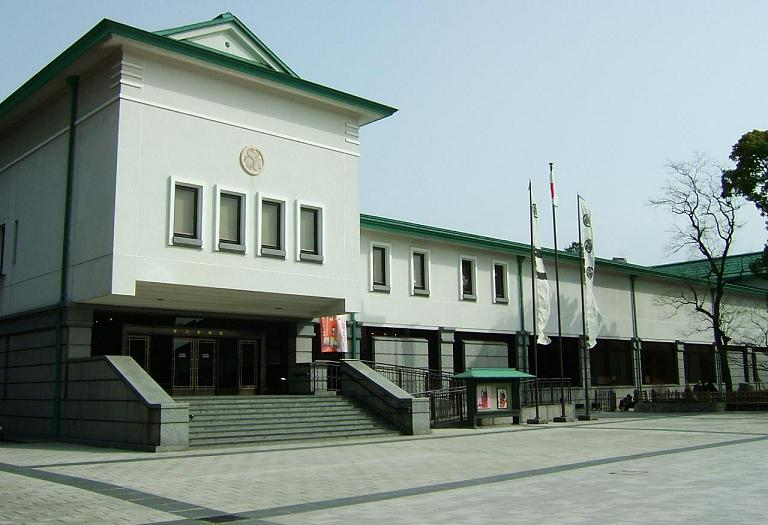
The museum has free lockers. Ask shop staff about luggage too large to fit. Wheelchairs and pushchairs are permitted, with free loans, accessible toilets and a nursing room available. With children or older companions, store heavy belongings first and choose two main collection themes before using remaining time for the library. Vending machines are in the west lobby. Eat and drink only in permitted rest areas: both are prohibited in galleries, and boxed lunches may not be brought in to eat.
Photography with phones, tablets and compact cameras is generally permitted in galleries; follow entrance and on-site signs for individual works where it is prohibited. Use a pencil for notes: ballpoint and mechanical pencils are not permitted. Browse catalogues in the shop after finishing the galleries. Leaving shopping and weight until last keeps your hands freer while studying blades, box inscriptions and calligraphy.
A few useful answers
Which ticket do I need for the Tokugawa Art Museum and Hosa Library, and which entrance should I use?
The ¥2,000 adult combined ticket covers both venues, with entry through the museum’s main entrance. For an exhibition held entirely at Hosa Library, buy the ¥600 adult ticket and go in through the library’s reading room building.
When are the original Tale of Genji picture scrolls on display at the Tokugawa Art Museum in 2026?
The original Yokobue and Yadorigi II scrolls are on show in Gallery 5 from 14 to 29 November 2026. The museum is open on the public holiday on 23 November and closed on 24 November.
How long should I set aside for both venues, and what time is last admission?
A typical visit takes 60 to 90 minutes. Set aside about two hours if you want to see both venues and take your time reading the display labels. The galleries at both venues are open from 10:00 to 17:00, with last admission at 16:30.
Which exit at Ōzone station is best for the Tokugawa Art Museum?
If you arrive on the JR Chūō Line, the museum is about 10 minutes’ walk from Ōzone station’s south exit. If you take the Meijō underground line to Ōzone, use exit E5 and walk about 15 minutes.
Official information and references
Sources used in this guide.
- Tokugawa Art Museum: FAQ, conservation and visitor services
- Tokugawa Art Museum: 2026 Genji illustrated scrolls special display
- Nagoya City Hōsa Library: 2026 joint and separate admission, reading services
- Tokugawa Art Museum: opening, prices, access and floor plan
- Tokugawa Art Museum: exhibition calendar and five collection themes
- Nagoya City Hōsa Library: current exhibitions
- Nagoya City Hōsa Library: holdings
- Tokugawa Art Museum: collection display list, 15 September–13 December 2026
- Hōsa Library: Travelling Marquis: Tokugawa Yoshichika work list
- Tokugawa Art Museum: Tokimeku Hako
- Tokugawa Art Museum: Travelling Marquis: Tokugawa Yoshichika
- Tokugawa Art Museum: National Treasure Genji illustrated scrolls collection record
- Tokugawa Art Museum: National Treasure Hatsune furnishings collection record