While Nagoya Castle’s keep is closed, plan a half-day around Honmaru Palace, the grounds and Nishinomaru Okura Museum. Compare castle gates, both palace entrances, October 2026 admission, accessibility and meals at Kinshachi Yokocho.
- Region & Focus
- Nagoya
- Reading Scope
- 30 min read · 17 chapters · 4 Q&As
- Official Verification
- 18 official sources checkedUpdated 7 November 2026
- Key Topics
- ItinerariesNeighbourhoodsFood
Chapter Route Map (tap any stop)
- Make Honmaru Palace the focus, then choose how much of the grounds to add
- From October 2026, adult admission is ¥1,000 including the palace
- Separate park hours, palace entry and autumn festival extensions
- Underground trains approach the east gate; main-gate buses approach from the west
- Main gate in, east gate out: connect exhibitions and lunch at opposite ends
- Before Honmaru Palace: shoes, luggage and toilets
- Room functions reveal more than gold decoration
- Add the baths and Kuroki Shoin separately, with time for audio
- Nishinomaru Okura Museum connects reconstructed rooms with preserved objects
- The keep’s golden shachi and stone walls around Honmaru
- Ninomaru Garden and seasonal plants after the palace
- Kinshachi Yokocho: traditional dishes by the main gate, cafés and dinner by the east
- Lunch: check the exact branch and last orders
- Wheelchairs, pushchairs and luggage: separate gate and palace arrangements
- Let weather and companions decide which stretches to retain
- Allow for audio in the morning; prioritise the 16:00 deadline in the afternoon
- Evening views and blossom visits: check when you must leave the grounds
- Quick Q&A
A half-day at Nagoya Castle can cover plenty: the Tiger Room, formal audience spaces and Jorakuden in Honmaru Palace, then the keep exterior, stone walls or museum, followed by a meal beyond a convenient gate. Adult admission is ¥1,000 from October 2026. The keep remains closed, and Honmaru Palace is included in admission. Plan around the palace’s two entrances, the 16:00 building entry deadline and lunch in either the main gate’s Yoshinao Zone or east gate’s Muneharu Zone. These choices determine your route and whether to allow a morning or longer.
Make Honmaru Palace the focus, then choose how much of the grounds to add
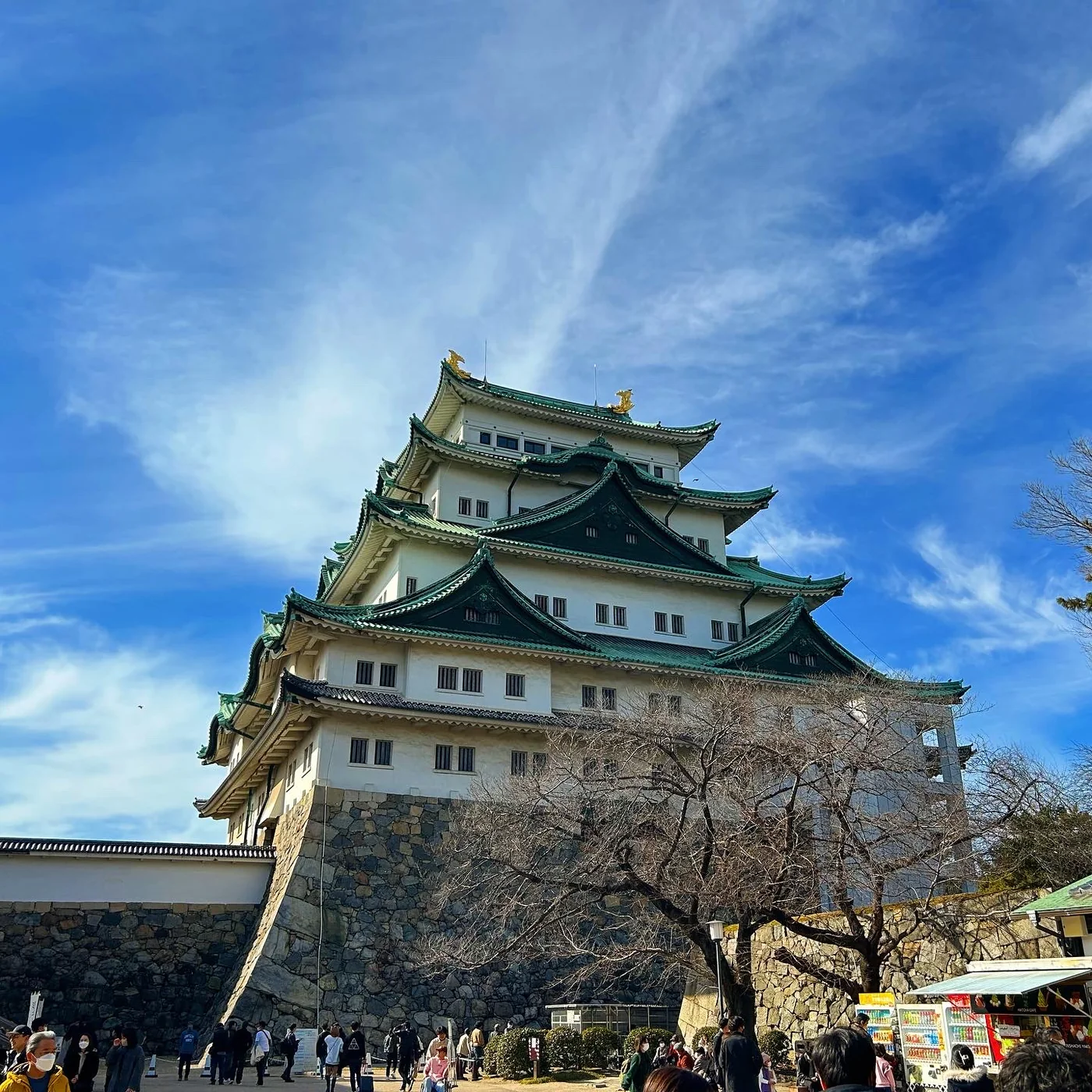
For a first visit to Nagoya Castle, make Honmaru Palace the main stop, with gates, stone walls and the keep exterior before or afterwards. Room functions, ceilings and painted partitions offer enough detail to reward a longer visit than an exterior photograph alone. If your aim is to climb the keep for city views, this visit will not meet it: the current keep is closed because of ageing and seismic safety issues, with no access to upper floors.
The castle gives about one to one and a half hours for a thorough walk including the palace. Its official map also offers 60-, 90-, 120- and 150-minute routes. For a first visit, allow two to three hours for entry, the palace, another exhibition building and a short rest, plus station access and lunch. Choose the longer version for the full audio guide, baths, Kuroki Shoin and garden, then add only one neighbourhood in the afternoon.
For a normal morning visit, see the buildings first and eat at Kinshachi Yokocho afterwards. Afternoon visitors should check the palace deadline before choosing the exhibition order, leaving the keep exterior and outdoor walks until later. With only an hour, choose the main palace and one stretch of grounds. Racing from the main gate to the northern turret and back to the east gate for food spends limited time on walking.
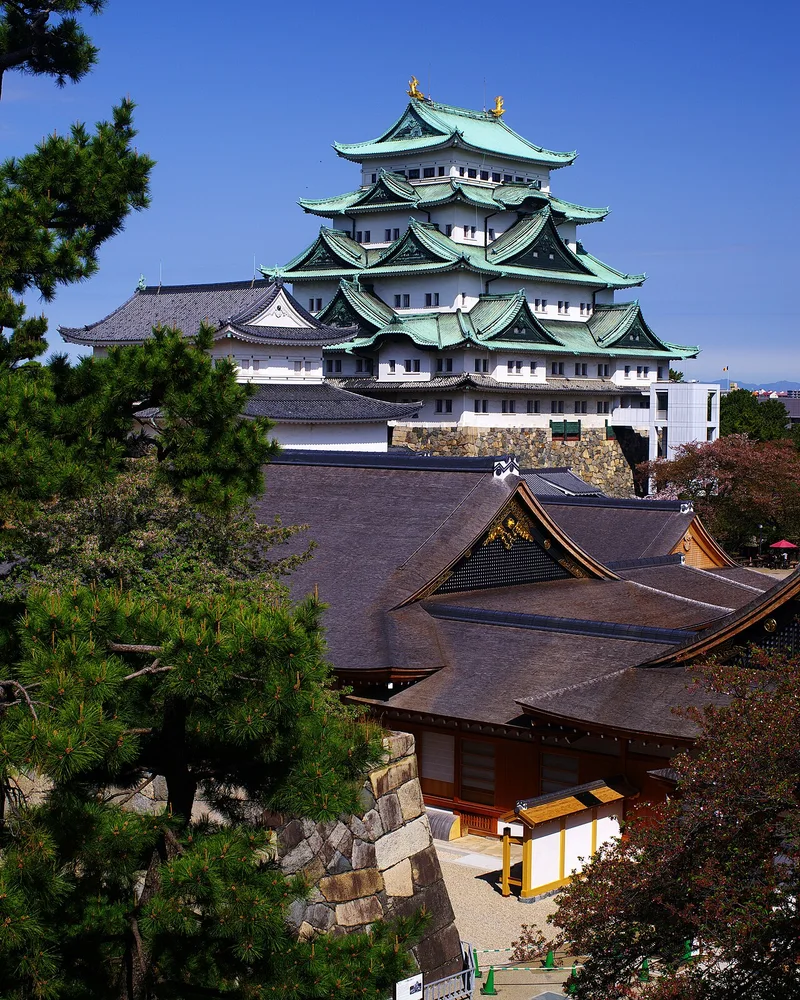
While Nagoya Castle’s keep is closed, plan a half-day around Honmaru Palace, the grounds and Nishinomaru Okura Museum. Compare castle gates, both palace entrances, October 2026 admission, accessibility and meals at Kinshachi Yokocho.
From October 2026, adult admission is ¥1,000 including the palace
The current admission page lists standard adult admission at ¥1,000, with junior secondary pupils and younger free, effective from 1 October 2026. Basic visits to Honmaru Palace and Nishinomaru Okura Museum incur no extra charge after entry. Two adults with one primary-school child therefore pay ¥2,000 for these basic sights. Add food, storage, transport and separately charged activities. The palace page’s “free entry” does not make the entire castle free.
Residents of Nagoya aged 65 or older pay ¥300 and must present photo identification confirming address, age and identity. Overseas visitors aged 65 or older should budget for standard adult admission: the discount depends on residence and proof. Disability exemptions specify designated certificates and beneficiary documents issued under Japanese law. The number of eligible accompanying carers depends on the conditions. Explain your document type at the counter before buying if you need assistance.
Ticket counters accept yen cash and list credit cards, transport IC cards and various electronic payments. The official castle-and-Tokugawaen combination ticket is currently ¥1,040 for adults and can be used on a day other than purchase. At Nagoya Castle counters, this combination ticket is cash-only. Decide whether you will actually visit Tokugawaen before buying. Transport between the sites and Tokugawa Art Museum admission are separate from this combination ticket. If the day is for the castle and lunch, there is no need to reshape the afternoon around another garden.
The website also links to online ticket sales. Read the selected product’s type, validity and change or refund terms, and enter the right dates and party size before payment. Use the on-site counter if you prefer weather flexibility. Group rates have separate thresholds of 30 and 100 people; ordinary families should not budget at the group unit price.
Separate park hours, palace entry and autumn festival extensions
The standard visitor information gives 09:00–16:30 opening, with final castle-gate entry at 16:00. Honmaru Palace and Nishinomaru Okura Museum must each be reached at their own entrance by 16:00. Both main and east gates are about ten minutes from the palace. The museum is about five minutes from the main gate and ten from the east. Schedule arrival at the building before its deadline, with extra time for shoes, storage and queues, rather than reaching the underground exit at 16:00.
The usual annual closure is 29 December–1 January. Put the castle on an open day and arrange station shopping or other open facilities around it. The homepage, visitor information and event pages carry different information. For extended hours, use the announcement for your actual visit date.
As at 26 October 2026, the 2026 autumn festival runs until 23 November. From 25 October to 23 November, opening is 09:00, last park entry 16:30 and closing 17:00; the palace entry deadline remains 16:00. The 20:00 closures and evening shows on 19 September–4 October and 18–24 October have ended. Nishinomaru Okura Museum and the specially opened south-west turret separately list final entry at 16:00, and tea service at 15:45. Record each facility’s time after reading the festival poster.
Underground trains approach the east gate; main-gate buses approach from the west
The official access page gives about five minutes on foot from exit 7 of Nagoyajo Station on the Meijo underground line. This approach reaches the east gate and Muneharu Zone first. Going around to the main gate adds an outdoor walk. For a pushchair or wheelchair, find the station’s lift exit first and connect it to the gate at street level. Exit 7’s reference time does not cover every lift route.
From Nagoya Station, an underground journey usually requires one change. The official reference for city rail travel is about 15 minutes, plus the walk from your hotel to the platform, waiting and the exit walk. Nagoyajo and Meijo Koen to the north are different stations. Choose the paid-area entrance before entering navigation details. Higashiote on the Meitetsu Seto Line is another official option, about 15 minutes on foot, useful if already arriving on that line.
For the main gate, check city bus Sakae 13 to “Nagoyajo Seimon-mae” or the day’s Meguru sightseeing bus route. The castle FAQ gives about 20 minutes from Nagoya Station by bus as a reference, excluding waiting and traffic. The sightseeing bus suits those able to work with its frequency. Near the afternoon palace deadline, check whether the next departure gets you there in time before choosing it.
Drivers can use the main-gate car park or Ninomaru east car park. The castle currently lists ¥250 per period of up to 30 minutes for ordinary cars. Main-gate hours are normally 08:45–21:30 and east-side hours 08:30–22:30, first come, first served. Later car-park closing lets you collect your car in the evening but does not extend castle admission. Kinshachi Yokocho has no dedicated car park. Charges continue while you eat; crossing two and a half hours or three hours differs by one charging period.
Main gate in, east gate out: connect exhibitions and lunch at opposite ends
Entering through the main gate suits starting with castle history at Nishinomaru Okura Museum, then Honmaru Palace. Afterwards see the keep exterior, continue to Ninomaru Garden if energy allows, and leave through the east gate for Muneharu Zone. This suggested through-route avoids returning to the same gate just to eat. For the palace alone, head straight to Honmaru and leave the museum for the return or omit it.
From the east gate, reverse it: palace first, then keep and Honmaru stone walls, then Nishinomaru if you want the exhibition, and out through the main gate to Yoshinao Zone. The official interactive map separates Honmaru, Ninomaru, Nishinomaru and Ofukemaru and can show toilets, storage, food and accessible facilities. Save your entrance, palace and intended exit individually before leaving, rather than one generic castle pin.
For a through-route, settle storage first. A case left at the main gate still requires a return walk if you leave by the east gate for the underground. Small bags can use palace storage according to its rules; large luggage is better at your accommodation or a station you will revisit. Maintenance and events can alter paths. Follow the day’s signs while retaining the sequence of palace, outdoors and food beyond the exit.
Before Honmaru Palace: shoes, luggage and toilets
The Honmaru Palace rules require shoes off at entry. Barefoot visitors or those wearing stockings change into provided slippers; visitors in socks enter as staff direct. Cases and other large luggage must go in the palace’s free lockers. Do not touch fusuma painted partitions, shoji screens or metal fittings. Organise your phone, camera and small essentials first to avoid repeatedly opening bags and let visitors behind you pass smoothly.
Photography is allowed, with flash switched off beforehand. Test the settings before entering: automatic mode may trigger flash in dim rooms. Stay within the permitted viewing area for wide room photographs, without stepping into rooms to obtain an empty scene. Do not rest lenses, umbrellas or bags against columns and panels. For detailed viewing, let moving visitors pass and stop where permitted.
To recreate Edo-period spaces, lighting is restrained. There is no heating, air conditioning or toilet, and eating, drinking, smoking and general mobile-phone use are prohibited. Drink water outside in summer and wear adjustable layers in winter. Children and older relatives should use toilets before entry. These conditions directly affect a suitable visit length; entering in rain is still not like entering a large air-conditioned shopping centre.
The main rooms use the entrance beside Nakanokuchi-beya: the official list includes Genkan, Omote Shoin, Taimenjo and Jorakuden. The separate entrance in front of Yudono Shoin serves Yudono Shoin and Kuroki Shoin. To see both groups, walk to the second entrance after the main route and complete its entry procedure too. Plan them separately so finishing Jorakuden does not leave you thinking you have seen every room.
Room functions reveal more than gold decoration
Honmaru Palace was completed in 1615 as the Owari lord’s residence and government office. After Tokugawa Yoshinao moved to Ninomaru Palace in 1620, it became lodging reserved for the shogun. The original burned in a 1945 air raid. The reconstruction, based on historical records, opened fully in 2018. This history explains the sequence: decoration and layout change with the people and occasions each space served.
Genkan was where visitors waited for an audience. Its gold-ground paintings show bamboo, leopards and tigers, giving it the name Tiger Room. From the viewing line, look at how animals are spread across the continuous composition rather than framing just one tiger. The painting when doors are closed and the room as seen open offer different views. With children, look for tigers and compare bamboo here, then move quietly rather than run from room to room.
At completion, Omote Shoin was the largest and highest-ranking formal audience space. Lord Tokugawa Yoshinao sat in the raised chamber. After the waiting entrance, compare seating and spatial relationships in the audience rooms. Rather than photograph every golden room alike, look up at ceilings and notice changes in levels and decoration. Ask who sat here and whom they received.
Taimenjo served more private meetings and banquets with relatives and retainers. Its painted partitions show seasonal customs and famous places in Kyoto and Wakayama. Slow down to find daily life in people, buildings and seasonal scenes, then compare it with the more formal audience space. The official highlights also include the raised coffered ceiling. Look at the whole ceiling structure before photographing it; there is more to see than the gold background.
Jorakuden was added for the third shogun Tokugawa Iemitsu’s stay en route to Kyoto in 1634. Carved transoms, metal fittings and paintings are more elaborate. Concentrate on details here: how transom carvings, fusuma handles, ceiling and paintings make one room. Do not spend all your time in the first rooms. If companions want a shorter visit, allow a complete look at Genkan and Jorakuden, following the flow between them instead of stopping equally long in every room.
Add the baths and Kuroki Shoin separately, with time for audio
For domestic facilities, use the separate entrance in front of Yudono Shoin. The shogun’s bath was a steam bath: water was heated outside and steam led indoors, unlike immersion in a modern hot-spring tub. The official explanation says the early floor sloped for drainage before later becoming level. Reconstruction uses the level floor seen in old photographs. Look at the bath’s relationship with rest spaces rather than searching for a modern tub to decide whether you are in the right place.
Kuroki Shoin in the same group is quieter in character. Most main rooms use cypress, whereas Kuroki Shoin uses high-quality pine, with its name linked to the wood’s colour. The official account presents transfer from Kiyosu Castle as a tradition. After ornate Jorakuden, differences in timber colour and space become clearer. Add these rooms for architecture, materials and domestic history. For a short half-day, retain the main route first.
The official Honmaru Palace audio guide comes in Japanese, Chinese, English and Korean. It covers 20 stops, about two to five minutes each and roughly 70 minutes in total. Bring a phone and headphones, prepare the audio at entry and follow staff instructions on use. Without a phone or headphones, borrow a dedicated device at Nakanokuchi-beya reception for the currently listed ¥100, yen cash only. To hear every explanation, choose the two-to-three-hour castle version and move restaurant time accordingly.
The official page also has a special palace film and virtual tour to help identify rooms and transoms. Watching a short section beforehand lets you spend the visit in favourite rooms. Companions less interested in historical background can still see that the visit involves removing shoes and following a room-viewing route, then decide whether to join.
The completion and public-opening film embedded directly on Nagoya Castle’s official Honmaru Palace page shows building exteriors and scenes of the reconstruction work.
Nishinomaru Okura Museum connects reconstructed rooms with preserved objects
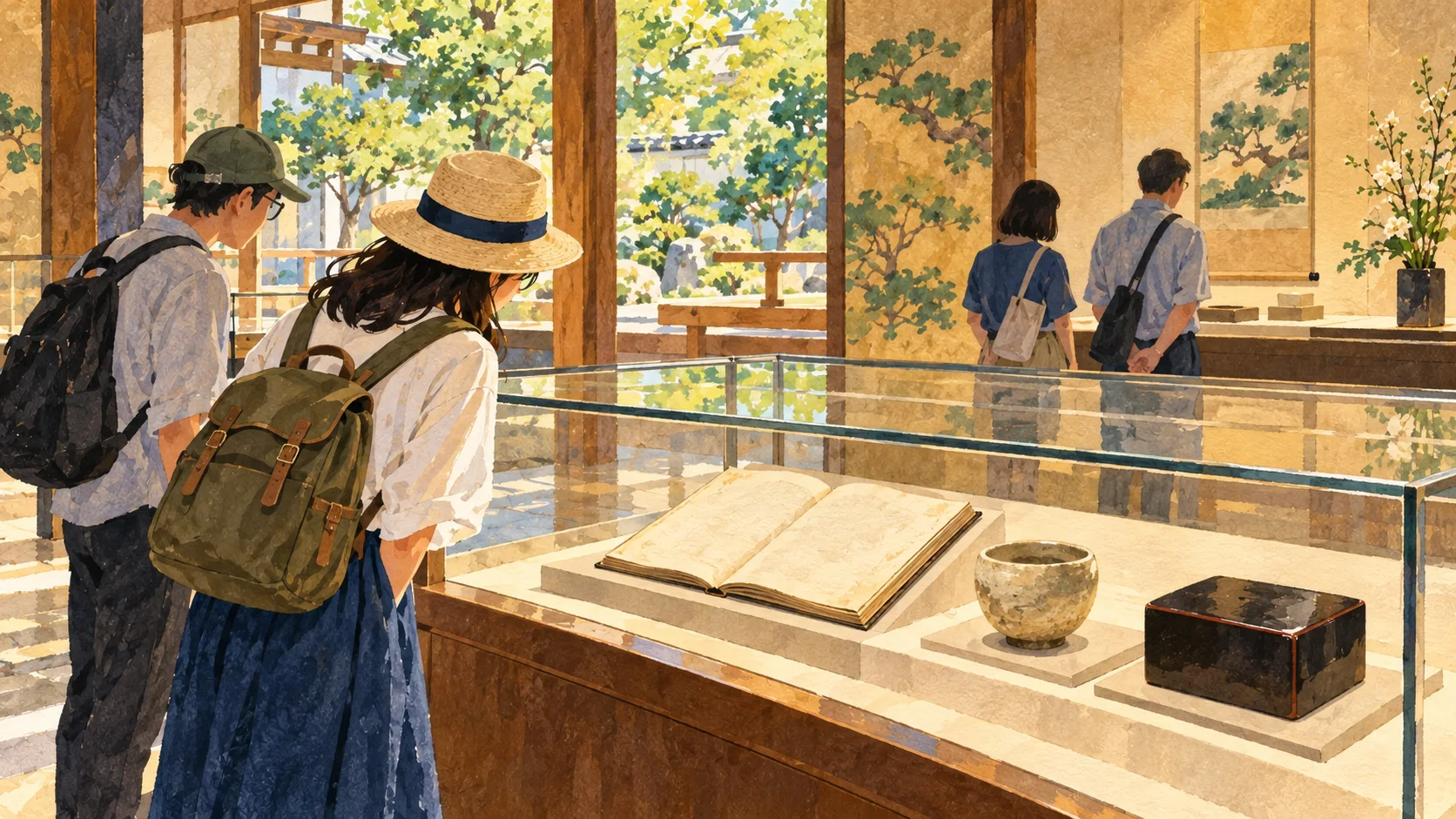
Nishinomaru Okura Museum houses collections and exhibitions, with an exterior recreating Nishinomaru’s third and fourth storehouses. It contains a history information room and exhibition room displaying castle collections, including the Important Cultural Property Honmaru Palace paintings. Pair it with the palace to compare reconstructed copies with preserved cultural objects. See history before the spaces, or return after the rooms to compare paintings.
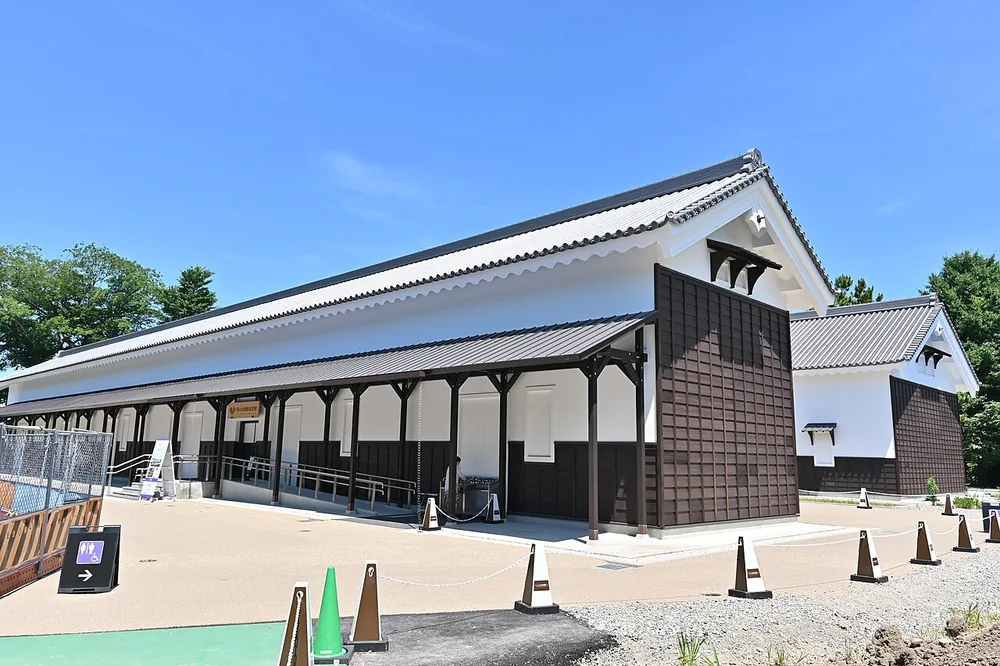
Basic museum entry is free after paying castle admission; entry hours are 09:00–16:00. Exhibitions rotate, so check the museum’s exhibition page before visiting and follow photography signs for individual works. Visiting first from the main gate is usually more direct than crossing the grounds from the east gate. With limited afternoon time, choose the palace and leave the collection for another visit.
The museum adds castle history and preserved materials without needing another long museum session. Start with 20–30 minutes on a first visit, adjusting for the exhibition and your interests. If the palace is the priority and has a queue, complete it first and then decide whether time remains. Both have a 16:00 entry deadline, so do not leave either entrance search to the last moment.
The keep’s golden shachi and stone walls around Honmaru
While the keep is closed, its exterior and roof’s golden shachi remain visible from the grounds. The present keep was rebuilt in 1959 in steel-framed reinforced concrete, separate from the reconstructed palace fully opened in 2018. You can photograph them together and distinguish their roles: the palace served as a residence and a place for audiences and government; the keep is the castle’s prominent central structure.
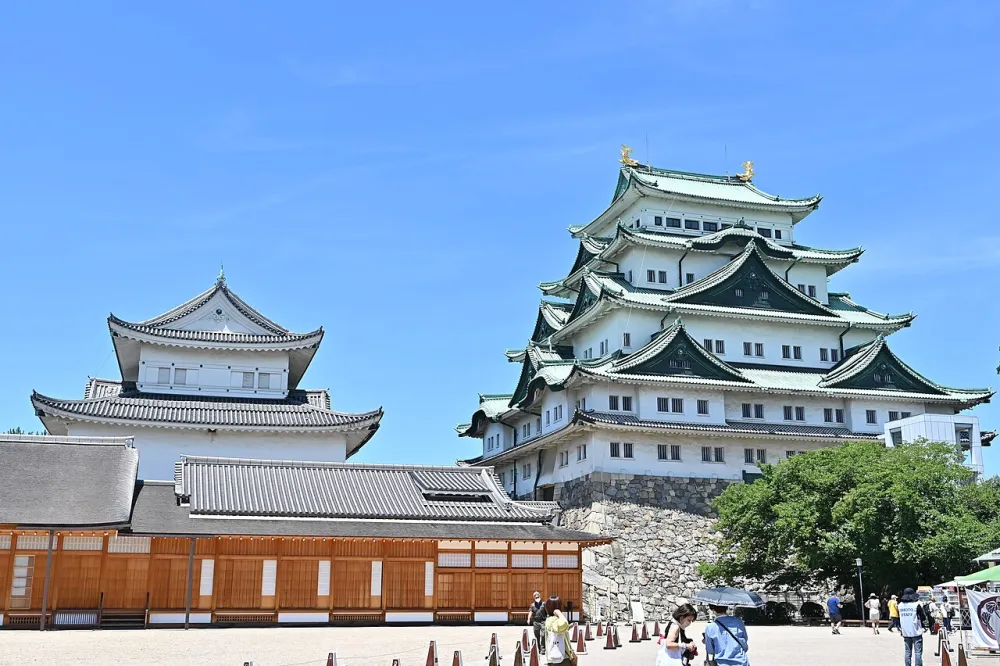
The official stone-wall guide explains that 20 western Japanese daimyo families divided construction sections, with marks on stones identifying each family’s shipments. Look at joints and marks from permitted paths for a change after the golden interiors. You need not find them all. Compare sizes, joins and corners along one short stretch to understand the extensive stonework behind the castle.
Inside Honmaru’s eastern second gate, Kiyomasa Stone is the castle’s largest boulder, named for a legend about Kato Kiyomasa. The official account also identifies Kuroda Nagamasa as responsible for that construction section and says the Kiyomasa stone-moving story is a modern invention. Read the sign to distinguish the striking stone’s name from the actual division of work. Stay on paths for photographs, do not climb walls or approach moat edges, and give way at corners.
For surviving buildings from the original castle, look for the south-east, south-west and north-west turrets, all Important Cultural Properties normally closed inside. The south-east and south-west turrets look two-storeyed outside but contain three levels. The north-west turret is in Ofukemaru, requiring an extra northern stretch. For a short visit, see the two exteriors around Honmaru; extend to Ofukemaru for a longer visit. During special openings, use the announced entrance and deadline.
Ninomaru Garden and seasonal plants after the palace
Ninomaru Garden lies north of the former Ninomaru Palace. The official account gives about 30,000 m² of stones, terrain and ponds forming the lord’s garden. It offers a different subject and pace after the palace rooms. Follow open paths to stone bridges, arrangements and garden layers, resting when tired instead of treating its area as a compulsory circuit.
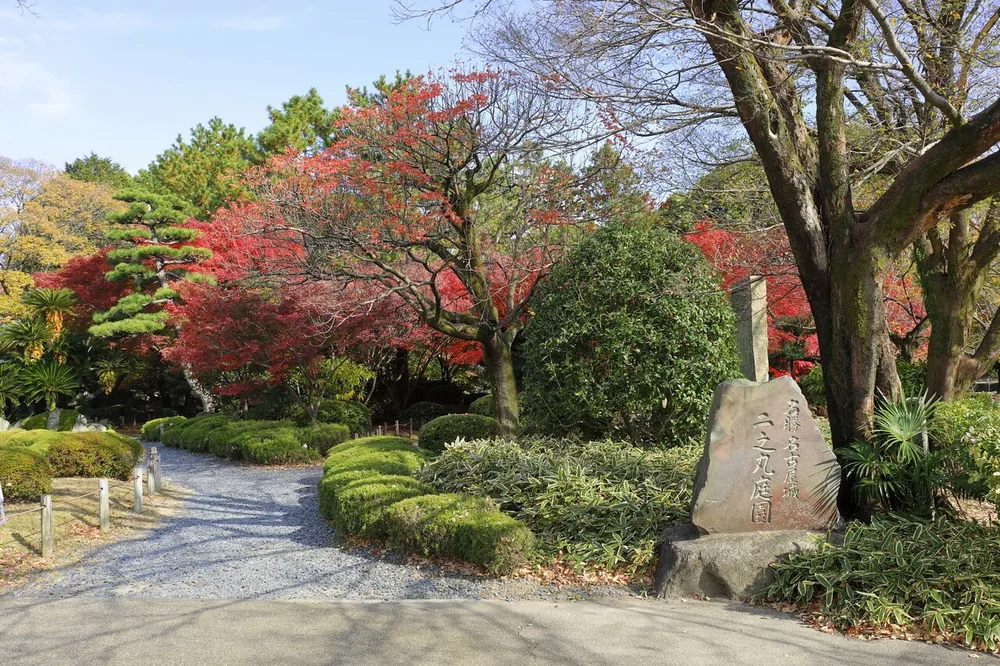
The castle’s seasonal plant page separates cherry varieties and locations. Somei Yoshino and mountain cherries usually flower from late March to early April. Nishinomaru has weeping cherries, while Honmaru and Ninomaru also have later double-flowered varieties. For palace and flowers together, choose an area using the current flowering update. Seasonal charts explain sequence; linking the area actually in bloom with your entrance and exit is more efficient than chasing one “full-bloom day” across the grounds.
Early-summer hydrangeas and irises, autumn osmanthus, and winter camellias and wintersweet provide details through the year. In summer, avoid putting outdoor walls and long waits entirely at midday. In winter, finish the main indoor sights, then shorten outdoor stretches according to wind and companions’ comfort. For autumn events, choose dates by the programme and use local photographs to assess garden leaf colour.
Kinshachi Yokocho: traditional dishes by the main gate, cafés and dinner by the east
Kinshachi Yokocho comprises Yoshinao Zone beside the main gate and Muneharu Zone beside the east gate, both outside the paid castle area. Go directly there for lunch alone, or use it before or after admission. Yoshinao focuses on traditional Nagoya dishes and established restaurants. Muneharu has cafés, noodles and restaurants open later. Choose the zone together with your exit and meal time.
The visitor information describes shop-specific seats and shared tables. Some takeaway dishes can be eaten at shared tables, with separate payments at each shop. If companions want different foods, check what can be taken away before finding seats. Shared tables may close because of weather. For indoor seating, a high chair or allergies, select a restaurant and ask it directly rather than treating the whole street as one restaurant.
The same page says castle ticket holders can re-enter, with procedures handled by gate staff. For entry, lunch outside and a return walk, retain your ticket and ask about the day’s procedure before leaving. If still wanting the palace or museum before 16:00, include your return from lunch. First-time visitors will usually find it simplest to finish the main interiors, then eat outside, without adding trips merely to use re-entry.
Lunch: check the exact branch and last orders
For miso-simmered udon in Yoshinao Zone, consider Yamamotoya Sohonke’s Kinshachi Yokocho branch. For miso pork cutlet, consider Yabaton’s Nagoya Castle Kinshachi Yokocho branch. The current shop page lists both at 10:30–17:30, last orders 17:00. Yamamotoya Sohonke’s name resembles other Nagoya “Yamamotoya” restaurants. Save the complete branch name to avoid following a pin elsewhere in town.
For eel rice, Hitsumabushi Nagoya Bincho’s Kinshachi Yokocho branch is listed at 10:30–17:30 on weekdays, food last orders 16:00. At weekends and on public holidays, lunch is 10:30–16:00 with last orders 15:30, and dinner 17:00–19:00 with food last orders 18:00. Its last orders are earlier than several neighbours. Do not finish the palace at 17:00 and assume the zone’s closing time means food is available. Make the chosen meal compatible with indoor sightseeing.
In Muneharu Zone, saien focuses on vegetable-based café food and drinks, listed at 10:30–22:00 with last orders 21:00. Fujiyama 55’s Kinshachi Yokocho branch is listed at 11:00–15:00 and 17:00–22:00, last orders 14:30 and 21:00. For a meal after 15:00, check the break between services. For dinner after the castle closes, choose an open Muneharu restaurant, then leave via Nagoyajo Station. Budget each person’s main dish, drink and extras separately, and ask the restaurant about allergens in the selected menu.
Wheelchairs, pushchairs and luggage: separate gate and palace arrangements
Wheelchairs and pushchairs can be borrowed at the main and east gates, in limited numbers without reservations. If completing the visit depends on an aid, bring your own. The official map provides 60-minute accessible routes from both gates to identify usable paths and facilities. These are estimated walking times. Allow more time if companions need rests or have to wait.
Wheelchair access to the palace uses the north-side ramp, and dedicated indoor wheelchairs are provided. Tell entrance staff what help is needed and follow the designated route. A wheelchair borrowed at the castle gate and a palace indoor wheelchair are separate arrangements at different places. Pushchair users should also follow staff instructions for the pushchair and child on entry. Bags on a pushchair do not replace required storage for large luggage.
The grounds have three wheelchair-accessible toilets and toilets with nappy-changing facilities, located through the facilities guide and official map. Use a nearby toilet before palace entry, and save a changing-facility pin if needed. There is no toilet inside the palace, so leaving to find one takes time. This can be a useful break between the main route and baths through the other entrance.
Both gates have coin lockers. Oversized luggage can currently be stored at the main-gate general information office for ¥300 per item. If leaving by underground near the east gate but needing to retrieve a case at the main gate, use the same gate in and out or leave luggage at your accommodation initially. Beyond the fee, collection location changes the whole route. Choose your exit before storage.
Let weather and companions decide which stretches to retain
In rain, the palace and museum remain options, but paths from gates to buildings are outdoors, as is the move between palace entrances. A shorter same-gate route covering the main palace and museum avoids the northern turret and long garden stretches. Store umbrellas as directed and deal with shoes and bags before entering. If rain affects shared dining tables outside, choose a restaurant with available indoor seating.
In summer, indoor comfort is easy to misjudge: the palace has no air conditioning. Older visitors and young children can take a shorter main route, with rest in outdoor shade, a rest area or a restaurant outside the castle. In winter, alternate palace time with the outdoor keep view and avoid standing in wind for long photographs. If relatives mainly want golden shachi and walls, give those outdoor points more time while interested companions visit the palace separately.
With school-age children, try two visible tasks: find tigers in Genkan, then stone marks outside. Explain indoors that fusuma, frames and fittings must not be touched, and do not let children lean on walls while adults photograph. Outdoors offers more room to move. Leashed pets may enter the grounds but not buildings such as the palace and museum; assistance dogs follow separate venue rules. Adults with pets should decide who sees interiors and who remains outside.
Allow for audio in the morning; prioritise the 16:00 deadline in the afternoon
For a morning version, aim to reach a gate around 09:00 and leave for lunch around 12:00. If you want the full roughly 70-minute audio guide, reserve that time first, then add the gate-to-palace walk, shoes, storage and rest. Choose among the museum, baths and Kuroki Shoin by interest instead of squeezing every extra before lunch. If eating at Bincho, record its weekend lunch last orders at 15:30.
For an afternoon version, complete the palace first. Entering around 14:00, go straight there, then see the keep exterior. Watch the 16:00 museum entry deadline if adding it, and choose only one garden stretch. Visitors arriving after 16:00 should switch to Yokocho food and walks outside the castle, returning another day for daytime admission. That better serves the visit than buying a ticket and chasing closed buildings.
After the castle district, continue to Sakae for shopping and dinner. For another garden, check Tokugawaen’s opening days, transport and combination-ticket options separately. The two-day Nagoya itinerary covers wider city, accommodation and airport planning.
Evening views and blossom visits: check when you must leave the grounds
Regular keep illumination differs from evening opening. The castle FAQ says the keep is normally lit from sunset until 23:00, shortened to 21:30 on the eighth of each month for Environment Day, with other energy-saving early switch-offs possible. These are lighting hours. Leave the paid area at normal closing. Evening exterior photographs must be taken from open public places outside, rather than waiting on daytime paths for the lights.
The autumn 2026 “Be GOLD” evening event ended on 24 October. From 26 October onwards, use the applicable daytime hours. For future night blossom or autumn evening visits, check whether that event extends entry, whether the palace also opens and when restaurants take last orders. Seeing rooms by day and exterior lighting by night is an easier way to cover both.
A few useful answers
What can I see with a ticket while Nagoya Castle’s keep is closed?
Open sights include Honmaru Palace, castle exteriors, stone walls, gardens and Nishinomaru Okura Museum. Basic palace and museum visits are included in castle admission. The current keep remains closed.
How many entrances does Honmaru Palace have?
The entrance beside Nakanokuchi-beya serves Genkan, Omote Shoin, Taimenjo and Jorakuden. The entrance in front of Yudono Shoin serves Yudono Shoin and Kuroki Shoin. Allow extra walking time to see both.
Do I need a castle ticket for Kinshachi Yokocho?
Both zones are outside the paid castle area and can be visited directly for food. Yoshinao Zone is beside the main gate and Muneharu Zone beside the east gate. Each restaurant has its own hours and last orders.
Which entrance should I use with luggage?
Both main and east gates have coin lockers. Oversized luggage can be stored at the main-gate general information office for ¥300 per item. Choose your collection exit when deciding where to leave it.
Official information and references
Sources used in this guide.
- Nagoya Castle: opening, closures and walks to buildings
- Nagoya Castle: current admission and combination tickets
- Nagoya Castle: Honmaru Palace rooms, two entrances and rules
- Nagoya Castle: keep closure and reconstruction history
- Nagoya Castle: access and current parking charges
- Nagoya Castle: photography, storage, re-entry and mobility-aid FAQs
- Nagoya Castle: wheelchairs, pushchairs and baby-care facilities
- Nagoya Castle: Honmaru Palace audio guide
- Nagoya Castle: Nishinomaru Okura Museum
- Nagoya Castle: stone walls, marks and Kiyomasa Stone
- Nagoya Castle: corner turrets
- Nagoya Castle: Ninomaru Garden
- Nagoya Castle: seasonal plants and cherry-blossom areas
- Nagoya City: 2026 autumn festival dates and facility deadlines
- Kinshachi Yokocho: current branches, hours and last orders
- Kinshachi Yokocho: re-entry, takeaway food and seating
- Kinshachi Yokocho: addresses and access for both zones
- Nagoya Castle: official interactive map