While Nagoya Castle’s keep is closed, plan a half-day around Honmaru Palace, the grounds and Okura Johokan. Compare Main and East Gates, the palace’s two entrances, October 2026 admission rates, accessibility and Kinshachi Yokocho dining.
- Region & Focus
- Nagoya
- Reading Scope
- 30 min read · 17 chapters · 4 Q&As
- Official Verification
- 18 official sources checkedUpdated November 7, 2026
- Key Topics
- ItinerariesNeighborhoodsFood
Chapter Route Map (tap any stop)
- Make Honmaru Palace the focus, then choose how much of the grounds to walk
- Adult admission is ¥1,000 from October 2026, including the palace
- Separate park hours, palace entry and autumn-festival extensions
- The subway approaches the East Gate; Main Gate buses start you on the west
- Enter at the Main Gate and leave at the East Gate to connect exhibits and lunch
- Before Honmaru Palace: shoes, storage and restrooms
- Read the rooms by their use: status and layout beyond the gold
- Yudono and Kuroki Shoin need another entrance; allow time for audio too
- Nishinomaru Okura Johokan: connect reconstructed rooms with surviving objects
- Golden shachi on the keep, and stonework around Honmaru
- Ninomaru Garden and seasonal plants: an outdoor stretch after the palace
- Kinshachi Yokocho’s two zones: traditional dishes west, cafes and dinner east
- Lunch: use each branch’s last-order time
- Wheelchairs, strollers and luggage: plan gate and palace equipment separately
- Use weather and companions’ needs to choose what to keep
- Allow for the guide in the morning; prioritize the 16:00 interior cutoff in the afternoon
- Night views and blossom extras: check how late you may stay inside
- Quick Q&A
A half-day at Nagoya Castle can be a full visit: start with Honmaru Palace’s Tiger Room, formal audience spaces and Jorakuden, then see the keep exterior, stone walls or Okura Johokan, and leave through a gate convenient for food. From October 2026, adult castle admission is ¥1,000. The keep remains closed, and Honmaru Palace is included in admission. Plan the palace’s two entrances, the 16:00 interior cutoff and lunch in either Yoshinao Zone by the Main Gate or Muneharu Zone by the East Gate. These choices determine the route and whether to allow a morning or longer.
Make Honmaru Palace the focus, then choose how much of the grounds to walk
On a first visit to Nagoya Castle, make Honmaru Palace the main stop, with gates, stone walls and exterior views of the keep before or afterward. Room functions, ceilings and partition paintings offer enough detail for a slow visit to take longer than a quick keep photo. If your aim is a city panorama from the keep, this visit does not meet that need: the present keep is closed because of aging and seismic concerns, with no access to climb inside.
The castle suggests about one to one and a half hours for a careful grounds visit including the palace. Its official map also offers routes of 60, 90, 120 and 150 minutes. For a first visit, allow two to three hours for admission, the palace, one other exhibition building and a short rest, plus travel from the station and lunch. Choose the longer version for the complete audio guide, Yudono, Kuroki Shoin and gardens, then add only one neighborhood in the afternoon.
For a normal morning start, see the buildings first and eat lunch outside at Kinshachi Yokocho. For an afternoon arrival, check the palace deadline before deciding the exhibition order. Views of the keep and outdoor walks can come later. With only an hour, the main palace route and a short grounds walk are a better fit. Chasing the northern turret from the Main Gate, then returning to the East Gate for lunch, spends limited time on transit.
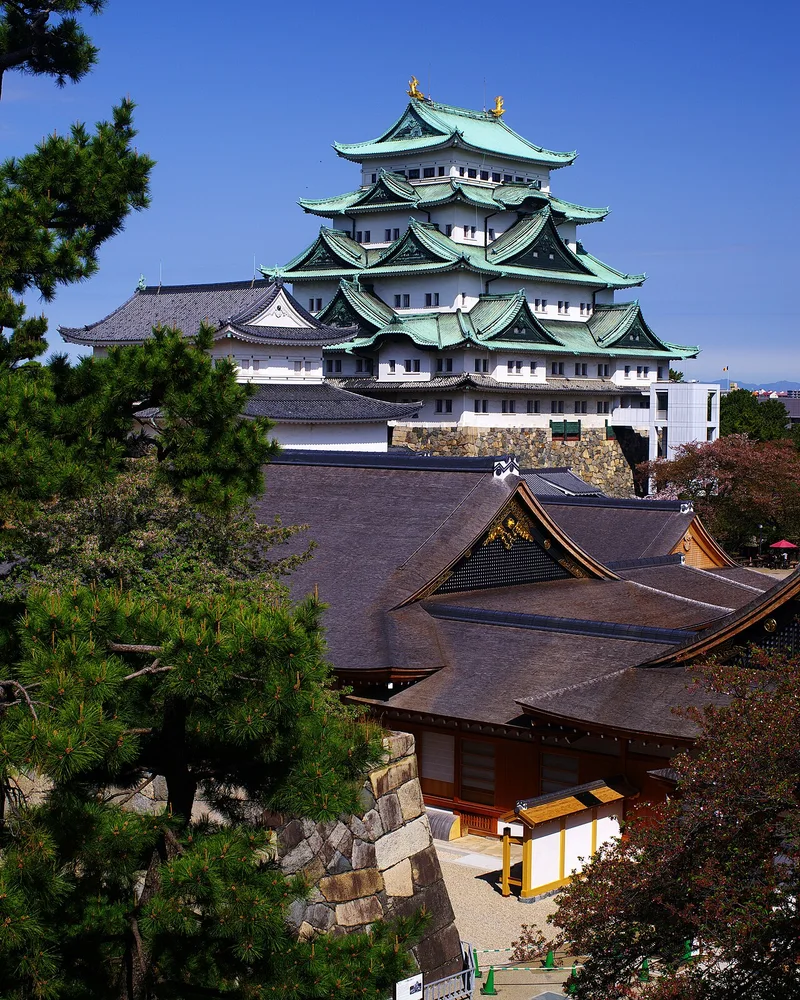
While Nagoya Castle’s keep is closed, plan a half-day around Honmaru Palace, the grounds and Okura Johokan. Compare Main and East Gates, the palace’s two entrances, October 2026 admission rates, accessibility and Kinshachi Yokocho dining.
Adult admission is ¥1,000 from October 2026, including the palace
The current Nagoya Castle fee page lists standard adult admission at ¥1,000, with junior high school students and younger entering free, effective October 1, 2026. Basic visits to Honmaru Palace and Nishinomaru Okura Johokan are included after castle admission. Two adults and one elementary school child visiting these basic attractions pay ¥2,000 in castle tickets. Add food, storage, transport and separately charged events. “Free entry” on the palace page does not make the whole castle free.
Nagoya residents aged 65 and over pay ¥300 with photo ID that verifies their address, age and identity. Overseas visitors aged 65 and over should budget the standard adult fare; residence and documentation are the key conditions. Disability exemptions also specify designated certificates issued under Japanese law. The number of accompanying caregivers covered depends on the conditions. Before buying, tell the counter what type of documentation you hold if you need assistance.
Ticket counters accept yen cash and list credit cards, transit IC cards and various electronic payments. For the Nagoya Castle and Tokugawaen combination ticket, the current official adult price is ¥1,040. It can be used on a day other than the purchase date, but the castle counter accepts only cash for this ticket. Decide whether you will actually visit Tokugawaen first. The combination does not include all transport between the sites or admission to the Tokugawa Art Museum. If your plan is the castle and lunch, you do not need to reshape the afternoon for another garden.
The official site also links to online ticket sales. Read the selected product page for ticket type, validity, changes and refunds, then enter the date and guest count correctly before paying. For weather flexibility, use the on-site counter. Group rates have thresholds of 30 and 100 people; ordinary families should not budget with group prices.
Separate park hours, palace entry and autumn-festival extensions
The general visitor information lists opening from 9:00 to 16:30, with final gate admission at 16:00. Reach the individual entrances to both Honmaru Palace and Nishinomaru Okura Johokan by 16:00. The palace is about a ten-minute walk from either the Main or East Gate. Okura Johokan is about five minutes from the Main Gate and ten from the East Gate. For interiors, reach the building before its cutoff, allowing extra time for shoes, storage and queues. Arriving at the subway exit at 16:00 is too late for that plan.
The usual closure period is the four days from December 29 through January 1. Place the castle on a day it can be visited, then fit station shopping or other open facilities around it. The homepage, visitor information and current event page carry different details. For special extensions, use the notice for your actual travel date.
As of October 26, 2026, the 2026 autumn festival is underway through November 23. From October 25 to November 23, gates open at 9:00, last admission is 16:30 and closing is 17:00. Last palace entry remains 16:00. The 20:00 closing and night performances for September 19–October 4 and October 18–24 have ended. Final entry to Okura Johokan and the specially opened Southwest Corner Turret is also 16:00; tea seating has a 15:45 cutoff. After reading the festival poster, record each facility’s time separately.
The subway approaches the East Gate; Main Gate buses start you on the west
The official access page gives a walk of about five minutes from exit 7 of Nagoyajo Station on the Meijo subway line. This approach reaches the East Gate and Muneharu Zone first. Going around to the Main Gate adds a walk outside the castle. With a stroller or wheelchair, locate the station elevator exit first, then follow the street route to your entrance. The reference time from exit 7 does not cover every elevator route.
From Nagoya Station, a subway trip usually involves one transfer. The official reference for city rail travel is about 15 minutes; add the walk from hotel to platform, waiting and the exit walk. Nagoyajo and Meijo Koen to the north are separate stations. Choose the paid-area entrance before entering navigation. Higashiote Station on the Meitetsu Seto Line is another official option, with about a 15-minute walk, useful if you are already arriving on that line.
For the Main Gate, check the Nagoyajo Seimon-mae stop on city bus Sakae 13, or the day’s route of the Nagoya sightseeing bus Meguru. The castle FAQ uses about 20 minutes by bus from Nagoya Station, before waiting and road conditions. A sightseeing bus suits visitors willing to work around its frequency. Near the afternoon palace deadline, check whether the next departure can get you there in time before choosing transport.
Drivers can use the Main Gate-front parking lot or Ninomaru East parking lot. Current castle information lists ordinary cars at ¥250 per period of up to 30 minutes. Main Gate parking normally opens 8:45–21:30, and the eastern lot 8:30–22:30, on a first-come basis for ordinary cars. Parking stays open longer than the castle, allowing evening car collection, but that does not extend paid-area entry. Kinshachi Yokocho has no dedicated parking lot. Charges continue while you eat, and passing two and a half hours versus three hours adds a billing unit.
Enter at the Main Gate and leave at the East Gate to connect exhibits and lunch
From the Main Gate, begin with castle history at Nishinomaru Okura Johokan, then continue to Honmaru Palace. Afterward, see the keep exterior, walk toward Ninomaru Garden if energy permits, and exit at the East Gate for Muneharu Zone. This suggested route uses opposite ends to reduce backtracking for food. If the palace is your only priority, head straight to Honmaru and leave the exhibition building for later or skip it.
From the East Gate, reverse the route: palace first, then the keep and Honmaru walls, followed by Nishinomaru for exhibits if desired, and the Main Gate exit for Yoshinao Zone. The official interactive map marks Honmaru, Ninomaru, Nishinomaru and Ofukemaru separately, with layers for restrooms, storage, dining and accessible equipment. Save the entrance, palace and planned exit individually before leaving. This is easier to follow than one generic Nagoya Castle pin.
Handle storage first when using different gates. A suitcase left at the Main Gate still requires a return there after an East Gate exit for the subway. Small backpacks can use palace storage according to its rules. Leave large luggage at your accommodation or a station you will return to anyway. Repairs or events may change some paths. Follow current signs while retaining the order of palace first, outdoor sights next, then food near the exit.
Before Honmaru Palace: shoes, storage and restrooms
The Honmaru Palace visitor rules require shoes to be removed at entry. Barefoot visitors and those in stockings change into provided slippers; visitors wearing socks follow staff instructions. Suitcases and other large bags go in the palace’s free lockers. Do not touch sliding doors, paper screens or metal fittings. Organize your phone, camera and small items beforehand to reduce repeated bag-opening inside and keep entry moving.
Photography is permitted, with flash switched off in advance. Do not wait until you are in front of a painting to find the setting. An automatic camera mode may trigger flash in dim rooms, so test it before entry. Photograph room views from the permitted visitor area. Stay out of rooms even for an empty-looking shot, and keep lenses, umbrellas and backpacks off pillars and door panels. To study details longer, let moving visitors pass, then stop where permitted.
To recreate an Edo-period setting, the palace uses subdued lighting and has no heating, air conditioning or restrooms. Food, drink, smoking and ordinary phone use are prohibited. Drink water outside first in summer, wear adjustable layers in winter, and take small children and older relatives to the restroom before entry. These conditions affect how long a visit suits you. On a rainy day, the palace still does not offer the climate control of a large shopping center.
The main rooms use the entrance beside Nakanokuchi-beya. The official route lists the entrance hall, Omote Shoin, Taimenjo and Jorakuden. A separate entrance in front of Yudono Shoin serves Yudono Shoin and Kuroki Shoin. To see both groups, leave the main route, walk to the second entrance and complete its admission procedure separately. Plan them as two visits so finishing Jorakuden does not leave you thinking every room has been covered.
Read the rooms by their use: status and layout beyond the gold
Completed in 1615, Honmaru Palace was initially the residence and government offices of the Owari lord. After Tokugawa Yoshinao moved to Ninomaru Palace in 1620, it became lodging reserved for the shogun. The original burned in the 1945 air raids. Today’s building was reconstructed from historical evidence and fully opened in 2018. This history explains the route: different users and occasions brought different decoration and layouts.
The entrance hall was where visitors waited for an audience. Its gold-ground partition paintings show bamboo groves, leopards and tigers, giving it the name Tiger Room. From the visitor line, look at how animals spread across a sequence of panels rather than isolating one tiger. A composition with doors closed differs from the open rooms before you. With children, use this stretch for finding tigers and comparing bamboo, then encourage quiet observation rather than running between rooms.
At its founding, Omote Shoin was the largest and highest-ranking formal audience space. The raised Jodan-no-ma was where lord Tokugawa Yoshinao sat. After the waiting entrance hall, compare seating and spatial relationships in the formal reception room. Instead of giving every gold room the same photograph, look up at ceilings, then note differences in levels and decoration. Ask who sat here and whom they received.
Taimenjo served more private meetings and banquets between the lord, relatives and retainers. Its paintings show seasonal customs and famous places in Kyoto and Wakayama. Slow down here to find daily life in people’s activities, buildings and seasonal scenery, then compare it with the more formal audience rooms. The official highlights also include the raised, finely coffered ceiling. Look at its whole construction before photographing; there is more to see than the gold background.
Jorakuden was added in 1634 for the third shogun, Tokugawa Iemitsu, during his journey to Kyoto. Its carved transoms, decorative fittings and paintings are more elaborate. Concentrate on details here: how carvings, sliding-door handles, ceiling and paintings form one room. Do not use all your time in the first rooms. If companions want a shorter stay, give the entrance hall and Jorakuden a proper look and follow the flow between them rather than stopping equally long everywhere.
Yudono and Kuroki Shoin need another entrance; allow time for audio too
For domestic facilities, go separately to the entrance in front of Yudono Shoin. The shogun’s bath was a steam bath: water was heated outside and steam led inside, unlike soaking in a modern hot-spring tub. The official explanation says the early floor sloped for drainage and was later leveled. The reconstruction uses the level floor seen in old photographs. Study the relationship between bathing and resting rooms rather than searching for a modern bathtub to confirm you are in the right place.
Kuroki Shoin, in the same group, is quieter in character. Most main rooms use cypress, while Kuroki Shoin uses fine pine; its name also relates to the wood’s color. The official account presents its move from Kiyosu Castle as a tradition. After ornate Jorakuden, the different materials and space become clearer. Add these rooms for architecture, materials and domestic history. For a short half-day, retain the main route first.
The official Honmaru Palace audio guide is available in Japanese, Chinese, English and Korean. It has 20 stops, each about two to five minutes, around 70 minutes in total. Bring a phone and headphones, prepare the audio at entry and follow staff instructions for use. Without a phone or headphones, borrow a dedicated device at Nakanokuchi-beya reception, currently ¥100 per use, payable only in yen cash. To hear every stop, choose the two-to-three-hour version of the castle visit and leave lunch later.
The official page also provides a special palace film and virtual tour to help you recognize rooms and transoms in advance. Watching a short portion before visiting lets you spend on-site time in favorite rooms. Companions without much interest in historical background can also see that shoes come off and rooms are viewed along a prescribed route, then decide whether to join this part.
The full-opening film embedded directly on Nagoya Castle’s official Honmaru Palace page. Preview the building exterior and scenes of the restoration work before visiting.
Nishinomaru Okura Johokan: connect reconstructed rooms with surviving objects
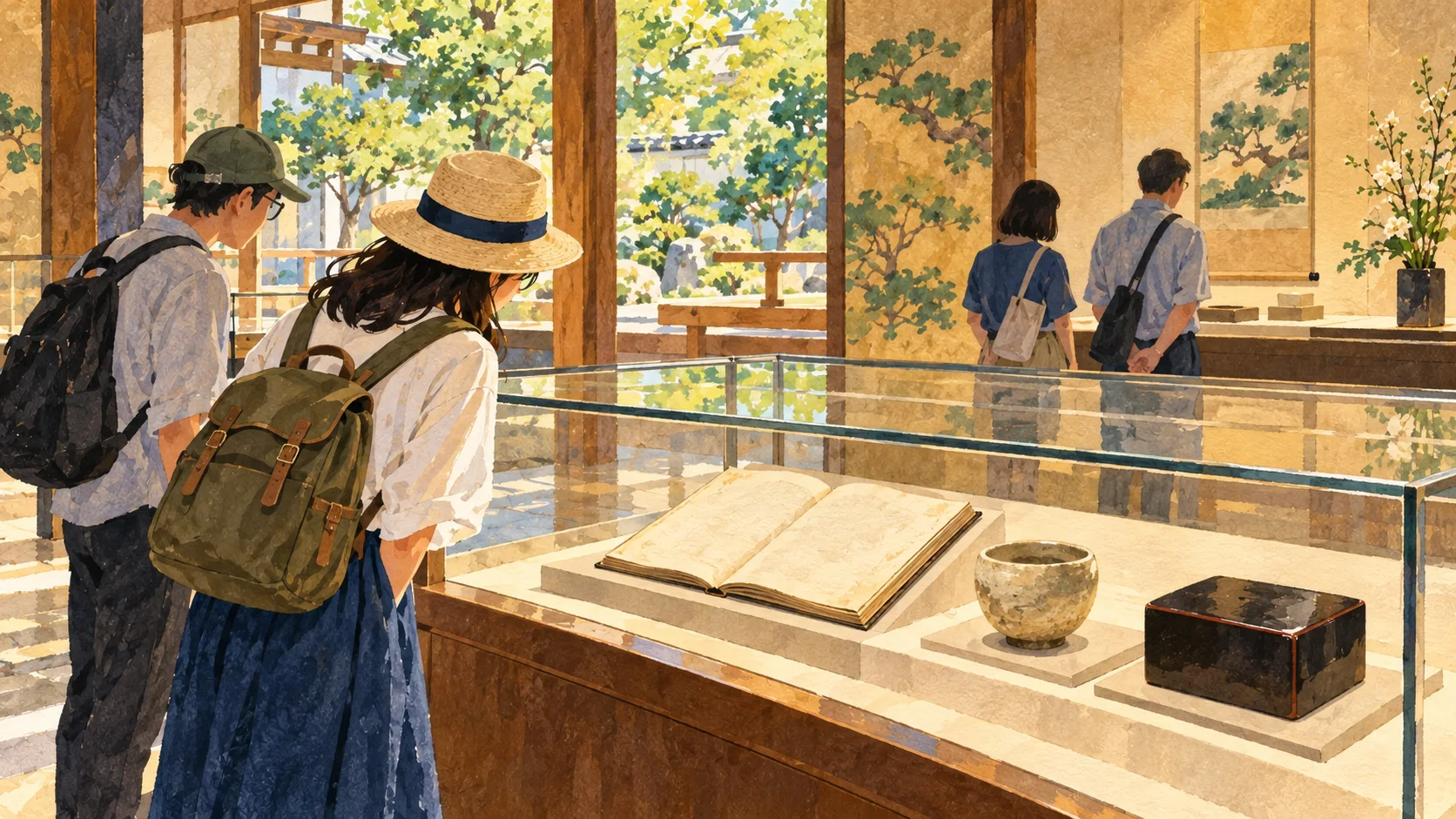
Nishinomaru Okura Johokan is a display and collection facility whose exterior recreates Nishinomaru’s third and fourth storehouses. Inside are a historical information room and galleries for Nagoya Castle collections, including important cultural property paintings from Honmaru Palace. To understand the difference between reconstructed copies in the palace and preserved cultural properties, visit both on one route. See castle history before the rooms, or compare paintings after seeing their setting.
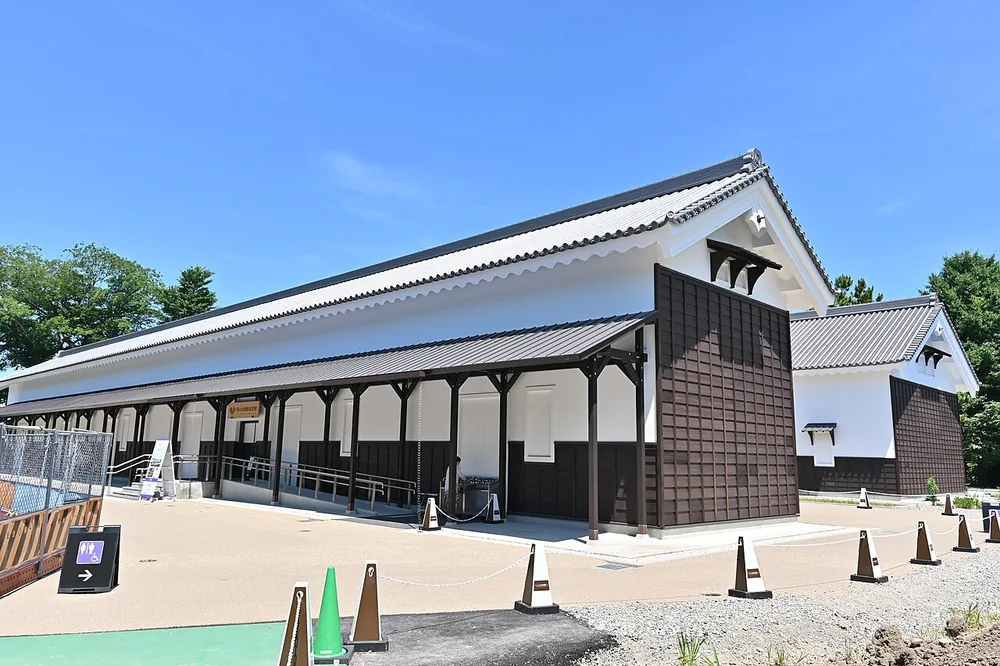
Basic entry is free after paying castle admission. Admission to the building runs from 9:00 to 16:00. Exhibitions rotate; check the gallery’s exhibition page before visiting and follow each object’s photography signs inside. Starting here from the Main Gate is usually smoother than crossing the grounds from the East Gate. With limited afternoon time, choose the palace directly and leave the collection for another visit.
The museum adds castle history and surviving materials without needing to become a separate lengthy museum visit. On a first visit, allow 20–30 minutes, then adjust for the exhibition and your interests. If the palace is the priority and has a queue, complete it first and decide whether time remains for the museum. Both have a 16:00 admission cutoff, so do not leave either entrance search until the end.
Golden shachi on the keep, and stonework around Honmaru
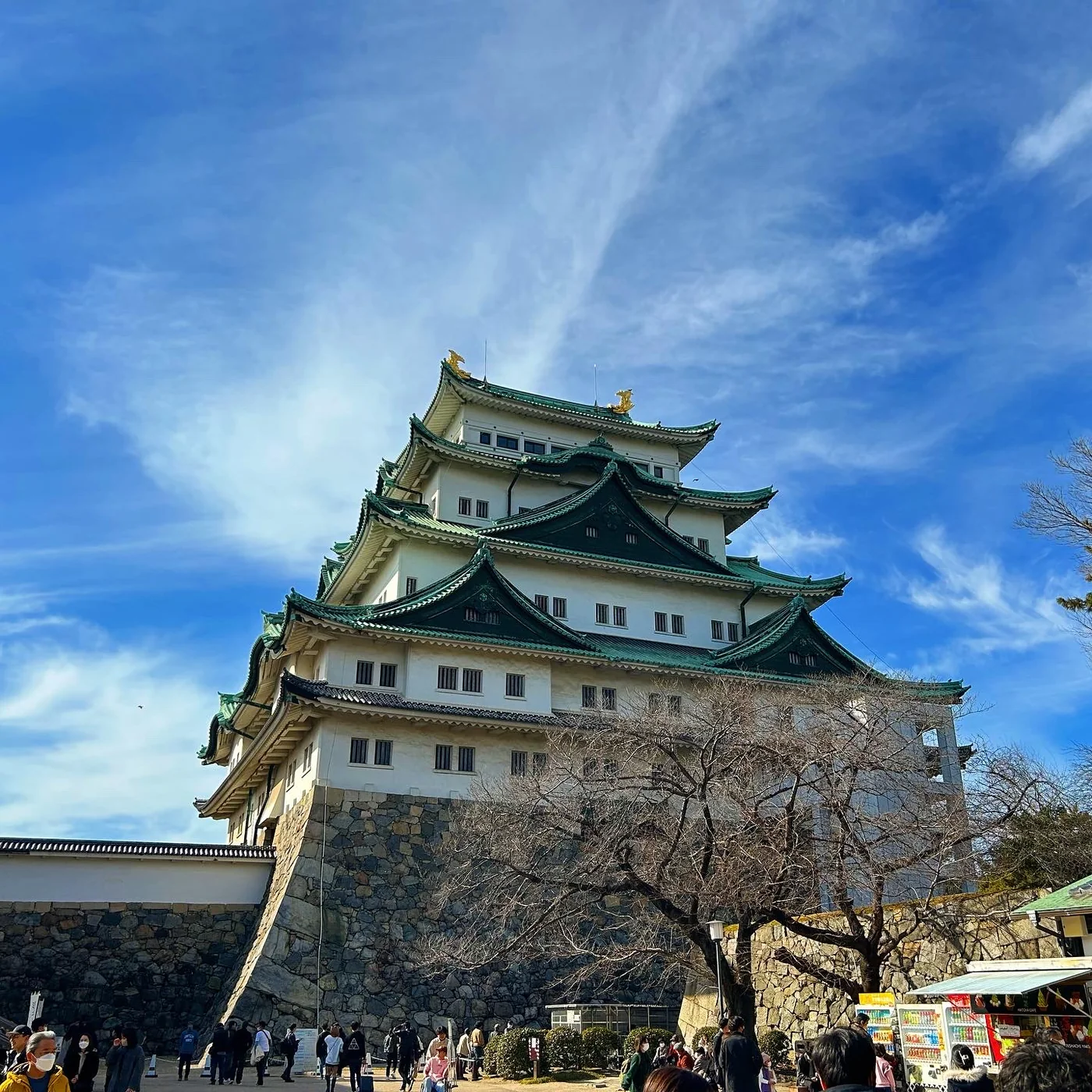
While the keep is closed, its exterior and golden roof shachi remain visible from the grounds. The present keep is a steel-framed reinforced-concrete postwar reconstruction from 1959, while the reconstructed palace fully opened in 2018. A photo can show both together, but distinguish their roles during the visit. The palace served residence, reception and government; the keep formed a prominent core of the fortifications.
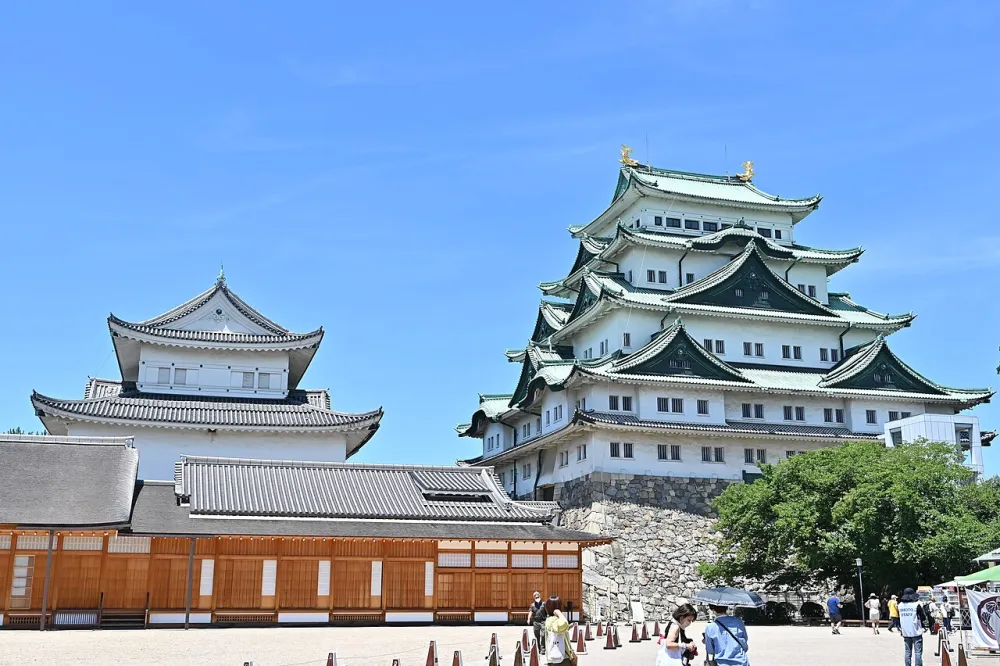
The castle’s stone-wall introduction explains that 20 daimyo families from western Japan divided responsibility for construction. Marks on stone faces identified material brought by each family. Looking at joints and marks from open paths is a good change after the gold interiors. You need not find every example. Choose a short stretch to compare sizes, joins and corners and see how much stonework underpins the castle.
Inside Honmaru’s East Second Gate, Kiyomasa Stone is the castle’s largest boulder. Its name connects it to a Kato Kiyomasa legend, while the official account identifies Kuroda Nagamasa as the lord responsible for this section and the Kiyomasa hauling story as a modern creation. Read the sign on site to separate the conspicuous stone’s name from the actual construction division. Take photos from the path. Do not climb walls or approach moat edges, and let others pass at corners.
For surviving buildings from the castle’s early period, look for the Southeast, Southwest and Northwest Corner Turrets. All three are important cultural properties, normally closed inside. The Southeast and Southwest Turrets appear two-storied outside but have three floors inside. The Northwest Turret is in Ofukemaru, requiring an extra northern stretch. For a short route, see the two exteriors around Honmaru; extend to Ofukemaru on a longer visit. During special openings, follow the announced entrance and cutoff.
Ninomaru Garden and seasonal plants: an outdoor stretch after the palace
Ninomaru Garden lies north of the former Ninomaru Palace. The official introduction gives an area of about 30,000 square meters, with rocks, terrain and ponds forming the lord’s garden. It offers a different kind of visit from Honmaru Palace’s rooms. Follow open paths to stone bridges, rock arrangements and garden layers, stopping at rest areas when tired. The area figure does not make a complete circuit compulsory.
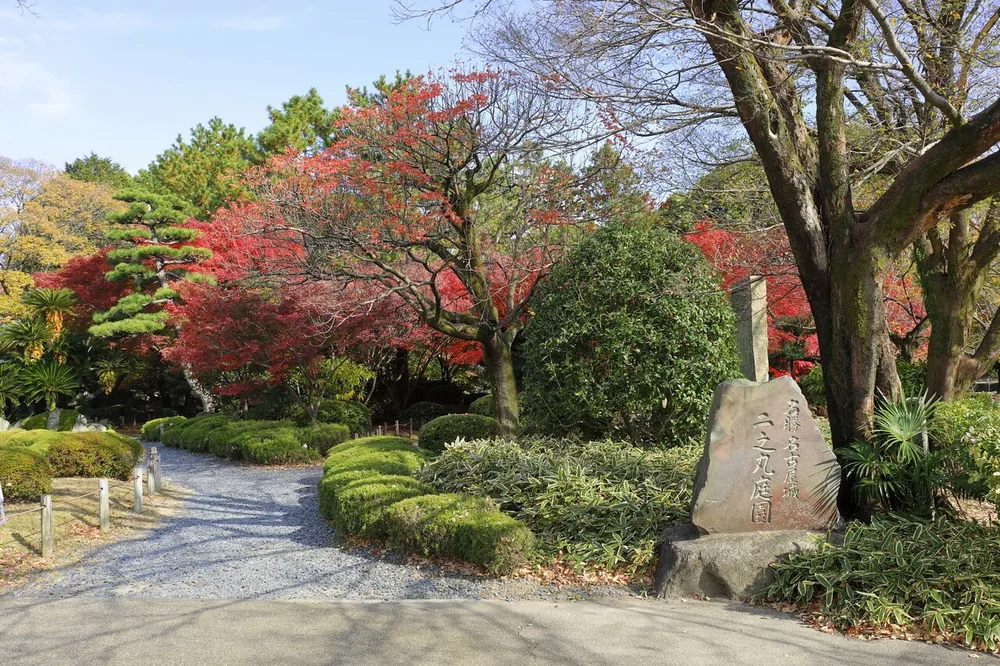
The castle’s seasonal-plant page separates cherry varieties and locations. Somei Yoshino and mountain cherries usually bloom from late March to early April. Nishinomaru has weeping cherries, while Honmaru and Ninomaru also have later double-flowered cherries. For a spring palace-and-blossom visit, choose areas from that visit’s bloom updates. The flowering table explains sequence. Connect the area currently in bloom with your entrance and exit rather than crossing the whole park for one “full bloom” date.
Early-summer hydrangeas and irises, autumn osmanthus, and winter camellias and wintersweet give walks detail in different months. In summer, avoid putting outdoor walls and long queues all at noon. In winter, finish the main interiors, then shorten outdoor stretches according to wind and companions’ comfort. For autumn events, choose the date using the program first, then judge leaf color with current on-site photographs.
Kinshachi Yokocho’s two zones: traditional dishes west, cafes and dinner east
Kinshachi Yokocho consists of Yoshinao Zone beside the Main Gate and Muneharu Zone beside the East Gate. Both are outside the castle’s paid area. You can go directly for lunch or use them for meals before and after a castle visit. Yoshinao focuses on traditional Nagoya food and established restaurants. Muneharu has cafes, noodles and restaurants open later. Choose the zone together with your exit and meal time.
The Yokocho visitor information lists both restaurant-specific seating and shared tables. Some takeaway food can be eaten at shared tables, with separate payment at each business. If companions want different foods, check takeaway options first, then find available seats. Weather may close shared tables. For indoor seating, high chairs or food allergies, choose a restaurant and ask it directly. The street does not operate as one restaurant.
The same page says castle ticket holders can re-enter, with the actual procedure handled by gate staff. To visit, leave for food and return for a walk, retain the ticket and ask about that day’s procedure before leaving. If you still want the palace or museum in the afternoon, count the return from lunch against their 16:00 cutoff. For a first visit, completing the main interiors before eating outside is usually easiest. There is no need to add return trips simply to use re-entry.
Lunch: use each branch’s last-order time
In Yoshinao Zone, try Yamamotoya Sohonke, Kinshachi Yokocho branch for miso-simmered udon, or Yabaton, Nagoya Castle Kinshachi Yokocho branch for miso pork cutlet. Yokocho’s current shop pages list both at 10:30–17:30, with last orders at 17:00. Yamamotoya Sohonke here has a similar name to other Yamamotoya businesses in Nagoya. Save the full branch name so navigation does not take you to a different city location.
For eel rice, choose Hitsumabushi Nagoya Bincho, Kinshachi Yokocho branch. The official shop list gives weekday hours of 10:30–17:30, with food last orders at 16:00. On weekends and holidays, lunch runs 10:30–16:00 with last orders at 15:30, and dinner 17:00–19:00 with food last orders at 18:00. Its food cutoff is earlier than many nearby restaurants. Do not use the whole zone’s closing time to assume you can eat after a 17:00 palace finish. Make the interior visit and chosen meal fit together.
In Muneharu Zone, saien focuses on vegetable cafe dining. Its page lists 10:30–22:00, with last orders at 21:00. Fujiyama 55, Kinshachi Yokocho branch lists 11:00–15:00 and 17:00–22:00, with lunch last orders at 14:30 and dinner at 21:00. For a meal after 15:00, check afternoon breaks first. For dinner after the castle closes, choose a Muneharu restaurant still open, then leave via Nagoyajo Station. Budget each person’s main dish, drinks and extras separately. Ask the restaurant about allergens in your selected menu.
Wheelchairs, strollers and luggage: plan gate and palace equipment separately
Wheelchairs and strollers can be borrowed at the Main and East Gates. Numbers are limited and reservations are unavailable. If equipment is essential for the whole visit, bring your own. The official map offers 60-minute accessible routes from both gates to identify usable paths and facilities. This is a route-time reference. Companions needing rests or waits do not have to finish in 60 minutes.
Wheelchair access to the palace is via the north ramp, and dedicated indoor wheelchairs are provided. Tell entrance staff what assistance you need and follow the assigned route. Equipment borrowed at a castle gate and indoor palace wheelchairs are separate arrangements. Stroller users should also follow staff instructions for the stroller and child at palace entry. Bags on a stroller do not replace storage for large luggage.
The grounds have three wheelchair-accessible restrooms and restrooms with diaper-changing facilities. The facilities information links their locations to the official map. Use the nearest one before palace entry to focus on the rooms afterward. Save a changing-facility pin if a child needs it. There are no restrooms inside the palace, and leaving to find one takes time. Use that break to separate the main route from the Yudono visit at the other entrance.
Both Main and East Gates have coin lockers. For bags too large to fit, the Main Gate general information center currently offers storage at ¥300 per item. If you leave bags at the Main Gate, plan to return there to collect them. To leave directly through the East Gate for the subway, store luggage at your accommodation instead. Beyond price, collection location changes the whole route. Decide your exit before choosing storage.
Use weather and companions’ needs to choose what to keep
In rain, the palace and museum remain options, but paths between gates and buildings are outdoors, as is the walk between palace entrances. Use one gate in both directions and a short route focused on the main palace and museum, omitting the northern turret and long garden stretches. Store umbrellas where staff direct, and handle shoes and luggage before entering. If rain affects shared tables outside, choose a restaurant with available indoor seats.
In summer, the easily missed condition is indoor temperature: the palace has no air conditioning. Older relatives and young children can take a shorter main route, with breaks in outdoor shade, rest facilities or restaurants outside the castle. In winter, alternate the palace and keep exterior to reduce standing in wind for photos. If family members are interested only in golden shachi and walls, give outdoor sights more time while those interested visit the palace separately.
With school-age children, choose two visible tasks: find tigers in the entrance hall, then look for stone marks outside. Before entry, explain not to touch sliding doors, frames or fittings, and do not let children lean on walls while adults take photos. Outdoors gives them more room to move. Leashed pets may enter the grounds, but not the palace, museum or other buildings. Assistance dogs follow separate castle rules. Adults with pets should decide who visits interiors and who stays outside.
Allow for the guide in the morning; prioritize the 16:00 interior cutoff in the afternoon
A morning version can run from arrival at the gate around 9:00 to lunch outside around 12:00. For the complete audio guide of about 70 minutes, reserve that block first, then add the walk from gate to palace, shoes, storage and rests. Choose the museum, Yudono and Kuroki Shoin by interest rather than fitting every addition before lunch. If eating at Bincho, also record the weekend lunch last-order time of 15:30.
For an afternoon version, finish the palace first. If entering around 14:00, go directly there, then see the keep exterior. To add the museum, watch its 16:00 admission deadline and choose only a short garden stretch. Arriving after 16:00 calls for Yokocho food and a walk outside the castle, with a separate daytime castle visit, rather than buying a ticket and hurrying after closed buildings.
After leaving the castle area, continue a half-day with shopping and dinner in Sakae. For another garden, check Tokugawaen’s opening days, transport and combination-ticket options separately. For fuller city, accommodation and airport planning, see the two-day Nagoya guide.
Night views and blossom extras: check how late you may stay inside
Routine lighting of the keep and a night opening are separate. The castle FAQ says the keep is normally lit from sunset until 23:00, ending early at 21:30 on the monthly environmental day, the 8th, with further early switch-offs for energy-saving events. These are lighting hours. Leave the paid area at ordinary closing. For evening exterior photos, use open public places outside the castle rather than waiting on daytime garden paths for lights.
The 2026 autumn festival’s Be GOLD night event ended October 24. For visits from October 26 onward, use the current daytime schedule. For future night cherry blossoms or autumn evenings, check whether that event extends admission, whether the palace opens too, and restaurant last orders. Seeing the rooms by day and exterior lighting at night is an easier way to fit both interests.
A few useful answers
What can I see with admission while Nagoya Castle’s keep is closed?
Open sights include Honmaru Palace, castle exteriors, stone walls, gardens and Nishinomaru Okura Johokan. Basic palace and museum visits are included in castle admission. The present keep remains closed.
How many entrances does Honmaru Palace have?
The entrance beside Nakanokuchi-beya serves the entrance hall, Omote Shoin, Taimenjo and Jorakuden. The entrance in front of Yudono Shoin serves Yudono Shoin and Kuroki Shoin. Allow extra walking time to see both groups.
Do I need a Nagoya Castle ticket for Kinshachi Yokocho?
Both zones lie outside the paid castle area and can be visited directly for meals. Yoshinao Zone is beside the Main Gate and Muneharu Zone beside the East Gate. Restaurant hours and last orders vary.
Which entrance should I use with luggage?
The Main and East Gates have coin lockers. Oversized bags can be stored at the Main Gate general information center for ¥300 per item. Choose the storage location together with the exit you will use to collect them.
Official information and references
Sources used in this guide.
- Nagoya Castle: opening, closure dates and walks to buildings
- Nagoya Castle: current admission and combination tickets
- Nagoya Castle: Honmaru Palace rooms, two entrances and rules
- Nagoya Castle: keep closure and reconstruction history
- Nagoya Castle: access and current parking fees
- Nagoya Castle: photography, storage, repeat visits and mobility-aid FAQ
- Nagoya Castle: wheelchairs, strollers and baby-care facilities
- Nagoya Castle: Honmaru Palace audio guide
- Nagoya Castle: Nishinomaru Okura Johokan
- Nagoya Castle: stone walls, marks and Kiyomasa Stone
- Nagoya Castle: corner turrets
- Nagoya Castle: Ninomaru Garden
- Nagoya Castle: seasonal plants and cherry-blossom areas
- Nagoya City: 2026 autumn festival dates and facility cutoffs
- Kinshachi Yokocho: current branches, hours and last orders
- Kinshachi Yokocho: re-entry, takeaway and seating
- Kinshachi Yokocho: addresses and access for both zones
- Nagoya Castle: official interactive map