Where to enter Osaka Castle when snow settles in the city, where to stay warm in sleet or winter rain, and train times, fares, and booking rules for skiing or sledging at Rokkosan Snow Park from Umeda or Namba.
- Region & Focus
- OsakaWhen to visit
- Reading Scope
- 22 min read · 12 chapters · 6 Q&As
- Official Verification
- 31 official sources checkedUpdated 22 November 2026
- Key Topics
- WinterSeasonsRail travel
Chapter Route Map (tap any stop)
- Check Whether Snow Is Actually Settling First
- Which Station Exits to Use for Osaka Castle in the Snow
- Wet-Pavement Routes in Umeda, Namba, and Tennoji
- A Full Rainy-Day Fallback for Families in Nakanoshima
- Rokkosan Snow Park 2026–27 Season & Admission
- Getting Up the Mountain from Osaka: Rokko, Rokkomichi, or Mikage
- Which Transport & Park Combo Pass to Buy
- Direct Express Buses on Selected Dates for Toddlers or Zero-Transfer Trips
- Mapping Out Snow Land for Young Children & Non-Skiers
- First-Time Ski & Snowboard Lessons: Booking & Check-In
- Staying in Umeda vs Namba: Let Your Earliest Train Decide
- Can You Add Kobe Harbour or Night Views After Coming Down?
- Quick Q&A
If it snows while you are staying in Osaka, head straight to Osaka Castle Park once the ground turns white—or switch to the Umeda or Namba underground shopping arcades if it is only sleeting. For children wanting to sledge, set aside a full day for Rokkosan Snow Park in Kobe, whose 2026–27 season runs from 5 December to 7 March. From Osaka, you can travel via Hankyu Rokko, JR Rokkomichi, or Hanshin Mikage. Decide before buying tickets whether you are sledging or taking a ski lesson, as the two use different passes.
Check Whether Snow Is Actually Settling First
Seeing snowflakes outside Osaka Station and finding settled snow at Osaka Castle are two very different outings. Based on 1991–2020 observations from the Japan Meteorological Agency, Osaka's average first snowfall falls on 26 December and its last on 8 March. Over that same 30-year period, only 9 winters recorded enough snow to enter the "1 cm or deeper" first-and-last accumulation statistics. Those dates give you a rough sense of Osaka's winter climate, but for photography, hotel planning, or taking children to play in the snow, you need to plan separately for places where snow actually holds.
When staying in Umeda or Namba, wait until daylight and check the opposite balconies, rooftops, and roadside planters. If flakes melt as soon as they hit the tarmac, treat it as a rainy-day itinerary. It is only worth putting Osaka Castle into your morning once shaded areas and lawns are visibly white and the underground lines are still running normally. Glance at a live weather radar before stepping out, as oncoming rain can wipe out the scene faster than the air temperature drops. Shifting your morning department-store browsing or lunch slightly later opens up a clean window to get outdoors.
If you only packed city winter layers and the children still want to touch snow, plan for Snow Land at Rokkosan Snow Park. Snowmaking machines keep the mountain slopes open on their own season schedule and designated zones. Before booking any lessons, work backwards from wake-up time, underground rides, and transfers. On stays of four nights or longer, put this trip on your first full weekday so you still have a buffer day afterwards. On a two-night Osaka trip, pick either city snow viewing or Mount Rokko—cramming both into one day means a single missed connection can eat up half your morning.
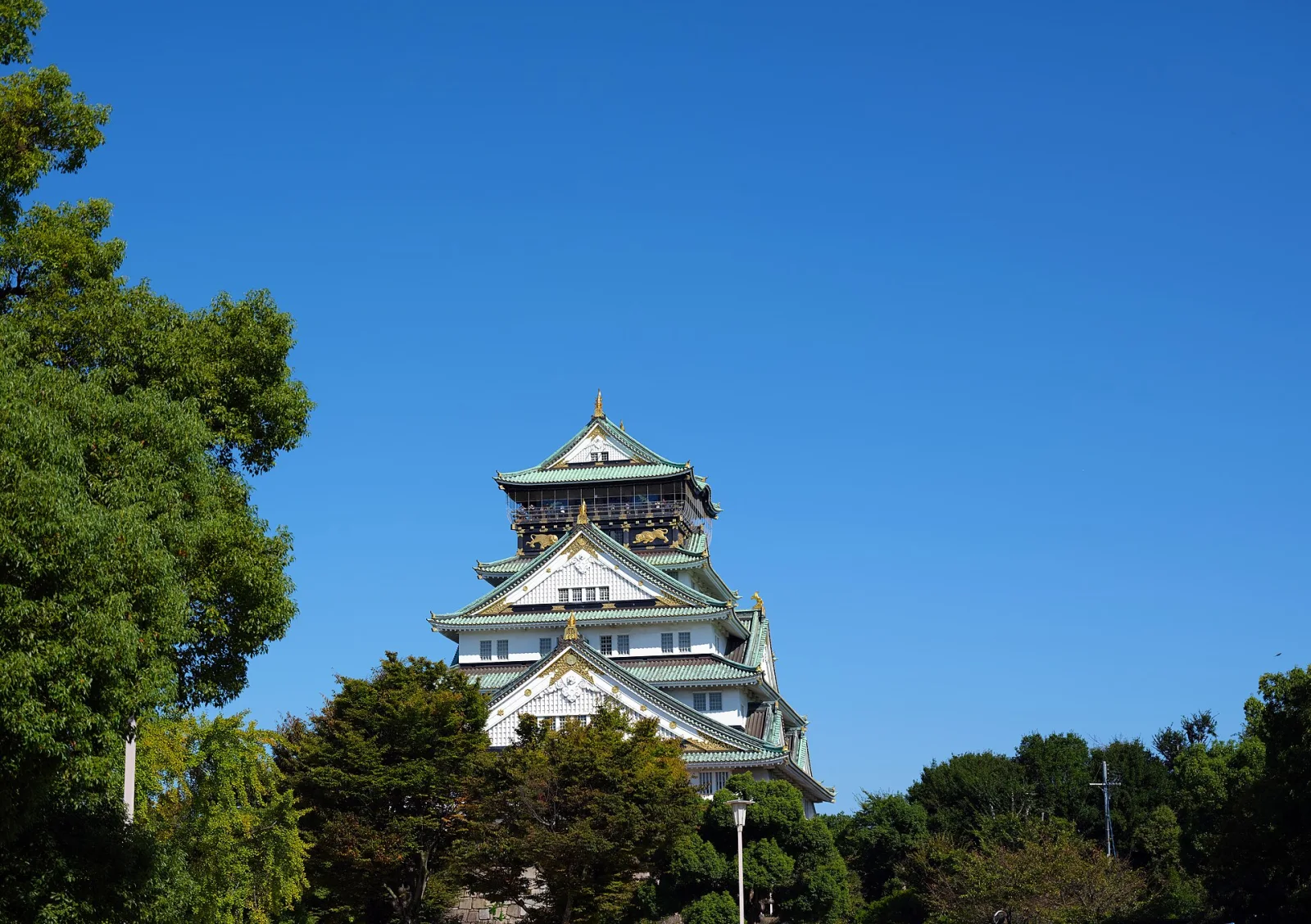
Where to enter Osaka Castle when snow settles in the city, where to stay warm in sleet or winter rain, and train times, fares, and booking rules for skiing or sledging at Rokkosan Snow Park from Umeda or Namba.
Which Station Exits to Use for Osaka Castle in the Snow
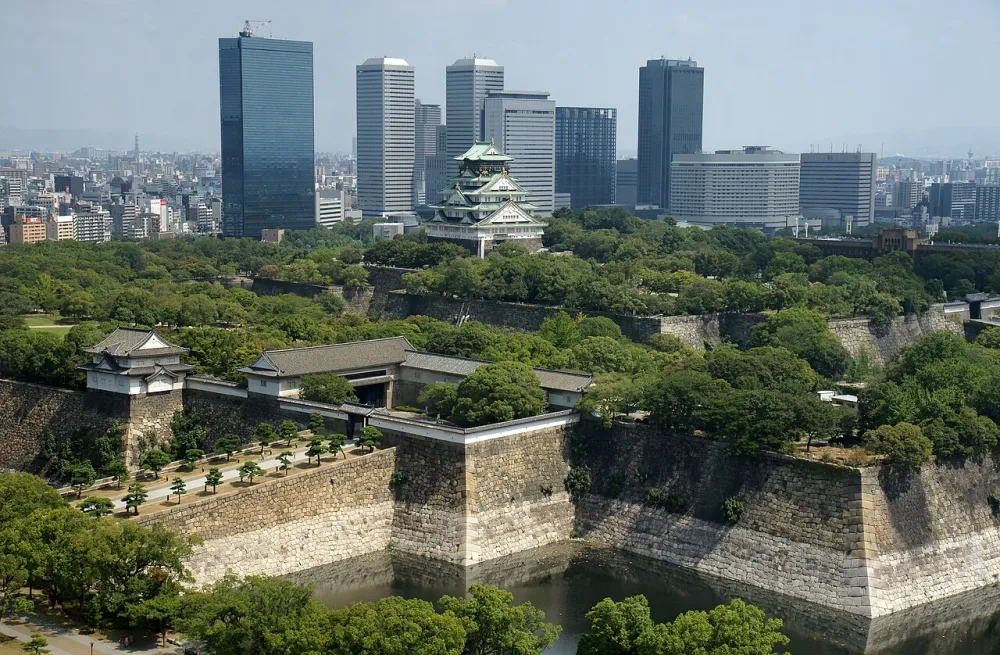
Coming from southern Umeda or Higashi-Umeda, take the Tanimachi Line to Tanimachi 4-chome Station Exit 1-B, walk towards Otemae, and follow the outer moat to Otemon Gate. Passengers on the Chuo Line should use Exit 9 at the same station. This western side gives you the outer moat, stone walls, and Nishinomaru Garden, making it easy to frame castle masonry alongside winter trees in a single walk. If you also plan to go inside the main keep, head towards the Honmaru inner bailey first, take your exterior photos around the tower, and then follow the ticket queue—otherwise you end up walking the same long slope twice.
On the Chuo Line, you can also get off at Morinomiya Station Exit 1 or Exit 3-B; if travelling on the Nagahori Tsurumi-ryokuchi Line, follow the official route via Exit 3-B. This brings you into the park's south-eastern corner, where families can make the fountain plaza their first stop before deciding whether ground conditions allow a walk up to Honmaru. If you have a pushchair, check the accessible routes and ramps on the official Osaka Castle website beforehand. Wet snow turns stone steps slick, so stick to flat perimeter paths first and turn back the same way if you hit icy patches—entering and leaving via Morinomiya easily fills a morning.
The general park paths are open 24 hours, so you can arrive before the castle keep opens in winter. Osaka Castle Keep is open 9:00–18:00 (last admission 17:30); admission is ¥1,200 for adults and ¥600 for high-school and university students (overseas students need a valid ISIC card). Junior-high students and younger enter free, with passports accepted as proof of age for overseas visitors. The keep is closed from 28 December to 1 January, during which you can still photograph the exterior and schedule indoor exhibitions elsewhere. If you are travelling across town specifically for the museum floors the day before the New Year closure, go in the morning rather than cutting it close to last entry.
From November to February, Nishinomaru Garden is open 9:00–16:30, with last entry at 16:00. Admission is ¥300 for adults and free for junior-high students and younger. It normally closes on Mondays (or the following weekday if Monday is a public holiday) and for the New Year break from 28 December to 4 January. The garden and the keep have separate entrances and different reopening dates after New Year. If you only have an hour and want a moat-side shot, staying on the outer paths is far simpler than queuing at two gates. See our Osaka Castle Keep and Park guide for how to split your time across the grounds.
When snow only clings to handrails, shrub tops, or the base of the walls, get closer and use the white patches in the foreground to frame the dark stone ramparts. The paths along the moat are great for stopping to shoot, though keep bridge walkways clear for passing pedestrians. Large expanses of bright snow can trick a phone camera into underexposing, so tap the keep's white walls and bump exposure up slightly, or change your angle if the sky looks washed out. Wait until you are indoors before sorting and sending photos rather than pulling off your gloves in the wind. Keep this outing to a single section of the park so you can sit down for lunch before the snow turns to drizzle.
Wet-Pavement Routes in Umeda, Namba, and Tennoji
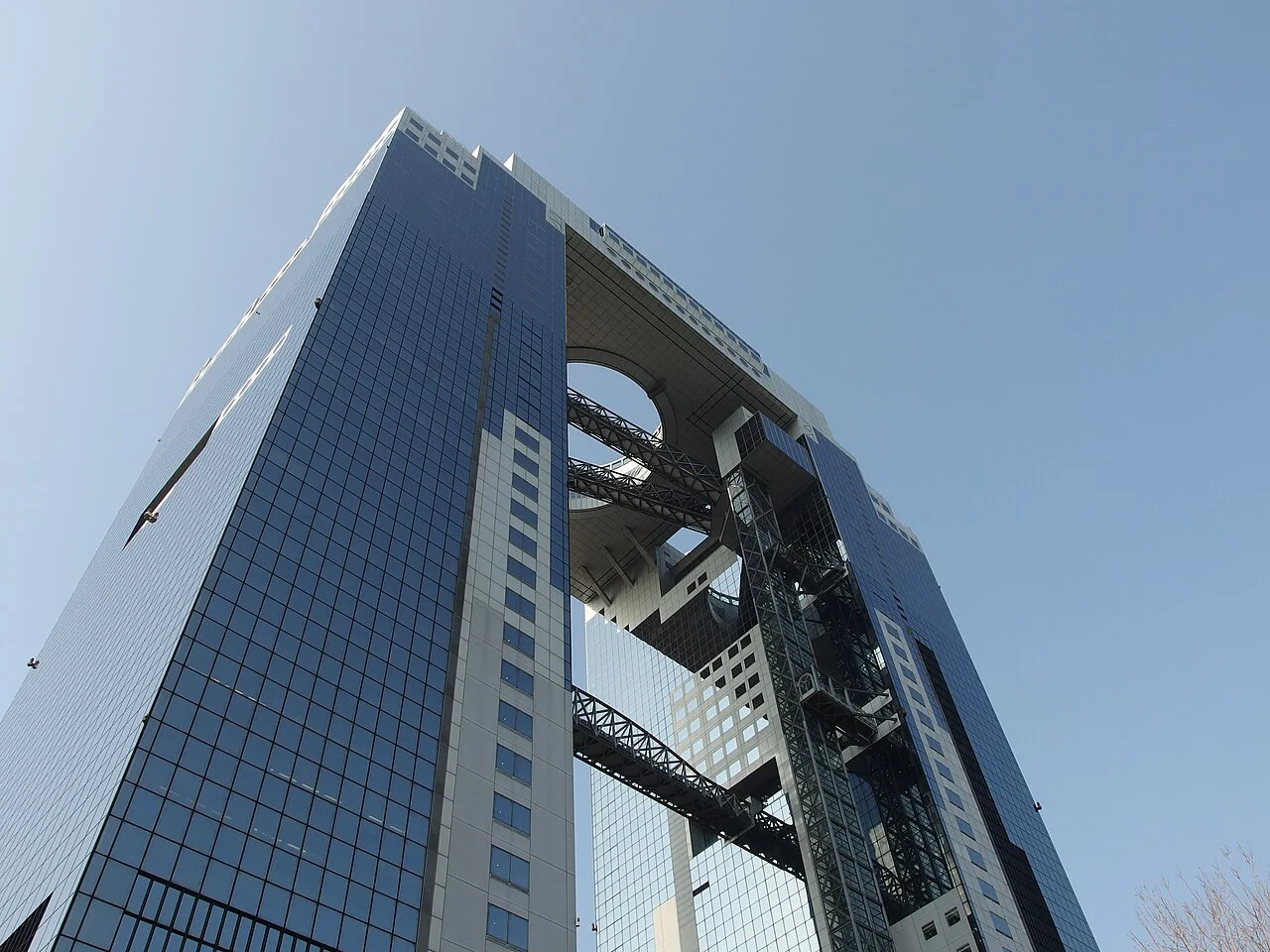
At the southern end of Midosuji Line Umeda Station, Exit 13 connects directly to Whity Umeda and the Tanimachi Line's Higashi-Umeda Station, while Exit 17 leads towards the Yotsubashi Line's Nishi-Umeda Station. Walking from JR Osaka Station to either side uses different underground concourses, so note down the shopping centre name, floor, and exact branch for any restaurant bookings. If a listing only gives "near Umeda Station", check which building the shop sits inside as soon as you enter the concourse. When travelling with older relatives, agree to meet at an indoor information desk or a department-store basement floor so nobody is left waiting in the wind at street level.
Starting in Umeda also lets you push department-store shopping into the afternoon. Many shops are still closed early in the morning, though the station remains a useful transit hub—if you want a seat, head for cafés or diners with early opening hours. If you head up to street level and need to reach another station later, dropping back down into the underground passage from the same end of the department store is far easier to navigate, especially with an umbrella and shopping bags. To reach Nakanoshima from Umeda, walk underground to Nishi-Umeda on the Yotsubashi Line and alight at Higobashi; Yodoyabashi on the Midosuji Line also works, though it is a slightly longer walk to the Science Museum.
If you are based in Namba, step straight from Midosuji Line Namba Station into Namba Walk. This underground arcade runs along Sennichimae towards Nipponbashi Station, letting you eat and browse below ground and save street level for just the short stretch around Ebisubashi Bridge or Dotonbori. Arcade shops generally open 10:00–21:00 and restaurants 10:00–22:00, though individual hours vary. Arrivals via Nankai Railway should follow signs for "Subway / Osaka-Namba", as the Nankai and underground platforms sit on different levels. Coming back from the Nipponbashi end, you can walk all the way back to Namba underground without crossing the river at Ebisubashi again.
In Tennoji, switch into the Abeno complex by following signs for "Kintetsu Abenobashi / Abeno Harukas" from either the Midosuji or Tanimachi Line station, keeping your dining and shopping under one roof. Before buying tickets for the observation deck, check from the lower floors whether low cloud is obscuring the skyline. If visibility is poor, put that ticket money towards lunch and only go up once distant buildings come back into view. Returning from Namba, the Midosuji Line runs straight to Tennoji, saving you from hunting for transfer exits inside an unfamiliar shopping complex.
A Full Rainy-Day Fallback for Families in Nakanoshima
The Osaka Science Museum is roughly a 500-metre walk from Higobashi Station Exit 3 on the Yotsubashi Line, crossing Chikuzenbashi Bridge; from Watanabebashi Station on the Keihan Nakanoshima Line, it is about 400 metres from Exit 2, or around 500 metres via Exit 5 if you need the lift for a pushchair. Both approaches involve an outdoor stretch. If your shoes lack grip or the bridges are already slick, it is less hassle to stay in the Umeda underground arcades. When pavements are manageable, a hands-on museum gives primary-school children far more to engage with than trailing through department stores.
The Science Museum exhibition halls are open 9:30–17:00 (last entry 16:30); admission is ¥400 for adults, ¥300 for high-school and university students, and free for junior-high students and younger (collect a free ticket at the counter). Planetarium shows are ticketed separately at ¥600 for adults, ¥450 for high-school and university students, and ¥300 for ages 3 through junior high, while children aged 2 and under sit free on an adult's lap. If you only want an hour of exhibits, an exhibition ticket is enough; if you want a specific planetarium screening, book your slot first and fit lunch around it. Entry closes once a screening begins, so arriving at the building right on showtime leaves no margin for tickets, lockers, or the toilets.
Standard online tickets go on sale up to 7 days in advance. Same-day online exhibition tickets remain available until 16:00, and planetarium tickets until 1 hour before each show, unless sold out earlier. If plans change, online orders can be cancelled in full before 8:55 JST on the day of your visit. The museum normally closes on Mondays (shifting to the next weekday if Monday is a public holiday). Its official calendar shows it open on 27 December 2026 and closed from 28 December 2026 to 4 January 2027. If you are in Osaka over New Year, swap this day for shopping-centre dining and browsing so the family does not trek across the bridge only to find the doors locked.
Rokkosan Snow Park 2026–27 Season & Admission
The announced 2026–27 season runs from 5 December 2026 to 7 March 2027. Standard operating hours are 9:00–17:00, extending to 9:00–20:00 on designated holiday-schedule days—including the winter holiday period from 25 December to 6 January. However, on 5 December 2026, 31 December 2026, and 1 January 2027, general admission is scheduled to close at 17:00. Snow Land, the sledging and snow-play zone, operates 9:00–17:00 daily; evening sessions only cover the ski slope with separate lift closing times.
General admission alone is ¥2,800 for junior-high students and older, and ¥1,400 for ages 3 through primary school. Students aged junior high and up get ¥500 off by showing a valid student ID at a staffed ticket window. Snow Land is included in park admission, while sledges and snow wear cost extra to hire. A day lift pass is ¥1,600 on weekdays and ¥3,300 on holiday-schedule days for anyone aged 3 and up. Occasional riders can buy single-ride tickets at ¥250, or holiday-only 12-ride packs (¥2,500) and 3-hour passes (¥2,800). Parents staying in the snow-play zone with children do not need a lift pass—leave that expense for those actually skiing or boarding.
Arriving early gives you breathing room for boot fitting and lockers; turning up right as a ski lesson starts leaves no time to queue again to swap uncomfortable boots. Visitors who are only hiring a sledge need much less prep time and can arrive after opening to save energy for the afternoon trip down, though families relying on public transport should plan around the mountain bus connections. During busy holidays when multiple family members need clothing hire—say two children both getting kitted out—have one adult handle tickets and hire forms while the other stays with the children instead of hauling backpacks from counter to counter.
Early and late in the season, always check the park's daily status page for open runs and operating facilities. The homepage posts live mountain conditions: check the slopes and lifts if you are skiing or snowboarding, or Snow Land status if you are just playing in the snow. Separate snow conditions from transport status—snowmaking can keep the slopes white even when high winds or icy roads disrupt mountain buses or the cable car. Keep your evening dinner plans in Osaka flexible so you can either come down early or stay up longer if the weather holds.
Getting Up the Mountain from Osaka: Rokko, Rokkomichi, or Mikage
From northern Umeda, take the Hankyu Kobe Line from Hankyu Osaka-Umeda to Hankyu Rokko Station on a service that stops there. Staying near JR Osaka Station, take the JR Kobe Line to JR Rokkomichi Station. From Namba, board a Hanshin train from Osaka-Namba and choose a service stopping at Hanshin Mikage Station. When checking train times, type in the exact railway company's station name and expand the calling-point list. Sannomiya sits further west than all three mountain-access stations, so getting off at Rokko, Rokkomichi, or Mikage first saves backtracking from Osaka.
All three stations connect to Kobe City Bus Route 16 bound for "Rokko Cable Shita". Kobe Rokko Railway lists approximate daytime intervals of every 8 minutes from Hankyu Rokko and JR Rokkomichi, and every 24 minutes from Hanshin Mikage. Going up, board on the south side of Hankyu Rokko, the north side of JR Rokkomichi, and the north side of Hanshin Mikage; journey times to the cable car base are roughly 14, 19, and 32 minutes respectively. Check the destination display towards the base station on the way up, and on the return check whether the bus terminates at Hankyu Rokko, JR Rokkomichi, or continues to Hanshin Mikage. If families are travelling from different parts of Osaka, agree to meet at Rokko Cable Shita Station rather than "Rokko Station", which people easily mix up.
From Rokko Cable Shita Station, the Rokko Cable Car takes about 10 minutes up to Rokko Cable Sanjo Station. On the regular timetable, the first departure is 7:10, with trains between 8:00 and 20:00 generally leaving at :00, :20, and :40 past each hour (weekdays at 12:00 run at :00 and :30 only). Single cable car fares are ¥800 for adults and ¥400 for children; return fares are ¥1,550 for adults and ¥780 for children. Individual cable car and mountain bus tickets must be paid by cash or credit card—transit IC cards such as ICOCA are not accepted on either. Take children to the toilet before joining the queue rather than sprinting for closing doors, as the mountain bus timetable often groups two consecutive cable car arrivals onto the same onward bus anyway.
At the summit station, transfer to Rokko Sanjo Bus Route 1 (bound for Higashi-Rokko) and check the "Snow Park" column on the timetable. Under the Winter A timetable, the park stop is listed as R09; some services skip it (marked with a cross), so wait for the next bus that calls there. The "Snow Park-mae" stop shown on the park's access map sits about 1 minute from the entrance, though exact boarding points can shift by season. On the way back, lock in your departure from the Snow Park stop first rather than checking only the last cable car—the final mountain buses from the park often finish earlier than the last cable car down.
The Winter A timetable (5 December 2026 to 11 January 2027) splits the year-end period: 25 December, 28–30 December, and 4–6 January run on holiday schedules, while 31 December uses the weekday timetable. On a Winter A weekday, for example, the 8:40 cable car reaches the top at roughly 8:50, connecting to the 8:55 mountain bus that arrives at Snow Park at 9:03. If you are travelling with children or still need to buy tickets, take one cable car earlier so you are not rushing between platforms. Budget around two hours door-to-door from your Osaka hotel when factoring in multiple transfers; the actual ride times are short, with most slack eaten up walking to your Osaka departure platform and waiting for the mountain bus. Anyone booked onto a morning lesson should work backwards from check-in time and save the next viable connection on their phone.
Which Transport & Park Combo Pass to Buy
If you are riding a single private railway all the way from Osaka, compare the Hanshin and Hankyu editions of the "Rokkosan Ski Coupon". Both are on sale from 5 December 2026 to 7 March 2027 via the "Surutto QRtto" platform (register and pay by credit card, then scan the QR code on your phone for trains, buses, and park entry). The Hanshin edition is ¥4,200 for adults and ¥2,100 for children; the Hankyu edition is ¥4,300 for adults and ¥2,150 for children. Both cover designated rail zones, Kobe City Bus Route 16 (plus Routes 26 and 106 on the Hankyu pass), the return Rokko Cable Car, the mountain bus between the summit and Snow Park, and park admission. Choose Hanshin if staying in Namba, or Hankyu if staying in northern Umeda near Hankyu Osaka-Umeda—and keep plenty of phone battery for ticket gates all day.
If you are travelling by JR or staying in Kobe and already have tickets to the mountain base, look at the "Rokko Cable Ski Coupon". Priced at ¥3,900 for adults and ¥1,900 for children, it covers the return cable car, the Rokko Sanjo Bus, and park entry. Buy it online via Webket and exchange it at the Rokko Cable Shita ticket window; JR fares and the Kobe City Bus are paid separately. If some of your group use Hankyu and others hold a JR rail pass, everyone can still meet up at the cable car base with different tickets. When tallying family costs, note that railways and the snow park count child ages differently—preschoolers aged 3 and up pay park admission even where trains carry them free.
The "Ski Coupon" packages cover mountain transport and park admission only—on-site ski lifts and equipment hire are always separate. Families only visiting Snow Land can still save with these combo passes; if you have booked a beginner package that already includes admission, price up "separate transport + package" against "combo pass + individual add-ons". Adults who already hold park admission can buy the Higashi-Rokko Round-Trip Ticket (¥2,300 for return cable car plus Route 1 mountain bus), paying rail and city bus fares separately. For one adult and one primary-school child on the Hankyu pass hiring a single sledge at the park, the combined transport, entry, and sledge cost comes to ¥6,950, with rental deposits and meals budgeted separately.
Driving changes the maths. Standard car parking is ¥1,500 per day, cash only, with park admission bought separately for each passenger. Car Park 3 only opens once Car Parks 1 and 2 fill up. The park posts road updates around 8:30 JST and advises cars on standard tyres to carry snow chains in case conditions turn. Only opt to drive if you can secure proper winter equipment on a hire car and are comfortable on snowy mountain roads; if the whole family has a fixed lesson time, factor in the cost of winter kit plus the walk from the car park after getting changed.
Direct Express Buses on Selected Dates for Toddlers or Zero-Transfer Trips
This season's direct express bus requires advance booking and operates only on 29–30 December 2026; 2–3, 9–11 January 2027; and 6–7, 11, 13–14, 20–21, 23, 27–28 February 2027. Coaches pick up at Hanshin Mikage, JR Rokkomichi, and Hankyu Rokko before heading straight to the Snow Park. If you want to ride the scenic Rokko Cable Car as part of the day out, take the regular transit route instead; the direct coach is built for convenience, so check first whether its fixed return departure suits your group's stamina.
The standard return coach plus park admission bundle is ¥4,900 for adults and ¥3,800 for children aged 3 through primary school; under-3s ride free on an adult's lap. Departures from JR Rokkomichi are at 7:45 and 9:35 (arriving at 8:30 and 10:20 respectively), and from Hankyu Rokko at 7:55 and 9:45. You buy your train ticket between Osaka and Kobe separately. Each of the three pickup stations has its own designated meeting point, so double-check the exact stop instructions as soon as you exit the ticket barriers.
Return coaches leave Rokkosan Snow Park at 15:30 or 17:15. Note that the second morning arrival at 10:20 misses the 9:30 check-in for the morning foreign-visitor ski lesson, while the afternoon lesson finishes at 15:30—too late to catch the 15:30 return coach. Families only playing in the snow can take the early 15:30 return, change and hand back sledges ahead of time, and still make dinner back in Osaka. Show your booking confirmation screen when boarding; buses leave promptly with no refunds for missed departures, and equipment hire, lift tickets, and meals are not included.
Mapping Out Snow Land for Young Children & Non-Skiers
When arriving with preschoolers, locate the separate sledging lane and free snow-play zone right after entering. Both adults and children can hire park sledges in Snow Land at ¥500 each, with snow boots and gloves also ¥500 per item. Children who rarely walk on snow should spend a few minutes on flat ground before queuing for sledges with an adult. At the bottom of the slope, exit promptly via the marked side lanes or ride the magic-carpet conveyor back up. If you are taking photos, stand off to the side of the run and focus on one descent so children are not left waiting at the bottom while someone walks past.
Break up short bursts outdoors with warm-up stops inside. Free rest areas allow outside food, or you can order hot meals at the park restaurant. Next to the Green Leaf shop there is a rest area with nursing and nappy-changing facilities; because hot water for formula is not provided on site, bring a thermos flask from your hotel. An accessible multi-purpose toilet is located below the Alpen Rose restaurant. While the park has ramps, pushchairs and wheelchairs are not permitted onto the main ski slopes and certain snow zones. Non-skiing family members waiting indoors can agree on a set time for children to come back and swap gloves, rather than waiting until socks and boots are soaked through.
Waterproof ski gloves last far better than knitted ones in wet snow, and trouser cuffs get damp quickly when children kneel to build snowmen—proper snow trousers or waterproof overtrousers outperform an extra pair of cotton joggers. Pack a spare pair of socks, spare gloves, and dry bags for wet gear in your daypack; you can dress lighter on the train from Osaka to Kobe and add a mid-layer at the mountain base. Standard hire gear is issued on a first-come, first-served basis from daily stock, so check the sizing range on the official site beforehand if your child has tiny feet or an adult needs a size near the upper limit. Even if you are only supervising snow play for an hour, spare dry socks are worth packing for the wait on the mountain bus and cable car home.
First-Time Ski & Snowboard Lessons: Booking & Check-In
The park's weekday beginner package ("Debut Support Plan") costs ¥10,000 per person plus a ¥1,000 refundable deposit, and bundles park admission, a lesson, ski or snowboard gear, snow wear, gloves, and slope lift access. On the booking page for either skiing or snowboarding, select the matching "Debut Support Plan" option. The park recommends booking by 16:00 JST the day before—walk-in places are only offered if spots remain—and cancellations after 16:00 JST the day prior incur a fee. Accompanying family members who are not taking the lesson can buy standard admission tickets separately and head to Snow Land or the rest lodge once you check in.
If you want English-friendly instruction, book the foreign-visitor lesson instead. Open to primary-school age and up at ¥3,500 per person, it includes one lift ride during class, with park admission and gear hire bought separately; instructors use simple English and demonstrations alongside translation devices for other languages. Booking pages are available in English and Simplified Chinese. Ski lessons run 10:30–12:30 (check-in 9:30) and 13:30–15:30 (check-in 12:30), with no classes on 31 December or 1 January. Foreign-visitor snowboard lessons run 10:30–12:00 and 13:30–15:00, also requiring check-in one hour ahead. If everyone in your group wants a lesson, confirm which discipline each person is taking before booking so lunch and gear return line up cleanly.
An adult paying separately on a weekday for admission, ski and clothing hire, and the foreign-visitor lesson spends ¥11,300 in total, including the single lift ride during class. Extra lifts afterwards can be bought per ride or pass, with waterproof gloves, protective gear, and transport priced separately. The ¥10,000 weekday beginner package works out cheaper if you want a structured trial, whereas choosing the foreign-visitor class makes sense when following instructions in English or practising alongside peers matters more. Note that the plastic starter skis hired for toddlers cannot be used inside Snow Land or in park ski lessons.
Getting changed in the right order keeps you on time for check-in. Follow the park instructions to pick up your snow wear and boots first, change in the locker room, keep your equipment voucher on you, and only then collect your skis and poles. If your heels lift excessively once the boots are buckled or your toes jam painfully against the front, ask staff at the counter to swap them straight away. Build enough slack before class starts to locate the meeting point and check sizing. Save booking screenshots, QR tickets, and bus timetables on your phone, carry cash for rental deposits, and agree with your group on the order for returning skis and clothing once the lesson wraps up.
Staying in Umeda vs Namba: Let Your Earliest Train Decide
If your trip also involves catching the Shinkansen from Shin-Osaka or spending two days around Kobe and Kyoto, staying in Umeda saves an extra underground hop from Namba to Osaka Station. Hotel Granvia Osaka connects directly to JR Osaka Station—the hotel notes Central Gate and Sakurabashi Gate as the shortest routes, while families with heavy luggage or pushchairs can use the step-free 3F Bridge Gate route and take the lift up to the 19F reception. Bear in mind that if you buy the Hankyu mountain pass, you will walk over to Hankyu Osaka-Umeda Station, so time your morning alarm by the Hankyu platform departure.
If you fly in and out of Kansai Airport on Nankai Railway and plan most dinners around Dotonbori or Shinsaibashi, Namba keeps both airport transfers and evenings short. Swissotel Nankai Osaka sits directly above Nankai Namba Station, letting you reach reception without stepping outside. Going to Mount Rokko via Hanshin Osaka-Namba Station still involves walking through the underground concourse to the Hanshin platforms. Even if you stay elsewhere in Namba, mark the Nankai, Hanshin, and Midosuji Line exits on your map before booking so you pick a hotel you are happy to walk from in the rain. Leave bulky shopping until after your mountain day or checkout so you are not lugging bags uphill.
For a single day trip to Mount Rokko, there is no need to switch hotels just to catch an early train. Hired snow wear stays at the park, and your own damp gloves and socks will simply dry overnight in your room. If your hotel breakfast opens later than your first train, pick up grab-and-go food the night before or book a room-only rate. Tennoji is another practical base—connected straight to both Namba and Umeda on the Midosuji Line—especially if the rest of your itinerary leans towards Abeno or southern Osaka.
Can You Add Kobe Harbour or Night Views After Coming Down?
On a ski-lesson day, keeping the full day on the mountain feels far less rushed. Swapping back into street shoes, returning hired gear, and waiting for buses already eats up a chunk of time before you even start heading into Kobe Harbour. If your main focus is sledging and photos, taking the 15:30 direct coach or an earlier R09 mountain bus gets you down to Kobe in good time for dinner around the waterfront or Sannomiya—though after a long day out from Osaka, the uphill walk into Kitano usually feels steeper than it looks on a map. Sannomiya's station cluster makes an easy dinner meeting point, and you can ride back to Osaka on whichever railway matches your pass.
Anyone hoping for a night view needs to check mountain bus hours first. Rokko Snow Park and Rokko Garden Terrace sit on the same Mountain Bus Route 1, so only plan to hop over there if evening buses are running. Kikuseidai viewpoint is over on Mount Maya on a separate bus route, so do not add it on a whim without checking connections. Alternatively, ride the cable car straight down and decide over dinner in Kobe or Osaka whether you still fancy a stroll. Keep two times saved on your phone: the last bus out of your current stop and your cut-off time to turn back if services are suspended. Reliable transport down matters more than ticking off viewpoint names.
If mountain roads or the cable car close before you set off, move Rokkosan to your backup day and check cancellation deadlines on any pre-booked passes or lessons. If you are still in Osaka that morning, pivot to a half-day city stroll and department-store lunch. If you have already reached JR Rokkomichi or Hanshin Mikage, head into Sannomiya for a warm meal before returning to Osaka, or walk down to the harbourfront if the weather clears. With children, keep the early start you had planned so you tick off one indoor highlight before midday—then, if everyone still has energy in the afternoon, add an easy indoor stop around Umeda or Namba.
A few useful answers
When does it snow in Osaka?
Japan Meteorological Agency averages put Osaka's first snowfall at 26 December and last snowfall at 8 March. Settled snow in the city centre is rare, so treat snow photos at Osaka Castle as a spontaneous bonus when a cold snap actually turns the ground white.
Which station exit is best for photographing Osaka Castle in the snow?
For the western outer moat and Otemon Gate, take the Tanimachi Line to Tanimachi 4-chome Exit 1-B or the Chuo Line to Exit 9 at the same station. For the south-eastern side of the park, use Morinomiya Station Exit 1 or Exit 3-B.
When is Rokkosan Snow Park open, and do I need a lift pass to sledge?
The 2026–27 season runs from 5 December 2026 to 7 March 2027, with Snow Land open 9:00–17:00 daily. You only need a standard admission ticket for snow play, plus ¥500 per sledge hire.
Do I have to change trains at Sannomiya to reach Mount Rokko from Osaka?
No. Alight at Hankyu Rokko, JR Rokkomichi, or Hanshin Mikage to board Kobe City Bus Route 16. From the cable car base, ride the Rokko Cable Car up and transfer to Rokko Sanjo Bus Route 1 to the park.
Does the ¥10,000 Rokkosan beginner package include the cable car?
No. The lift access included in the ¥10,000 plan covers the ski lifts inside the snow park only. Your rail fare from Osaka and the Rokko Cable Car must be bought separately.
Is the Osaka Science Museum a good option on a snowy day?
Yes—either the exhibition halls or a planetarium show can anchor half a day indoors. Both Keihan Watanabebashi Exit 2 and Subway Higobashi Exit 3 require a short outdoor walk, so fall back on the Umeda or Namba underground arcades during the New Year closure.
Official information and references
Sources used in this guide.
- Japan Meteorological Agency | Osaka Station First Snow & Snow Cover Normals
- Osaka Castle Museum | Access, Gates & Park Map
- Osaka Castle Museum | Admission, IDs & Opening Hours
- Osaka Castle Park | Nishinomaru Garden Hours & Fees
- Osaka Castle Park | Park Opening Hours
- Osaka Metro | Midosuji Line Umeda Station Map
- Osaka Metro | Midosuji Line Namba Station Map
- Osaka Chikagai | Namba Walk Shops & Opening Hours
- Osaka Metro | Midosuji Line Tennoji Station Map
- Osaka Science Museum | Opening Hours, Exhibition & Planetarium Fees
- Osaka Science Museum | Opening Calendar
- Osaka Science Museum | Walking Routes from Higobashi & Watanabebashi
- Osaka Science Museum | Online Ticket Sales & Entry Rules
- Rokkosan Snow Park | 2026–27 Season Operating Calendar
- Rokkosan Tourism | 2026 Opening Notice & Year-End Hours
- Rokkosan Snow Park | Admission, Lift, Rental & Parking Fees
- Rokkosan Snow Park | Snow Land & Free Rest Areas
- Rokkosan Snow Park | Road Conditions & Access Guide
- Kobe Rokko Railway | Kobe City Bus Route 16 Guide
- Kobe Rokko Railway | Rokko Cable Car & Sanjo Bus Operations
- Kobe Rokko Railway | Rokko Sanjo Bus Winter A Timetable
- Rokkosan Snow Park | Winter Transport & Admission Combo Passes
- Hanshin Electric Railway | Rokkosan Ski Coupon Digital Release & Valid Zones
- Rokkosan Snow Park | Selected-Date Direct Bus Timetable & Booking Rules
- Rokkosan Snow Park | Weekday Ski & Snowboard Debut Support Plan
- Rokkosan Snow Park | Foreign-Visitor Lessons & Fees
- Rokkosan Snow Park | Check-In, Changing & Equipment Collection
- Rokkosan Tourism | Pushchairs, Wheelchairs & Baby Care Facilities
- Hotel Granvia Osaka | JR Osaka Station Direct & Step-Free Access
- Swissotel Nankai Osaka | Nankai Namba Station Location
- Kobe Rokko Railway | Higashi-Rokko Round-Trip Ticket & Valid Routes