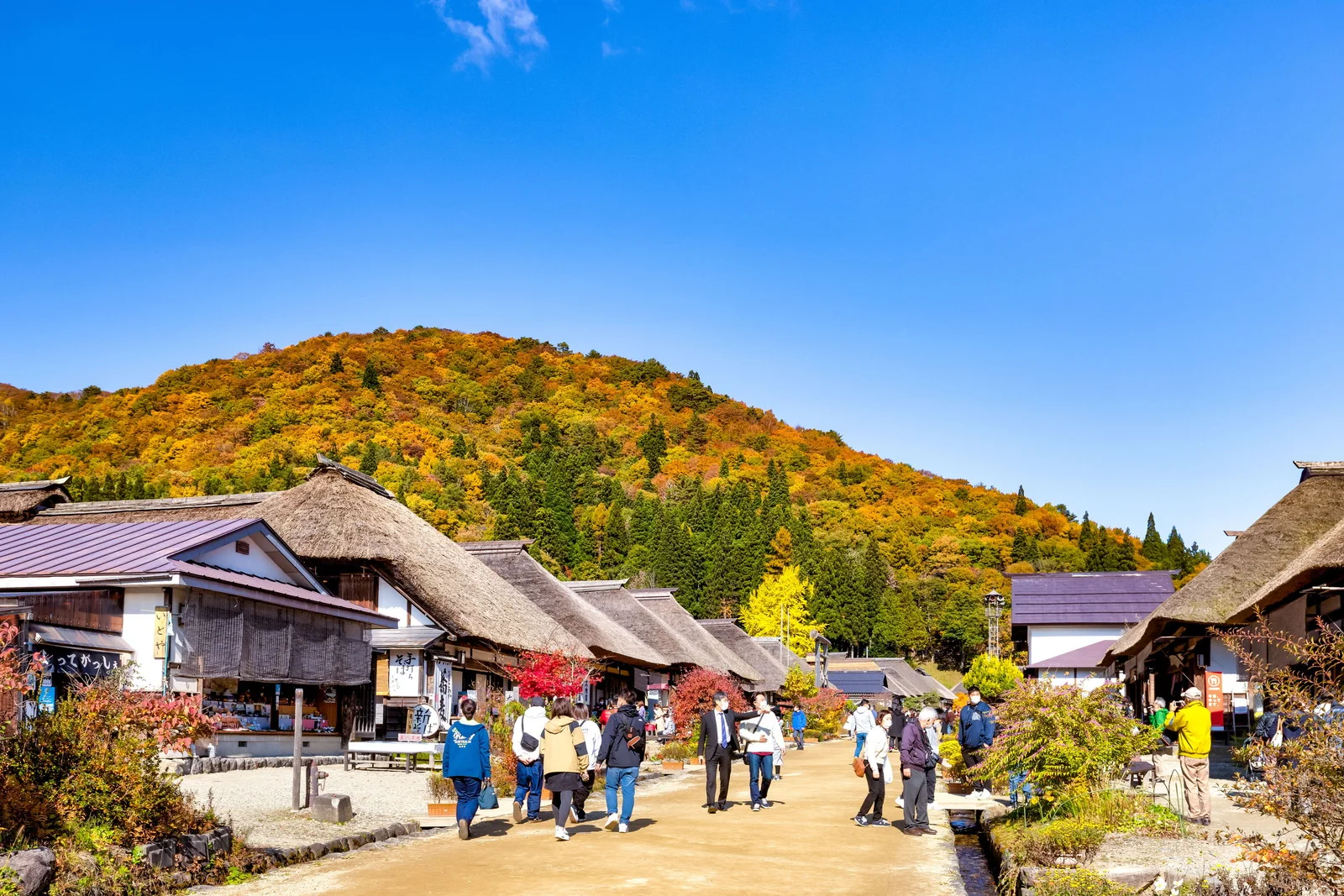
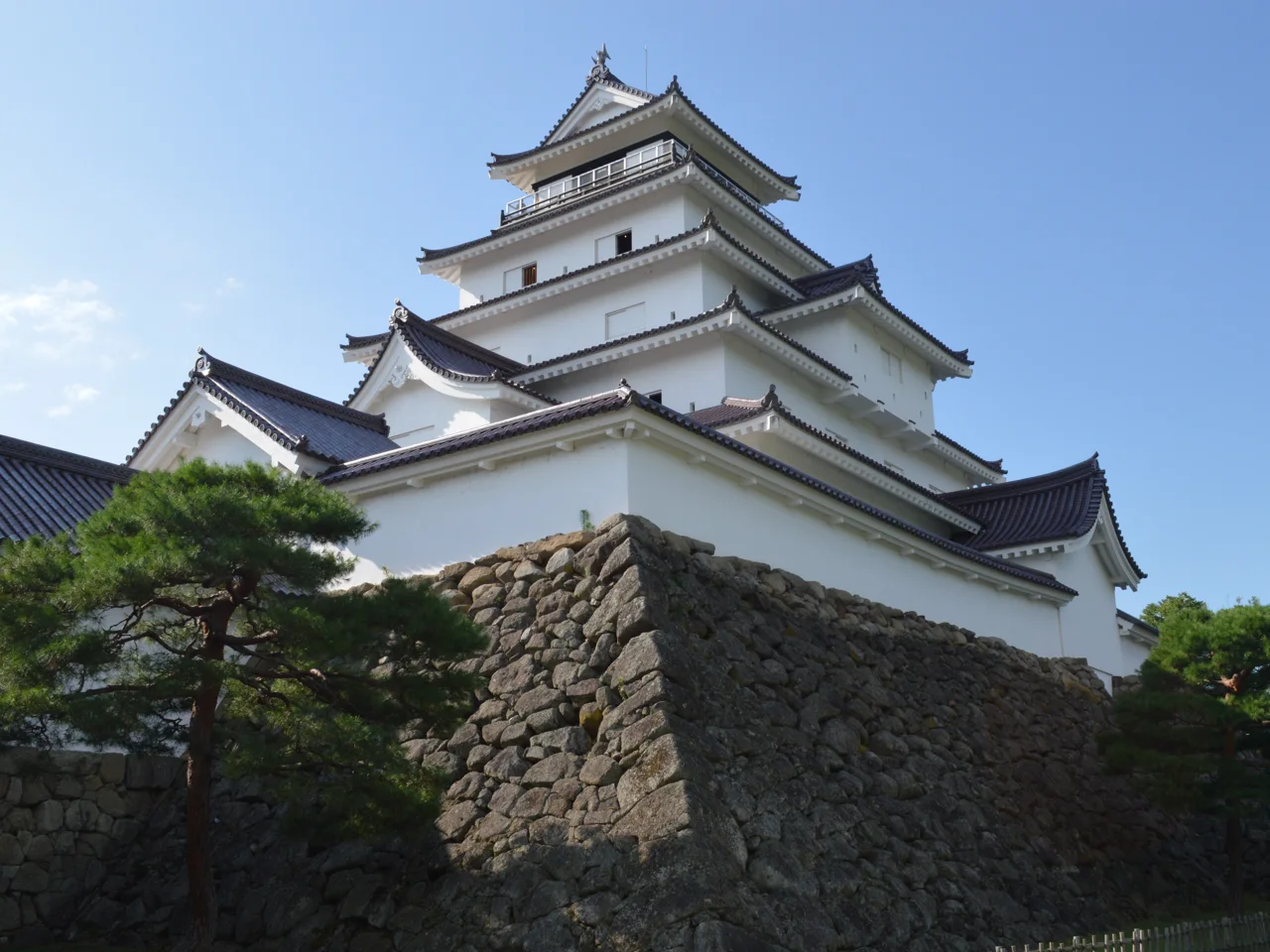
Naruko Onsenkyo comprises five distinct hot-spring districts — Naruko, Higashi-Naruko, Kawatabi, Nakayamadaira and Onikobe — boasting 8 of Japan's 11 traditional spring classifications, with water colours that shift daily according to the weather. Popular public bath Taki-no-Yu costs ¥300 for adults (07:30–21:00), roughly 45 minutes from Furukawa on the JR Rikuu East Line. Autumn foliage at Naruko Gorge peaks from mid-October to early November, alongside kokeshi doll workshops and the Japan Kokeshi Museum's collection of around 5,000 dolls.
- Region & Focus
- Tohoku
- Reading Scope
- 14 min read · 7 chapters · 4 Q&As
- Official Verification
- 7 official sources checkedUpdated 20 November 2026
- Key Topics
- Hot springsItinerariesTohoku
Chapter Route Map (tap any stop)
- Five Hot-Spring Districts: Choosing by Water and Itinerary
- Public Bathhouse Tour: Choosing by Chemistry and Budget
- Naruko Gorge Autumn Foliage: A Short Mid-October to Early-November Window
- Kokeshi Dolls and Lacquerware: Handmade Craft in Naruko
- Getting There: 45 Minutes from Furukawa, Storm Detours and Driving
- Fitting Naruko Onsen into a Tohoku Itinerary
- Beyond the Gorge: Dam, Caldera Lake and Steam Vents
- Quick Q&A
Naruko Onsenkyo is not a single spa town, but a valley of five distinct hot-spring villages — Naruko, Higashi-Naruko, Kawatabi, Nakayamadaira and Onikobe — each with its own spring chemistry, public bathhouses and walking routes. What delights serious onsen travellers most is the extraordinary density of mineral waters: 8 of Japan's 11 traditional spring classifications emerge here, and the same bath can change colour from one day to the next with the weather. For a day trip, strolling between public bathhouses is more than enough: Taki-no-Yu, the sacred bath of Naruko's Onsen Shrine, opens at 07:30 for ¥300, whilst one stop west in Nakayamadaira sits Shintoro-no-Yu (¥500), famed for its silky alkaline water. Trains run roughly 45 minutes along the JR Rikuu East Line from Furukawa on the Tohoku Shinkansen, though note that the section between Naruko-Onsen and Shinjo remains closed following heavy rain damage and is served by rail-replacement buses. From mid-October to early November, blazing autumn leaves at Naruko Gorge — framed from the observation deck and Kaerimi Bridge — pair with Naruko's enduring kokeshi doll craft to define northern Miyagi's signature appeal.
Five Hot-Spring Districts: Choosing by Water and Itinerary
Set along the upper reaches of the Eai River (Arao River) in northern Miyagi's Osaki region, Naruko Onsenkyo encompasses five contrasting spa settlements. Central Naruko Onsen is the largest hub, spreading out right in front of Naruko-Onsen Station and housing the landmark public baths Taki-no-Yu and Waseda Sajiki-yu. Higashi-Naruko Onsen is a quiet therapeutic retreat where the Date clan of Sendai Domain once maintained a private lord's bath along a 300-metre main street. Kawatabi Onsen guards the gateway to the valley beside the Eai River, Nakayamadaira Onsen follows the Oya River and is nicknamed 'eel bath' for its remarkably slick alkaline waters, and Onikobe Onsen lies deepest in the mountains within a quasi-national park upstream of Naruko Dam, doubling as a highland summer escape and winter ski area.
Picking the right base comes down to your priorities. First-time visitors wanting station-front convenience and easy walks between public baths and kokeshi shops should choose Naruko Onsen. Those arriving for Naruko Gorge's autumn trails will find Nakayamadaira Onsen most practical (around 30 minutes on foot to the gorge entrance). Travellers seeking a quiet, longer therapeutic stay lean towards Higashi-Naruko, whilst drivers or spring visitors hoping for rapeseed blossoms and cherry trees look to Kawatabi. Municipal and route buses connect all five districts, though infrequent timetables make driving by far the easiest way to hop across multiple valleys.
Variety of mineral waters is Naruko's greatest draw. The Naruko Onsen district alone claims 8 of Japan's 11 older spring classifications, and the wider valley covers 7 of the current 10 official categories — lacking only carbon-dioxide, iodine and radioactive springs. Waters range from milky white, greenish white and sky blue to amber-brown, black and crystal clear, with the official guide explicitly noting that colours shift day by day depending on the weather; watching the very same bath look different today than it did yesterday is a highlight for repeat visitors.
On the slope above Naruko Onsen town stands Onsen Shrine, anchoring more than a millennium of local worship. Listed in the Engishiki records and founded in Jowa 4 (837 CE) following a major volcanic eruption, the shrine even adds a charming kokeshi sticker to its goshuin temple-and-shrine stamps. Every September the town hosts the National Kokeshi Festival, and because the shrine sits only a few minutes' walk from the main street, climbing the steps after a soak feels effortless.
Knowing the driving times between districts keeps your schedule realistic. Starting from Naruko-Onsen Station, it is roughly 5 to 10 minutes by car to Higashi-Naruko, around 10 minutes to Kawatabi, 15 minutes to Nakayamadaira, and about 30 minutes to distant Onikobe. On the JR Rikuu East Line, only Naruko-Onsen and Nakayamadaira-Onsen stations sit directly beside their main hubs; reaching Higashi-Naruko, Kawatabi or Onikobe requires buses or a hire car, so build transfer buffers in if you are staying by the station and bath-hopping across districts.
For strolling and casual browsing, the area outside Naruko-Onsen Station is comfortably the liveliest of the five. Ryokan inns, souvenir shops, public baths and traditional diners line the compact stretch between the station and Onsen Shrine, framed by drifting steam and kokeshi shopfronts. Even here, Naruko retains an unhurried country rhythm: most businesses are family-run and adjust their hours around daily life rather than operating like a polished resort strip.
Rail travellers should also pay close attention to how stations map onto each village. Both Naruko-Onsen Station and Nakayamadaira-Onsen Station sit on the Rikuu East Line: Naruko drops you straight into the main spa street, whilst Nakayamadaira leads via a pleasant riverside walk along the Oya River to its inns. Higashi-Naruko and Kawatabi have stops along the line under different station names further from their hubs, whereas Onikobe Onsen has no railway access at all and practically requires a car.
Many guides also group Naruko among the 'Three Great Hot Springs of Oshu', though historical sources differ on which other spas share the title. Either way, there is no need to get bogged down in classical rankings: a single valley offering roughly four-fifths of Japan's spring types and a dense network of public baths easily justifies a dedicated Tohoku journey on its own.
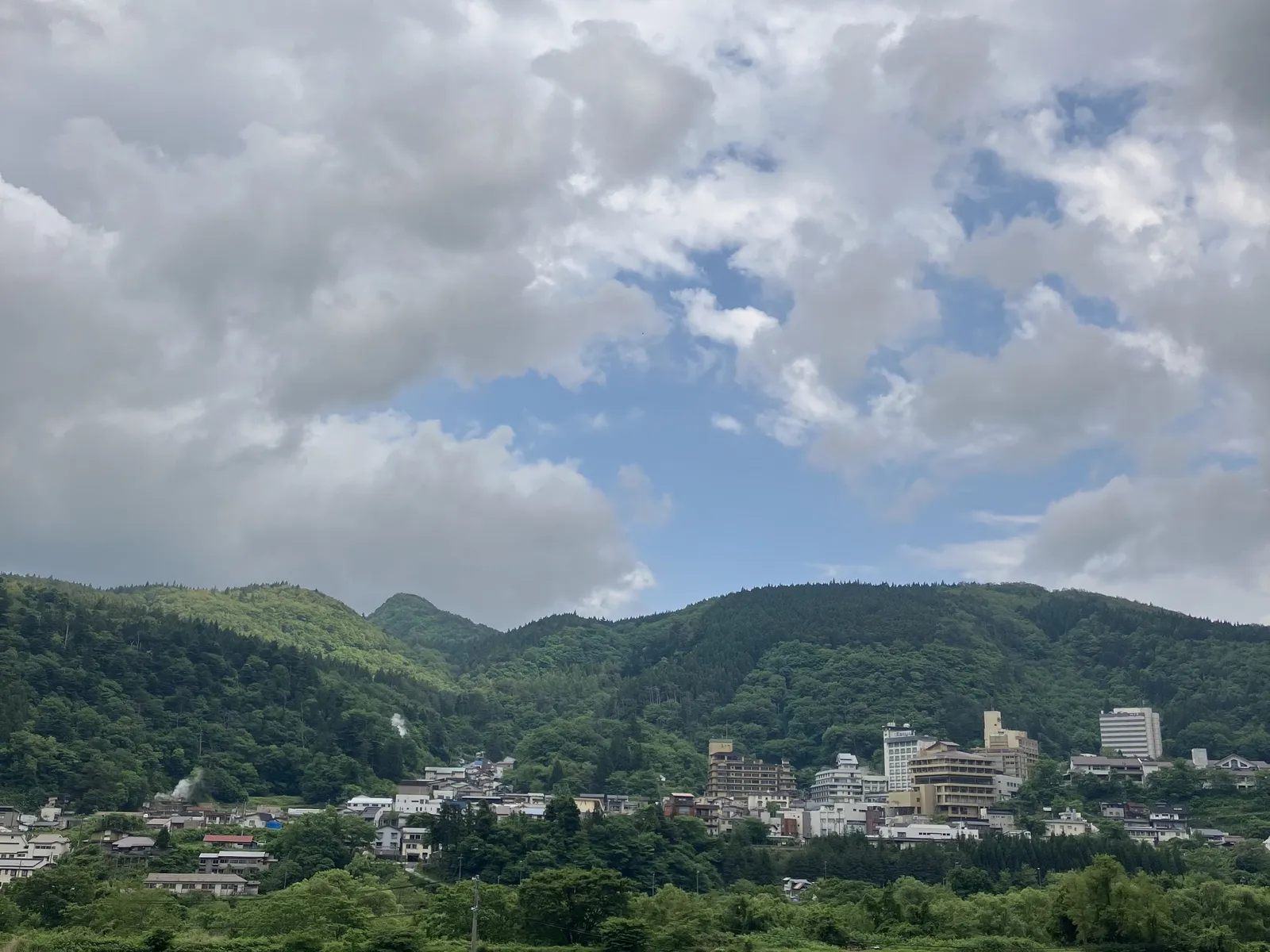
Naruko Onsenkyo comprises five distinct hot-spring districts — Naruko, Higashi-Naruko, Kawatabi, Nakayamadaira and Onikobe — boasting 8 of Japan's 11 traditional spring classifications, with water colours that shift daily according to the weather. Popular public bath Taki-no-Yu costs ¥300 for adults (07:30–21:00), roughly 45 minutes from Furukawa on the JR Rikuu East Line. Autumn foliage at Naruko Gorge peaks from mid-October to early November, alongside kokeshi doll workshops and the Japan Kokeshi Museum's collection of around 5,000 dolls.
Public Bathhouse Tour: Choosing by Chemistry and Budget
For day-trippers, working through the seven public bathhouses listed on the official tourism site is a treat in itself, with adult admission ranging from ¥300 to ¥800 and strikingly different water chemistry at each stop. Classic Taki-no-Yu in the centre of Naruko Onsen opens daily from 07:30 to 21:00 at ¥300 for adults and ¥100 for children; serving as Onsen Shrine's sacred bath, it pours strongly acidic pH 2.9 water (ignore outdated ¥420 prices still circulating online — the current counter fare is ¥300). Rinse thoroughly before stepping in, and wash off with fresh water afterwards.
Each neighbouring district brings its own loyal following: Shintoro-no-Yu in Nakayamadaira Onsen charges ¥500 for adults (09:00–20:30) and showcases silky pH 9.3 alkaline water famed as a skin-smoothing 'eel bath'; Hare Onsen in Higashi-Naruko costs ¥650 for adults and closes Thursdays (09:00–17:00 Mon–Wed, extending to 19:00 Fri–Sun and public holidays); Kawatabi Onsen Public Bath charges ¥300 for adults (09:00–17:00, opening at 13:30 on Mondays and Fridays) with distinctive warbler-green bicarbonate-sulphur water; Kami-no-Yu Hygge Kawatabi is ¥800 for adults (10:00–17:00, closed Mondays and Thursdays); Spa Onikobe-no-Yu is ¥600 for adults (10:00–18:00, closed in winter); and Waseda Sajiki-yu in central Naruko is currently temporarily closed.
The most rewarding way to structure a bath tour is an 'extreme chemistry contrast'. Soak in strongly acidic Taki-no-Yu during the morning, then head to velvety, strongly alkaline Shintoro-no-Yu in the afternoon for an unmistakable physical contrast within a single day, with Kawatabi's green sulphur water and Higashi-Naruko's bicarbonate springs sitting gently in between. Individual ryokan across all five villages also welcome non-staying day bathers (links to each village's day-use fees appear at the bottom of the official public bath page), and all bathhouses enforce last entry 30 minutes before closing.
Bring your own towel or buy one at the counter, and remember that apart from Taki-no-Yu and Hare Onsen, which provide basic toiletries, most older bathhouses do not supply shampoo or body wash — follow posted local etiquette. Rules for visitors with tattoos vary by venue, and since Waseda Sajiki-yu remains temporarily closed, always check the tourism association's website for reopening updates before setting off.
Tackling pH 2.9 Taki-no-Yu for the first time rewards a careful approach. The acidic water feels faintly slippery and may produce a mild tingling sensation on the skin, which is completely normal. Douse yourself thoroughly with warm water beforehand so your skin adjusts to both temperature and acidity, start with a five-minute soak before building up, and remove all jewellery and watches beforehand, as strong acid tarnishes metal rapidly.
Whether a multi-bath pass is worthwhile comes down to simple arithmetic. Paying cash at each door across five baths over three days totals roughly ¥1,500 to ¥2,000; some ryokan sell multi-visit tickets that save fumbling for coins, yet often restrict which partner baths you can enter. Buying single entries as you go keeps your route flexible without altering plans just to save a few hundred yen.
Every season frames Naruko's baths differently. In winter, all public bathhouses except Spa Onikobe-no-Yu stay open, making snow-dusted outdoor soaking genuinely magical; spring blankets Kawatabi's riverbanks in golden rapeseed and cherry blossom; summer shifts the focus to Onikobe's cool highlands and stream fishing; and autumn brings peak crowds as Naruko Gorge turns crimson.
Matching bathhouses to skin type is equally practical. Strongly acidic Taki-no-Yu offers antibacterial and gentle exfoliating properties suited to seasoned bathers, whereas low-irritation, soft pH 9.3 Shintoro-no-Yu is wonderfully kind to sensitive skin and onsen newcomers; Kawatabi's green sulphur spring and Kami-no-Yu's bicarbonate water sit comfortably in the middle in both feel and aroma. Visiting all five in sequence reveals firsthand how dramatically colour and texture shift from one valley to the next.
Results announced on 14 November 2026 in the 'Onsen General Election 2026' underscored Naruko's standing: Naruko Onsenkyo ranked second nationwide and first in the Tohoku region in the Toji (therapeutic hot-spring stay) Wellness category. Rather than a mere popularity poll, this award recognises genuine health and recuperative bathing culture — a fitting endorsement of Naruko's mineral depth.
Naruko Gorge Autumn Foliage: A Short Mid-October to Early-November Window
Carved roughly 100 metres deep by the Oya River, Naruko Gorge turns into a steep V-shaped canyon ablaze with red and gold leaves from mid-October to early November, best admired from the observation deck and Kaerimi Bridge. During peak foliage, the walking trails open from 09:00 to 16:00 with two clear fitness options: the Nakayamadaira entrance runs roughly 350 metres each way from Naruko Gorge Rest House to Kaerimi Bridge and back, whereas the Naruko entrance loops around 2.2 km through the valley.
Before setting out, factor in two practical transport realities. A taxi from Naruko-Onsen Station takes about 13 minutes (around ¥2,200 single), whereas walking the 4 km road stretch takes roughly 70 minutes and is rarely practical. The seasonal autumn bus 'Momiji-go' links Naruko-Onsen Station, Nakayamadaira-Onsen Station and Naruko Gorge for ¥450 single; its 2026 season ended after running from 26 October to 8 November, so travellers visiting around the same dates next year should confirm operating schedules in advance. Naruko Gorge Rest House opens daily from 08:00 to 17:00 during the foliage season (tel: 0229-87-2050).
A major rail disruption also affects 2026 itineraries: the JR Rikuu East Line between Naruko-Onsen and Shinjo stations remains suspended due to heavy rain damage and is operated by replacement buses, meaning the classic view of Naruko Gorge from a passing train window is temporarily unavailable. Trains arriving from Furukawa into Naruko-Onsen Station are completely unaffected, while visitors planning to approach from Shinjo in Yamagata must use the replacement bus or detour via Furukawa. Drivers can pull straight into the free ~250-space car park at the Nakayamadaira entrance.
The two gorge trails differ sharply in effort, so check the official signboard map before choosing an entrance. From the Nakayamadaira side, the flat, gentle path between Naruko Gorge Rest House and Kaerimi Bridge is only 350 metres each way (700 metres return), making it effortless for families with young children or older relatives. From the Naruko side, the Ofukazawa Trail sets off from the same Rest House on a 2.2 km circuit with steeper gradients and stairs reserved for hikers with solid stamina.
Framing Kaerimi Bridge spanning the V-shaped gorge against forested crimson slopes is Naruko Gorge's signature photograph. Weekend queues form along the bridge from late October to early November, so arrive right at 09:00 when the gates open or visit on a weekday to beat the crush. For live foliage progress and trail conditions, ask inside Naruko Gorge Rest House (08:00–17:00; tel: 0229-87-2050).
Even outside that brief autumn window, Naruko Gorge rewards a look. Although the valley trails close in winter, the views from near the Rest House and observation deck over the snow-blanketed ravine are dramatic; spring brings fresh pale-green leaves and summer offers quiet shaded walks alongside exposed 100-metre cliff faces and geological strata.
During peak foliage, resist walking the 70-minute stretch along National Route 47 between Naruko-Onsen Station and the gorge — heavy tourist traffic clogs the narrow mountain road, making walking both exhausting and hazardous. Taking the ¥450 Momiji-go bus or sharing a ¥2,200 taxi is far safer, while drivers should make use of the free 250-space Nakayamadaira car park. Outside autumn, the 70-minute walk from the station is feasible, though the scenery lacks autumn's spectacle.
Naruko Gorge Rest House is far more than a toilet stop: during autumn it serves light meals and local specialities from 08:00 to 17:00, right beside both trailheads. Check the official board map before starting so you do not accidentally commit to the strenuous 2.2 km Naruko-side loop when you intended to take the short Nakayamadaira stroll.
Kokeshi Dolls and Lacquerware: Handmade Craft in Naruko
The endearing trademark of Naruko kokeshi dolls is summed up neatly by the official guide: turning the head produces a crisp squeaking sound, a structural quirk unique among Japan's traditional kokeshi lineages. Originating roughly 200 years ago during the Bunka–Bunsei era, the craft is still carried on by around 50 artisans nationwide, best known for the layered chrysanthemum ('kasane-giku') motif; Miyagi traditional kokeshi were designated a National Traditional Craft in 1981.
Two places let you explore different lineages and try painting your own doll. The Japan Kokeshi Museum holds around 5,000 dolls and hosts artisan demonstrations and painting workshops (closed in winter), while 11 association-registered workshops dot Naruko's streets — including Sakurai Kokeshi Shop, Onuma Kokeshi Shop and the Iwashita Kokeshi Museum (addresses and phone numbers are listed on the tourism association's crafts page). Call ahead before dropping in for a painting session. Sharing the town's craft heritage is Naruko lacquerware (Naruko Shikki), boasting over 300 years of history, a 1991 National Traditional Craft designation and its signature 'ryumon-nuri' swirling lacquer technique.
Budgets for kokeshi dolls span everything from a few hundred yen for pocket-sized souvenirs to substantial sums for large, signed collector pieces, depending on size and the master's reputation; workshop painting fees and durations vary by studio. Because most workshops are run by individual artisans with irregular hours and closing days, ringing ahead using the association directory prevents a wasted trip.
Inside the Japan Kokeshi Museum, some 5,000 figures are arranged by regional style and master-apprentice lineage. Comparing all five traditional Miyagi kokeshi styles side by side highlights Naruko's distinctive squeaking neck joint and layered chrysanthemum brushwork immediately. Artisan demonstration times and winter closure dates follow the museum's seasonal notices, with summer and autumn visits running on standard schedules.
Choose your doll to match what you want from the trip: miniature figures starting at a few hundred yen make easy gifts, whereas serious collectors seek large pieces or signed works running from several thousand to tens of thousands of yen. Buying straight from a street-side workshop lets you inspect the painted grain up close and chat with the craftsperson — every artisan brings a subtly different expression and silhouette, which is why collecting kokeshi quickly becomes addictive.
Naruko lacquerware's three-century tradition deserves just as much attention. Developed in 1951, the 'ryumon-nuri' technique gives the lacquer a distinctive flowing dragon-scale pattern across everyday rice bowls, plates and teacups (yunomi) sold in spa-street shops and studios, with prices scaling by size and craftsmanship alongside kokeshi as Naruko's twin flagship crafts.
Families will enjoy booking a 30-to-60-minute kokeshi painting session, easy enough for children aged seven and up. Most workshops welcome casual visits free of charge during open hours (subject to availability or prior booking), and of the five traditional steps — wood selection, lathe turning, priming, painting and waxing — visitors most often catch artisans deftly shaping or hand-painting at the lathe.
In Naruko, kokeshi are woven seamlessly into bathhouse life: Onsen Shrine stamps carry kokeshi stickers, souvenir packaging celebrates the silhouette, and every September the streets fill for the National Kokeshi Festival. A classic first visit pairs a soak with browsing a kokeshi workshop and picking one doll to take home, leaving deeper lineage collecting for future returns.
Getting There: 45 Minutes from Furukawa, Storm Detours and Driving
Reaching Naruko from Tokyo by rail is straightforward: ride the Tohoku Shinkansen roughly 120 minutes to Sendai, continue about 15 minutes to Furukawa, and transfer onto the JR Rikuu East Line for around 45 minutes to Naruko-Onsen Station — roughly three hours door-to-door. An alternative route takes the Tohoku Main Line from Sendai to Kogota before joining the Rikuu East Line. Coming from Yamagata, the normal train journey from Shinjo to Naruko-Onsen used to take about 60 minutes, dropping passengers straight into the main spa street.
Anyone planning a 2026 trip must factor in the storm-related rail suspension. The JR Rikuu East Line between Naruko-Onsen and Shinjo stations remains closed following heavy rain damage, with rail-replacement buses running instead. Trains from Furukawa to Naruko-Onsen are operating completely normally, yet travellers approaching from Shinjo in Yamagata — or aiming for Nakayamadaira-Onsen Station within the suspended section — must ride the replacement bus and check the latest JR East timetables via the tourism association page.
Driving from the Tohoku Expressway's Furukawa IC along National Route 47 covers roughly 28.5 km to Naruko Onsen, with around 250 parking spaces available at Naruko Gorge in autumn. From December to March, heavy snow coats Route 47 regularly, making standard summer tyres unsafe: winter tyres or snow chains are essential, and Onikobe Onsen, Spa Onikobe-no-Yu and sections of Naruko Gorge close for winter. Travellers flying into Sendai Airport can take the airport rail link roughly 24 minutes to Sendai Station before connecting via Furukawa onto the Rikuu East Line.
Replacement buses run from Naruko-Onsen Station via Nakayamadaira-Onsen Station to Shinjo Station at standard JR rail fares; whether IC cards are accepted depends on the bus operator, and updated JR East PDF timetables can be downloaded from the tourism association site. Travelling exclusively in and out via the Furukawa side avoids replacement-bus uncertainty altogether.
Drivers in late autumn and winter should watch for early frost as well as snow. Between late October and early November, crisp dawn temperatures in the gorge can leave thin ice on shaded stretches of tarmac, so take early-morning drives gently; from December through March, winter tyres or chains are mandatory. Driving straight from central Sendai via the Tohoku Expressway, Furukawa IC and Route 47 takes roughly two hours including city streets.
When linking Furukawa trains with Shinjo replacement buses, watch the first and last departure times closely. While the Furukawa–Naruko section runs on normal JR East schedules, replacement buses are far sparser; missing the final evening connection leaves only taxis or an overnight stay towards Shinjo.
Fitting Naruko Onsen into a Tohoku Itinerary
Naruko works effortlessly as a day trip from Sendai. Catch an early Shinkansen to Furukawa and the Rikuu East Line to arrive before noon, wander the station-front street, soak at Taki-no-Yu, have lunch at a local diner, head up to Naruko Gorge for the Kaerimi Bridge walk, and call into the Japan Kokeshi Museum on the way back before catching an evening train via Furukawa to Sendai. With bath admission at ¥300, the entire day including transport and meals fits comfortably within ¥10,000.
Staying one night lets the old-fashioned spa culture sink in properly. Arrive in the afternoon for a soak at Taki-no-Yu and your ryokan's main bath followed by a traditional two-meal stay (dinner and breakfast included), then beat the crowds to Naruko Gorge the next morning or ride over to Nakayamadaira for Shintoro-no-Yu before checking out around midday and heading back via Furukawa towards Sendai or Yamagata. Most ryokan across the five villages operate on half-board plans, with nightly rates varying widely by season and room grade; full accommodation lists appear on the official portal.
Across a wider Tohoku trip, pair Naruko with the right season. In autumn, use Sendai as a base for a two-day loop linking Naruko Gorge and Ginzan Onsen; in winter, combine snowy Naruko Onsen with Zao's frost-covered snow monsters over two days. Matsushima lies in the opposite direction outside Sendai, so avoid cramming both into a single rushed day.
Comparing driving times with neighbouring hot springs keeps distances clear: Zao Onsen is roughly 1.5 to 2 hours away by car and Togatta Onsen about 1 hour, though remember that Naruko Gorge's autumn foliage and Zao's winter snow monsters peak in different seasons. Compared with Akiu Onsen closer to Sendai, Naruko stands out for its five-valley spread, seven-to-eight spring types and uncommercialised therapeutic atmosphere.
Costs stay refreshingly reasonable: ¥300 to ¥800 for public baths, roughly ¥10,000 to ¥30,000 for a half-board ryokan night, a few hundred to a few thousand yen for kokeshi gifts, and ¥450 one way on the Momiji-go gorge bus. Once transport and bathing basics are covered, you have plenty of leeway for collector kokeshi, Naruko lacquerware or a finer ryokan room at prices far gentler than Tokyo or Osaka.
A realistic day-trip budget from Sendai works out to roughly ¥5,000–¥7,000 for Shinkansen and local rail fares, around ¥1,250 across three public baths, ¥1,000–¥1,500 for lunch and ¥500–¥3,000 for kokeshi souvenirs — right around ¥10,000 total, or ¥10,000–¥30,000 with an overnight half-board stay. Aside from kokeshi painting workshops, most public baths and studios require no advance booking, keeping plans wonderfully flexible.
Within the valley itself, municipal buses connect Naruko Onsen and Onikobe Onsen, while Miyako Bus (Furukawa office tel: 0229-22-1781) links Naruko Onsen with Furukawa, all departing from the square outside Naruko-Onsen Station. Given sparse mountain timetables, focusing on one or two districts per half-day is far more enjoyable than trying to tick off all five in a single afternoon.
Beyond the Gorge: Dam, Caldera Lake and Steam Vents
With extra time to spare, three quieter natural and geological sights await nearby. A 15-to-20-minute drive from Naruko-Onsen Station reaches Naruko Dam, a roughly 100-metre concrete arch dam managed by the Ministry of Land, Infrastructure, Transport and Tourism (tel: 0229-82-2341), where the crest viewpoint overlooks the reservoir and spillways; sightseeing boats suspend service during winter and low-water periods, and limited bus frequencies make driving the best way to visit.
Tucked between Naruko Onsen and Onikobe Onsen sits Kata-numa, a volcanic caldera lake whose surface shifts colour with the weather and seasons, circled by a 1.3 km walking trail open from spring through autumn (closed in winter). The lake's changing hues stem from the very same volcanic geothermal system that alters Naruko's bath colours day by day, making it an easy and rewarding roadside stop for drivers.
Finally, near Onsen Shrine runs the Jigokudani Trail, lined with small natural steam vents. In recent years official notices have alternated between construction closures and partial reopenings, so check the tourism association's latest trail advisories rather than trusting older blog posts — never enter closed sections, and if open, pairing the trail with Onsen Shrine makes a natural walking loop.
A few useful answers
What makes the hot-spring waters in Naruko Onsen special?
Naruko Onsen is home to 8 of Japan's 11 traditional hot-spring classifications, with waters ranging from milky white, greenish white and blue to amber-brown, black and crystal clear — and official sources note that bath colours shift day by day depending on the weather. Across Naruko Onsenkyo as a whole, 7 of the current 10 classifications appear, giving it one of the highest concentrations of spring types anywhere in Japan.
How much do the public bathhouses cost?
The iconic Taki-no-Yu costs ¥300 for adults (07:30–21:00; the sacred bath of Onsen Shrine, though outdated articles online still quote ¥420). Elsewhere, Shintoro-no-Yu in Nakayamadaira Onsen is ¥500 for adults (09:00–20:30), Hare Onsen in Higashi-Naruko is ¥650 for adults (closed Thursdays), and Kawatabi Onsen Public Bath is ¥300 for adults.
When is the best time for autumn foliage at Naruko Gorge?
Autumn foliage typically peaks from mid-October to early November. Walking trails open from 09:00 to 16:00: the Nakayamadaira entrance offers a 350 m path each way to Kaerimi Bridge and back, whilst the Naruko entrance follows a roughly 2.2 km loop. In 2026, the seasonal Momiji-go bus ran from 26 October to 8 November, and JR Rikuu East Line services between Naruko-Onsen and Shinjo stations remain suspended due to heavy rain damage, with rail-replacement buses operating instead.
How do I get to Naruko Onsen from Tokyo or Sendai?
From Tokyo, take the Tohoku Shinkansen to Sendai (around 120 minutes), continue for about 15 minutes to Furukawa, and transfer to the JR Rikuu East Line for roughly 45 minutes to Naruko-Onsen Station — rail services from the Furukawa side are running normally and unaffected by the storm disruption. By car, exit the Tohoku Expressway at Furukawa IC and follow National Route 47 for around 28.5 km.
Official information and references
Sources used in this guide.
- Naruko Onsenkyo Tourism Association | Five Hot-Spring Districts (Official Guide)
- Naruko Onsen Tourism Association | Spring Types & Bath Hopping (8 of 11 Traditional Categories)
- Naruko Onsenkyo Tourism Association | Public Bathhouses Directory (7 Baths Including Taki-no-Yu at ¥300)
- Naruko Onsenkyo Tourism Association | Naruko Gorge Autumn Foliage Guide (Mid-Oct to Early Nov)
- Naruko Onsenkyo Tourism Association | Kokeshi Dolls & Lacquerware (~50 Artisans, ~200-Year History)
- Naruko Onsenkyo Tourism Association | Access (JR Rikuu East Line & Driving Routes)
- Naruko Onsenkyo Tourism Association | Onsen General Election 2026: 2nd Nationwide in Toji Wellness