Choose Tokugawaen, Shirotori Garden or Higashiyama Zoo and Botanical Gardens based on your arrival time, with 2026 illumination dates, last entry, transport and fares, plus Sobue's ginkgo groves on the Meitetsu Bisai Line.
- Region & Focus
- Nagoya
- Reading Scope
- 18 min read · 12 chapters · 5 Q&As
- Official Verification
- 21 official sources checkedUpdated 19 November 2026
- Key Topics
- SeasonsItinerariesChubu & Hokuriku
Chapter Route Map (tap any stop)
- On your arrival afternoon, give the daylight hours to one garden
- At Tokugawaen, start at Ryusenko Lake before choosing the waterfall or the lights
- Tokugawaen lights up at 16:00, with 20:00 extensions on select dates
- Pair Shirotori Garden with Atsuta Shrine and catch the daytime water views
- Shirotori's evening lighting splits standard entry and pre-booked nights
- At Higashiyama, see the animals in the morning and move to the botanical gardens later
- Check Higashiyama's evening gates carefully, as daytime main-gate routes close
- Once Sobue's leaves turn golden, give a full daytime block to Yamazaki
- Streets frame rows of ginkgo, but stick to public roads around working orchards
- Save Korankei for a separate day, as the journey back differs completely
- If rain arrives or dusk falls early, trim the route cleanly
- Match sights to the right companions and count walking distance separately from stops
- Quick Q&A
If you only have a single afternoon in Nagoya, start with a garden that keeps the return trip to your hotel straightforward. Tokugawaen suits lakeside reflections and evening illuminations, Shirotori pairs neatly with Atsuta Shrine, and Higashiyama belongs to travellers with half a day or more. For avenues of golden ginkgo, keep a flexible morning free for Sobue and time your departure around the organiser's latest leaf updates and trains at Yamazaki Station.
On your arrival afternoon, give the daylight hours to one garden
Pin your hotel, main rail hub and dinner spot on a map, then check how many usable hours remain in the afternoon. Departing from Nagoya Station, Tokugawaen is the best fit if you want a waterside stroll before sunset followed by lit reflections after dusk. If Atsuta Shrine is already on your plan for that day, spend the afternoon at Shirotori Garden and take the underground back from Atsuta. When you have a full morning to spare—especially with children keen to see the animals—make Higashiyama Zoo and Botanical Gardens the day's centrepiece. All three fit comfortably into a single trip, so you only need to pick one for day one.
When travelling into the city from Chubu Centrair International Airport, factor in immigration, ticket queues, walking from Meitetsu Nagoya Station to your hotel, dropping bags, and then heading out to a garden—not just the Meitetsu train ride. Agreeing on an easy-to-find meeting station for early evening helps if family members split up. Those staying near Atsuta or Kanayama can head straight back to their rooms afterwards, whereas guests based around Nagoya Station are better off booking dinner near their return stop. Leave one garden for check-in day and keep Sobue's ginkgo trees for a separate morning.
The official Nagoya Convention & Visitors Bureau Autumn Leaves Feature covers city sights, transport and seasonal events. Read its calendar as two separate columns: the autumn festival dates show the overall programme window, while evening openings state the exact hours you can enter. Check same-day photos from each venue for current foliage. Even one station apart, trees can be at different stages, and varying sunlight means red and green leaves often sit side by side. If you only want to commit when the colour is uniform, judge Sobue by the organiser's latest yellow-leaf photos; at Higashiyama, build the colour variation across different zones into your walk.
Note your target date and its last-entry cutoff on your itinerary before setting off. Mondays catch many travellers out: when a Japanese public holiday falls on a Monday, gardens typically stay open that day and close on the following weekday instead. Writing actual Japanese dates into your calendar makes those substitute closures easy to spot. In 2026, Monday 23 November falls during a long weekend, so both Tokugawaen and Higashiyama are closed on Tuesday 24 November. If the 24th is your only day in Nagoya, the Sobue festival is still running and you can head out to Inazawa in daylight for the ginkgo trees. Shirotori follows the same post-holiday closure rule, so save the city gardens for the next day.
| Time available | Start here | Key details to check first |
|---|---|---|
| An afternoon around hotel check-in | Tokugawaen | Ozone Station JR South Exit or bus from Sakae; same-day last entry |
| Shrine visit or Kanayama already planned | Shirotori Garden | Atsuta Jingu Nishi Exit 4; standard illumination or ticketed special evening |
| Half a day or more, or travelling with animal fans | Higashiyama Zoo and Botanical Gardens | Main Gate or Hoshigaoka Gate by day; permitted gates after dark |
| Half a day free for the suburbs | Sobue | Outbound and return trains at Yamazaki Station (BS07) and that week's leaf photos |
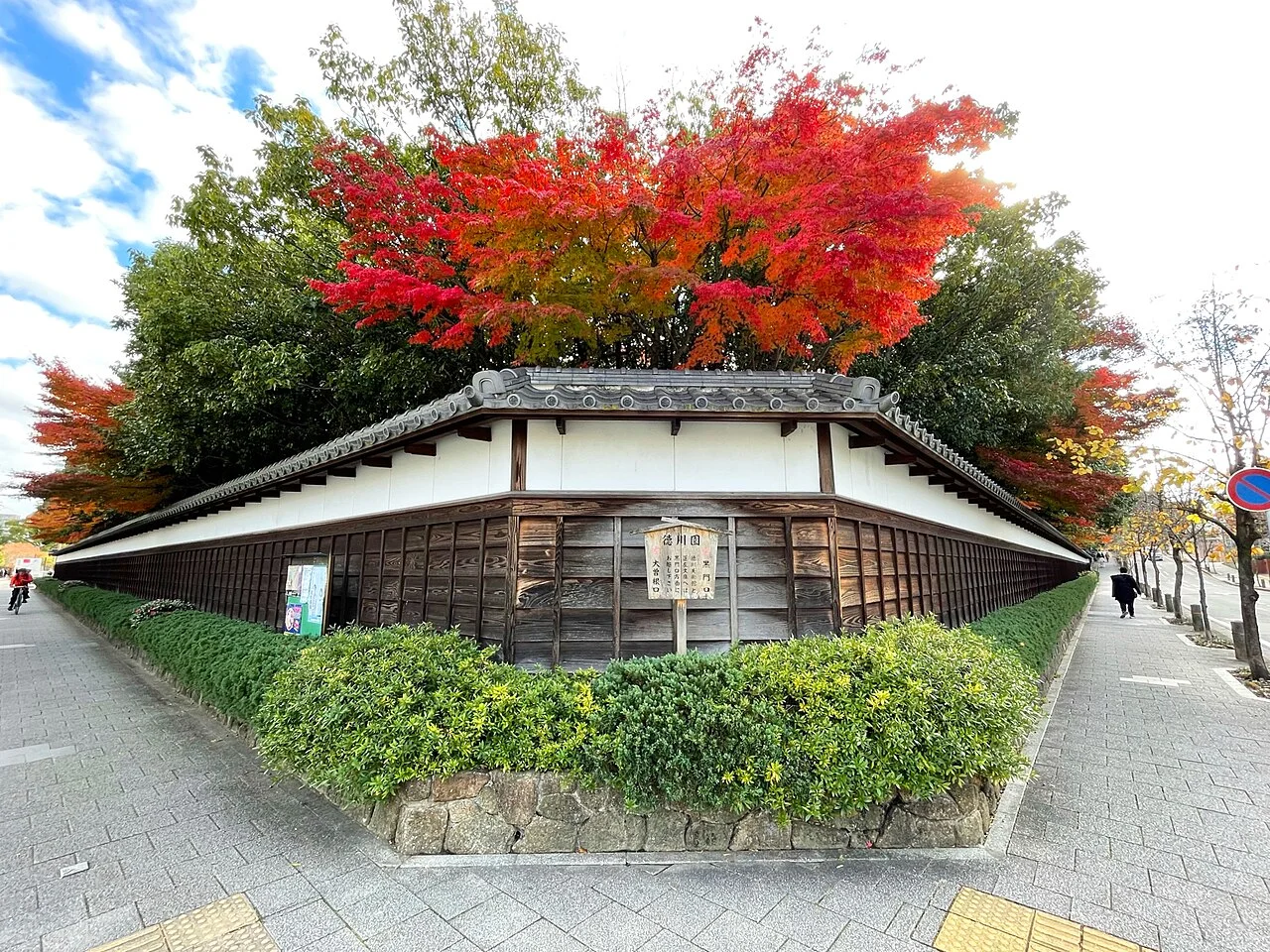
Choose Tokugawaen, Shirotori Garden or Higashiyama Zoo and Botanical Gardens based on your arrival time, with 2026 illumination dates, last entry, transport and fares, plus Sobue's ginkgo groves on the Meitetsu Bisai Line.
At Tokugawaen, start at Ryusenko Lake before choosing the waterfall or the lights
Take the JR Chuo Line from Nagoya Station to Ozone Station and leave by the South Exit; Tokugawaen is signposted as roughly a 10-minute walk. If you are staying in Sakae, you can also board a city bus from the Oasis 21 terminal to Tokugawaen Shindeki, a 3-minute walk from the gate. By underground to Ozone, Exit 3 leaves a 15-minute walk. Because that underground exit is separate from the JR South Exit, spell out both the line and the exit number when setting a meeting point. For the trip back, you can retrace your steps or continue onwards from the same hub. The Tokugawaen access map clearly separates the rail exits and bus stops.
According to the Tokugawaen visitor guide, standard opening hours are 09:30 to 17:30 with last entry at 17:00, and admission is ¥300 for adults (free for junior high school students and younger). The garden is normally closed on Mondays, shifting to the next weekday when Monday is a public holiday. Travellers arriving by Shinkansen can stop for lunch near the station before heading over for an afternoon entry. Arriving shortly after midday leaves time to photograph foliage and reflections by daylight and still pause by the water. Extended evening openings follow a separate schedule.
Walk straight down to Ryusenko Lake first and find a clear view across to the opposite bank. Tokugawaen is a strolling pond garden where lakeside paths, streams and wooded slopes sit in one compact circuit. Checking how the trees and rocks sit over the water makes it far easier to decide where to linger than rushing the full perimeter map from the gate. If you want elevation and sound, continue to Ozone Waterfall, flanked by boulders and rushing water; if reflections are your priority, stay near the shore and step into the next gap once the group ahead moves on. Paths look short on paper, yet slopes and waiting for photo spots take longer than expected.
If your group walks at different speeds, pick one clear landmark around Ryusenko Lake to regroup while faster walkers follow the official map up to the waterfall. Anyone using a pushchair, wheelchair or avoiding steep steps should check the garden's accessibility guide and route map first. Use the marked accessible entrances, ramps and toilets to decide whether to skip sections of the lakeside loop. That way, even if someone prefers to exit early, everyone knows where to meet. If only one person has mobile data, save screenshots of the garden map and gate name to everyone's phone ahead of time.
For an indoor morning nearby, the Tokugawa Art Museum and Hosa Library sit right beside the garden. Check opening hours, special exhibitions and ticket options on the Tokugawa Art Museum visitor information page, then step out into the garden later in the afternoon. How long you spend inside depends on the galleries, audio guide and your group's pace, so keep the garden for late afternoon. For collection and building details, see our Tokugawa Art Museum and Hosa Library guide. Visitors interested only in the garden can ride straight to Ozone and buy standard garden admission at the gate.
Tokugawaen lights up at 16:00, with 20:00 extensions on select dates
The 2026 Tokugawaen Autumn Leaves Festival notice runs from 14 November to 6 December, with closures on 16, 24 and 30 November. Lanterns and garden lighting switch on around 16:00 on open days. Extended hours until 20:00 (last entry 19:30) apply only on 20–23 and 27–29 November. Regular days still let you catch the first dusk lights after 16:00, while the late-opening evenings give far more breathing room around dinner. Arriving a little earlier lets you see the layered leaves and stone steps clearly while walking the lakeside.
If your afternoon is filled elsewhere, pick a concrete arrival time before leaving your hotel. To see the evening lighting without rushing, aim comfortably ahead of the last-entry cutoff rather than cutting it fine at 19:30—save it for another open evening if the schedule looks tight. Walking in from the entrance still takes several minutes after dark, and deciding routes on the spot eats up time. If you have an early dinner booked, you can invert the plan and meet in Sakae afterwards, provided the restaurant sits within an easy ride on an extended-opening night. Check dining times against last entry before booking rather than rearranging tickets at the table.
Light drops quickly between late afternoon and nightfall, shifting what stands out in the leaves and water at the very same spot. Pick one stretch of lakeside path with a clean water view rather than trying to cover every corner. Those hoping to photograph the path lanterns can pause once along the lit trail and check train times back at the gate instead of standing in dark corners on their phones. After rain, watch your footing on wet stone and leave low-angle shots right at the water's edge for daylight. When the wind picks up and breaks the reflections, follow the lit path where spotlights hit the foliage and put that spare half-hour towards an easier journey back.
Pair Shirotori Garden with Atsuta Shrine and catch the daytime water views
Around Atsuta, Atsuta Shrine and the garden slot easily into a single outing. Ride the Meijo underground line to Atsuta Jingu Nishi Station and walk roughly 10 minutes from Exit 4, as shown in the Shirotori Garden rail access guide. If you visit the shrine first, decide how long you want around the grounds so a full afternoon remains for the garden. You can also arrive via Meitetsu at Jingu-mae Station on the shrine's eastern side and return by underground. Because the two station names sound similar, write both the line and station name when messaging travel companions.
The Shirotori Garden general guide lists standard hours of 09:00 to 17:00 (last entry 16:30), closing on Mondays or the following weekday after a public holiday. Admission is ¥300 for adults and free for junior high school students and younger. If dinner is in Kanayama or Sakae, returning to the Meijo Line the way you came is simplest; walking across from Jingu-mae lets you exit via Atsuta Jingu Nishi instead. To cut down on walking from Kanayama, use the garden's listed buses: from Kanayama Station North Exit Stand 4, take the clockwise Atsuta loop bus via Jingu Higashimon to Atsuta Shogai Gakushu Center (about 3 minutes on foot), or from Stand 8 take Route Kanayama 25 to Shirotori-bashi (about 6 minutes on foot). Check directions and headways before setting off, and head straight for the staffed garden gate rather than detouring through neighbouring Shirotori Park if you are short on time.
Walk the garden by following its watercourse, modelled on central Japan's topography from mountain streams down to the sea. Where the central pond opens out, look across to the far bank—in autumn, red maples frame the traditional yukizuri rope cones protecting the pines. Before planning a tea stop, check the Shirotori Garden facility guide and the day's schedule for the Seiu-tei teahouse. The garden rules state that Seiu-tei's interior closes to casual visitors during private bookings, and access to its roji tea garden may also be restricted. Travellers wanting a formal tea sitting should book through the autumn festival event page; for an ordinary walk, standard admission gives full access to the waterside paths without scheduling around a tea session.
If you plan to visit both gardens on separate afternoons, a combined adult ticket for Tokugawaen and Shirotori Garden costs ¥480 instead of ¥600 for two individual entries. Confirm both visits fall on standard-admission days and check ticket counter rules before buying. Shirotori's general policy explicitly bars re-entry once you exit, so anyone planning to stay for evening illuminations should factor dinner around that rule: eat before entering, stay through dusk, then head out for your evening meal. Local senior discounts carry residency and ID requirements, so overseas visitors should budget for standard adult admission.
Shirotori's evening lighting splits standard entry and pre-booked nights
The 2026 Shirotori Garden Kanpu-kai (Autumn Maple Viewing) divides evening entry into two distinct formats. Standard illuminations run on 14, 15, 21, 22, 23, 28 and 29 November from roughly 16:00 until 20:00, with last entry at 19:30. These dates use normal admission with no advance booking, and junior high school students or younger must be accompanied by a parent or guardian after 17:00. Admission is free on 15 November for the garden's anniversary day; standard fares apply on all other regular nights. Daytime exhibitions and tea gatherings have their own timetables on the same page.
Friday evenings on 20 and 27 November are separate ticketed events. The garden closes at 17:00 and reopens at 18:00 via the Main Gate strictly for advance ticket holders, with special viewing tickets priced at ¥800 and capped capacity each night. Junior high school students and younger enter free when accompanied by a ticketed adult, and daytime visitors cannot remain inside without meeting the special-event rules. For a spontaneous Friday evening illumination, Tokugawaen stays open late on both of those nights and is much easier to pair with dinner beforehand; if you switch venues, follow Tokugawaen's transit and last-entry times instead.
If you plan to order a taxi near closing time at the weekend, verify the exact pickup gate on the map alongside the garden's traffic guidance. The Kanpu-kai page warns that car parks fill quickly on weekends, holidays and illumination evenings, and queuing in traffic can cost you last entry. Riding the underground and walking keeps timings predictable, and slower walkers can pause along the pavement without stress. Check the direction back to the station before exiting in case your group splits up. Clear water reflections do not mean brightly lit paving underfoot—guide family members along illuminated paths towards the exit before packing away cameras or tripods.
At Higashiyama, see the animals in the morning and move to the botanical gardens later
Picking the wrong gate at Higashiyama costs far more walking than taking the wrong underground exit in central Nagoya. If you are coming purely for autumn foliage, take the Higashiyama Line to Hoshigaoka Station and walk around 7 minutes from Exit 6 to the Hoshigaoka Gate, following the Higashiyama official access map. If the zoo comes first, take Exit 3 at Higashiyama Koen Station—a 3-minute walk to the Main Gate—and save the botanical gardens for the afternoon. Even from the same hotel, you can enter from one station and leave from another. When meeting up separately, specify an exact spot such as "outside Hoshigaoka Gate" rather than "Higashiyama entrance".
Regular hours are 09:00 to 16:50 with last entry at 16:30, and admission is ¥500 for adults (free for junior high school students and younger); confirm general opening days and fares via the Higashiyama Zoo and Botanical Gardens FAQ. Morning visitors frequently linger too long in the zoo. Official guidance estimates two to three hours each for the zoo and botanical gardens at an unhurried pace, before breaks. Anyone arriving after lunch usually needs to pick highlights in both halves, heading straight to Okuike Pond in the botanical gardens for foliage before leaving time to walk back. Days shorten fast in November—missing last entry means waiting for another day, even if you have just walked up from the station. Travellers with only a brief late-afternoon window are better off picking a confirmed night-opening date.
Travellers keen on tree varieties and subtle colour shifts will find far more range here than around a single pond. The City of Nagoya autumn announcement highlights diverse maple cultivars around Okuike Pond, multi-toned leaves along the Gassho-sen path, and the Yayuen area. Exploring the valley floor and water first before climbing the slopes lets you look up through the canopy after seeing reflections down low. If half your group wants close-up botanical walks and the other half just wants bright photo spots, agree on a meeting point by the pond. Slower walkers can stick to one or two signposted zones while others range further, reuniting before dusk to head for the exit.
If you have primary-school children in tow, the city notice lists a children's maple leaf stamp rally during the autumn season, available from 09:00 to 15:00 at the Hoshigaoka Gate or Botanical Garden Gate for junior high age and under. It works best for families already heading to the botanical gardens, where leaves are easy to inspect up close. After a long morning at the zoo, walk straight over to Okuike Pond in the afternoon rather than backtracking to a gate solely for the stamp sheet. Anyone wanting to visit the conservatory should also go in daylight, as evening lighting covers different zones and restricts access.
Check Higashiyama's evening gates carefully, as daytime main-gate routes close
Higashiyama's 2026 autumn festival runs from 14 November to 6 December, closing on 16, 24 and 30 November. Evening illuminations take place only on 21, 22, 23, 28 and 29 November and 5 and 6 December, when designated areas of the botanical gardens stay open until 20:30 with last entry at 20:00. The city announcement spells out that only the Hoshigaoka Gate and Botanical Garden Gate operate after 16:30, while the zoo zone closes at 16:50. If you are arriving after dark, head straight for an open evening gate—and when asking hotel staff for directions, specify the botanical garden evening illumination so they send you to the right entrance.
Visitors staying on from the afternoon should cross into the botanical gardens before 16:50 and follow on-site signs as the illuminated perimeter narrows. Set your exit time in advance if you have a dinner booking. Inside the illuminated zone, start with the reflections at Okuike Pond before deciding whether to continue up the Gassho-sen path. Note that the city announcement states the conservatory interior closes at night, leaving only the exterior lighting of the front conservatory building visible. If the plant collections inside are a priority, see them by day and keep the hour before dinner for a city stroll instead.
Higashiyama's night illumination extends into the first weekend of December, after Tokugawaen and Shirotori Garden have wrapped up their evening dates. On 5 and 6 December 2026, Higashiyama is still running evening entry, while Tokugawaen remains in its daytime festival period—handy for checking same-day colour rather than cramming two gardens into one early-autumn afternoon. With only one evening free, lock in your station, exit and entry window first and leave the other gardens for next time. Crossing town from Atsuta to Higashiyama before dinner adds another underground transfer and two walks to manage.
Once Sobue's leaves turn golden, give a full daytime block to Yamazaki
Sobue lies in the city of Inazawa, northwest of Nagoya. Your rail starting point for the ginkgo groves is Yamazaki Station on the Meitetsu Bisai Line—look up timetables using "Yamazaki (BS07)". The Meitetsu Yamazaki Station page lists departures in both directions, towards Meitetsu Ichinomiya and Tsushima. When checking same-day routes from Meitetsu Nagoya, compare connections via Meitetsu Ichinomiya against those via Tsushima. Travellers staying in western Nagoya or arriving from Gifu can search straight from their local station. Save both your interchange station and final destination for the return journey—not just a screenshot of the last leg—so you are not left recalculating transfers back at Yamazaki.
Sobue Ginnan Park sits right beside Yamazaki Station. Both the Inazawa City Sobue guide and the Meitetsu Sobue walking map separate the park, Yusenji Temple and the festival grounds. For veteran trees, make the ancient ginkgo beside Yusenji Temple your turnaround point. Families can look at ginkgo nuts and leaves in the park first, then walk to Yusenji to see how massive those same trees grow over centuries. Public roads link the two sites directly, though you should follow marshal directions whenever festival traffic controls are in place. If time is tight, stay around the park; if you have longer, download the local commerce association's festival venue and walking map to trace pedestrian roads past the oldest trees. Its park loop measures 2.5 km (listed as 33 minutes of pure walking, excluding photo stops at Yusenji), while the longer Meitetsu hiking course on the same sheet runs roughly 8 km from Morikami Station to Yamazaki Station. Because both finish at Yamazaki, the shorter loop saves an extra starting transfer—and you can already see the colour shift between leaf tips and full crowns right beside the station. If travelling with older relatives, agree to meet back at Yamazaki while faster walkers complete the wider town loop.
Build your schedule around the organiser's yellow-leaf updates and festival notice. Main festival dates for 2026 run from 21 to 29 November, with both venues open 09:00 to 15:00 on weekdays and until 16:00 on weekends and public holidays. Evening illuminations run from 21 to 28 November between 17:00 and 20:00, while daytime festival stalls continue on 29 November. Because the commerce association stamps a shooting date on every photo update, check the photo date first to judge foliage conditions for your week, and use the calendar to confirm venue activity. On a short stay in Nagoya, make your ticket decision after checking the latest dated photos alongside return train times.
Sobue works best as a flexible half-day block. If the city schedule looks comfortable, head out by train in the morning and return to Nagoya for lunch. Travellers catching an afternoon Shinkansen should work backwards from their return train at Yamazaki to time the final stretch on foot, as the short station loop keeps walking and waiting times predictable. If you only have late afternoon left for a quick glimpse of yellow leaves, pick a return train that still makes dinner or hotel check-in before deciding whether to linger for the lights—walking between the two festival zones after dark almost always takes longer than expected.
Streets frame rows of ginkgo, but stick to public roads around working orchards
Many of Sobue's ginkgo trees are working orchards grown for ginkgo nuts. The commerce association's 2026 venue map explicitly marks private agricultural plots. Stick to the park, open grounds around Yusenji Temple and public roads, stopping to take photos only where foot traffic can pass safely. To capture long rows of trees, angle your camera from along the roadside rather than stepping onto farm verges—the layered avenues read naturally from a slight distance. Step aside promptly on narrow lanes when vehicles pass, leave leaf-strewn ground beneath orchard trees undisturbed for growers, and agree on fixed photo stops ahead of time if children are walking out front along tempting field paths.
Some visitors stay for dusk lighting, while others prefer pure daytime gold. Daylight brings out subtle colour gradients in the crowns and fallen leaves across whole trees, and gets you back to Nagoya in time for dinner. By the 17:00 switch-on, daytime festival stalls have already packed up, so anyone staying through from the afternoon needs to plan breaks and food independently—eating a proper meal in Nagoya before setting off is far easier than hunting for open cafés around the station. If your group splits up, meet right beside Yamazaki Station with clear arrival times and train directions; lit trees make easy landmarks, while sticking to main public roads keeps the walk back straightforward.
Train travel is strongly preferable during the festival. Organisers advise that from 19 November to 3 December, the paved parking area inside Sobue Ginnan Park on the east side of Yamazaki Station is closed to cars for setup, festival operations and dismantling. Drivers should follow official signs to the temporary Nishijima Ground car park and check the traffic control map rather than parking along verges where it disrupts marshals. If you are travelling with older family members who want minimal walking, use the park right beside Yamazaki Station as your main destination, and rest in the open station-side grounds if you miss a train rather than rushing further afield.
Save Korankei for a separate day, as the journey back differs completely
The Asuke Tourism Association access guide outlines multiple rail-and-bus connections to Korankei in the Asuke district of Toyota. From a Nagoya hotel, the return journey works completely differently from Sobue: Sobue drops you straight back onto the Bisai Line at Yamazaki Station, whereas Korankei demands careful timing across highway stretches, bus queues and evening departures back to the city. On peak illumination nights, congestion along the national highway and bus stops easily eats into your late evening. Keep a full day free if you want both the riverside maples and the old town, using the route grid in our Korankei riverside and night-foliage guide to order your stops. If an early morning flight follows your night-foliage trip, compare staying downtown against moving out to Airport Island the night before in our Chubu Centrair early-departure and late-arrival guide.
Trying to squeeze two separate suburbs into a single day consumes most of the afternoon in transit. If half your group wants hillsides of red maples and the other half wants golden ginkgo, split them across two half-days instead. Pair Higashiyama or Tokugawaen in town for maples with a flexible morning out to Sobue, and save Korankei for a dedicated day when you have time to walk from the river into Asuke's streets. You can also shuffle ideas using our two-day Nagoya itinerary—that way, even if Sobue's foliage is not at peak colour, your city dinner bookings and return trains stay intact.
If rain arrives or dusk falls early, trim the route cleanly
Rain is easiest to handle by shortening the walk inside a garden. At Tokugawaen, start indoors at the museum exhibitions, step onto the gentler lakeside paths if the rain eases, or head straight back to Ozone if the downpour holds. At Shirotori Garden with young children, pick either the pond circuit or Atsuta Shrine for the day so you enter and exit via the same underground station. Remember Shirotori permits only a single entry—popping out to buy supplies means paying again—so sort out snacks and meeting plans outside the gate to avoid a hurried walk.
In a sudden cold snap, cut Higashiyama down to a short daytime loop in the botanical gardens, starting by the pond and finishing at Hoshigaoka Gate. If others in your group still want the zoo, set a clear time to meet outside the gates and let each side enter from the nearest station. For Sobue on a later day, wait until morning to check dated leaf photos and the radar before boarding. A satisfying Nagoya autumn plan needs just one dry afternoon in a garden and one unhurried morning train ride—keep your flexible slot open until entry hours and return connections both line up.
Match sights to the right companions and count walking distance separately from stops
Group trips often stumble over one simple miscalculation: a solo traveller covers the walk to the next gate in ten minutes, whereas a group needs toilet breaks, bench stops and extra minutes for anyone carrying a DSLR. Divide your itinerary table into three explicit columns: arrival gate, walking duration and departure station. Filling in two different station names for arrival and departure at Higashiyama shows far more clearly whether an afternoon plan fits than sketching a loop back to the start. For Shirotori and Tokugawaen, count only the walk from the final interchange station to the garden gate, keeping train rides and ticket queues separate.
If part of your group wants exhibitions while others prefer photography, split up outside the Tokugawa Art Museum: museum-goers step inside while foliage photographers enter Tokugawaen next door. With plenty of time on both sides, agree to regroup near Ozone Station's JR South Exit at dusk before riding back together. Using the same approach around Shirotori, set Atsuta Jingu Nishi Station as your meeting point rather than treating every shrine gate as one interchange, and double-check which gates remain open if staying for illuminations. Clarity on station exits beats cramming extra garden names onto a single day.
Sobue requires slightly different coordination. Pick your target return train from Yamazaki to Nagoya, then note the following departure as a backup. If one half of the group heads back early, specify whether you are meeting on the platform or outside the ticket gates in case a phone battery dies. Anyone setting up tripods or sketchbooks should pick wider open spaces, leaving faster walkers free to roam nearby avenues and reconvene before boarding the same train. On days when Shirotori is restricted to pre-booked evening tickets or Higashiyama has no illumination, move Sobue into that morning and keep your city dinner for an evening with easy transit.
If day one leaves no time for a ticketed garden, start with a stroll near your hotel instead. Guests dining around Sakae can walk a stretch of Hisaya-odori to gauge the street trees and how early dusk arrives before their reservation—no gate deadlines required, and a useful calibration for the following day's pace. Keep a morning free for the train change out to Sobue, return to central Nagoya for lunch, and decide afterwards whether to add a city garden in daylight. If you also need to collect large suitcases from Nagoya Station, build locker pickup time into your return schedule.
A few useful answers
First time in Nagoya with only one afternoon for autumn leaves—which garden should I pick?
Staying around Nagoya Station, head to Tokugawaen first. If you are based near Atsuta or already visiting Atsuta Shrine, pair it with Shirotori Garden. Higashiyama Zoo and Botanical Gardens suits anyone with half a day or more who wants both animals and broad botanical grounds.
Can I buy standard walk-up admission for Shirotori Garden on Friday nights in November 2026?
No—Friday evenings on 20 and 27 November 2026 are separate ticketed events. The garden closes at 17:00 and reopens at 18:00 via the Main Gate strictly for advance ticket holders. Standard walk-up illuminations run on 14, 15, 21, 22, 23, 28 and 29 November.
Which station should I use if arriving at Higashiyama Zoo and Botanical Gardens after dark?
On illumination evenings, only the Hoshigaoka Gate and Botanical Garden Gate are open after 16:30. Take the Higashiyama underground line to Hoshigaoka Station and leave via Exit 6 for Hoshigaoka Gate. Last entry for 2026 evening sessions is 20:00.
Are the illuminations still on during the final day of the Sobue Ginkgo Festival?
Daytime festival stalls and events still run on Sunday 29 November 2026, while the commerce association's published illumination schedule runs through 28 November from 17:00 to 20:00.
How should I pick the best day to visit Sobue?
Check the Sobue Town Commerce and Industry Association's dated yellow-leaf photo updates first, then look up same-day timetables in both directions at Meitetsu Yamazaki Station. With only one afternoon, keep your route between the park beside Yamazaki Station and Yusenji Temple.
Official information and references
Sources used in this guide.
- Nagoya Convention & Visitors Bureau — 2026 Nagoya Autumn Leaves Feature
- Tokugawaen — Access Guide
- Tokugawaen — Opening Hours & Admission
- Tokugawaen — Walking Route Guide
- Tokugawaen — Accessibility Information
- Tokugawa Art Museum — Visitor Information
- Tokugawaen — 2026 Autumn Leaves Festival & Night Opening
- Nagoya Convention & Visitors Bureau — Atsuta Shrine
- Shirotori Garden — Rail & Bus Access
- Shirotori Garden — Hours, Admission & Combined Ticket
- Shirotori Garden — Overview & Garden Map
- Shirotori Garden — 2026 Kanpu-kai (Autumn Maple Viewing)
- Higashiyama Zoo and Botanical Gardens — Access Guide
- Higashiyama Zoo and Botanical Gardens — Hours, Tickets & FAQ
- City of Nagoya — Higashiyama Zoo and Botanical Gardens 2026 Autumn Festival & Illumination Notice
- Meitetsu (Nagoya Railroad) — Yamazaki Station (BS07)
- Inazawa City — Sobue Municipal Sightseeing Guide
- Meitetsu — Sobue Walking Course
- Sobue Town Commerce and Industry Association — 29th Ginkgo Yellow-Leaf Festival & Leaf Updates
- Sobue Town Commerce and Industry Association — 2026 Venue & Ginkgo Walking Map
- Toyota City Asuke Tourism Association — Access Information