When is the last Meitetsu train from Chubu Centrair International Airport? Use your actual customs exit time to decide between Nagoya Station, Kanayama or staying on Airport Island, and count backwards from check-in cut-offs for early departures.
- Region & Focus
- Nagoya
- Reading Scope
- 18 min read · 14 chapters · 5 Q&As
- Official Verification
- 20 official sources checkedUpdated 19 November 2026
- Key Topics
- Airport transfersRail travelBooking
Chapter Route Map (tap any stop)
- Base the Last Train on Your Customs Exit Time
- Both T1 and T2 Funnel Back to Access Plaza
- Price Two Hidden Costs Before Booking a Late Flight
- Covering the Final Stretch After the Last Train to Nagoya Station
- Airport Buses to Sakae and Fushimi Stop by Early Evening
- Where to Catch a Taxi After the Last Train
- Staying on Airport Island: Full Nights vs Short Rests
- Waiting Until Dawn at the Airport: Open Zones, Food and Lockers
- Early Departures: Count Backwards from Bag-Drop Cut-Offs
- How to Look Up First Trains from Nagoya Station, Kanayama and Direct Expresses
- Two Sample Itineraries Compared
- Returning a Hire Car the Evening Before vs Flight Morning
- Where a Family Should Pause and Regroup
- Save One Offline Screen with the Essentials
- Quick Q&A
If you land at Chubu Centrair International Airport in the evening, missing the 23:31 departure means missing the last direct Meitetsu train to Meitetsu Nagoya. On arrival, plan around the train you can catch once you clear customs; for an early flight the next morning, count backwards from your airline's check-in deadline. How much margin remains determines whether you sleep near Nagoya Station, Kanayama or right on Airport Island.
Base the Last Train on Your Customs Exit Time
Departure times on the Meitetsu timetable assume you are already standing on the platform. Keep your flight's scheduled landing time separate from the rail schedule on your phone: after touchdown, you may still wait for an airbridge, fellow passengers disembarking, the walk to immigration, baggage reclaim and customs. Even when the luggage carousel stops, you are not yet at the station. Travellers who book late-evening flights assuming all of that fits into half an hour often finish booking a city hotel only to realise they still have a late-night transfer to solve. Factor an Airport Island hotel or pre-booked car into the equation while comparing fares so you know what a cheaper late ticket genuinely saves.
In the Meitetsu Airport Line timetable revised on 14 March 2026, the final direct train to Meitetsu Nagoya on both weekdays and weekends/public holidays departs Central Japan International Airport at 23:31, reaching Kanayama at 00:01 and Meitetsu Nagoya at 00:06. This is the last direct Limited Express, so do not filter your search to μ-SKY services alone. When checking schedules, enter the local Japanese date on which your flight actually lands; if touchdown is already past midnight, look at the following day's timetable. Nagoya Station serves JR, municipal underground lines and other private railways in the same complex, so search specifically for "Meitetsu Nagoya" for this leg.
If a train around 23:00 is still realistic, make one clear decision on the spot. Should you clear customs on schedule, follow the "Trains / Meitetsu" signs straight through, keeping your tickets, phone and passport close at hand. If queues build up at immigration or customs, message your hotel straight away about a late arrival rather than rushing to buy a reserved seat for a specific train while waiting at baggage reclaim. If you are staying near Sakae Station, check onward late-night connections in advance. That 23:31 service reaches Nagoya Station after midnight, so you will need extra time to wait for a late connection or hail a taxi outside the station with your luggage.
| Scenario | Same-Day Lookup Point | Next Step to Build into Your Plan |
|---|---|---|
| Last direct train from airport to Meitetsu Nagoya | Departs Central Japan International Airport at 23:31 | Arrives Kanayama 00:01 and Meitetsu Nagoya 00:06; walk to hotel or book a taxi |
| Earliest direct train from Meitetsu Nagoya to airport | Departs Meitetsu Nagoya at 05:22 | Arrives Airport Station 06:06; allow time to walk to terminal and check in |
| Earliest airport limousine bus from Sakae Oasis 21 | Departs Sakae at 06:10 | Stops outside T2 at 07:00 and T1 at 07:05; walk to check-in desks |
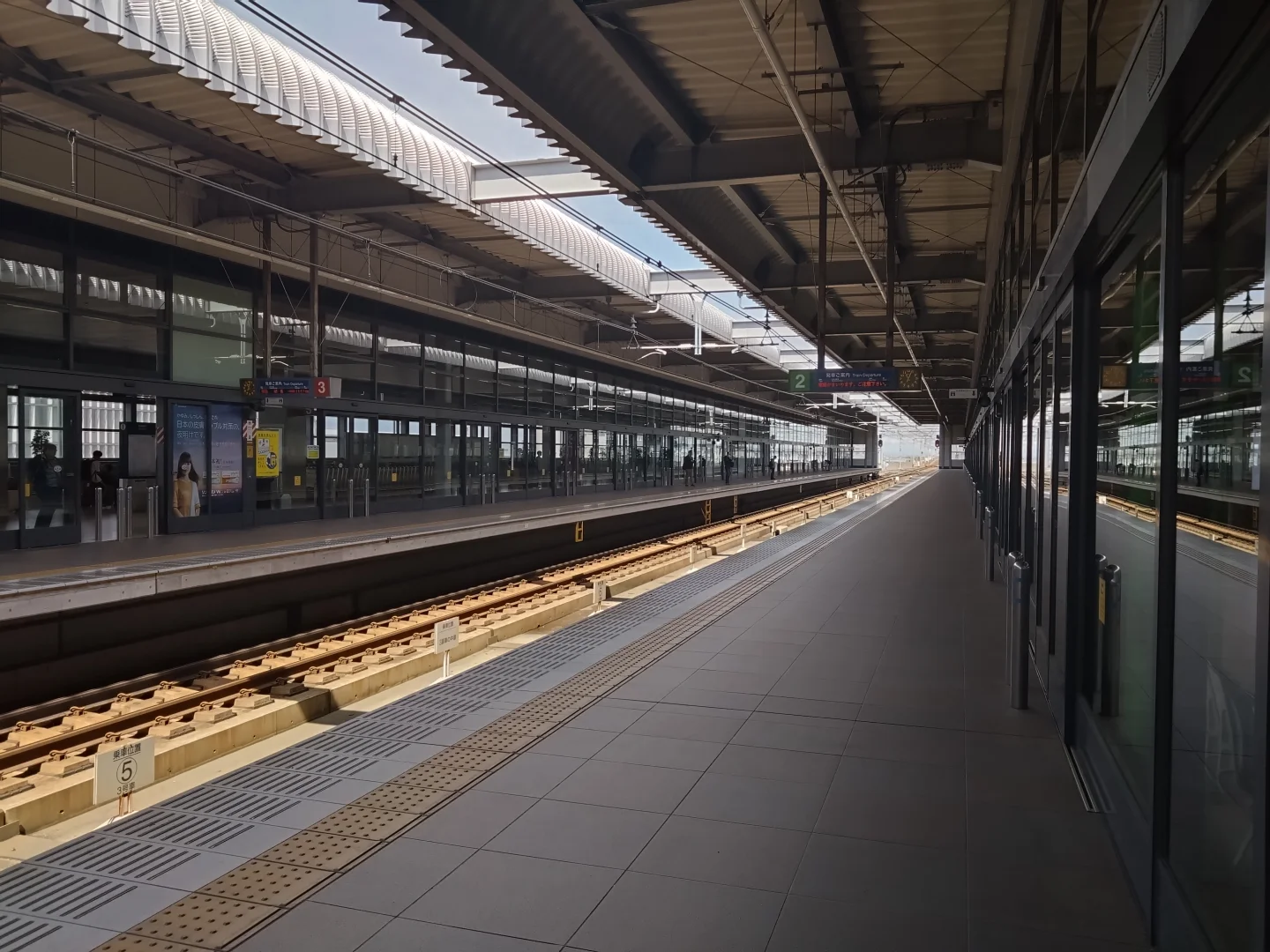
When is the last Meitetsu train from Chubu Centrair International Airport? Use your actual customs exit time to decide between Nagoya Station, Kanayama or staying on Airport Island, and count backwards from check-in cut-offs for early departures.
Both T1 and T2 Funnel Back to Access Plaza
After clearing international arrivals in Terminal 1, you emerge into the second-floor Arrivals Lobby. Follow the rail signs across the connecting walkway to reach Access Plaza, where both the Meitetsu ticket gates and the airport hotel entrance sit. If this is your first late arrival, save a screenshot of the Terminal 1 floor map with the second-floor link bridge and station circled. If someone is picking you up at the "Arrivals Lobby", specify which terminal and floor. Both terminals have arrivals halls, and taking a wrong turn late at night quickly eats into your margin for the last train.
Once you step out of Terminal 2 on the ground floor, the official inter-terminal walking route takes you up a ramp or lift to the second floor and across through FLIGHT OF DREAMS towards Access Plaza. The airport puts the walk between Terminal 1 and Terminal 2 at around 10 minutes. That differs from the seven-minute walk between Meitetsu Airport Station and T2 via the P1 car park walkway, which starts and ends at different points. If you are wheeling large suitcases, pushing a buggy or travelling with someone who needs to pace themselves, budget conservatively door to door. Walking straight out from the T2 ground floor towards the kerbside often causes travellers to miss the signs leading up to the second-floor walkway.
If you prefer the free shuttle bus, outbound buses depart from Stop 7 on the ground floor of Access Plaza, while return buses board outside Terminal 2; the official shuttle timetable lists roughly 15-minute intervals in both directions. With only ten or fifteen minutes left before your train departs, walking is easier to time than waiting for the next shuttle. Outside the station, passenger pick-up bays, bus stops and taxi ranks occupy different levels. Decide where you are heading before taking a lift so you do not bring the whole family down to ground level only to realise the Meitetsu trains leave from the second-floor concourse.
Price Two Hidden Costs Before Booking a Late Flight
When comparing a late-night flight against a daytime departure, count hotel nights from the evening you need the room, not the departure date on your itinerary. If your schedule says "departing on the 19th, landing early hours of the 20th" and you want to walk straight into a bed on arrival, you normally need a booking checking in on the 19th and out on the 20th. Note an estimated arrival such as "01:30 on the 20th" for reception and wait for confirmation that they will hold the room until then. Booking check-in for the 20th usually means waiting until that afternoon. For multi-night stays, confirm that missing a front-desk cut-off on night one will not automatically cancel the rest of your reservation. Checking your booking at midnight from the terminal, what matters is whether you can get through the door.
If your original budget assumed one Meitetsu ticket plus a city hotel, missing the last train triggers two distinct extra costs. A prepaid city room may be non-refundable while you pay again to stay on Airport Island; alternatively, if you have to reach the city that night, you face taxi fares, motorway tolls and surcharges for bulky luggage or child passengers. Check live room rates for that night alongside actual transfer quotes, and factor in whether your original hotel allows date changes. A larger group can split a private transfer, though four adults with four large suitcases rarely fit comfortably in a standard saloon taxi. State passenger and bag counts when booking so the operator sends a suitable vehicle rather than forcing a second car on arrival.
Late arrivals also carry an invisible scheduling cost depending on how fixed your next morning is. If day one only covers Nagoya Castle, Osu or Sakae, sleeping at the airport and heading into town the following morning still works smoothly. If you hold reserved Shinkansen tickets or timed entry for an out-of-town attraction, save taxi pick-up details at both the airport and city ends and decide in advance which bookings can shift. Our two-day Nagoya itinerary is built with swappable blocks so you do not have to force an early start after a late touchdown.
Covering the Final Stretch After the Last Train to Nagoya Station
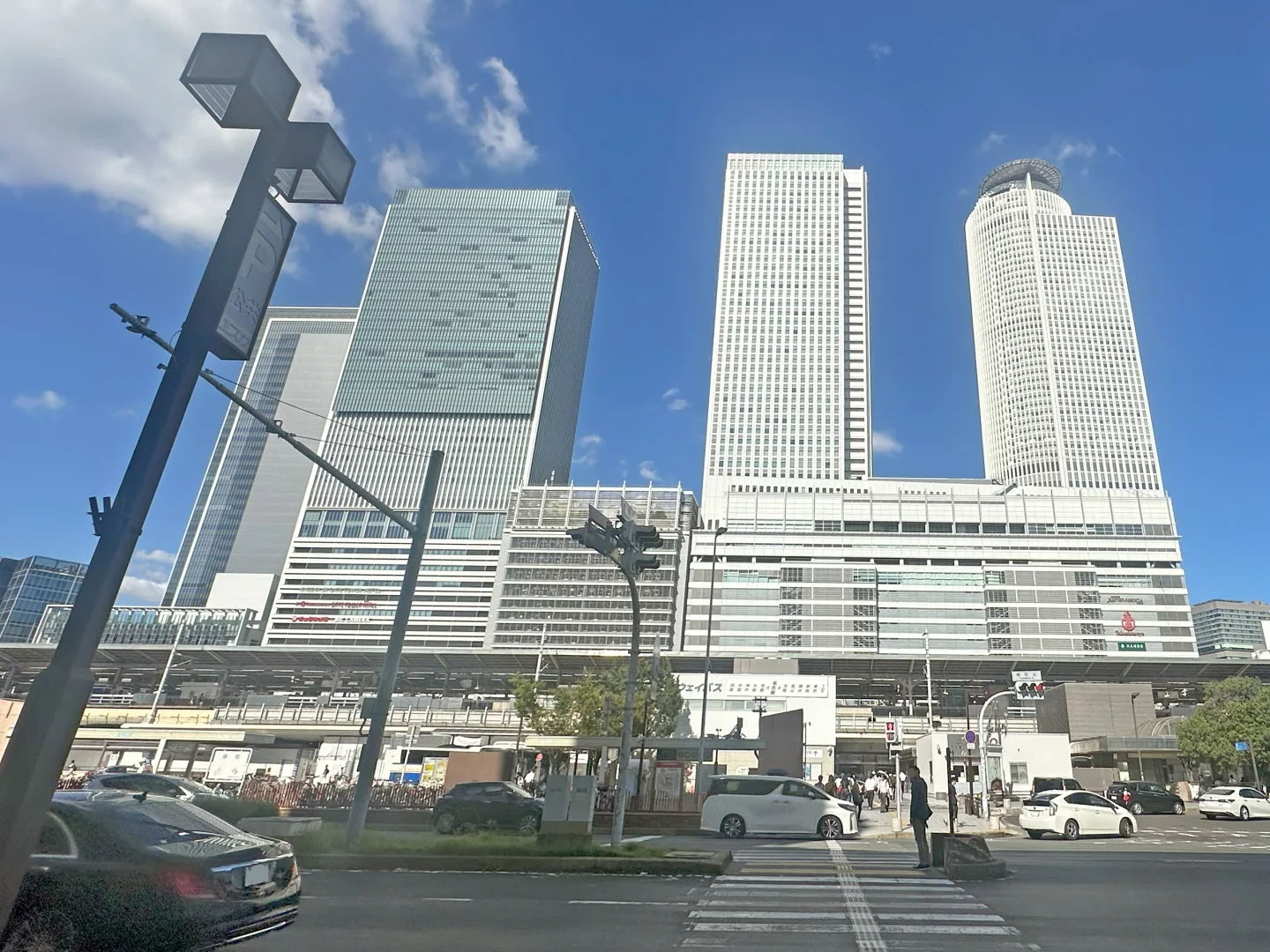
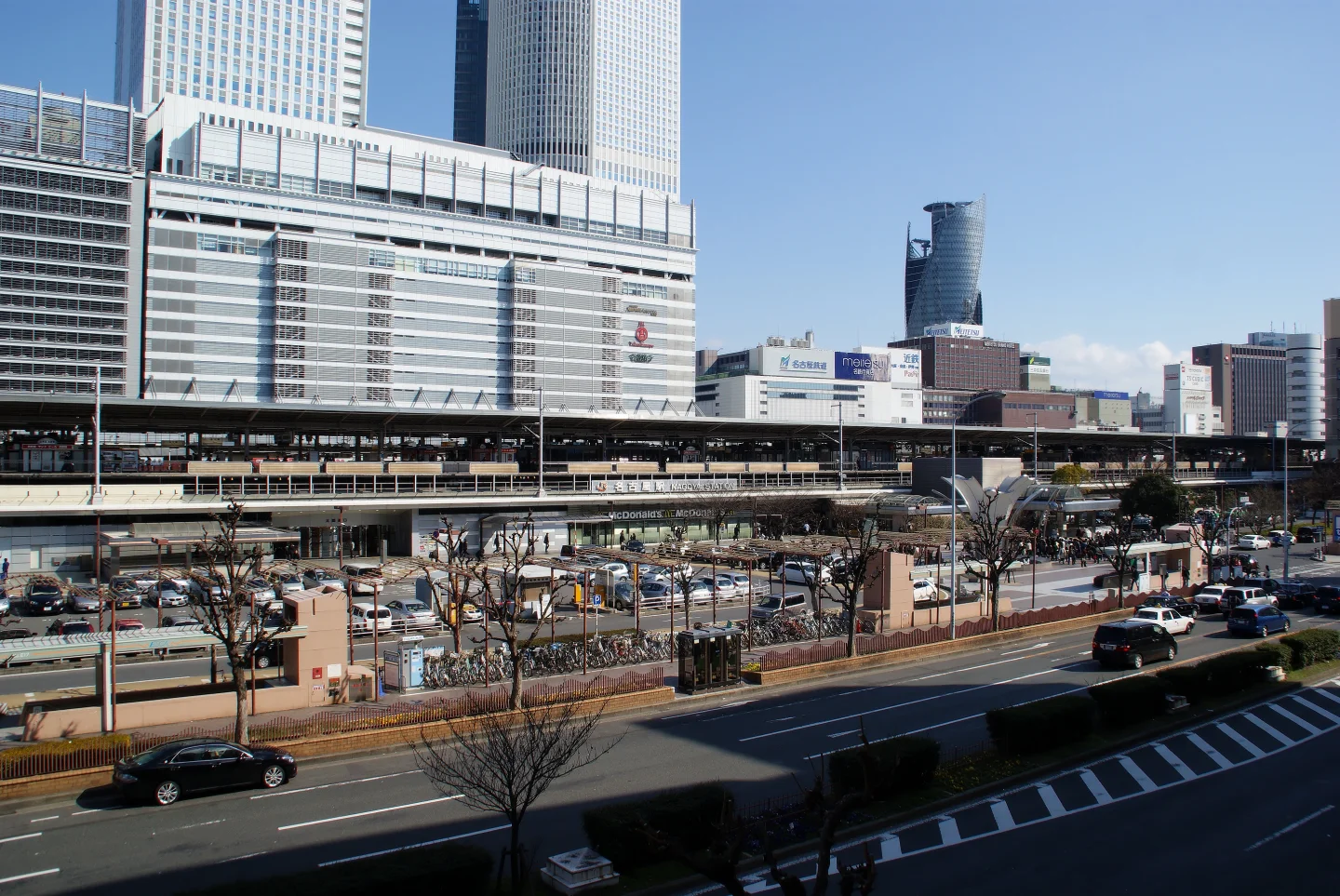
If you are staying near Nagoya Station, switch your map pin to street level around the hotel entrance. Meitetsu Nagoya Station sits closer to the Sakura-dori Exit; if your hotel is on the Shinkansen side, pinning the exact doorway is far more useful than remembering a nearby department store. Daytime routes often thread through underground shopping arcades, which close overnight—and late-night shopping, currency exchange or sit-down meals are off the table anyway. Save a simple street-level walking route from the station exit and check whether overnight access uses the main doors or a night intercom. For a sleeping child, avoiding one extra flight of stairs matters more than trimming a single block around Nagoya Station. If you have not chosen a hotel yet, compare exits and room layouts in our Nagoya Station, Sakae and Kanayama accommodation guide before picking where to alight.
The same applies to Kanayama: once your airport train pulls in there, switch off Nagoya Station directions and check whether your hotel lies on the north or south side. If the final service stops at Kanayama, get off there rather than riding through to Nagoya Station and backtracking. Travellers staying in Sakae or Fushimi can compare taking a short taxi from Kanayama against staying on until Meitetsu Nagoya and catching a cab from there. That trade-off only makes sense once you know which exit has an easier taxi rank, how far your group can walk and whether reception is still staffed. On a luggage-heavy night, keep both the pick-up point and your hotel address saved in Japanese in your phone notes.
Before booking, trace the walk on a map starting from the exact ticket gate you will use rather than measuring from the generic central pin for Nagoya Station. Save a single screenshot showing your hotel's Japanese name, street address, reception phone number and booking reference in case your battery runs low or roaming drops out. If late-night self-check-in requires a door code, store the hotel's confirmation email offline. Download any detailed transit maps before take-off so you can follow station signage directly instead of pausing in corridors to hunt for Wi-Fi.
Airport Buses to Sakae and Fushimi Stop by Early Evening
The Meitetsu Centrair Limousine timetable currently lists 17:40 from Bus Stop 6 at Terminal 1 as the last bus towards Sakae and Fushimi. Travellers arriving in the afternoon with suitcases who want to avoid changing underground lines for the Nagoya Tokyu Hotel or properties along that corridor can use this daytime service. Arriving at Terminal 2 means heading to the ground floor of Access Plaza rather than looking for a Sakae bus stop outside T2. Airport-bound coaches serve both terminals, whereas city-bound departures originate at T1—do not read the outbound stop map in reverse.
That same timetable lists the earliest city departure leaving Nagoya Kanko Hotel at 05:57, calling at Stop 9 in Sakae Oasis 21 at 06:10, and reaching the Terminal 2 kerbside stop at 07:00 and Terminal 1 at 07:05. Remember that 07:00 is when the bus pulls up outside T2; check-in hall opening times still follow the day's flight schedule. If your check-in desk closes at 07:15, even a punctual bus leaves only minutes to spare and is unsuitable if you have bags to drop and a queue ahead of you. For midday or afternoon flights, however, catching this coach from Sakae saves a rail transfer and makes life easier with a pushchair and heavy cases.
Coaches board up to seated capacity, and pre-purchased tickets do not guarantee a specific seat. Write the departure point down accurately, especially as "Nagoya Airport" can also refer to Prefectural Nagoya Airport in Komaki. Search specifically for Chubu Centrair International Airport (NGO) and check your terminal code. The airport's main bus directory also covers Nagoya Station West Exit and regional routes, with operating days and destinations set by each carrier. If you are staying in Sakae and arrive late, check the last departure from the airport side first rather than wheeling bags out to the bus bays on spec.
Where to Catch a Taxi After the Last Train
Terminal 1 passengers should head to the taxi rank on the ground floor of Access Plaza. The airport taxi page notes that taxis can only be boarded from Access Plaza, so do not walk against the flow into the T1 ground-floor drop-off lane. Terminal 2 has its own ground-floor pick-up zone where passengers are instructed to call one of the listed on-site operators, several of which staff phones 24 hours a day. This option suits anyone who has pre-booked a transfer, wants a full night's sleep in the city or has an early morning commitment downtown. When pre-booking, give your flight number and terminal and get written confirmation on how delays are handled and where you will meet. If telephoning on arrival, give passenger numbers first, then luggage count, and finally your hotel name and address.
Centrair publishes estimated taxi fares to major city districts, but treat those separately from a tax-inclusive private quote: the official page notes that expressway tolls, including the airport bridge toll, are paid by the passenger on top of metered fares. For prepaid transfers, verify whether tolls, late-night surcharges, flight-delay waiting time, cancellations and terminal changes are covered. Saying just "Nagoya Station" leaves the drop-off side to the driver's guess; hand over the full hotel name and entrance details so they can pull up at whichever door is open at that hour. If you are weighing up a last-minute switch to Airport Island instead, check live room availability and arrival cut-offs so you can compare actual hours of sleep.
Staying on Airport Island: Full Nights vs Short Rests
The hotel closest to the Meitetsu ticket barriers is Centrair Hotel. According to the airport hotel page, it sits roughly 100 metres from the gates along a step-free route, with covered walkway access straight into the Terminal 1 check-in lobby the next morning. Terminal 2 departures still require a separate walk across. If you are travelling with a pushchair, wheelchair or older relatives, check when booking whether rooms sit on the same floor, whether the bathroom layout works for everyone and whether getting from room to reception requires another lift. Even when public concourses are step-free, room interiors vary by category.
Airport Island also has Comfort Hotel, two Toyoko Inn properties and Four Points. Because booking sites lump them together under the airport label, take a moment to pin your exact hotel entrance alongside your departure terminal on the same map. With Toyoko Inn, match the shuttle and front desk to the exact building name on your reservation. Check the morning shuttle schedule heading from the hotel to the terminal and where it drops off; when a family has to bring four suitcases downstairs around breakfast time, the first shuttle departure and check-out queue matter far more than how many hundred metres away the building sits on paper.
Solo travellers who only need a few hours of sleep before an early departure can check TUBE Sq, located in the Welcome Garden on the ground floor of Terminal 1, offering hourly rest plans as well as standalone shower rates. Decide beforehand whether you need proper sleep or just a shower before moving on. If a three-hour slot ends before dawn, you will still need to shift to one of the 24-hour public areas afterwards; families needing a private bathroom, full beds and room for bags should compare it against a twin or triple hotel room. The official site lists starting rates for base plans, so check live availability and night-time pricing for your exact check-in window rather than budgeting from midday daytime rates.
If you land past midnight with only two or three hours before your next departure, a hotel only pays off if you can genuinely rest. Count the minutes spent wheeling cases to reception, checking in, showering and checking out again. Moving into a room makes sense when you can secure an unbroken block of sleep; if a family misses the last train and does not plan to set off until 08:00 or 09:00, sleeping on the island trades a stressful midnight transfer for a calm night. Next morning, drop your bags into lockers at Nagoya Station so your city sightseeing starts light. If your city hotel accepts early luggage drop-offs, heading straight to reception saves an extra trip later in the afternoon.
Waiting Until Dawn at the Airport: Open Zones, Food and Lockers
The official late-night and early-morning guide lists three areas open 24 hours a day: Terminal 1's ground-floor Welcome Garden, Terminal 1's second-floor Arrivals Lobby and Access Plaza. Under standard operating hours updated on 25 October 2026, the T1 third-floor Departures Lobby opens 04:40–23:30, while T2's second-floor Departures Lobby opens 08:45–22:00 and its ground-floor Arrivals Lobby opens 10:30–22:00. Opening zones and hours adjust with flight schedules. Once you clear customs in the small hours, head straight to those 24-hour public zones rather than wandering closed restaurant floors looking for power sockets.
A 24-hour convenience store sits on the second floor of Access Plaza, making it easy to pick up water and simple food after restaurants shut. If you are simply waiting for check-in to open, there is no need to haul every bag while scouting for seats. If you want to store luggage until the first morning train, use the 24-hour coin lockers in Access Plaza or on the second floor of Terminal 1 shown on the airport baggage locker guide; lockers on the third and fourth floors follow building hours, and certain banks add an overnight surcharge past 01:00. Keep passports, keys, medication and essentials for changing or feeding children with you before locking everything else away.
If you need cash overnight, head to the 24-hour ATMs in the Terminal 1 second-floor Arrivals Lobby; the official ATM directory also lists machines in Access Plaza, though their operating hours vary. Charging points are marked in the airport's overnight guide. Travellers connecting before dawn, collecting airline documents or needing special assistance should keep their airline's contact details handy rather than mistaking terminal opening hours for staffed check-in hours. Public seating lets you wait comfortably enough, but real sleep and privacy still call for a booked room.
Early Departures: Count Backwards from Bag-Drop Cut-Offs
Start by pulling up your booking to verify both your terminal and scheduled departure time, then check your airline's published check-in window. Someone travelling with cabin baggage only and a valid mobile boarding pass faces very different steps before security compared with a group checking suitcases, verifying travel documents or needing assistance. If you are aiming for the first morning train, count backwards from check-in closure rather than treating "arrives at Central Japan International Airport Station" as "standing at the desk". For Terminal 2, add extra minutes for exiting the station, changing levels, following walkways and locating your carrier's queue. Once inside the terminal, head to Departures and look up your full flight number on the main boards. Multiple airlines share each hall, so reaching International Departures is not the end of the walk.
Tigerair Taiwan's boarding guide notes that standard airport check-in closes 45 minutes before departure unless an airline notice specifies otherwise. For a 08:00 flight under that 45-minute rule, desk formalities normally must be finished by 07:15. If an earlier train or bus lets you arrive ahead of schedule, give that extra margin to the check-in queue. Swap your own departure time into that 08:00 calculation and check for any carrier-specific advisories. Should your flight leave earlier than Terminal 2's usual opening hours, check your airline's check-in or terminal notices rather than assuming standard building hours mean a schedule change.
Tigerair Taiwan's Traditional Chinese boarding page also notes that self-check-in is available on Centrair–Taiwan routes, depending on whether you have hold luggage and an eligible mobile boarding pass. When travelling as a family, plan around whichever person has the most desk steps to complete. Estimating times from one adult with a mobile boarding pass falls apart as soon as child seating, bag drops or passport checks send everyone back into the main queue. That boarding guide also separates recommended gate arrival from final gate closure—leave margin beyond security as well.
How to Look Up First Trains from Nagoya Station, Kanayama and Direct Expresses
Meitetsu's website offers both full-line PDF timetables and date-specific journey planners. On the outbound timetable for both weekdays and weekends/public holidays, you will see a direct Express departing Meitetsu Nagoya at 05:22 and arriving at Central Japan International Airport at 06:06, followed by a Rapid Express at 05:35 reaching the airport at 06:12. If your hotel sits ten or fifteen minutes on foot from the Sakura-dori Exit ticket gates, build that walk, ticket entry and platform wait ahead of departure. Travellers staying in Kanayama must check the Kanayama departure column rather than applying Meitetsu Nagoya timings. These examples reflect the timetable checked on both weekdays and holidays; always open the Meitetsu route timetable for your exact travel date in case of temporary alterations.
The first page of the PDF also shows a train arriving at the airport at 05:23. Seeing it in the airport column does not mean you can board it from Nagoya: read up the same column and you will see no departure time listed under Meitetsu Nagoya. That 05:23 arrival runs on both weekdays and holidays for local stations such as Tokoname—useful if you are staying nearby and can walk to the station (or call a local cab as backup), which also shows why single-station airport timetables work well for late-night arrivals into town, whereas morning departures require looking up your actual starting station.
Travelling on a μ-SKY service requires both a base fare ticket and a first-class μ-ticket; if you board a Limited Express with standard seating or a direct Express, follow the train category and carriage rules for that service. The airport rail guide sets out journey times and train types across the line. On an early departure, what counts is reaching check-in reliably at the earliest workable hour, whereas "fastest journey in minutes" matters more for midday comparisons. Build a fallback into your plan: if missing the first train still lets you make check-in comfortably on the 05:35, your schedule has breathing room; if both leave you cutting it fine at bag drop, move the final night onto Airport Island.
Two Sample Itineraries Compared
First scenario: a late arrival with two nights already booked near Nagoya Station and only city sightseeing the next day. Before reaching Access Plaza after clearing customs, check live Meitetsu departures to see if the 23:31 is still realistic, and double-check the board as you approach the gates. If you reach the T1 Arrivals Lobby by 23:20 as an adult with cabin luggage who already knows where the station sits, follow the signs straight across without lingering. If at 23:20 you are still waiting at the T2 baggage carousel—with the walk out of arrivals, up to the second floor and across the walkway still ahead—send your late-arrival update or switch straight to your pre-checked Airport Island hotel or taxi plan. Two travellers holding the exact same timetable face two different answers depending on where they are standing.
Second scenario: a family with older relatives or young children facing an early international flight with checked luggage. If the only advantage of staying downtown is convenience for dinner, pick up food in Nagoya earlier in the evening and settle onto Airport Island for the night. Staying in the city makes sense mainly when you hold a non-refundable booking, your flight is later in the morning or you have a confirmed early taxi. If you are staying in Sakae and aiming for the first train, verify whether the connecting underground line is running at that hour and whether overnight street routes match daytime shortcuts. If no underground service connects in time, price a pre-booked transfer from the hotel door directly against an airport hotel stay.
Whenever an airline shifts your departure time, update the airport leg before touching anything else. Check first whether the change pushes you across midnight, then adjust taxi pick-ups, hotel check-out and your target Meitetsu train. If inbound immigration delays hit, an operator with your flight details can track landing time; if you are stuck in traffic on a coach, have your revised ETA and airline desk contact ready so you know your next move immediately. Keep two offline notes on your phone: one for an on-time run, and a backup sheet of addresses and phone numbers if you miss the last train or your first-choice morning departure.
Returning a Hire Car the Evening Before vs Flight Morning
If you are driving along the coast the day before an early flight, consider splitting the car return from your morning check-in. Check passenger routes on the Centrair access and car-hire return page, then confirm the exact branch name and drop-off bay on your rental voucher. Compare staff reception hours, how far you will wheel bags from the return bay to check-in, and whether you can eat and sleep on Airport Island after handing back the keys. If you plan to drive late into the evening, verify the branch's final return cut-off. Waiting until morning opening hours cuts directly into your check-in margin.
Usually the cleanest split is returning the car in the afternoon so your evening involves nothing more than getting to your hotel. Especially for one-way rentals, check any drop-off fees and whether a branch shuttle operates, and note any transfer steps for the rest of your group. Keeping the car overnight works best only when the branch opens early enough, someone can stay with the luggage and you can drive straight from your hotel to the drop-off bay. If you plan to drop family members at the terminal kerbside first, agree on an exact landmark—at Terminal 2, simply saying "by the check-in desks" can still leave driver and passengers missing each other.
If your hire car includes a child seat, sweep the side pockets, seat-back pouches and glovebox before handing over the keys—toys, glasses and charging cables frequently hide there. Refuel before crossing onto the island or entering the return depot, keeping the receipt as required by your rental agreement. Handling all of this the afternoon before removes one chain of morning dependencies. If the first train or shuttle hits a delay the next day, you still have on-island ways to reach your terminal without waiting at a rental counter.
Where a Family Should Pause and Regroup
On a late-evening flight, everyone may travel on the same plane yet clear customs at different times. Agree to regroup in your arrival terminal's Arrivals Lobby until every passport and suitcase is accounted for before heading towards Access Plaza. If one adult goes ahead to buy tickets while another waits with the bags, pick a meeting spot outside the ticket barriers and set a hard cut-off time for departing together. Time the walk so everyone passes through the gates onto the platform together; the ticket buyer should never go down to the platform alone and leave children or older relatives trying to find the right entrance.
For groups using wheelchairs or needing frequent stops, an early-morning transfer needs not just a pick-up time, but the exact hotel doorway and terminal drop-off point agreed in advance. If companions are arriving from different places—say, one staying in Nagoya and another on Airport Island—it is smoother to meet straight at your departure terminal rather than gathering at Access Plaza first, letting later arrivals follow their own route. Let whoever needs bag drop or mobility support start check-in first, making sure everyone holds each other's contact details and booking references. Check Centrair's accessibility services alongside your airline's procedures, and work backwards for the whole group from that passenger's check-in schedule.
If your phone loses signal right after landing, wait at a well-lit, clearly signed landmark indoors rather than stepping outside to search for an unfamiliar car. When using a pre-booked transfer, ask the driver beforehand for a short note with the company name, licence plate and exact meeting point; having matching screenshots lets everyone see whether they need to change floors. If a hotel confirms it cannot hold your room, make the switch to your backup plan right there at the meeting point. Standing still outside the gates while adjusting bookings is far easier than trying to herd a family while typing messages on the move.
Save One Offline Screen with the Essentials
For arrival, put your terminal, your hotel's night entrance, the last station your train reaches and the hotel's late-arrival contact details on one screen. For departure, swap in your airline, check-in deadline, station-to-terminal walking route, first train time and backup transport. Have every companion save a copy too: if you get separated, agree to meet outside the Meitetsu gates at Access Plaza or at your hotel reception so nobody says "the airport lobby" while standing in different terminals. When seasonal timetables update, you only need to swap out the train times while the rest of the sheet stays valid.
If you have spare time for a meal before flying, choose either downtown or Airport Island rather than squeezing an extra round trip into the morning. When checking out from the city for an afternoon flight, our Nagoya travel guide helps you pick an easy neighbourhood stroll near your hotel. And if you need to collect stored luggage before heading to the airport, treat that hotel or locker stop as an extra leg before your station departure—calculate the walk to collect your bags first so you know where your final meal realistically fits.
A few useful answers
What is the latest direct Meitetsu train from Chubu Centrair to Nagoya?
Under the checked weekday and weekend/public holiday timetables, the last direct train departs Central Japan International Airport Station at 23:31, arriving at Kanayama at 00:01 and Meitetsu Nagoya at 00:06. Note that this is the train departure time; if you land at T2, factor in walking to Access Plaza and clearing the ticket gates.
If I miss the last train at Terminal 2, can I wait until morning inside T2?
Under standard operating hours, both passenger lobbies in Terminal 2 close at 22:00. Move to the 24-hour zones instead: Access Plaza, Terminal 1's ground-floor Welcome Garden or Terminal 1's second-floor Arrivals Lobby.
Can I catch the earliest airport limousine bus from Sakae for an early flight?
The Meitetsu airport limousine departs Sakae Oasis 21 at 06:10, scheduled to reach the Terminal 2 stop at 07:00 and Terminal 1 at 07:05. Add walking and queueing time to the desks, then compare against your check-in cut-off. If check-in closes at 07:15, take an earlier train or stay on Airport Island the night before.
What is the earliest direct train from Meitetsu Nagoya to the airport on departure day?
Both weekday and weekend/public holiday timetables effective 14 March 2026 list a direct Express departing Meitetsu Nagoya at 05:22 and arriving at the airport at 06:06. Always check your exact travel date, then count backwards using the walks from your hotel to the Meitetsu gates and from Airport Station to your terminal.
If I miss the last train, how do I weigh a prepaid city hotel against staying at the airport?
Contact your city hotel immediately to see if they can hold the room or move the dates. Then weigh any non-refundable room cost against live Airport Island availability and a late-night taxi or transfer quote to town; if travelling with bulky suitcases, check vehicle size and expressway tolls upfront.
Official information and references
Sources used in this guide.
- Meitetsu: Airport Line Weekday and Weekend/Holiday Timetables
- Chubu Centrair International Airport: Terminal 1 Floor Map and Access
- Chubu Centrair International Airport: Walking Route Between Terminals
- Chubu Centrair International Airport: Terminal 2 Hours, Access and Airlines
- Chubu Centrair International Airport: Inter-Terminal Shuttle Bus
- Meitetsu Bus: Airport Limousine Timetable and Stops (Sakae / Fushimi)
- Meitetsu Bus: Service Notice for Chubu Centrair and Prefectural Nagoya Airport
- Chubu Centrair International Airport: Bus Routes, Terminals and Boarding Bays
- Chubu Centrair International Airport: Taxi Ranks, Operators and Fare Guide
- Chubu Centrair International Airport: Airport Island Hotels and Access
- TUBE Sq: Ground-Floor Location, Short-Stay and Shower Plans
- Chubu Centrair International Airport: Late-Night and Early-Morning Access
- Chubu Centrair International Airport: Access Plaza Convenience Store
- Chubu Centrair International Airport: Coin Lockers, Hours and Overnight Fees
- Chubu Centrair International Airport: ATMs by Terminal Floor
- Tigerair Taiwan: Airport Baggage and Check-In Deadlines (Japanese)
- Tigerair Taiwan: Self-Check-In, Boarding Gates and Eligible Routes
- Chubu Centrair International Airport: Meitetsu Airport Station and Trains
- Chubu Centrair International Airport: Ground Access and Hire-Car Returns
- Chubu Centrair International Airport: Accessibility and Passenger Assistance