Deciding between Nagoya Station, Sakae, and Kanayama? Choose your base by Chubu Centrair Airport access, early Shinkansen departures, city sightseeing, and luggage, then compare triple extra-bed rooms, four-bed quads, and hotel entrances.
- Region & Focus
- Nagoya
- Reading Scope
- 17 min read · 16 chapters · 5 Q&As
- Official Verification
- 27 official sources checkedUpdated 19 November 2026
- Key Topics
- Where to stayChubu & Hokuriku
Chapter Route Map (tap any stop)
- Start with your two luggage-heavy days to pick an area
- At Nagoya Station, split east from west before booking
- Station-integrated hotels have vertical commutes too: JR Gate Tower's reception is on the 15th floor
- For early trains by the Taiko-dori Exit: VIA INN offers two differently sized twin rooms
- Sakae shines after dark, and Exit 12 suits travellers happy with stairs
- At the same Sakae hotel, Twin A and Twin B sleep guests differently
- Fushimi fills the gap when neither Meieki nor Sakae quite fits
- Kanayama's real edge is cutting out one rail transfer
- For four proper beds in one room, check the Family Quad in Kanayama
- Kanayama's East Exit has three fixed beds and connecting twins
- Arriving late in Nagoya: check trains against baggage claim time
- For pre-dawn check-ins, put airport island hotels on your map too
- Which day you schedule day trips changes the right hotel base
- One night, two nights, or four: when switching hotels makes sense
- Compare room rates down to the final page to verify you are pricing the same room
- Save two route cards before check-in so you can walk straight out after check-out
- Quick Q&A
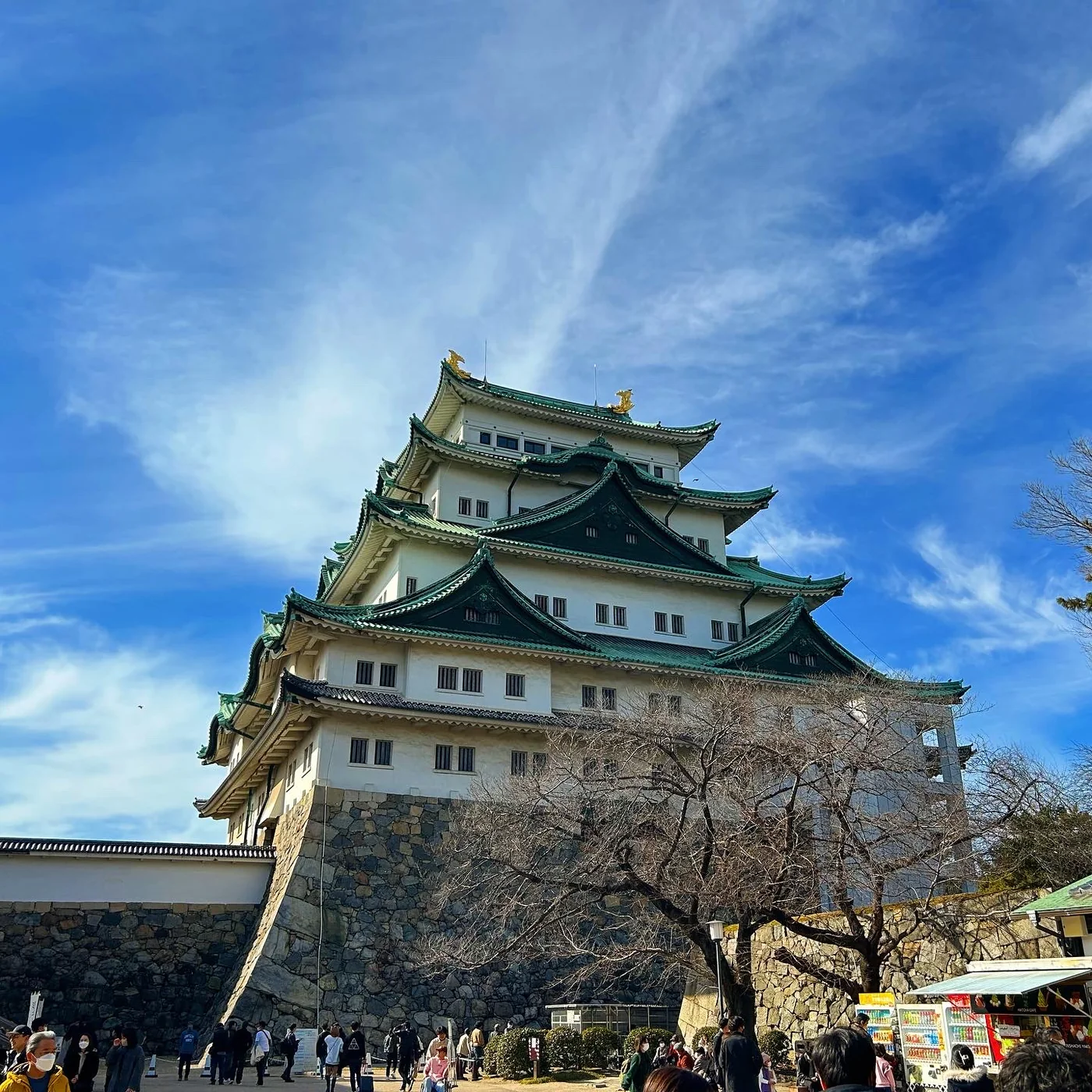
If you are catching the Shinkansen or Aonami Line from Nagoya Station the next morning, stay at Meieki (Nagoya Station). If your itinerary centres on Nagoya Castle, museums, and Osu, and you want to shop and dine in the city centre at night, pick Sakae. If you are flying in and out of Chubu Centrair International Airport and heading to Atsuta or the Port of Nagoya during the day, look at Kanayama first. When travelling with a pushchair or four large suitcases, pull up the hotel's official lift access route alongside the actual bed count before booking—those two details often matter far more to a smooth stay than walking minutes on a map.
Start with your two luggage-heavy days to pick an area
List your arrival point, the station where you alight entering the city, and the first train you need to catch after checking out side by side. Arriving in Nagoya by Shinkansen from Tokyo and taking the Aonami Line to Kinjo-futo the next morning puts both your luggage-hauling and time-critical legs squarely at Nagoya Station (Meieki). Flying in and out of Chubu Centrair Airport while visiting Atsuta Jingu Shrine or Nagoya Port by day makes Kanayama ideal, as it links the airport railway and city lines at a single hub. If you only pass through Nagoya Station on your first and last days and spend the rest of the trip around Sakae, Osu, and Meijo Park, your daily routine will revolve around Sakae's subway lines and walkable streets.
A two-night stay is easily skewed by one distant attraction. Treat a single day trip to Ghibli Park separately from your nightly subway ride back to the hotel. Pick one candidate hotel in Meieki and one in Sakae, then trace arrival, returning to the room at night, and check-out in sequence. Measure arrival all the way to the reception desk, and departure all the way to the right platform. Shaving off one subway stop rarely compensates for having to haul bags up a flight of stairs on your way back each evening.
If you have an early reserved-seat train, someone in your group walks slowly, or you arrive late at night, prioritise making that transition effortless. Only when two adults are travelling light with cabin bags and sticking to a single neighbourhood each day can you afford to let dinner spots or room styling decide where you stay.
| Area | Best-suited itinerary | Map to check before booking |
|---|---|---|
| Meieki / Nagoya Station | Early Shinkansen departures, Aonami Line, frequent intercity rail trips | JR Central station map, distinguishing between the Taiko-dori and Sakura-dori exit sides |
| Sakae | Osu, Nagoya Castle, shopping around Sakae, strolling back to the hotel after dinner | Sakae Station layout map, plus the hotel's street-level and lift routes |
| Kanayama | Chubu Centrair Airport arrivals and departures; daytime trips on JR, Meitetsu, Meijo, or Meiko lines | Meitetsu Kanayama Station map, locating the South or North exit and hotel entrance |
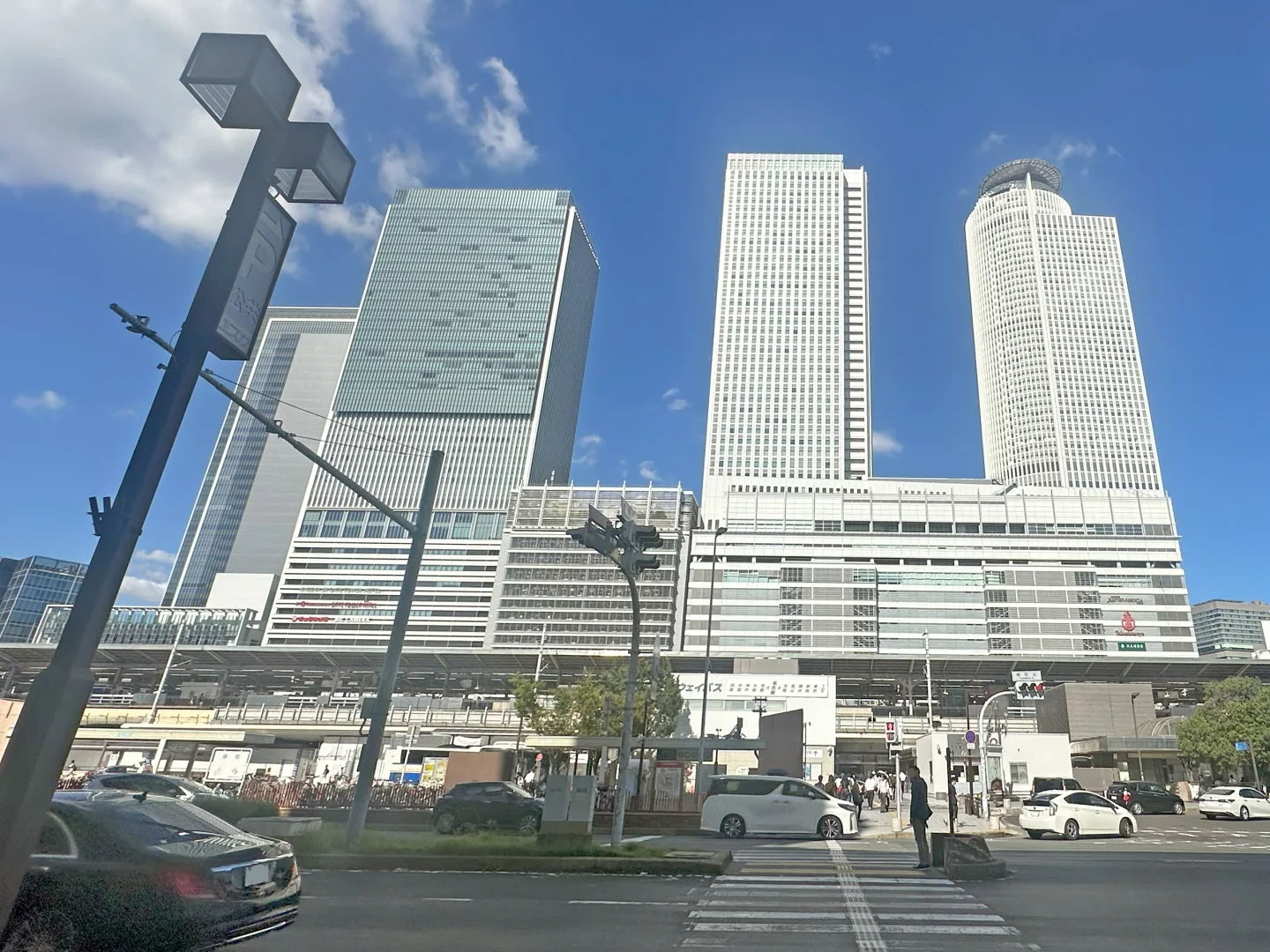
Deciding between Nagoya Station, Sakae, and Kanayama? Choose your base by Chubu Centrair Airport access, early Shinkansen departures, city sightseeing, and luggage, then compare triple extra-bed rooms, four-bed quads, and hotel entrances.
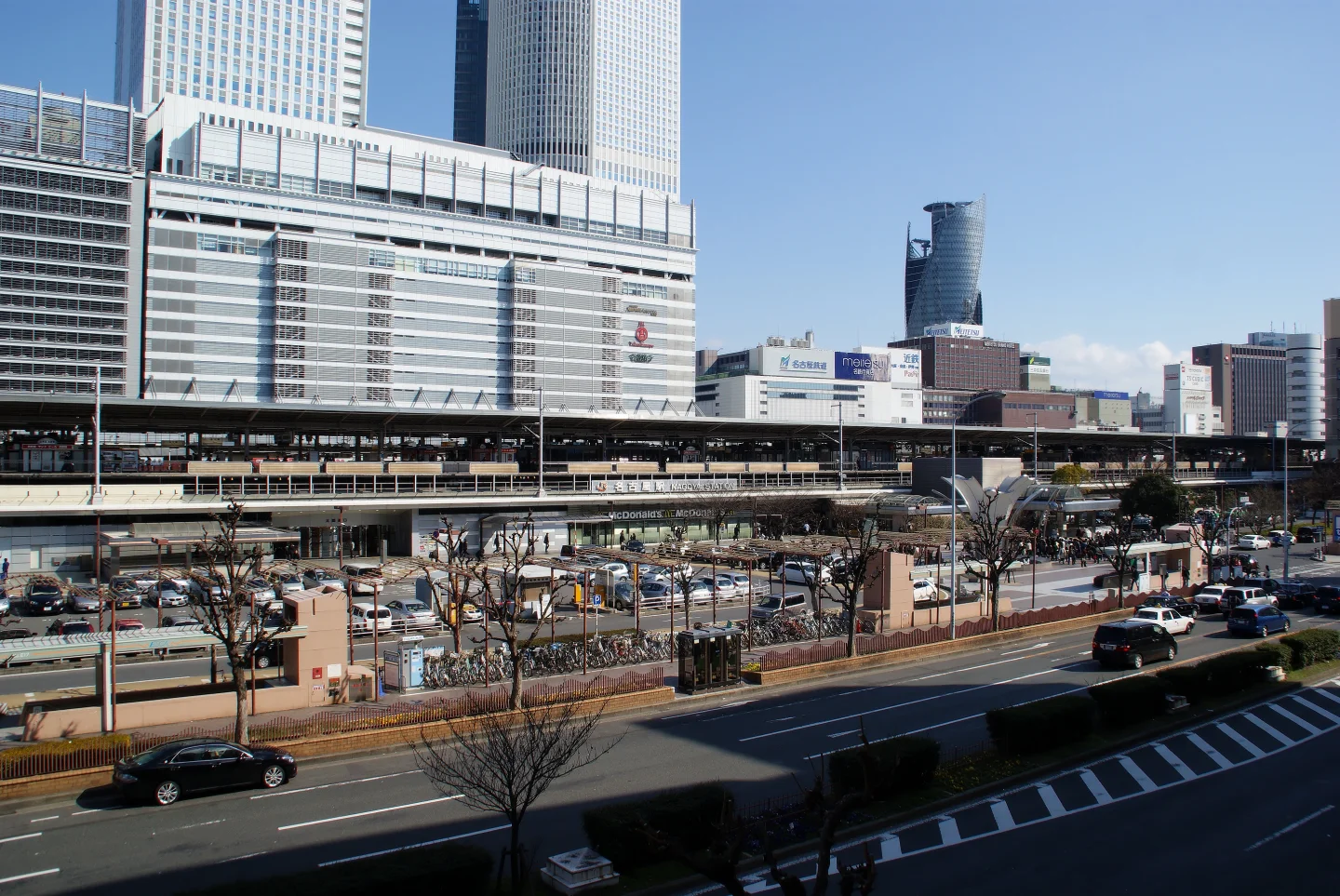
At Nagoya Station, split east from west before booking
What booking sites label 'near Nagoya Station' can refer to several different rail operators. On JR Nagoya Station, the Sakura-dori Exit sits on the tower and department-store side (east), while the Taiko-dori Exit faces the Shinkansen side (west). Meitetsu and Kintetsu each have their own Nagoya stations and ticket gates. If you arrive on the Meitetsu line from Chubu Centrair Airport and your hotel states it is five minutes from the JR Central Gate, trace the walk from the Meitetsu exit through to the JR concourse first. Coming in on the Shinkansen from Shin-Osaka, a hotel on the west side saves steps on arrival; the next morning, though, walking from that same hotel to Meitetsu means crossing the entire central concourse. If your flight lands at Centrair around midnight, check the last trains and taxi rank entrances for late airport arrivals before deciding between Meieki and Kanayama.
Heading out from an east-side hotel to catch a morning Shinkansen, use JR Central's station map to orient yourself along the Central Concourse. The map marks the Gold Clock and Silver Clock at opposite ends—if your group splits up to grab breakfast, meeting at one of the clocks is far clearer than saying 'the main entrance of Nagoya Station'. When carrying luggage alongside Shinkansen and local rail tickets, check whether you will enter via the street-level Shinkansen ticket gates or transfer inside the JR conventional lines paid area. Using both types of gates casually as a rendezvous point often leaves people stranded on opposite sides of the ticket barriers.
Staying one night on the west side before heading straight to Tokyo or Kansai the next morning lets you dine nearby and wheel suitcases directly to the Shinkansen gates. Staying multiple nights on the east side keeps your airport transfers and routes into Sakae starting from the same side. What really separates the two sides is which entrance you will use, whether there are stairs, and whether you end up on different floor levels. Check the hotel's access diagram to see which street its front door actually faces—especially for large shopping complexes, mixed-use towers, and business hotels with multiple entrances.
Station-integrated hotels have vertical commutes too: JR Gate Tower's reception is on the 15th floor
Nagoya JR Gate Tower Hotel occupies JR Gate Tower, where you take a shuttle lift from the 1st or 2nd floor up to the 15th floor to check in. Its official access guide directs arrivals from JR conventional lines via the Central North Gate, arrivals from Meitetsu via the exit-only Central Ticket Gate, and Shinkansen passengers towards the Sakura-dori Exit and Higashiyama Subway Line. Save both the hotel's full name and 'JR Gate Tower 15F' in your notes. Guest rooms on the upper floors are separated from the 15th-floor lobby, so always meet at reception if arriving separately. If you plan to eat at the station before heading to your room, our guide to the four routes through Nagoya Station's underground shopping arcades breaks down the paths by railway operator.
A family of three needing three proper sleeping spots should look at the 37 sq m Deluxe Corner Twin. The room has two fixed 110 x 203 cm beds, and for three guests the hotel sets up the window-side sofa as a 90 x 190 cm third bed. Enter three guests accurately when searching. If you want to push the two main beds together when travelling with a young child, request a Hollywood Twin configuration. Those bringing a large pushchair or needing to check on a child by the window at night should inspect the floor plan and photos showing the sofa bed folded out.
Read the hotel FAQ's child policy word for word. Children not yet of primary-school age may share an existing bed free of charge, limited to one child per standard bed. Complimentary cots are available for children under two, though this property restricts cot use to Deluxe Corner Twin bookings for one or two guests. If you are travelling with a baby plus a third adult who needs their own bed, search separately for 'three guests needing beds' versus 'cot required'. Even if one parent plans to share a bed with a child, enter the child's exact age at search so the booking engine applies the right occupancy rules.
For early trains by the Taiko-dori Exit: VIA INN offers two differently sized twin rooms
According to VIA INN Nagoya Shinkansen-guchi's access page, the hotel is roughly a five-minute walk from the JR Taiko-dori Exit and about eight minutes from Meitetsu Nagoya Exit 12. Leaving the hotel in the morning, walking back to the Taiko-dori Exit puts you right by the Shinkansen. If you arrive on the Meitetsu airport train the night before, save the street-level walking route from Meitetsu Exit 12 in advance. Should you want to cut down on outdoor blocks after a midnight arrival, compare it with hotels directly connected to Nagoya Station. VIA INN's official FAQ notes that the main entrance locks between 01:00 and 06:00 JST, with checked-in guests using their room keycard to enter; if you arrive during those hours on your first night, contact reception ahead of time.
If two adults each have a large suitcase to unpack and repack on the same night, compare the room layouts carefully: the Economy Twin measures 14 sq m with 100 x 195 cm beds and a compact unit bathroom. The standard Twin adds four square metres, separates the bathroom from the toilet, and has a shoes-off entry area. For a single night where suitcases stay mostly zipped until morning, the Economy Twin is worth considering for price. If one person needs to wash up while the other finishes packing, the extra floor space and separate bath and toilet in the standard Twin make a noticeable difference.
Three guests can book the 25 sq m Family Twin, where an extra bed provides the third sleeping spot. Groups booking two twin rooms should note the hotel states there is only one Economy Twin and one standard Twin per floor, meaning two rooms of the same category will not necessarily be next to each other. Parents who need to keep an eye across two rooms should pick a hotel with guaranteed connecting rooms or message reception in advance to confirm how adults and children will be split. VIA INN holds left luggage on both check-in and check-out days, handy if you plan to explore for half a day after checking out before catching your Shinkansen.
Sakae shines after dark, and Exit 12 suits travellers happy with stairs
When your daytime plans cover Osu, Nagoya Castle, or stops along the Higashiyama Line, and you want to dine around Hisaya-odori and Oasis 21 at night, staying in Sakae keeps your evenings firmly in the city centre. Nagoya Tokyu Hotel sits south-east of Sakae Station; its official shortest route uses Exit 12 up a flight of stairs, taking around five minutes. On the Higashiyama Line, head out the East Ticket Gate; on the Meijo Line, follow the hotel's walking map via the South Ticket Gate. Once at street level, walk along Hirokoji-dori and turn towards the hotel near the Naka Ward Office.
With heavy luggage or a pushchair, switch to the hotel's step-free routes instead. From the East Ticket Gate, routing via either the Chunichi Building or Oasis 21 takes roughly ten minutes. Note that the Chunichi Building route closes on facility closed days and from 00:00 to 05:15 JST, while the Oasis 21 route closes from 23:00 to 06:00 JST. Save the lift locations and road crossings shown on the hotel map before you travel. Depending on your direction of travel on the Meijo Line, platform lifts connect differently to the Higashiyama Line and ticket gates, so check the Nagoya City Transportation Bureau's Sakae Station layout beforehand.
When shortlisting hotels, compare the exact route you will actually be able to use. Two adults able to carry suitcases up stairs can breeze through Exit 12 in minutes. If you are travelling with older relatives and a pushchair on a late arrival, that daytime shortest route will not help—compare Sakae against Kanayama South Exit or a station-connected hotel at Meieki for that night. Once booked in Sakae, decide your city transfer route after clearing airport customs based on the train times still running, using the hotel access map and station diagram to verify lift operating hours.
Booking in Sakae also lets you plan your walk home after dinner. If you expect to eat late around Osu, check the walking map back to the hotel door to see whether walking from Yabacho or emerging at Sakae Station is smoother. For post-midnight arrivals wanting to drop bags and grab a late supper, remember that street-level restaurants near the hotel keep entirely different hours from station-connected shopping malls—check opening times for the specific spots you intend to visit.
At the same Sakae hotel, Twin A and Twin B sleep guests differently
At Nagoya Tokyu Hotel, the Standard Twin A measures 29.7 sq m and accommodates up to three guests using an existing 90 cm sofa bed. The Twin B measures 31.5 sq m and fits up to four guests by adding two 90 cm extra beds. Double-check whether a listing is Twin A or Twin B on the final booking page, especially when third-party platforms only label both as a 'Standard Twin'. The hotel's room specifications also permit up to two pre-school children per room sharing existing beds in both Twin A and Twin B. If children require their own beds, search using the true count of bed-occupying guests; for four adults, search for four adults on your exact dates from the start.
Even when four guests each get a bed, decide whether having two people on standard beds and two on extra beds works for your group. If all four adults want identical mattress width and firmness, compare this against the Family Quad in Kanayama. Alternatively, weigh up two separate twin rooms based on your group's habits: early risers and night owls can split up, and nobody queues for the bathroom. Where one adult is looking after two children, never enter a child as sleeping solo in a separate room just to game a cheaper rate—arrange rooms according to how adults and children will genuinely sleep.
Fushimi fills the gap when neither Meieki nor Sakae quite fits
If your daytime plans include the Nagoya City Science Museum and Osu alongside morning or evening passes through Nagoya Station, shift your map search one stop west of Sakae to Fushimi. Fushimi sits at the interchange of the Higashiyama and Tsurumai lines—one stop to Nagoya Station or Sakae on the Higashiyama Line, and one stop to Osu Kannon on the Tsurumai Line—making it a handy two-night compromise in central Nagoya. If your first evening consists of a single show and dinner, pick a hotel within walking distance of the venue to avoid going back down into the subway at night. If you catch an early Shinkansen the next morning, let your luggage load decide between one subway stop or staying directly on the west side of Meieki.
Daiwa Roynet Hotel Nagoya Fushimi is a useful benchmark for rooms in this district. Its current access page puts it about a two-minute walk from Fushimi Station Exit 6. The Deluxe Twin spans 24.11 to 26.16 sq m with two 110 x 195 cm beds and adds an extra bed for a third guest. Its bath and toilet are in separate rooms, and the room specification confirms a cot can be placed inside. Because two adults with a baby and three adults with a baby are treated as distinct occupancy combinations, send the hotel the floor plan when asking how the furniture will fit.
This room type has a clear role: when you want a separate bath and toilet and your itinerary stays west of the Meijo Line, compare it directly against Sakae's Twin A. If you will keep your pushchair folded until reaching the room, check the street-level route out of Exit 6 ahead of time. And if you are dining on the east side of Sakae on a night when heavy rain is forecast, comparing the walk from hotel door to restaurant will tell you more than comparing square metres.
Kanayama's real edge is cutting out one rail transfer
Taking the Meitetsu train into the city from Chubu Centrair Airport, Kanayama comes before Meitetsu Nagoya. Check the day's Meitetsu timetable from Central Japan International Airport Station and pick a service that stops at Kanayama. Kanayama General Station brings together JR, Meitetsu, and the subway: hop on the Meijo Line for Sakae, or the Meiko Line straight to Port of Nagoya. Once you have dropped your bags, you can even ride the subway back to Kanayama after an evening in Sakae without having to drag suitcases through Meieki's underground passages.
Save the Meitetsu and JR station layout separately from the subway Kanayama Station exit map. Coming up from the subway, follow signs into the general station concourse for JR and Meitetsu; the city transport map places city buses to the north of the subway station and JR and Meitetsu to the south. Airport arrivals booked into ANA Crowne Plaza Hotel Grand Court Nagoya should exit the Meitetsu gates and follow signs for the general station's South Exit—Nagoya's barrier-free guide clocks that connection at roughly one minute. Spotting the South Exit first, then the hotel entrance, saves looping around both station plazas.
If you are taking the Shinkansen, Aonami Line, or highway buses from Nagoya Station on several consecutive days, staying in Kanayama adds an extra shuttle hop every morning—in that case, stay right by Meieki. Where your trip only involves a single departure from Nagoya Station, Kanayama's strongest card remains your flight days: seamless on arrival from the airport and seamless going back, with subway lines fanning out across the city in between. Factor in transport, walking routes, and room layouts before comparing room rates.
For four proper beds in one room, check the Family Quad in Kanayama
At ANA Crowne Plaza Hotel Grand Court Nagoya, the Family Quad measures 42 sq m on corner units of the 17th and 18th floors, fitted with four 85 cm-wide beds arranged in two Hollywood Twin pairs. Families wanting everyone in one room to keep an eye on children can see the exact layout and spacing of all four mattresses. Four adults who prefer wider beds should compare the price of booking two twin rooms instead. On the same room page, the standard Twin is 34 sq m with 120 cm-wide beds, giving two separate rooms with a bathroom each—handy if half the group needs to head out early.
Travelling with older relatives, check another category on the same floor: the hotel also lists an Accessible Twin at 34 sq m on the 17th or 18th floor with 103 cm-wide beds. Accessible rooms and quad rooms serve different needs. If mobility aids must stay beside the bed, contact the hotel with the floor plan to check bedside clearance; larger groups can pair an Accessible Twin with a standard Twin. Nagoya's official barrier-free guide also details step-free entrances, ramps, and accessible toilets on site—worth reading alongside the hotel's room page.
While emailing that hotel, check whether you can forward luggage ahead of arrival. Its official FAQ states regular suitcases may be sent in advance if you contact the property beforehand, excluding valuables, tableware, and hazardous items. If shipping bags from an earlier hotel, ensure the booking name matches your check-in details, and keep one night's medication, glasses, and baby essentials in your daypack. If you plan to visit Atsuta after checking out before flying home, note when you will swing back for your bags so you do not pass through the same station twice unnecessarily.
Kanayama's East Exit has three fixed beds and connecting twins
Comfort Hotel Nagoya Kanayama puts its entrance right beside the Meitetsu Kanayama Station East Exit, listed officially as roughly a one-minute walk. Note that it sits on a different side of the station from ANA Crowne Plaza at the South Exit. Coming up from the subway, orient yourself in the main concourse first, then follow Comfort Hotel's access map to meet on the east side. If you have a pushchair, do not assume that 'one minute' applies from every platform—pinpoint your arrival platform and working lifts before estimating the walk.
Comfort's Family Room is 28 sq m and officially lists three 120 cm-wide beds. If three adults all want equal-width mattresses or want to avoid fold-out sofa beds, check this room first. By comparison, JR Gate Tower's 37 sq m room gives two guests standard beds and puts the third on a sofa bed; weigh up how each person will sleep and whether suitcases will block the window area. Whether all three travellers need to open large cases flat on the floor or are only packing overnight bags will also tip the balance.
Comfort's website also offers a Connecting Room pairing two twin rooms via an internal door, with each room housing 120 cm beds. This suits four guests who want to head out together in the morning but sleep across two separate rooms. Whereas Kanayama's ANA Family Quad puts four people in one room—great for two adults and two young children—Comfort's setup separates sleeping spaces cleanly. Groups of six should ask the property directly about exact occupancy limits for connecting rooms rather than guessing from bed counts and child bed-sharing rules.
Arriving late in Nagoya: check trains against baggage claim time
Before looking up the last train, be clear whether your timestamp is touchdown, collecting checked bags, or standing at the Meitetsu ticket gates. Meitetsu Central Japan International Airport Station connects directly into Access Plaza. Passengers arriving at Terminal 2 must first reach the station; the airport's official rail access route runs through the P1 car park walkway and takes about seven minutes on foot, alongside an inter-terminal shuttle bus. Add extra buffer for walking out of arrivals, toilet stops with children, and buying tickets.
If you are bound for Sakae, remember you still have to clear the subway ticket gates after alighting from Meitetsu in the city, so work backwards from the last subway departure. Picking Nagoya Station or Kanayama keeps you on a single airport train right to your hotel's station, leaving only a short walk from platform to reception. Check Meitetsu's official timetable for your exact travel date, and where train types sound similar, verify the full destination and stopping pattern. All-reserved μ-SKY trains require a μticket supplement; on mixed trains with both regular and first-class cars, sitting in the reserved car also requires paying the extra fare.
If a flight delay costs you your planned connection, check how far the remaining trains still run, update your alighting station, and decide whether to walk or take a taxi for the final stretch. If your hotel room is already prepaid, notify the property with the booking name, revised ETA, and actual headcount. Give exact dimensions for any pushchair or mobility aid if booking a transfer; even on short rides, folding equipment and waiting at the kerb eat into late-night arrival time.
If you have the first flight out the next morning—or close to it—run the calculation in reverse. Start from your airline's check-in deadline and count backwards through terminal walking time, station transfer, train wait, hotel check-out, and gathering the group. When the first morning train from central Nagoya reaches the airport too late, spend your final night on the airport island itself and shift the city-to-airport journey to the previous evening. Airport hotel approaches still split between Access Plaza and Terminal 2, so match your choice to the terminal you depart from.
For pre-dawn check-ins, put airport island hotels on your map too
Chubu Centrair International Airport's website lists several hotels right on the airport island. Centrair Hotel connects directly to Access Plaza, which also links straight to Terminal 1 via a gentle indoor ramp. Staying here lets you bring your Meitetsu ride out of the city forward to your final afternoon or evening, leaving flight morning solely for walking to check-in and bag drop. The airport accommodation page lists other on-island hotels as well—if prices differ sharply, compare each property's walking route. With large suitcases and a pre-dawn start, check which stretches are indoors and which cross open air.
Departing from Terminal 2, on-island guests still need to walk the inter-terminal walkway or catch the morning shuttle bus. Check when your airline's check-in desks open, then map the complete path using the airport's access page. Exiting Meitetsu for a seven-minute walk, stepping out of a hotel lobby, and locating your check-in counter inside the terminal all start from different points. An airport hotel spares you waiting for the first morning train, but you must still budget time to reach the right terminal.
Conversely, if you have an evening flight home and a full day of activities booked, keeping your final night in the city usually works better. Check out in Sakae, spend the day around Osu before collecting your bags, or visit Atsuta from Kanayama and return to the same station, saving souvenir shopping for one fixed stop in the city or before airport check-in. If friends or relatives are flying out of different terminals, meet at Access Plaza before splitting up so each group can time their walk separately.
Which day you schedule day trips changes the right hotel base
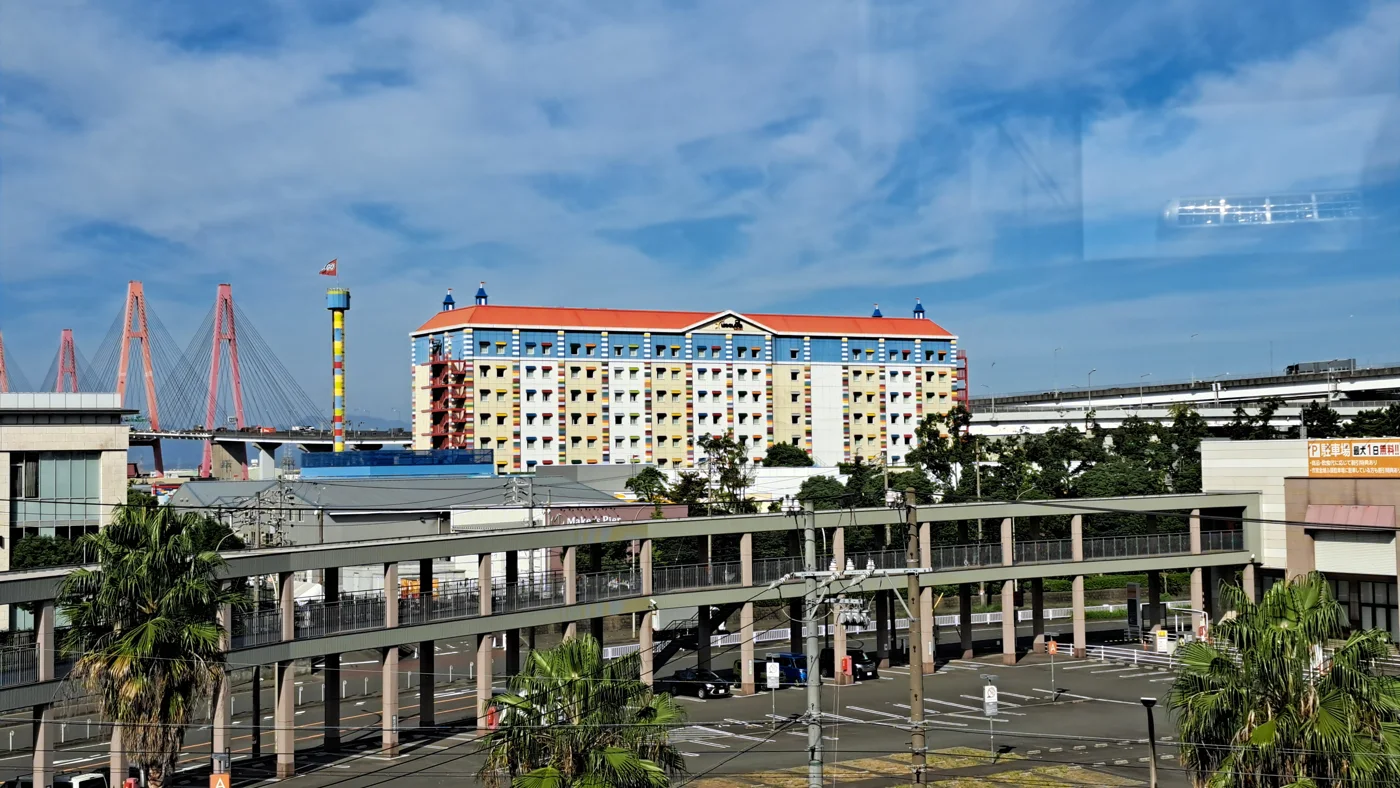
LEGOLAND Japan and the SCMAGLEV and Railway Park both sit at Kinjo-futo. If you are staying two nights in Nagoya and devoting one full day to LEGOLAND, riding the Aonami Line out from Nagoya Station and returning to the city for dinner keeps both nights' luggage in one hotel. If you are spending two days in the park and want to pop back to your room for an afternoon break, shortlist a hotel at Kinjo-futo itself. Our guide to LEGOLAND family stays in Nagoya compares the LEGOLAND Hotel, station access, and family bed setups in full.
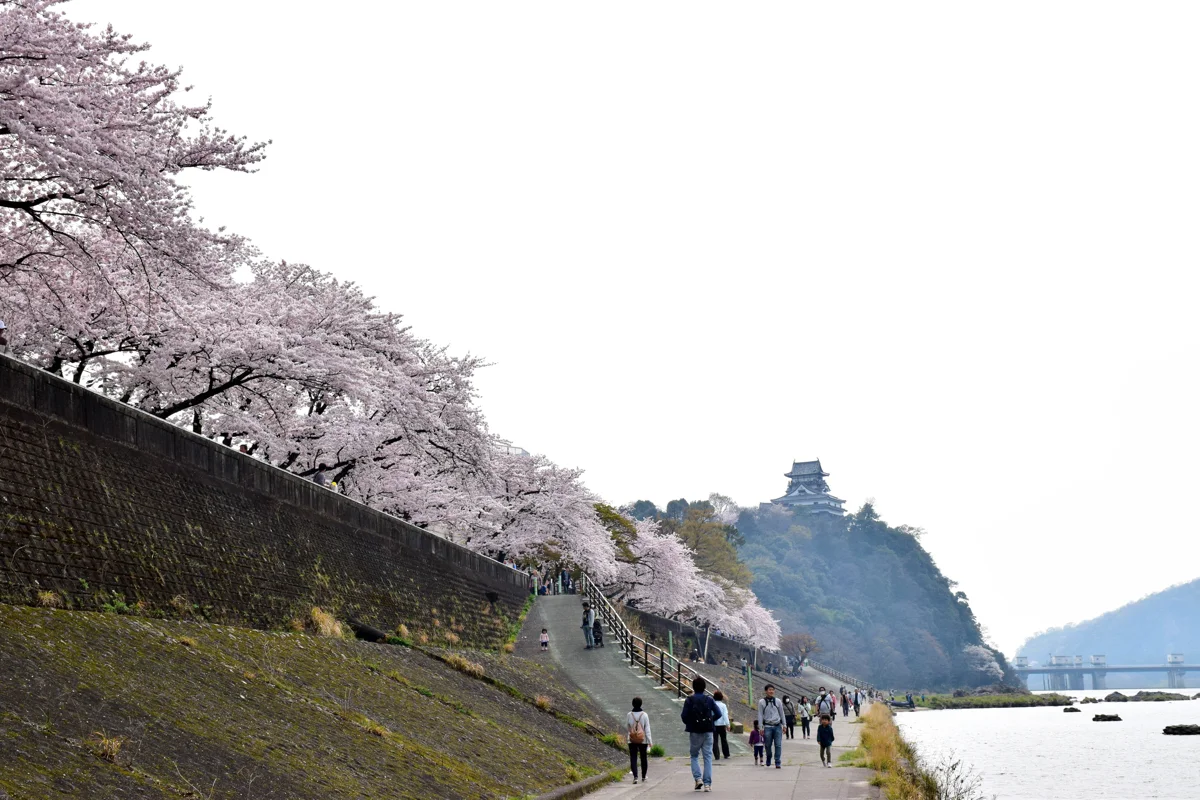
For Inuyama, decide upfront between a day trip and staying overnight for quiet morning walks through the castle town and evening views along the Kiso River. On a day trip, leave your suitcases at your Nagoya hotel; if sleeping over in Inuyama, travel light with an overnight bag and either forward large cases under both hotels' luggage policies or take them straight to your next room. See our Inuyama accommodation comparison for the differences between staying by Inuyama Station, in the castle town, or along the Kiso River.
Where your itinerary includes a half-day or full-day trip to Gifu or Ise, write down the exact rail company and departure station first. Walking from your hotel to the Kintetsu Nagoya gates takes a different path from reaching the JR Shinkansen gates. If there is only one early departure in the entire trip, anchor your hotel so you leave on time that morning. If you have two early starts in a row, staying near the departure station saves an extra morning transfer—and placing day trips in the middle of the itinerary leaves your arrival and departure days freer for managing luggage.
One night, two nights, or four: when switching hotels makes sense
For a single night, match the hotel to the next morning's departure. Landing at Centrair on Friday night before taking an early Saturday Shinkansen to Tokyo, ride Meitetsu into Nagoya Station and sleep at Meieki. If you arrive Friday evening, stick to Atsuta and Osu on Saturday, and fly home late that night, Kanayama works neatly as a single-day luggage anchor—just confirm bag collection hours with reception and leave time to swing back before heading to the airport.
For two nights, staying put in one hotel is almost always easiest. Arriving at Nagoya Station on Friday, taking a Saturday day trip, and strolling around Sakae on Sunday morning is far simpler from Meieki than spending Saturday afternoon checking out and moving rooms. The alternative is heading straight into Sakae on Friday, doing Nagoya Castle and Osu on Saturday, and enjoying Sunday morning coffee in Sakae—trading one suitcase haul back to Nagoya Station on Sunday for walking straight to your room all weekend. When comparing costs, include both directions of that extra local transit.
Stays of four nights or longer warrant splitting only with a clear logistical reason: spending earlier nights in Sakae before moving to the airport for an early flight, or switching to the Shinkansen side on your final night before an early departure for Kansai. Map out the dead hours on hotel-change day—decide where bags go in the morning before planning distant sightseeing. If two hotels in the same district differ only slightly in price, put packing, check-out, dropping bags at the new desk, and evening check-in on the same timeline before deciding whether the saving is worthwhile.
Compare room rates down to the final page to verify you are pricing the same room
Compare every shortlisted hotel using the exact same dates. Enter the true number of adults, children, and children's ages, and check first whether you are actually getting the same sleeping arrangement. Keep rates with 'child bed-sharing' separate from rates that give every person their own bed. Two four-person offers—one putting two guests on standard beds and two on fold-out beds, the other offering four narrower fixed beds—deliver very different nights' sleep. Note whether breakfast is included and what children's breakfast will cost at check-in before comparing totals.
On the final booking page, check free cancellation deadlines and payment timing against the same cut-off day. If your first night depends on an international flight landing on schedule, keep flexible-cancellation rates in the mix. For multi-night stays where a room type is sold out on one middle night, swap to an equivalent hotel in the same area before considering splitting into two different room categories. Splitting bookings eats into your afternoon unless the hotel confirms you can remain in the exact same physical room without repacking.
Family rooms only click into place once everyone's sleeping arrangement is settled. If children normally sleep beside a parent, check Hollywood Twin bed-pushing and bed-guard availability; if a light-sleeping adult needs an undisturbed single bed, never rely on 'sleeps 4' without checking the bed count. For accessible rooms, evaluate the approach into the hotel alongside the bathroom itself—lift access from the street, bathroom door width, and bedside space all matter. When prices are close, pick the room that solves both sleeping and bathing cleanly for your entire night.
Save two route cards before check-in so you can walk straight out after check-out
Put the first route card in your arrival-day notes, listing just the railway operator, station, exit name, and reception floor. For JR Gate Tower, write 'Meitetsu Nagoya / Central Ticket Gate / JR Gate Tower 15F'; for Nagoya Tokyu Hotel in Sakae, note whether you are taking Exit 12 or the lift route that night; for ANA Crowne Plaza in Kanayama, save 'Kanayama General Station South Exit'. Give every person in your group a copy so anyone separated during a transfer can reunite at the exact same landmark.
Put your check-out direction and luggage plan on the second card. Follow Aonami Line signs if bound for Kinjo-futo, allow buffer to reach the right Shinkansen gates, or verify the day's airport trains and stops if returning via Kanayama. Once your base is locked in, see our two-day Nagoya itinerary to order Osu, Atsuta, and your day trips around the station you picked.
A few useful answers
For a first visit to Nagoya, should I stay at Nagoya Station or Sakae?
Nagoya Station (Meieki) works best for early Shinkansen departures, the Aonami Line, and frequent day trips. Sakae suits two-night city-centre stays focused on shopping and dining around Hisaya-odori and Sakae at night. If you are using Chubu Centrair Airport and visiting Atsuta and Nagoya Port, Kanayama is also worth checking first.
If I stay in Kanayama, do I need to change trains at Nagoya Station to reach Chubu Centrair Airport?
No—Kanayama has direct Meitetsu trains to Chubu Centrair International Airport. Check the day's timetable for services terminating at or stopping at Central Japan International Airport, and verify whether your chosen carriage requires a μticket supplement.
Which exit at Sakae Station is closest to Nagoya Tokyu Hotel?
The hotel's official guide directs guests to Exit 12, roughly a five-minute walk away via stairs. Travellers with pushchairs, wheelchairs, or large suitcases should use the hotel's step-free routes via the Chunichi Building or Oasis 21 lifts, checking their respective opening hours.
How many beds are in a triple room at Nagoya JR Gate Tower Hotel?
The 37 sq m Deluxe Corner Twin keeps two 110 x 203 cm standard beds and converts the window-side sofa into a third bed for three-guest bookings. Check-in is on the 15th floor of JR Gate Tower.
Can four guests share one room in Nagoya and each have their own bed?
Yes. The Family Quad at ANA Crowne Plaza Hotel Grand Court Nagoya in Kanayama has four 85 cm-wide beds arranged in pairs, while Nagoya Tokyu Hotel's Standard Twin B in Sakae sleeps four using two standard beds plus two extra beds. If four adults want wider standard beds, book two twin rooms instead.
Official information and references
Sources used in this guide.
- Chubu Centrair International Airport | Rail Access, Access Plaza & Special Car Tickets
- Chubu Centrair International Airport | Terminal 2 Walking Route & Shuttle
- Meitetsu (Nagoya Railroad) | Chubu Centrair, Meitetsu Nagoya & Kanayama Station Maps
- Meitetsu (Nagoya Railroad) | Departures from Kanayama & Airport-bound Timetable
- JR Central | Nagoya Station Layout Map
- Nagoya City Transportation Bureau | Sakae Station Layout Map & Lifts
- Nagoya City Transportation Bureau | Kanayama Station Platforms & Directions
- Nagoya JR Gate Tower Hotel | Station Access to 15F Reception
- Nagoya JR Gate Tower Hotel | Deluxe Corner Twin & Sofa Bed
- Nagoya JR Gate Tower Hotel | Child Bed-Sharing, Cots & Left Luggage FAQ
- Nagoya Tokyu Hotel | Shortest & Step-Free Lift Routes from Sakae Station
- Nagoya Tokyu Hotel | Standard Twin A & B Room Types
- ANA Crowne Plaza Hotel Grand Court Nagoya | Family Quad & Accessible Twin
- ANA Crowne Plaza Hotel Grand Court Nagoya | Advance Luggage Delivery FAQ
- Nagoya City Barrier-Free Guide | Kanayama South Exit & ANA Hotel Facilities
- Aonami Line | Kinjo-futo Station
- VIA INN Nagoya Shinkansen-guchi | Taiko-dori Exit & Rail Operator Access
- VIA INN Nagoya Shinkansen-guchi | Twin, Family Room & Floor Areas
- VIA INN Nagoya Shinkansen-guchi | Left Luggage & Late-Night Entrance Security FAQ
- Daiwa Roynet Hotel Nagoya Fushimi | Fushimi Station Exit 6 Access
- Daiwa Roynet Hotel Nagoya Fushimi | Deluxe Twin Bed Configuration & Bathroom
- Comfort Hotel Nagoya Kanayama | Kanayama Station East Exit Access
- Comfort Hotel Nagoya Kanayama | Three-Bed Family Room & Connecting Twins
- Chubu Centrair International Airport | On-Island Hotels & Access Plaza
- Chubu Centrair International Airport | Terminal 1 Connection to Access Plaza
- Nagoya City Transportation Bureau | Fushimi, Sakae, Kanayama & Osu Kannon Route Map
- LEGOLAND Japan Resort | Aonami Line & Kinjo-futo Access