Missed the last Meitetsu train from Centrair? Use your actual customs exit time to decide between Nagoya Station, Kanayama, or Airport Island—plus how to work backward for early flights.
- Region & Focus
- Nagoya
- Reading Scope
- 18 min read · 14 chapters · 5 Q&As
- Official Verification
- 20 official sources checkedUpdated November 19, 2026
- Key Topics
- Airport transfersRail travelBooking
Chapter Route Map (tap any stop)
- Base Your Last-Train Plan on When You Clear Customs
- Both Terminal 1 and Terminal 2 Funnel Back to Access Plaza
- Price In Late-Arrival Costs Before You Book the Flight
- The Last Train to Nagoya Still Leaves a Final Mile to Your Hotel
- Airport Limousine Buses to Sakae and Fushimi Stop by Early Evening
- Where to Catch a Taxi After the Last Train
- Airport Island Stays: Full Hotel Night vs. Short-Stay Pod
- Waiting Until Dawn at the Airport: Where to Eat, Sit, and Store Bags
- Working Backward From Baggage Drop for Early Flights
- Checking the First Trains From Meitetsu Nagoya and Kanayama
- Two Sample Itineraries Compared
- Return Your Rental Car the Evening Before or Flight Morning?
- Where a Family Should Regroup and Wait
- Save Your Essentials on One Offline Screen
- Quick Q&A
If your flight lands at Chubu Centrair International Airport at night, missing the 23:31 Meitetsu train means missing the last direct ride to Meitetsu Nagoya. On arrival, plan around when you actually clear customs—not when your plane touches down. For an early-morning departure, work backward from your airline's check-in cutoff. How much buffer you have left determines whether you sleep near Nagoya Station, Kanayama, or right on Airport Island.
Base Your Last-Train Plan on When You Clear Customs
Departure times on a Meitetsu timetable assume you are already standing on the platform. Keep your flight arrival alert separate from the train schedule: after touchdown, you still have to wait for the jet bridge, let rows ahead deplane, walk to immigration, claim bags, and clear customs. Even when the baggage carousel stops, you are not at the station yet. Travelers who book late flights assuming everything wraps up 30 minutes after landing often finish reserving a hotel only to realize they still have a midnight transit problem to solve. Factor an Airport Island hotel or prebooked car into your budget before buying a cheaper late-night ticket so you know what you are actually saving.
Under the Meitetsu Airport Line timetable revised on March 14, 2026, the last direct train to Meitetsu Nagoya on both weekdays and weekends/holidays departs Central Japan International Airport Station at 23:31, arriving at Kanayama at 00:01 and Meitetsu Nagoya at 00:06. This is the final direct Limited Express—do not filter your search to μ-SKY trains only. When checking connections, enter the local Japanese date your plane actually lands; if you clear customs past midnight, you have to search the next calendar day's schedule. JR, subway lines, and other private railways all converge at Nagoya Station, so search specifically for "Meitetsu Nagoya" for this leg.
If a train around 23:00 is still realistic, make one clean decision on the ground. Clear customs on time, follow the "Trains / Meitetsu" signs, and keep your ticket, phone, and passport within easy reach. If immigration lines stall, message your hotel about a late arrival first instead of rushing to buy a reserved seat at the baggage claim. Staying near Sakae? Check post-midnight transit options in advance. That last train pulls into Meitetsu Nagoya after midnight, so you will need extra time to wait for a late subway or hail a cab outside the station.
| Scenario | Starting Point to Check | Next Leg to Factor In |
|---|---|---|
| Last direct train from airport to Meitetsu Nagoya | Departs Centrair Station at 23:31 | Arrives Kanayama 00:01, Meitetsu Nagoya 00:06; transfer to hotel or hail a taxi |
| Earliest direct train from Meitetsu Nagoya to airport | Departs Meitetsu Nagoya at 05:22 | Arrives Centrair Station at 06:06; walk to terminal and check in |
| Earliest airport bus from Sakae Oasis 21 | Departs Sakae at 06:10 | Arrives outside Terminal 2 at 07:00, Terminal 1 at 07:05; walk to check-in counters |
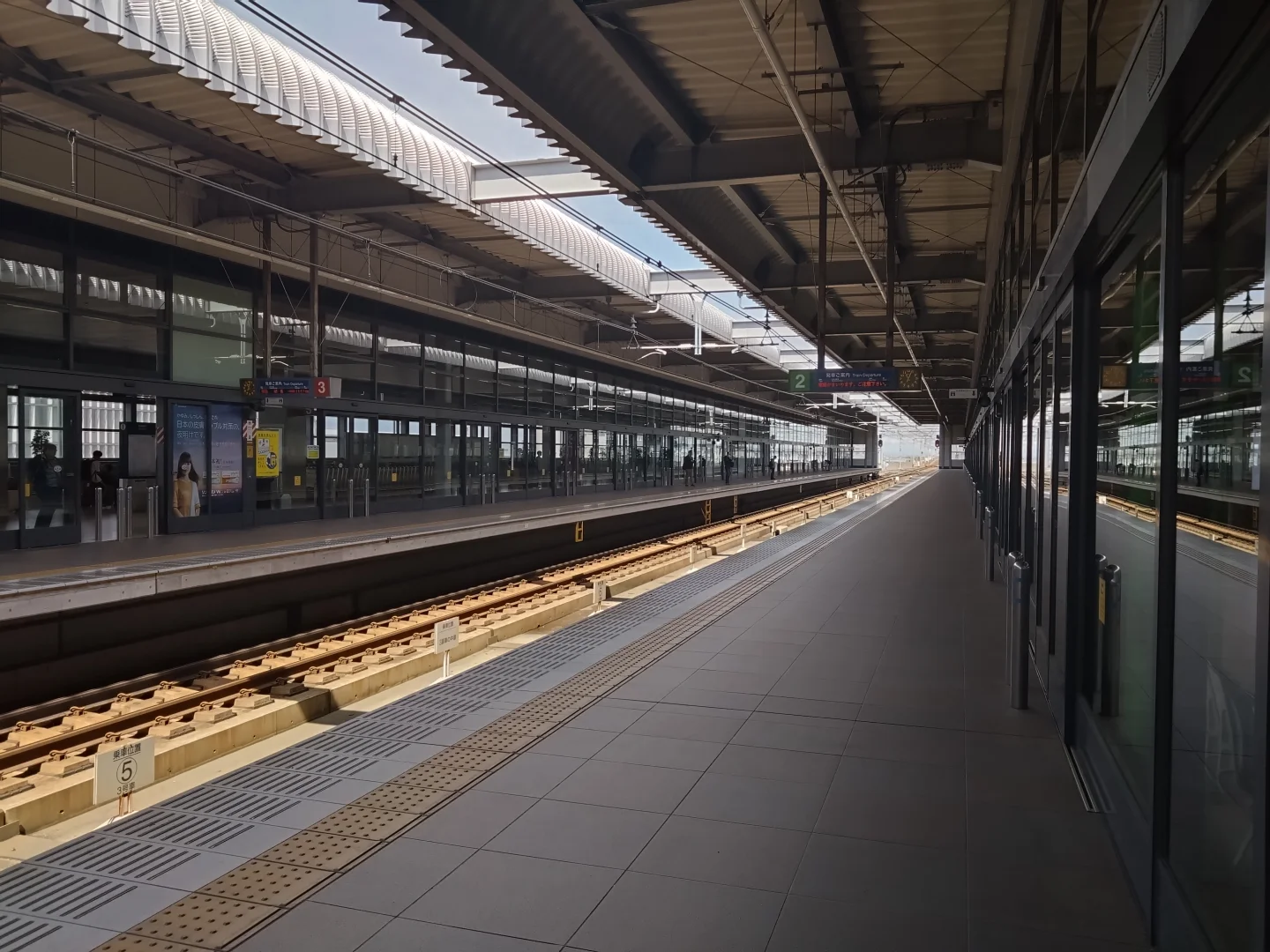
Missed the last Meitetsu train from Centrair? Use your actual customs exit time to decide between Nagoya Station, Kanayama, or Airport Island—plus how to work backward for early flights.
Both Terminal 1 and Terminal 2 Funnel Back to Access Plaza
After clearing international arrivals at Terminal 1 (T1), you exit into the second-floor arrival lobby. Follow the train signs across the connecting walkway straight into Access Plaza, where you will find the Meitetsu ticket gates and airport hotel entrances. For a first-time late arrival, save a screenshot of the Terminal 1 floor map with the second-floor walkway and station circled. If someone is picking you up at the "arrival lobby," specify both the terminal and floor—both terminals have arrival lobbies, and one wrong round-trip at night will wipe out your last-train buffer.
From the first floor of Terminal 2 (T2), the official inter-terminal walking route takes you outside and up a ramp or elevator to the second floor, then through FLIGHT OF DREAMS toward Access Plaza. Centrair estimates the walk between T1 and T2 at roughly 10 minutes, which uses different start and end points than the seven-minute route between Meitetsu Airport Station and T2 via the P1 parking walkway. If you are hauling large suitcases, pushing a stroller, or traveling with someone who needs breaks, pad your door-to-door estimate. Exiting on the ground floor makes it easy to walk outside looking for trains and miss the signs pointing up to level two.
To ride the free inter-terminal shuttle bus, board at Bus Stop 7 on the first floor of Access Plaza outbound, or from Terminal 2 on the return; the official shuttle timetable lists roughly 15-minute intervals in both directions. With less than 15 minutes until your train leaves, walking is far more predictable than waiting for the next bus. Around the station, waiting areas, bus stops, and taxi stands sit on different levels. Decide where you are heading before stepping into an elevator so you do not drag the whole group down to level one only to realize the train leaves from level two.
Price In Late-Arrival Costs Before You Book the Flight
When comparing a red-eye or late-evening fare against a daytime flight, count your hotel from the night of arrival, not the date your flight departs from home. If your itinerary says "Departs the 19th, arrives early morning the 20th" and you want a room ready the moment you step inside, you usually need to book check-in on the 19th and check-out on the 20th. Send an estimated arrival time like "01:30 on the 20th" to the front desk and wait for confirmation that they will hold the room until then. Booking check-in for the 20th typically means waiting until that afternoon to get your key. On multi-night stays, verify that missing a front-desk curfew on night one will not cancel the rest of your reservation. Checking booking emails at midnight in an airport corridor is about getting through the door—knowing the desk opens tomorrow morning does not help tonight.
If your original budget assumed one Meitetsu ticket plus one city hotel night, missing the last train triggers two distinct extra costs. Your prepaid city room may be non-refundable while you pay again to sleep on Airport Island; alternatively, getting into town the same night means quoting a taxi or car service for fares, highway tolls, oversized bags, or child passengers. Check real-time room rates for that night alongside whether your original hotel allows date changes before deciding. A larger group can split a private car, though four adults with four large suitcases rarely fit in a standard sedan. Give your exact headcount and bag count when booking so the driver does not arrive only to call a second vehicle.
There is also a hidden scheduling cost: whether you have hard deadlines the next morning. If day one is flexible—say, just Nagoya Castle, Osu, or Sakae—sleeping at the airport and heading into town the next morning works easily. If you already hold reserved Shinkansen tickets or timed entry for a day trip, save taxi pick-up spots at both the airport and your city hotel beforehand and decide which plans can flex. Our two-day Nagoya city itinerary is structured around swappable blocks, so a late touchdown never forces you to sprint to your first stop.
The Last Train to Nagoya Still Leaves a Final Mile to Your Hotel
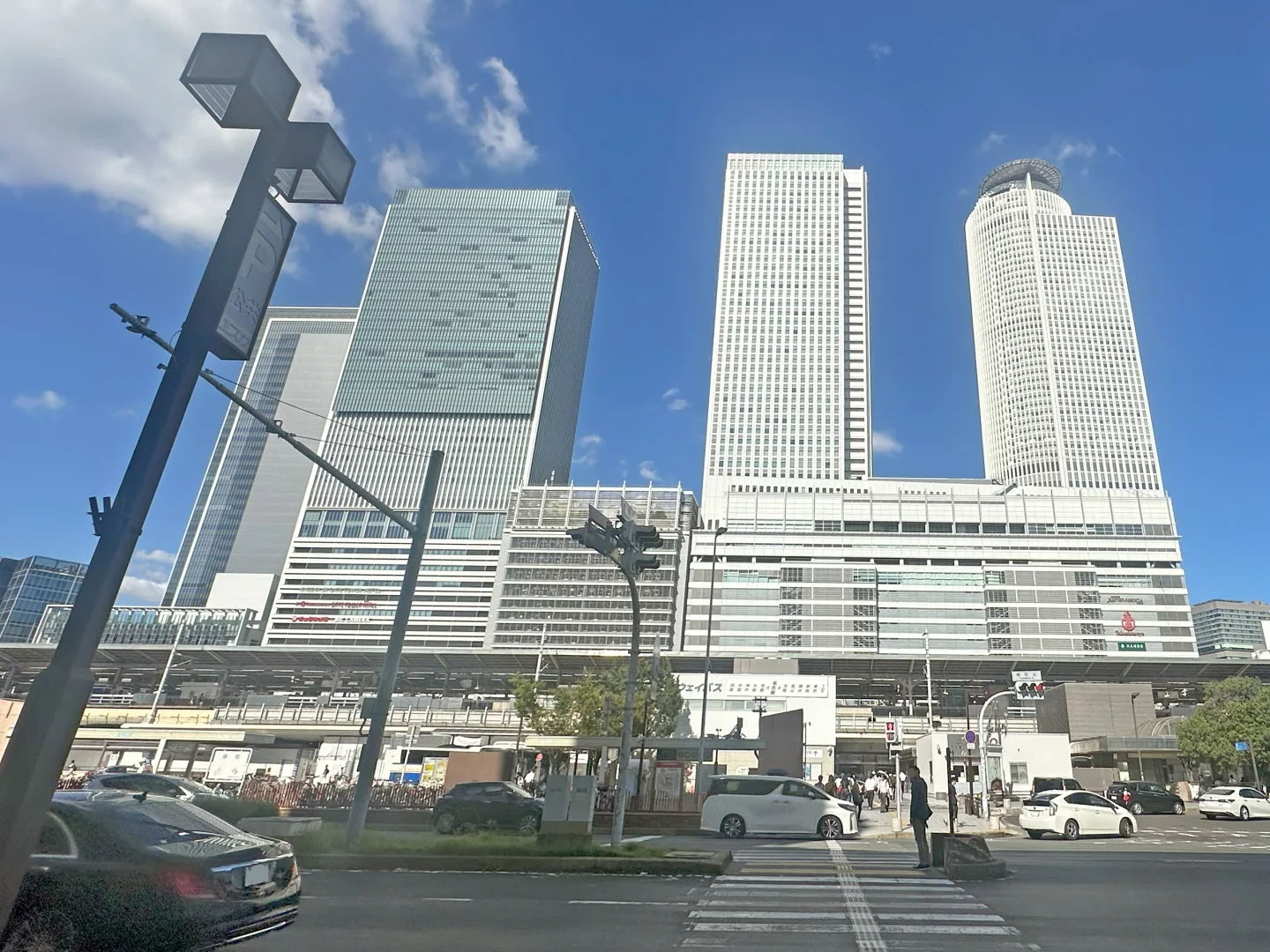
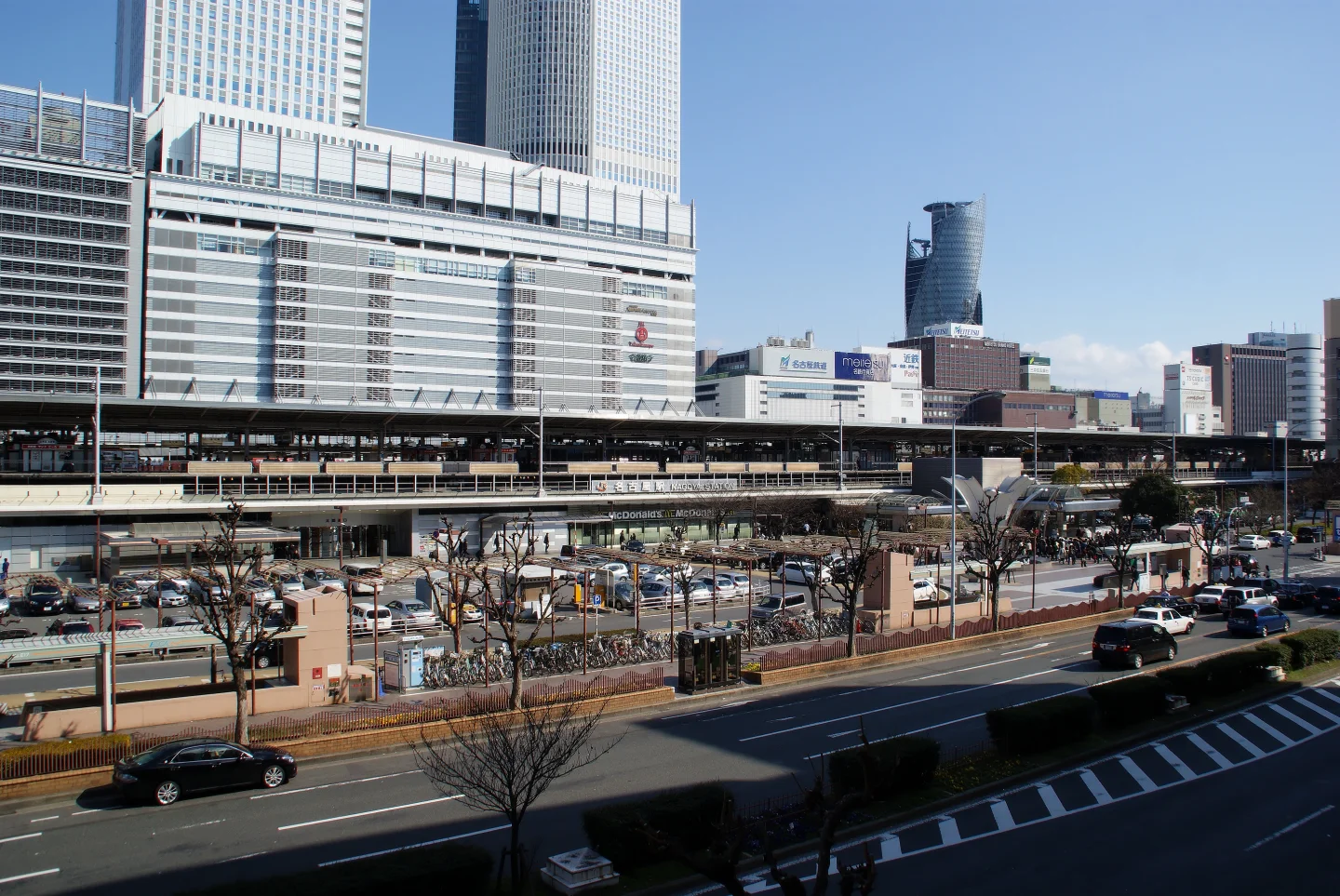
When staying near Nagoya Station, switch your map pin to street view right at the hotel entrance. Meitetsu Nagoya Station sits on the Sakura-dori side; if your hotel is on the Shinkansen side, pinning the exact doorway matters far more than memorizing a nearby department store name. Daytime routes often send you through underground shopping malls that close overnight, along with currency counters and restaurants. Save a direct street-level walking path from the station exit to the hotel door, and check whether late-night entry uses the main lobby or an intercom bell. With sleeping kids, skipping one flight of stairs at midnight beats saving a block inside the station. If you have not locked in a room yet, compare entrances and room layouts in our guide to staying in Meieki, Sakae, and Kanayama before choosing your drop-off point.
The same rule applies in Kanayama: once the train clears the airport, stop checking Nagoya Station exits and look up whether your hotel sits on the north or south side. If the last train stops at Kanayama, get off there rather than riding all the way to Nagoya Station and backtracking. Travelers staying in Sakae or Fushimi should compare taking a short taxi from Kanayama versus riding to Meitetsu Nagoya and hailing a cab there. Both options only become comparable once you know which side has an easier taxi stand, how far your group can walk, and whether your hotel desk is still staffed. On luggage-heavy nights, save the pick-up point and hotel address in Japanese in your phone notes.
When testing walking routes before you book, measure from the exact ticket gate you will use—not the generic pin dropped in the middle of Nagoya Station on a map app. Screenshot your hotel's Japanese name, street address, front-desk phone number, and confirmation code onto one image in case your battery dips or roaming stalls. If a late check-in requires a keypad code, save the hotel's reply somewhere accessible offline. Download any detailed transit maps before boarding so you can follow overhead signs on arrival instead of stopping in a corridor to hunt for Wi-Fi.
Airport Limousine Buses to Sakae and Fushimi Stop by Early Evening
According to the current Meitetsu Centrair Limousine schedule, the last bus toward Sakae and Fushimi departs Terminal 1 Bus Stop 6 at 17:40. Afternoon arrivals staying at the Nagoya Tokyu Hotel or along that corridor who want to skip subway transfers with suitcases can use the daytime runs. Passengers landing at T2 must walk to the first floor of Access Plaza rather than looking for a Sakae stop outside T2. Airport-bound buses serve both terminals, but city-bound departures start from T1—do not read the outbound stop map in reverse.
Going the other way, the earliest morning bus leaves Nagoya Kanko Hotel at 05:57, stops at Sakae Oasis 21 Stop 9 at 06:10, and reaches the curb outside Terminal 2 at 07:00 and Terminal 1 at 07:05. Remember that 07:00 is when the bus pulls up outside T2, and departure hall doors open based on that day's flight schedule. If your check-in counter closes at 07:15, even an on-time bus leaves only a few minutes—unusable if you need to queue with checked bags. For midday or afternoon departures, however, riding straight from Sakae eliminates a transfer and makes life much easier with a stroller and luggage.
Airport buses operate strictly by seat capacity, and pre-purchased tickets do not reserve a specific seat. Write down exact boarding locations, especially because "Nagoya Airport" can also refer to Prefectural Nagoya Airport (Komaki). Always search using "Chubu Centrair International Airport" or "Centrair" and match your flight's NGO code and terminal. Centrair's main bus directory also lists routes to Nagoya Station West Exit and surrounding cities, with schedules and operating days set by each carrier. If you are only heading to Sakae at night, check from your hotel's end whether you can still catch a bus; once the last departure has passed, do not haul bags out to the curb hoping for another.
Where to Catch a Taxi After the Last Train
Terminal 1 passengers should head to the taxi stand on the first floor of Access Plaza. Centrair's official taxi page notes that boarding is accessible only via Access Plaza—do not walk backward up the ground-floor drop-off lanes used by private cars. Terminal 2 has a first-floor boarding area where passengers are instructed to call one of the airport-authorized operators listed on the page with 24-hour dispatch lines. This works best if you have pre-arranged pickup, want a full night in the city, or have an early-morning meetup downtown. Give your flight number and terminal when reserving, and get written confirmation on delay hold windows and the exact meeting spot. When calling dispatch by phone, state your passenger count first, then luggage count, and finally your hotel's name and address.
The airport publishes flat-rate estimates to major city zones, but keep those separate from the actual metered or quoted total: official guidelines specify that expressway tolls—including the airport bridge—are paid separately by the passenger. If you prepay a private transfer, confirm whether tolls, late-night surcharges, flight-delay waiting time, cancellations, and terminal changes are included. Once in the cab, saying just "Nagoya Station" leaves the drop-off side up to the driver; hand over the full hotel name and entrance details so they can pull up to the door that is actually unlocked at that hour. If two travelers are weighing an Airport Island stay instead, check real-time room availability and check-in cutoffs for that night and compare how much actual sleep each option buys.
Airport Island Stays: Full Hotel Night vs. Short-Stay Pod
The closest stay right outside the train gates is Centrair Hotel. According to the official airport hotel page, its entrance sits roughly 100 meters from the Meitetsu gates along a step-free route, with a direct walkway to Terminal 1 check-in the next morning—though Terminal 2 flyers still have a separate walk ahead. Traveling with strollers, wheelchairs, or older relatives? Verify room proximity on the same floor, bathroom layout, and whether reaching the front desk requires another elevator. Even when main corridors are barrier-free, individual room layouts still vary.
Airport Island also has Comfort Hotel, two Toyoko INN buildings, and Four Points. When booking platforms lump them all under "Centrair Airport," take an extra minute to pin your exact building entrance and next-day departure terminal on one map. With Toyoko INN, match your shuttle and check-in strictly to the specific building name on your reservation. Check the morning shuttle schedule going from the hotel back to the terminals and verify its exact drop-off stop: when a family needs to haul four suitcases downstairs around breakfast time, the first shuttle departure and express check-out policy matter far more than "a few hundred meters from the airport."
Solo travelers needing just a few hours of sleep before an early flight can check TUBE Sq inside Terminal 1's first-floor Welcome Garden, which offers hourly capsule stays and standalone shower passes. Before booking, decide whether you want proper sleep or simply a quick shower before heading out. If a three-hour block ends before dawn, you will still move back out to a 24-hour public zone afterward; families needing private bathrooms, full beds, or room for luggage should compare rates against standard twin or triple rooms. The website lists starting base rates—always check live pricing and availability for your exact overnight window rather than budgeting off midday rates.
If you land after midnight with only two or three hours before check-in opens, the real question is whether booking a room delivers genuine rest. Add up the minutes to wheel bags to the desk, check in, shower, and check out again. Moving into a room makes sense when you get an uninterrupted block of sleep; if a family misses the last train and does not need to head out until 08:00 or 09:00, staying on the island trades midnight transit stress for a solid night's sleep. When you head into Nagoya the next morning, drop your bags in a Nagoya Station locker first so your sightseeing starts light—or ask your city hotel in advance if they accept early luggage drop-offs directly at the front desk.
Waiting Until Dawn at the Airport: Where to Eat, Sit, and Store Bags
Centrair's late-night and early-morning guide lists three 24-hour zones: Terminal 1's first-floor Welcome Garden, Terminal 1's second-floor arrival lobby, and Access Plaza. Under standard terminal hours updated October 25, 2026, T1's third-floor departure lobby opens 04:40–23:30, while T2's second-floor departure lobby opens 08:45–22:00 and its first-floor arrival lobby opens 10:30–22:00, subject to flight schedules. After clearing customs in the middle of the night, head straight to one of the 24-hour public areas instead of wandering closed dining floors looking for an open outlet.
On the second floor of Access Plaza, a 24-hour convenience store stays open for water and quick snacks after restaurants close. If you are only waiting for check-in to open, set up camp in one spot before lugging every bag around hunting for seats. Storing bags overnight to grab before an early train or flight? Check Centrair's coin locker guide for units in Access Plaza or T1 level two, which offer 24-hour access; lockers on levels three and four follow floor opening hours, and some units add an extra day's fee past 01:00. Keep passports, keys, medications, and baby supplies on you before locking suitcases away.
If you need Japanese yen overnight, the 24-hour ATMs in T1's second-floor arrival lobby are the easiest to spot; the official ATM directory also lists machines in Access Plaza with varying operating hours. Device charging spots are marked in the airport's overnight guide. Travelers connecting before dawn, picking up counter documents, or needing special assistance should save their airline's contact details on their phone—do not confuse terminal building opening hours with staffed airline counter hours. Public zones give you a place to sit, while real sleep quality and privacy require booking a room.
Working Backward From Baggage Drop for Early Flights
Pull up your flight confirmation to verify your exact terminal and departure time, then check your airline's published counter opening and closing times. Traveling carry-on only with an accepted mobile boarding pass requires far fewer stops before security than checking bags, verifying visas, or requesting mobility assistance. If you plan to catch the first morning train, count backward from the counter cutoff to set your hotel departure time—do not treat "arrives at Centrair Station" as "standing at check-in." Terminal 2 flyers need extra margin to exit the station, switch levels, follow signage, and locate their airline's queue. Once inside, head to the Departures floor and match your full flight number on the overhead display boards. Multiple carriers share each terminal, so reaching the "International" hall still leaves a walk to your specific counter.
For example, Tigerair Taiwan's Japanese boarding guide states that standard airport check-in counters close 45 minutes before departure unless the airline specifies otherwise. On an 08:00 flight subject to that 45-minute cutoff, counter formalities must wrap up by 07:15—and if an earlier train or bus exists, take it to absorb line delays. Plug your own departure time into that 08:00 formula and check for carrier-specific alerts. If your flight leaves earlier than T2's standard public opening hours, verify check-in and terminal instructions directly with your airline rather than assuming normal floor hours mean the flight is canceled.
Tigerair Taiwan's Traditional Chinese boarding page also notes that self-check-in kiosks are available on Centrair–Taiwan routes, though eligibility still depends on checked baggage and mobile boarding pass rules. When flying as a family, base your timeline on the person who needs the most counter steps. Estimating off one adult with a mobile pass falls apart fast when you hit child seating, checked bags, or document checks at the desk. The Traditional Chinese boarding guide also separates recommended gate arrival time from the final gate closure time—an extra buffer you still need after security.
Checking the First Trains From Meitetsu Nagoya and Kanayama
Meitetsu's website lets you browse full-line PDF timetables alongside date-specific route searches. On the airport-bound schedule for both weekdays and weekends/holidays, you will see a direct Express departing Meitetsu Nagoya at 05:22 and arriving at Central Japan International Airport at 06:06, followed by a Rapid Express leaving at 05:35 and arriving at 06:12. If walking from your hotel near the Sakura-dori Exit to the ticket gates takes 10-plus minutes, build in time to walk, tap through, and reach the platform before departure. Staying in Kanayama? Pull up the Kanayama departure column directly instead of guessing offsets from Nagoya. Both examples reflect the weekday and holiday timetables as checked—always re-verify your exact travel date on the Meitetsu timetable portal for seasonal or temporary changes.
Page one of the PDF also shows an early train arriving at the airport at 05:23. Seeing it in the airport arrival row does not mean you can board it in central Nagoya: trace that column upward, and you will see no departure time listed under Meitetsu Nagoya. That 05:23 arrival runs on both weekdays and holidays as a local origin train—useful if you are staying in Tokoname and can confirm walking access or a backup cab from town, not if you are sleeping downtown. That is also why an airport-station timetable works neatly for catching the last train into town, whereas departing the city requires looking up your exact boarding station.
Riding the μ-SKY requires both a base fare and a First Class Car ticket (μ-ticket); if you board a Limited Express with general cars or a direct Express, follow the train type and car rules shown for that departure. Centrair's train access page breaks down travel times and train classes. On an early-morning flight, reliability beats speed records—save "fastest travel time" comparisons for midday trips. Build in one fallback train: if a missed 05:22 still lets you catch the 05:35 and clear check-in comfortably, your plan has breathing room. If both trains push right against the counter cutoff, move your final night onto Airport Island.
Two Sample Itineraries Compared
Scenario one: a late-evening arrival with two prepaid nights near Nagoya Station and a flexible city-only day tomorrow. As you walk from arrivals toward Access Plaza, pull up Meitetsu's live departures to see if the 23:31 is still realistic, and check the board again right before the gates. If you step into T1's arrival lobby at 23:20 with just a carry-on and know where the Meitetsu signs lead, move straight to the platform without stopping. If you are still standing by a T2 baggage carousel at 23:20—facing the walk out of arrivals, up to level two, and across the walkway—send your late-arrival notice and pivot to the Airport Island hotel or taxi plan you researched earlier. Both travelers are looking at the same timetable; your physical location at 23:20 decides the move.
Scenario two: traveling with kids or older relatives and checking bags for a morning international flight. If the only advantage of staying downtown is easy dinner options, grab dinner in Nagoya that evening and sleep on Airport Island instead. Staying downtown makes more sense only if your city room is non-refundable, your flight departs mid-morning or later, or you have a confirmed early car transfer. Planning to catch the first train from Sakae? Verify whether your initial subway feeder is actually running at that hour and whether overnight street access matches daytime routes. If no subway connection lines up, price out a prebooked taxi from the hotel lobby against switching your last night to an airport hotel.
Whenever an airline shifts your departure time, update the airport leg first. Check whether the schedule change crosses midnight, then adjust your car pickup, hotel check-out, or target Meitetsu train. If inbound immigration is delayed, update your prebooked driver with your flight progress; stuck in highway traffic on a bus, pull up your new ETA and airline customer service contact immediately so you know your next move on arrival. Keep two offline notes on your phone: one for your on-time plan, and one with hotel phone numbers and backup transit options if things slip.
Return Your Rental Car the Evening Before or Flight Morning?
If you are wrapping up a coastal road trip the day before an early flight, consider splitting the car return from departure morning. Start with Centrair's access and rental car return directory to map the passenger route, then verify the exact branch name and drop-off lot on your booking voucher. Compare counter closing hours, the walk with luggage from the lot to check-in, and whether you can grab dinner and sleep on Airport Island afterward. Planning to drive late into the night? Confirm the branch's final return cutoff—waiting until opening time the next morning eats straight into your pre-flight margin.
Splitting the trip by returning the car the afternoon before keeps flight morning down to a simple walk to the terminal. Especially on one-way rentals where pickup and drop-off locations differ, confirm any drop fees, shuttle connections, and how your group will transfer bags. Keeping the car until morning works cleanly only if your branch opens early enough, someone handles bags while the driver returns the keys, and you drive straight from your hotel. If you plan a quick curbside passenger drop-off first, agree on the exact spot ahead of time—at Terminal 2, saying "meet by the counter" still leaves plenty of room to miss each other.
Renting with a child seat? Sweep the seat pockets, side bolsters, and front glovebox before handing over the keys—toys, sunglasses, and charging cables love hiding there. Refuel before crossing onto the airport bridge or entering the lot, and keep your fuel receipt if your contract requires it. Handling car return the afternoon before removes one more time-sensitive dependency. Even if the first bus or hotel shuttle runs late the next morning, you still have independent ways to reach your terminal instead of waiting at a rental counter.
Where a Family Should Regroup and Wait
Even when a family lands on the same late flight, members can get separated clearing immigration and customs. Agree to regroup inside your arrival terminal's lobby first, gather every passport and suitcase, and walk toward Access Plaza together. If one adult goes ahead to buy tickets while another waits with the bags, pick a fixed meeting spot outside the ticket gates and set a hard cutoff time before the train leaves. Track the time needed for everyone to clear the gates together—never have the ticket buyer wait inside the paid platform area while kids or older relatives try to navigate an unfamiliar entrance on their own.
For groups with a wheelchair user or anyone needing extra walking breaks, confirm both the pickup time and the exact hotel doorway and airport drop-off curb. Travel companions arriving from different cities—say, one staying downtown and one on Airport Island—should meet directly at the departure terminal rather than backtracking to Access Plaza so late arrivals stay on their own direct path. Let anyone checking bags or needing assistance start the check-in line first once everyone swaps booking codes and phone numbers. Follow Centrair's accessibility and mobility assistance guide alongside your airline's procedures, and build the whole group's arrival time around that traveler's timeline.
If your phone loses signal right after landing, wait together under bright lighting and clear overhead signage rather than stepping outside alone to search for an unfamiliar car. Prebooked travelers should ask their driver beforehand for a short message listing the company name, license plate, and exact pickup zone—having one shared screenshot tells everyone immediately if you need to change floors. If a hotel confirms it can no longer hold your room, make your pivot to a backup plan at that meeting spot. Making route changes while stationary outside the gates is far easier than texting rebooking updates on the move.
Save Your Essentials on One Offline Screen
For arrival night, keep one offline screen showing your terminal, the hotel's late-night entrance, the last train stop you can still reach, and the hotel's overnight phone number. For departure morning, swap in your airline, check-in cutoff, station-to-terminal walking time, first train, and backup cab option. Have every adult in your group save a copy too—if someone gets separated, meet outside the Access Plaza Meitetsu gates or at your hotel desk so nobody waits in the wrong terminal's "airport lobby." If schedules shift, you only have to update the train times; everything else stays valid.
Want to fit in one last meal before heading to the airport? Eat either downtown or on Airport Island—do not squeeze an extra round-trip transit leg into early morning. If you have a mid-morning hotel check-out and an afternoon flight, our Nagoya travel overview can help you pick a short walk near your hotel. Whenever you have stored luggage to retrieve before leaving town, treat your hotel as an extra stop before the station—walk back to grab your bags first, then look at departure times to see where your last meal realistically fits.
A few useful answers
What is the latest Meitetsu train from Centrair directly to Nagoya?
On both the weekday and weekend/holiday timetables as checked, the final direct train leaves Central Japan International Airport Station at 23:31, arriving at Kanayama at 00:01 and Meitetsu Nagoya at 00:06. That is the train departure time—if you land at T2, leave extra time to walk to Access Plaza and clear the ticket gates.
If I miss the last train at Terminal 2, can I wait inside T2 until morning?
During standard operating hours, both passenger halls in Terminal 2 close at 22:00. Move to the 24-hour zones instead: Access Plaza, Terminal 1's first-floor Welcome Garden, or Terminal 1's second-floor arrival lobby.
Can I catch the earliest airport bus from Sakae for a morning flight?
The earliest Meitetsu airport bus leaves Sakae Oasis 21 at 06:10, arriving outside Terminal 2 at 07:00 and Terminal 1 at 07:05. Add walking time from the bus stop plus check-in queues, then compare against your airline's cutoff. If check-in closes at 07:15, take an earlier transit option or stay on Airport Island the night before.
What is the earliest direct train from Meitetsu Nagoya to Centrair on departure morning?
Under the weekday and weekend/holiday timetables effective March 14, 2026, the earliest direct train is an Express departing Meitetsu Nagoya at 05:22 and arriving at the airport at 06:06. Check your exact travel date first, then work backward using the walk from your hotel to the Meitetsu gates and from the airport station to your terminal.
If I miss the last train, how should I compare losing a prepaid city hotel night against staying at the airport?
Contact your city hotel immediately to see if they can still hold your room or shift the dates. Then compare three numbers side by side: any non-refundable room cost, live overnight rates on Airport Island, and a late-night car or taxi quote into town—making sure to ask about vehicle size and highway tolls if you have large bags.
Official information and references
Sources used in this guide.
- Meitetsu: Airport Line Weekday & Weekend/Holiday Timetables
- Centrair: Terminal 1 Floor Map & Access
- Centrair: Inter-Terminal Walking Route
- Centrair: Terminal 2 Hours, Walking Access & Airlines
- Centrair: Free Inter-Terminal Shuttle Bus
- Meitetsu Bus: Airport–Sakae & Fushimi Limousine Schedule & Stops
- Meitetsu Bus: Chubu Centrair vs. Prefectural Nagoya Airport Notice
- Centrair: Bus Routes, Stops & Boarding Areas
- Centrair: Taxi Stands, Operators & Fare Information
- Centrair: Airport Island Hotels & Access Routes
- TUBE Sq: Terminal 1 Location, Hourly Stay & Shower Plans
- Centrair: Late-Night & Early-Morning Terminal Access
- Centrair: Access Plaza 24-Hour Convenience Store
- Centrair: Coin Lockers, Pickup Hours & Overnight Fees
- Centrair: ATMs by Terminal Floor
- Tigerair Taiwan: Airport Baggage & Check-In Cutoff Guide (Japanese)
- Tigerair Taiwan: Self Check-In, Gate Times & Eligible Routes
- Centrair: Meitetsu Airport Station & Train Access
- Centrair: Ground Access & Rental Car Return Directory
- Centrair: Mobility & Special Assistance Services