A family guide to Kobe Animal Kingdom: taking the Port Liner from Sannomiya to the North Entrance, breaking down 2026 combo ticket and admission fares, and planning capybara feeding, shoebills, Pallas's cats, indoor pelican flights, sunny-day camel rides, Thursday closures, and wet-weather routes.
- Region & Focus
- Kobe
- Reading Scope
- 23 min read · 8 chapters · 6 Q&As
- Official Verification
- 29 official sources checkedUpdated 22 November 2026
- Key Topics
- Rail travelFirst tripItineraries
Chapter Route Map (tap any stop)
- Buy the combo ticket at Sannomiya, then turn right out of Keisan Kagaku Center
- Working out ticket costs: save ¥1,440 for two adults and one child
- Feed bamboo at Pantanal, then spot striped tails in the African Wetlands
- Two shoebill habitats, and two very different sets of wild-cat ears
- Chase Wings in sunshine, or watch pelicans take off indoors when it rains
- Check ticket-distribution times before aiming for camel rides or penguin feeding
- Step into the dark for flying squirrels, then pause by the water lilies
- A half-day plan that works for both adults and children
- Quick Q&A
At Kobe Animal Kingdom, a capybara pokes its nose out from the water's edge to take a bamboo leaf right from your hand. A few habitats along, a shoebill holds its massive bill motionless over the pool, so still that children often ask whether it is real. For a first visit with primary-school-aged children, pick up the Port Liner combo ticket at Sannomiya, ride about 14 minutes to the North Entrance, and set aside three to four hours for these two stars. On rainy days, build your visit around the indoor pelican flights; in fair weather, head outside to watch the Wings birds of prey soar across the open arena or wait by the penguin pool for a fish-feeding session.
Buy the combo ticket at Sannomiya, then turn right out of Keisan Kagaku Center
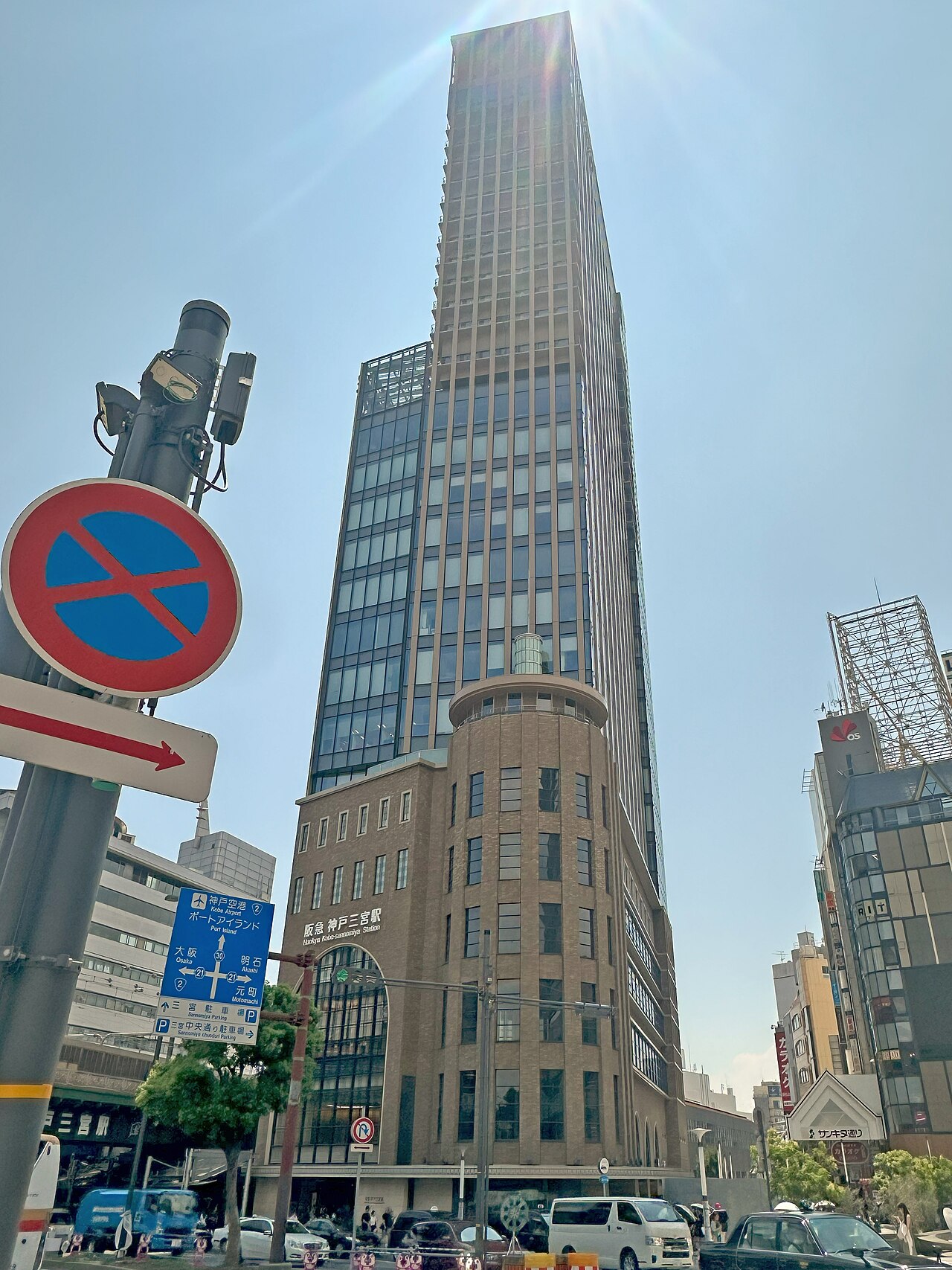
Coming into Kobe from Osaka or Himeji, take JR, Hankyu, or Hanshin into Sannomiya and follow the signs for the Port Liner. JR labels the station Sannomiya, while Hankyu and Hanshin label it Kobe-Sannomiya. Each railway has its own ticket barriers, so following the Port Liner signage is far more direct than searching for 'Sannomiya Station' on your phone. If you arrive on the Shinkansen at Shin-Kobe, take the Kobe Municipal Subway Seishin-Yamate Line towards Seishin-Chuo for one stop (about two minutes) to Sannomiya, then walk over to the Port Liner.
Buy the combo ticket at the Information counter next to the ticket machines at Port Liner Sannomiya Station, before passing through the ticket barriers. Show your phone screen with 'Kobe Animal Kingdom & Port Liner Set Ticket' to the staff and hold up fingers for the number of adults and children. The FamilyMart next door sells advance park admission only; if you want the bundle with return train travel included, go to the staffed counter. Once issued, keep the admission voucher and both outward and return train tickets together, and present the admission voucher at the park gate.
On the platform, board a train bound for Kobe Airport. The line climbs onto an elevated viaduct out of Sannomiya, skirts Kobe Harbour, and stays on the airport branch after Shimin Hiroba. If the train front or departure board reads Kita-Futo, wait for the next Kobe Airport service. Children love sitting right at the front window to watch the guideway stretch out towards the island. Keep the outward and return tickets separate—one parent can hold the tickets while the other keeps hold of the children, so the whole family does not end up rummaging through bags in the narrowest part of the ticket gate.
Alight at station P08, Keisan Kagaku Center (Kobe Animal Kingdom / Fugaku). Head down to the lower-level ticket barriers, turn right as you exit, and go down the stairs straight to the North Entrance; there is also a lift directly ahead. Families with a pushchair only need to remember: 'turn right past the barriers, take the North Entrance.' Do not be thrown by the name 'Fugaku' on the station signs—it is simply the secondary name for the same stop. Visitors arriving from Kobe Airport ride one stop towards Sannomiya (about four minutes) to the very same ticket gate.
Shinki Bus runs a direct service from Sannomiya Ekimae outside Kobe Hankyu to the park on Saturdays, Sundays, and public holidays only. On the published timetable, the 09:55 departure reaches the North Entrance at 10:20, which suits families keen to see the port streets on the way and catch the morning sessions. The scheduled last bus back to Sannomiya leaves at 16:27, arriving at 17:00. If you plan to stay until closing time, take the Port Liner back so you do not have to watch the bus clock.
Drivers can use the park's surface or multi-storey car parks on a first-come, first-served basis: ¥700 per 24 hours for standard cars on weekdays, and ¥1,000 at weekends and on public holidays. Drivers approach from the south side, whereas train and bus passengers mostly arrive on the north side. If your group is arriving separately, agree to meet inside a specific exhibit or restaurant rather than 'at the gate'. Save both the North and South ticket offices plus the north-side station in your phone so it is obvious which way to head at closing time.
| Route | Journey time and fare | Arrival at the park |
|---|---|---|
| Port Liner from Sannomiya | Approx. 14 minutes. Separate single fares: ¥290 adult, ¥140 primary-school child | Ride towards Kobe Airport to P08, exit barriers and turn right for the North Entrance |
| Port Liner from Kobe Airport | Approx. 4 minutes. Separate single fares: ¥210 adult, ¥100 primary-school child | Ride one stop towards Sannomiya to P08 and use the North Entrance |
| Shinki Bus direct from Sannomiya | Weekends & public holidays, approx. 25 minutes. Single fare: ¥290 adult, ¥150 child | Board outside Kobe Hankyu and alight at Kobe Animal Kingdom |
| By car | Standard car parking: ¥700 weekdays, ¥1,000 weekends & public holidays | Follow park signage into the surface or multi-storey car park |
A family guide to Kobe Animal Kingdom: taking the Port Liner from Sannomiya to the North Entrance, breaking down 2026 combo ticket and admission fares, and planning capybara feeding, shoebills, Pallas's cats, indoor pelican flights, sunny-day camel rides, Thursday closures, and wet-weather routes.
Working out ticket costs: save ¥1,440 for two adults and one child
From 1 April 2026, park admission is ¥2,400 for junior-high students and adults, ¥1,900 for seniors aged 65 and over, ¥1,200 for primary-school pupils, ¥500 for ages four to five, and free for children aged three and under. Seniors must bring official photo ID showing their date of birth to present at the park. If older blog posts quote ¥2,200 for adults and ¥1,600 for seniors, ignore those figures and budget with the current rates.
The 2026 fiscal-year Port Liner combo ticket bundles park admission with two train rides for the exact same price as a standalone park ticket in the adult, senior, and primary-school tiers. For two adults and one primary-school child travelling return from Sannomiya, separate tickets total ¥7,440, whereas the combo comes to ¥6,000. That ¥1,440 saving covers one camel ride, one penguin-feeding portion, and several bundles of capybara bamboo leaves—plenty of time to let the children pick their favourite before you even leave the station.
This batch of combo tickets is on sale until 31 March 2027. Tickets bought between October 2026 and March 2027 can be used on any single open day up to 30 April 2027, with both train journeys used on the day you travel. You can buy them at the Sannomiya counter or the staffed window beside the ticket barriers at Kobe Airport Station. If you are travelling from the airport side or continuing into central Kobe afterwards, tell the clerk your boarding and alighting stations for each leg before printing. The railway's valid zones cover Sannomiya to Keisan Kagaku Center and Kobe Airport to Boeki Center; riding beyond the printed zone incurs an extra minimum fare.
Families with preschoolers should check the park's age bands separately from the railway's. Park tickets for four- and five-year-olds can be bought at the park gate or at the convenience store beside Sannomiya Station. On the Port Liner, each adult or passenger aged six and over may bring up to two toddlers aged one and over free of charge (a child fare applies from the third toddler), and infants under one travel free. The combo-ticket notice also groups six-year-olds not yet enrolled in primary school under the toddler rule. If your child has just turned six and has not started school, tell the counter clerk '6-sai, mishugaku' to clarify their age and pre-school status.
Families driving or already holding transit passes can buy admission-only tickets via Asoview or KKday from the park's official ticket page. The Asoview seasonal ticket is on sale until 31 March 2027, carries a three-month validity window from purchase on its listing page, and lets you scan a smartphone QR code at the gate. If you buy ahead, make sure your family has already locked in your visit date. Paid animal experiences are separate from admission—for penguin feeding or camel rides, pick up a numbered ticket at the activity area. Visitors arriving by Shinki Bus likewise pair admission-only tickets with their bus fare.
Mark Thursdays on your calendar before choosing a date. On the official schedule, the park is closed on 26 November and 3, 10, and 17 December 2026, but open on Thursdays 24 and 31 December. It then closes on New Year's Day (1 January 2027), reopens on 2 January, and resumes Thursday closures on 7, 14, 21, and 28 January. Standard opening hours across these open days are 10:00 to 17:00, with last entry at 16:30. If you only want one zone, arriving later works fine; if you are aiming for a specific show, work backwards from its start time.
| Category | Admission only | Separate return from Sannomiya | Port Liner combo ticket |
|---|---|---|---|
| Junior high & adults | ¥2,400 | ¥2,980 | ¥2,400 |
| Ages 65+ | ¥1,900 | ¥2,480 | ¥1,900 (age ID required) |
| Primary school | ¥1,200 | ¥1,480 | ¥1,200 |
| Ages 4 to 5 | ¥500 | ¥500 (train free under toddler rule) | Buy admission only |
| Ages 3 & under | Free | Free under toddler rail rule | Enter and ride under toddler rules |
Feed bamboo at Pantanal, then spot striped tails in the African Wetlands
Pantanal takes its name from South America's vast Pantanal wetlands. Using pools, tall palms, and dense planting where animals can tuck themselves away, the park recreates an indoor habitat for capybaras, giant anteaters, and other South American species. Approaching the capybara pool, ask children to look for two contrasting shapes: light-brown bodies lounging on the bank, and sometimes just eyes, ears, and nostrils breaking the water's surface. Watching the pool edge for a moment helps young eyes connect those three little dots into a face.
Pantanal runs 'Capybara Esayari' (capybara feeding) at ¥100 per portion of bamboo leaves, open on a drop-in basis during operating hours. Watch the keeper demonstrate where to grip the stem so a capybara can pull the leaf cleanly away. Confident children can hold it out themselves, while hesitant ones can stand alongside a parent holding the leaf. The bamboo vanishes fast, so linger for a few seconds afterwards to watch the capybara chew steadily with its flat mouth.
Feeding pauses whenever the capybaras are full. When that happens, step along the water's edge to check whether their four short legs are actually touching the bottom. Once they climb ashore, wet fur clings flat to their flanks, making them look far sleeker than when dry—almost like two different creatures on land and in water. The park resumed its parent-and-pup capybara display on 31 October, so children keen to compare sizes can look behind the viewing barrier for a big silhouette beside a tiny one.
Back in the African Wetlands, ring-tailed lemurs are the easiest residents for children to spot. From the marked viewing spots, scan where branches cross for black-and-white rings, then trace the tail back to the animal. Because they roam freely through the habitat, standing still as a family lets the whole troop file past you much more reliably than chasing one individual. Pygmy hippos also live in this zone; watching them glide underwater and then step up onto the bank gives two completely different views.
To watch the lemurs eat, catch the 13:45 Wao-Wao Talk, where keepers feed the troop, run a short quiz, and show visitors how to spot how lemurs recognise one another—free to watch from the sidelines. For hands-on feeding in the African Wetlands, there is a separate waterbird feeding station where you follow on-site instructions to feed the designated birds. Keep snacks and packed lunches inside your bag, as only park-supplied feed is permitted. Wash hands thoroughly after leaving the contact zones before eating anything yourselves.
Inside the Tropical Forest, look out for white-throated toucans, labelled Shiromune-ohashi. Scanning up into the canopy usually finds them faster than checking the rocks at foot level. Seen in profile, that oversized bill takes up almost the entire silhouette of the head, and the crisp dark-and-light plumage is easy for children to sketch. Official feeding sessions cover designated animals such as waterbirds and capybaras, so treat toucans as observation-only. After looking down for birds, tilt your head up for two-toed sloths—turning it into a quick game of who spots the hanging bundle of fur among the branches first works nicely before leaving the forest.
Two shoebill habitats, and two very different sets of wild-cat ears
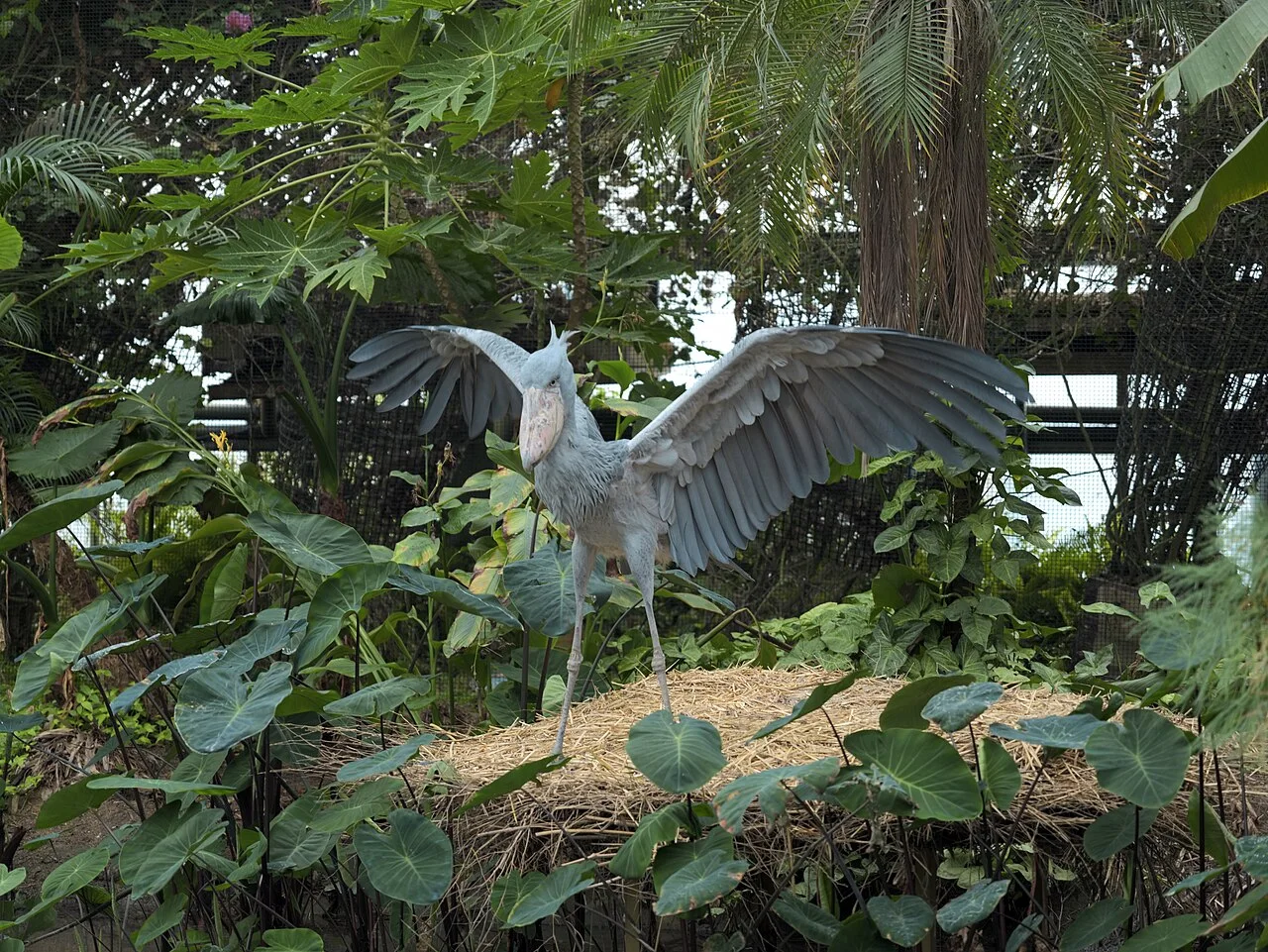
To find the shoebills, look first for the large Big Bill sign and then Mabamba Camp next door. Big Bill recreates an East African marsh with wetland reeds, shallow water, and natural daylight. The first thing that catches your eye is that grey bill ending in a neat downward hook. When a bird crouches low over the water, the angle between its chin, bill, and neck is unmistakable; wait until it turns sideways and the eye—often hidden from straight ahead—comes into view.
A shoebill can stand motionless in the shallows for minutes on end, tucking its neck in so tightly you can barely guess its length. The moment it shifts a foot, stretches its neck, or opens its wings, its silhouette snaps from tall and narrow to remarkably wide. Ask children to pick one detail to watch first—say, whether the tip of its bill touches the water—before moving on to its feet and wings. If a crowd clusters along one window, take two steps back; looking over shoulders often gives a clearer view of the whole shoreline.
The park updated its shoebill rotation in February 2026. After male Bongo moved to Nasu Animal Kingdom, Kobe now displays Marimba and Kuraru in Big Bill during the day, while male Sakara is at Mabamba Camp. If shoebills are the headline act of your visit, check both areas. Reading the name boards after you have watched them makes it much easier to tell who is who than guessing at first glance. Pairing both spots also suits families moving at different paces—whoever spots a bird first can wait towards the back for the rest.
In the Asian Forest, look for Pallas's cats, marked as Manuru-neko. Their ears sit low on either side of the head, so when they flatten against the ground, often only a broad forehead and eyes peek above the rocks. From 3 October, the park switched the five kittens born in May 2026 to open viewing; mother Azu and the kittens occupy the right-hand side of the Pallas's cat enclosure, with published viewing hours from 10:00 to 16:30. Switch off phone flashes at the glass and step back together once you have had a look so smaller children behind can see at ground level.
For more small wild cats, walk over to the north-side Contact Animals area for the sand cats, labelled Suna-neko. Under bright light against sandy rock, locate their ears and eyes first before separating coat from background. Sand cats carry two tall, pointed triangles on top of their heads—a sharp visual contrast to the low, side-set ears of Pallas's cats. The same north area houses fennec foxes and meerkats; use one shared prompt across all three windows to see who has the tallest ears and who stands upright on lookout.
The north zone's Wan-Touch / Nyan-Touch (dogs and cats) and Pyon-Touch (rabbits) each run timed sessions, with numbered tickets handed out on site 20 minutes before start time. If a child hears 'cat' and tries to steer straight for the Pallas's cat, clarify that the hands-on petting sessions are separate—both sand cats and Pallas's cats are viewing-only behind their barriers. Because this area sits right by the North Entrance, it is handy straight after stowing bags, or as one last loop before heading out.
Chase Wings in sunshine, or watch pelicans take off indoors when it rains
Wings is short for the Free-Flight Bird Performance, staged outdoors at Wind Stadium. To follow how birds bank into the breeze once airborne, look out across the whole arena after taking your seat—birds may launch from the stage or skim low right across the front of the seating. Sitting in the back rows with children still gives an unobstructed view of the sky. Keep hands resting in your lap and follow the signs and staff directions when seating.
Wings is scheduled at 11:30 and 15:00. Half-day visitors do best aiming for the 11:30 show after exploring one or two nearby zones in the morning. If you have already committed 11:00 to camel rides or penguin feeding, finish those first and catch the 15:00 Wings instead of abandoning the ride queue halfway. Rain, strong winds, and extreme heat can affect outdoor shows. Check the daily board at the entrance, note your must-see show and venue name, and leave a buffer either side for walking and finding seats.
Indoors at the African Wetlands, Pelican Flight runs at 12:15 and 14:30. The pool itself is the runway: pelicans sweep between the water and the banks, white wings skimming above their reflections before webbed feet splash down. Standing towards the open rear with children makes it easier to watch the whole flock move almost in unison. Having a child pick one bird to follow from its very first wingbeat works far better than shuffling around with the crowd.
If you only pick one flight show, choose Wings for seeing different bird species demonstrate distinct flight styles, and the African Wetlands for watching an entire flock of pelicans land together. Trying to fit the 14:30 pelicans right before the 15:00 Wings means moving from an indoor lakeside to an outdoor stadium—you will need walking time and may only catch back-row seats. Pairing morning Wings with afternoon pelicans, with a proper lunch break in between, works far better if you want both.
Children nervous about wings flapping close overhead can visit the indoor pool beforehand to see the pelicans standing calmly. Pointing out their throat pouches and long bills makes it much easier to track how they glide and touch down during the show. Walking between Wind Stadium and the African Wetlands also lets you pair one outdoor block with one indoor block, then lean towards whichever suits the sky on the day. Crowds surge towards the exits the moment a show finishes—stay seated to put coats on and chat about what you just saw before joining the flow.
| Programme | Listed times | Location and what to watch |
|---|---|---|
| Wings Free-Flight | 11:30, 15:00 | Outdoor Wind Stadium; watch how birds bank and turn across the open arena |
| Pelican Flight | 12:15, 14:30 | Indoor African Wetlands; watch a flock take off and splash down across the pool |
| Ring-tailed Lemur Talk | 13:45 | African Wetlands; keeper feeding, commentary, and Q&A |
Check ticket-distribution times before aiming for camel rides or penguin feeding
Outdoor Camel Corner runs camel rides from 11:00 to 12:00 and 14:00 to 15:00. Tickets cost ¥800 per rider, capped at 20 people per session on a first-come, first-served basis, with a minimum height of 100 cm and a maximum weight of 75 kg. Numbered tickets are handed out on site from 10:30 and 13:30. Because children often bolt the second they hear 'camel ride', measure their height at home first so you know before arriving whether to join the queue—no last-minute negotiations beside the paddock.
Staff lead the camels throughout the ride, so parents taking photos simply wait at the designated viewing spot. Even from the ground, a camel's back sits well above a child's head, giving a noticeably higher perch once mounted. If your child sees the height up close and changes their mind, you can stay on the ground watching how its knees fold and how the humps sway as it walks. Camel feeding is also offered at the same corner if they would rather say hello with a snack in hand.
Penguin Snack takes place at Penguin Coast for ¥200 per portion, limited to 25 portions per session at 11:00 and 15:30, with numbered tickets distributed at 10:30 and 15:00. Sanitise your hands beforehand and offer the fish as directed by staff. Because standing right by the rail can mean a splash, hand children's glasses and phones to someone standing back. Even without a ticket, the underwater glass lets you watch South African Cape penguins dart past—clumsy on land, yet shooting across the entire window in a heartbeat underwater.
Notice that both morning ticket distributions start at 10:30 in different places. Pick one to queue for first and save the other for the afternoon—or skip the queue and just watch them. There is also a direct afternoon clash: Wings starts at 15:00, the exact minute numbered tickets open for the 15:30 Penguin Snack. If handing fish to a penguin is non-negotiable for your child, watch the 11:30 Wings and keep the afternoon clear for the penguins. Families prioritising camel rides can take the afternoon slot, collect a ticket, return at the stated riding time, and use the gap to watch the penguins swim.
In rain or strong winds, check the day's outdoor activity board first. If camel rides and penguin feeding are suspended, duck indoors to the water-lily pool to see how the broad pads float on the surface, then wander into the Tropical Forest to compare the beaks of scarlet macaws and white-throated toucans. Sheep and alpacas are also out in the open-air zone. If time and weather hold out, let your child pick one more animal to linger over, and knock any mud off shoes before stepping back undercover.
| Experience | Fee | How to join |
|---|---|---|
| Capybara bamboo feeding | ¥100 / portion | Drop-in at Pantanal during open hours; pauses when capybaras are full |
| Camel ride | ¥800 / person | Numbered tickets issued on site at 10:30 & 13:30. Min. 100 cm, max. 75 kg, 20 riders per session |
| Penguin fish feeding | ¥200 / portion | Numbered tickets issued on site at 10:30 & 15:00. 25 portions per session; sanitise hands first |
Step into the dark for flying squirrels, then pause by the water lilies
Inside the conservatory, one corridor leads straight into night. Momonga no Yoru (Night of the Flying Squirrel) reverses day and night lighting so nocturnal species such as Japanese flying squirrels stay active during daytime opening hours. Stepping inside while your eyes are still adjusted to the bright greenhouse makes branches and animals look like pure silhouettes. Park pushchairs safely, keep hold of your children, give your eyes a moment to adjust, and scan slowly upward along the forks of the tree trunks.
Watch how the flying squirrels shift perches high up in the canopy. Stretching all four limbs taut spreads the gliding membrane between front and hind legs—a completely different way of moving through air from the flapping birds back in the African Wetlands. Instead of using a phone screen as a torch to hunt for animals, use your phone simply to note down species names from the plaques and look them up once back in the light. If you cannot spot one from where you stand, shuffle a few paces along the walkway to view from the far side of the branch rather than sweeping light after it.
Leaving the nocturnal room, follow the park map to Water Lilies. This tropical lily pool blooms in shifting colours year-round, and the park notes you can catch its scent in the morning just as flowers open. Tired children looking down at the water's edge usually spot small fish darting out from beneath the leaf shadows before they take in the full sweep of the pool. Fish food is sold here for ¥100 a cup; toss in a pinch to watch fish rush in first, followed by expanding ripples across the water.
If your child wants just one easy rainy-day feeding stop, the fish at Water Lilies sit right beside the viewing rail. To watch land animals take a bite up close, head into the Tropical Forest for Mara & Tortoise Feeding, also ¥100 per portion (paused from 13:30 to 14:30). Maras are long-legged, upright-eared South American rodents, while the tortoises alongside them move slowly enough that children get a clear look at their jaws as they stretch out for greens.
Different habitats naturally reward different eye levels. By the water, children often stand on tiptoe hunting for capybaras; back in the bright indoor conservatory, a lower angle along the walkway shows how flat a water-lily pad hugs the surface, before looking straight up into the Tropical Forest canopy for upside-down sloths. When half the family wants to inspect plants and the other half only cares about animals, linger in one spot for a few minutes until everyone can point out one thing they spotted.
A half-day plan that works for both adults and children
The park estimates two to three hours for a standard visit; add one show and a proper meal and three to four hours is realistic. If you are bringing children around eight years old, have them pick two favourites from capybaras, shoebills, and penguins before setting off, while adults pick one queued activity they are happy to wait for—giving you three clear anchors. That leaves breathing room to stop for unexpected animals along the way and sit down whenever hunger strikes. If you also have a toddler on a fixed nap schedule, front-load your top activity in the morning and keep the afternoon loop near the North Entrance.
On a sunny morning with an early arrival, head straight from the North Entrance for the 10:30 outdoor ticket distribution. Families skipping queues can open in the African Wetlands with ring-tailed lemurs and pygmy hippos before catching the 11:30 Wings show. Have lunch afterwards, feed capybaras at Pantanal in the afternoon, then finish with Pallas's cats in the Asian Forest and shoebills in Big Bill—putting ticketed queues first and drop-in zones second. That said, if a school-age child locks straight onto the sand cats at the north-side glass on arrival, let them watch for a few minutes before moving on.
On a wet day, start at the north-side Contact Animals area, African Wetlands, and Asian Forest, time the morning around the 12:15 Pelican Flight, and save Pantanal and the flower conservatory for after lunch. The soaring conservatory hangs trailing planters overhead above pools and foliage below, keeping eyes scanning from ceiling to floor as leaf shapes change zone by zone. Roughly 70% of the park is indoors, so pack a foldable waterproof for stairs at the station, entrance paths, and short outdoor crossings—and wipe condensation off pushchair rain covers somewhere out of the walkway when moving out of humid greenhouses.
If you only have two hours and miss the show times, loop from the North Entrance into the African Wetlands, cut through the Asian Forest for Pallas's cats, continue to Big Bill for shoebills, and finish with bamboo feeding at Pantanal. Keep your focus on must-see habitats if you need to catch a train back into town, and scroll through the children's photos on the ride home. Note that from 27 November 2026 the otter habitat undergoes around two weeks of maintenance, suspending displays of Asian small-clawed otters and Malayan tapirs; swap that stop for the fishing cats in the indoor tropical wetlands. Children can even compare its Japanese name, Sunadori-neko, with the Suna-neko (sand cat) back in the north zone.
For year-end seasonal displays, Christmas decorations run from 20 November to 25 December 2026, with reindeer on show in the outdoor flower-field zone from 1 to 25 December, typically until 16:30, alongside separately timed paid photo opportunities with reindeer. On a winter visit, ask children to guess which animal grows antlers like tree branches, then compare against the real thing at the paddock. Because the park opens as usual on 24 December, late December works well if you want to avoid the New Year's Day closure.
You can bring a packed lunch into the park or eat at on-site spots such as Hana no Kitchen and Fukuro-an. Single-entry tickets do not normally allow re-entry once you exit, so pack water bottles and snacks before passing the gate. Hana no Kitchen serves its lunch menu from 10:30 to 14:00 before switching to afternoon fare, making it easy to fit in after the 12:15 pelican flight. Eat before legs run out of steam, then browse the south-side flower-zone shop on your way out—comparing shoebill, penguin, and capybara soft toys to pick the one that looks most like what you saw.
Coin lockers sit beside the North Ticket Office (¥300 and ¥500 sizes) and beside the south-side Capy&Barbara shop (¥300). There are no ATMs inside the park, so carry yen cash for animal feed and camel rides. Pushchairs can be hired on site on a first-come basis for ¥500, with ¥100 refunded upon return. Nursing rooms are available near Fukuro-an on the north side and beside the flower-zone shop on the south side. If anyone gets separated, ask the nearest staff member to make a PA announcement; lost-child wristbands are also issued at the North and South ticket offices and Capy&Barbara.
To return to Sannomiya, leave via the North Entrance and take a Sannomiya-bound Port Liner from Keisan Kagaku Center using your return ticket. If you are heading onwards for dinner or an evening stroll along Kobe Harbour, gauge how much walking your children still have in their legs before changing trains downtown. A fun way to wind down on the train is having them sketch a shoebill's face from memory—seeing how long the bill looks compared to the eye before checking photos later.
A few useful answers
Which Port Liner train should I take from Sannomiya, and where do I walk after exiting?
Take a train bound for Kobe Airport for about 14 minutes to P08 Keisan Kagaku Center. Turn right out of the ticket barriers and go down the stairs (or lift for pushchairs) straight to the park's North Entrance.
Does the Kobe Animal Kingdom combo ticket cost the same as regular admission?
Yes. For the 2026 fiscal year, the return combo ticket from Sannomiya costs ¥2,400 for adults, ¥1,900 for ages 65+, and ¥1,200 for primary-school pupils, covering park entry and two train journeys. Buy it at the staffed Information counter beside the ticket machines before the barriers at Port Liner Sannomiya Station.
Can we still see bird flight shows on a rainy day?
Yes—Pelican Flight takes place indoors in the African Wetlands, listed at 12:15 and 14:30. The outdoor Wings show at Wind Stadium may be suspended in rain or strong winds, so check the daily board upon arrival.
Can children hand-feed capybaras, penguins, toucans, or ring-tailed lemurs?
Capybara bamboo leaves cost ¥100 per portion and penguin fish feeding is ¥200 per portion (numbered ticket required on site). Toucans are viewing-only, while ring-tailed lemurs have keeper feeding and commentary you can watch.
Can we bring a packed lunch, or leave for lunch and come back in?
You may bring packed lunches into the park. Single-entry tickets do not normally permit re-entry, so stay inside to eat at designated picnic areas or park restaurants if you plan to keep exploring.
Is Kobe Animal Kingdom closed every Thursday?
It is normally closed on Thursdays, though it opens on Thursdays 24 and 31 December 2026, and closes on New Year's Day (1 January 2027).
Official information and references
Sources used in this guide.
- Kobe Animal Kingdom Operating Calendar (November 2026 to January 2027)
- Kobe Animal Kingdom Admission Fees and Advance Ticket Channels
- Kobe New Transit 2026 Port Liner Combo Ticket Fares, Sales, and Validity
- Kobe New Transit Port Liner Standard Fare Table
- Kobe Animal Kingdom Combo Ticket Guide and Keisan Kagaku Center Exit Route
- Kobe Animal Kingdom Access Guide (Shin-Kobe, Sannomiya, Kobe Airport, Shinki Bus, and Parking)
- Kobe Animal Kingdom FAQ (Admission, Dining, Baby Facilities, and Pushchairs)
- Kobe Animal Kingdom Events and Feeding Schedule (Flight Shows, Keeper Talks, and Numbered Tickets)
- Wings Free-Flight Bird Performance Times and Weather Conditions
- African Wetlands Pelican Flight
- Pantanal Capybara Bamboo-Leaf Feeding
- Penguin Snack Session Times, Fees, and Capacity
- Camel Ride Fee, Height/Weight Limits, and Ticket Distribution Rules
- Kobe Animal Kingdom Shoebill Habitat Allocation Notice
- Kobe Animal Kingdom Pallas's Cat Family Viewing Hours
- North Zone Contact Animals and Sand Cats
- Kobe Animal Kingdom White-Throated Toucan Species Guide
- Kobe Animal Kingdom Otter Habitat November 2026 Maintenance Notice
- Kobe Animal Kingdom 2026 Christmas and Reindeer Events
- Kobe Animal Kingdom Restaurants and Shops
- Kobe Animal Kingdom Nocturnal Animals Exhibit (Night of the Flying Squirrel)
- Kobe Animal Kingdom Water Lilies Pool and Tropical Fish Feeding
- Tropical Forest Mara and Tortoise Feeding Hours
- Kobe Animal Kingdom Official Partner Ticket Page (Asoview)
- Kobe Animal Kingdom African Wetlands Ring-Tailed Lemur Exhibit
- Ring-Tailed Lemur Keeper Feeding and Commentary
- Kobe New Transit Child, Toddler, and Infant Fare Rules
- Pantanal Parent-and-Pup Capybara Display Resumption Notice
- Hyogo Tourism Official Accessibility Guide (Toddler Tickets and Park Facilities)