Choosing where to stay in Kichijoji? Compare Kichijoji Tokyu REI Hotel at the South Exit with Kichijoji Excel Hotel Tokyu at the North Exit, alongside Chuo and Inokashira Line links, Ghibli Museum booking tips, and 1- to 3-night itineraries.
- Region & Focus
- TokyoAccommodation
- Reading Scope
- 19 min read · 11 chapters · 9 Q&As
- Official Verification
- 23 official sources checkedUpdated 22 November 2026
- Key Topics
- Where to stayNeighbourhoodsBooking
Chapter Route Map (tap any stop)
- First, Decide Which Half-Day Is Worth Waking Up for in Kichijoji
- South Exit for the Park, North Exit for Sunroad and Harmonica Yokocho
- Comparing the Two Tokyu Hotels: Locations and Room Types
- Booking for Families, Groups of Three, and Serviced Apartments
- JR Lines for Shinjuku, Keio Line for Shibuya
- Airport Transfers: Start from Your Flight Arrival and Departure Times
- Matching Ghibli Museum Entry Slots with Your Hotel Stay
- Leaving Unhurried Space for Inokashira Park
- Pacing a Two-Night Stay vs. a Three-Night Itinerary
- Compare Final Room Totals Before Checking Cancellation Deadlines
- Where to Stash Luggage on Arrival and Departure Days
- Quick Q&A
If you want to stroll through Inokashira Park, browse Kichijoji's shopping arcades, and set aside half a day for the Ghibli Museum in Mitaka, two nights in Kichijoji is ideal. Choose the South Exit (Park Exit) to step straight towards the pond at dawn, or pick the North Exit for dining and shopping around Sunroad, Daiyagai, and Harmonica Yokocho. The JR Chuo Line Rapid runs direct to Shinjuku, while the Keio Inokashira Line connects straight to Shimokitazawa and Shibuya. If most of your plans centre on Ueno, Asakusa, or east of Tokyo Station, treat Kichijoji as a half-day trip and stay near whichever station you set off from earliest each morning.
First, Decide Which Half-Day Is Worth Waking Up for in Kichijoji
For a straightforward afternoon in the park and shopping arcades, coming back and forth from Shinjuku is already easy enough. Staying overnight usually makes sense at the start or end of your itinerary. Early in the morning, before the shops open, you can walk down to Inokashira Pond and return to your hotel for breakfast before heading out properly. In the evening, you can linger in the park until dusk and eat nearby in the alleyways of Harmonica Yokocho. If you have morning entry tickets for the Ghibli Museum the next day, you only need to factor in the walk from your hotel to the museum gates.
If it is your first time in Tokyo, look at your two earliest morning departures first. If you are catching a Shinkansen from Tokyo Station the next day and heading to Tsukiji for an early breakfast the morning after that, staying in Kichijoji means building extra time into your schedule for ticket gates, waiting for trains, and changing lines at Tokyo Station or across central Tokyo. Conversely, if the Ghibli Museum, Inokashira Park, and Shimokitazawa already fill two days of your trip, basing yourself in Kichijoji lets you head straight in the direction you want without crossing Shinjuku first.
A single night tucks neatly into the beginning or end of your Tokyo stay: pick a transfer day to check out of your previous hotel, check in at Kichijoji, and have dinner locally all in one go. When travelling with large suitcases, a two-night stay takes the pressure off check-out morning. You get a full middle day for the museum, with the two half-days on arrival and departure left for the arcades and the park. Even if you only get afternoon entry tickets for the museum, you can still take a morning walk, freshen up back in your room, and grab lunch beforehand.
If you plan to split a trip between Shinjuku and Kichijoji, save your heavy cross-town shopping for the Shinjuku leg. Once in Kichijoji, spend mornings in the park, afternoons in Mitaka or Shimokitazawa, and evenings eating close to your hotel. Over four or five nights, the convenience of stepping out of the same station exit each day adds up. Picturing a quick evening run for groceries and knick-knacks, followed by walking out with a morning coffee the next day, tells you more than simply counting how many stops a hotel sits from Tokyo Station.
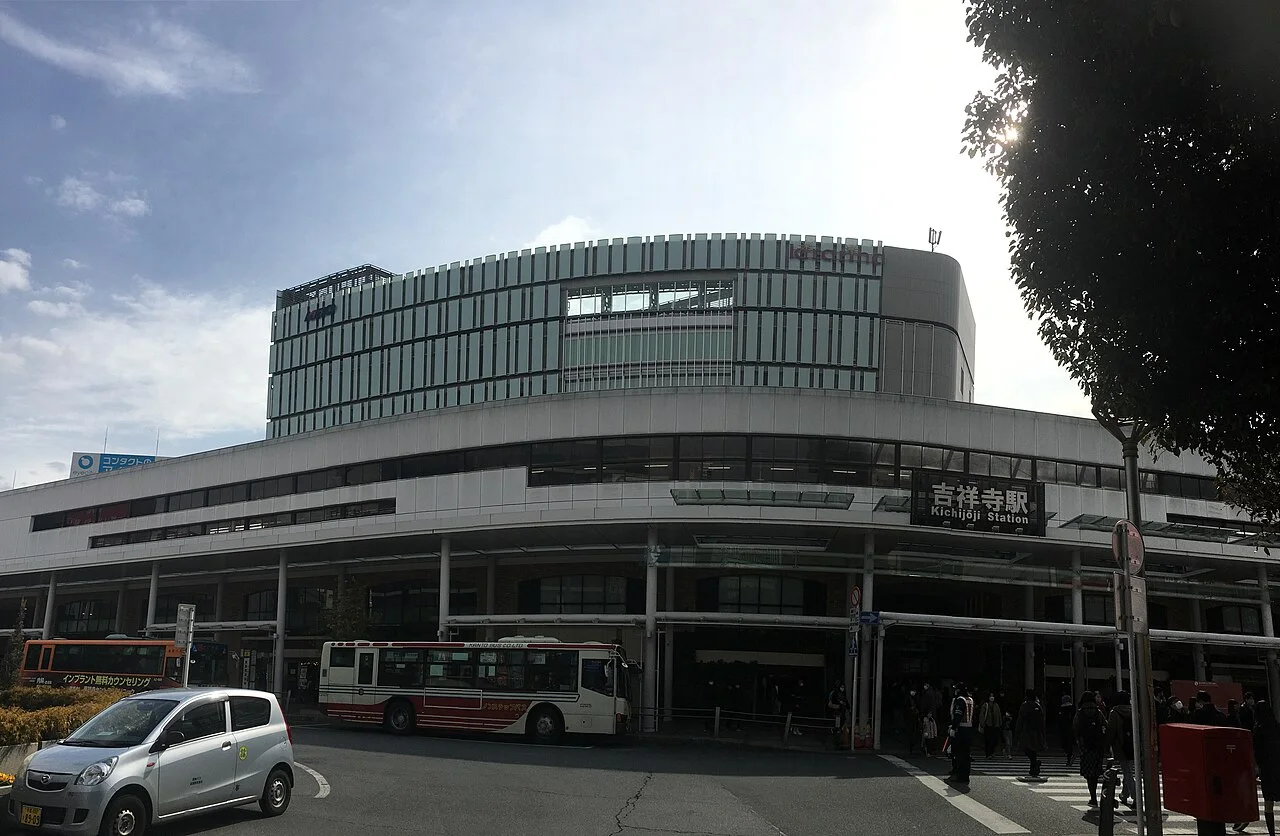
Choosing where to stay in Kichijoji? Compare Kichijoji Tokyu REI Hotel at the South Exit with Kichijoji Excel Hotel Tokyu at the North Exit, alongside Chuo and Inokashira Line links, Ghibli Museum booking tips, and 1- to 3-night itineraries.
South Exit for the Park, North Exit for Sunroad and Harmonica Yokocho
JR Kichijoji Station's South Exit is also signed as the Park Exit (Koen-guchi or Minami-guchi inside the station). From this side, you can head towards Inokashira Park by walking down along Nanaibashi-dori to the pond. The Tokyo Metropolitan Park Association lists the walk from Kichijoji Station to the park at around 5 minutes. That makes it an easy morning loop from a nearby hotel, plus whatever time it takes to get from your room to the station exit.
The South Exit combines road traffic, storefronts, and pedestrians bound for the park. When wheeling luggage, check your hotel's official map for the exact entrance and pedestrian crossings first. The slope only drops down once you approach the pond itself, so anyone preferring a gentler pace can walk from the station forecourt to the park entrance and decide on the day whether to head down to the water's edge. Arriving via Keio's Inokashira-koen Station brings you to a different park entrance, which works well if you are already on the Keio line and want to approach the park from the opposite side.
Sunroad, Daiyagai, and Harmonica Yokocho all start around the North Exit. The two covered shopping arcades are ideal for an afternoon wander, letting you drop bags back at your hotel at dusk before heading out for dinner on the north side. The lanes of Harmonica Yokocho are narrow, so on a first visit it helps to save the restaurant name and note which alley entrance it sits near. If you are in a group, meet in the open plaza outside first and walk into the lanes together to look for seats.
Staying at the North Exit still lets you visit the park in the morning, as the north and south sides are linked by a free station passageway. If your hotel is further north near the department stores, simply add the short walk back across the station forecourt. When travelling with a pushchair, older relatives, or bulky luggage, set your meeting point at a named exit or a ground-floor shop entrance rather than leaving some people waiting upstairs by the ticket gates while others have already gone down to street level. JR's station map marks the lifts and coin lockers so you can plan that first stretch out of the station.
Station signs in Japan mark ticket gates as 'kaisatsu'. At JR Kichijoji Station, the Central Gate and South Gate operate from the first train to the last, whereas the West Gate (connecting to Atre) and East Exit follow shorter hours listed by JR as 07:30 to 22:00. If you leave very early or return late at night, head for the Central or South Gate; if a map routes you through the Atre building, follow the station signage on the spot instead.
When checking a map, pin your accommodation's entrance first, then draw two lines from there to the park and to your dinner spots. Light sleepers should inspect booking photos to see whether windows face the tracks, a main road, or an inner block, and request a specific floor or aspect by room type. Walking a few extra minutes from the station can buy you a quieter room, though it also lengthens the walk home at night. If you have early departures and late returns, weigh both legs together.
Comparing the Two Tokyu Hotels: Locations and Room Types
Kichijoji Tokyu REI Hotel sits on the South Exit side. Its official website lists it as roughly a 1-minute walk from the exit at 1-6-3 Kichijoji-Minamicho. For solo travellers, late arrivals, or guests walking straight to the Ghibli Museum in the morning, this spot removes any guesswork outside the station. Coming from the JR platforms, you can also check the hotel's step-free route map in advance for the crossings and entrance. Keep 'REI' in your saved booking details so you do not mix up the two Tokyu properties.
At the REI, Standard Single rooms measure 14.6 sq m with a 120 cm-wide bed. Standard Double rooms are 17.3 sq m with a single 160 cm-wide bed, listed for one or two guests. Two adults who each want their own bed should go straight to the twin room floor plans and bed specs. Travellers with large suitcases can also judge from the official room photos how much clearance remains along the door corridor and beside the bed once two big bags are opened.
Kichijoji Excel Hotel Tokyu stands on the North Exit side at 2-4-14 Kichijoji-Honcho, listed officially as about an 8-minute walk from the North Exit. Cross the zebra crossing outside the North Exit into Daiyagai, cross the street in front of Tokyu Department Store, and enter through the hotel's main entrance. Anyone browsing Nakamichi-dori and the department stores or dining nearby can drop their bags first and pop back easily once their hands are full.
The Excel offers a 45.7 sq m Premium Deluxe room, which the official site lists with three beds and capacity for up to four guests. Groups of four adults should enter their exact guest count first to see how the rate plan handles bedding for the fourth person, and compare the total price against booking two twin rooms. The hotel also lists a 27 sq m Universal Room for one or two guests; if anyone in your party needs wheelchair turning space or bathroom grab rails, check the room photographs and facility floor plan against your needs before booking.
The two properties follow different standard hours. REI lists check-in at 15:00 and check-out at 10:00, while Excel lists check-in at 14:00 and check-out at 11:00. If you land in Tokyo on an early flight, check luggage storage hours so you can head out straight away. An 11:00 check-out is also worth factoring in if you want a slower morning sitting in the park. When comparing rates, check any special check-in or check-out restrictions on discounted plans — late-arrival or early-departure deals only save money if those times genuinely match your schedule.
When searching on Japanese maps, remember that 'Minamicho' corresponds to the REI and 'Honcho' to the Excel. Companions arriving in Kichijoji from different parts of Tokyo can share the hotel's main entrance pin on their phones. If one person is taking the airport coach and another is arriving on the Keio Line, meeting in the hotel lobby saves the hassle of trying to find the exact same station exit.
Booking for Families, Groups of Three, and Serviced Apartments
When booking with children, enter their exact ages and each guest's bed requirements from the start. Excel's official booking policy states that children aged 6 and under who have not started primary school may share existing beds free of charge. Once a child needs their own bed or attends primary school, count them as an adult in the hotel search. If you are bringing a pushchair, make sure there is room to park it inside, space in front of the bathroom door, and a clear path between the bed and the entrance.
For three adults, check maximum room occupancy and exact bedding setups first. Some plans use a rollaway bed, a sofa bed, or three fixed beds, and everyone has different tolerances for mattress width and floor space. If a third bed takes up most of the floor and forces you to take turns opening suitcases, two separate rooms are far easier. Just remember to track two cancellation deadlines, particularly if one companion's holiday dates or flights are not yet locked in.
If you are staying several nights and want to make your own breakfast or simple dinners, include serviced apartments or aparthotels in your search. Check the walking route from the exact street address and favour listings with clear photos of the building entrance and check-in instructions. To cook properly, look for listings that specify a hob, fridge space, and cookware — plus a dining table or microwave if you have young children. If you plan to do laundry, check whether the washing machine includes a dryer function and allow enough time to collect dry clothes before heading out the next morning.
Staying in a residential lane rather than a staffed hotel adds an extra step for luggage forwarding and late-night key collection. For self-check-in properties, save the building name, floor number, entrance photos, and door-lock instructions on your phone — and make sure every companion has a copy too. If you plan to forward large suitcases from your previous hotel, confirm the host's delivery instructions beforehand and pack one change of clothes in your day bag so your sightseeing plans stay on track.
When comparing hotels against apartments, divide the three-night all-in total by night rather than comparing base nightly rates. Include room taxes, cleaning fees, and any fixed service charges. For a one-night stop, you are mainly paying for smooth check-in and easy luggage storage after check-out. Over five nights, having breakfast space, laundry, a kitchen, and a short walk to a supermarket pays off repeatedly, making those extras worth weighing in.
JR Lines for Shinjuku, Keio Line for Shibuya
From Kichijoji's JR platforms, most journeys use either the orange Chuo Line Rapid or the yellow Chuo-Sobu Line Local. Both run direct to Shinjuku, while the orange Rapid is the better choice for Tokyo Station. Tokyo's official tourism site puts the Rapid journey at roughly 14 minutes from Shinjuku to Kichijoji and around 28 minutes from Tokyo Station to Kichijoji. When building your schedule, add the walk from your accommodation to the platform and from the destination exit to your meeting point at either end.
Heading back to Kichijoji from Shinjuku, check the stopping pattern of the train on the platform display before boarding. Both the Chuo Special Rapid and the Ome Special Rapid skip Kichijoji. If you are stopping off at Koenji, Asagaya, or Nishi-Ogikubo, take the yellow Local service on weekends and public holidays, and double-check individual train stops on weekdays too. If you accidentally board an express that overshoots west to Mitaka, simply hop on an eastbound train that stops at Kichijoji to ride one stop back.
Browsing shops or meeting for dinner in Nakano pairs easily with the return leg from Shinjuku. Between Kichijoji and Nakano, you can choose between both JR services depending on the time of day, though stopping patterns vary by service type and day of the week. Returning from Nakano, look for a yellow Local train bound for Mitaka. If you are out late in Shinjuku and still fancy another drink near the North Exit, check JR's day-specific timetable from Shinjuku or Nakano beforehand — and if you have show tickets booked, save your return train times before leaving the hotel.
The Keio Inokashira Line runs directly to Shimokitazawa and Shibuya, served by both Local and Express trains, with Kichijoji and Shibuya sitting at opposite ends of the line. Changing at Shibuya, follow signs for the Keio Inokashira Line, bearing in mind there is a noticeable walk from the JR or Tokyo Metro platforms to the Keio ticket gates. If you are only going one stop to Inokashira-koen Station, take a Local train from Kichijoji. Returning from a late evening in Shibuya, enter your full origin and destination when checking the last train so you do not miss the final through-service back to Kichijoji.
You can also combine Shibuya and Shinjuku on the same day with Kichijoji as your base. For example, take the Inokashira Line down to Shibuya in the morning, hop across to Shinjuku in the afternoon, and ride the Chuo Line home after dinner. Going back to the hotel mid-afternoon just to drop off shopping bags adds two extra train journeys, so leave bulky purchases for your final stop and keep your hands free earlier in the day.
Airport Transfers: Start from Your Flight Arrival and Departure Times
Airport limousine buses connect both Haneda and Narita directly with Kichijoji Station. Odakyu Bus splits its airport coach pages into services departing Kichijoji Station and services bound for Kichijoji Station, so match both the direction and your travel date to the terminal printed on your ticket. The Narita route resumed service in March 2026, with fewer daily departures than regular city trains. When a coach lines up with your flight, you can stow your suitcases underneath and ride straight to Kichijoji, then walk to your hotel.
To plan an airport coach pickup, convert your scheduled landing time into the realistic time you will clear immigration, collect bags, and reach the bus stop. If you want to reserve a seat, check how outbound and return bookings open on the operator's system. Whenever your arrival time could slip, save a back-up rail route on your phone: if going via Shinjuku, transfer to the JR Chuo Line Rapid and exit at whichever side of Kichijoji suits your hotel; if connecting via Shibuya, switch to the Keio Inokashira Line back to Kichijoji.
For the flight home, work backwards from the time you need to be at the terminal. By direct coach, factor in both scheduled journey time and possible road congestion. By train, allow extra margin for ticket gates, platform transfers, and the walk into the terminal building. For early-morning flights, pack and back up your booking confirmations the night before, noting down both your target first train or coach and the following departure. If both routes cut your airport arrival too fine, move your final night to a major interchange or near the airport and place Kichijoji earlier in the trip.
Arriving at night with heavy bags is much smoother if you stay right beside a station exit, check in first, and then step out for a late bite nearby. If you have booked a self-check-in stay, check your latest check-in cut-off and door-access method against the last train times. Where a host needs to hand over keys in person at an agreed hour, a flight delay can throw off the whole evening, so choose a check-in arrangement that fits your realistic arrival window.
Matching Ghibli Museum Entry Slots with Your Hotel Stay
Entry to the Ghibli Museum, Mitaka is strictly by advance reservation for a specific date and time slot, with no tickets sold on the door. The museum's English site links to Lawson Ticket, where next month's tickets generally go on sale at 10:00 JST on the 10th of each month. Seven hourly entry slots run from 10:00 to 16:00, and you may enter within one hour of your designated start time. Before booking, check the museum calendar to steer clear of closed days and maintenance periods.
If the museum is a must-see on your trip, lock in which day and time slot you can actually secure before committing to consecutive nights in Kichijoji. Travelling during spring holidays and needing to hold a room early? Book a refundable rate with a free cancellation deadline falling after ticket release day. If only an afternoon slot is left, spend the morning in the park or having brunch around the North Exit, then walk over from your hotel. With a morning slot, arrive the night before so breakfast and meeting up happen effortlessly in Kichijoji.
The museum lists the walk from Kichijoji Station at about 15 minutes, leading to the West Garden of Inokashira Park. For a morning slot, leave from the South Exit and follow Kichijoji-dori towards the Zoo and Mansukebashi Bridge to keep good time. Save the Nanaibashi Bridge and lakeside park paths for the walk back after your visit so stopping for photos does not make you rush. Pin the museum entrance itself on your map rather than the general park name, as the two sit on different sides of the grounds.
The alternative approach follows the Tamagawa Josui canal from JR Mitaka Station's South Exit — also estimated at about 15 minutes on foot, or a quick hop on the community bus from Mitaka's South Exit. If you are already staying in Kichijoji and it rains, the museum notes you can catch an Odakyu route bus bound for Chofu from Kichijoji's South Exit and alight at Mansukebashi, the closest stop to the museum. With timed entry, check the nearest stop to your hotel and verify whether that particular bus stops there before deciding between riding and walking.
Even with just one entry slot secured, you can build a balanced day around it. After a morning visit, decide how your legs feel: either wander back past the pond to Kichijoji for lunch, or walk along the Tamagawa Josui to Mitaka and take the JR back in the afternoon. For an afternoon visit, grab brunch near the North Exit or inside the station beforehand and return to Harmonica Yokocho for dinner. If companions end up in different entry slots, agree on a seated meeting spot outside the museum and message each other as you finish rather than leaving someone waiting outside in the rain.
Staying a night near Mitaka Station is another option, which connects naturally if you are heading further west along the Chuo Line the next day or taking the community bus from Mitaka's South Exit to the museum. Kichijoji works better when you want one base wedged between the park and the shopping arcades, covering the museum, evening dining, and Keio Line trips without moving bags. Pick one or the other — the two stations are only one stop apart, and switching hotels between them eats half a day in check-out and check-in.
Leaving Unhurried Space for Inokashira Park
Inokashira Park itself stays open round the clock with free admission to the grounds. Staying near the South Exit lets you cross Nanaibashi Bridge at dawn, look out over the water, and head back towards the station for breakfast with time left to pack. You can easily split the pond edge, Inokashira Benzaiten Shrine, and the paths towards the West Garden across separate walks. If you have an early train the next morning, fit your park stroll into the afternoon you arrive; walking back towards the station at dusk puts you right among restaurants, so it is easy to pick an alternative if your first choice is full.
Riding the swan boats requires checking the boathouse schedule separately. The Tokyo Metropolitan Park Association lists pedal swan boats at ¥1,000 per 30 minutes, carrying up to two adults and one child. From November to February, last ticket sales close at 15:50, and the boathouse is closed on Wednesdays from December to February. Closing times vary in spring and summer, so larger groups should split boats ahead of time and check the park association's boathouse page on the day for seasonal events or weather closures.
Families with children can easily make Inokashira Park Zoo a half-day centrepiece. The Main Park (zoo) and the Aquatic Life Park (branch) are separate grounds with their own opening days and entry hours. While the outer park is open at dawn, the zoo typically opens at 09:30 and closes at 17:00, with last entry at 16:00. If you have an afternoon booking elsewhere, explore one half of the zoo or stroll by the pond in the morning, then pop back to your hotel around midday for water and a loo break before heading out again.
During cherry blossom season, waiting until midday means joining thick hanami crowds all the way from the station down to the water. Go out early if you want space to walk and take photos, then return to your hotel for breakfast or packing. If you are travelling specifically for blossom, place your viewing day in the middle of a multi-night stay and keep another morning free as a rain buffer. In autumn and winter, when dusk falls early, stick to familiar exits on the way back and sort your shoes and bags before heading out again if your evening takes you beyond Mitaka.
In light rain, you can shorten a park walk to just the stretch from the entrance down to the pond. On heavy rain or windy days, switch to the shops, department stores, and station mall on the north side — with the bonus that you can pop back to your room for dry shoes if needed. If you only have one night and the rain clears just before check-out, take a quick loop from the nearest park entrance, check out, and head north for shopping before leaving. Should severe weather close park grounds or disrupt trains, adjust your route based on operator updates.
Pacing a Two-Night Stay vs. a Three-Night Itinerary
On a two-night stay, if you arrive on the first afternoon, drop your bags and head straight into the park — keeping just to the eastern side of the pond if time is tight. Walking back north towards the station, start looking for dinner around Harmonica Yokocho. Larger groups may prefer a street-front restaurant with proper tables for dinner, saving the narrow alley bars for a drink afterwards. If you are only staying one night, pick just one main focus after breakfast — either the Ghibli Museum or North Exit shopping — leaving plenty of breathing room to check out and collect your bags.
On the middle day of a two-night stay, schedule the Ghibli Museum and Mitaka. After a morning entry, stroll back along the pond so both lunch and dinner stay conveniently in Kichijoji. With an afternoon slot, browse Nakamichi-dori or pick up supplies at the North Exit in the morning, and keep lunch close to your hotel. On the third morning, leave in the direction of your onward transport: take the Chuo Line towards Tokyo Station, or the Inokashira Line straight down to Shibuya. At a staffed hotel, check out early and leave your luggage at reception before heading out.
Adding a third night opens up a spare half-day for Shimokitazawa. Ride the Inokashira Line direct from Kichijoji for an afternoon of browsing, and note down venue finish times and return trains in advance if you are staying for a gig. On another day, if you head into Shinjuku to shop, slot Nakano into the return trip or dedicate the afternoon to stops along the Chuo Line. If you plan to eat around the North Exit afterwards, check last-order times at your chosen spot — especially on nights with show tickets.
To venture further south past Mitaka, take an Odakyu Bus from Kichijoji to Jindaiji Temple. Look for route Kichi 04 on the route map and check that the bus destination sign reads 'Jindaiji', as some services on the same route turn back early. Treated as a half-day outing, you can have a relaxed breakfast in Kichijoji, eat soba noodles around the temple grounds, and bus back to the station. If you are pairing Jindaiji with the Ghibli Museum on the same day, protect your timed museum entry first and only add Jindaiji if you have a generous gap.
For another Chuo Line neighbourhood stroll, fit Nishi-Ogikubo into a morning or lunch slot. Take an eastbound yellow Local train towards Shinjuku from Kichijoji — Nishi-Ogikubo is the very next stop. This works neatly on departure day: leave your bags in Kichijoji, hop one stop over for lunch, and come back to collect your suitcases. If part of your group wants to keep shopping while others want one last walk in the park, agree to regroup back at the hotel so both sides of the station stay in play.
Compare Final Room Totals Before Checking Cancellation Deadlines
Even among hotels listed near Kichijoji Station, rates shift sharply with dates, guest count, and room category. Once your dates and party size are fixed, open one candidate by the South Exit and one by the North Exit, and convert each nightly rate into the full stay total. If a search shows a single-person rate for a two-guest stay, switch to the total room price including all mandatory fees. Weigh the value of an extra night by counting the usable hours on arrival and departure days — dropping bags at 14:00 on day one feels very different from arriving just before midnight.
When weighing up breakfast-inclusive rates, look at what time you actually leave the building. With a morning Ghibli Museum slot, eating at the hotel before setting off makes a breakfast plan easy to justify. If you prefer a lie-in or want coffee and pastries from the shopping arcades, budget for breakfast separately instead. Families should check children's breakfast charges and serving hours upfront, while anyone with an early train on departure day can pick up breakfast items near the station the night before.
If you are booking early around Japanese public holidays, check the Musashino City Tourism Organization's events calendar for local festival dates. For cherry blossom trips, filter by an overall budget you are comfortable with alongside flexible cancellation terms. Whenever museum tickets, flights, or your final headcount are still unconfirmed, hold a free-cancellation room matching your party size first, then compare prepaid flash deals once everything is settled. Screenshot the cancellation terms before paying and set a calendar reminder in Japan Standard Time matching the confirmation.
Both Tokyu properties state in their accommodation terms that cancellations after 15:00 the day before check-in, same-day cancellations, or no-shows incur a 100% charge, while online prepaid plans follow their own rate rules. When comparing two plans for the same night, weigh free-cancellation deadlines, breakfast, and check-in windows side by side. If one middle night in a multi-night stay spikes in price, calculate whether splitting into two bookings saves enough to bother — and ask the hotel in advance if you can keep the same room.
Once booked, save a single image or note containing the station name, preferred exit, full Japanese hotel name, and telephone number so you can read it the moment you step off the train. Keep a copy of cancellation deadlines, breakfast hours, and check-in instructions where your companions can find them too. If rain forces a last-minute plan change, you usually only need to swap which side of the station you visit morning and evening while leaving your hotel and rail plans intact.
Where to Stash Luggage on Arrival and Departure Days
JR Kichijoji Station's official station map marks where the coin lockers are located. If you are stashing bags on a transit day, pick a locker along your return route and note whether it sits inside or outside the ticket gates — and which exit it faces — before going off to eat. Coming back from the opposite side later, you can head straight back to the same stairs or lift. Large suitcases are much harder to fit into standard lockers than backpacks, so check your hotel's reception storage hours on check-in and check-out days for extra flexibility.
Although the park entrance sits close to the station, dragging heavy suitcases down to the pond and back still means tackling a slope and crowds. Drop your bags at the hotel first on arrival day, carrying only medication, chargers, and admission tickets in a small daypack. If you are catching a Shinkansen from Tokyo Station later on, browse the North Exit on check-out morning, return to collect your luggage, and time your departure backwards from bag pickup — leaving plenty of margin to locate the Shinkansen gates and platforms inside Tokyo Station.
If you are changing hotels mid-trip, schedule your last laundry wash into the Kichijoji stay. For hotels offering paid laundry service, check cut-off times and whether clean clothes come back before check-out. Arriving late before an early train leaves little energy for hunting down a coin laundrette. On a stay of two nights or more, shift laundry to the middle day so only one fresh outfit is left out for your final morning.
With an hour to spare before leaving Kichijoji, stick to one side of the station right beside your hotel. South Exit guests can take one last park stroll before checking out and boarding the train; North Exit guests can leave bags with reception, pick up snacks for the train, and grab their luggage on the same side. Early in the morning before shops open, either head into the park or walk straight to a café whose opening hours you have already checked — at that point, proximity to your exit matters more than chasing the busiest spot in town.
A few useful answers
Is Kichijoji a good place to stay for first-time visitors to Tokyo?
If your itinerary includes Inokashira Park, the Ghibli Museum, or stops along the Chuo Line, spending one or two nights in Kichijoji works very well. If almost every day takes you to Ueno, Asakusa, or east of Tokyo Station, prioritise a hotel closer to those districts.
Should I choose the North Exit or South Exit for a hotel in Kichijoji?
Pick the South Exit (Park Exit) if you want to walk straight into Inokashira Park in the morning. Choose the North Exit if dining, shopping, and covered arcades are your priority — Sunroad, Daiyagai, and Harmonica Yokocho are all on the north side.
What is the difference between Kichijoji Tokyu REI Hotel and Kichijoji Excel Hotel Tokyu?
Tokyu REI lists roughly a 1-minute walk from the South Exit, with standard 15:00 check-in and 10:00 check-out. Excel lists roughly an 8-minute walk from the North Exit, with standard 14:00 check-in and 11:00 check-out, plus a Premium Deluxe room for up to four guests. Always double-check the full hotel name and street address when booking.
Are there direct trains from Kichijoji to Shinjuku and Shibuya?
Yes. Take the JR Chuo Line Rapid or Chuo-Sobu Line Local to Shinjuku, and the Keio Inokashira Line to Shibuya. Coming back to Kichijoji from Shinjuku on the orange trains, make sure you board a Rapid service that actually stops at Kichijoji.
When should I book my hotel if I am visiting the Ghibli Museum?
Tickets for the following month generally go on sale at 10:00 JST on the 10th of each month. Either wait until your timed entry slot is confirmed before booking your room, or hold a free-cancellation rate with a deadline set after ticket release day.
How long does it take to walk from Kichijoji Station to the Ghibli Museum?
The museum estimates the walk at about 15 minutes. Alternatively, take a bus stopping at Mansukebashi from Kichijoji's South Exit, or walk or ride the community bus from JR Mitaka Station's South Exit.
Are there direct airport buses to Kichijoji?
Yes — airport limousine buses run directly to Kichijoji Station from both Haneda and Narita. Select your travel direction on Odakyu Bus's airport coach page first, then check the timetable for your terminal.
Can you enter Inokashira Park early in the morning?
Yes, the park grounds are open 24 hours with free admission. However, the boathouse, Inokashira Park Zoo, and the park information centre each keep their own opening hours.
How many nights should you stay in Kichijoji?
One night gives you a morning walk and a local dinner. Two nights adds a full day for the Ghibli Museum or exploring the neighbourhood. Add a third night if you also want time for Shimokitazawa, Shinjuku, or Jindaiji Temple.
Official information and references
Sources used in this guide.
- GO TOKYO | Kichijoji Access and Neighbourhood Guide
- Kichijoji Sunroad Shopping Arcade | North Exit Access
- Musashino City Tourism Organization | Events Calendar
- JR East | Kichijoji Station Map
- JR East | Kichijoji Station Ticket Gates and Opening Hours
- JR East | Kichijoji Station Timetable
- Keio Corporation | Kichijoji Station and Inokashira Line Timetable
- Keio Corporation | Inokashira Line Route and Stops
- Kichijoji Tokyu REI Hotel | Access
- Kichijoji Tokyu REI Hotel | Guest Rooms
- Kichijoji Tokyu REI Hotel | Check-in and Check-out Hours
- Kichijoji Excel Hotel Tokyu | Access
- Kichijoji Excel Hotel Tokyu | Guest Rooms
- Kichijoji Excel Hotel Tokyu | Check-in and Check-out Hours
- Ghibli Museum, Mitaka | Tickets and Entry Times
- Ghibli Museum, Mitaka | International Ticket Information
- Ghibli Museum, Mitaka | Directions and Bus Access
- Tokyo Metropolitan Park Association | Inokashira Park
- Tokyo Metropolitan Park Association | Inokashira Park Boathouse
- Inokashira Park Zoo | Opening Days and Hours
- Odakyu Bus | Haneda and Narita Airport Coaches
- Odakyu Bus | Kichijoji to Narita Airport Route Resumption Notice
- Odakyu Bus | Kichijoji Route Map