How to choose where to stay in Kichijoji: compare the South Exit's Kichijoji Tokyu REI Hotel and North Exit's Kichijoji Excel Hotel Tokyu, with Chuo and Inokashira Line transit tips, Ghibli Museum booking schedules, and 1- to 3-night itineraries.
- Region & Focus
- TokyoHotels and stays
- Reading Scope
- 19 min read · 11 chapters · 9 Q&As
- Official Verification
- 23 official sources checkedUpdated November 22, 2026
- Key Topics
- Where to stayNeighborhoodsBooking
Chapter Route Map (tap any stop)
- Decide Which Mornings You Want to Wake Up Here
- South Exit for the Park, North Exit for Sunroad and the Alleys
- Comparing the Two Tokyu Hotels: Locations and Room Layouts
- Booking for Families, Trios, and Apartment Stays
- JR to Shinjuku, Keio to Shibuya
- Airport Transfers: Match Bus Schedules to Your Flight Times
- Pairing Ghibli Museum Time Slots With Your Stay
- Leave Unscheduled Breathing Room for Inokashira Park
- How to Pace a Two- or Three-Night Stay
- Compare Final Room Totals and Cancellation Deadlines
- Where to Stash Luggage on Arrival and Departure Days
- Quick Q&A
Two nights in Kichijoji is the sweet spot if you want unhurried walks in Inokashira Park, browsing along the shopping arcades, and half a day at the Ghibli Museum, Mitaka. Pick the South Exit (Park Exit) to step straight toward the pond at dawn, or the North Exit for dining and shopping in Sunroad, Daiyagai, and Harmonica Yokocho. The JR Chuo Line Rapid runs straight to Shinjuku, while the Keio Inokashira Line connects directly to Shimokitazawa and Shibuya. If most of your days revolve around Ueno, Asakusa, or areas east of Tokyo Station, keep your hotel near your earliest morning departure and save Kichijoji for a half-day visit.
Decide Which Mornings You Want to Wake Up Here
If you only plan to stroll the park and browse the arcades, a round trip from Shinjuku is easy enough. Staying overnight pays off at the edges of the day. You can walk down to Inokashira Pond early before shops open, then head back to the hotel for breakfast. In the evening, you can linger in the park past dusk and walk straight into the alleys of Harmonica Yokocho for dinner. If you hold a morning entry slot for the Ghibli Museum, you only need to factor in the walk from your lobby to the gate.
On a first trip to Tokyo, check your two earliest mornings first. If you need to catch a Shinkansen from Tokyo Station or reach Tsukiji for an early breakfast, staying in Kichijoji means adding station entry, platform waits, and downtown transfers before your day even starts. On the other hand, if the Ghibli Museum, Inokashira Park, and Shimokitazawa already fill two days of your itinerary, waking up in Kichijoji lets you head straight out without backtracking through Shinjuku.
A one-night stay works cleanly at the start or end of your Tokyo leg: treat it as a transfer day, checking out of your previous hotel, dropping bags in Kichijoji, and eating dinner nearby. With large suitcases, two nights spare you a rushed checkout morning. Use the full middle day for the museum, and split the shopping arcades and park across your arrival and departure half-days. Even with an afternoon museum slot, you can loop through the park in the morning, repack in your room, and grab lunch beforehand.
If you split a trip between Shinjuku and Kichijoji, save heavy cross-city shopping for your Shinjuku days. In Kichijoji, spend mornings in the park, afternoons in Mitaka or Shimokitazawa, and evenings eating locally. On a four- or five-night stay, using the same station exit every day adds up. Picturing yourself carrying groceries and sundries back at night, or walking out with coffee the next morning, tells you far more than counting train stops from Tokyo Station.
How to choose where to stay in Kichijoji: compare the South Exit's Kichijoji Tokyu REI Hotel and North Exit's Kichijoji Excel Hotel Tokyu, with Chuo and Inokashira Line transit tips, Ghibli Museum booking schedules, and 1- to 3-night itineraries.
South Exit for the Park, North Exit for Sunroad and the Alleys
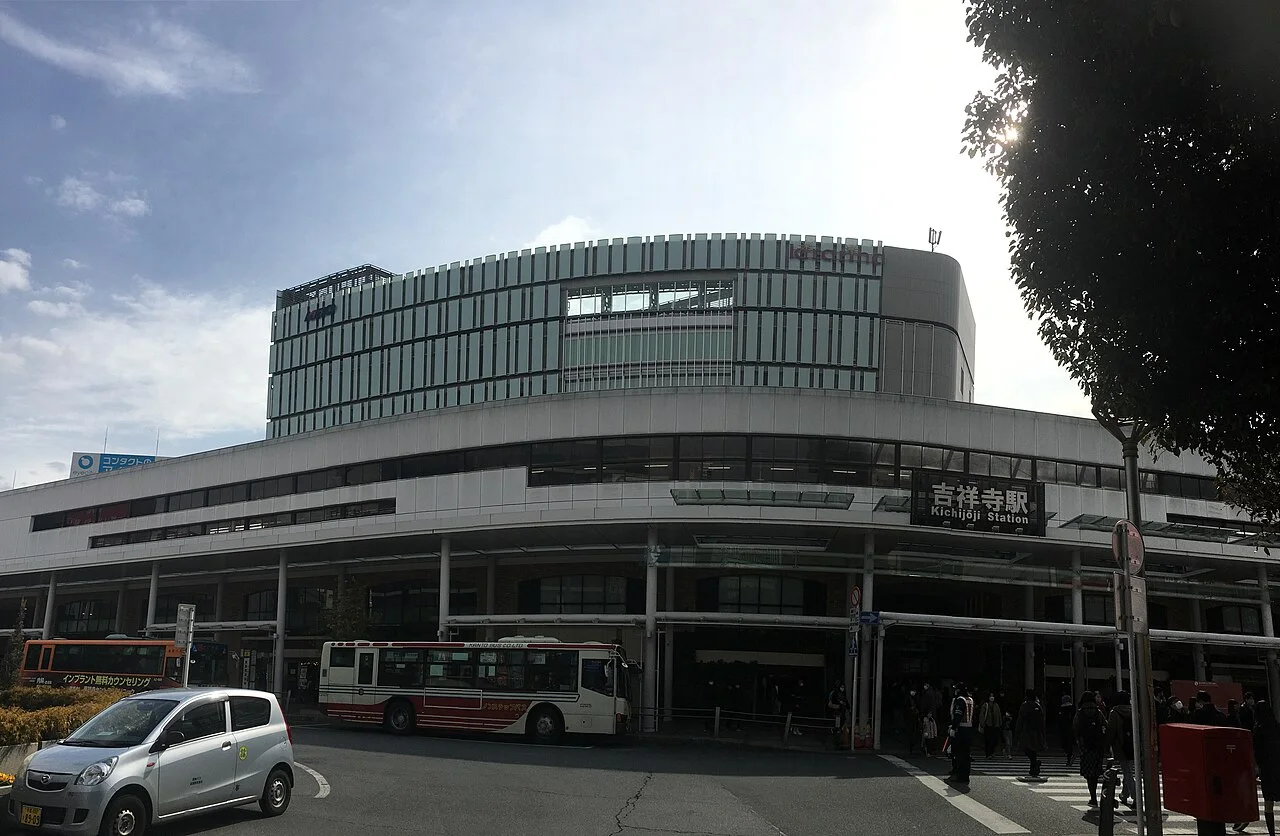
JR Kichijoji Station's South Exit is also signed as the Park Exit (Koen-guchi). From here, Nanaibashi-dori leads straight down to the pond inside Inokashira Onshi Park. The Tokyo Metropolitan Park Association lists the walk from Kichijoji Station to the park at roughly 5 minutes, making it ideal for morning loops - just add the walk from your hotel room to the station exit.
The South Exit side mixes traffic, storefronts, and foot traffic heading toward the trees. If you are rolling heavy luggage, check your hotel's official entrance map and crosswalk locations ahead of time. The grade only slopes down once you near the pond, so anyone preferring an easier pace can walk from the station plaza to the park entrance and decide there whether to descend to the water. Keio's Inokashira-koen Station serves another entrance on the far side, useful if you are already riding the Keio Line and want to enter from a different direction.
Sunroad, Daiyagai, and Harmonica Yokocho all radiate out from the North Exit. The two covered shopping arcades work well on an afternoon stroll, giving you time to drop bags in your room before returning to the north side for dinner. Harmonica Yokocho's lanes are narrow, so save the restaurant name and nearest alley entrance before your first visit. If you are with a group, meet on the open plaza outside before ducking into the lanes to hunt for seats.
Staying on the North Exit side does not rule out morning park walks - an indoor free passage links the north and south sides of the station. If your hotel sits further out near the department stores on the north side, just add the extra minutes across the plaza. When traveling with strollers, older relatives, or large suitcases, pick a specific street-level exit or shopfront as your meeting point rather than waiting upstairs outside the ticket gates while others head down to the street. JR's station map marks elevators and coin lockers to help plan that first stretch.
Inside Japanese stations, ticket gates are labeled kaisatsu. At JR Kichijoji Station, the Central Ticket Gate (Chuo Kaisatsu) and South Ticket Gate (Minami Kaisatsu) operate from the first train to the last, while the West Ticket Gate connecting to Atre and the East Exit keep shorter hours, listed by JR as 7:30 to 22:00. Early in the morning or late at night, stick to the Central or South gates; if your map routes you through Atre, follow the station signs on-site instead.
When scanning the map, pin your hotel entrance first, then trace one line to the park and another to your dinner spots. Light sleepers should zoom in on booking photos to see whether windows face the tracks, a main road, or an inner block, and request a specific floor or orientation when booking room types. Walking a few extra minutes off the station can buy a quieter room, though it adds distance on late-night walks home - weigh both ends of your day together.
Comparing the Two Tokyu Hotels: Locations and Room Layouts
Kichijoji Tokyu REI Hotel sits right outside the South Exit at 1-6-3 Kichijoji-Minamicho, listed on its website as a 1-minute walk from the station. For solo travelers, late arrivals, or guests heading out early to the Ghibli Museum, this location cuts out any station-front navigation. If you are arriving via JR with step-free needs, check the hotel's accessible route diagram for the exact crosswalks and entrance. Keep "REI" in the hotel name saved on your confirmation so you do not mix it up with its sister property.
At REI, Standard Single rooms measure 14.6 square meters with a 120 cm bed, while Standard Double rooms measure 17.3 square meters with a 160 cm bed for one or two guests. Two adults who want separate beds should go straight to Twin room floor plans and bed specs. Travelers with oversized luggage should inspect the room photos online to estimate how much clearance remains near the doorway and bedside once two large suitcases are open.
Kichijoji Excel Hotel Tokyu stands on the North Exit side at 2-4-14 Kichijoji-Honcho, listed as an 8-minute walk from the North Exit. Cross the crosswalk from the North Exit, walk through Daiyagai arcade, cross the street in front of Tokyu Department Store, and enter through the main hotel doors. Guests planning to browse Nakamichi-dori, hit the department store, and dine nearby can drop bags early and swing back easily with shopping bags.
Excel's Premium Deluxe room spans 45.7 square meters with three beds and sleeps up to four guests. Groups of four adults should enter the exact headcount first to check how the fourth bed is configured, and compare that total rate against booking two Twin rooms. The hotel also lists a 27-square-meter Universal Room for one or two guests; if someone in your party needs wheelchair turning clearance or bathroom grab bars, match the room photos and facility diagrams to your needs before reserving.
Standard check-in and check-out hours differ between the two properties. REI lists 15:00 check-in and 10:00 check-out, while Excel lists 14:00 check-in and 11:00 check-out. On an early morning flight arrival, confirm luggage-hold windows so you can head out hands-free. If you want an unhurried final morning in the park, that extra hour before check-out is worth factoring in. When comparing rates, note any discounted late-check-in or early-check-out plans - they only save money if those hours fit your schedule.
When typing addresses into Japanese map apps, remember Minamicho corresponds to REI and Honcho corresponds to Excel. If travel companions are converging on Kichijoji from different directions, share the hotel's main entrance pin rather than trying to coordinate a specific station exit. When one person rides the airport bus and another takes the Keio Line, meeting in the hotel lobby saves confusion.
Booking for Families, Trios, and Apartment Stays
When booking with children, enter exact ages and bed preferences from the very first search. Excel's official booking guidelines allow children aged 6 and under who have not started elementary school to share an existing bed free of charge; children needing their own bed or already in elementary school count as adults in the search form. With a stroller, make sure the room has space to park it without blocking the bathroom door or the path between the bed and entry.
For three adults traveling together, check both maximum occupancy and exact bedding. Some plans rely on a rollaway bed, sofa bed, or fixed third bed, and tolerances for bed width and floor clearance vary. If a third bed eats up most of the walking space and forces you to take turns opening suitcases, booking two separate rooms is far easier. Just remember to track cancellation deadlines on both reservations, especially if one traveler's time off or flight is still tentative.
If you stay several nights and want to prep breakfast or simple dinners, include apartment-style stays in your search. Trace the walking route from the exact street address first, and favor listings with clear building-entrance photos and check-in instructions. To cook properly, filter for places listing a stove, real refrigerator space, and cookware - plus a dining table or microwave if traveling with toddlers. If you plan to do laundry, check whether the washer has a built-in dryer so you can time morning pickups before heading out.
Longer stays on residential side streets require extra planning for luggage forwarding and late key handoffs compared to staffed front desks. Save the building name, floor number, entrance photo, and keypad or lockbox instructions offline on every traveler's phone. If you plan to forward large suitcases from your previous hotel, confirm the host's delivery instructions first and pack one overnight change of clothes in your daypack just in case.
When weighing hotels against apartments, divide the final multi-night total - base rate, taxes, cleaning fees, and fixed surcharges - by the number of nights. On a one-night stop, you are mainly paying for smooth check-in and bag storage after checkout. Over five nights, having a breakfast setup, laundry, kitchen access, and a nearby supermarket gets used repeatedly, making those extras worth scoring carefully.
JR to Shinjuku, Keio to Shibuya
JR Kichijoji platforms primarily serve the orange Chuo Line Rapid and the yellow Chuo-Sobu Line Local. Both run straight to Shinjuku, though the orange Rapid is the better pick for Tokyo Station. Tokyo's official tourism site lists Rapid transit times at roughly 14 minutes from Shinjuku and 28 minutes from Tokyo Station. Build in extra buffer on both ends for walking from your room to the platform and navigating out to your meeting spot.
Coming back to Kichijoji from Shinjuku, double-check the next train's stopping pattern on the platform display. Chuo Special Rapid and Ome Special Rapid trains skip Kichijoji completely. If you are stopping off in Koenji, Asagaya, or Nishi-Ogikubo on weekends or holidays, ride the yellow Local line, and check weekday stopping patterns before boarding. If you accidentally stay on an express train past Kichijoji to Mitaka, simply hop on an eastbound train that stops at Kichijoji one stop back.
Browsing shops or grabbing dinner in Nakano pairs naturally with a return trip from Shinjuku. Depending on the hour, you can choose between both JR services between Kichijoji and Nakano, though exact stops vary by train type and day of week. Heading back from Nakano, look for yellow Local trains bound for Mitaka. If you catch an evening show in Shinjuku and still want a late bite near Kichijoji's North Exit, check JR's date-specific timetable ahead of time and bookmark your return train before leaving the hotel.
The Keio Inokashira Line runs directly to Shimokitazawa and Shibuya on both Local and Express trains, with Kichijoji and Shibuya anchoring opposite ends of the line. Changing trains in Shibuya requires following signs for the Keio Inokashira Line, which sits a noticeable walk from the JR and subway platforms. If you are only heading one stop to Inokashira-koen Station, board a Local train at Kichijoji. When staying out late in Shibuya, check last-train schedules using your full origin and destination to confirm a connection all the way back to Kichijoji.
You can easily loop Shibuya and Shinjuku in a single day using Kichijoji as both your starting point and home base. Ride the Inokashira Line down to Shibuya in the morning, hop across to Shinjuku in the afternoon, and ride the Chuo Line home after dinner. Going back to the hotel midday just to drop shopping bags adds two extra train rides, so save bulky purchases for your last stop of the day and keep your hands free earlier on.
Airport Transfers: Match Bus Schedules to Your Flight Times
Airport limousine buses connect both Haneda and Narita directly to Kichijoji Station. Odakyu Bus divides its airport timetable page into departures from Kichijoji Station and arrivals bound for Kichijoji Station. Check your ticketed terminal, direction, and travel date carefully. Narita service resumed in March 2026 with fewer daily departures than regular city trains, but when a bus aligns with your flight, you can stow suitcases underneath and walk straight to your hotel upon arrival.
When booking an arrival bus, calculate when you will reach the bus stop after clearing immigration and baggage claim rather than your plane's touchdown time. Check whether advance seat reservations work differently for inbound versus outbound trips. If your arrival time is unpredictable, save a rail backup on your phone: routing via Shinjuku puts you on the JR Chuo Line Rapid (matching your South or North Exit hotel), while routing via Shibuya connects to the Keio Inokashira Line.
For your return flight, work backward from the hour you must arrive at your airport terminal. Direct buses require factoring in both scheduled travel time and potential highway traffic, while trains require padding for ticket gates, platform transfers, and terminal walks. On an early morning departure, pack and back up your confirmations the night before, and write down both your target departure and the next backup train or bus. If both options cut uncomfortably close to check-in cutoff, move your final night to a major transit hub or near the airport and put Kichijoji earlier in the trip.
Arriving late at night with heavy bags is much easier when your hotel sits right outside the exit so you can check in first and grab late-night food nearby. If you booked a self-check-in apartment, verify that the latest check-in window and lock instructions still work if you catch the last train. When a host requires an in-person key handoff at a fixed hour, even a small flight delay can derail the evening, so pick accommodations whose check-in rules fit your actual arrival window.
Pairing Ghibli Museum Time Slots With Your Stay
The Ghibli Museum, Mitaka requires advance timed-entry reservations for a specific date and hour, with no on-site ticket sales. Its English website directs buyers to Lawson Ticket, where tickets for the following month generally go on sale on the 10th of each month at 10:00 AM JST. Seven hourly entry slots run from 10:00 to 16:00, and visitors must enter within one hour of their designated time. Check the museum's calendar first to avoid closed days and maintenance periods.
If the museum is a non-negotiable highlight, lock in your ticket date and time slot before finalizing a multi-night stay in Kichijoji. During peak seasons like spring break, hold a refundable hotel room first with a free-cancellation cutoff set after ticket release day. If you only land an afternoon slot, enjoy breakfast around the North Exit or park in the morning and walk over from your hotel afterward. With a morning entry, arrive the evening before so everyone starts rested over breakfast in Kichijoji.
The museum lists about a 15-minute walk from Kichijoji Station to its grounds in the West Garden of Inokashira Park. For a morning slot from the South Exit, take Kichijoji-dori past the zoo toward Mansukebashi Bridge to keep a steady pace. Save Nanai Bridge and the lakeside park trails for your walk back after the visit, so stopping for photos by the water does not make you late. Pin the museum entrance itself on your map rather than searching for the park name, which drops pins in different spots.
Alternatively, the walk from JR Mitaka Station's South Exit along the Tamagawa Josui canal takes roughly 15 minutes, or you can ride the community bus from Mitaka's South Exit. If you are staying in Kichijoji on a rainy day, the museum notes that Odakyu route buses bound for Chofu from Kichijoji's South Exit stop at Mansukebashi, the closest stop to the entrance. Because your ticket is timed, check the closest bus stop to your hotel and verify whether your bus stops there before deciding between riding or walking along the street.
Even with just one museum slot, you can build a balanced day around it. After a morning visit, decide based on your energy whether to stroll back along the pond to Kichijoji for lunch or follow the Tamagawa Josui to Mitaka and take the JR back. Before an afternoon slot, grab brunch near the North Exit or inside the station, then return to Harmonica Yokocho for dinner. If friends end up with different entry times, pick a seated cafe or bench outside the museum as your meetup point and text updates as you exit rather than leaving someone waiting outside in the rain.
Staying a night near Mitaka Station is another workable option, especially if you are continuing west along the Chuo Line the next day or taking the South Exit bus straight to the museum. Kichijoji makes more sense when you want one base wedged between the park and shopping streets, covering the museum, dinner, and Keio Line connections together. Because the two stations are only one stop apart, choose one side and stick with it rather than splitting nights and losing half a day to checking out and back in.
Leave Unscheduled Breathing Room for Inokashira Park
Inokashira Park grounds remain open around the clock with free entry. Staying on the South Exit side lets you stroll across Nanai Bridge to view the pond early, return to the station area for breakfast, and still have time to pack before checkout. You can easily split the lakeside path, Inokashira Benzaiten Shrine, and the trail out to the West Garden across separate walks. If you leave early the next morning, save the park trails for your arrival afternoon - walking back toward the station at dusk puts you right next to restaurants, making it easy to pivot if your first dinner pick has a wait.
If you want to ride the swan boats, check boathouse hours separately. The Tokyo Metropolitan Park Association lists pedal swan boats at ¥1,000 per 30 minutes, seating up to two adults and one child. From November through February, ticket sales close at 15:50, and the boathouse closes on Wednesdays from December through February. Spring and summer hours run later; larger groups should split into teams ahead of time, and check the park association's boathouse page on the day for seasonal events or weather closures.
Families with kids can easily dedicate half a day to Inokashira Park Zoo. It spans two separate zones - the Main Zoo and the Aquatic Life Park - each with its own gate schedule. While the open park greets early walkers at dawn, the zoo typically opens from 9:30 to 17:00 with last admission at 16:00. If you have an afternoon reservation elsewhere, explore one zone or stroll the pond in the morning, then swing back to your hotel at midday for water, restrooms, and a reset.
During cherry blossom season, even the walk from the station to the pond fills with crowds by midday. Go out early in the morning for a quieter walk and photos before returning to the hotel for breakfast or packing. On a dedicated spring blossom trip, schedule flower viewing on a middle day and keep a spare morning free in case of rain. In autumn and winter, when sunset arrives early, walk back through familiar exits and organize shoes and bags before heading out again if your evening takes you beyond Mitaka.
In light rain, trim your park walk down to a quick loop from the entrance to the pond's edge. On days with heavy rain or high wind, pivot to North Exit shops, Tokyu Department Store, or station-connected arcades, where it is easy to pop back to your room for dry shoes. On a single-night stay, if the rain clears right before checkout, use the nearest park gate for a short walk, then check out and start shopping on the north side. If transit pauses or park paths close in severe weather, adjust your route to match operator advisories.
How to Pace a Two- or Three-Night Stay
On a two-night itinerary, if you arrive in the afternoon on Day 1, drop your bags and walk straight to the park - stick to the east end of the pond if time is tight. Heading back toward the north side, browse Harmonica Yokocho for dinner, or seat larger groups at a street-level restaurant with full tables first before wandering the alleys afterward. If you only have one night total, pick either the Ghibli Museum or North Exit shopping after breakfast the next morning so you still have an unhurried window for checkout and bag pickup.
Use your full middle day on a two-night stay for the Ghibli Museum and Mitaka. After a morning entry, walk back along the pond for lunch and dinner in Kichijoji. With an afternoon ticket, browse Nakamichi-dori or pick up supplies near the North Exit in the morning, and keep lunch close to the hotel. On the third morning, depart toward your next major hub: ride the Chuo Line to Tokyo Station, or take the Inokashira Line straight to Shibuya. At staffed hotels, check out early, store your bags at the desk, and head out light.
Adding a third night opens up a dedicated half-day in Shimokitazawa. Take the Keio Inokashira Line straight there for afternoon browsing, and note venue end times and return trains if you stay for a live show. Another day works well for Shinjuku shopping paired with Nakano on the return trip, or an afternoon hopping along the Chuo Line. If you plan to eat on the North Exit side afterward, check kitchen last-order times in advance, especially on show nights.
To explore south of Mitaka, catch an Odakyu Bus from Kichijoji to Jindaiji Temple. Look for route Kichi-04 on the bus map and check the headsign for "Jindaiji," since some departures on the same route turn back early. As a half-day outing, enjoy a relaxed breakfast in Kichijoji, ride down, eat soba noodles around the temple grounds, and return. If you combine Jindaiji with the Ghibli Museum on the same day, protect your timed museum entry first and only add the temple if you have a generous gap between them.
For another neighborhood along the Chuo Line, slot Nishi-Ogikubo into a morning or lunch window. From Kichijoji, it is just one stop toward Shinjuku on the yellow Local train. That makes an easy excursion on departure morning: leave your suitcases with the hotel, head one stop over for lunch, and come back to Kichijoji to collect your bags. If part of your group wants more shopping while others want one more park walk, agree on a meetup time back at the hotel so both sides stay in reach.
Compare Final Room Totals and Cancellation Deadlines
Hotels listed as "near Kichijoji Station" can swing sharply in price by date, guest count, and room category. Search with your confirmed dates and exact party size, pull up one candidate on the South Exit and one on the North Exit, and compare multi-night totals side by side. If a listing displays a per-person rate for two guests, click through to the final room total including taxes and mandatory fees. Weighing an extra night also depends on usable hours - dropping bags at 2:00 PM on Day 1 delivers far more value than arriving near midnight.
Before paying extra for a breakfast-inclusive plan, look at when you leave each morning. If you hold a 10:00 AM museum slot, eating a hotel breakfast beforehand makes a bundled rate easy to justify. If you prefer sleeping in or grabbing bakery pastries and coffee in the shopping arcades, budget breakfast separately. Families should check child meal pricing and serving hours on the plan details, and if departure day requires an early train, pick up breakfast items near the station the evening before.
When booking ahead around Japanese holidays, scan the Musashino City Tourism Organization's event calendar for busy local dates. For cherry blossom trips, choose rooms based on your comfortable total budget and flexible cancellation terms. Whenever museum tickets, flights, or headcounts remain unconfirmed, lock in a refundable room matching your group size first, then compare nonrefundable or flash deals only once dates and numbers settle. Screenshot the cancellation deadline before paying and set a calendar alert in the local time zone shown on your booking.
Both Tokyu properties specify a 100% cancellation fee for cancellations after 15:00 the day before arrival, same-day cancellations, or no-shows, while prepaid online plans follow their own terms. When weighing two rates for the same night, look at the free-cancellation window, breakfast inclusion, and check-in hours together. If one middle night spikes sharply in price during a multi-night stay, price out splitting the reservation into two bookings and ask the hotel if you can stay in the same room.
Once booked, save a single phone screenshot containing the station name, exit name, full Japanese hotel name in Romanized or address-ready reference, and phone number so it is ready the moment you step off the train. Keep a copy of cancellation cutoffs, breakfast hours, and check-in rules accessible to everyone sharing the room. If rain forces a schedule change, you usually only need to swap which side of the tracks you visit morning and evening while keeping your hotel and transit plan intact.
Where to Stash Luggage on Arrival and Departure Days
JR Kichijoji Station's official map marks coin locker banks throughout the station. If you store bags while transferring through, choose lockers along your pickup route and note whether they sit inside or outside the ticket gates and near which exit before heading out to eat. Returning from the opposite side of the station later, walk straight back to that same staircase or elevator. Large rolling suitcases are harder to fit into standard lockers, so ask your hotel about same-day arrival or post-checkout bag storage for extra flexibility.
Even though the park entrance sits close to the station, dragging heavy bags down to the pond and back up through weekend crowds wastes energy. Drop suitcases at your hotel on arrival day first, keeping only medications, chargers, and museum tickets in a daypack. If you are catching a Shinkansen from Tokyo Station on checkout day, wrap up North Exit errands before retrieving your bags, and count backward from pickup time to leave enough buffer for navigating Tokyo Station's Shinkansen gates and platforms.
When changing hotels mid-trip, schedule your last laundry run inside your Kichijoji stay. If using paid hotel laundry service, confirm pickup and return cutoffs so clean clothes arrive before checkout. Checking in late before an early train leaves little energy for hunting down a coin laundry after dark. On stays of two nights or more, knock out laundry on your middle day and leave just one outfit out for departure morning.
With one spare hour before leaving Kichijoji, stick to whatever sits on the same side of the tracks as your hotel. From a South Exit stay, take one last loop into the park before checkout and boarding. From a North Exit stay, store your bags at the desk, pick up train snacks along the arcades, and circle back to the same side. Early in the morning before shops open, choose the park or a cafe whose opening hours you have already confirmed - proximity to your exit matters far more at that hour than chasing the most famous spot in town.
A few useful answers
Is Kichijoji a good place to stay on a first trip to Tokyo?
If your itinerary includes Inokashira Park, the Ghibli Museum, or stops along the Chuo Line, staying one or two nights in Kichijoji works well. If almost every day takes you to Ueno, Asakusa, or east of Tokyo Station, choose a hotel closer to that side of the city.
Should I stay near the North Exit or South Exit in Kichijoji?
Pick the South Exit (Park Exit) if you want direct morning walks into Inokashira Park. Pick the North Exit if dinner, shopping, and covered arcades are your priority - Sunroad, Daiyagai, and Harmonica Yokocho all start on the north side.
What is the difference between Kichijoji Tokyu REI and Kichijoji Excel Hotel Tokyu?
Tokyu REI lists a roughly 1-minute walk from the South Exit, with standard 15:00 check-in and 10:00 check-out. Excel Hotel Tokyu lists an 8-minute walk from the North Exit, standard 14:00 check-in and 11:00 check-out, and a Premium Deluxe room that sleeps up to four. Double-check the full hotel name and street address when booking.
Are there direct trains from Kichijoji to Shinjuku and Shibuya?
Yes. Take the JR Chuo Line Rapid or Chuo-Sobu Line Local directly to Shinjuku, and the Keio Inokashira Line directly to Shibuya. When riding an orange train back from Shinjuku, make sure it stops at Kichijoji.
When should I book my Kichijoji hotel if I am visiting the Ghibli Museum?
Tickets for the following month generally go on sale on the 10th of each month at 10:00 AM JST. Either wait until your entry slot is confirmed before booking your room, or reserve a refundable rate with a free-cancellation deadline after ticket release day.
How long is the walk from Kichijoji Station to the Ghibli Museum?
The museum estimates about a 15-minute walk from Kichijoji Station. You can also take a South Exit bus stopping at Mansukebashi, or walk or ride the community bus from JR Mitaka Station's South Exit.
Do airport buses run directly to Kichijoji?
Yes, direct airport limousine buses connect both Haneda and Narita with Kichijoji Station. Select your direction on Odakyu Bus's airport page first, then check schedules for your terminal.
Can I walk into Inokashira Park early in the morning?
The park grounds are open 24 hours a day with free admission. However, the boathouse, Inokashira Park Zoo, and the park information center each keep their own operating hours.
How many nights should I stay in Kichijoji?
One night covers a morning park stroll and a local dinner. Two nights give you a full day for the Ghibli Museum and surrounding blocks. Add a third night if you also want time for Shimokitazawa, Shinjuku, or Jindaiji Temple.
Official information and references
Sources used in this guide.
- GO TOKYO | Kichijoji Access and Neighborhood Guide
- Kichijoji Sunroad Shopping Arcade | North Exit Access
- Musashino City Tourism Organization | Event Calendar
- JR East | Kichijoji Station Map
- JR East | Kichijoji Station Ticket Gates and Operating Hours
- JR East | Kichijoji Station Timetables
- Keio Corporation | Kichijoji Station and Inokashira Line Timetables
- Keio Corporation | Inokashira Line Route and Stations
- Kichijoji Tokyu REI Hotel | Access
- Kichijoji Tokyu REI Hotel | Rooms
- Kichijoji Tokyu REI Hotel | Check-In and Check-Out Hours
- Kichijoji Excel Hotel Tokyu | Access
- Kichijoji Excel Hotel Tokyu | Rooms
- Kichijoji Excel Hotel Tokyu | Check-In and Check-Out Hours
- Ghibli Museum, Mitaka | Tickets and Entry Times
- Ghibli Museum, Mitaka | International Ticket Sales
- Ghibli Museum, Mitaka | Directions and Bus Access
- Tokyo Metropolitan Park Association | Inokashira Park
- Tokyo Metropolitan Park Association | Inokashira Park Boathouse
- Inokashira Park Zoo | Opening Days and Hours
- Odakyu Bus | Haneda and Narita Airport Limousine Bus
- Odakyu Bus | Kichijoji-Narita Airport Line Resumption Notice
- Odakyu Bus | Kichijoji Route Map