The 2026 Fuji Kawaguchiko Autumn Leaves Festival runs from 7 to 29 November, with sunset illuminations until 21:00. Covers the Momiji Corridor, Maple Tunnel, lakeside Mount Fuji viewpoints, Red Line buses, evening return options, and Car Park No. 1 fees.
- Region & Focus
- ChubuWhen to visit
- Reading Scope
- 17 min read · 11 chapters · 7 Q&As
- Official Verification
- 19 official sources checkedUpdated 22 November 2026
- Key Topics
- SeasonsChubu & Hokuriku
Chapter Route Map (tap any stop)
- Festival Dates and Illumination Hours
- The Corridor, Momiji Kaido, and Maple Tunnel on the Map
- When to Time Your Visit for Peak Colour
- Getting from Tokyo to Kawaguchiko and Taking the Red Line Bus
- Returning to the Station After the Illuminations
- Where to Park and How to Pay at Car Park No. 1 in 2026
- Mount Fuji from the Lakeshore, Maples Along the Nashikawa
- Pairing Oishi Park, Maple Tunnel, and the Museums
- Half-Day, Full-Day, and Overnight Itineraries
- Walking-Distance Stays and the 2027 Accommodation Tax
- Handling Rain, Crowds, or Slower Paces
- Quick Q&A
To visit the Momiji Corridor at Lake Kawaguchiko, take the Red Line sightseeing bus from Kawaguchiko Station and alight at Itchiku Kubota Art Museum. In 2026, the Autumn Leaves Festival runs from 7 to 29 November, with illuminations from sunset until 21:00. Day-trippers staying only for the first hour or so of the lights can still catch an early-evening Red Line bus back to the station. If you want to enjoy the full evening display without rushing, staying near the corridor is the simplest option. During the day, wait for Mount Fuji to clear along the north shore before heading to the Nashikawa River for the maples.
Festival Dates and Illumination Hours
The 28th Fuji Kawaguchiko Autumn Leaves Festival takes place from Saturday 7 November to Sunday 29 November 2026. The main venue lies along the Nashikawa River on the north shore of Lake Kawaguchiko—search for "Momiji Kairo" on maps. Daytime hours on the official festival flyer are listed as 9:00–19:00, admission to the corridor is free, and illuminations run from sunset until 21:00. The official event page also links to the venue flyer, live webcams, and road updates. Check the webcam before setting out: look at the foliage colour near the entrance first, then check the canopy further back and the crowd levels.
If you want to browse the food and craft stalls around the venue, allow some time before dark. Families can grab something to eat first, then pick one or two spots to stop for photos, keeping to the wider outer paths when carrying food. Anyone planning dinner nearby should book a table ahead or wait until returning to the station. Festival hours and illumination hours are listed separately; if you are not arriving at the north shore until after 19:00, eat dinner on the way.
If you only have one slot in your day and want to photograph leaf details while relying on public transport, daytime is the easiest to plan. To watch the light shift from the sky into the treetops, enter while it is still light, walk the Nashikawa River path once, and return to an open spot along the bank to wait for the lights. If you are meeting up with friends after dark, agree on the public pedestrian area near the Itchiku Kubota Art Museum bus stop and share your live pin. In a crowd, the same bridge looks completely different from opposite ends, so simply saying "by the bridge" often leaves people waiting on different sides.
Treat 21:00 as your hard cut-off for staying on site. Early-evening visitors can retrace the same exit path back to the bus stop, where there is room to step around people taking photos. Later arrivals should note the exit route from their car park or accommodation before entering the Nashikawa footpaths. When a group gets spaced out, wait for friends to finish taking photos before moving on, rather than stopping in narrow sections to look for each other.
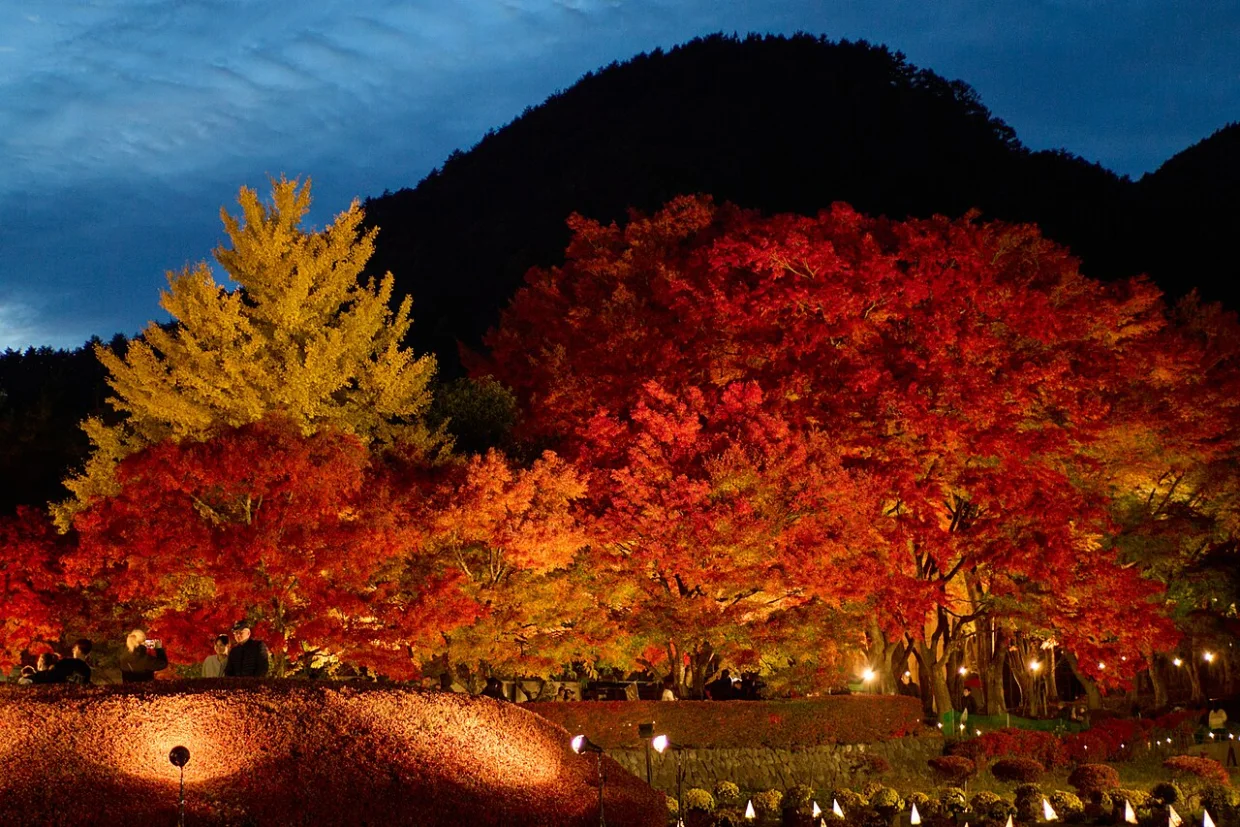
The 2026 Fuji Kawaguchiko Autumn Leaves Festival runs from 7 to 29 November, with sunset illuminations until 21:00. Covers the Momiji Corridor, Maple Tunnel, lakeside Mount Fuji viewpoints, Red Line buses, evening return options, and Car Park No. 1 fees.
The Corridor, Momiji Kaido, and Maple Tunnel on the Map
The Momiji Corridor follows the Nashikawa River as it feeds into Lake Kawaguchiko. After alighting at the Itchiku Kubota Art Museum stop, look for signs to Momiji Kairo and the Nashikawa River, and follow the pedestrian flow to the maple-canopied banks. Yamanashi Prefecture's official listing puts this tree-lined stretch at roughly 150 metres. Because the channel, footbridges, and branches sit so close together, turning a corner shifts the angle entirely, and photographers tend to linger up and down this short strip. Families can walk at their own pace and regroup on the wider outer path.
Momiji Kaido refers to the maple-lined stretch along the lakeside road, described as roughly 1.2 kilometres long on the 2026 flyer. Walking this section gives you open water on one side and the foothills across the lake; if you want a bit more breathing room, continue along the shore towards the Kawaguchiko Museum of Art. If you are arranging a pick-up with a private driver at the main festival site, send the pin for Momiji Kairo and save a separate pin for the designated festival parking area from the flyer.
Further west, past Oishi Park, lies a separate spot known as Momiji Tunnel. Here, maples reach out from the prefectural roadside over the tarmac, framing the lake, Mount Fuji, and autumn leaves in a single view. Yamanashi Prefecture's tourism site notes a roughly 20-minute walk from the Kawaguchiko Natural Living Centre bus stop and mentions a small number of parking spaces on site. Keep your camera packed until you reach a safe place to stand before looking for foreground framing—setting up a tripod or stopping in the middle of the carriageway blocks oncoming traffic.
The sightseeing bus route also includes stops such as Kawaguchiko Museum of Art and Kawaguchiko Sarumawashi Theater / Konohana Museum. The former sits closer to the lakeside promenade and the latter near the festival zone, but on a first visit to the north shore aimed at walking the Nashikawa River, save Itchiku Kubota Art Museum as your target stop right beside the corridor. Do not jump off early just because you spot maples arching over the lakeside road from the bus window—mark the roadside avenue and the river entrance separately.
You can navigate the venue map using the bus stop numbers. Heading towards the lake from Stop 17 brings you to the festival headquarters, craft market, and food stalls, with public toilets marked nearby on the flyer. Walking east along the shore towards the station passes the circular hall near Stop 16 and continues to the Kawaguchiko Music Forest Museum. When travelling with children or older relatives, circle the toilets and the first rest spot on the map beforehand so nobody has to turn back from the far end of the corridor. The flyer also marks a second illuminated stretch along Momiji Kaido, so walking from the corridor towards Stop 16 still gives you a view of lit roadside maples.
When to Time Your Visit for Peak Colour
When picking dates, look at the festival calendar and actual leaf progression separately. Yamanashi Prefecture's seasonal guide notes that colour typically begins in late October, peaks from early to mid-November, and leaves fallen foliage carpeting paths and riverbanks from mid-to-late November. Arriving near the end of the festival lets you frame close-ups of leaves still on the branches alongside fallen red leaves on the ground. If your dates are flexible, wait for updated photos covering the entrance, inner river channel, and lakeside trees together before locking in your day.
In mid-November 2026, local Kawaguchiko outlet Fuji,CanGo reported within the same week that trees along the lakeshore near the circular hall had already turned, while some maples inside the corridor remained green. By its 19 November night-time update, the foliage inside the corridor had deepened noticeably. Location matters as much as date when reading updates: check close-ups from inside the Nashikawa channel for full canopy colour, and check shoreline shots for the foreground trees framing the lake and Mount Fuji. If your trip falls around Japan's Labour Thanksgiving Day on 23 November, factor in holiday road traffic.
Always check both the shooting date and the exact spot on any photo update. Trees near the entrance catch direct sun, whereas branches inside the channel sit under deeper shade, meaning one side can be crimson while the other is still green on the same day. Overnight guests can scout the area on arrival day, pin the brightest sections on a map, and return to their favourite stretch the next morning. Day-trippers should start between the Nashikawa River and the lakeshore, adjusting along the water according to cloud cover and time left.
If you are travelling with young children or older relatives, choosing a weekday within the season improves the walking experience far more than trying to guess the single peak day. Fujikyu Bus's 2026 access guide warns that weekends and public holidays during peak autumn colour bring heavy road congestion, especially between 10:00 and 16:00. If you can only arrive in the afternoon, start along the wider lakeside stretch and follow the festival signs into the Nashikawa corridor once the midday crowds thin out.
Getting from Tokyo to Kawaguchiko and Taking the Red Line Bus
From Shinjuku, you can reserve a direct Fuji Excursion limited express train to Kawaguchiko Station—around two hours—or catch a highway bus from Shinjuku Expressway Bus Terminal (Busta Shinjuku). If getting to the north shore early is your priority, compare actual arrival times at Kawaguchiko Station first. An alternative rail route with one change is taking the JR Chuo Line to Otsuki and transferring to the Fujikyuko Line. When booking the Fuji Excursion, check both the train's destination and seat assignments together, and book multiple seats under one reservation where possible.
Your journey has two distinct legs: Tokyo to Kawaguchiko Station, then the station to the corridor. Fujikyu sightseeing buses depart from Platform 1 outside Kawaguchiko Station, with the Red Line taking about 20 minutes to Itchiku Kubota Art Museum, followed by a five-minute walk. The P-Line also calls at this stop, though less frequently, so only board it if one happens to pull in. The Green Line and Blue Line also share Platform 1—check the route name and destination display on the front of the bus as you queue.
Daytime Red Line buses generally run around every 15 minutes. Timetable durations reflect scheduled road time only; weekends frequently bring boarding queues and slow traffic over the bridge. If anyone in your group gets travel-sick or needs a seat, find the boarding point promptly after exiting the station and wait for the next bus with available seats rather than standing on a packed service. When scheduling timed-entry attractions after the corridor, build in a wider buffer than weekday headways suggest, and decide on lunch once you reach the north shore.
Fujikyu Bus offers a combined Sightseeing Bus Pass covering the Red, Green, and Blue Lines: ¥1,500 for adults (¥750 for children) for a 1-day pass, or ¥2,000 for adults (¥1,000 for children) for a 2-day pass, sold at the Kawaguchiko Station bus counter and online, with only the 1-day pass sold on board. Standard point-to-point fares start from ¥180 for adults. If you are only riding from the station to the corridor and back while walking everything in between, add up the single fares first. Compare the pass only if you plan multiple hop-on, hop-off rides on the same day or Green and Blue Line trips the next day, and budget P-Line rides separately since the pass covers only the Red, Green, and Blue Lines.
Returning to the Station After the Illuminations
The organiser's 2026 festival flyer lists the last Red Line departures back towards Kawaguchiko Station: 18:32 from Stop 17 (Itchiku Kubota Art Museum), 18:33 from Stop 16 (Kawaguchiko Sarumawashi Theater / Konohana Museum), 18:34 from Stop 15 (Kawaguchiko Music Forest Museum), and 18:35 from Stop 14 (Kawaguchiko Museum of Art). Double-check the signpost at your stop to confirm the station-bound direction. If you need to connect to a train or bus back to Tokyo, aim for an earlier departure to absorb boarding queues and traffic.
Once you have a reserved Fuji Excursion train or highway bus booked for the return, treat its departure time as a reason to arrive back at the station early. Travelling at night with children, a pushchair, or luggage leaves extra tasks at the station: locating the platform, collecting stored bags, or buying food. If your return departure falls shortly after sunset, see the foliage by daylight, stay just a few minutes to catch the lights coming on in the canopy, and head to the station area for dinner.
Visitors staying for the full evening display should pre-arrange a pick-up with their accommodation or book somewhere within walking distance along lit public roads. Taxis should be booked in advance with a clear pick-up point and time window, specifying passenger numbers and luggage if travelling in a group. Walking back to Kawaguchiko Station on foot means crossing the lake along a long stretch of road—check the route and bridge crossing in daylight first. If anyone in your party walks slowly, is with small children, or struggles with night-time navigation, arrange transport before the lights come on.
If you need to collect luggage before heading back to Tokyo, save the storage location and closing time at the start of the day. Coin lockers and staffed luggage counters at Kawaguchiko Station operate differently, so check evening access rules if you will be returning late. If members of your group are taking different transport back to Shinjuku—some by train, others by highway bus—agree to meet on the station forecourt or outside the entrance rather than trying to find each other past the ticket barriers.
Where to Park and How to Pay at Car Park No. 1 in 2026
For the 2026 Autumn Leaves Festival, Car Park No. 1 charges ¥1,000 for standard cars and ¥3,000 for large coaches, and accepts cashless payment only. The organiser's event page provides a venue and parking flyer and links to advance booking services for selected spaces. If you book a bay ahead, note the car park's exact name, approach direction, and entry/exit hours. Make sure everyone in the car has a copy of the map so anyone separated can walk back to the car park to regroup.
If spaces closest to the main venue are full, head straight for your back-up car park. Drop a separate pin for your second choice and note where you will cross the lakeside road on foot after parking. Groups in rental cars should leave luggage locked in the boot; walking in from a slightly further car park takes less effort than circling the Nashikawa area twice. Once parked, explore on foot and only retrieve the car when moving on to Oishi or returning to your hotel.
The 2026 event flyer states clearly that stopping and parking on roads around the festival site are prohibited—pull into designated parking areas only. Use car parks or pre-agreed legal pick-up bays when dropping off or collecting companions, and slow down near stopped vehicles and pedestrian crossings. First-time visitors should avoid following traffic down narrow side lanes in search of a gap, as tight passing spots delay everyone. If you plan to stay until after dark, pick dinner stops or post-visit errands based on your car park's location so you do not have to drive back past the venue entrance.
Fujikyu Bus's access guide estimates a 10-to-15-minute drive from the Chuo Expressway Kawaguchiko IC to the north shore under normal traffic. Weekend daytime congestion across Kawaguchiko Bridge and along the north-shore lakeside road stretches that journey, and evening illuminations trigger a second wave of arrivals and departures. Use the live road links on the organiser's page to decide whether to ride the bus first and drive later, or visit the north shore before other lakes. If driving out at night, check the car park's closing time on entry and note which gate leads back to your bay after dark.
On the organiser's map, red "P" icons mark free car parks and blue "P" icons mark paid ones. Along the road leading towards Kawaguchi Asama Shrine sits an area marked Car Park No. 1 (Large Vehicles); drivers in standard cars should note the other car parks on the map and follow on-site marshals based on vehicle size. Some free lots near the Kawaguchiko Museum of Art open only on weekends and public holidays and close in wet weather, so on weekdays or rainy days aim straight for year-round lots or pre-booked spaces.
Mount Fuji from the Lakeshore, Maples Along the Nashikawa
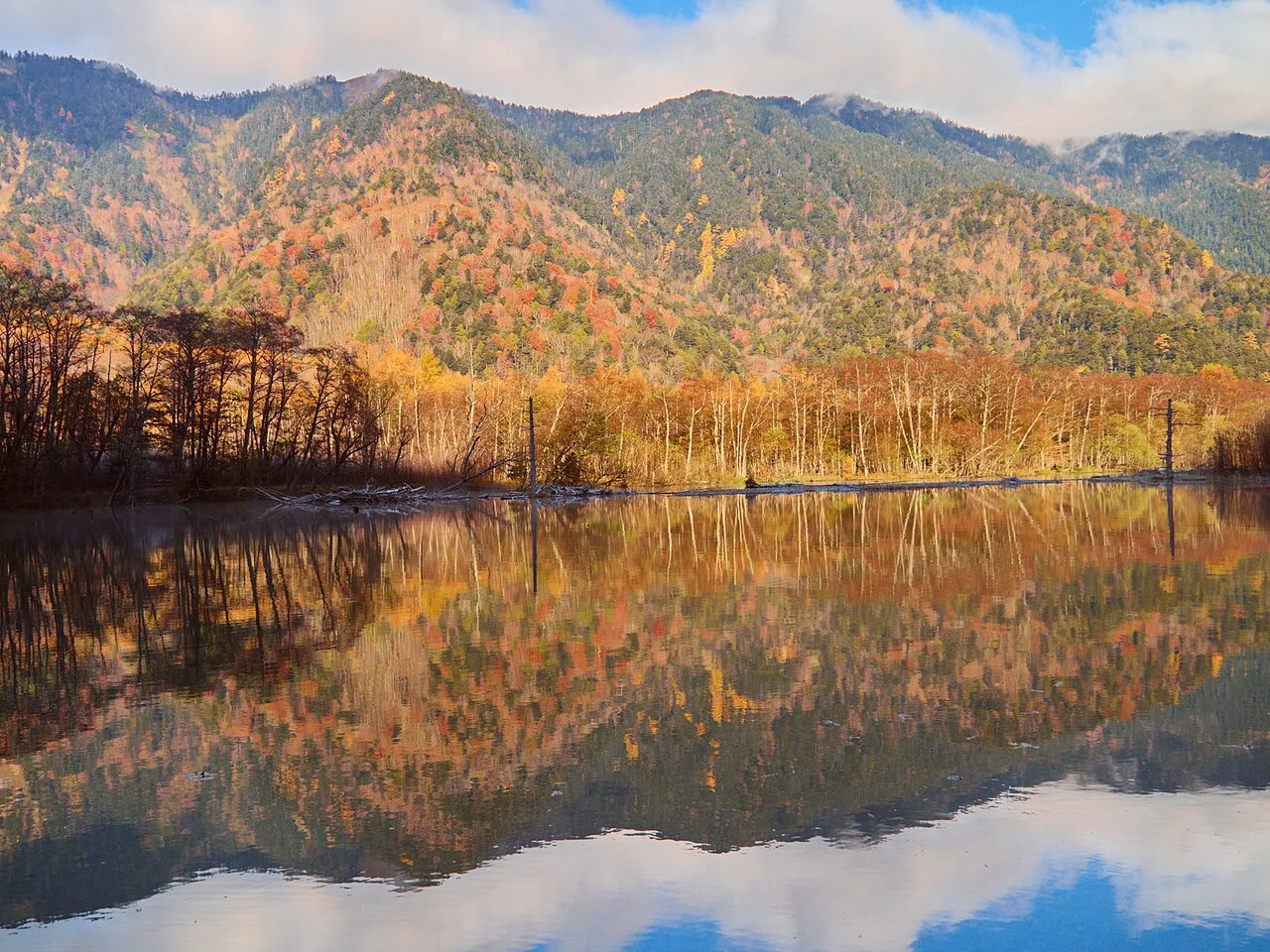
Once you reach the north shore, look to the water first for Mount Fuji. Ubuyagasaki is a small headland jutting into the lake near the north end of Kawaguchiko Bridge, reached from the Ubuya-mae stop on the Red Line. In clear, calm weather, find a safe spot along the bank and check how still the surface is. Any breeze along the shore breaks up the mountain's reflection; when ripples appear, focus on the peak and the shoreline trees, then wait for a lull to capture the reflection.
Framing autumn branches along the edges of your shot generally works better than cramming every leaf into the frame. When only part of Mount Fuji peeks through cloud, anchor your composition with foreground branches, reeds, or the curve of the bridge so the entire shot does not depend on a clear summit. Leave some space back from the water's edge, especially around rocks, damp ground, or slopes, and stay on the inner side of the footpath so others can view the lake and pass safely.
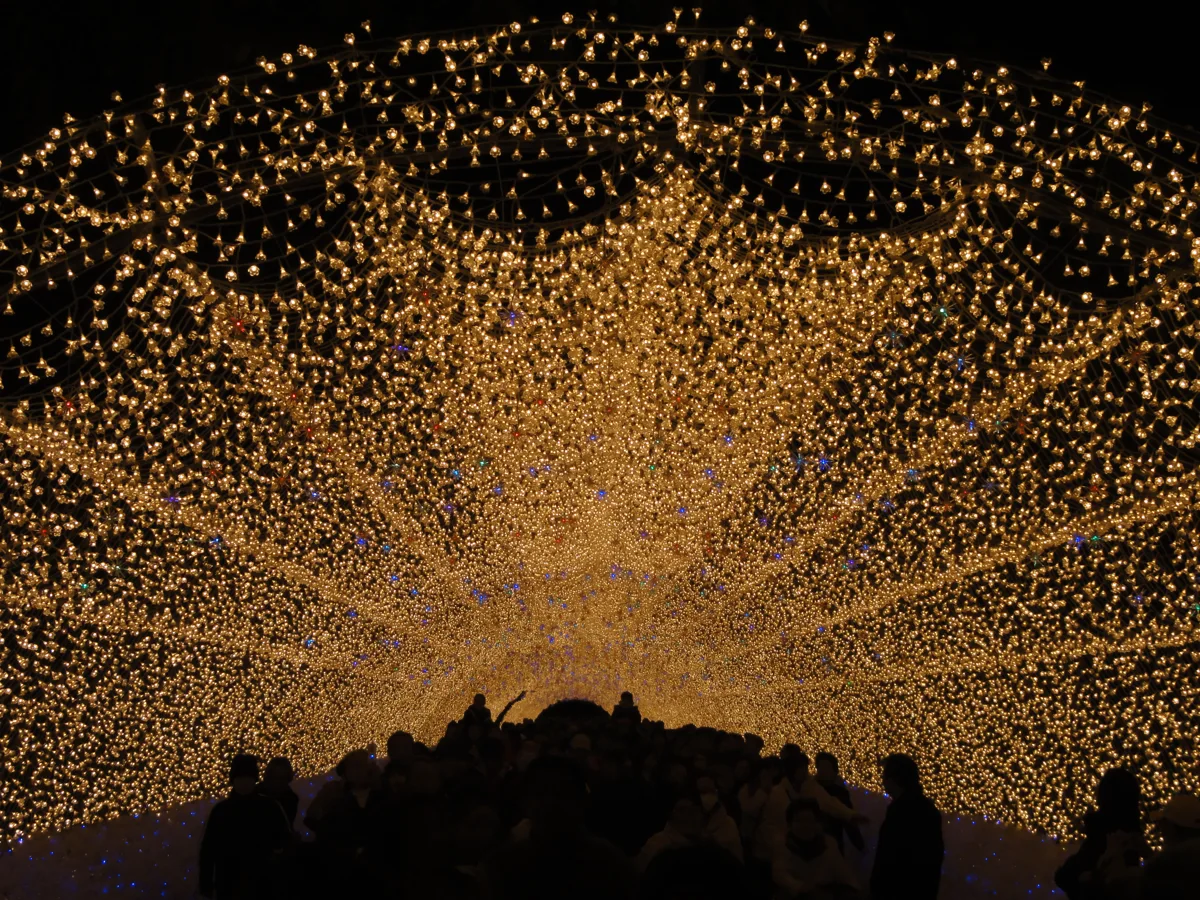
The Nashikawa River section is all about close-up detail. While leaves are still thick on the trees, look upwards at the overlapping canopy where red and green foliage appear side by side. Once leaves begin carpeting the ground, shoot from a low angle along the path edge to include tree roots, river stones, and deeper colour further down the channel. At night, uplighting shines from below—tap the lit leaves on your phone screen to lock exposure so bright highlights do not blow out, keep a little space if passers-by enter the frame, and keep moving once you have your shot.
If you are waiting for blue hour, scout a spot along the Nashikawa during the day, then treat the lakeshore and the corridor as two separate stops. If Mount Fuji clears in the afternoon, head to the water straight away; when clouds roll back in, shift under the maples and wait for the illuminations. Because the two areas sit close together, letting the weather dictate your camera work beats waiting in one spot hoping for still water, a clear summit, and lit foliage all at once.
Returning from Ubuyagasaki is straightforward—head back to the Ubuya-mae bus stop on the lakeside road, or walk north-west along the shore towards the Kawaguchiko Museum of Art and connect to the corridor. To combine both in one morning, stop at Ubuyagasaki first while the water is calm, or shorten the walk straight to the festival site if a wind picks up. If the cloud base lifts partway through your walk, the shoreline near the Kawaguchiko Museum of Art also offers clean views. Keep tripods packed away while walking and only set one up where the path widens.
Pairing Oishi Park, Maple Tunnel, and the Museums
Yamanashi Prefecture lists the vibrant crimson season for kochia bushes at Oishi Park from mid-to-late October, turning gold and brown by early November. By the middle and late stages of the festival, give the Nashikawa River priority for bright red maples. Even after the kochia fades, Oishi Park still offers an expansive lakeside outlook where you can frame the view with roadside plants and paths. Take the Red Line to the Kawaguchiko Natural Living Centre (Oishi Park) terminus, using the Natural Living Centre and neighbouring Fuji Oishi Hana Terrace as rest stops.
From the Natural Living Centre, you can walk west to the Maple Tunnel in the Oishi area. Keep this leg for daylight and count the walking time in both directions. If part of your group needs a break, split up at Oishi Park—one group can stay by the gardens while the rest walk to the tunnel and back. Save the return bus stop details at Kawaguchiko Natural Living Centre on your phone so anyone aiming for the corridor illuminations knows when to turn back.
For paintings, woodblock prints, and photography of Mount Fuji, the Kawaguchiko Museum of Art fits neatly into a lakeside walk. To save a bus ride, choose the Itchiku Kubota Art Museum right next to the Nashikawa River. From April to November, it opens 10:00–17:00 (last entry 16:30), with adult admission at ¥1,500. In autumn 2026, works from Kubota's Symphony of Light kimono series are on display, showing how dyed textiles echo shifting forest tones. To pair the exhibition with the evening lights, visit the museum first and step down to the riverbank as dusk settles.
Further east along the shore sits the Kawaguchiko Music Forest Museum, served by the Music Forest Museum / Hotori no Hotel Ban stop on the Red Line. Its 2026 calendar lists daily opening throughout November, normally 10:00–17:30 (last entry 17:00). If you want to catch mechanical organ demonstrations or live concerts, check that month's programme before leaving so you arrive in time for a set. With both indoor galleries and outdoor gardens, it works well as shelter in brisk weather or while waiting for the next bus.
Pick between the two north-shore museums according to what you want to see. Itchiku Kubota Art Museum pairs naturally with the corridor, putting dyed silk textures alongside autumn leaves in a single stop. Music Forest Museum runs timed performances—if someone in your group wants to hear a full concert, plan your lunch or coffee around the show schedule. On the Red Line, make sure you alight at Music Forest Museum rather than Kawaguchiko Museum of Art, which sits closer to the station. If rain hits after last admission has passed at both venues, head back to the station early for an indoor break.
Half-Day, Full-Day, and Overnight Itineraries
For a half-day foliage trip, ride straight from Kawaguchiko Station to Itchiku Kubota Art Museum. Walk the corridor first, stroll down to the lakeshore for Mount Fuji, and decide whether to continue east depending on how much time remains before your return bus. With only 90 minutes on the ground and queues at the bus stop, sticking to the Nashikawa River and the nearby shore is plenty. To include Ubuyagasaki, break your bus journey there on either the outbound or return leg for a short walk near the bridge.
With a full daytime schedule, start at Ubuyagasaki or the lakeshore while morning winds are light, then split the midday hours between the Momiji Corridor and the museums, adding Oishi Park if you have time in the afternoon. If the forecast gives clear skies only right after arrival, ride the Red Line straight to the Oishi terminus for the lake views and stop off at the museum on the way back. Since indoor galleries keep daytime hours, leaving the Momiji Corridor for last lets you catch dusk illuminations while still making it back before the last bus.
Cycling is another option along the north shore in daylight. Fujikawaguchiko Town's tourism page lists Fuji Kanko Travel outside the station for both luggage storage and bicycle hire, available on the day from 9:00–17:30 (last rental 15:30, subject to closure in bad weather). Confirm parking rules and return times before setting off. Anyone staying for evening lights can cycle during the day, return the bike at the station, and ride the Red Line back to the festival—saving the bike for daytime lake-and-foliage loops avoids unnecessary backtracking.
Both cyclists and buses share roads with heavy autumn foot traffic, so once you cross Kawaguchiko Bridge, split your stops cleanly: ride to the lakeshore for Mount Fuji first, then park the bike before walking the river path. Ride slowly past museum entrances and car park driveways, and dismount to push the bike wherever footpaths crowd up. If you ride all the way to Oishi Park or the west shore, work backwards from the bike return cut-off and allow extra minutes for hills or headwinds. If you only care about photographing leaves along the river, taking the bus to the nearest stop avoids parking hunts and bike returns.
For walkers wanting to link both shores, Fujikyuko Railway's 2026 autumn walking event starts from Kawaguchiko Station, following Funatsuhama, Komagari Observatory, the north-shore promenade, Ubuyagasaki, and Kawaguchiko Museum of Art to the Momiji Corridor, then looping back via Kawaguchiko Bridge and Oike Park. Participation is free via the walking app, with route maps handed out between 9:00 and 12:00 at the Kawaguchiko Station luggage counter. The railway's weekend sample schedule allows around 90 minutes on foot from the station to the corridor—use that as a benchmark if you plan to stop for photos or coffee.
If your legs give out halfway, switch to the Red Line near the corridor instead of walking back. If someone in your group prefers to stick strictly to the lakeshore, take the bus from the station to Kawaguchiko Museum of Art and walk along the water towards the corridor to skip the road stretches and bridge crossing. Save your return bus stop location as soon as you step off so a change of plan does not leave you deciphering timetables by the water.
Staying overnight lets you visit a north-shore museum before sunset, eat dinner near your hotel after the illuminations, and walk back to the lakeshore the next morning. If budget or luggage makes staying near Kawaguchiko Station more practical, arrange evening transport in advance—or keep arrival day to a short afternoon walk and catch the first morning Red Line bus out to the maples. With two mornings in town, save the clearer one for Mount Fuji and keep the cloudier day for the museums, without having to leave the north shore.
Walking-Distance Stays and the 2027 Accommodation Tax
Staying within walking distance of the north shore genuinely cuts out night-time bus transfers, though you should measure the route from your actual hotel entrance to the festival grounds before booking. Where the route follows the lakeside road, check for pavements and pedestrian crossings. If your ryokan or hotel includes dinner, note both the dining window and latest check-in time when reserving so you are not forced to rush back from the corridor mid-visit. If you plan to eat around the festival instead, browse the stalls before dark or pick a nearby restaurant ahead of time.
If you are staying one night and cannot check in until later, leave main bags in a Kawaguchiko Station locker or ask your accommodation whether they hold luggage before check-in. Carry your camera gear and warm layers with you, and drop off any shopping back at the hotel later. If you have an early train or bus out the next morning, decide whether to go straight from your hotel to the station or take one last lakeshore stroll, and pick your room location to fit breakfast and check-out times.
If your evening plan is simply dinner and a bath at the inn, weigh room aspect, walking convenience, and meal times together. Early risers hoping to catch Mount Fuji at dawn should prioritise direct access to a public stretch of shoreline before paying extra for a lake-view room. Travellers with large suitcases or an early direct train back to Tokyo often find staying by Kawaguchiko Station easier on departure morning. If you plan to stay until the corridor lights switch off at 21:00, check your hotel shuttle's capacity and whether it stops at multiple properties along the way.
Fujikawaguchiko Town has announced an accommodation tax taking effect from 1 April 2027, levied according to actual stay dates. Standard paid lodging is taxed at ¥200 per person per night, including advance bookings for autumn 2027 checked in on or after that date—so two guests staying two nights should add ¥800 to their lodging budget where applicable. Collection timing and payment methods vary by property. If you are planning an autumn 2027 illumination trip, wait for that year's official festival dates before locking in non-refundable nights, using historical leaf timing only as a rough guide to target weeks.
Handling Rain, Crowds, or Slower Paces
On a rainy day, treat the corridor as a short stroll paired with one seated indoor stop. Raindrops clinging to maples photograph well up close, and overcast light actually separates crimson and amber tones cleanly. Wet fallen leaves get slippery, so slow down on footbridges and stone steps and pocket your phone while watching your footing. If the rain stops while Mount Fuji stays hidden in cloud, continue through the Nashikawa path and nearby museums, saving the lakeshore until the cloud lifts.
Pack a windproof jacket and grippy soles if you are entering the corridor after dark—standing still on a bridge while friends line up shots gets cold fast, and gloves help too. When using the bus, choose a waiting spot away from the kerb where passengers alight. Pushchairs are much easier to turn on the wider outer paths if the river channel narrows. For low-angle shots, ask your group to step aside to a wider section so passers-by are not forced onto the muddy bank.
Travellers who walk at a gentler pace can make a short out-and-back loop from the Itchiku Kubota Art Museum stop, saving energy for the leaves and rest stops. Keen photographers can walk out to the bridges while the rest of the group waits by the lakeshore or inside an open museum, then meet back at a clear landmark towards the station for a shorter exit. This split works well with children who want to stop and collect leaves along the way, leaving energy to extend the lakeside walk if everyone still feels fresh.
If you arrive at Kawaguchiko Station on a weekend and find a long queue at Platform 1, check how much time you have left before deciding. If your goal is simply a loop of the Nashikawa River and several Red Line buses are still running, joining the queue is fine. If your return highway bus is not far off, walk to Funatsuhama or near Kawaguchiko Bridge instead so you protect your journey back. And if the lights are already on, no taxis are available, and the last bus is approaching, head back to the stop you noted earlier rather than waiting for full darkness along the whole shoreline.
A few useful answers
When is the 2026 Kawaguchiko Autumn Leaves Festival, and do I need a ticket?
The 2026 festival runs from 7 to 29 November, with free admission to the Momiji Corridor and illuminations from sunset until 21:00. Parking, food or craft stalls, and neighbouring museums charge separately.
Which bus stop from Kawaguchiko Station is closest to the Momiji Corridor?
Take the Red Line sightseeing bus from Platform 1 outside Kawaguchiko Station for about 20 minutes to the Itchiku Kubota Art Museum stop, then walk roughly 5 minutes to the Nashikawa River. The P-Line also stops here, though less frequently.
Can I still catch the Red Line bus back to Kawaguchiko Station after seeing the illuminations?
Yes, if you only stay for the start of the lights. The 2026 festival flyer lists the last Red Line departure from Itchiku Kubota Art Museum towards Kawaguchiko Station at 18:32. To stay until the lights go out at 21:00, book a north-shore stay within walking distance, pre-book a taxi, or drive and check your car park's exit hours.
What Japanese names should I search for the Momiji Corridor and Maple Tunnel?
Search for Momiji Kairo for the main festival venue, and Momiji Tunnel for the tree-lined road near the Oishi area. Both sit on the north shore; Yamanashi Prefecture's tourism site estimates a 20-minute walk from Kawaguchiko Natural Living Centre near Oishi Park to Momiji Tunnel.
Can I pay cash at Car Park No. 1?
No—during the 2026 festival, Car Park No. 1 accepts cashless payment only, charging ¥1,000 for standard cars and ¥3,000 for large coaches. Advance reservations for selected bays are linked from the organiser's official event page.
Is the Kawaguchiko Momiji Corridor still worth visiting in the rain?
Yes—pair the daytime hours with the Itchiku Kubota Art Museum or Kawaguchiko Music Forest Museum, and walk the Nashikawa River once the rain eases. Overcast skies suit close-up shots of wet maple leaves and fallen foliage, while wider lakeshore views are best saved for breaks in the cloud.
How will the accommodation tax work for an autumn 2027 trip to Kawaguchiko?
From 1 April 2027, Fujikawaguchiko Town levies ¥200 per person per night on applicable paid accommodation, calculated by actual stay dates. Check the organiser's official page for the 2027 festival dates once announced.
Official information and references
Sources used in this guide.
- Fujikawaguchiko Town Tourism Information | 2026 Autumn Leaves Festival Dates, Illuminations, Live Webcams & Parking
- Fujikawaguchiko Town Tourism Information | Kawaguchiko Momiji Corridor
- Yamanashi Prefecture Tourism Information | Momiji Corridor & Typical Foliage Timing
- Fujikawaguchiko Autumn Leaves Festival Executive Committee | 2026 Flyer, Venue Map & Last Red Line Buses
- Fujikyu Bus | Access and Crowds for the Kawaguchiko Momiji Corridor
- Fujikyu Bus | Red Line Timetable, Routes & Sightseeing Bus Passes
- Fujikyu Bus | Shinjuku–Kawaguchiko Highway Bus
- Fujikyuko Railway | 2026 Autumn Leaves Festival Walking Event & Fuji Excursion Guide
- Yamanashi Prefecture Tourism Information | Oishi Area Maple Tunnel
- Yamanashi Prefecture Tourism Information | Ubuyagasaki
- Yamanashi Prefecture Tourism Information | Oishi Park Kochia
- Itchiku Kubota Art Museum | Opening Hours, Exhibitions & Admission
- Kawaguchiko Music Forest Museum | November 2026 Opening Calendar
- Kawaguchiko Music Forest Museum | Opening Hours & Admission Times
- Fujikawaguchiko Town Tourism Information | 2027 Accommodation Tax
- Fujikawaguchiko Town Hall | November 2026 Newsletter Accommodation Tax Q&A
- Fuji,CanGo | November 2026 Kawaguchiko Foliage Field Reports
- Cabinet Office of Japan | 2026 National Public Holidays
- Fujikawaguchiko Town Tourism Information | Kawaguchiko Station Bicycle Hire & Luggage Storage