The 2026 Fujikawaguchiko Autumn Leaves Festival runs November 7 to 29, with sunset illuminations until 21:00. Covers the Momiji Corridor, Maple Tunnel, Mount Fuji lakefront viewpoints, Red Line buses, evening returns, and Dai-ichi Parking Lot fees.
- Region & Focus
- ChubuWhen to visit
- Reading Scope
- 17 min read · 11 chapters · 7 Q&As
- Official Verification
- 19 official sources checkedUpdated November 22, 2026
- Key Topics
- SeasonsChubu & Hokuriku
Chapter Route Map (tap any stop)
- Festival Dates and Illumination Hours
- Mapping the Corridor, Maple Road, and Maple Tunnel
- When to Go for Peak Color
- Tokyo to Kawaguchiko, Then onto the Red Line
- Getting Back After the Illuminations
- Driving, Parking, and Paying at Dai-ichi Parking Lot in 2026
- Shoot Mount Fuji from the Shore, Maples by the River
- Pairing Oishi Park, Maple Tunnel, and Museums
- Half-Day, Full-Day, and Overnight Itineraries
- Walking Distance from Lodging and the 2027 Lodging Tax
- Handling Rain, Crowds, and Slower Walkers
- Quick Q&A
To reach the Kawaguchiko Maple Corridor, take the Red Line sightseeing bus from Kawaguchiko Station and get off at the Itchiku Kubota Art Museum stop. The 2026 Autumn Leaves Festival runs from November 7 to 29, with illuminations from sunset until 21:00. On a day trip, catching the start of the evening lights still leaves time to ride the late-afternoon Red Line back to the station. Staying near the corridor is easiest if you want to linger through the full night session without rushing. Earlier in the day, wait for Mount Fuji to clear along the north shore before walking over to the Nashigawa River for the maples.
Festival Dates and Illumination Hours
The 28th Fujikawaguchiko Autumn Leaves Festival runs from Saturday, November 7 to Sunday, November 29, 2026. The main venue sits beside the Nashigawa River on the north shore of Lake Kawaguchi, listed on maps as Momiji Kairo. Festival flyers list daytime hours as 9:00–19:00, with free entry to walk the corridor and illuminations running from sunset until 21:00. The official event page also links to the venue flyer, live webcams, and road updates. Check the live cameras before heading out—look at the foliage color near the entrance first, then check the canopy farther back and the current crowd size.
Leave time before dark if you want to browse the surrounding food stalls and craft market. Families can grab a bite first, then stop at one or two spots for photos—when carrying food, stick to the wider outer path. Anyone planning dinner nearby should book a table ahead of time or wait until getting back to the station. Festival stall hours and illumination hours are separate, so if you will not reach the north shore until after 19:00, eat dinner on the way.
If you only have one time slot and plan to shoot leaf details or rely on public transit, daytime is easiest to manage. To watch the light shift from the sky into the canopy, enter while it is still bright, walk the Nashigawa River once, then return to a roomy spot along the riverbank to wait for the lights. If you are meeting up after dark, agree on a public pedestrian area near the Itchiku Kubota Art Museum bus stop and share your live location. In heavy crowds, either side of the same bridge looks completely different—saying you are "by the bridge" often leaves people waiting at opposite ends.
Treat 21:00 as the hard cutoff for staying on site. Visitors arriving by late afternoon can exit back toward the bus stop the same way they entered, where there is room to step around people taking photos. Those arriving later should note the exit path from their parking lot or hotel before stepping onto the narrow trails beside the Nashigawa River. When your group gets separated, wait for friends to finish shooting before moving on rather than stopping mid-crowd in a bottleneck to look for them.
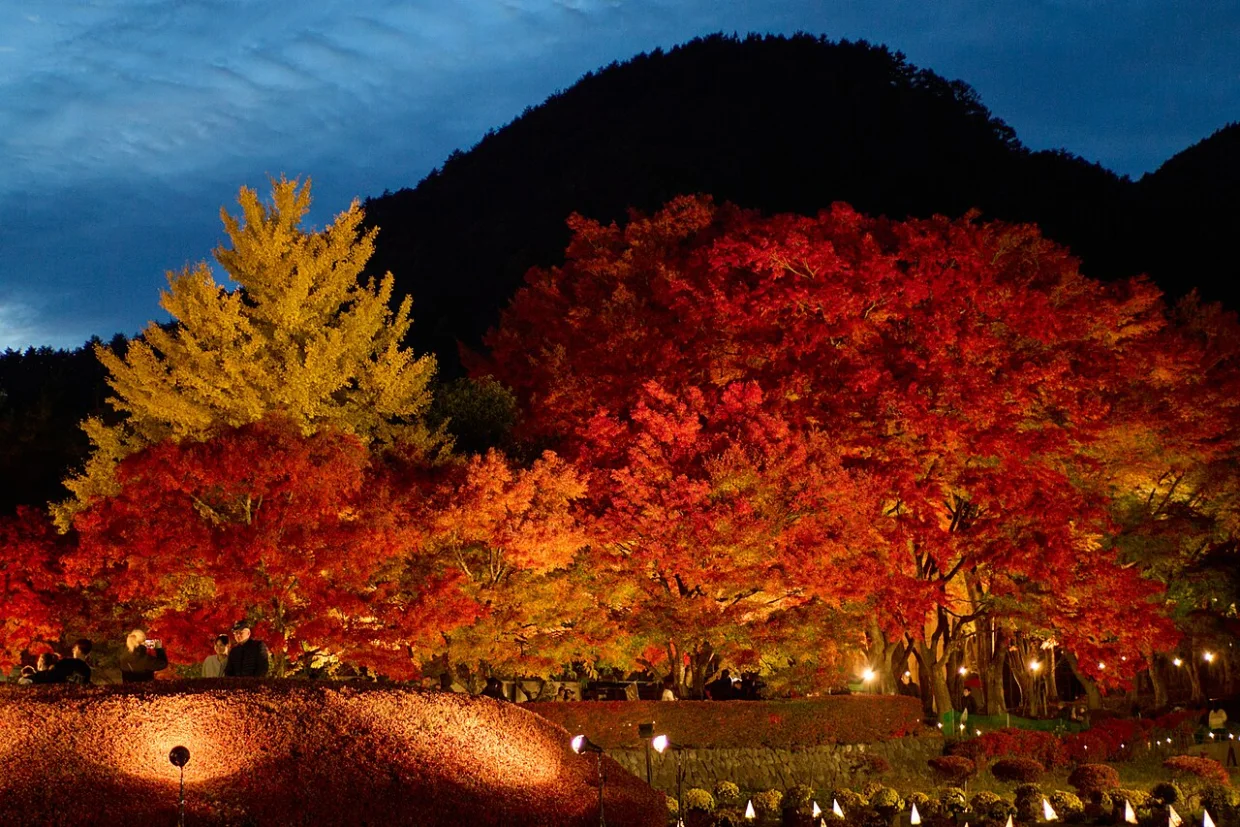
The 2026 Fujikawaguchiko Autumn Leaves Festival runs November 7 to 29, with sunset illuminations until 21:00. Covers the Momiji Corridor, Maple Tunnel, Mount Fuji lakefront viewpoints, Red Line buses, evening returns, and Dai-ichi Parking Lot fees.
Mapping the Corridor, Maple Road, and Maple Tunnel
The Maple Corridor traces the Nashigawa River where it flows into Lake Kawaguchi. After getting off at the Itchiku Kubota Art Museum stop, follow signs for Momiji Kairo and the river to reach the maple-lined banks. Yamanashi Prefecture's tourism listing puts the tree-lined stretch at about 150 meters. Because the channel, small bridges, and canopy sit so close together, turning a corner shifts the angle right away, so photographers tend to linger and shoot repeatedly along this short strip. If you are with family, let everyone walk at their own pace and regroup on the wider outer road.
Momiji Kaido refers to the maple trees lining the lakeside road—a stretch described as roughly 1.2 kilometers on the 2026 flyer. Walking along it gives you views of the water on one side and the foothills across the lake, and if you want more space, you can continue along the shore toward the Kawaguchiko Museum of Art. If you are setting a drop-off pin for a chartered driver at the main festival grounds, send the location for Momiji Kairo, and save a separate pin for your event-day parking lot based on the flyer.
Farther west past Oishi Park lies Momiji Tunnel, a separate sightseeing spot. Here, maples arch over the prefectural road from the hillside, letting you frame the lake, Mount Fuji, and roadside foliage in a single view. Yamanashi Prefecture's tourism guide notes a roughly 20-minute walk from the Kawaguchiko Natural Living Center bus stop and mentions a small number of on-site parking spaces. To photograph this spot safely, keep your camera packed until you reach a secure spot off the pavement; setting up a tripod or stopping in the middle of the lane blocks oncoming traffic.
The sightseeing loop also stops at the Kawaguchiko Museum of Art and the Kawaguchiko Monkey Show Theater / Konohana Museum. The first sits closer to the lakeside promenade and the second is near the festival zone, but on a first trip to the north shore focused on the Nashigawa River, bookmark the Itchiku Kubota Art Museum stop right next to the corridor. Do not jump off early just because you see maples arching over the lakeside road through the bus window—mark the roadside stretch and the river entrance separately.
You can navigate the venue map by bus stop numbers. Walking from Stop 17 toward the lake brings you right to the festival headquarters, craft stalls, and food booths, with restrooms marked nearby on the flyer. Heading east along the shore toward the station passes Stop 16 near the circular hall and continues to the Kawaguchiko Music Forest Museum. If you are traveling with kids or older relatives, circle the restrooms and first rest area on the map ahead of time so no one has to turn back from the far end of the corridor. The flyer also marks a second illuminated stretch along Momiji Kaido, so walking from the corridor toward Stop 16 still gives you a view of lit roadside maples.
When to Go for Peak Color
When picking dates, separate the festival schedule from the actual leaf cycle. Yamanashi Prefecture's seasonal guide notes that colors typically start turning in late October, peak from early to mid-November, and scatter leaves across paths and riverbanks from mid- to late November. Visiting late in the festival lets you frame both remaining leaves on the branches and fallen foliage on the ground. If your schedule is flexible, wait for updated photos from the entrance, inner riverbanks, and lakefront before locking in your day.
In mid-November 2026, local outlet Fuji,CanGo photographed lakefront trees near the circular hall already turning while parts of the corridor itself were still green during the same week. By November 19, night photos showed deeper color inside the corridor as well. Location matters more than the calendar alone: check close-ups from inside the Nashigawa channel if you want full red canopies, or check the lakeside trees if Mount Fuji framing is your priority. Keep Japan's Labor Thanksgiving Day on November 23 in mind as well, as holiday traffic builds quickly.
Always check both the date and exact location on recent foliage photos. Trees near the entrance catch direct sun while branches deeper over the channel sit in shade, so one end can be crimson while the other still holds green leaves on the same afternoon. Overnight guests can scout the area on arrival day, mark the brightest stretches on a map, and return straight to their favorite spots the next morning. Day-trippers should start between the Nashigawa River and the shore, then adjust their pace based on cloud cover and remaining daylight.
If you are visiting with young children or older travelers, choosing a weekday within peak season improves the walking experience far more than trying to guess the single most vivid day. Fujikyu Bus's 2026 transit advisory warns that weekends and holidays during peak foliage bring heavy traffic, especially between 10:00 and 16:00. If you can only arrive in the afternoon, walk the open lakefront first and wait for tour groups to thin out before turning up the main corridor.
Tokyo to Kawaguchiko, Then onto the Red Line
From Shinjuku, you can book the direct Fuji Excursion limited express to Kawaguchiko Station (about two hours) or take a highway bus from Busta Shinjuku Expressway Bus Terminal. If reaching the north shore early matters most, compare actual arrival times at Kawaguchiko Station first. When direct trains are sold out, the standard rail backup is taking the JR Chuo Line to Otsuki and transferring to the Fujikyuko Line. When booking the Fuji Excursion, verify the train's destination and seat assignments, and book together in one reservation if traveling as a group.
Your trip involves two separate legs: Shinjuku to Kawaguchiko Station, and the station to the corridor. Fujikyu sightseeing buses depart from Platform 1 outside Kawaguchiko Station, with the Red Line taking about 20 minutes to the Itchiku Kubota Art Museum stop, followed by a roughly 5-minute walk. The P-Line stops here too, though less frequently, so only take it if one happens to be boarding right when you arrive. Green Line and Blue Line buses also use Platform 1—check the route name and destination display on the front of the bus before boarding.
During the day, the Red Line generally runs every 15 minutes. Listed travel times reflect scheduled runs only; weekend boarding queues and traffic across the lake bridge can add significant delays. If anyone in your group gets motion sick or needs a seat, find the queue early after stepping off the train and wait for the next bus with open seats rather than squeezing onto a packed one. Leave a bigger buffer than usual if you have timed reservations afterward, and wait until you reach the north shore to decide on lunch.
Fujikyu Bus offers a shared sightseeing pass for the Red, Green, and Blue Lines: a 1-day pass costs ¥1,500 for adults and ¥750 for children, while a 2-day pass is ¥2,000 for adults and ¥1,000 for children. Both are sold at the Kawaguchiko Station bus ticket counter and online, whereas drivers on board only sell the 1-day pass. Point-to-point fares are distance-based starting at ¥180 for adults. If you are just riding out to the corridor, walking between nearby spots, and riding back, add up the single fares first—passes make more sense if you plan multiple hop-on, hop-off stops or want to ride the Green or Blue Line the next day. Budget separately for the P-Line if you take it, as the shared pass covers the Red, Green, and Blue Lines.
Getting Back After the Illuminations
The organizer's 2026 festival flyer lists the last Red Line buses heading back toward Kawaguchiko Station: 18:32 from Stop 17 (Itchiku Kubota Art Museum), 18:33 from Stop 16 (Kawaguchiko Monkey Show Theater / Konohana Museum), 18:34 from Stop 15 (Kawaguchiko Music Forest Museum), and 18:35 from Stop 14 (Kawaguchiko Museum of Art). Double-check the signpost at your stop to make sure you are on the station-bound side. If you are catching a train or highway bus back to Tokyo, aim for at least one bus earlier to absorb queues and road traffic.
Once you book a return Fuji Excursion train or highway bus, let that departure time dictate how early you head back to the station. Traveling at night with kids, strollers, or luggage adds extra minutes to find your platform, claim stored bags, or pick up food. If your return departs soon after sunset, finish viewing the maples in daylight and spare just a few minutes for the first lights coming on in the canopy. Stick to your planned departure time and eat dinner back near the station.
Visitors staying for the late night lights should arrange hotel shuttle pickups in advance or book lodging within walking distance along lit public roads. If you plan to take a taxi, reserve the pickup point and time window beforehand, specifying luggage and passenger count for larger groups. Anyone considering walking back to Kawaguchiko Station should check the route and bridge sidewalks in daylight first, as returning to the station means crossing the lake. If companions walk slowly, have toddlers, or struggle in low light, lock in transport before the illuminations begin.
If you need to retrieve luggage before returning to Tokyo, note the storage location and closing hours when you drop bags off. Kawaguchiko Station has both coin lockers and staffed baggage counters with different cutoffs, so confirm late-evening access if you are staying out past dark. If companions are taking different return options back to Shinjuku—some by train, others by highway bus—agree to meet in the station plaza or main entrance rather than walking out onto separate platforms.
Driving, Parking, and Paying at Dai-ichi Parking Lot in 2026
For the 2026 Autumn Leaves Festival, Dai-ichi Parking Lot charges ¥1,000 for standard cars and ¥3,000 for large buses, with cashless payment only. The organizer's event page provides a venue and parking flyer along with links to reserve select spaces ahead of time. If you book a reserved lot, save the exact lot name, approach direction, and entry/exit hours. Have everyone in your car save a map pin so anyone who wanders off can walk back to the right lot.
When spaces near the main venue fill up, head straight for your backup lot. Save a second parking pin in advance and check where you can safely cross the lakeside road once parked. Rental-car groups should leave extra bags locked in the trunk; walking in from a slightly farther lot beats circling twice around the Nashigawa River. Once parked, explore on foot and only retrieve the car when heading out to Oishi or back to your hotel.
The 2026 flyer explicitly prohibits stopping or parking on roads around the venue, so pull directly into designated lots. Use a parking lot or a pre-arranged legal pickup spot when dropping off or collecting companions. Slow down past stopped vehicles and crosswalks. On a first visit, resist following cars down narrow side lanes in search of a gap—tight two-way turns hold up everyone behind you. If your carpool plans to stay past dark, pick your dinner stop or final errand based on where you parked so you do not have to drive back past the main entrance.
Fujikyu Bus's transit guide estimates a 10-to-15-minute drive from the Chuo Expressway Kawaguchiko IC to the north shore under normal conditions. Weekend daytime traffic across Kawaguchiko Bridge and along the north shore road stretches that drive, and another wave of cars arrives around dusk for the illuminations. Check the organizer's live road links before deciding whether to drive straight to the north shore or visit other parts of the lake first. Drivers staying after dark should check each lot's final exit time upon arrival and note which road entrance leads back to their parking zone at night.
On the official festival map, red "P" icons mark free lots and blue "P" icons mark paid lots. Along the road toward Kawaguchi Asama Shrine sits a lot labeled Dai-ichi Parking Lot (Large Vehicles); drivers in standard cars should note the other lots on the map and follow on-site signs based on vehicle type and traffic flow. Some free parking areas near the Kawaguchiko Museum of Art open only on weekends and holidays and close in heavy rain. If you are driving on a weekday or in wet weather, pick a lot confirmed open that day or book a reserved space beforehand.
Shoot Mount Fuji from the Shore, Maples by the River
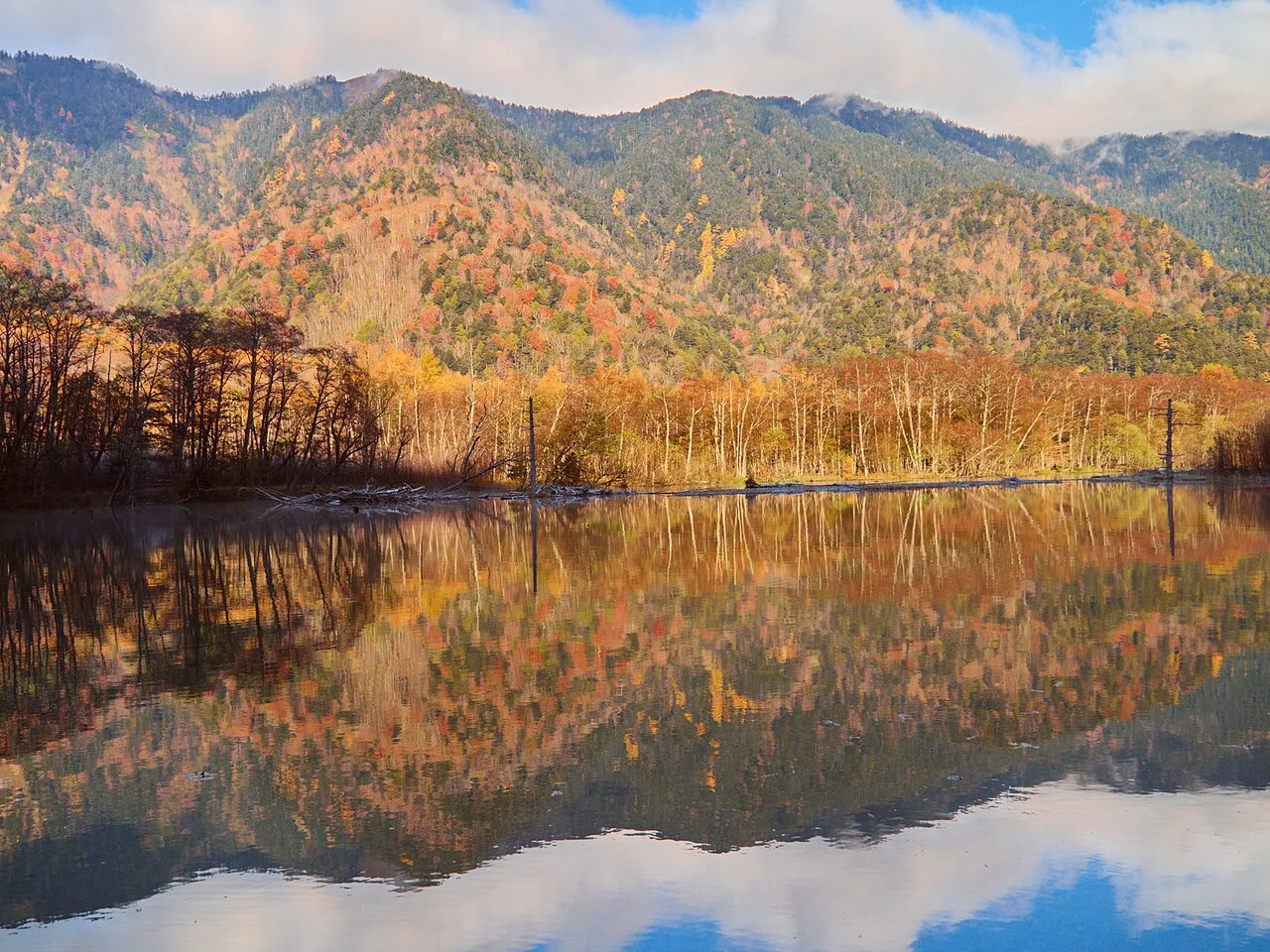
On the north shore, check the lake surface first if you want Mount Fuji views. Ubuyagasaki is a small cape jutting into the water near the north end of Kawaguchiko Bridge, reached from the Ubuya-mae stop on the Red Line. On a clear, calm day, find a safe spot along the water and watch for ripples. Any breeze across the shore breaks up the mountain's reflection—when that happens, frame the peak with the lakeside trees first, then wait for a lull in the wind for a mirror shot.
Placing maple branches along the edge of your frame usually works better than trying to pack every branch into the shot. When Mount Fuji is partly wrapped in clouds, anchor the foreground with branches, lakeside reeds, or the line of the bridge instead of relying solely on the summit. Keep a safe step back from the water's edge, especially near rocks, wet banks, and slopes, and stay on the inner side of the footpath so other walkers can pass and enjoy the view.
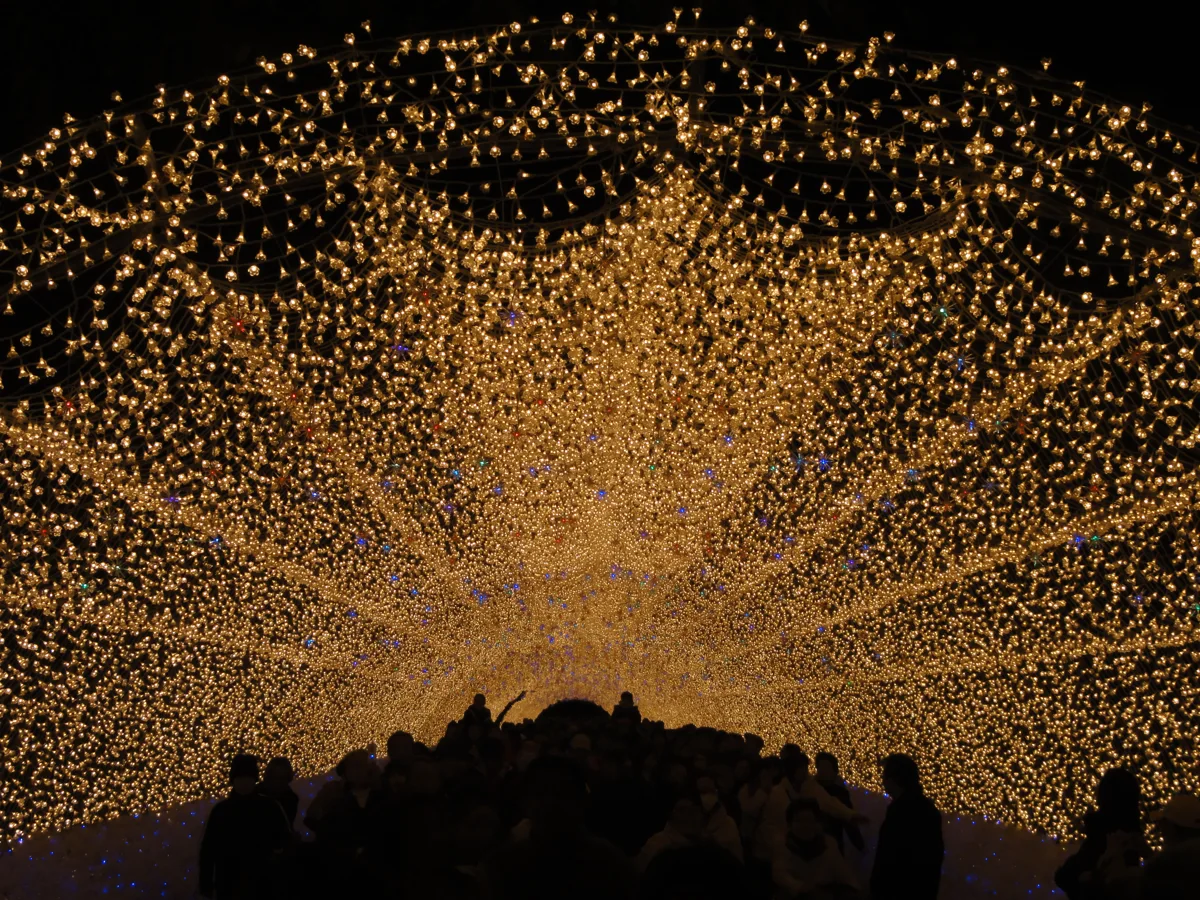
The Nashigawa River stretch is best for close-ups. While leaves are still on the trees, angle upward into the overlapping branches—a mix of red and green photographs well too. Once leaves start carpeting the ground, shoot low from the edge of the path to tie together mossy roots, river stones, and colored foliage farther back. At night, uplights illuminate the trees from below; tap the brightest lit leaves on your phone screen to meter exposure so the highlights do not blow out to white, leave space if passersby enter the frame, and keep moving once you have your shot.
If you want blue-hour photos, scout a good spot along the Nashigawa River during daylight, then split the shore and the corridor into two passes. If Mount Fuji clears in the afternoon, head to the lakefront right away; when clouds roll back in, shift under the maples and wait for the evening lights. Because the two areas sit close together, letting the weather dictate your order works far better than waiting for a single moment with zero wind, a clear peak, and lit trees.
Getting back from Ubuyagasaki is straightforward—head for the Ubuya-mae bus stop along the lakeside road. You can also walk west along the north shore toward the Kawaguchiko Museum of Art and connect onward toward the Nashigawa River. To cover both in one morning, start at Ubuyagasaki while the water is calm, or cut the shore walk shorter and head straight toward the festival zone if wind picks up. When clouds lift suddenly, the lakefront near the Kawaguchiko Museum of Art makes an easy backup viewpoint. Keep tripods packed in your bag while walking, and only take them out once you reach a wide section of path.
Pairing Oishi Park, Maple Tunnel, and Museums
Yamanashi Prefecture's seasonal guide lists peak crimson color for Oishi Park's kochia bushes from mid- to late October, turning gold and brown by early November. Later in the festival window, give more of your time to the maples along the Nashigawa River. Even after the kochia fades, Oishi Park still offers wide-open lake views where lakeside flowers and benches frame the water. Ride the Red Line to Kawaguchiko Natural Living Center (Oishi Park), where the center itself and the nearby Fuji Oishi Hana Terrace make convenient rest stops.
From the Natural Living Center, you can continue west on foot to the Maple Tunnel in the Oishi area. Keep this walk to daylight hours and factor in the round-trip pace. If part of your group wants to rest, split up at Oishi Park—one group can stay by the garden terrace while stronger walkers continue to the tunnel and circle back. Save the return direction for the Kawaguchiko Natural Living Center bus stop on your phone so anyone heading back for the corridor illuminations knows exactly when to turn around.
For Mount Fuji paintings, prints, and photography, work the Kawaguchiko Museum of Art into your lakeside stroll. To save an extra bus ride, visit the Itchiku Kubota Art Museum right next to the Nashigawa River instead. Museum hours from April through November are 10:00–17:00 (last entry 16:30), with general admission at ¥1,500. In autumn 2026, pieces from Itchiku Kubota's "Symphony of Light" kimono series will be on display, showing how dyed silk layers capture shifting forest tones. If you want both the exhibition and the illuminations in one afternoon, tour the galleries first and step out toward the river as dusk settles.
Further east along the shore sits the Kawaguchiko Music Forest Museum, served by the Red Line stop Kawaguchiko Music Forest Museum / Hotori no Hotel Ban. The museum lists daily openings throughout November 2026, typically 10:00–17:30 with last entry at 17:00. Check the monthly concert and mechanical-instrument schedule before going so you can time your visit around a performance. With both indoor halls and garden grounds, it also gives you a comfortable place to linger during wind or rain while waiting for the next bus.
Choose between the two north-shore museums based on what you want to see. The Itchiku Kubota Art Museum sits right against the corridor, pairing textile art with real autumn leaves in a single stop. The Music Forest Museum runs timed live programs—if someone in your group wants to catch a full set, pick your showtime first and plan lunch nearby around it. Watch the bus stop names on the Red Line carefully: Kawaguchiko Music Forest Museum is separate from the Kawaguchiko Museum of Art closer to the station. If rain hits after last entry has passed at both museums, head back toward the station early to find an indoor cafe or waiting area.
Half-Day, Full-Day, and Overnight Itineraries
For a half-day maple visit, ride the Red Line directly from Kawaguchiko Station to the Itchiku Kubota Art Museum stop. Walk the corridor first, step down to the lakefront for Mount Fuji, and decide whether to walk east depending on how much time remains before your return bus. If you only have 90 minutes in daylight and queues are forming at the stops, sticking to the Nashigawa River and adjacent shore is plenty. To add Ubuyagasaki, hop off there mid-route along the bridge either on your way to the north shore or on the return leg.
With a full day in daylight, start at Ubuyagasaki or the shore while winds are light, then move between the Maple Corridor and nearby museums, saving Oishi Park for the afternoon if time allows. If clear skies are forecast only for your arrival hours, ride all the way out to Oishi first for lake views and stop at the museum area on the way back. Because indoor galleries operate mainly during daytime, placing the Maple Corridor last lets you catch early illuminations before walking back to the bus stop ahead of the last run.
Renting a bicycle is another option for covering the north shore in daylight. Fujikawaguchiko Town's tourism page lists Fujikanko Travel right in front of Kawaguchiko Station for both baggage storage and same-day bike rentals, open 9:00–17:30 with rental check-in closing at 15:30 (subject to closure in severe weather). Confirm parking rules and return cutoffs when picking up your bike. Anyone staying for the night lights should ride during the day, return the bike at the station, and ride the Red Line back to the venue—unless you want extra backtracking, save cycling for a daytime loop focused on the lake and foliage.
Both cyclists and buses share roads with leaf-peeping crowds, so break up your route after crossing Kawaguchiko Bridge. Stop at the lakefront for Mount Fuji first, then park your bike before walking the riverbanks. Ride slowly around museum driveways and parking exits, and dismount to walk your bike whenever paths get crowded. If you plan to pedal out to Oishi Park or the west shore, count backward from the rental return deadline and leave extra cushion for headwinds or gentle climbs on the way back. If you only care about shooting leaves along the river, taking the bus to the nearest stop and walking saves you parking hassle and a round-trip bike return.
To connect both shores on foot, Fujisanroku Electric Railway is hosting a free walking event starting from Kawaguchiko Station during the 2026 festival. The course follows Funatsuhama, Kogiku Observatory, the north-shore promenade, Ubuyagasaki, and the Kawaguchiko Museum of Art to the Maple Corridor, then loops back over Kawaguchiko Bridge and Oike Park to the station. Registration opens through the walking app, and printed course maps can be picked up at the Kawaguchiko Station baggage counter between 9:00 and 12:00. The railway's weekend sample schedule budgets about 1 hour and 30 minutes from the station to the corridor—use that benchmark to decide how much time to spare for photos and breaks.
If your legs give out halfway, switch to the Red Line near the corridor instead of walking back. Anyone in your group who prefers a purely lakeside stroll can ride the bus to the Kawaguchiko Museum of Art first and walk along the water toward the corridor, cutting out the street sections and bridge crossing from the station. Save the location of the return bus stop as soon as you step off so you do not have to decipher an entire timetable later by the lake.
With an overnight stay, save late afternoon for a north-shore museum, eat dinner near your lodging after the lights come on, and walk back down to the lakefront the next morning. If budget or heavy bags make staying near Kawaguchiko Station easier, arrange evening transit ahead of time—or treat Day 1 as a shorter afternoon outing and catch an early Red Line bus back to the maples the next morning. Two-day visitors can save clear mornings for Mount Fuji views and swap in museums on cloudier days without leaving the north shore.
Walking Distance from Lodging and the 2027 Lodging Tax
Staying within walking distance on the north shore eliminates late-night transit headaches, but check the actual walking route from your hotel entrance to the festival grounds before booking. Where the route follows the lakeside road, look up sidewalk coverage and marked crosswalks. If your inn includes dinner, double-check meal times and latest check-in cutoffs so you do not arrive at the corridor only to rush straight back to eat. If you want to rely on festival food stalls, browse them before dark or line up a nearby dinner option in advance.
For a one-night stay when your room is not ready on arrival, store bags at Kawaguchiko Station or ask your hotel if they hold luggage before check-in. Carry your camera gear and warm layers with you, and drop off any souvenirs once you reach your room. If you are catching an early train or bus the next morning, decide whether you will head straight back to the station or take one last detour along the shore. Pick a room location that fits how you plan to move between morning photos, breakfast, and checkout.
If your evening plan is simply dinner and an onsen soak at the inn, weigh room orientation, walking convenience, and dinner seatings together. Early risers chasing sunrise peaks should prioritize direct access to public lakefront paths before paying extra for a lake-view room. With bulky suitcases or an early direct train out, staying near Kawaguchiko Station saves a morning transfer. Travelers planning to stay until the lights go out at 21:00 should confirm whether hotel shuttles can seat everyone in their party and how many stops they make along the way.
Fujikawaguchiko Town's lodging tax takes effect on April 1, 2027, assessed per actual night stayed. The standard rate for applicable paid accommodations is ¥200 per person per night, and advance bookings for autumn 2027 are taxed based on stay dates—so two guests staying two nights should add ¥800 to their lodging budget where applicable. Payment timing and collection method are handled by each hotel or guesthouse. If you are planning an autumn 2027 illumination trip, wait until that year's official festival dates are announced before locking in nonrefundable rooms, using past leaf timelines only to pick candidate weeks.
Handling Rain, Crowds, and Slower Walkers
In the rain, treat the venue as a short stroll paired with one seated indoor stop. Raindrops on leaves work well for close-up shots, and overcast light actually brings out subtle reds and oranges. Wet fallen leaves turn slick—slow down around bridges and stone steps, and keep your phone pocketed while walking over them. If Mount Fuji stays hidden in clouds after the rain stops, stick to the Nashigawa River and museums and save the lakefront walk for a break in the cloud deck.
For evening walks in the corridor, pack a windproof jacket and shoes with good grip. Standing still on a bridge while friends shoot gets cold fast, so bring gloves as well. When waiting for a bus, pick a spot well clear of the unloading door so you are not blocking passengers stepping off. Strollers handle better if you pull back to the wider outer sidewalk whenever the river path narrows. For low-angle shots, step over to a wider stretch together so other visitors do not get forced onto the riverbank.
Slower walkers can do a short out-and-back from the Itchiku Kubota Art Museum stop and save energy for viewing leaves and resting. Photographers can head toward the bridges while the rest of the group waits by the shore or inside an open museum. Agree on a clear landmark in the station direction to meet up before dusk, keeping the exit walk short. This approach also works well if you are stopping to pick out leaves with kids, leaving energy to extend the walk along the lake if everyone still feels up for it.
If you arrive at Kawaguchiko Station on a weekend to find long bus queues, check how much time you actually have left. If your only goal is one loop along the Nashigawa River and several Red Line buses are still running, stay in line. If your return highway bus leaves soon, stroll around Funatsuhama or the Kawaguchiko Bridge area instead so you stay close to the station. Once the lights are on, if taxis are unavailable and the last bus is about to leave, head straight back to your bus stop—do not miss your booked ride out just waiting for full darkness along the shore.
A few useful answers
When does the 2026 Kawaguchiko Autumn Leaves Festival end, and do I need a ticket?
It runs November 7 to 29, 2026. Walking the Maple Corridor is free, with illuminations from sunset until 21:00. Parking, food stalls, and nearby museums charge separately.
Which bus stop from Kawaguchiko Station is closest to the Maple Corridor?
Take the Red Line sightseeing bus from Platform 1 outside Kawaguchiko Station for about 20 minutes to the Itchiku Kubota Art Museum stop, then walk roughly 5 minutes to the Nashigawa River. The P-Line also stops here, but runs less often.
Can I still catch the Red Line back to Kawaguchiko Station after the illuminations?
Only if you leave after seeing the early lights. The 2026 festival transit flyer lists the last station-bound Red Line bus from the Itchiku Kubota Art Museum stop at 18:32. To stay until the 21:00 lights-out, book lodging within walking distance on the north shore, pre-arrange a taxi, or drive and confirm your parking lot's exit hours.
What Japanese names should I search for the Maple Corridor and Maple Tunnel?
Search for Momiji Kairo for the main festival venue, and Momiji Tunnel for the tree-lined road canopy in the Oishi area. Both sit on the north shore; Yamanashi Prefecture's tourism guide estimates a 20-minute walk from the Kawaguchiko Natural Living Center near Oishi Park to the Maple Tunnel.
Does Dai-ichi Parking Lot accept cash?
No—for the 2026 festival, Dai-ichi Parking Lot accepts cashless payment only, at ¥1,000 for standard cars and ¥3,000 for large buses. You can check the reservation link on the organizer's official event page for bookable spaces.
Is the Kawaguchiko Maple Corridor still worth visiting in the rain?
Yes—build your daytime around the Itchiku Kubota Art Museum or the Kawaguchiko Music Forest Museum, then walk the Nashigawa River when the rain eases. Overcast skies suit close-ups of wet maples and fallen leaves, while wider lakeside views are best saved for breaks in the clouds.
How does the lodging tax work for autumn foliage trips to Kawaguchiko in 2027?
Starting April 1, 2027, Fujikawaguchiko Town levies a lodging tax of ¥200 per person per night on applicable paid stays, based on actual stay dates. Check the organizer's official event page when the 2027 festival dates are announced.
Official information and references
Sources used in this guide.
- Fujikawaguchiko Town Tourism Information | 2026 Autumn Leaves Festival Dates, Illuminations, Live Cameras, and Parking
- Fujikawaguchiko Town Tourism Information | Kawaguchiko Maple Corridor
- Yamanashi Prefecture Tourism Information | Maple Corridor and Typical Foliage Timing
- Fujikawaguchiko Autumn Leaves Festival Executive Committee | 2026 Flyer, Venue Map, and Last Red Line Bus Times
- Fujikyu Bus | Kawaguchiko Maple Corridor Access and Crowd Advisory
- Fujikyu Bus | Red Line Timetable, Directions, and Sightseeing Passes
- Fujikyu Bus | Shinjuku-Kawaguchiko Highway Bus
- Fujisanroku Electric Railway | 2026 Autumn Leaves Festival Walking Event and Fuji Excursion Guide
- Yamanashi Prefecture Tourism Information | Oishi Area Maple Tunnel
- Yamanashi Prefecture Tourism Information | Ubuyagasaki
- Yamanashi Prefecture Tourism Information | Oishi Park Kochia
- Itchiku Kubota Art Museum | Hours, Exhibitions, and Admission
- Kawaguchiko Music Forest Museum | November 2026 Operating Calendar
- Kawaguchiko Music Forest Museum | Opening Hours and Admission
- Fujikawaguchiko Town Tourism Information | 2027 Lodging Tax
- Fujikawaguchiko Town Hall | November 2026 Municipal Newsletter Lodging Tax FAQ
- Fuji,CanGo | November 2026 Lake Kawaguchi On-Site Foliage Reports
- Cabinet Office of Japan | 2026 National Holidays
- Fujikawaguchiko Town Tourism Information | Kawaguchiko Station Bicycle Rentals and Baggage Storage