Walk from Hikone Station to Omotemon, explore Tenbin and Taikomon turrets, the keep and Genkyuen’s borrowed scenery, then choose the hill or lower grounds for your fitness. Includes tickets, tea, museum seasonal hours and half-day or full-day routes.
- Region & Focus
- Hikone
- Reading Scope
- 20 min read · 14 chapters · 4 Q&As
- Official Verification
- 12 official sources checkedUpdated 22 November 2026
Chapter Route Map (tap any stop)
- Start at Hikone Station, then find Omotemon
- Choose tickets first: ¥1,000 for castle and garden, ¥1,500 for all three
- Split the group below the hill, before starting the climb
- Pause before Tenbin Turret to see two approaches brought together
- Taikomon and the Time Bell: look behind the gate
- Study the keep’s roofs before choosing its steep stairs
- Add Nishinomaru if wanted; leave out the Yamazaki path
- Descend through Kuromon and see the keep again across Genkyuen’s water
- Hoshodai’s ¥1,000 buys a seated view of the garden
- Give the museum another hour for palace rooms and the Noh stage
- Choose armour, instruments or tea utensils rather than reading every case
- Using the museum with luggage, pushchairs and wheelchairs
- Half a day for castle and garden; a full day for the museum too
- Return along the moat, with buildings you can now recognise
- Quick Q&A
There are about 140 steps from Omotemon to Hikone Castle’s main enclosure, followed by stairs pitched at 60–62 degrees inside the keep. Decide whether to climb before buying tickets. Those comfortable with steps can visit the castle in the morning, descend through Kuromon and continue to Genkyuen. Others can focus on the moat, garden and Hikone Castle Museum below the hill. Castle and garden fill half a day; allow a full day for a closer look at the palace, Noh stage and Ii family objects.
Start at Hikone Station, then find Omotemon
Arriving by Shinkansen, change at Maibara and get off at JR Hikone Station for the visit. The castle’s access guide gives about five minutes from Maibara on the JR Biwako Line, about 46 minutes by Special Rapid from Kyoto and 80 from Osaka. Use these as reference journey times when choosing a base, adding the Maibara transfer, waiting and station exit. For a Kyoto day trip, select a train arriving at Hikone and return from the same station for simpler luggage and transport.
Leave Hikone Station westwards towards the castle, setting Omotemon ticket office as the first destination. The castle gives about 15 minutes on foot and identifies Omotemon as the closest of its three entrances to JR Hikone. Those 15 minutes reach the grounds below the hill; stone steps still lead to the main enclosure. Assuming you can be on the keep’s top floor 15 minutes after leaving the train can push lunch and afternoon bookings back.
Use the Irohamatsu pines, Sawaguchi and Omotemon Bridge to orientate yourself. The official route map places Omotemon, museum, stables and Kaikoku Memorial Hall on the same side below the hill, with the keep above and Genkyuen outside Kuromon. Understand that vertical relationship so you do not mistake the garden entrance for the castle climb. Use pedestrian crossings around the moat and separate castle and museum plans at Omotemon.
This example is a daytime visit on 5 November 2026, walking both ways from Hikone Station without a seasonal bus or night event. Arrive around 09:00 and allow half an hour to exit, walk and buy tickets, more generous than the stated 15-minute walk. Return to the same station and choose a train according to your actual stay, without making a sightseeing shuttle set the day’s pace.
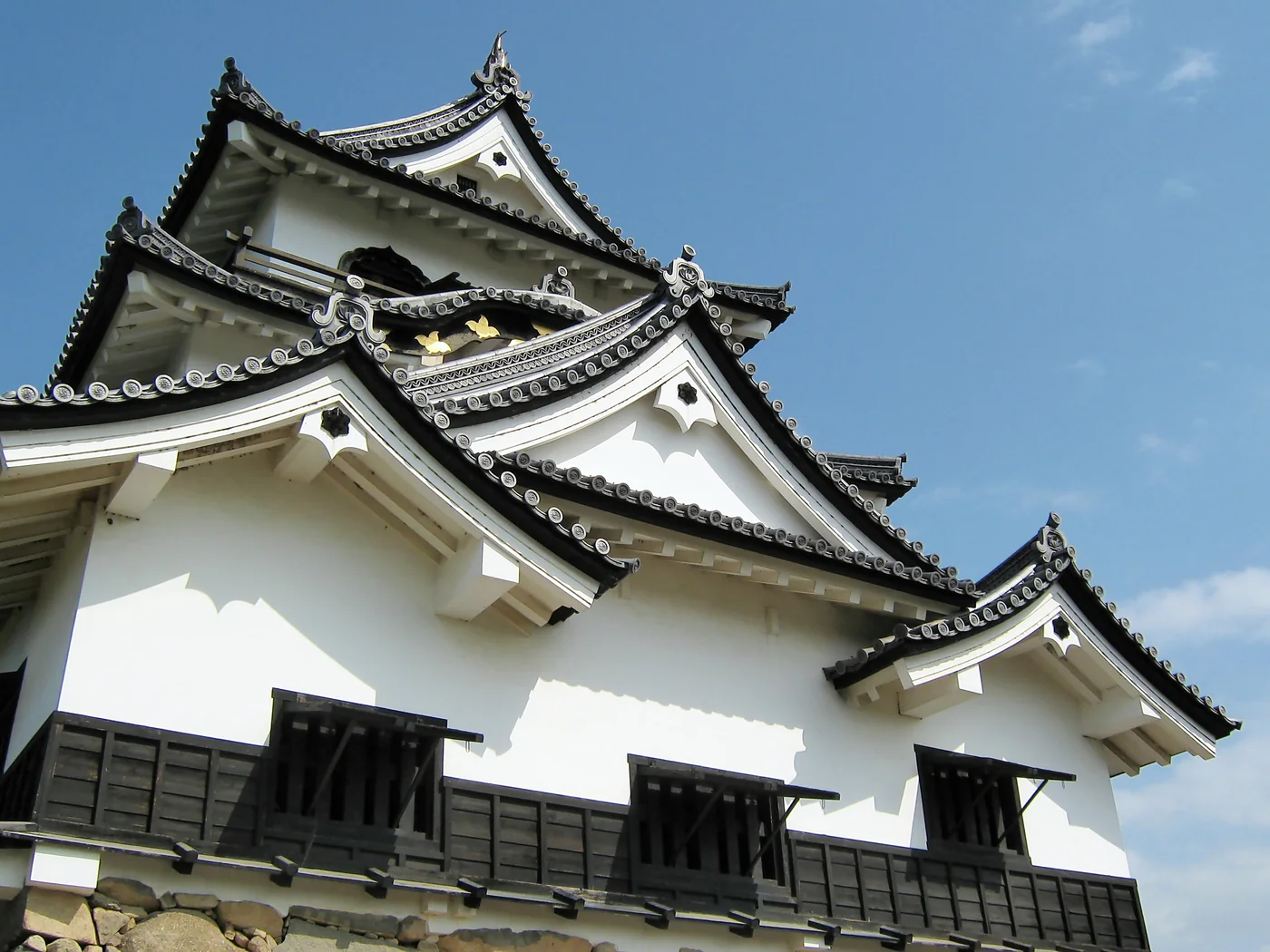
Walk from Hikone Station to Omotemon, explore Tenbin and Taikomon turrets, the keep and Genkyuen’s borrowed scenery, then choose the hill or lower grounds for your fitness. Includes tickets, tea, museum seasonal hours and half-day or full-day routes.
Choose tickets first: ¥1,000 for castle and garden, ¥1,500 for all three
The visitor information checked on 29 October 2026 uses prices effective from 1 October 2024. Castle admission includes Genkyuen: ¥1,000 for an individual general ticket and ¥300 for primary and lower-secondary pupils. Use it for castle then garden, without buying another garden ticket. Garden-only admission is ¥400 general or ¥150 for those pupils, useful for companions not climbing.
The museum separately costs ¥700 general or ¥350 for primary and lower-secondary pupils. For castle, garden and museum, choose the ¥1,500 general or ¥550 pupil combination, saving ¥200 and ¥100 respectively against separate castle-and-garden plus museum tickets. Two general adults and one primary pupil total ¥3,550 for all three. If one adult visits only garden and museum, their separate tickets total ¥1,100, ¥400 less than the three-site combination.
The museum and Kaikoku Memorial Hall are different places. The latter and the stables are free, so planning a free hall visit does not justify the museum combination. Keep different companions’ tickets separate. Retain castle-and-garden tickets for the garden check, and combination tickets for the museum too. The pupil category covers primary and lower-secondary school; upper-secondary pupils pay general admission, rather than every student qualifying.
The combination also requires the museum to be open. Its visitor guide lists closures on 17–18 November 2026 and 8, 9, 17 and 25–31 December. Choose December tickets by date too. Castle and garden year-round opening does not apply automatically to the museum. On a museum closure day, keep a castle-and-garden half-day and buy that ticket.
Split the group below the hill, before starting the climb
Omotemon to the main enclosure gains about 50 metres over roughly 140 steps, deliberately irregular in height and arrangement. Free loan walking sticks help on the hill, but ordinary long sticks and umbrellas are prohibited in the keep. Folding ones can be carried folded; folding sticks still cannot be used on its stairs. If you need a stick continuously, treat reaching the main enclosure and entering the keep as separate choices.
The keep’s two stair flights are around 62 and 60 degrees, narrow but with handrails. Climbing the hill differs from climbing inside. Resting in the main enclosure and studying the exterior after the stone steps is a complete castle visit too. Explain shoe removal, handrails and the marked route to children below the hill. Anyone uneasy about steep stairs can meet outside without forcing a climb for a top-floor photograph.
Wheelchair users can combine the moat, Genkyuen, museum and Kaikoku Memorial Hall below the hill. The castle has no lift or continuous ramp uphill, and wheelchairs cannot pass through the keep’s floors. Genkyuen admits wheelchairs but has paving stones and gravel, so assess pushing assistance. Ask the castle operations centre on 0749-22-2742 about that day’s entrances and surfaces before travelling.
Companions with different fitness can reach Omotemon together, then split between castle and museum, reunite below and visit Genkyuen together. Meet outside Omotemon Bridge after the climbers descend. They should return by Omotemon to avoid one group at Kuromon and another outside the museum. Use the one-way Kuromon descent to the garden when everyone climbs.
Pause before Tenbin Turret to see two approaches brought together
Tenbin Turret is the first useful place on the Omotemon climb to understand defence. The official building guide explains that the Omotemon and Otemon slopes meet here at height. A central turret gate connects to the covered bridge, with a two-storey turret at each end, resembling a balance scale. Look at the symmetry from before the bridge, then back at the approach to connect name and terrain.
The covered bridge is said to have been removable in war. Without it, attackers from below faced high stone walls before continuing to the main enclosure. Look at bridge, gap and gate together: the route narrows here, and this crossing serves more than ordinary passage. Understanding it makes the layers of entrances clearer when continuing through Taikomon.
Compare the walls beneath Tenbin. Facing the building, the right side uses the original uchikomi-hagi masonry; the left has late-Edo otoshi-zumi repairs, with different joints and arrangement. Stand back for the overall contrast, then approach the path edge to see how stones fit. You can start with the two visible patterns without memorising masonry terms.
See this on the ascent rather than returning after the keep. Turret interiors require shoe removal, with a rack at Tenbin’s entrance. Enter if open; if time allows only the exterior, examine the bridge and both walls before continuing. Step off the main stair flow for photographs while keeping passage clear. Climbing the stone walls is prohibited.
Taikomon and the Time Bell: look behind the gate
Taikomon guards the main enclosure’s front entrance, reportedly named for a drum used to signal within the castle. Its distinctive side is the rear, open as a balustraded corridor. Study the defended entrance first, then turn after passing through to see the open structure. Unlike Tenbin’s frontal symmetry, this gate rewards looking from the other side.
Dismantling and repair revealed traces in Taikomon’s components proving reuse from another castle gate. The building preserves a process of adjusting, moving and reassembling timber. If wood construction interests you, give time to the gate, corridor and adjoining turret rather than following only the highest point. How a gate protects an entrance can offer more than another view of the keep.
The nearby Time Bell moved from Kanenomaru so its sound could carry across the grounds. The official tea page lists ringing daily at 06:00, 09:00, 12:00, 15:00 and 18:00. Day visitors can most readily catch 09:00, noon or 15:00. If already uphill before lunch, pause nearby around noon and continue after the bell without turning the whole morning into a rigid minute-by-minute plan.
For a seat before the summit, Choshoan beside the bell has tatami and table seating. The official listing gives five seats, matcha and a sweet for ¥1,000, opening 09:00–16:00 with last orders 15:50, closed 29–31 December. Different seats face the keep or the rear diagonal of Tenbin. It suits a break on the climb; if planning tea at Genkyuen, give this time to the main enclosure instead.
Study the keep’s roofs before choosing its steep stairs
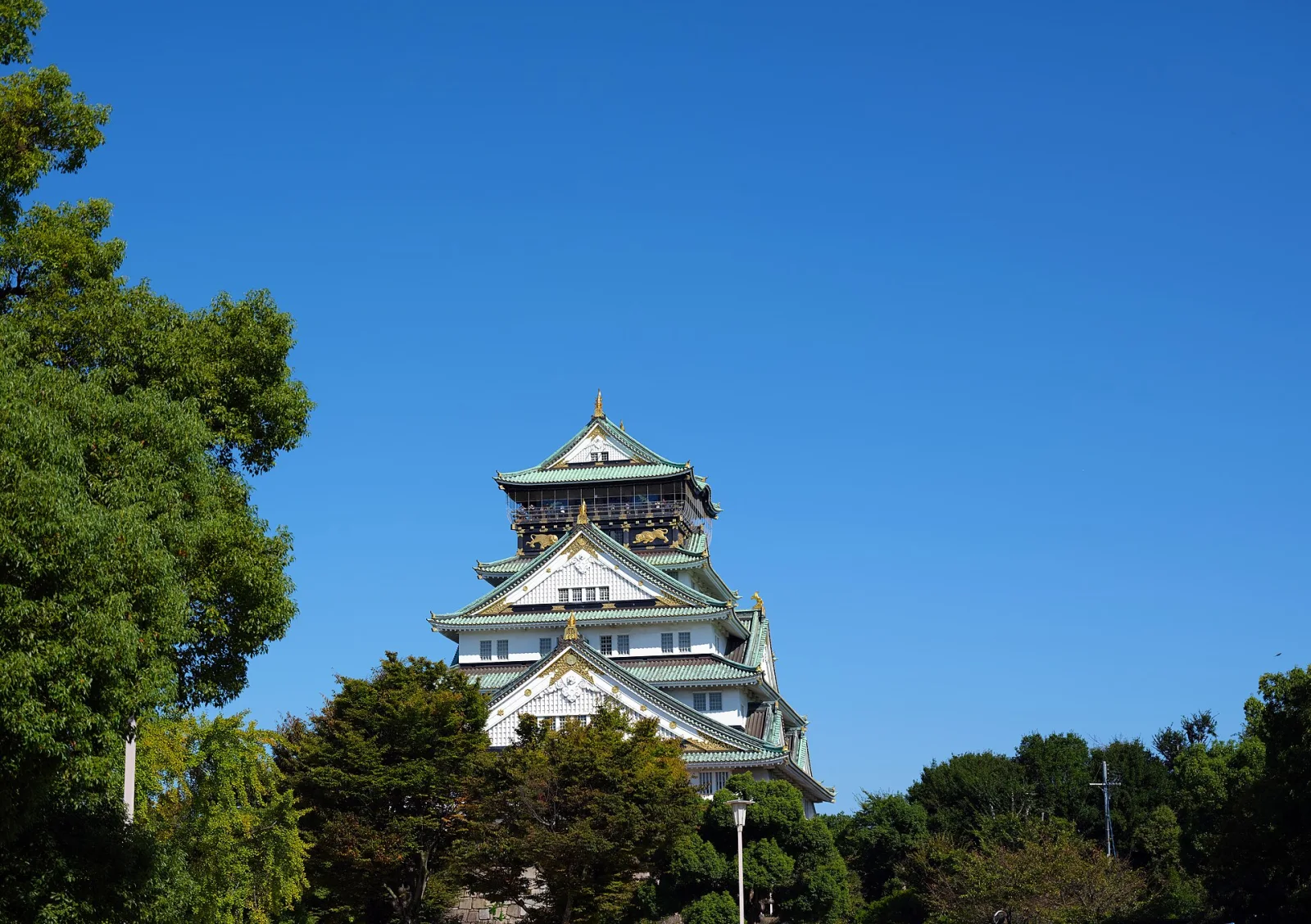
The three-storey keep has three roof tiers, linked to an attached turret and tamon gallery. Its outline does not simply repeat in smaller layers: gabled kirizuma, hip-and-gable irimoya and curved karahafu features appear in different places. After the front view, move along the main-enclosure paths to find parts previously hidden by roofs rather than immediately moving the camera as close as possible.
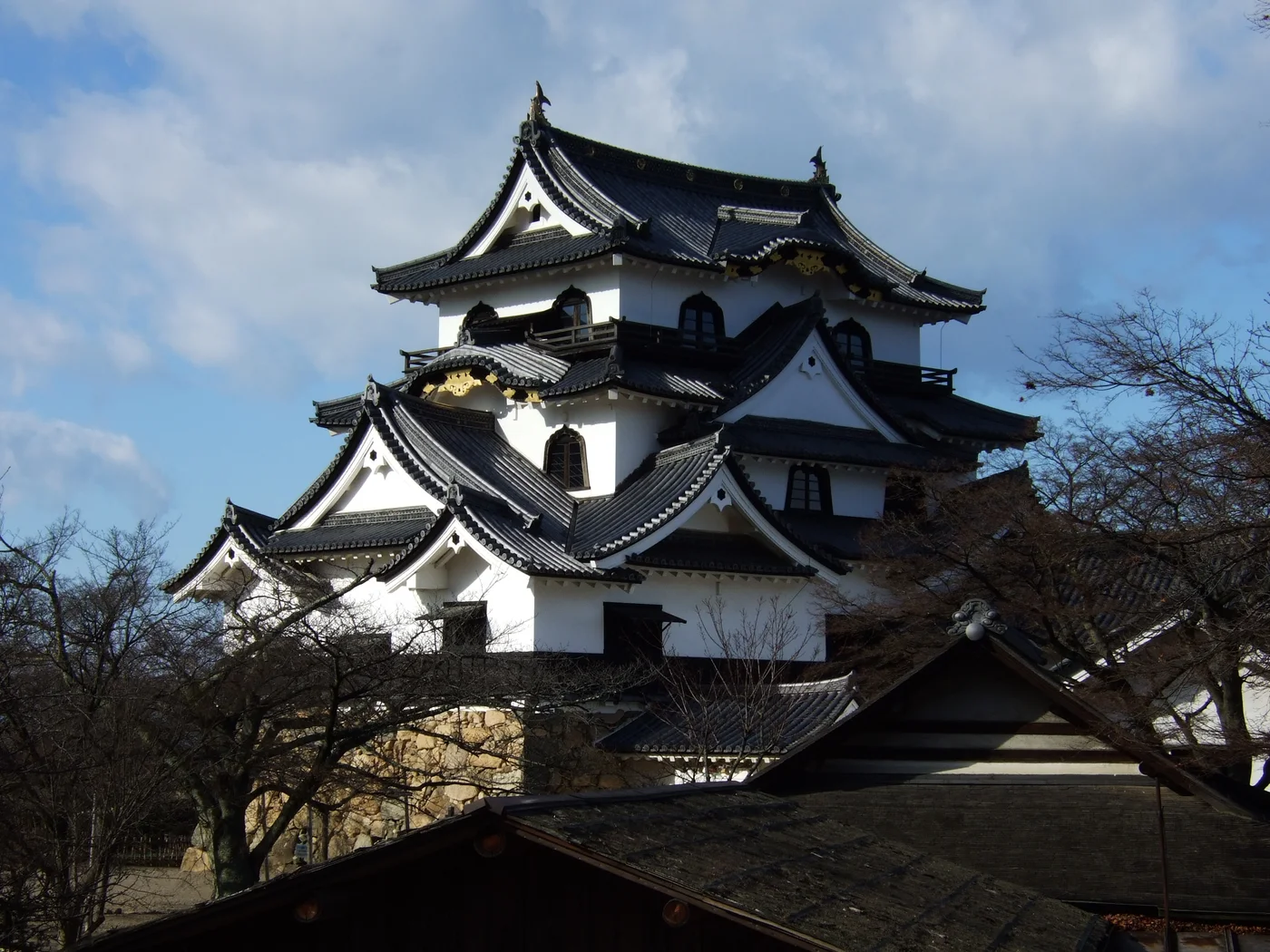
The second and third floors have cusped kato-mado windows, with a balustraded outer veranda at the top. The official guide highlights these decorative features. Identify roofs, window frames and railings separately for a more concrete view than the label “National Treasure keep”. Compare the windows’ curves with the gables: openings in the walls and roof outlines differ in size and function but shape the same building.
Remove shoes inside; a rack is provided, or bring a shoe bag if concerned about mix-ups. Follow staff instructions for long umbrellas and sticks and keep hands free for handrails. The official reference of about 15–20 minutes covers the keep interior only, with queues and slow passage extra. It cannot replace the climb from Omotemon.
For architecture without steep stairs, stay longer in the main enclosure. The exterior has ample detail, and the castle offers a shorter exterior-and-Omotemon-return route. If everyone is continuing to Genkyuen, descend towards Kuromon after the enclosure. Decide the exit before walking. Those visiting the museum later must allow the return from Genkyuen to Omotemon.
Add Nishinomaru if wanted; leave out the Yamazaki path
For another turret, choose Nishinomaru’s three-storey turret and adjoining gallery. It stands on the enclosure’s west side, separated by a deep dry cutting from a further projecting enclosure. It defended the western rear and watched Lake Biwa in peacetime. Shift attention from roof decoration to terrain: identify the edge it occupies and the cut to the west to understand the defensive position.
This should offer more than another climb upstairs. It covers a different defensive direction, complementing Tenbin on the main approach and filling a gap in the front-to-summit route. If military architecture matters less and you want a fuller museum visit, omit it. Tenbin, Taikomon and the keep already explain the main route.
The official grounds map currently marks the Yamazaki path impassable because of the ageing Nishinomaru covered bridge. Descend through Kuromon or Omotemon, not via Yamazaki enclosure and gate as a shortcut. Return from Nishinomaru to open paths before the chosen exit. Cross out the closed route on the map first to avoid reaching the edge and doubling back.
Descend through Kuromon and see the keep again across Genkyuen’s water
If everyone has climbed and nobody is meeting at Omotemon, follow the official route from the main enclosure down to Kuromon and Genkyuen. The student-group route gives about 15 minutes for this descent; allow more for slow walking. Outside Kuromon, follow the outer path to the garden entrance and show the castle-and-garden ticket. Attention shifts from high defences to water, bridges and islands.
Genkyuen is a strolling pond garden created with the Tsuki Palace lower residence, around today’s Rakurakuen. Its central pond contains four islands of different sizes and bridges of different forms. Begin with part of the bank, then find a position where bridges and islands overlap. A bend changes the order of bridge and building. These changing relationships are part of walking the garden.
The official guide especially recommends the pond, Hoshodai and distant elevated keep from Musashino. Look low at the bank, then the tea building in the middle, then the keep above. Having stood before it in the morning, the afternoon water-side view connects castle and garden heights. Find the full layers before deciding on a reflection photograph; calm water need not determine whether the garden walk is worthwhile.
Rakurakuen refers to the lower-residence and retirement-residence area; Genkyuen is its accompanying garden. They sit together on maps but mean different things. The guide says historic-building conservation of Tsuki Palace began in fiscal 2005. Follow signs through the open garden and exterior areas. The reconstructed Omote Palace at the museum below the hill is separate again. Seeing both helps compare government and residential spaces.
Hoshodai’s ¥1,000 buys a seated view of the garden
The Hoshodai tea room stands on a small rise inside Genkyuen. Official hours are 09:00–16:00, last orders 15:50, with 12 seats and matcha plus a sweet for ¥1,000. This is extra to admission. A general adult entering only the garden and taking tea pays ¥400 plus ¥1,000, or ¥1,400. With a castle-and-garden ticket, add ¥1,000 to the existing admission.
Hoshodai and related buildings form a garden reception space. Some burned in 1975 and were reconstructed in 1977. Look down at pond, islands, inlets and bridges, or turn to look up at the keep. Sitting above the pond changes height and distance from a bank-side walk. Garden enthusiasts can linger here and add fewer outer sights.
The hanging scroll changes seasonally. The official list gives “The divine phoenix rests in this grove” for January–June, “Summer clouds form extraordinary peaks” for July–August and “At ease, I see the southern mountain” for September–December. A November daytime visit has a seasonal interior detail as well as tea. Look at the scroll before turning to the pond to read room and garden together.
Seats are limited, so use it as a break if space is available. After a late arrival, finish the garden you want first and fit tea before 15:50. Garden ticket sales until 16:30 and tea last orders at 15:50 are separate deadlines. Allow lunch separately; matcha and a sweet are a snack, particularly on a day of steps.
Give the museum another hour for palace rooms and the Noh stage
The Hikone Castle Museum combines a reconstructed Omote Palace with museum functions below the hill. The palace was the domain’s government centre. Beyond display cases are reconstructed lord’s rooms, tea rooms, gardens and an Edo-period Noh stage. The hilltop keep uses height and entrances for defence; the lower palace explains administration, residence and reception. Their content differs substantially.
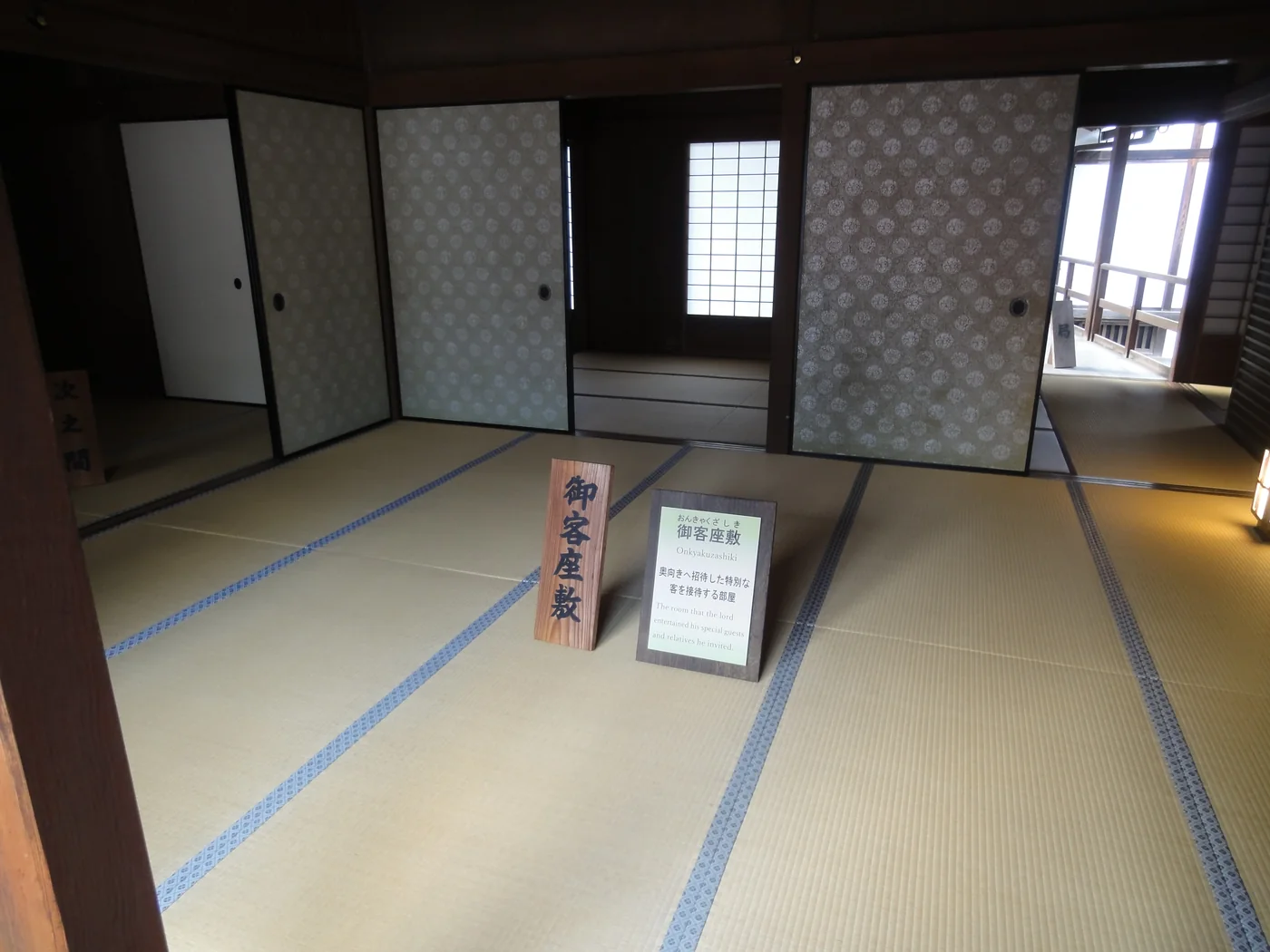
In the palace, notice how living rooms, tea room and garden face one another and allow a seated garden view. The 5 November date falls within “Satake Eikai, painter to the Hikone domain”, running 23 October–7 December 2026. It introduces Tani Buncho’s pupil and his service to three Ii generations. If palace space interests you, connect displayed partition paintings with room layouts and how rooms were used.
Make the Noh stage a separate pause. Study its surrounding space, then the masks and costumes to put objects back into their setting. Normally the stage is visited as architecture. Performances follow their own announced dates, tickets and admission times.
In October and November 2026, museum hours are 09:00–17:00, last admission 16:30. From 1 December to 28 February they are 09:00–16:30, last admission 16:00. An afternoon museum visit can start around 14:00 in November, earlier in winter, leaving over an hour before closing. The ticket deadline tells you whether entry is possible; what you want to see determines how far ahead to arrive.
A curator-led tour published by Hikone City in 2021, introducing the galleries and reconstructed Omote Palace.
Choose armour, instruments or tea utensils rather than reading every case
The museum’s permanent-display guide divides Ii family daimyo objects into seven themes, with works changed about every one to two months. First-time visitors can choose an interest rather than equal minutes at each case. For arms, choose “Warrior equipment”; for Noh, “The beauty of yugen”; for objects and daily life, begin with furnishings, tea utensils or gagaku instruments.
The Ii family’s red military equipment used vermilion across armour, flags and other items. Compare the spread of colour before examining armour components, then see swords, horse equipment and bows and arrows as daimyo collections. The guide says arms signified warrior status as well as serving practical purposes, and swords were important gifts. This connects objects with the hilltop defences: buildings protected, while objects also expressed rank and etiquette.
The Noh masks and costumes have a different history. Much of the Ii family’s Edo-period collection was lost in the 1923 Great Kanto Earthquake. An important source of today’s collection is the rebuilding undertaken by the 15th family head, Naotada. Distinguish inherited objects from later acquisitions in the labels rather than assuming everything survives from the castle’s foundation. Seeing the stage first helps explain masks and costumes.
The gagaku instrument collection was formed mainly by the 12th head, Naoaki. The museum treats instrument bags and boxes as craft objects too. If the instruments are unfamiliar, start with container materials and decoration, then see how they hold an instrument. After vermilion armour, bags, boxes and fine workmanship shift attention away from large objects.
For ceramics, look at tea utensils and Koto ware. The museum places Koto ware within Ii family tea utensils and explains that Naosuke hosted tea gatherings, made utensils and wrote about tea’s spirit. Connect this with a tea-room visit: a bowl in a case shows collecting and craft; at Hoshodai it returns to drinking and viewing a garden. Read one or two current labels closely. Displays change, so there is no need to hunt every item on a list.
Using the museum with luggage, pushchairs and wheelchairs
The facilities guide lists refundable ¥100 lockers in the lobby, including large lockers for bulky items. Museum visitors can organise hand luggage before the palace and galleries, then collect it before leaving. The lockers are inside the museum. Castle-and-garden-only visitors can leave large luggage at their accommodation base and travel with a light bag.
Outdoor shoes are prohibited inside. Wheelchair users can borrow a free museum wheelchair or ask staff to wipe their own wheels. There is a ramp beside the entrance, while parts remain inaccessible because of the building’s structure. Tell staff on arrival and follow the available route. Even when making the museum the wheelchair group’s main stop, use its actual access arrangements.
Families can use a nursing room, changing table in the multipurpose toilet and free loan pushchairs in the lobby. These support breaks below the hill and a later reunion with climbers. With only one adult available to accompany a child, there is no need to split up for the keep. Museum, outer moat and Genkyuen still offer architecture, objects and garden views.
Half a day for castle and garden; a full day for the museum too
For the 5 November half-day, arrive at Hikone Station around 09:00 and Omotemon around 09:30. See Tenbin, Taikomon and the keep, descend through Kuromon, visit Genkyuen and return to the station. Allow three to four hours including station walks, viewing and a gentle pace. If the keep queue grows, drop Nishinomaru or tea while preserving the main castle and garden content, then lunch near the station.
For a full day, keep the morning castle and garden, lunch and afternoon museum. Give the museum around 14:00–15:30, then choose a brief free stop at the stables or Kaikoku Hall according to energy before returning. For palace and objects as the priority, reverse it: museum at 09:30, then castle and garden after lunch. Hoshodai tea must still be before 15:50; do not push all outdoor stops into evening.
For a late start, choose by time and fitness. With only two hours and willingness to climb, use Omotemon, keep exterior or interior, then Omotemon back, leaving Genkyuen for another visit. Without a climb, buy garden-only admission and add the moat. Near 16:00, separate museum and castle-garden last admissions and building closures shorten viewing. Concentrate on one place rather than buying a combination and rushing between hill-foot entrances.
Castle and garden currently open 08:30–17:00, last admission 16:30. Keep, Tenbin, Taikomon, Nishinomaru three-storey turret and stables interiors close at 16:45; leave by 17:00. These are normal daytime hours. Finish main viewing in the afternoon and leave the evening for the station return. Rain does not remove the steep stairs and stone steps. If unsuitable for climbing, use museum and garden below the hill, shortening the garden walk for the rain.
Return along the moat, with buildings you can now recognise
After Genkyuen, follow the lower paths towards Irohamatsu and Sawaguchi, then Hikone Station; there is no need to climb over the hill again. For an afternoon museum visit, return to Omotemon first, then leave towards the same station side. Reuse the pines, Sawaguchi and bridge you identified earlier. Allow about half an hour for walking, collecting belongings and entering the station.
The stables add an everyday-life detail. The official guide says they held 21 horses for the lord and others, retaining a wooden-shingle roof after conservation repair. Entry is free, but the building closes at 16:45. Look at how the low, long building housed horses, then connect it with the museum’s horse equipment. After closing, finish with the exterior instead of detouring for a free entrance.
Kaikoku Memorial Hall near Sawaguchi was recreated in 1960 with citizens’ donations for the centenary of Ii Naosuke’s death. It now houses castle displays, free, 08:30–17:00 with last admission 16:45, closed 25–31 December and for display changes. It adjoins Sawaguchi Tamon Turret, which is currently not open. Distinguish them to read the entrance outline and separate surviving cultural property from a later recreated exhibition hall.
The Japan 100 Famous Castles stamp is at Kaikoku Memorial Hall. When closed, use Omotemon ticket office, whose service ends at 16:30. If collecting it is essential, do so on morning arrival and return by your chosen route later. For Kyoto, take the Special Rapid direction; for Shinkansen, travel first to Maibara. Check destination and stops at the station before boarding to finish the day at the same station where it began.
A few useful answers
How do I get to Hikone Castle by train from Kyoto or Osaka?
The JR Special Rapid takes around 46 minutes from Kyoto to Hikone and 80 minutes from Osaka. If you’re travelling by Shinkansen, change at Maibara for the JR Biwako Line, around five minutes to Hikone. The ticket office at Omotemon Gate is about 15 minutes on foot from Hikone Station.
How much does it cost to visit Hikone Castle and Genkyuen Garden?
An adult ticket costs ¥1,000 for Hikone Castle and Genkyuen Garden, or ¥400 for the garden on its own. A combined ticket for all three sites costs ¥1,500 and includes Hikone Castle Museum. The museum on its own costs ¥700.
How steep are the steps at Hikone Castle?
From Omotemon Gate there are about 140 stone steps up to Honmaru, the castle’s main enclosure. The two staircases inside the keep are pitched at about 60 and 62 degrees. If you’d prefer to stay at the foot of the hill, walk along the moat and visit Genkyuen Garden and Hikone Castle Museum.
Can you visit Hikone Castle and Genkyuen Garden in half a day?
Allow three to four hours for both, including the walk there and back from Hikone Station. Go up through Omotemon Gate and come down through Kuromon Gate for Genkyuen Garden. For a full day, stop for lunch and visit Hikone Castle Museum in the afternoon.
Official information and references
Sources used in this guide.
- Hikone Castle official: steps, entrances and visiting rules
- Hikone Castle official access
- Hikone Castle current tickets and hours
- Hikone Castle official buildings and grounds map
- Hoshodai and Choshoan tea rooms
- Kaikoku Memorial Hall
- Hikone Castle Museum official exhibitions
- Museum 2026 opening, closures and admission
- Museum palace and Noh stage
- Permanent-display themes and collection history
- Museum accessibility, family facilities and storage
- Hikone Castle official student-group route map (2023; route use only)