Take the Ofunato Line from Ichinoseki to Geibikei. Plan the walk, check-in, 90-minute return cruise and train connections, with 2026 fares, winter kotatsu boats, lunch and Hiraizumi options.
- Region & Focus
- Hiraizumi and Ichinoseki
- Reading Scope
- 27 min read · 17 chapters · 8 Q&As
- Official Verification
- 19 official sources checkedUpdated 9 November 2026
- Key Topics
- ItinerariesRail travelSeasons
Chapter Route Map (tap any stop)
- Choose an early half-day trip or give a later start the whole day
- Separate Geibikei and Genbikei on your map
- Change to the Ofunato Line: buy the right ticket, then find the platform
- Read operating dates with the timetable: a shuttle runs on 8–10 December
- Allow for check-in after the seven-minute walk from Geibikei Station
- The 90 minutes cover the return trip, including the stop ashore
- 2026 tickets: adults ¥2,000, with no old fares carried over
- Shared boats, chair-seat charters and wheelchair assistance
- Winter kotatsu boats run from December to late February; book hotpot separately
- Early route: return to Ichinoseki for lunch, then choose the afternoon
- Later start: eat first or bring backup food before the 12:00 boat
- Meals aboard: distinguish five-person bento orders from winter hotpot
- Add only one Hiraizumi sight: Motsuji is the flexible afternoon option
- Missed 10:44? Eating locally is steadier than chasing another route
- Rain, high water and early turnbacks: follow the operator’s decision
- Protect the return journey before paying for reserved boats and meals
- Calculate the budget per person and allow for meals during a later return
- Quick Q&A
The Geibikei cruise takes about 90 minutes, but a return trip from Ichinoseki needs half a day. The return train on the Ofunato Line determines when you get back to town. An early start can bring you back before lunch; leave later and lunch and the wait for a train become part of your time at the gorge. Choose the return train first, then fit in the boat, so you can enjoy the turning point without watching the clock beneath the cliffs.
Choose an early half-day trip or give a later start the whole day
If you stay near Ichinoseki Station and can get up early, aim for the first morning boat. Using the JR timetable available for 27 October 2026, leave Ichinoseki at 07:18 and reach Geibikei at 07:50, allowing 40 minutes before the 08:30 boat. Return to the landing at about 10:00, take the 10:44 train and reach Ichinoseki at 11:18. This leaves lunch and the afternoon open: eat in Ichinoseki or add just one stop in Hiraizumi.
If 07:18 is too early, accept a different pace. Leave at 10:16, arrive at 10:51 and aim for the 12:00 boat. It returns at about 13:30; the 15:08 train reaches Ichinoseki at 15:40. There is more waiting for both boat and train, and lunch belongs near Geibikei. With these connections, a late start and a return before lunch cannot both fit.
For either version, start with the full return cruise, then add walking, ticket purchase and waiting. The roughly half-hour train ride from Ichinoseki is only one part of the outing. The late-October early-start example also depends on the season: the 08:30 boat stops running from 21 November, so this plan will not work in winter. Check the operating dates of both trains and boats for your travel date before choosing accommodation and a departure time.
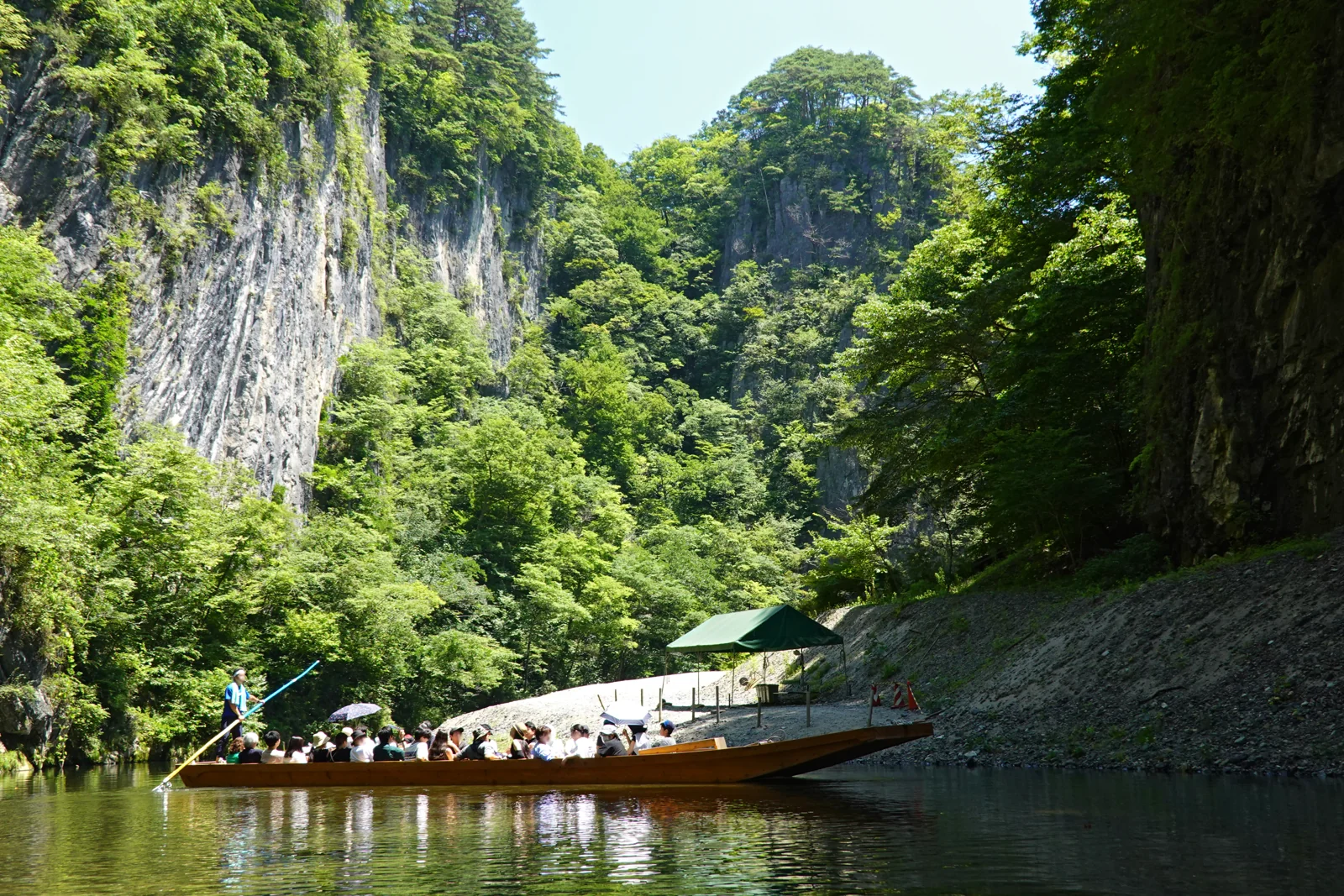
Take the Ofunato Line from Ichinoseki to Geibikei. Plan the walk, check-in, 90-minute return cruise and train connections, with 2026 fares, winter kotatsu boats, lunch and Hiraizumi options.
Separate Geibikei and Genbikei on your map
Geibikei is in Higashiyama, Ichinoseki, Iwate. The station name is 猊鼻渓, pronounced Geibikei. The main activity is a return trip through the gorge in a boat propelled by a boatman with a pole, viewing the cliffs along the Satetsu River from the water. The trip includes time ashore and a turning point. Search for 一ノ関 and 猊鼻渓 when planning the railway journey; the Ofunato Line is the branch line you need.
Genbikei, written 厳美渓, lies in another direction from Ichinoseki. The two gorges are not opposite ends of one walking trail, and one boat ticket does not cover both. If your saved itinerary mixes Genbikei’s dango photos with Geibikei’s long wooden boats, check every map pin before booking transport or accommodation. A shuttle for a ryokan west of the city is not transport to the Higashiyama boat landing.
With one day, choose Geibikei if you want a boat ride and views up from the gorge floor. If you have already planned hot springs and a short riverside walk west of Ichinoseki, keep Genbikei on that day. Visiting both on the Geibikei day adds a separate journey and waiting time; the full cruise is often the first thing squeezed. The Hiraizumi and Ichinoseki accommodation guide covers bases in other directions. Give this day’s gorge cruise enough time.
Change to the Ofunato Line: buy the right ticket, then find the platform
If arriving by Shinkansen from Tokyo, Sendai or Morioka, first check that your train stops at Ichinoseki, then change to the Ofunato Line. The 07:18 option works best after a night in Ichinoseki. If travelling from farther away that morning, choose a boat after calculating when you can actually leave the Shinkansen and reach the local platform. Do not book the 08:30 boat first and force a long-distance connection to fit. Allow separately for the train’s arrival and your walk to the Ofunato Line platform.
JR East’s account of travelling on the Ofunato Line explicitly says Suica cannot be used and describes departure from platform 3 at Ichinoseki. Buy a ticket covering your destination first. If using a rail pass, check its area and dates. Having a transport IC card on your phone is not enough for this journey. Follow the departure displays on the day, especially if services are cancelled or platforms change.
The return from Geibikei runs in the opposite direction; check the destination before waiting. If connecting to a Shinkansen at Ichinoseki, allow for collecting luggage, buying food and changing trains after the local train arrives. An 11:18 arrival should not be paired with a reserved train leaving just a few minutes later. Enough transfer time also gives you room to handle a delayed boat or train, and enjoy the 90 minutes afloat.
Read operating dates with the timetable: a shuttle runs on 8–10 December
JR’s official train details show these combinations for 27 October 2026: outward train 323D runs 07:18–07:50 and 325D runs 10:16–10:51. Return options are 10:44–11:18, 13:06–13:43 and 15:08–15:40. These form the framework of the day, including the gaps between return trains. Missing 10:44 and taking 13:06 adds 2 hours 22 minutes, far more than a quick drink outside the station.
The JR train-detail pages also note that some services do not run on 8–10 December 2026. Geibikei has announced a free shuttle for those three days: it leaves Ichinoseki’s west exit at 10:20 and reaches Geibi Rest House at 10:45, then leaves the rest house at 13:10 and returns to the west exit at 13:35. This is a dated replacement arrangement, with different stops and meeting points from the railway, rather than a daily free bus.
Treat the 13:10 return shuttle as a firm limit. A full 90-minute cruise at 12:00 returns around 13:30, too late for it. Choose a boat that finishes before the shuttle and allow for walking, or have another confirmed way back. An 11:00 boat returns around 12:30, leaving about 40 minutes before the shuttle, but you must still arrive, buy tickets and check in first. Match the restaurant, boat and shuttle to the same day’s timetable.
| Plan | Outward train | Boat / approximate return ashore | Return train |
|---|---|---|---|
| Early half-day | 07:18→07:50 | 08:30 / about 10:00 | 10:44→11:18 |
| Later-start day | 10:16→10:51 | 12:00 / about 13:30 | 15:08→15:40 |
| Missed early return | Same early outward train | Keep the full cruise | 13:06→13:43 |
Allow for check-in after the seven-minute walk from Geibikei Station
JR describes Geibikei Station as being on higher ground, with toilets outside and a walk of about seven minutes to the boats. The operator’s access page and leaflet describe roughly five minutes from station to attraction. Use seven minutes as a starting allowance, then add finding the way, toilets, tickets and waiting. Add more time for older people, children or slower walkers, rather than making the shorter official estimate the whole family’s speed target.
Use the toilet after leaving the train, then follow the route to boat check-in. Arriving at the station does not put you in the boat queue. From 07:50 to the 08:30 boat there are 40 minutes, leaving time for tickets after the walk. A 10:51 arrival leaves only nine minutes before an 11:00 boat; after seven minutes on foot, almost nothing remains for check-in. The later-start plan uses the 12:00 boat to allow enough time for walking, tickets and assembly. That choice also changes the return train.
The return walk includes the uphill route to the station. After disembarking around 10:00, the 44 minutes before 10:44 must cover the entire return to the platform. Reach the correct station first and rest with any time left; do not sit in a shop until 10:40 before finding the way. Take a small bag that leaves your hands free and keeps tickets, phone and rainwear accessible. Leave large cases at accommodation you will return to that night, or at storage you have checked in advance.
The 90 minutes cover the return trip, including the stop ashore
The operator’s route guide describes a return cruise of about 90 minutes. The boat enters the gorge and comes back to the same landing. The name funakudari does not mean it drifts on to another town. Arrange vehicles and meetings at the original landing; there is no need to collect anyone downstream.
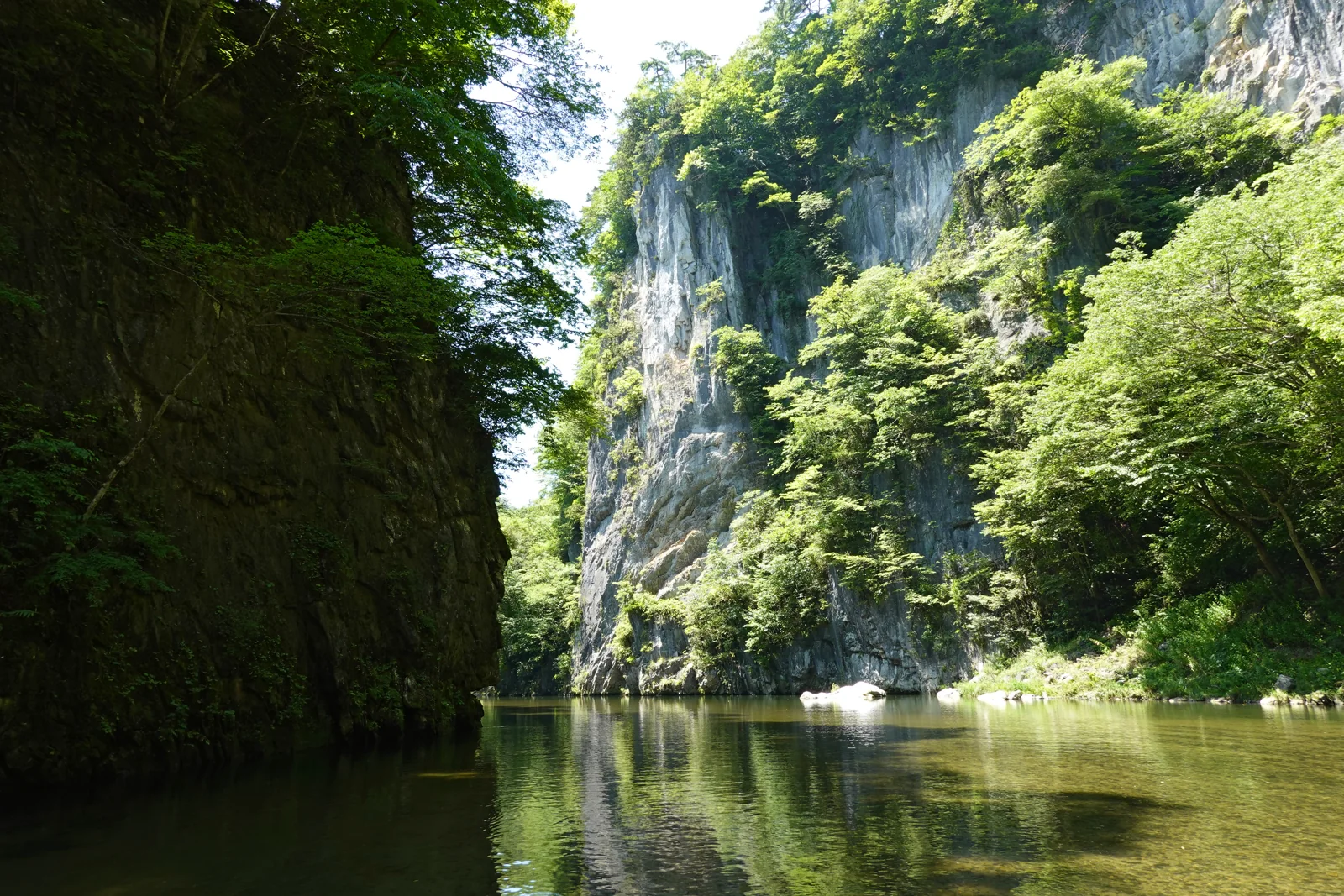
The official map marks the Miyoshigaoka landing, Daigeibi Rock at the turning end and the nearby wish hole. Going ashore here is part of the trip. If you want to see the innermost cliffs or throw undama wishing stones, leave time for the whole cruise. Do not add a freely extendable walk on top of the 90 minutes. Follow the boatman’s instructions on disembarking, where to walk and when to meet; the return boat will not wait indefinitely for photographs.
Undama are an optional extra. Check the sales point and instructions there, and supervise children near the bank. You can also spend the time looking at the cliffs and water without buying any. If someone cannot walk to the turning point, ask at check-in which parts allow them to stay aboard and which require movement before deciding how to take part. Wheelchair boarding alone does not establish step-free access throughout the shore route.
The boatman uses a pole in both directions, and there is scenery on the return too. Cliffs seen on the outward journey appear at a different angle coming back. Secure your camera or phone and take photographs while seated; do not stand suddenly to fit a whole cliff into the frame. The trip moves slowly. Choosing one stretch of water and one cliff to watch can make its pace easier to appreciate than chasing a photograph of every named feature.
The Ichinoseki Tourism Association video introduces boating and gorge scenery at Geibikei.
2026 tickets: adults ¥2,000, with no old fares carried over
The official fare table gives 1 April 2026 as the revision date: general admission is ¥2,000 for adults, ¥900 for primary-school children and ¥200 for preschool children aged three and over, including consumption tax. Two adults pay ¥4,000; two adults and one primary-school child pay ¥4,900; adding a preschool child aged three or over makes ¥5,100. These totals cover general boat tickets, with meals, undama and return rail fares separate.
Groups of 15 or more need a reservation. The table has separate group columns for 15 or more and 100 or more; adults, primary-school children and preschool children cannot be combined to reach one discounted group threshold. Small families should add each person’s applicable fare, rather than apply a group adult rate to everyone. The primary-school category follows the Japanese school system, while preschool tickets specify age three and over. Tell the ticket desk each child’s actual age and school status so it can apply the correct category.
Independent visitors can check same-day operation and buy tickets in one process: confirm the boat you can take before paying. If buying in advance through a platform linked by the operator, read the date, exchange process and that product’s cancellation terms before payment, and keep the order. Complete ticket checks on arrival; payment does not remove check-in. Charters, meals and shared-boat tickets have separate conditions, so read each booking on its own.
Shared boats, chair-seat charters and wheelchair assistance
For a boat with chairs, the operator offers a separate chair-seat charter, limited to one group per day and explicitly unavailable in rain. For up to 15 people it costs ¥40,000 on weekdays or ¥42,000 on weekends and public holidays. This is a whole-group charter price, not a small upgrade to a general ticket. If knee problems make a chair necessary, ask about assistance and the actual boat available before deciding whether to charter.
A standard charter for up to 15 people costs ¥30,000 on weekdays or ¥32,000 on weekends and public holidays. For a family of three or four, compare shared tickets with the services actually needed first. Chartering helps organise a group; it cannot create a train connection absent from the timetable. Obtain confirmation of any special departure time before planning around it.
The official ticket page says accessible boats can be arranged, and the leaflet states that wheelchair users can board. Give the wheelchair width, transfer ability and number of companions when enquiring or booking. Ask separately about the boarding point, space aboard and the shore section at the turning point. Specify powered-wheelchair weight and turning space, walker storage and boarding assistance too. These details let the operator answer for its equipment more usefully than a general question about accessibility.
Winter kotatsu boats run from December to late February; book hotpot separately
The operator’s 2026 leaflet gives December to the end of February for kotatsu boats. A kotatsu boat ride alone needs no reservation; hotpot packages do. Tables, cushions and heating change the winter seating arrangement, but the full return journey still needs time. For hotpot, give the date, party size, preferred boat and dietary needs when booking, and obtain the matching meal and boat arrangement. A general boat ticket does not let you order a whole hotpot package aboard.
From 21 November to 31 March, the regular timetable starts at 10:00 and ends at 15:00. Boat hours shorten in late November, before kotatsu boats begin in December. Whether kotatsu are available and when the first boat leaves are separate date conditions. The later-start approach of arriving at 10:51 and taking the 12:00 boat can suit winter, but recheck the day’s Ofunato Line services and operation, especially the three announced December train-suspension dates.
The heated table mainly warms you while seated. The station walk, boat queue and stop ashore remain outdoors. Wear adjustable layers and take a hat, gloves and shoes suitable for cold, wet ground; secure phones and cameras too. In snow or ice, reduce extra walking and keep energy for boarding and returning to the station. If you need help to stand, say so at check-in rather than discover the difficulty once seated.
Pet owners need particular care: the current leaflet accepts only pets small enough to carry, usually with an extra ¥200 charge, and excludes them from 21 November to 31 March. This is longer than the kotatsu season, not just December to February. Choose another date or activity if your pet must come, rather than arrive at the landing and find someone has to stay ashore.
| Period | First boat | Other departures / last boat |
|---|---|---|
| 1 April–5 November | 08:30 | 09:30, then hourly from 10:00 to 16:00 |
| 6–10 November | 08:30 | 09:30, then hourly from 10:00 to 15:00, plus 15:30 |
| 11–20 November | 08:30 | 09:30, then hourly from 10:00 to 15:00 |
| 21 November–31 March | 09:30 | Hourly from 10:00 to 15:00 |
Early route: return to Ichinoseki for lunch, then choose the afternoon
Finish breakfast and luggage arrangements before 07:18, reach Geibikei at 07:50, use the toilet and check in for 08:30, then return around 10:00. Once ashore, check the way to the station and your return-train details before deciding whether to buy a small souvenir. The 10:44 train reaches Ichinoseki at 11:18. This plan allows more than a few minutes after disembarking and does not depend on extra boats.
Back in town after eleven, you can sit down for lunch. For Ichinoseki mochi dishes, Sekinoichi brewery restaurant lists lunch from 11:00 to 15:00, normally closed on Tuesdays and Wednesdays except public holidays. Kaho mochi-zen includes several mochi sauces and zoni soup; hand-cut hatto-zen uses wheat dough. It suits an early return on an opening day, but 27 October 2026 is a Tuesday, so choose another lunch that day.
If a particular restaurant matters, plan around its opening days. This restaurant asks for bookings at least three business days ahead and for customers to check the reply. Anyone unused to mochi, avoiding sticky foods or with swallowing difficulties can choose an easier meal. Ask the restaurant about dishes and broth if wheat or other allergies apply. Lunch remains a choice: if the boat is delayed, protect the return journey without travelling back in another direction for one meal.
If you have a long-distance train in the afternoon, collect your luggage and stay in Ichinoseki for a lighter day. This is especially useful after Hiraizumi the day before or before another long journey. Sorting luggage and buying food for the next train can be more useful than adding a sight with time only for a hurried photograph.
Later start: eat first or bring backup food before the 12:00 boat
Leave Ichinoseki at 10:16 and reach Geibikei at 10:51. Walk to the landing and confirm space on the 12:00 boat before arranging lunch. Geibi Rest House is about three minutes from the landing; its dining room runs 11:30–14:00 and souvenir shop 09:00–16:00, with a separate official restaurant calendar. The half-hour from food service opening to departure must include walking, ordering, preparation and check-in. It is too tight for a leisurely lunch.
Bring portable backup food to eat where permitted, or leave the main meal until the boat returns around 13:30. The latter leaves little time before the dining room closes at 14:00, so ask about ordering and availability on arrival. For a slower lunch, choose the 13:00 boat, returning around 14:30, but this reduces time to walk back for the 15:08 train. With slower walkers, the 12:00 boat and an easier return are preferable to insisting on the restaurant.
The current menu lists mori soba at ¥770, tenju at ¥1,100 and Geibi soba at ¥1,100, including mountain vegetables, raw egg and sashimi. Read all ingredients. If you avoid raw food, choose tenju or another suitable dish. A buckwheat allergy still requires attention to the kitchen environment even if someone at the table orders rice. Changing a sold-out meal is easier than changing the boat; keep the main activity distinct from food you can adjust.
From a return around 13:30 to the 15:08 train, there is over an hour for food, souvenirs and the walk to the station. Waiting is built into the later-start version; it does not need a distant extra sight. By the 15:40 return to Ichinoseki, lunchtime is late. Plan a rest near the station and dinner, leaving Hiraizumi out of the afternoon to retain the relaxed pace.
Meals aboard: distinguish five-person bento orders from winter hotpot
The operator’s onboard menu requires telephone booking for groups of at least five. Bento and general boat admission are separate services. Current options include a lunch box at ¥1,200, Seiryu bento at ¥1,200 and Maesawa beef rice bento at ¥2,100, each with its own contents. Five people buying general tickets do not automatically receive lunch aboard. Confirm the boat, collection point, container return and the whole group’s meals when booking.
Winter kinagashi hotpot, hatto hotpot and group set meals have separate menus too. The 2026 special group menu requires booking seven days ahead and menu changes at least three days ahead, with availability tied to purchasing supplies. Explain adult meals, children’s meals and allergy adjustments individually, especially seafood, raw egg, buckwheat, wheat and seasonings. “No meat” is not enough to describe dietary needs. Match a boat to the confirmed meal so you do not arrive with lunch after it has left.
For two or three independent travellers, eating normally ashore and using the cruise for scenery is usually simplest. If kotatsu and hotpot are the main purpose, secure the meal booking first and accept its limits on the boat and return journey. These plans have different priorities; calculate the budget from the confirmed order. A photograph of a hotpot does not make every winter shared boat a meal package.
Add only one Hiraizumi sight: Motsuji is the flexible afternoon option
After the early 11:18 return to Ichinoseki, you can take the Tohoku Main Line to Hiraizumi if lunch, energy and your return Shinkansen leave enough time. Choose only Motsuji for the afternoon. The temple’s access page gives about nine minutes by train from Ichinoseki to Hiraizumi and 0.7 km, or about seven minutes on foot, from Hiraizumi Station; its FAQ gives ten minutes’ walking. Add actual waiting time. Nine plus seven does not cover the whole journey from an Ichinoseki restaurant to the temple gate.
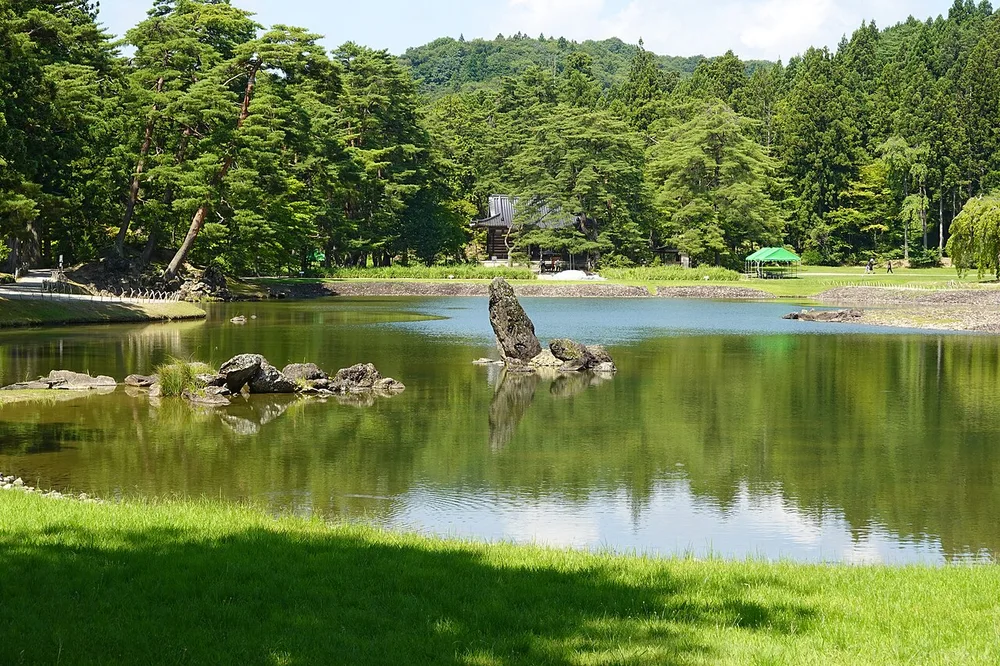
Motsuji’s FAQ gives 30–40 minutes for the garden. Allow 60–90 minutes in the plan for the pond, rest and tickets. Adults pay ¥700. Opening hours are 08:30–16:30 from 5 November to 4 March, generally until 17:00 at other times. Shorten the garden walk if arriving late or needing to collect large luggage in Ichinoseki; skip the stop if closing is near.
Motsuji is a useful choice because you can walk from the station, and the temple explicitly states there are no steep slopes and the treasure house has a lift. It still adds walking after the boat. Chusonji’s Tsukimizaka approach and Konjikido need their own uphill walking and visiting time. Leave another half-day for a full visit rather than rush between two temples. If Chusonji is the main aim, give Hiraizumi a separate day and finish Geibikei with lunch in Ichinoseki.
If you miss the early return train, drop afternoon Hiraizumi first. This changes one optional visit without disturbing the cruise already under way, a booked meal or long-distance train. Guests in Ichinoseki can return to the hotel and see temples the next day. Use the Hiraizumi/Ichinoseki base and dinner guide for accommodation details; there is no need to move luggage again for this cruise.
Missed 10:44? Eating locally is steadier than chasing another route
If the boat returns late, someone needs a rest or you miss 10:44 on the walk back, the next checked return is 13:06, reaching Ichinoseki at 13:43. Remove Hiraizumi from the afternoon, then check restaurant opening days. Geibi Rest House serves food from 11:30, making it a lunch option after a delayed early return. Allow time afterwards to walk to the station. Contact any Ichinoseki restaurant where you had a late-morning booking.
If you also miss 13:06, the next example is 15:08, arriving at 15:40. Each later train requires a fresh calculation for luggage collection and the Shinkansen. Check your long-distance ticket and make necessary changes before departure, rather than investigate refunds after the booked train has left. If a deadline is essential, obtain a workable vehicle and confirmed pickup from a local operator before deciding to pay for alternative transport.
Geibikei’s official access information mentions buses and driving, but a bus route does not establish an immediate departure after a missed train. Direct Hiraizumi service is seasonal, with dates and departures to check separately. Do not walk to another stop hoping for a bus without that day’s timetable. The smallest adjustment is to rest locally, take the next known train to Ichinoseki and drop optional sights.
If you still have energy and want more time in Higashiyama after the cruise, choose Yugendo Cave and remove Hiraizumi. Keep the early return for lunch or a long-distance train in Ichinoseki; deliberately choose a later return if the cave appeals. Anyone needing rest or unwilling to walk another hour is better suited to lunch at Geibikei and a train back. Waiting time does not require another attraction.
The cave’s access page gives about 30 minutes on foot from Geibikei Station, or about 60 minutes for the return walk. Add 20–30 minutes inside for roughly 80–90 minutes of walking and visiting. One plan is to reach Geibikei Station again by 10:30, walk to the cave by about 11:00, allow 15 minutes for tickets and rest, enter at 11:15, leave at 11:45 and return to the station at 12:15 before the 13:06 train. These estimates use official walking and visiting times; allow separately for reaching the station from the boat landing. Arrange lunch elsewhere in the day, rather than squeeze it between cave and station.
Yugendo opens 08:30–18:00 in April–September, 08:30–17:00 in October–November and 09:00–16:00 in December–March. Last admission is 30 minutes before closing: 17:30, 16:30 and 15:30 respectively. For a winter afternoon visit, work backwards from the 15:30 admission cutoff to allow for walking and tickets; do not aim merely to arrive before 16:00.
Current Yugendo admission is ¥1,100 for adults, ¥600 for junior-high pupils and ¥400 for primary-school pupils, including consumption tax. Two adults and one primary-school child pay ¥2,600, on top of boat and train costs. Inside it stays around 13°C year-round. Wear walking shoes, bring a removable layer in summer and keep the coat needed for the outdoor walk in winter. Bring an umbrella in rain for the route between station and cave.
The boat gives views of the Satetsu River and cliffs; Yugendo brings rock layers close. The operator describes exposed crinoid and trilobite fossils in the cave walls, with locally discovered fossils in the adjoining exhibition room. A green underground lake is another feature. For anyone interested in fossils, limestone and groundwater, these sights give the extra walk more purpose.
Rain, high water and early turnbacks: follow the operator’s decision
The boat safety measures set departure-cancellation thresholds of wind reaching 10 metres per second measured aboard a moored boat at the landing’s tourist centre, or water reaching 35 cm on the water-level scale at Matsukawa Weir’s intake. Water levels of 20–35 cm have criteria for turning back early. The operator also considers rising and falling water. A wind speed from another location on a phone forecast, or your own view of the river, cannot require the boatman to continue to the far end.
Check official operation that morning. If boats are suspended, stay in Ichinoseki or walk around Hiraizumi by day rather than take the branch line hoping they resume. Ordinary rain, strong-wind cancellation, shorter high-water trips and chair charters cancelled in rain have different conditions. If boats are running, bring stowable rainwear and sit as instructed. Do not open a large umbrella that blocks other passengers or the boatman’s view.
The safety page explains that general-boat cushions also serve as flotation aids, with other lifesaving equipment and rescue measures aboard. Listen to the full boarding instructions and locate the equipment. Do not use cushions to raise bags or let children move them around as toys. Explain infants, heart or breathing difficulties, problems sitting for long periods or help needed to stand before buying tickets, so participation and assistance can be decided ashore.
The season also changes how the trip feels. Bring water and sun protection in summer; shaded water is cooler in autumn; keep winter protection for waiting ashore and returning to the station. Leaf colour and snow vary by year. A workable day depends on operation, a return route and the group’s ability to complete it. Swap the boat day with a city day if weather is unsuitable rather than force every saved photograph into reality.
Protect the return journey before paying for reserved boats and meals
General boat admission, charters, group meals and platform products create separate orders. Boat safety notices govern suspension and turnbacks, while meals have purchasing and change deadlines. Before paying, save the full product name, date, party size, price, cancellation deadline and suspension arrangements for what you are buying. If changing dates, contact the original desk or platform so the right order is cancelled; avoid making a new booking while another meal remains scheduled for the old day.
Choosing not to sail, a full operator cancellation, a shorter high-water trip and arriving late are four distinct situations. When booking a charter or hotpot, obtain the charge, date-change and procedure for each before payment. Independent same-day visitors can read operation notices, complete check-in and then buy tickets, reducing the number of activities and meals fixed in advance.
For rail, JR’s general ticket-refund rules list a ¥220 fee per unused ordinary basic-fare ticket within its validity. For general reserved-seat limited-express and similar reserved tickets, the fee is ¥340 until two days before departure, then 30% of the reserved-ticket charge, with a ¥340 minimum, from the day before until departure. Promotional products and packages follow their own rules. If boats stop, long-distance rail tickets still follow the purchased product’s terms. Handle changes or refunds before departure; if staying in Ichinoseki, swapping the city and boat days can reduce travel.
Calculate the budget per person and allow for meals during a later return
Two adult boat tickets cost ¥4,000. Add two ¥1,100 tenju meals at Geibi Rest House for ¥6,200, then both travellers’ actual return rail fares. Two ¥770 mori soba meals instead make ¥5,540, a difference of ¥660. Build the budget from confirmed tickets and menus; replace the meal cost if the restaurant is closed or you eat elsewhere rather than treat the day’s total as a fixed package.
Boat tickets for two adults, one primary-school child and one preschool child aged three or over total ¥5,100. Order food to suit each person rather than multiply an adult set meal by four. Add ¥700 per general adult admission at Motsuji, with children’s tickets based on school stage. Keep undama, drinks and souvenirs optional; there is no need to make every item compulsory to fill a daily budget.
Get the actual rail fare when buying at Ichinoseki or using the official ticket search, then enter the return cost. Record in advance that Suica is not accepted on the Ofunato Line. Keep some money for a seated meal if you miss a return train. Finally, mark the return train on the plan, work backwards through the station walk and waiting allowance, the 90-minute cruise, check-in, ticket purchase and outward walk. That gives the day a sequence you can follow.
A few useful answers
Do I need to book the Geibikei boat?
Independent shared-boat passengers buy through same-day check-in; groups of 15 or more need a reservation. Winter kotatsu boats alone need no booking, but hotpot packages do. Onboard bento for five or more needs a separate telephone order. Charters and advance online products follow their own bookings.
Can I catch the 11:00 boat after arriving at 10:51?
This is unsuitable as a planned connection. JR gives about seven minutes to walk from station to boats, leaving almost no room within nine minutes for check-in, tickets and waiting. Aim for 12:00 and pair it with the 15:08 train to Ichinoseki.
Is the boat a one-way trip to another landing?
The general cruise is a return trip of about 90 minutes, coming back from the turning area to the original landing. Time ashore at Daigeibi Rock and the undama area is part of the activity; meet as instructed by the boatman.
Can I use Suica on the Ofunato Line?
JR East’s current introduction explicitly says no. Buy a ticket covering Ichinoseki to Geibikei, or check the area and dates of your rail pass.
Is the first winter boat also at 08:30?
From 21 November to 31 March, the first boat is 09:30 and the last 15:00. Kotatsu boats run separately from December to the end of February; the seasonal boundaries differ.
How do I get there on 8–10 December 2026?
Some Ofunato Line trains are suspended. The operator’s free shuttle leaves Ichinoseki west exit at 10:20, reaches the rest house at 10:45, returns at 13:10 and arrives in Ichinoseki at 13:35. The full 12:00 cruise misses the return shuttle; choose a boat that finishes before 13:10 and allow for walking.
Can pets join a kotatsu boat?
The current leaflet excludes pets from boats from 21 November to 31 March. At other times only pets small enough to carry are accepted, with a ¥200 extra charge.
Can I visit Hiraizumi afterwards?
After the early 11:18 return to Ichinoseki, consider Motsuji alone if lunch and trains allow. Drop the extra visit if returning at 13:43 or 15:40. Leave another half-day for a full Chusonji visit.
Official information and references
Sources used in this guide.
- Geibikei: 2026 fares, charters and seasonal departures
- Geibikei: access and boat landing
- Geibikei: current Japanese leaflet and route map
- Geibikei: safety, cancellation and turnback thresholds
- Geibikei: restaurant calendar, onboard bento and group meals
- Geibikei: latest operation and transport notices
- JR East: Ofunato Line travel and walk from Geibikei Station
- Motsuji: admission, hours and access
- Motsuji: garden visiting time and accessibility FAQ
- Sekinoichi: brewery restaurant menu, hours and reservations
- JR East: 323D, Ichinoseki 07:18 to Geibikei 07:50
- JR East: 330D, Geibikei 10:44 to Ichinoseki 11:18
- JR East: 325D, Ichinoseki 10:16 to Geibikei 10:51
- JR East: 332D, Geibikei 13:06 to Ichinoseki 13:43
- JR East: 334D, Geibikei 15:08 to Ichinoseki 15:40
- JR East: general ticket refunds
- Geibikei: free shuttle on specified train-suspension dates
- Yugendo: hours, admission and preparations
- Yugendo: walk from the station and access